

.avif)
.avif)

Backend Development Outsourcing Guide 2026


.svg)

Backend development outsourcing involves hiring external teams to build and maintain your server-side infrastructure, databases, APIs, and application logic. This guide covers when to outsource, how to choose the right partner, engagement models, technology stacks, and best practices for managing remote backend teams successfully in 2026.
Backend development is the invisible backbone of every modern digital product. Whether someone is using a mobile app to book a ride, browsing an e-commerce website, or logging into a SaaS dashboard, all the data processing, authentication, and storage happen in the backend.
For most businesses building technology-driven products, robust backend architecture is essential. However, building and maintaining that infrastructure in-house isn't always feasible or strategic.
That's where outsourcing comes in. The global IT outsourcing market is projected to reach $731.2 billion in 2025, climbing from $601 billion in 2024, according to market analysis data.
This guide breaks down everything needed to outsource backend development successfully: when it makes sense, how to choose the right partner, what technologies to consider, and how to manage remote teams effectively.
What Is Backend Development?
Backend development covers everything that happens on the server side of an application. It's the part users don't see but absolutely depend on.
When someone logs into an account, searches for a product, or processes a payment, the backend handles those requests. It manages databases, executes business logic, authenticates users, and ensures data flows correctly between the frontend interface and storage systems.
In practical terms, backend development includes all server-side technologies such as:
- Languages: Node.js, Python, Java, Ruby, PHP, Go
- Frameworks: Express, Django, Spring Boot, Laravel
- Databases: PostgreSQL, MySQL, MongoDB, Redis
- APIs: RESTful services, GraphQL, WebSocket connections
- Cloud infrastructure: AWS, Google Cloud, Azure services
- DevOps tools: Docker, Kubernetes, CI/CD pipelines
The backend is where the real heavy lifting happens. It determines how fast an application responds, how securely it handles data, and how well it scales as user numbers grow.
Why Businesses Outsource Backend Development
Companies across all sizes—from startups to enterprise teams—choose to outsource backend development for several strategic reasons.
Access to Specialized Talent
Finding experienced backend developers with specific technology expertise is challenging. The demand far exceeds supply in most markets.
Outsourcing opens access to a global talent pool. A company can tap into developers with deep expertise in Node.js, Python, or specialized database technologies without spending months recruiting locally.
Cost Optimization
In-house development teams come with significant fixed costs: salaries, benefits, office space, equipment, training, and management overhead.
Outsourcing converts these fixed costs into variable expenses. Businesses pay for what they need, when they need it.
Hourly rates vary significantly by region:
Operational cost reductions through outsourcing have been reported by industry sources while maintaining quality standards.
Faster Time to Market
Speed matters in competitive markets. Building an in-house team takes weeks or months—posting jobs, interviewing candidates, onboarding, and ramping up.
With outsourcing, development can begin in days. Teams are already assembled, processes are established, and work starts immediately.
Focus on Core Business
Not every company should become a software development house. Outsourcing backend work allows internal teams to focus on what truly differentiates the business: product strategy, user experience, customer relationships, and domain expertise.
Flexibility and Scalability
Project needs fluctuate. Sometimes a business needs three backend developers, sometimes ten.
Outsourcing provides flexibility to scale teams up or down based on current requirements without the commitment of permanent hires.

Backend Development Made Easy with NeoWork
Scaling backend development teams doesn’t have to be complex. NeoWork offers vetted backend developers who work within your stack and deliver robust, scalable systems.
Key support areas:
- API development and integration
- database design and optimization
- server-side logic and performance tuning
- cloud infrastructure and DevOps support
NeoWork teams can integrate with your internal processes or take ownership of specific modules. Get started with NeoWork today to streamline backend development outsourcing with expert engineers.
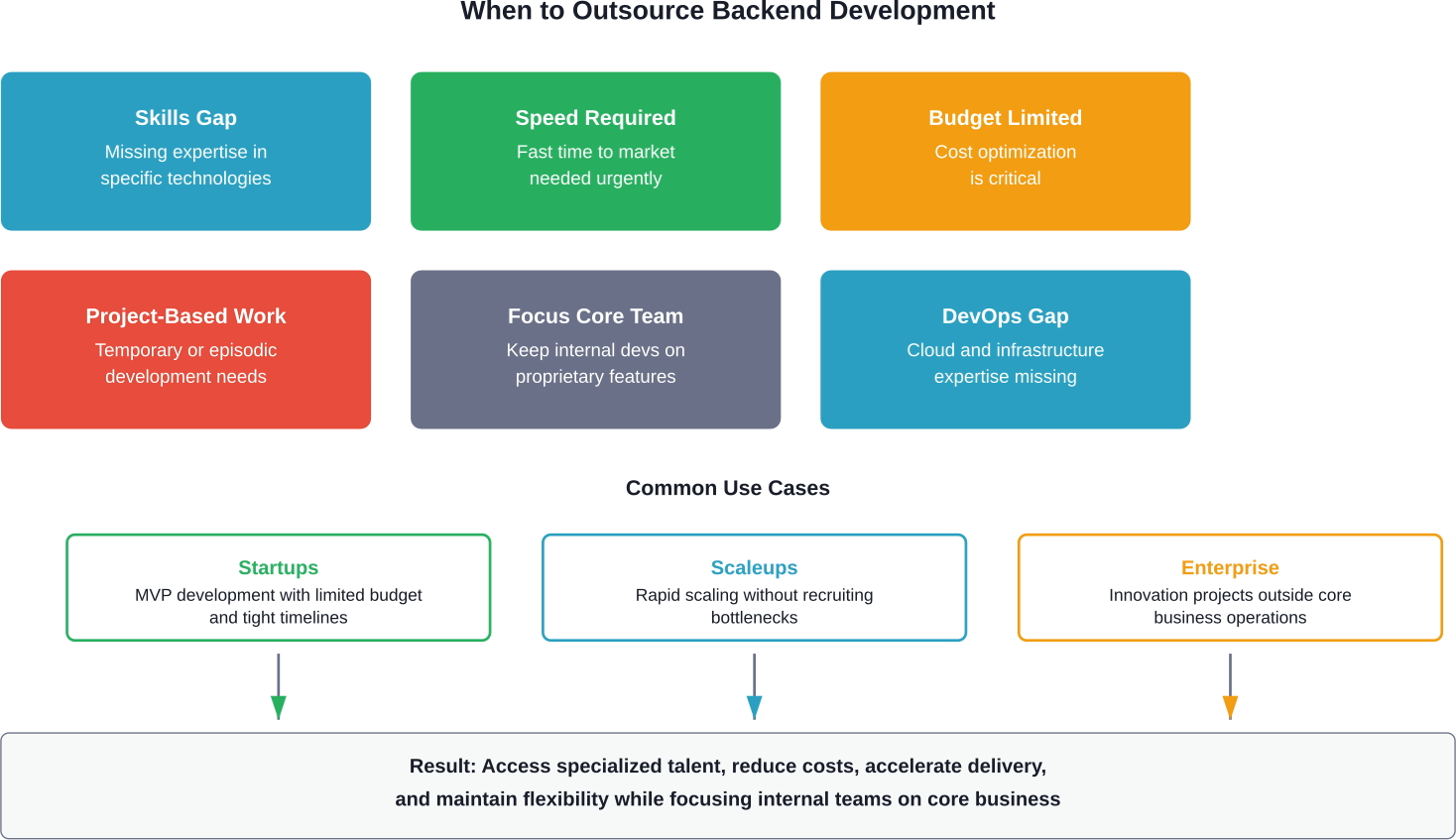
When Should Businesses Outsource Backend Development?
Not every situation calls for outsourcing. But certain signals indicate it's the right move.
Lack of In-House Expertise
If the internal team lacks specific backend skills—whether that's a particular programming language, database technology, or cloud infrastructure experience—outsourcing fills that gap quickly.
Training existing staff takes time. Hiring specialists takes longer. Outsourcing provides immediate access to needed expertise.
Need to Move Fast With Limited Resources
Startups and companies launching new products often face tight deadlines with limited budgets. Building a full in-house team isn't viable.
Outsourcing provides a ready-made team that can deliver quickly without the overhead of permanent hires.
Budget Constraints
When budget is tight but the backend work still needs to happen, outsourcing to regions with lower labor costs makes financial sense.
The cost difference between hiring senior developers in San Francisco versus Eastern Europe or Asia can be substantial.
Unpredictable or Project-Based Workloads
Some backend needs are episodic: building a new feature, migrating databases, integrating third-party services, or scaling infrastructure for a product launch.
For project-based work, outsourcing makes more sense than maintaining permanent staff who may not have consistent workloads.
Desire to Focus Internal Teams on Core IP
Many companies want their best internal developers focused on proprietary technology and competitive advantages—not routine backend maintenance or standard API development.
Outsourcing commodity backend work preserves internal resources for high-value innovation.
Lack of DevOps or Cloud Expertise
Modern backend development increasingly requires DevOps skills: containerization, orchestration, continuous integration, cloud infrastructure management.
If the internal team lacks this expertise, outsourcing to vendors with established DevOps practices and cloud certifications reduces risk.
In-House vs Outsourced Backend Development: A Comparison
The decision between building an in-house team and outsourcing backend work depends on multiple factors. Neither approach is universally better—context matters.
Here's how they compare:
In-house makes sense when backend development is core IP, when constant iteration with other teams is essential, or when the company has resources for long-term investment in a permanent team.
Outsourcing makes sense when speed matters, when budgets are constrained, when specialized skills are needed temporarily, or when internal focus should be elsewhere.
Many successful companies use a hybrid approach: keeping core backend architecture and sensitive systems in-house while outsourcing specific features, integrations, or infrastructure projects.
Common Backend Technologies and What to Outsource
Backend development covers a wide range of technologies. Understanding what's commonly outsourced helps in planning and vendor evaluation.
Node.js (JavaScript/TypeScript)
Node.js dominates modern backend development, especially for real-time applications, APIs, and microservices.
It's commonly outsourced because the global talent pool is large, frameworks like Express are standardized, and it integrates well with frontend JavaScript stacks.
Typical outsourced Node.js projects include REST APIs, WebSocket servers, authentication systems, and middleware services.
Python
Python backend development is popular for data-intensive applications, machine learning integration, and rapid prototyping.
Frameworks like Django and Flask are well-documented and widely used. Outsourcing Python development works well for MVPs, data processing pipelines, and API services.
Java and Spring Boot
Java remains dominant in enterprise backend systems. Spring Boot simplifies building production-grade applications.
Outsourcing Java development makes sense for enterprise applications, complex business logic, and systems requiring robust transaction management.
PHP and Laravel
Despite newer alternatives, PHP powers a significant portion of the web. Laravel provides a modern, elegant framework.
Outsourcing PHP development is common for content management systems, e-commerce backends, and web applications with traditional architectures.
Database Management
Database work—design, optimization, migration, and administration—is frequently outsourced.
This includes relational databases (PostgreSQL, MySQL), NoSQL systems (MongoDB, Cassandra), caching layers (Redis, Memcached), and data warehousing solutions.
Cloud Infrastructure and DevOps
Setting up and managing cloud infrastructure on AWS, Google Cloud, or Azure requires specialized expertise.
Outsourcing DevOps work includes containerization with Docker, orchestration with Kubernetes, CI/CD pipeline setup, monitoring, and infrastructure-as-code implementation.
API Development and Integration
Building RESTful APIs, GraphQL endpoints, and integrating third-party services are common outsourcing tasks.
API development is often well-scoped, making it suitable for outsourced teams with clear specifications.
Backend Development Outsourcing Models
Three primary engagement models dominate backend outsourcing. Each serves different needs and risk profiles.
Dedicated Team Model
A dedicated team works exclusively for one client, functioning like an extension of the in-house staff.
The client has control over daily priorities, sprint planning, and task assignment. The vendor handles recruitment, HR, and administrative overhead.
This model works best for long-term projects, complex product development with evolving requirements, and situations requiring deep product knowledge.
Typical commitment is three to twelve months or longer. Cost is usually based on team size and duration.
Staff Augmentation
Staff augmentation adds individual developers or specialists to existing teams temporarily.
These developers integrate into current workflows, use existing tools, and report to internal management.
This model fills specific skill gaps, handles temporary workload spikes, or provides expertise for particular features without hiring permanently.
Commitment is flexible—can be weeks, months, or extended as needed. Billing is typically hourly or monthly per resource.
Fixed-Price Project
Fixed-price engagements define scope, deliverables, timeline, and cost upfront.
The vendor takes full responsibility for delivering specified functionality within agreed parameters. The client provides requirements and reviews milestones but doesn't manage daily work.
This model works for well-defined projects with clear requirements, limited scope changes, and specific deadlines—like building a particular feature, migrating a database, or creating an API.
Risk shifts to the vendor. If estimates are wrong, they absorb the cost. But scope changes require formal change requests and renegotiation.
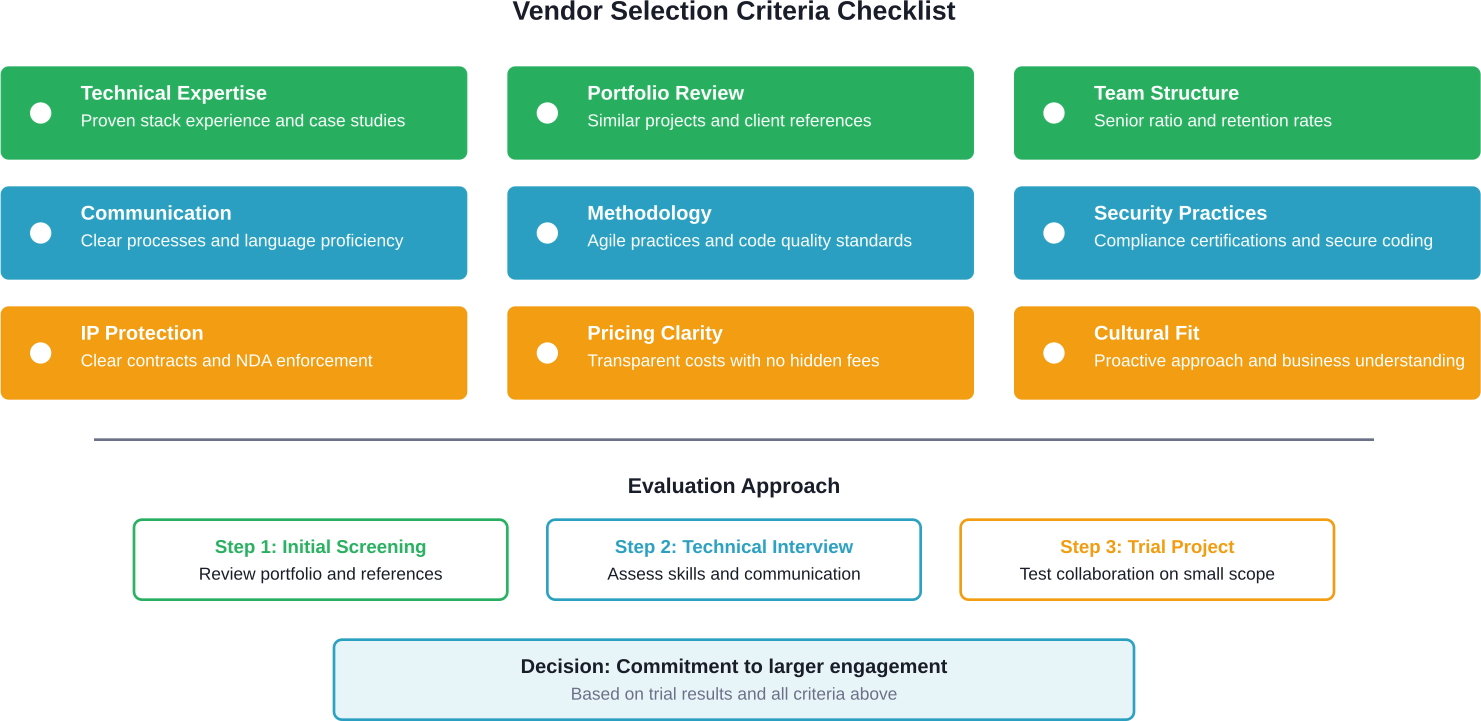
Choosing the Right Backend Development Outsourcing Partner
Selecting a vendor is the most critical decision in the outsourcing process. The wrong partner creates technical debt, missed deadlines, and communication headaches.
Technical Expertise and Technology Stack
First, verify the vendor has proven experience with the specific technologies needed.
Don't just look for generic "backend development" claims. Ask about specific frameworks, databases, cloud platforms, and DevOps tools relevant to the project.
Request case studies, GitHub repositories, or code samples demonstrating expertise in the exact stack planned for use.
Portfolio and Relevant Experience
Review previous projects similar in complexity, scale, and domain.
If building a fintech backend, prioritize vendors with fintech experience. If scaling a high-traffic API, find vendors who've solved similar performance challenges.
Ask for client references and contact them directly. Ask about communication quality, deadline adherence, and how the vendor handled unexpected challenges.
Team Structure and Availability
Understand who will actually work on the project. Will it be senior developers or junior staff? What's the ratio?
Ask about team continuity. High turnover disrupts projects. Find out typical retention rates and how knowledge transfer happens if developers leave.
Clarify availability and overlap with the client's working hours, especially if real-time collaboration matters.
Communication Processes
Strong communication makes or breaks outsourced projects.
Ask how the vendor handles project updates, daily standups, sprint planning, and issue escalation. What tools do they use—Slack, Jira, GitHub, Zoom?
Language proficiency matters. If English is the working language, ensure developers can communicate effectively in writing and verbally, not just project managers.
Development Methodology
Most modern vendors follow Agile or Scrum methodologies. Understand their specific process.
How do they handle sprint planning? What's their testing approach? How do they manage technical debt? What's their code review process?
Vendors with mature development processes produce better outcomes with fewer surprises.
Security and Compliance
Backend systems handle sensitive data. Vendor security practices must be rigorous.
Ask about secure coding standards, penetration testing, vulnerability scanning, and how they stay current with security patches.
For regulated industries (healthcare, finance), verify compliance certifications like SOC 2, ISO 27001, HIPAA, or GDPR adherence.
Intellectual Property Protection
Contracts must clearly specify that all code, documentation, and deliverables become client property.
NDAs should be signed before sharing any proprietary information. Ensure the vendor's developers also sign IP assignment agreements.
Pricing Transparency
Understand exactly what's included in quoted rates: developer time, project management, DevOps support, testing, documentation.
Watch for hidden costs: communication overhead, tool licenses, infrastructure fees, or extra charges for revisions.
Get detailed breakdowns and compare proposals carefully beyond just headline hourly rates.
Cultural Fit
Beyond technical skills, cultural alignment matters for long-term relationships.
Do they understand business goals or just execute tasks? Are they proactive about suggesting improvements or passive order-takers? How do they handle disagreements or scope discussions?
A trial project or paid pilot phase helps evaluate fit before committing to larger engagements.
Step-by-Step Process to Outsource Backend Development
A structured approach reduces risk and improves outcomes. Here's how to execute backend outsourcing effectively.
Step 1: Define Requirements and Scope Clearly
Ambiguity kills outsourced projects. Start with crystal-clear requirements.
Document functional requirements: what the backend must do, what APIs it needs to expose, what data it needs to manage, what integrations are required.
Specify non-functional requirements: performance targets, security standards, scalability expectations, uptime requirements.
Define the technology stack if preferences exist, or at least specify constraints (must work with existing systems, must run on specific cloud platforms).
Create user stories or use cases that illustrate how the backend will be used.
Step 2: Research and Shortlist Potential Vendors
Cast a wide net initially, then narrow systematically.
Use platforms like Clutch, GoodFirms, or industry directories to find candidates. Ask for recommendations from networks or business communities.
Review websites, portfolios, and case studies. Look for red flags: outdated portfolios, generic claims, poor communication quality.
Shortlist five to ten candidates that match geography, technology, and size requirements.
Step 3: Issue RFP or RFI
Send detailed requests for proposals outlining project scope, timeline expectations, budget range, and evaluation criteria.
Ask specific questions: How would they approach this project? What team composition do they recommend? What potential challenges do they foresee? What's their proposed timeline?
Quality responses demonstrate understanding of requirements and show how the vendor thinks.
Step 4: Evaluate Proposals and Conduct Interviews
Compare proposals systematically using a scoring rubric covering technical approach, team qualifications, timeline feasibility, and cost.
Conduct interviews with shortlisted vendors. Speak with actual developers who would work on the project, not just sales staff.
Ask technical questions to assess depth of knowledge. Present hypothetical scenarios to see how they'd solve problems.
Step 5: Check References Thoroughly
Contact at least two references for each finalist.
Ask about the quality of deliverables, adherence to deadlines, communication effectiveness, and how they handled unexpected problems.
Specifically ask if the reference would work with this vendor again.
Step 6: Start With a Paid Trial or Small Project
Before committing to a major engagement, test the relationship with a small, bounded project.
This could be building a single feature, creating a proof-of-concept, or completing a technical spike.
Evaluate code quality, communication patterns, responsiveness, and ability to meet deadlines in a lower-risk context.
Step 7: Establish Communication and Management Processes
Once a vendor is selected, set up clear workflows before development starts.
Define communication cadence: daily standups, weekly sprint reviews, monthly business reviews.
Choose tools for collaboration: project management (Jira, Trello), communication (Slack, Teams), code repository (GitHub, GitLab), documentation (Confluence, Notion).
Assign clear points of contact on both sides. Establish escalation paths for issues.
Step 8: Monitor Progress and Quality Continuously
Active oversight prevents small problems from becoming disasters.
Review code regularly through pull requests. Run automated tests. Monitor key metrics like velocity, defect rates, and sprint completion.
Hold regular retrospectives to identify and address process issues.
Don't micromanage, but stay engaged. The best outsourcing relationships have consistent visibility without constant interference.
Step 9: Iterate and Optimize the Relationship
Treat outsourcing partnerships as evolving relationships, not transactional exchanges.
Provide feedback—positive and constructive. Adjust processes that aren't working. Celebrate successes.
As trust builds, gradually increase scope and responsibility.
Managing Remote Backend Development Teams Effectively
Remote team management requires different approaches than in-house oversight. These practices improve outcomes.
Establish Clear Goals and Metrics
Remote teams need clarity on what success looks like.
Define sprint goals, acceptance criteria, and key performance indicators. Make expectations explicit.
Track meaningful metrics: story points completed, code coverage, API response times, bug resolution times—not just hours worked.
Invest in Communication Tools and Culture
Strong communication infrastructure is non-negotiable.
Use video for standups and important discussions—builds rapport better than text. Use asynchronous communication (Slack, email) for non-urgent updates.
Create shared documentation spaces where decisions, architecture diagrams, and standards are accessible to everyone.
Encourage questions. Reward proactive communication.
Manage Time Zone Differences Strategically
Time zones can be assets or obstacles depending on management.
Schedule overlapping hours for real-time collaboration. Use the rest for focused development work.
Rotate meeting times occasionally so burden isn't always on one party.
Document decisions thoroughly so people in different zones don't miss context.
Focus on Outcomes, Not Activity
Measuring hours worked is pointless for remote developers. Results matter.
Evaluate based on deliverables: features completed, bugs fixed, tests written, documentation updated.
Trust the team to manage their own time while holding them accountable to commitments.
Build Relationships Beyond Work
Remote doesn't mean impersonal.
Occasional informal video chats, virtual coffee breaks, or team-building activities help teams gel.
If feasible, meet in person once or twice a year for intensive collaboration or planning sessions.
Provide Context, Not Just Tasks
Remote developers deliver better work when they understand the why behind requirements.
Share business goals, user stories, competitive context. Explain how their work fits into larger strategy.
Teams that understand context make better technical decisions independently.
Common Challenges in Backend Development Outsourcing
Outsourcing isn't without difficulties. Being aware of common pitfalls helps avoid them.
Communication Gaps
Misunderstood requirements, unclear specifications, and delayed responses create confusion and rework.
Solution: Over-communicate initially. Document everything. Use visual aids like diagrams and mockups. Establish regular check-ins.
Quality Control Issues
Code quality can suffer without proper oversight: poor architecture, inadequate testing, security vulnerabilities, technical debt.
Solution: Implement code reviews, automated testing, static analysis tools, and regular security audits. Define quality standards upfront.
Time Zone and Cultural Differences
Offshore teams may operate during different hours, making real-time collaboration difficult. Cultural norms around hierarchy, feedback, and conflict can differ.
Solution: Build overlapping hours into contracts. Invest time in understanding cultural context. Be explicit about expectations around feedback and autonomy.
Scope Creep and Requirement Changes
Evolving requirements are natural in software development, but can strain fixed-price contracts or dedicated teams.
Solution: Use Agile methodologies that accommodate change. Maintain prioritized backlogs. Use dedicated teams or staff augmentation for projects with high uncertainty.
Security and IP Concerns
Sharing access to systems and proprietary information creates risk.
Solution: Strong contracts, NDAs, limited access controls, audit trails, and working only with reputable vendors with security certifications.
Knowledge Transfer and Continuity
When outsourced developers leave or contracts end, knowledge can walk out the door.
Solution: Require thorough documentation, maintain code comments, record architectural decisions, and plan transition periods.
Cost Considerations and Budgeting
Understanding the full cost picture prevents budget surprises.
Direct Development Costs
The most visible cost: developer hourly or monthly rates multiplied by team size and duration.
Rates vary widely by geography, as shown earlier. But the cheapest option isn't always most economical—factor in experience level and efficiency.
Project Management Overhead
Managing outsourced teams requires time from internal staff: product owners, technical leads, or dedicated project managers.
Some vendors include project management in their rates. Others charge separately. Factor in internal time costs either way.
Communication and Collaboration Tools
Licenses for Jira, Slack, GitHub, CI/CD services, monitoring tools—these add up for larger teams.
Clarify who provides and pays for tooling.
Infrastructure and Hosting
Development, staging, and production environments need cloud resources.
Determine whether infrastructure costs are separate from development costs and who manages provisioning.
Quality Assurance and Testing
Thorough testing—unit tests, integration tests, performance tests, security testing—takes time and sometimes specialized tools or personnel.
Budget separately for QA if not included in core development rates.
Hidden Costs to Consider
Time spent on vendor selection, onboarding, and knowledge transfer. Rework due to misunderstandings. Security audits. Legal and contract management.
These hidden costs can add 15-25% to initial estimates.
Total Cost of Ownership
The true cost comparison isn't just hourly rates—it's total cost of ownership over time.
A more expensive vendor with higher quality and faster delivery may cost less overall than a cheap vendor that delivers slowly with quality issues requiring rework.
Security Best Practices for Outsourced Backend Development
Backend systems handle sensitive data and business logic. Security can't be an afterthought.
Implement Strong Access Controls
Grant outsourced developers minimum necessary access. Use role-based access control.
Require multi-factor authentication for all system access. Monitor and log access patterns.
Secure Code Development Practices
Require secure coding standards: input validation, parameterized queries, proper authentication and authorization, secure session management.
Use automated tools to scan for vulnerabilities: OWASP dependency checks, static analysis, dynamic testing.
Data Protection and Encryption
Encrypt data in transit (TLS/SSL) and at rest. Use strong encryption standards.
Minimize what data outsourced teams can access. Use anonymized or synthetic data for development and testing when possible.
Regular Security Audits and Penetration Testing
Conduct periodic security reviews of outsourced code.
For critical systems, hire independent security firms for penetration testing before production deployment.
Clear Contractual Security Requirements
Contracts should specify security standards, compliance requirements, incident response procedures, and liability for breaches.
Include provisions for security audits and the right to terminate for security violations.
Incident Response Planning
Define procedures for reporting and responding to security incidents.
Ensure the vendor has incident response capabilities and knows escalation procedures.
Future Trends in Backend Development Outsourcing
The outsourcing landscape continues evolving. Several trends shape the future.
AI-Assisted Development
AI coding assistants and code generation tools are becoming standard in development workflows.
Outsourcing vendors increasingly leverage AI to boost productivity, but human expertise remains essential for architecture, security, and complex problem-solving.
Increased Focus on Cloud-Native Architecture
Backend systems increasingly adopt cloud-native patterns: microservices, serverless functions, containerization, managed services.
Vendors with deep cloud platform expertise (AWS, Azure, GCP) and modern architecture skills command premium rates.
Security and Compliance as Differentiators
As data breaches and regulations increase, security expertise becomes a key vendor selection criterion.
Certifications like SOC 2, ISO 27001, and compliance knowledge (GDPR, HIPAA, SOC 2) differentiate top vendors.
Hybrid and Nearshore Models Gain Traction
While offshore development remains popular, nearshore outsourcing grows due to overlapping time zones, cultural similarity, and easier travel.
Many companies adopt hybrid models: core teams in-house or nearshore, commodity work offshore.
Platform Engineering and DevOps Integration
Backend development increasingly includes responsibility for the full application lifecycle: infrastructure, deployment, monitoring, scaling.
Vendors offering integrated backend development and DevOps capabilities provide more value than pure coding services.
Conclusion
Backend development outsourcing opens access to global talent, reduces costs, accelerates time to market, and provides flexibility that in-house teams can't match.
Success requires careful planning: defining requirements clearly, selecting vendors systematically, establishing strong communication processes, maintaining quality oversight, and building partnerships based on trust and mutual understanding.
The technology landscape evolves rapidly. Cloud platforms introduce new services constantly. Security threats grow more sophisticated. Development practices advance.
Working with outsourcing partners who stay current with these changes, invest in their teams' skills, and approach projects as true collaborators rather than order-takers delivers the best outcomes.
The global software development outsourcing market continues growing rapidly, expected to reach $937 billion by 2027. Companies across all industries increasingly embrace distributed development models.
For organizations considering backend outsourcing, the opportunity is clear: access to world-class expertise without the overhead of permanent hires. But that opportunity only translates to value through disciplined execution of the principles outlined in this guide.
Start with clarity about what needs to be built. Invest time in vendor selection. Establish strong governance. Monitor continuously. Iterate based on results.
Done right, backend development outsourcing transforms from a cost-saving tactic into a strategic capability that accelerates growth, improves technical quality, and allows internal teams to focus on what truly differentiates the business.
Ready to outsource backend development? Begin with a thorough requirements definition, research potential vendors in your target geography and technology stack, and consider starting with a small pilot project to test the relationship before committing to larger engagements.
Frequently Asked Questions
Topics
Backend Development Outsourcing Guide 2026

Backend development outsourcing involves hiring external teams to build and maintain your server-side infrastructure, databases, APIs, and application logic. This guide covers when to outsource, how to choose the right partner, engagement models, technology stacks, and best practices for managing remote backend teams successfully in 2026.
Backend development is the invisible backbone of every modern digital product. Whether someone is using a mobile app to book a ride, browsing an e-commerce website, or logging into a SaaS dashboard, all the data processing, authentication, and storage happen in the backend.
For most businesses building technology-driven products, robust backend architecture is essential. However, building and maintaining that infrastructure in-house isn't always feasible or strategic.
That's where outsourcing comes in. The global IT outsourcing market is projected to reach $731.2 billion in 2025, climbing from $601 billion in 2024, according to market analysis data.
This guide breaks down everything needed to outsource backend development successfully: when it makes sense, how to choose the right partner, what technologies to consider, and how to manage remote teams effectively.
What Is Backend Development?
Backend development covers everything that happens on the server side of an application. It's the part users don't see but absolutely depend on.
When someone logs into an account, searches for a product, or processes a payment, the backend handles those requests. It manages databases, executes business logic, authenticates users, and ensures data flows correctly between the frontend interface and storage systems.
In practical terms, backend development includes all server-side technologies such as:
- Languages: Node.js, Python, Java, Ruby, PHP, Go
- Frameworks: Express, Django, Spring Boot, Laravel
- Databases: PostgreSQL, MySQL, MongoDB, Redis
- APIs: RESTful services, GraphQL, WebSocket connections
- Cloud infrastructure: AWS, Google Cloud, Azure services
- DevOps tools: Docker, Kubernetes, CI/CD pipelines
The backend is where the real heavy lifting happens. It determines how fast an application responds, how securely it handles data, and how well it scales as user numbers grow.
Why Businesses Outsource Backend Development
Companies across all sizes—from startups to enterprise teams—choose to outsource backend development for several strategic reasons.
Access to Specialized Talent
Finding experienced backend developers with specific technology expertise is challenging. The demand far exceeds supply in most markets.
Outsourcing opens access to a global talent pool. A company can tap into developers with deep expertise in Node.js, Python, or specialized database technologies without spending months recruiting locally.
Cost Optimization
In-house development teams come with significant fixed costs: salaries, benefits, office space, equipment, training, and management overhead.
Outsourcing converts these fixed costs into variable expenses. Businesses pay for what they need, when they need it.
Hourly rates vary significantly by region:
Operational cost reductions through outsourcing have been reported by industry sources while maintaining quality standards.
Faster Time to Market
Speed matters in competitive markets. Building an in-house team takes weeks or months—posting jobs, interviewing candidates, onboarding, and ramping up.
With outsourcing, development can begin in days. Teams are already assembled, processes are established, and work starts immediately.
Focus on Core Business
Not every company should become a software development house. Outsourcing backend work allows internal teams to focus on what truly differentiates the business: product strategy, user experience, customer relationships, and domain expertise.
Flexibility and Scalability
Project needs fluctuate. Sometimes a business needs three backend developers, sometimes ten.
Outsourcing provides flexibility to scale teams up or down based on current requirements without the commitment of permanent hires.
Backend Development Made Easy with NeoWork
Scaling backend development teams doesn’t have to be complex. NeoWork offers vetted backend developers who work within your stack and deliver robust, scalable systems.
Key support areas:
- API development and integration
- database design and optimization
- server-side logic and performance tuning
- cloud infrastructure and DevOps support
NeoWork teams can integrate with your internal processes or take ownership of specific modules. Get started with NeoWork today to streamline backend development outsourcing with expert engineers.
When Should Businesses Outsource Backend Development?
Not every situation calls for outsourcing. But certain signals indicate it's the right move.
Lack of In-House Expertise
If the internal team lacks specific backend skills—whether that's a particular programming language, database technology, or cloud infrastructure experience—outsourcing fills that gap quickly.
Training existing staff takes time. Hiring specialists takes longer. Outsourcing provides immediate access to needed expertise.
Need to Move Fast With Limited Resources
Startups and companies launching new products often face tight deadlines with limited budgets. Building a full in-house team isn't viable.
Outsourcing provides a ready-made team that can deliver quickly without the overhead of permanent hires.
Budget Constraints
When budget is tight but the backend work still needs to happen, outsourcing to regions with lower labor costs makes financial sense.
The cost difference between hiring senior developers in San Francisco versus Eastern Europe or Asia can be substantial.
Unpredictable or Project-Based Workloads
Some backend needs are episodic: building a new feature, migrating databases, integrating third-party services, or scaling infrastructure for a product launch.
For project-based work, outsourcing makes more sense than maintaining permanent staff who may not have consistent workloads.
Desire to Focus Internal Teams on Core IP
Many companies want their best internal developers focused on proprietary technology and competitive advantages—not routine backend maintenance or standard API development.
Outsourcing commodity backend work preserves internal resources for high-value innovation.
Lack of DevOps or Cloud Expertise
Modern backend development increasingly requires DevOps skills: containerization, orchestration, continuous integration, cloud infrastructure management.
If the internal team lacks this expertise, outsourcing to vendors with established DevOps practices and cloud certifications reduces risk.
In-House vs Outsourced Backend Development: A Comparison
The decision between building an in-house team and outsourcing backend work depends on multiple factors. Neither approach is universally better—context matters.
Here's how they compare:
In-house makes sense when backend development is core IP, when constant iteration with other teams is essential, or when the company has resources for long-term investment in a permanent team.
Outsourcing makes sense when speed matters, when budgets are constrained, when specialized skills are needed temporarily, or when internal focus should be elsewhere.
Many successful companies use a hybrid approach: keeping core backend architecture and sensitive systems in-house while outsourcing specific features, integrations, or infrastructure projects.
Common Backend Technologies and What to Outsource
Backend development covers a wide range of technologies. Understanding what's commonly outsourced helps in planning and vendor evaluation.
Node.js (JavaScript/TypeScript)
Node.js dominates modern backend development, especially for real-time applications, APIs, and microservices.
It's commonly outsourced because the global talent pool is large, frameworks like Express are standardized, and it integrates well with frontend JavaScript stacks.
Typical outsourced Node.js projects include REST APIs, WebSocket servers, authentication systems, and middleware services.
Python
Python backend development is popular for data-intensive applications, machine learning integration, and rapid prototyping.
Frameworks like Django and Flask are well-documented and widely used. Outsourcing Python development works well for MVPs, data processing pipelines, and API services.
Java and Spring Boot
Java remains dominant in enterprise backend systems. Spring Boot simplifies building production-grade applications.
Outsourcing Java development makes sense for enterprise applications, complex business logic, and systems requiring robust transaction management.
PHP and Laravel
Despite newer alternatives, PHP powers a significant portion of the web. Laravel provides a modern, elegant framework.
Outsourcing PHP development is common for content management systems, e-commerce backends, and web applications with traditional architectures.
Database Management
Database work—design, optimization, migration, and administration—is frequently outsourced.
This includes relational databases (PostgreSQL, MySQL), NoSQL systems (MongoDB, Cassandra), caching layers (Redis, Memcached), and data warehousing solutions.
Cloud Infrastructure and DevOps
Setting up and managing cloud infrastructure on AWS, Google Cloud, or Azure requires specialized expertise.
Outsourcing DevOps work includes containerization with Docker, orchestration with Kubernetes, CI/CD pipeline setup, monitoring, and infrastructure-as-code implementation.
API Development and Integration
Building RESTful APIs, GraphQL endpoints, and integrating third-party services are common outsourcing tasks.
API development is often well-scoped, making it suitable for outsourced teams with clear specifications.
Backend Development Outsourcing Models
Three primary engagement models dominate backend outsourcing. Each serves different needs and risk profiles.
Dedicated Team Model
A dedicated team works exclusively for one client, functioning like an extension of the in-house staff.
The client has control over daily priorities, sprint planning, and task assignment. The vendor handles recruitment, HR, and administrative overhead.
This model works best for long-term projects, complex product development with evolving requirements, and situations requiring deep product knowledge.
Typical commitment is three to twelve months or longer. Cost is usually based on team size and duration.
Staff Augmentation
Staff augmentation adds individual developers or specialists to existing teams temporarily.
These developers integrate into current workflows, use existing tools, and report to internal management.
This model fills specific skill gaps, handles temporary workload spikes, or provides expertise for particular features without hiring permanently.
Commitment is flexible—can be weeks, months, or extended as needed. Billing is typically hourly or monthly per resource.
Fixed-Price Project
Fixed-price engagements define scope, deliverables, timeline, and cost upfront.
The vendor takes full responsibility for delivering specified functionality within agreed parameters. The client provides requirements and reviews milestones but doesn't manage daily work.
This model works for well-defined projects with clear requirements, limited scope changes, and specific deadlines—like building a particular feature, migrating a database, or creating an API.
Risk shifts to the vendor. If estimates are wrong, they absorb the cost. But scope changes require formal change requests and renegotiation.
Choosing the Right Backend Development Outsourcing Partner
Selecting a vendor is the most critical decision in the outsourcing process. The wrong partner creates technical debt, missed deadlines, and communication headaches.
Technical Expertise and Technology Stack
First, verify the vendor has proven experience with the specific technologies needed.
Don't just look for generic "backend development" claims. Ask about specific frameworks, databases, cloud platforms, and DevOps tools relevant to the project.
Request case studies, GitHub repositories, or code samples demonstrating expertise in the exact stack planned for use.
Portfolio and Relevant Experience
Review previous projects similar in complexity, scale, and domain.
If building a fintech backend, prioritize vendors with fintech experience. If scaling a high-traffic API, find vendors who've solved similar performance challenges.
Ask for client references and contact them directly. Ask about communication quality, deadline adherence, and how the vendor handled unexpected challenges.
Team Structure and Availability
Understand who will actually work on the project. Will it be senior developers or junior staff? What's the ratio?
Ask about team continuity. High turnover disrupts projects. Find out typical retention rates and how knowledge transfer happens if developers leave.
Clarify availability and overlap with the client's working hours, especially if real-time collaboration matters.
Communication Processes
Strong communication makes or breaks outsourced projects.
Ask how the vendor handles project updates, daily standups, sprint planning, and issue escalation. What tools do they use—Slack, Jira, GitHub, Zoom?
Language proficiency matters. If English is the working language, ensure developers can communicate effectively in writing and verbally, not just project managers.
Development Methodology
Most modern vendors follow Agile or Scrum methodologies. Understand their specific process.
How do they handle sprint planning? What's their testing approach? How do they manage technical debt? What's their code review process?
Vendors with mature development processes produce better outcomes with fewer surprises.
Security and Compliance
Backend systems handle sensitive data. Vendor security practices must be rigorous.
Ask about secure coding standards, penetration testing, vulnerability scanning, and how they stay current with security patches.
For regulated industries (healthcare, finance), verify compliance certifications like SOC 2, ISO 27001, HIPAA, or GDPR adherence.
Intellectual Property Protection
Contracts must clearly specify that all code, documentation, and deliverables become client property.
NDAs should be signed before sharing any proprietary information. Ensure the vendor's developers also sign IP assignment agreements.
Pricing Transparency
Understand exactly what's included in quoted rates: developer time, project management, DevOps support, testing, documentation.
Watch for hidden costs: communication overhead, tool licenses, infrastructure fees, or extra charges for revisions.
Get detailed breakdowns and compare proposals carefully beyond just headline hourly rates.
Cultural Fit
Beyond technical skills, cultural alignment matters for long-term relationships.
Do they understand business goals or just execute tasks? Are they proactive about suggesting improvements or passive order-takers? How do they handle disagreements or scope discussions?
A trial project or paid pilot phase helps evaluate fit before committing to larger engagements.
Step-by-Step Process to Outsource Backend Development
A structured approach reduces risk and improves outcomes. Here's how to execute backend outsourcing effectively.
Step 1: Define Requirements and Scope Clearly
Ambiguity kills outsourced projects. Start with crystal-clear requirements.
Document functional requirements: what the backend must do, what APIs it needs to expose, what data it needs to manage, what integrations are required.
Specify non-functional requirements: performance targets, security standards, scalability expectations, uptime requirements.
Define the technology stack if preferences exist, or at least specify constraints (must work with existing systems, must run on specific cloud platforms).
Create user stories or use cases that illustrate how the backend will be used.
Step 2: Research and Shortlist Potential Vendors
Cast a wide net initially, then narrow systematically.
Use platforms like Clutch, GoodFirms, or industry directories to find candidates. Ask for recommendations from networks or business communities.
Review websites, portfolios, and case studies. Look for red flags: outdated portfolios, generic claims, poor communication quality.
Shortlist five to ten candidates that match geography, technology, and size requirements.
Step 3: Issue RFP or RFI
Send detailed requests for proposals outlining project scope, timeline expectations, budget range, and evaluation criteria.
Ask specific questions: How would they approach this project? What team composition do they recommend? What potential challenges do they foresee? What's their proposed timeline?
Quality responses demonstrate understanding of requirements and show how the vendor thinks.
Step 4: Evaluate Proposals and Conduct Interviews
Compare proposals systematically using a scoring rubric covering technical approach, team qualifications, timeline feasibility, and cost.
Conduct interviews with shortlisted vendors. Speak with actual developers who would work on the project, not just sales staff.
Ask technical questions to assess depth of knowledge. Present hypothetical scenarios to see how they'd solve problems.
Step 5: Check References Thoroughly
Contact at least two references for each finalist.
Ask about the quality of deliverables, adherence to deadlines, communication effectiveness, and how they handled unexpected problems.
Specifically ask if the reference would work with this vendor again.
Step 6: Start With a Paid Trial or Small Project
Before committing to a major engagement, test the relationship with a small, bounded project.
This could be building a single feature, creating a proof-of-concept, or completing a technical spike.
Evaluate code quality, communication patterns, responsiveness, and ability to meet deadlines in a lower-risk context.
Step 7: Establish Communication and Management Processes
Once a vendor is selected, set up clear workflows before development starts.
Define communication cadence: daily standups, weekly sprint reviews, monthly business reviews.
Choose tools for collaboration: project management (Jira, Trello), communication (Slack, Teams), code repository (GitHub, GitLab), documentation (Confluence, Notion).
Assign clear points of contact on both sides. Establish escalation paths for issues.
Step 8: Monitor Progress and Quality Continuously
Active oversight prevents small problems from becoming disasters.
Review code regularly through pull requests. Run automated tests. Monitor key metrics like velocity, defect rates, and sprint completion.
Hold regular retrospectives to identify and address process issues.
Don't micromanage, but stay engaged. The best outsourcing relationships have consistent visibility without constant interference.
Step 9: Iterate and Optimize the Relationship
Treat outsourcing partnerships as evolving relationships, not transactional exchanges.
Provide feedback—positive and constructive. Adjust processes that aren't working. Celebrate successes.
As trust builds, gradually increase scope and responsibility.
Managing Remote Backend Development Teams Effectively
Remote team management requires different approaches than in-house oversight. These practices improve outcomes.
Establish Clear Goals and Metrics
Remote teams need clarity on what success looks like.
Define sprint goals, acceptance criteria, and key performance indicators. Make expectations explicit.
Track meaningful metrics: story points completed, code coverage, API response times, bug resolution times—not just hours worked.
Invest in Communication Tools and Culture
Strong communication infrastructure is non-negotiable.
Use video for standups and important discussions—builds rapport better than text. Use asynchronous communication (Slack, email) for non-urgent updates.
Create shared documentation spaces where decisions, architecture diagrams, and standards are accessible to everyone.
Encourage questions. Reward proactive communication.
Manage Time Zone Differences Strategically
Time zones can be assets or obstacles depending on management.
Schedule overlapping hours for real-time collaboration. Use the rest for focused development work.
Rotate meeting times occasionally so burden isn't always on one party.
Document decisions thoroughly so people in different zones don't miss context.
Focus on Outcomes, Not Activity
Measuring hours worked is pointless for remote developers. Results matter.
Evaluate based on deliverables: features completed, bugs fixed, tests written, documentation updated.
Trust the team to manage their own time while holding them accountable to commitments.
Build Relationships Beyond Work
Remote doesn't mean impersonal.
Occasional informal video chats, virtual coffee breaks, or team-building activities help teams gel.
If feasible, meet in person once or twice a year for intensive collaboration or planning sessions.
Provide Context, Not Just Tasks
Remote developers deliver better work when they understand the why behind requirements.
Share business goals, user stories, competitive context. Explain how their work fits into larger strategy.
Teams that understand context make better technical decisions independently.
Common Challenges in Backend Development Outsourcing
Outsourcing isn't without difficulties. Being aware of common pitfalls helps avoid them.
Communication Gaps
Misunderstood requirements, unclear specifications, and delayed responses create confusion and rework.
Solution: Over-communicate initially. Document everything. Use visual aids like diagrams and mockups. Establish regular check-ins.
Quality Control Issues
Code quality can suffer without proper oversight: poor architecture, inadequate testing, security vulnerabilities, technical debt.
Solution: Implement code reviews, automated testing, static analysis tools, and regular security audits. Define quality standards upfront.
Time Zone and Cultural Differences
Offshore teams may operate during different hours, making real-time collaboration difficult. Cultural norms around hierarchy, feedback, and conflict can differ.
Solution: Build overlapping hours into contracts. Invest time in understanding cultural context. Be explicit about expectations around feedback and autonomy.
Scope Creep and Requirement Changes
Evolving requirements are natural in software development, but can strain fixed-price contracts or dedicated teams.
Solution: Use Agile methodologies that accommodate change. Maintain prioritized backlogs. Use dedicated teams or staff augmentation for projects with high uncertainty.
Security and IP Concerns
Sharing access to systems and proprietary information creates risk.
Solution: Strong contracts, NDAs, limited access controls, audit trails, and working only with reputable vendors with security certifications.
Knowledge Transfer and Continuity
When outsourced developers leave or contracts end, knowledge can walk out the door.
Solution: Require thorough documentation, maintain code comments, record architectural decisions, and plan transition periods.
Cost Considerations and Budgeting
Understanding the full cost picture prevents budget surprises.
Direct Development Costs
The most visible cost: developer hourly or monthly rates multiplied by team size and duration.
Rates vary widely by geography, as shown earlier. But the cheapest option isn't always most economical—factor in experience level and efficiency.
Project Management Overhead
Managing outsourced teams requires time from internal staff: product owners, technical leads, or dedicated project managers.
Some vendors include project management in their rates. Others charge separately. Factor in internal time costs either way.
Communication and Collaboration Tools
Licenses for Jira, Slack, GitHub, CI/CD services, monitoring tools—these add up for larger teams.
Clarify who provides and pays for tooling.
Infrastructure and Hosting
Development, staging, and production environments need cloud resources.
Determine whether infrastructure costs are separate from development costs and who manages provisioning.
Quality Assurance and Testing
Thorough testing—unit tests, integration tests, performance tests, security testing—takes time and sometimes specialized tools or personnel.
Budget separately for QA if not included in core development rates.
Hidden Costs to Consider
Time spent on vendor selection, onboarding, and knowledge transfer. Rework due to misunderstandings. Security audits. Legal and contract management.
These hidden costs can add 15-25% to initial estimates.
Total Cost of Ownership
The true cost comparison isn't just hourly rates—it's total cost of ownership over time.
A more expensive vendor with higher quality and faster delivery may cost less overall than a cheap vendor that delivers slowly with quality issues requiring rework.
Security Best Practices for Outsourced Backend Development
Backend systems handle sensitive data and business logic. Security can't be an afterthought.
Implement Strong Access Controls
Grant outsourced developers minimum necessary access. Use role-based access control.
Require multi-factor authentication for all system access. Monitor and log access patterns.
Secure Code Development Practices
Require secure coding standards: input validation, parameterized queries, proper authentication and authorization, secure session management.
Use automated tools to scan for vulnerabilities: OWASP dependency checks, static analysis, dynamic testing.
Data Protection and Encryption
Encrypt data in transit (TLS/SSL) and at rest. Use strong encryption standards.
Minimize what data outsourced teams can access. Use anonymized or synthetic data for development and testing when possible.
Regular Security Audits and Penetration Testing
Conduct periodic security reviews of outsourced code.
For critical systems, hire independent security firms for penetration testing before production deployment.
Clear Contractual Security Requirements
Contracts should specify security standards, compliance requirements, incident response procedures, and liability for breaches.
Include provisions for security audits and the right to terminate for security violations.
Incident Response Planning
Define procedures for reporting and responding to security incidents.
Ensure the vendor has incident response capabilities and knows escalation procedures.
Future Trends in Backend Development Outsourcing
The outsourcing landscape continues evolving. Several trends shape the future.
AI-Assisted Development
AI coding assistants and code generation tools are becoming standard in development workflows.
Outsourcing vendors increasingly leverage AI to boost productivity, but human expertise remains essential for architecture, security, and complex problem-solving.
Increased Focus on Cloud-Native Architecture
Backend systems increasingly adopt cloud-native patterns: microservices, serverless functions, containerization, managed services.
Vendors with deep cloud platform expertise (AWS, Azure, GCP) and modern architecture skills command premium rates.
Security and Compliance as Differentiators
As data breaches and regulations increase, security expertise becomes a key vendor selection criterion.
Certifications like SOC 2, ISO 27001, and compliance knowledge (GDPR, HIPAA, SOC 2) differentiate top vendors.
Hybrid and Nearshore Models Gain Traction
While offshore development remains popular, nearshore outsourcing grows due to overlapping time zones, cultural similarity, and easier travel.
Many companies adopt hybrid models: core teams in-house or nearshore, commodity work offshore.
Platform Engineering and DevOps Integration
Backend development increasingly includes responsibility for the full application lifecycle: infrastructure, deployment, monitoring, scaling.
Vendors offering integrated backend development and DevOps capabilities provide more value than pure coding services.
Conclusion
Backend development outsourcing opens access to global talent, reduces costs, accelerates time to market, and provides flexibility that in-house teams can't match.
Success requires careful planning: defining requirements clearly, selecting vendors systematically, establishing strong communication processes, maintaining quality oversight, and building partnerships based on trust and mutual understanding.
The technology landscape evolves rapidly. Cloud platforms introduce new services constantly. Security threats grow more sophisticated. Development practices advance.
Working with outsourcing partners who stay current with these changes, invest in their teams' skills, and approach projects as true collaborators rather than order-takers delivers the best outcomes.
The global software development outsourcing market continues growing rapidly, expected to reach $937 billion by 2027. Companies across all industries increasingly embrace distributed development models.
For organizations considering backend outsourcing, the opportunity is clear: access to world-class expertise without the overhead of permanent hires. But that opportunity only translates to value through disciplined execution of the principles outlined in this guide.
Start with clarity about what needs to be built. Invest time in vendor selection. Establish strong governance. Monitor continuously. Iterate based on results.
Done right, backend development outsourcing transforms from a cost-saving tactic into a strategic capability that accelerates growth, improves technical quality, and allows internal teams to focus on what truly differentiates the business.
Ready to outsource backend development? Begin with a thorough requirements definition, research potential vendors in your target geography and technology stack, and consider starting with a small pilot project to test the relationship before committing to larger engagements.
Frequently Asked Questions
Topics
Related Blogs
Related Podcasts


.webp)

.webp)
.webp)



