

.avif)
.avif)

Content Creation Outsourcing Guide 2026: How to Do It Right


.svg)

Content creation outsourcing involves hiring external writers, designers, or agencies to produce marketing materials, allowing businesses to access specialized skills while focusing on core operations. According to a WG Content survey, 40% of marketing professionals outsource all or almost all of their content. Successful outsourcing requires clear processes, thorough vetting, and ongoing quality control to maintain brand consistency.
Creating quality content at scale isn't just challenging—it's practically impossible for most internal teams. Between blog posts, social media updates, technical documentation, and video scripts, the workload compounds faster than most organizations can handle.
That's where outsourcing comes in. But here's the thing: hiring external creators isn't as simple as posting a job ad and waiting for applications. Without a solid vetting process and clear workflows, outsourced content can quickly become inconsistent, off-brand, or just plain mediocre.
According to the Bureau of Labor Statistics, the median annual wage for writers and authors was $72,270 in May 2024, while technical writers earned $91,670 in May 2024. These numbers matter because they set realistic expectations for what quality content actually costs.
This guide breaks down everything from identifying the right candidates to building workflows that actually work. No fluff, just practical steps based on what marketing professionals are doing right now.
Why Businesses Outsource Content Creation
The decision to outsource typically stems from one of several pressure points. Most companies don't have unlimited budgets to build massive internal content teams, yet content demands keep growing.
According to a WG Content survey, 40% of marketing professionals outsource all or almost all of their content. Only 10% reported keeping everything in-house. That's a dramatic shift from even five years ago.
Time constraints hit particularly hard. Internal teams juggle multiple responsibilities, and content creation often gets pushed aside for what feels more urgent. Outsourcing frees up bandwidth for strategic work while maintaining content output.
Specialized knowledge presents another challenge. Technical writing, for instance, requires domain expertise that most generalist writers simply don't have. According to Bureau of Labor Statistics data, technical writers typically need a bachelor's degree and knowledge of or experience with technical subjects such as science or engineering—expertise that organizations typically source from external specialists.
Scalability matters too. Content needs fluctuate. Launching a new product might require 20 blog posts in two months, then drop to five per month afterward. Outsourcing allows flexible scaling without hiring and firing cycles.
The Real Costs of Content Creation
Budget discussions often focus solely on per-piece rates, but that's only part of the equation.In 2026, professional rates for high-quality, human-led (or AI-augmented) expert content start at $350-$500 per long-form piece (1,500+ words), while basic SEO-fillers average around $150-$250.
That baseline exists for good reason. Writers charging significantly less either lack experience or rush through assignments. Either way, the content suffers.
The median wage for editors was $75,260 in 2024, with editors holding about 115,800 jobs. These numbers reflect the real cost of quality content production when factoring in the full workflow—not just writing, but editing and refinement too.
Agencies typically cost more than individual freelancers but include project management, quality control, and backup capacity. That premium might be worth it for organizations needing consistent output without managing multiple freelancer relationships.

Content Creation Outsourcing with NeoWork
Creating consistent, high-quality content requires skilled writers, designers, and creators. NeoWork provides vetted teams to produce content that aligns with your brand and marketing goals.
Support includes:
- blog posts, articles, and copywriting
- graphic and visual content
- social media and multimedia assets
- content strategy and planning
NeoWork teams can integrate with your marketing department or manage entire content campaigns. Get started with NeoWork today to outsource content creation and scale your creative output.
Two Types of Outsourced Content Strategies
Before diving into hiring decisions, clarity on objectives makes everything easier. Content creation outsourcing generally falls into two distinct buckets, each requiring different approaches.
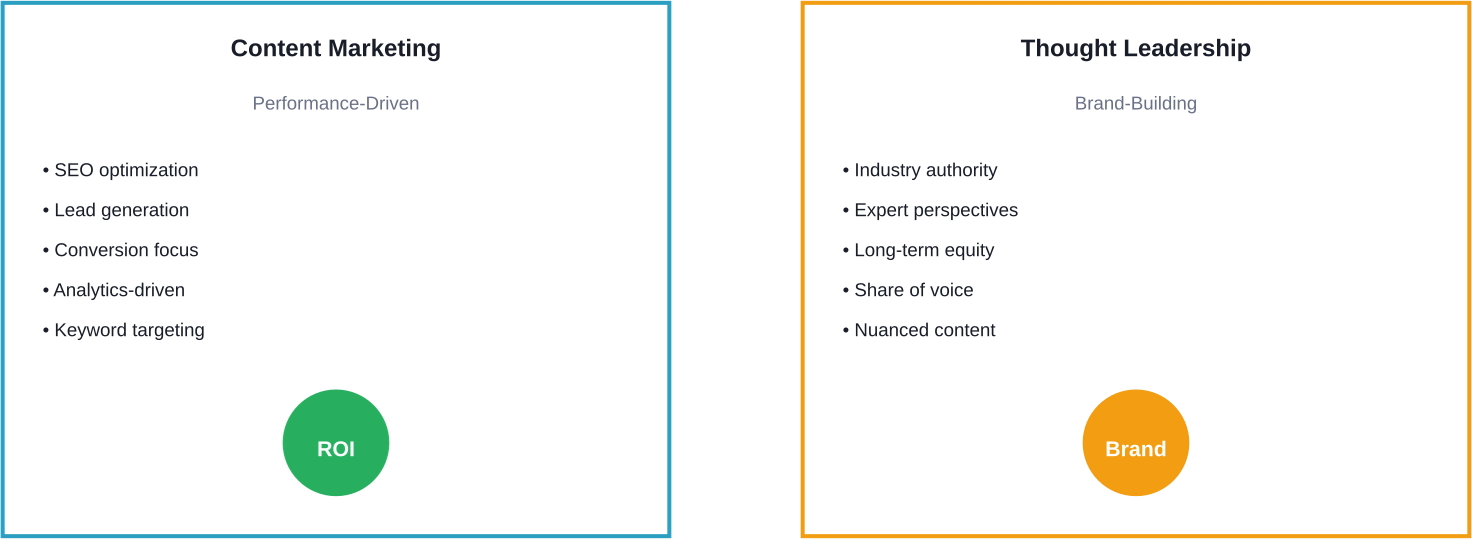
The first bucket focuses on content marketing—material designed to drive traffic, generate leads, and produce measurable business results. This content lives in the sales funnel. It targets specific keywords, answers customer questions, and moves prospects toward conversion.
The second bucket emphasizes thought leadership and brand building. This content establishes authority, shapes industry conversations, and builds long-term brand equity. Measurement looks different here—less about immediate conversions, more about share of voice and industry recognition.
These approaches aren't mutually exclusive, but they require different creator profiles. Performance-focused content marketing needs writers who understand SEO, conversion optimization, and analytics. Thought leadership demands subject matter experts who can articulate nuanced perspectives.
Getting clear on which bucket matters most—or how to balance both—shapes every downstream decision about who to hire and how to manage them.
Building Your Requirements and Process First
Here's where most outsourcing efforts fall apart: jumping straight to hiring without defining what success looks like. That approach guarantees frustration on both sides.
Start with documentation. What topics need coverage? What formats matter most—long-form articles, social media posts, white papers, video scripts? How frequently does new content need to publish?
Brand voice guidelines become non-negotiable when outsourcing. Internal team members absorb brand voice through osmosis. External creators need explicit direction. Is the tone conversational or formal? Technical or accessible? Bold or measured?
Workflow clarity prevents bottlenecks. Who reviews drafts? How many revision rounds are standard? What's the turnaround expectation between submission and feedback? These details might seem tedious, but ambiguity here creates endless back-and-forth later.
Content briefs deserve special attention. A solid brief includes target keyword, search intent, key points to cover, internal linking requirements, and any source material or research to reference. The more detailed the brief, the better the first draft.
Quality standards need definition too. What constitutes acceptable work versus work needing revision? Spelling and grammar expectations, fact-checking requirements, source citation standards—spell it all out.
Essential Elements of a Content Brief
Where to Find Quality Content Creators
The talent pool for content creators spans multiple platforms, each with distinct advantages and drawbacks. Knowing where to look saves considerable time.
Freelance marketplaces like Upwork and Fiverr offer massive candidate pools. But that's also the problem—sorting through hundreds of profiles to find legitimate talent takes effort. These platforms work best when combined with thorough vetting processes rather than relying on platform ratings alone.
Content agencies handle the vetting and management overhead but charge premium rates. For organizations needing consistent output without building internal content operations, agencies provide turnkey solutions. The tradeoff: less control over individual creator selection and higher per-piece costs.
Professional networks and referrals often yield the highest quality matches. Writers referred by trusted colleagues come pre-vetted. Industry-specific writer groups on LinkedIn or Slack can surface candidates with relevant expertise.
Bureau of Labor Statistics data shows that about 15% of editors work in self-employment arrangements, indicating a substantial freelance market. Many experienced creators maintain portfolios and accept direct client relationships outside marketplace platforms.
Social media can work too. Twitter and LinkedIn host active communities of writers who share their work publicly. Observing someone's content over time provides insight into their capabilities and voice.
Marketplace vs. Agency vs. Direct Hire
The Five-Step Vetting Process
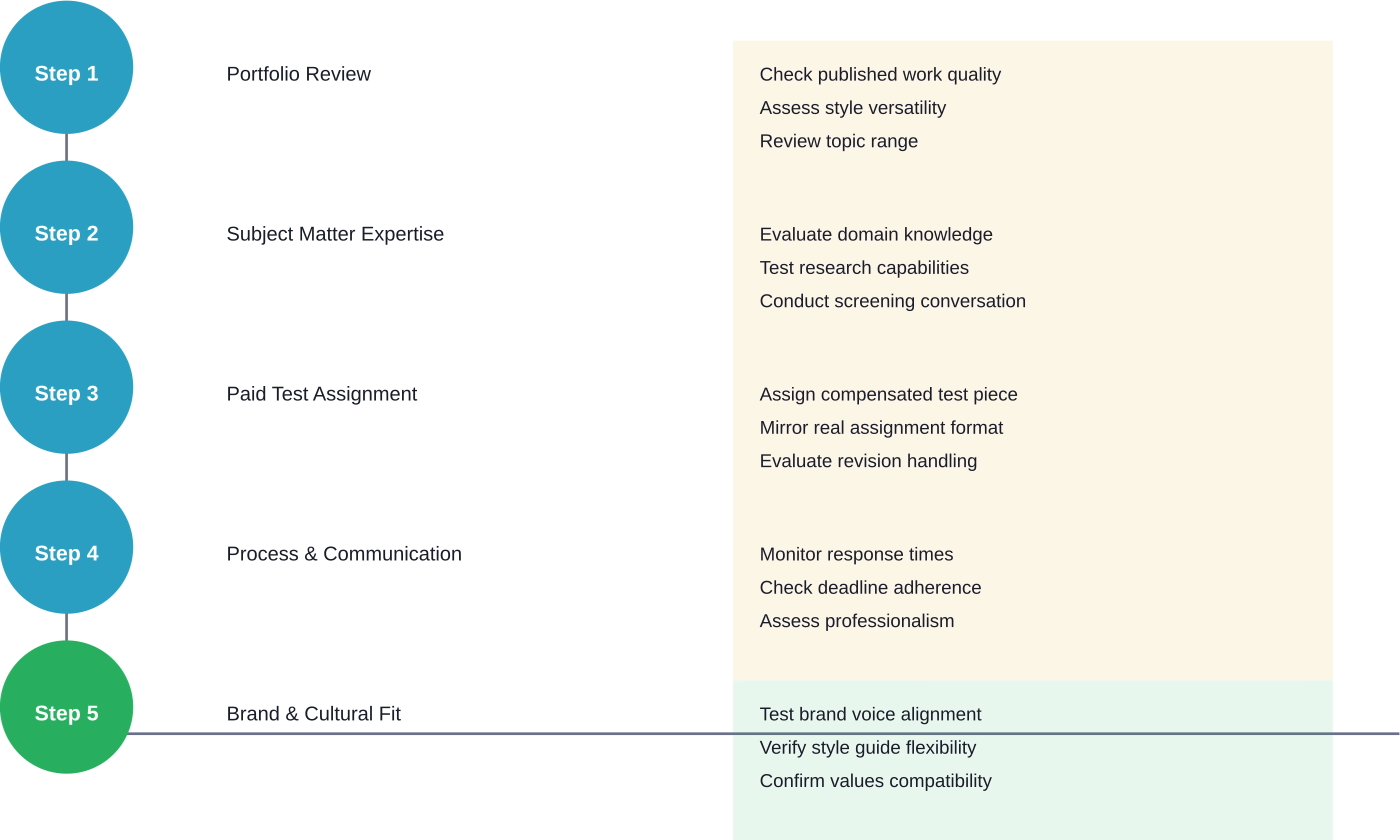
Portfolio review comes first. What has this creator actually produced? Look beyond credentials to published work. Does their existing content match the quality level and style needed?
Pay attention to versatility if hiring for diverse content types. A writer who only has blog samples might struggle with white papers or social media content. Conversely, someone with varied portfolio pieces demonstrates adaptability.
Step two involves evaluating their understanding of the subject matter. For technical or specialized topics, domain knowledge separates good writers from great ones. According to Bureau of Labor Statistics data on technical writers, knowledge of or experience with technical subjects like science or engineering proves beneficial for that type of content.
A brief conversation or written exchange reveals a lot. How do they ask questions? Do they research before the call? Can they articulate why certain content approaches work better than others?
Step three requires a paid test assignment. This isn't spec work—compensate creators fairly for test pieces. A 500-800 word assignment provides enough material to evaluate writing quality, adherence to briefs, research capabilities, and revision responsiveness.
The test brief should mirror real assignments. If social media content matters most, test that. For long-form technical articles, test that. Don't evaluate a blog post test when the real need is video scripts.
Step four examines process and communication. How quickly do they respond to questions? Do they meet deadlines? Are revisions handled professionally? Writers can be technically skilled but difficult to work with—that combination rarely works long-term.
Step five assesses cultural and brand fit. Do they understand the company's values and voice? Can they adapt their natural writing style to match brand guidelines? Some creators resist conforming to style guides, preferring their own approach. That's fine for bylined thought leadership but problematic for brand content.
Setting Up Workflows That Actually Work
Workflow design makes or breaks outsourced content operations. Even exceptional writers produce mediocre results when workflows create confusion or bottlenecks.
Start with a centralized content calendar. Every stakeholder should see what's assigned, in progress, in review, and published. Tools like Airtable, Asana, or Trello work well. The specific platform matters less than consistent usage.
Brief creation needs standardization. Templates ensure nothing gets forgotten. Each brief should include deadline, word count, target keyword, key points, reference materials, and formatting requirements. Inconsistent briefs produce inconsistent content.
Feedback loops require structure. How long does the review process take? Who provides feedback—one editor or multiple stakeholders? Competing feedback from different reviewers frustrates writers and slows production.
One reviewer should consolidate feedback before sending it to creators. Nothing kills momentum faster than receiving contradictory revision requests from three different people.
Revision policies need clarity upfront. How many rounds come standard? What qualifies as minor tweaks versus major rewrites? When do additional revisions incur extra fees? Ambiguity here creates conflict.
Payment terms and invoicing deserve attention too. Net-30 payment terms might work for agencies but frustrate individual freelancers. Quick payment often translates to priority treatment when writers juggle multiple clients.
Critical Workflow Components
Communication channels matter more than most realize. Email works for formal correspondence, but quick questions bog down in inbox clutter. Many successful outsourcing relationships use Slack or similar platforms for rapid clarification.
File management and version control prevent disasters. Google Docs enables real-time collaboration and maintains version history. Whatever system gets chosen, make sure everyone can access current versions and track changes.
Quality control checkpoints catch issues before publication. At minimum, content should pass through spell-check, fact-checking, brand voice review, and SEO optimization review. Skipping steps to save time inevitably backfires.
Performance tracking informs decisions about continuing relationships. Are pieces hitting target keywords? Generating traffic? Creating engagement? Writers performing consistently below expectations need feedback or replacement.
Protecting Brand Consistency and Quality Control
Brand consistency becomes harder to maintain as more external creators join the mix. Without active management, outsourced content starts feeling disjointed.
Comprehensive brand guidelines help, but they can't be 200 pages long. Writers won't read that. Instead, create a condensed style guide covering voice, tone, formatting preferences, and common errors to avoid.
Include real examples. Show what good looks like versus what doesn't. Before-and-after samples teach faster than abstract rules.
Regular feedback maintains standards. When content misses the mark, explain specifically what needs adjustment and why. Vague feedback like "this doesn't feel right" doesn't help creators improve.
Consider periodic check-ins beyond individual assignments. A quarterly call discussing what's working and what isn't keeps everyone aligned. Writers appreciate understanding how their content performs.
Quality control extends beyond grammar and spelling. Does the content actually serve its purpose? Will the target audience find it valuable? Does it align with broader marketing goals?
Even when working with external suppliers, establishing internal ownership remains important. Someone internal should own content strategy, even when creation gets outsourced.
Common Quality Control Pitfalls
Managing Social Media Content Outsourcing
Social media content presents unique challenges when outsourcing. The immediacy and conversational nature of social platforms make brand voice particularly important.
Context matters enormously. A creator might nail blog post tone but struggle with Twitter's compressed format or Instagram's visual-first approach. Testing across formats during vetting prevents mismatches.
Social media also requires rapid response capabilities that formal approval workflows can't accommodate. Successful outsourced social typically involves more upfront trust and looser review processes.
That said, quality control still matters. Templated approval processes for evergreen content can coexist with delegation for timely reactive posts. Define which content types need approval versus which the creator can post directly.
Social listening becomes essential. Outsourced creators might miss nuanced context about industry conversations or company developments. Regular briefings keep external teams informed about what's happening internally.
Protecting brand consistency while maintaining authenticity creates tension. Over-controlling social content makes it feel corporate and stiff. But too much freedom risks off-brand messages.
When to Choose Agencies Over Freelancers
The agency versus freelancer decision isn't just about budget. Different operational needs favor different models.
Agencies make sense when content volume consistently exceeds what one or two freelancers can handle. They maintain benches of creators, providing backup when someone gets sick or overbooked.
Project management overhead also factors in. Managing five individual freelancers takes considerably more time than working with one agency account manager who handles creator coordination.
Specialized needs might require agency resources too. A campaign needing simultaneous blog posts, infographics, video scripts, and social content probably exceeds typical freelancer scope.
But agencies cost more. Those project management layers and backup capacity come at a premium. For organizations with simpler needs or tighter budgets, direct freelancer relationships often deliver better value.
Control represents another consideration. Direct freelancer relationships allow more specific creator selection and closer collaboration. Agency models typically assign creators from their roster—sometimes with limited client input.
Agency vs. Freelancer Decision Matrix
Onboarding External Content Creators
Onboarding sets the tone for the entire working relationship. Rush this phase and problems compound quickly.
Start with comprehensive orientation. Share company background, target audience insights, competitive landscape, and strategic goals. Context helps creators understand not just what to write, but why it matters.
Provide access to necessary tools and resources. That includes content management systems, stock photo libraries, research databases, or analytics platforms. Asking creators to work blind guarantees subpar results.
Walk through the workflow explicitly. Don't assume familiarity with internal processes. Where do briefs come from? How should drafts be submitted? Who handles what in the review process?
Set expectations around communication. What's the expected response time for questions? Which communication channels should be used for what? Are there specific hours when creators shouldn't expect replies?
The first assignment should be straightforward—not the most complex, high-stakes piece in the queue. Success on early projects builds confidence and establishes rhythm.
Schedule a debrief after the first few pieces. What's working well? What feels unclear? Early course correction prevents entrenched bad habits.
Legal and Contractual Considerations
Contracts protect both parties. Even with trusted freelancers, written agreements prevent misunderstandings.
Intellectual property rights need explicit definition. Who owns the content—the company or the creator? Work-for-hire agreements typically assign all rights to the company, but confirm this rather than assuming.
Confidentiality clauses matter when creators access proprietary information, unreleased products, or strategic plans. Non-disclosure agreements might be separate documents or embedded in master service agreements.
Payment terms, revision policies, and termination conditions all belong in writing. What happens if either party wants to end the relationship? How much notice is required?
Kill fees should be addressed. If a piece gets canceled after drafting but before completion, does the creator receive partial payment? Industry standard typically ranges from 25-50% for killed assignments.
Clear contracts provide foundation for long-term relationships when working with external content creators.
Measuring Outsourced Content Performance
Tracking performance connects content investment to business results. Without measurement, decisions about continuing or changing outsourcing relationships become guesswork.
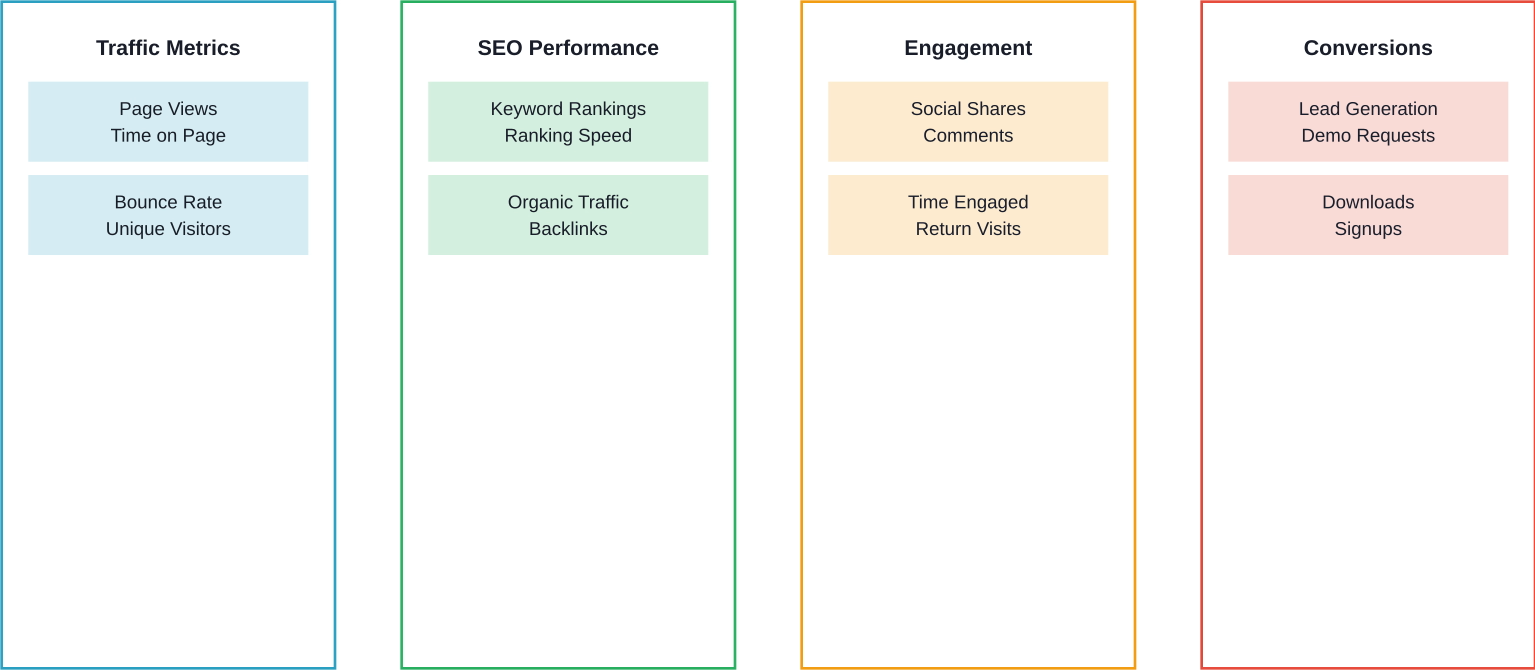
Traffic metrics provide baseline assessment. Are outsourced pieces attracting readers? Look at page views, time on page, and bounce rate. Content that doesn't get read or gets immediately abandoned isn't working.
SEO performance matters for content marketing approaches. Track keyword rankings for target terms. Are pieces actually ranking? How long did it take to rank? Did rankings improve over time?
Engagement metrics reveal content quality beyond traffic numbers. Social shares, comments, and backlinks indicate whether audiences find content valuable enough to engage with or reference.
Conversion tracking connects content to business outcomes. For performance-focused content, what percentage of readers take desired actions—signing up, downloading resources, requesting demos?
Creator-level analytics identify patterns. Does one writer consistently produce higher-performing content? That insight informs decisions about workload distribution and rate negotiations.
Regular reporting should include both absolute performance and relative benchmarks. How does outsourced content perform compared to internal content or previous time periods?
Scaling Content Operations
Successful pilot programs naturally lead to questions about scaling. But expansion requires strategy, not just adding more creators.
Process documentation becomes critical at scale. What works managing two freelancers breaks down with ten. Document workflows, create templates, and establish clear communication protocols before expanding.
Consider tiered creator systems. Top performers get first crack at premium assignments and higher rates. Newer or less experienced creators handle straightforward pieces while proving themselves.
Quality control mechanisms need reinforcement at scale. More content means more potential for errors. Spot-checking might suffice with small volumes, but systematic review processes become necessary as output grows.
Technology can help manage complexity. Editorial calendar tools, project management platforms, and content workflow software prevent balls from getting dropped.
But don't let tools replace relationships. Even at scale, successful content operations maintain personal connections with key creators. Regular communication, fair treatment, and respect for their expertise keep top talent engaged.
Conclusion
Content creation outsourcing works when approached systematically. The data shows that 40% of marketing professionals already outsource all or most of their content—this isn't experimental territory anymore.
Success comes down to three things: clear processes before hiring, thorough vetting during hiring, and consistent management after hiring. Skip any of these and problems compound quickly.
The upfront investment in documentation, workflow design, and comprehensive onboarding pays dividends through higher quality content and longer creator relationships. Writers who understand brand voice, receive clear briefs, and get consolidated feedback produce better work and stick around longer.
Start small. Test the process with one or two creators before scaling. Learn what works for the specific organization—industry, audience, and internal culture all affect what outsourcing model fits best.
Ready to outsource content creation? Begin by documenting current processes and requirements. Then move to creator vetting using the five-step framework outlined here. Build relationships that deliver consistent quality, not just one-off projects.
Frequently Asked Questions
Topics
Content Creation Outsourcing Guide 2026: How to Do It Right

Content creation outsourcing involves hiring external writers, designers, or agencies to produce marketing materials, allowing businesses to access specialized skills while focusing on core operations. According to a WG Content survey, 40% of marketing professionals outsource all or almost all of their content. Successful outsourcing requires clear processes, thorough vetting, and ongoing quality control to maintain brand consistency.
Creating quality content at scale isn't just challenging—it's practically impossible for most internal teams. Between blog posts, social media updates, technical documentation, and video scripts, the workload compounds faster than most organizations can handle.
That's where outsourcing comes in. But here's the thing: hiring external creators isn't as simple as posting a job ad and waiting for applications. Without a solid vetting process and clear workflows, outsourced content can quickly become inconsistent, off-brand, or just plain mediocre.
According to the Bureau of Labor Statistics, the median annual wage for writers and authors was $72,270 in May 2024, while technical writers earned $91,670 in May 2024. These numbers matter because they set realistic expectations for what quality content actually costs.
This guide breaks down everything from identifying the right candidates to building workflows that actually work. No fluff, just practical steps based on what marketing professionals are doing right now.
Why Businesses Outsource Content Creation
The decision to outsource typically stems from one of several pressure points. Most companies don't have unlimited budgets to build massive internal content teams, yet content demands keep growing.
According to a WG Content survey, 40% of marketing professionals outsource all or almost all of their content. Only 10% reported keeping everything in-house. That's a dramatic shift from even five years ago.
Time constraints hit particularly hard. Internal teams juggle multiple responsibilities, and content creation often gets pushed aside for what feels more urgent. Outsourcing frees up bandwidth for strategic work while maintaining content output.
Specialized knowledge presents another challenge. Technical writing, for instance, requires domain expertise that most generalist writers simply don't have. According to Bureau of Labor Statistics data, technical writers typically need a bachelor's degree and knowledge of or experience with technical subjects such as science or engineering—expertise that organizations typically source from external specialists.
Scalability matters too. Content needs fluctuate. Launching a new product might require 20 blog posts in two months, then drop to five per month afterward. Outsourcing allows flexible scaling without hiring and firing cycles.
The Real Costs of Content Creation
Budget discussions often focus solely on per-piece rates, but that's only part of the equation.In 2026, professional rates for high-quality, human-led (or AI-augmented) expert content start at $350-$500 per long-form piece (1,500+ words), while basic SEO-fillers average around $150-$250.
That baseline exists for good reason. Writers charging significantly less either lack experience or rush through assignments. Either way, the content suffers.
The median wage for editors was $75,260 in 2024, with editors holding about 115,800 jobs. These numbers reflect the real cost of quality content production when factoring in the full workflow—not just writing, but editing and refinement too.
Agencies typically cost more than individual freelancers but include project management, quality control, and backup capacity. That premium might be worth it for organizations needing consistent output without managing multiple freelancer relationships.
Content Creation Outsourcing with NeoWork
Creating consistent, high-quality content requires skilled writers, designers, and creators. NeoWork provides vetted teams to produce content that aligns with your brand and marketing goals.
Support includes:
- blog posts, articles, and copywriting
- graphic and visual content
- social media and multimedia assets
- content strategy and planning
NeoWork teams can integrate with your marketing department or manage entire content campaigns. Get started with NeoWork today to outsource content creation and scale your creative output.
Two Types of Outsourced Content Strategies
Before diving into hiring decisions, clarity on objectives makes everything easier. Content creation outsourcing generally falls into two distinct buckets, each requiring different approaches.
The first bucket focuses on content marketing—material designed to drive traffic, generate leads, and produce measurable business results. This content lives in the sales funnel. It targets specific keywords, answers customer questions, and moves prospects toward conversion.
The second bucket emphasizes thought leadership and brand building. This content establishes authority, shapes industry conversations, and builds long-term brand equity. Measurement looks different here—less about immediate conversions, more about share of voice and industry recognition.
These approaches aren't mutually exclusive, but they require different creator profiles. Performance-focused content marketing needs writers who understand SEO, conversion optimization, and analytics. Thought leadership demands subject matter experts who can articulate nuanced perspectives.
Getting clear on which bucket matters most—or how to balance both—shapes every downstream decision about who to hire and how to manage them.
Building Your Requirements and Process First
Here's where most outsourcing efforts fall apart: jumping straight to hiring without defining what success looks like. That approach guarantees frustration on both sides.
Start with documentation. What topics need coverage? What formats matter most—long-form articles, social media posts, white papers, video scripts? How frequently does new content need to publish?
Brand voice guidelines become non-negotiable when outsourcing. Internal team members absorb brand voice through osmosis. External creators need explicit direction. Is the tone conversational or formal? Technical or accessible? Bold or measured?
Workflow clarity prevents bottlenecks. Who reviews drafts? How many revision rounds are standard? What's the turnaround expectation between submission and feedback? These details might seem tedious, but ambiguity here creates endless back-and-forth later.
Content briefs deserve special attention. A solid brief includes target keyword, search intent, key points to cover, internal linking requirements, and any source material or research to reference. The more detailed the brief, the better the first draft.
Quality standards need definition too. What constitutes acceptable work versus work needing revision? Spelling and grammar expectations, fact-checking requirements, source citation standards—spell it all out.
Essential Elements of a Content Brief
Where to Find Quality Content Creators
The talent pool for content creators spans multiple platforms, each with distinct advantages and drawbacks. Knowing where to look saves considerable time.
Freelance marketplaces like Upwork and Fiverr offer massive candidate pools. But that's also the problem—sorting through hundreds of profiles to find legitimate talent takes effort. These platforms work best when combined with thorough vetting processes rather than relying on platform ratings alone.
Content agencies handle the vetting and management overhead but charge premium rates. For organizations needing consistent output without building internal content operations, agencies provide turnkey solutions. The tradeoff: less control over individual creator selection and higher per-piece costs.
Professional networks and referrals often yield the highest quality matches. Writers referred by trusted colleagues come pre-vetted. Industry-specific writer groups on LinkedIn or Slack can surface candidates with relevant expertise.
Bureau of Labor Statistics data shows that about 15% of editors work in self-employment arrangements, indicating a substantial freelance market. Many experienced creators maintain portfolios and accept direct client relationships outside marketplace platforms.
Social media can work too. Twitter and LinkedIn host active communities of writers who share their work publicly. Observing someone's content over time provides insight into their capabilities and voice.
Marketplace vs. Agency vs. Direct Hire
The Five-Step Vetting Process
Portfolio review comes first. What has this creator actually produced? Look beyond credentials to published work. Does their existing content match the quality level and style needed?
Pay attention to versatility if hiring for diverse content types. A writer who only has blog samples might struggle with white papers or social media content. Conversely, someone with varied portfolio pieces demonstrates adaptability.
Step two involves evaluating their understanding of the subject matter. For technical or specialized topics, domain knowledge separates good writers from great ones. According to Bureau of Labor Statistics data on technical writers, knowledge of or experience with technical subjects like science or engineering proves beneficial for that type of content.
A brief conversation or written exchange reveals a lot. How do they ask questions? Do they research before the call? Can they articulate why certain content approaches work better than others?
Step three requires a paid test assignment. This isn't spec work—compensate creators fairly for test pieces. A 500-800 word assignment provides enough material to evaluate writing quality, adherence to briefs, research capabilities, and revision responsiveness.
The test brief should mirror real assignments. If social media content matters most, test that. For long-form technical articles, test that. Don't evaluate a blog post test when the real need is video scripts.
Step four examines process and communication. How quickly do they respond to questions? Do they meet deadlines? Are revisions handled professionally? Writers can be technically skilled but difficult to work with—that combination rarely works long-term.
Step five assesses cultural and brand fit. Do they understand the company's values and voice? Can they adapt their natural writing style to match brand guidelines? Some creators resist conforming to style guides, preferring their own approach. That's fine for bylined thought leadership but problematic for brand content.
Setting Up Workflows That Actually Work
Workflow design makes or breaks outsourced content operations. Even exceptional writers produce mediocre results when workflows create confusion or bottlenecks.
Start with a centralized content calendar. Every stakeholder should see what's assigned, in progress, in review, and published. Tools like Airtable, Asana, or Trello work well. The specific platform matters less than consistent usage.
Brief creation needs standardization. Templates ensure nothing gets forgotten. Each brief should include deadline, word count, target keyword, key points, reference materials, and formatting requirements. Inconsistent briefs produce inconsistent content.
Feedback loops require structure. How long does the review process take? Who provides feedback—one editor or multiple stakeholders? Competing feedback from different reviewers frustrates writers and slows production.
One reviewer should consolidate feedback before sending it to creators. Nothing kills momentum faster than receiving contradictory revision requests from three different people.
Revision policies need clarity upfront. How many rounds come standard? What qualifies as minor tweaks versus major rewrites? When do additional revisions incur extra fees? Ambiguity here creates conflict.
Payment terms and invoicing deserve attention too. Net-30 payment terms might work for agencies but frustrate individual freelancers. Quick payment often translates to priority treatment when writers juggle multiple clients.
Critical Workflow Components
Communication channels matter more than most realize. Email works for formal correspondence, but quick questions bog down in inbox clutter. Many successful outsourcing relationships use Slack or similar platforms for rapid clarification.
File management and version control prevent disasters. Google Docs enables real-time collaboration and maintains version history. Whatever system gets chosen, make sure everyone can access current versions and track changes.
Quality control checkpoints catch issues before publication. At minimum, content should pass through spell-check, fact-checking, brand voice review, and SEO optimization review. Skipping steps to save time inevitably backfires.
Performance tracking informs decisions about continuing relationships. Are pieces hitting target keywords? Generating traffic? Creating engagement? Writers performing consistently below expectations need feedback or replacement.
Protecting Brand Consistency and Quality Control
Brand consistency becomes harder to maintain as more external creators join the mix. Without active management, outsourced content starts feeling disjointed.
Comprehensive brand guidelines help, but they can't be 200 pages long. Writers won't read that. Instead, create a condensed style guide covering voice, tone, formatting preferences, and common errors to avoid.
Include real examples. Show what good looks like versus what doesn't. Before-and-after samples teach faster than abstract rules.
Regular feedback maintains standards. When content misses the mark, explain specifically what needs adjustment and why. Vague feedback like "this doesn't feel right" doesn't help creators improve.
Consider periodic check-ins beyond individual assignments. A quarterly call discussing what's working and what isn't keeps everyone aligned. Writers appreciate understanding how their content performs.
Quality control extends beyond grammar and spelling. Does the content actually serve its purpose? Will the target audience find it valuable? Does it align with broader marketing goals?
Even when working with external suppliers, establishing internal ownership remains important. Someone internal should own content strategy, even when creation gets outsourced.
Common Quality Control Pitfalls
Managing Social Media Content Outsourcing
Social media content presents unique challenges when outsourcing. The immediacy and conversational nature of social platforms make brand voice particularly important.
Context matters enormously. A creator might nail blog post tone but struggle with Twitter's compressed format or Instagram's visual-first approach. Testing across formats during vetting prevents mismatches.
Social media also requires rapid response capabilities that formal approval workflows can't accommodate. Successful outsourced social typically involves more upfront trust and looser review processes.
That said, quality control still matters. Templated approval processes for evergreen content can coexist with delegation for timely reactive posts. Define which content types need approval versus which the creator can post directly.
Social listening becomes essential. Outsourced creators might miss nuanced context about industry conversations or company developments. Regular briefings keep external teams informed about what's happening internally.
Protecting brand consistency while maintaining authenticity creates tension. Over-controlling social content makes it feel corporate and stiff. But too much freedom risks off-brand messages.
When to Choose Agencies Over Freelancers
The agency versus freelancer decision isn't just about budget. Different operational needs favor different models.
Agencies make sense when content volume consistently exceeds what one or two freelancers can handle. They maintain benches of creators, providing backup when someone gets sick or overbooked.
Project management overhead also factors in. Managing five individual freelancers takes considerably more time than working with one agency account manager who handles creator coordination.
Specialized needs might require agency resources too. A campaign needing simultaneous blog posts, infographics, video scripts, and social content probably exceeds typical freelancer scope.
But agencies cost more. Those project management layers and backup capacity come at a premium. For organizations with simpler needs or tighter budgets, direct freelancer relationships often deliver better value.
Control represents another consideration. Direct freelancer relationships allow more specific creator selection and closer collaboration. Agency models typically assign creators from their roster—sometimes with limited client input.
Agency vs. Freelancer Decision Matrix
Onboarding External Content Creators
Onboarding sets the tone for the entire working relationship. Rush this phase and problems compound quickly.
Start with comprehensive orientation. Share company background, target audience insights, competitive landscape, and strategic goals. Context helps creators understand not just what to write, but why it matters.
Provide access to necessary tools and resources. That includes content management systems, stock photo libraries, research databases, or analytics platforms. Asking creators to work blind guarantees subpar results.
Walk through the workflow explicitly. Don't assume familiarity with internal processes. Where do briefs come from? How should drafts be submitted? Who handles what in the review process?
Set expectations around communication. What's the expected response time for questions? Which communication channels should be used for what? Are there specific hours when creators shouldn't expect replies?
The first assignment should be straightforward—not the most complex, high-stakes piece in the queue. Success on early projects builds confidence and establishes rhythm.
Schedule a debrief after the first few pieces. What's working well? What feels unclear? Early course correction prevents entrenched bad habits.
Legal and Contractual Considerations
Contracts protect both parties. Even with trusted freelancers, written agreements prevent misunderstandings.
Intellectual property rights need explicit definition. Who owns the content—the company or the creator? Work-for-hire agreements typically assign all rights to the company, but confirm this rather than assuming.
Confidentiality clauses matter when creators access proprietary information, unreleased products, or strategic plans. Non-disclosure agreements might be separate documents or embedded in master service agreements.
Payment terms, revision policies, and termination conditions all belong in writing. What happens if either party wants to end the relationship? How much notice is required?
Kill fees should be addressed. If a piece gets canceled after drafting but before completion, does the creator receive partial payment? Industry standard typically ranges from 25-50% for killed assignments.
Clear contracts provide foundation for long-term relationships when working with external content creators.
Measuring Outsourced Content Performance
Tracking performance connects content investment to business results. Without measurement, decisions about continuing or changing outsourcing relationships become guesswork.
Traffic metrics provide baseline assessment. Are outsourced pieces attracting readers? Look at page views, time on page, and bounce rate. Content that doesn't get read or gets immediately abandoned isn't working.
SEO performance matters for content marketing approaches. Track keyword rankings for target terms. Are pieces actually ranking? How long did it take to rank? Did rankings improve over time?
Engagement metrics reveal content quality beyond traffic numbers. Social shares, comments, and backlinks indicate whether audiences find content valuable enough to engage with or reference.
Conversion tracking connects content to business outcomes. For performance-focused content, what percentage of readers take desired actions—signing up, downloading resources, requesting demos?
Creator-level analytics identify patterns. Does one writer consistently produce higher-performing content? That insight informs decisions about workload distribution and rate negotiations.
Regular reporting should include both absolute performance and relative benchmarks. How does outsourced content perform compared to internal content or previous time periods?
Scaling Content Operations
Successful pilot programs naturally lead to questions about scaling. But expansion requires strategy, not just adding more creators.
Process documentation becomes critical at scale. What works managing two freelancers breaks down with ten. Document workflows, create templates, and establish clear communication protocols before expanding.
Consider tiered creator systems. Top performers get first crack at premium assignments and higher rates. Newer or less experienced creators handle straightforward pieces while proving themselves.
Quality control mechanisms need reinforcement at scale. More content means more potential for errors. Spot-checking might suffice with small volumes, but systematic review processes become necessary as output grows.
Technology can help manage complexity. Editorial calendar tools, project management platforms, and content workflow software prevent balls from getting dropped.
But don't let tools replace relationships. Even at scale, successful content operations maintain personal connections with key creators. Regular communication, fair treatment, and respect for their expertise keep top talent engaged.
Conclusion
Content creation outsourcing works when approached systematically. The data shows that 40% of marketing professionals already outsource all or most of their content—this isn't experimental territory anymore.
Success comes down to three things: clear processes before hiring, thorough vetting during hiring, and consistent management after hiring. Skip any of these and problems compound quickly.
The upfront investment in documentation, workflow design, and comprehensive onboarding pays dividends through higher quality content and longer creator relationships. Writers who understand brand voice, receive clear briefs, and get consolidated feedback produce better work and stick around longer.
Start small. Test the process with one or two creators before scaling. Learn what works for the specific organization—industry, audience, and internal culture all affect what outsourcing model fits best.
Ready to outsource content creation? Begin by documenting current processes and requirements. Then move to creator vetting using the five-step framework outlined here. Build relationships that deliver consistent quality, not just one-off projects.
Frequently Asked Questions
Topics
Related Blogs
Related Podcasts


.webp)

.webp)
.webp)



