

.avif)
.avif)

Data Analysis Outsourcing Guide 2026: Experts Explain


.svg)

Data analysis outsourcing connects businesses with external specialists to handle analytics, machine learning, and data infrastructure projects. Companies leverage outsourced teams to access expertise, reduce costs, and scale analytics capabilities without expanding internal headcount. Success depends on selecting qualified partners, establishing clear governance, and balancing security requirements with operational flexibility.
Most companies aren't drowning in data scarcity. They're drowning in data they can't meaningfully analyze.
Research from IDC and Seagate indicates that while organizations leverage more data than in previous decades, they still fail to utilize approximately 68% of the data available to them, meaning only about 32% of enterprise data is put to work. That's not a technology problem. It's a capacity problem. Internal teams weren't built to handle the volume, complexity, and specialized skill requirements that modern analytics demands.
Data analysis outsourcing addresses this gap by connecting organizations with external experts who handle everything from basic reporting to advanced machine learning implementations. But outsourcing analytics isn't just about offloading work—it's about accessing capabilities that would take years to build internally.
This guide breaks down what works, what doesn't, and how to structure outsourcing relationships that actually deliver value.
What Data Analysis Outsourcing Actually Means
Data analysis outsourcing involves contracting external specialists or firms to handle analytics tasks that would otherwise require in-house resources. These projects range from straightforward data processing to complex predictive modeling.
The scope varies wildly. Some businesses outsource specific technical tasks like data cleaning or visualization. Others hand over entire analytics functions, including strategy development and implementation.
Here's what typically gets outsourced:
- Data collection and integration from multiple sources
- Database management and optimization
- Statistical analysis and reporting
- Machine learning model development
- Business intelligence dashboard creation
- Predictive analytics and forecasting
The distinction between data science outsourcing and data analytics outsourcing matters less in practice than understanding what specific outcomes the business needs. Some providers specialize in narrow technical work. Others function as strategic partners who shape how organizations use data for decision-making.
Why Companies Choose to Outsource Analytics Work
Cost savings dominate the conversation around outsourcing, but they're not the whole story.
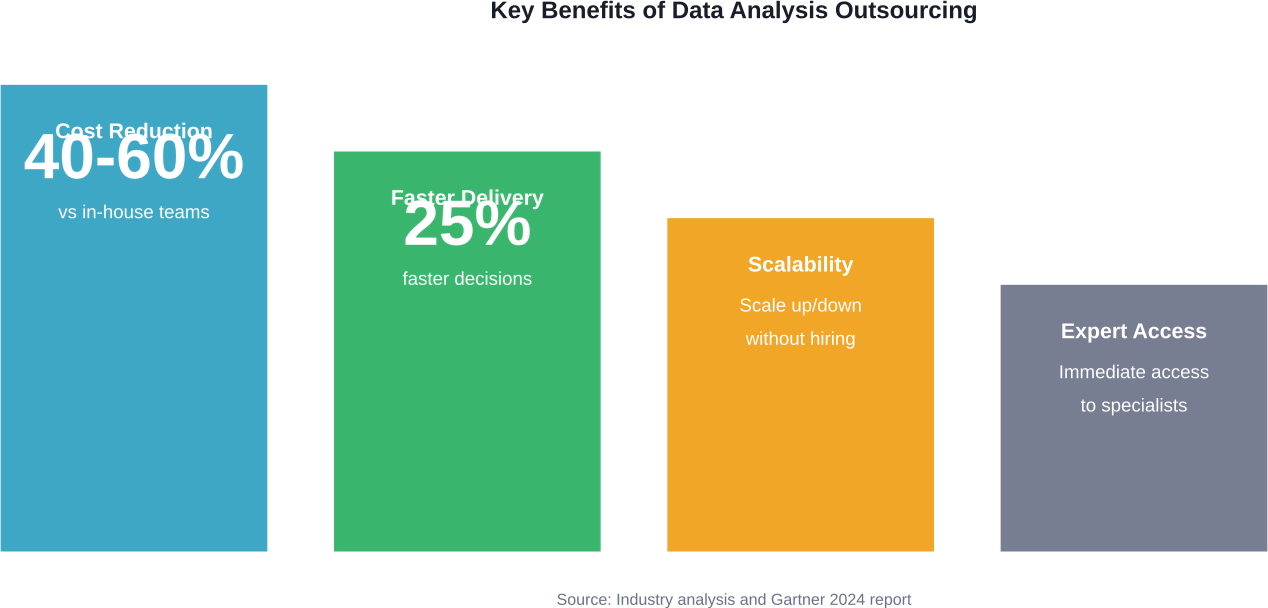
Immediate Access to Specialized Expertise
Building an internal analytics team means recruiting data scientists, engineers, and analysts—a process that can take months. Even after hiring, there's ramp-up time before the team delivers value.
Outsourcing eliminates this timeline. External teams bring established methodologies, tested tools, and experience across multiple industries. They've solved similar problems before.
Dramatic Cost Reduction
The financial math is straightforward. Hiring an experienced data scientist typically costs $120,000-$180,000 annually in salary alone, plus benefits, infrastructure, and ongoing training. Outsourced analytics teams typically cost 40-60% less for equivalent expertise.
Small and medium-sized enterprises benefit most from this model. Limited budgets make it nearly impossible to build comprehensive analytics capabilities internally. Outsourcing provides enterprise-level analytics at a fraction of the cost.
Scalability Without Headcount Growth
Project demands fluctuate. Launching a new product might require intensive analytics work for three months, then minimal support afterward. Maintaining full-time staff for periodic needs creates inefficiency.
Outsourcing allows businesses to scale analytics capacity up or down based on actual requirements. Need to analyze customer behavior across five markets? Spin up a team. Project complete? Scale back without layoffs or unused capacity.
Faster Time to Insights
Outsourced analytics teams can enable faster decision-making cycles, with some reporting 25% improvement in decision velocity. External teams focus exclusively on analytics deliverables without competing priorities that plague internal resources.

Efficient Data Analysis Outsourcing with NeoWork
Data-driven decisions require timely and accurate analysis. NeoWork provides experienced analysts who integrate into your workflows to turn raw data into actionable insights.
Support includes:
- data cleaning and processing
- statistical analysis and reporting
- dashboards and visualization
- predictive modeling and forecasting
NeoWork can augment your team or manage full analytics projects, ensuring reliable results. Get started with NeoWork today to optimize data analysis outsourcing and tap into global expertise.
The Risks Nobody Talks About
Outsourcing analytics creates vulnerabilities that don't exist with internal teams. Ignoring these risks leads to failed projects and security incidents.
Data Security and Compliance Exposure
Handing sensitive data to external parties introduces risk. ISACA research indicates that as reliance on third parties grows, organizations face heightened privacy, security, and compliance challenges requiring robust third-party management frameworks.
Healthcare diagnostic agents achieving high benchmark accuracy have been relegated to limited advisory roles post-deployment due to unmeasured trust and workflow integration issues. Technical capability doesn't guarantee practical deployment when security concerns dominate.
Multinational organizations must navigate complex legal and regulatory challenges when adopting cross-border cloud services. Different jurisdictions impose varying data residency requirements, making compliance a moving target.
Quality Control Challenges
Distance creates visibility problems. Internal teams work down the hall. Outsourced teams operate in different time zones with limited oversight.
Code quality, methodology rigor, and analytical accuracy become harder to verify. Without strong governance frameworks, businesses discover quality issues only after decisions get made on flawed analysis.
Communication Gaps That Kill Projects
Time zone differences matter less than establishing clear communication protocols and documentation standards. But many organizations skip this foundational work.
Misaligned expectations cause scope creep, missed deadlines, and deliverables that don't match business needs. The problem isn't technical—it's structural.
Loss of Internal Knowledge
Relying heavily on external teams prevents internal capability development. Organizations become dependent on vendors for basic analytics tasks, creating long-term strategic vulnerability.
Selecting the Right Analytics Partner
Partner selection determines success more than any other factor. The wrong choice creates expensive problems that take months to unwind.
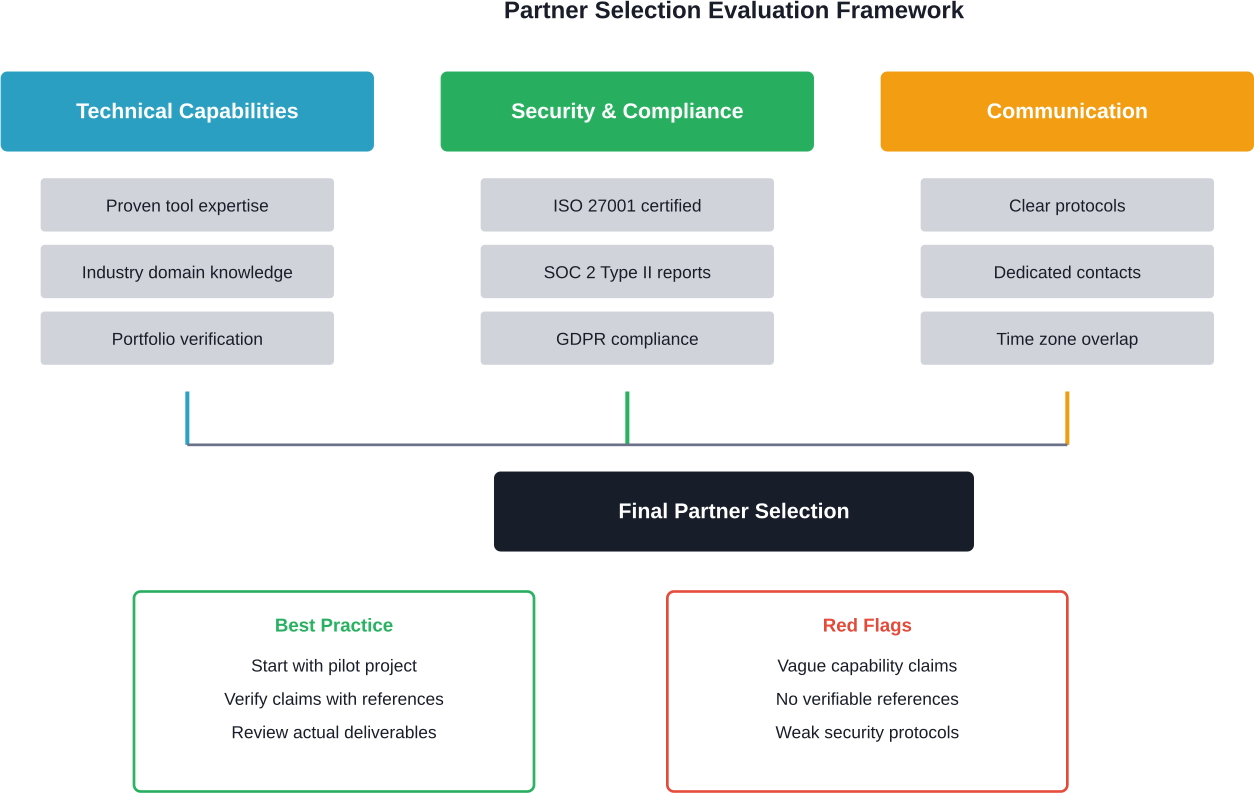
Technical Capabilities That Actually Matter
Ask specific questions about tools, methodologies, and previous projects. Generic claims about "cutting-edge analytics" mean nothing.
What matters:
- Proven experience with relevant tools (Python, R, SQL, specific platforms)
- Domain expertise in the business's industry
- Portfolio of completed projects with measurable outcomes
- Technical certifications from recognized organizations
- Experience with similar data volumes and complexity
Research on IT outsourcing best practices indicates that 60% of recognized best practices are accepted and practiced by global companies. The gap between awareness and implementation highlights the importance of verifying actual practice, not just capability claims.
Security and Compliance Credentials
ISACA research on vendor risk management emphasizes that while it's acceptable to have work completed by external vendors based on mutually agreed contracts, the overall management of related risk remains a pertinent point of attention.
Look for:
- ISO 27001 certification for information security management
- SOC 2 Type II compliance reports
- GDPR compliance documentation (for European data)
- Industry-specific certifications (HIPAA for healthcare, PCI DSS for payments)
- Clear data handling and retention policies
Communication Structure and Project Management
How does the provider handle project communication? Daily standups? Weekly reports? On-demand access?
Effective partners establish clear protocols from day one. They assign dedicated points of contact, provide regular status updates, and maintain transparent documentation.
Cultural and Time Zone Considerations
Cultural alignment affects collaboration quality. Some teams operate with extreme formality. Others prefer casual, direct communication. Mismatched styles create friction.
Time zone overlap matters for real-time collaboration. At minimum, aim for 3-4 hours of overlapping work time for synchronous communication when needed.
Best Practices for Managing Outsourced Analytics
Getting the partner selection right is step one. Managing the relationship effectively determines whether the partnership delivers sustained value.
Start With a Pilot Project
Never commit to a long-term engagement without testing the partnership first. Pilot projects reveal how teams actually work together, not how they claim they'll work.
Choose a project that's important enough to matter but limited enough in scope to contain risk. Three to four weeks provides enough time to evaluate technical quality, communication effectiveness, and cultural fit.
Establish Clear Governance Frameworks
Define decision-making authority from day one. Who approves methodology changes? Who signs off on deliverables? What escalation path exists for disputes?
Risk management frameworks specify that every risk be identified and assessed. Organizations can choose among appropriate risk management options: risk avoidance, risk mitigation, risk transfer, or risk acceptance.
Document everything:
- Project scope and objectives
- Deliverable specifications and acceptance criteria
- Communication protocols and schedules
- Data handling and security requirements
- Performance metrics and evaluation criteria
Implement Rigorous Quality Controls
Trust doesn't mean abandoning verification. Effective quality control catches problems early, before they compound.
Strategies that work:
- Mandatory code reviews for all analytical work
- Independent validation of statistical methodologies
- Regular audits of data processing workflows
- Automated testing for data pipelines
- Peer review requirements for major deliverables
Maintain Knowledge Transfer Mechanisms
Outsourcing shouldn't create a black box. Internal teams need to understand the analytics being performed, even if they're not doing the work.
Require comprehensive documentation. Insist on knowledge transfer sessions. Have internal staff shadow external teams on key projects. The goal is maintaining enough internal capability to evaluate quality and ask informed questions.
Build Overlapping Time for Collaboration
Asynchronous communication works for routine updates. Complex problem-solving requires real-time collaboration.
Structure schedules to create 3-4 hours of overlap daily. Use this time for standups, technical discussions, and decision-making. Protect this overlap time aggressively.
In-House vs Outsourced: Making the Right Choice
The in-house versus outsourced debate misses the point. Most successful analytics operations use both.
The optimal approach combines both. Keep core analytics capabilities in-house for strategic work that requires deep business understanding. Outsource specialized technical work, capacity overflow, and experimental projects.
Common Mistakes That Destroy Outsourcing Projects
Most outsourcing failures follow predictable patterns. Avoiding these mistakes prevents expensive disasters.
Inadequate Scope Definition
Vague requirements create misaligned expectations. "We need better customer analytics" means different things to different people.
Define specific deliverables, success criteria, and constraints. What questions need answering? What format should results take? What decisions will the analysis inform?
Choosing Based on Price Alone
The cheapest provider rarely delivers the best value. Low bids often hide limited capabilities, inexperienced staff, or inadequate security protocols.
Evaluate total cost of ownership, including time spent on project management, rework for quality issues, and potential security incidents.
Skipping Reference Checks
Provider claims are marketing. References reveal actual performance.
Talk to at least three previous clients. Ask specific questions about quality, communication, problem resolution, and whether they'd hire the provider again.
Ignoring Cultural Fit
Technical capability matters, but cultural alignment determines whether teams actually work well together.
Working styles, communication preferences, and decision-making processes vary significantly across organizations and geographies. Misalignment creates constant friction.
Insufficient Internal Resources
Outsourcing doesn't eliminate the need for internal involvement. Someone must manage the relationship, review deliverables, and integrate results into business operations.
Allocate adequate internal resources for oversight and collaboration. Undermanned partnerships fail regardless of provider quality.
The AI Factor in Analytics Outsourcing
AI and automation are reshaping what gets outsourced and how partnerships function.
Routine analytics tasks that once required human analysts now run through automated systems. Data cleaning, basic visualization, and standard reporting increasingly happen through AI-powered platforms.
This shift changes the value proposition of outsourcing. The focus moves from basic data processing to strategic analytics that requires human judgment, domain expertise, and creative problem-solving.
Advanced AI capabilities—natural language processing, computer vision, deep learning—remain specialized skills that most organizations lack internally. Outsourcing provides access to these capabilities without the years of training required to build them in-house.
But AI introduces new risks. Models trained on biased data produce biased results. Black box algorithms make decisions that humans can't explain or verify. Effective AI analytics requires human oversight to catch these problems.
Regional Considerations for Analytics Outsourcing
Geography affects cost, expertise availability, and regulatory complexity.
Eastern European providers offer strong technical skills, reasonable costs, and favorable time zones for European and US clients. Cultural alignment tends to be strong with Western businesses.
Asian markets, particularly India and the Philippines, provide significant cost advantages. Time zone differences create challenges for real-time collaboration but enable follow-the-sun workflows where projects progress around the clock.
Latin American providers offer geographic proximity to US businesses with moderate time zone differences. Cultural and language barriers tend to be lower than Asian alternatives.
Nearshore versus offshore trade-offs depend on project requirements. Real-time collaboration favors nearshore. Cost optimization favors offshore. Most organizations use both depending on the specific project.
Structuring Contracts That Protect Both Parties
Contracts establish the foundation for successful partnerships. Weak contracts create ambiguity that leads to disputes.
Essential contract elements:
- Detailed scope of work with specific deliverables
- Performance metrics and quality standards
- Data ownership and usage rights
- Security requirements and breach protocols
- Confidentiality and non-disclosure provisions
- Liability limitations and indemnification
- Termination clauses and transition support
- Dispute resolution mechanisms
Build flexibility into fixed-price contracts through change order processes. Projects evolve. Rigid contracts that can't accommodate necessary changes create dysfunction.
Consider hybrid pricing models that combine fixed fees for defined deliverables with hourly rates for variable work. This balances budget predictability with flexibility.
Measuring Outsourcing Success
What gets measured gets managed. Define success metrics before projects start.
Quantitative metrics:
- Delivery timeline adherence
- Budget variance
- Defect rates in deliverables
- Response time for communications
- Model accuracy for predictive analytics
Qualitative metrics:
- Stakeholder satisfaction scores
- Quality of insights generated
- Business impact of recommendations
- Ease of collaboration
- Cultural fit assessment
Track metrics consistently. Regular reviews identify problems early and create opportunities for course correction.
When to Bring Analytics In-House
Outsourcing isn't permanent. As businesses grow and analytics capabilities mature, the calculus changes.
Signals it's time to build internal capabilities:
- Analytics has become core to competitive advantage
- Outsourcing costs exceed the cost of internal teams
- Security or compliance requirements make external access too risky
- The need for deep business context exceeds what external teams can develop
- Analytics requirements have stabilized enough to justify fixed costs
Transitioning from outsourced to in-house requires planning. Knowledge transfer, hiring, infrastructure setup, and process development take time. Start the transition before completely eliminating outsourced support.
Many organizations maintain hybrid models indefinitely—core capabilities in-house, specialized or overflow work outsourced. This provides flexibility while maintaining control over strategic analytics.
Final Thoughts on Data Analysis Outsourcing
Data analysis outsourcing works when organizations approach it strategically rather than tactically. It's not about offloading work nobody wants to do. It's about accessing capabilities that would take years to build internally.
The businesses that succeed with outsourcing share common characteristics. They define clear objectives before engaging providers. They invest in partner selection rather than choosing based on price alone. They maintain active involvement rather than treating outsourcing as a black box. And they balance cost savings against quality, security, and strategic control.
Start small. Pilot projects reveal how partnerships actually function. Scale what works. Abandon what doesn't. Build internal analytics capabilities for core strategic work while leveraging external expertise for specialized skills and temporary capacity needs.
The data exists. The analytical tools exist. The external expertise exists. What separates organizations that extract value from those that don't is execution—choosing the right partners, managing relationships effectively, and integrating insights into actual business decisions.
Ready to explore data analysis outsourcing for your organization? Start by documenting specific business questions that need answering, identifying capability gaps in current teams, and researching providers with proven experience in your industry. The investment in upfront planning prevents expensive mistakes and creates foundations for partnerships that actually deliver value.
Frequently Asked Questions
Topics
Data Analysis Outsourcing Guide 2026: Experts Explain

Data analysis outsourcing connects businesses with external specialists to handle analytics, machine learning, and data infrastructure projects. Companies leverage outsourced teams to access expertise, reduce costs, and scale analytics capabilities without expanding internal headcount. Success depends on selecting qualified partners, establishing clear governance, and balancing security requirements with operational flexibility.
Most companies aren't drowning in data scarcity. They're drowning in data they can't meaningfully analyze.
Research from IDC and Seagate indicates that while organizations leverage more data than in previous decades, they still fail to utilize approximately 68% of the data available to them, meaning only about 32% of enterprise data is put to work. That's not a technology problem. It's a capacity problem. Internal teams weren't built to handle the volume, complexity, and specialized skill requirements that modern analytics demands.
Data analysis outsourcing addresses this gap by connecting organizations with external experts who handle everything from basic reporting to advanced machine learning implementations. But outsourcing analytics isn't just about offloading work—it's about accessing capabilities that would take years to build internally.
This guide breaks down what works, what doesn't, and how to structure outsourcing relationships that actually deliver value.
What Data Analysis Outsourcing Actually Means
Data analysis outsourcing involves contracting external specialists or firms to handle analytics tasks that would otherwise require in-house resources. These projects range from straightforward data processing to complex predictive modeling.
The scope varies wildly. Some businesses outsource specific technical tasks like data cleaning or visualization. Others hand over entire analytics functions, including strategy development and implementation.
Here's what typically gets outsourced:
- Data collection and integration from multiple sources
- Database management and optimization
- Statistical analysis and reporting
- Machine learning model development
- Business intelligence dashboard creation
- Predictive analytics and forecasting
The distinction between data science outsourcing and data analytics outsourcing matters less in practice than understanding what specific outcomes the business needs. Some providers specialize in narrow technical work. Others function as strategic partners who shape how organizations use data for decision-making.
Why Companies Choose to Outsource Analytics Work
Cost savings dominate the conversation around outsourcing, but they're not the whole story.
Immediate Access to Specialized Expertise
Building an internal analytics team means recruiting data scientists, engineers, and analysts—a process that can take months. Even after hiring, there's ramp-up time before the team delivers value.
Outsourcing eliminates this timeline. External teams bring established methodologies, tested tools, and experience across multiple industries. They've solved similar problems before.
Dramatic Cost Reduction
The financial math is straightforward. Hiring an experienced data scientist typically costs $120,000-$180,000 annually in salary alone, plus benefits, infrastructure, and ongoing training. Outsourced analytics teams typically cost 40-60% less for equivalent expertise.
Small and medium-sized enterprises benefit most from this model. Limited budgets make it nearly impossible to build comprehensive analytics capabilities internally. Outsourcing provides enterprise-level analytics at a fraction of the cost.
Scalability Without Headcount Growth
Project demands fluctuate. Launching a new product might require intensive analytics work for three months, then minimal support afterward. Maintaining full-time staff for periodic needs creates inefficiency.
Outsourcing allows businesses to scale analytics capacity up or down based on actual requirements. Need to analyze customer behavior across five markets? Spin up a team. Project complete? Scale back without layoffs or unused capacity.
Faster Time to Insights
Outsourced analytics teams can enable faster decision-making cycles, with some reporting 25% improvement in decision velocity. External teams focus exclusively on analytics deliverables without competing priorities that plague internal resources.
Efficient Data Analysis Outsourcing with NeoWork
Data-driven decisions require timely and accurate analysis. NeoWork provides experienced analysts who integrate into your workflows to turn raw data into actionable insights.
Support includes:
- data cleaning and processing
- statistical analysis and reporting
- dashboards and visualization
- predictive modeling and forecasting
NeoWork can augment your team or manage full analytics projects, ensuring reliable results. Get started with NeoWork today to optimize data analysis outsourcing and tap into global expertise.
The Risks Nobody Talks About
Outsourcing analytics creates vulnerabilities that don't exist with internal teams. Ignoring these risks leads to failed projects and security incidents.
Data Security and Compliance Exposure
Handing sensitive data to external parties introduces risk. ISACA research indicates that as reliance on third parties grows, organizations face heightened privacy, security, and compliance challenges requiring robust third-party management frameworks.
Healthcare diagnostic agents achieving high benchmark accuracy have been relegated to limited advisory roles post-deployment due to unmeasured trust and workflow integration issues. Technical capability doesn't guarantee practical deployment when security concerns dominate.
Multinational organizations must navigate complex legal and regulatory challenges when adopting cross-border cloud services. Different jurisdictions impose varying data residency requirements, making compliance a moving target.
Quality Control Challenges
Distance creates visibility problems. Internal teams work down the hall. Outsourced teams operate in different time zones with limited oversight.
Code quality, methodology rigor, and analytical accuracy become harder to verify. Without strong governance frameworks, businesses discover quality issues only after decisions get made on flawed analysis.
Communication Gaps That Kill Projects
Time zone differences matter less than establishing clear communication protocols and documentation standards. But many organizations skip this foundational work.
Misaligned expectations cause scope creep, missed deadlines, and deliverables that don't match business needs. The problem isn't technical—it's structural.
Loss of Internal Knowledge
Relying heavily on external teams prevents internal capability development. Organizations become dependent on vendors for basic analytics tasks, creating long-term strategic vulnerability.
Selecting the Right Analytics Partner
Partner selection determines success more than any other factor. The wrong choice creates expensive problems that take months to unwind.
Technical Capabilities That Actually Matter
Ask specific questions about tools, methodologies, and previous projects. Generic claims about "cutting-edge analytics" mean nothing.
What matters:
- Proven experience with relevant tools (Python, R, SQL, specific platforms)
- Domain expertise in the business's industry
- Portfolio of completed projects with measurable outcomes
- Technical certifications from recognized organizations
- Experience with similar data volumes and complexity
Research on IT outsourcing best practices indicates that 60% of recognized best practices are accepted and practiced by global companies. The gap between awareness and implementation highlights the importance of verifying actual practice, not just capability claims.
Security and Compliance Credentials
ISACA research on vendor risk management emphasizes that while it's acceptable to have work completed by external vendors based on mutually agreed contracts, the overall management of related risk remains a pertinent point of attention.
Look for:
- ISO 27001 certification for information security management
- SOC 2 Type II compliance reports
- GDPR compliance documentation (for European data)
- Industry-specific certifications (HIPAA for healthcare, PCI DSS for payments)
- Clear data handling and retention policies
Communication Structure and Project Management
How does the provider handle project communication? Daily standups? Weekly reports? On-demand access?
Effective partners establish clear protocols from day one. They assign dedicated points of contact, provide regular status updates, and maintain transparent documentation.
Cultural and Time Zone Considerations
Cultural alignment affects collaboration quality. Some teams operate with extreme formality. Others prefer casual, direct communication. Mismatched styles create friction.
Time zone overlap matters for real-time collaboration. At minimum, aim for 3-4 hours of overlapping work time for synchronous communication when needed.
Best Practices for Managing Outsourced Analytics
Getting the partner selection right is step one. Managing the relationship effectively determines whether the partnership delivers sustained value.
Start With a Pilot Project
Never commit to a long-term engagement without testing the partnership first. Pilot projects reveal how teams actually work together, not how they claim they'll work.
Choose a project that's important enough to matter but limited enough in scope to contain risk. Three to four weeks provides enough time to evaluate technical quality, communication effectiveness, and cultural fit.
Establish Clear Governance Frameworks
Define decision-making authority from day one. Who approves methodology changes? Who signs off on deliverables? What escalation path exists for disputes?
Risk management frameworks specify that every risk be identified and assessed. Organizations can choose among appropriate risk management options: risk avoidance, risk mitigation, risk transfer, or risk acceptance.
Document everything:
- Project scope and objectives
- Deliverable specifications and acceptance criteria
- Communication protocols and schedules
- Data handling and security requirements
- Performance metrics and evaluation criteria
Implement Rigorous Quality Controls
Trust doesn't mean abandoning verification. Effective quality control catches problems early, before they compound.
Strategies that work:
- Mandatory code reviews for all analytical work
- Independent validation of statistical methodologies
- Regular audits of data processing workflows
- Automated testing for data pipelines
- Peer review requirements for major deliverables
Maintain Knowledge Transfer Mechanisms
Outsourcing shouldn't create a black box. Internal teams need to understand the analytics being performed, even if they're not doing the work.
Require comprehensive documentation. Insist on knowledge transfer sessions. Have internal staff shadow external teams on key projects. The goal is maintaining enough internal capability to evaluate quality and ask informed questions.
Build Overlapping Time for Collaboration
Asynchronous communication works for routine updates. Complex problem-solving requires real-time collaboration.
Structure schedules to create 3-4 hours of overlap daily. Use this time for standups, technical discussions, and decision-making. Protect this overlap time aggressively.
In-House vs Outsourced: Making the Right Choice
The in-house versus outsourced debate misses the point. Most successful analytics operations use both.
The optimal approach combines both. Keep core analytics capabilities in-house for strategic work that requires deep business understanding. Outsource specialized technical work, capacity overflow, and experimental projects.
Common Mistakes That Destroy Outsourcing Projects
Most outsourcing failures follow predictable patterns. Avoiding these mistakes prevents expensive disasters.
Inadequate Scope Definition
Vague requirements create misaligned expectations. "We need better customer analytics" means different things to different people.
Define specific deliverables, success criteria, and constraints. What questions need answering? What format should results take? What decisions will the analysis inform?
Choosing Based on Price Alone
The cheapest provider rarely delivers the best value. Low bids often hide limited capabilities, inexperienced staff, or inadequate security protocols.
Evaluate total cost of ownership, including time spent on project management, rework for quality issues, and potential security incidents.
Skipping Reference Checks
Provider claims are marketing. References reveal actual performance.
Talk to at least three previous clients. Ask specific questions about quality, communication, problem resolution, and whether they'd hire the provider again.
Ignoring Cultural Fit
Technical capability matters, but cultural alignment determines whether teams actually work well together.
Working styles, communication preferences, and decision-making processes vary significantly across organizations and geographies. Misalignment creates constant friction.
Insufficient Internal Resources
Outsourcing doesn't eliminate the need for internal involvement. Someone must manage the relationship, review deliverables, and integrate results into business operations.
Allocate adequate internal resources for oversight and collaboration. Undermanned partnerships fail regardless of provider quality.
The AI Factor in Analytics Outsourcing
AI and automation are reshaping what gets outsourced and how partnerships function.
Routine analytics tasks that once required human analysts now run through automated systems. Data cleaning, basic visualization, and standard reporting increasingly happen through AI-powered platforms.
This shift changes the value proposition of outsourcing. The focus moves from basic data processing to strategic analytics that requires human judgment, domain expertise, and creative problem-solving.
Advanced AI capabilities—natural language processing, computer vision, deep learning—remain specialized skills that most organizations lack internally. Outsourcing provides access to these capabilities without the years of training required to build them in-house.
But AI introduces new risks. Models trained on biased data produce biased results. Black box algorithms make decisions that humans can't explain or verify. Effective AI analytics requires human oversight to catch these problems.
Regional Considerations for Analytics Outsourcing
Geography affects cost, expertise availability, and regulatory complexity.
Eastern European providers offer strong technical skills, reasonable costs, and favorable time zones for European and US clients. Cultural alignment tends to be strong with Western businesses.
Asian markets, particularly India and the Philippines, provide significant cost advantages. Time zone differences create challenges for real-time collaboration but enable follow-the-sun workflows where projects progress around the clock.
Latin American providers offer geographic proximity to US businesses with moderate time zone differences. Cultural and language barriers tend to be lower than Asian alternatives.
Nearshore versus offshore trade-offs depend on project requirements. Real-time collaboration favors nearshore. Cost optimization favors offshore. Most organizations use both depending on the specific project.
Structuring Contracts That Protect Both Parties
Contracts establish the foundation for successful partnerships. Weak contracts create ambiguity that leads to disputes.
Essential contract elements:
- Detailed scope of work with specific deliverables
- Performance metrics and quality standards
- Data ownership and usage rights
- Security requirements and breach protocols
- Confidentiality and non-disclosure provisions
- Liability limitations and indemnification
- Termination clauses and transition support
- Dispute resolution mechanisms
Build flexibility into fixed-price contracts through change order processes. Projects evolve. Rigid contracts that can't accommodate necessary changes create dysfunction.
Consider hybrid pricing models that combine fixed fees for defined deliverables with hourly rates for variable work. This balances budget predictability with flexibility.
Measuring Outsourcing Success
What gets measured gets managed. Define success metrics before projects start.
Quantitative metrics:
- Delivery timeline adherence
- Budget variance
- Defect rates in deliverables
- Response time for communications
- Model accuracy for predictive analytics
Qualitative metrics:
- Stakeholder satisfaction scores
- Quality of insights generated
- Business impact of recommendations
- Ease of collaboration
- Cultural fit assessment
Track metrics consistently. Regular reviews identify problems early and create opportunities for course correction.
When to Bring Analytics In-House
Outsourcing isn't permanent. As businesses grow and analytics capabilities mature, the calculus changes.
Signals it's time to build internal capabilities:
- Analytics has become core to competitive advantage
- Outsourcing costs exceed the cost of internal teams
- Security or compliance requirements make external access too risky
- The need for deep business context exceeds what external teams can develop
- Analytics requirements have stabilized enough to justify fixed costs
Transitioning from outsourced to in-house requires planning. Knowledge transfer, hiring, infrastructure setup, and process development take time. Start the transition before completely eliminating outsourced support.
Many organizations maintain hybrid models indefinitely—core capabilities in-house, specialized or overflow work outsourced. This provides flexibility while maintaining control over strategic analytics.
Final Thoughts on Data Analysis Outsourcing
Data analysis outsourcing works when organizations approach it strategically rather than tactically. It's not about offloading work nobody wants to do. It's about accessing capabilities that would take years to build internally.
The businesses that succeed with outsourcing share common characteristics. They define clear objectives before engaging providers. They invest in partner selection rather than choosing based on price alone. They maintain active involvement rather than treating outsourcing as a black box. And they balance cost savings against quality, security, and strategic control.
Start small. Pilot projects reveal how partnerships actually function. Scale what works. Abandon what doesn't. Build internal analytics capabilities for core strategic work while leveraging external expertise for specialized skills and temporary capacity needs.
The data exists. The analytical tools exist. The external expertise exists. What separates organizations that extract value from those that don't is execution—choosing the right partners, managing relationships effectively, and integrating insights into actual business decisions.
Ready to explore data analysis outsourcing for your organization? Start by documenting specific business questions that need answering, identifying capability gaps in current teams, and researching providers with proven experience in your industry. The investment in upfront planning prevents expensive mistakes and creates foundations for partnerships that actually deliver value.
Frequently Asked Questions
Topics
Related Blogs
Related Podcasts


.webp)

.webp)
.webp)



