

.avif)
.avif)

Video Editing Outsourcing Guide: 2026 Complete Breakdown


.svg)

Video editing outsourcing involves hiring external professionals or agencies to handle post-production work, freeing internal teams to focus on strategy and core business activities. Businesses typically choose hourly, per-minute, or project-based pricing models depending on their content volume and complexity. Success requires clear communication, structured workflows, and quality control measures to maintain brand consistency.
Video content dominates digital marketing. Brands create more videos than ever before, and editing all that raw footage in-house can become overwhelming fast.
That's where video editing outsourcing comes in. Businesses delegate post-production work to external professionals, freeing up time and resources for strategic activities. But outsourcing isn't as simple as handing off files and waiting for finished content.
This guide breaks down what video editing outsourcing actually means, why businesses choose it, how pricing works, where to find editors, and what makes outsourcing relationships succeed or fail.
What Video Editing Outsourcing Actually Means
Video editing outsourcing means hiring external professionals or agencies to handle post-production tasks instead of keeping everything in-house. These tasks range from basic trimming and color correction to complex motion graphics and multi-layer effects.
Some businesses outsource their entire video editing operation. Others keep strategic or brand-critical edits in-house while outsourcing high-volume, repetitive work like social media clips or repurposed content.
The scope varies widely. A company might outsource:
- Raw footage trimming and assembly
- Color grading and audio mixing
- Motion graphics and title animations
- Subtitle and caption generation
- Format adaptation for different platforms
- Thumbnail creation and visual branding
The key distinction? Outsourcing creates a working relationship with external talent rather than expanding internal headcount. That flexibility makes it appealing for businesses with fluctuating video production needs.
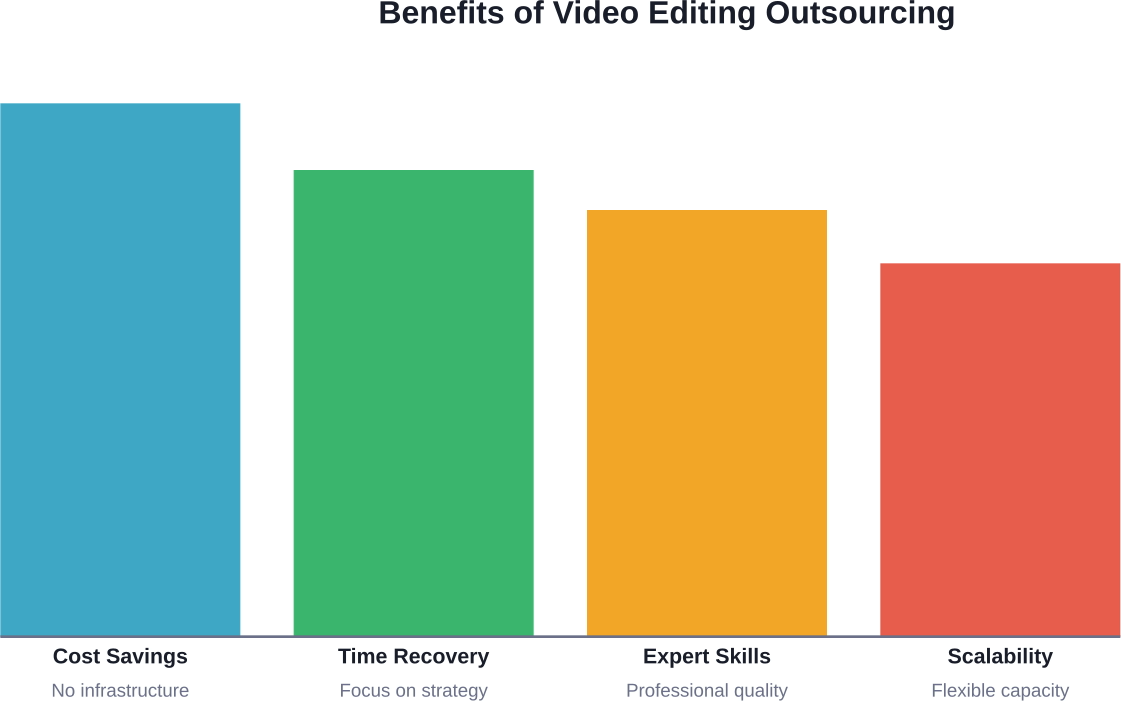
Why Businesses Choose to Outsource Video Editing
The decision to outsource typically stems from core challenges that businesses face when scaling content production.
Time Management and Focus
Video editing is time-intensive. Community discussions on platforms like Reddit highlight how creators spend hours perfecting transitions and effects, pulling attention away from strategy, client work, or business development.
Outsourcing reclaims that time. Marketing teams can focus on campaign strategy while editors handle technical execution.
Cost Efficiency
Building an in-house editing team requires significant investment. Businesses need advanced editing software costing £50-£300+ monthly per user, high-performance computers ranging from £2,000-£5,000 per workstation, storage systems for large video files, and regular software and hardware updates.
Outsourcing converts these fixed costs into variable expenses. Pay for editing capacity when needed without maintaining expensive infrastructure year-round.
Access to Specialized Skills
Professional video editors bring specialized expertise. They understand composition, pacing, color theory, and platform-specific best practices. Learning these skills takes time and training that internal staff might not have.
Outsourcing provides immediate access to this expertise without the learning curve.
Scalability
Content production fluctuates. Campaigns ramp up during product launches or seasonal periods, then slow down. Hiring full-time staff for peak capacity means paying for idle time during slower periods.
Outsourced editing scales up or down based on actual needs. Increase output during busy periods without long-term commitments.

Streamline Video Editing with NeoWork
Outsourcing video editing allows companies to scale content production efficiently. NeoWork provides vetted video editors who integrate into your workflow and deliver polished, brand-aligned content.
Support includes:
- raw footage editing and post-production
- motion graphics and transitions
- color grading and audio mastering
- rapid iteration and feedback cycles
Whether you need to augment your team or handle full projects, NeoWork ensures timely, high-quality output. Get started with NeoWork today to simplify video editing outsourcing and access skilled editors worldwide.
Understanding Video Editing Pricing Models
Pricing structures vary significantly across editors and agencies. Understanding these models helps businesses budget effectively and choose arrangements that align with their content needs.
Hourly Pricing
Editors charge by the hour, typically ranging from $20-$125 per hour depending on experience, location, and specialization. This model works well for variable scope projects where requirements aren't fully defined upfront.
The advantage? Clear, transparent billing. The downside? Costs can escalate if projects take longer than expected.
Per-Minute Pricing
Many editors charge based on finished video length, commonly around $50-$150 per finished minute for standard content types. This model provides predictable costs for routine content production.
Per-minute pricing works best for consistent content formats like podcasts, interviews, or educational videos where editing complexity stays relatively stable.
Project-Based Pricing
For defined deliverables with clear scope, editors quote fixed project rates. A promotional video might cost $500-$5,000+ depending on length, complexity, and required revisions.
Project-based pricing eliminates budget uncertainty but requires detailed specifications upfront to avoid scope creep.
Retainer Agreements
Businesses with ongoing needs often establish monthly retainers. Pay a fixed monthly fee for a certain amount of editing capacity—perhaps 10 hours of editing or 20 finished minutes of content.
Retainers provide cost predictability and priority access to editors, though unused capacity typically doesn't roll over.
Where to Find Professional Video Editors
Several platforms and approaches exist for connecting with video editing talent. Each offers different trade-offs in terms of quality, cost, and relationship structure.
Freelance Marketplaces
Platforms like Upwork, Fiverr, and Freelancer provide access to thousands of video editors globally. These marketplaces offer wide price ranges and skill levels, from beginners offering budget rates to experienced professionals with premium pricing.
The challenge? Vetting quality requires reviewing portfolios, ratings, and potentially running small test projects. Communication and time zone differences can complicate collaboration.
Specialized Video Editing Agencies
Agencies focus exclusively on video editing services, often employing teams of editors with project managers handling client communication. This structure provides consistent quality and streamlined workflows.
Agencies typically cost more than individual freelancers but reduce management overhead. They can handle larger volumes and provide backup coverage if an editor becomes unavailable.
Virtual Assistant Companies
Some virtual assistant services train team members in video editing tools and workflows. These companies emphasize systematic training in automation tools, helping assistants handle routine editing tasks efficiently.
This approach works well for businesses already using virtual assistants who want to add video editing to their support capabilities.
Direct Hiring Through Job Boards
Businesses can post opportunities on job boards targeting creative professionals or in video editing communities. This direct approach provides more control over vetting and relationship structure.
The trade-off? Managing the search, interviews, and onboarding requires more time and effort than working through established platforms.
How to Choose the Right Video Editor
Finding editors is one thing. Choosing the right one for specific business needs requires evaluating several factors beyond just price.
Portfolio and Style Alignment
Review editor portfolios carefully. Look for work that matches the desired style, pacing, and complexity. An editor who excels at fast-paced social content might not suit long-form educational videos.
Ask for samples similar to planned projects. The best indicator of future performance is relevant past work.
Technical Skills and Software Proficiency
Confirm editors use compatible software and understand required techniques. Some projects need advanced color grading, others require motion graphics expertise, and others prioritize quick turnaround of basic cuts.
Match technical capabilities to actual needs. Don't pay for skills that won't be used.
Communication and Responsiveness
Secure collaboration tools are important for maintaining client confidence in outsourced work. Clear communication prevents misunderstandings and ensures editors deliver what's expected.
Test responsiveness during initial conversations. Slow or unclear communication early signals potential friction later.
Turnaround Time and Availability
Establish realistic timelines upfront. Rush editing costs more and may compromise quality. Understand editor availability and whether they can accommodate fluctuating workloads.
Build buffer time into content calendars. Tight deadlines create stress and reduce flexibility for revisions.
Revision Policies
Clarify how many rounds of revisions are included in quoted prices. Some editors include two rounds, others charge for each change. Misaligned expectations around revisions cause most client-editor conflicts.
Document revision policies in writing before starting projects.
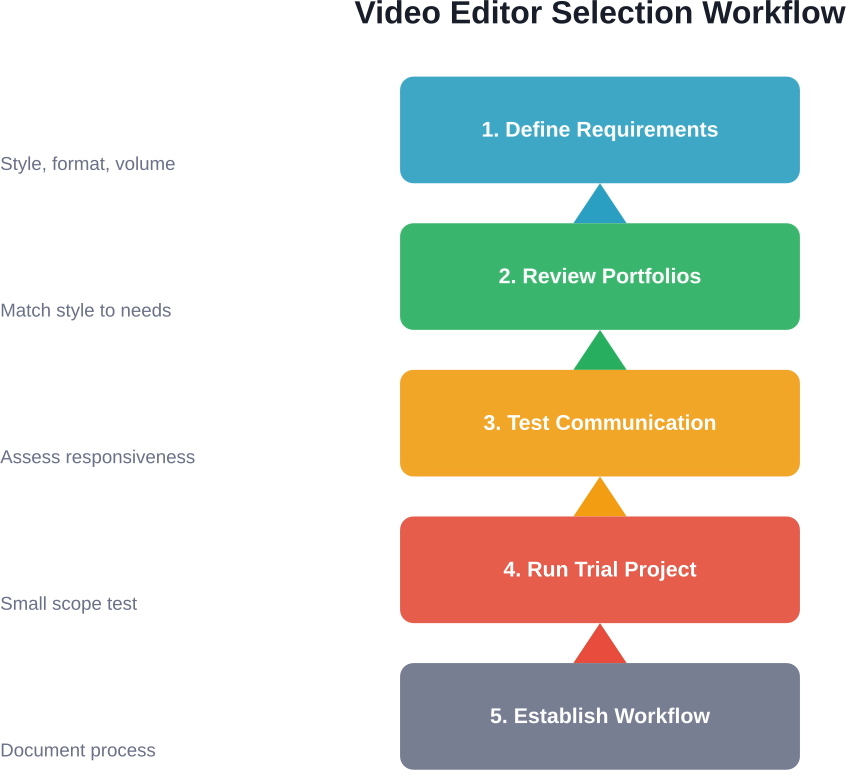
Building an Effective Workflow with Outsourced Editors
Success with video editing outsourcing depends heavily on workflow structure. Clear processes prevent miscommunication and ensure consistent output quality.
Creating Detailed Briefs
The brief is everything. Provide editors with comprehensive information about each project: target audience, desired tone, key messaging, platform specifications, and reference examples.
User experiences in community discussions emphasize that detailed storyboards or shot lists dramatically improve outcomes. The more specific the guidance, the closer the first draft aligns with expectations.
Establishing File Organization Systems
Agree on file naming conventions, folder structures, and version control methods. Chaos in file management creates confusion and slows turnaround times.
Use cloud storage platforms like Google Drive, Dropbox, or specialized media management tools. Ensure editors have adequate upload and download speeds for large video files.
Defining Approval Processes
Map out exactly how review and approval works. Who provides feedback? What format should comments take? How long does the business have to review drafts before editors consider them approved?
Time-stamped feedback tools streamline revisions. Services like Frame.io allow reviewers to comment directly on specific video frames.
Setting Communication Protocols
Determine preferred communication channels and response time expectations. Some teams use project management platforms, others prefer direct messaging or email.
Schedule regular check-ins for ongoing relationships. Weekly or bi-weekly syncs prevent drift and maintain alignment.
Common Outsourcing Challenges and Solutions
Even well-planned outsourcing relationships encounter obstacles. Recognizing common challenges and having strategies ready helps maintain productive partnerships.
Quality Inconsistency
Quality can vary between projects or decline over time. This often results from unclear standards or changing editors without proper knowledge transfer.
Solution: Create detailed style guides documenting brand standards, preferred techniques, and quality benchmarks. Provide reference videos showing exactly what finished content should look and feel like.
Missed Deadlines
Late deliveries disrupt content calendars and marketing campaigns. Causes range from unrealistic timelines to capacity overload to poor project management.
Solution: Build buffer time into schedules. Confirm editor availability before assigning projects. Request progress updates at predetermined milestones rather than waiting until delivery dates.
Communication Breakdowns
Misunderstandings about requirements, revisions, or expectations create frustration on both sides. Time zone differences can exacerbate these issues.
Solution: Over-communicate early in relationships. Confirm understanding of briefs before work begins. Use visual examples liberally—showing is clearer than describing.
Security and Confidentiality Concerns
Sharing raw footage and brand assets with external parties creates potential risks. Confidential information in video content requires protection.
Solution: Use non-disclosure agreements for sensitive projects. Choose secure file transfer methods. Vet editors' data handling practices. Secure collaboration tools are widely recognized as important for maintaining client confidence.
Maintaining Brand Consistency Across Outsourced Work
Brand consistency suffers when multiple editors work independently without clear guidelines. Visual identity, tone, and pacing should remain recognizable regardless of who handles editing.
Create comprehensive brand guidelines covering color palettes, font usage, logo placement, music styles, transition preferences, and pacing standards. Provide template files when possible.
Designate someone internally as the quality control checkpoint. This person reviews all outsourced work before publication, ensuring adherence to brand standards.
Regular feedback loops help editors internalize brand requirements over time. The longer an editor works with a brand, the less oversight they typically need.
Measuring Success and ROI
Track metrics that reveal whether outsourcing delivers expected value. These measurements go beyond just editing costs.
Calculate time recovered by internal teams. If outsourcing frees up 20 hours weekly that staff redirect to revenue-generating activities, quantify that value.
Monitor content output velocity. Can the business publish more videos after outsourcing? Does increased volume drive measurable engagement or conversion improvements?
Assess quality through engagement metrics. Compare view duration, click-through rates, and audience retention between in-house and outsourced content.
Consider cost per finished minute or cost per published video. These unit economics help evaluate whether current arrangements offer good value or if adjustments are needed.
When to Keep Editing In-House
Outsourcing isn't always the right answer. Some situations favor maintaining in-house editing capabilities.
Highly strategic content with complex brand implications might warrant internal control. Product launches, major announcements, or sensitive communications benefit from close oversight.
Real-time content creation like event coverage or live social media response requires immediate availability that external editors can't always provide.
If content volume stays consistently low—perhaps one or two videos monthly—outsourcing overhead might exceed its benefits. The time spent briefing and managing editors could exceed just handling editing internally.
Organizations with existing editing staff operating below capacity should maximize internal resources before adding external costs.
The Impact of AI on Video Editing Outsourcing
Artificial intelligence is reshaping video editing workflows. AI is expected to primarily affect occupations whose core tasks can be most easily replicated by Generative AI in its current form.
AI may also support demand for computer occupations, including software developers who are needed to develop AI-based business solutions and maintain AI systems. Database administrators and architects are expected to be needed to set up and maintain more complex data infrastructure.
Many video editors now incorporate AI tools for automated transcription, basic color correction, or smart cropping for different formats. This technological shift makes editors more productive rather than obsolete.
Businesses benefit from this evolution. Editors complete routine tasks faster, reducing costs or allowing more creative time within the same budget.
Moving Forward with Video Editing Outsourcing
Video editing outsourcing offers clear advantages: cost efficiency, time recovery, access to expertise, and scalable capacity. But success requires structured approaches, clear communication, and realistic expectations.
Start small. Test relationships with limited-scope projects before committing to large contracts or retainers. Build workflows incrementally based on what actually works rather than theoretical ideals.
Invest time upfront in briefs, guidelines, and process documentation. This initial effort pays dividends through smoother execution and fewer revisions later.
Remember that outsourcing creates partnerships, not transactions. Treat editors as extended team members. Provide context, share wins, and maintain respectful professional relationships.
The businesses that succeed with video editing outsourcing approach it strategically—matching the right pricing model to their needs, choosing editors whose skills align with their content, and building workflows that enable consistent quality at scale.
Frequently Asked Questions
Topics
Video Editing Outsourcing Guide: 2026 Complete Breakdown

Video editing outsourcing involves hiring external professionals or agencies to handle post-production work, freeing internal teams to focus on strategy and core business activities. Businesses typically choose hourly, per-minute, or project-based pricing models depending on their content volume and complexity. Success requires clear communication, structured workflows, and quality control measures to maintain brand consistency.
Video content dominates digital marketing. Brands create more videos than ever before, and editing all that raw footage in-house can become overwhelming fast.
That's where video editing outsourcing comes in. Businesses delegate post-production work to external professionals, freeing up time and resources for strategic activities. But outsourcing isn't as simple as handing off files and waiting for finished content.
This guide breaks down what video editing outsourcing actually means, why businesses choose it, how pricing works, where to find editors, and what makes outsourcing relationships succeed or fail.
What Video Editing Outsourcing Actually Means
Video editing outsourcing means hiring external professionals or agencies to handle post-production tasks instead of keeping everything in-house. These tasks range from basic trimming and color correction to complex motion graphics and multi-layer effects.
Some businesses outsource their entire video editing operation. Others keep strategic or brand-critical edits in-house while outsourcing high-volume, repetitive work like social media clips or repurposed content.
The scope varies widely. A company might outsource:
- Raw footage trimming and assembly
- Color grading and audio mixing
- Motion graphics and title animations
- Subtitle and caption generation
- Format adaptation for different platforms
- Thumbnail creation and visual branding
The key distinction? Outsourcing creates a working relationship with external talent rather than expanding internal headcount. That flexibility makes it appealing for businesses with fluctuating video production needs.
Why Businesses Choose to Outsource Video Editing
The decision to outsource typically stems from core challenges that businesses face when scaling content production.
Time Management and Focus
Video editing is time-intensive. Community discussions on platforms like Reddit highlight how creators spend hours perfecting transitions and effects, pulling attention away from strategy, client work, or business development.
Outsourcing reclaims that time. Marketing teams can focus on campaign strategy while editors handle technical execution.
Cost Efficiency
Building an in-house editing team requires significant investment. Businesses need advanced editing software costing £50-£300+ monthly per user, high-performance computers ranging from £2,000-£5,000 per workstation, storage systems for large video files, and regular software and hardware updates.
Outsourcing converts these fixed costs into variable expenses. Pay for editing capacity when needed without maintaining expensive infrastructure year-round.
Access to Specialized Skills
Professional video editors bring specialized expertise. They understand composition, pacing, color theory, and platform-specific best practices. Learning these skills takes time and training that internal staff might not have.
Outsourcing provides immediate access to this expertise without the learning curve.
Scalability
Content production fluctuates. Campaigns ramp up during product launches or seasonal periods, then slow down. Hiring full-time staff for peak capacity means paying for idle time during slower periods.
Outsourced editing scales up or down based on actual needs. Increase output during busy periods without long-term commitments.
Streamline Video Editing with NeoWork
Outsourcing video editing allows companies to scale content production efficiently. NeoWork provides vetted video editors who integrate into your workflow and deliver polished, brand-aligned content.
Support includes:
- raw footage editing and post-production
- motion graphics and transitions
- color grading and audio mastering
- rapid iteration and feedback cycles
Whether you need to augment your team or handle full projects, NeoWork ensures timely, high-quality output. Get started with NeoWork today to simplify video editing outsourcing and access skilled editors worldwide.
Understanding Video Editing Pricing Models
Pricing structures vary significantly across editors and agencies. Understanding these models helps businesses budget effectively and choose arrangements that align with their content needs.
Hourly Pricing
Editors charge by the hour, typically ranging from $20-$125 per hour depending on experience, location, and specialization. This model works well for variable scope projects where requirements aren't fully defined upfront.
The advantage? Clear, transparent billing. The downside? Costs can escalate if projects take longer than expected.
Per-Minute Pricing
Many editors charge based on finished video length, commonly around $50-$150 per finished minute for standard content types. This model provides predictable costs for routine content production.
Per-minute pricing works best for consistent content formats like podcasts, interviews, or educational videos where editing complexity stays relatively stable.
Project-Based Pricing
For defined deliverables with clear scope, editors quote fixed project rates. A promotional video might cost $500-$5,000+ depending on length, complexity, and required revisions.
Project-based pricing eliminates budget uncertainty but requires detailed specifications upfront to avoid scope creep.
Retainer Agreements
Businesses with ongoing needs often establish monthly retainers. Pay a fixed monthly fee for a certain amount of editing capacity—perhaps 10 hours of editing or 20 finished minutes of content.
Retainers provide cost predictability and priority access to editors, though unused capacity typically doesn't roll over.
Where to Find Professional Video Editors
Several platforms and approaches exist for connecting with video editing talent. Each offers different trade-offs in terms of quality, cost, and relationship structure.
Freelance Marketplaces
Platforms like Upwork, Fiverr, and Freelancer provide access to thousands of video editors globally. These marketplaces offer wide price ranges and skill levels, from beginners offering budget rates to experienced professionals with premium pricing.
The challenge? Vetting quality requires reviewing portfolios, ratings, and potentially running small test projects. Communication and time zone differences can complicate collaboration.
Specialized Video Editing Agencies
Agencies focus exclusively on video editing services, often employing teams of editors with project managers handling client communication. This structure provides consistent quality and streamlined workflows.
Agencies typically cost more than individual freelancers but reduce management overhead. They can handle larger volumes and provide backup coverage if an editor becomes unavailable.
Virtual Assistant Companies
Some virtual assistant services train team members in video editing tools and workflows. These companies emphasize systematic training in automation tools, helping assistants handle routine editing tasks efficiently.
This approach works well for businesses already using virtual assistants who want to add video editing to their support capabilities.
Direct Hiring Through Job Boards
Businesses can post opportunities on job boards targeting creative professionals or in video editing communities. This direct approach provides more control over vetting and relationship structure.
The trade-off? Managing the search, interviews, and onboarding requires more time and effort than working through established platforms.
How to Choose the Right Video Editor
Finding editors is one thing. Choosing the right one for specific business needs requires evaluating several factors beyond just price.
Portfolio and Style Alignment
Review editor portfolios carefully. Look for work that matches the desired style, pacing, and complexity. An editor who excels at fast-paced social content might not suit long-form educational videos.
Ask for samples similar to planned projects. The best indicator of future performance is relevant past work.
Technical Skills and Software Proficiency
Confirm editors use compatible software and understand required techniques. Some projects need advanced color grading, others require motion graphics expertise, and others prioritize quick turnaround of basic cuts.
Match technical capabilities to actual needs. Don't pay for skills that won't be used.
Communication and Responsiveness
Secure collaboration tools are important for maintaining client confidence in outsourced work. Clear communication prevents misunderstandings and ensures editors deliver what's expected.
Test responsiveness during initial conversations. Slow or unclear communication early signals potential friction later.
Turnaround Time and Availability
Establish realistic timelines upfront. Rush editing costs more and may compromise quality. Understand editor availability and whether they can accommodate fluctuating workloads.
Build buffer time into content calendars. Tight deadlines create stress and reduce flexibility for revisions.
Revision Policies
Clarify how many rounds of revisions are included in quoted prices. Some editors include two rounds, others charge for each change. Misaligned expectations around revisions cause most client-editor conflicts.
Document revision policies in writing before starting projects.
Building an Effective Workflow with Outsourced Editors
Success with video editing outsourcing depends heavily on workflow structure. Clear processes prevent miscommunication and ensure consistent output quality.
Creating Detailed Briefs
The brief is everything. Provide editors with comprehensive information about each project: target audience, desired tone, key messaging, platform specifications, and reference examples.
User experiences in community discussions emphasize that detailed storyboards or shot lists dramatically improve outcomes. The more specific the guidance, the closer the first draft aligns with expectations.
Establishing File Organization Systems
Agree on file naming conventions, folder structures, and version control methods. Chaos in file management creates confusion and slows turnaround times.
Use cloud storage platforms like Google Drive, Dropbox, or specialized media management tools. Ensure editors have adequate upload and download speeds for large video files.
Defining Approval Processes
Map out exactly how review and approval works. Who provides feedback? What format should comments take? How long does the business have to review drafts before editors consider them approved?
Time-stamped feedback tools streamline revisions. Services like Frame.io allow reviewers to comment directly on specific video frames.
Setting Communication Protocols
Determine preferred communication channels and response time expectations. Some teams use project management platforms, others prefer direct messaging or email.
Schedule regular check-ins for ongoing relationships. Weekly or bi-weekly syncs prevent drift and maintain alignment.
Common Outsourcing Challenges and Solutions
Even well-planned outsourcing relationships encounter obstacles. Recognizing common challenges and having strategies ready helps maintain productive partnerships.
Quality Inconsistency
Quality can vary between projects or decline over time. This often results from unclear standards or changing editors without proper knowledge transfer.
Solution: Create detailed style guides documenting brand standards, preferred techniques, and quality benchmarks. Provide reference videos showing exactly what finished content should look and feel like.
Missed Deadlines
Late deliveries disrupt content calendars and marketing campaigns. Causes range from unrealistic timelines to capacity overload to poor project management.
Solution: Build buffer time into schedules. Confirm editor availability before assigning projects. Request progress updates at predetermined milestones rather than waiting until delivery dates.
Communication Breakdowns
Misunderstandings about requirements, revisions, or expectations create frustration on both sides. Time zone differences can exacerbate these issues.
Solution: Over-communicate early in relationships. Confirm understanding of briefs before work begins. Use visual examples liberally—showing is clearer than describing.
Security and Confidentiality Concerns
Sharing raw footage and brand assets with external parties creates potential risks. Confidential information in video content requires protection.
Solution: Use non-disclosure agreements for sensitive projects. Choose secure file transfer methods. Vet editors' data handling practices. Secure collaboration tools are widely recognized as important for maintaining client confidence.
Maintaining Brand Consistency Across Outsourced Work
Brand consistency suffers when multiple editors work independently without clear guidelines. Visual identity, tone, and pacing should remain recognizable regardless of who handles editing.
Create comprehensive brand guidelines covering color palettes, font usage, logo placement, music styles, transition preferences, and pacing standards. Provide template files when possible.
Designate someone internally as the quality control checkpoint. This person reviews all outsourced work before publication, ensuring adherence to brand standards.
Regular feedback loops help editors internalize brand requirements over time. The longer an editor works with a brand, the less oversight they typically need.
Measuring Success and ROI
Track metrics that reveal whether outsourcing delivers expected value. These measurements go beyond just editing costs.
Calculate time recovered by internal teams. If outsourcing frees up 20 hours weekly that staff redirect to revenue-generating activities, quantify that value.
Monitor content output velocity. Can the business publish more videos after outsourcing? Does increased volume drive measurable engagement or conversion improvements?
Assess quality through engagement metrics. Compare view duration, click-through rates, and audience retention between in-house and outsourced content.
Consider cost per finished minute or cost per published video. These unit economics help evaluate whether current arrangements offer good value or if adjustments are needed.
When to Keep Editing In-House
Outsourcing isn't always the right answer. Some situations favor maintaining in-house editing capabilities.
Highly strategic content with complex brand implications might warrant internal control. Product launches, major announcements, or sensitive communications benefit from close oversight.
Real-time content creation like event coverage or live social media response requires immediate availability that external editors can't always provide.
If content volume stays consistently low—perhaps one or two videos monthly—outsourcing overhead might exceed its benefits. The time spent briefing and managing editors could exceed just handling editing internally.
Organizations with existing editing staff operating below capacity should maximize internal resources before adding external costs.
The Impact of AI on Video Editing Outsourcing
Artificial intelligence is reshaping video editing workflows. AI is expected to primarily affect occupations whose core tasks can be most easily replicated by Generative AI in its current form.
AI may also support demand for computer occupations, including software developers who are needed to develop AI-based business solutions and maintain AI systems. Database administrators and architects are expected to be needed to set up and maintain more complex data infrastructure.
Many video editors now incorporate AI tools for automated transcription, basic color correction, or smart cropping for different formats. This technological shift makes editors more productive rather than obsolete.
Businesses benefit from this evolution. Editors complete routine tasks faster, reducing costs or allowing more creative time within the same budget.
Moving Forward with Video Editing Outsourcing
Video editing outsourcing offers clear advantages: cost efficiency, time recovery, access to expertise, and scalable capacity. But success requires structured approaches, clear communication, and realistic expectations.
Start small. Test relationships with limited-scope projects before committing to large contracts or retainers. Build workflows incrementally based on what actually works rather than theoretical ideals.
Invest time upfront in briefs, guidelines, and process documentation. This initial effort pays dividends through smoother execution and fewer revisions later.
Remember that outsourcing creates partnerships, not transactions. Treat editors as extended team members. Provide context, share wins, and maintain respectful professional relationships.
The businesses that succeed with video editing outsourcing approach it strategically—matching the right pricing model to their needs, choosing editors whose skills align with their content, and building workflows that enable consistent quality at scale.
Frequently Asked Questions
Topics
Related Blogs
Related Podcasts


.webp)

.webp)
.webp)



