
.avif)
.avif)

Offshore SEO Outsourcing Guide: Scale Rankings in 2026


.svg)

Offshore SEO outsourcing allows businesses to access global expertise, reduce costs by 50% or more, and scale rankings without expanding headcount. Success depends on selecting the right partner, maintaining quality standards across distances, and building clear communication protocols that turn time zones into productivity advantages.
The global SEO services market is valued at approximately $84–108 billion in 2026, with projections to reach $150+ billion by 2030–2031. Businesses face a choice: build expensive in-house teams or tap into specialized offshore talent that delivers results at a fraction of the cost.
Offshore SEO outsourcing isn't just about saving money anymore. It's about accessing expertise that doesn't exist locally, scaling operations without the overhead, and keeping websites competitive while internal teams focus on core business functions.
But here's the challenge. Distance creates risks. Communication barriers emerge. Quality control becomes harder. The wrong partner wastes months and damages rankings instead of improving them.
This guide walks through everything needed to make offshore SEO outsourcing work: from understanding the true cost savings to selecting partners who deliver, maintaining standards across continents, and avoiding the pitfalls that derail most outsourcing relationships.
What Makes Offshore SEO Outsourcing Different
Offshore SEO outsourcing means contracting search optimization work to providers located in different countries, typically where labor costs run significantly lower than domestic markets. The distinction from general outsourcing comes down to geography and cost structure.
Domestic outsourcing keeps work within the same country. Nearshore outsourcing uses neighboring countries with minimal time zone differences. Offshore providers are typically located in countries like Philippines, India, Pakistan, and Eastern Europe, where labor costs are significantly lower than North American or Western European rates.
The core activities getting outsourced haven't changed: keyword research, technical audits, content optimization, link building, local SEO, and ongoing monitoring. What has changed is the sophistication level. Offshore providers now handle complex technical SEO, international optimization, and enterprise-level campaigns that were once reserved for premium domestic agencies.
The Business Case: Why Companies Choose Offshore
Cost reduction drives initial interest. An experienced SEO specialist in the United States typically costs in the $60,000-$90,000+ range annually plus benefits. Comparable offshore expertise typically costs significantly less than domestic rates. For agencies managing multiple clients or businesses running lean, the math is compelling.
But cost alone doesn't explain growth. Access to specialized skills matters more than many realize. Finding someone who understands technical schema markup, international hreflang implementation, or e-commerce SEO at scale isn't easy in smaller markets. Offshore providers serving global clients develop these specializations out of necessity.
Scalability becomes the third factor. Growing an in-house team means recruiting, training, providing tools, and absorbing overhead for months before seeing returns. Offshore partnerships scale up or down based on project needs without long-term commitments.
Financial Reality: True Cost Analysis of Offshore SEO
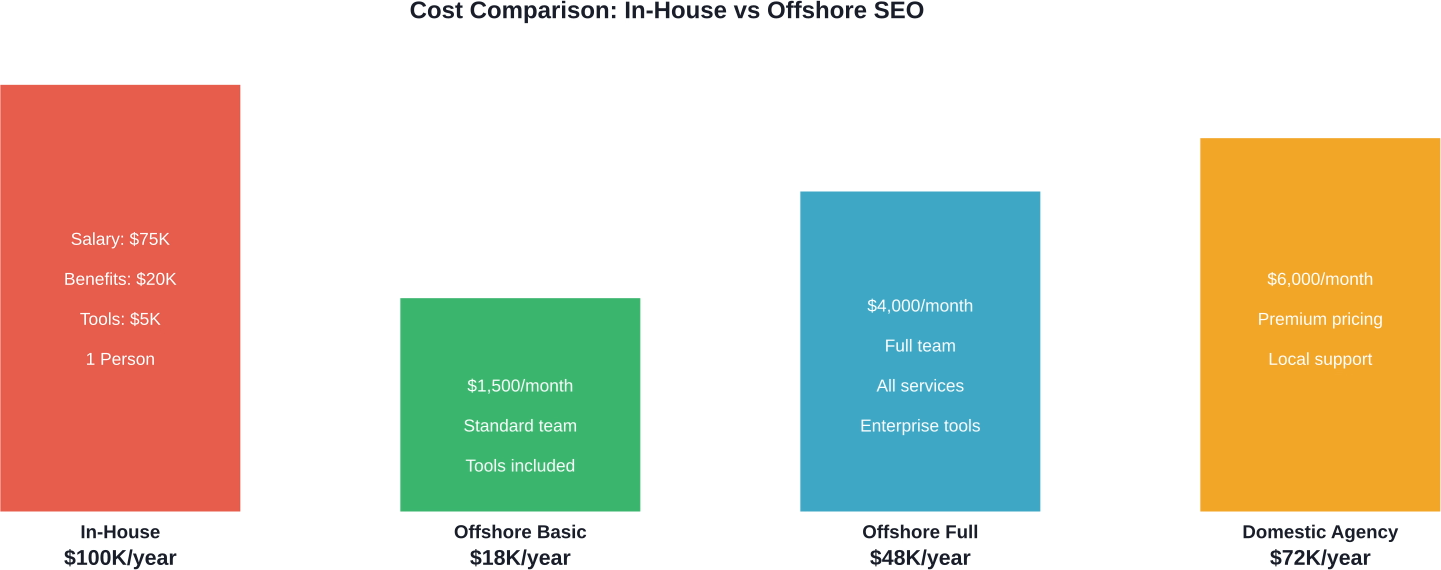
Monthly retainers for outsourced SEO services range from $500 for small-scope projects to $10,000+ for comprehensive enterprise campaigns. The variation depends on scope, provider location, and specialization level.
Breaking down typical pricing:
Compare this to in-house costs. A single mid-level SEO professional incurs significant salary and benefit costs compared to outsourcing. Professional SEO tools add significant additional costs.
That same budget offshore covers a team: strategist, technical specialist, content optimizer, and link builder. The coverage expands dramatically while costs stay flat.
Real talk: the cheapest option rarely delivers. Providers charging $200 monthly typically employ junior staff following templates. Quality link building alone costs more than that when done properly. A competitive pricing range for most businesses appears to be between $1,500-$4,000 monthly, where experienced teams deliver measurable results without cutting corners.
Core Benefits That Actually Matter
Cost savings get the attention, but operational advantages determine long-term success. Four benefits stand out when offshore SEO outsourcing works correctly.
Access to Specialized Expertise
Offshore providers serving international clients develop specializations that small domestic teams rarely match. A provider working with e-commerce clients across five countries understands international SEO nuances—hreflang implementation, multi-currency content optimization, regional search behavior differences—because they encounter these challenges daily.
Technical SEO specialists offshore often hold certifications and work with tools that smaller businesses can't justify purchasing. They've debugged crawl budget issues, fixed complex site migrations, and optimized JavaScript-heavy sites because their client volume demands this expertise.
Scalability Without Overhead
Launching a new product line that needs content optimization across 50 pages? An offshore partner scales up for three months, then scales back down. No hiring, no severance, no unused capacity draining budgets during slower periods.
Agencies benefit most from this flexibility. Client counts fluctuate. Offshore partnerships let agencies take on larger projects without committing to permanent headcount. When a major client signs, capacity expands. When contracts end, costs contract.
24/7 Productivity Cycles
Time zone differences create advantages when managed properly. Work gets handed off at end-of-day and returns completed the next morning. Technical audits run overnight. Link building outreach happens while domestic teams sleep. The business operates continuously without anyone working unreasonable hours.
This advantage compounds over months. Projects that would take 12 weeks with a single-shift team complete in 8-9 weeks when work continues around the clock.
Focus Reallocation
Internal teams freed from SEO execution focus on strategy, product development, and customer relationships. The business gets better at core competencies while specialists handle search optimization.
For agencies, outsourcing shifts focus to client relationships and growth. Account managers spend time understanding client needs and developing strategies rather than executing technical audits or building links.
Selecting the Right Offshore SEO Partner
Partner selection determines everything. The right provider becomes an extension of the business. The wrong one wastes months, damages rankings, and creates recovery work that costs more than in-house would have.
Critical Selection Criteria
Portfolio quality beats promises. Request case studies showing actual ranking improvements, traffic growth, and conversions. Generic claims about "improving SEO" mean nothing. Specific examples—"increased organic traffic 147% over six months for [industry] client"—demonstrate capability.
Ask for references from clients in similar industries. A provider excellent at local SEO for service businesses might struggle with e-commerce technical optimization. Match expertise to needs.
Communication clarity matters more than technical skills in many cases. Schedule video calls. Assess English proficiency, responsiveness, and whether explanations make sense. Brilliant technical work fails if nobody can explain what's happening or why strategies changed.
Tool access and methodology reveal professionalism. Reputable providers use recognized tools—Ahrefs, SEMrush, Screaming Frog, Google Search Console. They follow white-hat practices and explain their approach clearly. Anyone promising "guaranteed rankings" or using secretive "proprietary methods" raises red flags.
Testing Before Committing
Start small. Commission a technical audit or single-month trial before signing annual contracts. The deliverable quality, communication consistency, and deadline adherence during this trial predict long-term performance.
Define success metrics upfront. What constitutes good performance? Ranking improvements for target keywords? Traffic increases? Conversion rate growth? Clear metrics prevent misaligned expectations later.
Contract Essentials
Contracts should specify deliverables, timelines, communication frequency, and revision processes. Vague agreements create disputes. Detailed scopes prevent scope creep and finger-pointing.
Include termination clauses. If performance doesn't meet standards after reasonable time, both parties need exit options without penalties.
Intellectual property ownership matters. Content created, strategies developed, and data gathered should belong to the client. Some providers retain ownership—clarify this before work begins.
Maintaining Quality Across Distance
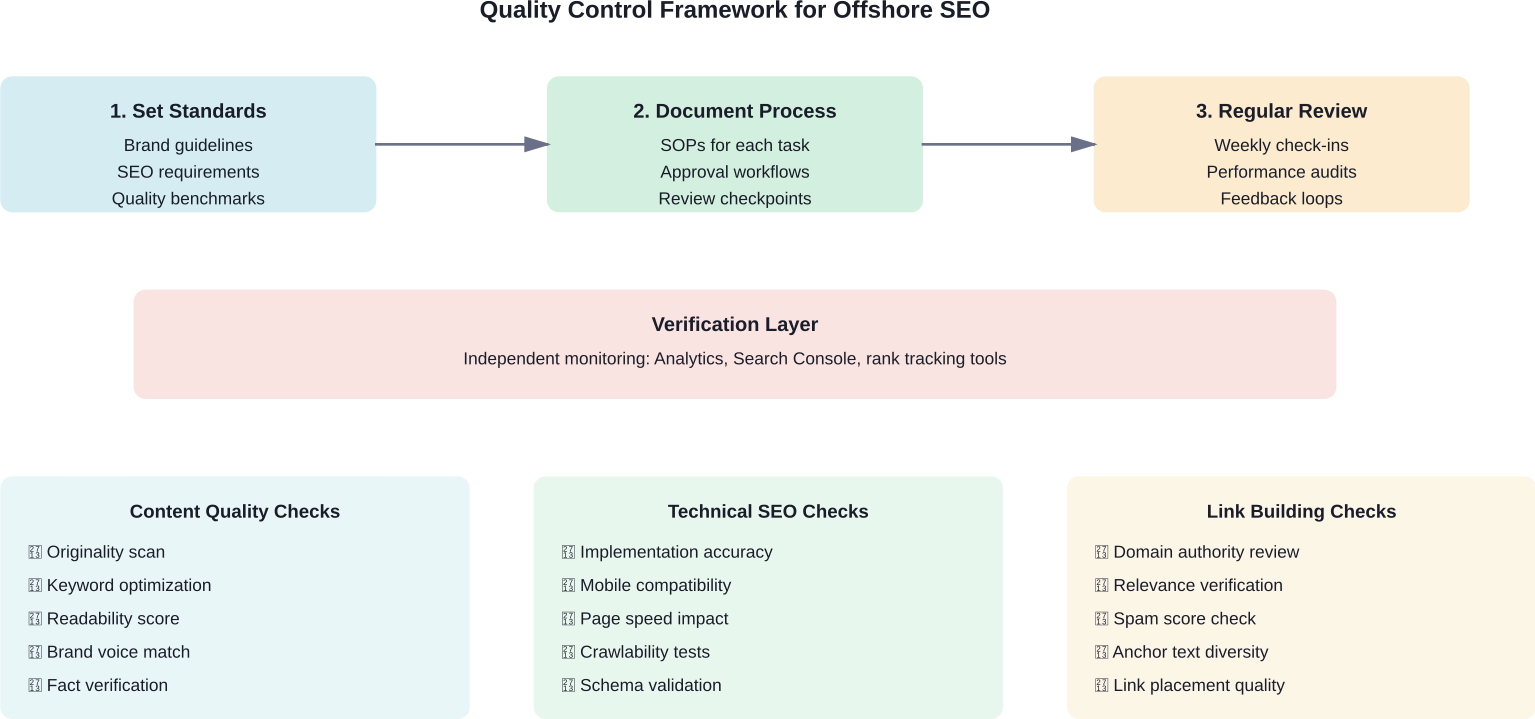
Distance doesn't reduce quality requirements. The challenge lies in verifying standards get met when teams work thousands of miles apart. Three systems make quality control manageable.
Documentation and Standards
Create brand guidelines, style guides, and SEO standards documents. Offshore teams need references for tone, formatting preferences, technical requirements, and prohibited practices.
The more detailed these guidelines, the better results become. Instead of "write good content," specify target word counts, keyword density ranges, heading structure requirements, and example pieces that match desired quality.
Review Processes
Build multi-stage review into workflows. Content doesn't go live without approval. Links aren't built without vetting targets. Technical changes get staged and tested before production deployment.
Schedule regular check-ins—weekly or biweekly depending on project intensity. Review work completed, discuss upcoming priorities, and address issues before they compound.
Performance Monitoring
Track actual results, not just activity reports. Rankings improved or declined? Traffic increased? Bounce rates and time-on-page metrics moving the right direction? These outcomes reveal quality better than lists of completed tasks.
Use Google Search Console, Google Analytics, and rank tracking tools to verify claims independently. Trust the relationship, but verify the results.
Communication: Bridging Distance and Time Zones
Communication failures kill offshore relationships faster than skill gaps. Cultural differences, language barriers, and time zone challenges compound small miscommunications into project-derailing problems.
Establishing Communication Protocols
Define communication channels and expectations immediately. Which platform for daily updates—Slack, email, project management software? What response time expectations during overlapping hours? When do issues get escalated?
Schedule standing meetings during overlapping business hours. Even with significant time zone gaps, finding 2-3 hours of overlap allows for real-time discussion when needed.
Use asynchronous communication effectively. Detailed briefs, recorded video explanations, and thorough documentation let work proceed without constant back-and-forth. A well-documented project brief prevents three days of clarification emails.
Overcoming Language Barriers
English proficiency varies widely among offshore providers. During selection, assess whether the team understands nuanced instructions and can explain complex concepts clearly.
Avoid idioms and cultural references in communication. Direct, simple language reduces misunderstanding. "Let's circle back on this" confuses non-native speakers. "We'll discuss this again on Friday" doesn't.
Confirm understanding both ways. After explaining requirements, ask the team to summarize their understanding. This catches misalignment before work begins.
Cultural Considerations
Different cultures approach feedback, deadlines, and disagreement differently. Some cultures view direct criticism as rude and won't push back on unrealistic requests. Others debate every point extensively.
Learn the cultural norms of the team's location. Philippine teams often prioritize harmony and may need encouragement to voice concerns. Eastern European teams typically communicate more directly and appreciate the same in return.
Building relationships matters. Offshore teams work harder for partners who treat them as collaborators rather than vendors. Recognition for good work, understanding during challenges, and respect for their expertise creates loyalty that survives rough patches.
Common Pitfalls and Prevention Strategies
Most offshore SEO failures follow predictable patterns. Recognizing these pitfalls early prevents the frustration, wasted investment, and ranking damage they cause.
Choosing Based Solely on Price
The cheapest provider rarely delivers value. Rock-bottom pricing indicates inexperienced teams, template approaches, or corner-cutting that violates search engine guidelines.
Prevention: Evaluate providers on portfolio quality, methodology, and communication first. Then consider pricing within the qualified pool. Paying 30% more for a provider who delivers measurable results beats saving 50% on work that produces nothing.
Insufficient Oversight
Outsourcing doesn't mean abdication. Some businesses hand off SEO and check back months later expecting magic. Without guidance and feedback, even talented teams drift off-target.
Prevention: Schedule regular reviews. Monitor analytics independently. Stay involved enough to course-correct quickly when strategies aren't working.
Unclear Expectations
Vague goals produce vague results. "Improve our SEO" gives teams nothing to aim for. Rankings for which keywords? What timeline? What constitutes success?
Prevention: Set specific, measurable goals before work begins. Define target keywords, desired ranking positions, traffic increase targets, or conversion improvements. Both parties should agree on success metrics and timelines.
Ignoring Red Flags
When providers miss deadlines, deliver sloppy work, or communicate poorly during trials, these patterns intensify under long-term contracts. Hoping things improve rarely works.
Prevention: Take red flags seriously. One missed deadline might be an anomaly. Three signals a pattern. Exit poor relationships quickly rather than investing months trying to fix fundamental incompatibility.
Security and Confidentiality Gaps
Offshore teams need access to analytics, content management systems, and sometimes sensitive business data. Without proper safeguards, this creates risk.
According to the Federal Trade Commission, safeguarding personal information is essential business practice. When outsourcing involves customer data or sensitive business information, providers must demonstrate appropriate security measures.
Prevention: Use role-based access controls. Limit permissions to what teams actually need. Require NDAs before sharing confidential information. Check that providers follow security best practices for data handling.
Implementation: Getting Started with Offshore SEO
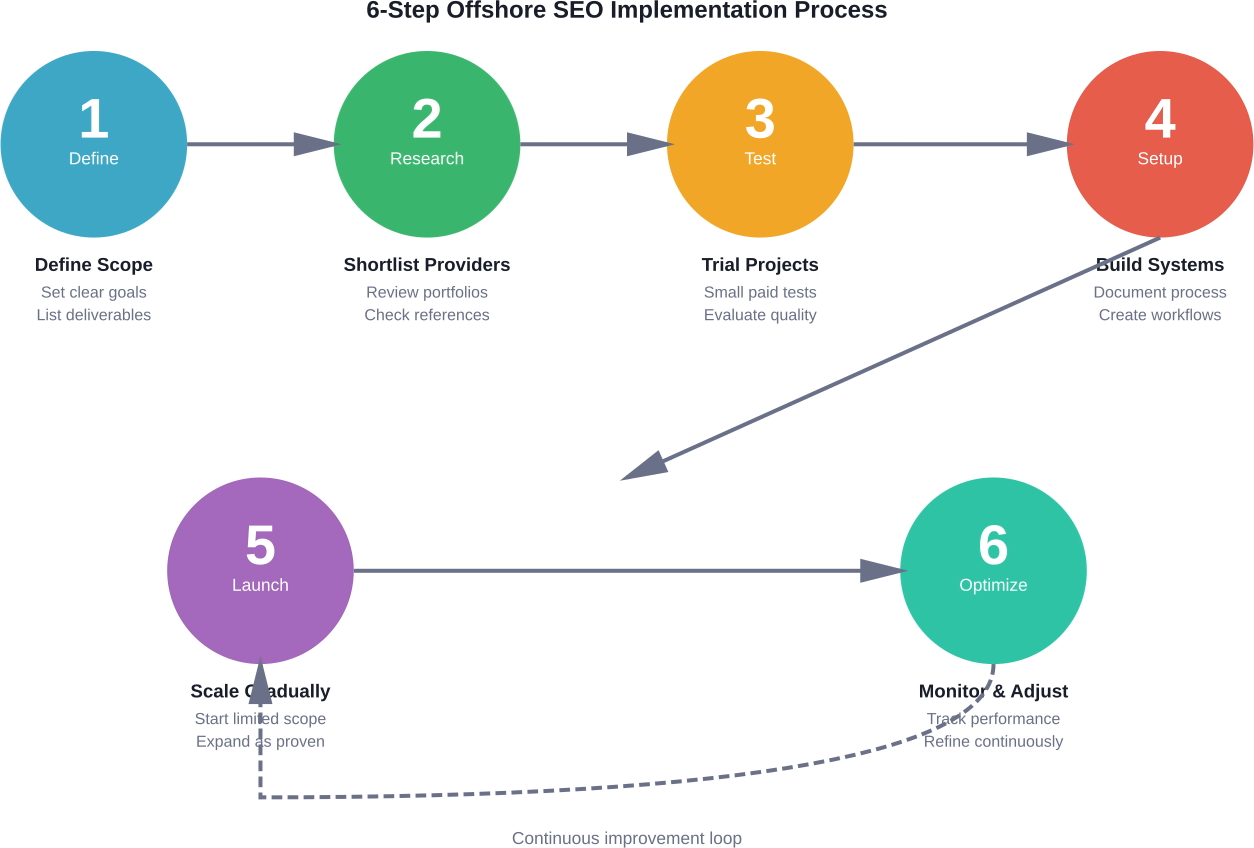
Moving from decision to execution requires systematic steps. Rushing this process creates confusion. Taking it methodically builds foundations for long-term success.
Step 1: Define Scope and Goals
List specific SEO activities to outsource. Everything? Just link building? Technical audits only? Clear scope prevents misalignment.
Set measurable goals: "Rank in top 5 for [10 target keywords] within six months" or "Increase organic traffic 40% year-over-year." Numbers provide accountability.
Step 2: Research and Shortlist Providers
Identify 5-8 potential providers. Check portfolios, read reviews, verify claimed expertise. Platforms like Clutch, Upwork, or direct referrals provide starting points.
Screen based on communication, experience in relevant industry, and alignment with required services. Narrow to 2-3 finalists.
Step 3: Request Proposals and Conduct Trials
Ask finalists for detailed proposals addressing specific needs. How would they approach the goals? What timeline? What deliverables? What metrics?
Commission small paid trials—a technical audit, content optimization for 5 pages, or one month of link building. Evaluate quality, communication, and deadline adherence.
Step 4: Establish Workflows and Documentation
Before full engagement, document processes. Create templates for reporting, define approval workflows, establish communication schedules, and set up project management systems.
This groundwork prevents chaos when work scales up. Everyone knows how tasks flow, who approves what, and when deliverables are due.
Step 5: Start Small and Scale Gradually
Begin with limited scope even after selection. One website section, one service line, or one geographic market. Prove the relationship works before expanding.
Scale up as confidence builds. Add services, increase scope, raise budget allocation. Gradual expansion limits risk while building trust and refining collaboration.
Step 6: Monitor, Measure, and Adjust
Track performance against defined goals monthly. Rankings improving? Traffic increasing? Quality maintaining standards?
Hold regular retrospectives. What's working well? What needs adjustment? Continuous refinement improves results over time.
Build a Stable Offshore SEO Team with NeoWork

If your offshore SEO setup keeps slowing down because of turnover or inconsistent execution, NeoWork offers a more stable structure. They place dedicated remote specialists who work inside your process long term, not as short term freelancers cycling in and out.
NeoWork manages recruiting, vetting, onboarding, and ongoing support. Their approach prioritizes continuity and quality, reflected in a 3.2% candidate selectivity rate and a 91% annualized teammate retention rate. That means SEO professionals who stay aligned with your site, keywords, and growth priorities.
Book a call with NeoWork and define your offshore SEO support for 2026.
Offshore SEO vs In-House vs Domestic Agencies
Three delivery models dominate: building in-house teams, hiring domestic agencies, or going offshore. Each suits different situations.
Hybrid approaches work too. Some businesses maintain a small in-house team for strategy and brand alignment while outsourcing execution offshore. Others use domestic agencies for high-touch client work and offshore partners for backend technical tasks.
The Future of Offshore SEO Outsourcing
Several trends are reshaping offshore SEO as 2026 progresses. Understanding these shifts helps position for long-term success.
AI-Assisted Workflows
Offshore providers increasingly use AI tools for research, analysis, and first-draft content creation. This amplifies productivity—teams accomplish more per hour—but raises questions about originality and quality control.
The advantage shifts to providers who combine AI efficiency with human expertise. Tools handle data processing and pattern recognition. Humans provide strategy, creativity, and quality verification that algorithms can't replicate.
Specialization Deepening
Generic SEO providers face commoditization. Differentiation comes through specialization—e-commerce SEO, SaaS SEO, local SEO for specific industries, international optimization.
Businesses benefit by matching niche providers to specific needs. The provider who specializes in multi-location service business SEO understands challenges and solutions that generalists miss.
Compliance and Data Privacy
Data protection regulations continue expanding globally. Offshore providers handling customer data must demonstrate GDPR compliance, proper data handling, and security measures.
This raises barriers for smaller providers lacking compliance infrastructure while professionalizing the industry overall.
Quality Over Volume
Search engines increasingly reward expertise, authority, and trustworthiness over content volume. This shifts offshore SEO from quantity-focused content mills toward quality-focused strategic partnerships.
Providers who understand this shift—investing in skilled writers, industry expertise, and genuine value creation—pull ahead of those still playing the volume game.
Making Offshore SEO Outsourcing Work
Offshore SEO outsourcing succeeds when businesses approach it strategically rather than as a quick fix. Cost savings matter, but sustainable success requires finding partners who understand the business, communicate effectively, and deliver measurable results.
The implementation steps aren't complicated: define clear goals, research thoroughly, test before committing, establish quality standards, maintain regular oversight, and scale gradually as confidence builds. What matters is executing each step deliberately rather than rushing into long-term commitments based on price alone.
Distance creates challenges around communication, quality control, and cultural alignment. These aren't insurmountable—they require intentional systems. Documentation standards, review processes, and independent performance tracking turn potential weaknesses into manageable tasks.
The offshore SEO landscape continues maturing. Providers who invest in specialization, embrace quality over volume, and maintain transparent communication thrive. Those cutting corners or relying on outdated tactics fall away. Selection becomes easier as the market professionalizes, but due diligence remains essential.
For businesses ready to move forward, start small. Commission a technical audit or three-month trial with clear success metrics. Evaluate whether the partnership delivers value, communication flows smoothly, and results match expectations. Scale from there.
Businesses that leverage offshore expertise effectively gain advantages: lower costs, broader capabilities, and scalability that in-house teams can't match at comparable budgets.
The question isn't whether offshore SEO outsourcing works—proven providers demonstrate success daily. The question is whether businesses will invest the upfront effort to find the right partners, establish proper systems, and manage relationships effectively. Those who do gain sustainable competitive advantages in search visibility without the overhead that makes in-house approaches prohibitive for most organizations.
Ready to explore offshore SEO outsourcing? Define goals, research providers in target specializations, and commission a trial project. The investment in finding the right partner pays returns for years through improved rankings, increased organic traffic, and marketing budgets that stretch further than domestic alternatives allow.
Frequently Asked Questions
Topics
Offshore SEO Outsourcing Guide: Scale Rankings in 2026

Offshore SEO outsourcing allows businesses to access global expertise, reduce costs by 50% or more, and scale rankings without expanding headcount. Success depends on selecting the right partner, maintaining quality standards across distances, and building clear communication protocols that turn time zones into productivity advantages.
The global SEO services market is valued at approximately $84–108 billion in 2026, with projections to reach $150+ billion by 2030–2031. Businesses face a choice: build expensive in-house teams or tap into specialized offshore talent that delivers results at a fraction of the cost.
Offshore SEO outsourcing isn't just about saving money anymore. It's about accessing expertise that doesn't exist locally, scaling operations without the overhead, and keeping websites competitive while internal teams focus on core business functions.
But here's the challenge. Distance creates risks. Communication barriers emerge. Quality control becomes harder. The wrong partner wastes months and damages rankings instead of improving them.
This guide walks through everything needed to make offshore SEO outsourcing work: from understanding the true cost savings to selecting partners who deliver, maintaining standards across continents, and avoiding the pitfalls that derail most outsourcing relationships.
What Makes Offshore SEO Outsourcing Different
Offshore SEO outsourcing means contracting search optimization work to providers located in different countries, typically where labor costs run significantly lower than domestic markets. The distinction from general outsourcing comes down to geography and cost structure.
Domestic outsourcing keeps work within the same country. Nearshore outsourcing uses neighboring countries with minimal time zone differences. Offshore providers are typically located in countries like Philippines, India, Pakistan, and Eastern Europe, where labor costs are significantly lower than North American or Western European rates.
The core activities getting outsourced haven't changed: keyword research, technical audits, content optimization, link building, local SEO, and ongoing monitoring. What has changed is the sophistication level. Offshore providers now handle complex technical SEO, international optimization, and enterprise-level campaigns that were once reserved for premium domestic agencies.
The Business Case: Why Companies Choose Offshore
Cost reduction drives initial interest. An experienced SEO specialist in the United States typically costs in the $60,000-$90,000+ range annually plus benefits. Comparable offshore expertise typically costs significantly less than domestic rates. For agencies managing multiple clients or businesses running lean, the math is compelling.
But cost alone doesn't explain growth. Access to specialized skills matters more than many realize. Finding someone who understands technical schema markup, international hreflang implementation, or e-commerce SEO at scale isn't easy in smaller markets. Offshore providers serving global clients develop these specializations out of necessity.
Scalability becomes the third factor. Growing an in-house team means recruiting, training, providing tools, and absorbing overhead for months before seeing returns. Offshore partnerships scale up or down based on project needs without long-term commitments.
Financial Reality: True Cost Analysis of Offshore SEO
Monthly retainers for outsourced SEO services range from $500 for small-scope projects to $10,000+ for comprehensive enterprise campaigns. The variation depends on scope, provider location, and specialization level.
Breaking down typical pricing:
Compare this to in-house costs. A single mid-level SEO professional incurs significant salary and benefit costs compared to outsourcing. Professional SEO tools add significant additional costs.
That same budget offshore covers a team: strategist, technical specialist, content optimizer, and link builder. The coverage expands dramatically while costs stay flat.
Real talk: the cheapest option rarely delivers. Providers charging $200 monthly typically employ junior staff following templates. Quality link building alone costs more than that when done properly. A competitive pricing range for most businesses appears to be between $1,500-$4,000 monthly, where experienced teams deliver measurable results without cutting corners.
Core Benefits That Actually Matter
Cost savings get the attention, but operational advantages determine long-term success. Four benefits stand out when offshore SEO outsourcing works correctly.
Access to Specialized Expertise
Offshore providers serving international clients develop specializations that small domestic teams rarely match. A provider working with e-commerce clients across five countries understands international SEO nuances—hreflang implementation, multi-currency content optimization, regional search behavior differences—because they encounter these challenges daily.
Technical SEO specialists offshore often hold certifications and work with tools that smaller businesses can't justify purchasing. They've debugged crawl budget issues, fixed complex site migrations, and optimized JavaScript-heavy sites because their client volume demands this expertise.
Scalability Without Overhead
Launching a new product line that needs content optimization across 50 pages? An offshore partner scales up for three months, then scales back down. No hiring, no severance, no unused capacity draining budgets during slower periods.
Agencies benefit most from this flexibility. Client counts fluctuate. Offshore partnerships let agencies take on larger projects without committing to permanent headcount. When a major client signs, capacity expands. When contracts end, costs contract.
24/7 Productivity Cycles
Time zone differences create advantages when managed properly. Work gets handed off at end-of-day and returns completed the next morning. Technical audits run overnight. Link building outreach happens while domestic teams sleep. The business operates continuously without anyone working unreasonable hours.
This advantage compounds over months. Projects that would take 12 weeks with a single-shift team complete in 8-9 weeks when work continues around the clock.
Focus Reallocation
Internal teams freed from SEO execution focus on strategy, product development, and customer relationships. The business gets better at core competencies while specialists handle search optimization.
For agencies, outsourcing shifts focus to client relationships and growth. Account managers spend time understanding client needs and developing strategies rather than executing technical audits or building links.
Selecting the Right Offshore SEO Partner
Partner selection determines everything. The right provider becomes an extension of the business. The wrong one wastes months, damages rankings, and creates recovery work that costs more than in-house would have.
Critical Selection Criteria
Portfolio quality beats promises. Request case studies showing actual ranking improvements, traffic growth, and conversions. Generic claims about "improving SEO" mean nothing. Specific examples—"increased organic traffic 147% over six months for [industry] client"—demonstrate capability.
Ask for references from clients in similar industries. A provider excellent at local SEO for service businesses might struggle with e-commerce technical optimization. Match expertise to needs.
Communication clarity matters more than technical skills in many cases. Schedule video calls. Assess English proficiency, responsiveness, and whether explanations make sense. Brilliant technical work fails if nobody can explain what's happening or why strategies changed.
Tool access and methodology reveal professionalism. Reputable providers use recognized tools—Ahrefs, SEMrush, Screaming Frog, Google Search Console. They follow white-hat practices and explain their approach clearly. Anyone promising "guaranteed rankings" or using secretive "proprietary methods" raises red flags.
Testing Before Committing
Start small. Commission a technical audit or single-month trial before signing annual contracts. The deliverable quality, communication consistency, and deadline adherence during this trial predict long-term performance.
Define success metrics upfront. What constitutes good performance? Ranking improvements for target keywords? Traffic increases? Conversion rate growth? Clear metrics prevent misaligned expectations later.
Contract Essentials
Contracts should specify deliverables, timelines, communication frequency, and revision processes. Vague agreements create disputes. Detailed scopes prevent scope creep and finger-pointing.
Include termination clauses. If performance doesn't meet standards after reasonable time, both parties need exit options without penalties.
Intellectual property ownership matters. Content created, strategies developed, and data gathered should belong to the client. Some providers retain ownership—clarify this before work begins.
Maintaining Quality Across Distance
Distance doesn't reduce quality requirements. The challenge lies in verifying standards get met when teams work thousands of miles apart. Three systems make quality control manageable.
Documentation and Standards
Create brand guidelines, style guides, and SEO standards documents. Offshore teams need references for tone, formatting preferences, technical requirements, and prohibited practices.
The more detailed these guidelines, the better results become. Instead of "write good content," specify target word counts, keyword density ranges, heading structure requirements, and example pieces that match desired quality.
Review Processes
Build multi-stage review into workflows. Content doesn't go live without approval. Links aren't built without vetting targets. Technical changes get staged and tested before production deployment.
Schedule regular check-ins—weekly or biweekly depending on project intensity. Review work completed, discuss upcoming priorities, and address issues before they compound.
Performance Monitoring
Track actual results, not just activity reports. Rankings improved or declined? Traffic increased? Bounce rates and time-on-page metrics moving the right direction? These outcomes reveal quality better than lists of completed tasks.
Use Google Search Console, Google Analytics, and rank tracking tools to verify claims independently. Trust the relationship, but verify the results.
Communication: Bridging Distance and Time Zones
Communication failures kill offshore relationships faster than skill gaps. Cultural differences, language barriers, and time zone challenges compound small miscommunications into project-derailing problems.
Establishing Communication Protocols
Define communication channels and expectations immediately. Which platform for daily updates—Slack, email, project management software? What response time expectations during overlapping hours? When do issues get escalated?
Schedule standing meetings during overlapping business hours. Even with significant time zone gaps, finding 2-3 hours of overlap allows for real-time discussion when needed.
Use asynchronous communication effectively. Detailed briefs, recorded video explanations, and thorough documentation let work proceed without constant back-and-forth. A well-documented project brief prevents three days of clarification emails.
Overcoming Language Barriers
English proficiency varies widely among offshore providers. During selection, assess whether the team understands nuanced instructions and can explain complex concepts clearly.
Avoid idioms and cultural references in communication. Direct, simple language reduces misunderstanding. "Let's circle back on this" confuses non-native speakers. "We'll discuss this again on Friday" doesn't.
Confirm understanding both ways. After explaining requirements, ask the team to summarize their understanding. This catches misalignment before work begins.
Cultural Considerations
Different cultures approach feedback, deadlines, and disagreement differently. Some cultures view direct criticism as rude and won't push back on unrealistic requests. Others debate every point extensively.
Learn the cultural norms of the team's location. Philippine teams often prioritize harmony and may need encouragement to voice concerns. Eastern European teams typically communicate more directly and appreciate the same in return.
Building relationships matters. Offshore teams work harder for partners who treat them as collaborators rather than vendors. Recognition for good work, understanding during challenges, and respect for their expertise creates loyalty that survives rough patches.
Common Pitfalls and Prevention Strategies
Most offshore SEO failures follow predictable patterns. Recognizing these pitfalls early prevents the frustration, wasted investment, and ranking damage they cause.
Choosing Based Solely on Price
The cheapest provider rarely delivers value. Rock-bottom pricing indicates inexperienced teams, template approaches, or corner-cutting that violates search engine guidelines.
Prevention: Evaluate providers on portfolio quality, methodology, and communication first. Then consider pricing within the qualified pool. Paying 30% more for a provider who delivers measurable results beats saving 50% on work that produces nothing.
Insufficient Oversight
Outsourcing doesn't mean abdication. Some businesses hand off SEO and check back months later expecting magic. Without guidance and feedback, even talented teams drift off-target.
Prevention: Schedule regular reviews. Monitor analytics independently. Stay involved enough to course-correct quickly when strategies aren't working.
Unclear Expectations
Vague goals produce vague results. "Improve our SEO" gives teams nothing to aim for. Rankings for which keywords? What timeline? What constitutes success?
Prevention: Set specific, measurable goals before work begins. Define target keywords, desired ranking positions, traffic increase targets, or conversion improvements. Both parties should agree on success metrics and timelines.
Ignoring Red Flags
When providers miss deadlines, deliver sloppy work, or communicate poorly during trials, these patterns intensify under long-term contracts. Hoping things improve rarely works.
Prevention: Take red flags seriously. One missed deadline might be an anomaly. Three signals a pattern. Exit poor relationships quickly rather than investing months trying to fix fundamental incompatibility.
Security and Confidentiality Gaps
Offshore teams need access to analytics, content management systems, and sometimes sensitive business data. Without proper safeguards, this creates risk.
According to the Federal Trade Commission, safeguarding personal information is essential business practice. When outsourcing involves customer data or sensitive business information, providers must demonstrate appropriate security measures.
Prevention: Use role-based access controls. Limit permissions to what teams actually need. Require NDAs before sharing confidential information. Check that providers follow security best practices for data handling.
Implementation: Getting Started with Offshore SEO
Moving from decision to execution requires systematic steps. Rushing this process creates confusion. Taking it methodically builds foundations for long-term success.
Step 1: Define Scope and Goals
List specific SEO activities to outsource. Everything? Just link building? Technical audits only? Clear scope prevents misalignment.
Set measurable goals: "Rank in top 5 for [10 target keywords] within six months" or "Increase organic traffic 40% year-over-year." Numbers provide accountability.
Step 2: Research and Shortlist Providers
Identify 5-8 potential providers. Check portfolios, read reviews, verify claimed expertise. Platforms like Clutch, Upwork, or direct referrals provide starting points.
Screen based on communication, experience in relevant industry, and alignment with required services. Narrow to 2-3 finalists.
Step 3: Request Proposals and Conduct Trials
Ask finalists for detailed proposals addressing specific needs. How would they approach the goals? What timeline? What deliverables? What metrics?
Commission small paid trials—a technical audit, content optimization for 5 pages, or one month of link building. Evaluate quality, communication, and deadline adherence.
Step 4: Establish Workflows and Documentation
Before full engagement, document processes. Create templates for reporting, define approval workflows, establish communication schedules, and set up project management systems.
This groundwork prevents chaos when work scales up. Everyone knows how tasks flow, who approves what, and when deliverables are due.
Step 5: Start Small and Scale Gradually
Begin with limited scope even after selection. One website section, one service line, or one geographic market. Prove the relationship works before expanding.
Scale up as confidence builds. Add services, increase scope, raise budget allocation. Gradual expansion limits risk while building trust and refining collaboration.
Step 6: Monitor, Measure, and Adjust
Track performance against defined goals monthly. Rankings improving? Traffic increasing? Quality maintaining standards?
Hold regular retrospectives. What's working well? What needs adjustment? Continuous refinement improves results over time.
Build a Stable Offshore SEO Team with NeoWork
If your offshore SEO setup keeps slowing down because of turnover or inconsistent execution, NeoWork offers a more stable structure. They place dedicated remote specialists who work inside your process long term, not as short term freelancers cycling in and out.
NeoWork manages recruiting, vetting, onboarding, and ongoing support. Their approach prioritizes continuity and quality, reflected in a 3.2% candidate selectivity rate and a 91% annualized teammate retention rate. That means SEO professionals who stay aligned with your site, keywords, and growth priorities.
Book a call with NeoWork and define your offshore SEO support for 2026.
Offshore SEO vs In-House vs Domestic Agencies
Three delivery models dominate: building in-house teams, hiring domestic agencies, or going offshore. Each suits different situations.
Hybrid approaches work too. Some businesses maintain a small in-house team for strategy and brand alignment while outsourcing execution offshore. Others use domestic agencies for high-touch client work and offshore partners for backend technical tasks.
The Future of Offshore SEO Outsourcing
Several trends are reshaping offshore SEO as 2026 progresses. Understanding these shifts helps position for long-term success.
AI-Assisted Workflows
Offshore providers increasingly use AI tools for research, analysis, and first-draft content creation. This amplifies productivity—teams accomplish more per hour—but raises questions about originality and quality control.
The advantage shifts to providers who combine AI efficiency with human expertise. Tools handle data processing and pattern recognition. Humans provide strategy, creativity, and quality verification that algorithms can't replicate.
Specialization Deepening
Generic SEO providers face commoditization. Differentiation comes through specialization—e-commerce SEO, SaaS SEO, local SEO for specific industries, international optimization.
Businesses benefit by matching niche providers to specific needs. The provider who specializes in multi-location service business SEO understands challenges and solutions that generalists miss.
Compliance and Data Privacy
Data protection regulations continue expanding globally. Offshore providers handling customer data must demonstrate GDPR compliance, proper data handling, and security measures.
This raises barriers for smaller providers lacking compliance infrastructure while professionalizing the industry overall.
Quality Over Volume
Search engines increasingly reward expertise, authority, and trustworthiness over content volume. This shifts offshore SEO from quantity-focused content mills toward quality-focused strategic partnerships.
Providers who understand this shift—investing in skilled writers, industry expertise, and genuine value creation—pull ahead of those still playing the volume game.
Making Offshore SEO Outsourcing Work
Offshore SEO outsourcing succeeds when businesses approach it strategically rather than as a quick fix. Cost savings matter, but sustainable success requires finding partners who understand the business, communicate effectively, and deliver measurable results.
The implementation steps aren't complicated: define clear goals, research thoroughly, test before committing, establish quality standards, maintain regular oversight, and scale gradually as confidence builds. What matters is executing each step deliberately rather than rushing into long-term commitments based on price alone.
Distance creates challenges around communication, quality control, and cultural alignment. These aren't insurmountable—they require intentional systems. Documentation standards, review processes, and independent performance tracking turn potential weaknesses into manageable tasks.
The offshore SEO landscape continues maturing. Providers who invest in specialization, embrace quality over volume, and maintain transparent communication thrive. Those cutting corners or relying on outdated tactics fall away. Selection becomes easier as the market professionalizes, but due diligence remains essential.
For businesses ready to move forward, start small. Commission a technical audit or three-month trial with clear success metrics. Evaluate whether the partnership delivers value, communication flows smoothly, and results match expectations. Scale from there.
Businesses that leverage offshore expertise effectively gain advantages: lower costs, broader capabilities, and scalability that in-house teams can't match at comparable budgets.
The question isn't whether offshore SEO outsourcing works—proven providers demonstrate success daily. The question is whether businesses will invest the upfront effort to find the right partners, establish proper systems, and manage relationships effectively. Those who do gain sustainable competitive advantages in search visibility without the overhead that makes in-house approaches prohibitive for most organizations.
Ready to explore offshore SEO outsourcing? Define goals, research providers in target specializations, and commission a trial project. The investment in finding the right partner pays returns for years through improved rankings, increased organic traffic, and marketing budgets that stretch further than domestic alternatives allow.
Frequently Asked Questions
Topics
Related Blogs
Related Podcasts