

.avif)
.avif)

Rigging Outsourcing Guide: Partners & Process 2026


.svg)

Rigging outsourcing involves hiring external specialists or studios to create digital skeletons for 3D models, enabling animation and movement. This guide covers how to select the right rigging partner, manage costs, evaluate technical capabilities, and avoid common pitfalls when outsourcing character and asset rigging for games, films, and digital content production.
The 3D animation market was valued at over 16 billion USD in 2021, with projections reaching 47 billion USD by 2030—growing at a CAGR of 12.5% during the stated time period. With this explosive growth comes increased demand for specialized technical artistry, particularly character rigging.
But here's the thing: building an in-house rigging team isn't feasible for most studios. The talent pool is limited, salaries are climbing, and project demands fluctuate wildly from month to month.
That's where rigging outsourcing comes in.
This guide breaks down everything needed to successfully outsource rigging work—from understanding what rigging actually involves to selecting the right partner and managing the workflow. Whether tackling quadruped rigs for an indie game or humanoid characters for a feature film, the principles remain consistent.
What Rigging Actually Means in Production
Before diving into outsourcing strategies, it's worth clarifying what rigging entails.
Rigging is the process of creating a digital skeleton for a 3D model. This skeleton—composed of bones, joints, and controls—allows animators to pose and move the model. Without proper rigging, even the most beautifully modeled character remains lifeless.
The process involves several technical layers:
- Joint placement and hierarchy setup
- Weight painting to define how mesh deforms with bone movement
- Control rig creation for animator-friendly manipulation
- Facial rigging for expressions and lip-sync
- Cloth and hair simulation setups
- Constraint systems for complex mechanical movements
A professional rig can take anywhere from a few days for simple props to several weeks for complex hero characters with full facial systems. That time commitment adds up fast when production schedules demand dozens of unique assets.
Why Studios Outsource Rigging Work
The decision to outsource rigging typically stems from several practical realities.
Cost Management Without Quality Sacrifice
Traditional animated films can cost $150 million or more, with a significant portion allocated to technical development. Outsourcing certain production phases can substantially reduce those figures without sacrificing quality.
Geographic arbitrage plays a role here. Studios in regions with lower operating costs can deliver the same technical quality at different price points. This doesn't mean cutting corners—it means accessing global talent pools efficiently.
Scalability Based on Project Needs
Project demands fluctuate dramatically. A game studio might need 50 character rigs for a major release, then only three for DLC content six months later.
Outsourcing lets studios scale up or down based on actual project needs. No need to maintain a large permanent team during slow periods or scramble to hire when deadlines loom.
Access to Specialized Technical Expertise
Some rigging challenges require niche expertise. Realistic quadruped locomotion systems, complex mechanical rigs for vehicles, or advanced facial systems for performance capture all demand specialized knowledge.
Rather than training internal staff on every possible scenario, studios can partner with specialists who've solved these specific problems dozens of times before.
Faster Turnaround on Production Bottlenecks
Rigging often becomes a production bottleneck. Models pile up waiting for rigs, animators sit idle, and schedules slip.
Bringing in an external rigging team can clear backlogs quickly, keeping the production pipeline flowing smoothly.

Rigging Outsourcing Made Simple with NeoWork
Outsourcing rigging helps game studios and animation teams scale efficiently without compromising quality. NeoWork provides vetted rigging artists who integrate into your production pipeline and deliver precise character setups.
Support includes:
- character rigging for 2D and 3D assets
- skeletal and facial rigs
- animation-ready setups for game engines
- iterative adjustments and QA
NeoWork can augment your internal team or handle full rigging tasks. Get started with NeoWork today to streamline rigging outsourcing and access top global talent.
Understanding Rigging Service Types
Not all rigging services are created equal. Understanding the different types helps match needs to the right provider.
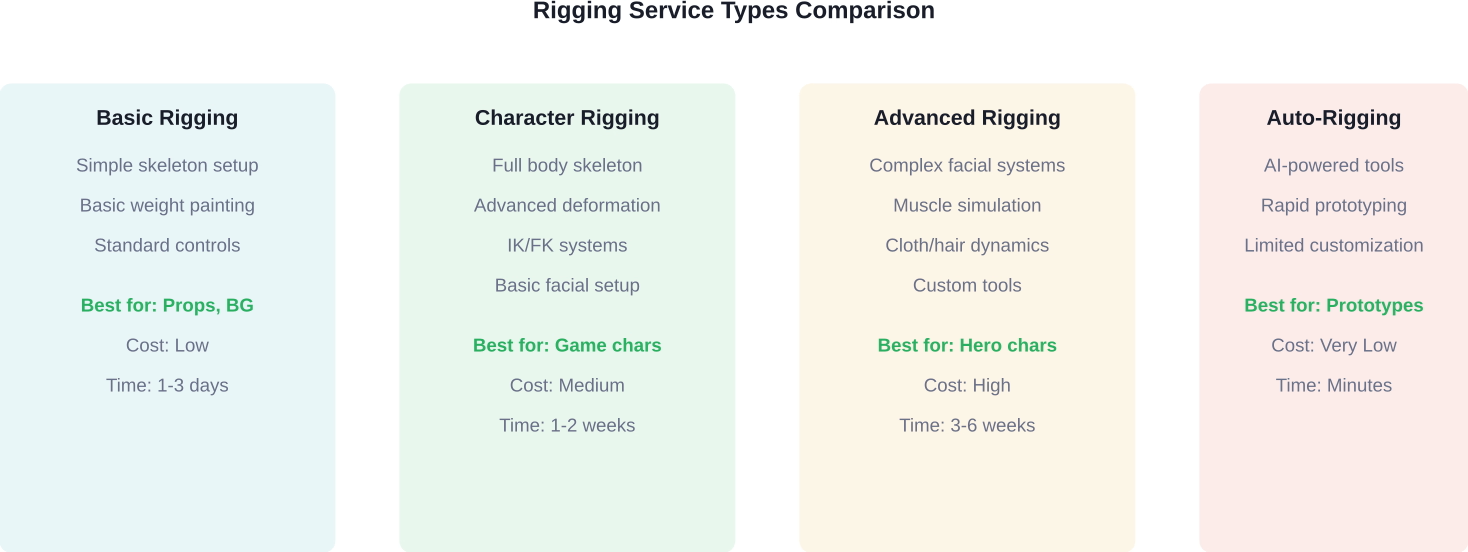
Basic rigging covers simple skeleton setups for props, background characters, or static assets that need minimal animation. Think weapons, furniture, or crowd characters that only need basic locomotion.
Character rigging represents the standard service tier. Full body skeletons with IK/FK switching, proper deformation, and basic facial controls. This covers most game characters and secondary film characters.
Advanced rigging tackles hero characters requiring complex facial systems, muscle simulation, cloth dynamics, and custom control setups. These rigs support nuanced performance and tight close-ups.
Auto-rigging tools powered by AI have emerged recently. Platforms like Tripo AI enable creators to complete the entire 3D pipeline—modeling, texturing, retopology, and rigging—up to 50% faster, eliminating the need for multiple tools. These work well for rapid prototyping but offer limited customization compared to hand-crafted rigs.
Freelancers Versus Studios: Making the Right Choice
The fundamental decision when outsourcing rigging: individual freelancers or established studios?
Both have legitimate use cases.
When Freelancers Make Sense
Freelance riggers excel for smaller, well-defined projects. Need three quadruped rigs for a thesis film? A skilled freelancer can deliver quality work at competitive rates.
Community discussions on platforms like Reddit indicate that freelancers may provide direct communication and flexibility on project scope changes. The relationship feels more collaborative, less transactional.
Budget constraints often push projects toward freelancers. Without studio overhead, rates tend to be lower for comparable skill levels.
The challenge? Capacity and reliability. A freelancer can only handle one or two projects simultaneously. If they get sick, take another job, or underestimate the timeline, there's no backup team to pick up the slack.
When Studios Provide Better Value
Studios bring infrastructure, redundancy, and scalability. Need 20 character rigs delivered in six weeks? A studio can assign multiple riggers, maintain consistent quality standards, and hit deadlines reliably.
Established studios also provide technical support beyond just rigging. They understand production pipelines, file formats, version control, and integration with animation workflows. This expertise prevents costly mistakes.
Quality control systems matter too. Studios typically have senior riggers reviewing work before delivery, catching issues that might slip through with solo freelancers.
The premium for studio services reflects these advantages. Expect to pay 30-50% more than freelance rates, but with significantly reduced risk.
Evaluating Technical Capabilities
Not all rigging providers possess equal technical chops. Evaluation requires looking beyond portfolio presentation.
Software Proficiency Assessment
Different projects demand different software expertise. Maya remains the industry standard for film and high-end game rigging. Blender has gained significant ground for indie projects and budget-conscious productions. 3ds Max appears frequently in architectural visualization and some game pipelines.
The rigging partner must demonstrate deep proficiency in the specific software the project requires. A Maya expert won't necessarily deliver optimal results working in Blender, and vice versa.
Ask specific technical questions during evaluation:
- How do they handle IK/FK switching systems?
- What's their approach to facial rigging—blend shapes, bone-based, or hybrid?
- Can they implement custom attributes and SDKs?
- How do they optimize rigs for real-time versus offline rendering?
Vague answers or over-reliance on auto-rigging tools signal limited depth.
Portfolio Deep Dive
Portfolio review should go beyond surface aesthetics. Request demoreel breakdowns showing rigs in motion, not just pretty posed screenshots.
Look for:
- Range of character types (humanoid, creature, mechanical)
- Deformation quality during extreme poses
- Control setup clarity and animator-friendliness
- Technical problem-solving on unusual anatomy
Ask to see rig files directly if possible. Opening the actual scene reveals organizational skills, naming conventions, and technical cleanliness—all indicators of professional rigging practices.
Pipeline Integration Understanding
Rigging doesn't exist in isolation. The best riggers understand how their work fits into broader production pipelines.
Do they deliver rigs with proper naming conventions matching the project's standards? Can they work within existing asset management systems? Do they understand referencing, versioning, and dependency management?
Studios with animation services backgrounds tend to excel here, having worked through entire production cycles rather than just isolated rigging tasks.
Cost Structures and Budget Planning
Rigging costs vary dramatically based on complexity, timeline, and provider expertise.
These ranges reflect current market conditions but vary by region, provider reputation, and project specifics. Always request detailed quotes rather than assuming standard pricing.
Hidden Costs to Account For
The initial rigging quote rarely represents total project cost. Budget for:
- Revision rounds beyond included limits: Most contracts include 2-3 revision rounds. Additional changes often cost 15-25% of the original rig price per round.
- Technical documentation: Comprehensive rig documentation for animators may cost extra. Worth the investment to prevent workflow confusion.
- Format conversion: Delivering the rig in multiple software formats typically incurs additional fees.
- Rush fees: Expedited timelines can add 25-50% to base costs. Plan accordingly.
Payment Structure Considerations
Most rigging outsourcing follows milestone-based payment structures:
- 25-30% upfront deposit to begin work
- 30-40% upon skeleton and basic deformation completion
- 30-40% upon final delivery and approval
- 5-10% retention for post-delivery support period
This protects both parties. Studios receive payment as work progresses; clients maintain leverage for quality assurance.
Avoid full upfront payment regardless of promises or discounts. It eliminates accountability and creates unnecessary risk.
Finding Reliable Rigging Partners
So where do quality rigging providers actually hang out?
Several channels consistently produce good matches.
Specialized 3D Marketplaces and Platforms
ArtStation serves as both portfolio platform and job board for 3D artists. The search functionality allows filtering specifically for rigging specialists by software, experience level, and project type.
Community discussions suggest ArtStation may connect clients with serious professionals rather than hobbyists. The platform's focus on high-end game and film work attracts skilled technical artists.
Industry-Specific Forums and Communities
The Maya, Blender, and Unreal Engine communities maintain active forums where riggers showcase work and seek projects. These niche communities attract specialists rather than generalists.
Reddit's Maya and Blender subreddits field regular requests for rigging services. The community vetting through upvotes and comment feedback provides informal quality signals.
Production Services Directories
Several studios have established strong reputations specifically for rigging and technical art services. While specific recommendations change as studios evolve, looking for providers with comprehensive case studies and client testimonials helps narrow options.
Geographic diversity exists in the rigging outsourcing market. Studios in Eastern Europe, Southeast Asia, and South America often provide excellent technical quality at different price points than North American or Western European providers.
Direct Outreach Through Portfolio Sites
Many skilled riggers maintain personal websites or Vimeo channels showcasing their work. Direct outreach to artists whose style and technical approach match project needs often yields better results than mass platform postings.
This approach requires more upfront research but builds relationships with specialists rather than commoditized service providers.
The Evaluation and Selection Process
Once potential partners are identified, systematic evaluation prevents costly mistakes.
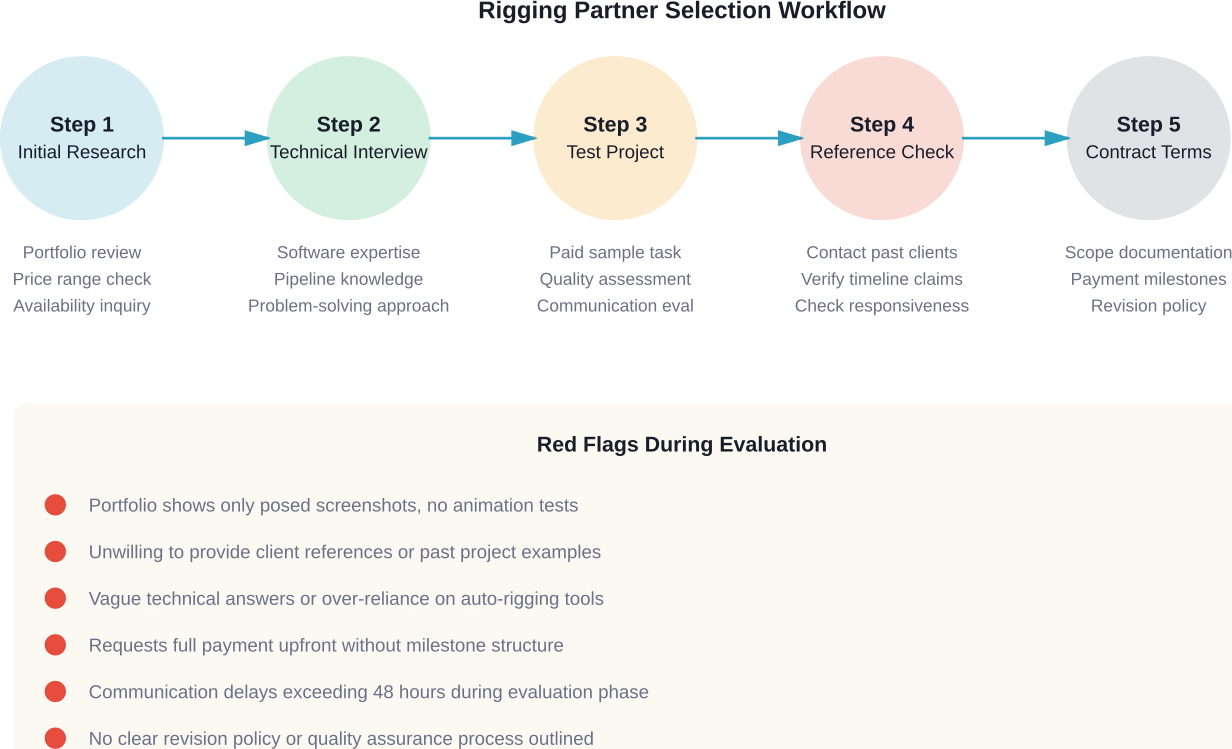
The Test Project Approach
Always start with a paid test project before committing to large-scale work. This isn't asking for free samples—offer fair compensation for a simplified version of actual project needs.
For a game requiring 20 character rigs, commission one secondary character as a test. This reveals:
- Actual turnaround time versus estimated timeline
- Quality of deliverables and file organization
- Responsiveness to feedback and revision requests
- Communication clarity and professionalism
- Technical compatibility with existing pipeline
The small upfront investment prevents massive headaches if the partnership doesn't work out.
Reference Checks Matter
Request and actually contact past client references. Ask specific questions:
- Did deliverables match initial quality promises?
- How did they handle unexpected technical challenges?
- Were deadlines met consistently?
- How responsive were they to revision requests?
- Would you hire them again?
References who provide detailed, specific answers carry more weight than vague endorsements.
Managing the Outsourcing Workflow
Successful rigging outsourcing requires active project management, not just firing off an email and waiting for finished files.
Clear Specification Documentation
Ambiguity kills outsourcing projects. Provide comprehensive specifications before work begins:
- Target software and version numbers
- Required rig features (IK/FK, facial controls, dynamic systems)
- Naming convention standards
- File format and delivery requirements
- Performance constraints (polygon count, joint limits)
- Reference materials showing desired movement quality
Time invested in thorough documentation prevents expensive revision cycles later.
Milestone Review Structure
Don't wait until final delivery to review work. Establish checkpoint reviews:
- Skeleton placement approval before weight painting begins
- Base deformation review before control rig creation
- Control setup approval before facial rigging starts
- Comprehensive testing before final delivery
Catching issues early costs a fraction of fixing them after completion.
Communication Cadence
Establish regular check-in schedules appropriate to project timeline. For multi-week projects, brief weekly updates prevent drift and miscommunication.
Use project management tools rather than scattered email threads. Platforms like Frame.io, SyncSketch, or even shared spreadsheets keep feedback organized and traceable.
Feedback Specificity
Vague feedback generates vague results. Instead of "the arm deformation looks wrong," provide: "The bicep collapses when the elbow bends past 90 degrees—needs additional weight painting on vertices 4523-4589 to maintain volume."
Screen recordings showing problems in context work better than written descriptions for complex deformation issues.
Common Challenges and Solutions
Even well-planned outsourcing hits snags. Here's how to handle frequent problems.
Quality Doesn't Match Portfolio
Sometimes delivered work quality falls short of portfolio examples. This happens when studios rotate less experienced artists onto projects or rush work to meet deadlines.
Solution: The test project approach catches this early. If quality drops during the main project, invoke revision clauses immediately. Document specific quality gaps with reference to approved test project standards.
Timeline Slippage
Missed deadlines derail production schedules. External vendors juggle multiple clients, and priorities shift.
Solution: Build buffer time into production schedules. If a rig takes two weeks, schedule three. Include timeline penalties in contracts—partial refunds or rush-free additional work if deadlines slip without prior approval.
Technical Compatibility Issues
Rigs that work perfectly in the vendor's environment break when imported into production pipelines. Plugin dependencies, software version mismatches, or file path issues create friction.
Solution: Provide a complete technical specification including exact software versions, installed plugins, and file structure requirements upfront. Request test deliveries using actual production environment before full project begins.
Scope Creep and Revision Cycles
Projects evolve. What started as a simple character rig suddenly needs complex cloth simulation. Revision cycles multiply as creative direction shifts.
Solution: Distinguish between vendor errors requiring free fixes and client-driven changes warranting additional compensation. Clear contracts defining what constitutes a revision versus a scope change prevent disputes.
Building Long-Term Partnerships
One-off outsourcing projects work fine, but cultivating ongoing relationships with quality rigging partners provides significant advantages.
Established partners understand project-specific requirements without extensive re-onboarding. They've already proven reliability, quality standards, and technical compatibility.
Preferred partner status often yields scheduling priority when crunch times hit. Studios prioritize clients with consistent project flow over sporadic one-offs.
Long-term relationships also enable candid feedback. Partners invested in ongoing work will flag potential problems early rather than delivering questionable work and hoping it passes.
Consider retainer arrangements for ongoing projects. Monthly retainers covering a certain number of rigs or hours provide budget predictability and guaranteed capacity.
The Role of AI and Automation
Auto-rigging technology has advanced significantly. Tools now handle standard humanoid and quadruped characters with minimal manual intervention.
Tripo AI and similar platforms complete the entire 3D pipeline—including rigging—up to 50% faster than traditional methods for certain asset types. This works particularly well for rapid prototyping, background characters, or projects with limited budgets.
But here's the thing: automation still falls short for complex hero characters requiring nuanced performance. Facial systems, advanced deformation, and custom control schemes demand experienced technical artists.
Think of auto-rigging as a tool in the outsourcing toolkit, not a complete replacement. Use it to accelerate simple assets while reserving manual rigging for characters requiring polish.
Regional Considerations and Time Zones
Geographic location impacts both cost and workflow practicality.
Studios in Eastern Europe, Southeast Asia, and South America often provide excellent technical quality at different price points than North American or Western European providers. The cost difference doesn't reflect lower skill—it reflects different operating costs and currency values.
Time zone differences cut both ways. Asynchronous workflows mean progress happens during off-hours, potentially accelerating timelines. Submit feedback before end of day, receive updated files by next morning.
The downside? Real-time collaboration becomes challenging. Screen-sharing troubleshooting sessions require one party working outside normal hours. For projects requiring frequent synchronous communication, similar time zones provide advantages despite potentially higher costs.
Legal and Contractual Considerations
Proper contracts prevent ugly disputes down the road.
Intellectual Property Rights
Contracts must explicitly transfer all intellectual property rights to the client upon final payment. Work-for-hire clauses ensure ownership of both the final rig and any custom tools or scripts created during development.
Without clear IP transfer language, vendors could theoretically claim ownership or reuse proprietary character rigs for other clients.
Confidentiality Agreements
Projects under NDA require vendors to sign confidentiality agreements before receiving any project materials. This protects unreleased character designs, story details, or proprietary technology.
Quality Standards and Acceptance Criteria
Define what constitutes acceptable delivery. Reference the test project as a quality baseline. Specify testing procedures—do rigs need to pass specific animation tests or technical validation scripts?
Clear acceptance criteria prevent disputes over whether deliverables meet contractual obligations.
Dispute Resolution
Include arbitration or mediation clauses for resolving disagreements without expensive litigation. Specify which jurisdiction's laws govern the contract.
Measuring Outsourcing Success
Track metrics to evaluate whether rigging outsourcing delivers expected value.
Regular metric review identifies problems before they become crises and validates whether outsourcing delivers expected benefits.
Industry-Specific Considerations
Rigging requirements vary significantly across industries.
Game Development
Game rigs prioritize performance over visual perfection. Joint count limits, real-time deformation efficiency, and engine compatibility matter more than subtle secondary motion.
LOD systems requiring multiple rig complexity levels add scope. A hero character might need a full-detail rig for cutscenes and simplified versions for gameplay at varying distances.
Outsourcing partners need familiarity with target game engines—Unity, Unreal Engine, or proprietary systems—and their specific rigging constraints.
Film and Animation
Film rigs emphasize deformation quality and animator control. Performance constraints relax since rendering happens offline.
Complex facial systems supporting subtle performance capture or hand-keyed animation become critical. Muscle simulation, wrinkle maps, and advanced corrective systems appear frequently.
Pipeline integration with specific renderers and studios' proprietary tools requires more technical coordination.
Virtual Production and Real-Time
Virtual production blends game and film requirements. Rigs must perform in real-time engines while supporting film-quality deformation.
Motion capture compatibility becomes essential. Rigs need proper joint orientation and hierarchy for retargeting motion capture data cleanly.
Future Trends in Rigging Outsourcing
The rigging outsourcing landscape continues evolving rapidly.
AI-assisted rigging tools will handle increasingly complex scenarios, potentially reducing demand for basic rigging services while increasing value of advanced specialization.
Remote collaboration technology improvements make geographic location less relevant. High-quality real-time collaboration tools enable global teams to work as effectively as local studios.
Standardization efforts around rig formats and control schemes may simplify vendor switching and reduce technical compatibility friction.
The worldwide animation production market continues expanding, with recent industry estimates placing it between $400 billion and $450 billion in 2025-2026. This growth ensures sustained demand for specialized rigging services.
Moving Forward with Rigging Outsourcing
Rigging outsourcing provides genuine value when approached systematically. The key lies in matching project needs to appropriate providers, establishing clear specifications and workflows, and maintaining active oversight throughout production.
Start small. Test potential partners with limited-scope projects before committing to major work. Build relationships with reliable providers who understand specific technical requirements and communication preferences.
Document everything. Clear specifications, milestone reviews, and structured feedback prevent the majority of outsourcing problems before they develop.
And remember—the cheapest option rarely delivers best value. Invest in quality partnerships that reduce risk, meet deadlines consistently, and deliver rigs that animators actually enjoy using.
The rigging outsourcing market will continue expanding alongside the broader animation industry. Studios that develop effective outsourcing strategies now position themselves to scale efficiently as project demands grow.
Ready to start outsourcing rigging work? Begin by documenting current project requirements, researching providers matching technical needs, and structuring that crucial first test project. The investment in finding the right partner pays dividends across every subsequent production.
Frequently Asked Questions
Topics
Rigging Outsourcing Guide: Partners & Process 2026

Rigging outsourcing involves hiring external specialists or studios to create digital skeletons for 3D models, enabling animation and movement. This guide covers how to select the right rigging partner, manage costs, evaluate technical capabilities, and avoid common pitfalls when outsourcing character and asset rigging for games, films, and digital content production.
The 3D animation market was valued at over 16 billion USD in 2021, with projections reaching 47 billion USD by 2030—growing at a CAGR of 12.5% during the stated time period. With this explosive growth comes increased demand for specialized technical artistry, particularly character rigging.
But here's the thing: building an in-house rigging team isn't feasible for most studios. The talent pool is limited, salaries are climbing, and project demands fluctuate wildly from month to month.
That's where rigging outsourcing comes in.
This guide breaks down everything needed to successfully outsource rigging work—from understanding what rigging actually involves to selecting the right partner and managing the workflow. Whether tackling quadruped rigs for an indie game or humanoid characters for a feature film, the principles remain consistent.
What Rigging Actually Means in Production
Before diving into outsourcing strategies, it's worth clarifying what rigging entails.
Rigging is the process of creating a digital skeleton for a 3D model. This skeleton—composed of bones, joints, and controls—allows animators to pose and move the model. Without proper rigging, even the most beautifully modeled character remains lifeless.
The process involves several technical layers:
- Joint placement and hierarchy setup
- Weight painting to define how mesh deforms with bone movement
- Control rig creation for animator-friendly manipulation
- Facial rigging for expressions and lip-sync
- Cloth and hair simulation setups
- Constraint systems for complex mechanical movements
A professional rig can take anywhere from a few days for simple props to several weeks for complex hero characters with full facial systems. That time commitment adds up fast when production schedules demand dozens of unique assets.
Why Studios Outsource Rigging Work
The decision to outsource rigging typically stems from several practical realities.
Cost Management Without Quality Sacrifice
Traditional animated films can cost $150 million or more, with a significant portion allocated to technical development. Outsourcing certain production phases can substantially reduce those figures without sacrificing quality.
Geographic arbitrage plays a role here. Studios in regions with lower operating costs can deliver the same technical quality at different price points. This doesn't mean cutting corners—it means accessing global talent pools efficiently.
Scalability Based on Project Needs
Project demands fluctuate dramatically. A game studio might need 50 character rigs for a major release, then only three for DLC content six months later.
Outsourcing lets studios scale up or down based on actual project needs. No need to maintain a large permanent team during slow periods or scramble to hire when deadlines loom.
Access to Specialized Technical Expertise
Some rigging challenges require niche expertise. Realistic quadruped locomotion systems, complex mechanical rigs for vehicles, or advanced facial systems for performance capture all demand specialized knowledge.
Rather than training internal staff on every possible scenario, studios can partner with specialists who've solved these specific problems dozens of times before.
Faster Turnaround on Production Bottlenecks
Rigging often becomes a production bottleneck. Models pile up waiting for rigs, animators sit idle, and schedules slip.
Bringing in an external rigging team can clear backlogs quickly, keeping the production pipeline flowing smoothly.
Rigging Outsourcing Made Simple with NeoWork
Outsourcing rigging helps game studios and animation teams scale efficiently without compromising quality. NeoWork provides vetted rigging artists who integrate into your production pipeline and deliver precise character setups.
Support includes:
- character rigging for 2D and 3D assets
- skeletal and facial rigs
- animation-ready setups for game engines
- iterative adjustments and QA
NeoWork can augment your internal team or handle full rigging tasks. Get started with NeoWork today to streamline rigging outsourcing and access top global talent.
Understanding Rigging Service Types
Not all rigging services are created equal. Understanding the different types helps match needs to the right provider.
Basic rigging covers simple skeleton setups for props, background characters, or static assets that need minimal animation. Think weapons, furniture, or crowd characters that only need basic locomotion.
Character rigging represents the standard service tier. Full body skeletons with IK/FK switching, proper deformation, and basic facial controls. This covers most game characters and secondary film characters.
Advanced rigging tackles hero characters requiring complex facial systems, muscle simulation, cloth dynamics, and custom control setups. These rigs support nuanced performance and tight close-ups.
Auto-rigging tools powered by AI have emerged recently. Platforms like Tripo AI enable creators to complete the entire 3D pipeline—modeling, texturing, retopology, and rigging—up to 50% faster, eliminating the need for multiple tools. These work well for rapid prototyping but offer limited customization compared to hand-crafted rigs.
Freelancers Versus Studios: Making the Right Choice
The fundamental decision when outsourcing rigging: individual freelancers or established studios?
Both have legitimate use cases.
When Freelancers Make Sense
Freelance riggers excel for smaller, well-defined projects. Need three quadruped rigs for a thesis film? A skilled freelancer can deliver quality work at competitive rates.
Community discussions on platforms like Reddit indicate that freelancers may provide direct communication and flexibility on project scope changes. The relationship feels more collaborative, less transactional.
Budget constraints often push projects toward freelancers. Without studio overhead, rates tend to be lower for comparable skill levels.
The challenge? Capacity and reliability. A freelancer can only handle one or two projects simultaneously. If they get sick, take another job, or underestimate the timeline, there's no backup team to pick up the slack.
When Studios Provide Better Value
Studios bring infrastructure, redundancy, and scalability. Need 20 character rigs delivered in six weeks? A studio can assign multiple riggers, maintain consistent quality standards, and hit deadlines reliably.
Established studios also provide technical support beyond just rigging. They understand production pipelines, file formats, version control, and integration with animation workflows. This expertise prevents costly mistakes.
Quality control systems matter too. Studios typically have senior riggers reviewing work before delivery, catching issues that might slip through with solo freelancers.
The premium for studio services reflects these advantages. Expect to pay 30-50% more than freelance rates, but with significantly reduced risk.
Evaluating Technical Capabilities
Not all rigging providers possess equal technical chops. Evaluation requires looking beyond portfolio presentation.
Software Proficiency Assessment
Different projects demand different software expertise. Maya remains the industry standard for film and high-end game rigging. Blender has gained significant ground for indie projects and budget-conscious productions. 3ds Max appears frequently in architectural visualization and some game pipelines.
The rigging partner must demonstrate deep proficiency in the specific software the project requires. A Maya expert won't necessarily deliver optimal results working in Blender, and vice versa.
Ask specific technical questions during evaluation:
- How do they handle IK/FK switching systems?
- What's their approach to facial rigging—blend shapes, bone-based, or hybrid?
- Can they implement custom attributes and SDKs?
- How do they optimize rigs for real-time versus offline rendering?
Vague answers or over-reliance on auto-rigging tools signal limited depth.
Portfolio Deep Dive
Portfolio review should go beyond surface aesthetics. Request demoreel breakdowns showing rigs in motion, not just pretty posed screenshots.
Look for:
- Range of character types (humanoid, creature, mechanical)
- Deformation quality during extreme poses
- Control setup clarity and animator-friendliness
- Technical problem-solving on unusual anatomy
Ask to see rig files directly if possible. Opening the actual scene reveals organizational skills, naming conventions, and technical cleanliness—all indicators of professional rigging practices.
Pipeline Integration Understanding
Rigging doesn't exist in isolation. The best riggers understand how their work fits into broader production pipelines.
Do they deliver rigs with proper naming conventions matching the project's standards? Can they work within existing asset management systems? Do they understand referencing, versioning, and dependency management?
Studios with animation services backgrounds tend to excel here, having worked through entire production cycles rather than just isolated rigging tasks.
Cost Structures and Budget Planning
Rigging costs vary dramatically based on complexity, timeline, and provider expertise.
These ranges reflect current market conditions but vary by region, provider reputation, and project specifics. Always request detailed quotes rather than assuming standard pricing.
Hidden Costs to Account For
The initial rigging quote rarely represents total project cost. Budget for:
- Revision rounds beyond included limits: Most contracts include 2-3 revision rounds. Additional changes often cost 15-25% of the original rig price per round.
- Technical documentation: Comprehensive rig documentation for animators may cost extra. Worth the investment to prevent workflow confusion.
- Format conversion: Delivering the rig in multiple software formats typically incurs additional fees.
- Rush fees: Expedited timelines can add 25-50% to base costs. Plan accordingly.
Payment Structure Considerations
Most rigging outsourcing follows milestone-based payment structures:
- 25-30% upfront deposit to begin work
- 30-40% upon skeleton and basic deformation completion
- 30-40% upon final delivery and approval
- 5-10% retention for post-delivery support period
This protects both parties. Studios receive payment as work progresses; clients maintain leverage for quality assurance.
Avoid full upfront payment regardless of promises or discounts. It eliminates accountability and creates unnecessary risk.
Finding Reliable Rigging Partners
So where do quality rigging providers actually hang out?
Several channels consistently produce good matches.
Specialized 3D Marketplaces and Platforms
ArtStation serves as both portfolio platform and job board for 3D artists. The search functionality allows filtering specifically for rigging specialists by software, experience level, and project type.
Community discussions suggest ArtStation may connect clients with serious professionals rather than hobbyists. The platform's focus on high-end game and film work attracts skilled technical artists.
Industry-Specific Forums and Communities
The Maya, Blender, and Unreal Engine communities maintain active forums where riggers showcase work and seek projects. These niche communities attract specialists rather than generalists.
Reddit's Maya and Blender subreddits field regular requests for rigging services. The community vetting through upvotes and comment feedback provides informal quality signals.
Production Services Directories
Several studios have established strong reputations specifically for rigging and technical art services. While specific recommendations change as studios evolve, looking for providers with comprehensive case studies and client testimonials helps narrow options.
Geographic diversity exists in the rigging outsourcing market. Studios in Eastern Europe, Southeast Asia, and South America often provide excellent technical quality at different price points than North American or Western European providers.
Direct Outreach Through Portfolio Sites
Many skilled riggers maintain personal websites or Vimeo channels showcasing their work. Direct outreach to artists whose style and technical approach match project needs often yields better results than mass platform postings.
This approach requires more upfront research but builds relationships with specialists rather than commoditized service providers.
The Evaluation and Selection Process
Once potential partners are identified, systematic evaluation prevents costly mistakes.
The Test Project Approach
Always start with a paid test project before committing to large-scale work. This isn't asking for free samples—offer fair compensation for a simplified version of actual project needs.
For a game requiring 20 character rigs, commission one secondary character as a test. This reveals:
- Actual turnaround time versus estimated timeline
- Quality of deliverables and file organization
- Responsiveness to feedback and revision requests
- Communication clarity and professionalism
- Technical compatibility with existing pipeline
The small upfront investment prevents massive headaches if the partnership doesn't work out.
Reference Checks Matter
Request and actually contact past client references. Ask specific questions:
- Did deliverables match initial quality promises?
- How did they handle unexpected technical challenges?
- Were deadlines met consistently?
- How responsive were they to revision requests?
- Would you hire them again?
References who provide detailed, specific answers carry more weight than vague endorsements.
Managing the Outsourcing Workflow
Successful rigging outsourcing requires active project management, not just firing off an email and waiting for finished files.
Clear Specification Documentation
Ambiguity kills outsourcing projects. Provide comprehensive specifications before work begins:
- Target software and version numbers
- Required rig features (IK/FK, facial controls, dynamic systems)
- Naming convention standards
- File format and delivery requirements
- Performance constraints (polygon count, joint limits)
- Reference materials showing desired movement quality
Time invested in thorough documentation prevents expensive revision cycles later.
Milestone Review Structure
Don't wait until final delivery to review work. Establish checkpoint reviews:
- Skeleton placement approval before weight painting begins
- Base deformation review before control rig creation
- Control setup approval before facial rigging starts
- Comprehensive testing before final delivery
Catching issues early costs a fraction of fixing them after completion.
Communication Cadence
Establish regular check-in schedules appropriate to project timeline. For multi-week projects, brief weekly updates prevent drift and miscommunication.
Use project management tools rather than scattered email threads. Platforms like Frame.io, SyncSketch, or even shared spreadsheets keep feedback organized and traceable.
Feedback Specificity
Vague feedback generates vague results. Instead of "the arm deformation looks wrong," provide: "The bicep collapses when the elbow bends past 90 degrees—needs additional weight painting on vertices 4523-4589 to maintain volume."
Screen recordings showing problems in context work better than written descriptions for complex deformation issues.
Common Challenges and Solutions
Even well-planned outsourcing hits snags. Here's how to handle frequent problems.
Quality Doesn't Match Portfolio
Sometimes delivered work quality falls short of portfolio examples. This happens when studios rotate less experienced artists onto projects or rush work to meet deadlines.
Solution: The test project approach catches this early. If quality drops during the main project, invoke revision clauses immediately. Document specific quality gaps with reference to approved test project standards.
Timeline Slippage
Missed deadlines derail production schedules. External vendors juggle multiple clients, and priorities shift.
Solution: Build buffer time into production schedules. If a rig takes two weeks, schedule three. Include timeline penalties in contracts—partial refunds or rush-free additional work if deadlines slip without prior approval.
Technical Compatibility Issues
Rigs that work perfectly in the vendor's environment break when imported into production pipelines. Plugin dependencies, software version mismatches, or file path issues create friction.
Solution: Provide a complete technical specification including exact software versions, installed plugins, and file structure requirements upfront. Request test deliveries using actual production environment before full project begins.
Scope Creep and Revision Cycles
Projects evolve. What started as a simple character rig suddenly needs complex cloth simulation. Revision cycles multiply as creative direction shifts.
Solution: Distinguish between vendor errors requiring free fixes and client-driven changes warranting additional compensation. Clear contracts defining what constitutes a revision versus a scope change prevent disputes.
Building Long-Term Partnerships
One-off outsourcing projects work fine, but cultivating ongoing relationships with quality rigging partners provides significant advantages.
Established partners understand project-specific requirements without extensive re-onboarding. They've already proven reliability, quality standards, and technical compatibility.
Preferred partner status often yields scheduling priority when crunch times hit. Studios prioritize clients with consistent project flow over sporadic one-offs.
Long-term relationships also enable candid feedback. Partners invested in ongoing work will flag potential problems early rather than delivering questionable work and hoping it passes.
Consider retainer arrangements for ongoing projects. Monthly retainers covering a certain number of rigs or hours provide budget predictability and guaranteed capacity.
The Role of AI and Automation
Auto-rigging technology has advanced significantly. Tools now handle standard humanoid and quadruped characters with minimal manual intervention.
Tripo AI and similar platforms complete the entire 3D pipeline—including rigging—up to 50% faster than traditional methods for certain asset types. This works particularly well for rapid prototyping, background characters, or projects with limited budgets.
But here's the thing: automation still falls short for complex hero characters requiring nuanced performance. Facial systems, advanced deformation, and custom control schemes demand experienced technical artists.
Think of auto-rigging as a tool in the outsourcing toolkit, not a complete replacement. Use it to accelerate simple assets while reserving manual rigging for characters requiring polish.
Regional Considerations and Time Zones
Geographic location impacts both cost and workflow practicality.
Studios in Eastern Europe, Southeast Asia, and South America often provide excellent technical quality at different price points than North American or Western European providers. The cost difference doesn't reflect lower skill—it reflects different operating costs and currency values.
Time zone differences cut both ways. Asynchronous workflows mean progress happens during off-hours, potentially accelerating timelines. Submit feedback before end of day, receive updated files by next morning.
The downside? Real-time collaboration becomes challenging. Screen-sharing troubleshooting sessions require one party working outside normal hours. For projects requiring frequent synchronous communication, similar time zones provide advantages despite potentially higher costs.
Legal and Contractual Considerations
Proper contracts prevent ugly disputes down the road.
Intellectual Property Rights
Contracts must explicitly transfer all intellectual property rights to the client upon final payment. Work-for-hire clauses ensure ownership of both the final rig and any custom tools or scripts created during development.
Without clear IP transfer language, vendors could theoretically claim ownership or reuse proprietary character rigs for other clients.
Confidentiality Agreements
Projects under NDA require vendors to sign confidentiality agreements before receiving any project materials. This protects unreleased character designs, story details, or proprietary technology.
Quality Standards and Acceptance Criteria
Define what constitutes acceptable delivery. Reference the test project as a quality baseline. Specify testing procedures—do rigs need to pass specific animation tests or technical validation scripts?
Clear acceptance criteria prevent disputes over whether deliverables meet contractual obligations.
Dispute Resolution
Include arbitration or mediation clauses for resolving disagreements without expensive litigation. Specify which jurisdiction's laws govern the contract.
Measuring Outsourcing Success
Track metrics to evaluate whether rigging outsourcing delivers expected value.
Regular metric review identifies problems before they become crises and validates whether outsourcing delivers expected benefits.
Industry-Specific Considerations
Rigging requirements vary significantly across industries.
Game Development
Game rigs prioritize performance over visual perfection. Joint count limits, real-time deformation efficiency, and engine compatibility matter more than subtle secondary motion.
LOD systems requiring multiple rig complexity levels add scope. A hero character might need a full-detail rig for cutscenes and simplified versions for gameplay at varying distances.
Outsourcing partners need familiarity with target game engines—Unity, Unreal Engine, or proprietary systems—and their specific rigging constraints.
Film and Animation
Film rigs emphasize deformation quality and animator control. Performance constraints relax since rendering happens offline.
Complex facial systems supporting subtle performance capture or hand-keyed animation become critical. Muscle simulation, wrinkle maps, and advanced corrective systems appear frequently.
Pipeline integration with specific renderers and studios' proprietary tools requires more technical coordination.
Virtual Production and Real-Time
Virtual production blends game and film requirements. Rigs must perform in real-time engines while supporting film-quality deformation.
Motion capture compatibility becomes essential. Rigs need proper joint orientation and hierarchy for retargeting motion capture data cleanly.
Future Trends in Rigging Outsourcing
The rigging outsourcing landscape continues evolving rapidly.
AI-assisted rigging tools will handle increasingly complex scenarios, potentially reducing demand for basic rigging services while increasing value of advanced specialization.
Remote collaboration technology improvements make geographic location less relevant. High-quality real-time collaboration tools enable global teams to work as effectively as local studios.
Standardization efforts around rig formats and control schemes may simplify vendor switching and reduce technical compatibility friction.
The worldwide animation production market continues expanding, with recent industry estimates placing it between $400 billion and $450 billion in 2025-2026. This growth ensures sustained demand for specialized rigging services.
Moving Forward with Rigging Outsourcing
Rigging outsourcing provides genuine value when approached systematically. The key lies in matching project needs to appropriate providers, establishing clear specifications and workflows, and maintaining active oversight throughout production.
Start small. Test potential partners with limited-scope projects before committing to major work. Build relationships with reliable providers who understand specific technical requirements and communication preferences.
Document everything. Clear specifications, milestone reviews, and structured feedback prevent the majority of outsourcing problems before they develop.
And remember—the cheapest option rarely delivers best value. Invest in quality partnerships that reduce risk, meet deadlines consistently, and deliver rigs that animators actually enjoy using.
The rigging outsourcing market will continue expanding alongside the broader animation industry. Studios that develop effective outsourcing strategies now position themselves to scale efficiently as project demands grow.
Ready to start outsourcing rigging work? Begin by documenting current project requirements, researching providers matching technical needs, and structuring that crucial first test project. The investment in finding the right partner pays dividends across every subsequent production.
Frequently Asked Questions
Topics
Related Blogs
Related Podcasts


.webp)

.webp)
.webp)



