

.avif)
.avif)

VFX Outsourcing Guide 2026: Partner Selection & Strategy

.svg)

VFX outsourcing involves partnering with external studios to handle visual effects production instead of building in-house teams. This guide covers how to select the right VFX partner, manage workflows, control costs, and deliver high-quality visual effects for film, gaming, and entertainment projects in 2026.
Visual effects have become the backbone of modern entertainment. From blockbuster films to AAA game titles, stunning VFX separates mediocre content from memorable experiences.
But here's the challenge: building an in-house VFX team demands massive capital investment, specialized talent recruitment, and expensive software infrastructure. For many production companies, that's neither practical nor financially viable.
That's where VFX outsourcing enters the picture. By partnering with specialized studios, production teams can access world-class talent, cutting-edge technology, and flexible capacity without the overhead of permanent staff.
The landscape has shifted dramatically. According to recent 2025-2026 industry reports from the Visual Effects Society (VES) and Variety, the innovation lever in VFX has shifted toward AI-augmented pipelines and Virtual Production ecosystems, moving beyond traditional brick-and-mortar collaborations to integrated cloud-based distributed studios. This partnership model extends naturally to visual effects production.
This guide breaks down everything production teams need to know about outsourcing visual effects work in 2026.
What VFX Outsourcing Actually Means
VFX outsourcing refers to hiring external studios or freelancers to create visual effects instead of handling production internally. The practice spans multiple entertainment sectors—film, television, gaming, advertising, and streaming content.
The scope varies wildly. Some projects outsource specific technical tasks like rotoscoping or compositing. Others hand off entire sequences or even complete VFX pipelines to partner studios.
Real talk: outsourcing isn't just about cutting costs anymore. It's become a strategic capability that lets production companies scale rapidly, access specialized skills, and maintain quality standards that would be impossible with internal teams alone.
Core VFX Services Typically Outsourced
The range of visual effects work suitable for outsourcing is extensive:
- 2D VFX: Compositing, rotoscoping, matte painting, color correction
- 3D VFX: Modeling, texturing, rigging, character animation, environment creation
- Simulations: Fluid dynamics, particle effects, cloth simulation, destruction sequences
- Motion Graphics: Title sequences, motion design, UI elements
- Previsualization: Previs and postvis for planning complex sequences
Each category requires different technical expertise and production timelines. Understanding which services align with project needs becomes the first critical decision point.
Why Production Teams Choose to Outsource VFX
The decision to outsource visual effects stems from multiple strategic and practical considerations.
Cost efficiency remains a primary driver. Building an in-house VFX team means salaries, benefits, software licenses, hardware infrastructure, and ongoing training costs. Outsourcing converts these fixed costs into variable expenses tied directly to project needs.
But there's more to it.
Access to specialized skills matters enormously. A studio working on a fantasy film might need expert creature animators for one sequence, then photorealistic environment artists for another. Maintaining that breadth of expertise internally rarely makes financial sense.
Scalability provides another compelling advantage. Production schedules fluctuate wildly in the entertainment industry. Outsourcing lets teams ramp capacity up or down based on current project demands without the complications of hiring and layoffs.
Technology access also plays a role. Top-tier VFX studios invest millions in proprietary tools, rendering farms, and cutting-edge software. Partner studios provide access to this technology without requiring direct investment.
Time zone advantages shouldn't be overlooked either. Partnering with studios across different continents enables round-the-clock production cycles—work continues while internal teams sleep, effectively compressing timelines.

Simplify Production with NeoWork
High-quality VFX requires skilled artists and reliable workflows. NeoWork provides vetted VFX professionals who integrate into your production pipeline and deliver cinematic results.
Support includes:
- compositing and motion graphics
- 3D modeling and animation
- visual effects for film, ads, and digital media
- iterative review and client feedback integration
NeoWork can augment your creative team or handle complete VFX projects. Get started with NeoWork today to outsource VFX efficiently and access top global talent.
Finding the Right VFX Outsourcing Partner
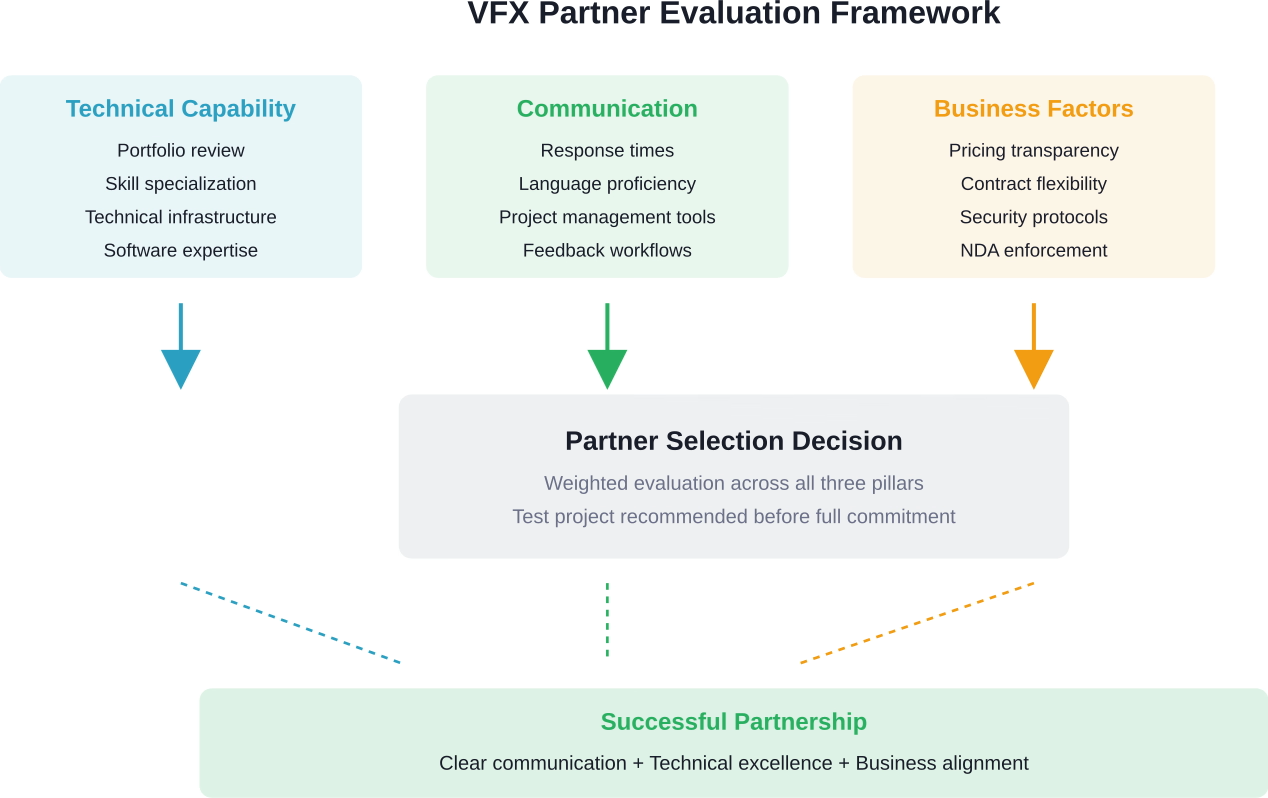
Partner selection makes or breaks outsourcing success. The wrong studio can derail timelines, inflate budgets, and compromise quality. The right partner becomes a force multiplier for production capabilities.
Here's what matters when evaluating potential partners.
Technical Capabilities and Specialization
Not all VFX studios excel at everything. Some specialize in photorealistic environments. Others focus on stylized animation or creature work. Still others dominate in technical areas like fluid simulations or crowd systems.
Smart teams assess whether a studio's demonstrated strengths align with project requirements. Portfolio review becomes essential—look for completed work that matches the visual style, technical complexity, and production scale of the planned project.
Communication and Project Management
Technical skills mean nothing if communication breaks down. The best VFX partnerships involve clear, consistent dialogue about creative direction, technical requirements, and production status.
Evaluate how potential partners handle project management. Do they use industry-standard tools like ShotGrid or ftrack? How do they structure feedback loops? What's their typical response time for questions or revisions?
Language barriers can complicate international partnerships. If outsourcing to studios in different countries, confirm that key team members communicate fluently in the production's primary language.
Security and Confidentiality
High-profile entertainment projects demand strict security protocols. Leaks can damage marketing campaigns, spoil audience experiences, and violate contractual obligations.
Reputable VFX studios implement robust security measures: non-disclosure agreements, secure file transfer protocols, watermarked review materials, and restricted access to production assets. Don't skip the security conversation during partner evaluation.
Budget Alignment and Pricing Transparency
VFX outsourcing costs vary enormously based on project complexity, shot count, quality expectations, and studio location. Studios in different regions have dramatically different rate structures.
Look for partners who provide transparent pricing breakdowns. Fixed-bid projects offer budget certainty but less flexibility. Time-and-materials arrangements provide more adaptability but require closer cost monitoring.
Be wary of quotes that seem unrealistically low—they often signal quality issues, hidden costs, or studios that underestimate complexity and will struggle to deliver.
Structuring the VFX Outsourcing Workflow
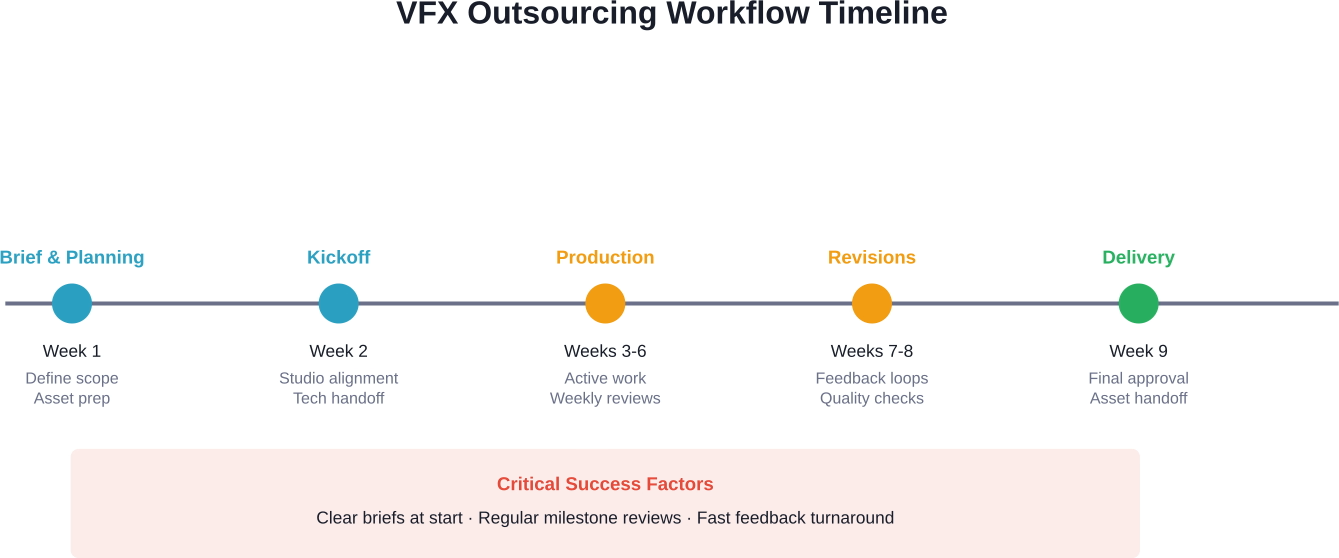
Successful outsourcing depends on well-defined workflows. Ambiguity breeds delays, cost overruns, and creative misalignment.
Pre-Production Planning
Before engaging a partner studio, production teams need clear documentation. This includes shot lists, reference imagery, technical specifications, quality benchmarks, and delivery timelines.
Detailed briefs save time and money. When partner studios understand exactly what's required from day one, they can provide accurate estimates and hit the ground running.
Asset preparation also matters. If outsourcing requires specific 3D models, camera data, or plate footage, organizing and delivering these materials early prevents downstream bottlenecks.
Communication Protocols
Establish regular check-ins from project kickoff. Weekly or bi-weekly review sessions keep everyone aligned on creative direction and production status.
Define approval hierarchies clearly. Who has authority to approve shots? What's the escalation path for creative disagreements? Confusion here causes expensive revision cycles.
Use shared tools for asset management and feedback. Cloud-based platforms enable real-time collaboration regardless of geographic distance. Annotation tools for frame-accurate notes streamline the revision process.
Quality Control and Revisions
Build revision allowances into contracts upfront. Most VFX work requires multiple rounds of feedback before final approval. Clarify what counts as a revision versus a scope change—this prevents billing disputes.
Implement milestone reviews rather than waiting until completion. Catching issues early costs far less than discovering fundamental problems after weeks of work.
Technical QC matters as much as creative approval. Check deliverables for correct resolution, color space, frame rates, and file formats before accepting final delivery.
Managing Costs in VFX Outsourcing
Budget management separates profitable projects from financial disasters. VFX costs can spiral quickly without proper controls.
Understanding Pricing Models
VFX studios typically price work using one of several models:
- Per-shot pricing: Fixed rates based on estimated complexity
- Day rates: Artist time charged daily or weekly
- Milestone-based: Payments tied to delivery milestones
- Retainer arrangements: Ongoing capacity reserved for consistent work
Each model suits different project types. Per-shot pricing works well for clearly defined shots. Day rates offer flexibility when scope might evolve. Milestone-based billing ties payment to deliverable progress.
Cost Control Strategies
Start with detailed shot breakdowns before requesting quotes. The more specific the requirements, the more accurate the estimates.
Build contingency budgets—typically 10-20% of the VFX budget—for unexpected complexity, creative changes, or revision rounds that exceed initial allowances.
Consider phased engagement. Rather than committing to an entire project upfront, test partner studios with smaller shot packages first. This proves capability before scaling up investment.
Track costs rigorously throughout production. Weekly budget reviews catch overruns early when corrective action still matters.
Common Challenges and How to Navigate Them
Even well-planned VFX outsourcing encounters obstacles. Knowing what to expect helps teams respond effectively.
Creative Misalignment
When partner studios don't quite nail the creative vision, expensive revision cycles follow. Mitigate this through detailed reference materials, style frames, and early creative reviews before significant work begins.
Consider creating a visual bible—a comprehensive guide to the project's aesthetic, technical standards, and quality expectations. This document becomes the north star for outsourced teams.
Technical Compatibility Issues
Software versions, file formats, color spaces, and rendering pipelines sometimes don't align between production companies and partner studios. Address technical specifications explicitly during onboarding.
Request test deliverables early to validate technical compatibility before production ramps up.
Time Zone Coordination
International partnerships mean collaborators work while internal teams sleep. This enables fast turnarounds but complicates real-time communication.
Establish overlap hours when both teams are available for meetings. Structure workflows so feedback and questions don't create blocking dependencies.
Scope Creep
Creative evolution during production is normal—but it affects budgets and timelines. Document scope changes formally and adjust contracts accordingly. Don't let undocumented changes accumulate.
VFX Outsourcing Across Different Industries
The film industry pioneered VFX outsourcing, but the practice now spans multiple entertainment sectors.
Film and Television Production
High-end episodic television has driven enormous growth in VFX demand. Streaming platforms produce content at unprecedented scale, creating capacity challenges that outsourcing solves.
Film productions increasingly split VFX work across multiple studios—some handling creatures, others environments, still others focused on specific technical challenges like digital humans or complex simulations.
Game Development
Game art outsourcing has become standard practice, especially for AAA titles requiring thousands of unique assets. VFX specifically—particles, explosions, magical effects, environmental atmosphere—often goes to specialized partners.
Real-time rendering requirements in gaming impose different technical constraints than film VFX, requiring partners who understand game engine optimization and performance budgets.
Advertising and Commercial Content
Advertising agencies frequently outsource VFX for commercial spots. Tight timelines and concentrated bursts of work make permanent in-house VFX teams inefficient for most agencies.
The advertising industry tends toward shorter-term partnerships compared to the longer-term relationships common in film production.
Building Long-Term VFX Partnerships
The most successful outsourcing relationships evolve from transactional vendor arrangements into strategic partnerships.
Long-term collaborations bring significant advantages. Partner studios develop deep familiarity with production standards, creative preferences, and technical workflows. This institutional knowledge reduces ramp-up time and improves efficiency.
Regular work also incentivizes studios to prioritize capacity and maintain responsiveness. Being a valued repeat client often means getting better service than one-off projects receive.
Consider exclusive or preferred vendor arrangements when ongoing VFX needs justify them. These structures can unlock volume discounts and guaranteed capacity.
But don't let comfort breed complacency. Periodically benchmark partner performance against market alternatives to ensure continued competitive value.
Technology Trends Shaping VFX Outsourcing
The VFX industry evolves constantly as technology advances. Several trends are reshaping how outsourcing works in 2026.
Cloud-based pipelines have reduced geographic friction. When rendering and storage happen in the cloud rather than local workstations, location matters less. This enables more flexible partnerships with smaller studios and individual artists.
Artificial intelligence tools are beginning to impact VFX production. Rotoscoping, motion tracking, and even some compositing tasks now involve AI assistance. This accelerates production but also changes the skill profiles needed from partner studios.
Real-time rendering technology, pioneered by game engines like Unreal and Unity, is crossing into film production. Virtual production and real-time VFX review change workflows and create new possibilities for remote collaboration.
Variety's 2020 coverage of technology innovators in entertainment highlights how new bundles and partnerships drive innovation. This applies directly to VFX, where partnerships between traditional studios and technology companies create new capabilities.
Legal and Contractual Considerations
Solid contracts protect both parties and prevent disputes.
Address intellectual property ownership explicitly. Who owns the final rendered shots? What about intermediate assets like 3D models or texture libraries? Can the studio include work in their portfolio or reels?
Define deliverable specifications in detail: resolution, frame rates, file formats, color space, alpha channels, separate render passes if needed.
Include payment terms and schedules. Milestone-based payments are common—partial payment at kickoff, progress payments at defined milestones, final payment on approval.
Build in termination clauses that protect both parties if the relationship isn't working.
For international partnerships, clarify which jurisdiction's laws govern the contract and how disputes get resolved.
Measuring VFX Outsourcing Success
Track metrics beyond just on-time delivery and on-budget completion.
Quality consistency matters. Are delivered shots consistently meeting technical and creative standards, or do excessive revision rounds indicate problems?
Communication responsiveness affects efficiency. How quickly does the partner studio address questions, provide updates, and incorporate feedback?
Creative alignment shows whether the partner understands the project vision. Are they delivering work that matches creative direction with minimal correction?
Cost predictability indicates reliable estimation. Do projects consistently hit original budget targets, or do frequent overruns suggest estimation problems?
Long-term relationship viability emerges from these metrics. Partners who consistently perform well earn consideration for future projects.
Conclusion
VFX outsourcing has evolved from cost-cutting measure to strategic capability that enables production at scales and quality levels impossible through internal teams alone.
Success hinges on thorough partner selection, clear communication, well-defined workflows, and realistic expectations. The best partnerships combine technical excellence with creative alignment and business transparency.
For production teams navigating the VFX outsourcing landscape in 2026, the opportunity is immense. Access to global talent pools, cutting-edge technology, and flexible capacity makes world-class visual effects achievable across budget levels and project types.
The key? Approach outsourcing strategically rather than tactically. Invest time in finding the right partners, building solid workflows, and nurturing relationships that deliver value project after project.
Ready to explore VFX outsourcing for an upcoming project? Start with a small test engagement to validate capability before committing to larger scope. The right partner is out there—finding them requires diligence, but the payoff in production quality and efficiency makes the effort worthwhile.
Frequently Asked Questions
Topics
VFX Outsourcing Guide 2026: Partner Selection & Strategy

VFX outsourcing involves partnering with external studios to handle visual effects production instead of building in-house teams. This guide covers how to select the right VFX partner, manage workflows, control costs, and deliver high-quality visual effects for film, gaming, and entertainment projects in 2026.
Visual effects have become the backbone of modern entertainment. From blockbuster films to AAA game titles, stunning VFX separates mediocre content from memorable experiences.
But here's the challenge: building an in-house VFX team demands massive capital investment, specialized talent recruitment, and expensive software infrastructure. For many production companies, that's neither practical nor financially viable.
That's where VFX outsourcing enters the picture. By partnering with specialized studios, production teams can access world-class talent, cutting-edge technology, and flexible capacity without the overhead of permanent staff.
The landscape has shifted dramatically. According to recent 2025-2026 industry reports from the Visual Effects Society (VES) and Variety, the innovation lever in VFX has shifted toward AI-augmented pipelines and Virtual Production ecosystems, moving beyond traditional brick-and-mortar collaborations to integrated cloud-based distributed studios. This partnership model extends naturally to visual effects production.
This guide breaks down everything production teams need to know about outsourcing visual effects work in 2026.
What VFX Outsourcing Actually Means
VFX outsourcing refers to hiring external studios or freelancers to create visual effects instead of handling production internally. The practice spans multiple entertainment sectors—film, television, gaming, advertising, and streaming content.
The scope varies wildly. Some projects outsource specific technical tasks like rotoscoping or compositing. Others hand off entire sequences or even complete VFX pipelines to partner studios.
Real talk: outsourcing isn't just about cutting costs anymore. It's become a strategic capability that lets production companies scale rapidly, access specialized skills, and maintain quality standards that would be impossible with internal teams alone.
Core VFX Services Typically Outsourced
The range of visual effects work suitable for outsourcing is extensive:
- 2D VFX: Compositing, rotoscoping, matte painting, color correction
- 3D VFX: Modeling, texturing, rigging, character animation, environment creation
- Simulations: Fluid dynamics, particle effects, cloth simulation, destruction sequences
- Motion Graphics: Title sequences, motion design, UI elements
- Previsualization: Previs and postvis for planning complex sequences
Each category requires different technical expertise and production timelines. Understanding which services align with project needs becomes the first critical decision point.
Why Production Teams Choose to Outsource VFX
The decision to outsource visual effects stems from multiple strategic and practical considerations.
Cost efficiency remains a primary driver. Building an in-house VFX team means salaries, benefits, software licenses, hardware infrastructure, and ongoing training costs. Outsourcing converts these fixed costs into variable expenses tied directly to project needs.
But there's more to it.
Access to specialized skills matters enormously. A studio working on a fantasy film might need expert creature animators for one sequence, then photorealistic environment artists for another. Maintaining that breadth of expertise internally rarely makes financial sense.
Scalability provides another compelling advantage. Production schedules fluctuate wildly in the entertainment industry. Outsourcing lets teams ramp capacity up or down based on current project demands without the complications of hiring and layoffs.
Technology access also plays a role. Top-tier VFX studios invest millions in proprietary tools, rendering farms, and cutting-edge software. Partner studios provide access to this technology without requiring direct investment.
Time zone advantages shouldn't be overlooked either. Partnering with studios across different continents enables round-the-clock production cycles—work continues while internal teams sleep, effectively compressing timelines.
Simplify Production with NeoWork
High-quality VFX requires skilled artists and reliable workflows. NeoWork provides vetted VFX professionals who integrate into your production pipeline and deliver cinematic results.
Support includes:
- compositing and motion graphics
- 3D modeling and animation
- visual effects for film, ads, and digital media
- iterative review and client feedback integration
NeoWork can augment your creative team or handle complete VFX projects. Get started with NeoWork today to outsource VFX efficiently and access top global talent.
Finding the Right VFX Outsourcing Partner
Partner selection makes or breaks outsourcing success. The wrong studio can derail timelines, inflate budgets, and compromise quality. The right partner becomes a force multiplier for production capabilities.
Here's what matters when evaluating potential partners.
Technical Capabilities and Specialization
Not all VFX studios excel at everything. Some specialize in photorealistic environments. Others focus on stylized animation or creature work. Still others dominate in technical areas like fluid simulations or crowd systems.
Smart teams assess whether a studio's demonstrated strengths align with project requirements. Portfolio review becomes essential—look for completed work that matches the visual style, technical complexity, and production scale of the planned project.
Communication and Project Management
Technical skills mean nothing if communication breaks down. The best VFX partnerships involve clear, consistent dialogue about creative direction, technical requirements, and production status.
Evaluate how potential partners handle project management. Do they use industry-standard tools like ShotGrid or ftrack? How do they structure feedback loops? What's their typical response time for questions or revisions?
Language barriers can complicate international partnerships. If outsourcing to studios in different countries, confirm that key team members communicate fluently in the production's primary language.
Security and Confidentiality
High-profile entertainment projects demand strict security protocols. Leaks can damage marketing campaigns, spoil audience experiences, and violate contractual obligations.
Reputable VFX studios implement robust security measures: non-disclosure agreements, secure file transfer protocols, watermarked review materials, and restricted access to production assets. Don't skip the security conversation during partner evaluation.
Budget Alignment and Pricing Transparency
VFX outsourcing costs vary enormously based on project complexity, shot count, quality expectations, and studio location. Studios in different regions have dramatically different rate structures.
Look for partners who provide transparent pricing breakdowns. Fixed-bid projects offer budget certainty but less flexibility. Time-and-materials arrangements provide more adaptability but require closer cost monitoring.
Be wary of quotes that seem unrealistically low—they often signal quality issues, hidden costs, or studios that underestimate complexity and will struggle to deliver.
Structuring the VFX Outsourcing Workflow
Successful outsourcing depends on well-defined workflows. Ambiguity breeds delays, cost overruns, and creative misalignment.
Pre-Production Planning
Before engaging a partner studio, production teams need clear documentation. This includes shot lists, reference imagery, technical specifications, quality benchmarks, and delivery timelines.
Detailed briefs save time and money. When partner studios understand exactly what's required from day one, they can provide accurate estimates and hit the ground running.
Asset preparation also matters. If outsourcing requires specific 3D models, camera data, or plate footage, organizing and delivering these materials early prevents downstream bottlenecks.
Communication Protocols
Establish regular check-ins from project kickoff. Weekly or bi-weekly review sessions keep everyone aligned on creative direction and production status.
Define approval hierarchies clearly. Who has authority to approve shots? What's the escalation path for creative disagreements? Confusion here causes expensive revision cycles.
Use shared tools for asset management and feedback. Cloud-based platforms enable real-time collaboration regardless of geographic distance. Annotation tools for frame-accurate notes streamline the revision process.
Quality Control and Revisions
Build revision allowances into contracts upfront. Most VFX work requires multiple rounds of feedback before final approval. Clarify what counts as a revision versus a scope change—this prevents billing disputes.
Implement milestone reviews rather than waiting until completion. Catching issues early costs far less than discovering fundamental problems after weeks of work.
Technical QC matters as much as creative approval. Check deliverables for correct resolution, color space, frame rates, and file formats before accepting final delivery.
Managing Costs in VFX Outsourcing
Budget management separates profitable projects from financial disasters. VFX costs can spiral quickly without proper controls.
Understanding Pricing Models
VFX studios typically price work using one of several models:
- Per-shot pricing: Fixed rates based on estimated complexity
- Day rates: Artist time charged daily or weekly
- Milestone-based: Payments tied to delivery milestones
- Retainer arrangements: Ongoing capacity reserved for consistent work
Each model suits different project types. Per-shot pricing works well for clearly defined shots. Day rates offer flexibility when scope might evolve. Milestone-based billing ties payment to deliverable progress.
Cost Control Strategies
Start with detailed shot breakdowns before requesting quotes. The more specific the requirements, the more accurate the estimates.
Build contingency budgets—typically 10-20% of the VFX budget—for unexpected complexity, creative changes, or revision rounds that exceed initial allowances.
Consider phased engagement. Rather than committing to an entire project upfront, test partner studios with smaller shot packages first. This proves capability before scaling up investment.
Track costs rigorously throughout production. Weekly budget reviews catch overruns early when corrective action still matters.
Common Challenges and How to Navigate Them
Even well-planned VFX outsourcing encounters obstacles. Knowing what to expect helps teams respond effectively.
Creative Misalignment
When partner studios don't quite nail the creative vision, expensive revision cycles follow. Mitigate this through detailed reference materials, style frames, and early creative reviews before significant work begins.
Consider creating a visual bible—a comprehensive guide to the project's aesthetic, technical standards, and quality expectations. This document becomes the north star for outsourced teams.
Technical Compatibility Issues
Software versions, file formats, color spaces, and rendering pipelines sometimes don't align between production companies and partner studios. Address technical specifications explicitly during onboarding.
Request test deliverables early to validate technical compatibility before production ramps up.
Time Zone Coordination
International partnerships mean collaborators work while internal teams sleep. This enables fast turnarounds but complicates real-time communication.
Establish overlap hours when both teams are available for meetings. Structure workflows so feedback and questions don't create blocking dependencies.
Scope Creep
Creative evolution during production is normal—but it affects budgets and timelines. Document scope changes formally and adjust contracts accordingly. Don't let undocumented changes accumulate.
VFX Outsourcing Across Different Industries
The film industry pioneered VFX outsourcing, but the practice now spans multiple entertainment sectors.
Film and Television Production
High-end episodic television has driven enormous growth in VFX demand. Streaming platforms produce content at unprecedented scale, creating capacity challenges that outsourcing solves.
Film productions increasingly split VFX work across multiple studios—some handling creatures, others environments, still others focused on specific technical challenges like digital humans or complex simulations.
Game Development
Game art outsourcing has become standard practice, especially for AAA titles requiring thousands of unique assets. VFX specifically—particles, explosions, magical effects, environmental atmosphere—often goes to specialized partners.
Real-time rendering requirements in gaming impose different technical constraints than film VFX, requiring partners who understand game engine optimization and performance budgets.
Advertising and Commercial Content
Advertising agencies frequently outsource VFX for commercial spots. Tight timelines and concentrated bursts of work make permanent in-house VFX teams inefficient for most agencies.
The advertising industry tends toward shorter-term partnerships compared to the longer-term relationships common in film production.
Building Long-Term VFX Partnerships
The most successful outsourcing relationships evolve from transactional vendor arrangements into strategic partnerships.
Long-term collaborations bring significant advantages. Partner studios develop deep familiarity with production standards, creative preferences, and technical workflows. This institutional knowledge reduces ramp-up time and improves efficiency.
Regular work also incentivizes studios to prioritize capacity and maintain responsiveness. Being a valued repeat client often means getting better service than one-off projects receive.
Consider exclusive or preferred vendor arrangements when ongoing VFX needs justify them. These structures can unlock volume discounts and guaranteed capacity.
But don't let comfort breed complacency. Periodically benchmark partner performance against market alternatives to ensure continued competitive value.
Technology Trends Shaping VFX Outsourcing
The VFX industry evolves constantly as technology advances. Several trends are reshaping how outsourcing works in 2026.
Cloud-based pipelines have reduced geographic friction. When rendering and storage happen in the cloud rather than local workstations, location matters less. This enables more flexible partnerships with smaller studios and individual artists.
Artificial intelligence tools are beginning to impact VFX production. Rotoscoping, motion tracking, and even some compositing tasks now involve AI assistance. This accelerates production but also changes the skill profiles needed from partner studios.
Real-time rendering technology, pioneered by game engines like Unreal and Unity, is crossing into film production. Virtual production and real-time VFX review change workflows and create new possibilities for remote collaboration.
Variety's 2020 coverage of technology innovators in entertainment highlights how new bundles and partnerships drive innovation. This applies directly to VFX, where partnerships between traditional studios and technology companies create new capabilities.
Legal and Contractual Considerations
Solid contracts protect both parties and prevent disputes.
Address intellectual property ownership explicitly. Who owns the final rendered shots? What about intermediate assets like 3D models or texture libraries? Can the studio include work in their portfolio or reels?
Define deliverable specifications in detail: resolution, frame rates, file formats, color space, alpha channels, separate render passes if needed.
Include payment terms and schedules. Milestone-based payments are common—partial payment at kickoff, progress payments at defined milestones, final payment on approval.
Build in termination clauses that protect both parties if the relationship isn't working.
For international partnerships, clarify which jurisdiction's laws govern the contract and how disputes get resolved.
Measuring VFX Outsourcing Success
Track metrics beyond just on-time delivery and on-budget completion.
Quality consistency matters. Are delivered shots consistently meeting technical and creative standards, or do excessive revision rounds indicate problems?
Communication responsiveness affects efficiency. How quickly does the partner studio address questions, provide updates, and incorporate feedback?
Creative alignment shows whether the partner understands the project vision. Are they delivering work that matches creative direction with minimal correction?
Cost predictability indicates reliable estimation. Do projects consistently hit original budget targets, or do frequent overruns suggest estimation problems?
Long-term relationship viability emerges from these metrics. Partners who consistently perform well earn consideration for future projects.
Conclusion
VFX outsourcing has evolved from cost-cutting measure to strategic capability that enables production at scales and quality levels impossible through internal teams alone.
Success hinges on thorough partner selection, clear communication, well-defined workflows, and realistic expectations. The best partnerships combine technical excellence with creative alignment and business transparency.
For production teams navigating the VFX outsourcing landscape in 2026, the opportunity is immense. Access to global talent pools, cutting-edge technology, and flexible capacity makes world-class visual effects achievable across budget levels and project types.
The key? Approach outsourcing strategically rather than tactically. Invest time in finding the right partners, building solid workflows, and nurturing relationships that deliver value project after project.
Ready to explore VFX outsourcing for an upcoming project? Start with a small test engagement to validate capability before committing to larger scope. The right partner is out there—finding them requires diligence, but the payoff in production quality and efficiency makes the effort worthwhile.
Frequently Asked Questions
Topics
Related Blogs
Related Podcasts


.webp)

.webp)
.webp)



