

.avif)
.avif)

Content Writing Outsourcing Guide: 2026 Best Practices


.svg)

Quick Summary: Outsourcing content writing helps businesses scale their content production without hiring full-time staff. This guide covers how to choose between freelancers, agencies, and specialized writers, what to expect in terms of cost and quality, and proven strategies for maintaining brand voice while delegating content creation to external professionals.
Content marketing remains a central pillar of digital strategy, but producing enough high-quality material strains internal resources. Recent data from the Content Marketing Institute shows that only 16% of marketers exceeded their goals in the last 12 months, while 50% met most goals. That leaves a significant portion struggling—and content volume is often the culprit.
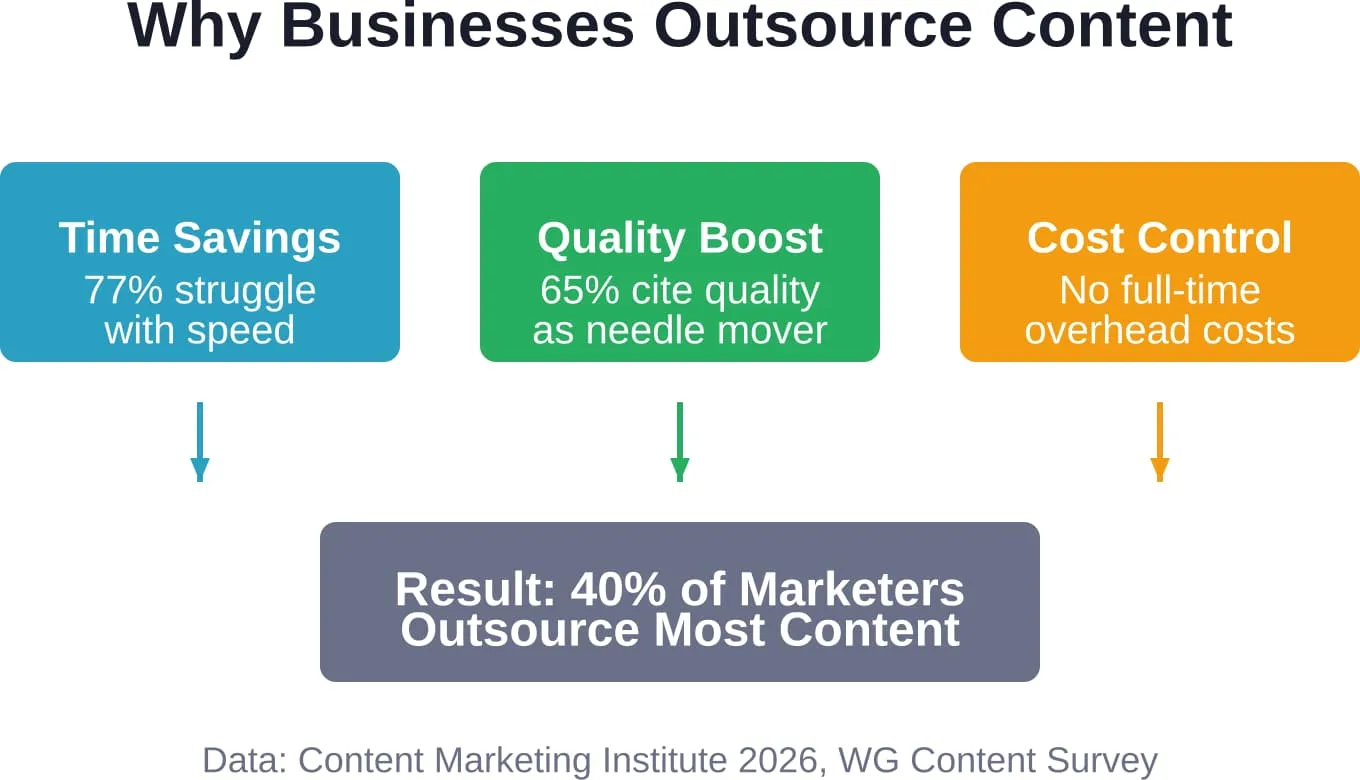
Outsourcing content writing solves the capacity problem. According to a WG Content survey, 40% of marketing professionals now outsource all or almost all of their content. Only 10% handle everything in-house.
But outsourcing content writing isn't just about offloading work. Done right, it gives access to specialized skills, diverse perspectives, and the ability to scale production up or down without the overhead of full-time salaries and benefits.
This guide walks through the entire process—from deciding what to outsource, to finding and vetting writers, to maintaining quality standards that keep readers engaged.
Why Businesses Outsource Content Writing
The reasons for outsourcing content writing fall into three categories: resource constraints, skill gaps, and strategic flexibility.
Time and Resource Constraints
Internal teams face competing priorities. Marketing professionals juggle campaign management, analytics, strategy meetings, and content creation. Writing often gets squeezed into whatever time remains—which usually means rushed, inconsistent output.
Research shows that 77% of creative teams find the speed at which they work challenging, and 72% struggle with the volume of content required. Outsourcing transfers the production burden to specialists whose sole focus is creating content.
Access to Specialized Skills
Not every business has writers on staff who understand technical topics, industry jargon, or niche audiences. Outsourcing provides access to writers with specific expertise—whether that's B2B SaaS, healthcare compliance, financial services, or e-commerce product descriptions.
The Content Marketing Institute's 2026 research highlights that content relevance and quality are cited as important by effective teams. That quality often requires specialized knowledge that generalist in-house staff can't provide.
Scalability and Flexibility
Content needs fluctuate. Product launches demand more blog posts, case studies, and landing pages. Seasonal campaigns require extra resources. Hiring and training full-time staff for peak periods creates inefficiency during slower months.
Outsourced writers scale with demand. Need ten articles this month and three next month? Freelancers and agencies adjust without the fixed costs of salaries and benefits.
Types of Content That Can Be Outsourced
Not all content is equally suited to outsourcing. Strategic, highly sensitive, or deeply technical material may require internal oversight. But most content types work well with external writers.
Blog Posts and Articles
Blog content is the most commonly outsourced format. Freelancers and agencies produce SEO-optimized articles, thought leadership pieces, and educational guides. The key is providing clear briefs that outline target keywords, audience, and desired outcomes.
Website Copy and Landing Pages
Homepage copy, product descriptions, service pages, and landing pages often benefit from professional copywriters. Some copywriters charge $10,000 or more for full website projects, though rates vary widely based on experience and scope.
Email Campaigns and Newsletters
Email content requires a consistent voice and understanding of audience segmentation. Outsourced writers can handle regular newsletters, drip campaigns, and promotional emails once they understand the brand tone and customer journey.
Case Studies and White Papers
Long-form content like case studies and white papers demands research skills and the ability to translate complex information into compelling narratives. Specialized writers with industry expertise excel at these formats.
Social Media Content
While some businesses handle social media in-house, others outsource caption writing, content calendars, and even community engagement scripts. The caveat: social media often requires real-time responsiveness that outsourced writers can't always provide.
Video Scripts and Multimedia Content
As video marketing grows, script writing becomes another outsourcing opportunity. Writers who understand pacing, visual storytelling, and spoken language create scripts that translate well to video.
Outsourcing Models: Freelancers vs. Agencies vs. Specialized Writers
Three main outsourcing models exist, each with distinct advantages and trade-offs.
Freelance Content Writers
Freelancers offer flexibility and direct communication. Platforms like Upwork, Fiverr, and Contently connect businesses with individual writers. Most freelancers charge between 10 cents and $1 per word, depending on experience and specialization.
- Pros: Direct relationship, flexible rates, ability to test multiple writers, often faster turnaround for smaller projects.
- Cons: Availability can be inconsistent, quality varies widely, managing multiple freelancers takes time, no built-in quality control or editorial oversight.
Content Writing Agencies
Agencies provide end-to-end content services—strategy, writing, editing, and often distribution. Depending on the company, most content creation services charge between $30 and $100 per 500-word article, though premium agencies charge significantly more.
- Pros: Consistent quality through editorial processes, account management handles communication, scalability for large projects, often include SEO and distribution strategy.
- Cons: Higher costs, less direct control over individual writers, turnaround times can be longer, may feel less personalized.
Specialized or Niche Writers
Some writers focus on specific industries or content types—SaaS product marketing, healthcare compliance, financial advisory, technical documentation. These specialists command premium rates but deliver content that requires less revision.
- Pros: Deep subject matter expertise, minimal hand-holding required, content that resonates with niche audiences, often better conversion rates.
- Cons: Limited availability, higher costs, may lack versatility for broader content needs.
How to Find Quality Content Writers
Finding writers who deliver quality content consistently requires a structured approach. Here's the thing though—most businesses rush this step and end up disappointed.
Define Requirements First
Before searching for writers, clarify what's needed. What content types? What topics? What level of technical depth? What tone and voice? Without clear requirements, evaluating candidates becomes guesswork.
Create a detailed writer brief that includes sample topics, audience personas, desired word count ranges, and examples of content that matches the desired style.
Where to Search
Several platforms and channels yield quality writers:
- Freelance marketplaces: Upwork, Fiverr, Contently, and Freelancer allow filtering by niche, rates, and reviews.
- Content agencies: WG Content, Scripted, WriterAccess, and others provide vetted writers with editorial oversight.
- LinkedIn: Search for writers by industry expertise and review their published work.
- Professional networks: Content Marketing Institute, American Writers & Artists, and niche industry groups often have writer directories.
- Referrals: Ask colleagues, industry contacts, or business networks for recommendations.
Evaluating Writing Samples
Request samples that match the content type and industry needed. Review for clarity, grammar, structure, and engagement. But also check whether the writer can adapt tone—some writers excel at one style but can't shift to others.
As one industry professional notes, the ability to sound different in different situations matters more than raw experience. Writers charging $10,000 for website copy can still produce content that all sounds the same.
Test Projects
Always start with a paid test project. Assign a small, real piece of content—not a hypothetical sample. This reveals how the writer handles briefs, deadlines, and revisions.
Many content writers charge per project rather than by hour or word. Expect to pay 50% upfront to secure their time.
Check References and Reviews
For freelancers, check reviews on their platform profiles. For agencies, ask for client references and case studies. For specialists, review their published work and LinkedIn recommendations.

Build a Long-Term Content Support Team
Most content outsourcing issues come from turnover, inconsistent communication, and constantly replacing people mid-workflow. NeoWork provides embedded operational support teams for content, marketing, admin, and business workflows. The company reports a 91% annualized teammate retention rate and a 3.2% candidate selectivity rate, making them relevant for businesses looking for more stable long-term support.
Need More Stability in Your Content Operations?
NeoWork offers:
- dedicated support teams integrated into your workflows
- scalable content and marketing support
- long-term team continuity with lower turnover
👉Talk to NeoWork if your business needs more consistent outsourced support without constant rehiring and retraining.
Maintaining Brand Voice When Outsourcing
The biggest fear about outsourcing content writing? Losing brand voice. Readers will know it's not the usual tone. The content will feel generic.
That fear is valid—but avoidable with proper onboarding and communication.
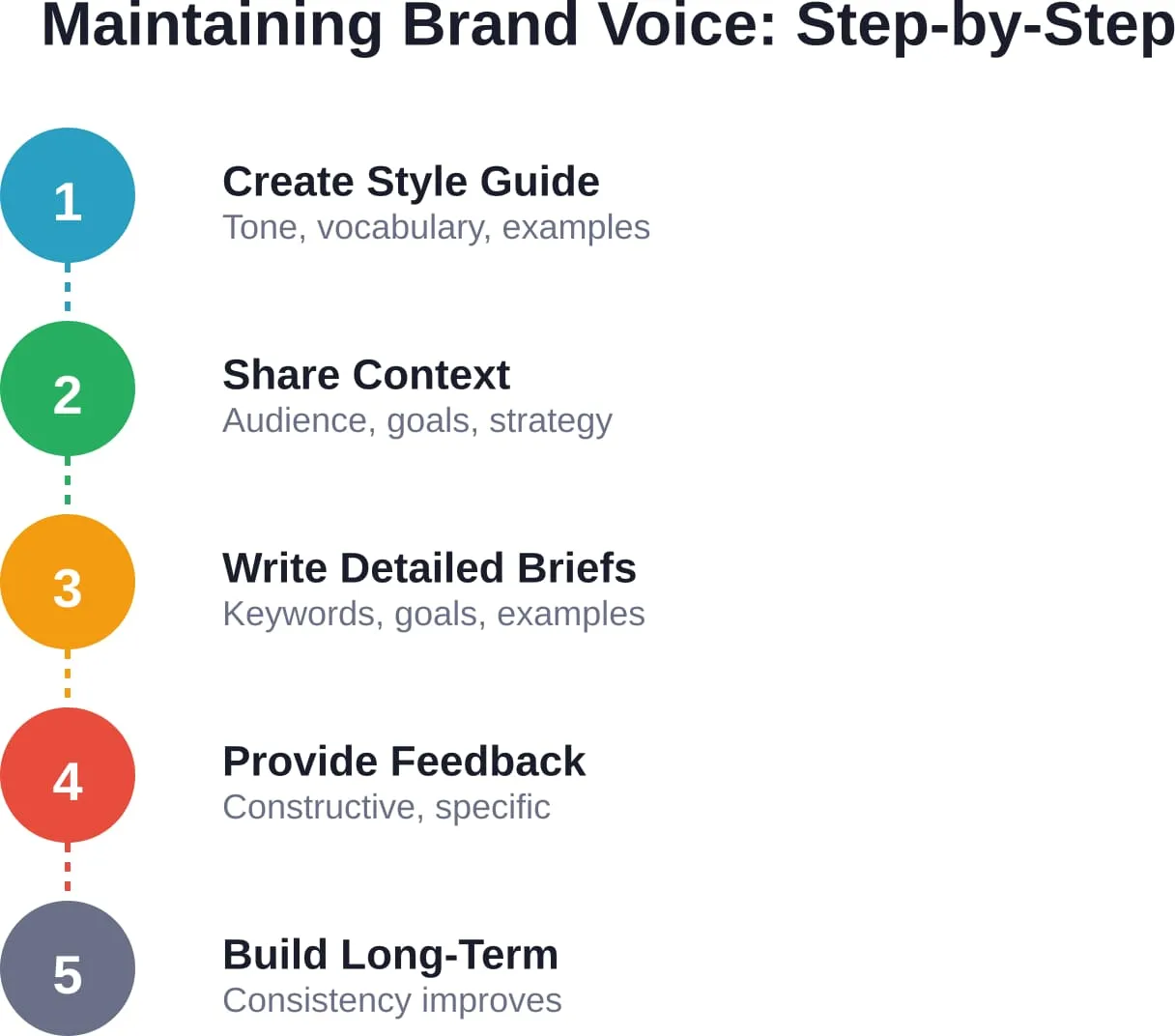
Create a Style Guide
A comprehensive style guide is non-negotiable. Include tone descriptors (professional but approachable, authoritative yet conversational), vocabulary preferences, formatting standards, and examples of excellent content.
Specify what to avoid—jargon, passive voice, overly formal language, or whatever doesn't fit the brand.
Provide Context and Strategy
Writers produce better content when they understand the broader strategy. Share information about the target audience, content goals, customer pain points, and how each piece fits into the overall marketing funnel.
Many writers report being assigned topics without context about the overall content strategy or whether previous articles made an impact—vital insight that would inform future writing.
Use Detailed Briefs
Every assignment should include a detailed brief: target keyword, desired word count, audience, goal of the piece, key points to cover, internal links to include, and examples of similar successful content.
The more detail provided upfront, the less revision required later.
Establish Feedback Loops
Provide constructive feedback on every piece, especially in the early stages of the relationship. Highlight what worked well and what needs adjustment. Over time, writers internalize preferences and require less hand-holding.
Build Long-Term Relationships
Frequent writer turnover disrupts brand voice consistency. Developing long-term partnerships with reliable writers helps hone the brand voice over time. Writers who understand the business, audience, and goals produce progressively better content.
Cost Considerations and Budgeting
Pricing for outsourced content writing varies dramatically based on writer experience, content complexity, and project scope.
Per-Word Pricing
Freelancers typically charge per word. Rates range from 10 cents to $1 per word, with highly specialized writers exceeding $2 per word. A 1,000-word article might cost anywhere from $100 to $2,000.
Per-Project Pricing
Agencies and experienced freelancers often price by project rather than word count. A blog post might cost $150 to $500 flat, regardless of final length. Complex projects like white papers or case studies command higher rates—often $1,500 to $5,000 or more.
Retainer Agreements
For ongoing content needs, retainer agreements provide predictability. Pay a fixed monthly fee for a set number of pieces. This model often secures better rates and priority scheduling.
Hidden Costs to Consider
Beyond the writing fee, factor in revision time, project management overhead, and quality control. If internal staff spend hours editing poorly written content, the apparent savings evaporate.
budget allocation is cited by some teams as a consideration—suggesting that strategic investment in quality trumps cost-cutting.
Upfront Payments
Many content writers require 50% upfront to secure their time and begin work. This protects writers from non-payment and signals client commitment.
Managing Outsourced Content Writers
Effective management determines whether outsourcing succeeds or becomes a frustrating drain on resources.
Set Clear Expectations
Define deliverables, deadlines, revision policies, and communication preferences from the start. Misaligned expectations cause most outsourcing headaches.
Use Project Management Tools
Tools like Trello, Asana, or Monday.com centralize briefs, drafts, feedback, and deadlines. Shared editorial calendars keep everyone aligned on what's due and when.
Establish Communication Cadence
Regular check-ins—weekly or biweekly—keep projects on track and surface issues early. For agencies, account managers handle this. For freelancers, schedule brief status calls or async updates.
Track Performance Metrics
Monitor content performance—traffic, engagement, conversions—and share results with writers. Data-driven feedback helps writers understand what works and refine their approach.
Research shows that measurement and reporting are considered important by many effective teams. Closing the feedback loop with writers amplifies this effect.
Handle Revisions Professionally
Clearly define revision policies upfront. Most writers include one or two rounds of revisions in their base rate. Additional revisions may incur extra fees.
Provide specific, actionable feedback rather than vague critiques. Instead of "this doesn't sound right," specify what needs to change and why.
Common Pitfalls and How to Avoid Them
Outsourcing content writing comes with predictable challenges. Awareness prevents most problems.
Pitfall 1: Choosing Based on Price Alone
The cheapest writer is rarely the best value. Low rates often signal inexperience, poor quality, or unsustainable workloads. Investing in quality saves time and money in the long run.
Pitfall 2: Inadequate Onboarding
Throwing writers into projects without proper onboarding produces mediocre results. Invest time upfront to explain the brand, audience, and expectations.
Pitfall 3: Poor Communication
Vague briefs, delayed feedback, and unclear instructions frustrate writers and waste everyone's time. Clear, timely communication is the foundation of successful outsourcing.
Pitfall 4: Expecting Perfection Immediately
Even the best writers need time to learn a brand's voice and audience. Allow a ramp-up period and provide constructive feedback to accelerate the learning curve.
Pitfall 5: Neglecting Strategy
Outsourcing execution doesn't eliminate the need for strategy. Content must align with business goals, SEO priorities, and audience needs. Strategy remains an internal responsibility.
Pitfall 6: No Quality Control Process
Publishing content without internal review risks off-brand messaging, factual errors, or tone mismatches. Establish an editorial review process that catches issues before publication.
Measuring Success of Outsourced Content
How do teams know if outsourcing content writing delivers value? Track these metrics.
Content Output Volume
The most immediate benefit is increased production. Track the number of pieces published before and after outsourcing. Most businesses see a 2x to 5x increase in output.
Content Quality Indicators
Monitor engagement metrics: time on page, bounce rate, social shares, comments. High-quality content keeps readers engaged longer and prompts interaction.
SEO Performance
Track keyword rankings, organic traffic growth, and backlinks earned. Outsourced content should improve search visibility over time if properly optimized.
Conversion Rates
Ultimately, content should drive business outcomes—lead generation, sales, sign-ups. Measure conversion rates for key content pieces and optimize based on results.
Cost Per Piece vs. Value Generated
Calculate the cost per published piece and compare it to the value generated (leads, revenue, brand awareness). This ROI analysis justifies continued investment in outsourcing.
Team Time Savings
Measure how much time internal staff reclaim by outsourcing content. Time saved on writing can be reallocated to strategy, analysis, or other high-value activities.
Getting Started: Step-by-Step Action Plan
Ready to start outsourcing content writing? Follow this practical roadmap.
Step 1: Audit Current Content Needs
Identify what content types are needed, current production capacity, and gaps that outsourcing could fill. Prioritize high-impact content that drives business results.
Step 2: Define Budget and Scope
Determine how much can be invested in outsourced content monthly. Decide whether to start with a few pieces or commit to a larger volume immediately.
Step 3: Create Foundational Documents
Develop a style guide, audience personas, and brief templates. These documents streamline onboarding and ensure consistency.
Step 4: Source and Vet Writers
Use the strategies outlined earlier to find candidates. Review samples, conduct test projects, and select 2-3 writers to start.
Step 5: Onboard with Detailed Briefs
Provide comprehensive onboarding—share the style guide, explain the business and audience, and assign the first project with a detailed brief.
Step 6: Review, Provide Feedback, Iterate
Review first drafts carefully. Provide specific feedback. Allow writers to revise. Repeat until the output meets standards.
Step 7: Scale Gradually
Once a few writers are producing quality content consistently, gradually increase volume or add more writers. Scaling too fast overwhelms management capacity.
Step 8: Measure and Optimize
Track the success metrics outlined earlier. Use data to refine briefs, adjust content strategy, and identify which writers deliver the best results.
The Role of AI in Content Writing Outsourcing
AI writing tools have entered the content landscape, raising questions about their role in outsourcing.
Some writers use AI for research, outlines, or first drafts—then heavily edit and refine. Others avoid AI entirely, preferring traditional research and writing processes.
For businesses outsourcing content, the key question isn't whether writers use AI, but whether the final output meets quality standards. marketers report varying levels of effectiveness with their content efforts, but only 16% exceeded goals. Quality and relevance remain the differentiators.
If working with writers who use AI tools, establish clear guidelines: AI-generated content must be fact-checked, edited for brand voice, and optimized for audience needs. Raw AI output rarely meets publication standards.
Frequently Asked Questions
Conclusion
Outsourcing content writing solves the capacity problem that plagues content marketing teams. Research shows that 40% of marketing professionals already outsource most of their content, and 77% of creative teams struggle with the speed and volume demands of modern content production.
The businesses that succeed with outsourcing share common practices: they define clear requirements, invest in quality over price, create detailed style guides and briefs, build long-term relationships with writers, and measure results systematically.
Effective teams recognize that content relevance and quality drive results—65% cite it as a needle mover. Outsourcing doesn't mean sacrificing quality. It means accessing specialized skills, scaling production strategically, and freeing internal teams to focus on strategy and analysis.
Start small. Test writers. Provide feedback. Refine the process. Scale gradually. The result is a sustainable content operation that drives business outcomes without overwhelming internal resources.
Ready to get started? Define the content needs, create foundational documents, and find writers who align with the business goals. The investment in proper setup pays dividends in consistent, high-quality content that engages audiences and supports marketing objectives.
Topics
Content Writing Outsourcing Guide: 2026 Best Practices

Quick Summary: Outsourcing content writing helps businesses scale their content production without hiring full-time staff. This guide covers how to choose between freelancers, agencies, and specialized writers, what to expect in terms of cost and quality, and proven strategies for maintaining brand voice while delegating content creation to external professionals.
Content marketing remains a central pillar of digital strategy, but producing enough high-quality material strains internal resources. Recent data from the Content Marketing Institute shows that only 16% of marketers exceeded their goals in the last 12 months, while 50% met most goals. That leaves a significant portion struggling—and content volume is often the culprit.
Outsourcing content writing solves the capacity problem. According to a WG Content survey, 40% of marketing professionals now outsource all or almost all of their content. Only 10% handle everything in-house.
But outsourcing content writing isn't just about offloading work. Done right, it gives access to specialized skills, diverse perspectives, and the ability to scale production up or down without the overhead of full-time salaries and benefits.
This guide walks through the entire process—from deciding what to outsource, to finding and vetting writers, to maintaining quality standards that keep readers engaged.
Why Businesses Outsource Content Writing
The reasons for outsourcing content writing fall into three categories: resource constraints, skill gaps, and strategic flexibility.
Time and Resource Constraints
Internal teams face competing priorities. Marketing professionals juggle campaign management, analytics, strategy meetings, and content creation. Writing often gets squeezed into whatever time remains—which usually means rushed, inconsistent output.
Research shows that 77% of creative teams find the speed at which they work challenging, and 72% struggle with the volume of content required. Outsourcing transfers the production burden to specialists whose sole focus is creating content.
Access to Specialized Skills
Not every business has writers on staff who understand technical topics, industry jargon, or niche audiences. Outsourcing provides access to writers with specific expertise—whether that's B2B SaaS, healthcare compliance, financial services, or e-commerce product descriptions.
The Content Marketing Institute's 2026 research highlights that content relevance and quality are cited as important by effective teams. That quality often requires specialized knowledge that generalist in-house staff can't provide.
Scalability and Flexibility
Content needs fluctuate. Product launches demand more blog posts, case studies, and landing pages. Seasonal campaigns require extra resources. Hiring and training full-time staff for peak periods creates inefficiency during slower months.
Outsourced writers scale with demand. Need ten articles this month and three next month? Freelancers and agencies adjust without the fixed costs of salaries and benefits.
Types of Content That Can Be Outsourced
Not all content is equally suited to outsourcing. Strategic, highly sensitive, or deeply technical material may require internal oversight. But most content types work well with external writers.
Blog Posts and Articles
Blog content is the most commonly outsourced format. Freelancers and agencies produce SEO-optimized articles, thought leadership pieces, and educational guides. The key is providing clear briefs that outline target keywords, audience, and desired outcomes.
Website Copy and Landing Pages
Homepage copy, product descriptions, service pages, and landing pages often benefit from professional copywriters. Some copywriters charge $10,000 or more for full website projects, though rates vary widely based on experience and scope.
Email Campaigns and Newsletters
Email content requires a consistent voice and understanding of audience segmentation. Outsourced writers can handle regular newsletters, drip campaigns, and promotional emails once they understand the brand tone and customer journey.
Case Studies and White Papers
Long-form content like case studies and white papers demands research skills and the ability to translate complex information into compelling narratives. Specialized writers with industry expertise excel at these formats.
Social Media Content
While some businesses handle social media in-house, others outsource caption writing, content calendars, and even community engagement scripts. The caveat: social media often requires real-time responsiveness that outsourced writers can't always provide.
Video Scripts and Multimedia Content
As video marketing grows, script writing becomes another outsourcing opportunity. Writers who understand pacing, visual storytelling, and spoken language create scripts that translate well to video.
Outsourcing Models: Freelancers vs. Agencies vs. Specialized Writers
Three main outsourcing models exist, each with distinct advantages and trade-offs.
Freelance Content Writers
Freelancers offer flexibility and direct communication. Platforms like Upwork, Fiverr, and Contently connect businesses with individual writers. Most freelancers charge between 10 cents and $1 per word, depending on experience and specialization.
- Pros: Direct relationship, flexible rates, ability to test multiple writers, often faster turnaround for smaller projects.
- Cons: Availability can be inconsistent, quality varies widely, managing multiple freelancers takes time, no built-in quality control or editorial oversight.
Content Writing Agencies
Agencies provide end-to-end content services—strategy, writing, editing, and often distribution. Depending on the company, most content creation services charge between $30 and $100 per 500-word article, though premium agencies charge significantly more.
- Pros: Consistent quality through editorial processes, account management handles communication, scalability for large projects, often include SEO and distribution strategy.
- Cons: Higher costs, less direct control over individual writers, turnaround times can be longer, may feel less personalized.
Specialized or Niche Writers
Some writers focus on specific industries or content types—SaaS product marketing, healthcare compliance, financial advisory, technical documentation. These specialists command premium rates but deliver content that requires less revision.
- Pros: Deep subject matter expertise, minimal hand-holding required, content that resonates with niche audiences, often better conversion rates.
- Cons: Limited availability, higher costs, may lack versatility for broader content needs.
How to Find Quality Content Writers
Finding writers who deliver quality content consistently requires a structured approach. Here's the thing though—most businesses rush this step and end up disappointed.
Define Requirements First
Before searching for writers, clarify what's needed. What content types? What topics? What level of technical depth? What tone and voice? Without clear requirements, evaluating candidates becomes guesswork.
Create a detailed writer brief that includes sample topics, audience personas, desired word count ranges, and examples of content that matches the desired style.
Where to Search
Several platforms and channels yield quality writers:
- Freelance marketplaces: Upwork, Fiverr, Contently, and Freelancer allow filtering by niche, rates, and reviews.
- Content agencies: WG Content, Scripted, WriterAccess, and others provide vetted writers with editorial oversight.
- LinkedIn: Search for writers by industry expertise and review their published work.
- Professional networks: Content Marketing Institute, American Writers & Artists, and niche industry groups often have writer directories.
- Referrals: Ask colleagues, industry contacts, or business networks for recommendations.
Evaluating Writing Samples
Request samples that match the content type and industry needed. Review for clarity, grammar, structure, and engagement. But also check whether the writer can adapt tone—some writers excel at one style but can't shift to others.
As one industry professional notes, the ability to sound different in different situations matters more than raw experience. Writers charging $10,000 for website copy can still produce content that all sounds the same.
Test Projects
Always start with a paid test project. Assign a small, real piece of content—not a hypothetical sample. This reveals how the writer handles briefs, deadlines, and revisions.
Many content writers charge per project rather than by hour or word. Expect to pay 50% upfront to secure their time.
Check References and Reviews
For freelancers, check reviews on their platform profiles. For agencies, ask for client references and case studies. For specialists, review their published work and LinkedIn recommendations.
Build a Long-Term Content Support Team
Most content outsourcing issues come from turnover, inconsistent communication, and constantly replacing people mid-workflow. NeoWork provides embedded operational support teams for content, marketing, admin, and business workflows. The company reports a 91% annualized teammate retention rate and a 3.2% candidate selectivity rate, making them relevant for businesses looking for more stable long-term support.
Need More Stability in Your Content Operations?
NeoWork offers:
- dedicated support teams integrated into your workflows
- scalable content and marketing support
- long-term team continuity with lower turnover
👉Talk to NeoWork if your business needs more consistent outsourced support without constant rehiring and retraining.
Maintaining Brand Voice When Outsourcing
The biggest fear about outsourcing content writing? Losing brand voice. Readers will know it's not the usual tone. The content will feel generic.
That fear is valid—but avoidable with proper onboarding and communication.
Create a Style Guide
A comprehensive style guide is non-negotiable. Include tone descriptors (professional but approachable, authoritative yet conversational), vocabulary preferences, formatting standards, and examples of excellent content.
Specify what to avoid—jargon, passive voice, overly formal language, or whatever doesn't fit the brand.
Provide Context and Strategy
Writers produce better content when they understand the broader strategy. Share information about the target audience, content goals, customer pain points, and how each piece fits into the overall marketing funnel.
Many writers report being assigned topics without context about the overall content strategy or whether previous articles made an impact—vital insight that would inform future writing.
Use Detailed Briefs
Every assignment should include a detailed brief: target keyword, desired word count, audience, goal of the piece, key points to cover, internal links to include, and examples of similar successful content.
The more detail provided upfront, the less revision required later.
Establish Feedback Loops
Provide constructive feedback on every piece, especially in the early stages of the relationship. Highlight what worked well and what needs adjustment. Over time, writers internalize preferences and require less hand-holding.
Build Long-Term Relationships
Frequent writer turnover disrupts brand voice consistency. Developing long-term partnerships with reliable writers helps hone the brand voice over time. Writers who understand the business, audience, and goals produce progressively better content.
Cost Considerations and Budgeting
Pricing for outsourced content writing varies dramatically based on writer experience, content complexity, and project scope.
Per-Word Pricing
Freelancers typically charge per word. Rates range from 10 cents to $1 per word, with highly specialized writers exceeding $2 per word. A 1,000-word article might cost anywhere from $100 to $2,000.
Per-Project Pricing
Agencies and experienced freelancers often price by project rather than word count. A blog post might cost $150 to $500 flat, regardless of final length. Complex projects like white papers or case studies command higher rates—often $1,500 to $5,000 or more.
Retainer Agreements
For ongoing content needs, retainer agreements provide predictability. Pay a fixed monthly fee for a set number of pieces. This model often secures better rates and priority scheduling.
Hidden Costs to Consider
Beyond the writing fee, factor in revision time, project management overhead, and quality control. If internal staff spend hours editing poorly written content, the apparent savings evaporate.
budget allocation is cited by some teams as a consideration—suggesting that strategic investment in quality trumps cost-cutting.
Upfront Payments
Many content writers require 50% upfront to secure their time and begin work. This protects writers from non-payment and signals client commitment.
Managing Outsourced Content Writers
Effective management determines whether outsourcing succeeds or becomes a frustrating drain on resources.
Set Clear Expectations
Define deliverables, deadlines, revision policies, and communication preferences from the start. Misaligned expectations cause most outsourcing headaches.
Use Project Management Tools
Tools like Trello, Asana, or Monday.com centralize briefs, drafts, feedback, and deadlines. Shared editorial calendars keep everyone aligned on what's due and when.
Establish Communication Cadence
Regular check-ins—weekly or biweekly—keep projects on track and surface issues early. For agencies, account managers handle this. For freelancers, schedule brief status calls or async updates.
Track Performance Metrics
Monitor content performance—traffic, engagement, conversions—and share results with writers. Data-driven feedback helps writers understand what works and refine their approach.
Research shows that measurement and reporting are considered important by many effective teams. Closing the feedback loop with writers amplifies this effect.
Handle Revisions Professionally
Clearly define revision policies upfront. Most writers include one or two rounds of revisions in their base rate. Additional revisions may incur extra fees.
Provide specific, actionable feedback rather than vague critiques. Instead of "this doesn't sound right," specify what needs to change and why.
Common Pitfalls and How to Avoid Them
Outsourcing content writing comes with predictable challenges. Awareness prevents most problems.
Pitfall 1: Choosing Based on Price Alone
The cheapest writer is rarely the best value. Low rates often signal inexperience, poor quality, or unsustainable workloads. Investing in quality saves time and money in the long run.
Pitfall 2: Inadequate Onboarding
Throwing writers into projects without proper onboarding produces mediocre results. Invest time upfront to explain the brand, audience, and expectations.
Pitfall 3: Poor Communication
Vague briefs, delayed feedback, and unclear instructions frustrate writers and waste everyone's time. Clear, timely communication is the foundation of successful outsourcing.
Pitfall 4: Expecting Perfection Immediately
Even the best writers need time to learn a brand's voice and audience. Allow a ramp-up period and provide constructive feedback to accelerate the learning curve.
Pitfall 5: Neglecting Strategy
Outsourcing execution doesn't eliminate the need for strategy. Content must align with business goals, SEO priorities, and audience needs. Strategy remains an internal responsibility.
Pitfall 6: No Quality Control Process
Publishing content without internal review risks off-brand messaging, factual errors, or tone mismatches. Establish an editorial review process that catches issues before publication.
Measuring Success of Outsourced Content
How do teams know if outsourcing content writing delivers value? Track these metrics.
Content Output Volume
The most immediate benefit is increased production. Track the number of pieces published before and after outsourcing. Most businesses see a 2x to 5x increase in output.
Content Quality Indicators
Monitor engagement metrics: time on page, bounce rate, social shares, comments. High-quality content keeps readers engaged longer and prompts interaction.
SEO Performance
Track keyword rankings, organic traffic growth, and backlinks earned. Outsourced content should improve search visibility over time if properly optimized.
Conversion Rates
Ultimately, content should drive business outcomes—lead generation, sales, sign-ups. Measure conversion rates for key content pieces and optimize based on results.
Cost Per Piece vs. Value Generated
Calculate the cost per published piece and compare it to the value generated (leads, revenue, brand awareness). This ROI analysis justifies continued investment in outsourcing.
Team Time Savings
Measure how much time internal staff reclaim by outsourcing content. Time saved on writing can be reallocated to strategy, analysis, or other high-value activities.
Getting Started: Step-by-Step Action Plan
Ready to start outsourcing content writing? Follow this practical roadmap.
Step 1: Audit Current Content Needs
Identify what content types are needed, current production capacity, and gaps that outsourcing could fill. Prioritize high-impact content that drives business results.
Step 2: Define Budget and Scope
Determine how much can be invested in outsourced content monthly. Decide whether to start with a few pieces or commit to a larger volume immediately.
Step 3: Create Foundational Documents
Develop a style guide, audience personas, and brief templates. These documents streamline onboarding and ensure consistency.
Step 4: Source and Vet Writers
Use the strategies outlined earlier to find candidates. Review samples, conduct test projects, and select 2-3 writers to start.
Step 5: Onboard with Detailed Briefs
Provide comprehensive onboarding—share the style guide, explain the business and audience, and assign the first project with a detailed brief.
Step 6: Review, Provide Feedback, Iterate
Review first drafts carefully. Provide specific feedback. Allow writers to revise. Repeat until the output meets standards.
Step 7: Scale Gradually
Once a few writers are producing quality content consistently, gradually increase volume or add more writers. Scaling too fast overwhelms management capacity.
Step 8: Measure and Optimize
Track the success metrics outlined earlier. Use data to refine briefs, adjust content strategy, and identify which writers deliver the best results.
The Role of AI in Content Writing Outsourcing
AI writing tools have entered the content landscape, raising questions about their role in outsourcing.
Some writers use AI for research, outlines, or first drafts—then heavily edit and refine. Others avoid AI entirely, preferring traditional research and writing processes.
For businesses outsourcing content, the key question isn't whether writers use AI, but whether the final output meets quality standards. marketers report varying levels of effectiveness with their content efforts, but only 16% exceeded goals. Quality and relevance remain the differentiators.
If working with writers who use AI tools, establish clear guidelines: AI-generated content must be fact-checked, edited for brand voice, and optimized for audience needs. Raw AI output rarely meets publication standards.
Frequently Asked Questions
Conclusion
Outsourcing content writing solves the capacity problem that plagues content marketing teams. Research shows that 40% of marketing professionals already outsource most of their content, and 77% of creative teams struggle with the speed and volume demands of modern content production.
The businesses that succeed with outsourcing share common practices: they define clear requirements, invest in quality over price, create detailed style guides and briefs, build long-term relationships with writers, and measure results systematically.
Effective teams recognize that content relevance and quality drive results—65% cite it as a needle mover. Outsourcing doesn't mean sacrificing quality. It means accessing specialized skills, scaling production strategically, and freeing internal teams to focus on strategy and analysis.
Start small. Test writers. Provide feedback. Refine the process. Scale gradually. The result is a sustainable content operation that drives business outcomes without overwhelming internal resources.
Ready to get started? Define the content needs, create foundational documents, and find writers who align with the business goals. The investment in proper setup pays dividends in consistent, high-quality content that engages audiences and supports marketing objectives.
Topics
Related Blogs
Related Podcasts


.webp)

.webp)
.webp)



