

.avif)
.avif)

E-Commerce Data Entry Outsourcing Guide 2026


.svg)

Quick Summary: E-commerce data entry outsourcing involves delegating catalog management, product data, and inventory tasks to specialized providers. This guide covers cost savings (typically $8–15 per hour versus $50,000+ annually for in-house staff), accuracy rates of 99.5% achievable, and best practices for selecting the right service partner to streamline operations.
What Is E-Commerce Data Entry Outsourcing?
E-commerce data entry outsourcing is the practice of delegating product catalog management, inventory updates, pricing changes, and customer information handling to external service providers. Rather than maintaining an internal team typing information into systems, businesses partner with specialized firms that handle bulk data management tasks.
The scope covers everything from product uploads to multiple marketplaces (Shopify, Amazon, WooCommerce, Magento) to invoice processing, SKU management, and database reconciliation. These outsourced teams work directly within client platforms to ensure accuracy and maintain live, updated catalogs without the overhead of hiring full-time staff.
Why E-Commerce Businesses Outsource Data Entry
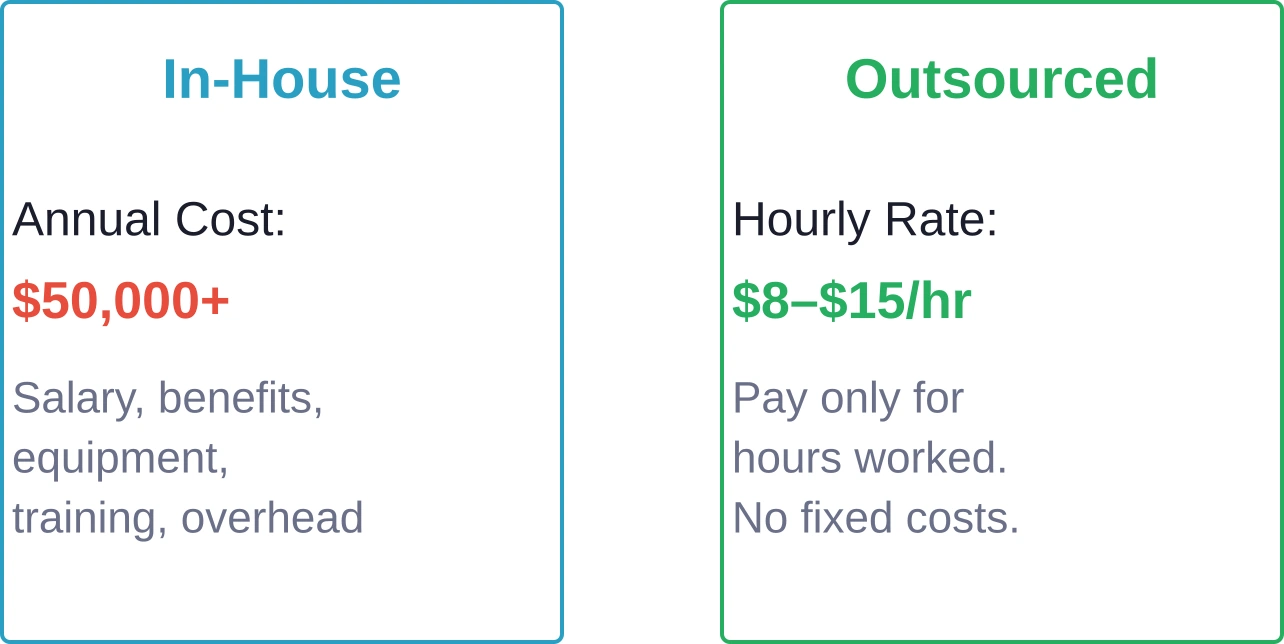
The math is straightforward. A full-time product data specialist in the US costs approximately $42,000 annually in salary alone—but when you factor in benefits, equipment, software licenses, training, and management overhead, the true cost climbs to $50,000 or more per person per year. Meanwhile, outsourced data entry specialists are available for $8–15 per hour, depending on location and complexity.
Beyond cost, outsourcing addresses a critical business reality: data entry is repetitive work that diverts internal teams from tasks that actually drive revenue. When your marketing team spends hours updating product descriptions instead of running campaigns, or customer service reps enter data instead of supporting customers, efficiency suffers.
Key Benefits of Outsourcing Data Entry
Cost Reduction
Organizations can achieve cost savings ranging from 30% to 70% by switching to outsourced data entry. This includes eliminating recruitment costs, training expenses, office space, and employee benefits. The transition from fixed staffing costs to variable expenses also provides flexibility—you scale up or down based on actual workload.
Accuracy and Quality Control
Specialized data entry providers maintain accuracy rates of 99.5%, which compares favorably to in-house teams. A trained product data specialist can process 10,000–15,000 keystrokes per hour at this precision level, significantly outperforming the typical 5,000–8,000 keystrokes at 97% accuracy from generalist staff.
Speed and Scalability
Outsourced teams handle surge work without delay. When you launch a new product line or migrate catalogs across platforms, external providers scale resources immediately rather than overloading internal staff. This is especially critical during peak seasons when data management demands spike.
Focus on Core Business
Delegating data entry frees internal teams to concentrate on strategy, customer engagement, and revenue-generating activities. Your marketing team markets. Your operations team optimizes. Your data entry—handled externally—stays accurate and current.
What Data Entry Tasks Can You Outsource?
Most outsourced data entry work falls into straightforward categories: product attribute management (descriptions, prices, images, SKUs), financial data (invoices, expense reports, bank reconciliation), and customer record updates. These tasks don't require strategic decision-making—they demand accuracy, speed, and consistency.
Choosing the Right Data Entry Service Provider
Verify Accuracy and Quality Standards
Ask providers for their accuracy rate guarantees. Credible firms should offer 99.5% or higher. Request references and samples of their work, and understand their quality assurance process—how they catch errors, who reviews completed work, and what happens if mistakes slip through.
Assess Security and Compliance
Data security is non-negotiable. Verify that providers comply with relevant regulations. If you handle customer payment information, ensure they meet credit card industry standards. For financial data, verify accounting compliance. Ask about data encryption, access controls, and non-disclosure agreements.
Evaluate Platform Integration
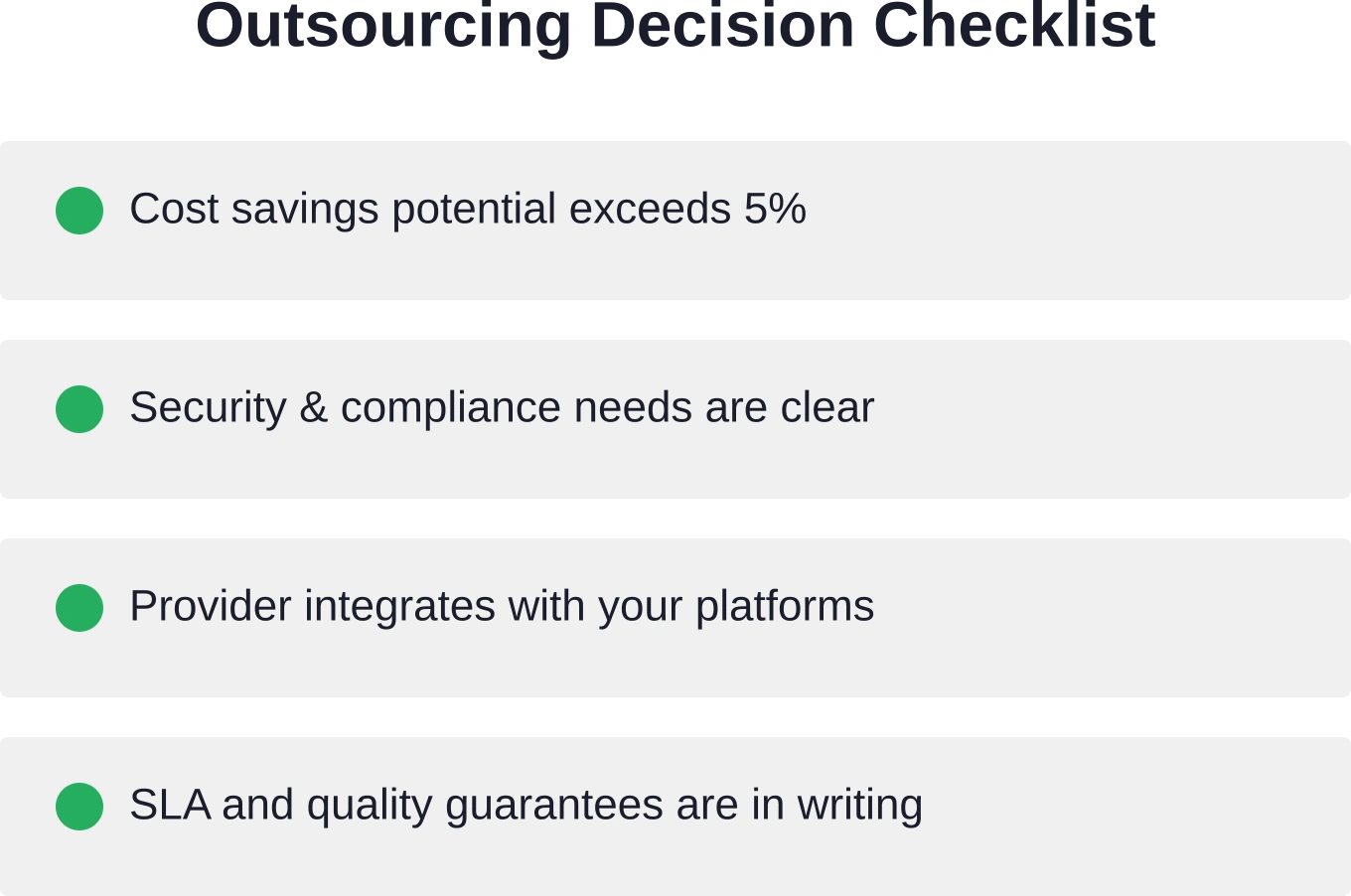
The best providers work directly within your platforms—Shopify, WooCommerce, Amazon Seller Central, Magento. This eliminates manual data transfers and reduces error risk. Confirm they support your specific e-commerce platform before signing an agreement.
Understand Pricing and Scalability
Get clear pricing breakdowns: hourly rates, project-based fees, or per-record costs. Ask how they handle volume spikes and what the onboarding timeline looks like. Some providers offer fixed monthly retainers; others charge only for hours worked. Choose the model that matches your workflow.

Streamline Ecommerce Data Entry with NeoWork
Ecommerce data entry can take time away from customer service, merchandising, and operations when teams have to manage product listings, order records, customer details, and routine admin updates manually. NeoWork can support ecommerce companies with virtual assistants and operational teammates who help keep these repetitive tasks under control.
NeoWork’s ecommerce-related support includes virtual assistants, product listing help, order tracking, customer service, admin tasks, bookkeeping, and temporary human support for workflows that are not fully automated. Its 91% annualized teammate retention rate and 3.2% candidate selectivity rate are useful for data-heavy ecommerce work because consistency reduces repeated onboarding and process errors.
Ecommerce data tasks NeoWork can support:
- product listing support
- order tracking and record updates
- customer service admin tasks
- bookkeeping and routine ecommerce operations
👉Contact NeoWork to add ecommerce data entry support, keep store information cleaner, and free your team from repetitive manual tasks.
Best Practices for Successful Outsourcing
Start with a Pilot Project
Don't commit to a 12-month contract immediately. Run a small pilot—perhaps 500 product records or a week's worth of invoice processing. This reveals whether the provider meets expectations, communicates clearly, and integrates smoothly with your workflow. It's a low-risk way to validate the relationship before scaling.
Set Clear Specifications and Documentation
Ambiguity creates errors. Document exactly how data should be entered: field formats, character limits, naming conventions, required attributes, and quality thresholds. The more detailed your specification, the fewer questions the outsourced team needs to ask and the fewer revisions you'll need.
Establish Monitoring and Reporting
Define key performance metrics: accuracy rate, turnaround time, volume completed per week, error rate by type. Request regular reports so you can spot trends. If accuracy drops from 99.5% to 98%, you'll catch it early rather than discovering problems weeks later.
Build in Quality Assurance Layers
Even with a 99.5% accuracy provider, spot-check incoming work. Review 2–5% of completed records yourself. This catches any systematic errors (like consistent misspellings or formatting issues) that can be corrected immediately rather than compounding across thousands of records.
Common Pitfalls to Avoid
The biggest mistake is expecting instant savings without proper planning. Outsourcing works only if cost savings exceed 5%—below that threshold, the overhead of coordination outweighs the benefits. Additionally, poor documentation creates endless back-and-forth clarifications, killing productivity.
Data security oversights are critical. Never entrust sensitive customer or payment information to providers without verified compliance. Hidden quality issues also derail projects: if accuracy drops silently, problems cascade. Finally, avoid long-term contracts without performance guarantees. A one-year commitment is reasonable; a three-year lock-in leaves you stuck if the relationship doesn't work.
Measuring ROI and Success
Track three metrics to prove outsourcing success. First, document actual cost savings—total spend on outsourcing versus what in-house costs would have been. Second, measure accuracy rate and error frequency. Third, calculate time freed up: how many internal hours have been reallocated to higher-value work?
A successful outsourcing relationship should show 30–70% cost reduction, maintain 99.5% accuracy, and free up at least 10–15 hours per week of internal staff time for strategic tasks. If your provider isn't delivering on these fronts, it's time to reassess or switch providers.
Conclusion
E-commerce data entry outsourcing is a practical, cost-effective strategy for businesses drowning in catalog management and administrative tasks. The math is compelling: reduce annual per-person costs from $50,000+ to $8–15/hour, maintain accuracy at 99.5%, and free internal teams to focus on growth-driving work.
Success depends on choosing the right provider, setting clear expectations, and monitoring performance. Start with a pilot project, document specifications meticulously, and verify security compliance upfront. Done right, outsourcing cuts overhead dramatically while improving data quality and team productivity.
If your e-commerce operation is struggling to keep catalogs current across multiple platforms, explore outsourcing. The operational and financial benefits often exceed expectations within the first 90 days.
FAQ: E-Commerce Data Entry Outsourcing
Topics
E-Commerce Data Entry Outsourcing Guide 2026

Quick Summary: E-commerce data entry outsourcing involves delegating catalog management, product data, and inventory tasks to specialized providers. This guide covers cost savings (typically $8–15 per hour versus $50,000+ annually for in-house staff), accuracy rates of 99.5% achievable, and best practices for selecting the right service partner to streamline operations.
What Is E-Commerce Data Entry Outsourcing?
E-commerce data entry outsourcing is the practice of delegating product catalog management, inventory updates, pricing changes, and customer information handling to external service providers. Rather than maintaining an internal team typing information into systems, businesses partner with specialized firms that handle bulk data management tasks.
The scope covers everything from product uploads to multiple marketplaces (Shopify, Amazon, WooCommerce, Magento) to invoice processing, SKU management, and database reconciliation. These outsourced teams work directly within client platforms to ensure accuracy and maintain live, updated catalogs without the overhead of hiring full-time staff.
Why E-Commerce Businesses Outsource Data Entry
The math is straightforward. A full-time product data specialist in the US costs approximately $42,000 annually in salary alone—but when you factor in benefits, equipment, software licenses, training, and management overhead, the true cost climbs to $50,000 or more per person per year. Meanwhile, outsourced data entry specialists are available for $8–15 per hour, depending on location and complexity.
Beyond cost, outsourcing addresses a critical business reality: data entry is repetitive work that diverts internal teams from tasks that actually drive revenue. When your marketing team spends hours updating product descriptions instead of running campaigns, or customer service reps enter data instead of supporting customers, efficiency suffers.
Key Benefits of Outsourcing Data Entry
Cost Reduction
Organizations can achieve cost savings ranging from 30% to 70% by switching to outsourced data entry. This includes eliminating recruitment costs, training expenses, office space, and employee benefits. The transition from fixed staffing costs to variable expenses also provides flexibility—you scale up or down based on actual workload.
Accuracy and Quality Control
Specialized data entry providers maintain accuracy rates of 99.5%, which compares favorably to in-house teams. A trained product data specialist can process 10,000–15,000 keystrokes per hour at this precision level, significantly outperforming the typical 5,000–8,000 keystrokes at 97% accuracy from generalist staff.
Speed and Scalability
Outsourced teams handle surge work without delay. When you launch a new product line or migrate catalogs across platforms, external providers scale resources immediately rather than overloading internal staff. This is especially critical during peak seasons when data management demands spike.
Focus on Core Business
Delegating data entry frees internal teams to concentrate on strategy, customer engagement, and revenue-generating activities. Your marketing team markets. Your operations team optimizes. Your data entry—handled externally—stays accurate and current.
What Data Entry Tasks Can You Outsource?
Most outsourced data entry work falls into straightforward categories: product attribute management (descriptions, prices, images, SKUs), financial data (invoices, expense reports, bank reconciliation), and customer record updates. These tasks don't require strategic decision-making—they demand accuracy, speed, and consistency.
Choosing the Right Data Entry Service Provider
Verify Accuracy and Quality Standards
Ask providers for their accuracy rate guarantees. Credible firms should offer 99.5% or higher. Request references and samples of their work, and understand their quality assurance process—how they catch errors, who reviews completed work, and what happens if mistakes slip through.
Assess Security and Compliance
Data security is non-negotiable. Verify that providers comply with relevant regulations. If you handle customer payment information, ensure they meet credit card industry standards. For financial data, verify accounting compliance. Ask about data encryption, access controls, and non-disclosure agreements.
Evaluate Platform Integration
The best providers work directly within your platforms—Shopify, WooCommerce, Amazon Seller Central, Magento. This eliminates manual data transfers and reduces error risk. Confirm they support your specific e-commerce platform before signing an agreement.
Understand Pricing and Scalability
Get clear pricing breakdowns: hourly rates, project-based fees, or per-record costs. Ask how they handle volume spikes and what the onboarding timeline looks like. Some providers offer fixed monthly retainers; others charge only for hours worked. Choose the model that matches your workflow.
Streamline Ecommerce Data Entry with NeoWork
Ecommerce data entry can take time away from customer service, merchandising, and operations when teams have to manage product listings, order records, customer details, and routine admin updates manually. NeoWork can support ecommerce companies with virtual assistants and operational teammates who help keep these repetitive tasks under control.
NeoWork’s ecommerce-related support includes virtual assistants, product listing help, order tracking, customer service, admin tasks, bookkeeping, and temporary human support for workflows that are not fully automated. Its 91% annualized teammate retention rate and 3.2% candidate selectivity rate are useful for data-heavy ecommerce work because consistency reduces repeated onboarding and process errors.
Ecommerce data tasks NeoWork can support:
- product listing support
- order tracking and record updates
- customer service admin tasks
- bookkeeping and routine ecommerce operations
👉Contact NeoWork to add ecommerce data entry support, keep store information cleaner, and free your team from repetitive manual tasks.
Best Practices for Successful Outsourcing
Start with a Pilot Project
Don't commit to a 12-month contract immediately. Run a small pilot—perhaps 500 product records or a week's worth of invoice processing. This reveals whether the provider meets expectations, communicates clearly, and integrates smoothly with your workflow. It's a low-risk way to validate the relationship before scaling.
Set Clear Specifications and Documentation
Ambiguity creates errors. Document exactly how data should be entered: field formats, character limits, naming conventions, required attributes, and quality thresholds. The more detailed your specification, the fewer questions the outsourced team needs to ask and the fewer revisions you'll need.
Establish Monitoring and Reporting
Define key performance metrics: accuracy rate, turnaround time, volume completed per week, error rate by type. Request regular reports so you can spot trends. If accuracy drops from 99.5% to 98%, you'll catch it early rather than discovering problems weeks later.
Build in Quality Assurance Layers
Even with a 99.5% accuracy provider, spot-check incoming work. Review 2–5% of completed records yourself. This catches any systematic errors (like consistent misspellings or formatting issues) that can be corrected immediately rather than compounding across thousands of records.
Common Pitfalls to Avoid
The biggest mistake is expecting instant savings without proper planning. Outsourcing works only if cost savings exceed 5%—below that threshold, the overhead of coordination outweighs the benefits. Additionally, poor documentation creates endless back-and-forth clarifications, killing productivity.
Data security oversights are critical. Never entrust sensitive customer or payment information to providers without verified compliance. Hidden quality issues also derail projects: if accuracy drops silently, problems cascade. Finally, avoid long-term contracts without performance guarantees. A one-year commitment is reasonable; a three-year lock-in leaves you stuck if the relationship doesn't work.
Measuring ROI and Success
Track three metrics to prove outsourcing success. First, document actual cost savings—total spend on outsourcing versus what in-house costs would have been. Second, measure accuracy rate and error frequency. Third, calculate time freed up: how many internal hours have been reallocated to higher-value work?
A successful outsourcing relationship should show 30–70% cost reduction, maintain 99.5% accuracy, and free up at least 10–15 hours per week of internal staff time for strategic tasks. If your provider isn't delivering on these fronts, it's time to reassess or switch providers.
Conclusion
E-commerce data entry outsourcing is a practical, cost-effective strategy for businesses drowning in catalog management and administrative tasks. The math is compelling: reduce annual per-person costs from $50,000+ to $8–15/hour, maintain accuracy at 99.5%, and free internal teams to focus on growth-driving work.
Success depends on choosing the right provider, setting clear expectations, and monitoring performance. Start with a pilot project, document specifications meticulously, and verify security compliance upfront. Done right, outsourcing cuts overhead dramatically while improving data quality and team productivity.
If your e-commerce operation is struggling to keep catalogs current across multiple platforms, explore outsourcing. The operational and financial benefits often exceed expectations within the first 90 days.
FAQ: E-Commerce Data Entry Outsourcing
Topics
Related Blogs
Related Podcasts


.webp)
.webp)



