

.avif)
.avif)

Financial Reporting Outsourcing Guide 2026


.svg)

Quick Summary: Financial reporting outsourcing allows companies to delegate accounting, compliance, and reporting functions to specialized providers, reducing costs and operational burden while improving accuracy. This guide covers the key benefits, service types, selection criteria, and implementation strategies CFOs and finance leaders should know when evaluating outsourcing options.
Why Companies Are Outsourcing Financial Reporting
Financial reporting represents a major operational challenge for organizations of all sizes. Completing mandated, complex deliverables—from audited financial statements and SEC filings to statutory reports across multiple jurisdictions—consumes significant time and resources. Many CFOs juggle these obligations alongside budgeting, forecasting, and strategic planning.
Outsourcing this function doesn't mean abandoning control. Rather, it means partnering with firms that bring specialized expertise, established processes, and economies of scale. The result? Organizations can focus on core business activities while ensuring compliance and financial accuracy.
Common Challenges in Managing Financial Reporting
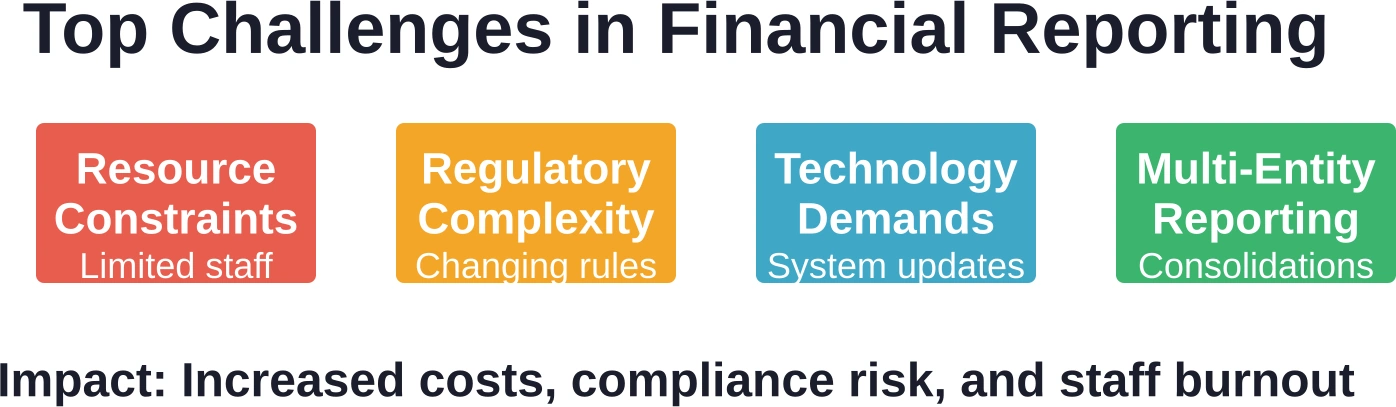
Internal reporting teams face mounting pressure from multiple directions. Expanding regulatory requirements, complex audit cycles, and staff turnover create significant obstacles. Technology infrastructure also needs constant updates to keep pace with evolving reporting standards.
Key Challenges Include
- Expanding Regulatory Requirements: Compliance obligations continue to grow, requiring more detailed reporting and frequent updates.
- Complex Audit Cycles: Audit expectations demand near-perfect accuracy and thorough documentation, adding pressure to reporting teams.
- Staff Turnover and Skill Gaps: Frequent changes in personnel disrupt continuity and institutional knowledge, making consistent reporting difficult.
- Multi-Entity Consolidations: Managing financials across multiple business units and geographies stretches internal resources.
- Technology and Systems Management: Maintaining and updating financial reporting systems to meet new standards consumes time and expertise.
These pain points often drive organizations to consider outsourcing financial reporting. When hiring and retaining experienced accountants is difficult, or internal resources are stretched thin, external partners provide strategic value and operational support.
What Do Outsourced Financial Reporting Services Include?
Outsourced reporting services span a broad range of functions. At the core: bookkeeping, general ledger management, account reconciliation, and month-end close procedures. But providers typically go deeper.
Most packages include preparation of audited financial statements, statutory reporting compliance, and tax return support. Many also handle SEC filings for public companies, consolidation of multi-entity data, and internal management reporting. Some firms offer specialized services like stock-based compensation accounting, revenue recognition analysis, and internal control documentation.
The depth of service depends on the provider and the engagement model. Some organizations prefer full outsourcing of the accounting function; others use outsourcing to supplement in-house teams during peak periods or to fill specific expertise gaps.
Support Financial Reporting Operations With NeoWork

Financial reporting often requires ongoing data collection, document management, reconciliation support, and administrative coordination. NeoWork provides staffing and operational support that can help organizations manage these recurring activities while internal finance teams focus on analysis and decision-making.
Need Additional Financial Reporting Support?
NeoWork can help with:
- financial data processing support
- document and records management
- reporting workflow coordination
- back-office operational assistance
👉 Contact NeoWork to discuss your financial reporting support needs.
Key Reasons CFOs Choose Outsourcing
CFOs often turn to outsourcing for financial reporting and accounting services for a combination of cost, expertise, and operational efficiency. Key reasons include:
- Cost Reduction: Eliminates expenses of recruiting, training, and retaining full-time accounting staff, reducing fixed overhead and making seasonal staffing more flexible.
- Access to Specialized Expertise: Outsourcing firms employ accountants skilled in regulatory compliance, industry-specific accounting, and international reporting standards that are hard to maintain internally.
- Operational Efficiency: Dedicated providers bring established workflows, documented processes, and quality control mechanisms, compressing month-end close cycles and reducing error rates.
- Reduced Management Burden: Outsourcing frees finance leaders to focus on strategic analysis, forecasting, and business partnering rather than administrative tasks.
Who Should Consider Outsourcing Financial Reporting?
Mid-market companies stand to gain the most. They're large enough to have complex reporting requirements but may lack the scale to justify a fully staffed in-house accounting department. Rapid-growth firms benefit from flexible staffing that scales with the business.
Public companies increasingly turn to outsourcing. Managing SEC compliance, audit coordination, and complex accounting standards demands specialized knowledge. Using external partners for specific functions—like consolidation or equity accounting—lets public company finance teams focus on strategic disclosure.
Nonprofits, family offices, and smaller enterprises also benefit, particularly when they operate across multiple jurisdictions or lack access to experienced accounting talent in their geographic area.
What to Expect When You Start Outsourcing
The transition requires planning. Successful implementations establish clear handoff procedures, document existing processes, and define communication protocols. Most providers conduct an assessment phase to understand current workflows, identify pain points, and design a tailored service model.
Data migration deserves attention. Moving historical records, account structures, and transaction history to the provider's systems takes time. A well-managed onboarding runs 60–90 days, though complex environments may need longer.
Expect a learning curve for both teams. Your staff adjusts to new contact points and approval workflows. The provider ramps up on your business processes and accounting policies. Once the transition settles—typically within the first few months—organizations report smoother operations and faster close cycles.
Factors to Consider When Choosing a Provider
Provider selection determines success. Start by defining your requirements: What functions do you want to outsource? What compliance standards apply? What technology platforms must the provider support?
Experience matters deeply. A provider with expertise in your industry understands your specific accounting challenges. If you operate across multiple states or countries, verify they've handled similar reporting complexity.
Evaluate their quality control and audit readiness. What processes ensure accuracy? How do they handle audit requests? What's their track record with external auditors? Ask for client references—speak directly to current clients about responsiveness, accuracy, and flexibility.
Technology infrastructure shapes the relationship. Does the provider offer real-time visibility into your financials? What reporting tools and dashboards are included? Can you access your data easily if you need to change providers later?
Common Mistakes to Avoid
Organizations often underestimate transition complexity.
- Successful handoffs require detailed documentation of current processes, clear communication with staff, and realistic timelines. Rushing implementation creates errors and frustration.
- Another error: selecting based on price alone. The cheapest option rarely delivers quality. Firms cutting costs aggressively often sacrifice expertise and responsiveness. Mid-tier providers frequently offer better value—sufficient expertise without premium pricing.
- Finally, avoid passive engagement. Outsourcing doesn't mean hands-off. Establish regular review cycles, monitor quality metrics, and maintain ongoing dialogue with your provider. Active partnerships produce better outcomes than transactional relationships.
Making the Decision
Outsourcing financial reporting isn't a one-size-fits-all solution. It works exceptionally well for organizations seeking cost efficiency, specialized expertise, and operational flexibility. But it requires clear expectations, active partnership, and careful provider selection.
Start by defining your priorities: Are you cost-focused? Seeking specialized expertise? Trying to reduce management burden? Your answer shapes which providers and service models make sense.
Request detailed proposals from 3–4 qualified firms. Ask for client references in your industry. Schedule conversations with current clients about their experience. Then compare not just price, but expertise, technology, and cultural fit.
The right outsourcing partnership transforms financial reporting from an operational burden into a strategic asset. It frees your team to focus on analysis, forecasting, and business impact. For CFOs managing complexity while holding costs steady, that advantage is substantial.
Frequently Asked Questions
Topics
Financial Reporting Outsourcing Guide 2026

Quick Summary: Financial reporting outsourcing allows companies to delegate accounting, compliance, and reporting functions to specialized providers, reducing costs and operational burden while improving accuracy. This guide covers the key benefits, service types, selection criteria, and implementation strategies CFOs and finance leaders should know when evaluating outsourcing options.
Why Companies Are Outsourcing Financial Reporting
Financial reporting represents a major operational challenge for organizations of all sizes. Completing mandated, complex deliverables—from audited financial statements and SEC filings to statutory reports across multiple jurisdictions—consumes significant time and resources. Many CFOs juggle these obligations alongside budgeting, forecasting, and strategic planning.
Outsourcing this function doesn't mean abandoning control. Rather, it means partnering with firms that bring specialized expertise, established processes, and economies of scale. The result? Organizations can focus on core business activities while ensuring compliance and financial accuracy.
Common Challenges in Managing Financial Reporting
Internal reporting teams face mounting pressure from multiple directions. Expanding regulatory requirements, complex audit cycles, and staff turnover create significant obstacles. Technology infrastructure also needs constant updates to keep pace with evolving reporting standards.
Key Challenges Include
- Expanding Regulatory Requirements: Compliance obligations continue to grow, requiring more detailed reporting and frequent updates.
- Complex Audit Cycles: Audit expectations demand near-perfect accuracy and thorough documentation, adding pressure to reporting teams.
- Staff Turnover and Skill Gaps: Frequent changes in personnel disrupt continuity and institutional knowledge, making consistent reporting difficult.
- Multi-Entity Consolidations: Managing financials across multiple business units and geographies stretches internal resources.
- Technology and Systems Management: Maintaining and updating financial reporting systems to meet new standards consumes time and expertise.
These pain points often drive organizations to consider outsourcing financial reporting. When hiring and retaining experienced accountants is difficult, or internal resources are stretched thin, external partners provide strategic value and operational support.
What Do Outsourced Financial Reporting Services Include?
Outsourced reporting services span a broad range of functions. At the core: bookkeeping, general ledger management, account reconciliation, and month-end close procedures. But providers typically go deeper.
Most packages include preparation of audited financial statements, statutory reporting compliance, and tax return support. Many also handle SEC filings for public companies, consolidation of multi-entity data, and internal management reporting. Some firms offer specialized services like stock-based compensation accounting, revenue recognition analysis, and internal control documentation.
The depth of service depends on the provider and the engagement model. Some organizations prefer full outsourcing of the accounting function; others use outsourcing to supplement in-house teams during peak periods or to fill specific expertise gaps.
Support Financial Reporting Operations With NeoWork
Financial reporting often requires ongoing data collection, document management, reconciliation support, and administrative coordination. NeoWork provides staffing and operational support that can help organizations manage these recurring activities while internal finance teams focus on analysis and decision-making.
Need Additional Financial Reporting Support?
NeoWork can help with:
- financial data processing support
- document and records management
- reporting workflow coordination
- back-office operational assistance
👉 Contact NeoWork to discuss your financial reporting support needs.
Key Reasons CFOs Choose Outsourcing
CFOs often turn to outsourcing for financial reporting and accounting services for a combination of cost, expertise, and operational efficiency. Key reasons include:
- Cost Reduction: Eliminates expenses of recruiting, training, and retaining full-time accounting staff, reducing fixed overhead and making seasonal staffing more flexible.
- Access to Specialized Expertise: Outsourcing firms employ accountants skilled in regulatory compliance, industry-specific accounting, and international reporting standards that are hard to maintain internally.
- Operational Efficiency: Dedicated providers bring established workflows, documented processes, and quality control mechanisms, compressing month-end close cycles and reducing error rates.
- Reduced Management Burden: Outsourcing frees finance leaders to focus on strategic analysis, forecasting, and business partnering rather than administrative tasks.
Who Should Consider Outsourcing Financial Reporting?
Mid-market companies stand to gain the most. They're large enough to have complex reporting requirements but may lack the scale to justify a fully staffed in-house accounting department. Rapid-growth firms benefit from flexible staffing that scales with the business.
Public companies increasingly turn to outsourcing. Managing SEC compliance, audit coordination, and complex accounting standards demands specialized knowledge. Using external partners for specific functions—like consolidation or equity accounting—lets public company finance teams focus on strategic disclosure.
Nonprofits, family offices, and smaller enterprises also benefit, particularly when they operate across multiple jurisdictions or lack access to experienced accounting talent in their geographic area.
What to Expect When You Start Outsourcing
The transition requires planning. Successful implementations establish clear handoff procedures, document existing processes, and define communication protocols. Most providers conduct an assessment phase to understand current workflows, identify pain points, and design a tailored service model.
Data migration deserves attention. Moving historical records, account structures, and transaction history to the provider's systems takes time. A well-managed onboarding runs 60–90 days, though complex environments may need longer.
Expect a learning curve for both teams. Your staff adjusts to new contact points and approval workflows. The provider ramps up on your business processes and accounting policies. Once the transition settles—typically within the first few months—organizations report smoother operations and faster close cycles.
Factors to Consider When Choosing a Provider
Provider selection determines success. Start by defining your requirements: What functions do you want to outsource? What compliance standards apply? What technology platforms must the provider support?
Experience matters deeply. A provider with expertise in your industry understands your specific accounting challenges. If you operate across multiple states or countries, verify they've handled similar reporting complexity.
Evaluate their quality control and audit readiness. What processes ensure accuracy? How do they handle audit requests? What's their track record with external auditors? Ask for client references—speak directly to current clients about responsiveness, accuracy, and flexibility.
Technology infrastructure shapes the relationship. Does the provider offer real-time visibility into your financials? What reporting tools and dashboards are included? Can you access your data easily if you need to change providers later?
Common Mistakes to Avoid
Organizations often underestimate transition complexity.
- Successful handoffs require detailed documentation of current processes, clear communication with staff, and realistic timelines. Rushing implementation creates errors and frustration.
- Another error: selecting based on price alone. The cheapest option rarely delivers quality. Firms cutting costs aggressively often sacrifice expertise and responsiveness. Mid-tier providers frequently offer better value—sufficient expertise without premium pricing.
- Finally, avoid passive engagement. Outsourcing doesn't mean hands-off. Establish regular review cycles, monitor quality metrics, and maintain ongoing dialogue with your provider. Active partnerships produce better outcomes than transactional relationships.
Making the Decision
Outsourcing financial reporting isn't a one-size-fits-all solution. It works exceptionally well for organizations seeking cost efficiency, specialized expertise, and operational flexibility. But it requires clear expectations, active partnership, and careful provider selection.
Start by defining your priorities: Are you cost-focused? Seeking specialized expertise? Trying to reduce management burden? Your answer shapes which providers and service models make sense.
Request detailed proposals from 3–4 qualified firms. Ask for client references in your industry. Schedule conversations with current clients about their experience. Then compare not just price, but expertise, technology, and cultural fit.
The right outsourcing partnership transforms financial reporting from an operational burden into a strategic asset. It frees your team to focus on analysis, forecasting, and business impact. For CFOs managing complexity while holding costs steady, that advantage is substantial.
Frequently Asked Questions
Topics
Related Blogs
Related Podcasts


.webp)
.webp)



