

.avif)
.avif)

Medical Scheduling Outsourcing Guide 2026


.svg)

Quick Summary: Medical scheduling outsourcing transfers appointment management to specialized external teams, freeing internal resources while reducing no-shows and improving patient access. This capacity strategy addresses staffing shortages, handles demand surges, and maintains service levels when clinics hit operational tipping points.
Understanding Medical Scheduling Outsourcing
Patient access has become the front line of operational risk for most clinics. When appointment scheduling overwhelms internal staff, the consequences ripple through operations—longer wait times, frustrated patients, and staff burnout.
Medical scheduling outsourcing hands this critical function to external teams trained in healthcare workflows, HIPAA compliance, and patient communication. Rather than hiring additional in-house staff, practices partner with specialized vendors who manage call queues, appointment booking, reminder calls, and no-show follow-ups.
The result? Freed-up internal resources that refocus on patient care instead of administrative gridlock.
When to Consider Outsourcing Appointment Scheduling
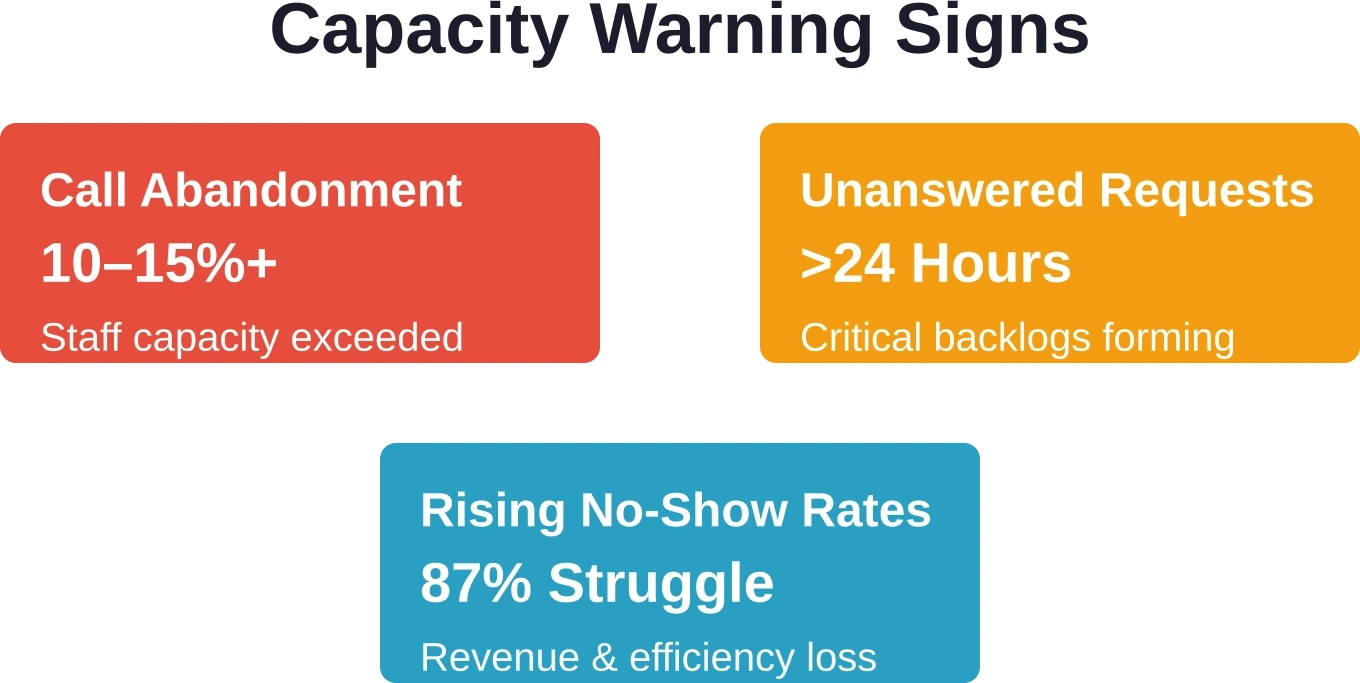
Not every clinic needs external support—but certain warning signs suggest it's time to evaluate. Call abandonment above 10–15% signals that phones are outpacing current staff capacity. When appointment requests sit unanswered for more than 24 hours, critical backlogs are forming in patient access.
Rising no-show rates compound the problem. According to MGMA data from August 2024, only 13% of medical groups reported lower no-show rates compared to the previous year, meaning most practices are struggling with this metric.
Multi-site medical assistant scheduling adds another layer of complexity. According to an April 2024 MGMA poll with 583 responses, 64% of medical groups use multisite medical assistants to address staffing shortages, while 36% do not—showing how common this approach has become across the industry.
Key Benefits of Outsourced Healthcare Appointment Scheduling
Outsourcing appointment scheduling delivers tangible operational and financial wins. First, it reduces missed appointments. Outsourced teams specialize in reminder systems, follow-up calls, and patient engagement strategies that lower no-show rates without burdening internal staff.
Second, it improves patient flow. Dedicated scheduling teams optimize appointment grids, minimize gaps, and keep backlogs from forming. Patients experience shorter wait times for appointments and faster access to care.
Third, it frees internal resources. Reception and administrative staff shift focus from call queues to higher-value tasks—patient check-in, billing inquiries, care coordination. This boosts both staff morale and patient satisfaction.
Fourth, it scales with demand. When seasonal surges or staffing vacancies hit, outsourced partners absorb the volume without hiring delays.
Fixed vs. Elastic Scheduling Capacity
Traditional in-house staffing creates fixed capacity—hire three receptionists, handle three receptionists' worth of calls. Demand exceeds that level? Patients wait or abandon calls entirely.
Outsourced scheduling offers elastic capacity. Partner vendors scale staff up during peak periods and down during slower weeks. No overhead of unused staff; no understaffing when you need it most. This flexibility becomes critical when clinics face unplanned vacancies or seasonal demand swings.
What to Look for in a Scheduling Outsourcing Partner
Not all vendors deliver equally. Evaluate these factors when selecting a partner:
- HIPAA Certification and Compliance: Verify the vendor's HIPAA compliance certifications, data security protocols, and audit trails. Patient information must be handled with the same rigor as internal systems.
- Integration Capability: The partner should integrate seamlessly with your EHR and practice management system. Manual data entry defeats the purpose of outsourcing.
- Industry Experience: Look for vendors with proven success in healthcare scheduling—not general call centers. Understanding medical workflows, provider preferences, and patient communication styles matters.
- Customization Options: Your practice has unique needs. The vendor should allow custom call scripts, appointment templates, and escalation rules aligned with your workflows.
- Performance Reporting: Demand transparent metrics—appointment bookings, no-show reduction, average handle time, customer satisfaction scores. Data-driven partnership beats vague promises.

Make Medical Scheduling Easier to Manage with NeoWork
Medical scheduling outsourcing can help healthcare teams manage appointment booking, patient communication, follow-ups, documentation, and related front-office tasks more consistently. NeoWork supports healthcare providers, clinics, and healthtech companies with non-clinical healthcare BPO teammates who can fit into existing workflows.
For medical teams, this can include appointment scheduling, insurance verification, documentation, medical customer support, and other healthcare admin tasks. NeoWork reports a 91% annualized teammate retention rate and a 3.2% candidate selectivity rate, which matters when scheduling workflows depend on clear communication, process knowledge, and reliable handoffs.
Medical scheduling tasks NeoWork can support:
- appointment scheduling support
- insurance verification and documentation
- medical customer support and healthcare admin tasks
Contact NeoWork to build medical scheduling support that keeps appointment workflows organized, reduces front-office pressure, and helps internal staff spend more time on patient care.
Implementation Considerations
Transitioning to outsourced scheduling requires planning. Start by auditing your current state—current call volume, no-show rates, staffing gaps, and specific pain points. This baseline shows the vendor what success looks like.
Phase in gradually if possible. Some practices hand off all scheduling immediately; others start with overflow calls or specific services (reminder calls, cancellation management). Gradual transition reduces risk and allows teams to adapt.
Communicate the change to staff and patients. Explain how outsourcing improves their experience. Provide updated phone numbers and clarify which calls route where. Staff alignment prevents confusion and supports the transition.
The Bottom Line
Medical scheduling outsourcing isn't a silver bullet—but for clinics drowning in call volume, battling no-show rates, or struggling with staffing gaps, it addresses real operational problems. The strategy converts fixed staffing costs into flexible, scalable support aligned with actual demand.
Start by assessing whether you hit any of those warning signs. If call abandonment, appointment backlogs, or rising no-shows resonate, evaluate vendors aligned with your practice's size, specialty, and patient demographics. A strong partnership frees staff to focus on care while patients experience faster access and more reliable appointment slots.
FAQ: Medical Scheduling Outsourcing
Topics
Medical Scheduling Outsourcing Guide 2026

Quick Summary: Medical scheduling outsourcing transfers appointment management to specialized external teams, freeing internal resources while reducing no-shows and improving patient access. This capacity strategy addresses staffing shortages, handles demand surges, and maintains service levels when clinics hit operational tipping points.
Understanding Medical Scheduling Outsourcing
Patient access has become the front line of operational risk for most clinics. When appointment scheduling overwhelms internal staff, the consequences ripple through operations—longer wait times, frustrated patients, and staff burnout.
Medical scheduling outsourcing hands this critical function to external teams trained in healthcare workflows, HIPAA compliance, and patient communication. Rather than hiring additional in-house staff, practices partner with specialized vendors who manage call queues, appointment booking, reminder calls, and no-show follow-ups.
The result? Freed-up internal resources that refocus on patient care instead of administrative gridlock.
When to Consider Outsourcing Appointment Scheduling
Not every clinic needs external support—but certain warning signs suggest it's time to evaluate. Call abandonment above 10–15% signals that phones are outpacing current staff capacity. When appointment requests sit unanswered for more than 24 hours, critical backlogs are forming in patient access.
Rising no-show rates compound the problem. According to MGMA data from August 2024, only 13% of medical groups reported lower no-show rates compared to the previous year, meaning most practices are struggling with this metric.
Multi-site medical assistant scheduling adds another layer of complexity. According to an April 2024 MGMA poll with 583 responses, 64% of medical groups use multisite medical assistants to address staffing shortages, while 36% do not—showing how common this approach has become across the industry.
Key Benefits of Outsourced Healthcare Appointment Scheduling
Outsourcing appointment scheduling delivers tangible operational and financial wins. First, it reduces missed appointments. Outsourced teams specialize in reminder systems, follow-up calls, and patient engagement strategies that lower no-show rates without burdening internal staff.
Second, it improves patient flow. Dedicated scheduling teams optimize appointment grids, minimize gaps, and keep backlogs from forming. Patients experience shorter wait times for appointments and faster access to care.
Third, it frees internal resources. Reception and administrative staff shift focus from call queues to higher-value tasks—patient check-in, billing inquiries, care coordination. This boosts both staff morale and patient satisfaction.
Fourth, it scales with demand. When seasonal surges or staffing vacancies hit, outsourced partners absorb the volume without hiring delays.
Fixed vs. Elastic Scheduling Capacity
Traditional in-house staffing creates fixed capacity—hire three receptionists, handle three receptionists' worth of calls. Demand exceeds that level? Patients wait or abandon calls entirely.
Outsourced scheduling offers elastic capacity. Partner vendors scale staff up during peak periods and down during slower weeks. No overhead of unused staff; no understaffing when you need it most. This flexibility becomes critical when clinics face unplanned vacancies or seasonal demand swings.
What to Look for in a Scheduling Outsourcing Partner
Not all vendors deliver equally. Evaluate these factors when selecting a partner:
- HIPAA Certification and Compliance: Verify the vendor's HIPAA compliance certifications, data security protocols, and audit trails. Patient information must be handled with the same rigor as internal systems.
- Integration Capability: The partner should integrate seamlessly with your EHR and practice management system. Manual data entry defeats the purpose of outsourcing.
- Industry Experience: Look for vendors with proven success in healthcare scheduling—not general call centers. Understanding medical workflows, provider preferences, and patient communication styles matters.
- Customization Options: Your practice has unique needs. The vendor should allow custom call scripts, appointment templates, and escalation rules aligned with your workflows.
- Performance Reporting: Demand transparent metrics—appointment bookings, no-show reduction, average handle time, customer satisfaction scores. Data-driven partnership beats vague promises.
Make Medical Scheduling Easier to Manage with NeoWork
Medical scheduling outsourcing can help healthcare teams manage appointment booking, patient communication, follow-ups, documentation, and related front-office tasks more consistently. NeoWork supports healthcare providers, clinics, and healthtech companies with non-clinical healthcare BPO teammates who can fit into existing workflows.
For medical teams, this can include appointment scheduling, insurance verification, documentation, medical customer support, and other healthcare admin tasks. NeoWork reports a 91% annualized teammate retention rate and a 3.2% candidate selectivity rate, which matters when scheduling workflows depend on clear communication, process knowledge, and reliable handoffs.
Medical scheduling tasks NeoWork can support:
- appointment scheduling support
- insurance verification and documentation
- medical customer support and healthcare admin tasks
Contact NeoWork to build medical scheduling support that keeps appointment workflows organized, reduces front-office pressure, and helps internal staff spend more time on patient care.
Implementation Considerations
Transitioning to outsourced scheduling requires planning. Start by auditing your current state—current call volume, no-show rates, staffing gaps, and specific pain points. This baseline shows the vendor what success looks like.
Phase in gradually if possible. Some practices hand off all scheduling immediately; others start with overflow calls or specific services (reminder calls, cancellation management). Gradual transition reduces risk and allows teams to adapt.
Communicate the change to staff and patients. Explain how outsourcing improves their experience. Provide updated phone numbers and clarify which calls route where. Staff alignment prevents confusion and supports the transition.
The Bottom Line
Medical scheduling outsourcing isn't a silver bullet—but for clinics drowning in call volume, battling no-show rates, or struggling with staffing gaps, it addresses real operational problems. The strategy converts fixed staffing costs into flexible, scalable support aligned with actual demand.
Start by assessing whether you hit any of those warning signs. If call abandonment, appointment backlogs, or rising no-shows resonate, evaluate vendors aligned with your practice's size, specialty, and patient demographics. A strong partnership frees staff to focus on care while patients experience faster access and more reliable appointment slots.
FAQ: Medical Scheduling Outsourcing
Topics
Related Blogs
Related Podcasts


.webp)
.webp)



