

.avif)
.avif)

Workers Compensation Outsourcing Guide 2026


.svg)

Quick Summary: Workers' compensation outsourcing transfers the administrative burden of managing claims, compliance, and employee benefits to specialized third-party providers. This approach can reduce operational costs, improve compliance with OSHA regulations, and allow businesses to focus on core operations while experts handle the complexities of workers' comp.
What Is Workers' Compensation Outsourcing?
Workers' compensation outsourcing involves partnering with external providers to manage the full spectrum of workplace injury administration. Rather than handling claims internally, businesses delegate responsibilities to specialized firms equipped with the expertise, technology, and resources to manage complex compliance requirements.
These providers typically handle claims processing, employee communications, medical coordination, and regulatory reporting. They act as an extension of the HR department, absorbing administrative overhead while reducing the company's exposure to costly errors.
Why Employers Choose Outsourcing
The shift toward outsourced workers' compensation reflects broader organizational trends. According to MIT research, HR outsourcing rates have reached 28% among surveyed companies, with administrative processes—including claims management—being the most commonly outsourced function at 30%.
Larger employers have embraced this strategy more aggressively. Data from the Society for Human Resource Management (SHRM) shows that large employers maintain a 40% outsourcing rate for related administrative functions, compared to 27% for smaller organizations. This gap reflects the economies of scale that make outsourcing particularly attractive for companies with significant employee populations.
Key Benefits of Outsourcing
Reduced Administrative Burden
Managing workers' comp claims internally demands significant time and expertise. Outsourced providers absorb documentation, filing, employee communications, and follow-up coordination. Staff spend less time on paperwork and more on strategic work.
Cost Containment
Third-party administrators negotiate with medical providers, manage claim reserves, and identify cost-reduction opportunities. Their scale allows them to leverage relationships and experience that individual employers lack.
Regulatory Compliance
Workplace injury reporting requirements are strict. OSHA mandates fatality reporting within 8 hours and reporting of in-patient hospitalizations, amputations, or eye loss within 24 hours. Specialized providers maintain updated compliance protocols and ensure timely submissions, protecting companies from penalties.
Better Injured Worker Outcomes
Professional claim management speeds return-to-work initiatives. Coordinated medical care and rehabilitation planning reduce claim duration and employee downtime.
In-House vs. Outsourced: A Comparison
Choosing the Right Provider
Not all outsourcing partners deliver equal value. Evaluate candidates on several dimensions:
- Expertise and credentials: Look for providers with deep workers' comp experience, state licensing, and industry certifications. They should demonstrate knowledge of your specific industry's injury patterns and regulatory landscape.
- Technology platform: Modern claims management relies on robust software. Test-drive their system for usability, reporting capabilities, and integration with your existing HR tools.
- Customer service quality: A provider's ability to respond quickly to injured employees and managers matters. Industry feedback suggests that outsourcing can reduce service quality if the provider operates at arm's length. Choose partners committed to accessible support across your geographic footprint.

Keep Workers’ Compensation Support Organized with NeoWork
Workers’ compensation outsourcing often involves claims-related admin, billing details, documentation, follow-ups, and coordination across healthcare or insurance workflows. NeoWork can support this kind of work through insurance claims processing staff, medical claims administrators, billing support roles, and case coordination support. Their 91% annualized teammate retention rate and 3.2% candidate selectivity rate are especially beneficial for accurate documentation, steady follow-up, and familiarity with internal processes.
Workers’ compensation tasks NeoWork can provide:
- claims intake and documentation support
- billing and reimbursement-related admin work
- insurance coordination and follow-ups
- case coordination and claim status support
👉Contact NeoWork to add workers’ compensation support that keeps claims-related admin, documentation, and follow-ups moving without adding more manual work to your internal team.
Implementation Best Practices
Transitioning to an outsourced model requires planning. Start by auditing your current processes—identify pain points, cost drivers, and compliance gaps. This baseline helps measure provider performance later.
Clear communication with employees is essential. Explain who handles what, how to report injuries, and whom to contact with questions. Smooth transitions reduce confusion and improve claim outcomes.
Set measurable expectations with your provider: response time to injury reports, claim closure timelines, and regulatory compliance metrics. Regular reporting and review meetings keep both parties aligned.
Common Concerns and Solutions
- Will outsourcing reduce personalized service? Possibly, if the provider operates remotely. Prioritize vendors with local presence or strong digital communication channels. Build regular check-ins into your contract.
- What if disputes arise over claims? Ensure the provider offers transparent appeal processes and clear documentation. Your contract should define escalation procedures.
- How does outsourcing affect company culture? When employees see that injuries are handled professionally and efficiently, trust builds. The key is choosing a responsive partner, not cutting corners on service.
The Bottom Line
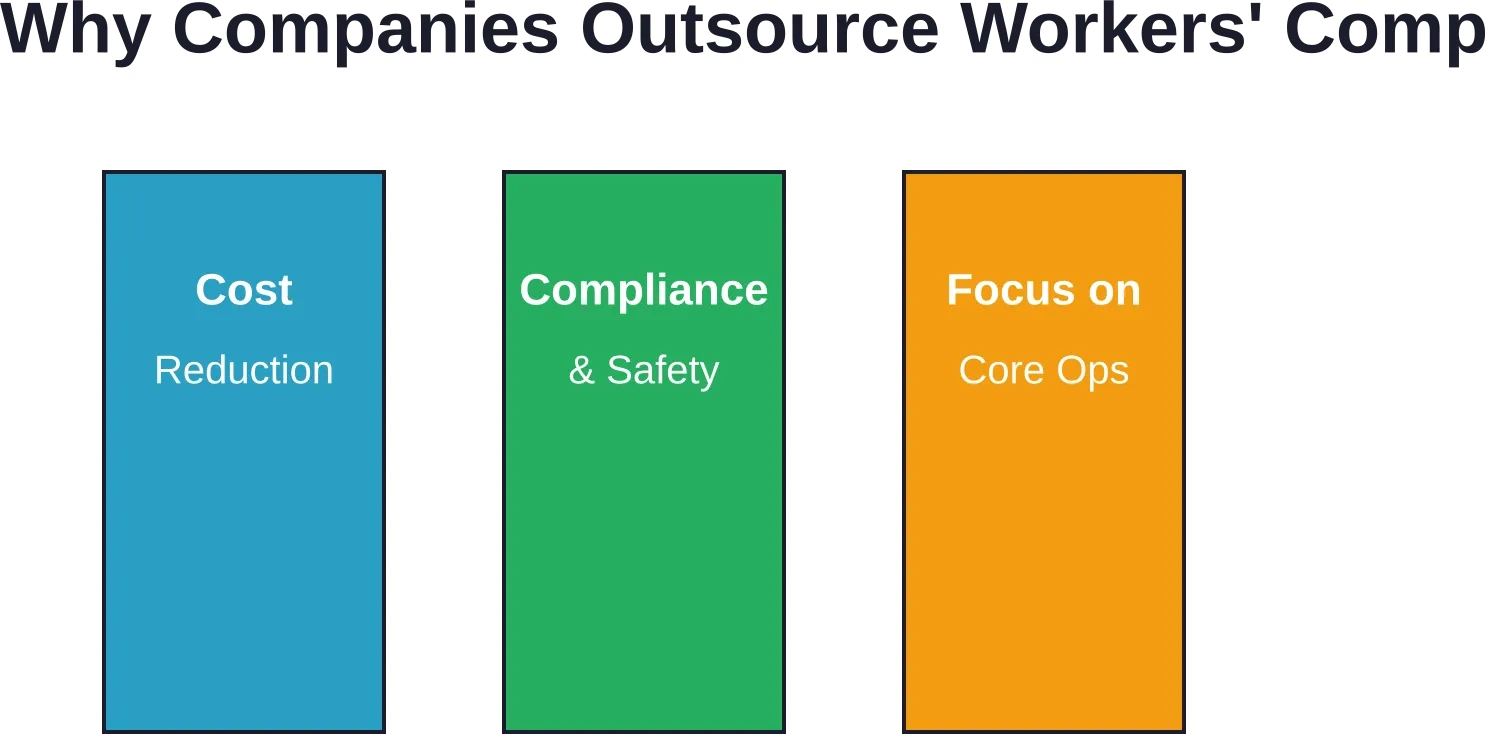
Workers' compensation outsourcing makes strategic sense for most organizations. The combination of cost reduction, compliance assurance, and operational focus delivers measurable value. Whether you're a small firm managing occasional injuries or a large employer handling hundreds of claims annually, the right provider transforms workers' comp from a burden into a managed, scalable function.
The key is selecting a partner that prioritizes injured worker care while maintaining rigorous compliance and cost discipline. Done right, outsourcing protects employees, protects the company, and frees up leadership to concentrate on growth.
Frequently Asked Questions
Topics
Workers Compensation Outsourcing Guide 2026

Quick Summary: Workers' compensation outsourcing transfers the administrative burden of managing claims, compliance, and employee benefits to specialized third-party providers. This approach can reduce operational costs, improve compliance with OSHA regulations, and allow businesses to focus on core operations while experts handle the complexities of workers' comp.
What Is Workers' Compensation Outsourcing?
Workers' compensation outsourcing involves partnering with external providers to manage the full spectrum of workplace injury administration. Rather than handling claims internally, businesses delegate responsibilities to specialized firms equipped with the expertise, technology, and resources to manage complex compliance requirements.
These providers typically handle claims processing, employee communications, medical coordination, and regulatory reporting. They act as an extension of the HR department, absorbing administrative overhead while reducing the company's exposure to costly errors.
Why Employers Choose Outsourcing
The shift toward outsourced workers' compensation reflects broader organizational trends. According to MIT research, HR outsourcing rates have reached 28% among surveyed companies, with administrative processes—including claims management—being the most commonly outsourced function at 30%.
Larger employers have embraced this strategy more aggressively. Data from the Society for Human Resource Management (SHRM) shows that large employers maintain a 40% outsourcing rate for related administrative functions, compared to 27% for smaller organizations. This gap reflects the economies of scale that make outsourcing particularly attractive for companies with significant employee populations.
Key Benefits of Outsourcing
Reduced Administrative Burden
Managing workers' comp claims internally demands significant time and expertise. Outsourced providers absorb documentation, filing, employee communications, and follow-up coordination. Staff spend less time on paperwork and more on strategic work.
Cost Containment
Third-party administrators negotiate with medical providers, manage claim reserves, and identify cost-reduction opportunities. Their scale allows them to leverage relationships and experience that individual employers lack.
Regulatory Compliance
Workplace injury reporting requirements are strict. OSHA mandates fatality reporting within 8 hours and reporting of in-patient hospitalizations, amputations, or eye loss within 24 hours. Specialized providers maintain updated compliance protocols and ensure timely submissions, protecting companies from penalties.
Better Injured Worker Outcomes
Professional claim management speeds return-to-work initiatives. Coordinated medical care and rehabilitation planning reduce claim duration and employee downtime.
In-House vs. Outsourced: A Comparison
Choosing the Right Provider
Not all outsourcing partners deliver equal value. Evaluate candidates on several dimensions:
- Expertise and credentials: Look for providers with deep workers' comp experience, state licensing, and industry certifications. They should demonstrate knowledge of your specific industry's injury patterns and regulatory landscape.
- Technology platform: Modern claims management relies on robust software. Test-drive their system for usability, reporting capabilities, and integration with your existing HR tools.
- Customer service quality: A provider's ability to respond quickly to injured employees and managers matters. Industry feedback suggests that outsourcing can reduce service quality if the provider operates at arm's length. Choose partners committed to accessible support across your geographic footprint.
Keep Workers’ Compensation Support Organized with NeoWork
Workers’ compensation outsourcing often involves claims-related admin, billing details, documentation, follow-ups, and coordination across healthcare or insurance workflows. NeoWork can support this kind of work through insurance claims processing staff, medical claims administrators, billing support roles, and case coordination support. Their 91% annualized teammate retention rate and 3.2% candidate selectivity rate are especially beneficial for accurate documentation, steady follow-up, and familiarity with internal processes.
Workers’ compensation tasks NeoWork can provide:
- claims intake and documentation support
- billing and reimbursement-related admin work
- insurance coordination and follow-ups
- case coordination and claim status support
👉Contact NeoWork to add workers’ compensation support that keeps claims-related admin, documentation, and follow-ups moving without adding more manual work to your internal team.
Implementation Best Practices
Transitioning to an outsourced model requires planning. Start by auditing your current processes—identify pain points, cost drivers, and compliance gaps. This baseline helps measure provider performance later.
Clear communication with employees is essential. Explain who handles what, how to report injuries, and whom to contact with questions. Smooth transitions reduce confusion and improve claim outcomes.
Set measurable expectations with your provider: response time to injury reports, claim closure timelines, and regulatory compliance metrics. Regular reporting and review meetings keep both parties aligned.
Common Concerns and Solutions
- Will outsourcing reduce personalized service? Possibly, if the provider operates remotely. Prioritize vendors with local presence or strong digital communication channels. Build regular check-ins into your contract.
- What if disputes arise over claims? Ensure the provider offers transparent appeal processes and clear documentation. Your contract should define escalation procedures.
- How does outsourcing affect company culture? When employees see that injuries are handled professionally and efficiently, trust builds. The key is choosing a responsive partner, not cutting corners on service.
The Bottom Line
Workers' compensation outsourcing makes strategic sense for most organizations. The combination of cost reduction, compliance assurance, and operational focus delivers measurable value. Whether you're a small firm managing occasional injuries or a large employer handling hundreds of claims annually, the right provider transforms workers' comp from a burden into a managed, scalable function.
The key is selecting a partner that prioritizes injured worker care while maintaining rigorous compliance and cost discipline. Done right, outsourcing protects employees, protects the company, and frees up leadership to concentrate on growth.
Frequently Asked Questions
Topics
Related Blogs
Related Podcasts


.webp)
.webp)



