

.avif)
.avif)

CRM Management Outsourcing Guide 2026: Complete Playbook


.svg)

CRM management outsourcing allows businesses to delegate customer relationship management tasks to specialized third-party providers, reducing costs by 50-70% while improving operational efficiency. This guide covers the types of outsourcing services available, benefits like scalability and faster response times, key selection criteria for providers, and best practices for successful implementation.
Managing customer relationships in-house demands significant resources. Between hiring specialized staff, training teams, purchasing software licenses, and maintaining infrastructure, costs add up quickly.
That's where CRM management outsourcing enters the picture. Businesses increasingly turn to third-party providers who specialize in customer relationship management tasks, converting fixed overhead into flexible operational expenses.
But outsourcing CRM isn't just about cutting costs. It's about accessing specialized expertise, scaling operations without hiring headaches, and focusing internal resources on core business activities.
What Is CRM Management Outsourcing?
CRM management outsourcing involves delegating customer relationship management tasks to external service providers. These specialists handle everything from data entry and lead generation to technical support and customer engagement strategies.
The scope varies widely. Some businesses outsource specific functions like data entry or technical integration. Others hand over entire customer relationship workflows to dedicated teams.
According to Deloitte research, planning for external challenges and adopting new technological capabilities tied for highest priorities among respondents, with only a 4-percentage-point difference between these and the fifth most-cited priority of protecting resources by reducing costs (44%).
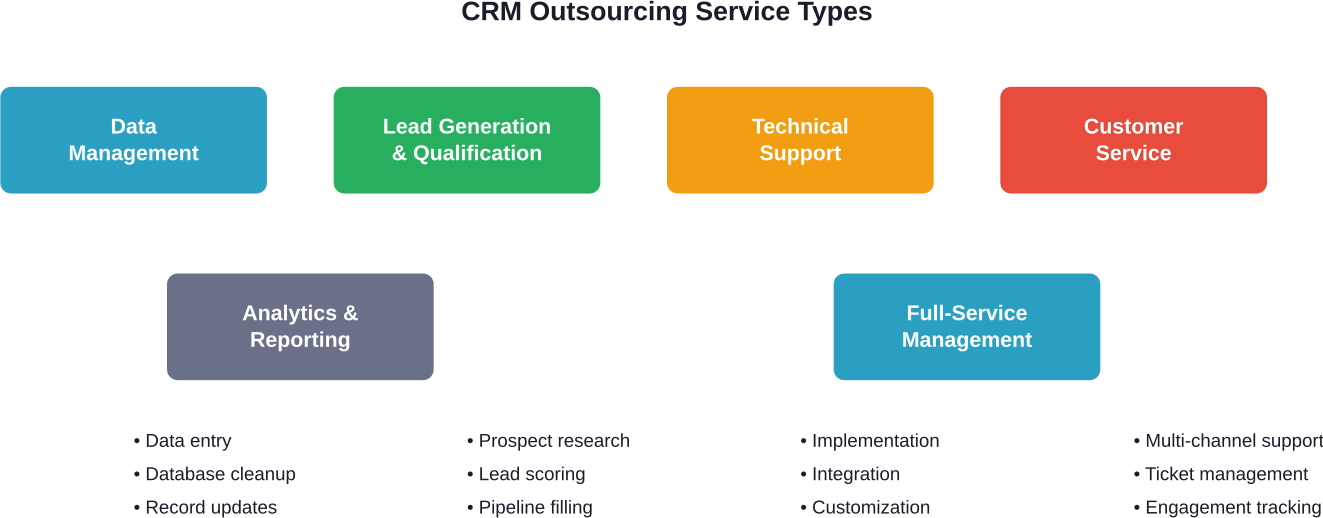
Types of CRM Outsourcing Services
Different businesses need different levels of support. Here's how providers typically structure their offerings.
Data Management Services
Data entry specialists maintain clean, accurate customer records. They input contact information, update existing records, remove duplicates, and ensure data integrity across systems.
This matters because CRM effectiveness depends entirely on data quality. Garbage in, garbage out.
Lead Generation and Qualification
Outsourced teams research prospects, qualify leads based on predefined criteria, and populate CRM systems with sales-ready contacts. This frees internal sales teams to focus on closing deals rather than prospecting.
Technical Support and Integration
Technical specialists handle CRM software implementation, customization, and integration with other business tools. For example, retail companies have used outsourced technical support to integrate CRM platforms with e-commerce systems, reducing order processing time by 30%.
Customer Service and Support
External teams manage customer inquiries, support tickets, and relationship nurturing through the CRM platform. This includes multi-channel support across email, chat, phone, and social media.
Analytics and Reporting
Specialized analysts extract insights from CRM data, generate performance reports, and identify trends that inform business strategy. They transform raw customer data into actionable intelligence.
Key Benefits of CRM Outsourcing
Why do businesses choose outsourcing over building in-house capabilities? The advantages span cost, expertise, and operational flexibility.
Substantial Cost Savings
When factoring in overhead, training, benefits, and software licensing, outsourcing CRM data entry costs 50-70% less than maintaining in-house staff. This converts fixed personnel costs into variable expenses that scale with business needs.
According to Deloitte research, Canadian banks face estimated labor costs of $48 billion in 2025. Outsourcing specific functions helps manage these escalating operational expenses.
Access to Specialized Expertise
CRM specialists bring focused experience that generalist employees rarely match. They've solved similar challenges across multiple clients and stay current with platform updates, integration techniques, and industry best practices.
Scalability Without Hiring Headaches
Business growth creates unpredictable CRM workloads. Outsourced teams scale up during peak periods and scale down during slower seasons without recruitment costs or layoff complications.
This flexibility matters especially for seasonal businesses or companies experiencing rapid growth.
Faster Response Times
Dedicated CRM teams often provide round-the-clock coverage across time zones. Customer inquiries get addressed quickly, improving satisfaction and engagement metrics.
Enhanced Data Security and Compliance
Reputable outsourcing providers invest heavily in security infrastructure and maintain compliance certifications that individual businesses might find prohibitively expensive. They implement data protection measures and stay current with evolving regulations.

Build a Reliable CRM Management Outsourcing Team
CRM management outsourcing requires consistency, data accuracy, and disciplined processes. NeoWork helps companies build dedicated remote teams for CRM updates, pipeline tracking, reporting, and data hygiene. Their differentiators are an industry-leading 91% annualized teammate retention rate and a 3.2% candidate selectivity rate. That stability protects institutional knowledge inside your CRM and reduces recurring onboarding costs.
Ready to Outsource CRM Management With Long-Term Stability?
Talk with NeoWork to:
- build a focused CRM operations team
- maintain clean and accurate pipeline data
- support reporting and workflow consistency
👉 Connect with NeoWork to structure your CRM management outsourcing model.
Potential Drawbacks to Consider
Outsourcing isn't universally perfect. Understanding the limitations helps set realistic expectations.
Control reduction represents the primary concern. External teams operate independently, which means less direct oversight of daily operations. Communication gaps can emerge, especially across time zones.
Data security risks increase when sharing customer information with third parties. While reputable providers implement strong security measures, businesses must thoroughly vet potential partners and establish clear data handling agreements.
Integration challenges sometimes arise when outsourced teams work with proprietary systems or highly customized CRM configurations. The coordination between internal and external teams requires thoughtful planning.
Selecting the Right CRM Outsourcing Partner
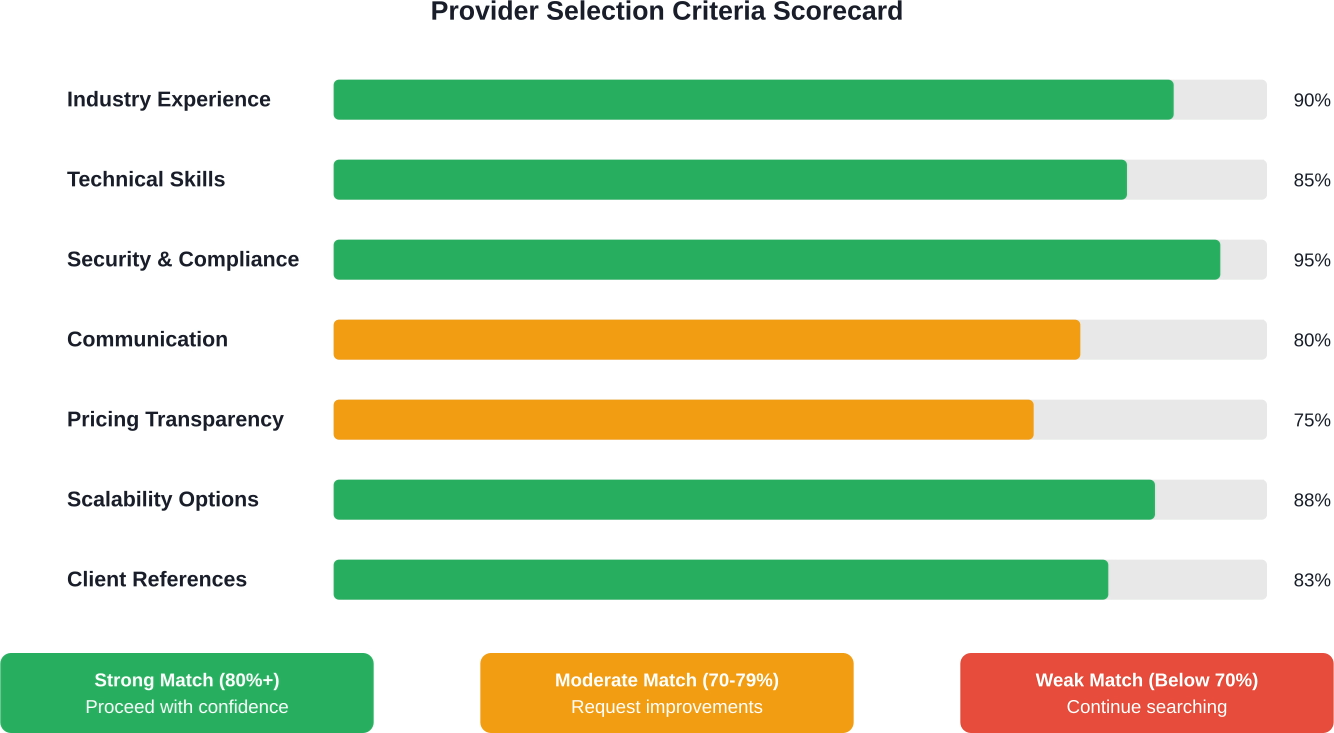
Not all providers deliver equal value. The selection process determines outsourcing success.
Evaluate Industry Experience
Look for providers with proven experience in specific industries. B2B software sales requires different CRM expertise than retail or healthcare. Case studies and client references reveal whether providers understand sector-specific challenges.
Assess Technical Capabilities
Providers should demonstrate proficiency with relevant CRM platforms (Salesforce, HubSpot, Microsoft Dynamics, etc.) and integration capabilities with existing business tools. Technical compatibility prevents future headaches.
Review Security Certifications
Data protection matters. Verify that providers maintain relevant security certifications, implement encryption protocols, and comply with applicable regulations (GDPR, CCPA, industry-specific requirements).
Examine Communication Infrastructure
Clear communication channels prevent misunderstandings. Evaluate how providers handle reporting, status updates, issue escalation, and ongoing collaboration.
Analyze Pricing Models
Transparent pricing structures prevent budget surprises. Understand whether providers charge hourly rates, per-transaction fees, or monthly retainers. Hidden costs for software, training, or additional services should surface during evaluation.
Best Practices for Successful CRM Outsourcing
Implementation strategy separates successful outsourcing relationships from disappointing ones.
Define Clear Objectives and Metrics
Establish specific, measurable goals before engaging providers. Response time targets, data accuracy percentages, lead qualification volumes—concrete metrics enable performance evaluation.
Without defined success criteria, judging provider performance becomes subjective and contentious.
Document Processes Thoroughly
External teams need comprehensive documentation of existing workflows, data standards, and business rules. Detailed process maps, data dictionaries, and standard operating procedures prevent costly misunderstandings.
Implement Phased Rollouts
Start with limited scope rather than transferring entire CRM operations overnight. Pilot projects reveal integration challenges, communication gaps, and process refinements before full-scale deployment.
Establish Regular Communication Cadence
Schedule recurring check-ins, performance reviews, and strategy sessions. Weekly status meetings, monthly business reviews, and quarterly strategic planning maintain alignment between internal stakeholders and outsourced teams.
Monitor and Optimize Continuously
Track performance metrics against established baselines. Identify improvement opportunities, address emerging issues quickly, and adjust workflows based on results.
According to ISACA research on corporate governance, integrating CRM strategies with governance frameworks leads to better business outcomes and stronger ethical foundations.
Change Management Considerations
Outsourcing disrupts established workflows and roles. Managing this transition determines adoption success.
Internal teams may resist external involvement. Address concerns transparently, clarify how outsourcing affects existing positions, and emphasize how freed capacity enables focus on higher-value work.
Training remains essential even with outsourced CRM management. Internal stakeholders need to understand new workflows, communication protocols, and escalation procedures.
Leadership support proves critical. When executives champion the transition and model new behaviors, organizational adoption accelerates.
Moving Forward with CRM Outsourcing
CRM management outsourcing offers compelling advantages for businesses seeking cost efficiency, specialized expertise, and operational flexibility. The 50-70% cost reduction compared to in-house teams represents just one benefit among many.
Success requires thoughtful provider selection, clear objective definition, thorough process documentation, and ongoing performance management. Businesses that approach outsourcing strategically—starting with pilot projects, establishing strong communication protocols, and continuously optimizing workflows—consistently achieve better outcomes.
The question isn't whether CRM outsourcing works. It's whether the implementation matches business needs, provider capabilities align with requirements, and transition planning addresses both technical and human factors.
Start by identifying specific CRM pain points, documenting current processes, and defining success metrics. Then evaluate potential providers against the criteria outlined here. A strategic, measured approach to CRM outsourcing transforms customer relationship management from a resource drain into a competitive advantage.
Frequently Asked Questions
Topics
CRM Management Outsourcing Guide 2026: Complete Playbook

CRM management outsourcing allows businesses to delegate customer relationship management tasks to specialized third-party providers, reducing costs by 50-70% while improving operational efficiency. This guide covers the types of outsourcing services available, benefits like scalability and faster response times, key selection criteria for providers, and best practices for successful implementation.
Managing customer relationships in-house demands significant resources. Between hiring specialized staff, training teams, purchasing software licenses, and maintaining infrastructure, costs add up quickly.
That's where CRM management outsourcing enters the picture. Businesses increasingly turn to third-party providers who specialize in customer relationship management tasks, converting fixed overhead into flexible operational expenses.
But outsourcing CRM isn't just about cutting costs. It's about accessing specialized expertise, scaling operations without hiring headaches, and focusing internal resources on core business activities.
What Is CRM Management Outsourcing?
CRM management outsourcing involves delegating customer relationship management tasks to external service providers. These specialists handle everything from data entry and lead generation to technical support and customer engagement strategies.
The scope varies widely. Some businesses outsource specific functions like data entry or technical integration. Others hand over entire customer relationship workflows to dedicated teams.
According to Deloitte research, planning for external challenges and adopting new technological capabilities tied for highest priorities among respondents, with only a 4-percentage-point difference between these and the fifth most-cited priority of protecting resources by reducing costs (44%).
Types of CRM Outsourcing Services
Different businesses need different levels of support. Here's how providers typically structure their offerings.
Data Management Services
Data entry specialists maintain clean, accurate customer records. They input contact information, update existing records, remove duplicates, and ensure data integrity across systems.
This matters because CRM effectiveness depends entirely on data quality. Garbage in, garbage out.
Lead Generation and Qualification
Outsourced teams research prospects, qualify leads based on predefined criteria, and populate CRM systems with sales-ready contacts. This frees internal sales teams to focus on closing deals rather than prospecting.
Technical Support and Integration
Technical specialists handle CRM software implementation, customization, and integration with other business tools. For example, retail companies have used outsourced technical support to integrate CRM platforms with e-commerce systems, reducing order processing time by 30%.
Customer Service and Support
External teams manage customer inquiries, support tickets, and relationship nurturing through the CRM platform. This includes multi-channel support across email, chat, phone, and social media.
Analytics and Reporting
Specialized analysts extract insights from CRM data, generate performance reports, and identify trends that inform business strategy. They transform raw customer data into actionable intelligence.
Key Benefits of CRM Outsourcing
Why do businesses choose outsourcing over building in-house capabilities? The advantages span cost, expertise, and operational flexibility.
Substantial Cost Savings
When factoring in overhead, training, benefits, and software licensing, outsourcing CRM data entry costs 50-70% less than maintaining in-house staff. This converts fixed personnel costs into variable expenses that scale with business needs.
According to Deloitte research, Canadian banks face estimated labor costs of $48 billion in 2025. Outsourcing specific functions helps manage these escalating operational expenses.
Access to Specialized Expertise
CRM specialists bring focused experience that generalist employees rarely match. They've solved similar challenges across multiple clients and stay current with platform updates, integration techniques, and industry best practices.
Scalability Without Hiring Headaches
Business growth creates unpredictable CRM workloads. Outsourced teams scale up during peak periods and scale down during slower seasons without recruitment costs or layoff complications.
This flexibility matters especially for seasonal businesses or companies experiencing rapid growth.
Faster Response Times
Dedicated CRM teams often provide round-the-clock coverage across time zones. Customer inquiries get addressed quickly, improving satisfaction and engagement metrics.
Enhanced Data Security and Compliance
Reputable outsourcing providers invest heavily in security infrastructure and maintain compliance certifications that individual businesses might find prohibitively expensive. They implement data protection measures and stay current with evolving regulations.
Build a Reliable CRM Management Outsourcing Team
CRM management outsourcing requires consistency, data accuracy, and disciplined processes. NeoWork helps companies build dedicated remote teams for CRM updates, pipeline tracking, reporting, and data hygiene. Their differentiators are an industry-leading 91% annualized teammate retention rate and a 3.2% candidate selectivity rate. That stability protects institutional knowledge inside your CRM and reduces recurring onboarding costs.
Ready to Outsource CRM Management With Long-Term Stability?
Talk with NeoWork to:
- build a focused CRM operations team
- maintain clean and accurate pipeline data
- support reporting and workflow consistency
👉 Connect with NeoWork to structure your CRM management outsourcing model.
Potential Drawbacks to Consider
Outsourcing isn't universally perfect. Understanding the limitations helps set realistic expectations.
Control reduction represents the primary concern. External teams operate independently, which means less direct oversight of daily operations. Communication gaps can emerge, especially across time zones.
Data security risks increase when sharing customer information with third parties. While reputable providers implement strong security measures, businesses must thoroughly vet potential partners and establish clear data handling agreements.
Integration challenges sometimes arise when outsourced teams work with proprietary systems or highly customized CRM configurations. The coordination between internal and external teams requires thoughtful planning.
Selecting the Right CRM Outsourcing Partner
Not all providers deliver equal value. The selection process determines outsourcing success.
Evaluate Industry Experience
Look for providers with proven experience in specific industries. B2B software sales requires different CRM expertise than retail or healthcare. Case studies and client references reveal whether providers understand sector-specific challenges.
Assess Technical Capabilities
Providers should demonstrate proficiency with relevant CRM platforms (Salesforce, HubSpot, Microsoft Dynamics, etc.) and integration capabilities with existing business tools. Technical compatibility prevents future headaches.
Review Security Certifications
Data protection matters. Verify that providers maintain relevant security certifications, implement encryption protocols, and comply with applicable regulations (GDPR, CCPA, industry-specific requirements).
Examine Communication Infrastructure
Clear communication channels prevent misunderstandings. Evaluate how providers handle reporting, status updates, issue escalation, and ongoing collaboration.
Analyze Pricing Models
Transparent pricing structures prevent budget surprises. Understand whether providers charge hourly rates, per-transaction fees, or monthly retainers. Hidden costs for software, training, or additional services should surface during evaluation.
Best Practices for Successful CRM Outsourcing
Implementation strategy separates successful outsourcing relationships from disappointing ones.
Define Clear Objectives and Metrics
Establish specific, measurable goals before engaging providers. Response time targets, data accuracy percentages, lead qualification volumes—concrete metrics enable performance evaluation.
Without defined success criteria, judging provider performance becomes subjective and contentious.
Document Processes Thoroughly
External teams need comprehensive documentation of existing workflows, data standards, and business rules. Detailed process maps, data dictionaries, and standard operating procedures prevent costly misunderstandings.
Implement Phased Rollouts
Start with limited scope rather than transferring entire CRM operations overnight. Pilot projects reveal integration challenges, communication gaps, and process refinements before full-scale deployment.
Establish Regular Communication Cadence
Schedule recurring check-ins, performance reviews, and strategy sessions. Weekly status meetings, monthly business reviews, and quarterly strategic planning maintain alignment between internal stakeholders and outsourced teams.
Monitor and Optimize Continuously
Track performance metrics against established baselines. Identify improvement opportunities, address emerging issues quickly, and adjust workflows based on results.
According to ISACA research on corporate governance, integrating CRM strategies with governance frameworks leads to better business outcomes and stronger ethical foundations.
Change Management Considerations
Outsourcing disrupts established workflows and roles. Managing this transition determines adoption success.
Internal teams may resist external involvement. Address concerns transparently, clarify how outsourcing affects existing positions, and emphasize how freed capacity enables focus on higher-value work.
Training remains essential even with outsourced CRM management. Internal stakeholders need to understand new workflows, communication protocols, and escalation procedures.
Leadership support proves critical. When executives champion the transition and model new behaviors, organizational adoption accelerates.
Moving Forward with CRM Outsourcing
CRM management outsourcing offers compelling advantages for businesses seeking cost efficiency, specialized expertise, and operational flexibility. The 50-70% cost reduction compared to in-house teams represents just one benefit among many.
Success requires thoughtful provider selection, clear objective definition, thorough process documentation, and ongoing performance management. Businesses that approach outsourcing strategically—starting with pilot projects, establishing strong communication protocols, and continuously optimizing workflows—consistently achieve better outcomes.
The question isn't whether CRM outsourcing works. It's whether the implementation matches business needs, provider capabilities align with requirements, and transition planning addresses both technical and human factors.
Start by identifying specific CRM pain points, documenting current processes, and defining success metrics. Then evaluate potential providers against the criteria outlined here. A strategic, measured approach to CRM outsourcing transforms customer relationship management from a resource drain into a competitive advantage.
Frequently Asked Questions
Topics
Related Blogs
Related Podcasts


.webp)
.webp)



