

.avif)
.avif)

2D Art Outsourcing Guide: How to Choose Teams in 2026

.svg)

2D art outsourcing allows game developers and studios to access specialized talent while reducing costs and focusing on core development. This guide covers selecting reliable outsourcing partners, managing workflows, understanding common pricing models, and establishing communication protocols to ensure high-quality deliverables.
Game development demands thousands of high-quality visual assets. Character sprites, backgrounds, UI elements, animations—the list never ends. Building an in-house team to handle everything isn't always practical, especially when budgets are tight and timelines are aggressive.
That's where 2D art outsourcing comes in.
Outsourcing has become prevalent across the industry. From small indie developers to established studios, teams are leveraging external talent to meet their art needs efficiently. The approach isn't just about cutting costs. It's about accessing specialized skills, scaling production on demand, and maintaining focus on what the core team does best.
But here's the thing—outsourcing only works when done right. Choose the wrong partner, and projects derail. Miss key workflow steps, and quality suffers. This guide breaks down exactly how to outsource 2D art successfully, from defining requirements to managing delivery.
What Gets Outsourced in 2D Art Production
Not every art task needs external help. Understanding what typically gets delegated helps clarify whether outsourcing makes sense for specific projects.
Character design and animation top the list. Studios frequently outsource sprite creation, character concept art, and frame-by-frame animations. These tasks require specialized skills that in-house teams might not have bandwidth for.
Background and environment art follow closely. Creating diverse, detailed environments takes considerable time. Many developers outsource this work to maintain production speed without compromising visual quality.
UI and UX elements also get delegated often. Menus, buttons, icons, and interface animations require both artistic skill and usability knowledge. Specialized studios bring expertise in creating interfaces that look good and function well.
Common 2D Art Deliverables
Game developers typically request character sprites and animations, background paintings and tilesets, UI elements and iconography, promotional artwork and key visuals, and concept art for visual development.
Animation projects might include explainer videos, motion graphics, and character animation for marketing materials. According to case studies from established outsourcing providers, 2D animation projects can be delivered with accuracy rates exceeding 98% when proper workflows are established.
In-House vs. Outsourcing: Making the Right Choice
The decision between building internal teams and outsourcing isn't binary. Most successful studios use both approaches strategically.
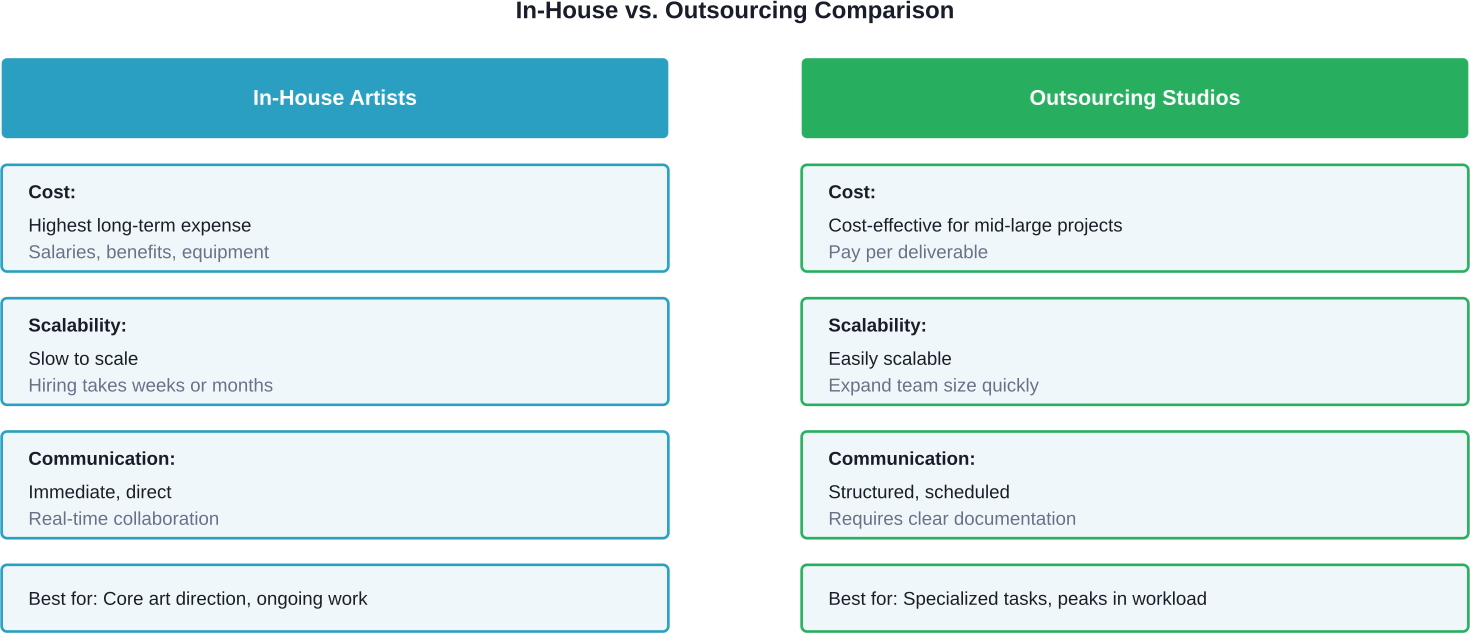
In-house teams excel at maintaining consistent art direction and handling ongoing production needs. They understand the project intimately and can iterate quickly. But scaling an in-house team takes time—hiring, onboarding, and equipment purchases don't happen overnight.
Outsourcing provides immediate access to specialized talent. Need pixel art expertise? There's a studio for that. Looking for anime-style character design? Multiple options exist. This flexibility matters when project demands shift rapidly.
Cost structures differ significantly. In-house artists represent long-term investments with salaries, benefits, and overhead. Outsourcing operates on project-based pricing, making it cost-effective for mid-to-large scopes where hiring full-time staff doesn't make financial sense.
How to Choose a Reliable Outsourcing Partner
Selecting the right studio makes or breaks outsourcing success. Rush this decision, and projects suffer. Take time to evaluate properly, and partnerships thrive.
Portfolio Quality and Relevance
Start with the portfolio. Look beyond visual appeal—assess whether their style matches project needs. A studio that excels at realistic environments might struggle with stylized character work.
Check for diversity in their work. Studios with varied portfolios demonstrate adaptability. But also look for depth in styles relevant to specific project requirements.
Community discussions highlight that return client rates matter. Studios with strong return rates typically deliver better results and understand client expectations more thoroughly.
Technical Capabilities and Tools
Understanding technical requirements prevents costly mismatches. Does the studio work with required file formats? Can they deliver assets optimized for specific game engines?
Ask about their software stack. Professional studios use industry-standard tools and maintain updated workflows. This matters for file compatibility and production efficiency.
Pipeline integration capabilities shouldn't be overlooked. The best outsourcing partners adapt to existing workflows rather than forcing clients to change processes.
Communication and Process Transparency
Clear communication channels are non-negotiable. Establish how often updates occur, which platforms get used, and who serves as the primary point of contact.
Transparent processes build trust. Studios should clearly explain their workflow, revision policies, and quality assurance methods. If a studio can't articulate how they work, that's a red flag.
Time zone differences affect collaboration. While not always deal-breakers, significant gaps require structured communication schedules to maintain project momentum.
Defining Project Requirements Before Outsourcing
Vague requirements guarantee disappointing results. Specificity matters more in outsourcing than almost any other project aspect.
Start with a comprehensive art brief. This document should detail art style references, technical specifications, delivery formats, resolution requirements, and color palette guidelines. The more specific the brief, the better the outcomes.
Creating Effective Art Briefs
Good briefs include visual references—lots of them. Don't just describe what's needed; show examples of desired styles, compositions, and quality levels.
Technical specifications prevent delivery issues. List exact dimensions, file formats, naming conventions, and any engine-specific requirements upfront. Discovering format incompatibilities after delivery wastes time and money.
Include context about how assets get used. Understanding gameplay integration, UI functionality, or narrative context helps artists make better creative decisions.
Understanding the Outsourcing Workflow
Successful outsourcing follows predictable stages. Knowing what to expect at each phase helps manage projects smoothly.
Initial Consultation and Quotation
The process begins with consultation. Share the brief, discuss requirements, and clarify any ambiguities. Quality studios ask detailed questions during this phase—that's a positive sign.
Quotations should break down costs clearly. Look for itemized pricing that shows exactly what gets delivered for each fee. Vague, all-inclusive quotes make it harder to assess value.
Concept Development and Approval
Most projects start with concept art or style exploration. Studios produce initial sketches or samples demonstrating their interpretation of the brief.
This phase requires active client involvement. Provide clear, actionable feedback. Instead of "I don't like it," specify what needs adjustment: "The character proportions should be more stylized" or "The color palette needs warmer tones."
Approval milestones prevent costly revisions later. Lock down concepts before full production begins. Changes become exponentially more expensive as work progresses.
Production and Iteration
With concepts approved, production ramps up. Establish regular check-ins to review work-in-progress. Weekly reviews work well for most projects, though larger scopes might need more frequent touchpoints.
Quality assurance happens throughout production, not just at the end. Catching issues early saves time. Professional studios implement their own QA processes, but client review remains essential.
Final Delivery and Revisions
Delivery should include all agreed-upon file formats, properly organized and named. Check assets thoroughly before final approval—verify file integrity, dimensions, and compatibility.
Most contracts include a revision round or two. Use these strategically for genuinely needed adjustments, not wholesale changes that should have been caught earlier.
Common Pricing Models Explained
Understanding how studios price work helps budget accurately and compare quotes effectively.
Per-asset pricing offers the most predictability for game development. Knowing exactly what each character sprite or background costs simplifies budgeting and financial planning.
Hourly rates suit exploratory work where scope remains unclear. But they require trust and careful time tracking to prevent budget overruns.
Project-based pricing works well for contained scopes with clearly defined deliverables. The challenge comes when changes occur mid-project—additional costs can mount quickly.
Managing Communication Across Time Zones
Many quality outsourcing studios operate internationally. Distance doesn't have to create obstacles when communication gets structured properly.
Asynchronous communication becomes essential. Detailed written updates, comprehensive feedback documents, and recorded video reviews keep projects moving even when teams aren't online simultaneously.
Schedule overlapping hours for critical discussions. Even with significant time differences, finding a one-hour weekly window where both teams are available makes real-time problem-solving possible.
Documentation matters more in remote collaboration. Written records of decisions, approved concepts, and requirement changes prevent misunderstandings and provide reference points when questions arise.
Red Flags to Watch For
Not every outsourcing relationship succeeds. Recognizing warning signs early prevents wasted investment.
- Unclear contracts or vague deliverable definitions spell trouble. Professional studios provide detailed agreements specifying exactly what gets delivered, when, and in what format.
- Reluctance to show work-in-progress raises concerns. Studios confident in their work provide regular updates. Those avoiding intermediate reviews might be struggling.
- Poor communication responsiveness indicates deeper issues. While instant replies aren't expected, consistent delays or vague responses suggest organizational problems.
- Unwillingness to sign NDAs or discuss IP rights protection should end conversations immediately. Professional studios understand confidentiality requirements and have standard agreements ready.
Intellectual Property Considerations
IP ownership needs clarification before work begins, not after delivery. Ambiguity here creates legal headaches.
Work-for-hire agreements transfer all rights to the client upon payment. This standard arrangement means studios can't reuse commissioned work without permission.
Some studios request portfolio rights—permission to showcase completed work in their portfolios. This reasonable request doesn't affect ownership but allows studios to demonstrate capabilities to future clients.
Ensure contracts explicitly state that all created assets, including intermediate versions and unused concepts, become client property. This prevents disputes over who owns abandoned concepts or alternate versions.
Building Long-Term Partnerships
Finding a reliable outsourcing partner is valuable. Maintaining that relationship pays dividends over time.
Studios familiar with a project's visual language work more efficiently on subsequent commissions. They already understand the style, technical requirements, and quality expectations.
Long-term relationships enable more flexible workflows. Trusted partners might begin work before contracts finalize or accommodate tight deadlines because the working relationship has proven reliable on both sides.
Provide feedback beyond just project deliverables. Let studios know what worked well and what could improve. This investment in the relationship improves future collaboration.

Work With a Reliable 2D Art Outsourcing Partner
Outsourcing 2D art only works when the team is consistent and aligned with your production pipeline. NeoWork helps studios build dedicated remote 2D art teams for characters, environments, UI elements, and live ops assets. Their differentiators are an industry-leading 91% annualized teammate retention rate and a 3.2% candidate selectivity rate. That means fewer replacements, less retraining, and steadier production output.
Ready to Outsource 2D Art Without Production Disruptions?
Talk with NeoWork to:
- build a vetted 2D art team matched to your style
- maintain visual consistency across milestones
- scale asset production as your roadmap evolves
👉 Connect with NeoWork to discuss your 2D art outsourcing plan.
Quality Assurance Best Practices
Implementing structured QA prevents assets from breaking in production or requiring expensive fixes post-delivery.
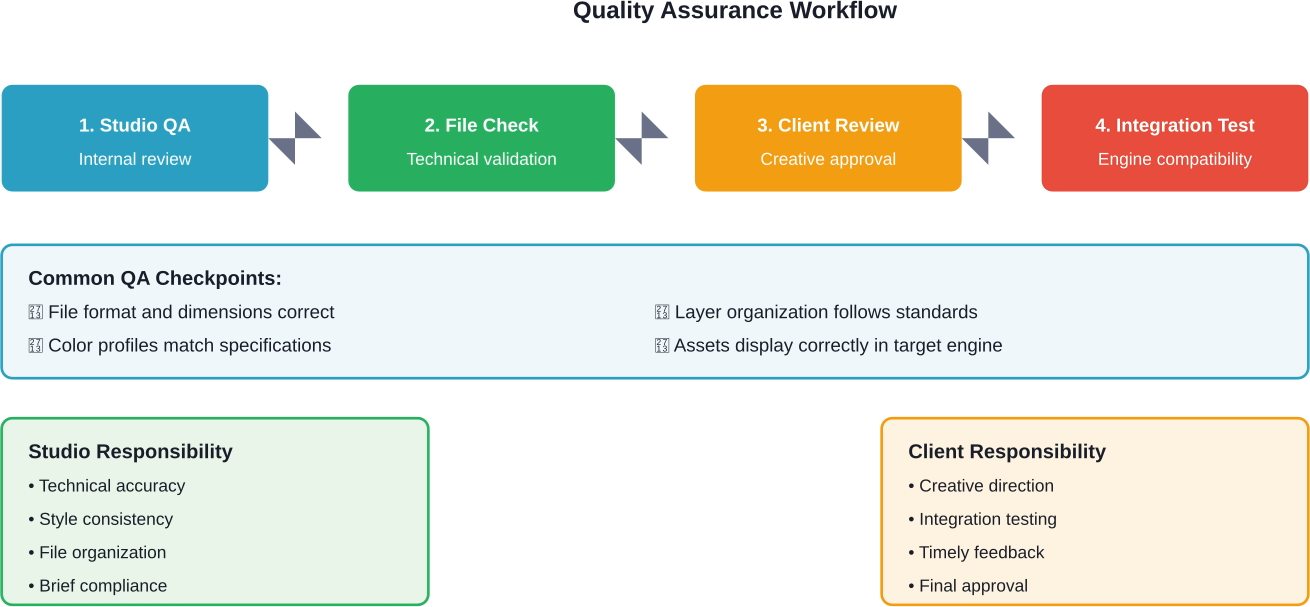
Create asset checklists that cover technical requirements: correct dimensions, proper file formats, appropriate compression, and accurate naming conventions. Run every deliverable through this checklist before approval.
Test assets in the actual game engine or target environment. What looks perfect in Photoshop might render incorrectly in Unity or Unreal. Catch these issues before considering work complete.
Maintain a style reference document that evolves throughout the project. When inconsistencies appear, having a definitive reference prevents arguments about what was agreed upon.
Moving Forward with 2D Art Outsourcing
Outsourcing 2D art successfully requires more than just finding a cheap studio and sending over a description. It demands clear communication, detailed requirements, structured workflows, and active project management.
The studios producing the best work aren't necessarily the cheapest or fastest. They're the ones asking detailed questions, providing transparent processes, and demonstrating understanding of both artistic and technical requirements.
Start small when testing new partnerships. Commission a few assets before committing to large contracts. This trial run reveals how studios work, communicate, and handle feedback without risking entire project budgets.
Document everything. Maintain detailed records of agreed-upon specifications, approved concepts, and revision history. When questions arise weeks or months into production, documentation provides answers.
The game development landscape continues evolving. According to the Bureau of Labor Statistics, special effects artists and animators typically need a bachelor's degree in computer graphics, art, or a related field to develop both a portfolio of work and the technical skills that many employers prefer. This professional foundation matters when selecting outsourcing partners.
Ready to start outsourcing? Begin by creating that comprehensive art brief. Invest time upfront defining requirements clearly, gathering reference materials, and documenting technical specifications. This preparation determines whether outsourcing becomes a valuable resource or a frustrating expense.
FAQ
Topics
2D Art Outsourcing Guide: How to Choose Teams in 2026

2D art outsourcing allows game developers and studios to access specialized talent while reducing costs and focusing on core development. This guide covers selecting reliable outsourcing partners, managing workflows, understanding common pricing models, and establishing communication protocols to ensure high-quality deliverables.
Game development demands thousands of high-quality visual assets. Character sprites, backgrounds, UI elements, animations—the list never ends. Building an in-house team to handle everything isn't always practical, especially when budgets are tight and timelines are aggressive.
That's where 2D art outsourcing comes in.
Outsourcing has become prevalent across the industry. From small indie developers to established studios, teams are leveraging external talent to meet their art needs efficiently. The approach isn't just about cutting costs. It's about accessing specialized skills, scaling production on demand, and maintaining focus on what the core team does best.
But here's the thing—outsourcing only works when done right. Choose the wrong partner, and projects derail. Miss key workflow steps, and quality suffers. This guide breaks down exactly how to outsource 2D art successfully, from defining requirements to managing delivery.
What Gets Outsourced in 2D Art Production
Not every art task needs external help. Understanding what typically gets delegated helps clarify whether outsourcing makes sense for specific projects.
Character design and animation top the list. Studios frequently outsource sprite creation, character concept art, and frame-by-frame animations. These tasks require specialized skills that in-house teams might not have bandwidth for.
Background and environment art follow closely. Creating diverse, detailed environments takes considerable time. Many developers outsource this work to maintain production speed without compromising visual quality.
UI and UX elements also get delegated often. Menus, buttons, icons, and interface animations require both artistic skill and usability knowledge. Specialized studios bring expertise in creating interfaces that look good and function well.
Common 2D Art Deliverables
Game developers typically request character sprites and animations, background paintings and tilesets, UI elements and iconography, promotional artwork and key visuals, and concept art for visual development.
Animation projects might include explainer videos, motion graphics, and character animation for marketing materials. According to case studies from established outsourcing providers, 2D animation projects can be delivered with accuracy rates exceeding 98% when proper workflows are established.
In-House vs. Outsourcing: Making the Right Choice
The decision between building internal teams and outsourcing isn't binary. Most successful studios use both approaches strategically.
In-house teams excel at maintaining consistent art direction and handling ongoing production needs. They understand the project intimately and can iterate quickly. But scaling an in-house team takes time—hiring, onboarding, and equipment purchases don't happen overnight.
Outsourcing provides immediate access to specialized talent. Need pixel art expertise? There's a studio for that. Looking for anime-style character design? Multiple options exist. This flexibility matters when project demands shift rapidly.
Cost structures differ significantly. In-house artists represent long-term investments with salaries, benefits, and overhead. Outsourcing operates on project-based pricing, making it cost-effective for mid-to-large scopes where hiring full-time staff doesn't make financial sense.
How to Choose a Reliable Outsourcing Partner
Selecting the right studio makes or breaks outsourcing success. Rush this decision, and projects suffer. Take time to evaluate properly, and partnerships thrive.
Portfolio Quality and Relevance
Start with the portfolio. Look beyond visual appeal—assess whether their style matches project needs. A studio that excels at realistic environments might struggle with stylized character work.
Check for diversity in their work. Studios with varied portfolios demonstrate adaptability. But also look for depth in styles relevant to specific project requirements.
Community discussions highlight that return client rates matter. Studios with strong return rates typically deliver better results and understand client expectations more thoroughly.
Technical Capabilities and Tools
Understanding technical requirements prevents costly mismatches. Does the studio work with required file formats? Can they deliver assets optimized for specific game engines?
Ask about their software stack. Professional studios use industry-standard tools and maintain updated workflows. This matters for file compatibility and production efficiency.
Pipeline integration capabilities shouldn't be overlooked. The best outsourcing partners adapt to existing workflows rather than forcing clients to change processes.
Communication and Process Transparency
Clear communication channels are non-negotiable. Establish how often updates occur, which platforms get used, and who serves as the primary point of contact.
Transparent processes build trust. Studios should clearly explain their workflow, revision policies, and quality assurance methods. If a studio can't articulate how they work, that's a red flag.
Time zone differences affect collaboration. While not always deal-breakers, significant gaps require structured communication schedules to maintain project momentum.
Defining Project Requirements Before Outsourcing
Vague requirements guarantee disappointing results. Specificity matters more in outsourcing than almost any other project aspect.
Start with a comprehensive art brief. This document should detail art style references, technical specifications, delivery formats, resolution requirements, and color palette guidelines. The more specific the brief, the better the outcomes.
Creating Effective Art Briefs
Good briefs include visual references—lots of them. Don't just describe what's needed; show examples of desired styles, compositions, and quality levels.
Technical specifications prevent delivery issues. List exact dimensions, file formats, naming conventions, and any engine-specific requirements upfront. Discovering format incompatibilities after delivery wastes time and money.
Include context about how assets get used. Understanding gameplay integration, UI functionality, or narrative context helps artists make better creative decisions.
Understanding the Outsourcing Workflow
Successful outsourcing follows predictable stages. Knowing what to expect at each phase helps manage projects smoothly.
Initial Consultation and Quotation
The process begins with consultation. Share the brief, discuss requirements, and clarify any ambiguities. Quality studios ask detailed questions during this phase—that's a positive sign.
Quotations should break down costs clearly. Look for itemized pricing that shows exactly what gets delivered for each fee. Vague, all-inclusive quotes make it harder to assess value.
Concept Development and Approval
Most projects start with concept art or style exploration. Studios produce initial sketches or samples demonstrating their interpretation of the brief.
This phase requires active client involvement. Provide clear, actionable feedback. Instead of "I don't like it," specify what needs adjustment: "The character proportions should be more stylized" or "The color palette needs warmer tones."
Approval milestones prevent costly revisions later. Lock down concepts before full production begins. Changes become exponentially more expensive as work progresses.
Production and Iteration
With concepts approved, production ramps up. Establish regular check-ins to review work-in-progress. Weekly reviews work well for most projects, though larger scopes might need more frequent touchpoints.
Quality assurance happens throughout production, not just at the end. Catching issues early saves time. Professional studios implement their own QA processes, but client review remains essential.
Final Delivery and Revisions
Delivery should include all agreed-upon file formats, properly organized and named. Check assets thoroughly before final approval—verify file integrity, dimensions, and compatibility.
Most contracts include a revision round or two. Use these strategically for genuinely needed adjustments, not wholesale changes that should have been caught earlier.
Common Pricing Models Explained
Understanding how studios price work helps budget accurately and compare quotes effectively.
Per-asset pricing offers the most predictability for game development. Knowing exactly what each character sprite or background costs simplifies budgeting and financial planning.
Hourly rates suit exploratory work where scope remains unclear. But they require trust and careful time tracking to prevent budget overruns.
Project-based pricing works well for contained scopes with clearly defined deliverables. The challenge comes when changes occur mid-project—additional costs can mount quickly.
Managing Communication Across Time Zones
Many quality outsourcing studios operate internationally. Distance doesn't have to create obstacles when communication gets structured properly.
Asynchronous communication becomes essential. Detailed written updates, comprehensive feedback documents, and recorded video reviews keep projects moving even when teams aren't online simultaneously.
Schedule overlapping hours for critical discussions. Even with significant time differences, finding a one-hour weekly window where both teams are available makes real-time problem-solving possible.
Documentation matters more in remote collaboration. Written records of decisions, approved concepts, and requirement changes prevent misunderstandings and provide reference points when questions arise.
Red Flags to Watch For
Not every outsourcing relationship succeeds. Recognizing warning signs early prevents wasted investment.
- Unclear contracts or vague deliverable definitions spell trouble. Professional studios provide detailed agreements specifying exactly what gets delivered, when, and in what format.
- Reluctance to show work-in-progress raises concerns. Studios confident in their work provide regular updates. Those avoiding intermediate reviews might be struggling.
- Poor communication responsiveness indicates deeper issues. While instant replies aren't expected, consistent delays or vague responses suggest organizational problems.
- Unwillingness to sign NDAs or discuss IP rights protection should end conversations immediately. Professional studios understand confidentiality requirements and have standard agreements ready.
Intellectual Property Considerations
IP ownership needs clarification before work begins, not after delivery. Ambiguity here creates legal headaches.
Work-for-hire agreements transfer all rights to the client upon payment. This standard arrangement means studios can't reuse commissioned work without permission.
Some studios request portfolio rights—permission to showcase completed work in their portfolios. This reasonable request doesn't affect ownership but allows studios to demonstrate capabilities to future clients.
Ensure contracts explicitly state that all created assets, including intermediate versions and unused concepts, become client property. This prevents disputes over who owns abandoned concepts or alternate versions.
Building Long-Term Partnerships
Finding a reliable outsourcing partner is valuable. Maintaining that relationship pays dividends over time.
Studios familiar with a project's visual language work more efficiently on subsequent commissions. They already understand the style, technical requirements, and quality expectations.
Long-term relationships enable more flexible workflows. Trusted partners might begin work before contracts finalize or accommodate tight deadlines because the working relationship has proven reliable on both sides.
Provide feedback beyond just project deliverables. Let studios know what worked well and what could improve. This investment in the relationship improves future collaboration.
Work With a Reliable 2D Art Outsourcing Partner
Outsourcing 2D art only works when the team is consistent and aligned with your production pipeline. NeoWork helps studios build dedicated remote 2D art teams for characters, environments, UI elements, and live ops assets. Their differentiators are an industry-leading 91% annualized teammate retention rate and a 3.2% candidate selectivity rate. That means fewer replacements, less retraining, and steadier production output.
Ready to Outsource 2D Art Without Production Disruptions?
Talk with NeoWork to:
- build a vetted 2D art team matched to your style
- maintain visual consistency across milestones
- scale asset production as your roadmap evolves
👉 Connect with NeoWork to discuss your 2D art outsourcing plan.
Quality Assurance Best Practices
Implementing structured QA prevents assets from breaking in production or requiring expensive fixes post-delivery.
Create asset checklists that cover technical requirements: correct dimensions, proper file formats, appropriate compression, and accurate naming conventions. Run every deliverable through this checklist before approval.
Test assets in the actual game engine or target environment. What looks perfect in Photoshop might render incorrectly in Unity or Unreal. Catch these issues before considering work complete.
Maintain a style reference document that evolves throughout the project. When inconsistencies appear, having a definitive reference prevents arguments about what was agreed upon.
Moving Forward with 2D Art Outsourcing
Outsourcing 2D art successfully requires more than just finding a cheap studio and sending over a description. It demands clear communication, detailed requirements, structured workflows, and active project management.
The studios producing the best work aren't necessarily the cheapest or fastest. They're the ones asking detailed questions, providing transparent processes, and demonstrating understanding of both artistic and technical requirements.
Start small when testing new partnerships. Commission a few assets before committing to large contracts. This trial run reveals how studios work, communicate, and handle feedback without risking entire project budgets.
Document everything. Maintain detailed records of agreed-upon specifications, approved concepts, and revision history. When questions arise weeks or months into production, documentation provides answers.
The game development landscape continues evolving. According to the Bureau of Labor Statistics, special effects artists and animators typically need a bachelor's degree in computer graphics, art, or a related field to develop both a portfolio of work and the technical skills that many employers prefer. This professional foundation matters when selecting outsourcing partners.
Ready to start outsourcing? Begin by creating that comprehensive art brief. Invest time upfront defining requirements clearly, gathering reference materials, and documenting technical specifications. This preparation determines whether outsourcing becomes a valuable resource or a frustrating expense.
FAQ
Topics
Related Blogs
Related Podcasts


.webp)

.webp)
.webp)



