

.avif)
.avif)

B2B Marketing Outsourcing Guide: 2026 Strategies & Tips


.svg)

B2B marketing outsourcing involves partnering with external agencies or specialists to handle specific marketing functions like lead generation, content creation, campaign management, or full-service marketing operations. This guide covers when to outsource, what services to delegate, how to choose the right partner, and best practices for maximizing ROI while maintaining quality control.
Managing every aspect of B2B marketing in-house isn't realistic for most growing companies. Between lead generation, content creation, email campaigns, SEO, paid advertising, and analytics, internal teams get stretched thin.
That's where outsourced marketing comes in.
But here's the thing—outsourcing isn't a one-size-fits-all solution. Some companies thrive with full-service partnerships. Others need specialized help for specific channels. And many benefit from a hybrid model that combines internal strategy with external execution.
According to Forrester research, B2B marketing decision-makers consistently rank addressing changing buyer behaviors among their top priorities. This shift has created demand for specialized expertise that many internal teams lack the bandwidth to develop.
This guide breaks down everything needed to make smart outsourcing decisions: what to delegate, when to bring in external help, how to choose partners, and how to structure relationships for maximum impact.
What Is B2B Marketing Outsourcing?
B2B marketing outsourcing means delegating specific marketing functions or entire marketing operations to external specialists, agencies, or service providers. Rather than building internal capabilities for every channel and tactic, companies tap into specialized expertise on demand.
The scope varies dramatically. Some businesses outsource narrow functions like paid search management or graphic design. Others hand off entire campaigns from strategy through execution. A growing number partner with full-service agencies that essentially function as an external marketing department.
Common outsourced marketing activities include lead generation, content creation, email marketing, SEO optimization, paid advertising management, marketing automation setup, social media management, and campaign analytics.
How Outsourced Marketing Relationships Work
Most outsourced relationships fall into three categories:
- Project-based engagements focus on specific deliverables with defined timelines. A company might hire an agency to redesign their website, create a product launch campaign, or build out their email automation sequences.
- Retainer arrangements provide ongoing support at a predictable monthly cost. The agency handles agreed-upon activities each month—content production, campaign management, lead nurturing—with regular reporting and strategy sessions.
- Performance-based models tie compensation to results. The provider earns based on leads generated, meetings booked, or pipeline created. Professional outsourced teams often achieve a 30% contact rate with decision-makers, with approximately 14.5% of outbound calls leading to meaningful conversations.
Benefits of Outsourcing B2B Marketing
The advantages extend beyond simply offloading work. When structured properly, outsourced marketing delivers several strategic benefits that directly impact growth.
Access to Specialized Expertise
Marketing channels have become increasingly complex. SEO algorithms change constantly. Paid advertising platforms add new features monthly. Marketing automation tools offer hundreds of configuration options.
Building internal expertise across all these areas requires significant time and budget. Outsourced specialists live and breathe their specific channels. They've run campaigns across dozens of industries and know what works.
This specialization matters especially for technical areas like conversion rate optimization, marketing attribution modeling, and programmatic advertising.
Faster Time to Results
Hiring and training internal marketing teams takes months. Job searches drag on. Onboarding requires weeks. New hires need time to understand the product, market, and messaging.
Outsourced teams can start delivering within days or weeks. They bring proven processes, established workflows, and immediate capacity. For companies under time pressure to generate pipeline, this speed advantage often justifies the investment.
Cost Efficiency at Scale
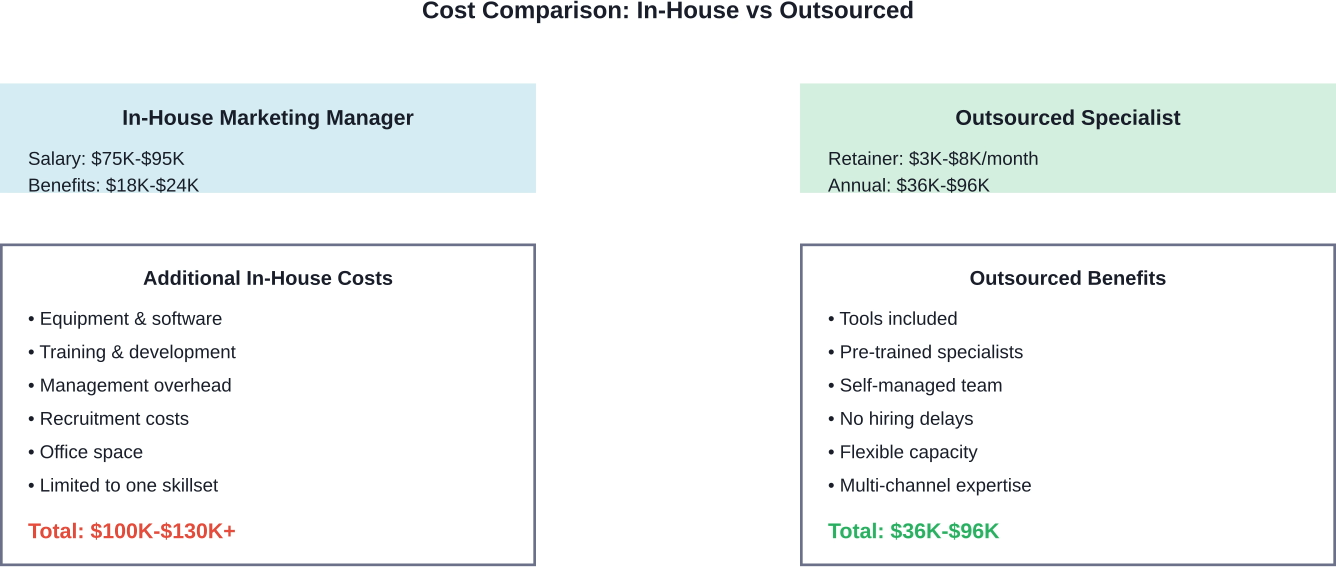
The full cost of an internal marketer includes salary, benefits, equipment, software licenses, training, and management overhead. According to American Marketing Association data, transportation and retail/wholesale companies expect marketing team growth of 14.5% and 13.3% respectively, while other sectors project growth between 6-9.4% annually.
Outsourcing converts these fixed costs to variable expenses. Companies pay for actual work delivered rather than salaries regardless of workload. The math works especially well for specialized roles that aren't needed full-time.
Reduced Risk and Flexibility
Hiring decisions carry risk. New employees might not work out. Market conditions change. Growth projections miss targets.
Outsourced relationships offer more flexibility. Contracts can scale up during busy periods and down during slower quarters. If a partner isn't delivering results, companies can switch providers without the complexity of terminating employees.
What B2B Marketing Functions to Outsource
Not all marketing activities make equal sense to outsource. Strategic decisions about positioning, messaging, and go-to-market approach typically stay in-house. Execution-heavy tasks and specialized technical work often benefit from external expertise.
Lead Generation and Appointment Setting
Outbound prospecting requires dedicated capacity. Research shows professional teams consistently outperform generalists at reaching decision-makers and booking qualified meetings.
Many growing companies outsource this function first. External teams handle list building, email sequencing, phone outreach, and meeting scheduling while internal reps focus on closing deals.
Content Creation and SEO
Producing consistent, high-quality content demands significant time. Blog posts, whitepapers, case studies, and web copy all require research, writing, editing, and optimization.
Specialized content agencies and freelancers bring subject matter expertise across industries. They understand SEO best practices, buyer journey mapping, and conversion-focused messaging that internal generalists often lack.
Paid Advertising Management
Platform complexity makes paid media a natural outsourcing candidate. Google Ads, LinkedIn Ads, and programmatic display require constant optimization, A/B testing, and budget management.
Agencies managing multiple client accounts develop pattern recognition across industries. They spot performance trends faster and know which tactics translate across different markets.
Marketing Operations and Technology
CRM configuration, marketing automation setup, and integration work demand technical skills most marketing teams don't have. Salesforce administrators, HubSpot specialists, and Marketo experts command premium rates for good reason.
Outsourcing this function makes sense for companies without dedicated operations staff. External specialists can implement systems correctly from the start, avoiding costly mistakes and rework.
When to Outsource B2B Marketing
Timing matters. Outsourcing too early can waste budget on tactics before positioning is clear. Waiting too long leaves money on the table as competitors pull ahead.
Signal 1: Internal Team Capacity Maxed Out
When existing staff can't execute planned initiatives, outsourcing fills the gap. The team has ideas but no bandwidth. Campaigns get delayed. Content calendars slip. Projects pile up.
This scenario represents the most common outsourcing trigger. Rather than hiring full-time, companies bring in external capacity to clear the backlog and maintain momentum.
Signal 2: Missing Specialized Skills
Some capabilities require expertise most companies can't justify hiring for. Conversion rate optimization specialists, marketing attribution analysts, and programmatic advertising experts fall into this category.
When a specific skill gap blocks progress, outsourcing provides immediate access without long hiring cycles or training investments.
Signal 3: Scaling Faster Than Hiring Allows
According to Forrester research, B2B marketing decision-makers consistently rank addressing changing buyer behaviors among their top priorities. Companies entering new markets, launching new products, or responding to competitive threats need execution speed that internal hiring can't match.
Outsourced teams ramp faster. They bring proven playbooks and established processes that accelerate results.
Signal 4: Budget Under $100K Annually
For companies with marketing budgets under $100,000 annually, working with specialized freelancers or boutique agencies focused on specific initiatives proves more effective than attempting to build internal teams. The budget doesn't support full-time hires across multiple specialties.
Outsourcing Models: Finding the Right Fit
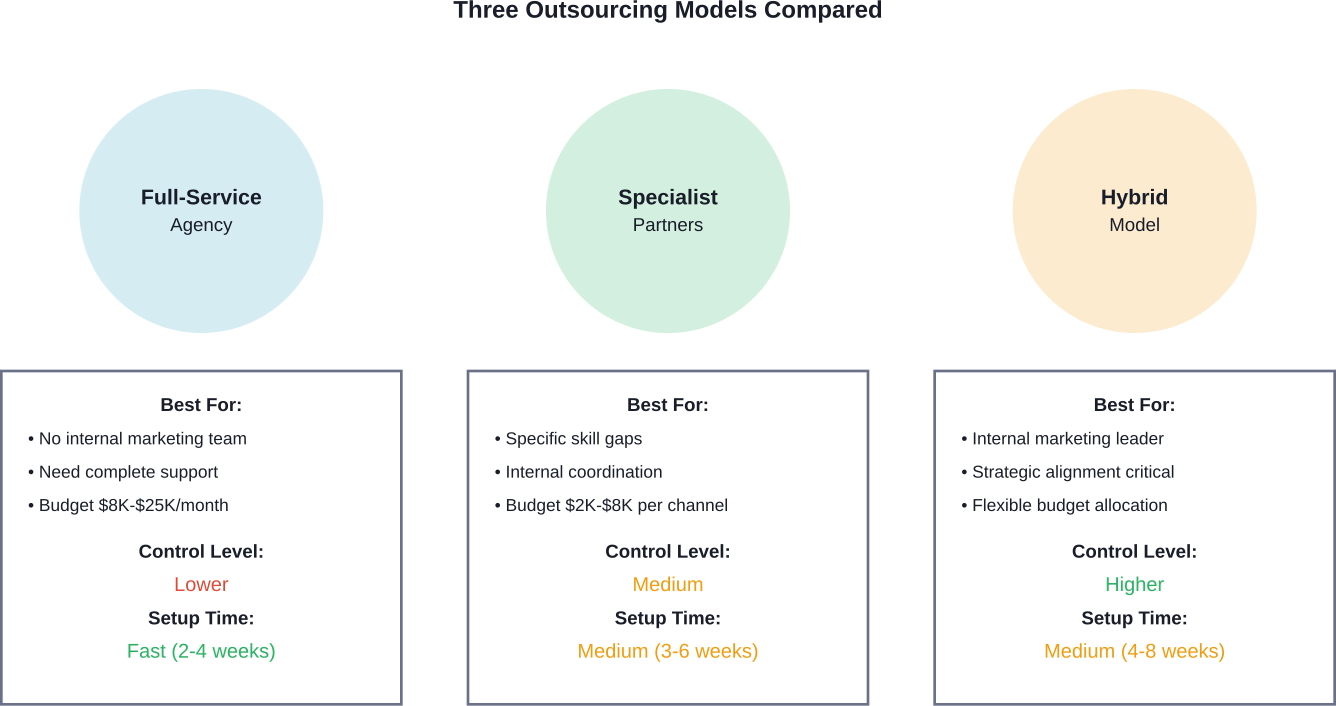
The relationship structure significantly impacts results. Three primary models dominate B2B marketing outsourcing, each with distinct advantages.
Full-Service Agency Partnership
The agency becomes the entire external marketing department. They handle strategy, execution, and reporting across all channels. One point of contact manages the relationship.
This model works for companies without existing marketing leadership who need comprehensive support. Typical retainers range from $8K to $25K monthly depending on scope.
The downside? Less control over day-to-day decisions and potential misalignment if the agency doesn't deeply understand the business.
Specialist Partners for Specific Channels
Companies maintain internal strategy and coordination but outsource execution in specific areas. One agency handles paid media. Another manages content. A freelancer runs email campaigns.
This approach preserves internal control while accessing specialized expertise. It requires someone internally to coordinate multiple vendors and ensure integrated execution.
Cost varies by channel but typically ranges from $2K to $8K monthly per specialist.
Hybrid Model with Internal Leadership
An internal marketing leader owns strategy and vendor management while outsourced teams handle execution. This model combines the benefits of both approaches: strategic alignment from internal leadership plus specialized execution from external experts.
Many successful B2B companies land here. They hire a VP or Director of Marketing to lead strategy, then build a network of trusted outsourced partners for execution.
How to Choose the Right Marketing Outsourcing Partner
Partner selection determines success more than any other factor. The wrong agency wastes budget and delays results. The right partner becomes a force multiplier.
Evaluate Industry Experience
B2B marketing varies dramatically across industries. Enterprise software sales cycles look nothing like manufacturing equipment purchases. Healthcare marketing faces regulatory constraints that SaaS companies never encounter.
Look for partners with proven experience in similar markets. Ask for case studies from comparable companies. Request references from clients in related industries.
Assess Technical Capabilities
Many agencies excel at creative work but lack technical depth. Others understand technology but produce mediocre content. The best partners combine both.
For companies with complex tech stacks, verify that potential partners have hands-on experience with existing systems. Check certifications for platforms like Salesforce, HubSpot, or Marketo if those tools matter.
Review Process and Communication
Outsourced relationships succeed or fail based on communication quality. Partners need structured processes for collaboration, reporting, and feedback.
During evaluation, pay attention to response times, meeting preparation, and how thoroughly partners answer questions. These patterns predict future working relationships.
Understand Pricing Structure
Transparent pricing builds trust. Be wary of agencies that won't provide clear rate cards or scope documents.
Compare total costs including platform fees, ad spend, content licensing, and other potential add-ons. The lowest retainer isn't always the best value if hidden costs pile up later.
Start with a Test Project
Before committing to long-term relationships, run a contained test project. A 30-60 day trial reveals how the partner works, communicates, and delivers.
Choose a project meaningful enough to evaluate quality but limited enough to minimize risk. A single campaign launch or content sprint works well for this purpose.
Best Practices for Managing Outsourced Marketing
Successful outsourcing requires active management. Companies that treat external partners like vendors get vendor-quality work. Those that treat them like team members get superior results.
Establish Clear KPIs and Reporting Cadence
Define success metrics upfront. What specific outcomes matter? Lead volume? Meeting bookings? Pipeline generated? Content pieces published?
Set reporting frequency that matches the engagement type. Monthly reviews work for strategic initiatives. Weekly check-ins make sense for active campaigns. Daily dashboards help monitor paid advertising.
Share Context Generously
External partners can't read minds. They need context about product roadmaps, competitive dynamics, customer feedback, and internal priorities.
The more information shared, the better partners can align work with business objectives. Regular briefings, shared documentation, and access to internal tools all improve outcomes.
Maintain Consistent Communication
Establish regular touchpoints and stick to them. Weekly standups keep everyone aligned. Monthly strategy sessions ensure work stays connected to broader goals.
Respond to partner questions quickly. Delayed feedback creates bottlenecks that slow progress and frustrate teams on both sides.
Iterate Based on Performance Data
Treat outsourced relationships as ongoing optimizations rather than set-and-forget arrangements. Review performance data together. Identify what's working and what isn't. Adjust tactics based on results.
The best partnerships involve continuous improvement cycles where both parties actively problem-solve together.

Build a Stable B2B Marketing Team Not Starting From Scratch
Outsourcing B2B marketing often breaks down at the execution level. Plans look fine, but teams change, context gets lost, and results become inconsistent. NeoWork approaches outsourcing differently by focusing on long-term team fit instead of quick placements. With a 91% retention rate and a 3.2% acceptance rate, the people you work with tend to stay and actually learn your business over time.
That matters more than it sounds. Instead of re-explaining your ICP, messaging, or funnel every few months, you build continuity. Whether it’s campaign execution, lead generation, or ongoing optimization, the same team keeps improving what’s already in place. If you need B2B marketing support that doesn’t reset every quarter, contact NeoWork to start.
Common Outsourcing Mistakes to Avoid
Even well-intentioned outsourcing efforts hit predictable pitfalls. Awareness helps companies sidestep these traps.
Outsourcing Strategy Along with Execution
External partners excel at execution but shouldn't own core strategic decisions. Companies that abdicate strategy to agencies lose control of their market positioning.
Keep messaging, positioning, and go-to-market strategy internal. Outsource the tactical work that brings strategy to life.
Insufficient Onboarding
New partners need time to understand the business, products, customers, and competitive landscape. Rushing into execution before proper onboarding leads to misaligned work that misses the mark.
Invest 2-4 weeks in thorough onboarding. Share customer research, competitive analysis, messaging documents, and performance history.
Unclear Ownership and Accountability
When multiple parties share responsibility, accountability dilutes. Define who owns what clearly from the start.
Document decision rights, approval processes, and escalation paths. Ambiguity creates friction that slows progress.
Lack of Integration with Internal Teams
Treating external partners as separate from internal staff creates silos. Marketing works best when everyone—internal and external—collaborates as one team.
Include outsourced partners in relevant meetings. Give them access to communication channels. Introduce them to other departments they'll interact with.
Measuring ROI on Outsourced Marketing
Tracking return on investment proves whether outsourcing delivers value. The metrics that matter depend on what's being outsourced.
Lead Generation Metrics
For outsourced lead generation, track cost per lead, lead-to-opportunity conversion rate, and ultimately cost per closed deal. Compare these to internal benchmarks or industry standards.
Professional outsourced teams often achieve a 30% contact rate with decision-makers, with approximately 14.5% of outbound calls leading to meaningful conversations.
Content Production Metrics
Measure content output volume, quality scores, engagement metrics, and SEO performance. Track cost per piece against internal production costs.
Quality matters more than quantity. A single high-performing piece that generates leads beats ten mediocre posts that go unread.
Campaign Performance Metrics
For campaign management, evaluate standard digital marketing KPIs: click-through rates, conversion rates, cost per acquisition, and overall ROI.
Compare performance to internal baselines or previous campaigns to quantify improvement.
Time Savings Metrics
Don't overlook opportunity cost. If outsourcing frees internal staff to focus on higher-value activities, that creates real financial impact even if direct marketing metrics stay flat.
Calculate time saved and multiply by internal hourly rates to quantify this benefit.
Taking the Next Step with Marketing Outsourcing
B2B marketing outsourcing isn't about admitting weakness or cutting corners. It's about strategic resource allocation—deploying a budget where it generates maximum impact.
The companies that succeed with outsourcing approach it deliberately. They identify specific gaps or capacity constraints. They evaluate partners carefully against clear criteria. They establish structured processes for collaboration and measurement. And they treat external specialists as genuine team members rather than arms-length vendors.
Start small if uncertainty exists. Run a test project with one specialist in a single channel. Measure results rigorously. Learn what works in the specific context before expanding scope.
The alternative—trying to build internal capabilities across every marketing discipline—stretches budgets thin and slows progress. In markets where buyer behaviors shift constantly, speed and specialization matter more than ever.
Done right, outsourced marketing doesn't replace internal teams. It multiplies their effectiveness by adding specialized expertise exactly where needed most.
Frequently Asked Questions
Topics
B2B Marketing Outsourcing Guide: 2026 Strategies & Tips

B2B marketing outsourcing involves partnering with external agencies or specialists to handle specific marketing functions like lead generation, content creation, campaign management, or full-service marketing operations. This guide covers when to outsource, what services to delegate, how to choose the right partner, and best practices for maximizing ROI while maintaining quality control.
Managing every aspect of B2B marketing in-house isn't realistic for most growing companies. Between lead generation, content creation, email campaigns, SEO, paid advertising, and analytics, internal teams get stretched thin.
That's where outsourced marketing comes in.
But here's the thing—outsourcing isn't a one-size-fits-all solution. Some companies thrive with full-service partnerships. Others need specialized help for specific channels. And many benefit from a hybrid model that combines internal strategy with external execution.
According to Forrester research, B2B marketing decision-makers consistently rank addressing changing buyer behaviors among their top priorities. This shift has created demand for specialized expertise that many internal teams lack the bandwidth to develop.
This guide breaks down everything needed to make smart outsourcing decisions: what to delegate, when to bring in external help, how to choose partners, and how to structure relationships for maximum impact.
What Is B2B Marketing Outsourcing?
B2B marketing outsourcing means delegating specific marketing functions or entire marketing operations to external specialists, agencies, or service providers. Rather than building internal capabilities for every channel and tactic, companies tap into specialized expertise on demand.
The scope varies dramatically. Some businesses outsource narrow functions like paid search management or graphic design. Others hand off entire campaigns from strategy through execution. A growing number partner with full-service agencies that essentially function as an external marketing department.
Common outsourced marketing activities include lead generation, content creation, email marketing, SEO optimization, paid advertising management, marketing automation setup, social media management, and campaign analytics.
How Outsourced Marketing Relationships Work
Most outsourced relationships fall into three categories:
- Project-based engagements focus on specific deliverables with defined timelines. A company might hire an agency to redesign their website, create a product launch campaign, or build out their email automation sequences.
- Retainer arrangements provide ongoing support at a predictable monthly cost. The agency handles agreed-upon activities each month—content production, campaign management, lead nurturing—with regular reporting and strategy sessions.
- Performance-based models tie compensation to results. The provider earns based on leads generated, meetings booked, or pipeline created. Professional outsourced teams often achieve a 30% contact rate with decision-makers, with approximately 14.5% of outbound calls leading to meaningful conversations.
Benefits of Outsourcing B2B Marketing
The advantages extend beyond simply offloading work. When structured properly, outsourced marketing delivers several strategic benefits that directly impact growth.
Access to Specialized Expertise
Marketing channels have become increasingly complex. SEO algorithms change constantly. Paid advertising platforms add new features monthly. Marketing automation tools offer hundreds of configuration options.
Building internal expertise across all these areas requires significant time and budget. Outsourced specialists live and breathe their specific channels. They've run campaigns across dozens of industries and know what works.
This specialization matters especially for technical areas like conversion rate optimization, marketing attribution modeling, and programmatic advertising.
Faster Time to Results
Hiring and training internal marketing teams takes months. Job searches drag on. Onboarding requires weeks. New hires need time to understand the product, market, and messaging.
Outsourced teams can start delivering within days or weeks. They bring proven processes, established workflows, and immediate capacity. For companies under time pressure to generate pipeline, this speed advantage often justifies the investment.
Cost Efficiency at Scale
The full cost of an internal marketer includes salary, benefits, equipment, software licenses, training, and management overhead. According to American Marketing Association data, transportation and retail/wholesale companies expect marketing team growth of 14.5% and 13.3% respectively, while other sectors project growth between 6-9.4% annually.
Outsourcing converts these fixed costs to variable expenses. Companies pay for actual work delivered rather than salaries regardless of workload. The math works especially well for specialized roles that aren't needed full-time.
Reduced Risk and Flexibility
Hiring decisions carry risk. New employees might not work out. Market conditions change. Growth projections miss targets.
Outsourced relationships offer more flexibility. Contracts can scale up during busy periods and down during slower quarters. If a partner isn't delivering results, companies can switch providers without the complexity of terminating employees.
What B2B Marketing Functions to Outsource
Not all marketing activities make equal sense to outsource. Strategic decisions about positioning, messaging, and go-to-market approach typically stay in-house. Execution-heavy tasks and specialized technical work often benefit from external expertise.
Lead Generation and Appointment Setting
Outbound prospecting requires dedicated capacity. Research shows professional teams consistently outperform generalists at reaching decision-makers and booking qualified meetings.
Many growing companies outsource this function first. External teams handle list building, email sequencing, phone outreach, and meeting scheduling while internal reps focus on closing deals.
Content Creation and SEO
Producing consistent, high-quality content demands significant time. Blog posts, whitepapers, case studies, and web copy all require research, writing, editing, and optimization.
Specialized content agencies and freelancers bring subject matter expertise across industries. They understand SEO best practices, buyer journey mapping, and conversion-focused messaging that internal generalists often lack.
Paid Advertising Management
Platform complexity makes paid media a natural outsourcing candidate. Google Ads, LinkedIn Ads, and programmatic display require constant optimization, A/B testing, and budget management.
Agencies managing multiple client accounts develop pattern recognition across industries. They spot performance trends faster and know which tactics translate across different markets.
Marketing Operations and Technology
CRM configuration, marketing automation setup, and integration work demand technical skills most marketing teams don't have. Salesforce administrators, HubSpot specialists, and Marketo experts command premium rates for good reason.
Outsourcing this function makes sense for companies without dedicated operations staff. External specialists can implement systems correctly from the start, avoiding costly mistakes and rework.
When to Outsource B2B Marketing
Timing matters. Outsourcing too early can waste budget on tactics before positioning is clear. Waiting too long leaves money on the table as competitors pull ahead.
Signal 1: Internal Team Capacity Maxed Out
When existing staff can't execute planned initiatives, outsourcing fills the gap. The team has ideas but no bandwidth. Campaigns get delayed. Content calendars slip. Projects pile up.
This scenario represents the most common outsourcing trigger. Rather than hiring full-time, companies bring in external capacity to clear the backlog and maintain momentum.
Signal 2: Missing Specialized Skills
Some capabilities require expertise most companies can't justify hiring for. Conversion rate optimization specialists, marketing attribution analysts, and programmatic advertising experts fall into this category.
When a specific skill gap blocks progress, outsourcing provides immediate access without long hiring cycles or training investments.
Signal 3: Scaling Faster Than Hiring Allows
According to Forrester research, B2B marketing decision-makers consistently rank addressing changing buyer behaviors among their top priorities. Companies entering new markets, launching new products, or responding to competitive threats need execution speed that internal hiring can't match.
Outsourced teams ramp faster. They bring proven playbooks and established processes that accelerate results.
Signal 4: Budget Under $100K Annually
For companies with marketing budgets under $100,000 annually, working with specialized freelancers or boutique agencies focused on specific initiatives proves more effective than attempting to build internal teams. The budget doesn't support full-time hires across multiple specialties.
Outsourcing Models: Finding the Right Fit
The relationship structure significantly impacts results. Three primary models dominate B2B marketing outsourcing, each with distinct advantages.
Full-Service Agency Partnership
The agency becomes the entire external marketing department. They handle strategy, execution, and reporting across all channels. One point of contact manages the relationship.
This model works for companies without existing marketing leadership who need comprehensive support. Typical retainers range from $8K to $25K monthly depending on scope.
The downside? Less control over day-to-day decisions and potential misalignment if the agency doesn't deeply understand the business.
Specialist Partners for Specific Channels
Companies maintain internal strategy and coordination but outsource execution in specific areas. One agency handles paid media. Another manages content. A freelancer runs email campaigns.
This approach preserves internal control while accessing specialized expertise. It requires someone internally to coordinate multiple vendors and ensure integrated execution.
Cost varies by channel but typically ranges from $2K to $8K monthly per specialist.
Hybrid Model with Internal Leadership
An internal marketing leader owns strategy and vendor management while outsourced teams handle execution. This model combines the benefits of both approaches: strategic alignment from internal leadership plus specialized execution from external experts.
Many successful B2B companies land here. They hire a VP or Director of Marketing to lead strategy, then build a network of trusted outsourced partners for execution.
How to Choose the Right Marketing Outsourcing Partner
Partner selection determines success more than any other factor. The wrong agency wastes budget and delays results. The right partner becomes a force multiplier.
Evaluate Industry Experience
B2B marketing varies dramatically across industries. Enterprise software sales cycles look nothing like manufacturing equipment purchases. Healthcare marketing faces regulatory constraints that SaaS companies never encounter.
Look for partners with proven experience in similar markets. Ask for case studies from comparable companies. Request references from clients in related industries.
Assess Technical Capabilities
Many agencies excel at creative work but lack technical depth. Others understand technology but produce mediocre content. The best partners combine both.
For companies with complex tech stacks, verify that potential partners have hands-on experience with existing systems. Check certifications for platforms like Salesforce, HubSpot, or Marketo if those tools matter.
Review Process and Communication
Outsourced relationships succeed or fail based on communication quality. Partners need structured processes for collaboration, reporting, and feedback.
During evaluation, pay attention to response times, meeting preparation, and how thoroughly partners answer questions. These patterns predict future working relationships.
Understand Pricing Structure
Transparent pricing builds trust. Be wary of agencies that won't provide clear rate cards or scope documents.
Compare total costs including platform fees, ad spend, content licensing, and other potential add-ons. The lowest retainer isn't always the best value if hidden costs pile up later.
Start with a Test Project
Before committing to long-term relationships, run a contained test project. A 30-60 day trial reveals how the partner works, communicates, and delivers.
Choose a project meaningful enough to evaluate quality but limited enough to minimize risk. A single campaign launch or content sprint works well for this purpose.
Best Practices for Managing Outsourced Marketing
Successful outsourcing requires active management. Companies that treat external partners like vendors get vendor-quality work. Those that treat them like team members get superior results.
Establish Clear KPIs and Reporting Cadence
Define success metrics upfront. What specific outcomes matter? Lead volume? Meeting bookings? Pipeline generated? Content pieces published?
Set reporting frequency that matches the engagement type. Monthly reviews work for strategic initiatives. Weekly check-ins make sense for active campaigns. Daily dashboards help monitor paid advertising.
Share Context Generously
External partners can't read minds. They need context about product roadmaps, competitive dynamics, customer feedback, and internal priorities.
The more information shared, the better partners can align work with business objectives. Regular briefings, shared documentation, and access to internal tools all improve outcomes.
Maintain Consistent Communication
Establish regular touchpoints and stick to them. Weekly standups keep everyone aligned. Monthly strategy sessions ensure work stays connected to broader goals.
Respond to partner questions quickly. Delayed feedback creates bottlenecks that slow progress and frustrate teams on both sides.
Iterate Based on Performance Data
Treat outsourced relationships as ongoing optimizations rather than set-and-forget arrangements. Review performance data together. Identify what's working and what isn't. Adjust tactics based on results.
The best partnerships involve continuous improvement cycles where both parties actively problem-solve together.
Build a Stable B2B Marketing Team Not Starting From Scratch
Outsourcing B2B marketing often breaks down at the execution level. Plans look fine, but teams change, context gets lost, and results become inconsistent. NeoWork approaches outsourcing differently by focusing on long-term team fit instead of quick placements. With a 91% retention rate and a 3.2% acceptance rate, the people you work with tend to stay and actually learn your business over time.
That matters more than it sounds. Instead of re-explaining your ICP, messaging, or funnel every few months, you build continuity. Whether it’s campaign execution, lead generation, or ongoing optimization, the same team keeps improving what’s already in place. If you need B2B marketing support that doesn’t reset every quarter, contact NeoWork to start.
Common Outsourcing Mistakes to Avoid
Even well-intentioned outsourcing efforts hit predictable pitfalls. Awareness helps companies sidestep these traps.
Outsourcing Strategy Along with Execution
External partners excel at execution but shouldn't own core strategic decisions. Companies that abdicate strategy to agencies lose control of their market positioning.
Keep messaging, positioning, and go-to-market strategy internal. Outsource the tactical work that brings strategy to life.
Insufficient Onboarding
New partners need time to understand the business, products, customers, and competitive landscape. Rushing into execution before proper onboarding leads to misaligned work that misses the mark.
Invest 2-4 weeks in thorough onboarding. Share customer research, competitive analysis, messaging documents, and performance history.
Unclear Ownership and Accountability
When multiple parties share responsibility, accountability dilutes. Define who owns what clearly from the start.
Document decision rights, approval processes, and escalation paths. Ambiguity creates friction that slows progress.
Lack of Integration with Internal Teams
Treating external partners as separate from internal staff creates silos. Marketing works best when everyone—internal and external—collaborates as one team.
Include outsourced partners in relevant meetings. Give them access to communication channels. Introduce them to other departments they'll interact with.
Measuring ROI on Outsourced Marketing
Tracking return on investment proves whether outsourcing delivers value. The metrics that matter depend on what's being outsourced.
Lead Generation Metrics
For outsourced lead generation, track cost per lead, lead-to-opportunity conversion rate, and ultimately cost per closed deal. Compare these to internal benchmarks or industry standards.
Professional outsourced teams often achieve a 30% contact rate with decision-makers, with approximately 14.5% of outbound calls leading to meaningful conversations.
Content Production Metrics
Measure content output volume, quality scores, engagement metrics, and SEO performance. Track cost per piece against internal production costs.
Quality matters more than quantity. A single high-performing piece that generates leads beats ten mediocre posts that go unread.
Campaign Performance Metrics
For campaign management, evaluate standard digital marketing KPIs: click-through rates, conversion rates, cost per acquisition, and overall ROI.
Compare performance to internal baselines or previous campaigns to quantify improvement.
Time Savings Metrics
Don't overlook opportunity cost. If outsourcing frees internal staff to focus on higher-value activities, that creates real financial impact even if direct marketing metrics stay flat.
Calculate time saved and multiply by internal hourly rates to quantify this benefit.
Taking the Next Step with Marketing Outsourcing
B2B marketing outsourcing isn't about admitting weakness or cutting corners. It's about strategic resource allocation—deploying a budget where it generates maximum impact.
The companies that succeed with outsourcing approach it deliberately. They identify specific gaps or capacity constraints. They evaluate partners carefully against clear criteria. They establish structured processes for collaboration and measurement. And they treat external specialists as genuine team members rather than arms-length vendors.
Start small if uncertainty exists. Run a test project with one specialist in a single channel. Measure results rigorously. Learn what works in the specific context before expanding scope.
The alternative—trying to build internal capabilities across every marketing discipline—stretches budgets thin and slows progress. In markets where buyer behaviors shift constantly, speed and specialization matter more than ever.
Done right, outsourced marketing doesn't replace internal teams. It multiplies their effectiveness by adding specialized expertise exactly where needed most.
Frequently Asked Questions
Topics
Related Blogs
Related Podcasts


.webp)

.webp)
.webp)



