

.avif)
.avif)

Marketing Strategy Outsourcing Guide for 2026


.svg)

Marketing strategy outsourcing involves partnering with external agencies or specialists to execute marketing functions that would traditionally be handled in-house. This comprehensive guide covers when to outsource, how to choose the right provider, what services to delegate, and strategies for maximizing ROI while avoiding common pitfalls that can derail outsourcing relationships.
Professional services marketing has evolved dramatically. What once relied on personal relationships and referrals now demands sophisticated digital strategies, content creation, data analytics, and multi-channel campaigns.
Many businesses face a common dilemma: internal teams stretched thin, struggling to keep pace with industry shifts. According to recent studies by Clutch and other business analysts, approximately over 80% of small businesses plan to outsource or already outsource at least one business process.
The challenge isn't just about workload. It's about accessing specialized expertise without the overhead of full-time hires.
But here's the thing—outsourcing marketing strategy isn't a simple handoff. Done right, it accelerates growth and delivers measurable results. Done poorly, it drains budgets and damages brand reputation.
This guide walks through the complete outsourcing process: from deciding what to delegate, to selecting the right partner, to managing the relationship for maximum impact.
What Marketing Strategy Outsourcing Actually Means
Marketing strategy outsourcing occurs when organizations obtain marketing services from external providers rather than handling them internally. This arrangement can range from tactical execution to comprehensive strategic planning.
The scope varies significantly. Some businesses outsource specific functions like content creation or paid advertising. Others hand over entire marketing departments to dedicated agencies.
According to the American Marketing Association, market analysis gives clarity to cut through noise and make moves backed by real insights. Market analysis gives clarity to cut through noise and make moves backed by real insights.
Outsourcing addresses this need by bringing in specialists who conduct market research, analyze competitors, and develop data-driven strategies that internal teams may lack the bandwidth or expertise to execute.
The Spectrum of Outsourcing Arrangements
Outsourcing isn't one-size-fits-all. Different businesses need different arrangements.
Project-based outsourcing tackles specific initiatives—launching a campaign, redesigning a website, or conducting market research. Once the project concludes, the engagement ends.
Retainer arrangements establish ongoing relationships. Agencies provide consistent support across multiple channels and initiatives. This model suits businesses needing sustained marketing presence.
Fractional marketing represents a hybrid approach. Senior strategists work part-time, providing executive-level guidance without full-time costs. This model has gained traction among mid-sized companies seeking strategic direction.
When Outsourcing Makes Strategic Sense
Not every business should outsource marketing strategy. Several indicators suggest when external partners deliver more value than internal teams.
Resource constraints top the list. According to research cited by marketing agencies, 56% of SMBs say they have an hour or less each day to spend on marketing. Teams can't execute sophisticated strategies when time is this limited.
Skill gaps present another clear signal. Digital marketing demands expertise in SEO, paid advertising, content marketing, analytics, social media, and email automation. Building an internal team with this breadth of skills requires significant investment.
Scaling challenges often trigger outsourcing decisions. Growth phases demand marketing intensity that exceeds internal capacity. Hiring and training new team members takes months—time that growing businesses can't afford to lose.
The U.S. Small Business Administration notes that outsourcing allows businesses to trust important tasks to professionals without growing full-time teams significantly.
Cost Considerations That Drive Decisions
Financial analysis frequently favors outsourcing, though the math depends on specific circumstances.
According to 2024 marketing industry data, the average internal marketing team member costs approximately $68,000 annually. A four-person team reaches $272,000 in salary expenses alone—before benefits, equipment, software subscriptions, and training. In 2026, these figures can reach $80,000-$100,000 for a member salary and $400,000 + for a team salary.
Outsourced marketing arrangements typically cost less for equivalent expertise. Agencies spread overhead across multiple clients, creating economies of scale that individual businesses can't achieve.
Real talk: the cost advantage isn't universal. High-touch, fully-managed agency relationships can exceed internal costs for some organizations. The financial case depends on scope, scale, and required expertise level.
Core Marketing Functions Suited for Outsourcing
Certain marketing activities lend themselves better to outsourcing than others. Understanding these distinctions helps businesses make smart delegation decisions.
The U.S. Small Business Administration identifies several business functions that can be easily outsourced, with marketing ranking among the most common.
Content Marketing and Creation
Content production demands consistent output across multiple formats—blog posts, whitepapers, videos, infographics, podcasts, and social media updates. Maintaining this volume internally requires substantial resources.
Specialized content agencies employ writers, designers, videographers, and editors who produce high-quality materials efficiently. They bring fresh perspectives that internal teams, sometimes too close to products, may miss.
Content marketing is an important way that professional services firms today keep up with the pace of change in the marketplace. Outsourced teams can scale content production to meet demand without permanent headcount increases.
Search Engine Optimization
SEO combines technical website optimization, keyword research, content strategy, and link building. Each discipline requires specialized knowledge that evolves constantly as search algorithms change.
Most businesses lack internal SEO expertise at the depth needed to compete effectively. SEO agencies invest in tools, training, and testing that individual companies can't justify.
Technical SEO particularly benefits from outsourcing. Site architecture, page speed optimization, structured data implementation, and crawl error resolution require specialized skills that overlap with web development.
Paid Advertising Management
Digital advertising platforms—Google Ads, Facebook Ads, LinkedIn, programmatic display—each have complex interfaces, bidding strategies, and optimization requirements.
According to research, ad fraud represents a significant industry challenge, with projections suggesting it could exceed $50 billion by 2025. Machine learning helps strengthen detection systems, but implementing these protections requires expertise.
Agencies manage substantial advertising budgets across multiple clients. This volume gives them data advantages and platform relationships that improve performance.
Campaign management demands daily monitoring and adjustment. Outsourced teams provide this attention without requiring internal staff to constantly monitor dashboards.
Marketing Technology Management
The global IT outsourcing market size was valued at approximately $500-600 billion in recent years and is projected to grow further by 2026.
Marketing technology stacks now include CRM systems, marketing automation platforms, analytics tools, content management systems, and numerous specialized applications. Implementing and maintaining these systems requires technical expertise.
Outsourced IT providers or marketing agencies with strong technical capabilities can handle setup, integration, maintenance, and troubleshooting more efficiently than most internal teams.
Selecting the Right Outsourcing Partner
Provider selection determines outsourcing success more than any other factor. The wrong partner wastes money and damages marketing performance. The right one accelerates growth.
Several criteria separate effective providers from mediocre ones.
Industry Experience and Specialization
Agencies with deep experience in specific industries bring immediate value. They understand market dynamics, competitive landscapes, regulatory requirements, and audience behaviors without extensive onboarding.
But here's where it gets interesting. Some businesses benefit more from generalist agencies that bring cross-industry insights and avoid stale approaches that plague industry specialists.
The decision depends on market complexity. Highly regulated industries—healthcare, finance, legal services—typically require specialized providers familiar with compliance requirements. Less regulated markets may gain more from diverse perspectives.
Service Scope and Capabilities
Provider capabilities must match required services. Some agencies offer comprehensive solutions spanning strategy, creative, media, and analytics. Others specialize in narrow functions.
According to source material, working with specialized freelancers or boutique agencies is effective for companies with budgets under $100,000 annually that focus on specific initiatives.
Larger organizations with broader needs often prefer full-service agencies that coordinate multiple disciplines. This integration eliminates the coordination burden of managing multiple specialized vendors.
Communication Style and Responsiveness
Communication patterns reveal how partnerships will function. During vetting, agencies that respond slowly, miss meetings, or provide vague answers will likely continue these behaviors.
Cultural fit matters more than many businesses initially recognize. Agencies with incompatible work styles—overly formal vs. casual, slow and methodical vs. fast and iterative—create friction that undermines results.
Request references and speak with current clients. Ask specifically about communication quality, meeting frequency, reporting transparency, and responsiveness to concerns.
Pricing Models and Contract Terms
Agencies structure fees differently. Common models include project-based pricing, monthly retainers, hourly rates, and performance-based compensation.
Monthly retainers provide predictable costs and ongoing support. They work well for sustained marketing needs. Project-based pricing suits defined initiatives with clear scope and endpoints.
Performance-based models tie compensation to results—leads generated, revenue produced, rankings achieved. These arrangements align incentives but require clear measurement systems and realistic expectations about what agencies can control.
Contract terms should address scope changes, termination conditions, intellectual property ownership, confidentiality, and performance expectations. Vague contracts create disputes.
The Outsourcing vs. In-House Decision Framework
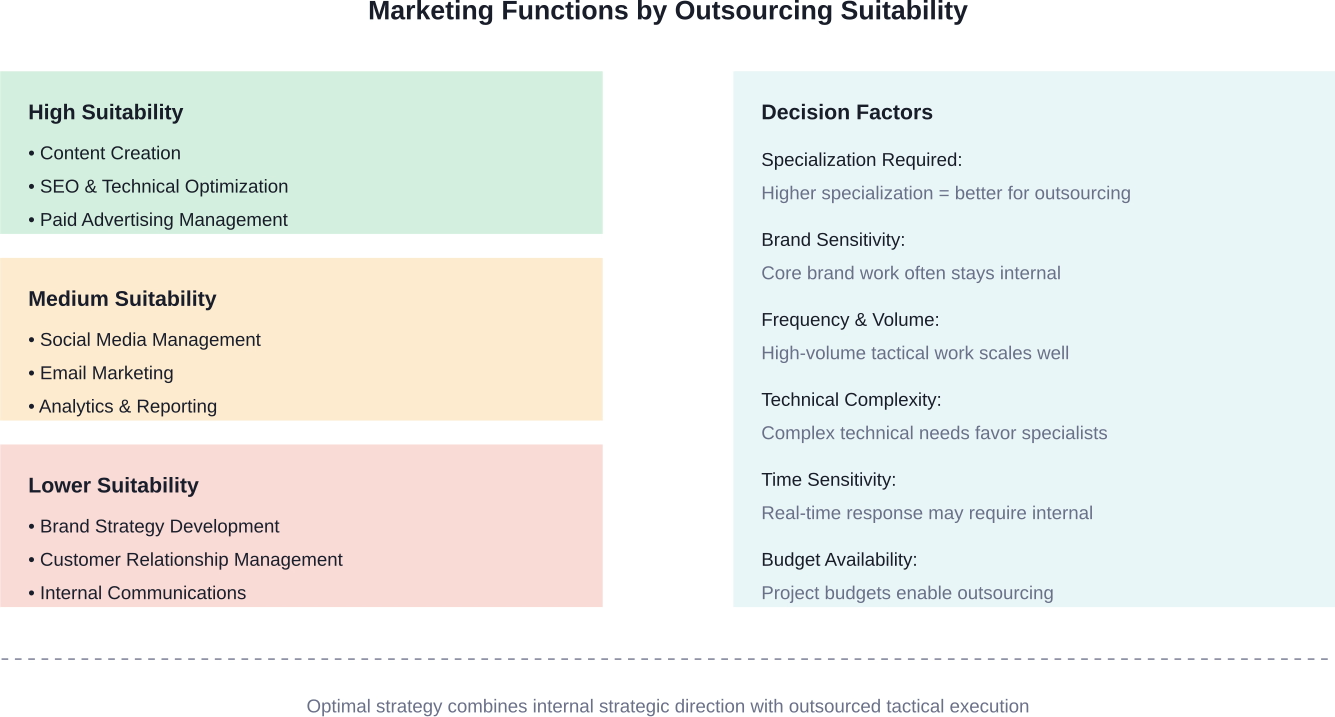
Many businesses wrestle with what to keep internal and what to delegate. The decision shouldn't be binary—most successful approaches combine both.
Strategic functions typically stay internal. Brand positioning, overall marketing strategy, budget allocation, and customer relationship management require deep company knowledge and alignment with business objectives.
Tactical execution often moves external. Content production, advertising management, SEO optimization, and technical implementation scale more efficiently through specialized providers.
The framework considers several variables:
- Brand sensitivity: Functions that directly shape brand perception often stay internal. Core positioning, messaging architecture, and voice/tone guidelines require intimate company knowledge.
- Required responsiveness: Real-time activities like customer service, crisis response, and community management benefit from internal ownership. Outsourced teams can't react with the same speed or context.
- Specialization level: Highly technical functions requiring specialized expertise—SEO, paid search, marketing automation—typically outsource well. The expertise investment doesn't justify internal development for most businesses.
- Volume and consistency: High-volume production activities like content creation, graphic design, and video production scale efficiently through external resources.
Managing Outsourced Marketing Relationships
Selecting a provider represents only the beginning. Relationship management determines whether partnerships deliver value or disappoint.
Establishing Clear Expectations
Successful engagements start with explicit agreements about scope, deliverables, timelines, and success metrics. Vague expectations guarantee disappointment.
Define specific deliverables. Rather than "improve SEO," specify "increase organic traffic by 25% within six months" or "achieve first-page rankings for 10 target keywords."
With real-time data, digital tools, and agile governance around decision-making, marketing organizations can move faster from insight to action. The same principle applies to outsourced relationships.
Document communication protocols. How often will teams meet? Who owns which decisions? What approval processes govern creative work, budget allocation, and strategic changes?
Providing Context and Access
External partners can't read minds. They need context about business objectives, competitive landscape, customer insights, and brand guidelines.
Comprehensive onboarding sets partnerships up for success. Share brand assets, customer personas, competitive intelligence, past campaign performance, and strategic priorities.
Grant necessary access to systems—analytics platforms, advertising accounts, content management systems, CRM databases. Restricted access handicaps performance.
Maintaining Collaborative Communication
Regular touchpoints keep partnerships aligned. Weekly or bi-weekly meetings maintain momentum and surface issues before they escalate.
But here's what many businesses miss: over-managing external partners creates inefficiency. Micromanagement negates the efficiency gains that motivated outsourcing.
Strike a balance between oversight and autonomy. Define clear boundaries about what requires approval versus what partners can execute independently.
Measuring Performance Rigorously
Objective measurement prevents relationships from drifting into unproductive patterns. Establish KPIs during engagement setup and track them consistently.
Marketing metrics should connect to business outcomes. Vanity metrics like social media followers or website traffic matter less than lead generation, customer acquisition cost, conversion rates, and revenue impact.
Quarterly business reviews formalize performance assessment. Review results against goals, discuss challenges, identify opportunities, and adjust strategy as needed.

Keep Marketing Strategy Grounded in One Consistent Team
Strategy work often loses direction when it’s split across too many inputs. One group handles research, another defines positioning, and execution ends up disconnected from the original plan. NeoWork structures this differently by building dedicated teams that stay involved beyond initial planning.
The same people support strategy, track how it plays out, and adjust based on real outcomes rather than restarting from scratch. With a 3.2% selection rate, the focus is on people who can think through long-term decisions, and a 91% retention rate helps keep that continuity in place as strategy evolves.
If you want a strategy to stay connected to execution instead of drifting over time, get in touch with NeoWork and walk through how they could support your marketing planning.
Common Outsourcing Pitfalls and How to Avoid Them
Even well-planned outsourcing relationships encounter challenges. Recognizing common failure patterns helps businesses avoid them.
Insufficient Internal Coordination
Many businesses outsource marketing without designating an internal point person to manage the relationship. This creates confusion about decision authority and communication channels.
Assign an internal marketing leader—even if part-time—to coordinate external partners. This person owns the relationship, provides strategic direction, and ensures alignment with business objectives.
Unrealistic Timeline Expectations
Marketing results require time. SEO improvements take months. Content marketing builds an audience gradually. Brand awareness develops through sustained effort.
Businesses that expect immediate results often terminate effective partnerships prematurely. Set realistic timelines based on industry benchmarks and channel characteristics.
Inadequate Budget Allocation
Marketing effectiveness correlates with resource investment. Underfunded programs rarely succeed regardless of execution quality.
According to the U.S. Small Business Administration guidance on market research, understanding market dynamics helps businesses allocate budgets appropriately. Competitive analysis reveals what investment levels drive results in specific markets.
Poor Cultural Fit
Work style mismatches create friction. Agencies that communicate differently, work at different paces, or hold different values than client organizations struggle to deliver satisfaction.
Evaluate cultural fit during selection. Observe how agencies interact during the sales process. Those patterns will persist through the engagement.
Scope Creep Without Budget Adjustment
Project scope inevitably evolves. New priorities emerge. Market conditions change. Strategies require adjustment.
Problems arise when scope expands without corresponding budget or timeline adjustments. Agencies stretched beyond contracted capacity deliver lower-quality work.
Address scope changes formally. Document additions, adjust timelines, and modify fees appropriately. Transparent scope management preserves relationship quality.
Maximizing ROI from Marketing Outsourcing
Strategic approaches amplify returns from outsourced marketing investments.
Start with High-Impact Activities
Don't outsource everything simultaneously. Begin with functions offering the highest potential impact relative to effort and cost.
For most businesses, this means starting with one of three areas: SEO (for long-term organic growth), paid advertising (for immediate lead generation), or content marketing (for thought leadership and authority building).
Master one function before expanding scope. Sequential implementation builds competence in managing external relationships and demonstrates value that justifies additional investment.
Leverage Agency Expertise Fully
Agencies bring experience across multiple clients and industries. This knowledge represents significant value beyond tactical execution.
Engage agencies in strategic discussions. Ask for their perspective on industry trends, competitive positioning, and emerging opportunities. Many businesses underutilize this strategic input.
Integrate External and Internal Teams
The best results come from collaboration between internal and external resources, not handoffs between them.
Include agency representatives in relevant meetings. Loop them into strategic discussions. Create shared communication channels. This integration produces better ideas and smoother execution.
Invest in Proper Tools and Data
Agencies need quality data and appropriate tools to perform effectively. Businesses that withhold access to analytics, customer data, or necessary software platforms handicap their partners.
According to BCG insights on marketing technology, real-time data and AI tools help organizations assess cost drivers and move faster from insight to action. The same tools that benefit internal teams amplify agency effectiveness.
Build Long-Term Relationships
Agency effectiveness increases over time as providers develop a deeper understanding of business context, industry dynamics, and what approaches work.
Frequent agency changes reset this learning curve. Businesses that maintain stable partnerships generally achieve better results than those that switch providers constantly.
That said, don't maintain underperforming relationships out of loyalty. Regular performance reviews should inform retention decisions.
Future Trends in Marketing Outsourcing
Marketing outsourcing continues evolving alongside broader industry changes.
AI Integration in Marketing Services
According to BCG analysis, CPG marketing has become more growth-oriented and AI-enabled, with leaders taking on a broader scope of activities.
Agencies increasingly incorporate artificial intelligence into services—content generation, ad optimization, predictive analytics, personalization, and chatbot deployment. These capabilities create competitive advantages for providers who adopt them effectively.
Businesses should evaluate how agencies leverage AI tools. Those integrating these technologies deliver superior efficiency and results.
Specialization Deepening
Marketing continues fragmenting into specialized disciplines. What worked as "digital marketing" five years ago now splits into distinct fields: technical SEO, conversion rate optimization, marketing automation, influencer marketing, and numerous others.
This specialization makes in-house teams less viable for comprehensive coverage. Outsourcing becomes increasingly necessary to access required expertise.
Performance-Based Models Expanding
More agencies offer performance-based compensation tied to specific outcomes. These arrangements align incentives and reduce client risk, though they require sophisticated measurement systems.
Expect these models to gain adoption, particularly for lead generation, e-commerce, and other functions with clear attribution.
Fractional Leadership Growth
Fractional CMO and fractional marketing leadership roles continue growing. These arrangements provide strategic direction without full-time executive costs.
Mid-sized businesses particularly benefit from this model. They gain senior expertise during growth phases without premature executive hiring.
Conclusion
Marketing strategy outsourcing represents more than a tactical decision about resource allocation. It's a strategic choice about how organizations compete in markets demanding increasingly sophisticated marketing capabilities.
The case for outsourcing strengthens as marketing complexity increases. According to BCG research, marketing environments have become increasingly complex and volatile, driven by economic uncertainty, softening consumer demand, and an explosion of media touchpoints. Organizations that try to build comprehensive internal capabilities face substantial costs and persistent skill gaps.
But outsourcing isn't a hands-off solution. Success requires active partnership—clear objective setting, consistent communication, appropriate resource allocation, and rigorous performance measurement.
The businesses that extract maximum value from outsourcing combine strategic internal direction with specialized external execution. They maintain control over brand strategy and customer relationships while delegating tactical implementation to experts.
So where should organizations start? Begin with honest assessment of internal capabilities and market requirements. Identify the functions where external expertise offers the greatest impact. Research providers thoroughly, prioritizing industry experience, service capabilities, and cultural fit.
Start small with focused engagements that demonstrate value before expanding scope. Measure results objectively against pre-established KPIs. Adjust strategy based on performance data.
And remember—the goal isn't outsourcing for its own sake. The goal is building marketing capabilities that drive sustainable business growth, whether those capabilities come from internal teams, external partners, or strategic combinations of both.
Ready to explore marketing outsourcing for your organization? Start by documenting current marketing activities, performance baselines, and resource constraints. This foundation enables productive conversations with potential partners and sets outsourcing relationships up for success from day one.
Frequently Asked Questions
Topics
Marketing Strategy Outsourcing Guide for 2026

Marketing strategy outsourcing involves partnering with external agencies or specialists to execute marketing functions that would traditionally be handled in-house. This comprehensive guide covers when to outsource, how to choose the right provider, what services to delegate, and strategies for maximizing ROI while avoiding common pitfalls that can derail outsourcing relationships.
Professional services marketing has evolved dramatically. What once relied on personal relationships and referrals now demands sophisticated digital strategies, content creation, data analytics, and multi-channel campaigns.
Many businesses face a common dilemma: internal teams stretched thin, struggling to keep pace with industry shifts. According to recent studies by Clutch and other business analysts, approximately over 80% of small businesses plan to outsource or already outsource at least one business process.
The challenge isn't just about workload. It's about accessing specialized expertise without the overhead of full-time hires.
But here's the thing—outsourcing marketing strategy isn't a simple handoff. Done right, it accelerates growth and delivers measurable results. Done poorly, it drains budgets and damages brand reputation.
This guide walks through the complete outsourcing process: from deciding what to delegate, to selecting the right partner, to managing the relationship for maximum impact.
What Marketing Strategy Outsourcing Actually Means
Marketing strategy outsourcing occurs when organizations obtain marketing services from external providers rather than handling them internally. This arrangement can range from tactical execution to comprehensive strategic planning.
The scope varies significantly. Some businesses outsource specific functions like content creation or paid advertising. Others hand over entire marketing departments to dedicated agencies.
According to the American Marketing Association, market analysis gives clarity to cut through noise and make moves backed by real insights. Market analysis gives clarity to cut through noise and make moves backed by real insights.
Outsourcing addresses this need by bringing in specialists who conduct market research, analyze competitors, and develop data-driven strategies that internal teams may lack the bandwidth or expertise to execute.
The Spectrum of Outsourcing Arrangements
Outsourcing isn't one-size-fits-all. Different businesses need different arrangements.
Project-based outsourcing tackles specific initiatives—launching a campaign, redesigning a website, or conducting market research. Once the project concludes, the engagement ends.
Retainer arrangements establish ongoing relationships. Agencies provide consistent support across multiple channels and initiatives. This model suits businesses needing sustained marketing presence.
Fractional marketing represents a hybrid approach. Senior strategists work part-time, providing executive-level guidance without full-time costs. This model has gained traction among mid-sized companies seeking strategic direction.
When Outsourcing Makes Strategic Sense
Not every business should outsource marketing strategy. Several indicators suggest when external partners deliver more value than internal teams.
Resource constraints top the list. According to research cited by marketing agencies, 56% of SMBs say they have an hour or less each day to spend on marketing. Teams can't execute sophisticated strategies when time is this limited.
Skill gaps present another clear signal. Digital marketing demands expertise in SEO, paid advertising, content marketing, analytics, social media, and email automation. Building an internal team with this breadth of skills requires significant investment.
Scaling challenges often trigger outsourcing decisions. Growth phases demand marketing intensity that exceeds internal capacity. Hiring and training new team members takes months—time that growing businesses can't afford to lose.
The U.S. Small Business Administration notes that outsourcing allows businesses to trust important tasks to professionals without growing full-time teams significantly.
Cost Considerations That Drive Decisions
Financial analysis frequently favors outsourcing, though the math depends on specific circumstances.
According to 2024 marketing industry data, the average internal marketing team member costs approximately $68,000 annually. A four-person team reaches $272,000 in salary expenses alone—before benefits, equipment, software subscriptions, and training. In 2026, these figures can reach $80,000-$100,000 for a member salary and $400,000 + for a team salary.
Outsourced marketing arrangements typically cost less for equivalent expertise. Agencies spread overhead across multiple clients, creating economies of scale that individual businesses can't achieve.
Real talk: the cost advantage isn't universal. High-touch, fully-managed agency relationships can exceed internal costs for some organizations. The financial case depends on scope, scale, and required expertise level.
Core Marketing Functions Suited for Outsourcing
Certain marketing activities lend themselves better to outsourcing than others. Understanding these distinctions helps businesses make smart delegation decisions.
The U.S. Small Business Administration identifies several business functions that can be easily outsourced, with marketing ranking among the most common.
Content Marketing and Creation
Content production demands consistent output across multiple formats—blog posts, whitepapers, videos, infographics, podcasts, and social media updates. Maintaining this volume internally requires substantial resources.
Specialized content agencies employ writers, designers, videographers, and editors who produce high-quality materials efficiently. They bring fresh perspectives that internal teams, sometimes too close to products, may miss.
Content marketing is an important way that professional services firms today keep up with the pace of change in the marketplace. Outsourced teams can scale content production to meet demand without permanent headcount increases.
Search Engine Optimization
SEO combines technical website optimization, keyword research, content strategy, and link building. Each discipline requires specialized knowledge that evolves constantly as search algorithms change.
Most businesses lack internal SEO expertise at the depth needed to compete effectively. SEO agencies invest in tools, training, and testing that individual companies can't justify.
Technical SEO particularly benefits from outsourcing. Site architecture, page speed optimization, structured data implementation, and crawl error resolution require specialized skills that overlap with web development.
Paid Advertising Management
Digital advertising platforms—Google Ads, Facebook Ads, LinkedIn, programmatic display—each have complex interfaces, bidding strategies, and optimization requirements.
According to research, ad fraud represents a significant industry challenge, with projections suggesting it could exceed $50 billion by 2025. Machine learning helps strengthen detection systems, but implementing these protections requires expertise.
Agencies manage substantial advertising budgets across multiple clients. This volume gives them data advantages and platform relationships that improve performance.
Campaign management demands daily monitoring and adjustment. Outsourced teams provide this attention without requiring internal staff to constantly monitor dashboards.
Marketing Technology Management
The global IT outsourcing market size was valued at approximately $500-600 billion in recent years and is projected to grow further by 2026.
Marketing technology stacks now include CRM systems, marketing automation platforms, analytics tools, content management systems, and numerous specialized applications. Implementing and maintaining these systems requires technical expertise.
Outsourced IT providers or marketing agencies with strong technical capabilities can handle setup, integration, maintenance, and troubleshooting more efficiently than most internal teams.
Selecting the Right Outsourcing Partner
Provider selection determines outsourcing success more than any other factor. The wrong partner wastes money and damages marketing performance. The right one accelerates growth.
Several criteria separate effective providers from mediocre ones.
Industry Experience and Specialization
Agencies with deep experience in specific industries bring immediate value. They understand market dynamics, competitive landscapes, regulatory requirements, and audience behaviors without extensive onboarding.
But here's where it gets interesting. Some businesses benefit more from generalist agencies that bring cross-industry insights and avoid stale approaches that plague industry specialists.
The decision depends on market complexity. Highly regulated industries—healthcare, finance, legal services—typically require specialized providers familiar with compliance requirements. Less regulated markets may gain more from diverse perspectives.
Service Scope and Capabilities
Provider capabilities must match required services. Some agencies offer comprehensive solutions spanning strategy, creative, media, and analytics. Others specialize in narrow functions.
According to source material, working with specialized freelancers or boutique agencies is effective for companies with budgets under $100,000 annually that focus on specific initiatives.
Larger organizations with broader needs often prefer full-service agencies that coordinate multiple disciplines. This integration eliminates the coordination burden of managing multiple specialized vendors.
Communication Style and Responsiveness
Communication patterns reveal how partnerships will function. During vetting, agencies that respond slowly, miss meetings, or provide vague answers will likely continue these behaviors.
Cultural fit matters more than many businesses initially recognize. Agencies with incompatible work styles—overly formal vs. casual, slow and methodical vs. fast and iterative—create friction that undermines results.
Request references and speak with current clients. Ask specifically about communication quality, meeting frequency, reporting transparency, and responsiveness to concerns.
Pricing Models and Contract Terms
Agencies structure fees differently. Common models include project-based pricing, monthly retainers, hourly rates, and performance-based compensation.
Monthly retainers provide predictable costs and ongoing support. They work well for sustained marketing needs. Project-based pricing suits defined initiatives with clear scope and endpoints.
Performance-based models tie compensation to results—leads generated, revenue produced, rankings achieved. These arrangements align incentives but require clear measurement systems and realistic expectations about what agencies can control.
Contract terms should address scope changes, termination conditions, intellectual property ownership, confidentiality, and performance expectations. Vague contracts create disputes.
The Outsourcing vs. In-House Decision Framework
Many businesses wrestle with what to keep internal and what to delegate. The decision shouldn't be binary—most successful approaches combine both.
Strategic functions typically stay internal. Brand positioning, overall marketing strategy, budget allocation, and customer relationship management require deep company knowledge and alignment with business objectives.
Tactical execution often moves external. Content production, advertising management, SEO optimization, and technical implementation scale more efficiently through specialized providers.
The framework considers several variables:
- Brand sensitivity: Functions that directly shape brand perception often stay internal. Core positioning, messaging architecture, and voice/tone guidelines require intimate company knowledge.
- Required responsiveness: Real-time activities like customer service, crisis response, and community management benefit from internal ownership. Outsourced teams can't react with the same speed or context.
- Specialization level: Highly technical functions requiring specialized expertise—SEO, paid search, marketing automation—typically outsource well. The expertise investment doesn't justify internal development for most businesses.
- Volume and consistency: High-volume production activities like content creation, graphic design, and video production scale efficiently through external resources.
Managing Outsourced Marketing Relationships
Selecting a provider represents only the beginning. Relationship management determines whether partnerships deliver value or disappoint.
Establishing Clear Expectations
Successful engagements start with explicit agreements about scope, deliverables, timelines, and success metrics. Vague expectations guarantee disappointment.
Define specific deliverables. Rather than "improve SEO," specify "increase organic traffic by 25% within six months" or "achieve first-page rankings for 10 target keywords."
With real-time data, digital tools, and agile governance around decision-making, marketing organizations can move faster from insight to action. The same principle applies to outsourced relationships.
Document communication protocols. How often will teams meet? Who owns which decisions? What approval processes govern creative work, budget allocation, and strategic changes?
Providing Context and Access
External partners can't read minds. They need context about business objectives, competitive landscape, customer insights, and brand guidelines.
Comprehensive onboarding sets partnerships up for success. Share brand assets, customer personas, competitive intelligence, past campaign performance, and strategic priorities.
Grant necessary access to systems—analytics platforms, advertising accounts, content management systems, CRM databases. Restricted access handicaps performance.
Maintaining Collaborative Communication
Regular touchpoints keep partnerships aligned. Weekly or bi-weekly meetings maintain momentum and surface issues before they escalate.
But here's what many businesses miss: over-managing external partners creates inefficiency. Micromanagement negates the efficiency gains that motivated outsourcing.
Strike a balance between oversight and autonomy. Define clear boundaries about what requires approval versus what partners can execute independently.
Measuring Performance Rigorously
Objective measurement prevents relationships from drifting into unproductive patterns. Establish KPIs during engagement setup and track them consistently.
Marketing metrics should connect to business outcomes. Vanity metrics like social media followers or website traffic matter less than lead generation, customer acquisition cost, conversion rates, and revenue impact.
Quarterly business reviews formalize performance assessment. Review results against goals, discuss challenges, identify opportunities, and adjust strategy as needed.
Keep Marketing Strategy Grounded in One Consistent Team
Strategy work often loses direction when it’s split across too many inputs. One group handles research, another defines positioning, and execution ends up disconnected from the original plan. NeoWork structures this differently by building dedicated teams that stay involved beyond initial planning.
The same people support strategy, track how it plays out, and adjust based on real outcomes rather than restarting from scratch. With a 3.2% selection rate, the focus is on people who can think through long-term decisions, and a 91% retention rate helps keep that continuity in place as strategy evolves.
If you want a strategy to stay connected to execution instead of drifting over time, get in touch with NeoWork and walk through how they could support your marketing planning.
Common Outsourcing Pitfalls and How to Avoid Them
Even well-planned outsourcing relationships encounter challenges. Recognizing common failure patterns helps businesses avoid them.
Insufficient Internal Coordination
Many businesses outsource marketing without designating an internal point person to manage the relationship. This creates confusion about decision authority and communication channels.
Assign an internal marketing leader—even if part-time—to coordinate external partners. This person owns the relationship, provides strategic direction, and ensures alignment with business objectives.
Unrealistic Timeline Expectations
Marketing results require time. SEO improvements take months. Content marketing builds an audience gradually. Brand awareness develops through sustained effort.
Businesses that expect immediate results often terminate effective partnerships prematurely. Set realistic timelines based on industry benchmarks and channel characteristics.
Inadequate Budget Allocation
Marketing effectiveness correlates with resource investment. Underfunded programs rarely succeed regardless of execution quality.
According to the U.S. Small Business Administration guidance on market research, understanding market dynamics helps businesses allocate budgets appropriately. Competitive analysis reveals what investment levels drive results in specific markets.
Poor Cultural Fit
Work style mismatches create friction. Agencies that communicate differently, work at different paces, or hold different values than client organizations struggle to deliver satisfaction.
Evaluate cultural fit during selection. Observe how agencies interact during the sales process. Those patterns will persist through the engagement.
Scope Creep Without Budget Adjustment
Project scope inevitably evolves. New priorities emerge. Market conditions change. Strategies require adjustment.
Problems arise when scope expands without corresponding budget or timeline adjustments. Agencies stretched beyond contracted capacity deliver lower-quality work.
Address scope changes formally. Document additions, adjust timelines, and modify fees appropriately. Transparent scope management preserves relationship quality.
Maximizing ROI from Marketing Outsourcing
Strategic approaches amplify returns from outsourced marketing investments.
Start with High-Impact Activities
Don't outsource everything simultaneously. Begin with functions offering the highest potential impact relative to effort and cost.
For most businesses, this means starting with one of three areas: SEO (for long-term organic growth), paid advertising (for immediate lead generation), or content marketing (for thought leadership and authority building).
Master one function before expanding scope. Sequential implementation builds competence in managing external relationships and demonstrates value that justifies additional investment.
Leverage Agency Expertise Fully
Agencies bring experience across multiple clients and industries. This knowledge represents significant value beyond tactical execution.
Engage agencies in strategic discussions. Ask for their perspective on industry trends, competitive positioning, and emerging opportunities. Many businesses underutilize this strategic input.
Integrate External and Internal Teams
The best results come from collaboration between internal and external resources, not handoffs between them.
Include agency representatives in relevant meetings. Loop them into strategic discussions. Create shared communication channels. This integration produces better ideas and smoother execution.
Invest in Proper Tools and Data
Agencies need quality data and appropriate tools to perform effectively. Businesses that withhold access to analytics, customer data, or necessary software platforms handicap their partners.
According to BCG insights on marketing technology, real-time data and AI tools help organizations assess cost drivers and move faster from insight to action. The same tools that benefit internal teams amplify agency effectiveness.
Build Long-Term Relationships
Agency effectiveness increases over time as providers develop a deeper understanding of business context, industry dynamics, and what approaches work.
Frequent agency changes reset this learning curve. Businesses that maintain stable partnerships generally achieve better results than those that switch providers constantly.
That said, don't maintain underperforming relationships out of loyalty. Regular performance reviews should inform retention decisions.
Future Trends in Marketing Outsourcing
Marketing outsourcing continues evolving alongside broader industry changes.
AI Integration in Marketing Services
According to BCG analysis, CPG marketing has become more growth-oriented and AI-enabled, with leaders taking on a broader scope of activities.
Agencies increasingly incorporate artificial intelligence into services—content generation, ad optimization, predictive analytics, personalization, and chatbot deployment. These capabilities create competitive advantages for providers who adopt them effectively.
Businesses should evaluate how agencies leverage AI tools. Those integrating these technologies deliver superior efficiency and results.
Specialization Deepening
Marketing continues fragmenting into specialized disciplines. What worked as "digital marketing" five years ago now splits into distinct fields: technical SEO, conversion rate optimization, marketing automation, influencer marketing, and numerous others.
This specialization makes in-house teams less viable for comprehensive coverage. Outsourcing becomes increasingly necessary to access required expertise.
Performance-Based Models Expanding
More agencies offer performance-based compensation tied to specific outcomes. These arrangements align incentives and reduce client risk, though they require sophisticated measurement systems.
Expect these models to gain adoption, particularly for lead generation, e-commerce, and other functions with clear attribution.
Fractional Leadership Growth
Fractional CMO and fractional marketing leadership roles continue growing. These arrangements provide strategic direction without full-time executive costs.
Mid-sized businesses particularly benefit from this model. They gain senior expertise during growth phases without premature executive hiring.
Conclusion
Marketing strategy outsourcing represents more than a tactical decision about resource allocation. It's a strategic choice about how organizations compete in markets demanding increasingly sophisticated marketing capabilities.
The case for outsourcing strengthens as marketing complexity increases. According to BCG research, marketing environments have become increasingly complex and volatile, driven by economic uncertainty, softening consumer demand, and an explosion of media touchpoints. Organizations that try to build comprehensive internal capabilities face substantial costs and persistent skill gaps.
But outsourcing isn't a hands-off solution. Success requires active partnership—clear objective setting, consistent communication, appropriate resource allocation, and rigorous performance measurement.
The businesses that extract maximum value from outsourcing combine strategic internal direction with specialized external execution. They maintain control over brand strategy and customer relationships while delegating tactical implementation to experts.
So where should organizations start? Begin with honest assessment of internal capabilities and market requirements. Identify the functions where external expertise offers the greatest impact. Research providers thoroughly, prioritizing industry experience, service capabilities, and cultural fit.
Start small with focused engagements that demonstrate value before expanding scope. Measure results objectively against pre-established KPIs. Adjust strategy based on performance data.
And remember—the goal isn't outsourcing for its own sake. The goal is building marketing capabilities that drive sustainable business growth, whether those capabilities come from internal teams, external partners, or strategic combinations of both.
Ready to explore marketing outsourcing for your organization? Start by documenting current marketing activities, performance baselines, and resource constraints. This foundation enables productive conversations with potential partners and sets outsourcing relationships up for success from day one.
Frequently Asked Questions
Topics
Related Blogs
Related Podcasts


.webp)

.webp)
.webp)



