

.avif)
.avif)

PPC Outsourcing Guide: Pros, Costs & Choosing Partners


.svg)

PPC outsourcing involves partnering with specialized agencies or professionals to manage pay-per-click advertising campaigns on platforms like Google Ads, Facebook, and Amazon. Businesses choose this route to access expert knowledge, save time, improve ROI, and scale campaigns without hiring full-time staff. Common pricing models include percentage of ad spend (typically 10-20%), flat monthly retainers, or hourly rates.
Managing PPC campaigns has become increasingly complex. What started as simple keyword bidding now involves hundreds of settings, audience targeting options, automated bidding strategies, and platform-specific features that change monthly.
For small businesses and marketing directors, this complexity creates a dilemma. Running campaigns in-house demands significant time investment—often 15 hours per week for proper management, according to industry estimates. That's 60 hours monthly not spent on core business activities, client relationships, or strategic planning.
PPC outsourcing offers an alternative. But it's not just about handing off work. It's about finding the right partnership that aligns with business goals, understands industry dynamics, and delivers measurable results.
What Is PPC Outsourcing?
PPC outsourcing means contracting external specialists—whether agencies, freelancers, or dedicated teams—to handle pay-per-click advertising campaigns. These providers manage everything from initial strategy and keyword research to ad creation, bid management, and performance reporting.
The scope varies. Some businesses outsource complete campaign management across all platforms. Others delegate specific tasks like Amazon PPC management or Google Ads optimization while keeping strategy in-house.
According to industry data, around 45% of small businesses use PPC advertising, with 86% pairing it with SEO efforts. Managing both channels effectively requires specialized knowledge that many organizations don't have internally.
How the Process Works
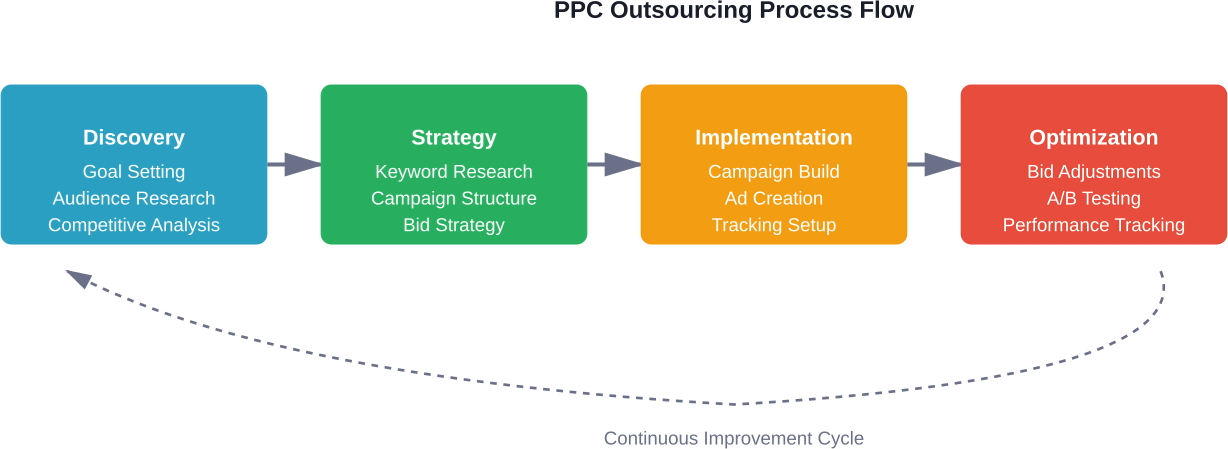
Outsourced PPC management typically follows a structured approach. First, the agency conducts discovery—understanding business goals, target audiences, competitive landscape, and current campaign performance if applicable.
Next comes strategy development. Specialists identify high-value keywords, define audience segments, set bidding strategies, and establish KPIs. They then build campaigns, write ad copy, design landing page recommendations, and configure tracking.
Once live, ongoing optimization begins. This includes bid adjustments, A/B testing ad variations, refining audience targeting, identifying negative keywords, and monitoring budget allocation across campaigns.
Communication happens through regular reporting cycles—weekly, bi-weekly, or monthly depending on agreement. Performance dashboards track metrics like cost-per-click, conversion rates, return on ad spend, and overall campaign ROI.
Benefits of Outsourcing PPC Management
The case for outsourcing extends beyond just saving time. Several tangible advantages make this approach attractive for businesses at different growth stages.
Access to Specialized Expertise
PPC professionals spend their entire working lives in ad platforms. They've seen what works across industries, understand platform nuances, and stay current with algorithm changes and new features.
Experts maintain in-depth knowledge of keyword research methodologies, ad targeting strategies, and campaign optimization techniques that deliver better results. They know how to navigate features like Amazon DSP, day-parting, and competitor targeting—tools that casual advertisers often overlook.
This expertise translates directly to performance. For example, Cardology, a UK-based store, saw a 107% increase in sales after fine-tuning their campaigns with professional optimization.
Time and Resource Savings
Proper PPC management isn't a "set it and forget it" activity. Conservative estimates suggest 15 hours weekly for effective campaign oversight. That's 60 hours monthly.
Now calculate opportunity cost. What's the value of those hours when applied to product development, team leadership, client relationships, or business strategy? For most business owners, it's significantly higher than the cost of outsourcing.
Outsourcing also eliminates hiring challenges. Finding, vetting, and retaining qualified PPC talent is expensive and time-consuming. Small businesses especially struggle to compete with agency salaries and benefits packages.
Scalable Growth Potential
Experienced agencies can scale campaigns more efficiently than in-house teams. They've handled budget increases before, know how to expand into new platforms without wasting spend, and understand the testing frameworks needed to maintain efficiency at scale.
When campaigns grow from $5,000 to $50,000 monthly spend, the complexity increases exponentially. Agencies have processes, tools, and team structures designed for this scaling challenge.
Advanced Tools and Technology
Professional PPC management requires investment in analytics platforms, bid management software, competitor research tools, and reporting dashboards. These subscriptions can easily cost $500-$2,000 monthly.
Agencies already have these tools. Clients benefit from enterprise-level technology without the direct cost or learning curve associated with implementation.
Potential Drawbacks to Consider
Outsourcing isn't universally beneficial. Several legitimate concerns deserve consideration before making the decision.
Less Direct Control
Handing campaign management to external teams means relying on their judgment for daily decisions. Some business owners find this uncomfortable, especially when they've previously managed campaigns themselves.
The control concern becomes more significant when agencies manage multiple clients. Response times for urgent requests may lag compared to having dedicated in-house staff.
Communication Gaps
External partners don't live inside the business. They might miss nuances about product positioning, seasonal trends, or competitive dynamics that internal teams intuitively understand.
This knowledge gap can lead to misaligned messaging or missed opportunities if communication protocols aren't well-established from the start.
Cost Considerations
While outsourcing often costs less than full-time hires, it's still a significant investment. Agencies typically charge either a percentage of ad spend or flat retainers.
For businesses with small budgets, the minimum fees some agencies require may not align with available resources. Understanding pricing structures becomes essential.
PPC Outsourcing Pricing Models
Agencies structure fees in several ways. Understanding these models helps businesses evaluate proposals and compare options effectively.
Percentage of Ad Spend
This model ties agency compensation directly to advertising budget. If a business spends $10,000 on PPC ads and the agency charges 15%, the monthly fee is $1,500.
The alignment benefit is clear—as ad spend grows, the agency earns more, theoretically motivating them to improve campaign performance. However, critics argue this can incentivize higher spending rather than better efficiency.
Flat Monthly Retainer
Fixed monthly fees provide budget predictability. Businesses know exactly what they'll pay regardless of campaign performance or spend fluctuations.
Retainers work well when budgets are stable and the scope of work is clearly defined. They remove the worry that scaling campaigns will automatically increase management costs.
Hourly Packages
Some agencies offer packaged hours for various tasks like updates, fixes, and new projects. This model provides flexibility for businesses with evolving needs.
Important questions to ask about hourly packages include: "If the contract is $15K annually and all hours aren't used, is that amount still charged?" Understanding unused hour policies prevents surprises.
When to Outsource vs. Keep In-House
Not every business should outsource immediately. Several factors influence whether external management makes sense at a given stage.
Outsourcing Makes Sense When:
- Current campaigns consume 10+ hours weekly for management and optimization
- Performance has plateaued despite testing and adjustments
- The business is expanding to new advertising platforms like Amazon, LinkedIn, or programmatic channels
- Hiring qualified in-house talent isn't feasible due to budget constraints or market competition
- Leadership needs to focus on core business growth rather than advertising tactics
- Budget exceeds $5,000 monthly, making agency percentages cost-effective
In-House Management Works Better When:
- Monthly ad spend is under $2,000, making agency minimums disproportionately expensive
- Campaigns are simple with limited product lines and straightforward targeting
- The business already employs a capable digital marketer with PPC experience
- Industry knowledge is so specialized that training external partners would be prohibitive
- Real-time campaign adjustments are frequently needed based on inventory, pricing, or competitive moves
The decision isn't permanent. Many businesses start with in-house management, outsource during growth phases, then potentially bring functions back internally once they've scaled sufficiently to support dedicated teams.
Selecting the Right PPC Partner
Choosing an agency or specialist requires more than comparing pricing sheets. The partnership quality determines campaign success more than any other factor.
Essential Questions to Ask Potential Partners
Before signing contracts, probe deeply into how the agency operates. Ask about their team structure: who will actually manage campaigns day-to-day? What's their experience level? How many other accounts do they handle?
Understand their process. How do they approach initial strategy development? What's their testing philosophy? How do they decide when to scale versus when to cut spending?
Get specific about communication. What reporting schedule do they maintain? Who's the primary point of contact? How quickly do they typically respond to urgent requests?
Request case studies from similar industries. Generic success stories matter less than demonstrated results in comparable business contexts. What challenges did those clients face? How were they overcome?
Red Flags to Watch For
Be wary of agencies that guarantee specific results. PPC performance depends on multiple variables including competition, seasonality, and offer strength. Ethical agencies discuss likely outcomes, not certainties.
Avoid partners who resist transparency. Access to campaign data should never be restricted. Businesses should maintain admin access to their own ad accounts.
Watch for agencies that push proprietary platforms or insist on managing campaigns through their own accounts. This creates vendor lock-in and makes transitions difficult.
Question anyone who claims expertise across every platform and industry. True specialists typically focus on specific channels or verticals where they've developed deep knowledge.
Contract Considerations
Review termination clauses carefully. What's the notice period? Are there penalties for early cancellation? Flexible agreements reduce risk when testing new partnerships.
Clarify ownership of all creative assets, audience data, and campaign structures. These should belong to the business, not the agency.
Understand exactly what services are included versus what costs extra. Does the fee cover landing page optimization? Display ad design? Monthly strategy calls?
Setting Up the Partnership for Success
Once a partner is selected, the onboarding process sets the tone for the entire relationship.
Clear Goal Definition
Specify what success looks like. Is the priority lead volume, cost per acquisition, revenue, or return on ad spend? Different objectives require different strategies.
Establish realistic timelines. PPC isn't instant. Most campaigns need 30-90 days of data before making conclusive performance assessments.
Communication Protocols
Set expectations for regular check-ins. Who attends? What gets discussed? How are decisions documented?
Agree on escalation paths for urgent issues. If something breaks during a major sale or product launch, who gets notified and how quickly?
Access and Transparency
Maintain admin access to all advertising accounts. The agency should work within business-owned accounts, not their own.
Require access to analytics platforms, conversion tracking setup, and any third-party tools used for management. Transparency builds trust and enables informed discussions.

Keep PPC Execution Tight Without Constant Handoffs
PPC campaigns tend to drift when too many people touch them. One person sets things up, another adjusts bids, someone else handles creatives, and over time it becomes harder to keep everything aligned. NeoWork works by building dedicated teams that stay involved in the day-to-day execution instead of stepping in for isolated tasks. The same people track performance, make adjustments, and keep campaigns moving without losing context between changes.
With a 3.2% selection rate, the focus is on people who can manage ongoing optimization, and a 91% retention rate helps keep that continuity in place. If you’re trying to keep campaigns consistent without juggling multiple vendors, you can talk to NeoWork directly and see how their setup would fit into your current PPC workflow.
White Label PPC Outsourcing
Marketing agencies often outsource PPC management themselves through white label arrangements. Under this model, specialized PPC providers fulfill campaign work that the agency then presents to end clients under their own brand.
White label relationships allow marketing agencies to offer comprehensive services without maintaining in-house PPC expertise for every platform. The end client typically doesn't know a third party is involved—they interact solely with their primary agency contact.
This approach works well for agencies focused on other specialties like content marketing, SEO, or web design who want to provide PPC without hiring dedicated staff. The white label provider handles execution while the agency maintains client relationships and strategic direction.
Platform-Specific Outsourcing Considerations
Different advertising platforms have unique complexities that influence outsourcing decisions.
Amazon PPC Outsourcing
Amazon's advertising ecosystem has grown increasingly sophisticated. With 223.72 million visitors monthly, competition is intense. Success requires understanding Sponsored Products, Sponsored Brands, Sponsored Display, and Amazon DSP.
Amazon-specific agencies bring knowledge of algorithmic bid adjustments, product targeting strategies, and how advertising integrates with organic ranking factors. They understand placement optimization across search results, product pages, and off-Amazon placements.
Google Ads Management
Google Ads remains the largest search advertising platform. Complexity comes from the breadth of campaign types: Search, Display, Shopping, Video, Performance Max, and App campaigns each require different approaches.
Outsourcing Google Ads often makes sense because the platform changes frequently. Smart Bidding updates, audience expansion features, and attribution modeling shifts require constant learning to optimize effectively.
Social Media Advertising
Facebook, Instagram, LinkedIn, and TikTok advertising demand strong creative capabilities alongside technical management. The emphasis on visual content and audience building differs from search-focused platforms.
Agencies specializing in social advertising typically offer broader services including creative development, influencer coordination, and community management—recognizing that paid and organic social strategies interconnect.
Measuring Outsourcing Success
Track specific metrics to evaluate whether the outsourcing relationship delivers value.
But don't obsess over metrics in isolation. Context matters. A higher CPA might be acceptable if customer lifetime value increases. Lower CTR could be fine if conversion rates improve because targeting became more precise.
Schedule quarterly business reviews to assess strategic alignment. Are campaigns supporting overall business goals? Have market conditions changed in ways that require strategy shifts?
Common Challenges and How to Address Them
Even strong partnerships encounter obstacles. Anticipating common issues helps navigate them smoothly.
Misaligned Expectations
Disconnect between expected and actual results causes most partnership friction. Combat this with detailed onboarding that establishes realistic benchmarks based on industry data, historical performance, and competitive analysis.
Document assumptions. If the agency's projections assume certain conversion rates or average order values, make those explicit. When reality differs, everyone understands why performance diverged from forecasts.
Communication Breakdowns
Information gaps lead to poor decisions. Establish regular touchpoints regardless of whether there's "news" to share. Scheduled calls maintain relationship continuity and surface small issues before they become large problems.
Use shared dashboards and documentation. When everyone views the same real-time data, conversations focus on interpretation and strategy rather than disputing facts.
Slow Response Times
When agencies manage many clients, responsiveness sometimes suffers. Set explicit SLAs (service level agreements) for different request types. Routine optimizations might get a 48-hour turnaround while urgent issues require same-day response.
Understand how the agency prioritizes work. Clients with larger retainers typically receive more attention. If response times don't meet needs, discussing whether the service tier matches expectations makes sense.
Making the Outsourcing Decision
PPC outsourcing isn't about avoiding work—it's about focusing energy where it creates the most value. For businesses struggling to maintain campaigns while managing core operations, partnering with specialists often delivers better outcomes than perpetually underpowered internal efforts.
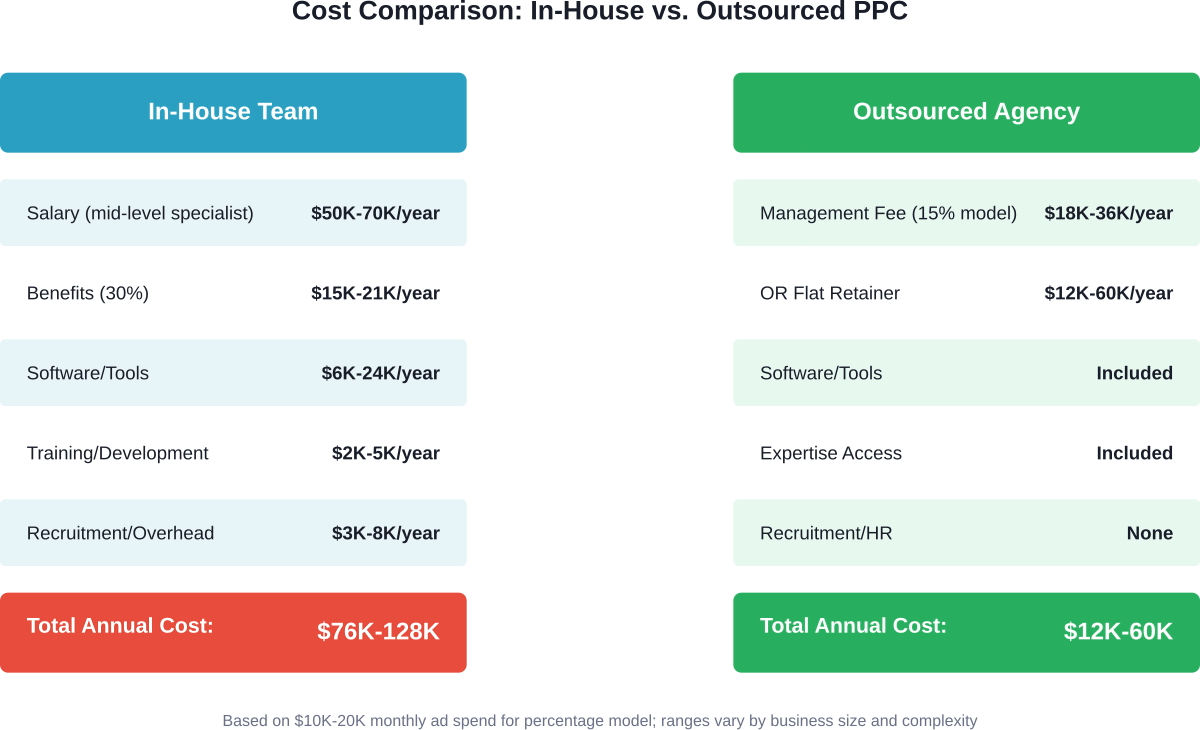
The math becomes clear when comparing total costs. An in-house PPC specialist costs $70,000-$100,000 annually when factoring salary, benefits, tools, and training. Outsourcing typically runs $12,000-$60,000 depending on spend and complexity—while providing access to senior-level expertise and enterprise tools.
But cost alone shouldn't drive decisions. The right partner brings strategic thinking, creative problem-solving, and market insights that extend beyond tactical campaign management. They've navigated challenges across multiple clients and industries, building pattern recognition that benefits every account.
Start by assessing the current state honestly. How much time goes into PPC weekly? What's the opportunity cost? Is performance improving or stagnating? Do internal teams have the expertise to leverage new platform features effectively?
Then research potential partners thoroughly. Review case studies, check references, understand their processes, and ensure philosophical alignment around transparency, communication, and strategic priorities.
Test before committing long-term. Many agencies offer trial periods or project-based work. A three-month pilot reveals how the partnership functions under real conditions before signing annual contracts.
The goal isn't finding someone to take orders—it's building a collaborative relationship where both sides contribute expertise toward shared objectives. When that alignment exists, outsourced PPC becomes a growth driver rather than just an expense.
Ready to explore PPC outsourcing for your business? Start by documenting current campaign performance, defining specific goals, and researching agencies with proven experience in your industry and platforms. The right partnership can transform advertising from a time drain into a scalable growth engine.
Frequently Asked Questions
Topics
PPC Outsourcing Guide: Pros, Costs & Choosing Partners

PPC outsourcing involves partnering with specialized agencies or professionals to manage pay-per-click advertising campaigns on platforms like Google Ads, Facebook, and Amazon. Businesses choose this route to access expert knowledge, save time, improve ROI, and scale campaigns without hiring full-time staff. Common pricing models include percentage of ad spend (typically 10-20%), flat monthly retainers, or hourly rates.
Managing PPC campaigns has become increasingly complex. What started as simple keyword bidding now involves hundreds of settings, audience targeting options, automated bidding strategies, and platform-specific features that change monthly.
For small businesses and marketing directors, this complexity creates a dilemma. Running campaigns in-house demands significant time investment—often 15 hours per week for proper management, according to industry estimates. That's 60 hours monthly not spent on core business activities, client relationships, or strategic planning.
PPC outsourcing offers an alternative. But it's not just about handing off work. It's about finding the right partnership that aligns with business goals, understands industry dynamics, and delivers measurable results.
What Is PPC Outsourcing?
PPC outsourcing means contracting external specialists—whether agencies, freelancers, or dedicated teams—to handle pay-per-click advertising campaigns. These providers manage everything from initial strategy and keyword research to ad creation, bid management, and performance reporting.
The scope varies. Some businesses outsource complete campaign management across all platforms. Others delegate specific tasks like Amazon PPC management or Google Ads optimization while keeping strategy in-house.
According to industry data, around 45% of small businesses use PPC advertising, with 86% pairing it with SEO efforts. Managing both channels effectively requires specialized knowledge that many organizations don't have internally.
How the Process Works
Outsourced PPC management typically follows a structured approach. First, the agency conducts discovery—understanding business goals, target audiences, competitive landscape, and current campaign performance if applicable.
Next comes strategy development. Specialists identify high-value keywords, define audience segments, set bidding strategies, and establish KPIs. They then build campaigns, write ad copy, design landing page recommendations, and configure tracking.
Once live, ongoing optimization begins. This includes bid adjustments, A/B testing ad variations, refining audience targeting, identifying negative keywords, and monitoring budget allocation across campaigns.
Communication happens through regular reporting cycles—weekly, bi-weekly, or monthly depending on agreement. Performance dashboards track metrics like cost-per-click, conversion rates, return on ad spend, and overall campaign ROI.
Benefits of Outsourcing PPC Management
The case for outsourcing extends beyond just saving time. Several tangible advantages make this approach attractive for businesses at different growth stages.
Access to Specialized Expertise
PPC professionals spend their entire working lives in ad platforms. They've seen what works across industries, understand platform nuances, and stay current with algorithm changes and new features.
Experts maintain in-depth knowledge of keyword research methodologies, ad targeting strategies, and campaign optimization techniques that deliver better results. They know how to navigate features like Amazon DSP, day-parting, and competitor targeting—tools that casual advertisers often overlook.
This expertise translates directly to performance. For example, Cardology, a UK-based store, saw a 107% increase in sales after fine-tuning their campaigns with professional optimization.
Time and Resource Savings
Proper PPC management isn't a "set it and forget it" activity. Conservative estimates suggest 15 hours weekly for effective campaign oversight. That's 60 hours monthly.
Now calculate opportunity cost. What's the value of those hours when applied to product development, team leadership, client relationships, or business strategy? For most business owners, it's significantly higher than the cost of outsourcing.
Outsourcing also eliminates hiring challenges. Finding, vetting, and retaining qualified PPC talent is expensive and time-consuming. Small businesses especially struggle to compete with agency salaries and benefits packages.
Scalable Growth Potential
Experienced agencies can scale campaigns more efficiently than in-house teams. They've handled budget increases before, know how to expand into new platforms without wasting spend, and understand the testing frameworks needed to maintain efficiency at scale.
When campaigns grow from $5,000 to $50,000 monthly spend, the complexity increases exponentially. Agencies have processes, tools, and team structures designed for this scaling challenge.
Advanced Tools and Technology
Professional PPC management requires investment in analytics platforms, bid management software, competitor research tools, and reporting dashboards. These subscriptions can easily cost $500-$2,000 monthly.
Agencies already have these tools. Clients benefit from enterprise-level technology without the direct cost or learning curve associated with implementation.
Potential Drawbacks to Consider
Outsourcing isn't universally beneficial. Several legitimate concerns deserve consideration before making the decision.
Less Direct Control
Handing campaign management to external teams means relying on their judgment for daily decisions. Some business owners find this uncomfortable, especially when they've previously managed campaigns themselves.
The control concern becomes more significant when agencies manage multiple clients. Response times for urgent requests may lag compared to having dedicated in-house staff.
Communication Gaps
External partners don't live inside the business. They might miss nuances about product positioning, seasonal trends, or competitive dynamics that internal teams intuitively understand.
This knowledge gap can lead to misaligned messaging or missed opportunities if communication protocols aren't well-established from the start.
Cost Considerations
While outsourcing often costs less than full-time hires, it's still a significant investment. Agencies typically charge either a percentage of ad spend or flat retainers.
For businesses with small budgets, the minimum fees some agencies require may not align with available resources. Understanding pricing structures becomes essential.
PPC Outsourcing Pricing Models
Agencies structure fees in several ways. Understanding these models helps businesses evaluate proposals and compare options effectively.
Percentage of Ad Spend
This model ties agency compensation directly to advertising budget. If a business spends $10,000 on PPC ads and the agency charges 15%, the monthly fee is $1,500.
The alignment benefit is clear—as ad spend grows, the agency earns more, theoretically motivating them to improve campaign performance. However, critics argue this can incentivize higher spending rather than better efficiency.
Flat Monthly Retainer
Fixed monthly fees provide budget predictability. Businesses know exactly what they'll pay regardless of campaign performance or spend fluctuations.
Retainers work well when budgets are stable and the scope of work is clearly defined. They remove the worry that scaling campaigns will automatically increase management costs.
Hourly Packages
Some agencies offer packaged hours for various tasks like updates, fixes, and new projects. This model provides flexibility for businesses with evolving needs.
Important questions to ask about hourly packages include: "If the contract is $15K annually and all hours aren't used, is that amount still charged?" Understanding unused hour policies prevents surprises.
When to Outsource vs. Keep In-House
Not every business should outsource immediately. Several factors influence whether external management makes sense at a given stage.
Outsourcing Makes Sense When:
- Current campaigns consume 10+ hours weekly for management and optimization
- Performance has plateaued despite testing and adjustments
- The business is expanding to new advertising platforms like Amazon, LinkedIn, or programmatic channels
- Hiring qualified in-house talent isn't feasible due to budget constraints or market competition
- Leadership needs to focus on core business growth rather than advertising tactics
- Budget exceeds $5,000 monthly, making agency percentages cost-effective
In-House Management Works Better When:
- Monthly ad spend is under $2,000, making agency minimums disproportionately expensive
- Campaigns are simple with limited product lines and straightforward targeting
- The business already employs a capable digital marketer with PPC experience
- Industry knowledge is so specialized that training external partners would be prohibitive
- Real-time campaign adjustments are frequently needed based on inventory, pricing, or competitive moves
The decision isn't permanent. Many businesses start with in-house management, outsource during growth phases, then potentially bring functions back internally once they've scaled sufficiently to support dedicated teams.
Selecting the Right PPC Partner
Choosing an agency or specialist requires more than comparing pricing sheets. The partnership quality determines campaign success more than any other factor.
Essential Questions to Ask Potential Partners
Before signing contracts, probe deeply into how the agency operates. Ask about their team structure: who will actually manage campaigns day-to-day? What's their experience level? How many other accounts do they handle?
Understand their process. How do they approach initial strategy development? What's their testing philosophy? How do they decide when to scale versus when to cut spending?
Get specific about communication. What reporting schedule do they maintain? Who's the primary point of contact? How quickly do they typically respond to urgent requests?
Request case studies from similar industries. Generic success stories matter less than demonstrated results in comparable business contexts. What challenges did those clients face? How were they overcome?
Red Flags to Watch For
Be wary of agencies that guarantee specific results. PPC performance depends on multiple variables including competition, seasonality, and offer strength. Ethical agencies discuss likely outcomes, not certainties.
Avoid partners who resist transparency. Access to campaign data should never be restricted. Businesses should maintain admin access to their own ad accounts.
Watch for agencies that push proprietary platforms or insist on managing campaigns through their own accounts. This creates vendor lock-in and makes transitions difficult.
Question anyone who claims expertise across every platform and industry. True specialists typically focus on specific channels or verticals where they've developed deep knowledge.
Contract Considerations
Review termination clauses carefully. What's the notice period? Are there penalties for early cancellation? Flexible agreements reduce risk when testing new partnerships.
Clarify ownership of all creative assets, audience data, and campaign structures. These should belong to the business, not the agency.
Understand exactly what services are included versus what costs extra. Does the fee cover landing page optimization? Display ad design? Monthly strategy calls?
Setting Up the Partnership for Success
Once a partner is selected, the onboarding process sets the tone for the entire relationship.
Clear Goal Definition
Specify what success looks like. Is the priority lead volume, cost per acquisition, revenue, or return on ad spend? Different objectives require different strategies.
Establish realistic timelines. PPC isn't instant. Most campaigns need 30-90 days of data before making conclusive performance assessments.
Communication Protocols
Set expectations for regular check-ins. Who attends? What gets discussed? How are decisions documented?
Agree on escalation paths for urgent issues. If something breaks during a major sale or product launch, who gets notified and how quickly?
Access and Transparency
Maintain admin access to all advertising accounts. The agency should work within business-owned accounts, not their own.
Require access to analytics platforms, conversion tracking setup, and any third-party tools used for management. Transparency builds trust and enables informed discussions.
Keep PPC Execution Tight Without Constant Handoffs
PPC campaigns tend to drift when too many people touch them. One person sets things up, another adjusts bids, someone else handles creatives, and over time it becomes harder to keep everything aligned. NeoWork works by building dedicated teams that stay involved in the day-to-day execution instead of stepping in for isolated tasks. The same people track performance, make adjustments, and keep campaigns moving without losing context between changes.
With a 3.2% selection rate, the focus is on people who can manage ongoing optimization, and a 91% retention rate helps keep that continuity in place. If you’re trying to keep campaigns consistent without juggling multiple vendors, you can talk to NeoWork directly and see how their setup would fit into your current PPC workflow.
White Label PPC Outsourcing
Marketing agencies often outsource PPC management themselves through white label arrangements. Under this model, specialized PPC providers fulfill campaign work that the agency then presents to end clients under their own brand.
White label relationships allow marketing agencies to offer comprehensive services without maintaining in-house PPC expertise for every platform. The end client typically doesn't know a third party is involved—they interact solely with their primary agency contact.
This approach works well for agencies focused on other specialties like content marketing, SEO, or web design who want to provide PPC without hiring dedicated staff. The white label provider handles execution while the agency maintains client relationships and strategic direction.
Platform-Specific Outsourcing Considerations
Different advertising platforms have unique complexities that influence outsourcing decisions.
Amazon PPC Outsourcing
Amazon's advertising ecosystem has grown increasingly sophisticated. With 223.72 million visitors monthly, competition is intense. Success requires understanding Sponsored Products, Sponsored Brands, Sponsored Display, and Amazon DSP.
Amazon-specific agencies bring knowledge of algorithmic bid adjustments, product targeting strategies, and how advertising integrates with organic ranking factors. They understand placement optimization across search results, product pages, and off-Amazon placements.
Google Ads Management
Google Ads remains the largest search advertising platform. Complexity comes from the breadth of campaign types: Search, Display, Shopping, Video, Performance Max, and App campaigns each require different approaches.
Outsourcing Google Ads often makes sense because the platform changes frequently. Smart Bidding updates, audience expansion features, and attribution modeling shifts require constant learning to optimize effectively.
Social Media Advertising
Facebook, Instagram, LinkedIn, and TikTok advertising demand strong creative capabilities alongside technical management. The emphasis on visual content and audience building differs from search-focused platforms.
Agencies specializing in social advertising typically offer broader services including creative development, influencer coordination, and community management—recognizing that paid and organic social strategies interconnect.
Measuring Outsourcing Success
Track specific metrics to evaluate whether the outsourcing relationship delivers value.
But don't obsess over metrics in isolation. Context matters. A higher CPA might be acceptable if customer lifetime value increases. Lower CTR could be fine if conversion rates improve because targeting became more precise.
Schedule quarterly business reviews to assess strategic alignment. Are campaigns supporting overall business goals? Have market conditions changed in ways that require strategy shifts?
Common Challenges and How to Address Them
Even strong partnerships encounter obstacles. Anticipating common issues helps navigate them smoothly.
Misaligned Expectations
Disconnect between expected and actual results causes most partnership friction. Combat this with detailed onboarding that establishes realistic benchmarks based on industry data, historical performance, and competitive analysis.
Document assumptions. If the agency's projections assume certain conversion rates or average order values, make those explicit. When reality differs, everyone understands why performance diverged from forecasts.
Communication Breakdowns
Information gaps lead to poor decisions. Establish regular touchpoints regardless of whether there's "news" to share. Scheduled calls maintain relationship continuity and surface small issues before they become large problems.
Use shared dashboards and documentation. When everyone views the same real-time data, conversations focus on interpretation and strategy rather than disputing facts.
Slow Response Times
When agencies manage many clients, responsiveness sometimes suffers. Set explicit SLAs (service level agreements) for different request types. Routine optimizations might get a 48-hour turnaround while urgent issues require same-day response.
Understand how the agency prioritizes work. Clients with larger retainers typically receive more attention. If response times don't meet needs, discussing whether the service tier matches expectations makes sense.
Making the Outsourcing Decision
PPC outsourcing isn't about avoiding work—it's about focusing energy where it creates the most value. For businesses struggling to maintain campaigns while managing core operations, partnering with specialists often delivers better outcomes than perpetually underpowered internal efforts.
The math becomes clear when comparing total costs. An in-house PPC specialist costs $70,000-$100,000 annually when factoring salary, benefits, tools, and training. Outsourcing typically runs $12,000-$60,000 depending on spend and complexity—while providing access to senior-level expertise and enterprise tools.
But cost alone shouldn't drive decisions. The right partner brings strategic thinking, creative problem-solving, and market insights that extend beyond tactical campaign management. They've navigated challenges across multiple clients and industries, building pattern recognition that benefits every account.
Start by assessing the current state honestly. How much time goes into PPC weekly? What's the opportunity cost? Is performance improving or stagnating? Do internal teams have the expertise to leverage new platform features effectively?
Then research potential partners thoroughly. Review case studies, check references, understand their processes, and ensure philosophical alignment around transparency, communication, and strategic priorities.
Test before committing long-term. Many agencies offer trial periods or project-based work. A three-month pilot reveals how the partnership functions under real conditions before signing annual contracts.
The goal isn't finding someone to take orders—it's building a collaborative relationship where both sides contribute expertise toward shared objectives. When that alignment exists, outsourced PPC becomes a growth driver rather than just an expense.
Ready to explore PPC outsourcing for your business? Start by documenting current campaign performance, defining specific goals, and researching agencies with proven experience in your industry and platforms. The right partnership can transform advertising from a time drain into a scalable growth engine.
Frequently Asked Questions
Topics
Related Blogs
Related Podcasts


.webp)

.webp)
.webp)



