

.avif)
.avif)

Marketing Analytics Outsourcing Guide (2026)


.svg)

Marketing analytics outsourcing lets businesses access expert data analysis, advanced tools, and strategic insights without building costly in-house teams. This guide covers when to outsource, how to choose the right partner, cost structures, implementation strategies, and how to measure ROI from outsourced analytics services.
Pulling marketing reports shouldn't feel like archaeological excavation. Yet most businesses spend hours each week digging through disconnected platforms, wrestling with spreadsheets, and trying to make sense of data that refuses to cooperate.
The numbers tell a stark story. The median annual salary for a Marketing Analyst in the United States is approximately $75,000, with total compensation (including bonuses and benefits) typically reaching $85,000 to $100,000 for mid-level roles. But here's what makes that figure sting: many businesses lack the volume or complexity to justify that expense. Meanwhile, critical decisions get delayed because nobody has time to analyze the data properly.
Marketing analytics outsourcing solves this problem. Instead of building an entire analytics department, businesses tap into specialized expertise on demand. The approach delivers professional insights at a fraction of in-house costs while freeing internal teams to focus on strategy rather than spreadsheet cleanup.
What Marketing Analytics Outsourcing Actually Covers
Marketing analytics outsourcing means partnering with external specialists to handle data collection, analysis, reporting, and insight generation. These partners don't just pull numbers. They interpret what the data means and recommend specific actions.
The scope typically includes campaign performance tracking, customer behavior analysis, attribution modeling, ROI measurement, and competitive benchmarking. Some providers also handle data integration, connecting multiple platforms into unified dashboards that actually make sense.
According to research on B2B markets, almost 84% of B2B companies outsource content creation. That same logic applies to analytics: specialists deliver higher quality than what most small-to-midsize businesses can build internally.
Core Analytics Services Available for Outsourcing
Different businesses need different analytics capabilities. Here's what specialized providers typically offer:
The American Marketing Association emphasizes that modern market analysis isn't about predictions—it's about using data to make strategic, informed decisions. Outsourced analytics providers bring that data-driven clarity without requiring businesses to become analytics experts themselves.
When Outsourcing Makes Strategic Sense
Not every business needs outsourced analytics. But specific situations make it the obvious choice.
The first scenario: data exists but nobody has time to analyze it. Marketing teams drown in campaigns, content creation, and execution. Analytics becomes an afterthought. Outsourcing shifts that burden to specialists who actually have time to dig into the numbers.
Second situation: the business lacks specialized skills. Attribution modeling, predictive analytics, and statistical significance testing require expertise most marketers don't possess. Rather than sending someone to training for months, outsourcing brings that knowledge immediately.
Cost Threshold Analysis
The economics matter. For agencies doing $500,000+ annually, hiring a full-time analyst might make sense. But for most agencies in the $1 million to $5 million range, the math doesn't work out favorably.
Consider the full cost picture. A $100,000 salary becomes $130,000+ after benefits, equipment, software licenses, and training. That analyst needs management, clear direction, and enough work to stay productive.
Outsourced analytics typically runs $500 to $3,000 monthly depending on complexity and scope. That's $6,000 to $36,000 annually—a fraction of the in-house alternative.
Signals That Outsourcing Fits
Several indicators suggest analytics outsourcing makes sense:
- Marketing reports take longer than two days to produce each month
- Data sits in five or more disconnected platforms
- Leadership requests analytics support but budget doesn't justify headcount
- Campaign decisions get made on gut feeling rather than data
- Attribution questions remain unanswered for weeks
- Existing team lacks statistical analysis skills
Real talk: if pulling a report feels like punishment, something needs to change.
Types of Marketing Analytics Partners
The outsourcing market offers several partner types. Each brings different strengths and limitations.
Specialized Analytics Agencies
These firms focus exclusively on marketing analytics and reporting. They've built processes, templates, and expertise specifically for this work. Response times tend to be faster because analytics is their core business, not a side service.
The downside? Specialized shops typically cost more than generalists. But the quality gap often justifies the premium.
Full-Service Marketing Agencies With Analytics Arms
Larger marketing agencies often include analytics as part of broader service offerings. This creates convenient one-stop shopping: strategy, execution, and measurement under one roof.
The risk here involves priorities. When the agency makes more money from campaign execution, analytics sometimes becomes an afterthought. Reports arrive late or lack depth.
BPO Providers With Marketing Analytics Capabilities
Business process outsourcing firms increasingly offer marketing analytics. Entrusting analytics functions to a BPO provider allows companies to streamline data collection and analysis processes while reducing operating costs significantly.
BPO partnerships work well when analytics needs are standardized and repeatable. Custom analysis or strategic consulting isn't always their strength.
Freelance Analytics Specialists
Individual consultants bring deep expertise and direct communication. Finding the right specialist means gaining agency-level expertise with flexibility to adapt as goals evolve.
Cost Structures and Budget Planning
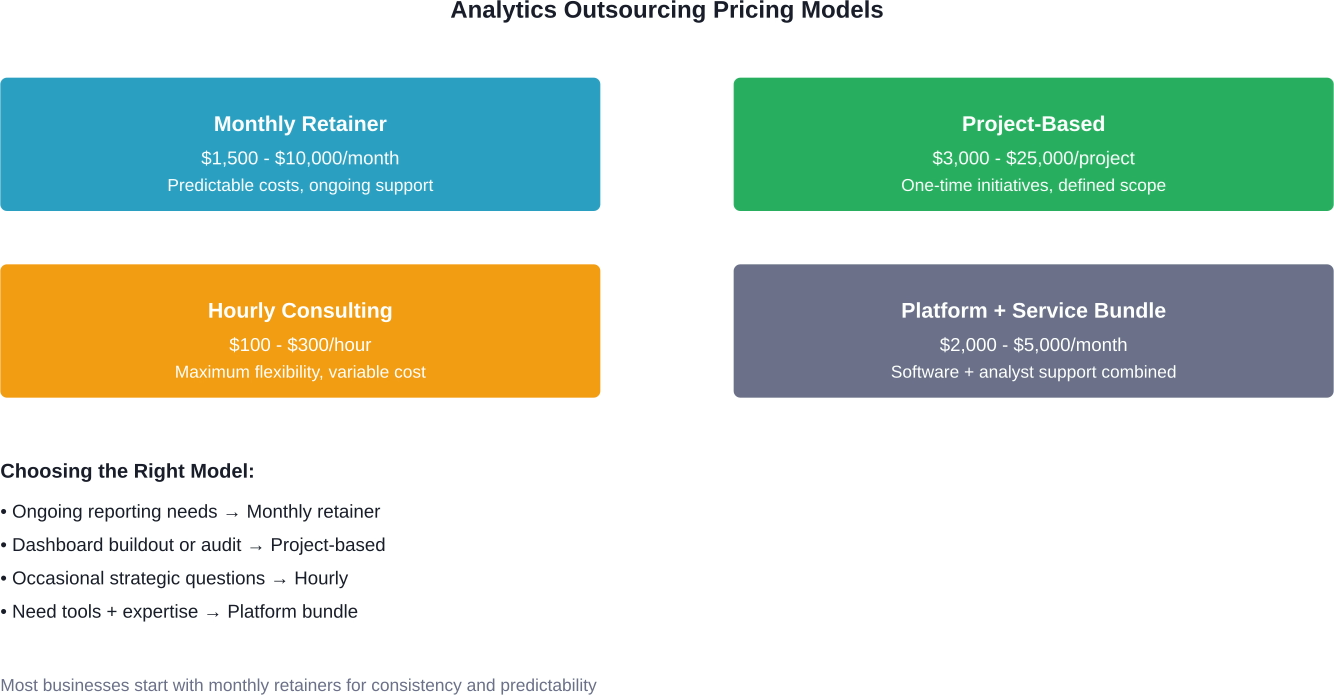
Marketing analytics outsourcing pricing varies widely based on scope, complexity, and provider type. Understanding common models helps with budget planning.
Monthly Retainer Models
Most analytics partners work on monthly retainers. Businesses pay a fixed fee for defined deliverables each month. Retainers typically range from $1,500 to $10,000 monthly depending on reporting frequency, platform complexity, and analysis depth.
Retainers create predictable costs and ensure consistent attention. The downside? Businesses pay even during slow months when analytics needs might be lighter.
Project-Based Pricing
Some partners bill per project: a comprehensive audit, attribution model development, or dashboard buildout. Projects might run $3,000 to $25,000 depending on scope.
Project pricing works well for one-time initiatives. But ongoing reporting needs don't fit this model effectively.
Hourly Consulting Rates
Analytics consultants typically charge $100 to $300 hourly. This model provides maximum flexibility but creates unpredictable costs. Businesses never quite know what the monthly bill will be.
Hourly billing makes sense for occasional strategic questions or supplementing in-house capabilities.
Platform-Plus-Service Bundles
Dashboard tools cost $100 to $1,000 monthly for the software alone. Some providers bundle platform access with analyst support, charging $2,000 to $5,000 monthly for the complete package.
Panel providers for B2B market research typically charge between $50 and $150+ per completed response (CPI), depending on the seniority of the professional target. Similar value-based pricing appears in analytics: businesses pay for insights, not just hours.
Selecting the Right Analytics Partner
Choosing an analytics partner shouldn't happen based on price alone. Several factors determine whether the relationship will actually work.
Industry Experience and Vertical Knowledge
Analytics partners with industry experience speak the language. They understand which metrics matter, what benchmarks look realistic, and where to find optimization opportunities.
An e-commerce analytics specialist understands cart abandonment, average order value, and customer acquisition cost intuitively. That same provider might struggle with B2B lead scoring or pipeline velocity.
Ask potential partners for case studies from similar businesses. Generic experience doesn't transfer as effectively as vertical-specific expertise.
Technical Capabilities and Platform Expertise
Marketing technology stacks vary dramatically. Some businesses run Google Analytics, Google Ads, and Facebook Ads. Others use HubSpot, Salesforce, and a marketing automation platform.
The right partner has deep experience with the specific platforms in use. Integration challenges, API limitations, and data discrepancies become manageable when providers know the tools intimately.
Communication Style and Reporting Cadence
Analytics partnerships live or die on communication. Some businesses want weekly check-ins and Slack access. Others prefer monthly reports with quarterly strategy sessions.
Mismatched communication expectations create friction. During evaluation, discuss preferred channels, response time expectations, and meeting frequency. Make sure alignment exists before signing contracts.
Strategic Depth vs. Execution Focus
Some analytics providers function as report factories: they pull numbers, format dashboards, and deliver on schedule. Others act as strategic advisors, questioning assumptions and recommending tests.
Neither approach is wrong, but businesses need to know which they're getting. If strategic insight matters, ask how partners generate recommendations. Request examples of insights that led to significant changes.
Critical Evaluation Questions
Before selecting a partner, ask these questions:
- How many clients do account managers typically handle?
- What's the average response time for urgent questions?
- Who owns the dashboards and data infrastructure if the relationship ends?
- How do they handle platform outages or API changes?
- What level of customization is included versus considered additional work?
- Can they provide references from current clients?
The Federal Trade Commission emphasizes protecting personal information in business operations. When evaluating analytics partners, ask about data security practices, access controls, and compliance with privacy regulations. Sensitive customer data deserves protection.
Implementation Best Practices
Starting an analytics outsourcing relationship requires planning. Poor launches create confusion and disappointment. Proper implementation sets up long-term success.
Phase 1: Discovery and Audit
The first step involves comprehensive discovery. Partners need to understand current analytics setup, business goals, key metrics, and pain points.
Plan for a 2-4 week discovery phase. During this time, the partner should audit existing tracking, identify data gaps, and document requirements. Rushing this phase leads to misaligned deliverables later.
Phase 2: Infrastructure Setup
Once requirements are clear, partners build infrastructure: dashboard connections, reporting templates, and data pipelines. This technical foundation enables ongoing reporting.
Infrastructure setup typically takes 3-6 weeks depending on complexity. Businesses with clean, well-organized data move faster. Those with legacy systems or fragmented platforms need more time.
Phase 3: Baseline Reporting
Before optimization begins, establish baseline metrics. What's current performance? Where do trends point? What does normal look like?
Baseline reporting runs for at least one full month, ideally two or three. This creates the comparison point for measuring future improvements.
Phase 4: Insight Generation and Optimization
With baselines established, partners shift to insight generation. They analyze performance, identify opportunities, and recommend specific actions.
This ongoing phase represents the real value of outsourced analytics. Partners should deliver both regular reports and proactive recommendations based on what the data reveals.
Setting Clear Success Metrics
How will both parties know if the relationship works? Define success metrics upfront:
- Report delivery timeliness
- Number of actionable insights generated monthly
- Improvement in key performance indicators
- Time saved by internal team
- Quality of recommendations (measured by implementation rate)
According to the American Marketing Association, effective market analysis involves using data to make strategic, informed decisions. Success metrics should measure whether analytics actually drive better decisions, not just whether reports get produced.

Build a Marketing Analytics Team That Actually Stays
Outsourcing marketing analytics often breaks at the execution level – data is there, tools are set up, but the team behind it keeps changing or never fully understands your setup. That’s where things slow down.
NeoWork focuses on building stable, long-term teams instead of rotating talent. With a 91% annual retention rate and a 3.2% candidate acceptance rate, the people working on your analytics stay consistent and vetted. That means cleaner reporting, better context over time, and less need to re-explain your business every few months.
If you need reliable support across reporting, dashboards, attribution, or ongoing analysis, it’s worth starting a conversation with NeoWork and seeing how they structure teams around your workflow.
Common Challenges and How to Solve Them
Marketing analytics outsourcing isn't always smooth. Understanding common pitfalls helps avoid them.
Data Access and Integration Issues
The most frequent problem? Getting partners access to necessary platforms. Businesses underestimate how many logins, permissions, and API keys analytics requires.
Solution: Create a centralized inventory of all marketing platforms before starting. Assign someone to handle access requests quickly. Many implementations stall for weeks waiting on credentials.
Misaligned Expectations on Deliverables
Vague scope agreements create conflict. One party expects strategic consulting, the other thinks they're buying monthly reports.
Solution: Document specific deliverables in detail. What reports get delivered? When? In what format? What level of analysis is included? The more specific the agreement, the fewer surprises later.
Communication Breakdowns
Analytics partnerships require regular communication. When weeks pass without contact, the relationship deteriorates. Partners lose context about business changes while internal teams forget what the analytics show.
Solution: Schedule standing meetings, even if brief. A 30-minute monthly review keeps both parties aligned. Use project management tools or shared documents to maintain ongoing dialogue between meetings.
Data Quality Problems
Garbage in, garbage out. When tracking is broken, tags are missing, or data is inconsistent, even expert analysts can't generate useful insights.
Solution: Invest in data quality before expecting miracles from analytics. Good partners will identify tracking issues during discovery. Budget time and money to fix foundational problems before demanding sophisticated analysis.
Lack of Action on Insights
Some businesses buy analytics services, receive beautiful reports with solid recommendations, then do nothing with the information. The reports pile up unread while performance stagnates.
Solution: Build implementation into the workflow. Assign someone to review recommendations and decide which to implement. Schedule time to act on insights, not just receive them.
Measuring Outsourcing ROI
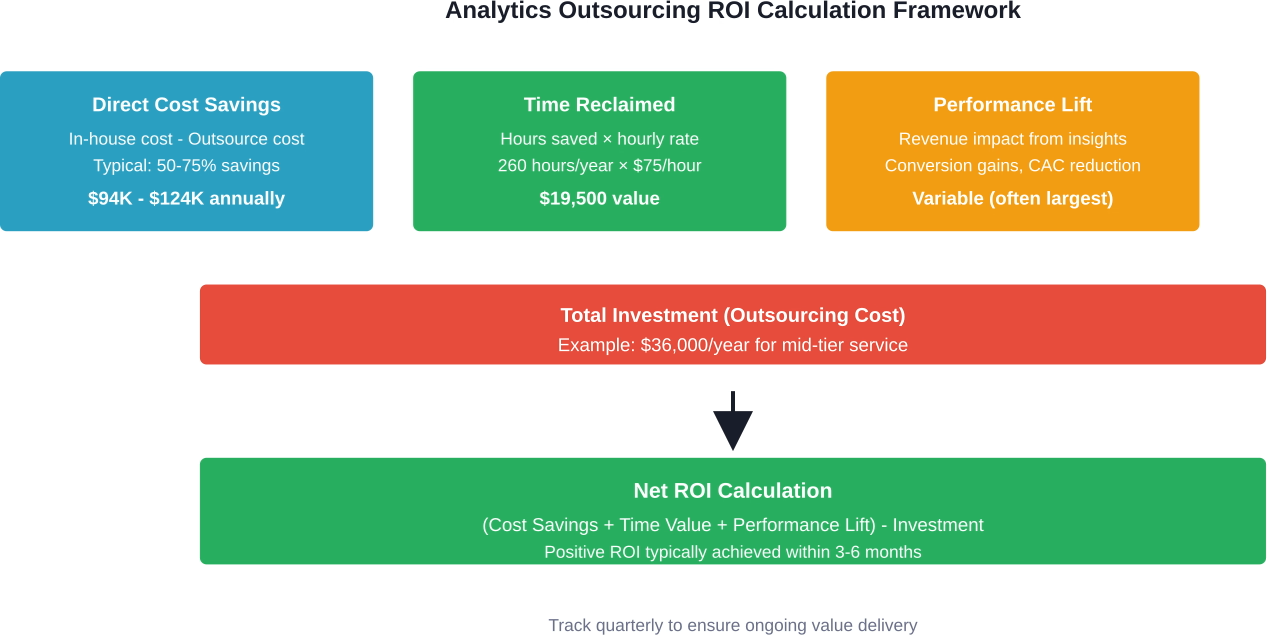
Analytics outsourcing represents an investment. Measuring return on that investment ensures the relationship delivers value.
Direct Cost Savings
Calculate what the same work would cost in-house. Consider salary, benefits, software licenses, training, and management overhead. Compare that to outsourcing fees.
For most businesses, cost savings range from 50% to 75% compared to hiring full-time analytics staff.
Time Reclaimed
How many hours per week did internal staff spend on analytics before outsourcing? What are those people doing with that reclaimed time?
If outsourcing frees five hours weekly, that's 260 hours annually. Multiplied by hourly rate, that represents significant value—assuming the time gets redeployed productively.
Performance Improvements
The ultimate ROI measure: did marketing performance actually improve? Track key metrics before and after implementing outsourced analytics:
- Customer acquisition cost trends
- Conversion rate changes
- Campaign ROI improvements
- Revenue attribution accuracy
- Decision-making speed
If analytics outsourcing costs $36,000 annually but insights drive decisions that increase revenue by $100,000, the ROI is clear.
Qualitative Value Assessment
Some benefits resist quantification but matter nonetheless:
- Confidence in decision-making
- Reduced stress about data accuracy
- Ability to answer leadership questions quickly
- Strategic insights that wouldn't have emerged otherwise
Survey internal stakeholders quarterly about analytics quality and usefulness. Track trends over time.
Industry-Specific Considerations
Different industries face unique analytics challenges. Understanding these helps select appropriate partners and set realistic expectations.
E-Commerce Analytics
E-commerce businesses need real-time visibility into product performance, inventory turnover, customer segments, and channel attribution. Analytics complexity increases with product catalog size and channel diversity.
Look for partners with e-commerce platform expertise: Shopify, WooCommerce, Magento, or BigCommerce. Understanding product feeds, transaction tracking, and marketplace integrations matters significantly.
B2B and SaaS Analytics
B2B buying cycles span months. Attribution gets murky when ten touchpoints precede conversion. Lead scoring, pipeline velocity, and customer lifetime value modeling become critical.
Partners need experience with CRM analytics, particularly Salesforce or HubSpot. Understanding lead-to-customer journeys and multi-touch attribution is essential.
Healthcare and Professional Services
Privacy regulations complicate healthcare analytics. HIPAA compliance isn't optional. Partners must understand what data can be tracked, how it must be protected, and where analytics stop.
According to the Federal Trade Commission's guidance on protecting personal information, businesses must safeguard sensitive data that identifies customers. Healthcare analytics partners need demonstrated compliance experience.
Agencies Managing Multiple Clients
Agencies face unique challenges: reporting for dozens of clients, each with different platforms, goals, and preferences. Scalability becomes paramount.
Most agencies outsource marketing reporting wrong and end up with more work, not less. The right approach involves standardized processes that still allow client-specific customization.
Future Trends in Marketing Analytics Outsourcing
The analytics outsourcing landscape continues evolving. Several trends are reshaping what services look like and how partnerships function.
AI-Augmented Analysis
Advanced analytics providers increasingly use AI tools to identify patterns, generate hypotheses, and automate insight discovery. This doesn't replace human analysts but extends their capabilities.
The American Marketing Association notes that imagination and empathy drive future insights—data alone isn't enough. As one business leader stated, "Eighty percent of our data is commercial; 20% is consumer. Businesses lose sight of the human element."
The best analytics partners balance automated pattern recognition with strategic human interpretation.
Privacy-First Analytics Approaches
Cookie deprecation, privacy regulations, and consumer expectations are forcing analytics evolution. Partners who understand privacy-compliant tracking, first-party data strategies, and cookieless attribution become increasingly valuable.
The Federal Trade Commission's CAN-SPAM Act and other regulations establish clear boundaries for commercial communication and data usage. Each separate email in violation of the CAN-SPAM Act is subject to penalties of up to $53,088. Analytics partners must navigate these constraints while still delivering actionable insights.
Real-Time Insights Delivery
Monthly reports are giving way to always-on dashboards with proactive alerts. When performance dips or opportunities emerge, businesses want immediate notification, not month-end discovery.
Advanced partners now offer automated anomaly detection, alerting systems, and Slack-integrated insights that surface immediately rather than waiting for scheduled reports.
Predictive and Prescriptive Analytics
Descriptive analytics answer what happened. Predictive analytics forecast what might happen. Prescriptive analytics recommend what to do about it.
The frontier of outsourced analytics involves partners who don't just report results but predict outcomes and prescribe actions. This requires sophisticated modeling capabilities and deep business understanding.
Making the Outsourcing Decision
Deciding whether to outsource marketing analytics comes down to honest assessment across several dimensions.
Do Internal Resources Exist?
If skilled analysts are already on staff with capacity to handle current needs, outsourcing might not make sense. But if analytics happens sporadically during slow weeks—or not at all—external help solves a real problem.
Will Leadership Act on Insights?
Analytics only creates value when insights drive action. If organizational culture ignores data or decisions happen based on instinct regardless of what numbers show, analytics outsourcing wastes money.
Before outsourcing, confirm that leadership actually wants data-driven decision-making. Otherwise, reports become expensive shelf decorations.
Is Current Performance Acceptable?
Businesses satisfied with marketing results sometimes question whether analytics investment makes sense. But here's the thing: even well-performing marketing can improve. Analytics reveals optimization opportunities that gut feeling misses.
The question isn't whether performance is acceptable but whether it could be better with proper data analysis.
Starting Small vs. Comprehensive Engagement
Outsourcing doesn't require all-or-nothing commitment. Many successful partnerships begin with limited scope: monthly reporting on three core metrics. As value becomes clear, scope expands.
Starting small reduces risk while proving the concept. Once trust builds and processes smooth out, broader analytics support makes sense.
Conclusion
Marketing analytics outsourcing transforms data from a burden into a strategic asset. Instead of drowning in disconnected reports or ignoring analytics entirely, businesses gain expert insights that actually drive better decisions.
The economics make sense: outsourcing delivers professional analytics at 50-75% below in-house costs while freeing internal teams to focus on execution rather than spreadsheet wrestling. But cost savings alone don't justify the investment.
Real value emerges when outsourced analytics reveal opportunities that would otherwise stay hidden, answer questions that would otherwise remain unasked, and enable confidence in decisions that would otherwise rely on guesswork.
The key? Choose partners based on industry expertise, communication fit, and strategic capabilities rather than price alone. Start with clear scope, set realistic expectations, and build processes that turn insights into action.
Data exists to drive better outcomes. Marketing analytics outsourcing ensures that data actually gets used.
Ready to explore analytics outsourcing for your business? Start by auditing current analytics capabilities, identifying specific pain points, and defining what success looks like. Then evaluate 3-5 potential partners against those criteria. The right analytics relationship transforms how marketing decisions get made.
Frequently Asked Questions
Topics
Marketing Analytics Outsourcing Guide (2026)

Marketing analytics outsourcing lets businesses access expert data analysis, advanced tools, and strategic insights without building costly in-house teams. This guide covers when to outsource, how to choose the right partner, cost structures, implementation strategies, and how to measure ROI from outsourced analytics services.
Pulling marketing reports shouldn't feel like archaeological excavation. Yet most businesses spend hours each week digging through disconnected platforms, wrestling with spreadsheets, and trying to make sense of data that refuses to cooperate.
The numbers tell a stark story. The median annual salary for a Marketing Analyst in the United States is approximately $75,000, with total compensation (including bonuses and benefits) typically reaching $85,000 to $100,000 for mid-level roles. But here's what makes that figure sting: many businesses lack the volume or complexity to justify that expense. Meanwhile, critical decisions get delayed because nobody has time to analyze the data properly.
Marketing analytics outsourcing solves this problem. Instead of building an entire analytics department, businesses tap into specialized expertise on demand. The approach delivers professional insights at a fraction of in-house costs while freeing internal teams to focus on strategy rather than spreadsheet cleanup.
What Marketing Analytics Outsourcing Actually Covers
Marketing analytics outsourcing means partnering with external specialists to handle data collection, analysis, reporting, and insight generation. These partners don't just pull numbers. They interpret what the data means and recommend specific actions.
The scope typically includes campaign performance tracking, customer behavior analysis, attribution modeling, ROI measurement, and competitive benchmarking. Some providers also handle data integration, connecting multiple platforms into unified dashboards that actually make sense.
According to research on B2B markets, almost 84% of B2B companies outsource content creation. That same logic applies to analytics: specialists deliver higher quality than what most small-to-midsize businesses can build internally.
Core Analytics Services Available for Outsourcing
Different businesses need different analytics capabilities. Here's what specialized providers typically offer:
The American Marketing Association emphasizes that modern market analysis isn't about predictions—it's about using data to make strategic, informed decisions. Outsourced analytics providers bring that data-driven clarity without requiring businesses to become analytics experts themselves.
When Outsourcing Makes Strategic Sense
Not every business needs outsourced analytics. But specific situations make it the obvious choice.
The first scenario: data exists but nobody has time to analyze it. Marketing teams drown in campaigns, content creation, and execution. Analytics becomes an afterthought. Outsourcing shifts that burden to specialists who actually have time to dig into the numbers.
Second situation: the business lacks specialized skills. Attribution modeling, predictive analytics, and statistical significance testing require expertise most marketers don't possess. Rather than sending someone to training for months, outsourcing brings that knowledge immediately.
Cost Threshold Analysis
The economics matter. For agencies doing $500,000+ annually, hiring a full-time analyst might make sense. But for most agencies in the $1 million to $5 million range, the math doesn't work out favorably.
Consider the full cost picture. A $100,000 salary becomes $130,000+ after benefits, equipment, software licenses, and training. That analyst needs management, clear direction, and enough work to stay productive.
Outsourced analytics typically runs $500 to $3,000 monthly depending on complexity and scope. That's $6,000 to $36,000 annually—a fraction of the in-house alternative.
Signals That Outsourcing Fits
Several indicators suggest analytics outsourcing makes sense:
- Marketing reports take longer than two days to produce each month
- Data sits in five or more disconnected platforms
- Leadership requests analytics support but budget doesn't justify headcount
- Campaign decisions get made on gut feeling rather than data
- Attribution questions remain unanswered for weeks
- Existing team lacks statistical analysis skills
Real talk: if pulling a report feels like punishment, something needs to change.
Types of Marketing Analytics Partners
The outsourcing market offers several partner types. Each brings different strengths and limitations.
Specialized Analytics Agencies
These firms focus exclusively on marketing analytics and reporting. They've built processes, templates, and expertise specifically for this work. Response times tend to be faster because analytics is their core business, not a side service.
The downside? Specialized shops typically cost more than generalists. But the quality gap often justifies the premium.
Full-Service Marketing Agencies With Analytics Arms
Larger marketing agencies often include analytics as part of broader service offerings. This creates convenient one-stop shopping: strategy, execution, and measurement under one roof.
The risk here involves priorities. When the agency makes more money from campaign execution, analytics sometimes becomes an afterthought. Reports arrive late or lack depth.
BPO Providers With Marketing Analytics Capabilities
Business process outsourcing firms increasingly offer marketing analytics. Entrusting analytics functions to a BPO provider allows companies to streamline data collection and analysis processes while reducing operating costs significantly.
BPO partnerships work well when analytics needs are standardized and repeatable. Custom analysis or strategic consulting isn't always their strength.
Freelance Analytics Specialists
Individual consultants bring deep expertise and direct communication. Finding the right specialist means gaining agency-level expertise with flexibility to adapt as goals evolve.
Cost Structures and Budget Planning
Marketing analytics outsourcing pricing varies widely based on scope, complexity, and provider type. Understanding common models helps with budget planning.
Monthly Retainer Models
Most analytics partners work on monthly retainers. Businesses pay a fixed fee for defined deliverables each month. Retainers typically range from $1,500 to $10,000 monthly depending on reporting frequency, platform complexity, and analysis depth.
Retainers create predictable costs and ensure consistent attention. The downside? Businesses pay even during slow months when analytics needs might be lighter.
Project-Based Pricing
Some partners bill per project: a comprehensive audit, attribution model development, or dashboard buildout. Projects might run $3,000 to $25,000 depending on scope.
Project pricing works well for one-time initiatives. But ongoing reporting needs don't fit this model effectively.
Hourly Consulting Rates
Analytics consultants typically charge $100 to $300 hourly. This model provides maximum flexibility but creates unpredictable costs. Businesses never quite know what the monthly bill will be.
Hourly billing makes sense for occasional strategic questions or supplementing in-house capabilities.
Platform-Plus-Service Bundles
Dashboard tools cost $100 to $1,000 monthly for the software alone. Some providers bundle platform access with analyst support, charging $2,000 to $5,000 monthly for the complete package.
Panel providers for B2B market research typically charge between $50 and $150+ per completed response (CPI), depending on the seniority of the professional target. Similar value-based pricing appears in analytics: businesses pay for insights, not just hours.
Selecting the Right Analytics Partner
Choosing an analytics partner shouldn't happen based on price alone. Several factors determine whether the relationship will actually work.
Industry Experience and Vertical Knowledge
Analytics partners with industry experience speak the language. They understand which metrics matter, what benchmarks look realistic, and where to find optimization opportunities.
An e-commerce analytics specialist understands cart abandonment, average order value, and customer acquisition cost intuitively. That same provider might struggle with B2B lead scoring or pipeline velocity.
Ask potential partners for case studies from similar businesses. Generic experience doesn't transfer as effectively as vertical-specific expertise.
Technical Capabilities and Platform Expertise
Marketing technology stacks vary dramatically. Some businesses run Google Analytics, Google Ads, and Facebook Ads. Others use HubSpot, Salesforce, and a marketing automation platform.
The right partner has deep experience with the specific platforms in use. Integration challenges, API limitations, and data discrepancies become manageable when providers know the tools intimately.
Communication Style and Reporting Cadence
Analytics partnerships live or die on communication. Some businesses want weekly check-ins and Slack access. Others prefer monthly reports with quarterly strategy sessions.
Mismatched communication expectations create friction. During evaluation, discuss preferred channels, response time expectations, and meeting frequency. Make sure alignment exists before signing contracts.
Strategic Depth vs. Execution Focus
Some analytics providers function as report factories: they pull numbers, format dashboards, and deliver on schedule. Others act as strategic advisors, questioning assumptions and recommending tests.
Neither approach is wrong, but businesses need to know which they're getting. If strategic insight matters, ask how partners generate recommendations. Request examples of insights that led to significant changes.
Critical Evaluation Questions
Before selecting a partner, ask these questions:
- How many clients do account managers typically handle?
- What's the average response time for urgent questions?
- Who owns the dashboards and data infrastructure if the relationship ends?
- How do they handle platform outages or API changes?
- What level of customization is included versus considered additional work?
- Can they provide references from current clients?
The Federal Trade Commission emphasizes protecting personal information in business operations. When evaluating analytics partners, ask about data security practices, access controls, and compliance with privacy regulations. Sensitive customer data deserves protection.
Implementation Best Practices
Starting an analytics outsourcing relationship requires planning. Poor launches create confusion and disappointment. Proper implementation sets up long-term success.
Phase 1: Discovery and Audit
The first step involves comprehensive discovery. Partners need to understand current analytics setup, business goals, key metrics, and pain points.
Plan for a 2-4 week discovery phase. During this time, the partner should audit existing tracking, identify data gaps, and document requirements. Rushing this phase leads to misaligned deliverables later.
Phase 2: Infrastructure Setup
Once requirements are clear, partners build infrastructure: dashboard connections, reporting templates, and data pipelines. This technical foundation enables ongoing reporting.
Infrastructure setup typically takes 3-6 weeks depending on complexity. Businesses with clean, well-organized data move faster. Those with legacy systems or fragmented platforms need more time.
Phase 3: Baseline Reporting
Before optimization begins, establish baseline metrics. What's current performance? Where do trends point? What does normal look like?
Baseline reporting runs for at least one full month, ideally two or three. This creates the comparison point for measuring future improvements.
Phase 4: Insight Generation and Optimization
With baselines established, partners shift to insight generation. They analyze performance, identify opportunities, and recommend specific actions.
This ongoing phase represents the real value of outsourced analytics. Partners should deliver both regular reports and proactive recommendations based on what the data reveals.
Setting Clear Success Metrics
How will both parties know if the relationship works? Define success metrics upfront:
- Report delivery timeliness
- Number of actionable insights generated monthly
- Improvement in key performance indicators
- Time saved by internal team
- Quality of recommendations (measured by implementation rate)
According to the American Marketing Association, effective market analysis involves using data to make strategic, informed decisions. Success metrics should measure whether analytics actually drive better decisions, not just whether reports get produced.
Build a Marketing Analytics Team That Actually Stays
Outsourcing marketing analytics often breaks at the execution level – data is there, tools are set up, but the team behind it keeps changing or never fully understands your setup. That’s where things slow down.
NeoWork focuses on building stable, long-term teams instead of rotating talent. With a 91% annual retention rate and a 3.2% candidate acceptance rate, the people working on your analytics stay consistent and vetted. That means cleaner reporting, better context over time, and less need to re-explain your business every few months.
If you need reliable support across reporting, dashboards, attribution, or ongoing analysis, it’s worth starting a conversation with NeoWork and seeing how they structure teams around your workflow.
Common Challenges and How to Solve Them
Marketing analytics outsourcing isn't always smooth. Understanding common pitfalls helps avoid them.
Data Access and Integration Issues
The most frequent problem? Getting partners access to necessary platforms. Businesses underestimate how many logins, permissions, and API keys analytics requires.
Solution: Create a centralized inventory of all marketing platforms before starting. Assign someone to handle access requests quickly. Many implementations stall for weeks waiting on credentials.
Misaligned Expectations on Deliverables
Vague scope agreements create conflict. One party expects strategic consulting, the other thinks they're buying monthly reports.
Solution: Document specific deliverables in detail. What reports get delivered? When? In what format? What level of analysis is included? The more specific the agreement, the fewer surprises later.
Communication Breakdowns
Analytics partnerships require regular communication. When weeks pass without contact, the relationship deteriorates. Partners lose context about business changes while internal teams forget what the analytics show.
Solution: Schedule standing meetings, even if brief. A 30-minute monthly review keeps both parties aligned. Use project management tools or shared documents to maintain ongoing dialogue between meetings.
Data Quality Problems
Garbage in, garbage out. When tracking is broken, tags are missing, or data is inconsistent, even expert analysts can't generate useful insights.
Solution: Invest in data quality before expecting miracles from analytics. Good partners will identify tracking issues during discovery. Budget time and money to fix foundational problems before demanding sophisticated analysis.
Lack of Action on Insights
Some businesses buy analytics services, receive beautiful reports with solid recommendations, then do nothing with the information. The reports pile up unread while performance stagnates.
Solution: Build implementation into the workflow. Assign someone to review recommendations and decide which to implement. Schedule time to act on insights, not just receive them.
Measuring Outsourcing ROI
Analytics outsourcing represents an investment. Measuring return on that investment ensures the relationship delivers value.
Direct Cost Savings
Calculate what the same work would cost in-house. Consider salary, benefits, software licenses, training, and management overhead. Compare that to outsourcing fees.
For most businesses, cost savings range from 50% to 75% compared to hiring full-time analytics staff.
Time Reclaimed
How many hours per week did internal staff spend on analytics before outsourcing? What are those people doing with that reclaimed time?
If outsourcing frees five hours weekly, that's 260 hours annually. Multiplied by hourly rate, that represents significant value—assuming the time gets redeployed productively.
Performance Improvements
The ultimate ROI measure: did marketing performance actually improve? Track key metrics before and after implementing outsourced analytics:
- Customer acquisition cost trends
- Conversion rate changes
- Campaign ROI improvements
- Revenue attribution accuracy
- Decision-making speed
If analytics outsourcing costs $36,000 annually but insights drive decisions that increase revenue by $100,000, the ROI is clear.
Qualitative Value Assessment
Some benefits resist quantification but matter nonetheless:
- Confidence in decision-making
- Reduced stress about data accuracy
- Ability to answer leadership questions quickly
- Strategic insights that wouldn't have emerged otherwise
Survey internal stakeholders quarterly about analytics quality and usefulness. Track trends over time.
Industry-Specific Considerations
Different industries face unique analytics challenges. Understanding these helps select appropriate partners and set realistic expectations.
E-Commerce Analytics
E-commerce businesses need real-time visibility into product performance, inventory turnover, customer segments, and channel attribution. Analytics complexity increases with product catalog size and channel diversity.
Look for partners with e-commerce platform expertise: Shopify, WooCommerce, Magento, or BigCommerce. Understanding product feeds, transaction tracking, and marketplace integrations matters significantly.
B2B and SaaS Analytics
B2B buying cycles span months. Attribution gets murky when ten touchpoints precede conversion. Lead scoring, pipeline velocity, and customer lifetime value modeling become critical.
Partners need experience with CRM analytics, particularly Salesforce or HubSpot. Understanding lead-to-customer journeys and multi-touch attribution is essential.
Healthcare and Professional Services
Privacy regulations complicate healthcare analytics. HIPAA compliance isn't optional. Partners must understand what data can be tracked, how it must be protected, and where analytics stop.
According to the Federal Trade Commission's guidance on protecting personal information, businesses must safeguard sensitive data that identifies customers. Healthcare analytics partners need demonstrated compliance experience.
Agencies Managing Multiple Clients
Agencies face unique challenges: reporting for dozens of clients, each with different platforms, goals, and preferences. Scalability becomes paramount.
Most agencies outsource marketing reporting wrong and end up with more work, not less. The right approach involves standardized processes that still allow client-specific customization.
Future Trends in Marketing Analytics Outsourcing
The analytics outsourcing landscape continues evolving. Several trends are reshaping what services look like and how partnerships function.
AI-Augmented Analysis
Advanced analytics providers increasingly use AI tools to identify patterns, generate hypotheses, and automate insight discovery. This doesn't replace human analysts but extends their capabilities.
The American Marketing Association notes that imagination and empathy drive future insights—data alone isn't enough. As one business leader stated, "Eighty percent of our data is commercial; 20% is consumer. Businesses lose sight of the human element."
The best analytics partners balance automated pattern recognition with strategic human interpretation.
Privacy-First Analytics Approaches
Cookie deprecation, privacy regulations, and consumer expectations are forcing analytics evolution. Partners who understand privacy-compliant tracking, first-party data strategies, and cookieless attribution become increasingly valuable.
The Federal Trade Commission's CAN-SPAM Act and other regulations establish clear boundaries for commercial communication and data usage. Each separate email in violation of the CAN-SPAM Act is subject to penalties of up to $53,088. Analytics partners must navigate these constraints while still delivering actionable insights.
Real-Time Insights Delivery
Monthly reports are giving way to always-on dashboards with proactive alerts. When performance dips or opportunities emerge, businesses want immediate notification, not month-end discovery.
Advanced partners now offer automated anomaly detection, alerting systems, and Slack-integrated insights that surface immediately rather than waiting for scheduled reports.
Predictive and Prescriptive Analytics
Descriptive analytics answer what happened. Predictive analytics forecast what might happen. Prescriptive analytics recommend what to do about it.
The frontier of outsourced analytics involves partners who don't just report results but predict outcomes and prescribe actions. This requires sophisticated modeling capabilities and deep business understanding.
Making the Outsourcing Decision
Deciding whether to outsource marketing analytics comes down to honest assessment across several dimensions.
Do Internal Resources Exist?
If skilled analysts are already on staff with capacity to handle current needs, outsourcing might not make sense. But if analytics happens sporadically during slow weeks—or not at all—external help solves a real problem.
Will Leadership Act on Insights?
Analytics only creates value when insights drive action. If organizational culture ignores data or decisions happen based on instinct regardless of what numbers show, analytics outsourcing wastes money.
Before outsourcing, confirm that leadership actually wants data-driven decision-making. Otherwise, reports become expensive shelf decorations.
Is Current Performance Acceptable?
Businesses satisfied with marketing results sometimes question whether analytics investment makes sense. But here's the thing: even well-performing marketing can improve. Analytics reveals optimization opportunities that gut feeling misses.
The question isn't whether performance is acceptable but whether it could be better with proper data analysis.
Starting Small vs. Comprehensive Engagement
Outsourcing doesn't require all-or-nothing commitment. Many successful partnerships begin with limited scope: monthly reporting on three core metrics. As value becomes clear, scope expands.
Starting small reduces risk while proving the concept. Once trust builds and processes smooth out, broader analytics support makes sense.
Conclusion
Marketing analytics outsourcing transforms data from a burden into a strategic asset. Instead of drowning in disconnected reports or ignoring analytics entirely, businesses gain expert insights that actually drive better decisions.
The economics make sense: outsourcing delivers professional analytics at 50-75% below in-house costs while freeing internal teams to focus on execution rather than spreadsheet wrestling. But cost savings alone don't justify the investment.
Real value emerges when outsourced analytics reveal opportunities that would otherwise stay hidden, answer questions that would otherwise remain unasked, and enable confidence in decisions that would otherwise rely on guesswork.
The key? Choose partners based on industry expertise, communication fit, and strategic capabilities rather than price alone. Start with clear scope, set realistic expectations, and build processes that turn insights into action.
Data exists to drive better outcomes. Marketing analytics outsourcing ensures that data actually gets used.
Ready to explore analytics outsourcing for your business? Start by auditing current analytics capabilities, identifying specific pain points, and defining what success looks like. Then evaluate 3-5 potential partners against those criteria. The right analytics relationship transforms how marketing decisions get made.
Frequently Asked Questions
Topics
Related Blogs
Related Podcasts


.webp)

.webp)
.webp)



