

.avif)
.avif)

3D Animation Outsourcing Guide: Partner Selection 2026


.svg)

3D animation outsourcing involves hiring external studios or freelancers to handle animation production instead of managing it in-house. This comprehensive guide covers when to outsource, how to select the right partner, what the production process looks like, and how to avoid common pitfalls while maximizing quality and budget efficiency.
The animation production market operates somewhere between $50 billion and $70 billion globally, and that figure continues climbing. Entertainment giants like Disney and IMAX have been outsourcing portions of their animation work to independent Asian studios for years.
But here's the thing—successful animation outsourcing isn't about finding the cheapest vendor. It's about strategic partnership, clear communication, and understanding what you're buying.
This guide breaks down everything studios and businesses need to know about outsourcing 3D animation work in 2026.
What Is Animation Outsourcing?
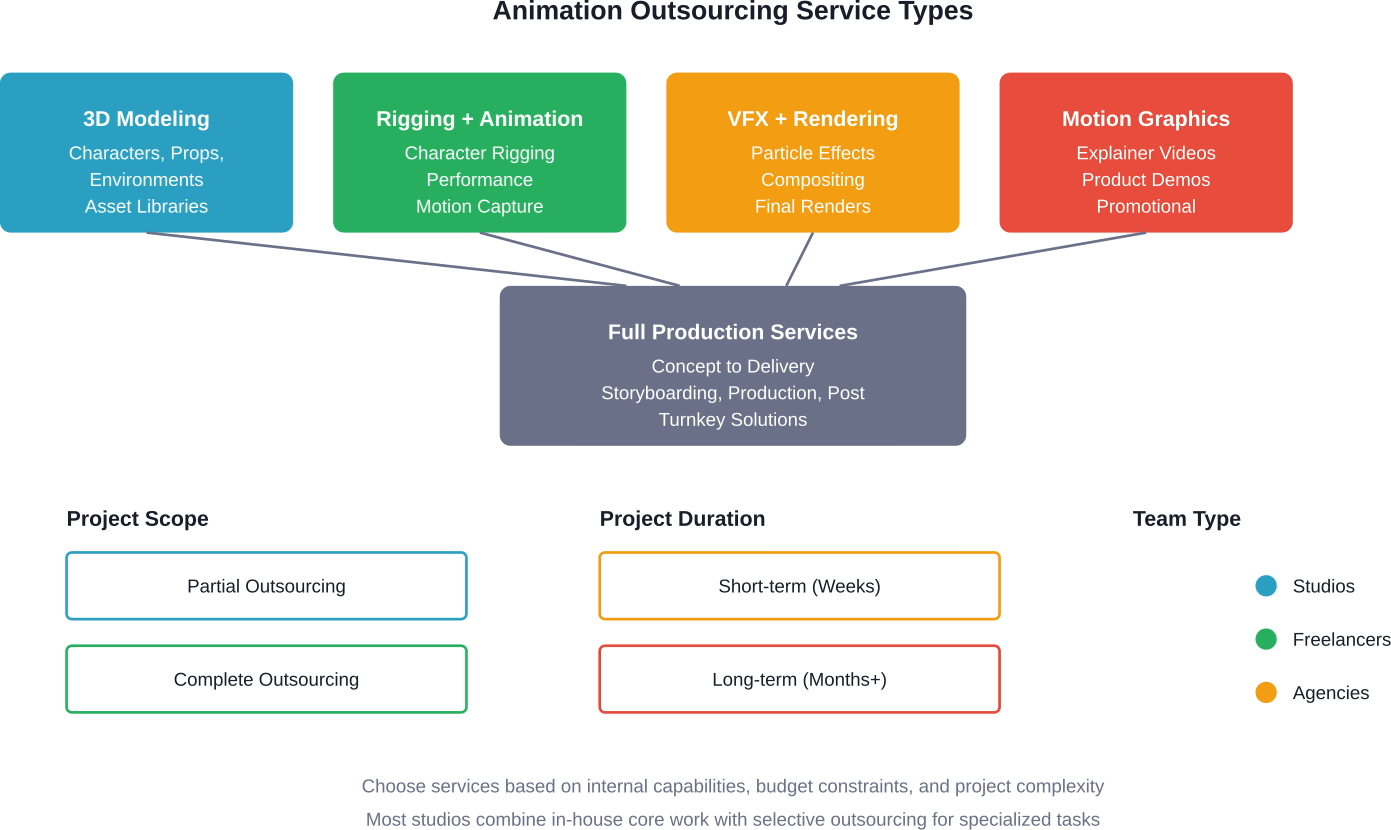
Animation outsourcing means contracting external studios, agencies, or freelancers to create animated content instead of producing everything internally. The practice spans from handing off specific production phases—like modeling or rigging—to outsourcing entire animation projects from concept to final render.
Companies outsource animation for three primary reasons: accessing specialized skills they lack in-house, scaling production capacity quickly without hiring full-time staff, or reducing costs by working with studios in regions with lower labor rates.
The model works for projects of all sizes. A startup might outsource a 30-second explainer video. A game studio might contract character modeling for an entire roster. A streaming platform might partner with overseas studios to produce full animated series.
Types of Animation Services You Can Outsource
Not all animation outsourcing looks the same. Different projects require different specialist skills.
3D Modeling and Asset Creation
Character models, environment assets, props, and vehicles. Studios can outsource the creation of individual 3D models or entire asset libraries. A survey conducted among industry leaders showed that 44 percent of them thought that the creation of 3D models would be impacted by emerging technologies and outsourcing trends.
Character Rigging and Animation
Rigging creates the skeletal structure that allows 3D models to move. Character animation brings those rigs to life with movement and performance. Both require specialized technical skills that not every studio maintains internally.
Visual Effects and Rendering
VFX work includes particle effects, simulations, compositing, and post-production polish. The U.K. recently improved its tax incentives for VFX work, offering a net rebate of 29.25% for VFX, which is also now exempt from the 80% cap on eligible expenditure, demonstrating how competitive the global VFX outsourcing market has become.
Motion Graphics and Explainer Videos
Shorter-form content like promotional videos, product demonstrations, and educational content. These projects typically have faster turnaround times and lower budgets than feature-length work.
Full Production Services
Some studios offer end-to-end production services, handling everything from concept development and storyboarding through final delivery. This approach works well when internal teams lack animation expertise entirely.
When Should Studios Consider Outsourcing?
Outsourcing makes strategic sense in specific situations. Recognizing these scenarios helps prevent both over-reliance on external partners and missed opportunities for efficiency gains.
The clearest case appears when specialized skills are needed that the internal team lacks. Building expertise in every animation discipline is expensive and time-consuming. Outsourcing specific technical work—like complex fluid simulations or photorealistic rendering—often beats hiring specialists for one-off projects.
Capacity crunches drive many outsourcing decisions. When project deadlines compress or multiple productions overlap, external partners provide flexible capacity without the overhead of permanent staff. Even major studios like Pixar, which laid off 14% of its workforce, rely on scalable external resources to handle production peaks.
Budget constraints also factor in. Studios in regions with higher labor costs can achieve significant savings by partnering with skilled teams in countries with lower operational expenses. The global animation industry has matured to the point where quality work is available across multiple regions and price points.
Then there's the focus question. Internal teams gain efficiency when they concentrate on core competencies while outsourcing peripheral work. A game studio might keep character design and animation direction in-house while outsourcing environmental modeling and texture work.

Build a Stable 3D Animation Outsourcing Team
3D animation outsourcing requires skilled artists who remain consistent across production cycles. NeoWork provides remote 3D animators who integrate into your tools and pipelines. Their 91% annualized teammate retention rate and 3.2% candidate selectivity rate reduce turnover and production disruption. This supports predictable output and quality control.
Ready to Scale 3D Animation Production?
Talk with NeoWork to:
- assemble a vetted 3D animation team
- maintain consistent creative direction
- scale capacity based on project needs
👉 Reach out to NeoWork to discuss 3D animation outsourcing.
The Animation Production Workflow
Understanding the typical outsourcing workflow helps set realistic expectations and identify potential friction points before they cause problems.
Project Definition and Briefing
Everything starts with a comprehensive creative brief. This document defines the project scope, deliverables, technical specifications, style references, target audience, and desired outcomes. The more detailed the brief, the fewer revisions later.
Budget and timeline get established upfront. Based on the brief, studios typically provide cost estimates and production schedules. Many agencies work on a 50 percent advance payment model, with the remainder due upon delivery.
Concept Development and Approval
Initial concept work includes storyboards, style frames, and rough animatics. This phase establishes the visual direction before significant production resources get committed. Approval gates at this stage prevent expensive changes downstream.
Production Phase
The bulk of the work happens here: modeling, texturing, rigging, animation, lighting, and rendering. Regular milestone reviews ensure the work stays aligned with the creative vision. Communication frequency matters—weekly check-ins work well for most projects.
Revisions and Refinement
Contracts typically specify a set number of revision rounds. Clear, consolidated feedback prevents scope creep and keeps projects on schedule. Vague notes like "make it pop" waste time; specific technical direction like "increase rim light intensity by 30 percent" gets results.
Final Delivery
Delivered files should match the technical specifications defined in the brief: resolution, frame rate, color space, file formats, and naming conventions. Professional studios provide organized file structures and documentation.
Choosing the Right Animation Partner
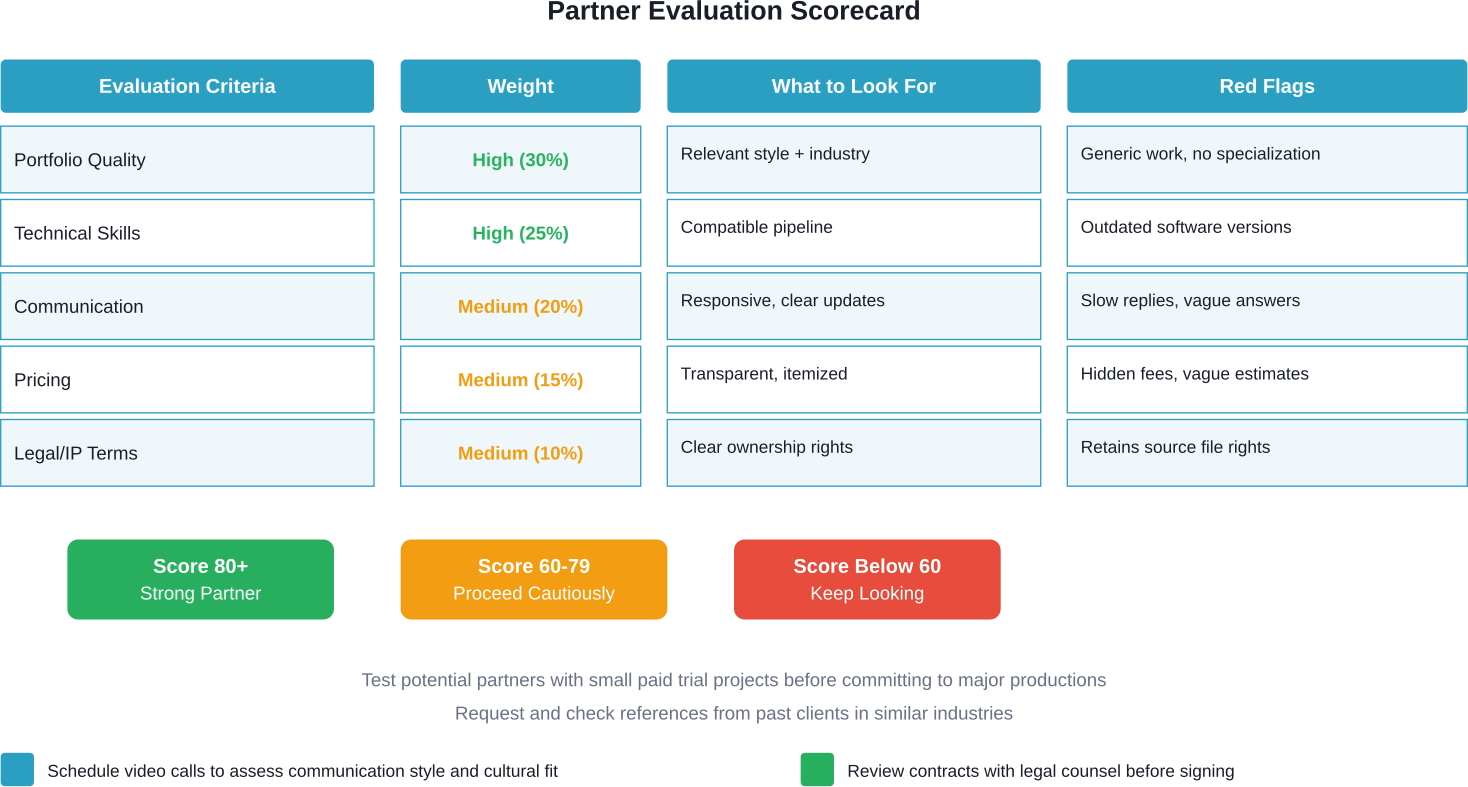
Partner selection determines project success more than any other factor. The wrong studio creates headaches; the right partner becomes a long-term strategic asset.
Portfolio and Specialization
Review past work carefully. Does the studio's portfolio demonstrate proficiency in the specific style and technical requirements needed? A studio great at stylized character work might not excel at photorealistic product visualization.
Look for relevant industry experience. Studios familiar with specific verticals—gaming, advertising, architectural visualization—understand those markets' unique requirements and workflows.
Technical Capabilities
Confirm the studio uses compatible software and file formats. Mismatched technical stacks create conversion headaches and quality loss. Ask about their rendering infrastructure, pipeline tools, and quality control processes.
Scalability matters for larger projects. Can the studio expand team size if the project scope increases? What's their maximum concurrent project capacity?
Communication and Project Management
Time zone differences affect communication. Some overlap in working hours facilitates real-time collaboration. Studios with strong project management practices provide regular updates without constant prompting.
Language proficiency impacts projects requiring nuanced creative direction. Misunderstood notes lead to wasted revision cycles.
Legal and Business Considerations
Clear contracts prevent disputes. Key terms include intellectual property ownership, confidentiality provisions, revision limits, delivery timelines, and payment schedules. Who owns the source files? Can the studio use the work in their portfolio?
Payment terms vary. Some studios require 50 percent upfront, others work on milestone-based payment schedules. Understand what happens if deadlines slip or quality doesn't meet specifications.
Common Outsourcing Challenges and Solutions
Even well-planned outsourcing relationships hit snags. Anticipating common problems helps minimize their impact.
Communication Breakdowns
Misunderstandings cause the majority of outsourcing frustrations. Written instructions get misinterpreted. Visual references prove more reliable than lengthy descriptions. Video annotations work well for communicating revision notes.
Time zone gaps complicate real-time collaboration. Establish clear asynchronous communication protocols. Daily written updates replace some need for live meetings.
Quality Control Issues
Quality expectations need explicit definition upfront. What level of detail is required? What's the acceptance criteria? Vague standards lead to disappointment.
Build review gates into the workflow. Catching problems at the modeling stage costs less than discovering them after animation is complete.
Scope Creep and Timeline Slips
Changes during production push deadlines and inflate costs. Contracts should define how change requests get handled: additional fees, revised timelines, formal approval processes.
Both parties need realistic timeline expectations. Rushed schedules compromise quality. Buffer time for unexpected complications prevents panic.
File Management and Technical Issues
Incompatible file formats, missing assets, and version control problems disrupt workflows. Establish clear file naming conventions, folder structures, and versioning systems before production starts.
Large file transfers require reliable infrastructure. Cloud storage solutions with version history prevent accidental overwrites and provide backup security.
Intellectual Property Concerns
Who owns the final work? Who owns the source files? Can the studio use the work in their portfolio or demo reel? These questions need answers before work begins, documented in writing.
Non-disclosure agreements protect confidential project information. For projects with significant IP value, consider additional security measures like restricted file access and watermarked review materials.
Cost Considerations and Budgeting
Animation costs vary significantly based on project complexity, duration, style, and vendor location. Establishing realistic budget expectations prevents surprises.
Pricing models differ across vendors. Some charge per-second of finished animation. Others bill hourly rates. Fixed-price quotes work well for clearly defined projects; time-and-materials arrangements suit exploratory or evolving work.
Regional cost variations are substantial. Studios in North America and Western Europe typically charge premium rates. Eastern European, Asian, and South American studios often provide comparable quality at lower price points. The U.K.'s improved VFX tax incentives—with net rebates reaching 29.25 percent for qualifying work—demonstrate how government policies impact regional competitiveness.
Hidden costs catch unprepared clients. Revision rounds beyond the contracted amount incur fees. Rush charges apply for compressed timelines. File format conversions and technical troubleshooting sometimes bill separately.
Value doesn't always correlate with price. The cheapest option frequently proves most expensive when poor quality requires rework. Mid-tier pricing often represents the best balance of quality, reliability, and cost.
Maximizing Outsourcing Success
Several best practices separate successful outsourcing relationships from problematic ones.
Start small. Test new partners with limited-scope projects before committing to major productions. A short test project reveals work quality, communication effectiveness, and reliability without major risk.
Invest time in comprehensive creative briefs. The effort spent clarifying requirements upfront saves multiples in revision time later. Include visual references, technical specifications, and example work that captures the desired aesthetic.
Establish clear communication protocols. Who's the primary point of contact? How frequently do updates occur? What format should status reports take? Which communication channels get used for different purposes?
Build relationships, not just transactions. Studios that understand project goals and brand identity deliver better creative work. Long-term partnerships develop institutional knowledge that improves efficiency over time.
Respect the expertise external partners bring. Studios specializing in animation have developed processes and techniques through years of experience. Collaborate rather than micromanage.
Document everything. Written agreements prevent disputes. Project documentation captures decisions and approvals. Version control tracks file changes and prevents confusion.
The Future of Animation Outsourcing
The animation outsourcing landscape continues evolving rapidly. Several trends are reshaping how studios approach external partnerships.
Remote work normalization has erased traditional geographic boundaries. Studios can now assemble distributed teams from anywhere with reliable internet. This democratization increases competition while expanding access to global talent pools.
Artificial intelligence impacts multiple production phases. A survey conducted among industry leaders showed that 44 percent of them thought that the creation of 3D models would be impacted by emerging technologies, with character and environment design following closely. These tools won't replace artists entirely, but they're changing workflows and skill requirements.
Recent data from Animation Magazine's VFX and Animation World Atlas 2025 Edition reveals continued global industry expansion. Toho's 'TOHO Vision 2032' medium-term management plan targets an increase in anime business revenue, aiming for significant growth, but the 200% growth figure refers specifically to previous year-on-year leaps or long-term revenue targets for the animation segment as a whole by 2032.
Specialization increases across the industry. Studios focus on specific niches—architectural visualization, medical animation, gaming cinematics—developing deep expertise in narrow domains. This specialization makes strategic outsourcing more valuable as projects require increasingly specific technical skills.
Taking the Next Step
Animation outsourcing offers strategic advantages for studios and businesses seeking to scale production capacity, access specialized skills, or optimize budgets. Success requires thoughtful partner selection, clear communication, realistic expectations, and structured processes.
The global animation market continues expanding, with major companies increasing production targets and emerging technologies reshaping workflows. Studios that develop effective outsourcing strategies position themselves to compete in this evolving landscape.
Start by clearly defining project requirements and success criteria. Research potential partners thoroughly, reviewing portfolios and checking references. Test relationships with limited-scope projects before major commitments. Invest effort in comprehensive briefs and establish clear communication protocols. Document agreements and build long-term relationships rather than treating each project as an isolated transaction.
The right outsourcing partner becomes a strategic asset—an extension of internal capabilities that accelerates production, enhances quality, and frees creative teams to focus on core competencies. The wrong partner creates frustration and wasted resources.
Choose carefully, communicate clearly, and build relationships based on mutual respect and shared success. The animation industry's global nature creates unprecedented opportunities for collaboration. Studios that master strategic outsourcing gain competitive advantages in cost, capacity, and creative capability.
Frequently Asked Questions
Topics
3D Animation Outsourcing Guide: Partner Selection 2026

3D animation outsourcing involves hiring external studios or freelancers to handle animation production instead of managing it in-house. This comprehensive guide covers when to outsource, how to select the right partner, what the production process looks like, and how to avoid common pitfalls while maximizing quality and budget efficiency.
The animation production market operates somewhere between $50 billion and $70 billion globally, and that figure continues climbing. Entertainment giants like Disney and IMAX have been outsourcing portions of their animation work to independent Asian studios for years.
But here's the thing—successful animation outsourcing isn't about finding the cheapest vendor. It's about strategic partnership, clear communication, and understanding what you're buying.
This guide breaks down everything studios and businesses need to know about outsourcing 3D animation work in 2026.
What Is Animation Outsourcing?
Animation outsourcing means contracting external studios, agencies, or freelancers to create animated content instead of producing everything internally. The practice spans from handing off specific production phases—like modeling or rigging—to outsourcing entire animation projects from concept to final render.
Companies outsource animation for three primary reasons: accessing specialized skills they lack in-house, scaling production capacity quickly without hiring full-time staff, or reducing costs by working with studios in regions with lower labor rates.
The model works for projects of all sizes. A startup might outsource a 30-second explainer video. A game studio might contract character modeling for an entire roster. A streaming platform might partner with overseas studios to produce full animated series.
Types of Animation Services You Can Outsource
Not all animation outsourcing looks the same. Different projects require different specialist skills.
3D Modeling and Asset Creation
Character models, environment assets, props, and vehicles. Studios can outsource the creation of individual 3D models or entire asset libraries. A survey conducted among industry leaders showed that 44 percent of them thought that the creation of 3D models would be impacted by emerging technologies and outsourcing trends.
Character Rigging and Animation
Rigging creates the skeletal structure that allows 3D models to move. Character animation brings those rigs to life with movement and performance. Both require specialized technical skills that not every studio maintains internally.
Visual Effects and Rendering
VFX work includes particle effects, simulations, compositing, and post-production polish. The U.K. recently improved its tax incentives for VFX work, offering a net rebate of 29.25% for VFX, which is also now exempt from the 80% cap on eligible expenditure, demonstrating how competitive the global VFX outsourcing market has become.
Motion Graphics and Explainer Videos
Shorter-form content like promotional videos, product demonstrations, and educational content. These projects typically have faster turnaround times and lower budgets than feature-length work.
Full Production Services
Some studios offer end-to-end production services, handling everything from concept development and storyboarding through final delivery. This approach works well when internal teams lack animation expertise entirely.
When Should Studios Consider Outsourcing?
Outsourcing makes strategic sense in specific situations. Recognizing these scenarios helps prevent both over-reliance on external partners and missed opportunities for efficiency gains.
The clearest case appears when specialized skills are needed that the internal team lacks. Building expertise in every animation discipline is expensive and time-consuming. Outsourcing specific technical work—like complex fluid simulations or photorealistic rendering—often beats hiring specialists for one-off projects.
Capacity crunches drive many outsourcing decisions. When project deadlines compress or multiple productions overlap, external partners provide flexible capacity without the overhead of permanent staff. Even major studios like Pixar, which laid off 14% of its workforce, rely on scalable external resources to handle production peaks.
Budget constraints also factor in. Studios in regions with higher labor costs can achieve significant savings by partnering with skilled teams in countries with lower operational expenses. The global animation industry has matured to the point where quality work is available across multiple regions and price points.
Then there's the focus question. Internal teams gain efficiency when they concentrate on core competencies while outsourcing peripheral work. A game studio might keep character design and animation direction in-house while outsourcing environmental modeling and texture work.
Build a Stable 3D Animation Outsourcing Team
3D animation outsourcing requires skilled artists who remain consistent across production cycles. NeoWork provides remote 3D animators who integrate into your tools and pipelines. Their 91% annualized teammate retention rate and 3.2% candidate selectivity rate reduce turnover and production disruption. This supports predictable output and quality control.
Ready to Scale 3D Animation Production?
Talk with NeoWork to:
- assemble a vetted 3D animation team
- maintain consistent creative direction
- scale capacity based on project needs
👉 Reach out to NeoWork to discuss 3D animation outsourcing.
The Animation Production Workflow
Understanding the typical outsourcing workflow helps set realistic expectations and identify potential friction points before they cause problems.
Project Definition and Briefing
Everything starts with a comprehensive creative brief. This document defines the project scope, deliverables, technical specifications, style references, target audience, and desired outcomes. The more detailed the brief, the fewer revisions later.
Budget and timeline get established upfront. Based on the brief, studios typically provide cost estimates and production schedules. Many agencies work on a 50 percent advance payment model, with the remainder due upon delivery.
Concept Development and Approval
Initial concept work includes storyboards, style frames, and rough animatics. This phase establishes the visual direction before significant production resources get committed. Approval gates at this stage prevent expensive changes downstream.
Production Phase
The bulk of the work happens here: modeling, texturing, rigging, animation, lighting, and rendering. Regular milestone reviews ensure the work stays aligned with the creative vision. Communication frequency matters—weekly check-ins work well for most projects.
Revisions and Refinement
Contracts typically specify a set number of revision rounds. Clear, consolidated feedback prevents scope creep and keeps projects on schedule. Vague notes like "make it pop" waste time; specific technical direction like "increase rim light intensity by 30 percent" gets results.
Final Delivery
Delivered files should match the technical specifications defined in the brief: resolution, frame rate, color space, file formats, and naming conventions. Professional studios provide organized file structures and documentation.
Choosing the Right Animation Partner
Partner selection determines project success more than any other factor. The wrong studio creates headaches; the right partner becomes a long-term strategic asset.
Portfolio and Specialization
Review past work carefully. Does the studio's portfolio demonstrate proficiency in the specific style and technical requirements needed? A studio great at stylized character work might not excel at photorealistic product visualization.
Look for relevant industry experience. Studios familiar with specific verticals—gaming, advertising, architectural visualization—understand those markets' unique requirements and workflows.
Technical Capabilities
Confirm the studio uses compatible software and file formats. Mismatched technical stacks create conversion headaches and quality loss. Ask about their rendering infrastructure, pipeline tools, and quality control processes.
Scalability matters for larger projects. Can the studio expand team size if the project scope increases? What's their maximum concurrent project capacity?
Communication and Project Management
Time zone differences affect communication. Some overlap in working hours facilitates real-time collaboration. Studios with strong project management practices provide regular updates without constant prompting.
Language proficiency impacts projects requiring nuanced creative direction. Misunderstood notes lead to wasted revision cycles.
Legal and Business Considerations
Clear contracts prevent disputes. Key terms include intellectual property ownership, confidentiality provisions, revision limits, delivery timelines, and payment schedules. Who owns the source files? Can the studio use the work in their portfolio?
Payment terms vary. Some studios require 50 percent upfront, others work on milestone-based payment schedules. Understand what happens if deadlines slip or quality doesn't meet specifications.
Common Outsourcing Challenges and Solutions
Even well-planned outsourcing relationships hit snags. Anticipating common problems helps minimize their impact.
Communication Breakdowns
Misunderstandings cause the majority of outsourcing frustrations. Written instructions get misinterpreted. Visual references prove more reliable than lengthy descriptions. Video annotations work well for communicating revision notes.
Time zone gaps complicate real-time collaboration. Establish clear asynchronous communication protocols. Daily written updates replace some need for live meetings.
Quality Control Issues
Quality expectations need explicit definition upfront. What level of detail is required? What's the acceptance criteria? Vague standards lead to disappointment.
Build review gates into the workflow. Catching problems at the modeling stage costs less than discovering them after animation is complete.
Scope Creep and Timeline Slips
Changes during production push deadlines and inflate costs. Contracts should define how change requests get handled: additional fees, revised timelines, formal approval processes.
Both parties need realistic timeline expectations. Rushed schedules compromise quality. Buffer time for unexpected complications prevents panic.
File Management and Technical Issues
Incompatible file formats, missing assets, and version control problems disrupt workflows. Establish clear file naming conventions, folder structures, and versioning systems before production starts.
Large file transfers require reliable infrastructure. Cloud storage solutions with version history prevent accidental overwrites and provide backup security.
Intellectual Property Concerns
Who owns the final work? Who owns the source files? Can the studio use the work in their portfolio or demo reel? These questions need answers before work begins, documented in writing.
Non-disclosure agreements protect confidential project information. For projects with significant IP value, consider additional security measures like restricted file access and watermarked review materials.
Cost Considerations and Budgeting
Animation costs vary significantly based on project complexity, duration, style, and vendor location. Establishing realistic budget expectations prevents surprises.
Pricing models differ across vendors. Some charge per-second of finished animation. Others bill hourly rates. Fixed-price quotes work well for clearly defined projects; time-and-materials arrangements suit exploratory or evolving work.
Regional cost variations are substantial. Studios in North America and Western Europe typically charge premium rates. Eastern European, Asian, and South American studios often provide comparable quality at lower price points. The U.K.'s improved VFX tax incentives—with net rebates reaching 29.25 percent for qualifying work—demonstrate how government policies impact regional competitiveness.
Hidden costs catch unprepared clients. Revision rounds beyond the contracted amount incur fees. Rush charges apply for compressed timelines. File format conversions and technical troubleshooting sometimes bill separately.
Value doesn't always correlate with price. The cheapest option frequently proves most expensive when poor quality requires rework. Mid-tier pricing often represents the best balance of quality, reliability, and cost.
Maximizing Outsourcing Success
Several best practices separate successful outsourcing relationships from problematic ones.
Start small. Test new partners with limited-scope projects before committing to major productions. A short test project reveals work quality, communication effectiveness, and reliability without major risk.
Invest time in comprehensive creative briefs. The effort spent clarifying requirements upfront saves multiples in revision time later. Include visual references, technical specifications, and example work that captures the desired aesthetic.
Establish clear communication protocols. Who's the primary point of contact? How frequently do updates occur? What format should status reports take? Which communication channels get used for different purposes?
Build relationships, not just transactions. Studios that understand project goals and brand identity deliver better creative work. Long-term partnerships develop institutional knowledge that improves efficiency over time.
Respect the expertise external partners bring. Studios specializing in animation have developed processes and techniques through years of experience. Collaborate rather than micromanage.
Document everything. Written agreements prevent disputes. Project documentation captures decisions and approvals. Version control tracks file changes and prevents confusion.
The Future of Animation Outsourcing
The animation outsourcing landscape continues evolving rapidly. Several trends are reshaping how studios approach external partnerships.
Remote work normalization has erased traditional geographic boundaries. Studios can now assemble distributed teams from anywhere with reliable internet. This democratization increases competition while expanding access to global talent pools.
Artificial intelligence impacts multiple production phases. A survey conducted among industry leaders showed that 44 percent of them thought that the creation of 3D models would be impacted by emerging technologies, with character and environment design following closely. These tools won't replace artists entirely, but they're changing workflows and skill requirements.
Recent data from Animation Magazine's VFX and Animation World Atlas 2025 Edition reveals continued global industry expansion. Toho's 'TOHO Vision 2032' medium-term management plan targets an increase in anime business revenue, aiming for significant growth, but the 200% growth figure refers specifically to previous year-on-year leaps or long-term revenue targets for the animation segment as a whole by 2032.
Specialization increases across the industry. Studios focus on specific niches—architectural visualization, medical animation, gaming cinematics—developing deep expertise in narrow domains. This specialization makes strategic outsourcing more valuable as projects require increasingly specific technical skills.
Taking the Next Step
Animation outsourcing offers strategic advantages for studios and businesses seeking to scale production capacity, access specialized skills, or optimize budgets. Success requires thoughtful partner selection, clear communication, realistic expectations, and structured processes.
The global animation market continues expanding, with major companies increasing production targets and emerging technologies reshaping workflows. Studios that develop effective outsourcing strategies position themselves to compete in this evolving landscape.
Start by clearly defining project requirements and success criteria. Research potential partners thoroughly, reviewing portfolios and checking references. Test relationships with limited-scope projects before major commitments. Invest effort in comprehensive briefs and establish clear communication protocols. Document agreements and build long-term relationships rather than treating each project as an isolated transaction.
The right outsourcing partner becomes a strategic asset—an extension of internal capabilities that accelerates production, enhances quality, and frees creative teams to focus on core competencies. The wrong partner creates frustration and wasted resources.
Choose carefully, communicate clearly, and build relationships based on mutual respect and shared success. The animation industry's global nature creates unprecedented opportunities for collaboration. Studios that master strategic outsourcing gain competitive advantages in cost, capacity, and creative capability.
Frequently Asked Questions
Topics
Related Blogs
Related Podcasts


.webp)
.webp)



