

.avif)
.avif)

3D Art Outsourcing Guide: Choose & Work With Studios 2026

.svg)

3D art outsourcing involves partnering with external studios to create game assets, product visualizations, or architectural renders. The 3D rendering market reached $4.85 billion in 2025 and is projected to hit $19.82 billion by 2033. Successful outsourcing requires defining clear project scope, selecting studios with relevant portfolio experience, establishing detailed art pipelines, and implementing structured feedback systems to maintain quality while reducing costs by 40-60% compared to in-house production.
Game developers face an impossible equation: AAA-quality visuals with indie budgets and tight deadlines. The solution isn't working harder or hiring more staff.
It's outsourcing strategically.
The 3D rendering market was valued at $4.85 billion in 2025, according to Grand View Research, and is projected to reach $19.82 billion by 2033. That explosive growth reflects a fundamental shift in how games, products, and experiences get built. External studios aren't just backup anymore—they're core production partners.
But here's the thing. Outsourcing done wrong produces generic assets, blown budgets, and endless revision cycles. Done right, it delivers quality that rivals top-tier internal teams at a fraction of the cost.
This guide breaks down the entire outsourcing process, from studio selection to final delivery, using proven frameworks that reduce risk and maximize output.
What Is 3D Art Outsourcing?
3D art outsourcing means contracting external studios or individual artists to create three-dimensional assets for games, films, products, or architectural projects. These assets range from character models and environments to product renders and animated sequences.
The practice spans multiple industries. Game studios outsource character models and level designs. E-commerce companies need product visualizations. Architectural firms require photorealistic renders. Medical device companies commission anatomical models.
According to the International Game Developers Association (IGDA), game credits are inconsistent throughout the industry, with employees often mislabeled or left off credits entirely. A 2006 IGDA survey revealed that 35% of game writers either don't ever or only sometimes receive proper credit. However, a more recent 2023 IGDA survey found that 51.3% of respondents either "never," "seldom," or "sometimes" receive official credit for their efforts. This highlights the importance of establishing clear contracts and credit agreements when outsourcing.
The scope varies dramatically. Some projects involve a single character model. Others require entire art pipelines with hundreds of assets produced over months.
Why Studios Outsource 3D Art Production
Cost reduction drives most outsourcing decisions. Building an internal team means salaries, benefits, software licenses, hardware, office space, and management overhead. Outsourcing converts fixed costs into variable expenses tied directly to project needs.
But wait. The benefits go beyond finance.
Speed matters just as much. External studios can scale teams up or down instantly. Need 50 environment assets in six weeks? An outsourcing partner with 30 artists handles that. An internal team of five would take six months.
Specialized expertise represents another advantage. Creating photoreal architectural renders requires different skills than stylized game characters. Outsourcing lets projects tap specialized knowledge without permanent hires.
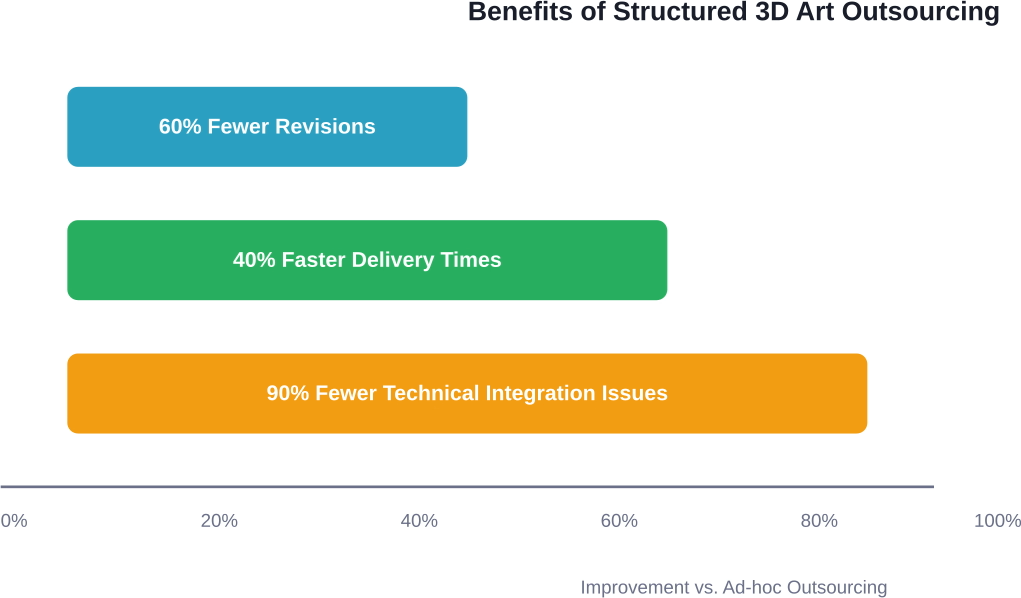
Effective 3D art outsourcing workflows, including milestone-based reviews and clear technical briefs, are recognized industry best practices for reducing revisions and accelerating delivery, though specific percentage improvements vary by project scale.
Scale Production With 3D Art Outsourcing

3D art outsourcing only works when teams stay aligned with your visual standards. NeoWork helps studios build dedicated remote 3D art teams for environments, characters, and assets. With a 91% annualized teammate retention rate and a 3.2% candidate selectivity rate, NeoWork ensures long-term team stability and selective hiring. That continuity supports asset consistency and smoother production cycles.
Ready to Expand Your 3D Art Team?
Talk with NeoWork to:
- build a dedicated 3D art pipeline
- reduce production bottlenecks
- maintain high-quality asset standards
👉 Connect with NeoWork to structure your 3D art outsourcing model.
Types of 3D Art Services Available
Understanding service categories helps match project needs to studio capabilities.
Character Modeling and Rigging
Character work includes modeling (creating the 3D geometry), texturing (applying surface details), and rigging (building the skeletal structure for animation). Some studios specialize in stylized characters for mobile games. Others focus on photoreal humans for AAA titles or films.
Environment and Level Design
Environment artists build worlds—landscapes, buildings, props, vegetation. Level design involves layout and gameplay flow. Some projects need modular asset libraries that artists can recombine. Others require unique hero pieces.
Product Visualization and Rendering
E-commerce and marketing teams need photorealistic product renders. These require different skills than game assets—perfect lighting, material accuracy, and sometimes animation for 360-degree views.
Animation and Motion Capture
Animation services range from keyframe animation (hand-animated movement) to motion capture cleanup (refining recorded performances). Facial animation represents a specialized subset requiring advanced rigging knowledge.
Technical Art and Optimization
Technical artists ensure assets meet performance budgets—polygon counts, texture memory, shader complexity. Mobile games especially need aggressive optimization. Some studios offer dedicated technical art services to guarantee assets run smoothly on target platforms.
How to Select the Right 3D Art Outsourcing Studio
Studio selection significantly impacts project outcomes. Here's how to evaluate candidates systematically.
Portfolio Analysis
Portfolios reveal actual capability better than marketing claims. Look for projects matching the target art style, technical requirements, and complexity level.
Real talk: generic portfolios with scattered styles suggest a studio without specialized expertise. Strong portfolios show depth in specific niches—stylized mobile characters, realistic environments, architectural renders.
Check for consistency. One impressive piece might be an outlier. Multiple projects at the same quality level indicate reliable processes.
Technical Pipeline Compatibility
Software and pipeline compatibility prevents costly technical issues. Studios should work with the project's game engine (Unity, Unreal), 3D software (Maya, Blender, 3ds Max), and file formats.
Ask specific questions: What's the polygon budget for characters? Which texture resolution do they typically deliver? How do they handle LOD (level of detail) models? Can they export directly to the target engine?
According to industry best practices documented in competitor outsourcing guides, technical integration issues drop significantly when studios establish clear technical specifications upfront.
Communication Structure
Communication breakdowns cause more project failures than skill gaps. Evaluate how studios handle feedback, revisions, and progress updates.
Key indicators include defined contact points (dedicated project managers), regular check-in schedules, and documented feedback processes. Time zone overlap matters for real-time collaboration, though asynchronous workflows can succeed with proper structure.
Credit and Contract Terms
The IGDA Game Credits Special Interest Group promotes best practices for attribution. Proper crediting affects career prospects and awards eligibility. Contracts should specify how contributors will be credited, intellectual property ownership, and revision policies.
Budget, time, tools, technology, and expertise represent the primary reasons game developers outsource projects, according to dreamfarmstudios.com. Clear contracts prevent disputes over these elements.
The 3D Art Outsourcing Workflow
Structured workflows prevent the chaos that plagues poorly managed outsourcing projects.
Definition Phase
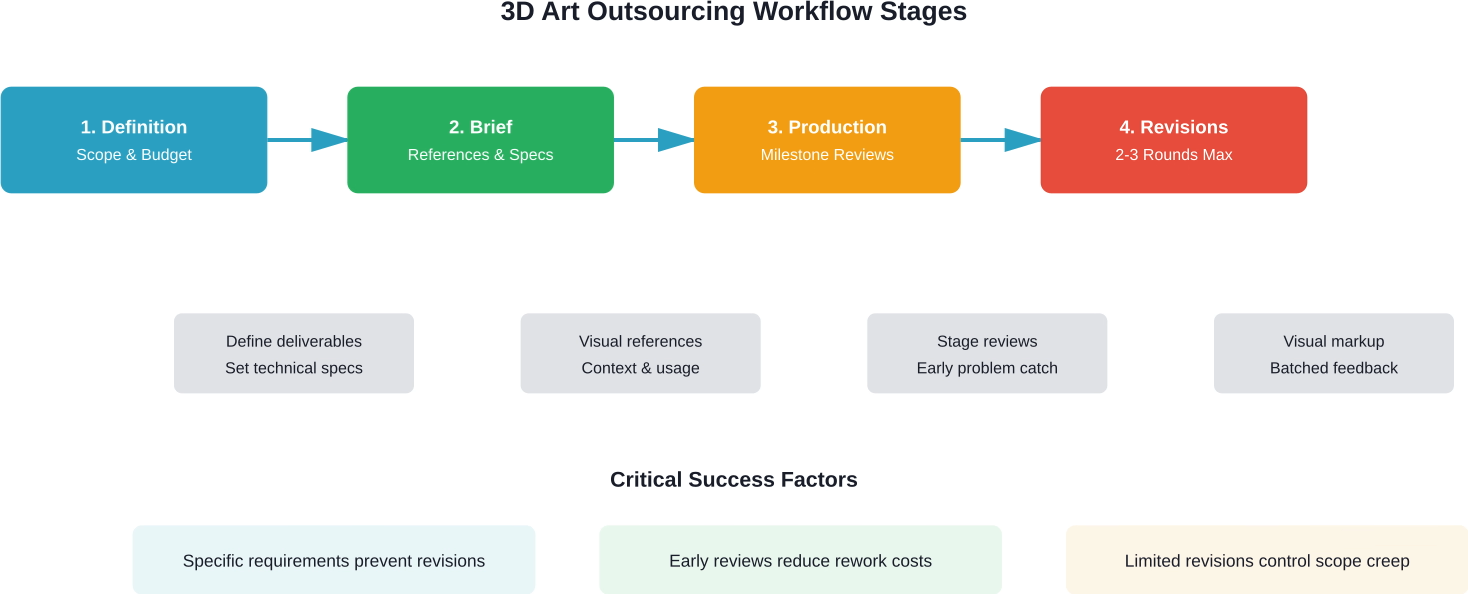
Everything starts with scope definition. What exactly needs to be created? How many assets? What quality level? Which technical specifications?
3D modeling costs vary based on industry and project scope. The definition phase establishes project scope, deliverables, budget, and final delivery date in collaboration with the service provider. Vague definitions here multiply problems later.
Document art style references, technical requirements (polygon counts, texture resolution, file formats), and delivery milestones. The more specific this document, the fewer surprises emerge during production.
Brief Development
The creative brief translates requirements into actionable instructions for artists. Strong briefs include visual references (concept art, mood boards, reference photos), technical specifications, and context about how assets will be used.
Be specific in feedback requests. "Make it more heroic" helps nobody. "Increase shoulder width by 15% and add angular design elements to the armor" provides clear direction.
Production Milestones
Break production into stages: blockout/greybox, high-poly sculpt, low-poly model, texturing, rigging, final delivery. Schedule reviews at each milestone rather than waiting for final assets.
Early reviews catch problems when they're cheap to fix. Discovering proportion issues after texturing wastes days of work. Catching them at blockout costs an hour.
Feedback and Revision Cycles
Structured feedback prevents endless revision loops. Use visual markup tools—screenshots with arrows and annotations eliminate confusion better than text descriptions.
Consolidate feedback into single batches per milestone. Dribbling out comments over days slows production and frustrates artists. Gather all stakeholder input, then deliver it together.
Limit revision rounds in contracts—typically two to three rounds per asset. Unlimited revisions incentivize lazy feedback and scope creep.
Quality Assurance and Delivery
Final QA verifies assets meet all technical specifications before integration. Check polygon counts, texture sizes, naming conventions, proper rigging, and engine compatibility.
Delivery includes not just the final assets but also source files, texture maps, and documentation. Proper file organization prevents future headaches when assets need updates.
Common Outsourcing Challenges and Solutions
Even well-planned projects hit obstacles. Here's how to handle the most common ones.
Style Consistency Issues
Assets from external studios sometimes don't match existing art. Prevention works better than fixing this later.
Provide comprehensive style guides with actual in-game assets as references, not just concept art. Include technical examples showing polyflow, texturing style, and material setup. Schedule early sample assets to verify style match before bulk production begins.
Scope Creep and Budget Overruns
Projects expand when requirements aren't locked down. Changes mid-production cost 3-5x more than getting specifications right initially.
Lock core requirements before production starts. Handle new requests as formal change orders with updated budgets and timelines. Separate "must-have" from "nice-to-have" features during planning.
Communication Breakdowns
Time zones, language barriers, and unclear processes all hamper communication. Structured approaches solve most of these problems.
Establish asynchronous communication protocols with clear response time expectations. Use visual communication tools—video walkthroughs, annotated screenshots, 3D viewport recordings. Schedule regular status meetings but don't require real-time collaboration for routine work.
Technical Integration Problems
Assets that don't import properly or perform poorly waste time fixing. Upfront technical validation prevents this.
Provide test assets that studios can use to verify their pipeline exports correctly. Require technical specifications in writing with sample assets demonstrating the requirements. Schedule technical reviews separate from artistic reviews.
Cost Structures and Budget Planning
3D modeling costs vary based on industry and project scope. Several pricing models exist, each with different trade-offs.
Per-Asset Pricing
Studios quote fixed prices per asset type—$500 per character, $200 per prop, $1,000 per environment. This works well when asset requirements are clearly defined and quantities are known.
Benefits include predictable costs and easy budget scaling. The downside is that revision costs can add up if requirements weren't specified properly.
Hourly or Daily Rates
Time-based pricing charges for artist hours or days. Rates vary by studio location, artist seniority, and specialization.
This model suits exploratory projects where scope isn't fully defined. But it requires trust and strong project management to avoid budget overruns.
Project-Based Fixed Bids
Studios bid a fixed price for the entire project scope. This transfers budget risk to the studio but requires extremely detailed specifications upfront.
Changes to requirements typically trigger change orders with additional costs. This model works best for well-defined projects with minimal expected changes.
Emerging Trends in 3D Art Outsourcing
The industry continues evolving. Several trends are reshaping how outsourcing works in 2026.
AI-Assisted Production
AI tools now handle repetitive tasks like UV unwrapping, texture generation, and animation cleanup. As AI tools become more prevalent in 3D production, protecting creativity and ensuring innovation stays human-centered represents a key challenge as AI governance evolves.
AI tools are being explored for acceleration on repetitive tasks. Studios may combine automated processes with human artistic refinement, where artists refine outputs and add the details that make assets feel hand-crafted.
Real-Time Rendering Pipelines
Game engines now handle film-quality rendering in real-time. This blurs the line between game assets and cinematic content, enabling new workflows where the same assets serve multiple purposes.
Outsourcing studios that understand real-time rendering pipelines offer significant advantages. Assets built for efficient real-time performance require different approaches than offline-rendered content.
Specialized Vertical Studios
Generalist studios are giving way to specialized providers focused on specific niches—mobile game characters, architectural visualization, medical device modeling, automotive rendering.
Deep specialization enables better quality and efficiency through refined processes and specialized tools. Projects benefit from working with studios that understand their specific industry requirements.
Taking the Next Step
3D art outsourcing transforms impossible production schedules into manageable workflows. The market's growth to $4.85 billion in 2025 reflects how essential external production has become across industries.
Success comes from approaching outsourcing strategically. Define requirements precisely. Select studios based on relevant portfolio work and technical compatibility. Structure workflows with milestone reviews. Implement feedback systems that prevent endless revisions.
Studios that adopt these practices report dramatic improvements—60% fewer revisions, 40% faster delivery, 90% fewer integration problems. Those results separate strategic outsourcing from desperate scrambling.
The game development industry stretches across the entire world with diverse developers, composed of developers varying in disciplines, identities, and backgrounds, according to the IGDA. Outsourcing lets projects tap that global talent pool effectively.
Start with clear project definition. Identify which assets need external production. Document technical requirements and quality standards. Research studios with relevant experience. Request proposals from 3-5 candidates.
Build relationships gradually. Begin with small test projects before committing to large-scale production. Evaluate not just artistic quality but communication effectiveness, technical capability, and process maturity.
The studios that thrive in 2026 combine internal creative vision with external production capacity. That combination unlocks quality and scale impossible with purely internal teams.
Now it's time to define that first outsourcing project and find the right partner to bring it to life.
Frequently Asked Questions
Topics
3D Art Outsourcing Guide: Choose & Work With Studios 2026

3D art outsourcing involves partnering with external studios to create game assets, product visualizations, or architectural renders. The 3D rendering market reached $4.85 billion in 2025 and is projected to hit $19.82 billion by 2033. Successful outsourcing requires defining clear project scope, selecting studios with relevant portfolio experience, establishing detailed art pipelines, and implementing structured feedback systems to maintain quality while reducing costs by 40-60% compared to in-house production.
Game developers face an impossible equation: AAA-quality visuals with indie budgets and tight deadlines. The solution isn't working harder or hiring more staff.
It's outsourcing strategically.
The 3D rendering market was valued at $4.85 billion in 2025, according to Grand View Research, and is projected to reach $19.82 billion by 2033. That explosive growth reflects a fundamental shift in how games, products, and experiences get built. External studios aren't just backup anymore—they're core production partners.
But here's the thing. Outsourcing done wrong produces generic assets, blown budgets, and endless revision cycles. Done right, it delivers quality that rivals top-tier internal teams at a fraction of the cost.
This guide breaks down the entire outsourcing process, from studio selection to final delivery, using proven frameworks that reduce risk and maximize output.
What Is 3D Art Outsourcing?
3D art outsourcing means contracting external studios or individual artists to create three-dimensional assets for games, films, products, or architectural projects. These assets range from character models and environments to product renders and animated sequences.
The practice spans multiple industries. Game studios outsource character models and level designs. E-commerce companies need product visualizations. Architectural firms require photorealistic renders. Medical device companies commission anatomical models.
According to the International Game Developers Association (IGDA), game credits are inconsistent throughout the industry, with employees often mislabeled or left off credits entirely. A 2006 IGDA survey revealed that 35% of game writers either don't ever or only sometimes receive proper credit. However, a more recent 2023 IGDA survey found that 51.3% of respondents either "never," "seldom," or "sometimes" receive official credit for their efforts. This highlights the importance of establishing clear contracts and credit agreements when outsourcing.
The scope varies dramatically. Some projects involve a single character model. Others require entire art pipelines with hundreds of assets produced over months.
Why Studios Outsource 3D Art Production
Cost reduction drives most outsourcing decisions. Building an internal team means salaries, benefits, software licenses, hardware, office space, and management overhead. Outsourcing converts fixed costs into variable expenses tied directly to project needs.
But wait. The benefits go beyond finance.
Speed matters just as much. External studios can scale teams up or down instantly. Need 50 environment assets in six weeks? An outsourcing partner with 30 artists handles that. An internal team of five would take six months.
Specialized expertise represents another advantage. Creating photoreal architectural renders requires different skills than stylized game characters. Outsourcing lets projects tap specialized knowledge without permanent hires.
Effective 3D art outsourcing workflows, including milestone-based reviews and clear technical briefs, are recognized industry best practices for reducing revisions and accelerating delivery, though specific percentage improvements vary by project scale.
Scale Production With 3D Art Outsourcing
3D art outsourcing only works when teams stay aligned with your visual standards. NeoWork helps studios build dedicated remote 3D art teams for environments, characters, and assets. With a 91% annualized teammate retention rate and a 3.2% candidate selectivity rate, NeoWork ensures long-term team stability and selective hiring. That continuity supports asset consistency and smoother production cycles.
Ready to Expand Your 3D Art Team?
Talk with NeoWork to:
- build a dedicated 3D art pipeline
- reduce production bottlenecks
- maintain high-quality asset standards
👉 Connect with NeoWork to structure your 3D art outsourcing model.
Types of 3D Art Services Available
Understanding service categories helps match project needs to studio capabilities.
Character Modeling and Rigging
Character work includes modeling (creating the 3D geometry), texturing (applying surface details), and rigging (building the skeletal structure for animation). Some studios specialize in stylized characters for mobile games. Others focus on photoreal humans for AAA titles or films.
Environment and Level Design
Environment artists build worlds—landscapes, buildings, props, vegetation. Level design involves layout and gameplay flow. Some projects need modular asset libraries that artists can recombine. Others require unique hero pieces.
Product Visualization and Rendering
E-commerce and marketing teams need photorealistic product renders. These require different skills than game assets—perfect lighting, material accuracy, and sometimes animation for 360-degree views.
Animation and Motion Capture
Animation services range from keyframe animation (hand-animated movement) to motion capture cleanup (refining recorded performances). Facial animation represents a specialized subset requiring advanced rigging knowledge.
Technical Art and Optimization
Technical artists ensure assets meet performance budgets—polygon counts, texture memory, shader complexity. Mobile games especially need aggressive optimization. Some studios offer dedicated technical art services to guarantee assets run smoothly on target platforms.
How to Select the Right 3D Art Outsourcing Studio
Studio selection significantly impacts project outcomes. Here's how to evaluate candidates systematically.
Portfolio Analysis
Portfolios reveal actual capability better than marketing claims. Look for projects matching the target art style, technical requirements, and complexity level.
Real talk: generic portfolios with scattered styles suggest a studio without specialized expertise. Strong portfolios show depth in specific niches—stylized mobile characters, realistic environments, architectural renders.
Check for consistency. One impressive piece might be an outlier. Multiple projects at the same quality level indicate reliable processes.
Technical Pipeline Compatibility
Software and pipeline compatibility prevents costly technical issues. Studios should work with the project's game engine (Unity, Unreal), 3D software (Maya, Blender, 3ds Max), and file formats.
Ask specific questions: What's the polygon budget for characters? Which texture resolution do they typically deliver? How do they handle LOD (level of detail) models? Can they export directly to the target engine?
According to industry best practices documented in competitor outsourcing guides, technical integration issues drop significantly when studios establish clear technical specifications upfront.
Communication Structure
Communication breakdowns cause more project failures than skill gaps. Evaluate how studios handle feedback, revisions, and progress updates.
Key indicators include defined contact points (dedicated project managers), regular check-in schedules, and documented feedback processes. Time zone overlap matters for real-time collaboration, though asynchronous workflows can succeed with proper structure.
Credit and Contract Terms
The IGDA Game Credits Special Interest Group promotes best practices for attribution. Proper crediting affects career prospects and awards eligibility. Contracts should specify how contributors will be credited, intellectual property ownership, and revision policies.
Budget, time, tools, technology, and expertise represent the primary reasons game developers outsource projects, according to dreamfarmstudios.com. Clear contracts prevent disputes over these elements.
The 3D Art Outsourcing Workflow
Structured workflows prevent the chaos that plagues poorly managed outsourcing projects.
Definition Phase
Everything starts with scope definition. What exactly needs to be created? How many assets? What quality level? Which technical specifications?
3D modeling costs vary based on industry and project scope. The definition phase establishes project scope, deliverables, budget, and final delivery date in collaboration with the service provider. Vague definitions here multiply problems later.
Document art style references, technical requirements (polygon counts, texture resolution, file formats), and delivery milestones. The more specific this document, the fewer surprises emerge during production.
Brief Development
The creative brief translates requirements into actionable instructions for artists. Strong briefs include visual references (concept art, mood boards, reference photos), technical specifications, and context about how assets will be used.
Be specific in feedback requests. "Make it more heroic" helps nobody. "Increase shoulder width by 15% and add angular design elements to the armor" provides clear direction.
Production Milestones
Break production into stages: blockout/greybox, high-poly sculpt, low-poly model, texturing, rigging, final delivery. Schedule reviews at each milestone rather than waiting for final assets.
Early reviews catch problems when they're cheap to fix. Discovering proportion issues after texturing wastes days of work. Catching them at blockout costs an hour.
Feedback and Revision Cycles
Structured feedback prevents endless revision loops. Use visual markup tools—screenshots with arrows and annotations eliminate confusion better than text descriptions.
Consolidate feedback into single batches per milestone. Dribbling out comments over days slows production and frustrates artists. Gather all stakeholder input, then deliver it together.
Limit revision rounds in contracts—typically two to three rounds per asset. Unlimited revisions incentivize lazy feedback and scope creep.
Quality Assurance and Delivery
Final QA verifies assets meet all technical specifications before integration. Check polygon counts, texture sizes, naming conventions, proper rigging, and engine compatibility.
Delivery includes not just the final assets but also source files, texture maps, and documentation. Proper file organization prevents future headaches when assets need updates.
Common Outsourcing Challenges and Solutions
Even well-planned projects hit obstacles. Here's how to handle the most common ones.
Style Consistency Issues
Assets from external studios sometimes don't match existing art. Prevention works better than fixing this later.
Provide comprehensive style guides with actual in-game assets as references, not just concept art. Include technical examples showing polyflow, texturing style, and material setup. Schedule early sample assets to verify style match before bulk production begins.
Scope Creep and Budget Overruns
Projects expand when requirements aren't locked down. Changes mid-production cost 3-5x more than getting specifications right initially.
Lock core requirements before production starts. Handle new requests as formal change orders with updated budgets and timelines. Separate "must-have" from "nice-to-have" features during planning.
Communication Breakdowns
Time zones, language barriers, and unclear processes all hamper communication. Structured approaches solve most of these problems.
Establish asynchronous communication protocols with clear response time expectations. Use visual communication tools—video walkthroughs, annotated screenshots, 3D viewport recordings. Schedule regular status meetings but don't require real-time collaboration for routine work.
Technical Integration Problems
Assets that don't import properly or perform poorly waste time fixing. Upfront technical validation prevents this.
Provide test assets that studios can use to verify their pipeline exports correctly. Require technical specifications in writing with sample assets demonstrating the requirements. Schedule technical reviews separate from artistic reviews.
Cost Structures and Budget Planning
3D modeling costs vary based on industry and project scope. Several pricing models exist, each with different trade-offs.
Per-Asset Pricing
Studios quote fixed prices per asset type—$500 per character, $200 per prop, $1,000 per environment. This works well when asset requirements are clearly defined and quantities are known.
Benefits include predictable costs and easy budget scaling. The downside is that revision costs can add up if requirements weren't specified properly.
Hourly or Daily Rates
Time-based pricing charges for artist hours or days. Rates vary by studio location, artist seniority, and specialization.
This model suits exploratory projects where scope isn't fully defined. But it requires trust and strong project management to avoid budget overruns.
Project-Based Fixed Bids
Studios bid a fixed price for the entire project scope. This transfers budget risk to the studio but requires extremely detailed specifications upfront.
Changes to requirements typically trigger change orders with additional costs. This model works best for well-defined projects with minimal expected changes.
Emerging Trends in 3D Art Outsourcing
The industry continues evolving. Several trends are reshaping how outsourcing works in 2026.
AI-Assisted Production
AI tools now handle repetitive tasks like UV unwrapping, texture generation, and animation cleanup. As AI tools become more prevalent in 3D production, protecting creativity and ensuring innovation stays human-centered represents a key challenge as AI governance evolves.
AI tools are being explored for acceleration on repetitive tasks. Studios may combine automated processes with human artistic refinement, where artists refine outputs and add the details that make assets feel hand-crafted.
Real-Time Rendering Pipelines
Game engines now handle film-quality rendering in real-time. This blurs the line between game assets and cinematic content, enabling new workflows where the same assets serve multiple purposes.
Outsourcing studios that understand real-time rendering pipelines offer significant advantages. Assets built for efficient real-time performance require different approaches than offline-rendered content.
Specialized Vertical Studios
Generalist studios are giving way to specialized providers focused on specific niches—mobile game characters, architectural visualization, medical device modeling, automotive rendering.
Deep specialization enables better quality and efficiency through refined processes and specialized tools. Projects benefit from working with studios that understand their specific industry requirements.
Taking the Next Step
3D art outsourcing transforms impossible production schedules into manageable workflows. The market's growth to $4.85 billion in 2025 reflects how essential external production has become across industries.
Success comes from approaching outsourcing strategically. Define requirements precisely. Select studios based on relevant portfolio work and technical compatibility. Structure workflows with milestone reviews. Implement feedback systems that prevent endless revisions.
Studios that adopt these practices report dramatic improvements—60% fewer revisions, 40% faster delivery, 90% fewer integration problems. Those results separate strategic outsourcing from desperate scrambling.
The game development industry stretches across the entire world with diverse developers, composed of developers varying in disciplines, identities, and backgrounds, according to the IGDA. Outsourcing lets projects tap that global talent pool effectively.
Start with clear project definition. Identify which assets need external production. Document technical requirements and quality standards. Research studios with relevant experience. Request proposals from 3-5 candidates.
Build relationships gradually. Begin with small test projects before committing to large-scale production. Evaluate not just artistic quality but communication effectiveness, technical capability, and process maturity.
The studios that thrive in 2026 combine internal creative vision with external production capacity. That combination unlocks quality and scale impossible with purely internal teams.
Now it's time to define that first outsourcing project and find the right partner to bring it to life.
Frequently Asked Questions
Topics
Related Blogs
Related Podcasts


.webp)
.webp)



