

.avif)
.avif)

Android Game Development Outsourcing Guide 2026


.svg)

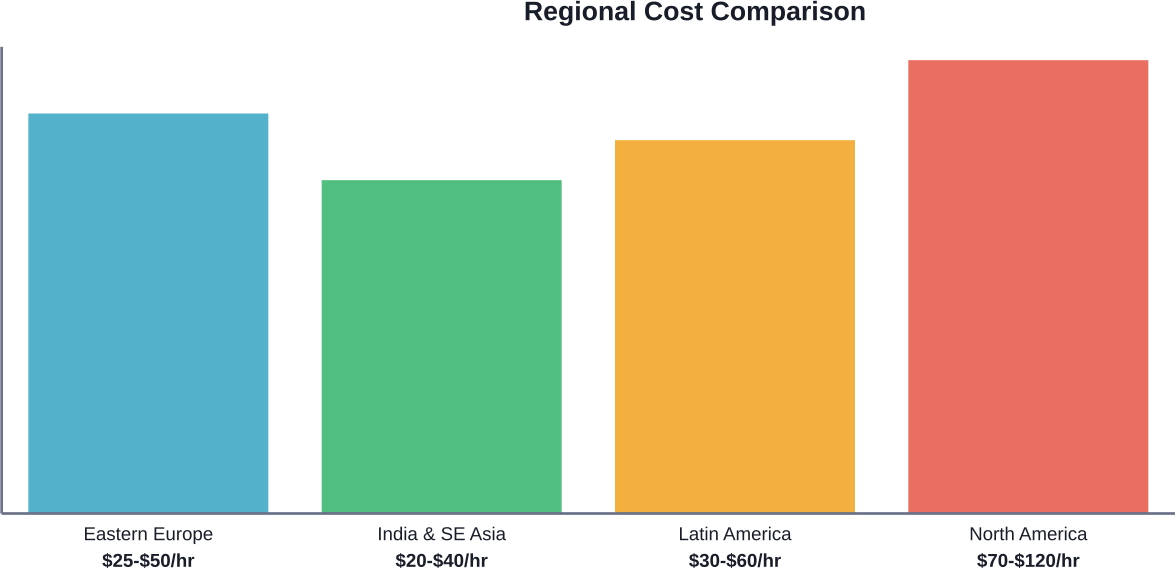
Android game development outsourcing connects studios with specialized global talent, reducing costs by 40-60% compared to in-house teams. This guide covers the outsourcing process, regional pricing ($20-$120/hour depending on location), partner selection criteria, and how to avoid common pitfalls when working with external game development teams.
The mobile gaming market is projected to cross $160 billion by 2028. That's massive growth.
But here's the challenge: building an Android game that stands out requires specialized skills, significant capital, and months of development time. Hiring a full internal team means lengthy recruitment cycles and substantial payroll commitments that aren't always feasible.
That's where outsourcing changes everything. Studios can tap into global networks of experts who jump into projects quickly, bringing specialized technical knowledge without the overhead of permanent hires.
This guide breaks down everything about Android game development outsourcing—from understanding costs across different regions to selecting the right partner and avoiding common mistakes that derail projects.
What Is Android Game Development Outsourcing?
Android game development outsourcing means contracting external teams or specialists to handle some or all aspects of game creation. Instead of building an in-house team from scratch, studios partner with established development companies that provide ready-made expertise.
The scope varies widely. Some studios outsource specific production phases like 3D art creation or level design. Others hand off entire projects to external partners who manage everything from concept to launch.
Custom game development through outsourcing has become standard practice across the industry. Even major publishers use external teams for specialized tasks that require niche skills their internal staff doesn't possess.
The approach depends entirely on internal capabilities and project requirements. A studio with strong design talent but weak programming might outsource the technical implementation. Conversely, a team with solid coding skills might bring in external artists for asset creation.
Why Studios Outsource Android Game Development
Cost reduction tops the list. Outsourcing can cut development expenses by 40-60% compared to maintaining in-house teams, according to data from multiple industry sources.
But the benefits extend far beyond just saving money.
Access to Specialized Talent
Finding developers who specialize in Unity physics systems or Unreal Engine rendering pipelines isn't easy. Outsourcing partners maintain teams with these exact skill sets, already assembled and battle-tested on previous projects.
This specialization matters tremendously for complex technical challenges. Rather than training existing staff or settling for generalists, studios get experts who've solved similar problems before.
Faster Time to Market
External teams can scale up rapidly. Need to add five animators for a two-month crunch period? An outsourcing partner can make that happen within weeks, not the months required for traditional hiring.
This flexibility accelerates production schedules significantly. Projects that might take 18 months with a small in-house team can compress to 12 months when augmented with strategic outsourcing.
Focus on Core Competencies
Many studios excel at game design and creative direction but lack deep technical expertise in mobile optimization or monetization systems. Outsourcing the technical heavy lifting lets internal teams concentrate on what they do best.
This division of labor produces better outcomes across the board. Designers design. Programmers program. Nobody gets pulled into tasks outside their expertise.

Android Game Development with NeoWork
Scaling Android game development teams is easier with vetted remote developers. NeoWork provides engineers who build optimized, performant games aligned with your vision.
Support includes:
- full Android game development
- backend integration and cloud services
- performance optimization and QA
- publishing and store submission support
NeoWork can integrate with your existing team or take ownership of full projects. Get started with NeoWork today to outsource Android game development with expert support.
Android Game Development Outsourcing Costs
Regional pricing varies dramatically. Understanding these differences helps studios budget effectively and select appropriate partners.
Total project costs depend on scope and complexity. According to available data, mobile game development costs range anywhere between $20,000 and $250,000 when outsourced.
Mini-games represent the budget-friendly entry point, costing around $3,000 to $20,000. These work well for testing concepts or adding supplementary content to existing games without major financial commitment.
Mid-tier Android games with moderate complexity typically fall into the $50,000-$120,000 range. High-end productions with advanced graphics, multiplayer systems, and extensive content can easily exceed $200,000.
Cost Calculation Factors
Team composition drives the largest expense. A typical Android game project requires developers, designers, artists, QA testers, and project managers. Each role carries different hourly rates based on seniority and specialization.
Development duration multiplies these hourly costs. A six-month project with a five-person team at $40/hour averages around $192,000 in labor alone.
Tools and software licensing add overhead. Game engines, asset stores, testing platforms, and collaboration tools all carry subscription or licensing fees that get factored into total project costs.
Step-by-Step Process for Outsourcing Android Game Development
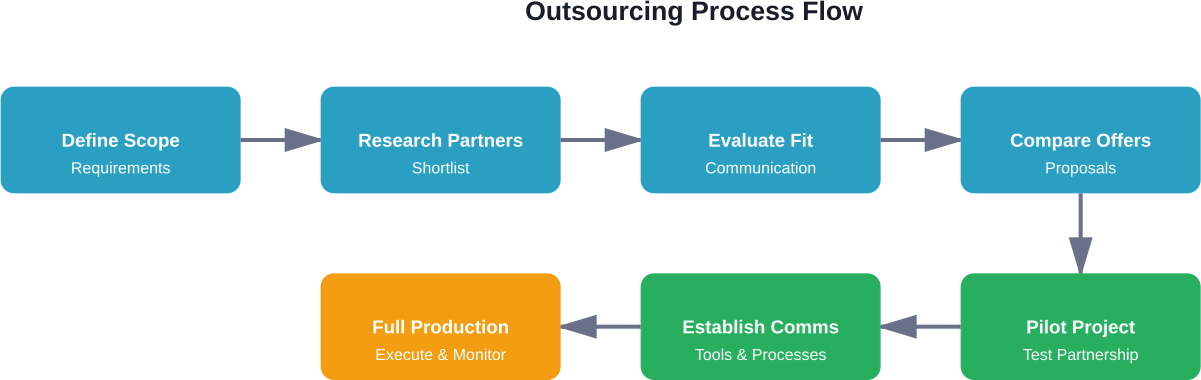
Successful outsourcing follows a structured approach. Skipping steps or rushing through phases creates problems that become expensive to fix later.
Define Project Scope and Requirements
Start with crystal-clear documentation. What type of game? What platforms? What features are essential versus nice-to-have?
Technical specifications matter enormously. Target Android versions, performance benchmarks, monetization models, backend requirements—all of these need definition before contacting potential partners.
Budget constraints should be realistic and documented upfront. There's no point engaging with premium studios if the budget only supports mid-tier partners.
Research and Shortlist Potential Partners
Portfolio quality reveals capability better than promises. Look for partners who've shipped games similar in scope and style to the project under consideration.
Client testimonials and case studies provide insight into working relationships. How do partners handle challenges? Do they communicate proactively or reactively?
Technical expertise should match project needs. A studio brilliant at casual puzzle games might struggle with a complex multiplayer shooter requiring sophisticated netcode.
Evaluate Communication and Cultural Fit
Time zone differences affect collaboration significantly. A 12-hour gap means asynchronous communication becomes the default, which can slow iteration cycles.
Language proficiency impacts everything from requirement discussions to bug reports. Partners should demonstrate clear, nuanced English communication—not just basic proficiency.
Cultural alignment often gets overlooked but matters tremendously. Work styles, decision-making processes, and expectation management vary across cultures. Initial conversations usually reveal whether alignment exists.
Request Proposals and Compare Offers
Detailed proposals should break down costs, timelines, team composition, and deliverables. Vague estimates signal either inexperience or intentional ambiguity.
Compare proposals on value, not just price. The cheapest bid often comes with hidden costs—scope creep, quality issues, or missed deadlines that require expensive fixes.
Reference checks are non-negotiable. Contact previous clients and ask specific questions about deadline adherence, communication quality, and problem resolution.
Start with a Pilot Project
Testing the relationship with a small, contained project reduces risk dramatically. A two-week prototype or single feature implementation reveals working dynamics before committing to a full production contract.
Pilot projects expose communication patterns, technical capabilities, and cultural compatibility. They're cheap insurance against selecting the wrong partner.
Establish Clear Communication Channels
Project management tools should be agreed upon from day one. Jira, Trello, Asana, or similar platforms keep everyone aligned on tasks, priorities, and progress.
Regular check-ins create accountability. Daily standups work for some teams; others prefer weekly sprint reviews. The cadence matters less than consistency.
Documentation standards prevent misunderstandings. Design documents, technical specs, and meeting notes should live in shared repositories accessible to all stakeholders.
Choosing the Right Android Game Development Partner
Partner selection determines project success more than any other factor. The right partner accelerates development; the wrong one creates endless headaches.
Portfolio and Track Record
Published games reveal actual capabilities. Download and play several titles the partner has shipped. Do they run smoothly? Are the graphics polished? Does the gameplay feel refined?
Genre experience matters. A studio that's shipped ten successful puzzle games understands that genre deeply. But they might struggle with real-time strategy or first-person shooters requiring completely different technical approaches.
Platform expertise is non-negotiable for Android projects. Partners should demonstrate deep understanding of Android-specific challenges—device fragmentation, memory management, Google Play policies, and mobile-first optimization.
Technical Capabilities
Engine proficiency should match project requirements. Unity dominates mobile game development, but some projects benefit from Unreal Engine or custom engines.
Backend infrastructure expertise becomes critical for multiplayer games or titles with complex server-side logic. Can the partner architect scalable backend systems? Do they understand cloud infrastructure, database optimization, and API design?
Quality assurance processes separate professional studios from amateurs. How do they handle testing across Android's fragmented device ecosystem? What automated testing tools do they employ?
Communication Standards
Response time expectations should be explicit. Same-day responses for urgent issues? Twenty-four-hour turnaround for general questions? Define these upfront.
Meeting cadence affects project momentum. Too few check-ins and teams drift out of alignment. Too many and productivity suffers from meeting overhead.
Reporting transparency builds trust. Partners should provide regular, detailed progress reports—not vague status updates that hide problems until they become crises.
Legal and IP Protection
Contracts must clearly define intellectual property ownership. The client should own all code, assets, and related IP upon final payment—no ambiguity.
Non-disclosure agreements protect sensitive project information. Partners should willingly sign NDAs covering game concepts, technical approaches, and business strategies.
Payment terms should align with deliverables. Milestone-based payments tied to specific completions protect both parties better than hourly billing or full upfront payments.
Common Pitfalls and How to Avoid Them
Even well-planned outsourcing projects hit obstacles. Knowing common failure patterns helps teams avoid them.
Insufficient Requirement Documentation
Vague specifications guarantee misalignment. "Make it fun" isn't actionable. Partners need concrete requirements: specific mechanics, technical benchmarks, target demographics, and success metrics.
Document everything. Every conversation about features, design direction, or technical approach should get captured in writing and added to project documentation.
Poor Communication Practices
Infrequent updates allow problems to compound. By the time issues surface, they've often grown too large to fix without significant rework.
Establish communication rhythms early. Daily standups for active sprints. Weekly reviews for longer-term planning. Monthly business reviews for strategic alignment.
Asynchronous communication works when documented properly. Time zone differences don't doom projects—poor documentation and unclear action items do.
Inadequate Testing and QA
Android's device fragmentation creates unique challenges. Apps that run flawlessly on Samsung Galaxy devices might crash on Xiaomi or OnePlus hardware.
Testing must cover representative device configurations—different screen sizes, Android versions, chipsets, and RAM configurations. Partners should maintain testing labs with actual physical devices, not just emulators.
Scope Creep Without Change Management
Feature additions mid-project are normal. But uncontrolled scope expansion destroys budgets and timelines.
Formal change request processes protect everyone. When new features emerge, they get documented, estimated, and approved—with corresponding budget and timeline adjustments.
Different Outsourcing Approaches for Different Studios
One-size-fits-all outsourcing strategies don't work. Studio size and project ambition require different approaches.
AAA Studios
Large publishers typically outsource specific production phases rather than entire projects. They might contract external teams for:3D asset creation at scale, motion capture and animation, quality assurance across platforms, or porting to additional platforms.
These studios maintain core development in-house while using outsourcing for specialized tasks or capacity overflow during crunch periods.
Indie Developers
Small teams often outsource major technical components they can't build themselves. Common patterns include contracting backend development for multiplayer features, hiring specialists for advanced rendering techniques, or outsourcing platform-specific optimization.
Indies benefit most from flexible engagement models—paying for specific deliverables rather than maintaining ongoing contracts.
First-Time Game Creators
Teams without game development experience often benefit from full-project outsourcing with heavy involvement. They provide creative direction and design vision while partners handle technical implementation.
This hybrid approach lets non-technical founders bring game ideas to life without building development teams from scratch.
When to Keep Development In-House
Outsourcing isn't always the right answer. Some situations favor internal development despite higher costs.
Core technology that defines competitive advantage should typically stay in-house. Proprietary engines, unique gameplay systems, or innovative technical approaches represent strategic assets worth protecting.
Projects requiring constant iteration and rapid pivoting work better with internal teams. The communication overhead of coordinating frequent changes with external partners can outweigh cost savings.
Extremely small projects sometimes cost more to outsource than build internally once communication overhead gets factored in. A simple reskin or minor feature addition might take longer to specify and coordinate than just implementing directly.
Taking the Next Step
Android game development outsourcing offers compelling advantages when executed properly. Cost savings of 40-60%, access to specialized talent, and accelerated timelines make it an attractive option for studios of all sizes.
But success requires careful planning and partner selection. Clear requirements documentation, structured communication processes, and realistic budget expectations form the foundation.
Start by defining project scope precisely. What features are essential? What's the target budget? What timeline constraints exist?
Research potential partners thoroughly. Review portfolios, check references, and verify technical capabilities align with project needs. Don't rush this phase—partner selection determines everything that follows.
Consider starting with a pilot project to test the relationship before committing to full production. This small investment in validation prevents costly mistakes later.
The mobile gaming market continues explosive growth. Studios that master strategic outsourcing gain competitive advantages in speed, cost efficiency, and access to specialized expertise. The question isn't whether to outsource—it's how to do it effectively.
Frequently Asked Questions
Topics
Android Game Development Outsourcing Guide 2026

Android game development outsourcing connects studios with specialized global talent, reducing costs by 40-60% compared to in-house teams. This guide covers the outsourcing process, regional pricing ($20-$120/hour depending on location), partner selection criteria, and how to avoid common pitfalls when working with external game development teams.
The mobile gaming market is projected to cross $160 billion by 2028. That's massive growth.
But here's the challenge: building an Android game that stands out requires specialized skills, significant capital, and months of development time. Hiring a full internal team means lengthy recruitment cycles and substantial payroll commitments that aren't always feasible.
That's where outsourcing changes everything. Studios can tap into global networks of experts who jump into projects quickly, bringing specialized technical knowledge without the overhead of permanent hires.
This guide breaks down everything about Android game development outsourcing—from understanding costs across different regions to selecting the right partner and avoiding common mistakes that derail projects.
What Is Android Game Development Outsourcing?
Android game development outsourcing means contracting external teams or specialists to handle some or all aspects of game creation. Instead of building an in-house team from scratch, studios partner with established development companies that provide ready-made expertise.
The scope varies widely. Some studios outsource specific production phases like 3D art creation or level design. Others hand off entire projects to external partners who manage everything from concept to launch.
Custom game development through outsourcing has become standard practice across the industry. Even major publishers use external teams for specialized tasks that require niche skills their internal staff doesn't possess.
The approach depends entirely on internal capabilities and project requirements. A studio with strong design talent but weak programming might outsource the technical implementation. Conversely, a team with solid coding skills might bring in external artists for asset creation.
Why Studios Outsource Android Game Development
Cost reduction tops the list. Outsourcing can cut development expenses by 40-60% compared to maintaining in-house teams, according to data from multiple industry sources.
But the benefits extend far beyond just saving money.
Access to Specialized Talent
Finding developers who specialize in Unity physics systems or Unreal Engine rendering pipelines isn't easy. Outsourcing partners maintain teams with these exact skill sets, already assembled and battle-tested on previous projects.
This specialization matters tremendously for complex technical challenges. Rather than training existing staff or settling for generalists, studios get experts who've solved similar problems before.
Faster Time to Market
External teams can scale up rapidly. Need to add five animators for a two-month crunch period? An outsourcing partner can make that happen within weeks, not the months required for traditional hiring.
This flexibility accelerates production schedules significantly. Projects that might take 18 months with a small in-house team can compress to 12 months when augmented with strategic outsourcing.
Focus on Core Competencies
Many studios excel at game design and creative direction but lack deep technical expertise in mobile optimization or monetization systems. Outsourcing the technical heavy lifting lets internal teams concentrate on what they do best.
This division of labor produces better outcomes across the board. Designers design. Programmers program. Nobody gets pulled into tasks outside their expertise.
Android Game Development with NeoWork
Scaling Android game development teams is easier with vetted remote developers. NeoWork provides engineers who build optimized, performant games aligned with your vision.
Support includes:
- full Android game development
- backend integration and cloud services
- performance optimization and QA
- publishing and store submission support
NeoWork can integrate with your existing team or take ownership of full projects. Get started with NeoWork today to outsource Android game development with expert support.
Android Game Development Outsourcing Costs
Regional pricing varies dramatically. Understanding these differences helps studios budget effectively and select appropriate partners.
Total project costs depend on scope and complexity. According to available data, mobile game development costs range anywhere between $20,000 and $250,000 when outsourced.
Mini-games represent the budget-friendly entry point, costing around $3,000 to $20,000. These work well for testing concepts or adding supplementary content to existing games without major financial commitment.
Mid-tier Android games with moderate complexity typically fall into the $50,000-$120,000 range. High-end productions with advanced graphics, multiplayer systems, and extensive content can easily exceed $200,000.
Cost Calculation Factors
Team composition drives the largest expense. A typical Android game project requires developers, designers, artists, QA testers, and project managers. Each role carries different hourly rates based on seniority and specialization.
Development duration multiplies these hourly costs. A six-month project with a five-person team at $40/hour averages around $192,000 in labor alone.
Tools and software licensing add overhead. Game engines, asset stores, testing platforms, and collaboration tools all carry subscription or licensing fees that get factored into total project costs.
Step-by-Step Process for Outsourcing Android Game Development
Successful outsourcing follows a structured approach. Skipping steps or rushing through phases creates problems that become expensive to fix later.
Define Project Scope and Requirements
Start with crystal-clear documentation. What type of game? What platforms? What features are essential versus nice-to-have?
Technical specifications matter enormously. Target Android versions, performance benchmarks, monetization models, backend requirements—all of these need definition before contacting potential partners.
Budget constraints should be realistic and documented upfront. There's no point engaging with premium studios if the budget only supports mid-tier partners.
Research and Shortlist Potential Partners
Portfolio quality reveals capability better than promises. Look for partners who've shipped games similar in scope and style to the project under consideration.
Client testimonials and case studies provide insight into working relationships. How do partners handle challenges? Do they communicate proactively or reactively?
Technical expertise should match project needs. A studio brilliant at casual puzzle games might struggle with a complex multiplayer shooter requiring sophisticated netcode.
Evaluate Communication and Cultural Fit
Time zone differences affect collaboration significantly. A 12-hour gap means asynchronous communication becomes the default, which can slow iteration cycles.
Language proficiency impacts everything from requirement discussions to bug reports. Partners should demonstrate clear, nuanced English communication—not just basic proficiency.
Cultural alignment often gets overlooked but matters tremendously. Work styles, decision-making processes, and expectation management vary across cultures. Initial conversations usually reveal whether alignment exists.
Request Proposals and Compare Offers
Detailed proposals should break down costs, timelines, team composition, and deliverables. Vague estimates signal either inexperience or intentional ambiguity.
Compare proposals on value, not just price. The cheapest bid often comes with hidden costs—scope creep, quality issues, or missed deadlines that require expensive fixes.
Reference checks are non-negotiable. Contact previous clients and ask specific questions about deadline adherence, communication quality, and problem resolution.
Start with a Pilot Project
Testing the relationship with a small, contained project reduces risk dramatically. A two-week prototype or single feature implementation reveals working dynamics before committing to a full production contract.
Pilot projects expose communication patterns, technical capabilities, and cultural compatibility. They're cheap insurance against selecting the wrong partner.
Establish Clear Communication Channels
Project management tools should be agreed upon from day one. Jira, Trello, Asana, or similar platforms keep everyone aligned on tasks, priorities, and progress.
Regular check-ins create accountability. Daily standups work for some teams; others prefer weekly sprint reviews. The cadence matters less than consistency.
Documentation standards prevent misunderstandings. Design documents, technical specs, and meeting notes should live in shared repositories accessible to all stakeholders.
Choosing the Right Android Game Development Partner
Partner selection determines project success more than any other factor. The right partner accelerates development; the wrong one creates endless headaches.
Portfolio and Track Record
Published games reveal actual capabilities. Download and play several titles the partner has shipped. Do they run smoothly? Are the graphics polished? Does the gameplay feel refined?
Genre experience matters. A studio that's shipped ten successful puzzle games understands that genre deeply. But they might struggle with real-time strategy or first-person shooters requiring completely different technical approaches.
Platform expertise is non-negotiable for Android projects. Partners should demonstrate deep understanding of Android-specific challenges—device fragmentation, memory management, Google Play policies, and mobile-first optimization.
Technical Capabilities
Engine proficiency should match project requirements. Unity dominates mobile game development, but some projects benefit from Unreal Engine or custom engines.
Backend infrastructure expertise becomes critical for multiplayer games or titles with complex server-side logic. Can the partner architect scalable backend systems? Do they understand cloud infrastructure, database optimization, and API design?
Quality assurance processes separate professional studios from amateurs. How do they handle testing across Android's fragmented device ecosystem? What automated testing tools do they employ?
Communication Standards
Response time expectations should be explicit. Same-day responses for urgent issues? Twenty-four-hour turnaround for general questions? Define these upfront.
Meeting cadence affects project momentum. Too few check-ins and teams drift out of alignment. Too many and productivity suffers from meeting overhead.
Reporting transparency builds trust. Partners should provide regular, detailed progress reports—not vague status updates that hide problems until they become crises.
Legal and IP Protection
Contracts must clearly define intellectual property ownership. The client should own all code, assets, and related IP upon final payment—no ambiguity.
Non-disclosure agreements protect sensitive project information. Partners should willingly sign NDAs covering game concepts, technical approaches, and business strategies.
Payment terms should align with deliverables. Milestone-based payments tied to specific completions protect both parties better than hourly billing or full upfront payments.
Common Pitfalls and How to Avoid Them
Even well-planned outsourcing projects hit obstacles. Knowing common failure patterns helps teams avoid them.
Insufficient Requirement Documentation
Vague specifications guarantee misalignment. "Make it fun" isn't actionable. Partners need concrete requirements: specific mechanics, technical benchmarks, target demographics, and success metrics.
Document everything. Every conversation about features, design direction, or technical approach should get captured in writing and added to project documentation.
Poor Communication Practices
Infrequent updates allow problems to compound. By the time issues surface, they've often grown too large to fix without significant rework.
Establish communication rhythms early. Daily standups for active sprints. Weekly reviews for longer-term planning. Monthly business reviews for strategic alignment.
Asynchronous communication works when documented properly. Time zone differences don't doom projects—poor documentation and unclear action items do.
Inadequate Testing and QA
Android's device fragmentation creates unique challenges. Apps that run flawlessly on Samsung Galaxy devices might crash on Xiaomi or OnePlus hardware.
Testing must cover representative device configurations—different screen sizes, Android versions, chipsets, and RAM configurations. Partners should maintain testing labs with actual physical devices, not just emulators.
Scope Creep Without Change Management
Feature additions mid-project are normal. But uncontrolled scope expansion destroys budgets and timelines.
Formal change request processes protect everyone. When new features emerge, they get documented, estimated, and approved—with corresponding budget and timeline adjustments.
Different Outsourcing Approaches for Different Studios
One-size-fits-all outsourcing strategies don't work. Studio size and project ambition require different approaches.
AAA Studios
Large publishers typically outsource specific production phases rather than entire projects. They might contract external teams for:3D asset creation at scale, motion capture and animation, quality assurance across platforms, or porting to additional platforms.
These studios maintain core development in-house while using outsourcing for specialized tasks or capacity overflow during crunch periods.
Indie Developers
Small teams often outsource major technical components they can't build themselves. Common patterns include contracting backend development for multiplayer features, hiring specialists for advanced rendering techniques, or outsourcing platform-specific optimization.
Indies benefit most from flexible engagement models—paying for specific deliverables rather than maintaining ongoing contracts.
First-Time Game Creators
Teams without game development experience often benefit from full-project outsourcing with heavy involvement. They provide creative direction and design vision while partners handle technical implementation.
This hybrid approach lets non-technical founders bring game ideas to life without building development teams from scratch.
When to Keep Development In-House
Outsourcing isn't always the right answer. Some situations favor internal development despite higher costs.
Core technology that defines competitive advantage should typically stay in-house. Proprietary engines, unique gameplay systems, or innovative technical approaches represent strategic assets worth protecting.
Projects requiring constant iteration and rapid pivoting work better with internal teams. The communication overhead of coordinating frequent changes with external partners can outweigh cost savings.
Extremely small projects sometimes cost more to outsource than build internally once communication overhead gets factored in. A simple reskin or minor feature addition might take longer to specify and coordinate than just implementing directly.
Taking the Next Step
Android game development outsourcing offers compelling advantages when executed properly. Cost savings of 40-60%, access to specialized talent, and accelerated timelines make it an attractive option for studios of all sizes.
But success requires careful planning and partner selection. Clear requirements documentation, structured communication processes, and realistic budget expectations form the foundation.
Start by defining project scope precisely. What features are essential? What's the target budget? What timeline constraints exist?
Research potential partners thoroughly. Review portfolios, check references, and verify technical capabilities align with project needs. Don't rush this phase—partner selection determines everything that follows.
Consider starting with a pilot project to test the relationship before committing to full production. This small investment in validation prevents costly mistakes later.
The mobile gaming market continues explosive growth. Studios that master strategic outsourcing gain competitive advantages in speed, cost efficiency, and access to specialized expertise. The question isn't whether to outsource—it's how to do it effectively.
Frequently Asked Questions
Topics
Related Blogs
Related Podcasts


.webp)
.webp)



