
.avif)
.avif)

Animation Outsourcing Guide: Partner Selection 2026

.svg)

Animation outsourcing involves partnering with external studios or freelancers to handle animation production instead of building in-house teams. Studios outsource to access specialized skills, scale production quickly, reduce costs, and meet tight deadlines while maintaining quality standards.
The animation production market continues expanding, with industry estimates placing the worldwide market between $400 billion and $450 billion in 2025-2026. These numbers keep climbing as more studios adapt to remote workflows and global collaboration models.
But here's the thing—animation outsourcing isn't just about cutting costs anymore. It's become the strategic backbone for studios looking to scale without compromising creative vision.
The traditional model for producing a 90-minute animated film involves hiring large teams of experienced animators over several years, with typical costs of $150 million or more.
That's where outsourcing changes the game.
What Animation Outsourcing Actually Means
Animation outsourcing is the process of hiring external studios or freelancers to create animation content instead of handling production entirely in-house. This can range from outsourcing specific tasks like character rigging to handing off entire production phases.
Major entertainment companies have embraced this model for decades. Disney and IMAX regularly partner with independent studios, particularly in Asia, to handle portions of their animation projects.
The outsourcing model offers three core advantages: access to specialized talent, production flexibility, and cost efficiency. Studios can tap into global expertise without maintaining year-round staff for seasonal projects.
Types of Animation Services Studios Outsource
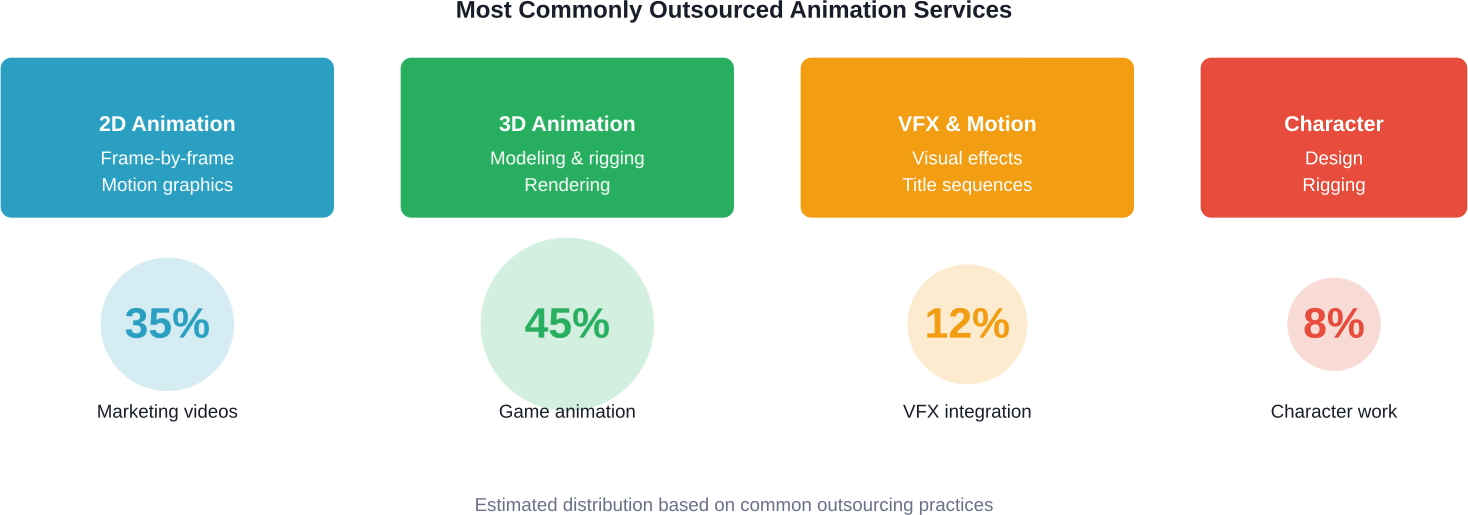
Different projects require different approaches. Here's what gets outsourced most frequently:
2D Animation Services
Traditional frame-by-frame animation, motion graphics, and explainer videos fall into this category. Many studios outsource 2D work for marketing content, educational materials, and television production.
Character animation for 2D projects remains labor-intensive, making it a prime candidate for outsourcing to specialized teams.
3D Animation and Modeling
Three-dimensional animation encompasses character modeling, environment creation, rigging, texturing, and rendering. Game animation outsourcing has become particularly common in this space.
The technical demands of 3D work mean studios often partner with specialists who maintain cutting-edge software pipelines and rendering farms.
Motion Graphics and Visual Effects
Title sequences, promotional materials, and visual effects integration represent another major outsourcing category. These projects typically have shorter timelines and benefit from dedicated motion design teams.
Character Design and Rigging
Character development requires specific artistic expertise. Many studios outsource character design, concept art, and technical rigging to teams that specialize exclusively in character work.
Why Studios Choose Animation Outsourcing
The decision to outsource animation stems from several strategic considerations. Each factor plays differently depending on studio size, project scope, and timeline constraints.
Access to Specialized Skills
Animation demands highly specific expertise. Finding artists who excel at stylized character animation differs from hiring technical directors for photorealistic rendering.
Outsourcing provides immediate access to specialists without long-term hiring commitments. Need someone with experience in stop-motion workflows? There's a studio for that.
Scaling Production Capacity
Project demands fluctuate wildly in entertainment production. A studio might need 50 animators for three months, then just 10 for maintenance work.
Building and maintaining that flexibility in-house creates significant overhead. Outsourcing lets studios scale up or down based on actual project needs.
Cost Management
The cost factor remains significant. While traditional animated films can cost $150 million or more, outsourcing certain production phases can substantially reduce those figures without sacrificing quality.
Geographic arbitrage plays a role here. Many studios partner with teams in regions with lower operational costs while maintaining high production standards.
Faster Time to Market
Tight deadlines drive many outsourcing decisions. Distributing work across multiple studios in different time zones effectively creates round-the-clock production.
What might take six months with a single team can often be completed in three with strategic outsourcing partnerships.
The Animation Production Journey
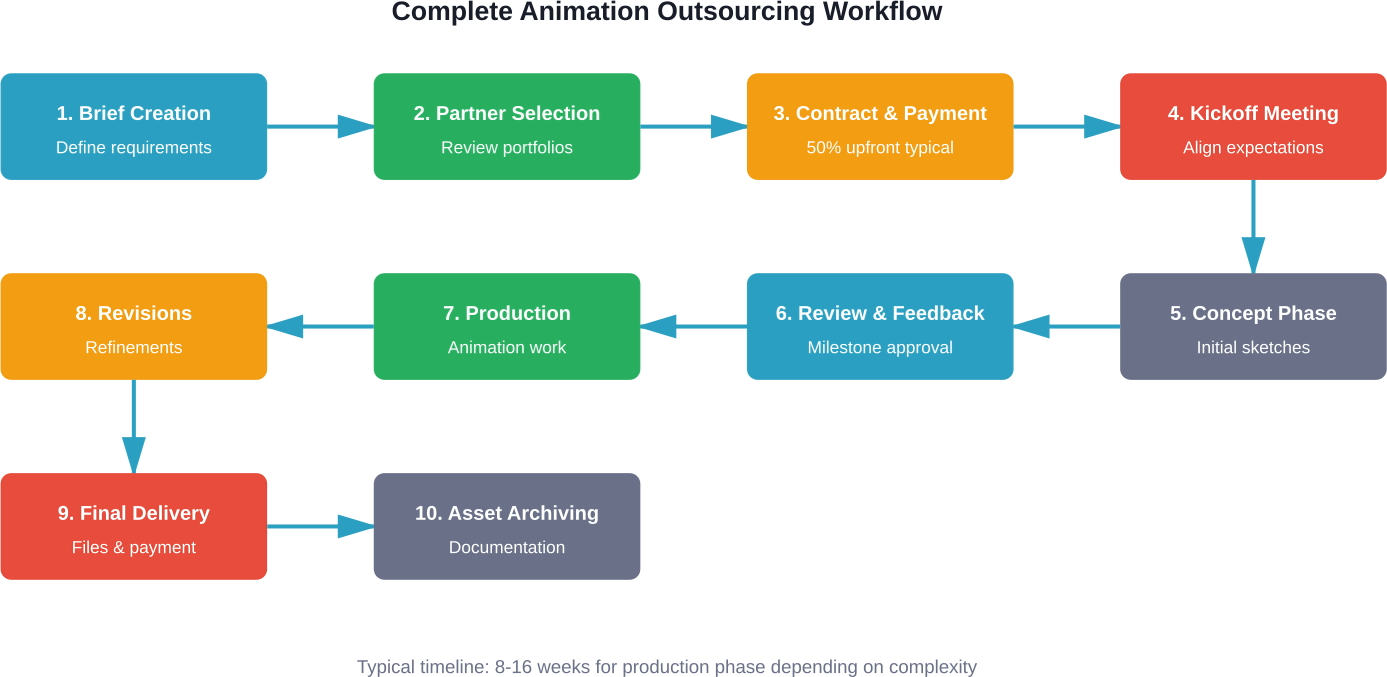
Understanding the typical workflow helps identify which stages benefit most from outsourcing. Here's how production typically unfolds:
Most studios keep creative direction and concept development in-house. These phases establish the vision and style that external partners need to follow.
Production phases—the actual animation work—see the highest outsourcing rates. This is where volume meets technical execution, making it ideal for external partnerships.
Choosing Between Freelancers and Studios
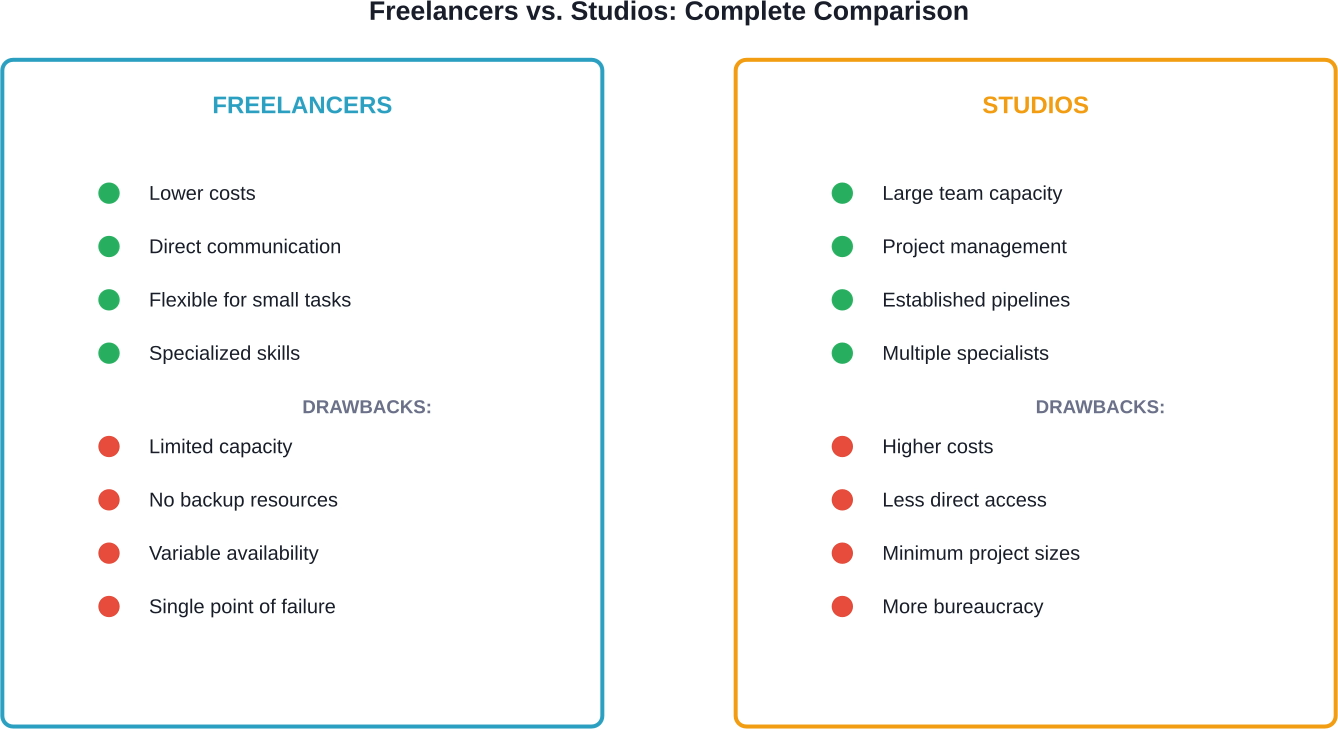
This decision fundamentally shapes the outsourcing experience. Both options offer distinct advantages depending on project parameters.
Working with Animation Freelancers
Freelancers provide maximum flexibility for smaller projects or specific tasks. They're ideal when projects require a particular style or skill set for a limited scope.
The advantages include lower costs, direct communication, and quick turnaround for small deliverables. But freelancers have capacity limits—one person can only handle so much work.
Freelance arrangements work best for motion graphics, explainer videos, character design, and supplementary animation tasks.
Partnering with Animation Studios
Studios bring infrastructure, multiple team members, project management, and established pipelines. They can handle complex projects requiring coordination across multiple disciplines.
The trade-off involves higher costs and potentially less direct access to individual artists. However, studios provide consistency, reliability, and the capacity to scale with project demands.
For feature-length productions, game animation, or extensive series work, studio partnerships typically make more sense.
Red Flags to Watch For
Finding the Right Animation Partner
Partner selection determines project success more than almost any other factor. The wrong match creates headaches regardless of budget or timeline.
Define Project Requirements First
Before reaching out to potential partners, nail down specifics. What style does the project need? What's the actual scope? How many deliverables?
Clear requirements help partners provide accurate quotes and timelines. Vague briefs lead to misaligned expectations and project drift.
Evaluate Portfolio Quality
Review previous work carefully. Look for projects similar in style, complexity, and scope to the planned work.
But don't just look at the final results. Ask about their role in those projects—did they handle everything or just specific phases?
Check Technical Capabilities
Software pipelines matter. Confirm the studio works with compatible tools and file formats. Mismatched technical stacks create conversion headaches and quality loss.
For 3D work, ask about rendering capabilities, software versions, and asset delivery formats.
Assess Communication Practices
Communication breakdowns kill outsourcing relationships. During initial conversations, evaluate responsiveness, clarity, and willingness to ask clarifying questions.
Time zone differences need consideration. A studio eight hours ahead might mean delayed feedback cycles unless they accommodate overlapping hours.
Understand Pricing Models
Animation studios typically price projects through fixed bids, hourly rates, or per-deliverable fees. Each model suits different scenarios.
Fixed bids work well for clearly defined scopes. Hourly arrangements provide flexibility for evolving projects. Per-deliverable pricing simplifies budgeting for repetitive work.
Many studios request 50% payment upfront before starting production, with the remainder due upon completion.

Build a Stable Animation Outsourcing Team
Animation outsourcing only works when the team is consistent and production-ready. NeoWork provides remote animation professionals who integrate into your workflow, whether you need 2D animation, 3D sequences, motion graphics, or virtual production support. Their industry-leading 91% annualized teammate retention rate and 3.2% candidate selectivity rate ensure that you are not cycling through freelancers every few months. You get continuity, structured management, and predictable output.
Ready to Outsource Animation Without the Usual Risks?
Talk with NeoWork to:
- assemble a vetted animation team matched to your style
- reduce churn and retraining time
- keep production timelines on track
👉 Reach out to NeoWork to plan your animation outsourcing strategy.
Common Outsourcing Challenges
Even well-planned outsourcing relationships encounter obstacles. Anticipating these issues helps prevent them from derailing projects.
Quality Control Problems
Maintaining consistent quality across external teams requires clear standards and regular check-ins. Establish quality benchmarks upfront and review work at multiple milestones.
Style guides, reference materials, and detailed briefs prevent interpretation mismatches. Don't assume partners know what "high quality" means without examples.
Communication Barriers
Language differences can create misunderstandings about creative direction. Technical terminology doesn't always translate directly, and cultural contexts affect interpretation.
Visual references communicate more clearly than lengthy written descriptions. When possible, provide video calls, annotated examples, and visual mockups.
Asset Management Issues
File organization becomes critical when multiple teams handle different production phases. Establish naming conventions, folder structures, and version control protocols before work begins.
Cloud-based collaboration tools help, but everyone needs training on the chosen system. Research on VFX workflows during the pandemic documented that artists faced technical limitations with home systems and internet connectivity.
Timeline Slippage
Delays compound when work moves between teams. Buffer time into schedules for reviews, revisions, and technical issues.
Weekly progress updates help catch delays early when they're easier to address. Don't wait until delivery deadlines to discover problems.
Intellectual Property Concerns
Contract clarity around IP ownership prevents disputes. Specify who owns original files, whether partners can use work in portfolios, and what happens to assets after project completion.
Non-disclosure agreements protect proprietary information, especially for unreleased products or confidential client work.
Managing the Outsourcing Workflow
Successful animation outsourcing requires active management. It's not a "hand off work and forget about it" arrangement.
Create Comprehensive Briefs
Detailed briefs save time and revisions. Include reference images, style guides, technical specifications, target audience information, and usage context.
The more information provided upfront, the fewer surprises later. Think of briefs as instruction manuals—be specific.
Establish Milestone Reviews
Break projects into reviewable stages: concept approval, rough animation, refined animation, and final delivery. Review and approve each stage before proceeding.
This prevents investing time in wrong directions and gives opportunities to course-correct early.
Maintain Regular Communication
Schedule consistent check-ins regardless of project status. Weekly calls or updates keep everyone aligned and surface issues before they grow.
Communication tools matter. Video conferencing, project management platforms, and shared review tools streamline collaboration.
Provide Timely Feedback
Delayed feedback delays projects. When partners deliver work for review, respond within agreed timeframes with specific, actionable notes.
Vague feedback like "make it pop" or "it doesn't feel right" wastes everyone's time. Explain what specifically needs changing and why.
Red Flags to Watch For
Certain warning signs indicate problematic partnerships. Recognizing these early saves time and budget.
- Partners who can't provide references or case studies often lack experience. Studios with relevant work should eagerly share previous projects.
- Unrealistically low quotes typically signal quality compromises. Professional animation requires time and skill—both cost money. If a quote seems impossibly cheap, it probably is.
- Poor communication during the sales process predicts worse communication during production. If getting quotes and answers feels difficult, imagine managing actual project work.
- Unwillingness to sign contracts or discuss IP ownership suggests potential legal complications. Professional studios operate with clear agreements.
Cost Considerations and Budgeting
Animation costs vary wildly based on style, length, complexity, and deadline. Understanding cost drivers helps set realistic budgets.
Two-dimensional animation typically costs less than 3D work due to simpler technical requirements. A 60-second 2D explainer video might range from a few thousand dollars to $15,000+ depending on quality and detail.
Three-dimensional character animation for games or films demands higher investment. Quality game character animation can cost several thousand dollars per character when including modeling, rigging, and animation.
Geographic location affects pricing significantly. Studios in North America and Western Europe generally charge higher rates than teams in Eastern Europe, Asia, or Latin America. Quality doesn't necessarily correlate with location—many excellent studios operate from lower-cost regions.
Rush fees apply when deadlines compress. Expecting two weeks of work done in one week costs more due to overtime and resource reallocation.
Tips for First-Time Outsourcing
Starting with animation outsourcing? These practical tips smooth the learning curve.
- Start small. Don't outsource an entire feature film for the first partnership. Begin with a smaller deliverable to test compatibility, communication, and quality standards.
- Over-communicate initially. What seems obvious internally might not translate to external partners. Explain context, share background information, and provide more reference materials than feels necessary.
- Build in revision rounds. Plan for at least two revision rounds in timelines and budgets. Even with perfect briefs, some adjustments typically happen.
- Document everything. Keep written records of agreements, feedback, changes, and approvals. This protects both parties and provides reference if disputes arise.
- Pay fairly and on time. Late payments damage relationships and motivate partners to prioritize other clients. Treat outsourcing partners like valued collaborators, not disposable vendors.
Moving Forward with Animation Outsourcing
Animation outsourcing has evolved from a cost-cutting measure into a strategic capability that lets studios scale, access specialized talent, and maintain production flexibility. The key lies in treating outsourcing relationships as true partnerships rather than transactional vendor relationships.
Success requires clear communication, realistic expectations, fair compensation, and mutual respect. Studios that invest time in finding compatible partners, creating comprehensive briefs, and maintaining active project involvement see the best results.
The animation industry continues expanding, with market growth creating demand that outpaces individual studio capacity. Outsourcing provides the scalability needed to meet that demand without compromising quality or creative vision.
Whether working with freelancers for small projects or partnering with full-service studios for complex productions, the fundamentals remain consistent: define requirements clearly, communicate frequently, review work at milestones, and build relationships based on trust and transparency.
Ready to explore animation outsourcing for your next project? Start by documenting your specific requirements, researching studios with relevant portfolio work, and reaching out for initial conversations. The right partnership can transform production capabilities and open creative possibilities that would be impossible to achieve alone.
Frequently Asked Questions
Topics
Animation Outsourcing Guide: Partner Selection 2026

Animation outsourcing involves partnering with external studios or freelancers to handle animation production instead of building in-house teams. Studios outsource to access specialized skills, scale production quickly, reduce costs, and meet tight deadlines while maintaining quality standards.
The animation production market continues expanding, with industry estimates placing the worldwide market between $400 billion and $450 billion in 2025-2026. These numbers keep climbing as more studios adapt to remote workflows and global collaboration models.
But here's the thing—animation outsourcing isn't just about cutting costs anymore. It's become the strategic backbone for studios looking to scale without compromising creative vision.
The traditional model for producing a 90-minute animated film involves hiring large teams of experienced animators over several years, with typical costs of $150 million or more.
That's where outsourcing changes the game.
What Animation Outsourcing Actually Means
Animation outsourcing is the process of hiring external studios or freelancers to create animation content instead of handling production entirely in-house. This can range from outsourcing specific tasks like character rigging to handing off entire production phases.
Major entertainment companies have embraced this model for decades. Disney and IMAX regularly partner with independent studios, particularly in Asia, to handle portions of their animation projects.
The outsourcing model offers three core advantages: access to specialized talent, production flexibility, and cost efficiency. Studios can tap into global expertise without maintaining year-round staff for seasonal projects.
Types of Animation Services Studios Outsource
Different projects require different approaches. Here's what gets outsourced most frequently:
2D Animation Services
Traditional frame-by-frame animation, motion graphics, and explainer videos fall into this category. Many studios outsource 2D work for marketing content, educational materials, and television production.
Character animation for 2D projects remains labor-intensive, making it a prime candidate for outsourcing to specialized teams.
3D Animation and Modeling
Three-dimensional animation encompasses character modeling, environment creation, rigging, texturing, and rendering. Game animation outsourcing has become particularly common in this space.
The technical demands of 3D work mean studios often partner with specialists who maintain cutting-edge software pipelines and rendering farms.
Motion Graphics and Visual Effects
Title sequences, promotional materials, and visual effects integration represent another major outsourcing category. These projects typically have shorter timelines and benefit from dedicated motion design teams.
Character Design and Rigging
Character development requires specific artistic expertise. Many studios outsource character design, concept art, and technical rigging to teams that specialize exclusively in character work.
Why Studios Choose Animation Outsourcing
The decision to outsource animation stems from several strategic considerations. Each factor plays differently depending on studio size, project scope, and timeline constraints.
Access to Specialized Skills
Animation demands highly specific expertise. Finding artists who excel at stylized character animation differs from hiring technical directors for photorealistic rendering.
Outsourcing provides immediate access to specialists without long-term hiring commitments. Need someone with experience in stop-motion workflows? There's a studio for that.
Scaling Production Capacity
Project demands fluctuate wildly in entertainment production. A studio might need 50 animators for three months, then just 10 for maintenance work.
Building and maintaining that flexibility in-house creates significant overhead. Outsourcing lets studios scale up or down based on actual project needs.
Cost Management
The cost factor remains significant. While traditional animated films can cost $150 million or more, outsourcing certain production phases can substantially reduce those figures without sacrificing quality.
Geographic arbitrage plays a role here. Many studios partner with teams in regions with lower operational costs while maintaining high production standards.
Faster Time to Market
Tight deadlines drive many outsourcing decisions. Distributing work across multiple studios in different time zones effectively creates round-the-clock production.
What might take six months with a single team can often be completed in three with strategic outsourcing partnerships.
The Animation Production Journey
Understanding the typical workflow helps identify which stages benefit most from outsourcing. Here's how production typically unfolds:
Most studios keep creative direction and concept development in-house. These phases establish the vision and style that external partners need to follow.
Production phases—the actual animation work—see the highest outsourcing rates. This is where volume meets technical execution, making it ideal for external partnerships.
Choosing Between Freelancers and Studios
This decision fundamentally shapes the outsourcing experience. Both options offer distinct advantages depending on project parameters.
Working with Animation Freelancers
Freelancers provide maximum flexibility for smaller projects or specific tasks. They're ideal when projects require a particular style or skill set for a limited scope.
The advantages include lower costs, direct communication, and quick turnaround for small deliverables. But freelancers have capacity limits—one person can only handle so much work.
Freelance arrangements work best for motion graphics, explainer videos, character design, and supplementary animation tasks.
Partnering with Animation Studios
Studios bring infrastructure, multiple team members, project management, and established pipelines. They can handle complex projects requiring coordination across multiple disciplines.
The trade-off involves higher costs and potentially less direct access to individual artists. However, studios provide consistency, reliability, and the capacity to scale with project demands.
For feature-length productions, game animation, or extensive series work, studio partnerships typically make more sense.
Red Flags to Watch For
Finding the Right Animation Partner
Partner selection determines project success more than almost any other factor. The wrong match creates headaches regardless of budget or timeline.
Define Project Requirements First
Before reaching out to potential partners, nail down specifics. What style does the project need? What's the actual scope? How many deliverables?
Clear requirements help partners provide accurate quotes and timelines. Vague briefs lead to misaligned expectations and project drift.
Evaluate Portfolio Quality
Review previous work carefully. Look for projects similar in style, complexity, and scope to the planned work.
But don't just look at the final results. Ask about their role in those projects—did they handle everything or just specific phases?
Check Technical Capabilities
Software pipelines matter. Confirm the studio works with compatible tools and file formats. Mismatched technical stacks create conversion headaches and quality loss.
For 3D work, ask about rendering capabilities, software versions, and asset delivery formats.
Assess Communication Practices
Communication breakdowns kill outsourcing relationships. During initial conversations, evaluate responsiveness, clarity, and willingness to ask clarifying questions.
Time zone differences need consideration. A studio eight hours ahead might mean delayed feedback cycles unless they accommodate overlapping hours.
Understand Pricing Models
Animation studios typically price projects through fixed bids, hourly rates, or per-deliverable fees. Each model suits different scenarios.
Fixed bids work well for clearly defined scopes. Hourly arrangements provide flexibility for evolving projects. Per-deliverable pricing simplifies budgeting for repetitive work.
Many studios request 50% payment upfront before starting production, with the remainder due upon completion.
Build a Stable Animation Outsourcing Team
Animation outsourcing only works when the team is consistent and production-ready. NeoWork provides remote animation professionals who integrate into your workflow, whether you need 2D animation, 3D sequences, motion graphics, or virtual production support. Their industry-leading 91% annualized teammate retention rate and 3.2% candidate selectivity rate ensure that you are not cycling through freelancers every few months. You get continuity, structured management, and predictable output.
Ready to Outsource Animation Without the Usual Risks?
Talk with NeoWork to:
- assemble a vetted animation team matched to your style
- reduce churn and retraining time
- keep production timelines on track
👉 Reach out to NeoWork to plan your animation outsourcing strategy.
Common Outsourcing Challenges
Even well-planned outsourcing relationships encounter obstacles. Anticipating these issues helps prevent them from derailing projects.
Quality Control Problems
Maintaining consistent quality across external teams requires clear standards and regular check-ins. Establish quality benchmarks upfront and review work at multiple milestones.
Style guides, reference materials, and detailed briefs prevent interpretation mismatches. Don't assume partners know what "high quality" means without examples.
Communication Barriers
Language differences can create misunderstandings about creative direction. Technical terminology doesn't always translate directly, and cultural contexts affect interpretation.
Visual references communicate more clearly than lengthy written descriptions. When possible, provide video calls, annotated examples, and visual mockups.
Asset Management Issues
File organization becomes critical when multiple teams handle different production phases. Establish naming conventions, folder structures, and version control protocols before work begins.
Cloud-based collaboration tools help, but everyone needs training on the chosen system. Research on VFX workflows during the pandemic documented that artists faced technical limitations with home systems and internet connectivity.
Timeline Slippage
Delays compound when work moves between teams. Buffer time into schedules for reviews, revisions, and technical issues.
Weekly progress updates help catch delays early when they're easier to address. Don't wait until delivery deadlines to discover problems.
Intellectual Property Concerns
Contract clarity around IP ownership prevents disputes. Specify who owns original files, whether partners can use work in portfolios, and what happens to assets after project completion.
Non-disclosure agreements protect proprietary information, especially for unreleased products or confidential client work.
Managing the Outsourcing Workflow
Successful animation outsourcing requires active management. It's not a "hand off work and forget about it" arrangement.
Create Comprehensive Briefs
Detailed briefs save time and revisions. Include reference images, style guides, technical specifications, target audience information, and usage context.
The more information provided upfront, the fewer surprises later. Think of briefs as instruction manuals—be specific.
Establish Milestone Reviews
Break projects into reviewable stages: concept approval, rough animation, refined animation, and final delivery. Review and approve each stage before proceeding.
This prevents investing time in wrong directions and gives opportunities to course-correct early.
Maintain Regular Communication
Schedule consistent check-ins regardless of project status. Weekly calls or updates keep everyone aligned and surface issues before they grow.
Communication tools matter. Video conferencing, project management platforms, and shared review tools streamline collaboration.
Provide Timely Feedback
Delayed feedback delays projects. When partners deliver work for review, respond within agreed timeframes with specific, actionable notes.
Vague feedback like "make it pop" or "it doesn't feel right" wastes everyone's time. Explain what specifically needs changing and why.
Red Flags to Watch For
Certain warning signs indicate problematic partnerships. Recognizing these early saves time and budget.
- Partners who can't provide references or case studies often lack experience. Studios with relevant work should eagerly share previous projects.
- Unrealistically low quotes typically signal quality compromises. Professional animation requires time and skill—both cost money. If a quote seems impossibly cheap, it probably is.
- Poor communication during the sales process predicts worse communication during production. If getting quotes and answers feels difficult, imagine managing actual project work.
- Unwillingness to sign contracts or discuss IP ownership suggests potential legal complications. Professional studios operate with clear agreements.
Cost Considerations and Budgeting
Animation costs vary wildly based on style, length, complexity, and deadline. Understanding cost drivers helps set realistic budgets.
Two-dimensional animation typically costs less than 3D work due to simpler technical requirements. A 60-second 2D explainer video might range from a few thousand dollars to $15,000+ depending on quality and detail.
Three-dimensional character animation for games or films demands higher investment. Quality game character animation can cost several thousand dollars per character when including modeling, rigging, and animation.
Geographic location affects pricing significantly. Studios in North America and Western Europe generally charge higher rates than teams in Eastern Europe, Asia, or Latin America. Quality doesn't necessarily correlate with location—many excellent studios operate from lower-cost regions.
Rush fees apply when deadlines compress. Expecting two weeks of work done in one week costs more due to overtime and resource reallocation.
Tips for First-Time Outsourcing
Starting with animation outsourcing? These practical tips smooth the learning curve.
- Start small. Don't outsource an entire feature film for the first partnership. Begin with a smaller deliverable to test compatibility, communication, and quality standards.
- Over-communicate initially. What seems obvious internally might not translate to external partners. Explain context, share background information, and provide more reference materials than feels necessary.
- Build in revision rounds. Plan for at least two revision rounds in timelines and budgets. Even with perfect briefs, some adjustments typically happen.
- Document everything. Keep written records of agreements, feedback, changes, and approvals. This protects both parties and provides reference if disputes arise.
- Pay fairly and on time. Late payments damage relationships and motivate partners to prioritize other clients. Treat outsourcing partners like valued collaborators, not disposable vendors.
Moving Forward with Animation Outsourcing
Animation outsourcing has evolved from a cost-cutting measure into a strategic capability that lets studios scale, access specialized talent, and maintain production flexibility. The key lies in treating outsourcing relationships as true partnerships rather than transactional vendor relationships.
Success requires clear communication, realistic expectations, fair compensation, and mutual respect. Studios that invest time in finding compatible partners, creating comprehensive briefs, and maintaining active project involvement see the best results.
The animation industry continues expanding, with market growth creating demand that outpaces individual studio capacity. Outsourcing provides the scalability needed to meet that demand without compromising quality or creative vision.
Whether working with freelancers for small projects or partnering with full-service studios for complex productions, the fundamentals remain consistent: define requirements clearly, communicate frequently, review work at milestones, and build relationships based on trust and transparency.
Ready to explore animation outsourcing for your next project? Start by documenting your specific requirements, researching studios with relevant portfolio work, and reaching out for initial conversations. The right partnership can transform production capabilities and open creative possibilities that would be impossible to achieve alone.
Frequently Asked Questions
Topics
Related Blogs
Related Podcasts