.avif)
.avif)

Custom AAA Game Art Outsourcing Guide 2026

.svg)

Custom AAA game art outsourcing involves partnering with specialized studios to create high-quality visuals for large-scale game projects. This guide covers how to choose the right outsourcing partner, manage the process from concept to delivery, avoid common pitfalls, and structure contracts that protect both parties while ensuring AAA-quality results.
Today's games are bigger, more complex, and more visually ambitious than ever. For AAA studios juggling multiple platforms and tight schedules, building everything in-house just isn't practical anymore.
That's where game art outsourcing comes in. But here's the thing: outsourcing AAA-quality art isn't the same as hiring a freelancer for quick asset work. The stakes are higher, the pipelines more complex, and the coordination demands sophisticated.
This guide breaks down exactly how AAA studios approach art outsourcing, from initial partner selection through delivery and integration.
What Makes AAA Game Art Outsourcing Different
AAA game art outsourcing means partnering with external studios to create high-quality visual assets for large-scale game productions. These aren't small indie projects—we're talking thousands of assets, specific technical demands, and quality bars that match or exceed in-house standards.
The scale alone changes everything. An AAA project might need hundreds of character models, entire environment sets, UI systems, marketing materials, and more. Building an in-house art team capable of handling that volume becomes expensive, time-consuming, and resource-heavy.
Many studios choose a hybrid approach: core creative direction stays in-house while production volume gets distributed across trusted outsourcing partners.
Types of Art Assets Typically Outsourced
AAA studios don't outsource everything. Strategic choices matter.
The pattern? Assets with clear specifications and less need for constant iteration get outsourced most successfully.
Why AAA Studios Outsource Game Art
Building an in-house art team sounds ideal. So why do even major studios with hundreds of employees still outsource significant portions of their art production?
The gaming industry is evolving faster than ever, and with it comes the demand for high-quality visuals that attract and retain players. Production needs have scaled dramatically.
Budget Flexibility
Hiring full-time employees means salaries, benefits, equipment, office space, and ongoing costs whether production is ramping up or winding down. Outsourcing converts fixed costs into variable ones.
During peak production, studios can scale up art capacity quickly. When a milestone ships, they scale back down without layoffs or empty desks.
Access to Specialized Expertise
Some art outsourcing studios specialize deeply in specific areas—photorealistic environments, stylized character work, technical art, or specific software pipelines. Rather than training in-house staff on every possible technique, studios tap into existing expertise.
Community discussions suggest that companies like Blizzard coordinate with larger game art studios that have established expertise in specific visual styles or technical workflows.
Time Zone Advantages
Partnering with studios in different time zones creates a follow-the-sun workflow. Internal teams review work at end of day, outsourcing partners iterate overnight, and fresh assets appear each morning. Production never stops.
Choosing the Right Outsourcing Studio
Not all game art studios are created equal. Choosing the wrong partner can cost months of wasted work, blown budgets, and compromised quality.
Here's what separates AAA-capable partners from everyone else.
Portfolio Quality and Relevant Experience
First filter: Does their portfolio show work at the quality bar needed? Not just impressive pieces, but consistent quality across large asset volumes.
Second filter: Have they shipped titles similar to yours? A studio amazing at stylized mobile games might struggle with photorealistic open-world environments.
Ask to see full asset sets, not cherry-picked hero pieces. Production quality matters more than concept showcase art.
Technical Pipeline Compatibility
Can they work in your engine? Do they use compatible software versions? Can they deliver assets in your required formats with proper naming conventions, LODs, and technical specifications?
Pipeline friction creates endless back-and-forth revisions. The best outsourcing studios adapt to client pipelines rather than forcing their own workflows.
Communication and Project Management
Real talk: communication failures kill more outsourcing relationships than skill gaps.
During evaluation, assess response times, clarity of communication, and project management capabilities. Do they use proper task tracking? How do they handle revision requests? What's their escalation process when problems arise?
Scalability and Team Size
Can they scale up if production demands increase? A five-person boutique studio might deliver exceptional quality but lack capacity for sudden scope changes.
AAA projects need partners who can absorb volume fluctuations without quality drops.
The AAA Game Art Outsourcing Process
How does the actual collaboration work between AAA studios and their outsourcing partners? The process follows a structured flow, though specifics vary by studio and project.
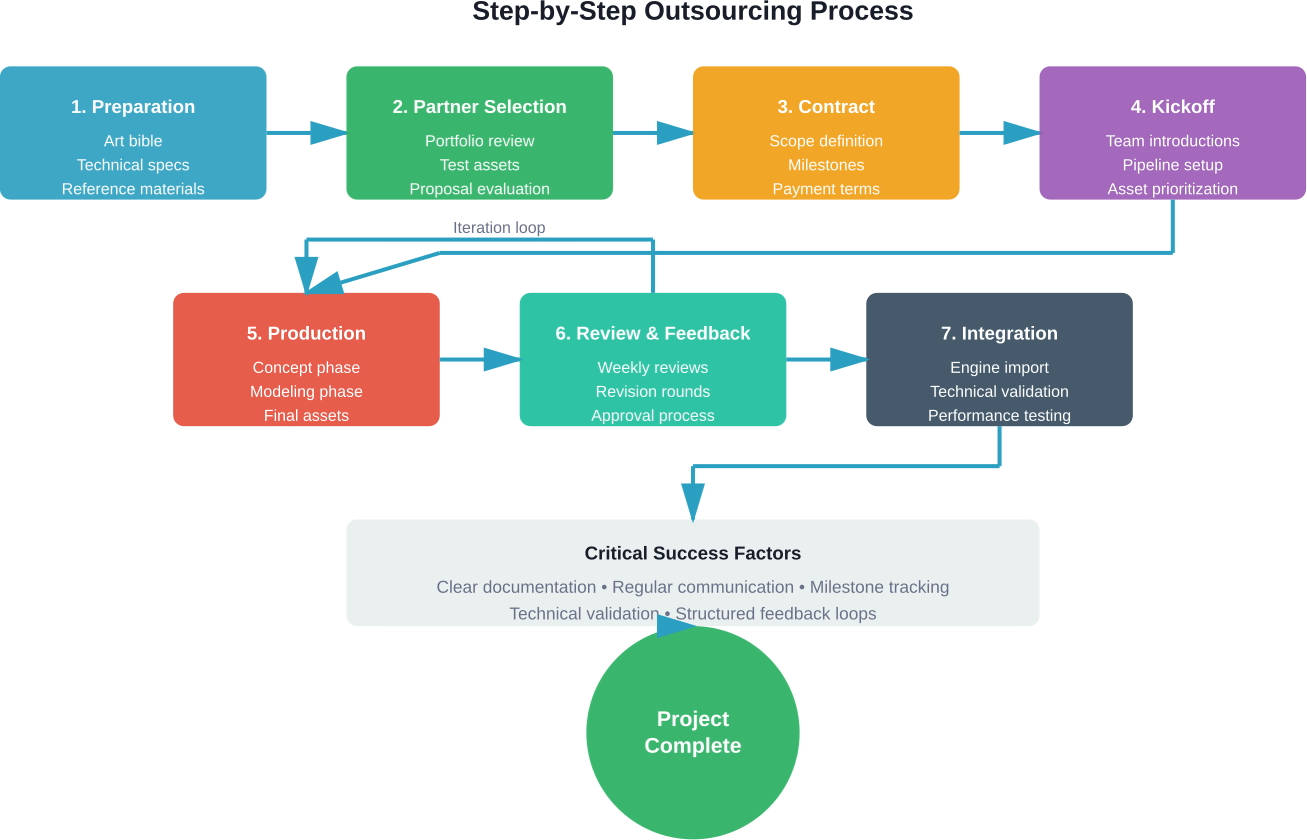
Phase 1: Preparation
Before contacting any outsourcing studio, internal preparation determines success. This means creating comprehensive documentation: art style guides, technical specifications, reference materials, and clear scope definitions.
An art bible becomes essential. It documents visual style, color palettes, material treatments, lighting approaches, and design language. Without this, outsourcing partners guess at creative intent.
Technical specs matter just as much. Polygon budgets, texture resolutions, naming conventions, LOD requirements, rigging specifications—all defined upfront prevents costly revisions later.
Phase 2: Test Assets and Proposals
Don't commit to full production immediately. Smart studios request test assets—a small batch of work that validates quality, turnaround time, and communication.
The studio will typically send a proposal that covers scope of work (what assets are to be created), delivery schedule with milestones, and payment terms (e.g., 30% upfront and remaining upon delivery).
Test phases reveal incompatibilities early when they're cheap to fix.
Phase 3: Contract and Agreements
Once testing validates the partnership, contracts formalize everything. Key elements include intellectual property ownership (who owns the assets?), revision policies (how many rounds included?), confidentiality agreements, and payment structure.
Payment terms typically follow milestones: 30% upfront, installments at key delivery points, and final payment upon acceptance.
Phase 4: Production and Review Cycles
Production follows iterative cycles. Outsourcing partners create assets in phases—concepts first, then blockouts, then detailed models, then final assets with textures and materials.
Regular review checkpoints catch problems early. Weekly reviews work better than waiting for monthly milestone dumps. Structured feedback using annotation tools and clear acceptance criteria prevents miscommunication.

Work With a Stable Custom AAA Game Art Outsourcing Partner
AAA game art production requires consistency across large pipelines, multiple asset types, and tight deadlines. NeoWork helps studios build dedicated remote art teams for high-detail environments, characters, props, and live content. Their differentiators are an industry-leading 91% annualized teammate retention rate and a 3.2% candidate selectivity rate. That stability reduces production risk and keeps visual quality aligned across milestones.
Ready to Outsource AAA Game Art With Long-Term Stability?
Talk with NeoWork to:
- assemble a dedicated AAA-level art team
- maintain style consistency across large pipelines
- scale production without restarting onboarding
👉 Connect with NeoWork to structure your AAA game art outsourcing team.
Common Challenges and How to Avoid Them
Even experienced studios hit roadblocks when outsourcing. Knowing common pitfalls helps avoid them.
Communication Breakdowns
Vague feedback creates endless revision loops. "Make it more heroic" means different things to different artists. Instead, provide specific, actionable notes with visual references.
Establish clear approval chains. Who has final say on asset acceptance? How many revision rounds are included? What happens if scope changes mid-project?
Quality Inconsistency
First assets look great, then quality drops as production scales. This happens when outsourcing studios staff up quickly with junior artists.
Solution? Request team rosters upfront. Lock in senior artists for the project duration. Build quality checks into every milestone, not just at the end.
Technical Integration Issues
Assets look beautiful in isolation but break when imported into the game engine. Wrong texture formats, excessive polygon counts, broken UVs, or incompatible shaders.
Prevention requires early technical validation. Share engine builds with partners. Test asset integration frequently. Define technical acceptance criteria as strictly as aesthetic ones.
Scope Creep
Projects expand beyond initial agreements. "Just a few more variations" becomes hundreds of additional hours.
Clear change order processes protect both parties. Document what's in scope. When requests exceed that scope, pause for formal amendments with adjusted timelines and budgets.
Structuring Costs and Contracts
What does AAA game art outsourcing actually cost? It varies widely based on asset complexity, studio location, and project scope.
Pricing models typically follow one of three structures:
Contract essentials go beyond just pricing. IP ownership clauses specify who owns final assets and source files. Revision policies define how many feedback rounds are included before additional charges apply. Confidentiality agreements protect unreleased game information.
Milestone structures align payments with deliverables. Common approaches split payments: initial deposit at contract signing, installments at 25%, 50%, and 75% completion, with final payment upon acceptance of all assets.
Quality Control and Pipeline Management
Maintaining AAA quality standards across external teams requires systematic quality control processes.
Establish clear acceptance criteria for every asset type. Not subjective opinions—measurable standards. Polygon budgets, texture resolutions, proper UV layouts, correct naming conventions, specific file formats.
Implement staged reviews. Concept approval before modeling starts. Blockout approval before detail work begins. Technical validation before final delivery. Catching problems early saves exponentially more time than fixing them later.
Version control and asset management systems become critical. Cloud-based collaboration platforms let both internal and external teams access latest files, documentation, and feedback without endless email chains.
Future Trends in AAA Art Outsourcing
The outsourcing landscape continues evolving. Several trends are reshaping how AAA studios approach external art production.
AI-assisted workflows are emerging but not replacing human artists. Instead, they're accelerating certain production stages—generating texture variations, creating LODs, or producing initial blockouts that artists refine.
Real-time collaboration tools are eliminating the old "send files and wait" model. Cloud-based engines and streaming technology let distributed teams work simultaneously on the same scenes.
Specialized boutique studios are growing alongside large-scale production houses. Rather than one-size-fits-all partners, studios increasingly build networks of specialized collaborators—one for character work, another for environments, a third for technical art.
Conclusion
AAA game art outsourcing isn't just about finding someone to make assets cheaper or faster. It's about building strategic partnerships that extend studio capabilities without compromising quality.
The studios succeeding at outsourcing share common practices: thorough preparation before engaging partners, clear communication throughout production, systematic quality control, and treating outsourcing teams as extensions of internal staff rather than vendors.
Start small. Test potential partners with limited scope projects before committing to major production volumes. Document everything—specs, feedback, decisions, changes. Build relationships with studios whose values and working styles align with yours.
Ready to start outsourcing your AAA game art? Begin by auditing your current art production needs, documenting your technical pipeline requirements, and researching studios with proven experience on projects similar to yours. The investment in finding the right partner pays dividends throughout your entire production cycle.
Frequently Asked Questions
Topics
Custom AAA Game Art Outsourcing Guide 2026

Custom AAA game art outsourcing involves partnering with specialized studios to create high-quality visuals for large-scale game projects. This guide covers how to choose the right outsourcing partner, manage the process from concept to delivery, avoid common pitfalls, and structure contracts that protect both parties while ensuring AAA-quality results.
Today's games are bigger, more complex, and more visually ambitious than ever. For AAA studios juggling multiple platforms and tight schedules, building everything in-house just isn't practical anymore.
That's where game art outsourcing comes in. But here's the thing: outsourcing AAA-quality art isn't the same as hiring a freelancer for quick asset work. The stakes are higher, the pipelines more complex, and the coordination demands sophisticated.
This guide breaks down exactly how AAA studios approach art outsourcing, from initial partner selection through delivery and integration.
What Makes AAA Game Art Outsourcing Different
AAA game art outsourcing means partnering with external studios to create high-quality visual assets for large-scale game productions. These aren't small indie projects—we're talking thousands of assets, specific technical demands, and quality bars that match or exceed in-house standards.
The scale alone changes everything. An AAA project might need hundreds of character models, entire environment sets, UI systems, marketing materials, and more. Building an in-house art team capable of handling that volume becomes expensive, time-consuming, and resource-heavy.
Many studios choose a hybrid approach: core creative direction stays in-house while production volume gets distributed across trusted outsourcing partners.
Types of Art Assets Typically Outsourced
AAA studios don't outsource everything. Strategic choices matter.
The pattern? Assets with clear specifications and less need for constant iteration get outsourced most successfully.
Why AAA Studios Outsource Game Art
Building an in-house art team sounds ideal. So why do even major studios with hundreds of employees still outsource significant portions of their art production?
The gaming industry is evolving faster than ever, and with it comes the demand for high-quality visuals that attract and retain players. Production needs have scaled dramatically.
Budget Flexibility
Hiring full-time employees means salaries, benefits, equipment, office space, and ongoing costs whether production is ramping up or winding down. Outsourcing converts fixed costs into variable ones.
During peak production, studios can scale up art capacity quickly. When a milestone ships, they scale back down without layoffs or empty desks.
Access to Specialized Expertise
Some art outsourcing studios specialize deeply in specific areas—photorealistic environments, stylized character work, technical art, or specific software pipelines. Rather than training in-house staff on every possible technique, studios tap into existing expertise.
Community discussions suggest that companies like Blizzard coordinate with larger game art studios that have established expertise in specific visual styles or technical workflows.
Time Zone Advantages
Partnering with studios in different time zones creates a follow-the-sun workflow. Internal teams review work at end of day, outsourcing partners iterate overnight, and fresh assets appear each morning. Production never stops.
Choosing the Right Outsourcing Studio
Not all game art studios are created equal. Choosing the wrong partner can cost months of wasted work, blown budgets, and compromised quality.
Here's what separates AAA-capable partners from everyone else.
Portfolio Quality and Relevant Experience
First filter: Does their portfolio show work at the quality bar needed? Not just impressive pieces, but consistent quality across large asset volumes.
Second filter: Have they shipped titles similar to yours? A studio amazing at stylized mobile games might struggle with photorealistic open-world environments.
Ask to see full asset sets, not cherry-picked hero pieces. Production quality matters more than concept showcase art.
Technical Pipeline Compatibility
Can they work in your engine? Do they use compatible software versions? Can they deliver assets in your required formats with proper naming conventions, LODs, and technical specifications?
Pipeline friction creates endless back-and-forth revisions. The best outsourcing studios adapt to client pipelines rather than forcing their own workflows.
Communication and Project Management
Real talk: communication failures kill more outsourcing relationships than skill gaps.
During evaluation, assess response times, clarity of communication, and project management capabilities. Do they use proper task tracking? How do they handle revision requests? What's their escalation process when problems arise?
Scalability and Team Size
Can they scale up if production demands increase? A five-person boutique studio might deliver exceptional quality but lack capacity for sudden scope changes.
AAA projects need partners who can absorb volume fluctuations without quality drops.
The AAA Game Art Outsourcing Process
How does the actual collaboration work between AAA studios and their outsourcing partners? The process follows a structured flow, though specifics vary by studio and project.
Phase 1: Preparation
Before contacting any outsourcing studio, internal preparation determines success. This means creating comprehensive documentation: art style guides, technical specifications, reference materials, and clear scope definitions.
An art bible becomes essential. It documents visual style, color palettes, material treatments, lighting approaches, and design language. Without this, outsourcing partners guess at creative intent.
Technical specs matter just as much. Polygon budgets, texture resolutions, naming conventions, LOD requirements, rigging specifications—all defined upfront prevents costly revisions later.
Phase 2: Test Assets and Proposals
Don't commit to full production immediately. Smart studios request test assets—a small batch of work that validates quality, turnaround time, and communication.
The studio will typically send a proposal that covers scope of work (what assets are to be created), delivery schedule with milestones, and payment terms (e.g., 30% upfront and remaining upon delivery).
Test phases reveal incompatibilities early when they're cheap to fix.
Phase 3: Contract and Agreements
Once testing validates the partnership, contracts formalize everything. Key elements include intellectual property ownership (who owns the assets?), revision policies (how many rounds included?), confidentiality agreements, and payment structure.
Payment terms typically follow milestones: 30% upfront, installments at key delivery points, and final payment upon acceptance.
Phase 4: Production and Review Cycles
Production follows iterative cycles. Outsourcing partners create assets in phases—concepts first, then blockouts, then detailed models, then final assets with textures and materials.
Regular review checkpoints catch problems early. Weekly reviews work better than waiting for monthly milestone dumps. Structured feedback using annotation tools and clear acceptance criteria prevents miscommunication.
Work With a Stable Custom AAA Game Art Outsourcing Partner
AAA game art production requires consistency across large pipelines, multiple asset types, and tight deadlines. NeoWork helps studios build dedicated remote art teams for high-detail environments, characters, props, and live content. Their differentiators are an industry-leading 91% annualized teammate retention rate and a 3.2% candidate selectivity rate. That stability reduces production risk and keeps visual quality aligned across milestones.
Ready to Outsource AAA Game Art With Long-Term Stability?
Talk with NeoWork to:
- assemble a dedicated AAA-level art team
- maintain style consistency across large pipelines
- scale production without restarting onboarding
👉 Connect with NeoWork to structure your AAA game art outsourcing team.
Common Challenges and How to Avoid Them
Even experienced studios hit roadblocks when outsourcing. Knowing common pitfalls helps avoid them.
Communication Breakdowns
Vague feedback creates endless revision loops. "Make it more heroic" means different things to different artists. Instead, provide specific, actionable notes with visual references.
Establish clear approval chains. Who has final say on asset acceptance? How many revision rounds are included? What happens if scope changes mid-project?
Quality Inconsistency
First assets look great, then quality drops as production scales. This happens when outsourcing studios staff up quickly with junior artists.
Solution? Request team rosters upfront. Lock in senior artists for the project duration. Build quality checks into every milestone, not just at the end.
Technical Integration Issues
Assets look beautiful in isolation but break when imported into the game engine. Wrong texture formats, excessive polygon counts, broken UVs, or incompatible shaders.
Prevention requires early technical validation. Share engine builds with partners. Test asset integration frequently. Define technical acceptance criteria as strictly as aesthetic ones.
Scope Creep
Projects expand beyond initial agreements. "Just a few more variations" becomes hundreds of additional hours.
Clear change order processes protect both parties. Document what's in scope. When requests exceed that scope, pause for formal amendments with adjusted timelines and budgets.
Structuring Costs and Contracts
What does AAA game art outsourcing actually cost? It varies widely based on asset complexity, studio location, and project scope.
Pricing models typically follow one of three structures:
Contract essentials go beyond just pricing. IP ownership clauses specify who owns final assets and source files. Revision policies define how many feedback rounds are included before additional charges apply. Confidentiality agreements protect unreleased game information.
Milestone structures align payments with deliverables. Common approaches split payments: initial deposit at contract signing, installments at 25%, 50%, and 75% completion, with final payment upon acceptance of all assets.
Quality Control and Pipeline Management
Maintaining AAA quality standards across external teams requires systematic quality control processes.
Establish clear acceptance criteria for every asset type. Not subjective opinions—measurable standards. Polygon budgets, texture resolutions, proper UV layouts, correct naming conventions, specific file formats.
Implement staged reviews. Concept approval before modeling starts. Blockout approval before detail work begins. Technical validation before final delivery. Catching problems early saves exponentially more time than fixing them later.
Version control and asset management systems become critical. Cloud-based collaboration platforms let both internal and external teams access latest files, documentation, and feedback without endless email chains.
Future Trends in AAA Art Outsourcing
The outsourcing landscape continues evolving. Several trends are reshaping how AAA studios approach external art production.
AI-assisted workflows are emerging but not replacing human artists. Instead, they're accelerating certain production stages—generating texture variations, creating LODs, or producing initial blockouts that artists refine.
Real-time collaboration tools are eliminating the old "send files and wait" model. Cloud-based engines and streaming technology let distributed teams work simultaneously on the same scenes.
Specialized boutique studios are growing alongside large-scale production houses. Rather than one-size-fits-all partners, studios increasingly build networks of specialized collaborators—one for character work, another for environments, a third for technical art.
Conclusion
AAA game art outsourcing isn't just about finding someone to make assets cheaper or faster. It's about building strategic partnerships that extend studio capabilities without compromising quality.
The studios succeeding at outsourcing share common practices: thorough preparation before engaging partners, clear communication throughout production, systematic quality control, and treating outsourcing teams as extensions of internal staff rather than vendors.
Start small. Test potential partners with limited scope projects before committing to major production volumes. Document everything—specs, feedback, decisions, changes. Build relationships with studios whose values and working styles align with yours.
Ready to start outsourcing your AAA game art? Begin by auditing your current art production needs, documenting your technical pipeline requirements, and researching studios with proven experience on projects similar to yours. The investment in finding the right partner pays dividends throughout your entire production cycle.
Frequently Asked Questions
Topics
Related Blogs
Related Podcasts