

.avif)
.avif)

Digital Marketing Outsourcing Companies Guide 2026


.svg)

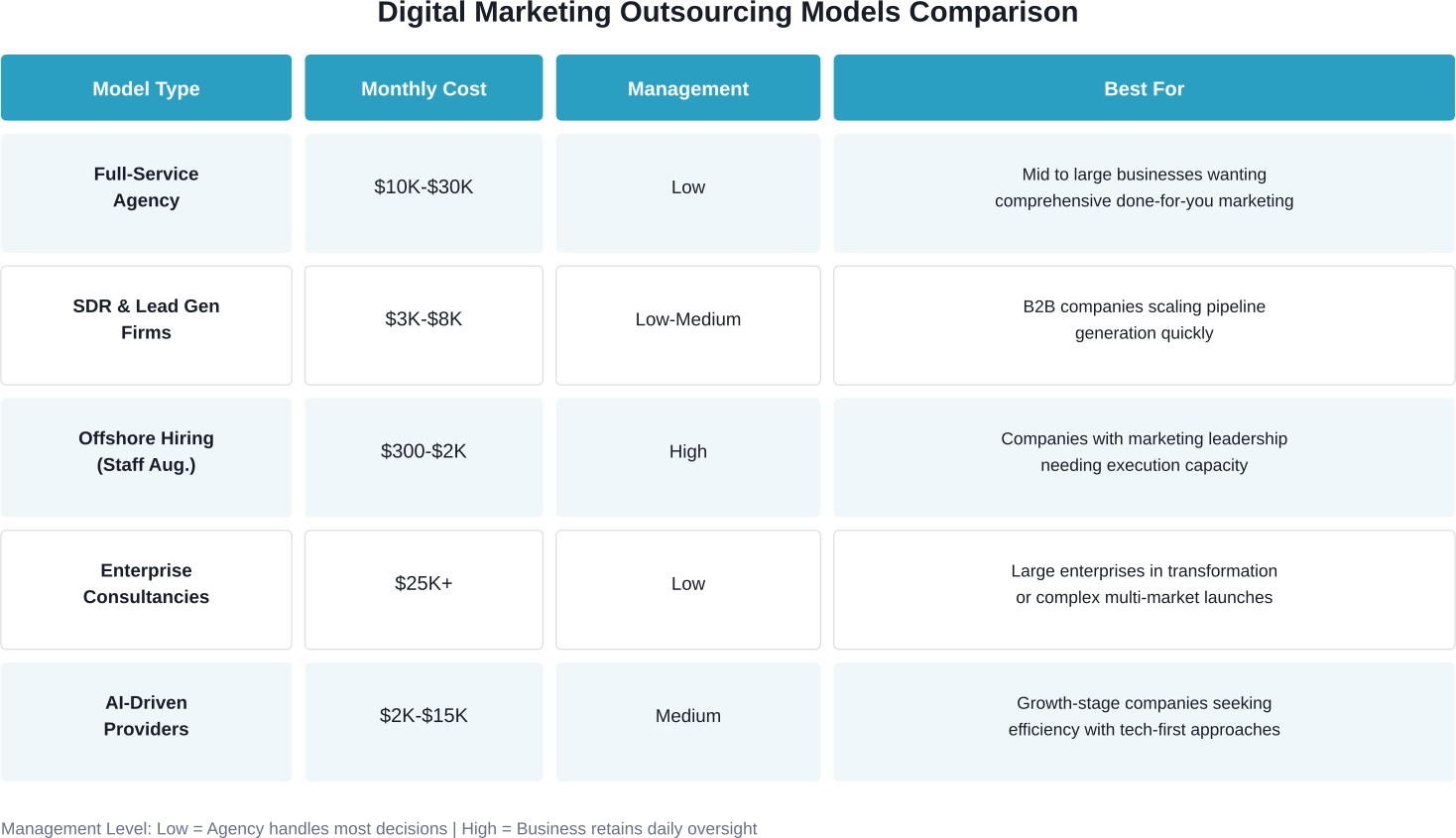
Digital marketing outsourcing companies provide businesses with specialized expertise across SEO, content, paid ads, and social media without the overhead of in-house teams. Five primary outsourcing models exist—agencies ($10K–$30K/month), SDR firms ($3K–$8K/month), offshore hiring ($300–$500/person/month), enterprise consultancies, and AI-driven providers—each suited to different business sizes and budgets. Choosing the right partner requires evaluating expertise, cost structure, communication processes, and alignment with your specific growth goals.
The marketing landscape has shifted dramatically. What worked three years ago—throwing together a small in-house team and hoping for the best—doesn't cut it anymore.
Businesses now face a harsh reality: digital marketing requires coordinated expertise across content creation, search optimization, paid advertising, social media management, and analytics. Building that internally is expensive. Really expensive.
That's where digital marketing outsourcing companies enter the picture. But here's the thing—not all outsourcing models are created equal. Some agencies charge premium rates for mediocre results. Others deliver exceptional work at a fraction of the cost.
This guide breaks down everything: the different outsourcing models available in 2026, what they actually cost, and how to choose a partner that drives measurable growth rather than just burning your budget.
What Digital Marketing Outsourcing Actually Means
Digital marketing outsourcing means hiring external specialists or agencies to handle marketing functions instead of building an in-house team. Simple enough, right?
The scope ranges from outsourcing a single task—like SEO or content writing—to handing over your entire marketing operation to an external partner.
Most businesses fall somewhere in the middle. They keep strategic oversight internal while outsourcing execution to specialists who live and breathe their specific discipline.
Industry leaders, including John Dyson, have noted that 'data are people in disguise,' a perspective echoed by the American Marketing Association to emphasize empathy in data-driven marketing.
That insight matters because the best outsourcing relationships aren't transactional—they're partnerships where external teams actually understand your business context and customer journey.
The Five Digital Marketing Outsourcing Models
There's more than one way to bring in outside help. Each model has distinct advantages, limitations, and price points.
Full-Service Marketing Agencies
These companies handle everything from strategy development to campaign execution. Think complete done-for-you marketing.
Monthly retainers typically range from $10,000 to $30,000, though premium agencies serving enterprise clients can exceed that substantially. For that investment, agencies provide access to entire teams: strategists, content creators, designers, media buyers, and analysts.
The value proposition is comprehensive expertise without the overhead. Hiring a comparable in-house team can exceed $500,000 annually when factoring in salaries, benefits, software subscriptions, and management time.
Best for: Mid-sized to large businesses with significant marketing budgets who want cohesive, integrated campaigns across multiple channels.
Specialized SDR and Lead Generation Firms
Sales Development Representative (SDR) outsourcing firms focus specifically on outbound prospecting, lead qualification, and appointment setting.
Costs generally run $3,000 to $8,000 per month per dedicated SDR. Some firms operate on performance models, charging per qualified meeting or closed deal.
These providers excel at scaling outbound efforts quickly. Need to test a new market? Spin up a dedicated SDR team in weeks rather than months.
Best for: B2B companies with established product-market fit who need to scale pipeline generation without the lengthy ramp-up time of hiring internal SDRs.
Offshore Hiring and Staff Augmentation
Offshore hiring and staff augmentation for entry-level marketing talent typically ranges from $800 to $1,800 per month in 2025–2026, depending on the region (e.g., $800–$1,200 in Philippines, $1,000–$1,800 in Eastern Europe or Latin America).The economics are compelling: skilled professionals at a fraction of Western salaries.
The catch? This isn't truly outsourcing in the traditional sense. The business retains management responsibility, provides direction, and handles quality control. It's staff augmentation, not delegation.
Best for: Companies with existing marketing leadership who need to scale execution capacity without ballooning headcount costs.
Enterprise Consultancies
Think Accenture, Deloitte Digital, or similar firms. These organizations bring strategic firepower and enterprise-grade capabilities.
Pricing is typically project-based or retainer-based, starting at $25,000+ monthly for ongoing engagements. Individual projects can run six or seven figures.
What do you get for that investment? Deep industry expertise, proprietary research, advanced analytics capabilities, and the ability to execute complex, multi-market campaigns.
Best for: Large enterprises undergoing digital transformation, entering new markets, or requiring sophisticated marketing technology implementations.
AI-Driven Marketing Providers
This emerging category leverages automation and artificial intelligence to deliver marketing services at lower price points than traditional agencies.
These providers use AI for content generation, ad optimization, audience targeting, and performance analysis. Human experts handle strategy and quality oversight.
Pricing varies widely—from $2,000 to $15,000 monthly depending on scope and sophistication.
Best for: Growth-stage companies comfortable with technology-first approaches who want efficiency gains without sacrificing quality.
Core Services Digital Marketing Companies Outsource
Not every marketing function makes sense to outsource. Some require deep product knowledge or institutional context that external partners struggle to replicate.
Here are the services most commonly—and successfully—outsourced.
Search Engine Optimization
SEO remains one of the most frequently outsourced marketing functions. The reason is straightforward: effective SEO requires specialized technical knowledge that evolves constantly.
Algorithm updates, technical audits, link building strategies, content optimization—staying current demands dedicated focus. Most businesses lack the internal bandwidth to maintain that expertise.
Outsourced SEO services typically include keyword research, on-page optimization, technical SEO audits, link acquisition, and performance tracking. Monthly costs range from $1,000 for basic local SEO to $10,000+ for comprehensive enterprise programs.
Content Creation and Marketing
Content production is resource-intensive. Blog posts, white papers, case studies, video scripts, email sequences—maintaining consistent output requires either a dedicated team or external support.
Many businesses outsource content creation while keeping strategy and editorial oversight internal. That hybrid approach ensures brand voice consistency while accessing specialized writing talent.
Costs vary enormously based on content type and quality. Basic blog posts might cost $100-$300 each. Premium long-form content, technical writing, or video production can run thousands per piece.
Paid Advertising Management
Google Ads, Facebook Ads, LinkedIn campaigns—paid media requires both strategic thinking and tactical execution. Account structure, audience targeting, creative testing, bid optimization, and conversion tracking all demand expertise.
Most agencies charge a percentage of ad spend (typically 10-20%) or flat monthly management fees ranging from $2,000 to $10,000+ depending on campaign complexity and spend levels.
Social Media Management
Social media outsourcing covers both organic content management and paid social campaigns. Services include content calendars, post creation, community management, influencer outreach, and paid social advertising.
For businesses operating across multiple platforms or managing international audiences with multilingual requirements, outsourcing becomes particularly valuable. Social listening tools and sentiment analysis add another layer of complexity that specialized providers handle effectively.
Monthly costs typically range from $2,000 to $8,000 depending on platform coverage and content volume.
Marketing Analytics and Reporting
Data analysis capabilities separate effective marketing from guesswork. But building internal analytics expertise is challenging—the skillset combines technical proficiency, statistical knowledge, and marketing acumen.
Outsourced analytics services include dashboard setup, performance tracking, attribution modeling, conversion optimization, and executive reporting. Some agencies offer marketing mix modeling to understand cross-channel effectiveness.
According to Forrester's 'The State of Marketing Measurement' reports, adoption of unified measurement methods (including MMM and MTA) has increased significantly since cookie deprecation began, with around 40–50% of B2C marketers already using or planning to implement these approaches.
The Real Cost of Digital Marketing Outsourcing
Pricing conversations get complicated quickly. Is a $5,000 monthly retainer expensive or affordable? Depends entirely on what's included and what results it generates.
Here's what actually drives costs in outsourcing relationships.
Service Scope and Complexity
A single-channel campaign costs less than integrated multi-channel programs. Managing paid search in one market is simpler than orchestrating campaigns across fifteen countries in eight languages.
Complexity compounds costs. Each additional channel, market, or integration point adds coordination overhead and requires additional expertise.
Agency Expertise and Track Record
Premium agencies charge premium rates. That's not arbitrary—top firms attract better talent, invest in proprietary tools and methodologies, and deliver measurably better results.
Research from WARC indicates that 20% of all creatively awarded ideas are also awarded for effectiveness, and highly awarded creative ideas are more likely to be effective.
So the question isn't whether premium agencies cost more (they do), but whether the incremental results justify the incremental investment.
Ownership and Control Trade-offs
Lower-cost models typically require more client involvement. Offshore staff augmentation offers attractive economics but demands management time. Full-service agencies cost more but free up internal resources completely.
Think of it as a spectrum: lower cost equals higher management burden. Higher cost equals greater delegation.
Geographic and Market Considerations
Agency rates vary significantly by location. A San Francisco agency charges different rates than one based in Austin or Manila.
That doesn't necessarily mean offshore is always cheaper when considering total cost of ownership. Communication overhead, time zone challenges, and potential quality variations can erode theoretical savings.
How to Choose the Right Digital Marketing Outsourcing Partner
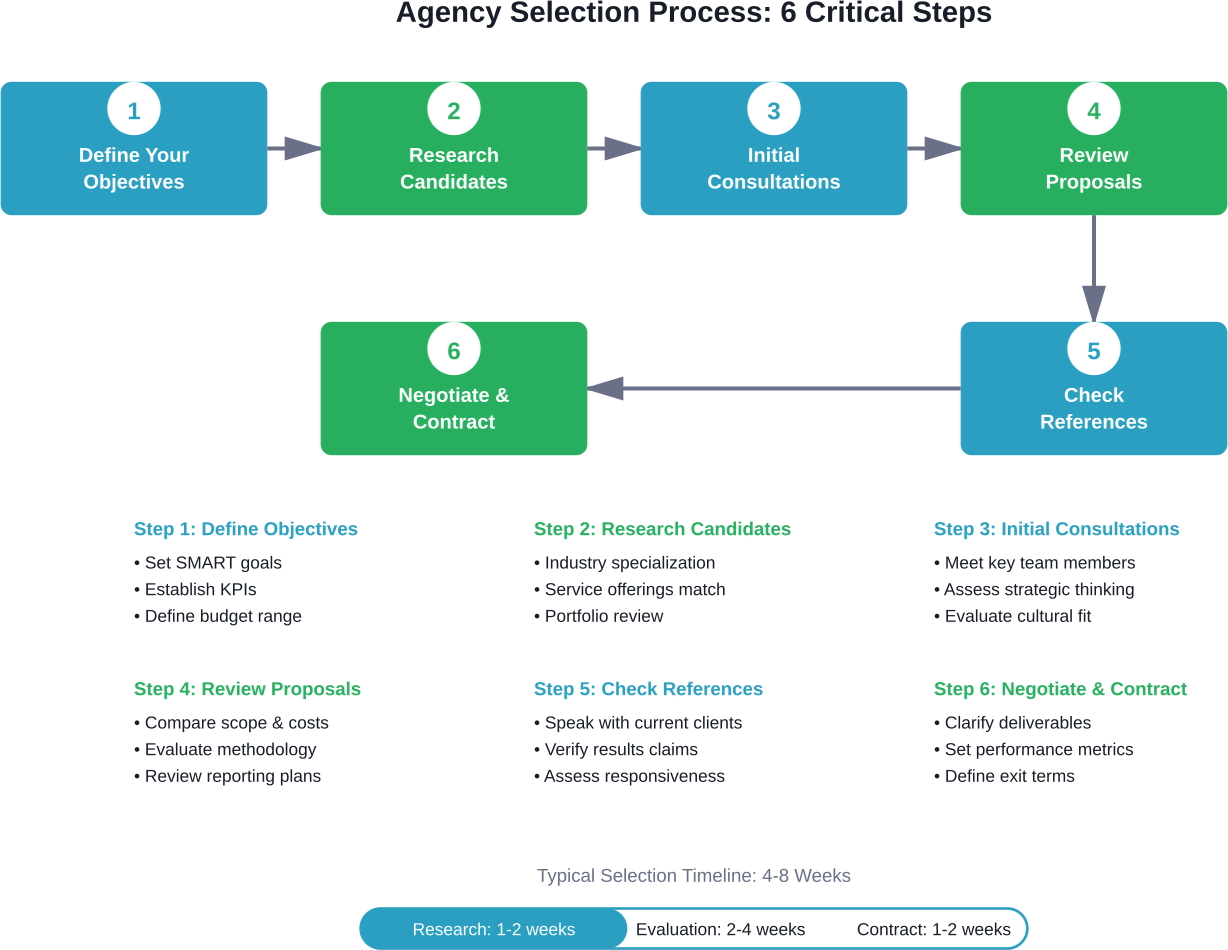
Selection criteria matter more than most businesses realize. The wrong partner wastes money and time. The right one becomes a genuine growth accelerator.
Define Clear Objectives First
Before evaluating agencies, get crystal clear on what success looks like. Vague goals like "improve our marketing" lead to disappointing results.
According to EDHEC Business School research on digital marketing strategy, goals should be specific, trackable, and aligned with overall business priorities. Examples include aiming to increase website traffic by 30% over six months or boost online sales by 20% in the next quarter.
SMART objectives—Specific, Measurable, Achievable, Relevant, Time-bound—provide the foundation for productive agency relationships.
Evaluate Relevant Experience
Has the agency worked with businesses similar in size, industry, or growth stage? Past performance in comparable situations is the best predictor of future results.
Request case studies and speak with current clients in similar situations. What were the actual outcomes? How does the agency handle challenges? What's the communication cadence?
Red flag: Agencies that can't provide concrete examples of measurable results they've driven for clients similar to your business.
Assess Strategic Capabilities
Tactical execution matters, but strategic thinking matters more. Can the agency develop comprehensive strategies, or do they just execute what clients hand them?
During evaluation conversations, pay attention to the questions agencies ask. Top-tier partners dig deep into business models, customer journey, competitive dynamics, and growth objectives before proposing solutions.
Agencies that lead with tactics before understanding strategy are order-takers, not partners.
Understand Their Process and Methodology
How does the agency approach new engagements? What's their onboarding process? How do they develop strategies and measure performance?
Strong agencies have documented methodologies—not rigid frameworks that ignore client specifics, but proven approaches they adapt to each situation.
Ask about their approach to:
- Market and competitor analysis
- Audience research and persona development
- Channel selection and budget allocation
- Content strategy and creation processes
- Performance measurement and optimization
Evaluate Communication and Reporting
Communication breakdowns kill outsourcing relationships. Establish expectations upfront about meeting cadence, reporting frequency, and response times.
Request sample reports. Are they filled with vanity metrics that look impressive but don't connect to business outcomes? Or do they focus on meaningful KPIs tied to revenue and growth?
Forrester research on digital success metrics emphasizes that benchmarks vary by industry due to differences in digital maturity, customer intent, and product complexity. The real value lies in understanding underlying organizational issues.
Examine Cultural Fit
Chemistry matters more than contracts. Working with an agency that shares values, communication style, and work approach makes everything smoother.
During evaluation meetings, assess whether the team feels like collaborators or vendors. Do they challenge your thinking constructively? Do they ask thoughtful questions? Do they seem genuinely interested in the business beyond just winning the account?
Pricing Structure and Contract Terms
Understand exactly what's included in quoted fees. Some agencies bundle everything—strategy, execution, tools, reporting. Others charge separately for each component.
Common pricing models include:
- Monthly retainers: Fixed fee for agreed scope of work
- Project-based: One-time fee for defined deliverables
- Performance-based: Compensation tied to results (less common, higher risk for agencies)
- Hourly: Time and materials billing (typically for consulting)
- Percentage of spend: Common for paid media management
Contract terms matter too. What's the commitment period? How much notice is required for changes or termination? What happens to assets and data if the relationship ends?
Get Consistent Digital Marketing Support Through NeoWork

If your digital marketing efforts rely on inconsistent freelancers or short-term contracts, NeoWork offers an alternative: dedicated remote professionals embedded into your team. They place specialists who handle social media management, content execution, engagement tracking, reporting, and other ongoing digital tasks as part of your workflow.
NeoWork manages recruiting, vetting, onboarding, and continuous staffing so you don’t have to juggle multiple contractors. Their approach focuses on careful selection and stability, with a 3.2% candidate selectivity rate and a 91% annualized teammate retention rate. That means fewer disruptions and editors, marketers, or managers who stay familiar with your brand and objectives over time.
Book a call with NeoWork to explore how dedicated digital marketing support could fit your outsourcing plan.
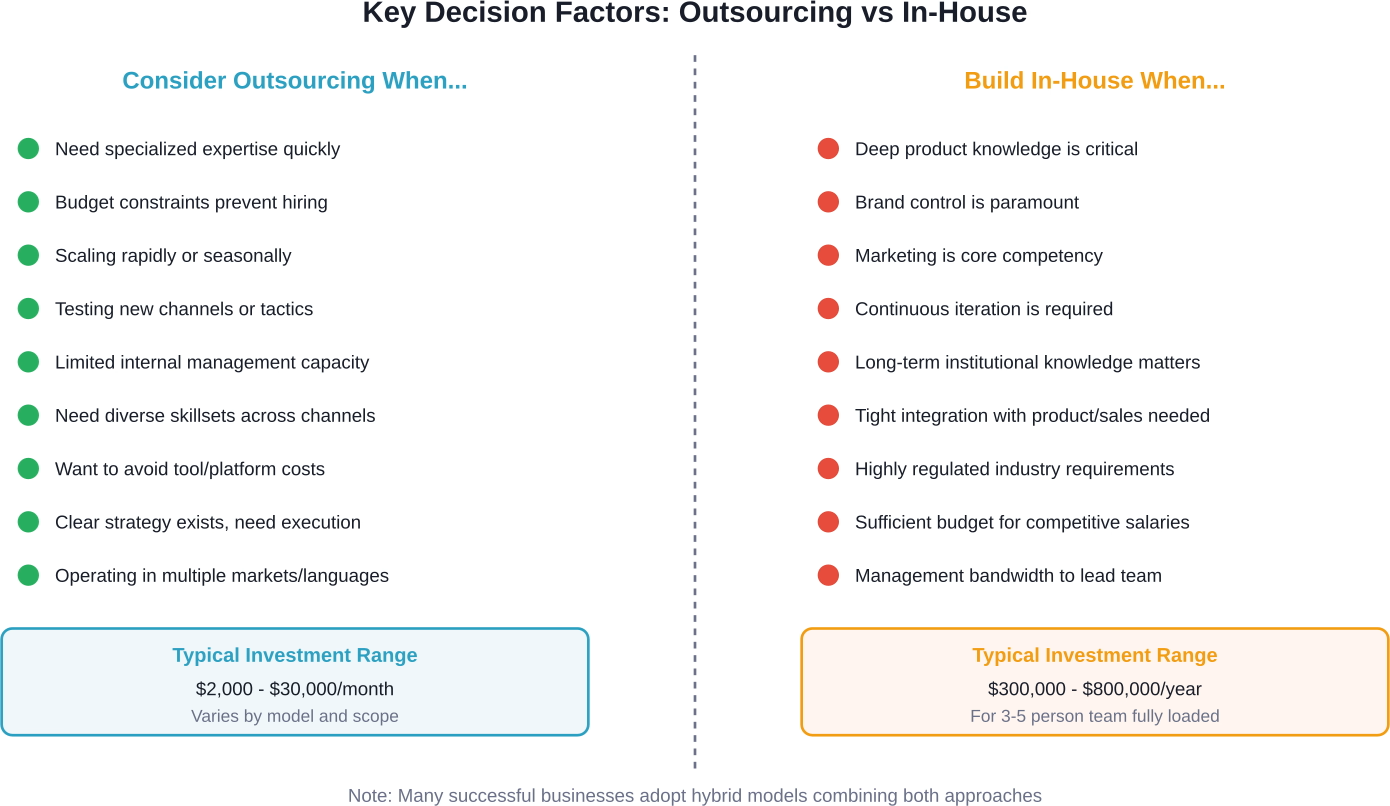
When Outsourcing Makes Sense (And When It Doesn't)
Outsourcing isn't universally beneficial. Context determines whether it's the right move.
Strong Candidates for Outsourcing
- Growing businesses hitting capacity limits: When the existing team can't keep pace with growth demands, outsourcing provides immediate capacity without lengthy hiring cycles.
- Companies entering new channels: Launching paid search for the first time? Expanding into social media? Outsourcing gives access to proven expertise without building it internally.
- Businesses with seasonal fluctuations: Retail brands with holiday peaks or B2B companies with quarterly demand cycles benefit from flexible capacity that scales up and down.
- Organizations lacking specialized skills: SEO, conversion rate optimization, marketing automation—these disciplines require dedicated expertise that's expensive to hire full-time.
Poor Candidates for Outsourcing
- Early-stage startups still finding product-market fit: Before achieving clear product-market fit, marketing effectiveness depends heavily on rapid iteration and deep product knowledge. External partners struggle in this environment.
- Companies with undefined strategy: Outsourcing executes strategy—it doesn't replace strategic thinking. Businesses without clear positioning, target audiences, and value propositions waste money on outsourcing.
- Organizations unwilling to collaborate: Successful outsourcing requires partnership. Companies that view agencies as order-taking vendors rather than strategic collaborators rarely see strong results.
- Highly technical products requiring deep expertise: Some products—particularly in specialized B2B sectors—demand such specific knowledge that external partners can't develop sufficient fluency to create effective marketing.
Managing Outsourced Digital Marketing Relationships
Signing the contract is just the beginning. Ongoing relationship management determines whether outsourcing delivers value or disappointment.
Set Clear Expectations from Day One
Establish detailed agreements about deliverables, timelines, communication protocols, and success metrics. Ambiguity breeds frustration.
Create a shared document outlining:
- Specific services and deliverables included in scope
- Performance goals and KPIs
- Meeting cadence and format
- Communication channels and response time expectations
- Approval processes and revision policies
- Escalation procedures for issues
Provide Comprehensive Onboarding
Agencies can't create effective marketing without understanding the business, customers, and competitive landscape.
Invest time upfront sharing:
- Brand guidelines and messaging frameworks
- Product documentation and positioning
- Customer personas and research
- Historical performance data
- Competitive intelligence
- Access to necessary tools and platforms
The quality of onboarding directly correlates with time-to-value.
Maintain Regular Communication
Establish consistent touchpoints—weekly status calls, monthly strategy reviews, quarterly business reviews. Consistent communication prevents misalignment and allows course corrections before small issues become major problems.
But avoid micromanagement. Outsourcing exists to free up internal bandwidth. Obsessively monitoring every detail defeats the purpose.
Focus on Outcomes, Not Activities
Judge agency performance on results, not busy work. A report showing "50 social media posts created" means nothing if engagement and conversions don't improve.
Hold agencies accountable to metrics that matter: qualified leads generated, conversion rate improvements, revenue influenced, customer acquisition cost reductions.
Treat Agencies as Partners, Not Vendors
The best agency relationships operate as true partnerships. Share broader business context—upcoming product launches, strategic initiatives, organizational changes.
Agencies equipped with comprehensive business context make better decisions and identify opportunities that transactional vendors miss.
Common Pitfalls to Avoid
Certain mistakes appear repeatedly in failed outsourcing relationships. Awareness helps avoid them.
Choosing Based Solely on Price
The cheapest option rarely delivers the best value. Low prices often reflect limited experience, junior teams, or insufficient time allocated to accounts.
Evaluate cost in context of expected returns. An agency charging $15,000 monthly that generates $200,000 in new revenue delivers better ROI than one charging $5,000 that generates $30,000.
Insufficient Knowledge Transfer
Agencies can't operate effectively without adequate information. Withholding data, limiting access to stakeholders, or providing incomplete briefings sabotages results.
Many businesses worry about sharing too much information. The real risk is sharing too little.
Unrealistic Timeline Expectations
Marketing results—particularly in channels like SEO and content marketing—require time. Expecting significant results in the first month leads to premature judgments and relationship churn.
Set realistic expectations aligned with channel characteristics. Paid advertising can show results within weeks. SEO requires months. Account-based marketing campaigns might take a full quarter to demonstrate impact.
Failing to Define Success Metrics
Without clear success criteria, evaluating agency performance becomes subjective and contentious. Define specific KPIs upfront and track them consistently.
Metrics should connect to business outcomes. Vanity metrics like social media followers or website traffic look impressive but don't necessarily correlate with revenue growth.
Not Planning for Transition
Agency relationships eventually end—sometimes planned, sometimes unexpected. Without proper transition planning, businesses lose access to critical assets, institutional knowledge, and campaign continuity.
Contract terms should specify:
- Ownership of created assets (content, creative, data)
- Knowledge transfer requirements
- Notice periods and transition support
- Post-contract data access
Emerging Trends in Digital Marketing Outsourcing
The outsourcing landscape evolves constantly. Several trends are reshaping how businesses approach external marketing partnerships.
Hybrid In-House and Outsourced Models
Rather than choosing entirely in-house or fully outsourced, many businesses adopt hybrid approaches. Strategic roles and brand stewardship remain internal while specialized execution gets outsourced.
This model preserves institutional knowledge and brand control while accessing specialized capabilities as needed.
Performance-Based Compensation
Traditional retainer models are being supplemented with performance incentives. Agencies receive base fees plus bonuses tied to hitting specific performance targets.
This alignment of incentives theoretically drives better results, though it requires sophisticated attribution and measurement capabilities.
Specialized Niche Agencies
Generalist full-service agencies face increasing competition from specialists focusing on specific industries, channels, or business models.
A SaaS-focused growth agency brings deep category expertise that generalists can't match. The trade-off is less breadth but more depth.
AI and Automation Integration
Marketing agencies are rapidly incorporating AI tools for content creation, ad optimization, audience analysis, and performance forecasting.
This automation allows agencies to deliver more value at lower price points—or deliver significantly better results at comparable prices.
According to Forrester's 2025 predictions, agencies are jettisoning legacy structures to form new agency types, redeploying digital capabilities, combining commerce and media, and separating creative ideation from creative production to create new service offerings.
Fractional Marketing Leadership
Senior marketing executives offering fractional services provide strategic guidance without full-time commitments. This model suits smaller businesses that need experienced leadership but can't justify a full-time CMO.
Fractional CMOs often coordinate outsourced execution teams, providing the strategic layer that pure execution agencies lack.
Building a Successful Outsourcing Strategy
Strategic outsourcing requires planning, structure, and ongoing optimization.
Start with a Marketing Audit
Before engaging external partners, assess current capabilities, performance, and gaps. What's working? What's underperforming? Where do skill gaps exist?
This audit identifies specific areas where outsourcing delivers maximum impact.
Develop a Phased Approach
Rather than outsourcing everything simultaneously, implement gradually. Start with one or two functions, establish effective working relationships, then expand scope.
This staged approach reduces risk and allows learning from early implementations before making larger commitments.
Create Internal Coordination Mechanisms
Designate a single point of contact who coordinates agency relationships. Multiple stakeholders providing conflicting direction creates chaos.
The internal coordinator ensures consistent communication, manages expectations, tracks performance, and handles issue escalation.
Establish Performance Review Cadences
Regular performance reviews—monthly for tactical metrics, quarterly for strategic assessment—keep relationships on track.
These reviews should evaluate both quantitative performance (KPIs, ROI) and qualitative factors (communication, collaboration, strategic contribution).
Plan for Continuous Optimization
Marketing effectiveness requires constant refinement. Establish processes for testing, learning, and iterating based on performance data.
The best agency relationships operate as continuous improvement engines, not static service delivery.
Conclusion: Making Digital Marketing Outsourcing Work
Digital marketing outsourcing isn't a magic solution that automatically drives growth. It's a strategic tool that delivers value when applied thoughtfully.
The businesses seeing the strongest results share common characteristics. They enter outsourcing relationships with clear objectives and defined success metrics. They invest in comprehensive onboarding and knowledge transfer. They maintain regular communication while avoiding micromanagement. They treat agencies as strategic partners rather than order-taking vendors.
Most importantly, they recognize that outsourcing strategy doesn't work. External partners execute strategies brilliantly—but developing that strategy requires deep business understanding that only internal stakeholders possess.
The American Marketing Association emphasizes that future marketing success requires imaginative thinking grounded in empathy, provocation, and activation. Understanding people's journeys rather than just consumer touchpoints drives meaningful connection.
That insight matters when choosing outsourcing partners. Look beyond tactical execution capabilities. Find partners who ask probing questions, challenge assumptions constructively, and demonstrate genuine interest in understanding customers as people rather than data points.
The outsourcing landscape will continue evolving. AI integration, specialized niche agencies, hybrid models, and performance-based compensation are reshaping how businesses access marketing expertise.
But the fundamentals remain constant: clear objectives, rigorous vetting, comprehensive onboarding, consistent communication, and relentless focus on outcomes over activities.
Get those fundamentals right, and digital marketing outsourcing becomes a genuine growth accelerator rather than just another expense line.
Ready to explore outsourcing options? Start by auditing current marketing performance, identifying specific capability gaps, and defining clear success metrics. Then begin researching providers whose expertise aligns with those specific needs. The investment in thorough evaluation pays dividends in long-term partnership success.
Frequently Asked Questions
Topics
Digital Marketing Outsourcing Companies Guide 2026

Digital marketing outsourcing companies provide businesses with specialized expertise across SEO, content, paid ads, and social media without the overhead of in-house teams. Five primary outsourcing models exist—agencies ($10K–$30K/month), SDR firms ($3K–$8K/month), offshore hiring ($300–$500/person/month), enterprise consultancies, and AI-driven providers—each suited to different business sizes and budgets. Choosing the right partner requires evaluating expertise, cost structure, communication processes, and alignment with your specific growth goals.
The marketing landscape has shifted dramatically. What worked three years ago—throwing together a small in-house team and hoping for the best—doesn't cut it anymore.
Businesses now face a harsh reality: digital marketing requires coordinated expertise across content creation, search optimization, paid advertising, social media management, and analytics. Building that internally is expensive. Really expensive.
That's where digital marketing outsourcing companies enter the picture. But here's the thing—not all outsourcing models are created equal. Some agencies charge premium rates for mediocre results. Others deliver exceptional work at a fraction of the cost.
This guide breaks down everything: the different outsourcing models available in 2026, what they actually cost, and how to choose a partner that drives measurable growth rather than just burning your budget.
What Digital Marketing Outsourcing Actually Means
Digital marketing outsourcing means hiring external specialists or agencies to handle marketing functions instead of building an in-house team. Simple enough, right?
The scope ranges from outsourcing a single task—like SEO or content writing—to handing over your entire marketing operation to an external partner.
Most businesses fall somewhere in the middle. They keep strategic oversight internal while outsourcing execution to specialists who live and breathe their specific discipline.
Industry leaders, including John Dyson, have noted that 'data are people in disguise,' a perspective echoed by the American Marketing Association to emphasize empathy in data-driven marketing.
That insight matters because the best outsourcing relationships aren't transactional—they're partnerships where external teams actually understand your business context and customer journey.
The Five Digital Marketing Outsourcing Models
There's more than one way to bring in outside help. Each model has distinct advantages, limitations, and price points.
Full-Service Marketing Agencies
These companies handle everything from strategy development to campaign execution. Think complete done-for-you marketing.
Monthly retainers typically range from $10,000 to $30,000, though premium agencies serving enterprise clients can exceed that substantially. For that investment, agencies provide access to entire teams: strategists, content creators, designers, media buyers, and analysts.
The value proposition is comprehensive expertise without the overhead. Hiring a comparable in-house team can exceed $500,000 annually when factoring in salaries, benefits, software subscriptions, and management time.
Best for: Mid-sized to large businesses with significant marketing budgets who want cohesive, integrated campaigns across multiple channels.
Specialized SDR and Lead Generation Firms
Sales Development Representative (SDR) outsourcing firms focus specifically on outbound prospecting, lead qualification, and appointment setting.
Costs generally run $3,000 to $8,000 per month per dedicated SDR. Some firms operate on performance models, charging per qualified meeting or closed deal.
These providers excel at scaling outbound efforts quickly. Need to test a new market? Spin up a dedicated SDR team in weeks rather than months.
Best for: B2B companies with established product-market fit who need to scale pipeline generation without the lengthy ramp-up time of hiring internal SDRs.
Offshore Hiring and Staff Augmentation
Offshore hiring and staff augmentation for entry-level marketing talent typically ranges from $800 to $1,800 per month in 2025–2026, depending on the region (e.g., $800–$1,200 in Philippines, $1,000–$1,800 in Eastern Europe or Latin America).The economics are compelling: skilled professionals at a fraction of Western salaries.
The catch? This isn't truly outsourcing in the traditional sense. The business retains management responsibility, provides direction, and handles quality control. It's staff augmentation, not delegation.
Best for: Companies with existing marketing leadership who need to scale execution capacity without ballooning headcount costs.
Enterprise Consultancies
Think Accenture, Deloitte Digital, or similar firms. These organizations bring strategic firepower and enterprise-grade capabilities.
Pricing is typically project-based or retainer-based, starting at $25,000+ monthly for ongoing engagements. Individual projects can run six or seven figures.
What do you get for that investment? Deep industry expertise, proprietary research, advanced analytics capabilities, and the ability to execute complex, multi-market campaigns.
Best for: Large enterprises undergoing digital transformation, entering new markets, or requiring sophisticated marketing technology implementations.
AI-Driven Marketing Providers
This emerging category leverages automation and artificial intelligence to deliver marketing services at lower price points than traditional agencies.
These providers use AI for content generation, ad optimization, audience targeting, and performance analysis. Human experts handle strategy and quality oversight.
Pricing varies widely—from $2,000 to $15,000 monthly depending on scope and sophistication.
Best for: Growth-stage companies comfortable with technology-first approaches who want efficiency gains without sacrificing quality.
Core Services Digital Marketing Companies Outsource
Not every marketing function makes sense to outsource. Some require deep product knowledge or institutional context that external partners struggle to replicate.
Here are the services most commonly—and successfully—outsourced.
Search Engine Optimization
SEO remains one of the most frequently outsourced marketing functions. The reason is straightforward: effective SEO requires specialized technical knowledge that evolves constantly.
Algorithm updates, technical audits, link building strategies, content optimization—staying current demands dedicated focus. Most businesses lack the internal bandwidth to maintain that expertise.
Outsourced SEO services typically include keyword research, on-page optimization, technical SEO audits, link acquisition, and performance tracking. Monthly costs range from $1,000 for basic local SEO to $10,000+ for comprehensive enterprise programs.
Content Creation and Marketing
Content production is resource-intensive. Blog posts, white papers, case studies, video scripts, email sequences—maintaining consistent output requires either a dedicated team or external support.
Many businesses outsource content creation while keeping strategy and editorial oversight internal. That hybrid approach ensures brand voice consistency while accessing specialized writing talent.
Costs vary enormously based on content type and quality. Basic blog posts might cost $100-$300 each. Premium long-form content, technical writing, or video production can run thousands per piece.
Paid Advertising Management
Google Ads, Facebook Ads, LinkedIn campaigns—paid media requires both strategic thinking and tactical execution. Account structure, audience targeting, creative testing, bid optimization, and conversion tracking all demand expertise.
Most agencies charge a percentage of ad spend (typically 10-20%) or flat monthly management fees ranging from $2,000 to $10,000+ depending on campaign complexity and spend levels.
Social Media Management
Social media outsourcing covers both organic content management and paid social campaigns. Services include content calendars, post creation, community management, influencer outreach, and paid social advertising.
For businesses operating across multiple platforms or managing international audiences with multilingual requirements, outsourcing becomes particularly valuable. Social listening tools and sentiment analysis add another layer of complexity that specialized providers handle effectively.
Monthly costs typically range from $2,000 to $8,000 depending on platform coverage and content volume.
Marketing Analytics and Reporting
Data analysis capabilities separate effective marketing from guesswork. But building internal analytics expertise is challenging—the skillset combines technical proficiency, statistical knowledge, and marketing acumen.
Outsourced analytics services include dashboard setup, performance tracking, attribution modeling, conversion optimization, and executive reporting. Some agencies offer marketing mix modeling to understand cross-channel effectiveness.
According to Forrester's 'The State of Marketing Measurement' reports, adoption of unified measurement methods (including MMM and MTA) has increased significantly since cookie deprecation began, with around 40–50% of B2C marketers already using or planning to implement these approaches.
The Real Cost of Digital Marketing Outsourcing
Pricing conversations get complicated quickly. Is a $5,000 monthly retainer expensive or affordable? Depends entirely on what's included and what results it generates.
Here's what actually drives costs in outsourcing relationships.
Service Scope and Complexity
A single-channel campaign costs less than integrated multi-channel programs. Managing paid search in one market is simpler than orchestrating campaigns across fifteen countries in eight languages.
Complexity compounds costs. Each additional channel, market, or integration point adds coordination overhead and requires additional expertise.
Agency Expertise and Track Record
Premium agencies charge premium rates. That's not arbitrary—top firms attract better talent, invest in proprietary tools and methodologies, and deliver measurably better results.
Research from WARC indicates that 20% of all creatively awarded ideas are also awarded for effectiveness, and highly awarded creative ideas are more likely to be effective.
So the question isn't whether premium agencies cost more (they do), but whether the incremental results justify the incremental investment.
Ownership and Control Trade-offs
Lower-cost models typically require more client involvement. Offshore staff augmentation offers attractive economics but demands management time. Full-service agencies cost more but free up internal resources completely.
Think of it as a spectrum: lower cost equals higher management burden. Higher cost equals greater delegation.
Geographic and Market Considerations
Agency rates vary significantly by location. A San Francisco agency charges different rates than one based in Austin or Manila.
That doesn't necessarily mean offshore is always cheaper when considering total cost of ownership. Communication overhead, time zone challenges, and potential quality variations can erode theoretical savings.
How to Choose the Right Digital Marketing Outsourcing Partner
Selection criteria matter more than most businesses realize. The wrong partner wastes money and time. The right one becomes a genuine growth accelerator.
Define Clear Objectives First
Before evaluating agencies, get crystal clear on what success looks like. Vague goals like "improve our marketing" lead to disappointing results.
According to EDHEC Business School research on digital marketing strategy, goals should be specific, trackable, and aligned with overall business priorities. Examples include aiming to increase website traffic by 30% over six months or boost online sales by 20% in the next quarter.
SMART objectives—Specific, Measurable, Achievable, Relevant, Time-bound—provide the foundation for productive agency relationships.
Evaluate Relevant Experience
Has the agency worked with businesses similar in size, industry, or growth stage? Past performance in comparable situations is the best predictor of future results.
Request case studies and speak with current clients in similar situations. What were the actual outcomes? How does the agency handle challenges? What's the communication cadence?
Red flag: Agencies that can't provide concrete examples of measurable results they've driven for clients similar to your business.
Assess Strategic Capabilities
Tactical execution matters, but strategic thinking matters more. Can the agency develop comprehensive strategies, or do they just execute what clients hand them?
During evaluation conversations, pay attention to the questions agencies ask. Top-tier partners dig deep into business models, customer journey, competitive dynamics, and growth objectives before proposing solutions.
Agencies that lead with tactics before understanding strategy are order-takers, not partners.
Understand Their Process and Methodology
How does the agency approach new engagements? What's their onboarding process? How do they develop strategies and measure performance?
Strong agencies have documented methodologies—not rigid frameworks that ignore client specifics, but proven approaches they adapt to each situation.
Ask about their approach to:
- Market and competitor analysis
- Audience research and persona development
- Channel selection and budget allocation
- Content strategy and creation processes
- Performance measurement and optimization
Evaluate Communication and Reporting
Communication breakdowns kill outsourcing relationships. Establish expectations upfront about meeting cadence, reporting frequency, and response times.
Request sample reports. Are they filled with vanity metrics that look impressive but don't connect to business outcomes? Or do they focus on meaningful KPIs tied to revenue and growth?
Forrester research on digital success metrics emphasizes that benchmarks vary by industry due to differences in digital maturity, customer intent, and product complexity. The real value lies in understanding underlying organizational issues.
Examine Cultural Fit
Chemistry matters more than contracts. Working with an agency that shares values, communication style, and work approach makes everything smoother.
During evaluation meetings, assess whether the team feels like collaborators or vendors. Do they challenge your thinking constructively? Do they ask thoughtful questions? Do they seem genuinely interested in the business beyond just winning the account?
Pricing Structure and Contract Terms
Understand exactly what's included in quoted fees. Some agencies bundle everything—strategy, execution, tools, reporting. Others charge separately for each component.
Common pricing models include:
- Monthly retainers: Fixed fee for agreed scope of work
- Project-based: One-time fee for defined deliverables
- Performance-based: Compensation tied to results (less common, higher risk for agencies)
- Hourly: Time and materials billing (typically for consulting)
- Percentage of spend: Common for paid media management
Contract terms matter too. What's the commitment period? How much notice is required for changes or termination? What happens to assets and data if the relationship ends?
Get Consistent Digital Marketing Support Through NeoWork
If your digital marketing efforts rely on inconsistent freelancers or short-term contracts, NeoWork offers an alternative: dedicated remote professionals embedded into your team. They place specialists who handle social media management, content execution, engagement tracking, reporting, and other ongoing digital tasks as part of your workflow.
NeoWork manages recruiting, vetting, onboarding, and continuous staffing so you don’t have to juggle multiple contractors. Their approach focuses on careful selection and stability, with a 3.2% candidate selectivity rate and a 91% annualized teammate retention rate. That means fewer disruptions and editors, marketers, or managers who stay familiar with your brand and objectives over time.
Book a call with NeoWork to explore how dedicated digital marketing support could fit your outsourcing plan.
When Outsourcing Makes Sense (And When It Doesn't)
Outsourcing isn't universally beneficial. Context determines whether it's the right move.
Strong Candidates for Outsourcing
- Growing businesses hitting capacity limits: When the existing team can't keep pace with growth demands, outsourcing provides immediate capacity without lengthy hiring cycles.
- Companies entering new channels: Launching paid search for the first time? Expanding into social media? Outsourcing gives access to proven expertise without building it internally.
- Businesses with seasonal fluctuations: Retail brands with holiday peaks or B2B companies with quarterly demand cycles benefit from flexible capacity that scales up and down.
- Organizations lacking specialized skills: SEO, conversion rate optimization, marketing automation—these disciplines require dedicated expertise that's expensive to hire full-time.
Poor Candidates for Outsourcing
- Early-stage startups still finding product-market fit: Before achieving clear product-market fit, marketing effectiveness depends heavily on rapid iteration and deep product knowledge. External partners struggle in this environment.
- Companies with undefined strategy: Outsourcing executes strategy—it doesn't replace strategic thinking. Businesses without clear positioning, target audiences, and value propositions waste money on outsourcing.
- Organizations unwilling to collaborate: Successful outsourcing requires partnership. Companies that view agencies as order-taking vendors rather than strategic collaborators rarely see strong results.
- Highly technical products requiring deep expertise: Some products—particularly in specialized B2B sectors—demand such specific knowledge that external partners can't develop sufficient fluency to create effective marketing.
Managing Outsourced Digital Marketing Relationships
Signing the contract is just the beginning. Ongoing relationship management determines whether outsourcing delivers value or disappointment.
Set Clear Expectations from Day One
Establish detailed agreements about deliverables, timelines, communication protocols, and success metrics. Ambiguity breeds frustration.
Create a shared document outlining:
- Specific services and deliverables included in scope
- Performance goals and KPIs
- Meeting cadence and format
- Communication channels and response time expectations
- Approval processes and revision policies
- Escalation procedures for issues
Provide Comprehensive Onboarding
Agencies can't create effective marketing without understanding the business, customers, and competitive landscape.
Invest time upfront sharing:
- Brand guidelines and messaging frameworks
- Product documentation and positioning
- Customer personas and research
- Historical performance data
- Competitive intelligence
- Access to necessary tools and platforms
The quality of onboarding directly correlates with time-to-value.
Maintain Regular Communication
Establish consistent touchpoints—weekly status calls, monthly strategy reviews, quarterly business reviews. Consistent communication prevents misalignment and allows course corrections before small issues become major problems.
But avoid micromanagement. Outsourcing exists to free up internal bandwidth. Obsessively monitoring every detail defeats the purpose.
Focus on Outcomes, Not Activities
Judge agency performance on results, not busy work. A report showing "50 social media posts created" means nothing if engagement and conversions don't improve.
Hold agencies accountable to metrics that matter: qualified leads generated, conversion rate improvements, revenue influenced, customer acquisition cost reductions.
Treat Agencies as Partners, Not Vendors
The best agency relationships operate as true partnerships. Share broader business context—upcoming product launches, strategic initiatives, organizational changes.
Agencies equipped with comprehensive business context make better decisions and identify opportunities that transactional vendors miss.
Common Pitfalls to Avoid
Certain mistakes appear repeatedly in failed outsourcing relationships. Awareness helps avoid them.
Choosing Based Solely on Price
The cheapest option rarely delivers the best value. Low prices often reflect limited experience, junior teams, or insufficient time allocated to accounts.
Evaluate cost in context of expected returns. An agency charging $15,000 monthly that generates $200,000 in new revenue delivers better ROI than one charging $5,000 that generates $30,000.
Insufficient Knowledge Transfer
Agencies can't operate effectively without adequate information. Withholding data, limiting access to stakeholders, or providing incomplete briefings sabotages results.
Many businesses worry about sharing too much information. The real risk is sharing too little.
Unrealistic Timeline Expectations
Marketing results—particularly in channels like SEO and content marketing—require time. Expecting significant results in the first month leads to premature judgments and relationship churn.
Set realistic expectations aligned with channel characteristics. Paid advertising can show results within weeks. SEO requires months. Account-based marketing campaigns might take a full quarter to demonstrate impact.
Failing to Define Success Metrics
Without clear success criteria, evaluating agency performance becomes subjective and contentious. Define specific KPIs upfront and track them consistently.
Metrics should connect to business outcomes. Vanity metrics like social media followers or website traffic look impressive but don't necessarily correlate with revenue growth.
Not Planning for Transition
Agency relationships eventually end—sometimes planned, sometimes unexpected. Without proper transition planning, businesses lose access to critical assets, institutional knowledge, and campaign continuity.
Contract terms should specify:
- Ownership of created assets (content, creative, data)
- Knowledge transfer requirements
- Notice periods and transition support
- Post-contract data access
Emerging Trends in Digital Marketing Outsourcing
The outsourcing landscape evolves constantly. Several trends are reshaping how businesses approach external marketing partnerships.
Hybrid In-House and Outsourced Models
Rather than choosing entirely in-house or fully outsourced, many businesses adopt hybrid approaches. Strategic roles and brand stewardship remain internal while specialized execution gets outsourced.
This model preserves institutional knowledge and brand control while accessing specialized capabilities as needed.
Performance-Based Compensation
Traditional retainer models are being supplemented with performance incentives. Agencies receive base fees plus bonuses tied to hitting specific performance targets.
This alignment of incentives theoretically drives better results, though it requires sophisticated attribution and measurement capabilities.
Specialized Niche Agencies
Generalist full-service agencies face increasing competition from specialists focusing on specific industries, channels, or business models.
A SaaS-focused growth agency brings deep category expertise that generalists can't match. The trade-off is less breadth but more depth.
AI and Automation Integration
Marketing agencies are rapidly incorporating AI tools for content creation, ad optimization, audience analysis, and performance forecasting.
This automation allows agencies to deliver more value at lower price points—or deliver significantly better results at comparable prices.
According to Forrester's 2025 predictions, agencies are jettisoning legacy structures to form new agency types, redeploying digital capabilities, combining commerce and media, and separating creative ideation from creative production to create new service offerings.
Fractional Marketing Leadership
Senior marketing executives offering fractional services provide strategic guidance without full-time commitments. This model suits smaller businesses that need experienced leadership but can't justify a full-time CMO.
Fractional CMOs often coordinate outsourced execution teams, providing the strategic layer that pure execution agencies lack.
Building a Successful Outsourcing Strategy
Strategic outsourcing requires planning, structure, and ongoing optimization.
Start with a Marketing Audit
Before engaging external partners, assess current capabilities, performance, and gaps. What's working? What's underperforming? Where do skill gaps exist?
This audit identifies specific areas where outsourcing delivers maximum impact.
Develop a Phased Approach
Rather than outsourcing everything simultaneously, implement gradually. Start with one or two functions, establish effective working relationships, then expand scope.
This staged approach reduces risk and allows learning from early implementations before making larger commitments.
Create Internal Coordination Mechanisms
Designate a single point of contact who coordinates agency relationships. Multiple stakeholders providing conflicting direction creates chaos.
The internal coordinator ensures consistent communication, manages expectations, tracks performance, and handles issue escalation.
Establish Performance Review Cadences
Regular performance reviews—monthly for tactical metrics, quarterly for strategic assessment—keep relationships on track.
These reviews should evaluate both quantitative performance (KPIs, ROI) and qualitative factors (communication, collaboration, strategic contribution).
Plan for Continuous Optimization
Marketing effectiveness requires constant refinement. Establish processes for testing, learning, and iterating based on performance data.
The best agency relationships operate as continuous improvement engines, not static service delivery.
Conclusion: Making Digital Marketing Outsourcing Work
Digital marketing outsourcing isn't a magic solution that automatically drives growth. It's a strategic tool that delivers value when applied thoughtfully.
The businesses seeing the strongest results share common characteristics. They enter outsourcing relationships with clear objectives and defined success metrics. They invest in comprehensive onboarding and knowledge transfer. They maintain regular communication while avoiding micromanagement. They treat agencies as strategic partners rather than order-taking vendors.
Most importantly, they recognize that outsourcing strategy doesn't work. External partners execute strategies brilliantly—but developing that strategy requires deep business understanding that only internal stakeholders possess.
The American Marketing Association emphasizes that future marketing success requires imaginative thinking grounded in empathy, provocation, and activation. Understanding people's journeys rather than just consumer touchpoints drives meaningful connection.
That insight matters when choosing outsourcing partners. Look beyond tactical execution capabilities. Find partners who ask probing questions, challenge assumptions constructively, and demonstrate genuine interest in understanding customers as people rather than data points.
The outsourcing landscape will continue evolving. AI integration, specialized niche agencies, hybrid models, and performance-based compensation are reshaping how businesses access marketing expertise.
But the fundamentals remain constant: clear objectives, rigorous vetting, comprehensive onboarding, consistent communication, and relentless focus on outcomes over activities.
Get those fundamentals right, and digital marketing outsourcing becomes a genuine growth accelerator rather than just another expense line.
Ready to explore outsourcing options? Start by auditing current marketing performance, identifying specific capability gaps, and defining clear success metrics. Then begin researching providers whose expertise aligns with those specific needs. The investment in thorough evaluation pays dividends in long-term partnership success.
Frequently Asked Questions
Topics
Related Blogs
Related Podcasts


.webp)

.webp)
.webp)



