

.avif)
.avif)

Digital Marketing Outsourcing Guide 2026: Costs & Strategy


.svg)

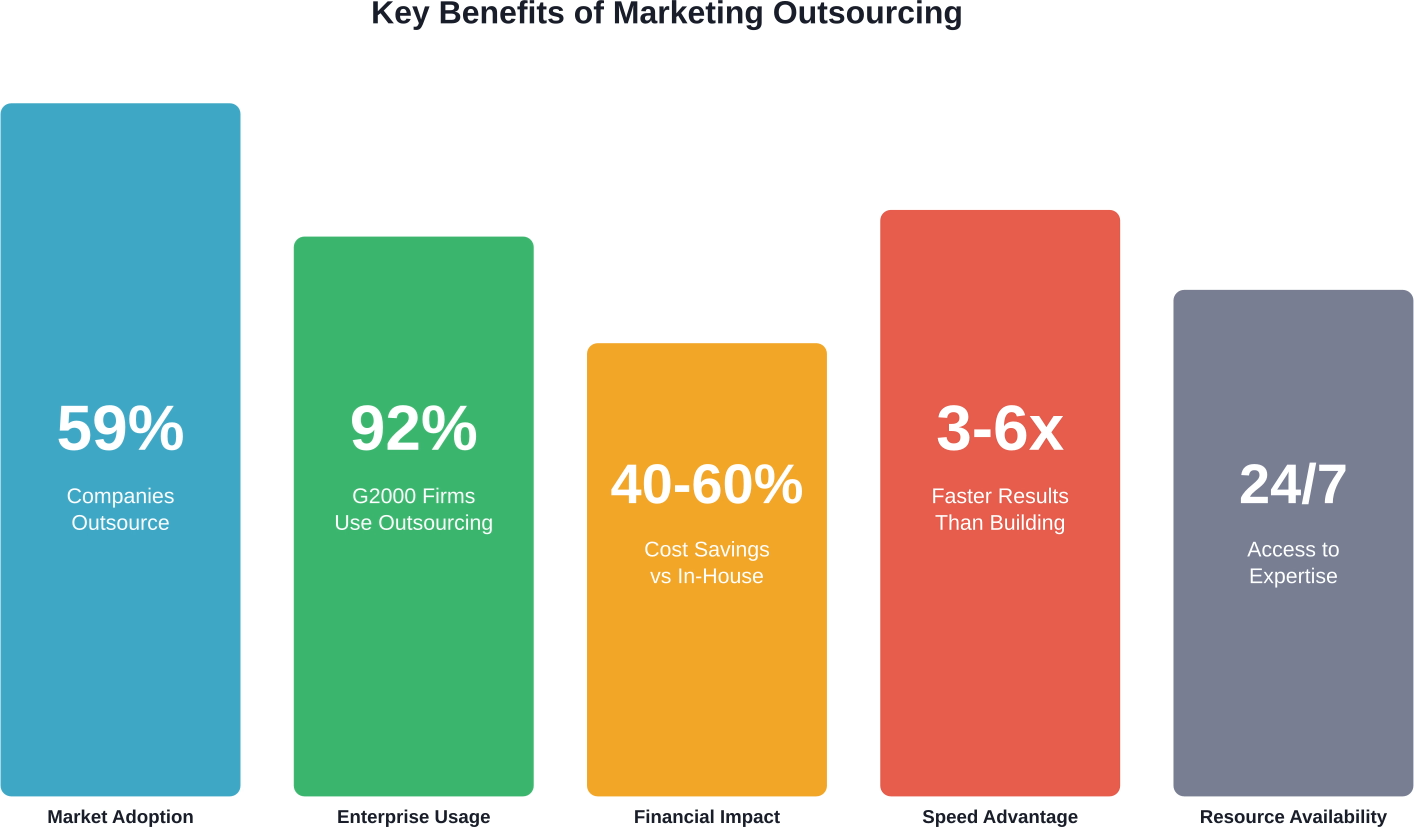
Digital marketing outsourcing involves hiring external agencies or specialists to handle marketing tasks like SEO, PPC, content creation, and social media management. According to research, 59% of companies outsource their marketing functions to reduce costs, access specialized expertise, and scale operations efficiently. Typical costs range from $500-$5,000/month for SEO and $1,000+/month for social media management, depending on scope and agency type.
Managing a comprehensive marketing strategy isn't simple. Between SEO algorithms changing weekly, social media platforms launching new features, and the constant pressure to generate qualified leads, businesses face mounting challenges.
That's where digital marketing outsourcing enters the picture. Instead of building expensive in-house teams or spreading existing staff too thin, companies partner with external specialists who bring focused expertise and proven systems.
But here's the thing—outsourcing isn't just about offloading work. Research shows that 92% of G2000 companies rely on IT outsourcing services specifically for efficiency and cost reduction. The same principle applies to marketing functions.
This guide breaks down everything needed to make outsourcing work: what services to delegate, how much to budget, which partner characteristics matter most, and the strategies that separate successful arrangements from disappointing ones.
What Digital Marketing Outsourcing Actually Means
Digital marketing outsourcing means contracting external agencies, freelancers, or specialized firms to handle specific marketing functions rather than managing them internally.
The scope varies dramatically. Some businesses outsource a single service like search engine optimization. Others hand off entire marketing departments to third-party partners who manage everything from strategy development to campaign execution.
Most commonly, companies outsource these specific functions:
The decision to outsource typically stems from one of three situations: lacking internal expertise for specialized tasks, managing inconsistent workload that doesn't justify full-time hires, or pursuing rapid scaling without the overhead of recruitment and training.
Why Businesses Choose to Outsource Marketing Functions
According to Sagefrog, 59% of companies decide to outsource their marketing work. That's not arbitrary—specific benefits drive this trend.
Cost Efficiency Without Compromise
Building an in-house team with expertise in SEO, PPC, content marketing, social media, email campaigns, and analytics requires substantial investment in salaries, benefits, training, and tools.
Outsourcing converts fixed costs into variable ones. Instead of paying year-round salaries regardless of workload, businesses pay for actual services rendered. This flexibility proves especially valuable for small to mid-sized businesses operating on tight budgets.
The numbers matter here. A single experienced marketing manager might command $90,000-$160,000 annually, plus benefits.That doesn't include designers, writers, paid media specialists, or analysts. Meanwhile, outsourcing specific functions can run $2,000-$8,000 monthly depending on scope—accessing an entire team's expertise for what one employee costs.
Access to Specialized Expertise
Marketing channels evolve constantly. What worked for Facebook advertising last quarter might be obsolete now. SEO best practices shift with every algorithm update.
Specialized agencies live and breathe these changes. They invest in training, certifications, and technology specifically because that's their core business. When outsourcing to experts, businesses tap into this accumulated knowledge without the learning curve.
Scalability and Flexibility
Workload fluctuates. Product launches demand intensive campaign support. Quiet periods require maintenance-level work.
Outsourced partners scale up or down based on actual needs. No awkward conversations about laying off staff during slow months. No desperate scrambling to hire when opportunities arise.
Faster Implementation and Results
Experienced agencies bring established processes, proven frameworks, and ready-to-deploy resources. They've already made the common mistakes and refined their approaches.
This translates to faster campaign launches and quicker results compared to building internal capabilities from scratch.
Understanding Outsourcing Costs and Pricing Models
Budgeting matters. Here's what digital marketing outsourcing actually costs based on current market data.
Typical Service Pricing
According to available research, these are the standard price ranges for outsourced marketing services:
- SEO: $500 to $5,000 per month depending on competitiveness and scope
- Social Media Management: Starting at $1,000 per month for basic services
- PPC Management: Often charged as a percentage of ad spend (typically 10-20%)
- Email Marketing: Varies by campaign volume and automation complexity
- Content Creation: Ranges from $100-$500 per article for professional writing
The cost variation depends on several factors: agency reputation and location, project complexity and competitiveness, service scope and deliverables, and whether packages are bundled or à la carte.
How Pricing Structures Work
Agencies typically offer one of four pricing models:
- Monthly Retainer: Fixed fee for predetermined services each month. Provides predictable budgeting and ongoing partnership. Works best for businesses needing consistent support.
- Project-Based: One-time fee for specific deliverables like website redesigns or campaign launches. Clear scope and timeline. Ideal for defined initiatives with concrete endpoints.
- Performance-Based: Compensation tied to results like leads generated or revenue driven. Aligns incentives between business and agency. Higher risk but potentially higher reward.
- Hourly Consulting: Pay for actual time spent, typically $100-$300 per hour for experienced consultants. Flexible for sporadic needs or strategic guidance.
Boutique vs. Full-Service Agency Pricing
Boutique agencies specializing in one or two channels often charge less than full-service firms managing entire marketing ecosystems. But that doesn't automatically make them the better choice.
Full-service agencies offer integrated strategies where SEO, content, social, and paid advertising work together cohesively. Boutique firms excel at deep expertise in their niche.
The right choice depends on specific business needs and existing internal capabilities.
Which Marketing Services to Outsource
Not everything needs to go external. Strategic decisions about what to keep in-house versus what to outsource make the difference between success and frustration.
Services Agencies Commonly Outsource
Marketing agencies themselves frequently outsource specific functions. This reveals which services genuinely benefit from specialist attention:
Keep Strategic Functions Internal
Certain elements should typically remain in-house: brand positioning and core messaging, overall marketing strategy and business objectives, customer relationship management and direct client communication, and product knowledge and unique value proposition development.
External partners execute tactics brilliantly. But they can't replace internal understanding of company culture, long-term vision, and customer relationships built over time.
How to Choose the Right Marketing Outsourcing Partner
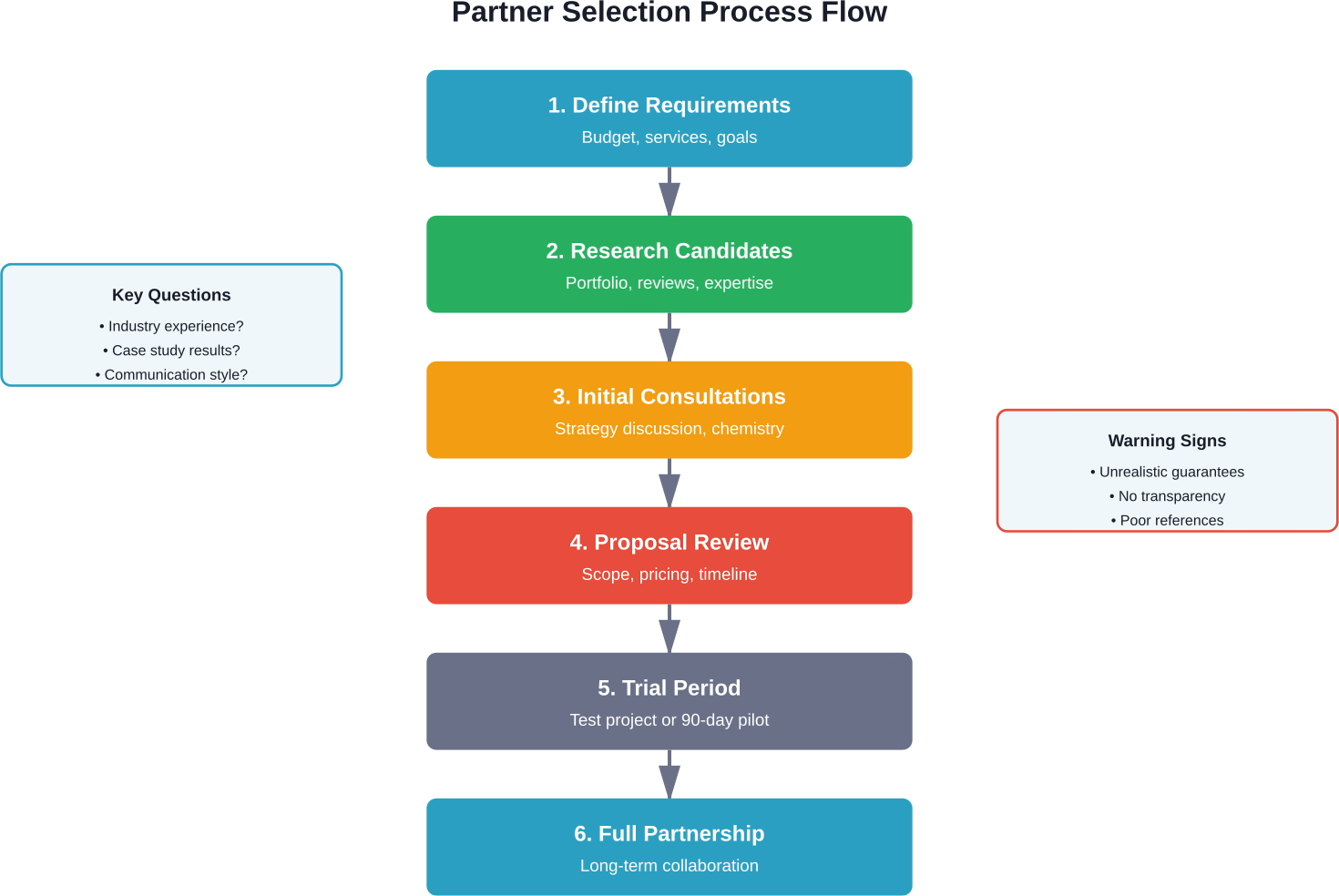
Partner selection determines everything. The wrong choice wastes money and time. The right one accelerates growth significantly.
Essential Evaluation Criteria
- Relevant Experience and Portfolio: Look for agencies that have worked with similar businesses in comparable industries. Review case studies demonstrating measurable results, not just attractive creative work.
- Communication and Transparency: Agencies should explain their processes clearly without hiding behind jargon. Regular reporting, accessible points of contact, and proactive updates signal healthy partnerships.
- Technology and Tools: Ask what platforms and software the agency uses. Modern agencies leverage automation, analytics tools, and project management systems that provide visibility into work progress.
- Cultural Alignment: Work style compatibility matters more than many realize. Mismatched expectations about response times, decision-making processes, or creative approaches create friction.
- Scalability: Can the agency grow with your business? Switching partners mid-growth is disruptive. Choose firms with capacity to expand services as needs evolve.
Red Flags to Watch For
Certain warning signs indicate problematic partnerships ahead:
- Guaranteeing specific rankings or results (SEO outcomes can't be guaranteed)
- Refusing to explain methodologies or claiming proprietary secrets
- Requiring long-term contracts without performance clauses
- Lacking verifiable references or case studies
- Offering prices dramatically below market rates (quality suffers)
- Poor communication during the sales process (won't improve after signing)
Trust instincts. If something feels off during initial conversations, it probably is.
Implementing a Successful Outsourcing Strategy
Signing a contract is just the beginning. Implementation determines whether outsourcing delivers promised benefits or becomes a frustrating expense.
Set Clear Expectations from Day One
Successful partnerships start with documented agreements covering:
- Specific deliverables and timelines: What gets delivered, when, and in what format. Vague expectations create disappointment.
- Communication protocols: How often will meetings occur? Who's the primary contact? What's the expected response time for questions?
- Performance metrics: Define success quantitatively. Website traffic increases, lead generation targets, conversion rate improvements, or ROI thresholds.
- Access and permissions: Ensure the agency has necessary platform access, brand assets, and background information to work effectively.
Maintain Strategic Oversight
Outsourcing doesn't mean abdicating responsibility. Someone internally needs to own the relationship, review performance regularly, and provide feedback.
Schedule monthly or quarterly business reviews. Examine what's working, what isn't, and how strategies need adjusting based on results.
Start Small and Scale Gradually
Begin with a single service or short-term project before committing to comprehensive arrangements. This tests compatibility and competence without major risk.
Once the partnership proves valuable, expand scope incrementally. Add services as comfort and trust grow.
Build Collaborative Relationships
The best outsourcing arrangements feel like extensions of internal teams, not transactional vendors.
Share business context beyond immediate projects. Help partners understand customer pain points, competitive dynamics, and strategic priorities. This context enables more effective work.

Build a Reliable Digital Marketing Outsourcing Team
Digital marketing outsourcing works best when the team understands your product, audience, and growth goals. NeoWork helps companies build remote marketing teams across content, paid media, SEO support, and operations. With a 91% annualized teammate retention rate and a 3.2% candidate selectivity rate, NeoWork focuses on long-term team performance instead of short-term contracts. That continuity supports consistent execution and measurable results.
Ready to Outsource Digital Marketing Without the Usual Turnover?
Talk with NeoWork to:
- build a remote marketing team aligned with your strategy
- maintain consistency across campaigns
- scale execution as your growth targets expand
👉 Reach out to NeoWork to plan your digital marketing outsourcing model.
Common Challenges and How to Address Them
Outsourcing isn't without complications. But knowing common issues helps avoid or mitigate them.
Loss of Control Concerns
Many businesses worry about losing control when outsourcing marketing functions. The concern is valid but manageable.
Combat this through structured processes: require approval for major decisions, maintain oversight through regular reporting, and use project management tools that provide visibility into work progress.
According to available research, businesses don't necessarily lose control when using outsourced marketing services—they trade direct execution control for strategic direction control.
Communication Breakdowns
Misunderstandings happen, especially when agencies juggle multiple clients. Prevent issues by establishing clear communication channels, using shared documentation platforms, and scheduling regular check-ins rather than only connecting when problems arise.
Quality Inconsistencies
Work quality should meet standards consistently. When it doesn't, address issues immediately rather than letting frustration build.
Provide specific feedback tied to documented standards. If quality problems persist despite clear guidance, consider whether the partnership is the right fit.
Misaligned Expectations
Different assumptions about timelines, deliverables, or results cause the majority of outsourcing frustrations.
Document everything. Put agreements in writing. Confirm understanding after key conversations. This seems tedious but prevents expensive misunderstandings.
Measuring Outsourcing Success
Results matter more than activities. Track metrics that connect directly to business objectives.
Essential Performance Indicators
Focus on outcomes rather than outputs:
Compare Against Baselines
Establish baseline metrics before outsourcing begins. This provides objective comparison points for evaluating whether performance improves.
If website traffic averaged 5,000 monthly visitors before outsourcing SEO, growth to 8,000 visitors six months later demonstrates clear impact.
Regular Performance Reviews
Schedule quarterly business reviews examining performance trends, strategy adjustments, and ROI analysis. These conversations keep partnerships aligned and results-focused.
Digital Marketing Outsourcing for Different Business Types
Strategy varies depending on company size and industry.
Small Business Considerations
Small businesses typically lack resources for full marketing teams. Outsourcing provides enterprise-level expertise at accessible price points.
Priority should focus on high-impact services: SEO for long-term organic visibility, targeted paid advertising for immediate lead generation, and content marketing to establish authority.
Start with agencies offering packaged services designed specifically for small business budgets.
E-commerce Requirements
E-commerce businesses have unique needs: product feed optimization, shopping campaign management, conversion rate optimization, and email automation for abandoned cart recovery.
Look for agencies with specific e-commerce platform expertise (Shopify, WooCommerce, Magento) and demonstrated success improving metrics like average order value and customer lifetime value.
B2B Marketing Outsourcing
B2B sales cycles are longer and require different approaches than B2C marketing. Priorities include LinkedIn advertising and networking, content marketing targeting decision-makers, account-based marketing campaigns, and lead nurturing automation.
B2B agencies should understand complex buying committees and sales processes involving multiple stakeholders.
Agency-to-Agency Outsourcing
Marketing agencies themselves frequently outsource specialized functions they don't offer internally. This white-label approach allows agencies to provide comprehensive services without hiring for every possible skill.
Common white-label services include web development, technical SEO audits, CRM automation setup, and specialized platform expertise like Salesforce or HubSpot.
Future Trends in Marketing Outsourcing
The outsourcing landscape continues evolving. Several trends are reshaping how businesses approach external partnerships.
Specialized Micro-Agencies
Rather than generalist firms handling everything, more businesses work with multiple specialized micro-agencies. One handles SEO specifically. Another focuses exclusively on LinkedIn advertising. A third manages content production.
This approach accesses deeper expertise in each channel while requiring more coordination.
Performance-Based Compensation
Risk-sharing arrangements where agencies get paid based on results are becoming more common. Instead of fixed retainers, compensation ties to lead generation, revenue growth, or other measurable outcomes.
This model aligns incentives but requires sophisticated tracking and agreement on attribution models.
Technology-Enabled Outsourcing
Automation and AI tools are changing what agencies can deliver. Tasks that previously required extensive manual work—like audience research, content optimization, and performance reporting—now happen partially automated.
This increases efficiency and allows agencies to focus human expertise on strategy and creative work.
Global Talent Access
Remote work normalization means businesses aren't limited to local agencies. Companies routinely work with partners across continents, accessing global expertise while potentially reducing costs.
Time zone differences require careful coordination but open opportunities previously unavailable.
Making Your Outsourcing Decision
Digital marketing outsourcing isn't right for every business in every situation. But for companies struggling with internal capacity, lacking specialized expertise, or pursuing rapid growth, it offers a practical path forward.
The data supports this approach—59% of companies outsource their marketing functions, and 92% of G2000 companies rely on outsourcing services specifically for efficiency and cost reduction.
Success requires thoughtful partner selection, clear expectations, ongoing oversight, and measuring results that matter. Start small, test compatibility, then scale as the partnership proves valuable.
Costs range from $500 monthly for basic single-service arrangements to $5,000+ for comprehensive multi-channel strategies. Investment level should align with business objectives and available budget.
The right outsourcing partner becomes an extension of internal teams—bringing expertise, implementing proven systems, and delivering measurable results that drive business growth.
Ready to explore outsourcing for your business? Start by clearly defining marketing goals, documenting current baseline metrics, setting realistic budgets, and researching agencies with relevant experience. Schedule consultations with multiple candidates, ask detailed questions about processes and results, and request proposals for comparison.
The investment in finding the right partner pays dividends through improved marketing performance and accelerated business growth.
Frequently Asked Questions
Topics
Digital Marketing Outsourcing Guide 2026: Costs & Strategy

Digital marketing outsourcing involves hiring external agencies or specialists to handle marketing tasks like SEO, PPC, content creation, and social media management. According to research, 59% of companies outsource their marketing functions to reduce costs, access specialized expertise, and scale operations efficiently. Typical costs range from $500-$5,000/month for SEO and $1,000+/month for social media management, depending on scope and agency type.
Managing a comprehensive marketing strategy isn't simple. Between SEO algorithms changing weekly, social media platforms launching new features, and the constant pressure to generate qualified leads, businesses face mounting challenges.
That's where digital marketing outsourcing enters the picture. Instead of building expensive in-house teams or spreading existing staff too thin, companies partner with external specialists who bring focused expertise and proven systems.
But here's the thing—outsourcing isn't just about offloading work. Research shows that 92% of G2000 companies rely on IT outsourcing services specifically for efficiency and cost reduction. The same principle applies to marketing functions.
This guide breaks down everything needed to make outsourcing work: what services to delegate, how much to budget, which partner characteristics matter most, and the strategies that separate successful arrangements from disappointing ones.
What Digital Marketing Outsourcing Actually Means
Digital marketing outsourcing means contracting external agencies, freelancers, or specialized firms to handle specific marketing functions rather than managing them internally.
The scope varies dramatically. Some businesses outsource a single service like search engine optimization. Others hand off entire marketing departments to third-party partners who manage everything from strategy development to campaign execution.
Most commonly, companies outsource these specific functions:
The decision to outsource typically stems from one of three situations: lacking internal expertise for specialized tasks, managing inconsistent workload that doesn't justify full-time hires, or pursuing rapid scaling without the overhead of recruitment and training.
Why Businesses Choose to Outsource Marketing Functions
According to Sagefrog, 59% of companies decide to outsource their marketing work. That's not arbitrary—specific benefits drive this trend.
Cost Efficiency Without Compromise
Building an in-house team with expertise in SEO, PPC, content marketing, social media, email campaigns, and analytics requires substantial investment in salaries, benefits, training, and tools.
Outsourcing converts fixed costs into variable ones. Instead of paying year-round salaries regardless of workload, businesses pay for actual services rendered. This flexibility proves especially valuable for small to mid-sized businesses operating on tight budgets.
The numbers matter here. A single experienced marketing manager might command $90,000-$160,000 annually, plus benefits.That doesn't include designers, writers, paid media specialists, or analysts. Meanwhile, outsourcing specific functions can run $2,000-$8,000 monthly depending on scope—accessing an entire team's expertise for what one employee costs.
Access to Specialized Expertise
Marketing channels evolve constantly. What worked for Facebook advertising last quarter might be obsolete now. SEO best practices shift with every algorithm update.
Specialized agencies live and breathe these changes. They invest in training, certifications, and technology specifically because that's their core business. When outsourcing to experts, businesses tap into this accumulated knowledge without the learning curve.
Scalability and Flexibility
Workload fluctuates. Product launches demand intensive campaign support. Quiet periods require maintenance-level work.
Outsourced partners scale up or down based on actual needs. No awkward conversations about laying off staff during slow months. No desperate scrambling to hire when opportunities arise.
Faster Implementation and Results
Experienced agencies bring established processes, proven frameworks, and ready-to-deploy resources. They've already made the common mistakes and refined their approaches.
This translates to faster campaign launches and quicker results compared to building internal capabilities from scratch.
Understanding Outsourcing Costs and Pricing Models
Budgeting matters. Here's what digital marketing outsourcing actually costs based on current market data.
Typical Service Pricing
According to available research, these are the standard price ranges for outsourced marketing services:
- SEO: $500 to $5,000 per month depending on competitiveness and scope
- Social Media Management: Starting at $1,000 per month for basic services
- PPC Management: Often charged as a percentage of ad spend (typically 10-20%)
- Email Marketing: Varies by campaign volume and automation complexity
- Content Creation: Ranges from $100-$500 per article for professional writing
The cost variation depends on several factors: agency reputation and location, project complexity and competitiveness, service scope and deliverables, and whether packages are bundled or à la carte.
How Pricing Structures Work
Agencies typically offer one of four pricing models:
- Monthly Retainer: Fixed fee for predetermined services each month. Provides predictable budgeting and ongoing partnership. Works best for businesses needing consistent support.
- Project-Based: One-time fee for specific deliverables like website redesigns or campaign launches. Clear scope and timeline. Ideal for defined initiatives with concrete endpoints.
- Performance-Based: Compensation tied to results like leads generated or revenue driven. Aligns incentives between business and agency. Higher risk but potentially higher reward.
- Hourly Consulting: Pay for actual time spent, typically $100-$300 per hour for experienced consultants. Flexible for sporadic needs or strategic guidance.
Boutique vs. Full-Service Agency Pricing
Boutique agencies specializing in one or two channels often charge less than full-service firms managing entire marketing ecosystems. But that doesn't automatically make them the better choice.
Full-service agencies offer integrated strategies where SEO, content, social, and paid advertising work together cohesively. Boutique firms excel at deep expertise in their niche.
The right choice depends on specific business needs and existing internal capabilities.
Which Marketing Services to Outsource
Not everything needs to go external. Strategic decisions about what to keep in-house versus what to outsource make the difference between success and frustration.
Services Agencies Commonly Outsource
Marketing agencies themselves frequently outsource specific functions. This reveals which services genuinely benefit from specialist attention:
Keep Strategic Functions Internal
Certain elements should typically remain in-house: brand positioning and core messaging, overall marketing strategy and business objectives, customer relationship management and direct client communication, and product knowledge and unique value proposition development.
External partners execute tactics brilliantly. But they can't replace internal understanding of company culture, long-term vision, and customer relationships built over time.
How to Choose the Right Marketing Outsourcing Partner
Partner selection determines everything. The wrong choice wastes money and time. The right one accelerates growth significantly.
Essential Evaluation Criteria
- Relevant Experience and Portfolio: Look for agencies that have worked with similar businesses in comparable industries. Review case studies demonstrating measurable results, not just attractive creative work.
- Communication and Transparency: Agencies should explain their processes clearly without hiding behind jargon. Regular reporting, accessible points of contact, and proactive updates signal healthy partnerships.
- Technology and Tools: Ask what platforms and software the agency uses. Modern agencies leverage automation, analytics tools, and project management systems that provide visibility into work progress.
- Cultural Alignment: Work style compatibility matters more than many realize. Mismatched expectations about response times, decision-making processes, or creative approaches create friction.
- Scalability: Can the agency grow with your business? Switching partners mid-growth is disruptive. Choose firms with capacity to expand services as needs evolve.
Red Flags to Watch For
Certain warning signs indicate problematic partnerships ahead:
- Guaranteeing specific rankings or results (SEO outcomes can't be guaranteed)
- Refusing to explain methodologies or claiming proprietary secrets
- Requiring long-term contracts without performance clauses
- Lacking verifiable references or case studies
- Offering prices dramatically below market rates (quality suffers)
- Poor communication during the sales process (won't improve after signing)
Trust instincts. If something feels off during initial conversations, it probably is.
Implementing a Successful Outsourcing Strategy
Signing a contract is just the beginning. Implementation determines whether outsourcing delivers promised benefits or becomes a frustrating expense.
Set Clear Expectations from Day One
Successful partnerships start with documented agreements covering:
- Specific deliverables and timelines: What gets delivered, when, and in what format. Vague expectations create disappointment.
- Communication protocols: How often will meetings occur? Who's the primary contact? What's the expected response time for questions?
- Performance metrics: Define success quantitatively. Website traffic increases, lead generation targets, conversion rate improvements, or ROI thresholds.
- Access and permissions: Ensure the agency has necessary platform access, brand assets, and background information to work effectively.
Maintain Strategic Oversight
Outsourcing doesn't mean abdicating responsibility. Someone internally needs to own the relationship, review performance regularly, and provide feedback.
Schedule monthly or quarterly business reviews. Examine what's working, what isn't, and how strategies need adjusting based on results.
Start Small and Scale Gradually
Begin with a single service or short-term project before committing to comprehensive arrangements. This tests compatibility and competence without major risk.
Once the partnership proves valuable, expand scope incrementally. Add services as comfort and trust grow.
Build Collaborative Relationships
The best outsourcing arrangements feel like extensions of internal teams, not transactional vendors.
Share business context beyond immediate projects. Help partners understand customer pain points, competitive dynamics, and strategic priorities. This context enables more effective work.
Build a Reliable Digital Marketing Outsourcing Team
Digital marketing outsourcing works best when the team understands your product, audience, and growth goals. NeoWork helps companies build remote marketing teams across content, paid media, SEO support, and operations. With a 91% annualized teammate retention rate and a 3.2% candidate selectivity rate, NeoWork focuses on long-term team performance instead of short-term contracts. That continuity supports consistent execution and measurable results.
Ready to Outsource Digital Marketing Without the Usual Turnover?
Talk with NeoWork to:
- build a remote marketing team aligned with your strategy
- maintain consistency across campaigns
- scale execution as your growth targets expand
👉 Reach out to NeoWork to plan your digital marketing outsourcing model.
Common Challenges and How to Address Them
Outsourcing isn't without complications. But knowing common issues helps avoid or mitigate them.
Loss of Control Concerns
Many businesses worry about losing control when outsourcing marketing functions. The concern is valid but manageable.
Combat this through structured processes: require approval for major decisions, maintain oversight through regular reporting, and use project management tools that provide visibility into work progress.
According to available research, businesses don't necessarily lose control when using outsourced marketing services—they trade direct execution control for strategic direction control.
Communication Breakdowns
Misunderstandings happen, especially when agencies juggle multiple clients. Prevent issues by establishing clear communication channels, using shared documentation platforms, and scheduling regular check-ins rather than only connecting when problems arise.
Quality Inconsistencies
Work quality should meet standards consistently. When it doesn't, address issues immediately rather than letting frustration build.
Provide specific feedback tied to documented standards. If quality problems persist despite clear guidance, consider whether the partnership is the right fit.
Misaligned Expectations
Different assumptions about timelines, deliverables, or results cause the majority of outsourcing frustrations.
Document everything. Put agreements in writing. Confirm understanding after key conversations. This seems tedious but prevents expensive misunderstandings.
Measuring Outsourcing Success
Results matter more than activities. Track metrics that connect directly to business objectives.
Essential Performance Indicators
Focus on outcomes rather than outputs:
Compare Against Baselines
Establish baseline metrics before outsourcing begins. This provides objective comparison points for evaluating whether performance improves.
If website traffic averaged 5,000 monthly visitors before outsourcing SEO, growth to 8,000 visitors six months later demonstrates clear impact.
Regular Performance Reviews
Schedule quarterly business reviews examining performance trends, strategy adjustments, and ROI analysis. These conversations keep partnerships aligned and results-focused.
Digital Marketing Outsourcing for Different Business Types
Strategy varies depending on company size and industry.
Small Business Considerations
Small businesses typically lack resources for full marketing teams. Outsourcing provides enterprise-level expertise at accessible price points.
Priority should focus on high-impact services: SEO for long-term organic visibility, targeted paid advertising for immediate lead generation, and content marketing to establish authority.
Start with agencies offering packaged services designed specifically for small business budgets.
E-commerce Requirements
E-commerce businesses have unique needs: product feed optimization, shopping campaign management, conversion rate optimization, and email automation for abandoned cart recovery.
Look for agencies with specific e-commerce platform expertise (Shopify, WooCommerce, Magento) and demonstrated success improving metrics like average order value and customer lifetime value.
B2B Marketing Outsourcing
B2B sales cycles are longer and require different approaches than B2C marketing. Priorities include LinkedIn advertising and networking, content marketing targeting decision-makers, account-based marketing campaigns, and lead nurturing automation.
B2B agencies should understand complex buying committees and sales processes involving multiple stakeholders.
Agency-to-Agency Outsourcing
Marketing agencies themselves frequently outsource specialized functions they don't offer internally. This white-label approach allows agencies to provide comprehensive services without hiring for every possible skill.
Common white-label services include web development, technical SEO audits, CRM automation setup, and specialized platform expertise like Salesforce or HubSpot.
Future Trends in Marketing Outsourcing
The outsourcing landscape continues evolving. Several trends are reshaping how businesses approach external partnerships.
Specialized Micro-Agencies
Rather than generalist firms handling everything, more businesses work with multiple specialized micro-agencies. One handles SEO specifically. Another focuses exclusively on LinkedIn advertising. A third manages content production.
This approach accesses deeper expertise in each channel while requiring more coordination.
Performance-Based Compensation
Risk-sharing arrangements where agencies get paid based on results are becoming more common. Instead of fixed retainers, compensation ties to lead generation, revenue growth, or other measurable outcomes.
This model aligns incentives but requires sophisticated tracking and agreement on attribution models.
Technology-Enabled Outsourcing
Automation and AI tools are changing what agencies can deliver. Tasks that previously required extensive manual work—like audience research, content optimization, and performance reporting—now happen partially automated.
This increases efficiency and allows agencies to focus human expertise on strategy and creative work.
Global Talent Access
Remote work normalization means businesses aren't limited to local agencies. Companies routinely work with partners across continents, accessing global expertise while potentially reducing costs.
Time zone differences require careful coordination but open opportunities previously unavailable.
Making Your Outsourcing Decision
Digital marketing outsourcing isn't right for every business in every situation. But for companies struggling with internal capacity, lacking specialized expertise, or pursuing rapid growth, it offers a practical path forward.
The data supports this approach—59% of companies outsource their marketing functions, and 92% of G2000 companies rely on outsourcing services specifically for efficiency and cost reduction.
Success requires thoughtful partner selection, clear expectations, ongoing oversight, and measuring results that matter. Start small, test compatibility, then scale as the partnership proves valuable.
Costs range from $500 monthly for basic single-service arrangements to $5,000+ for comprehensive multi-channel strategies. Investment level should align with business objectives and available budget.
The right outsourcing partner becomes an extension of internal teams—bringing expertise, implementing proven systems, and delivering measurable results that drive business growth.
Ready to explore outsourcing for your business? Start by clearly defining marketing goals, documenting current baseline metrics, setting realistic budgets, and researching agencies with relevant experience. Schedule consultations with multiple candidates, ask detailed questions about processes and results, and request proposals for comparison.
The investment in finding the right partner pays dividends through improved marketing performance and accelerated business growth.
Frequently Asked Questions
Topics
Related Blogs
Related Podcasts


.webp)
.webp)



