

.avif)
.avif)

Digital Marketing Outsourcing Services Guide 2026


.svg)

Digital marketing outsourcing involves hiring external agencies or specialists to handle marketing functions like SEO, paid ads, content creation, and social media management. This strategic approach allows businesses to access specialized expertise, reduce costs compared to in-house teams, and scale marketing efforts quickly without the overhead of hiring full-time staff.
The marketing battlefield has changed. Businesses face more channels, platforms, and customer touchpoints than ever before. Keeping an in-house team capable of handling every aspect of modern digital marketing has become prohibitively expensive for most companies.
That's where outsourcing enters the picture.
According to the U.S. Small Business Administration, more than a third of small businesses currently outsource at least some operations. Digital marketing has become one of the most popular outsourced processes for small businesses, with studies finding that digital marketing (34%) has joined accounting and IT services (both 37%) as the most popular outsourced processes.
But outsourcing isn't just about cutting costs. It's about accessing specialized skills, adapting quickly to market changes, and freeing internal teams to focus on core business objectives.
What Digital Marketing Outsourcing Actually Means
Digital marketing outsourcing happens when businesses contract external agencies, freelancers, or specialized providers to handle marketing activities instead of building in-house capabilities.
This isn't wholesale abandonment of marketing control. Rather, it's selective sourcing of specific capabilities and expertise that would be difficult or expensive to maintain internally.
The scope varies widely. Some companies outsource a single function like paid advertising. Others hand over entire marketing operations to a partner agency that becomes an extension of their team.
The approach follows what industry analysts call "capability-as-a-service"—acquiring specific business capabilities through external partners rather than building them from scratch internally.
Why Businesses Turn to Outsourced Marketing
The decision to outsource typically stems from one or more strategic pressures:
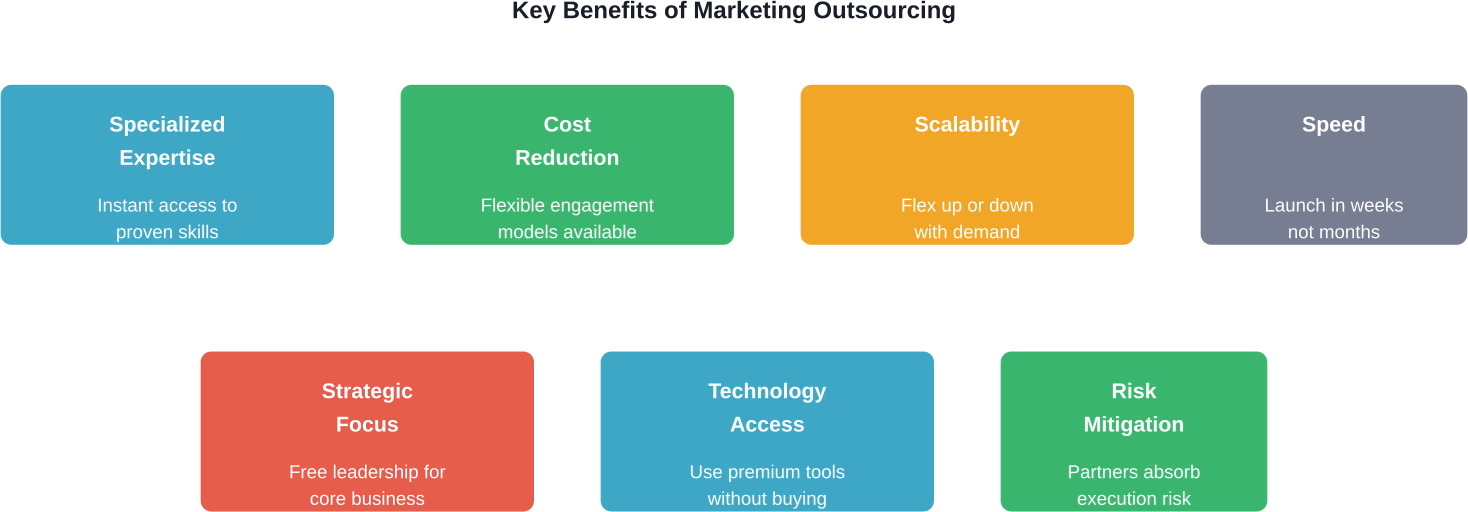
Access to Specialized Expertise
Digital marketing encompasses dozens of disciplines. SEO requires technical knowledge and constant adaptation to algorithm changes. Paid advertising demands platform expertise and budget optimization skills. Content marketing needs writing talent and strategic planning.
Building a team with all these capabilities takes years and significant investment. Outsourcing provides immediate access to specialists who've already mastered these skills.
Cost Management and Flexibility
Hiring full-time marketing staff means salaries, benefits, training costs, software licenses, and overhead. These expenses remain fixed whether workload increases or decreases.
External partners operate on flexible engagement models. Scale up during product launches or seasonal peaks, then scale back during quieter periods without layoffs or wasted capacity.
Speed to Market
Recruiting, hiring, and onboarding internal marketers takes months. By the time a new hire reaches full productivity, market conditions may have shifted.
Outsourced teams start delivering within weeks, sometimes days. They bring established processes, tools, and workflows that produce results immediately.
Focus on Core Business
Leadership time is finite. Every hour spent managing marketing tactics is an hour not spent on product development, customer relationships, or strategic planning.
Delegating marketing execution to trusted partners frees executive bandwidth for activities that directly impact competitive advantage.
Which Marketing Services Make Sense to Outsource
Not every marketing function benefits equally from outsourcing. Some activities require deep institutional knowledge or direct customer contact that external partners can't replicate.
But these services commonly succeed when delegated:
Search Engine Optimization
SEO demands technical expertise, continuous research, and constant adaptation to search algorithm changes. Agencies maintain specialists who focus exclusively on ranking factors, link building strategies, and technical site optimization.
Most businesses lack the volume of SEO work to justify a full-time specialist. Outsourcing provides expert attention without the overhead.
Paid Advertising Management
Platform advertising—Google Ads, Facebook, LinkedIn, programmatic display—requires deep knowledge of bidding strategies, audience targeting, and conversion optimization.
Agencies manage campaigns across multiple clients, giving them broader perspective on what works. They spot trends faster and avoid costly beginner mistakes.
Content Creation and Marketing
Producing blog posts, videos, infographics, and other content assets takes specialized creative talent. Writers, designers, and video producers often work better as contractors than full-time employees.
Outsourced content teams scale easily with demand. Need 20 articles this month and five next month? External partners handle that fluctuation naturally.
Social Media Management
Social platforms require consistent posting, community engagement, and platform-specific content strategies. Many businesses find dedicated social media staff hard to keep busy full-time.
Agencies assign social specialists across multiple accounts, creating natural efficiency while maintaining consistent presence.
Marketing Automation and CRM
Setting up and managing platforms like HubSpot, Marketo, or Salesforce Marketing Cloud requires technical knowledge that most teams use only during initial implementation.
Specialized providers handle configuration, integration, and ongoing optimization more efficiently than internal teams learning as they go.
How to Choose the Right Marketing Partner
Selecting an outsourcing partner determines whether the relationship delivers value or becomes a source of frustration.
Here's what separates effective partnerships from failed experiments:
Evaluate Relevant Experience
Generic marketing expertise doesn't translate across all industries. B2B SaaS marketing differs fundamentally from e-commerce or local services.
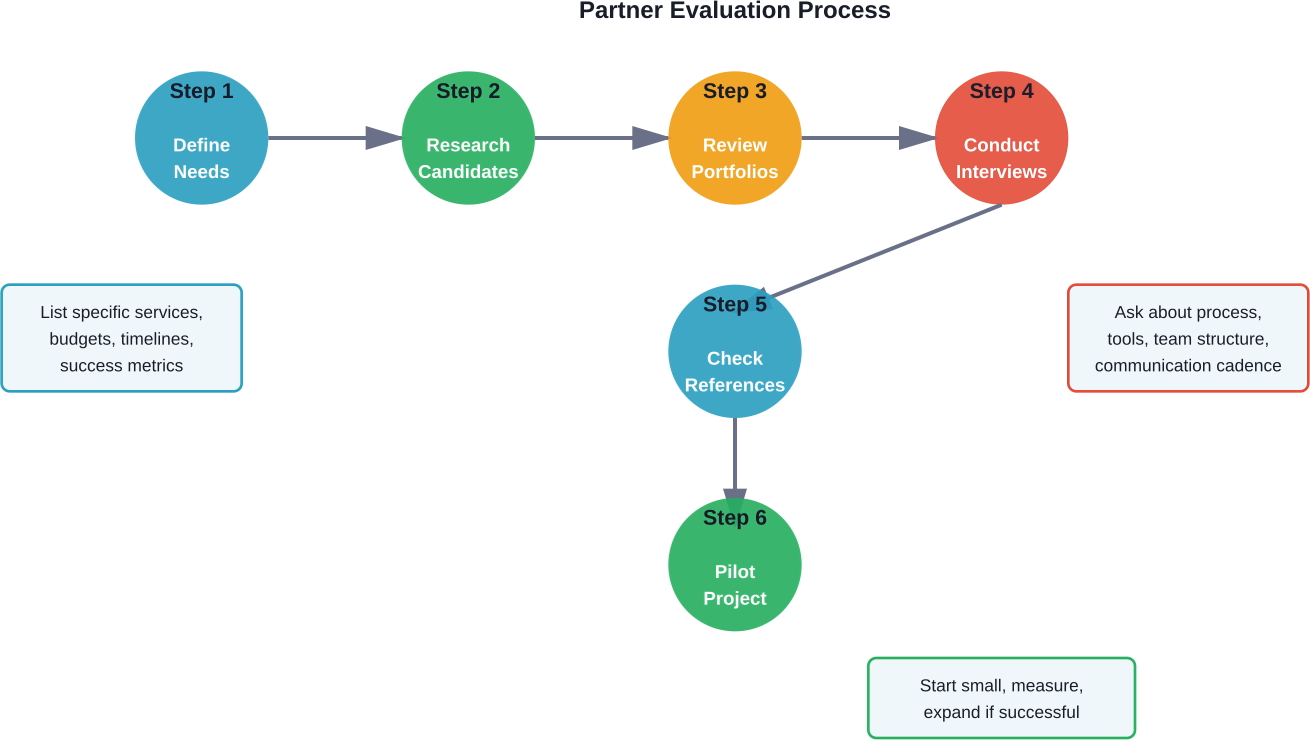
Look for partners who've solved problems similar to yours. Review case studies, ask for client references in your sector, and assess whether they understand your customer journey.
Assess Communication and Transparency
Distance and asynchronous communication create natural friction. Partners who communicate clearly, provide regular updates, and maintain transparent reporting systems prevent misunderstandings.
During evaluation, notice response times, clarity of answers, and willingness to explain strategies in accessible language.
Examine Process and Methodology
Strong agencies follow documented processes for onboarding, campaign planning, execution, and reporting. Ad-hoc approaches produce inconsistent results.
Ask candidates to walk through their standard workflow. How do they gather requirements? What approval points exist? How do they measure success?
Verify Technical Capabilities
Marketing increasingly depends on technical implementation—tracking pixels, tag management, API integrations, data analysis.
Ensure prospective partners have actual technical talent, not just creative expertise. Review their tool stack and confirm they can work within your existing systems.
Understand Pricing Models
Outsourcing partners typically charge through retainers, project fees, or performance-based arrangements.
Retainers provide predictable monthly costs for ongoing work. Project fees work for defined deliverables. Performance-based pricing aligns incentives but requires careful metric definition.
Some agencies offer demand-based pricing models that scale hours and rates with average monthly needs, providing flexibility without sacrificing consistency.
Check Compliance Understanding
According to the Federal Trade Commission, under the law, claims in advertisements must be truthful, cannot be deceptive or unfair, and must be evidence-based. Partners creating marketing content need to understand these legal requirements.
For businesses advertising to children or in regulated industries, verify that outsourcing partners know the relevant compliance frameworks.
Scale Digital Marketing Without Expanding Headcount
Digital marketing outsourcing works when specialists stay long enough to understand your data and funnel. NeoWork builds remote digital marketing teams across paid ads, SEO, analytics, and content support. Their 91% annualized teammate retention rate and 3.2% candidate selectivity rate reduce turnover and knowledge loss. This leads to more consistent optimization and clearer performance tracking.
Ready to Expand Your Digital Marketing Team?
Talk with NeoWork to:
- add vetted digital marketing professionals
- improve campaign optimization cycles
- maintain long-term channel expertise
👉 Contact NeoWork to structure your digital marketing outsourcing model.
Building an Effective Outsourcing Strategy
Successful outsourcing requires more than finding a good agency. It demands strategic planning and active management.
Start with Clear Objectives
Vague goals produce vague results. "Improve marketing" doesn't give partners enough direction.
Define specific, measurable outcomes: "Increase qualified leads by 40% within six months" or "Achieve 2.5x ROAS on paid advertising" or "Publish 16 long-form content pieces monthly."
According to academic research on marketing ROI, setting clear objectives and establishing web analytics goals before launching campaigns significantly improves the ability to prove marketing value.
Establish Communication Protocols
Distance creates coordination challenges. Prevent them with structured communication:
Schedule regular check-ins—weekly for active campaigns, biweekly for ongoing programs. Use these for status updates, not tactical decisions. Handle day-to-day questions through dedicated Slack channels or project management tools.
Define approval workflows upfront. Who reviews creative? Who signs off on budget changes? Who handles emergency decisions?
Share Context Generously
External partners lack the institutional knowledge internal teams take for granted. They don't know your product roadmap, competitive pressures, or internal politics.
Overcommunicate context. Share product updates, customer feedback, sales insights, and competitive intelligence. Market research best practices emphasize understanding target markets and developing personas—processes that require deep information sharing.
Better-informed partners make smarter decisions and produce more relevant work.
Measure and Adjust
Outsourcing relationships should improve over time as partners learn your business and refine approaches.
Track leading and lagging indicators. Monitor not just final results but intermediate metrics that signal whether strategies are working.
Review performance quarterly. What's working? What isn't? Where should investment shift?
Maintain Internal Marketing Leadership
Outsourcing execution doesn't mean abdicating strategy.
Someone internally must own marketing outcomes, provide strategic direction, and coordinate between external partners and internal stakeholders. Without this leadership, outsourced programs drift without clear purpose.
Common Outsourcing Pitfalls to Avoid
Even well-planned outsourcing relationships hit obstacles. Watch for these common failure patterns:
Insufficient Onboarding
Rushing partners into execution without proper context leads to misaligned work that requires extensive revision.
Invest in thorough onboarding. Share brand guidelines, competitive positioning, customer personas, past campaign performance, and strategic priorities. The upfront time investment pays dividends in better initial output.
Micromanagement
Hiring experts then dictating exactly how they should work negates the expertise benefit.
Define what success looks like, then give partners room to determine how to achieve it. Intervene on strategy and results, not tactics and process.
Unrealistic Expectations
Marketing takes time. SEO improvements appear over months, not weeks. Content marketing builds momentum gradually. Brand awareness shifts slowly.
Set realistic timeframes based on the nature of work. Partners can't overcome unreasonable expectations, no matter how talented.
Poor Documentation
When partners create content, build campaigns, or configure systems without documenting their work, knowledge stays locked in their heads.
Require documentation of processes, credentials, configurations, and strategies. If the relationship ends, this knowledge transfer prevents starting from scratch.
Treating Partners as Vendors, Not Partners
Transactional relationships produce transactional work. Partners who feel like interchangeable vendors invest less in understanding business context and proactively identifying opportunities.
The best outsourcing relationships feel collaborative. Share credit for wins, seek partner input on strategy, and treat their success as intertwined with yours.
Offshore vs. Nearshore vs. Onshore Outsourcing
Geographic location affects cost, communication, and cultural alignment.
Offshore outsourcing (Asia, Eastern Europe) offers maximum cost savings but can introduce communication challenges from time zones, language differences, and cultural gaps.
Nearshore outsourcing (Latin America for US companies, Eastern Europe for Western Europe) balances cost savings with easier communication through overlapping work hours and cultural similarity.
Onshore outsourcing (same country) costs more but simplifies communication, ensures cultural alignment, and avoids time zone coordination.
The right choice depends on the work type. Creative content requiring cultural nuance often works better onshore. Technical implementation or data analysis may succeed offshore with proper processes.
Moving Forward with Marketing Outsourcing
Digital marketing outsourcing offers a practical path to capabilities that would take years and significant investment to build internally.
But success isn't automatic. It requires strategic thinking about which functions to delegate, careful partner selection, clear communication protocols, and active relationship management.
The organizations seeing the best results treat outsourcing as a strategic capability decision, not just a cost reduction tactic. They invest in partner relationships, share information generously, and maintain internal marketing leadership even while delegating execution.
Start small. Outsource a single well-defined function first. Learn what works in the relationship. Build trust and establish communication patterns. Then expand to additional services as confidence grows.
The marketing landscape will continue growing more complex. Channels multiply, technologies evolve, and customer expectations rise. Building every capability in-house becomes increasingly impractical.
Strategic outsourcing partnerships let businesses access the expertise they need, when they need it, without the overhead of maintaining every skill internally.
Ready to explore outsourcing for your marketing? Define your objectives clearly, research partners methodically, and start with a pilot engagement that lets both sides prove value before committing to larger initiatives.
Frequently Asked Questions
Topics
Digital Marketing Outsourcing Services Guide 2026

Digital marketing outsourcing involves hiring external agencies or specialists to handle marketing functions like SEO, paid ads, content creation, and social media management. This strategic approach allows businesses to access specialized expertise, reduce costs compared to in-house teams, and scale marketing efforts quickly without the overhead of hiring full-time staff.
The marketing battlefield has changed. Businesses face more channels, platforms, and customer touchpoints than ever before. Keeping an in-house team capable of handling every aspect of modern digital marketing has become prohibitively expensive for most companies.
That's where outsourcing enters the picture.
According to the U.S. Small Business Administration, more than a third of small businesses currently outsource at least some operations. Digital marketing has become one of the most popular outsourced processes for small businesses, with studies finding that digital marketing (34%) has joined accounting and IT services (both 37%) as the most popular outsourced processes.
But outsourcing isn't just about cutting costs. It's about accessing specialized skills, adapting quickly to market changes, and freeing internal teams to focus on core business objectives.
What Digital Marketing Outsourcing Actually Means
Digital marketing outsourcing happens when businesses contract external agencies, freelancers, or specialized providers to handle marketing activities instead of building in-house capabilities.
This isn't wholesale abandonment of marketing control. Rather, it's selective sourcing of specific capabilities and expertise that would be difficult or expensive to maintain internally.
The scope varies widely. Some companies outsource a single function like paid advertising. Others hand over entire marketing operations to a partner agency that becomes an extension of their team.
The approach follows what industry analysts call "capability-as-a-service"—acquiring specific business capabilities through external partners rather than building them from scratch internally.
Why Businesses Turn to Outsourced Marketing
The decision to outsource typically stems from one or more strategic pressures:
Access to Specialized Expertise
Digital marketing encompasses dozens of disciplines. SEO requires technical knowledge and constant adaptation to algorithm changes. Paid advertising demands platform expertise and budget optimization skills. Content marketing needs writing talent and strategic planning.
Building a team with all these capabilities takes years and significant investment. Outsourcing provides immediate access to specialists who've already mastered these skills.
Cost Management and Flexibility
Hiring full-time marketing staff means salaries, benefits, training costs, software licenses, and overhead. These expenses remain fixed whether workload increases or decreases.
External partners operate on flexible engagement models. Scale up during product launches or seasonal peaks, then scale back during quieter periods without layoffs or wasted capacity.
Speed to Market
Recruiting, hiring, and onboarding internal marketers takes months. By the time a new hire reaches full productivity, market conditions may have shifted.
Outsourced teams start delivering within weeks, sometimes days. They bring established processes, tools, and workflows that produce results immediately.
Focus on Core Business
Leadership time is finite. Every hour spent managing marketing tactics is an hour not spent on product development, customer relationships, or strategic planning.
Delegating marketing execution to trusted partners frees executive bandwidth for activities that directly impact competitive advantage.
Which Marketing Services Make Sense to Outsource
Not every marketing function benefits equally from outsourcing. Some activities require deep institutional knowledge or direct customer contact that external partners can't replicate.
But these services commonly succeed when delegated:
Search Engine Optimization
SEO demands technical expertise, continuous research, and constant adaptation to search algorithm changes. Agencies maintain specialists who focus exclusively on ranking factors, link building strategies, and technical site optimization.
Most businesses lack the volume of SEO work to justify a full-time specialist. Outsourcing provides expert attention without the overhead.
Paid Advertising Management
Platform advertising—Google Ads, Facebook, LinkedIn, programmatic display—requires deep knowledge of bidding strategies, audience targeting, and conversion optimization.
Agencies manage campaigns across multiple clients, giving them broader perspective on what works. They spot trends faster and avoid costly beginner mistakes.
Content Creation and Marketing
Producing blog posts, videos, infographics, and other content assets takes specialized creative talent. Writers, designers, and video producers often work better as contractors than full-time employees.
Outsourced content teams scale easily with demand. Need 20 articles this month and five next month? External partners handle that fluctuation naturally.
Social Media Management
Social platforms require consistent posting, community engagement, and platform-specific content strategies. Many businesses find dedicated social media staff hard to keep busy full-time.
Agencies assign social specialists across multiple accounts, creating natural efficiency while maintaining consistent presence.
Marketing Automation and CRM
Setting up and managing platforms like HubSpot, Marketo, or Salesforce Marketing Cloud requires technical knowledge that most teams use only during initial implementation.
Specialized providers handle configuration, integration, and ongoing optimization more efficiently than internal teams learning as they go.
How to Choose the Right Marketing Partner
Selecting an outsourcing partner determines whether the relationship delivers value or becomes a source of frustration.
Here's what separates effective partnerships from failed experiments:
Evaluate Relevant Experience
Generic marketing expertise doesn't translate across all industries. B2B SaaS marketing differs fundamentally from e-commerce or local services.
Look for partners who've solved problems similar to yours. Review case studies, ask for client references in your sector, and assess whether they understand your customer journey.
Assess Communication and Transparency
Distance and asynchronous communication create natural friction. Partners who communicate clearly, provide regular updates, and maintain transparent reporting systems prevent misunderstandings.
During evaluation, notice response times, clarity of answers, and willingness to explain strategies in accessible language.
Examine Process and Methodology
Strong agencies follow documented processes for onboarding, campaign planning, execution, and reporting. Ad-hoc approaches produce inconsistent results.
Ask candidates to walk through their standard workflow. How do they gather requirements? What approval points exist? How do they measure success?
Verify Technical Capabilities
Marketing increasingly depends on technical implementation—tracking pixels, tag management, API integrations, data analysis.
Ensure prospective partners have actual technical talent, not just creative expertise. Review their tool stack and confirm they can work within your existing systems.
Understand Pricing Models
Outsourcing partners typically charge through retainers, project fees, or performance-based arrangements.
Retainers provide predictable monthly costs for ongoing work. Project fees work for defined deliverables. Performance-based pricing aligns incentives but requires careful metric definition.
Some agencies offer demand-based pricing models that scale hours and rates with average monthly needs, providing flexibility without sacrificing consistency.
Check Compliance Understanding
According to the Federal Trade Commission, under the law, claims in advertisements must be truthful, cannot be deceptive or unfair, and must be evidence-based. Partners creating marketing content need to understand these legal requirements.
For businesses advertising to children or in regulated industries, verify that outsourcing partners know the relevant compliance frameworks.
Scale Digital Marketing Without Expanding Headcount
Digital marketing outsourcing works when specialists stay long enough to understand your data and funnel. NeoWork builds remote digital marketing teams across paid ads, SEO, analytics, and content support. Their 91% annualized teammate retention rate and 3.2% candidate selectivity rate reduce turnover and knowledge loss. This leads to more consistent optimization and clearer performance tracking.
Ready to Expand Your Digital Marketing Team?
Talk with NeoWork to:
- add vetted digital marketing professionals
- improve campaign optimization cycles
- maintain long-term channel expertise
👉 Contact NeoWork to structure your digital marketing outsourcing model.
Building an Effective Outsourcing Strategy
Successful outsourcing requires more than finding a good agency. It demands strategic planning and active management.
Start with Clear Objectives
Vague goals produce vague results. "Improve marketing" doesn't give partners enough direction.
Define specific, measurable outcomes: "Increase qualified leads by 40% within six months" or "Achieve 2.5x ROAS on paid advertising" or "Publish 16 long-form content pieces monthly."
According to academic research on marketing ROI, setting clear objectives and establishing web analytics goals before launching campaigns significantly improves the ability to prove marketing value.
Establish Communication Protocols
Distance creates coordination challenges. Prevent them with structured communication:
Schedule regular check-ins—weekly for active campaigns, biweekly for ongoing programs. Use these for status updates, not tactical decisions. Handle day-to-day questions through dedicated Slack channels or project management tools.
Define approval workflows upfront. Who reviews creative? Who signs off on budget changes? Who handles emergency decisions?
Share Context Generously
External partners lack the institutional knowledge internal teams take for granted. They don't know your product roadmap, competitive pressures, or internal politics.
Overcommunicate context. Share product updates, customer feedback, sales insights, and competitive intelligence. Market research best practices emphasize understanding target markets and developing personas—processes that require deep information sharing.
Better-informed partners make smarter decisions and produce more relevant work.
Measure and Adjust
Outsourcing relationships should improve over time as partners learn your business and refine approaches.
Track leading and lagging indicators. Monitor not just final results but intermediate metrics that signal whether strategies are working.
Review performance quarterly. What's working? What isn't? Where should investment shift?
Maintain Internal Marketing Leadership
Outsourcing execution doesn't mean abdicating strategy.
Someone internally must own marketing outcomes, provide strategic direction, and coordinate between external partners and internal stakeholders. Without this leadership, outsourced programs drift without clear purpose.
Common Outsourcing Pitfalls to Avoid
Even well-planned outsourcing relationships hit obstacles. Watch for these common failure patterns:
Insufficient Onboarding
Rushing partners into execution without proper context leads to misaligned work that requires extensive revision.
Invest in thorough onboarding. Share brand guidelines, competitive positioning, customer personas, past campaign performance, and strategic priorities. The upfront time investment pays dividends in better initial output.
Micromanagement
Hiring experts then dictating exactly how they should work negates the expertise benefit.
Define what success looks like, then give partners room to determine how to achieve it. Intervene on strategy and results, not tactics and process.
Unrealistic Expectations
Marketing takes time. SEO improvements appear over months, not weeks. Content marketing builds momentum gradually. Brand awareness shifts slowly.
Set realistic timeframes based on the nature of work. Partners can't overcome unreasonable expectations, no matter how talented.
Poor Documentation
When partners create content, build campaigns, or configure systems without documenting their work, knowledge stays locked in their heads.
Require documentation of processes, credentials, configurations, and strategies. If the relationship ends, this knowledge transfer prevents starting from scratch.
Treating Partners as Vendors, Not Partners
Transactional relationships produce transactional work. Partners who feel like interchangeable vendors invest less in understanding business context and proactively identifying opportunities.
The best outsourcing relationships feel collaborative. Share credit for wins, seek partner input on strategy, and treat their success as intertwined with yours.
Offshore vs. Nearshore vs. Onshore Outsourcing
Geographic location affects cost, communication, and cultural alignment.
Offshore outsourcing (Asia, Eastern Europe) offers maximum cost savings but can introduce communication challenges from time zones, language differences, and cultural gaps.
Nearshore outsourcing (Latin America for US companies, Eastern Europe for Western Europe) balances cost savings with easier communication through overlapping work hours and cultural similarity.
Onshore outsourcing (same country) costs more but simplifies communication, ensures cultural alignment, and avoids time zone coordination.
The right choice depends on the work type. Creative content requiring cultural nuance often works better onshore. Technical implementation or data analysis may succeed offshore with proper processes.
Moving Forward with Marketing Outsourcing
Digital marketing outsourcing offers a practical path to capabilities that would take years and significant investment to build internally.
But success isn't automatic. It requires strategic thinking about which functions to delegate, careful partner selection, clear communication protocols, and active relationship management.
The organizations seeing the best results treat outsourcing as a strategic capability decision, not just a cost reduction tactic. They invest in partner relationships, share information generously, and maintain internal marketing leadership even while delegating execution.
Start small. Outsource a single well-defined function first. Learn what works in the relationship. Build trust and establish communication patterns. Then expand to additional services as confidence grows.
The marketing landscape will continue growing more complex. Channels multiply, technologies evolve, and customer expectations rise. Building every capability in-house becomes increasingly impractical.
Strategic outsourcing partnerships let businesses access the expertise they need, when they need it, without the overhead of maintaining every skill internally.
Ready to explore outsourcing for your marketing? Define your objectives clearly, research partners methodically, and start with a pilot engagement that lets both sides prove value before committing to larger initiatives.
Frequently Asked Questions
Topics
Related Blogs
Related Podcasts


.webp)
.webp)



