

.avif)
.avif)

Full-Cycle Game Development Outsourcing Guide 2026


.svg)

Full-cycle game development outsourcing means handing over the entire development process to an external studio, from concept to launch. It delivers cost savings of 40-60% compared to in-house teams while providing access to specialized talent and faster time-to-market. The right partner handles everything: pre-production, development, QA, and launch support.
Game development in 2026 costs more than ever. Production budgets climb, talent becomes scarce, and timelines stretch beyond what most studios can afford internally.
Outsourcing the full development cycle has shifted from a cost-cutting tactic to a strategic advantage. Studios hand off entire projects to external partners who manage everything from initial concept through post-launch updates.
But here's the thing: not all outsourcing arrangements deliver the same results. The model matters. The partner matters. And knowing what full-cycle actually includes matters more than most realize.
What Full-Cycle Game Development Outsourcing Actually Means
Full-cycle outsourcing covers every stage of game production. An external studio takes ownership of the complete development process instead of handling isolated tasks or specific disciplines.
The scope typically includes concept validation, pre-production planning, core development work, quality assurance, and launch support. Some partners extend services into post-launch content updates and live operations.
This differs fundamentally from co-development, where internal teams work alongside external partners. Full-cycle means the outsourcing studio drives the project with minimal hands-on involvement from the client.
The Stages External Studios Handle
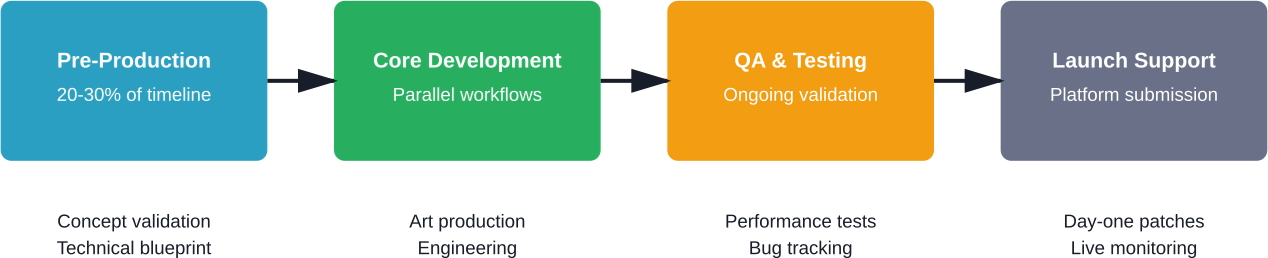
Pre-production sets the foundation. Studios spend significant time here—often 20-30% of the entire timeline according to industry practices. This phase builds the technical blueprint, establishes art direction, and validates whether the concept actually works within budget constraints.
Production follows with parallel workflows. Art creation and engineering run simultaneously, compressing timelines compared to sequential approaches. External teams build game systems, create assets, integrate audio, and implement gameplay mechanics.
Quality assurance runs throughout but intensifies near launch. Testing covers functionality, performance across target platforms, and user experience validation.
Launch support includes platform submission, day-one patches, and immediate post-launch monitoring. Many outsourcing agreements extend into ongoing content development and community management.
Why Studios Choose Full-Cycle Outsourcing
Cost reduction drives many decisions. Outsourcing can reduce costs by 40-60% compared to in-house hiring, according to current industry data. Studios in Eastern Europe, Southeast Asia, and Ukraine offer senior-level talent at rates 40-60% lower than equivalent positions in the US, UK, or Western Europe.
Access to specialized skills matters just as much. Mobile game development requires platform-specific expertise. AAA productions need advanced rendering specialists. VR projects demand spatial design knowledge that most generalist teams lack.
Speed compounds these advantages. Art production and engineering running in parallel significantly compress timelines compared to sequential development or small in-house teams handling everything.
Who Benefits Most From This Approach
Publishers without internal development teams get complete solutions. They bring the vision and market insight while outsourcing partners handle technical execution.
Startups with limited resources avoid the overhead of full-time specialized staff. Instead of hiring permanent employees across every discipline, they pay for exactly what the project needs.
Established studios use full-cycle partners to expand capacity without permanent headcount increases. This works particularly well for experimental projects or genres outside their core competency.
Full-Cycle vs Other Outsourcing Models
Understanding the alternatives clarifies when full-cycle makes sense. Several outsourcing approaches exist, each suited to different situations.
Co-development keeps creative control in-house while external partners handle production volume. The internal team maintains design authority and makes final decisions.
Staff augmentation places external developers under direct client management. They function as temporary employees, following internal processes and reporting structures.
Task-based outsourcing isolates specific work packages. A studio might outsource character modeling while handling everything else internally.
Full-cycle transfers the most responsibility but requires the most trust. The external partner makes day-to-day decisions within agreed parameters.
Regional Cost Breakdown for 2026
Geography dramatically affects pricing. Hourly rates vary by region based on local cost of living, talent pool depth, and market maturity.
Ukraine combines technical strength with competitive pricing, though geopolitical factors require consideration. Studios there have built strong reputations in both mobile and PC development.
Southeast Asian countries like Vietnam and the Philippines excel in art production and mobile game development. Time zone differences can slow communication but also enable round-the-clock production.
The rate alone doesn't tell the whole story. A $30/hour developer who works efficiently delivers better value than a $20/hour developer requiring extensive management and revision.
How to Choose the Right Full-Cycle Partner
Portfolio quality reveals more than marketing promises. Look for completed projects similar in scope, genre, and technical complexity to what the partnership requires.
Technical capabilities should match project needs. A mobile puzzle game requires different expertise than a multiplayer action title. Check whether the studio has shipped games on target platforms.
Communication infrastructure matters enormously. Time zone overlap, language proficiency, and project management processes all affect how smoothly collaboration flows.
Red Flags to Watch For
Vague timelines and cost estimates signal trouble. Professional studios provide detailed breakdowns even at the proposal stage.
Lack of direct access to the development team creates communication bottlenecks. Insist on regular contact with leads, not just account managers.
Unwillingness to share work-in-progress builds or provide milestone demonstrations suggests quality concerns or organizational dysfunction.
Outsourcing introduces challenges such as quality control and coordination issues when not managed properly. While some high-profile projects have faced such difficulties, reliable partners acknowledge these risks and explain their mitigation strategies.
Questions to Ask Potential Partners
How does the studio handle scope changes mid-project? Flexibility matters, but so does clear change management.
What project management methodology does the team follow? Agile, waterfall, and hybrid approaches each have implications for client involvement and iteration cycles.
Who owns the intellectual property and source code? Contracts should clearly specify that all work products belong to the client.
What happens if key team members leave during development? Established studios have continuity plans and documentation practices that survive personnel changes.

Build a Full-Cycle Game Team Without Constant Restructuring
Full-cycle game development sounds clean on paper – design, build, test, launch. In reality, it shifts all the time. Priorities change, scope moves, and teams either stretch too thin or keep getting rebuilt.
NeoWork takes a different approach from typical outsourcing. Instead of handing off parts of the work, they build dedicated teams that sit inside your workflow. People work in your tools, follow your process, and stay aligned with how your project evolves. With a 3.2% selection rate and 91% retention, the setup is built for continuity, not constant replacement.
If you’re looking for a more stable way to run development without resetting your team every few months, it’s worth having a conversation with NeoWork about how they structure long-term support.
Managing a Full-Cycle Outsourcing Relationship
Clear requirements documentation prevents most problems. Detailed game design documents, technical specifications, and visual references align expectations before production starts.
Milestone structure creates accountability. Breaking the project into phases with specific deliverables and acceptance criteria keeps development on track.
Regular communication maintains alignment. Weekly progress reviews, build demonstrations, and open channels for questions prevent small issues from becoming major problems.
Intellectual Property Protection
Contracts must explicitly transfer all IP rights to the client. Work-for-hire agreements, copyright assignments, and confidentiality clauses protect creative assets.
Source code ownership belongs with the client, not the development studio. Escrow arrangements provide additional security for critical projects.
Asset libraries and third-party integrations require careful documentation. Know which elements the studio licensed versus created original, and ensure proper rights transfer.
Common Pitfalls and How to Avoid Them
Insufficient oversight creates drift between vision and execution. Even full-cycle outsourcing requires strategic guidance and regular check-ins.
Unclear success criteria lead to disputes at delivery. Define what "done" means for each milestone with objective, testable standards.
Underestimating integration complexity causes late-stage problems. Budget time for bringing outsourced work into existing systems or platforms.
Platform-specific requirements need early attention. Submission guidelines, technical certification requirements, and platform holder relationships all affect timelines.

Making the Decision
Full-cycle game development outsourcing works best when internal capacity doesn't match project ambitions. Publishers without development teams, startups conserving resources, and established studios expanding into new genres all benefit from this model.
The cost savings reach 40-60% compared to equivalent in-house development. Access to specialized talent, compressed timelines, and reduced overhead compound these advantages.
But success requires more than finding the cheapest hourly rate. Partner selection, clear communication, milestone structure, and proper contracts determine whether outsourcing delivers on its promise.
The game development industry continues trending toward distributed production models. Studios that master outsourcing relationships gain competitive advantages in speed, cost efficiency, and access to global talent pools.
Start with clear project requirements. Research potential partners thoroughly. Structure contracts to protect intellectual property. Maintain regular oversight without micromanaging daily decisions.
Done right, full-cycle outsourcing transforms ambitious concepts into shipped games faster and more affordably than traditional in-house development—without sacrificing quality or creative vision.
Frequently Asked Questions
Topics
Full-Cycle Game Development Outsourcing Guide 2026

Full-cycle game development outsourcing means handing over the entire development process to an external studio, from concept to launch. It delivers cost savings of 40-60% compared to in-house teams while providing access to specialized talent and faster time-to-market. The right partner handles everything: pre-production, development, QA, and launch support.
Game development in 2026 costs more than ever. Production budgets climb, talent becomes scarce, and timelines stretch beyond what most studios can afford internally.
Outsourcing the full development cycle has shifted from a cost-cutting tactic to a strategic advantage. Studios hand off entire projects to external partners who manage everything from initial concept through post-launch updates.
But here's the thing: not all outsourcing arrangements deliver the same results. The model matters. The partner matters. And knowing what full-cycle actually includes matters more than most realize.
What Full-Cycle Game Development Outsourcing Actually Means
Full-cycle outsourcing covers every stage of game production. An external studio takes ownership of the complete development process instead of handling isolated tasks or specific disciplines.
The scope typically includes concept validation, pre-production planning, core development work, quality assurance, and launch support. Some partners extend services into post-launch content updates and live operations.
This differs fundamentally from co-development, where internal teams work alongside external partners. Full-cycle means the outsourcing studio drives the project with minimal hands-on involvement from the client.
The Stages External Studios Handle
Pre-production sets the foundation. Studios spend significant time here—often 20-30% of the entire timeline according to industry practices. This phase builds the technical blueprint, establishes art direction, and validates whether the concept actually works within budget constraints.
Production follows with parallel workflows. Art creation and engineering run simultaneously, compressing timelines compared to sequential approaches. External teams build game systems, create assets, integrate audio, and implement gameplay mechanics.
Quality assurance runs throughout but intensifies near launch. Testing covers functionality, performance across target platforms, and user experience validation.
Launch support includes platform submission, day-one patches, and immediate post-launch monitoring. Many outsourcing agreements extend into ongoing content development and community management.
Why Studios Choose Full-Cycle Outsourcing
Cost reduction drives many decisions. Outsourcing can reduce costs by 40-60% compared to in-house hiring, according to current industry data. Studios in Eastern Europe, Southeast Asia, and Ukraine offer senior-level talent at rates 40-60% lower than equivalent positions in the US, UK, or Western Europe.
Access to specialized skills matters just as much. Mobile game development requires platform-specific expertise. AAA productions need advanced rendering specialists. VR projects demand spatial design knowledge that most generalist teams lack.
Speed compounds these advantages. Art production and engineering running in parallel significantly compress timelines compared to sequential development or small in-house teams handling everything.
Who Benefits Most From This Approach
Publishers without internal development teams get complete solutions. They bring the vision and market insight while outsourcing partners handle technical execution.
Startups with limited resources avoid the overhead of full-time specialized staff. Instead of hiring permanent employees across every discipline, they pay for exactly what the project needs.
Established studios use full-cycle partners to expand capacity without permanent headcount increases. This works particularly well for experimental projects or genres outside their core competency.
Full-Cycle vs Other Outsourcing Models
Understanding the alternatives clarifies when full-cycle makes sense. Several outsourcing approaches exist, each suited to different situations.
Co-development keeps creative control in-house while external partners handle production volume. The internal team maintains design authority and makes final decisions.
Staff augmentation places external developers under direct client management. They function as temporary employees, following internal processes and reporting structures.
Task-based outsourcing isolates specific work packages. A studio might outsource character modeling while handling everything else internally.
Full-cycle transfers the most responsibility but requires the most trust. The external partner makes day-to-day decisions within agreed parameters.
Regional Cost Breakdown for 2026
Geography dramatically affects pricing. Hourly rates vary by region based on local cost of living, talent pool depth, and market maturity.
Ukraine combines technical strength with competitive pricing, though geopolitical factors require consideration. Studios there have built strong reputations in both mobile and PC development.
Southeast Asian countries like Vietnam and the Philippines excel in art production and mobile game development. Time zone differences can slow communication but also enable round-the-clock production.
The rate alone doesn't tell the whole story. A $30/hour developer who works efficiently delivers better value than a $20/hour developer requiring extensive management and revision.
How to Choose the Right Full-Cycle Partner
Portfolio quality reveals more than marketing promises. Look for completed projects similar in scope, genre, and technical complexity to what the partnership requires.
Technical capabilities should match project needs. A mobile puzzle game requires different expertise than a multiplayer action title. Check whether the studio has shipped games on target platforms.
Communication infrastructure matters enormously. Time zone overlap, language proficiency, and project management processes all affect how smoothly collaboration flows.
Red Flags to Watch For
Vague timelines and cost estimates signal trouble. Professional studios provide detailed breakdowns even at the proposal stage.
Lack of direct access to the development team creates communication bottlenecks. Insist on regular contact with leads, not just account managers.
Unwillingness to share work-in-progress builds or provide milestone demonstrations suggests quality concerns or organizational dysfunction.
Outsourcing introduces challenges such as quality control and coordination issues when not managed properly. While some high-profile projects have faced such difficulties, reliable partners acknowledge these risks and explain their mitigation strategies.
Questions to Ask Potential Partners
How does the studio handle scope changes mid-project? Flexibility matters, but so does clear change management.
What project management methodology does the team follow? Agile, waterfall, and hybrid approaches each have implications for client involvement and iteration cycles.
Who owns the intellectual property and source code? Contracts should clearly specify that all work products belong to the client.
What happens if key team members leave during development? Established studios have continuity plans and documentation practices that survive personnel changes.
Build a Full-Cycle Game Team Without Constant Restructuring
Full-cycle game development sounds clean on paper – design, build, test, launch. In reality, it shifts all the time. Priorities change, scope moves, and teams either stretch too thin or keep getting rebuilt.
NeoWork takes a different approach from typical outsourcing. Instead of handing off parts of the work, they build dedicated teams that sit inside your workflow. People work in your tools, follow your process, and stay aligned with how your project evolves. With a 3.2% selection rate and 91% retention, the setup is built for continuity, not constant replacement.
If you’re looking for a more stable way to run development without resetting your team every few months, it’s worth having a conversation with NeoWork about how they structure long-term support.
Managing a Full-Cycle Outsourcing Relationship
Clear requirements documentation prevents most problems. Detailed game design documents, technical specifications, and visual references align expectations before production starts.
Milestone structure creates accountability. Breaking the project into phases with specific deliverables and acceptance criteria keeps development on track.
Regular communication maintains alignment. Weekly progress reviews, build demonstrations, and open channels for questions prevent small issues from becoming major problems.
Intellectual Property Protection
Contracts must explicitly transfer all IP rights to the client. Work-for-hire agreements, copyright assignments, and confidentiality clauses protect creative assets.
Source code ownership belongs with the client, not the development studio. Escrow arrangements provide additional security for critical projects.
Asset libraries and third-party integrations require careful documentation. Know which elements the studio licensed versus created original, and ensure proper rights transfer.
Common Pitfalls and How to Avoid Them
Insufficient oversight creates drift between vision and execution. Even full-cycle outsourcing requires strategic guidance and regular check-ins.
Unclear success criteria lead to disputes at delivery. Define what "done" means for each milestone with objective, testable standards.
Underestimating integration complexity causes late-stage problems. Budget time for bringing outsourced work into existing systems or platforms.
Platform-specific requirements need early attention. Submission guidelines, technical certification requirements, and platform holder relationships all affect timelines.
Making the Decision
Full-cycle game development outsourcing works best when internal capacity doesn't match project ambitions. Publishers without development teams, startups conserving resources, and established studios expanding into new genres all benefit from this model.
The cost savings reach 40-60% compared to equivalent in-house development. Access to specialized talent, compressed timelines, and reduced overhead compound these advantages.
But success requires more than finding the cheapest hourly rate. Partner selection, clear communication, milestone structure, and proper contracts determine whether outsourcing delivers on its promise.
The game development industry continues trending toward distributed production models. Studios that master outsourcing relationships gain competitive advantages in speed, cost efficiency, and access to global talent pools.
Start with clear project requirements. Research potential partners thoroughly. Structure contracts to protect intellectual property. Maintain regular oversight without micromanaging daily decisions.
Done right, full-cycle outsourcing transforms ambitious concepts into shipped games faster and more affordably than traditional in-house development—without sacrificing quality or creative vision.
Frequently Asked Questions
Topics
Related Blogs
Related Podcasts


.webp)

.webp)
.webp)



