

.avif)
.avif)

Game Art Outsourcing Guide: 2026 Expert Tips


.svg)

Game art outsourcing involves partnering with external studios to create 2D/3D assets, characters, environments, and animations for your game. Success depends on defining clear requirements, choosing the right partner, establishing quality control processes, and maintaining strong communication throughout production.
Game development has become increasingly complex. Studios face mounting pressure to deliver high-quality visuals while managing tight budgets and aggressive timelines.
Art outsourcing has evolved from a cost-cutting measure to a strategic necessity. According to community discussions on Polycount, major AAA titles like Uncharted 3 relied on extensive outsourcing partnerships, with only a few environment artists and character artists listed as in-house staff.
The landscape has changed dramatically. Outsourcing studios now employ hundreds of specialized artists, offering everything from full-cycle development to targeted asset creation.
But here's the thing—outsourcing game art successfully requires more than finding a vendor and sending over a brief. It demands strategic planning, rigorous quality control, and the right partnership approach.
Why Studios Outsource Game Art
The decision to outsource typically stems from practical realities rather than purely financial considerations.
Content production has accelerated. Players consume game content faster than ever, creating constant pressure to scale production. When a game launches and players burn through content rapidly, studios need to ramp up asset creation before engagement drops.
Specialized skills matter more now. Creating photorealistic characters, stylized environments, or complex animations requires expertise that many teams don't maintain in-house. Rather than hiring full-time specialists for temporary needs, outsourcing provides access to specific skill sets on demand.
Project flexibility becomes crucial during development cycles. Teams need to scale up during production peaks and scale down afterward. Outsourcing provides that elasticity without the overhead of permanent staff.
Geographic advantages play a role too. Studios in China, Eastern Europe, and Southeast Asia offer competitive rates while maintaining quality standards. Some outsourcing companies operate across multiple countries (with branches in China, England, and other places), providing extensive production capacity.
Defining Your Game Art Outsourcing Requirements
Clarity at the start prevents problems later. Before contacting potential partners, nail down exactly what the project needs.
Identify Asset Scope and Style
Catalog everything that needs creation. Characters, environments, props, UI elements, animations, VFX—each category requires different expertise and timelines.
The art style dictates which studios fit best. Photorealistic AAA assets demand different capabilities than stylized mobile game graphics. Be specific about visual targets.
Real talk: vague direction leads to expensive revisions. Teams that provide detailed style guides, reference images, and technical specifications get better results faster.
Establish Technical Requirements
Technical constraints shape the entire workflow. Define polygon budgets, texture resolutions, file formats, and engine compatibility upfront.
Game engines have specific requirements. Assets built for Unreal Engine 5 differ from those optimized for Unity. According to development resources like Streamline Studios, in-engine, game-ready content has become a standard expectation—studios expect outsourced assets to integrate seamlessly into production pipelines.
Set Budget and Timeline Expectations
Budget realism matters. Research typical costs for asset types before negotiations. Expect premium rates for complex characters versus simple props.
Timeline planning requires buffer zones. Factor in revision cycles, feedback rounds, and potential iteration. Rush jobs cost more and deliver less.
Phase the project when possible. Starting with a small test batch reveals workflow compatibility before committing to large-scale production.
How to Research and Evaluate Game Art Outsourcing Studios
Finding the right partner separates successful outsourcing from expensive mistakes. Not all studios suit every project.
Where to Find Outsourcing Partners
Industry forums like Polycount maintain dedicated sections where outsource studios showcase portfolios and capabilities. Studios ranging from small specialized teams to large operations with hundreds of artists actively post work examples.
Game development conferences provide face-to-face evaluation opportunities. GDC, Gamescom, and regional events feature outsourcing studios demonstrating recent projects.
Referrals from other developers carry weight. Ask peers about their experiences—both positive and problematic.
Essential Evaluation Criteria
Portfolio quality reveals actual capabilities better than marketing materials. Look for projects similar in style, scope, and technical complexity to what's needed.
But wait. Portfolio pieces sometimes misrepresent studio capabilities. Ask specifically which team members worked on showcased projects and whether those artists remain available.
Communication responsiveness during initial contact predicts working relationship quality. Studios that respond promptly with detailed questions demonstrate seriousness.
Technical infrastructure matters for collaboration. Studios should have established pipelines for version control, asset delivery, and feedback integration.
Red Flags to Watch For
Generic responses to specific questions suggest lack of attention or overcapacity. Quality partners ask detailed questions about project requirements before proposing solutions.
Unrealistic timelines or pricing indicate either inexperience or dishonest practices. If quotes seem too good compared to market rates, they probably are.
Poor English communication can create workflow friction. While many excellent studios operate in non-English-speaking regions, effective communication mechanisms must exist.
Reluctance to provide references or discuss past challenges suggests problems. Experienced studios discuss lessons learned from difficult projects openly.
Managing Quality Control in Outsourced Production
Quality control determines whether outsourcing succeeds or fails. Even talented studios produce poor results without proper oversight.
Establish Clear Documentation
Comprehensive art bibles prevent misinterpretation. Document every aspect: proportions, color palettes, material properties, lighting conditions, and technical specifications.
Create visual reference libraries. A single high-quality reference image communicates more than paragraphs of text description.
Technical specs should be exhaustive. Define naming conventions, folder structures, UV layout standards, and export settings in written documentation.
Implement Milestone Reviews
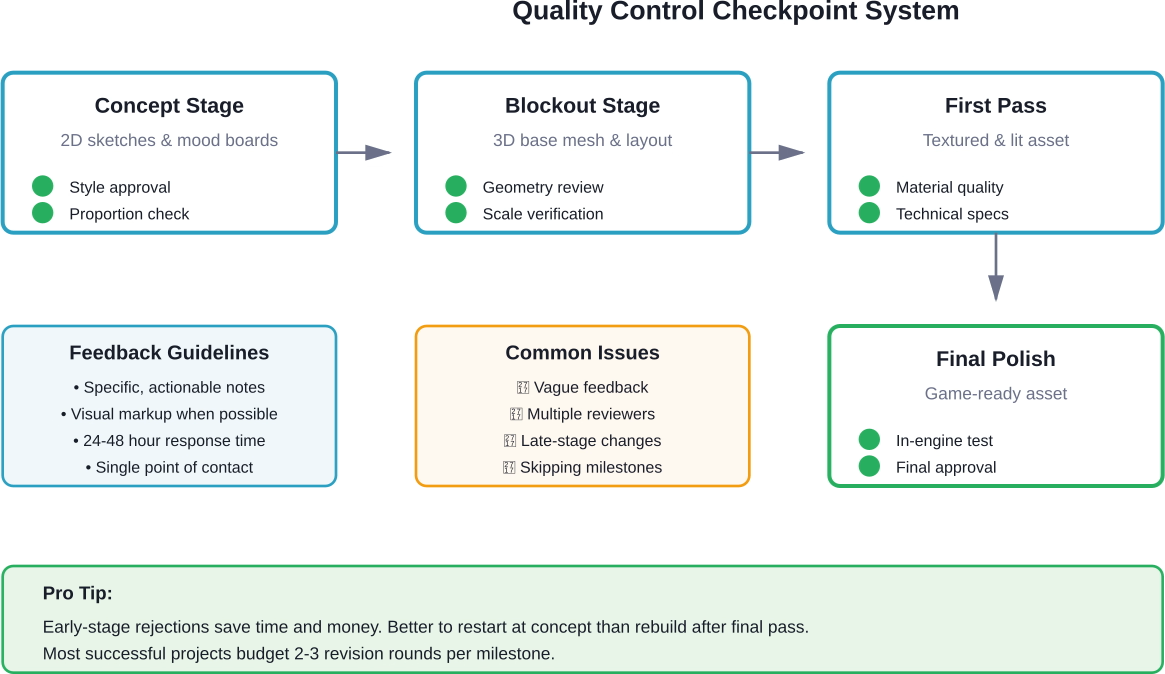
Break production into phases with approval gates. Typical stages include concept art, blockout/graybox, first pass, and final polish.
Reviewing work at each stage catches problems early when corrections cost less. Waiting until final delivery to provide feedback leads to budget overruns and timeline delays.
Use structured feedback formats. Rather than subjective comments like "make it better," provide specific, actionable notes: "reduce polygon density by 20%," "adjust hue 10 degrees warmer," "increase specularity on metal surfaces."
Tools and Processes That Work
Cloud-based collaboration platforms streamline feedback. Tools like Shotgun, Perforce, or dedicated art review software centralize communication and track revision history.
In-engine reviews catch integration issues that screenshots miss. Testing assets directly in the game environment reveals performance problems, lighting behavior, and scale issues.
Regular video calls maintain alignment. Weekly syncs prevent drift and build relationships that improve communication efficiency.
Communication Strategies for Remote Teams
Distance amplifies communication challenges. Cultural differences, time zones, and language barriers require intentional management.
Establish Communication Protocols
Define response time expectations. If feedback turnaround requires 48 hours, state that explicitly. Unclear expectations breed frustration.
Designate single points of contact on both sides. Multiple stakeholders providing contradictory feedback creates confusion and wasted effort.
Time zone differences require accommodation. Overlap at least two hours daily for synchronous communication. Record meetings for teams that can't attend live.
Overcome Language Barriers
Visual communication transcends language limitations. Annotated screenshots, video captures, and 3D markup tools communicate more clearly than text alone.
Avoid idioms and colloquialisms. "Make it pop" means nothing to non-native speakers. Specific direction works universally.
Confirm understanding actively. Ask teams to summarize feedback in their own words to verify interpretation.
Cost Considerations and Budgeting
Pricing varies dramatically based on asset complexity, studio location, and quality expectations. Understanding cost structures prevents budget surprises.
Common Pricing Models
Per-asset pricing provides predictability. Studios quote fixed rates for characters, props, or environments based on complexity tiers.
Hourly rates suit projects with evolving requirements. Teams bill actual time spent, offering flexibility but less cost certainty.
Milestone-based payments align incentives. Studios receive payment upon achieving specific deliverables, ensuring both parties focus on progress.
Hidden Costs to Account For
Revision rounds add up. Budget assumes limited feedback cycles. Extensive changes or scope creep multiply costs quickly.
Project management overhead takes time. Coordinating outsourcing partners requires dedicated personnel hours—factor this into total cost calculations.
Integration work happens in-house. Even game-ready assets need testing, optimization, and pipeline integration. These tasks consume internal resources.
Choosing Between Offshore and Nearshore Studios
Geographic location affects cost, communication ease, and cultural alignment. Each approach offers distinct advantages.
Offshore Advantages
Cost savings drive many offshore relationships. Studios in Asia and Eastern Europe offer competitive rates while maintaining quality standards. Large operations with hundreds of employees provide massive production capacity.
Time zone differences enable round-the-clock production. Work submitted at end-of-day returns reviewed the next morning, accelerating timelines.
Nearshore Benefits
Cultural alignment simplifies collaboration. Shared business practices, holidays, and work styles reduce friction.
Overlapping time zones facilitate real-time communication. Same-day problem resolution beats waiting overnight for responses.
Language fluency typically runs higher. Native or near-native English speakers minimize misunderstanding.
Making the Choice
Project complexity influences ideal partner location. Simple, well-defined asset production suits offshore relationships. Complex projects requiring frequent iteration benefit from nearshore proximity.
Budget constraints matter. Offshore rates stretch limited budgets further, while nearshore premium pricing buys convenience and speed.
Experience level affects success probability. Teams new to outsourcing face gentler learning curves with nearshore partners.
Legal and Contractual Considerations
Proper contracts protect both parties and prevent disputes. Skipping legal groundwork creates risk.
Intellectual Property Rights
Ownership terms must be explicit. Contracts should clearly state that all created assets become client property upon payment.
Work-for-hire clauses ensure clean IP transfer. Without proper language, studios might retain rights to created assets or reuse them for other clients.
NDA requirements protect confidential project information. Studios working on unreleased games handle sensitive material requiring formal confidentiality agreements.
Payment Terms and Milestones
Payment schedules should align with delivery milestones. Typical structures include upfront deposits, milestone payments, and final delivery balance.
Define acceptance criteria clearly. What constitutes "completed" work? How many revision rounds does base pricing include?
Late payment and late delivery penalties establish accountability. Both sides should understand consequences of missing commitments.
Termination Clauses
Projects sometimes go sideways. Contracts need provisions for early termination, defining payment for completed work and asset ownership of in-progress items.
Change order processes handle scope adjustments. When requirements shift mid-project, formal amendment procedures prevent disputes.
Building Long-Term Outsourcing Partnerships
One-off projects differ from ongoing relationships. Studios that find good partners benefit from investing in those relationships.
Advantages of Continuity
Ramp-up time disappears with established partners. Teams familiar with a studio's style, pipeline, and standards produce quality work faster.
Quality consistency improves. Studios that understand project vision maintain visual coherence better than constantly switching partners.
Negotiating leverage increases. Long-term clients often receive preferential pricing, priority scheduling, and flexibility that new clients don't.
Nurturing Partnerships
Treat external teams as extensions of internal staff. Include them in relevant meetings, share context about project goals, and acknowledge their contributions.
Provide constructive feedback. Rather than just noting problems, explain the reasoning behind direction. This educates partners and improves their ability to anticipate needs.
Pay promptly. Nothing damages relationships faster than late payments. Reliable payment builds goodwill and commitment.
Share success stories. When outsourced assets shine, credit the partner publicly. Recognition matters to teams proud of their work.

Work With a Reliable Game Art Outsourcing Partner
If you are planning to outsource game art, the quality of your external team directly affects production speed and visual consistency. NeoWork helps studios build dedicated remote art teams for 2D, 3D, environment, and character production without the overhead of traditional hiring. What sets NeoWork apart is a 91% annualized teammate retention rate and a 3.2% candidate selectivity rate, meaning you work with vetted professionals who stay and grow with your project. This reduces rework, onboarding fatigue, and missed deadlines.
Ready to Outsource Your Game Art With Confidence?
Talk with NeoWork to:
- build a dedicated remote art team aligned with your pipeline
- maintain visual consistency across milestones
- scale production up or down without disrupting delivery
👉 Connect with NeoWork to discuss your game art outsourcing need
Common Pitfalls and How to Avoid Them
Even experienced teams make predictable mistakes when outsourcing game art. Learning from common failures saves time and money.
Inadequate Documentation
Assuming studios "just know" what's needed leads to misaligned deliveries. The fix is simple but time-consuming: create exhaustive reference materials before starting production.
Documentation seems tedious upfront. It prevents exponentially more tedious revision cycles later.
Scope Creep
Requirements that evolve mid-production frustrate partners and inflate costs. Combat this by locking scope before production begins. Changes should trigger formal change orders with adjusted timelines and budgets.
Poor Feedback Quality
"I don't like it" provides no actionable direction. Feedback should specify exactly what needs changing and why. Better yet, show examples of desired results.
Multiple reviewers providing conflicting feedback creates chaos. Consolidate all notes through a single coordinator before sending to partners.
Rushing the Partner Selection
Pressure to start production quickly leads to choosing available studios rather than right studios. A mismatched partner causes problems that far exceed the time spent on thorough evaluation.
Run small test projects before committing to large-scale production. Test phases reveal compatibility issues while stakes remain low.
Ignoring Cultural Differences
Business practices vary globally. Some cultures avoid saying "no" directly, which can mask problems until they become critical.
Build cultural awareness. Learn about partner work styles, communication preferences, and holiday schedules. Small accommodations improve working relationships significantly.
Measuring Outsourcing Success
Track metrics to evaluate whether outsourcing delivers expected value. Subjective impressions miss important patterns.
Key Performance Indicators
Asset acceptance rates measure quality alignment. What percentage of deliveries pass first review? Low acceptance rates indicate unclear requirements or capability mismatches.
Revision cycle counts track efficiency. Successful relationships typically require 1-2 revision rounds per asset. Higher numbers suggest communication problems.
Timeline adherence shows reliability. Partners who consistently deliver on schedule prove more valuable than those who don't, even if quality matches.
Cost per asset reveals efficiency trends. Tracking actual spending against initial estimates identifies budget risk areas.
Qualitative Factors
Communication smoothness affects overall experience. Do interactions feel collaborative or adversarial? Partnerships should be cooperative, not combative.
Proactive problem-solving demonstrates partner investment. Studios that identify potential issues before they escalate add value beyond raw asset creation.
Flexibility under pressure reveals partnership strength. How do studios respond when requirements change or timelines compress?
Future Trends in Game Art Outsourcing
The outsourcing landscape continues evolving as technology and industry practices shift.
AI-Assisted Production
AI tools are changing asset creation workflows. Studios incorporating machine learning for texture generation, concept iteration, or repetitive tasks offer efficiency advantages.
That said, AI augments rather than replaces skilled artists. Human creativity, technical expertise, and quality judgment remain essential.
Real-Time Collaboration Technology
Cloud-based game engines enable real-time collaboration. Teams can work simultaneously in shared environments, reducing handoff friction.
Virtual production techniques migrating from film to games allow rapid iteration and validation. These technologies make remote collaboration feel more immediate.
Specialization Deepening
Studios increasingly focus on specific niches. Rather than general art outsourcing, specialists emerge in areas like facial animation, vehicle modeling, or environment dressing.
This specialization benefits clients seeking specific expertise but requires more coordination across multiple partners.
Conclusion
Game art outsourcing has evolved from a cost-cutting tactic to a strategic production approach. Success requires more than finding affordable artists—it demands clear requirements, careful partner selection, robust quality control, and strong communication.
The studios creating remarkable work exist. They've contributed to major AAA releases and innovative indies alike. Finding them means doing homework, testing compatibility, and investing in relationships that extend beyond transactional interactions.
Start small. Test potential partners with limited scope before committing to large-scale production. Build documentation that eliminates ambiguity. Establish quality control checkpoints that catch problems early. Treat outsourcing partners as extensions of internal teams rather than disposable vendors.
The game development landscape continues growing more complex and competitive. Teams that master effective outsourcing gain flexibility, access to specialized talent, and production capacity that pure internal development can't match. Those advantages translate directly to better games shipped on schedule and within budget.
Ready to explore outsourcing for your game project? Start by defining exactly what assets you need, documenting technical requirements thoroughly, and researching studios with proven experience in your specific style and platform. The investment in proper planning pays dividends throughout production.
Frequently Asked Questions
Topics
Game Art Outsourcing Guide: 2026 Expert Tips

Game art outsourcing involves partnering with external studios to create 2D/3D assets, characters, environments, and animations for your game. Success depends on defining clear requirements, choosing the right partner, establishing quality control processes, and maintaining strong communication throughout production.
Game development has become increasingly complex. Studios face mounting pressure to deliver high-quality visuals while managing tight budgets and aggressive timelines.
Art outsourcing has evolved from a cost-cutting measure to a strategic necessity. According to community discussions on Polycount, major AAA titles like Uncharted 3 relied on extensive outsourcing partnerships, with only a few environment artists and character artists listed as in-house staff.
The landscape has changed dramatically. Outsourcing studios now employ hundreds of specialized artists, offering everything from full-cycle development to targeted asset creation.
But here's the thing—outsourcing game art successfully requires more than finding a vendor and sending over a brief. It demands strategic planning, rigorous quality control, and the right partnership approach.
Why Studios Outsource Game Art
The decision to outsource typically stems from practical realities rather than purely financial considerations.
Content production has accelerated. Players consume game content faster than ever, creating constant pressure to scale production. When a game launches and players burn through content rapidly, studios need to ramp up asset creation before engagement drops.
Specialized skills matter more now. Creating photorealistic characters, stylized environments, or complex animations requires expertise that many teams don't maintain in-house. Rather than hiring full-time specialists for temporary needs, outsourcing provides access to specific skill sets on demand.
Project flexibility becomes crucial during development cycles. Teams need to scale up during production peaks and scale down afterward. Outsourcing provides that elasticity without the overhead of permanent staff.
Geographic advantages play a role too. Studios in China, Eastern Europe, and Southeast Asia offer competitive rates while maintaining quality standards. Some outsourcing companies operate across multiple countries (with branches in China, England, and other places), providing extensive production capacity.
Defining Your Game Art Outsourcing Requirements
Clarity at the start prevents problems later. Before contacting potential partners, nail down exactly what the project needs.
Identify Asset Scope and Style
Catalog everything that needs creation. Characters, environments, props, UI elements, animations, VFX—each category requires different expertise and timelines.
The art style dictates which studios fit best. Photorealistic AAA assets demand different capabilities than stylized mobile game graphics. Be specific about visual targets.
Real talk: vague direction leads to expensive revisions. Teams that provide detailed style guides, reference images, and technical specifications get better results faster.
Establish Technical Requirements
Technical constraints shape the entire workflow. Define polygon budgets, texture resolutions, file formats, and engine compatibility upfront.
Game engines have specific requirements. Assets built for Unreal Engine 5 differ from those optimized for Unity. According to development resources like Streamline Studios, in-engine, game-ready content has become a standard expectation—studios expect outsourced assets to integrate seamlessly into production pipelines.
Set Budget and Timeline Expectations
Budget realism matters. Research typical costs for asset types before negotiations. Expect premium rates for complex characters versus simple props.
Timeline planning requires buffer zones. Factor in revision cycles, feedback rounds, and potential iteration. Rush jobs cost more and deliver less.
Phase the project when possible. Starting with a small test batch reveals workflow compatibility before committing to large-scale production.
How to Research and Evaluate Game Art Outsourcing Studios
Finding the right partner separates successful outsourcing from expensive mistakes. Not all studios suit every project.
Where to Find Outsourcing Partners
Industry forums like Polycount maintain dedicated sections where outsource studios showcase portfolios and capabilities. Studios ranging from small specialized teams to large operations with hundreds of artists actively post work examples.
Game development conferences provide face-to-face evaluation opportunities. GDC, Gamescom, and regional events feature outsourcing studios demonstrating recent projects.
Referrals from other developers carry weight. Ask peers about their experiences—both positive and problematic.
Essential Evaluation Criteria
Portfolio quality reveals actual capabilities better than marketing materials. Look for projects similar in style, scope, and technical complexity to what's needed.
But wait. Portfolio pieces sometimes misrepresent studio capabilities. Ask specifically which team members worked on showcased projects and whether those artists remain available.
Communication responsiveness during initial contact predicts working relationship quality. Studios that respond promptly with detailed questions demonstrate seriousness.
Technical infrastructure matters for collaboration. Studios should have established pipelines for version control, asset delivery, and feedback integration.
Red Flags to Watch For
Generic responses to specific questions suggest lack of attention or overcapacity. Quality partners ask detailed questions about project requirements before proposing solutions.
Unrealistic timelines or pricing indicate either inexperience or dishonest practices. If quotes seem too good compared to market rates, they probably are.
Poor English communication can create workflow friction. While many excellent studios operate in non-English-speaking regions, effective communication mechanisms must exist.
Reluctance to provide references or discuss past challenges suggests problems. Experienced studios discuss lessons learned from difficult projects openly.
Managing Quality Control in Outsourced Production
Quality control determines whether outsourcing succeeds or fails. Even talented studios produce poor results without proper oversight.
Establish Clear Documentation
Comprehensive art bibles prevent misinterpretation. Document every aspect: proportions, color palettes, material properties, lighting conditions, and technical specifications.
Create visual reference libraries. A single high-quality reference image communicates more than paragraphs of text description.
Technical specs should be exhaustive. Define naming conventions, folder structures, UV layout standards, and export settings in written documentation.
Implement Milestone Reviews
Break production into phases with approval gates. Typical stages include concept art, blockout/graybox, first pass, and final polish.
Reviewing work at each stage catches problems early when corrections cost less. Waiting until final delivery to provide feedback leads to budget overruns and timeline delays.
Use structured feedback formats. Rather than subjective comments like "make it better," provide specific, actionable notes: "reduce polygon density by 20%," "adjust hue 10 degrees warmer," "increase specularity on metal surfaces."
Tools and Processes That Work
Cloud-based collaboration platforms streamline feedback. Tools like Shotgun, Perforce, or dedicated art review software centralize communication and track revision history.
In-engine reviews catch integration issues that screenshots miss. Testing assets directly in the game environment reveals performance problems, lighting behavior, and scale issues.
Regular video calls maintain alignment. Weekly syncs prevent drift and build relationships that improve communication efficiency.
Communication Strategies for Remote Teams
Distance amplifies communication challenges. Cultural differences, time zones, and language barriers require intentional management.
Establish Communication Protocols
Define response time expectations. If feedback turnaround requires 48 hours, state that explicitly. Unclear expectations breed frustration.
Designate single points of contact on both sides. Multiple stakeholders providing contradictory feedback creates confusion and wasted effort.
Time zone differences require accommodation. Overlap at least two hours daily for synchronous communication. Record meetings for teams that can't attend live.
Overcome Language Barriers
Visual communication transcends language limitations. Annotated screenshots, video captures, and 3D markup tools communicate more clearly than text alone.
Avoid idioms and colloquialisms. "Make it pop" means nothing to non-native speakers. Specific direction works universally.
Confirm understanding actively. Ask teams to summarize feedback in their own words to verify interpretation.
Cost Considerations and Budgeting
Pricing varies dramatically based on asset complexity, studio location, and quality expectations. Understanding cost structures prevents budget surprises.
Common Pricing Models
Per-asset pricing provides predictability. Studios quote fixed rates for characters, props, or environments based on complexity tiers.
Hourly rates suit projects with evolving requirements. Teams bill actual time spent, offering flexibility but less cost certainty.
Milestone-based payments align incentives. Studios receive payment upon achieving specific deliverables, ensuring both parties focus on progress.
Hidden Costs to Account For
Revision rounds add up. Budget assumes limited feedback cycles. Extensive changes or scope creep multiply costs quickly.
Project management overhead takes time. Coordinating outsourcing partners requires dedicated personnel hours—factor this into total cost calculations.
Integration work happens in-house. Even game-ready assets need testing, optimization, and pipeline integration. These tasks consume internal resources.
Choosing Between Offshore and Nearshore Studios
Geographic location affects cost, communication ease, and cultural alignment. Each approach offers distinct advantages.
Offshore Advantages
Cost savings drive many offshore relationships. Studios in Asia and Eastern Europe offer competitive rates while maintaining quality standards. Large operations with hundreds of employees provide massive production capacity.
Time zone differences enable round-the-clock production. Work submitted at end-of-day returns reviewed the next morning, accelerating timelines.
Nearshore Benefits
Cultural alignment simplifies collaboration. Shared business practices, holidays, and work styles reduce friction.
Overlapping time zones facilitate real-time communication. Same-day problem resolution beats waiting overnight for responses.
Language fluency typically runs higher. Native or near-native English speakers minimize misunderstanding.
Making the Choice
Project complexity influences ideal partner location. Simple, well-defined asset production suits offshore relationships. Complex projects requiring frequent iteration benefit from nearshore proximity.
Budget constraints matter. Offshore rates stretch limited budgets further, while nearshore premium pricing buys convenience and speed.
Experience level affects success probability. Teams new to outsourcing face gentler learning curves with nearshore partners.
Legal and Contractual Considerations
Proper contracts protect both parties and prevent disputes. Skipping legal groundwork creates risk.
Intellectual Property Rights
Ownership terms must be explicit. Contracts should clearly state that all created assets become client property upon payment.
Work-for-hire clauses ensure clean IP transfer. Without proper language, studios might retain rights to created assets or reuse them for other clients.
NDA requirements protect confidential project information. Studios working on unreleased games handle sensitive material requiring formal confidentiality agreements.
Payment Terms and Milestones
Payment schedules should align with delivery milestones. Typical structures include upfront deposits, milestone payments, and final delivery balance.
Define acceptance criteria clearly. What constitutes "completed" work? How many revision rounds does base pricing include?
Late payment and late delivery penalties establish accountability. Both sides should understand consequences of missing commitments.
Termination Clauses
Projects sometimes go sideways. Contracts need provisions for early termination, defining payment for completed work and asset ownership of in-progress items.
Change order processes handle scope adjustments. When requirements shift mid-project, formal amendment procedures prevent disputes.
Building Long-Term Outsourcing Partnerships
One-off projects differ from ongoing relationships. Studios that find good partners benefit from investing in those relationships.
Advantages of Continuity
Ramp-up time disappears with established partners. Teams familiar with a studio's style, pipeline, and standards produce quality work faster.
Quality consistency improves. Studios that understand project vision maintain visual coherence better than constantly switching partners.
Negotiating leverage increases. Long-term clients often receive preferential pricing, priority scheduling, and flexibility that new clients don't.
Nurturing Partnerships
Treat external teams as extensions of internal staff. Include them in relevant meetings, share context about project goals, and acknowledge their contributions.
Provide constructive feedback. Rather than just noting problems, explain the reasoning behind direction. This educates partners and improves their ability to anticipate needs.
Pay promptly. Nothing damages relationships faster than late payments. Reliable payment builds goodwill and commitment.
Share success stories. When outsourced assets shine, credit the partner publicly. Recognition matters to teams proud of their work.
Work With a Reliable Game Art Outsourcing Partner
If you are planning to outsource game art, the quality of your external team directly affects production speed and visual consistency. NeoWork helps studios build dedicated remote art teams for 2D, 3D, environment, and character production without the overhead of traditional hiring. What sets NeoWork apart is a 91% annualized teammate retention rate and a 3.2% candidate selectivity rate, meaning you work with vetted professionals who stay and grow with your project. This reduces rework, onboarding fatigue, and missed deadlines.
Ready to Outsource Your Game Art With Confidence?
Talk with NeoWork to:
- build a dedicated remote art team aligned with your pipeline
- maintain visual consistency across milestones
- scale production up or down without disrupting delivery
👉 Connect with NeoWork to discuss your game art outsourcing need
Common Pitfalls and How to Avoid Them
Even experienced teams make predictable mistakes when outsourcing game art. Learning from common failures saves time and money.
Inadequate Documentation
Assuming studios "just know" what's needed leads to misaligned deliveries. The fix is simple but time-consuming: create exhaustive reference materials before starting production.
Documentation seems tedious upfront. It prevents exponentially more tedious revision cycles later.
Scope Creep
Requirements that evolve mid-production frustrate partners and inflate costs. Combat this by locking scope before production begins. Changes should trigger formal change orders with adjusted timelines and budgets.
Poor Feedback Quality
"I don't like it" provides no actionable direction. Feedback should specify exactly what needs changing and why. Better yet, show examples of desired results.
Multiple reviewers providing conflicting feedback creates chaos. Consolidate all notes through a single coordinator before sending to partners.
Rushing the Partner Selection
Pressure to start production quickly leads to choosing available studios rather than right studios. A mismatched partner causes problems that far exceed the time spent on thorough evaluation.
Run small test projects before committing to large-scale production. Test phases reveal compatibility issues while stakes remain low.
Ignoring Cultural Differences
Business practices vary globally. Some cultures avoid saying "no" directly, which can mask problems until they become critical.
Build cultural awareness. Learn about partner work styles, communication preferences, and holiday schedules. Small accommodations improve working relationships significantly.
Measuring Outsourcing Success
Track metrics to evaluate whether outsourcing delivers expected value. Subjective impressions miss important patterns.
Key Performance Indicators
Asset acceptance rates measure quality alignment. What percentage of deliveries pass first review? Low acceptance rates indicate unclear requirements or capability mismatches.
Revision cycle counts track efficiency. Successful relationships typically require 1-2 revision rounds per asset. Higher numbers suggest communication problems.
Timeline adherence shows reliability. Partners who consistently deliver on schedule prove more valuable than those who don't, even if quality matches.
Cost per asset reveals efficiency trends. Tracking actual spending against initial estimates identifies budget risk areas.
Qualitative Factors
Communication smoothness affects overall experience. Do interactions feel collaborative or adversarial? Partnerships should be cooperative, not combative.
Proactive problem-solving demonstrates partner investment. Studios that identify potential issues before they escalate add value beyond raw asset creation.
Flexibility under pressure reveals partnership strength. How do studios respond when requirements change or timelines compress?
Future Trends in Game Art Outsourcing
The outsourcing landscape continues evolving as technology and industry practices shift.
AI-Assisted Production
AI tools are changing asset creation workflows. Studios incorporating machine learning for texture generation, concept iteration, or repetitive tasks offer efficiency advantages.
That said, AI augments rather than replaces skilled artists. Human creativity, technical expertise, and quality judgment remain essential.
Real-Time Collaboration Technology
Cloud-based game engines enable real-time collaboration. Teams can work simultaneously in shared environments, reducing handoff friction.
Virtual production techniques migrating from film to games allow rapid iteration and validation. These technologies make remote collaboration feel more immediate.
Specialization Deepening
Studios increasingly focus on specific niches. Rather than general art outsourcing, specialists emerge in areas like facial animation, vehicle modeling, or environment dressing.
This specialization benefits clients seeking specific expertise but requires more coordination across multiple partners.
Conclusion
Game art outsourcing has evolved from a cost-cutting tactic to a strategic production approach. Success requires more than finding affordable artists—it demands clear requirements, careful partner selection, robust quality control, and strong communication.
The studios creating remarkable work exist. They've contributed to major AAA releases and innovative indies alike. Finding them means doing homework, testing compatibility, and investing in relationships that extend beyond transactional interactions.
Start small. Test potential partners with limited scope before committing to large-scale production. Build documentation that eliminates ambiguity. Establish quality control checkpoints that catch problems early. Treat outsourcing partners as extensions of internal teams rather than disposable vendors.
The game development landscape continues growing more complex and competitive. Teams that master effective outsourcing gain flexibility, access to specialized talent, and production capacity that pure internal development can't match. Those advantages translate directly to better games shipped on schedule and within budget.
Ready to explore outsourcing for your game project? Start by defining exactly what assets you need, documenting technical requirements thoroughly, and researching studios with proven experience in your specific style and platform. The investment in proper planning pays dividends throughout production.
Frequently Asked Questions
Topics
Related Blogs
Related Podcasts


.webp)
.webp)



