

.avif)
.avif)

Game Development Outsourcing Guide 2026

.svg)

Game development outsourcing involves partnering with external studios to handle specialized tasks like art, programming, or QA, reducing costs by 40-60% compared to in-house teams. This guide covers selecting the right outsourcing partner, understanding regional pricing differences ($20-$120/hour), managing communication challenges, and ensuring quality control throughout the development process.
The mobile gaming market continues its explosive growth trajectory. By 2028, the global mobile gaming market is projected to reach over $160 billion in revenue, with millions of new players entering the market each year.
But here's the challenge: Building a competitive game requires specialized talent across multiple disciplines—3D artists, programmers, animators, sound designers, QA testers. Assembling that team in-house? Expensive and time-consuming.
That's where game development outsourcing enters the picture. Companies ranging from indie studios to established publishers are tapping into global talent networks to build games faster, cheaper, and often with higher quality than traditional in-house approaches would allow.
Why Outsource Game Development?
Game development outsourcing means partnering with external studios or freelancers to handle specific aspects of your project. This could mean outsourcing everything from concept art to full-stack development.
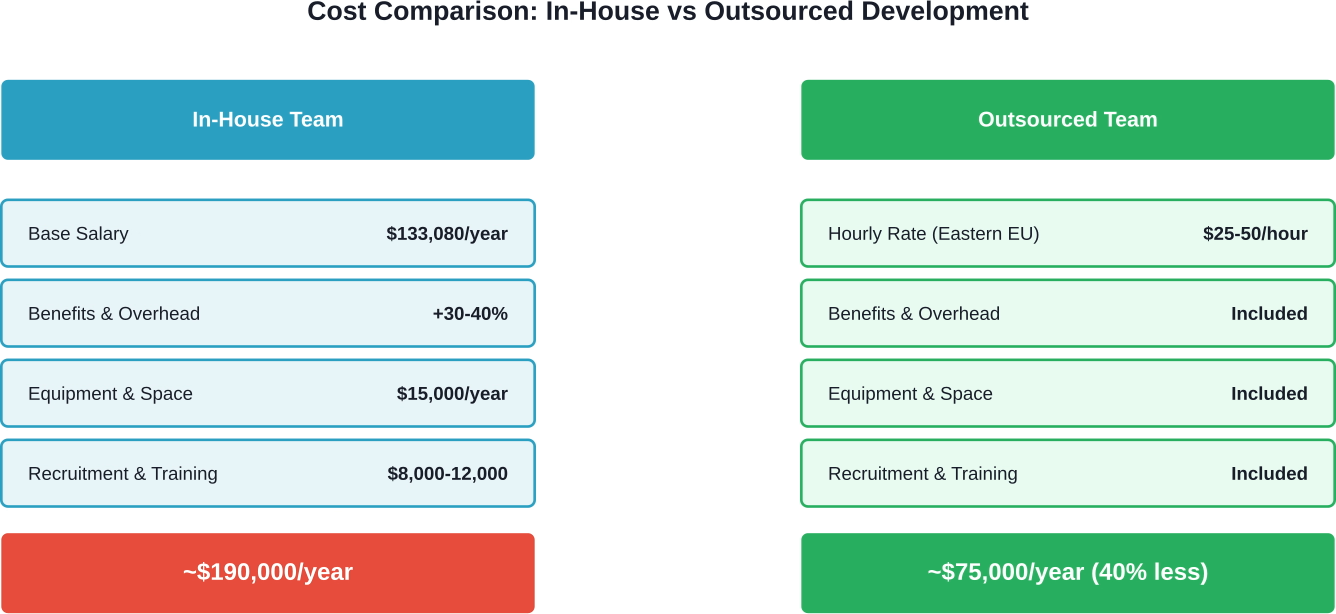
The benefits are substantial and measurable. By choosing game development outsourcing, companies gain access to a global network of experts who can jump into projects quickly. Outsourcing can reduce costs by 40–60% compared to in-house hiring.
Here's who benefits most from outsourcing:
- Startups with limited internal resources: No need to hire full-time staff for every discipline
- Indie developers: Access specialized skills without long-term commitments
- Established studios: Scale teams up or down based on project demands
- Companies entering new markets: Tap into regional expertise and cultural knowledge
According to the U.S. Bureau of Labor Statistics, the median annual wage for software developers was $133,080 in May 2024, though the median for software quality assurance analysts and testers was $102,610 in May 2024. That's just one developer. A full game development team requires multiple specialists, each commanding competitive salaries.
Outsourcing eliminates many overhead costs: office space, equipment, benefits, training, and the lengthy hiring process. The vendor provides a ready-to-go team that has already worked together.
Types of Game Development Outsourcing
Not all outsourcing looks the same. Companies approach it differently based on their needs, resources, and project scope.
Full Project Outsourcing
The entire game development lifecycle gets handed to an external studio. The outsourcing partner handles everything from concept to launch: design, programming, art, testing, and deployment.
This works best for companies without internal development capabilities or those wanting to test a new market without building infrastructure.
Partial Project Outsourcing
The most common approach. Internal teams handle core gameplay and design decisions while outsourcing specific components like character modeling, UI design, level creation, or sound effects.
This maintains creative control while accessing specialized skills that might be missing in-house.
Staff Augmentation
External developers integrate directly into the existing team, working alongside in-house staff. They follow internal processes and report to internal managers.
Think of it as temporary hiring without the permanent commitment. When the project ends or scales down, the augmented staff rolls off.
Co-Development
Two studios collaborate as partners, each bringing specific expertise. One might handle programming while the other focuses on art and animation. Both contribute to design and direction.
This creates a true partnership rather than a client-vendor relationship.
Regional Pricing for Game Development Outsourcing
Location dramatically impacts outsourcing costs. Hourly rates vary by region based on local living costs, talent availability, and market maturity.
For context, according to competitor sources, an annual salary of a game developer from the U.S. is approximately $133,000, while a Ukrainian game developer makes approximately $41,000 - $48,000 per year ($3,450 - $4,000 monthly). That wage difference translates directly into project costs.
On average, game development outsourcing costs $20,000 to $35,000 for a single platform (Android or iOS) with basic features. Complex projects with advanced graphics, multiplayer functionality, and extensive content can run $100,000 to $500,000 or more.
How to Choose the Right Game Development Outsourcing Partner
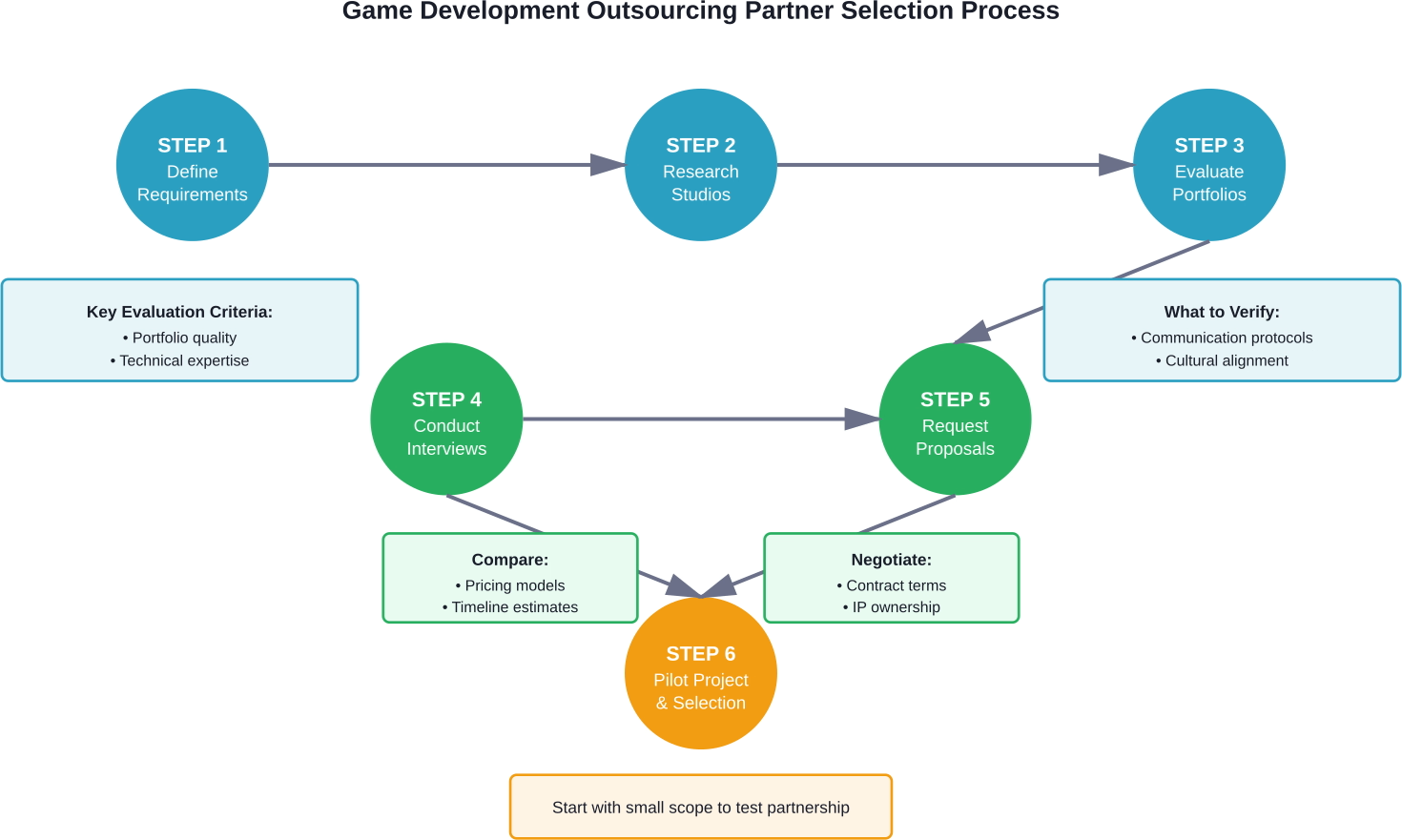
Selecting the wrong partner wastes money and time. Worse, it can derail your entire project. Here's what matters when evaluating potential outsourcing studios.
Portfolio and Track Record
Review completed projects similar to yours. Don't just look at pretty screenshots—actually play the games if possible. Check for technical stability, polish, and whether the studio delivered what they promised.
Look for diversity in their portfolio. A studio that's only built one type of game might struggle with different genres or platforms.
Technical Expertise
Confirm the studio has experience with your target platforms (iOS, Android, PC, console) and preferred game engines (Unity, Unreal Engine, Godot). Ask about their technology stack and development methodologies.
According to the International Game Developers Association (IGDA), game development stretches across diverse disciplines and backgrounds. The right partner should demonstrate breadth in technical capabilities.
Communication and Collaboration
Time zones matter, but they're not everything. What really matters is communication structure. How often will they provide updates? What tools do they use for project management? How do they handle feedback and revisions?
Request a trial period or small pilot project before committing to full development. This reveals communication patterns and work quality without major financial risk.
Cultural Fit and Understanding
Does the studio understand your target audience? Building a game for Western markets requires different cultural knowledge than one designed for Asian markets.
Misaligned expectations around working styles, decision-making processes, and project management can create friction even when technical skills are strong.
Legal and IP Considerations
Contracts must clearly define intellectual property ownership. Who owns the code? The art assets? The game design documents?
The IGDA advocates for clear game crediting standards, noting that a 2006 IGDA Game Writers Special Interest Group survey revealed that 35% of respondents either "don't ever" or "only sometimes" receive official credit for their efforts. Ensure contracts address both IP ownership and proper attribution.
Security and NDA
Require non-disclosure agreements before sharing detailed project information. Verify the studio has security protocols for protecting sensitive data and preventing leaks.

Structure Game Development Outsourcing
Game development outsourcing is not just about reducing costs. It is about building a reliable external team that fits your roadmap. NeoWork helps studios scale with remote developers, artists, QA, and live ops professionals. Their 91% annualized teammate retention rate and 3.2% candidate selectivity rate support long-term production stability instead of short-term staffing fixes.
Ready to Scale Your Game Development Team?
Talk with NeoWork to:
- build cross-functional remote teams
- accelerate production milestones
- maintain consistency across updates
👉 Reach out to NeoWork to discuss your game development outsourcing plan.
Common Challenges in Game Development Outsourcing
Real talk: outsourcing isn't always smooth sailing. Understanding potential pitfalls helps teams prepare and mitigate issues before they become project killers.
Communication Barriers
Time zone differences mean scheduled meetings happen outside normal working hours for someone. Language barriers can cause misunderstandings around technical requirements or creative direction.
Solutions include establishing core collaboration hours when both teams overlap, using asynchronous communication tools effectively, and documenting everything in shared wikis or project management platforms.
Quality Control
Distance makes it harder to monitor work quality and catch issues early. By the time problems surface, the studio might have already built significant components that need rework.
Implement regular milestone reviews with clear acceptance criteria. Use automated testing where possible. Require frequent builds that stakeholders can actually test, not just progress reports.
Scope Creep and Changing Requirements
Outsourcing works best with clear, documented requirements. Vague specifications or constantly changing direction creates confusion and budget overruns.
Lock down core requirements before development starts. Budget for a defined number of revision cycles. Track change requests formally with impact assessments for timeline and cost.
Cultural and Creative Misalignment
What feels natural or intuitive in one culture might confuse players in another. Color symbolism, humor, character design—these all carry cultural context.
Share reference materials abundantly. Create detailed style guides. Build feedback loops where the outsourcing team can ask questions and propose alternatives rather than guessing.
Tips for Successful Game Development Outsourcing
These practical strategies help maximize the benefits of outsourcing while minimizing headaches.
Start Small
Test the relationship with a small, contained project before committing to full game development. This could be a single character model, a UI design, or a technical prototype.
Small projects reveal how the studio handles feedback, meets deadlines, and communicates challenges.
Document Everything
Create comprehensive design documents, technical specifications, and style guides. The outsourcing team can't read minds—they need detailed references.
Document decisions and rationale. When someone asks "Why did we choose this approach?" six months later, the answer should be findable.
Establish Clear Metrics
Define what success looks like for each milestone. Not just "complete the character models" but specific quality bars: polygon counts, texture resolutions, rigging requirements, animation frame rates.
Measurable criteria prevent arguments about whether deliverables meet expectations.
Build Relationships
Treat the outsourcing team as partners, not vendors. Get to know team members. Understand their strengths and working styles. Celebrate wins together.
Strong relationships weather challenges better than transactional arrangements.
Plan for Iteration
Game development is inherently iterative. Something that looks great on paper might feel wrong in-game. Build time into the schedule for revisions and refinements.
Rush jobs and unrealistic timelines produce poor results regardless of the team's skill level.
Factors Affecting Game Development Outsourcing Costs
Understanding cost drivers helps with accurate budgeting and prevents surprise overruns.
The cost of outsourcing game development services depends on these factors combined. A simple 2D mobile puzzle game with basic features might cost $20,000-$35,000. A multiplayer 3D action game with advanced graphics and complex systems could run $200,000-$500,000 or more.
Get detailed quotes from multiple studios. Compare not just total cost but what's included: how many revision cycles, what platforms, whether testing is included, post-launch support terms.
Game Development Outsourcing vs. In-House Development
Neither approach is universally better. The right choice depends on specific circumstances, goals, and constraints.
Many successful studios use hybrid approaches: core team in-house for game design and direction, outsourcing for specialized tasks like character modeling, level design, or QA testing.
Making Game Development Outsourcing Work for Your Project
Game development outsourcing delivers measurable benefits: 40-60% cost reduction, access to global talent, faster time-to-market, and the flexibility to scale teams based on project needs.
But success requires strategic planning. Define clear requirements before shopping for partners. Evaluate studios based on relevant portfolio work, technical capabilities, and communication practices. Start with small projects to test relationships before committing to full development.
The mobile gaming market's explosive growth to $160 billion by 2028 creates opportunities for developers who can deliver quality games efficiently. Outsourcing provides the tools to compete in that market without the overhead of large in-house teams.
Whether building an indie passion project or a commercial title for an established publisher, the global game development ecosystem offers resources to bring visions to life. The key is approaching outsourcing as a strategic partnership, not just a cost-cutting measure.
Document everything. Communicate frequently. Build relationships. Set clear metrics. And remember that the cheapest option rarely delivers the best results—invest in partners who demonstrate both technical competence and cultural alignment with your vision.
Ready to explore game development outsourcing for your next project? Start by defining your core requirements, researching studios that specialize in your genre or platform, and reaching out for initial consultations. The right partnership can transform your game from concept to reality.
Frequently Asked Questions
Topics
Game Development Outsourcing Guide 2026

Game development outsourcing involves partnering with external studios to handle specialized tasks like art, programming, or QA, reducing costs by 40-60% compared to in-house teams. This guide covers selecting the right outsourcing partner, understanding regional pricing differences ($20-$120/hour), managing communication challenges, and ensuring quality control throughout the development process.
The mobile gaming market continues its explosive growth trajectory. By 2028, the global mobile gaming market is projected to reach over $160 billion in revenue, with millions of new players entering the market each year.
But here's the challenge: Building a competitive game requires specialized talent across multiple disciplines—3D artists, programmers, animators, sound designers, QA testers. Assembling that team in-house? Expensive and time-consuming.
That's where game development outsourcing enters the picture. Companies ranging from indie studios to established publishers are tapping into global talent networks to build games faster, cheaper, and often with higher quality than traditional in-house approaches would allow.
Why Outsource Game Development?
Game development outsourcing means partnering with external studios or freelancers to handle specific aspects of your project. This could mean outsourcing everything from concept art to full-stack development.
The benefits are substantial and measurable. By choosing game development outsourcing, companies gain access to a global network of experts who can jump into projects quickly. Outsourcing can reduce costs by 40–60% compared to in-house hiring.
Here's who benefits most from outsourcing:
- Startups with limited internal resources: No need to hire full-time staff for every discipline
- Indie developers: Access specialized skills without long-term commitments
- Established studios: Scale teams up or down based on project demands
- Companies entering new markets: Tap into regional expertise and cultural knowledge
According to the U.S. Bureau of Labor Statistics, the median annual wage for software developers was $133,080 in May 2024, though the median for software quality assurance analysts and testers was $102,610 in May 2024. That's just one developer. A full game development team requires multiple specialists, each commanding competitive salaries.
Outsourcing eliminates many overhead costs: office space, equipment, benefits, training, and the lengthy hiring process. The vendor provides a ready-to-go team that has already worked together.
Types of Game Development Outsourcing
Not all outsourcing looks the same. Companies approach it differently based on their needs, resources, and project scope.
Full Project Outsourcing
The entire game development lifecycle gets handed to an external studio. The outsourcing partner handles everything from concept to launch: design, programming, art, testing, and deployment.
This works best for companies without internal development capabilities or those wanting to test a new market without building infrastructure.
Partial Project Outsourcing
The most common approach. Internal teams handle core gameplay and design decisions while outsourcing specific components like character modeling, UI design, level creation, or sound effects.
This maintains creative control while accessing specialized skills that might be missing in-house.
Staff Augmentation
External developers integrate directly into the existing team, working alongside in-house staff. They follow internal processes and report to internal managers.
Think of it as temporary hiring without the permanent commitment. When the project ends or scales down, the augmented staff rolls off.
Co-Development
Two studios collaborate as partners, each bringing specific expertise. One might handle programming while the other focuses on art and animation. Both contribute to design and direction.
This creates a true partnership rather than a client-vendor relationship.
Regional Pricing for Game Development Outsourcing
Location dramatically impacts outsourcing costs. Hourly rates vary by region based on local living costs, talent availability, and market maturity.
For context, according to competitor sources, an annual salary of a game developer from the U.S. is approximately $133,000, while a Ukrainian game developer makes approximately $41,000 - $48,000 per year ($3,450 - $4,000 monthly). That wage difference translates directly into project costs.
On average, game development outsourcing costs $20,000 to $35,000 for a single platform (Android or iOS) with basic features. Complex projects with advanced graphics, multiplayer functionality, and extensive content can run $100,000 to $500,000 or more.
How to Choose the Right Game Development Outsourcing Partner
Selecting the wrong partner wastes money and time. Worse, it can derail your entire project. Here's what matters when evaluating potential outsourcing studios.
Portfolio and Track Record
Review completed projects similar to yours. Don't just look at pretty screenshots—actually play the games if possible. Check for technical stability, polish, and whether the studio delivered what they promised.
Look for diversity in their portfolio. A studio that's only built one type of game might struggle with different genres or platforms.
Technical Expertise
Confirm the studio has experience with your target platforms (iOS, Android, PC, console) and preferred game engines (Unity, Unreal Engine, Godot). Ask about their technology stack and development methodologies.
According to the International Game Developers Association (IGDA), game development stretches across diverse disciplines and backgrounds. The right partner should demonstrate breadth in technical capabilities.
Communication and Collaboration
Time zones matter, but they're not everything. What really matters is communication structure. How often will they provide updates? What tools do they use for project management? How do they handle feedback and revisions?
Request a trial period or small pilot project before committing to full development. This reveals communication patterns and work quality without major financial risk.
Cultural Fit and Understanding
Does the studio understand your target audience? Building a game for Western markets requires different cultural knowledge than one designed for Asian markets.
Misaligned expectations around working styles, decision-making processes, and project management can create friction even when technical skills are strong.
Legal and IP Considerations
Contracts must clearly define intellectual property ownership. Who owns the code? The art assets? The game design documents?
The IGDA advocates for clear game crediting standards, noting that a 2006 IGDA Game Writers Special Interest Group survey revealed that 35% of respondents either "don't ever" or "only sometimes" receive official credit for their efforts. Ensure contracts address both IP ownership and proper attribution.
Security and NDA
Require non-disclosure agreements before sharing detailed project information. Verify the studio has security protocols for protecting sensitive data and preventing leaks.
Structure Game Development Outsourcing
Game development outsourcing is not just about reducing costs. It is about building a reliable external team that fits your roadmap. NeoWork helps studios scale with remote developers, artists, QA, and live ops professionals. Their 91% annualized teammate retention rate and 3.2% candidate selectivity rate support long-term production stability instead of short-term staffing fixes.
Ready to Scale Your Game Development Team?
Talk with NeoWork to:
- build cross-functional remote teams
- accelerate production milestones
- maintain consistency across updates
👉 Reach out to NeoWork to discuss your game development outsourcing plan.
Common Challenges in Game Development Outsourcing
Real talk: outsourcing isn't always smooth sailing. Understanding potential pitfalls helps teams prepare and mitigate issues before they become project killers.
Communication Barriers
Time zone differences mean scheduled meetings happen outside normal working hours for someone. Language barriers can cause misunderstandings around technical requirements or creative direction.
Solutions include establishing core collaboration hours when both teams overlap, using asynchronous communication tools effectively, and documenting everything in shared wikis or project management platforms.
Quality Control
Distance makes it harder to monitor work quality and catch issues early. By the time problems surface, the studio might have already built significant components that need rework.
Implement regular milestone reviews with clear acceptance criteria. Use automated testing where possible. Require frequent builds that stakeholders can actually test, not just progress reports.
Scope Creep and Changing Requirements
Outsourcing works best with clear, documented requirements. Vague specifications or constantly changing direction creates confusion and budget overruns.
Lock down core requirements before development starts. Budget for a defined number of revision cycles. Track change requests formally with impact assessments for timeline and cost.
Cultural and Creative Misalignment
What feels natural or intuitive in one culture might confuse players in another. Color symbolism, humor, character design—these all carry cultural context.
Share reference materials abundantly. Create detailed style guides. Build feedback loops where the outsourcing team can ask questions and propose alternatives rather than guessing.
Tips for Successful Game Development Outsourcing
These practical strategies help maximize the benefits of outsourcing while minimizing headaches.
Start Small
Test the relationship with a small, contained project before committing to full game development. This could be a single character model, a UI design, or a technical prototype.
Small projects reveal how the studio handles feedback, meets deadlines, and communicates challenges.
Document Everything
Create comprehensive design documents, technical specifications, and style guides. The outsourcing team can't read minds—they need detailed references.
Document decisions and rationale. When someone asks "Why did we choose this approach?" six months later, the answer should be findable.
Establish Clear Metrics
Define what success looks like for each milestone. Not just "complete the character models" but specific quality bars: polygon counts, texture resolutions, rigging requirements, animation frame rates.
Measurable criteria prevent arguments about whether deliverables meet expectations.
Build Relationships
Treat the outsourcing team as partners, not vendors. Get to know team members. Understand their strengths and working styles. Celebrate wins together.
Strong relationships weather challenges better than transactional arrangements.
Plan for Iteration
Game development is inherently iterative. Something that looks great on paper might feel wrong in-game. Build time into the schedule for revisions and refinements.
Rush jobs and unrealistic timelines produce poor results regardless of the team's skill level.
Factors Affecting Game Development Outsourcing Costs
Understanding cost drivers helps with accurate budgeting and prevents surprise overruns.
The cost of outsourcing game development services depends on these factors combined. A simple 2D mobile puzzle game with basic features might cost $20,000-$35,000. A multiplayer 3D action game with advanced graphics and complex systems could run $200,000-$500,000 or more.
Get detailed quotes from multiple studios. Compare not just total cost but what's included: how many revision cycles, what platforms, whether testing is included, post-launch support terms.
Game Development Outsourcing vs. In-House Development
Neither approach is universally better. The right choice depends on specific circumstances, goals, and constraints.
Many successful studios use hybrid approaches: core team in-house for game design and direction, outsourcing for specialized tasks like character modeling, level design, or QA testing.
Making Game Development Outsourcing Work for Your Project
Game development outsourcing delivers measurable benefits: 40-60% cost reduction, access to global talent, faster time-to-market, and the flexibility to scale teams based on project needs.
But success requires strategic planning. Define clear requirements before shopping for partners. Evaluate studios based on relevant portfolio work, technical capabilities, and communication practices. Start with small projects to test relationships before committing to full development.
The mobile gaming market's explosive growth to $160 billion by 2028 creates opportunities for developers who can deliver quality games efficiently. Outsourcing provides the tools to compete in that market without the overhead of large in-house teams.
Whether building an indie passion project or a commercial title for an established publisher, the global game development ecosystem offers resources to bring visions to life. The key is approaching outsourcing as a strategic partnership, not just a cost-cutting measure.
Document everything. Communicate frequently. Build relationships. Set clear metrics. And remember that the cheapest option rarely delivers the best results—invest in partners who demonstrate both technical competence and cultural alignment with your vision.
Ready to explore game development outsourcing for your next project? Start by defining your core requirements, researching studios that specialize in your genre or platform, and reaching out for initial consultations. The right partnership can transform your game from concept to reality.
Frequently Asked Questions
Topics
Related Blogs
Related Podcasts


.webp)
.webp)



