

.avif)
.avif)

Game Technical Art Outsourcing Studio Guide 2026

.svg)

Game technical art outsourcing connects development teams with specialized studios that handle shader development, optimization, pipeline tools, and engine-specific solutions. This guide covers how to evaluate technical art partners, manage complex workflows, and avoid common pitfalls when outsourcing highly specialized technical tasks that bridge art and engineering.
Technical art sits at the intersection of creativity and engineering. It's the discipline that makes beautiful assets actually run on target hardware, that builds tools to make artists more efficient, and that solves the complex rendering challenges that define modern games.
But here's the thing: finding qualified technical artists is brutally difficult. They need coding skills, artistic sensibility, and deep engine knowledge. That's a rare combination.
Outsourcing technical art work offers a way forward. Specialized studios maintain teams with exactly these hybrid skills, offering access to expertise that would take years to build internally.
This guide covers what technical art outsourcing actually involves, how to evaluate potential studio partners, and how to structure projects for success.
What Technical Art Outsourcing Covers
Technical art outsourcing isn't about creating pretty screenshots. It's about making games actually work.
The scope typically includes several specialized areas that require both artistic judgment and technical implementation skills.
Shader Development and Visual Effects
Custom shaders define a game's visual signature. Outsourcing studios create shader networks for materials, develop custom VFX systems, and implement post-processing effects that work within performance budgets.
This work requires understanding of rendering pipelines, node-based shader editors, and the mathematical foundations of graphics programming. Specialized technical art outsourcing studios provide services including shader work for Unreal Engine, Unity, Godot, and proprietary engines.
The deliverables include shader graphs, HLSL or GLSL code, material libraries, and documentation explaining parameters and intended use cases.
Optimization and Performance Engineering
Optimization transforms good-looking content into shippable products. Technical artists analyze performance bottlenecks, reduce draw calls, optimize asset specifications, and implement level-of-detail systems.
This involves profiling tools, understanding rendering statistics, and making strategic compromises that preserve visual quality while hitting frame rate targets.
Delegating optimization work allows internal teams to focus on core gameplay while external specialists handle performance tuning across multiple platform targets.
Pipeline Tools and Automation
Custom tools accelerate production. Technical art studios build plugins, scripts, and standalone applications that automate repetitive tasks, enforce technical standards, and streamline asset integration.
These might be Maya or Blender plugins that prepare assets for export, Unity editor extensions that automate prefab setup, or custom batch processing tools that handle hundreds of assets simultaneously.
Tool development requires programming knowledge—typically Python for DCC applications and C# for Unity—combined with deep understanding of artist workflows.
Procedural Content Generation
Procedural systems create variation at scale. Technical artists implement procedural material systems, develop tools for runtime asset variation, and create systems that generate content based on rules rather than manual placement.
This includes substance designer graphs, Houdini setups exported as game-ready systems, and custom procedural generation tools built directly in game engines.
Lighting and Rendering Setup
Lighting establishes mood and guides player attention. Technical artists configure lighting systems, implement dynamic time-of-day solutions, optimize lightmap baking, and troubleshoot rendering artifacts.
This requires understanding of physically-based rendering, light baking systems, real-time global illumination solutions, and the technical constraints of different rendering paths.

Why Studios Outsource Technical Art
The decision to outsource technical art work stems from practical constraints and strategic opportunities.
Skills Scarcity
Technical artists are rare. They need programming ability, artistic sensibility, problem-solving skills, and patience for the tedious debugging that technical work requires.
Hiring even one qualified technical artist can take months. Building a team capable of handling diverse technical challenges might be impossible for smaller studios.
Outsourcing provides immediate access to established teams with proven capabilities across multiple technical domains.
Project-Specific Needs
Many technical art tasks are project-specific. A game might need extensive optimization work during the final production push but minimal technical art support during early prototyping.
Maintaining full-time technical artists for occasional needs is inefficient. Outsourcing allows studios to scale technical art capacity up or down based on the current project phase.
Specialized Expertise
Some technical challenges require niche expertise. Complex procedural systems, advanced rendering techniques, or platform-specific optimization might require knowledge that even experienced technical artists don't possess.
Specialized outsourcing studios maintain expertise in specific areas—mobile optimization, console performance, VR rendering—that would be impractical to develop internally for occasional use.
Pipeline Development
Building robust asset pipelines requires significant upfront investment. Studios launching new projects or transitioning to new engines need pipeline tools immediately but may lack the technical capacity to develop them while also producing content.
Outsourcing pipeline development accelerates project startup and ensures tools are built with production-proven best practices.
How to Evaluate Technical Art Studios
Evaluating technical art outsourcing partners requires different criteria than evaluating traditional art studios.
Review Technical Portfolios Carefully
Technical art portfolios should demonstrate problem-solving, not just visual polish. Look for case studies explaining technical challenges, solutions implemented, and measurable results.
Strong portfolios include shader breakdowns showing node networks, before/after performance comparisons with specific metrics, and documentation of custom tools with explanations of how they improved workflows.
Pretty screenshots matter less than evidence of technical competence. A portfolio showing a 40% draw call reduction is more valuable than one showing beautiful renders without context.
Assess Engine Expertise
Technical art work is engine-specific. A studio with deep Unreal Engine expertise won't necessarily excel with Unity, and proprietary engines present unique challenges.
Verify that potential partners have substantial experience with the specific engine version being used for the project. Technical capabilities can vary significantly between engine versions.
Ask specific technical questions: How do they handle LOD systems in the target engine? What's their approach to shader optimization? How do they structure material libraries?
Evaluate Communication Capabilities
Technical art requires constant communication. Artists need technical constraints explained clearly. Engineers need to understand artistic goals. Project leads need transparent status updates about complex technical challenges.
During initial discussions, assess how clearly the studio explains technical concepts. Can they discuss complex topics without drowning in jargon? Do they ask clarifying questions about project requirements?
Communication clarity is critical to outsourcing success, as miscommunication can prevent technical teams from understanding project requirements and constraints.
Verify Production Experience
Technical art for shipped games differs from technical art for portfolio pieces. Shipped projects involve compromise, platform constraints, certification requirements, and working within established production pipelines.
Prioritize studios with experience shipping games on target platforms. Console development in particular involves specific technical requirements that can't be learned theoretically.
Check References
References reveal how studios handle challenges that inevitably arise during production. Contact past clients and ask specific questions about problem-solving ability, flexibility when requirements changed, and quality of final deliverables.
Pay attention to how studios handled difficult situations, not just whether projects completed successfully.
Pricing Technical Art Outsourcing
Technical art costs more than traditional art production because it requires specialized hybrid skills.
Technical art outsourcing costs vary based on expertise level, geographic location, and project complexity. Senior technical artists with specialized skills command premium rates.
Many studios prefer fixed-price milestone structures for well-defined deliverables. Shader development, optimization passes, or tool creation can often be scoped accurately enough for fixed pricing.
Ongoing technical support—embedding technical artists within development teams for extended periods—typically uses time-and-materials contracts with monthly retainers.
Cost Variables
Several factors significantly impact pricing. Complex shader work requiring custom lighting models costs more than standard PBR material setup. Cross-platform optimization costs more than single-platform work. Custom tool development costs vary dramatically based on scope and required maintenance.
Rush timelines increase costs, often by 25-50% for expedited delivery. Multiple revision rounds beyond initial estimates add costs. Poorly defined requirements lead to scope creep and budget overruns.
Budget Planning
Technical art work requires budget allocation as a specialized component of production. Games with complex rendering needs, ambitious visual targets, or significant optimization requirements may need substantial budget allocation.
Reserve contingency budget for unexpected technical challenges. Optimization work in particular often reveals problems that weren't apparent during planning.
Managing Technical Art Outsourcing Projects
Technical art projects fail when communication breaks down or when requirements aren't clearly specified.
Define Technical Requirements Precisely
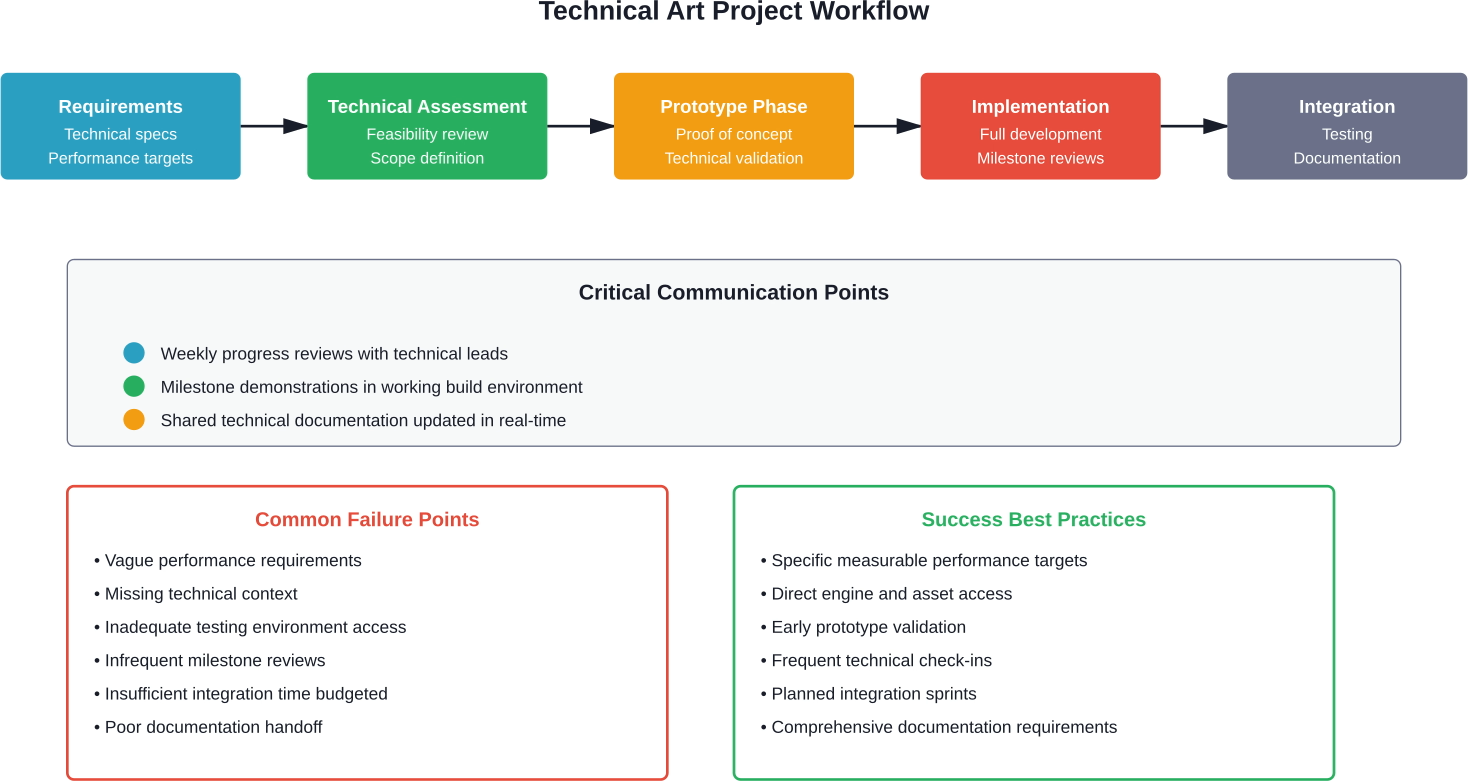
Vague requirements guarantee problems. Technical specifications should include target platform, performance budgets, file format specifications, pipeline integration requirements, and technical constraints.
For shader work, specify rendering path (forward/deferred), target hardware, performance budget (instruction count, texture samples), and required features. For optimization, specify target frame rate, resolution, and platform-specific requirements.
For tool development, document existing pipeline, integration points, required features, and preferred implementation languages. Include workflow diagrams showing how tools fit into production.
As one detailed guide to game art outsourcing notes, briefs stating 'optimize assets' without specific targets lead to mismatched expectations. Instead specify: “Reduce character draw calls to under 25 per model for mobile or maintain sub-2000 nanite clusters for high-end UE5 projects”.
Establish Clear Milestones
Break projects into concrete, testable milestones. Each milestone should have specific deliverables and acceptance criteria.
For shader development: wireframe mockups with reference images, working prototype in test scene, final shader with documentation. For optimization: initial assessment report, optimization implementation, performance validation report.
Milestone reviews catch problems early when they're still fixable without major rework.
Provide Proper Technical Context
Technical artists need access to development builds, engine source code (when relevant), asset libraries, and technical documentation. Restricting access to protect intellectual property hampers work quality.
Share performance profiling tools, explain existing technical constraints, and document any non-standard pipeline configurations. The more context provided, the better solutions will be.
Plan for Integration Time
Technical deliverables require integration and testing. Shaders need testing across lighting conditions and content types. Tools need validation with production assets. Optimizations need verification across target platforms.
Schedule integration time into project plans. Assume technical deliverables will need iteration after initial integration reveals edge cases or compatibility issues.
Document Everything
Technical work requires documentation. Shaders need explanations of parameters and intended use. Tools need user guides and technical documentation for future maintenance. Optimization reports should document what was changed and why.
Insist on thorough documentation as part of deliverable acceptance criteria. Future team members will need to understand and maintain technical systems long after outsourcing contracts end.
Get Technical Art Support That Stays Consistent Over Time

Technical art tends to sit between teams, which is why it often slows things down. One side focuses on visuals, the other on performance, and the handoff in between is where things start to break.
NeoWork approaches this by building dedicated teams that work inside your existing setup instead of operating separately. That means technical artists and related roles stay close to both art and engineering, adapting as requirements shift rather than restarting with each phase. With a 3.2% selection rate, the focus stays on people who can handle that crossover, and a 91% retention rate helps keep continuity in place as projects evolve.
If technical art is becoming a friction point in your pipeline, reach out to NeoWork and see how a more stable team setup could fit into your workflow.
Common Technical Art Outsourcing Challenges
Even well-managed technical art projects encounter predictable challenges.
Platform-Specific Constraints
Technical solutions that work beautifully on PC might fail certification on consoles or perform poorly on mobile. Platform holders have specific requirements for shader complexity, memory usage, and rendering techniques.
Ensure outsourcing partners have actual development hardware for target platforms. Emulators don't reveal real performance characteristics or certification issues.
Engine Version Compatibility
Engine updates break technical implementations. Shader nodes change, API functions deprecate, and performance characteristics shift between versions.
Lock engine versions during active development with outsourcing partners. Plan separate upgrade passes if engine updates become necessary.
Knowledge Transfer
Technical systems require ongoing maintenance. When outsourcing contracts end, internal teams inherit systems they didn't build and may not fully understand.
Build knowledge transfer into project scope. Include training sessions, detailed documentation, and code reviews explaining technical decisions.
Scope Creep
Technical work reveals additional problems. Optimizing one system exposes bottlenecks elsewhere. Building one tool suggests related tools that would be useful.
Establish clear change control processes. Evaluate new requirements formally rather than informally expanding scope.
In-House vs Outsourced Technical Art
The choice between building internal technical art capacity and outsourcing depends on studio size, project complexity, and long-term plans.
When to Build Internal Capacity
Studios with consistent technical art needs benefit from internal teams. Multi-project studios, live service games, and studios developing proprietary technology need dedicated technical artists who understand systems deeply and can provide ongoing support.
Internal technical artists can respond immediately to problems, integrate closely with art and engineering teams, and accumulate institutional knowledge about project-specific technical challenges.
When to Outsource
Outsourcing makes sense for specialized one-time needs, for studios that can't attract technical art talent, and during production peaks when internal capacity is insufficient.
Small studios working on first projects often lack the scale to support full-time technical artists. Outsourcing provides professional-grade technical systems without long-term employment commitments.
Hybrid Approaches
Many studios maintain small internal technical art teams supplemented by outsourcing for specialized needs or capacity scaling. One or two internal technical artists handle core systems while outsourcing studios provide additional capacity for specific challenges.
This approach combines institutional knowledge retention with flexible scaling and access to specialized expertise.
Legal and IP Considerations
Technical art contracts require careful attention to intellectual property rights and ongoing maintenance obligations.
Work-for-Hire Agreements
Ensure contracts specify that all deliverables are work-for-hire with full IP rights transferring to the client. Technical systems become core parts of games and must be fully owned.
Watch for contract language retaining studio rights to "underlying technology" or "proprietary tools." Clarify what this means in practice and ensure it doesn't restrict game distribution or future modifications.
Source Code Access
Technical deliverables should include full source code—shader source, tool code, and any custom systems. Compiled binaries without source code create long-term maintenance problems.
Verify that source code is well-commented and structured for maintainability by developers who weren't involved in original implementation.
Third-Party Dependencies
Technical systems often incorporate third-party libraries, plugins, or assets. Contracts should specify licensing for all dependencies and ensure compatibility with project needs.
AGPL and GPL-licensed code, for example, are prohibited for commercial proprietary games due to 'copyleft' requirements. Verify all dependencies use MIT, BSD, or Apache 2.0 licenses.
Ongoing Support
Define support obligations clearly. Will the studio fix bugs discovered after delivery? What's the support window? What costs apply for post-delivery modifications?
Some studios include 30-90 day bug fix periods. Others charge hourly for all post-delivery work. Clarify expectations upfront.
Finding Technical Art Outsourcing Partners
Technical art studios are less visible than traditional art outsourcing firms.
Industry Recommendations
Recommendations from other developers provide the most reliable leads. Ask about technical art partners at industry events, in professional forums, and through developer networks.
Personal recommendations based on actual project experience provide valuable insights for evaluating technical art partners.
Portfolio Research
Search for technical art portfolios using specific technical terms: "technical artist portfolio shader development," "Unreal Engine technical art," "pipeline tools developer."
Individual technical artists often maintain detailed portfolios. Studios that employ them may not showcase technical work prominently on corporate sites.
Game Credits Research
Research credits for games with impressive technical execution. Technical artists and studios are listed in credits, providing leads for potential partners with proven capabilities.
Trial Projects
Start relationships with small trial projects. A one-week shader development task or small tool creation project tests communication, technical ability, and workflow compatibility with limited risk.
Successful trial projects build confidence for larger engagements.
Moving Forward with Technical Art Outsourcing
Technical art outsourcing solves real problems for game development teams. It provides access to specialized expertise, scales capacity during production peaks, and delivers professional-grade technical systems without long-term employment commitments.
Success requires clear technical requirements, careful studio evaluation, and structured project management. Vague briefs, poor communication, and inadequate technical context cause most failures—not studio incompetence.
Start small. Test potential partnerships with limited-scope projects before committing to major technical art engagements. Build relationships gradually based on demonstrated capability rather than impressive portfolios alone.
Document everything. Technical systems require ongoing maintenance, and thorough documentation ensures internal teams can support systems long after outsourcing contracts end.
The most successful technical art outsourcing relationships are true partnerships. Studios that invest time in understanding project context, that ask clarifying questions, and that proactively suggest solutions become valuable long-term collaborators—not just service providers executing specifications.
For development teams struggling with technical challenges, lacking specialized expertise, or needing to scale technical capacity quickly, outsourcing offers practical solutions. Done well, it accelerates development, improves technical quality, and allows internal teams to focus on core creative work.
Frequently Asked Questions
Topics
Game Technical Art Outsourcing Studio Guide 2026

Game technical art outsourcing connects development teams with specialized studios that handle shader development, optimization, pipeline tools, and engine-specific solutions. This guide covers how to evaluate technical art partners, manage complex workflows, and avoid common pitfalls when outsourcing highly specialized technical tasks that bridge art and engineering.
Technical art sits at the intersection of creativity and engineering. It's the discipline that makes beautiful assets actually run on target hardware, that builds tools to make artists more efficient, and that solves the complex rendering challenges that define modern games.
But here's the thing: finding qualified technical artists is brutally difficult. They need coding skills, artistic sensibility, and deep engine knowledge. That's a rare combination.
Outsourcing technical art work offers a way forward. Specialized studios maintain teams with exactly these hybrid skills, offering access to expertise that would take years to build internally.
This guide covers what technical art outsourcing actually involves, how to evaluate potential studio partners, and how to structure projects for success.
What Technical Art Outsourcing Covers
Technical art outsourcing isn't about creating pretty screenshots. It's about making games actually work.
The scope typically includes several specialized areas that require both artistic judgment and technical implementation skills.
Shader Development and Visual Effects
Custom shaders define a game's visual signature. Outsourcing studios create shader networks for materials, develop custom VFX systems, and implement post-processing effects that work within performance budgets.
This work requires understanding of rendering pipelines, node-based shader editors, and the mathematical foundations of graphics programming. Specialized technical art outsourcing studios provide services including shader work for Unreal Engine, Unity, Godot, and proprietary engines.
The deliverables include shader graphs, HLSL or GLSL code, material libraries, and documentation explaining parameters and intended use cases.
Optimization and Performance Engineering
Optimization transforms good-looking content into shippable products. Technical artists analyze performance bottlenecks, reduce draw calls, optimize asset specifications, and implement level-of-detail systems.
This involves profiling tools, understanding rendering statistics, and making strategic compromises that preserve visual quality while hitting frame rate targets.
Delegating optimization work allows internal teams to focus on core gameplay while external specialists handle performance tuning across multiple platform targets.
Pipeline Tools and Automation
Custom tools accelerate production. Technical art studios build plugins, scripts, and standalone applications that automate repetitive tasks, enforce technical standards, and streamline asset integration.
These might be Maya or Blender plugins that prepare assets for export, Unity editor extensions that automate prefab setup, or custom batch processing tools that handle hundreds of assets simultaneously.
Tool development requires programming knowledge—typically Python for DCC applications and C# for Unity—combined with deep understanding of artist workflows.
Procedural Content Generation
Procedural systems create variation at scale. Technical artists implement procedural material systems, develop tools for runtime asset variation, and create systems that generate content based on rules rather than manual placement.
This includes substance designer graphs, Houdini setups exported as game-ready systems, and custom procedural generation tools built directly in game engines.
Lighting and Rendering Setup
Lighting establishes mood and guides player attention. Technical artists configure lighting systems, implement dynamic time-of-day solutions, optimize lightmap baking, and troubleshoot rendering artifacts.
This requires understanding of physically-based rendering, light baking systems, real-time global illumination solutions, and the technical constraints of different rendering paths.
Why Studios Outsource Technical Art
The decision to outsource technical art work stems from practical constraints and strategic opportunities.
Skills Scarcity
Technical artists are rare. They need programming ability, artistic sensibility, problem-solving skills, and patience for the tedious debugging that technical work requires.
Hiring even one qualified technical artist can take months. Building a team capable of handling diverse technical challenges might be impossible for smaller studios.
Outsourcing provides immediate access to established teams with proven capabilities across multiple technical domains.
Project-Specific Needs
Many technical art tasks are project-specific. A game might need extensive optimization work during the final production push but minimal technical art support during early prototyping.
Maintaining full-time technical artists for occasional needs is inefficient. Outsourcing allows studios to scale technical art capacity up or down based on the current project phase.
Specialized Expertise
Some technical challenges require niche expertise. Complex procedural systems, advanced rendering techniques, or platform-specific optimization might require knowledge that even experienced technical artists don't possess.
Specialized outsourcing studios maintain expertise in specific areas—mobile optimization, console performance, VR rendering—that would be impractical to develop internally for occasional use.
Pipeline Development
Building robust asset pipelines requires significant upfront investment. Studios launching new projects or transitioning to new engines need pipeline tools immediately but may lack the technical capacity to develop them while also producing content.
Outsourcing pipeline development accelerates project startup and ensures tools are built with production-proven best practices.
How to Evaluate Technical Art Studios
Evaluating technical art outsourcing partners requires different criteria than evaluating traditional art studios.
Review Technical Portfolios Carefully
Technical art portfolios should demonstrate problem-solving, not just visual polish. Look for case studies explaining technical challenges, solutions implemented, and measurable results.
Strong portfolios include shader breakdowns showing node networks, before/after performance comparisons with specific metrics, and documentation of custom tools with explanations of how they improved workflows.
Pretty screenshots matter less than evidence of technical competence. A portfolio showing a 40% draw call reduction is more valuable than one showing beautiful renders without context.
Assess Engine Expertise
Technical art work is engine-specific. A studio with deep Unreal Engine expertise won't necessarily excel with Unity, and proprietary engines present unique challenges.
Verify that potential partners have substantial experience with the specific engine version being used for the project. Technical capabilities can vary significantly between engine versions.
Ask specific technical questions: How do they handle LOD systems in the target engine? What's their approach to shader optimization? How do they structure material libraries?
Evaluate Communication Capabilities
Technical art requires constant communication. Artists need technical constraints explained clearly. Engineers need to understand artistic goals. Project leads need transparent status updates about complex technical challenges.
During initial discussions, assess how clearly the studio explains technical concepts. Can they discuss complex topics without drowning in jargon? Do they ask clarifying questions about project requirements?
Communication clarity is critical to outsourcing success, as miscommunication can prevent technical teams from understanding project requirements and constraints.
Verify Production Experience
Technical art for shipped games differs from technical art for portfolio pieces. Shipped projects involve compromise, platform constraints, certification requirements, and working within established production pipelines.
Prioritize studios with experience shipping games on target platforms. Console development in particular involves specific technical requirements that can't be learned theoretically.
Check References
References reveal how studios handle challenges that inevitably arise during production. Contact past clients and ask specific questions about problem-solving ability, flexibility when requirements changed, and quality of final deliverables.
Pay attention to how studios handled difficult situations, not just whether projects completed successfully.
Pricing Technical Art Outsourcing
Technical art costs more than traditional art production because it requires specialized hybrid skills.
Technical art outsourcing costs vary based on expertise level, geographic location, and project complexity. Senior technical artists with specialized skills command premium rates.
Many studios prefer fixed-price milestone structures for well-defined deliverables. Shader development, optimization passes, or tool creation can often be scoped accurately enough for fixed pricing.
Ongoing technical support—embedding technical artists within development teams for extended periods—typically uses time-and-materials contracts with monthly retainers.
Cost Variables
Several factors significantly impact pricing. Complex shader work requiring custom lighting models costs more than standard PBR material setup. Cross-platform optimization costs more than single-platform work. Custom tool development costs vary dramatically based on scope and required maintenance.
Rush timelines increase costs, often by 25-50% for expedited delivery. Multiple revision rounds beyond initial estimates add costs. Poorly defined requirements lead to scope creep and budget overruns.
Budget Planning
Technical art work requires budget allocation as a specialized component of production. Games with complex rendering needs, ambitious visual targets, or significant optimization requirements may need substantial budget allocation.
Reserve contingency budget for unexpected technical challenges. Optimization work in particular often reveals problems that weren't apparent during planning.
Managing Technical Art Outsourcing Projects
Technical art projects fail when communication breaks down or when requirements aren't clearly specified.
Define Technical Requirements Precisely
Vague requirements guarantee problems. Technical specifications should include target platform, performance budgets, file format specifications, pipeline integration requirements, and technical constraints.
For shader work, specify rendering path (forward/deferred), target hardware, performance budget (instruction count, texture samples), and required features. For optimization, specify target frame rate, resolution, and platform-specific requirements.
For tool development, document existing pipeline, integration points, required features, and preferred implementation languages. Include workflow diagrams showing how tools fit into production.
As one detailed guide to game art outsourcing notes, briefs stating 'optimize assets' without specific targets lead to mismatched expectations. Instead specify: “Reduce character draw calls to under 25 per model for mobile or maintain sub-2000 nanite clusters for high-end UE5 projects”.
Establish Clear Milestones
Break projects into concrete, testable milestones. Each milestone should have specific deliverables and acceptance criteria.
For shader development: wireframe mockups with reference images, working prototype in test scene, final shader with documentation. For optimization: initial assessment report, optimization implementation, performance validation report.
Milestone reviews catch problems early when they're still fixable without major rework.
Provide Proper Technical Context
Technical artists need access to development builds, engine source code (when relevant), asset libraries, and technical documentation. Restricting access to protect intellectual property hampers work quality.
Share performance profiling tools, explain existing technical constraints, and document any non-standard pipeline configurations. The more context provided, the better solutions will be.
Plan for Integration Time
Technical deliverables require integration and testing. Shaders need testing across lighting conditions and content types. Tools need validation with production assets. Optimizations need verification across target platforms.
Schedule integration time into project plans. Assume technical deliverables will need iteration after initial integration reveals edge cases or compatibility issues.
Document Everything
Technical work requires documentation. Shaders need explanations of parameters and intended use. Tools need user guides and technical documentation for future maintenance. Optimization reports should document what was changed and why.
Insist on thorough documentation as part of deliverable acceptance criteria. Future team members will need to understand and maintain technical systems long after outsourcing contracts end.
Get Technical Art Support That Stays Consistent Over Time
Technical art tends to sit between teams, which is why it often slows things down. One side focuses on visuals, the other on performance, and the handoff in between is where things start to break.
NeoWork approaches this by building dedicated teams that work inside your existing setup instead of operating separately. That means technical artists and related roles stay close to both art and engineering, adapting as requirements shift rather than restarting with each phase. With a 3.2% selection rate, the focus stays on people who can handle that crossover, and a 91% retention rate helps keep continuity in place as projects evolve.
If technical art is becoming a friction point in your pipeline, reach out to NeoWork and see how a more stable team setup could fit into your workflow.
Common Technical Art Outsourcing Challenges
Even well-managed technical art projects encounter predictable challenges.
Platform-Specific Constraints
Technical solutions that work beautifully on PC might fail certification on consoles or perform poorly on mobile. Platform holders have specific requirements for shader complexity, memory usage, and rendering techniques.
Ensure outsourcing partners have actual development hardware for target platforms. Emulators don't reveal real performance characteristics or certification issues.
Engine Version Compatibility
Engine updates break technical implementations. Shader nodes change, API functions deprecate, and performance characteristics shift between versions.
Lock engine versions during active development with outsourcing partners. Plan separate upgrade passes if engine updates become necessary.
Knowledge Transfer
Technical systems require ongoing maintenance. When outsourcing contracts end, internal teams inherit systems they didn't build and may not fully understand.
Build knowledge transfer into project scope. Include training sessions, detailed documentation, and code reviews explaining technical decisions.
Scope Creep
Technical work reveals additional problems. Optimizing one system exposes bottlenecks elsewhere. Building one tool suggests related tools that would be useful.
Establish clear change control processes. Evaluate new requirements formally rather than informally expanding scope.
In-House vs Outsourced Technical Art
The choice between building internal technical art capacity and outsourcing depends on studio size, project complexity, and long-term plans.
When to Build Internal Capacity
Studios with consistent technical art needs benefit from internal teams. Multi-project studios, live service games, and studios developing proprietary technology need dedicated technical artists who understand systems deeply and can provide ongoing support.
Internal technical artists can respond immediately to problems, integrate closely with art and engineering teams, and accumulate institutional knowledge about project-specific technical challenges.
When to Outsource
Outsourcing makes sense for specialized one-time needs, for studios that can't attract technical art talent, and during production peaks when internal capacity is insufficient.
Small studios working on first projects often lack the scale to support full-time technical artists. Outsourcing provides professional-grade technical systems without long-term employment commitments.
Hybrid Approaches
Many studios maintain small internal technical art teams supplemented by outsourcing for specialized needs or capacity scaling. One or two internal technical artists handle core systems while outsourcing studios provide additional capacity for specific challenges.
This approach combines institutional knowledge retention with flexible scaling and access to specialized expertise.
Legal and IP Considerations
Technical art contracts require careful attention to intellectual property rights and ongoing maintenance obligations.
Work-for-Hire Agreements
Ensure contracts specify that all deliverables are work-for-hire with full IP rights transferring to the client. Technical systems become core parts of games and must be fully owned.
Watch for contract language retaining studio rights to "underlying technology" or "proprietary tools." Clarify what this means in practice and ensure it doesn't restrict game distribution or future modifications.
Source Code Access
Technical deliverables should include full source code—shader source, tool code, and any custom systems. Compiled binaries without source code create long-term maintenance problems.
Verify that source code is well-commented and structured for maintainability by developers who weren't involved in original implementation.
Third-Party Dependencies
Technical systems often incorporate third-party libraries, plugins, or assets. Contracts should specify licensing for all dependencies and ensure compatibility with project needs.
AGPL and GPL-licensed code, for example, are prohibited for commercial proprietary games due to 'copyleft' requirements. Verify all dependencies use MIT, BSD, or Apache 2.0 licenses.
Ongoing Support
Define support obligations clearly. Will the studio fix bugs discovered after delivery? What's the support window? What costs apply for post-delivery modifications?
Some studios include 30-90 day bug fix periods. Others charge hourly for all post-delivery work. Clarify expectations upfront.
Finding Technical Art Outsourcing Partners
Technical art studios are less visible than traditional art outsourcing firms.
Industry Recommendations
Recommendations from other developers provide the most reliable leads. Ask about technical art partners at industry events, in professional forums, and through developer networks.
Personal recommendations based on actual project experience provide valuable insights for evaluating technical art partners.
Portfolio Research
Search for technical art portfolios using specific technical terms: "technical artist portfolio shader development," "Unreal Engine technical art," "pipeline tools developer."
Individual technical artists often maintain detailed portfolios. Studios that employ them may not showcase technical work prominently on corporate sites.
Game Credits Research
Research credits for games with impressive technical execution. Technical artists and studios are listed in credits, providing leads for potential partners with proven capabilities.
Trial Projects
Start relationships with small trial projects. A one-week shader development task or small tool creation project tests communication, technical ability, and workflow compatibility with limited risk.
Successful trial projects build confidence for larger engagements.
Moving Forward with Technical Art Outsourcing
Technical art outsourcing solves real problems for game development teams. It provides access to specialized expertise, scales capacity during production peaks, and delivers professional-grade technical systems without long-term employment commitments.
Success requires clear technical requirements, careful studio evaluation, and structured project management. Vague briefs, poor communication, and inadequate technical context cause most failures—not studio incompetence.
Start small. Test potential partnerships with limited-scope projects before committing to major technical art engagements. Build relationships gradually based on demonstrated capability rather than impressive portfolios alone.
Document everything. Technical systems require ongoing maintenance, and thorough documentation ensures internal teams can support systems long after outsourcing contracts end.
The most successful technical art outsourcing relationships are true partnerships. Studios that invest time in understanding project context, that ask clarifying questions, and that proactively suggest solutions become valuable long-term collaborators—not just service providers executing specifications.
For development teams struggling with technical challenges, lacking specialized expertise, or needing to scale technical capacity quickly, outsourcing offers practical solutions. Done well, it accelerates development, improves technical quality, and allows internal teams to focus on core creative work.
Frequently Asked Questions
Topics
Related Blogs
Related Podcasts


.webp)
.webp)



