

.avif)
.avif)

Graphic Design Outsourcing Guide 2026: Strategy & Steps


.svg)

Graphic design outsourcing involves hiring external designers or agencies to handle creative work instead of maintaining an in-house team. This guide covers the strategic benefits, cost considerations, step-by-step implementation process, and best practices for finding and managing outsourced design talent in 2026.
More than a third of small businesses currently outsource at least some of their operations, according to the U.S. Small Business Administration. Design work sits near the top of that list.
But here's the thing—outsourcing graphic design isn't just about cutting costs anymore. In 2026, it's become a strategic lever for accessing specialized talent, scaling creative output, and staying competitive without the overhead of full-time hires.
This guide breaks down everything from why outsourcing makes sense right now to exactly how to find, vet, and work with designers who'll actually move your business forward.
What Is Graphic Design Outsourcing?
Graphic design outsourcing means contracting external professionals—freelancers, agencies, or specialized design firms—to handle visual creative work that would otherwise be done internally.
The scope varies wildly. Some businesses outsource one-off projects like logo design or a pitch deck. Others establish ongoing relationships for continuous needs: social media graphics, marketing materials, product packaging, web assets.
According to the SBA, the global market for outsourced IT services reached $85.6 billion in 2019. That number keeps climbing as remote work normalizes and talent pools become genuinely global.
The shift isn't just about geography. Design tools have standardized. Communication platforms make collaboration seamless. And businesses have realized that creative excellence doesn't require physical proximity.
Why Outsource Graphic Design in 2026?
The case for outsourcing design has strengthened considerably. Here's what's driving that shift.
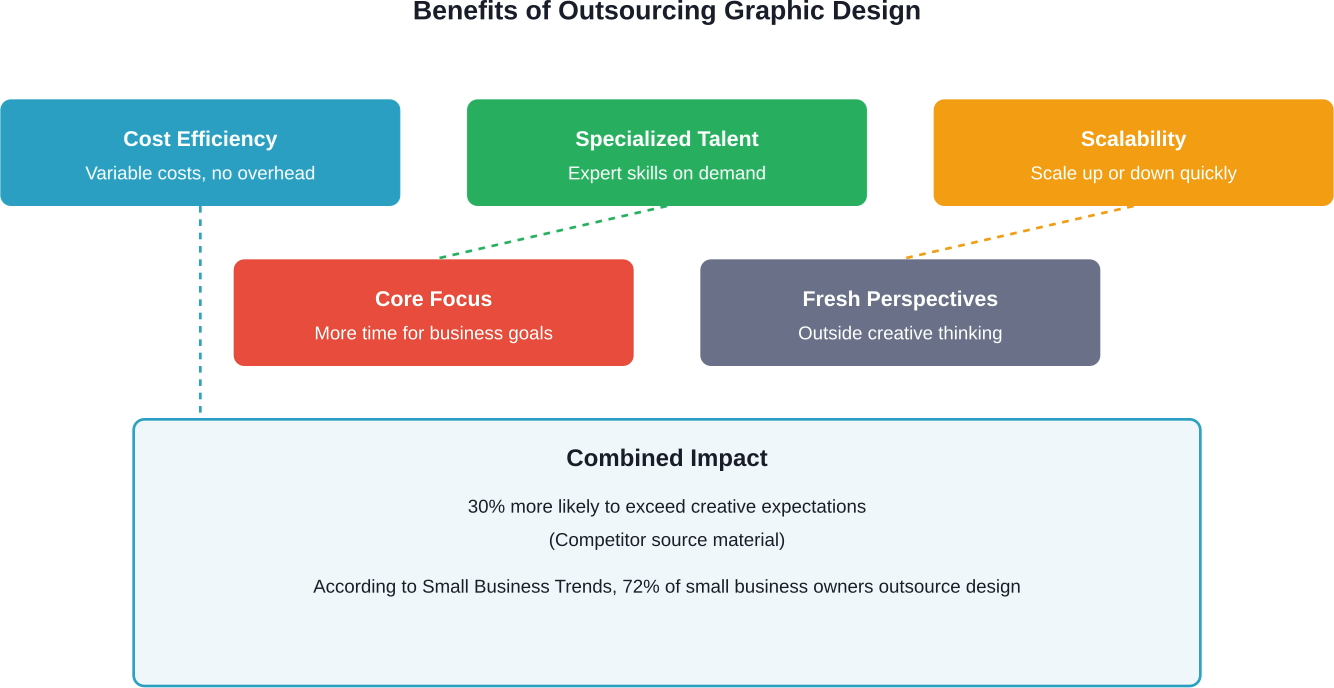
Cost Efficiency Without Quality Trade-Offs
Hiring in-house designers means salaries, benefits, equipment, software licenses, and overhead. A mid-level designer in a major U.S. city can easily cost $70,000-$90,000 annually before benefits.
Outsourcing converts that fixed cost into variable expense. Pay for what's needed, when it's needed. No downtime costs when projects slow down.
And contrary to outdated assumptions, outsourced work often matches or exceeds in-house quality. According to competitor source material, outsourced projects were 30% more likely to exceed creative expectations compared to those handled in-house.
Access to Specialized Expertise
Not every project needs a generalist. Sometimes a brand needs someone who specializes in 3D product rendering, or motion graphics, or packaging design.
Building that expertise internally is expensive and slow. Outsourcing gives immediate access to specialists who've solved similar problems dozens of times.
This matters more as design disciplines fragment. The skills required for social media graphics differ fundamentally from what's needed for technical illustration or UX design.
Scalability and Flexibility
Business demand fluctuates. Product launches create design surges. Quiet quarters don't.
With outsourced talent, scaling up or down happens quickly. Ramp up for a campaign. Scale back when it wraps. No awkward conversations about utilization rates or layoffs.
This flexibility has become crucial as market conditions shift faster. Companies that can adapt their creative capacity quickly maintain momentum while competitors scramble.
Focus on Core Business Functions
Real talk: most businesses aren't in the business of managing designers. They're building products, serving customers, or solving specific problems.
Outsourcing design frees leadership and internal teams to focus on what actually drives the business forward. Less time managing creative resources, more time on strategy and execution.
When Outsourcing Makes Sense (And When It Doesn't)
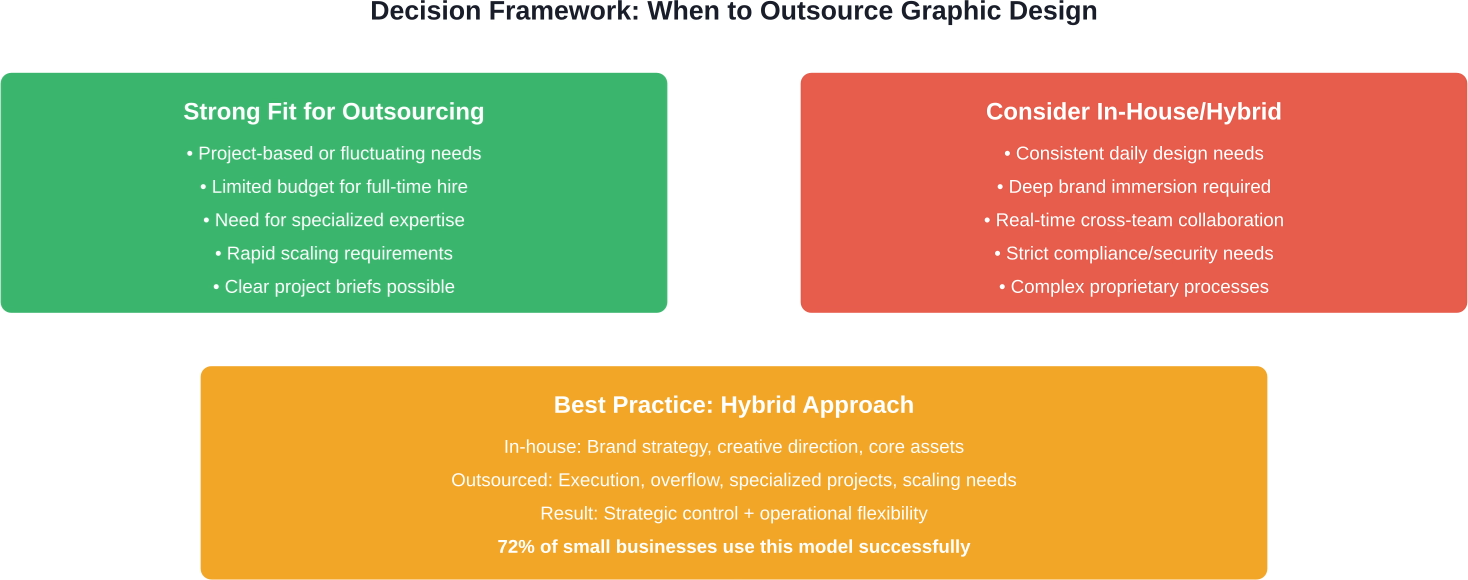
Outsourcing isn't a universal solution. Context matters.
Ideal Scenarios for Outsourcing
- Project-based work: One-off deliverables like logos, brochures, or event materials work perfectly with freelancers or agencies.
- Overflow capacity: Internal team is maxed out but hiring full-time doesn't make sense yet. Outsourcing fills the gap.
- Specialized skills: When a project demands expertise the team doesn't have—3D rendering, technical illustration, animation.
- Fast scaling: Launching new products or entering new markets quickly. Outsourcing accelerates timeline without recruitment delays.
When In-House Makes More Sense
Deep brand integration matters. When designers need to live and breathe company culture daily, in-house often wins.
Real-time collaboration requirements. If design work touches every department constantly, coordination overhead with external partners can slow things down.
Extremely high security or confidentiality needs. Some industries (defense, healthcare, finance) have compliance requirements that complicate external partnerships.
Sustained, predictable volume. If design needs are consistent month-over-month with no fluctuation, full-time might be more economical.
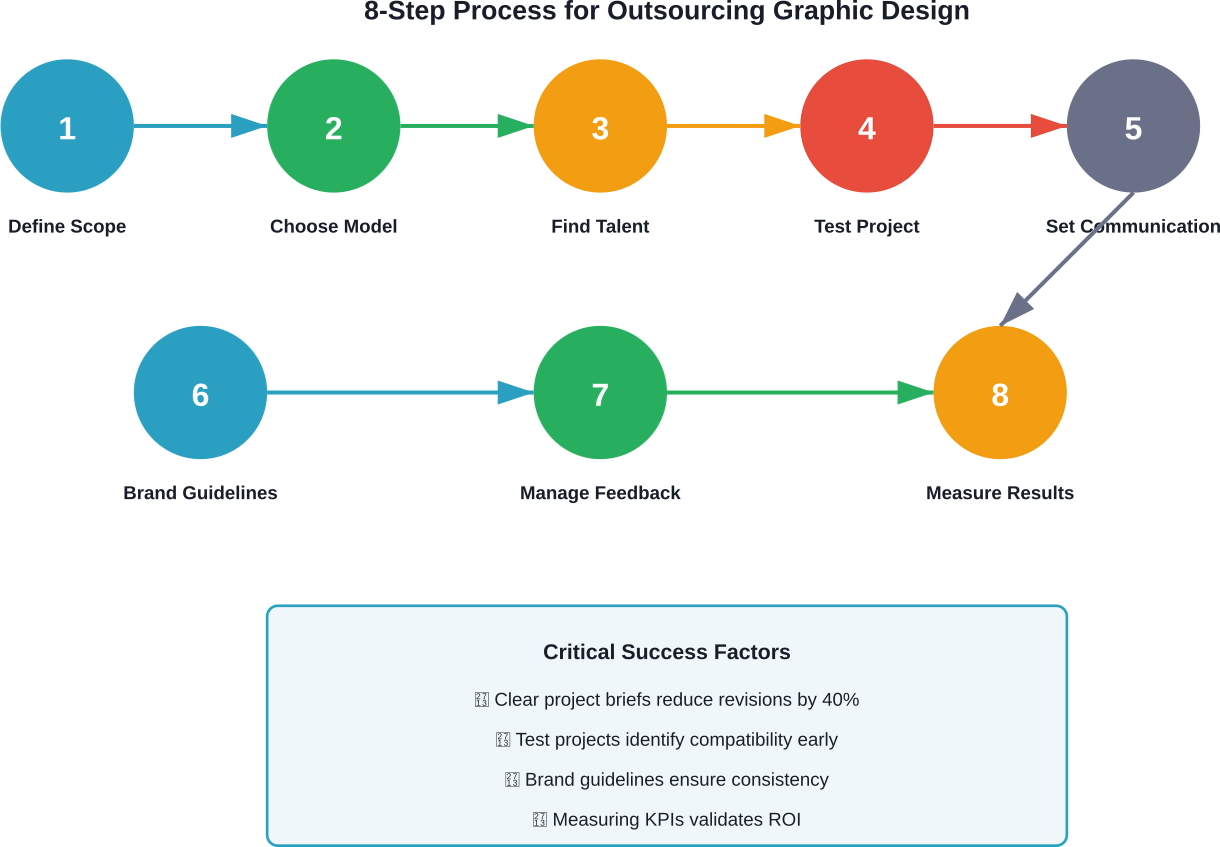
Step-by-Step: How to Outsource Graphic Design Successfully
Getting outsourcing right requires more than posting a project and hoping. Here's the process that actually works.
Step 1: Define Scope and Requirements Clearly
Vague briefs create mediocre work. Specificity drives quality.
Document what's needed: deliverables, formats, dimensions, color requirements, brand guidelines, deadline, revision policy, usage rights.
The more clarity upfront, the fewer rounds of revisions later. Community discussions consistently highlight that clear briefs reduce back-and-forth dramatically.
Step 2: Choose Your Outsourcing Model
Several models exist. Pick the one that matches project type and business stage.
Step 3: Find and Vet Candidates
Where to look depends on the model chosen:
- Freelance platforms: Upwork, Fiverr, Freelancer, 99designs. Filter by reviews, portfolio quality, and communication skills. Look for designers who ask clarifying questions—shows they think strategically.
- Design agencies: Referrals work best. Check case studies for relevant industry experience. Schedule discovery calls to assess cultural fit and process compatibility.
- Subscription services: Research providers like Awesomic, Design Pickle, or Penji. Compare turnaround times, revision policies, and whether they match to specific designers or rotate teams.
Portfolio review matters more than credentials. Look for versatility, attention to detail, and work that aligns stylistically with brand direction.
Step 4: Test with a Small Project First
Never commit to a major project without a trial run.
Start with something small but representative. A social media graphic set. A single landing page design. Something with clear success criteria but limited downside risk.
Evaluate communication speed, revision handling, file organization, and whether the designer asks smart questions or just executes blindly.
Step 5: Establish Clear Communication Channels
Communication breakdowns kill outsourcing relationships faster than anything else.
Set expectations: response time windows, preferred communication tools (Slack, email, project management software), meeting cadence if needed.
Create a single source of truth for project details. Google Docs, Notion, or Asana work well. Avoid scattering information across emails and chat threads.
Step 6: Provide Comprehensive Brand Guidelines
Brand guidelines save time and improve consistency. Without them, every project becomes a negotiation about colors, fonts, and tone.
Even a simple one-page guide helps: logo usage rules, color palette with hex codes, typography choices, tone descriptors, examples of on-brand vs off-brand work.
Community discussions confirm that having guidelines upfront cuts revision cycles significantly.
Step 7: Manage Feedback Effectively
How feedback is delivered determines outcome quality.
Be specific. Instead of "make it pop," say "increase contrast between headline and background" or "try a bolder font weight."
Consolidate feedback. Multiple stakeholders sending conflicting notes creates chaos. Collect input internally, synthesize it, then deliver one clear set of changes.
Use visual annotation tools. Markup tools like InVision, Figma comments, or even annotated screenshots prevent ambiguity.
Step 8: Measure Results and Iterate
Track whether outsourced design actually moves business metrics.
Did that whitepaper design help drive downloads? Did social graphics improve engagement rates? Did the new landing page increase conversions?
Tie design deliverables to KPIs or objectives. This gives concrete data for evaluating whether the outsourcing relationship is working.
Build a Dedicated Design Team with NeoWork

If your graphic design pipeline feels inconsistent, slow, or hard to manage, it may be time to move beyond one-off freelancers. NeoWork helps companies set up dedicated remote design support that works as part of their team, not as an external vendor.
Their creative services cover ongoing graphic design needs - marketing assets, brand materials, social visuals, ad creatives, presentation design, and more. Instead of restarting the hiring process every few months, you get carefully vetted talent integrated into your workflow and aligned with your standards. NeoWork operates with a 3.2% candidate selectivity rate, focusing on quality over volume, and reports a 91% annualized teammate retention rate, which reduces turnover and retraining cycles.
If your 2026 outsourcing strategy includes stability, accountability, and long-term cost control, this is worth a conversation. Book a call with NeoWork and see what a structured design setup would look like for your team.
Common Pitfalls to Avoid
Even with a solid process, certain mistakes derail outsourcing relationships. Here's what to watch for.
Choosing Based on Price Alone
The $5 logo almost always costs more in the long run. Cheap work requires extensive revisions, misses brand standards, or simply looks unprofessional.
Community sentiment consistently emphasizes that designers producing quality work at extremely low prices are either inexperienced or stretched impossibly thin across dozens of clients.
Value matters more than cost. Sometimes paying $500 for a logo that's right the first time beats paying $50 five times for something that never quite works.
Inadequate Briefs and Vague Direction
"Make it modern" or "I'll know it when I see it" aren't briefs. They're invitations to endless revision cycles.
Designers aren't mind readers. Without clear direction, they make assumptions. Those assumptions rarely align perfectly with unstated expectations.
Micromanaging the Creative Process
Hiring experts then dictating every pixel placement wastes everyone's time.
Provide clear parameters and goals. Then trust the designer to do what they're hired for. Feedback should focus on whether goals are met, not personal preference about font choices.
Ignoring Time Zone and Communication Barriers
A designer 12 time zones away might offer great rates, but if communication lag adds days to every decision, the cost advantage evaporates.
Cultural and language differences can also create misunderstandings. "Urgent" might mean different things. Design conventions vary by region.
Factor these realities into selection. Sometimes paying more for a designer in a compatible time zone with excellent communication skills is smarter.
No Clear Revision Policy
Unlimited revisions sounds good until stakeholders request the 17th iteration because they can't decide.
Set boundaries upfront. Most freelancers include 2-3 revision rounds. Additional changes cost extra. This forces internal alignment before feedback goes to the designer.
Measuring ROI and Success
How do businesses know outsourcing is working? Track the right metrics.
Cost Metrics
Compare total cost (fees, management time, revisions) against what in-house would have cost. Include salary, benefits, overhead, equipment, software.
Also track cost per deliverable. As relationships mature and designers understand the brand better, cost per asset should decrease.
Quality Metrics
Stakeholder satisfaction scores. On a 1-10 scale, how satisfied are internal teams with deliverable quality?
Revision counts. Fewer revisions over time indicates better alignment and understanding.
Performance data. If designs are used in marketing, track their performance. Do landing pages convert? Do social graphics drive engagement?
Efficiency Metrics
Time to complete. How quickly do projects move from brief to final delivery?
Internal time saved. How many hours did outsourcing free up for the internal team to focus on other priorities?
Scalability achieved. Could the business handle a sudden spike in design needs? Outsourcing should enable flexibility that in-house teams can't match.
Types of Graphic Design Services Commonly Outsourced
Not all design work outsources equally well. Some categories are particularly suited to external partners.
Future Trends in Design Outsourcing
The outsourcing landscape continues evolving. Several trends are reshaping how businesses approach design partnerships.
AI-Augmented Designers
Designers increasingly use AI tools (Midjourney, DALL-E, Runway) to accelerate concept development and production. This doesn't replace human creativity—it amplifies it.
For businesses, this means faster turnarounds and lower costs for certain asset types, particularly iteration-heavy work like social graphics or ad variations.
Hybrid Models Becoming Standard
The line between in-house and outsourced is blurring. Many businesses now maintain small in-house teams for strategic work and brand stewardship, while outsourcing execution and overflow.
This hybrid approach captures the benefits of both models: cultural alignment from in-house leadership, plus flexibility and cost efficiency from external partners.
Specialization Over Generalization
As design disciplines fragment further, businesses increasingly hire specialists for specific project types rather than expecting one designer to handle everything.
This trend favors outsourcing models that provide access to diverse specialist talent on demand.
Outcome-Based Pricing Models
Some forward-thinking agencies are moving beyond hourly rates toward outcome-based pricing. Payment tied to performance metrics: conversion rates, engagement, brand lift.
This aligns incentives better but requires sophisticated measurement and clear attribution, so adoption remains limited.
Making the Decision: Is Outsourcing Right for Your Business?
Graphic design outsourcing isn't about whether it's possible—it clearly is. The question is whether it makes strategic sense for a specific business at a specific time.
Evaluate based on design volume, budget constraints, need for specialized skills, and internal team capacity. Businesses with unpredictable design needs benefit enormously. So do those scaling quickly or testing new markets.
Organizations requiring deep brand immersion or operating in highly regulated spaces might find hybrid models work better than full outsourcing.
The key is matching the model to business reality rather than forcing a one-size-fits-all approach.
Conclusion: Building Successful Design Partnerships
Graphic design outsourcing has matured from a cost-cutting tactic into a strategic capability. Done well, it gives businesses access to world-class creative talent without the overhead of full-time teams.
The businesses seeing the best results treat outsourcing as partnership, not transaction. They invest time in clear briefs, brand guidelines, and relationship building. They measure outcomes, iterate based on data, and choose partners who align with business goals.
Start small. Test different models. Find what works for the specific business context. The right outsourcing approach looks different for a five-person startup versus a 500-person enterprise.
But the fundamentals remain consistent: clarity beats ambiguity, communication drives quality, and the cheapest option rarely delivers the best value.
Ready to explore outsourcing for graphic design work? Begin with one small project. Define the brief clearly. Choose a designer whose portfolio aligns with the aesthetic needed. Measure results. Then scale what works.
The global talent pool is accessible. The tools are better than ever. And businesses that figure out how to tap external creative expertise effectively will move faster and compete better than those that don't.
Frequently Asked Questions
Topics
Graphic Design Outsourcing Guide 2026: Strategy & Steps

Graphic design outsourcing involves hiring external designers or agencies to handle creative work instead of maintaining an in-house team. This guide covers the strategic benefits, cost considerations, step-by-step implementation process, and best practices for finding and managing outsourced design talent in 2026.
More than a third of small businesses currently outsource at least some of their operations, according to the U.S. Small Business Administration. Design work sits near the top of that list.
But here's the thing—outsourcing graphic design isn't just about cutting costs anymore. In 2026, it's become a strategic lever for accessing specialized talent, scaling creative output, and staying competitive without the overhead of full-time hires.
This guide breaks down everything from why outsourcing makes sense right now to exactly how to find, vet, and work with designers who'll actually move your business forward.
What Is Graphic Design Outsourcing?
Graphic design outsourcing means contracting external professionals—freelancers, agencies, or specialized design firms—to handle visual creative work that would otherwise be done internally.
The scope varies wildly. Some businesses outsource one-off projects like logo design or a pitch deck. Others establish ongoing relationships for continuous needs: social media graphics, marketing materials, product packaging, web assets.
According to the SBA, the global market for outsourced IT services reached $85.6 billion in 2019. That number keeps climbing as remote work normalizes and talent pools become genuinely global.
The shift isn't just about geography. Design tools have standardized. Communication platforms make collaboration seamless. And businesses have realized that creative excellence doesn't require physical proximity.
Why Outsource Graphic Design in 2026?
The case for outsourcing design has strengthened considerably. Here's what's driving that shift.
Cost Efficiency Without Quality Trade-Offs
Hiring in-house designers means salaries, benefits, equipment, software licenses, and overhead. A mid-level designer in a major U.S. city can easily cost $70,000-$90,000 annually before benefits.
Outsourcing converts that fixed cost into variable expense. Pay for what's needed, when it's needed. No downtime costs when projects slow down.
And contrary to outdated assumptions, outsourced work often matches or exceeds in-house quality. According to competitor source material, outsourced projects were 30% more likely to exceed creative expectations compared to those handled in-house.
Access to Specialized Expertise
Not every project needs a generalist. Sometimes a brand needs someone who specializes in 3D product rendering, or motion graphics, or packaging design.
Building that expertise internally is expensive and slow. Outsourcing gives immediate access to specialists who've solved similar problems dozens of times.
This matters more as design disciplines fragment. The skills required for social media graphics differ fundamentally from what's needed for technical illustration or UX design.
Scalability and Flexibility
Business demand fluctuates. Product launches create design surges. Quiet quarters don't.
With outsourced talent, scaling up or down happens quickly. Ramp up for a campaign. Scale back when it wraps. No awkward conversations about utilization rates or layoffs.
This flexibility has become crucial as market conditions shift faster. Companies that can adapt their creative capacity quickly maintain momentum while competitors scramble.
Focus on Core Business Functions
Real talk: most businesses aren't in the business of managing designers. They're building products, serving customers, or solving specific problems.
Outsourcing design frees leadership and internal teams to focus on what actually drives the business forward. Less time managing creative resources, more time on strategy and execution.
When Outsourcing Makes Sense (And When It Doesn't)
Outsourcing isn't a universal solution. Context matters.
Ideal Scenarios for Outsourcing
- Project-based work: One-off deliverables like logos, brochures, or event materials work perfectly with freelancers or agencies.
- Overflow capacity: Internal team is maxed out but hiring full-time doesn't make sense yet. Outsourcing fills the gap.
- Specialized skills: When a project demands expertise the team doesn't have—3D rendering, technical illustration, animation.
- Fast scaling: Launching new products or entering new markets quickly. Outsourcing accelerates timeline without recruitment delays.
When In-House Makes More Sense
Deep brand integration matters. When designers need to live and breathe company culture daily, in-house often wins.
Real-time collaboration requirements. If design work touches every department constantly, coordination overhead with external partners can slow things down.
Extremely high security or confidentiality needs. Some industries (defense, healthcare, finance) have compliance requirements that complicate external partnerships.
Sustained, predictable volume. If design needs are consistent month-over-month with no fluctuation, full-time might be more economical.
Step-by-Step: How to Outsource Graphic Design Successfully
Getting outsourcing right requires more than posting a project and hoping. Here's the process that actually works.
Step 1: Define Scope and Requirements Clearly
Vague briefs create mediocre work. Specificity drives quality.
Document what's needed: deliverables, formats, dimensions, color requirements, brand guidelines, deadline, revision policy, usage rights.
The more clarity upfront, the fewer rounds of revisions later. Community discussions consistently highlight that clear briefs reduce back-and-forth dramatically.
Step 2: Choose Your Outsourcing Model
Several models exist. Pick the one that matches project type and business stage.
Step 3: Find and Vet Candidates
Where to look depends on the model chosen:
- Freelance platforms: Upwork, Fiverr, Freelancer, 99designs. Filter by reviews, portfolio quality, and communication skills. Look for designers who ask clarifying questions—shows they think strategically.
- Design agencies: Referrals work best. Check case studies for relevant industry experience. Schedule discovery calls to assess cultural fit and process compatibility.
- Subscription services: Research providers like Awesomic, Design Pickle, or Penji. Compare turnaround times, revision policies, and whether they match to specific designers or rotate teams.
Portfolio review matters more than credentials. Look for versatility, attention to detail, and work that aligns stylistically with brand direction.
Step 4: Test with a Small Project First
Never commit to a major project without a trial run.
Start with something small but representative. A social media graphic set. A single landing page design. Something with clear success criteria but limited downside risk.
Evaluate communication speed, revision handling, file organization, and whether the designer asks smart questions or just executes blindly.
Step 5: Establish Clear Communication Channels
Communication breakdowns kill outsourcing relationships faster than anything else.
Set expectations: response time windows, preferred communication tools (Slack, email, project management software), meeting cadence if needed.
Create a single source of truth for project details. Google Docs, Notion, or Asana work well. Avoid scattering information across emails and chat threads.
Step 6: Provide Comprehensive Brand Guidelines
Brand guidelines save time and improve consistency. Without them, every project becomes a negotiation about colors, fonts, and tone.
Even a simple one-page guide helps: logo usage rules, color palette with hex codes, typography choices, tone descriptors, examples of on-brand vs off-brand work.
Community discussions confirm that having guidelines upfront cuts revision cycles significantly.
Step 7: Manage Feedback Effectively
How feedback is delivered determines outcome quality.
Be specific. Instead of "make it pop," say "increase contrast between headline and background" or "try a bolder font weight."
Consolidate feedback. Multiple stakeholders sending conflicting notes creates chaos. Collect input internally, synthesize it, then deliver one clear set of changes.
Use visual annotation tools. Markup tools like InVision, Figma comments, or even annotated screenshots prevent ambiguity.
Step 8: Measure Results and Iterate
Track whether outsourced design actually moves business metrics.
Did that whitepaper design help drive downloads? Did social graphics improve engagement rates? Did the new landing page increase conversions?
Tie design deliverables to KPIs or objectives. This gives concrete data for evaluating whether the outsourcing relationship is working.
Build a Dedicated Design Team with NeoWork
If your graphic design pipeline feels inconsistent, slow, or hard to manage, it may be time to move beyond one-off freelancers. NeoWork helps companies set up dedicated remote design support that works as part of their team, not as an external vendor.
Their creative services cover ongoing graphic design needs - marketing assets, brand materials, social visuals, ad creatives, presentation design, and more. Instead of restarting the hiring process every few months, you get carefully vetted talent integrated into your workflow and aligned with your standards. NeoWork operates with a 3.2% candidate selectivity rate, focusing on quality over volume, and reports a 91% annualized teammate retention rate, which reduces turnover and retraining cycles.
If your 2026 outsourcing strategy includes stability, accountability, and long-term cost control, this is worth a conversation. Book a call with NeoWork and see what a structured design setup would look like for your team.
Common Pitfalls to Avoid
Even with a solid process, certain mistakes derail outsourcing relationships. Here's what to watch for.
Choosing Based on Price Alone
The $5 logo almost always costs more in the long run. Cheap work requires extensive revisions, misses brand standards, or simply looks unprofessional.
Community sentiment consistently emphasizes that designers producing quality work at extremely low prices are either inexperienced or stretched impossibly thin across dozens of clients.
Value matters more than cost. Sometimes paying $500 for a logo that's right the first time beats paying $50 five times for something that never quite works.
Inadequate Briefs and Vague Direction
"Make it modern" or "I'll know it when I see it" aren't briefs. They're invitations to endless revision cycles.
Designers aren't mind readers. Without clear direction, they make assumptions. Those assumptions rarely align perfectly with unstated expectations.
Micromanaging the Creative Process
Hiring experts then dictating every pixel placement wastes everyone's time.
Provide clear parameters and goals. Then trust the designer to do what they're hired for. Feedback should focus on whether goals are met, not personal preference about font choices.
Ignoring Time Zone and Communication Barriers
A designer 12 time zones away might offer great rates, but if communication lag adds days to every decision, the cost advantage evaporates.
Cultural and language differences can also create misunderstandings. "Urgent" might mean different things. Design conventions vary by region.
Factor these realities into selection. Sometimes paying more for a designer in a compatible time zone with excellent communication skills is smarter.
No Clear Revision Policy
Unlimited revisions sounds good until stakeholders request the 17th iteration because they can't decide.
Set boundaries upfront. Most freelancers include 2-3 revision rounds. Additional changes cost extra. This forces internal alignment before feedback goes to the designer.
Measuring ROI and Success
How do businesses know outsourcing is working? Track the right metrics.
Cost Metrics
Compare total cost (fees, management time, revisions) against what in-house would have cost. Include salary, benefits, overhead, equipment, software.
Also track cost per deliverable. As relationships mature and designers understand the brand better, cost per asset should decrease.
Quality Metrics
Stakeholder satisfaction scores. On a 1-10 scale, how satisfied are internal teams with deliverable quality?
Revision counts. Fewer revisions over time indicates better alignment and understanding.
Performance data. If designs are used in marketing, track their performance. Do landing pages convert? Do social graphics drive engagement?
Efficiency Metrics
Time to complete. How quickly do projects move from brief to final delivery?
Internal time saved. How many hours did outsourcing free up for the internal team to focus on other priorities?
Scalability achieved. Could the business handle a sudden spike in design needs? Outsourcing should enable flexibility that in-house teams can't match.
Types of Graphic Design Services Commonly Outsourced
Not all design work outsources equally well. Some categories are particularly suited to external partners.
Future Trends in Design Outsourcing
The outsourcing landscape continues evolving. Several trends are reshaping how businesses approach design partnerships.
AI-Augmented Designers
Designers increasingly use AI tools (Midjourney, DALL-E, Runway) to accelerate concept development and production. This doesn't replace human creativity—it amplifies it.
For businesses, this means faster turnarounds and lower costs for certain asset types, particularly iteration-heavy work like social graphics or ad variations.
Hybrid Models Becoming Standard
The line between in-house and outsourced is blurring. Many businesses now maintain small in-house teams for strategic work and brand stewardship, while outsourcing execution and overflow.
This hybrid approach captures the benefits of both models: cultural alignment from in-house leadership, plus flexibility and cost efficiency from external partners.
Specialization Over Generalization
As design disciplines fragment further, businesses increasingly hire specialists for specific project types rather than expecting one designer to handle everything.
This trend favors outsourcing models that provide access to diverse specialist talent on demand.
Outcome-Based Pricing Models
Some forward-thinking agencies are moving beyond hourly rates toward outcome-based pricing. Payment tied to performance metrics: conversion rates, engagement, brand lift.
This aligns incentives better but requires sophisticated measurement and clear attribution, so adoption remains limited.
Making the Decision: Is Outsourcing Right for Your Business?
Graphic design outsourcing isn't about whether it's possible—it clearly is. The question is whether it makes strategic sense for a specific business at a specific time.
Evaluate based on design volume, budget constraints, need for specialized skills, and internal team capacity. Businesses with unpredictable design needs benefit enormously. So do those scaling quickly or testing new markets.
Organizations requiring deep brand immersion or operating in highly regulated spaces might find hybrid models work better than full outsourcing.
The key is matching the model to business reality rather than forcing a one-size-fits-all approach.
Conclusion: Building Successful Design Partnerships
Graphic design outsourcing has matured from a cost-cutting tactic into a strategic capability. Done well, it gives businesses access to world-class creative talent without the overhead of full-time teams.
The businesses seeing the best results treat outsourcing as partnership, not transaction. They invest time in clear briefs, brand guidelines, and relationship building. They measure outcomes, iterate based on data, and choose partners who align with business goals.
Start small. Test different models. Find what works for the specific business context. The right outsourcing approach looks different for a five-person startup versus a 500-person enterprise.
But the fundamentals remain consistent: clarity beats ambiguity, communication drives quality, and the cheapest option rarely delivers the best value.
Ready to explore outsourcing for graphic design work? Begin with one small project. Define the brief clearly. Choose a designer whose portfolio aligns with the aesthetic needed. Measure results. Then scale what works.
The global talent pool is accessible. The tools are better than ever. And businesses that figure out how to tap external creative expertise effectively will move faster and compete better than those that don't.
Frequently Asked Questions
Topics
Related Blogs
Related Podcasts


.webp)
.webp)



