

.avif)
.avif)

Game Animation Outsourcing Guide: 2026 Studio Selection


.svg)

Game animation outsourcing involves contracting external studios to handle character rigging, motion capture, cutscenes, and gameplay animations. This guide covers cost structures, studio selection criteria, workflow management, and quality control processes that help developers scale production while maintaining visual consistency across projects.
The global animation market size was valued at approximately $412.9 billion in 2023 and is projected to reach over $600 billion by 2030. That growth accelerated as studios adapted to distributed workflows and remote collaboration became standard practice.
But here's the thing: not all outsourcing relationships deliver results. Square Enix announced its new medium-term business plan, 'Square Enix Reboots and Awakens', in May 2024, focusing on a 'Digital Entertainment Strategy' to shift toward internal development and multi-platform releases, hoping that focusing more on internal development and large-scale titles could revitalize their video game business.
That doesn't mean outsourcing is broken. It means the approach matters.
Studios that succeed with animation outsourcing follow specific processes for vendor selection, communication protocols, and quality gates. Those that struggle typically skip the groundwork and jump straight to contracting. The difference shows up in the final product.
This guide walks through the complete outsourcing process, from defining requirements to managing feedback cycles. It covers pricing structures observed in the market, studio evaluation criteria that matter, and workflow integration strategies that prevent miscommunication.
What Game Animation Outsourcing Actually Covers
Animation outsourcing isn't a single service. It's a spectrum of specialized work that studios contract externally instead of handling in-house.
Character animation forms the core of most outsourcing contracts. This includes locomotion cycles, combat moves, idle behaviors, and facial animations. Some studios outsource only base locomotion while keeping signature moves internal. Others hand off entire character animation pipelines.
Cutscene production represents another major outsourcing category. These sequences require different workflows than gameplay animation, often involving motion capture cleanup, camera work, and lip-sync. Studios with tight narrative deadlines frequently outsource cutscenes to specialized teams while internal animators focus on gameplay feel.
Rigging and technical animation setup also gets outsourced, particularly for secondary characters or creatures. Proper rigging takes specialized knowledge, and many studios lack dedicated technical animators. Outsourcing partners handle skeleton setup, skinning, and control rig creation.
Motion capture processing involves significant labor. Raw mocap data requires cleanup, retargeting, and integration into game engines. Studios that shoot mocap sessions often outsource the post-processing to teams experienced with specific cleanup tools and retargeting workflows.
VFX animation covers particle effects, magic systems, environmental animations, and destruction sequences. These elements require different skill sets than character work, making them natural candidates for specialized outsourcing partners.
When Outsourcing Makes Sense
Not every project benefits from animation outsourcing. The decision depends on specific production circumstances and studio capabilities.
Production scaling represents the most common trigger. When a project hits full production and internal teams can't handle the asset volume, outsourcing provides capacity without permanent hiring. This works especially well for predictable work like background character animations or secondary creature movements.
Specialized skill gaps justify outsourcing even when capacity exists. If a game needs realistic horse animations but the studio lacks quadruped experience, contracting specialists makes more sense than training internal staff for a one-time need.
Deadline compression forces outsourcing decisions. When schedules slip and shipping dates don't move, external teams can parallelize work that would otherwise bottleneck. This works better for modular animation sets than for core gameplay feel, which requires iterative internal refinement.
Budget optimization drives outsourcing for many studios. According to Statista's IT outsourcing market analysis, the sector reached $484.86 billion in 2023 and is projected to grow to $812.75 billion, partly because outsourcing becomes a viable cost resilience strategy when companies look to save money.
Prototype and proof-of-concept work sometimes gets outsourced when internal teams focus on production. A small external team can animate a vertical slice while the core team ships the current title.
When to Keep Animation Internal
Some animation work shouldn't be outsourced, regardless of capacity or budget pressures.
The core gameplay feel requires constant iteration with design and engineering. The subtle timing adjustments that make controls feel responsive can't easily happen across organizational boundaries with communication delays. Hero character movement typically stays internal for this reason.
Signature mechanics that define the game's identity need internal ownership. If the game's hook is a unique traversal system or combat style, outsourcing that animation divorces the work from the creative vision that makes it distinctive.
Early prototyping benefits from tight loops between animation, design, and engineering. Outsourcing introduces communication overhead that slows the experimentation needed to find what feels good.
Projects with undefined art direction struggle with outsourcing. External teams need clear visual targets and references. When the style is still evolving, internal iteration works better than trying to communicate shifting aesthetics to partners.
Cost Structures and Pricing Models
Animation outsourcing pricing varies significantly based on complexity, studio location, and engagement model. Understanding typical ranges helps with budget planning and vendor evaluation.
Per-asset pricing works well for clearly defined deliverables. A studio might quote per animation clip: $500-$1,200 for standard locomotion cycles, $800-$2,000 for complex combat moves, $300-$700 for simple idles or reactions. These ranges reflect mid-quality work from experienced studios rather than budget freelance platforms.
Hourly rates provide flexibility for undefined scope or iterative work. Rates typically range from $50-$150 per hour depending on studio location and animator seniority. Eastern European studios often charge $50-$80/hour, while North American and Western European studios range $80-$150/hour. Asian studios span $40-$100/hour depending on country and studio tier.
Full-time equivalent (FTE) contracts lock in dedicated animator capacity. Monthly FTE costs typically run $6,000-$15,000 depending on location and seniority. This model works for ongoing production needs spanning multiple months where per-asset pricing becomes administratively complex.
Project-based fixed pricing suits well-scoped animation packages. A studio might quote $50,000 for a complete animation set for a character including locomotion, combat, and contextual actions. This shifts risk to the vendor but requires extremely clear specifications upfront.
The numbers vary based on animation complexity. Facial animation costs more than locomotion. Motion capture cleanup is cheaper than hand-keyframed work. Creature animation typically costs more than humanoid due to specialized knowledge.
Hidden costs exist beyond quoted rates. Revision rounds, technical integration support, and project management overhead add 15-30% to base pricing. Studios that quote suspiciously low rates often surprise clients with revision fees or incomplete deliverables.
Evaluating Animation Studios
Studio selection determines outsourcing success more than any other factor. The wrong partner creates more problems than they solve, regardless of attractive pricing.
Portfolio relevance matters more than portfolio size. A studio with five projects matching the target style and complexity beats one with fifty projects in unrelated genres. Look for animation work that demonstrates the specific skills needed: if the game needs realistic animals, studios with stylized humanoid portfolios aren't the right fit.
Technical pipeline compatibility prevents painful integration issues. Studios should work with the target game engine natively. A Unity project outsourcing to a studio that works primarily in Maya without Unity experience creates unnecessary export/import friction and technical debt.
Communication infrastructure reveals operational maturity. Professional studios provide dedicated project managers, structured feedback systems, and regular milestone reviews. Studios that funnel all communication through a single contact or lack project tracking tools create bottlenecks.
Response time indicates workload and priorities. Studios that take 48+ hours to respond to questions during evaluation will be worse during production. According to market research on game art outsourcing workflows, studios that connect to development pipelines within 48 hours demonstrate significant operational capability.
References and shipped titles provide reality checks. Speaking with previous clients reveals how studios handle revisions, scope changes, and crunch periods. Studios unwilling to provide references raise red flags.
Red Flags During Studio Evaluation
Some warning signs predict outsourcing problems before contracts get signed.
Overpromising on timelines or scope suggests inexperience or dishonesty. If internal estimates say a task takes four weeks and a vendor quotes one week, they're either cutting corners or don't understand the requirements.
Lack of questions during scoping indicates the studio isn't thinking critically about requirements. Good partners ask clarifying questions, identify potential issues, and suggest alternatives. Studios that accept vague requirements without pushback deliver work that misses expectations.
Exclusively focusing on price signals the wrong priorities. Professional studios discuss workflow integration, quality standards, and communication protocols before pricing. Studios that lead with discounts and aggressive pricing typically compete on cost because they can't compete on quality.
Portfolio inconsistency—wildly varying quality across projects—suggests the studio lacks a stable team. Consistent quality across multiple projects indicates established processes and retained talent.
Unclear ownership terms for deliverables create legal complications. Contracts should explicitly grant full rights to all animation assets created. Ambiguous language about licensing or usage rights becomes expensive to untangle later.
Technical Specifications and Asset Requirements
Clear technical specifications prevent the majority of outsourcing problems. Vague requirements guarantee misaligned deliverables, budget overruns, and timeline delays.
Skeleton and rig specifications must be documented precisely. This includes joint count, naming conventions, rotation orders, and control rig structure. Outsourced animations need to work with existing character rigs or, if the vendor provides rigging, those rigs must integrate with existing gameplay systems.
Frame rate and length requirements affect both performance and feel. Specify target frame rate (30fps vs 60fps), loop requirements, and acceptable frame counts per animation type. A locomotion cycle might target 20-30 frames while a complex attack chain could run 60-90 frames.
File format and export settings prevent technical incompatibilities. Define exactly what format deliverables should use: FBX, Maya binary, Blender files. Include export settings like axis orientation, unit scale, and whether animations should be baked or include constraints.
Naming conventions and folder structure seem trivial but cause significant integration friction when inconsistent. Define exactly how files should be named, organized, and versioned. Something like "CharacterName_AnimationType_VariantNumber_v##.fbx" prevents confusion.
Performance budgets for animation include joint counts, keyframe density, and additive layer usage. A mobile game might limit to 45 joints and baked keyframes, while a PC title allows 150+ joints and IK constraints. These constraints must be explicit in specifications.
Animation style guides complement technical specs. These include reference videos, timing guidelines, exaggeration levels, and weight/momentum expectations. Without style references, external teams guess at artistic direction.
The more specific the documentation, the better the first-pass deliverables. Studios that provide detailed technical specification documents get animations that work correctly on first delivery. Those that rely on verbal explanations or vague briefs spend iteration budgets fixing avoidable problems.
Workflow Integration and Pipeline Setup
Smooth workflow integration separates successful outsourcing from perpetual friction. The technical handoff process determines how efficiently assets move between teams.
Version control access prevents the "emailed zip file" chaos. External studios should integrate with the project's version control system (Perforce, Git, Plastic SCM) with appropriate permissions. This enables automated testing, maintains history, and prevents lost work.
Asset review systems need structure beyond email threads. Tools like ShotGrid, Ftrack, or Monday.com provide dedicated review interfaces where stakeholders mark up animations with timecoded notes. Structured feedback formats replace subjective comments like "make it better" with actionable notes: "extend anticipation phase by 4 frames," "reduce hip translation by 30%."
Milestone structure defines delivery cadence and review points. Typical milestones include blocking pass (timing and poses), refinement pass (spacing and secondary motion), and polish pass (final details). Each milestone triggers a review cycle before the next phase begins.
Real-time communication channels matter for quick clarifications. While structured feedback goes through formal review tools, quick questions benefit from Slack channels or Discord servers dedicated to the outsourcing relationship. This prevents delays waiting for email responses on simple issues.
Documentation centralization ensures everyone references current specifications. A shared wiki, Notion workspace, or Google Drive folder should contain technical specs, style guides, naming conventions, and reference materials. When docs are scattered across email threads, teams work from outdated information.

Common Pipeline Integration Mistakes
Several workflow mistakes appear repeatedly in outsourcing relationships and cause predictable problems.
Waiting until final delivery to provide feedback creates massive budget overruns and timeline delays. Animation work builds iteratively—blocking establishes timing, refinement adds spacing, polish adds details. Feedback on blocking issues at the polish stage requires redoing all three phases.
Treating external teams as black boxes prevents collaboration. Studios that submit requirements and disappear until delivery miss opportunities to catch misunderstandings early. Regular check-ins during work-in-progress stages catch problems when they're cheap to fix.
Inconsistent review participation where different stakeholders provide conflicting notes creates confusion. Appoint a single point of contact who consolidates feedback from internal teams. External studios shouldn't navigate internal politics or contradictory directions.
Skipping integration testing until batch delivery hides technical problems. Even if animations look correct, they might not import properly, break gameplay systems, or exceed performance budgets. Test each delivery immediately upon receipt.
Quality Control and Revision Management
Quality control processes determine whether outsourced animation matches internal standards. Without structured QC, quality drift is inevitable.
Acceptance criteria need objective definitions beyond "looks good." Define measurable standards: "root motion error under 5cm," "no joint popping or rotation flips," "ground contact maintained within 2cm tolerance." Subjective aesthetic judgment still matters, but technical standards catch objective problems.
Revision budgets should be explicit in contracts. Typical structures include two revision rounds per milestone. The first round addresses any notes from the review. The second handles edge cases found during integration testing. Additional revisions beyond the budgeted rounds trigger change orders.
Kill fees for rejected work protect both parties. If delivered animations fundamentally miss the brief despite following specifications, kill fees compensate the vendor for wasted work while allowing the client to restart with clearer direction. Typically 30-50% of milestone cost.
Quality metrics tracking helps identify patterns. If a studio consistently needs revisions on the same issue—say, exaggerated anticipation beyond style guidelines—that indicates a communication problem with the style guide rather than random errors.
Style consistency checks compare outsourced work against internal reference. Having an internal animator do occasional spot checks prevents style drift where external work gradually diverges from the target aesthetic over time.
Managing Scope Creep
Scope creep kills ouеsourcing budgets. Design changes and requirement additions must be managed deliberately:
- Change request processes formalize scope modifications: When design wants to add an animation variant not in the original spec, that goes through a change request including cost and timeline impact. Verbal additions without formal approval create budget surprises.
- Baseline documentation locks requirements at project start: The original specification document becomes the baseline against which changes are measured. Without a baseline, there's no objective way to determine what's a change versus what was always included.
- Batching changes reduces overhead: Instead of submitting change requests for every small addition, accumulate minor changes and submit periodic change request batches. Each change request involves administrative work—batching reduces that friction.
- Cost impact transparency keeps budgets realistic: When design requests scope additions, they need visibility into the cost impact. A "simple" animation variant might cost $800 and push delivery by a week. Making informed trade-offs requires knowing the real costs.
Outsourcing vs In-House: The Real Trade-offs
The outsourcing versus in-house decision involves more factors than simple cost comparison. Each approach has legitimate advantages depending on circumstances.
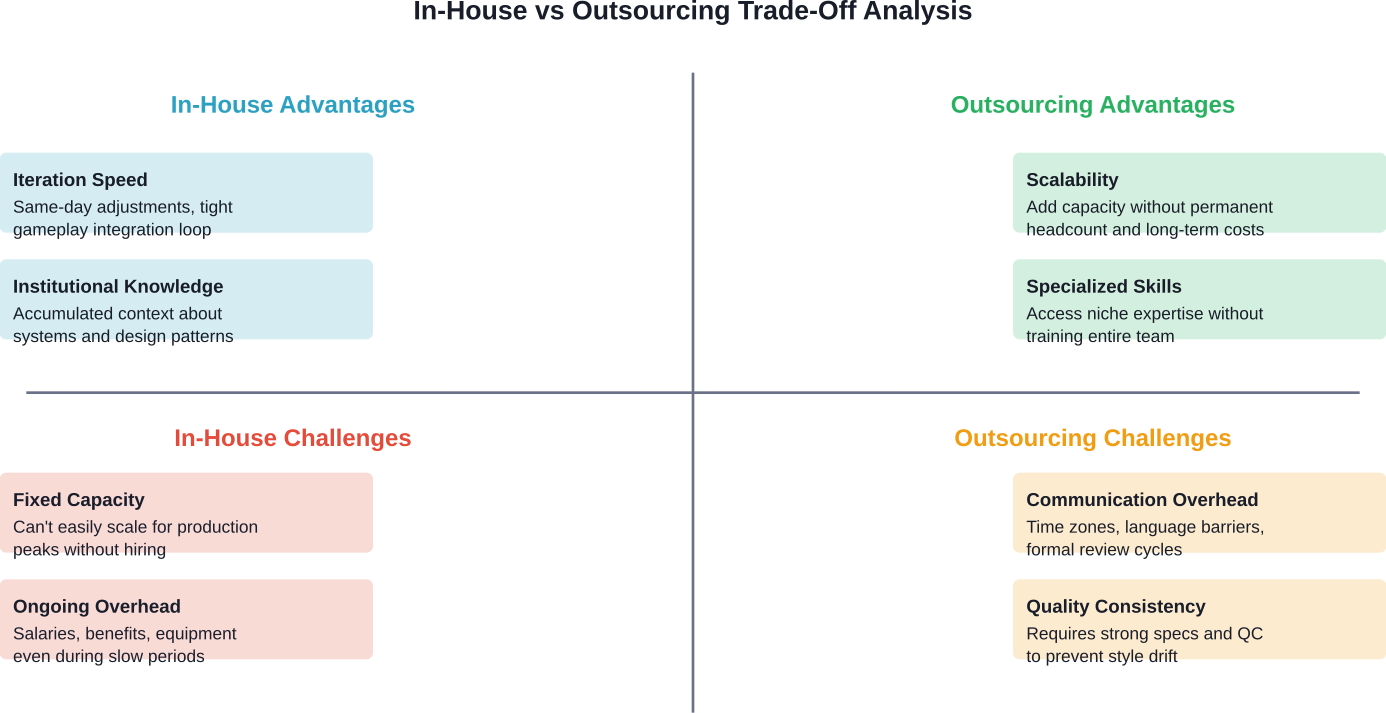
In-house animation provides iteration speed and tight integration with design. When gameplay feels requires constant tweaking based on playtesting, internal animators can adjust timing by 2-3 frames and test immediately. That rapid iteration cycle is difficult with external partners across time zones.
Outsourcing provides scalability without long-term overhead. Hiring five animators for a six-month production spike creates difficult staffing decisions afterward. Outsourcing provides that capacity without permanent headcount.
In-house teams build institutional knowledge about the game's systems, design patterns, and aesthetic direction. That accumulated context makes them increasingly efficient over time. External teams start from zero each engagement.
Outsourcing accesses specialized skills economically. If a game needs photorealistic facial animation for ten characters, contracting specialists makes more sense than training internal generalists for a one-time need.
In-house ownership fosters investment in quality and innovation. Permanent team members have incentives to improve processes, develop tools, and push creative boundaries. External vendors optimize for delivering acceptable work within budget.
Academic research on game development outsourcing, including examination of cases like BioWare's Mass Effect: Andromeda, shows that outsourcing introduces challenges such as quality control and coordination issues despite enabling cost management and access to specialized skills.
Many successful studios use hybrid approaches. Core gameplay animation stays internal while secondary content gets outsourced. Hero characters receive internal attention while background NPCs go external. This balances control over critical elements with scalable capacity for volume work.
Geographic Considerations and Time Zones
Studio location affects more than just pricing. Geographic factors influence communication patterns, cultural working styles, and collaboration logistics.
Time zone overlap determines synchronous collaboration potential. Studios in nearby time zones enable real-time calls for complex discussions. A North American studio working with Eastern European partners gets 3-5 hours of overlap. Working with Asian studios means asynchronous communication becomes the default.
Asynchronous workflows require more structured communication. When teams never work simultaneously, questions can't be answered in real-time. This demands comprehensive documentation, detailed briefs, and batch feedback cycles rather than iterative discussions.
Cultural working styles affect expectations around feedback directness, hierarchy, and revision protocols. Some cultures expect detailed prescriptive feedback while others prefer collaborative problem-solving. Mismatched communication styles create friction even when language isn't a barrier.
Language proficiency matters beyond basic communication. Technical animation discussions involve specific terminology. Studios where English is a working language versus those where it's a learned skill show different communication efficiency levels.
Legal and payment infrastructure complexity varies by country. Contracts with studios in different legal systems may require local legal review. Payment methods, currency conversion, and tax implications differ. These administrative factors add overhead that should factor into total cost comparisons.
According to Statista's analysis of global outsourcing by region, the Americas had the largest outsourcing market in 2019 with significant revenue from contracts valued over certain thresholds. The IT outsourcing sector specifically provides broader context for service outsourcing trends that also apply to game production.
Contract Structures and Legal Protections
Proper contract structure prevents disputes and protects both parties. Animation outsourcing contracts should address specific scenarios that commonly cause problems.
Intellectual property ownership must be crystal clear. Work-for-hire clauses should explicitly grant the client full ownership of all deliverables, including intermediate work products. Ambiguous IP terms create expensive legal problems if the game succeeds.
Deliverable definitions prevent scope disputes. The contract should list exactly what gets delivered: file formats, resolution, frame counts, revision rounds included in base pricing. Vague statements like "character animations" invite disagreement about what's included.
Payment terms and milestones tie payments to completed deliverables. Typical structures involve deposits (20-30%) at contract signing, milestone payments (30-40% each) at major delivery points, and final payment (10-20%) at acceptance. This balances risk between parties.
Confidentiality and non-disclosure provisions protect unreleased game information. Studios need access to design documents and gameplay details, but those materials shouldn't leak before announcement. Standard NDA terms should cover all shared materials.
Quality standards and acceptance criteria define when work is considered complete. Without objective acceptance criteria, clients can demand infinite revisions claiming work is incomplete. Clear definitions prevent revision disputes.
Termination clauses address what happens if the relationship doesn't work. Terms should cover payment for completed work, return of materials, and notice periods. Both parties need exit paths that don't involve litigation.
Liability limitations and indemnification clauses protect against legal exposure. The contract should specify that the vendor indemnifies the client against IP claims and that liability is limited to contract value. This prevents catastrophic legal exposure from vendor actions.
Managing Remote Animation Teams
Managing external animation teams requires different approaches than managing internal staff. Distance and organizational boundaries change management dynamics:
- Overcommunicating prevents assumptions: What seems obvious internally may not be clear to external partners. When in doubt, document it. Write down decisions, clarify edge cases, and confirm understanding explicitly.
- Regular check-in cadence maintains alignment: Weekly video calls provide opportunities to catch misunderstandings early, answer questions, and review work-in-progress. These shouldn't be status reports but working sessions where teams collaborate on problems.
- Trusting but verifying balances autonomy with oversight: Good external teams don't need micromanagement, but skipping verification until final delivery creates risk. Regular WIP reviews catch issues early without hovering over daily work.
- Building relationships improves collaboration: External partners aren't just vendors but extensions of the development team. Investing time in relationship building—understanding their constraints, sharing context about the project, acknowledging good work—improves engagement and output quality.
- Respecting boundaries around scope and communication prevents burnout: External teams have multiple clients. Expecting instant responses or treating contracted hours as elastic creates problems. Respect defined working hours and scope boundaries.
Common Communication Failures
Several communication patterns repeatedly cause outsourcing problems and are worth explicitly avoiding:
- Assuming context that external teams don't have leads to confusion: Internal teams know the game's design pillars, technical constraints, and aesthetic influences. External partners start from zero. Every brief needs to establish sufficient context.
- Subjective feedback without references creates interpretation gaps: "Make it feel heavier" means different things to different people. Better feedback includes reference videos, timing adjustments in frames, or physical comparisons - "weight and momentum similar to Dark Souls, not Bayonetta."
- Inconsistent point-of-contact creates confusion: When external teams receive direction from multiple internal stakeholders without coordination, they navigate contradictory feedback. Designate a single production contact who consolidates internal feedback.
- Slow feedback cycles waste time and budget: If reviews take a week, external teams sit idle or move to other projects. Fast turnaround on reviews keeps momentum and demonstrates that the project is a priority.

Keep Animation Production Moving Without Rebuilding the Team
Game marketing animation rarely happens in clean phases. One week it’s trailers, the next it’s short ad loops or in-game promos. The challenge is not just quality – it’s having people who can stay consistent across all of it. NeoWork handles this by building dedicated teams that plug into existing workflows instead of working as a separate vendor. That means animators and creative specialists work alongside internal teams, keeping feedback, revisions, and delivery moving without extra layers. Their model leans on integration rather than handoffs, which helps maintain pace and consistency across ongoing production.
The filtering is strict – only about 3.2% of candidates are selected – and retention stays high at around 91%, so teams don’t constantly change. That matters more in animation than it seems, because style, timing, and small details tend to drift when people rotate too often. If animation is becoming a bottleneck in your marketing pipeline, reach out to NeoWork and see how a dedicated team could fit into your process.
Measuring Outsourcing Success
Defining success metrics helps evaluate whether outsourcing delivers value and where improvements are needed.
Cost efficiency compares actual spending against internal cost estimates. If outsourcing a character animation set costs $30,000 and internal estimates suggest $40,000 (salary, overhead, opportunity cost), that's 25% cost savings. But if hidden costs bring total spend to $45,000, outsourcing fails on cost efficiency.
Timeline adherence measures whether deliveries meet schedule commitments. If 80% of milestones deliver on-time and within scope, that indicates strong vendor management. If half the deliveries slip, that suggests specification problems or vendor capacity issues.
First-pass quality rate tracks what percentage of deliveries get accepted with minor or no revisions. High first-pass acceptance (70%+) indicates good specifications and aligned expectations. Low acceptance requires extensive revisions and suggests communication problems.
Integration friction measures how easily delivered assets integrate into the game. Animations that import cleanly, work with existing systems, and require minimal technical adjustment demonstrate good technical alignment. Assets that need constant troubleshooting indicate specification gaps.
Team satisfaction matters for sustainable relationships. If internal teams dread working with an external partner, that relationship won't succeed long-term regardless of cost savings. Regular feedback from internal stakeholders about collaboration quality identifies relationship problems early.
Future Trends in Animation Outsourcing
The animation outsourcing landscape continues evolving with technology changes and market pressures.
AI-assisted animation tools are beginning to affect both internal and external production. Motion matching, procedural animation, and ML-driven in-betweening reduce manual keyframing labor. This shifts outsourcing toward creative direction and refinement rather than raw production volume. Studios evaluating partners increasingly ask about AI tool integration and workflow modernization.
Real-time collaboration tools improve distributed workflow efficiency. Cloud-based animation software, real-time review tools with integrated markup, and collaborative version control reduce the friction that historically made remote animation challenging. These tools make geographic distance less limiting.
Specialized micro-studios targeting specific niches create more outsourcing options. Instead of large generalist studios, developers can contract specialists focused exclusively on facial animation, creature rigging, or motion capture cleanup. This specialization improves quality but requires managing multiple vendor relationships.
Platform-specific optimization becomes more important as hardware diverges. Mobile, console, and VR platforms have different performance profiles and animation requirements. Outsourcing partners with specific platform expertise become more valuable than generalists.
The broader IT outsourcing market continues growing, with projections showing steady expansion according to Statista analysis. This growth includes game-specific services as the industry matures and production complexity increases.
Key Takeaways for Successful Outsourcing
Several principles separate successful animation outsourcing from relationships that fail to deliver value:
- Invest heavily in specifications upfront: The documentation phase determines everything downstream. Spending an extra week creating detailed technical specs and style guides prevents months of revision cycles and budget overruns.
- Start small with new partners: Don't bet critical-path work on unproven relationships. Contract a small test batch—maybe one character's animation set—to evaluate workflow compatibility, communication quality, and output standards before committing to large-scale work.
- Build structured feedback processes: Ad-hoc feedback via email creates confusion and lost information. Implement dedicated review tools, standardize feedback formats, and establish clear approval workflows. Structure reduces friction.
- Maintain regular communication cadence: Weekly check-ins catch problems early when they're cheap to fix. Waiting for milestone deliveries to discover misalignment wastes time and budget. Frequent lightweight touchpoints work better than infrequent heavy reviews.
- Respect the outsourcing partner as collaborators: Treating external teams as order-takers who execute instructions without input misses opportunities. Good partners contribute creative solutions and identify potential problems. Building collaborative relationships improves outcomes.
- Plan for integration overhead: Outsourced assets aren't truly complete until they work in-game. Budget 20-30% additional time beyond delivery for integration, testing, and minor adjustments. This overhead is normal and should be planned rather than treated as a surprise.
- Document everything obsessively: Decisions made in verbal conversations get forgotten or misremembered. Write down agreements, requirements, and decisions. When disputes arise, documentation provides objective reference.
Moving Forward with Animation Outsourcing
Game animation outsourcing succeeds when treated as a strategic partnership rather than a transactional vendor relationship. The studios that extract maximum value from outsourcing invest in specifications, build collaborative workflows, and treat external teams as extensions of internal production.
The decision to outsource animation should be deliberate, based on specific production needs rather than assumptions about cost savings. Some projects benefit enormously from external capacity and specialized skills. Others struggle with the communication overhead and integration complexity.
Start conservatively with new outsourcing relationships. Contract small test projects to validate workflow compatibility before committing critical-path work. Build trust through successful small deliveries before scaling to major animation packages.
The animation production market continues growing, creating more outsourcing options across different specializations and price points. This expanding market means developers have more choices, but also more evaluation work to find partners that truly fit their needs.
Success requires active management. Outsourcing doesn't mean handing off work and forgetting about it until delivery. The most successful outsourcing relationships involve regular communication, structured feedback, and collaborative problem-solving throughout production.
For studios considering animation outsourcing, the path forward involves honest assessment of internal capabilities and production needs, careful vendor selection with emphasis on workflow compatibility over price alone, and investment in the relationship infrastructure—documentation, communication channels, review processes—that enables distributed teams to collaborate effectively.
The question isn't whether to outsource animation, but when, what, and with whom. Answer those questions deliberately, and outsourcing becomes a strategic production advantage rather than a source of frustration and budget overruns.
Frequently Asked Questions
Topics
Game Animation Outsourcing Guide: 2026 Studio Selection

Game animation outsourcing involves contracting external studios to handle character rigging, motion capture, cutscenes, and gameplay animations. This guide covers cost structures, studio selection criteria, workflow management, and quality control processes that help developers scale production while maintaining visual consistency across projects.
The global animation market size was valued at approximately $412.9 billion in 2023 and is projected to reach over $600 billion by 2030. That growth accelerated as studios adapted to distributed workflows and remote collaboration became standard practice.
But here's the thing: not all outsourcing relationships deliver results. Square Enix announced its new medium-term business plan, 'Square Enix Reboots and Awakens', in May 2024, focusing on a 'Digital Entertainment Strategy' to shift toward internal development and multi-platform releases, hoping that focusing more on internal development and large-scale titles could revitalize their video game business.
That doesn't mean outsourcing is broken. It means the approach matters.
Studios that succeed with animation outsourcing follow specific processes for vendor selection, communication protocols, and quality gates. Those that struggle typically skip the groundwork and jump straight to contracting. The difference shows up in the final product.
This guide walks through the complete outsourcing process, from defining requirements to managing feedback cycles. It covers pricing structures observed in the market, studio evaluation criteria that matter, and workflow integration strategies that prevent miscommunication.
What Game Animation Outsourcing Actually Covers
Animation outsourcing isn't a single service. It's a spectrum of specialized work that studios contract externally instead of handling in-house.
Character animation forms the core of most outsourcing contracts. This includes locomotion cycles, combat moves, idle behaviors, and facial animations. Some studios outsource only base locomotion while keeping signature moves internal. Others hand off entire character animation pipelines.
Cutscene production represents another major outsourcing category. These sequences require different workflows than gameplay animation, often involving motion capture cleanup, camera work, and lip-sync. Studios with tight narrative deadlines frequently outsource cutscenes to specialized teams while internal animators focus on gameplay feel.
Rigging and technical animation setup also gets outsourced, particularly for secondary characters or creatures. Proper rigging takes specialized knowledge, and many studios lack dedicated technical animators. Outsourcing partners handle skeleton setup, skinning, and control rig creation.
Motion capture processing involves significant labor. Raw mocap data requires cleanup, retargeting, and integration into game engines. Studios that shoot mocap sessions often outsource the post-processing to teams experienced with specific cleanup tools and retargeting workflows.
VFX animation covers particle effects, magic systems, environmental animations, and destruction sequences. These elements require different skill sets than character work, making them natural candidates for specialized outsourcing partners.
When Outsourcing Makes Sense
Not every project benefits from animation outsourcing. The decision depends on specific production circumstances and studio capabilities.
Production scaling represents the most common trigger. When a project hits full production and internal teams can't handle the asset volume, outsourcing provides capacity without permanent hiring. This works especially well for predictable work like background character animations or secondary creature movements.
Specialized skill gaps justify outsourcing even when capacity exists. If a game needs realistic horse animations but the studio lacks quadruped experience, contracting specialists makes more sense than training internal staff for a one-time need.
Deadline compression forces outsourcing decisions. When schedules slip and shipping dates don't move, external teams can parallelize work that would otherwise bottleneck. This works better for modular animation sets than for core gameplay feel, which requires iterative internal refinement.
Budget optimization drives outsourcing for many studios. According to Statista's IT outsourcing market analysis, the sector reached $484.86 billion in 2023 and is projected to grow to $812.75 billion, partly because outsourcing becomes a viable cost resilience strategy when companies look to save money.
Prototype and proof-of-concept work sometimes gets outsourced when internal teams focus on production. A small external team can animate a vertical slice while the core team ships the current title.
When to Keep Animation Internal
Some animation work shouldn't be outsourced, regardless of capacity or budget pressures.
The core gameplay feel requires constant iteration with design and engineering. The subtle timing adjustments that make controls feel responsive can't easily happen across organizational boundaries with communication delays. Hero character movement typically stays internal for this reason.
Signature mechanics that define the game's identity need internal ownership. If the game's hook is a unique traversal system or combat style, outsourcing that animation divorces the work from the creative vision that makes it distinctive.
Early prototyping benefits from tight loops between animation, design, and engineering. Outsourcing introduces communication overhead that slows the experimentation needed to find what feels good.
Projects with undefined art direction struggle with outsourcing. External teams need clear visual targets and references. When the style is still evolving, internal iteration works better than trying to communicate shifting aesthetics to partners.
Cost Structures and Pricing Models
Animation outsourcing pricing varies significantly based on complexity, studio location, and engagement model. Understanding typical ranges helps with budget planning and vendor evaluation.
Per-asset pricing works well for clearly defined deliverables. A studio might quote per animation clip: $500-$1,200 for standard locomotion cycles, $800-$2,000 for complex combat moves, $300-$700 for simple idles or reactions. These ranges reflect mid-quality work from experienced studios rather than budget freelance platforms.
Hourly rates provide flexibility for undefined scope or iterative work. Rates typically range from $50-$150 per hour depending on studio location and animator seniority. Eastern European studios often charge $50-$80/hour, while North American and Western European studios range $80-$150/hour. Asian studios span $40-$100/hour depending on country and studio tier.
Full-time equivalent (FTE) contracts lock in dedicated animator capacity. Monthly FTE costs typically run $6,000-$15,000 depending on location and seniority. This model works for ongoing production needs spanning multiple months where per-asset pricing becomes administratively complex.
Project-based fixed pricing suits well-scoped animation packages. A studio might quote $50,000 for a complete animation set for a character including locomotion, combat, and contextual actions. This shifts risk to the vendor but requires extremely clear specifications upfront.
The numbers vary based on animation complexity. Facial animation costs more than locomotion. Motion capture cleanup is cheaper than hand-keyframed work. Creature animation typically costs more than humanoid due to specialized knowledge.
Hidden costs exist beyond quoted rates. Revision rounds, technical integration support, and project management overhead add 15-30% to base pricing. Studios that quote suspiciously low rates often surprise clients with revision fees or incomplete deliverables.
Evaluating Animation Studios
Studio selection determines outsourcing success more than any other factor. The wrong partner creates more problems than they solve, regardless of attractive pricing.
Portfolio relevance matters more than portfolio size. A studio with five projects matching the target style and complexity beats one with fifty projects in unrelated genres. Look for animation work that demonstrates the specific skills needed: if the game needs realistic animals, studios with stylized humanoid portfolios aren't the right fit.
Technical pipeline compatibility prevents painful integration issues. Studios should work with the target game engine natively. A Unity project outsourcing to a studio that works primarily in Maya without Unity experience creates unnecessary export/import friction and technical debt.
Communication infrastructure reveals operational maturity. Professional studios provide dedicated project managers, structured feedback systems, and regular milestone reviews. Studios that funnel all communication through a single contact or lack project tracking tools create bottlenecks.
Response time indicates workload and priorities. Studios that take 48+ hours to respond to questions during evaluation will be worse during production. According to market research on game art outsourcing workflows, studios that connect to development pipelines within 48 hours demonstrate significant operational capability.
References and shipped titles provide reality checks. Speaking with previous clients reveals how studios handle revisions, scope changes, and crunch periods. Studios unwilling to provide references raise red flags.
Red Flags During Studio Evaluation
Some warning signs predict outsourcing problems before contracts get signed.
Overpromising on timelines or scope suggests inexperience or dishonesty. If internal estimates say a task takes four weeks and a vendor quotes one week, they're either cutting corners or don't understand the requirements.
Lack of questions during scoping indicates the studio isn't thinking critically about requirements. Good partners ask clarifying questions, identify potential issues, and suggest alternatives. Studios that accept vague requirements without pushback deliver work that misses expectations.
Exclusively focusing on price signals the wrong priorities. Professional studios discuss workflow integration, quality standards, and communication protocols before pricing. Studios that lead with discounts and aggressive pricing typically compete on cost because they can't compete on quality.
Portfolio inconsistency—wildly varying quality across projects—suggests the studio lacks a stable team. Consistent quality across multiple projects indicates established processes and retained talent.
Unclear ownership terms for deliverables create legal complications. Contracts should explicitly grant full rights to all animation assets created. Ambiguous language about licensing or usage rights becomes expensive to untangle later.
Technical Specifications and Asset Requirements
Clear technical specifications prevent the majority of outsourcing problems. Vague requirements guarantee misaligned deliverables, budget overruns, and timeline delays.
Skeleton and rig specifications must be documented precisely. This includes joint count, naming conventions, rotation orders, and control rig structure. Outsourced animations need to work with existing character rigs or, if the vendor provides rigging, those rigs must integrate with existing gameplay systems.
Frame rate and length requirements affect both performance and feel. Specify target frame rate (30fps vs 60fps), loop requirements, and acceptable frame counts per animation type. A locomotion cycle might target 20-30 frames while a complex attack chain could run 60-90 frames.
File format and export settings prevent technical incompatibilities. Define exactly what format deliverables should use: FBX, Maya binary, Blender files. Include export settings like axis orientation, unit scale, and whether animations should be baked or include constraints.
Naming conventions and folder structure seem trivial but cause significant integration friction when inconsistent. Define exactly how files should be named, organized, and versioned. Something like "CharacterName_AnimationType_VariantNumber_v##.fbx" prevents confusion.
Performance budgets for animation include joint counts, keyframe density, and additive layer usage. A mobile game might limit to 45 joints and baked keyframes, while a PC title allows 150+ joints and IK constraints. These constraints must be explicit in specifications.
Animation style guides complement technical specs. These include reference videos, timing guidelines, exaggeration levels, and weight/momentum expectations. Without style references, external teams guess at artistic direction.
The more specific the documentation, the better the first-pass deliverables. Studios that provide detailed technical specification documents get animations that work correctly on first delivery. Those that rely on verbal explanations or vague briefs spend iteration budgets fixing avoidable problems.
Workflow Integration and Pipeline Setup
Smooth workflow integration separates successful outsourcing from perpetual friction. The technical handoff process determines how efficiently assets move between teams.
Version control access prevents the "emailed zip file" chaos. External studios should integrate with the project's version control system (Perforce, Git, Plastic SCM) with appropriate permissions. This enables automated testing, maintains history, and prevents lost work.
Asset review systems need structure beyond email threads. Tools like ShotGrid, Ftrack, or Monday.com provide dedicated review interfaces where stakeholders mark up animations with timecoded notes. Structured feedback formats replace subjective comments like "make it better" with actionable notes: "extend anticipation phase by 4 frames," "reduce hip translation by 30%."
Milestone structure defines delivery cadence and review points. Typical milestones include blocking pass (timing and poses), refinement pass (spacing and secondary motion), and polish pass (final details). Each milestone triggers a review cycle before the next phase begins.
Real-time communication channels matter for quick clarifications. While structured feedback goes through formal review tools, quick questions benefit from Slack channels or Discord servers dedicated to the outsourcing relationship. This prevents delays waiting for email responses on simple issues.
Documentation centralization ensures everyone references current specifications. A shared wiki, Notion workspace, or Google Drive folder should contain technical specs, style guides, naming conventions, and reference materials. When docs are scattered across email threads, teams work from outdated information.
Common Pipeline Integration Mistakes
Several workflow mistakes appear repeatedly in outsourcing relationships and cause predictable problems.
Waiting until final delivery to provide feedback creates massive budget overruns and timeline delays. Animation work builds iteratively—blocking establishes timing, refinement adds spacing, polish adds details. Feedback on blocking issues at the polish stage requires redoing all three phases.
Treating external teams as black boxes prevents collaboration. Studios that submit requirements and disappear until delivery miss opportunities to catch misunderstandings early. Regular check-ins during work-in-progress stages catch problems when they're cheap to fix.
Inconsistent review participation where different stakeholders provide conflicting notes creates confusion. Appoint a single point of contact who consolidates feedback from internal teams. External studios shouldn't navigate internal politics or contradictory directions.
Skipping integration testing until batch delivery hides technical problems. Even if animations look correct, they might not import properly, break gameplay systems, or exceed performance budgets. Test each delivery immediately upon receipt.
Quality Control and Revision Management
Quality control processes determine whether outsourced animation matches internal standards. Without structured QC, quality drift is inevitable.
Acceptance criteria need objective definitions beyond "looks good." Define measurable standards: "root motion error under 5cm," "no joint popping or rotation flips," "ground contact maintained within 2cm tolerance." Subjective aesthetic judgment still matters, but technical standards catch objective problems.
Revision budgets should be explicit in contracts. Typical structures include two revision rounds per milestone. The first round addresses any notes from the review. The second handles edge cases found during integration testing. Additional revisions beyond the budgeted rounds trigger change orders.
Kill fees for rejected work protect both parties. If delivered animations fundamentally miss the brief despite following specifications, kill fees compensate the vendor for wasted work while allowing the client to restart with clearer direction. Typically 30-50% of milestone cost.
Quality metrics tracking helps identify patterns. If a studio consistently needs revisions on the same issue—say, exaggerated anticipation beyond style guidelines—that indicates a communication problem with the style guide rather than random errors.
Style consistency checks compare outsourced work against internal reference. Having an internal animator do occasional spot checks prevents style drift where external work gradually diverges from the target aesthetic over time.
Managing Scope Creep
Scope creep kills ouеsourcing budgets. Design changes and requirement additions must be managed deliberately:
- Change request processes formalize scope modifications: When design wants to add an animation variant not in the original spec, that goes through a change request including cost and timeline impact. Verbal additions without formal approval create budget surprises.
- Baseline documentation locks requirements at project start: The original specification document becomes the baseline against which changes are measured. Without a baseline, there's no objective way to determine what's a change versus what was always included.
- Batching changes reduces overhead: Instead of submitting change requests for every small addition, accumulate minor changes and submit periodic change request batches. Each change request involves administrative work—batching reduces that friction.
- Cost impact transparency keeps budgets realistic: When design requests scope additions, they need visibility into the cost impact. A "simple" animation variant might cost $800 and push delivery by a week. Making informed trade-offs requires knowing the real costs.
Outsourcing vs In-House: The Real Trade-offs
The outsourcing versus in-house decision involves more factors than simple cost comparison. Each approach has legitimate advantages depending on circumstances.
In-house animation provides iteration speed and tight integration with design. When gameplay feels requires constant tweaking based on playtesting, internal animators can adjust timing by 2-3 frames and test immediately. That rapid iteration cycle is difficult with external partners across time zones.
Outsourcing provides scalability without long-term overhead. Hiring five animators for a six-month production spike creates difficult staffing decisions afterward. Outsourcing provides that capacity without permanent headcount.
In-house teams build institutional knowledge about the game's systems, design patterns, and aesthetic direction. That accumulated context makes them increasingly efficient over time. External teams start from zero each engagement.
Outsourcing accesses specialized skills economically. If a game needs photorealistic facial animation for ten characters, contracting specialists makes more sense than training internal generalists for a one-time need.
In-house ownership fosters investment in quality and innovation. Permanent team members have incentives to improve processes, develop tools, and push creative boundaries. External vendors optimize for delivering acceptable work within budget.
Academic research on game development outsourcing, including examination of cases like BioWare's Mass Effect: Andromeda, shows that outsourcing introduces challenges such as quality control and coordination issues despite enabling cost management and access to specialized skills.
Many successful studios use hybrid approaches. Core gameplay animation stays internal while secondary content gets outsourced. Hero characters receive internal attention while background NPCs go external. This balances control over critical elements with scalable capacity for volume work.
Geographic Considerations and Time Zones
Studio location affects more than just pricing. Geographic factors influence communication patterns, cultural working styles, and collaboration logistics.
Time zone overlap determines synchronous collaboration potential. Studios in nearby time zones enable real-time calls for complex discussions. A North American studio working with Eastern European partners gets 3-5 hours of overlap. Working with Asian studios means asynchronous communication becomes the default.
Asynchronous workflows require more structured communication. When teams never work simultaneously, questions can't be answered in real-time. This demands comprehensive documentation, detailed briefs, and batch feedback cycles rather than iterative discussions.
Cultural working styles affect expectations around feedback directness, hierarchy, and revision protocols. Some cultures expect detailed prescriptive feedback while others prefer collaborative problem-solving. Mismatched communication styles create friction even when language isn't a barrier.
Language proficiency matters beyond basic communication. Technical animation discussions involve specific terminology. Studios where English is a working language versus those where it's a learned skill show different communication efficiency levels.
Legal and payment infrastructure complexity varies by country. Contracts with studios in different legal systems may require local legal review. Payment methods, currency conversion, and tax implications differ. These administrative factors add overhead that should factor into total cost comparisons.
According to Statista's analysis of global outsourcing by region, the Americas had the largest outsourcing market in 2019 with significant revenue from contracts valued over certain thresholds. The IT outsourcing sector specifically provides broader context for service outsourcing trends that also apply to game production.
Contract Structures and Legal Protections
Proper contract structure prevents disputes and protects both parties. Animation outsourcing contracts should address specific scenarios that commonly cause problems.
Intellectual property ownership must be crystal clear. Work-for-hire clauses should explicitly grant the client full ownership of all deliverables, including intermediate work products. Ambiguous IP terms create expensive legal problems if the game succeeds.
Deliverable definitions prevent scope disputes. The contract should list exactly what gets delivered: file formats, resolution, frame counts, revision rounds included in base pricing. Vague statements like "character animations" invite disagreement about what's included.
Payment terms and milestones tie payments to completed deliverables. Typical structures involve deposits (20-30%) at contract signing, milestone payments (30-40% each) at major delivery points, and final payment (10-20%) at acceptance. This balances risk between parties.
Confidentiality and non-disclosure provisions protect unreleased game information. Studios need access to design documents and gameplay details, but those materials shouldn't leak before announcement. Standard NDA terms should cover all shared materials.
Quality standards and acceptance criteria define when work is considered complete. Without objective acceptance criteria, clients can demand infinite revisions claiming work is incomplete. Clear definitions prevent revision disputes.
Termination clauses address what happens if the relationship doesn't work. Terms should cover payment for completed work, return of materials, and notice periods. Both parties need exit paths that don't involve litigation.
Liability limitations and indemnification clauses protect against legal exposure. The contract should specify that the vendor indemnifies the client against IP claims and that liability is limited to contract value. This prevents catastrophic legal exposure from vendor actions.
Managing Remote Animation Teams
Managing external animation teams requires different approaches than managing internal staff. Distance and organizational boundaries change management dynamics:
- Overcommunicating prevents assumptions: What seems obvious internally may not be clear to external partners. When in doubt, document it. Write down decisions, clarify edge cases, and confirm understanding explicitly.
- Regular check-in cadence maintains alignment: Weekly video calls provide opportunities to catch misunderstandings early, answer questions, and review work-in-progress. These shouldn't be status reports but working sessions where teams collaborate on problems.
- Trusting but verifying balances autonomy with oversight: Good external teams don't need micromanagement, but skipping verification until final delivery creates risk. Regular WIP reviews catch issues early without hovering over daily work.
- Building relationships improves collaboration: External partners aren't just vendors but extensions of the development team. Investing time in relationship building—understanding their constraints, sharing context about the project, acknowledging good work—improves engagement and output quality.
- Respecting boundaries around scope and communication prevents burnout: External teams have multiple clients. Expecting instant responses or treating contracted hours as elastic creates problems. Respect defined working hours and scope boundaries.
Common Communication Failures
Several communication patterns repeatedly cause outsourcing problems and are worth explicitly avoiding:
- Assuming context that external teams don't have leads to confusion: Internal teams know the game's design pillars, technical constraints, and aesthetic influences. External partners start from zero. Every brief needs to establish sufficient context.
- Subjective feedback without references creates interpretation gaps: "Make it feel heavier" means different things to different people. Better feedback includes reference videos, timing adjustments in frames, or physical comparisons - "weight and momentum similar to Dark Souls, not Bayonetta."
- Inconsistent point-of-contact creates confusion: When external teams receive direction from multiple internal stakeholders without coordination, they navigate contradictory feedback. Designate a single production contact who consolidates internal feedback.
- Slow feedback cycles waste time and budget: If reviews take a week, external teams sit idle or move to other projects. Fast turnaround on reviews keeps momentum and demonstrates that the project is a priority.
Keep Animation Production Moving Without Rebuilding the Team
Game marketing animation rarely happens in clean phases. One week it’s trailers, the next it’s short ad loops or in-game promos. The challenge is not just quality – it’s having people who can stay consistent across all of it. NeoWork handles this by building dedicated teams that plug into existing workflows instead of working as a separate vendor. That means animators and creative specialists work alongside internal teams, keeping feedback, revisions, and delivery moving without extra layers. Their model leans on integration rather than handoffs, which helps maintain pace and consistency across ongoing production.
The filtering is strict – only about 3.2% of candidates are selected – and retention stays high at around 91%, so teams don’t constantly change. That matters more in animation than it seems, because style, timing, and small details tend to drift when people rotate too often. If animation is becoming a bottleneck in your marketing pipeline, reach out to NeoWork and see how a dedicated team could fit into your process.
Measuring Outsourcing Success
Defining success metrics helps evaluate whether outsourcing delivers value and where improvements are needed.
Cost efficiency compares actual spending against internal cost estimates. If outsourcing a character animation set costs $30,000 and internal estimates suggest $40,000 (salary, overhead, opportunity cost), that's 25% cost savings. But if hidden costs bring total spend to $45,000, outsourcing fails on cost efficiency.
Timeline adherence measures whether deliveries meet schedule commitments. If 80% of milestones deliver on-time and within scope, that indicates strong vendor management. If half the deliveries slip, that suggests specification problems or vendor capacity issues.
First-pass quality rate tracks what percentage of deliveries get accepted with minor or no revisions. High first-pass acceptance (70%+) indicates good specifications and aligned expectations. Low acceptance requires extensive revisions and suggests communication problems.
Integration friction measures how easily delivered assets integrate into the game. Animations that import cleanly, work with existing systems, and require minimal technical adjustment demonstrate good technical alignment. Assets that need constant troubleshooting indicate specification gaps.
Team satisfaction matters for sustainable relationships. If internal teams dread working with an external partner, that relationship won't succeed long-term regardless of cost savings. Regular feedback from internal stakeholders about collaboration quality identifies relationship problems early.
Future Trends in Animation Outsourcing
The animation outsourcing landscape continues evolving with technology changes and market pressures.
AI-assisted animation tools are beginning to affect both internal and external production. Motion matching, procedural animation, and ML-driven in-betweening reduce manual keyframing labor. This shifts outsourcing toward creative direction and refinement rather than raw production volume. Studios evaluating partners increasingly ask about AI tool integration and workflow modernization.
Real-time collaboration tools improve distributed workflow efficiency. Cloud-based animation software, real-time review tools with integrated markup, and collaborative version control reduce the friction that historically made remote animation challenging. These tools make geographic distance less limiting.
Specialized micro-studios targeting specific niches create more outsourcing options. Instead of large generalist studios, developers can contract specialists focused exclusively on facial animation, creature rigging, or motion capture cleanup. This specialization improves quality but requires managing multiple vendor relationships.
Platform-specific optimization becomes more important as hardware diverges. Mobile, console, and VR platforms have different performance profiles and animation requirements. Outsourcing partners with specific platform expertise become more valuable than generalists.
The broader IT outsourcing market continues growing, with projections showing steady expansion according to Statista analysis. This growth includes game-specific services as the industry matures and production complexity increases.
Key Takeaways for Successful Outsourcing
Several principles separate successful animation outsourcing from relationships that fail to deliver value:
- Invest heavily in specifications upfront: The documentation phase determines everything downstream. Spending an extra week creating detailed technical specs and style guides prevents months of revision cycles and budget overruns.
- Start small with new partners: Don't bet critical-path work on unproven relationships. Contract a small test batch—maybe one character's animation set—to evaluate workflow compatibility, communication quality, and output standards before committing to large-scale work.
- Build structured feedback processes: Ad-hoc feedback via email creates confusion and lost information. Implement dedicated review tools, standardize feedback formats, and establish clear approval workflows. Structure reduces friction.
- Maintain regular communication cadence: Weekly check-ins catch problems early when they're cheap to fix. Waiting for milestone deliveries to discover misalignment wastes time and budget. Frequent lightweight touchpoints work better than infrequent heavy reviews.
- Respect the outsourcing partner as collaborators: Treating external teams as order-takers who execute instructions without input misses opportunities. Good partners contribute creative solutions and identify potential problems. Building collaborative relationships improves outcomes.
- Plan for integration overhead: Outsourced assets aren't truly complete until they work in-game. Budget 20-30% additional time beyond delivery for integration, testing, and minor adjustments. This overhead is normal and should be planned rather than treated as a surprise.
- Document everything obsessively: Decisions made in verbal conversations get forgotten or misremembered. Write down agreements, requirements, and decisions. When disputes arise, documentation provides objective reference.
Moving Forward with Animation Outsourcing
Game animation outsourcing succeeds when treated as a strategic partnership rather than a transactional vendor relationship. The studios that extract maximum value from outsourcing invest in specifications, build collaborative workflows, and treat external teams as extensions of internal production.
The decision to outsource animation should be deliberate, based on specific production needs rather than assumptions about cost savings. Some projects benefit enormously from external capacity and specialized skills. Others struggle with the communication overhead and integration complexity.
Start conservatively with new outsourcing relationships. Contract small test projects to validate workflow compatibility before committing critical-path work. Build trust through successful small deliveries before scaling to major animation packages.
The animation production market continues growing, creating more outsourcing options across different specializations and price points. This expanding market means developers have more choices, but also more evaluation work to find partners that truly fit their needs.
Success requires active management. Outsourcing doesn't mean handing off work and forgetting about it until delivery. The most successful outsourcing relationships involve regular communication, structured feedback, and collaborative problem-solving throughout production.
For studios considering animation outsourcing, the path forward involves honest assessment of internal capabilities and production needs, careful vendor selection with emphasis on workflow compatibility over price alone, and investment in the relationship infrastructure—documentation, communication channels, review processes—that enables distributed teams to collaborate effectively.
The question isn't whether to outsource animation, but when, what, and with whom. Answer those questions deliberately, and outsourcing becomes a strategic production advantage rather than a source of frustration and budget overruns.
Frequently Asked Questions
Topics
Related Blogs
Related Podcasts


.webp)
.webp)



