

.avif)
.avif)

Game Marketing Art Outsourcing Guide 2026


.svg)

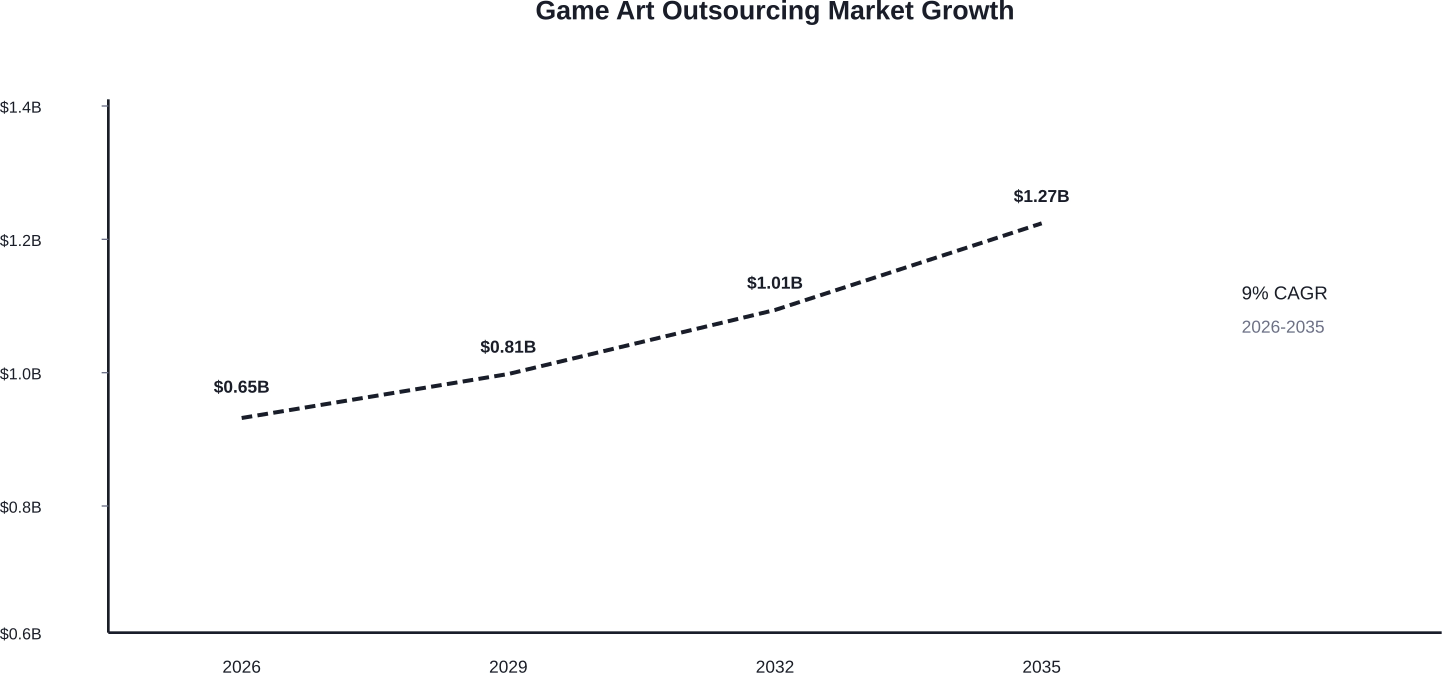
Game art outsourcing lets studios access specialized talent and scale production without maintaining large in-house teams. The global game art outsourcing market reached $0.65 billion in 2026 and is projected to hit $1.27 billion by 2035, driven by demand for high-quality 2D/3D assets, VR/AR content, and cost-efficient production models.
The gaming industry has reached an inflection point. Development costs for AAA titles continue climbing while player expectations for visual fidelity have never been higher. Studios face a choice: build massive internal art teams or find smarter ways to scale production.
Game art outsourcing has evolved from a cost-cutting measure into a strategic necessity. The global Game Art Outsourcing Service Market was valued at $0.65 billion in 2026 and is projected to reach $1.27 billion by 2035, growing at approximately 9% annually. This growth reflects fundamental shifts in how games get made.
But here's the thing. Outsourcing isn't just about sending work offshore and hoping for the best. The studios that succeed treat external partners as extensions of their teams, with clear communication protocols, technical specifications, and quality benchmarks.
This guide breaks down the outsourcing process from initial planning through long-term partnership management. Real costs, proven workflows, and strategies that actually work in production environments.
Why Studios Outsource Game Art
The reasons for outsourcing have matured beyond simple budget considerations. Modern studios outsource to solve specific production challenges that internal teams can't address efficiently.
Cost efficiency remains a factor. Fully-loaded person-month costs vary dramatically by region. San Francisco-based developers run $12,000-$24,000 per month. Montreal drops to $7,500-$12,000. Vietnam and India range from $1,500-$5,500. These aren't just salary numbers—they include benefits, taxes, equipment, and overhead.
However, lower hourly rates don't automatically mean lower project costs. Time zone differences, communication overhead, and revision cycles can erode savings quickly.
Access to specialized talent drives many outsourcing decisions. Finding a senior creature modeler with five years of experience in realistic fur rendering might take months internally. Specialized studios maintain rosters of artists with exact skill sets studios need for specific production phases.
Scalability matters during production peaks. Internal teams sized for average workload get overwhelmed during asset-heavy phases. Outsourcing provides flexible capacity without permanent headcount increases.
Speed to market has become critical. Some studios connect external teams to pipelines within 48 hours, significantly compressing production timelines. This agility helps studios hit release windows and respond to market opportunities.
Defining Your Game Art Outsourcing Requirements
Vague requirements produce disappointing results. The most successful outsourcing relationships start with crystal-clear technical specifications before any work begins.
Technical Specifications That Matter
Polygon count requirements affect both performance and visual quality. Define target tri counts per asset and LOD levels upfront. A mobile game character might max out at 5,000 triangles while a PC game allows 50,000 or more.
Texture resolution standards prevent rework. Specify whether assets need 2K or 4K textures, which channels to include (albedo, normal, roughness, metallic), and file formats for delivery.
Art style documentation eliminates subjective debates. Provide reference images, mood boards, and existing game assets that define the visual target. Rather than "make it better," effective feedback looks like: "reduce polygon density by 20%," "adjust hue 10 degrees warmer," or "increase shoulder width by 15%."
Scope and Timeline Planning
Break projects into measurable deliverables. Instead of "environment art for level 3," specify: "15 modular building pieces, 8 ground textures, 12 props, all following established style guide."
Realistic timeline estimation prevents disappointment. Market rates for mid-quality work from experienced studios show the complexity:
These ranges reflect market conditions as of 2026 and vary based on studio location, specialization, and project volume.
How to Research and Evaluate Game Art Outsourcing Studios
Finding the right partner requires looking beyond portfolio presentations and pricing spreadsheets.
Portfolio Assessment
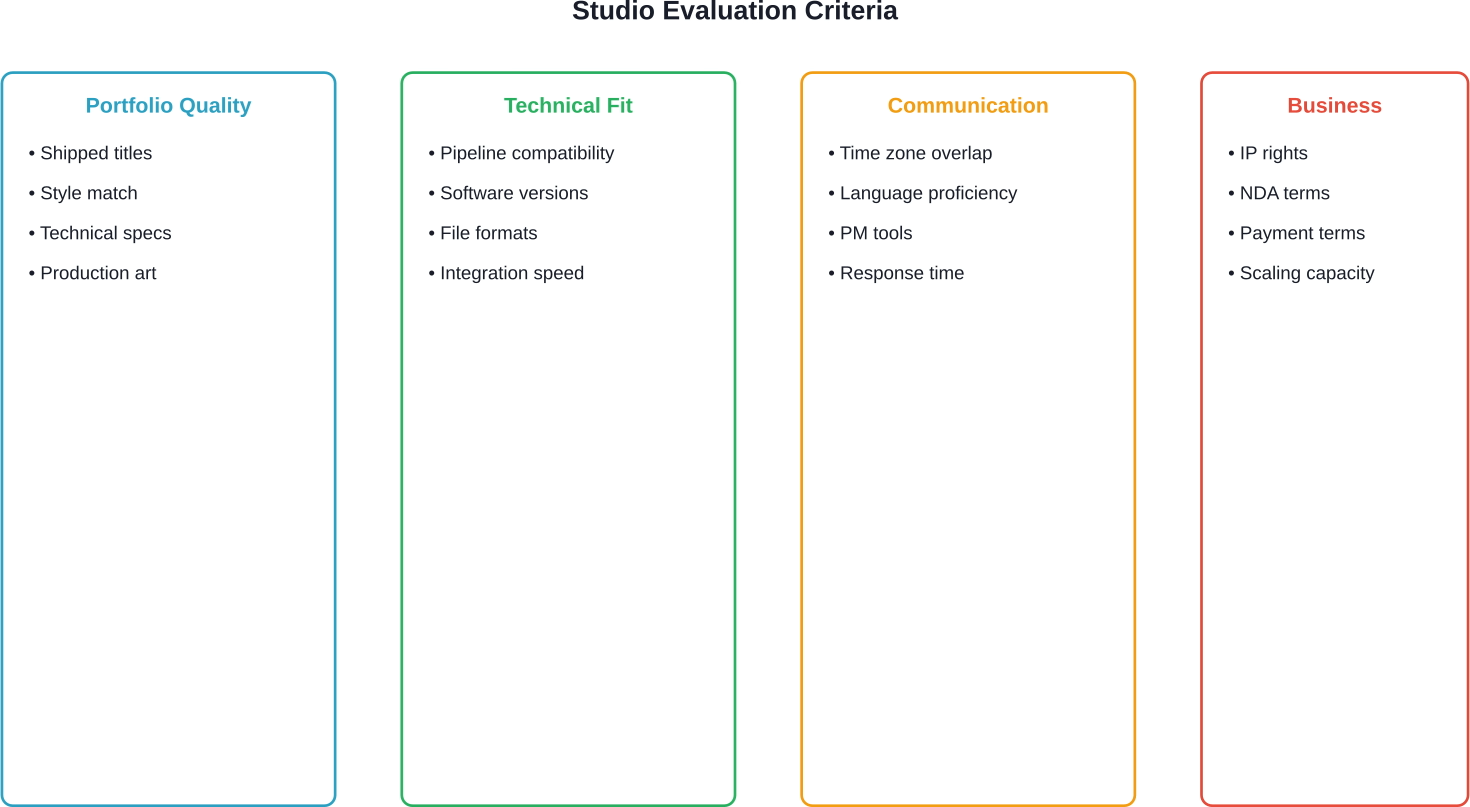
Examine completed projects that match your technical requirements and art style. Generic portfolios with every art style raise questions about specialization depth. Studios with focused expertise in your genre typically deliver better results.
Look for shipped titles, not just concept art. Production art that made it through technical review and into actual games demonstrates the studio understands real constraints.
Check whether portfolio work was lead or support. Some studios showcase projects where they contributed minor assets but imply full responsibility.
Key Evaluation Criteria
Response time matters for urgent tasks. Some studios connect to pipelines within 48 hours—this speed significantly affects production flexibility.
Technical pipeline compatibility prevents integration headaches. Ask about software versions, rendering engines, and export workflows. Mismatched pipelines create bottlenecks even when art quality is excellent.
Communication infrastructure affects daily collaboration. Evaluate time zone overlap, English proficiency, project management tools, and video call capabilities. Studios using cloud-based collaboration tools enable seamless coordination between global teams.
Legal and IP protections require scrutiny. Verify that contracts clearly transfer all intellectual property rights upon payment. Check whether artists can include work in personal portfolios or if client work remains confidential.
Reference Checks and Test Projects
Community discussions reveal operational realities portfolios don't show. User experiences on platforms like Reddit highlight common friction points: communication gaps, missed deadlines, or quality inconsistencies.
Test projects reduce risk before major commitments. Start with a small, defined scope—one character or a few environment props—to evaluate the full workflow before committing to larger production runs.
Measure these factors during test phases: revision round count (typical baselines show 60% reduction in revision rounds with structured feedback), response times, technical integration issues, and specification matching.
Cost Considerations and Budgeting
Outsourcing costs extend beyond per-asset pricing. Comprehensive budgeting accounts for hidden expenses that emerge during production.
Pricing Models Explained
Three primary engagement models serve different project types:
Fixed-price works when specifications are 100% clear upfront. Any scope changes typically trigger additional fees. This model suits UI elements, icons, or standardized props.
Time-and-materials provides flexibility for exploratory work or evolving designs. Studios bill for actual hours worked. This model suits concept development or projects where requirements crystallize during production.
Dedicated teams act as extended in-house capacity. Studios allocate specific artists exclusively to one client's projects. This model works for ongoing production needs across multiple months.
Hidden Costs to Account For
Revision cycles consume budget when feedback isn't structured. Vague notes like "make it better" trigger multiple revision rounds. Specific, actionable feedback reduces revision counts by 60% based on production data.
Integration time adds overhead even for perfect assets. Technical artists need time to import assets, verify materials, set up LODs, and test performance.
Project management overhead scales with team distribution. Managing multiple external studios requires coordination tools, status meetings, and asset tracking systems.
Translation and communication gaps occasionally require additional clarification time, particularly for nuanced creative feedback.
Managing Quality Control in Outsourced Production
Quality doesn't happen accidentally. Structured processes prevent the generic, lifeless assets that scream budget production.
Establishing Quality Benchmarks
Create reference asset libraries that define quality targets. Include technical specifications (polygon counts, texture resolution) alongside visual targets (lighting style, detail level, material properties).
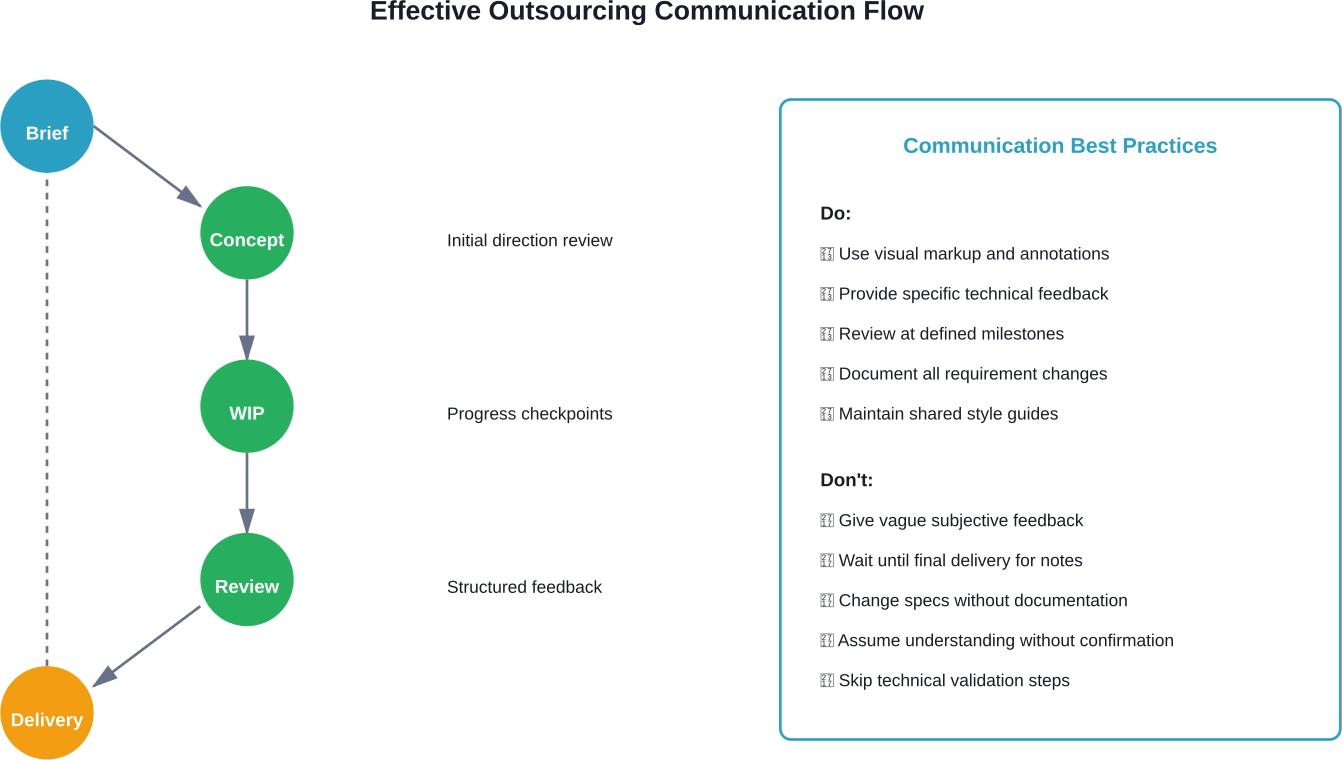
Visual markup eliminates ambiguity. Screenshots with arrows and annotations showing exactly what needs adjustment prevent misinterpretation. This approach reduces revision rounds by 40% and speeds final delivery times by similar margins.
Review Milestones and Approval Gates
Stage-gate reviews catch issues early when changes cost less. Don't wait until final delivery to provide feedback—budget overruns and timeline delays follow.
Typical milestone structure for character creation:
- Concept sketch approval (ensure direction alignment)
- Base mesh review (verify proportions and topology)
- High-poly sculpt review (check detail level and style)
- Textured model review (approve materials and colors)
- Final delivery with technical validation
Each gate represents a decision point. Approvals let production proceed; revisions happen before significant additional work occurs.
Technical Validation Processes
Quality art that breaks pipelines creates expensive problems. Technical validation confirms assets meet integration requirements:
- Polygon count within specified ranges
- Proper UV unwrapping without overlaps or distortion
- Correct naming conventions for meshes and materials
- Appropriate texture sizes and formats
- Clean geometry without unnecessary vertices
- Proper pivot point placement
Automated validation tools catch 90% of technical integration issues before assets reach manual review. Technical validation processes can reduce integration issues substantially.
Communication Strategies for Remote Teams
Communication makes or breaks outsourcing relationships. Distance amplifies small miscommunications into major production problems.
Establishing Communication Protocols
Define response time expectations upfront. Critical production issues might require 4-hour response windows while routine questions can wait 24 hours.
Structured feedback formats prevent confusion. Templates that separate technical issues, artistic direction, and questions keep communication organized and actionable.
Regular sync meetings maintain alignment. Weekly video calls work for most projects, with daily standups during critical production phases. Time zone overlap affects meeting scheduling—studios need at least 3-4 hours of shared working time.
Documentation Best Practices
Centralized documentation prevents information fragmentation. Living style guides, technical specification documents, and asset naming conventions should exist in shared, version-controlled repositories.
Visual documentation outperforms text descriptions. Annotated screenshots, video walkthroughs, and 3D markup tools communicate creative intent more clearly than written feedback.
Change logs track specification evolution. When requirements shift mid-project, documented changes prevent disputes about scope and additional fees.
Choosing Between Offshore and Nearshore Studios
Geographic location affects more than just cost. Different regions bring distinct advantages and tradeoffs.
Regional Cost Comparisons
Fully-loaded person-month costs based on 2026 market data show significant regional variation:
North America premium tier ranges from $9,000-$24,000 monthly depending on the city. San Francisco tops the scale while Midwest locations like Madison or Austin offer relative value at $9,000-$14,000.
Canada provides cost advantages over US locations. Vancouver runs $8,000-$13,000, Montreal $7,500-$12,000, and Toronto $7,000-$11,000 monthly.
Eastern Europe offers strong technical capabilities at competitive rates. Poland ranges $5,000-$9,000, Romania and Czech Republic $4,000-$7,000, and Ukraine $3,500-$7,000 monthly.
Asia Pacific shows the widest variance. Japan and Korea run $7,000-$12,000, while Vietnam ($2,000-$5,500) and India ($1,500-$5,000) provide significant cost advantages.
However, cost alone doesn't determine value. Command and communication overhead, time zone alignment, IP protection frameworks, talent depth, and attrition rates all affect real project costs.
Time Zone and Cultural Considerations
Real-time collaboration gets harder across time zones. Studios in similar time zones enable daily standups and quick iteration cycles. Offshore teams with zero overlap require asynchronous workflows and careful handoff documentation.
Cultural fit affects creative collaboration. Some regions excel at technical execution from detailed specs while others bring stronger creative problem-solving to ambiguous briefs. Neither approach is better—they suit different project types.
Language proficiency impacts daily operations. English fluency varies significantly between studios even within the same region. Evaluate actual team members, not just sales representatives.
Legal and Contractual Considerations
Contracts prevent expensive disputes when expectations diverge from reality.
Intellectual Property Rights
Verify contracts transfer complete IP ownership upon payment. Work-for-hire agreements ensure all created assets become client property without residual artist rights.
Address derivative works explicitly. Can the studio create similar assets for other clients? Can artists include work in personal portfolios or must client work remain confidential?
International IP enforcement complexity means prevention beats litigation. Clear contracts with strong IP transfer language prevent problems better than trying to enforce rights after disputes arise.
Essential Contract Terms
Scope definition prevents scope creep charges. Detailed specifications with visual references establish what's included in base pricing versus additional work.
Revision limits balance flexibility with cost control. Typical contracts include 2-3 revision rounds with additional revisions billed separately. This prevents endless iteration cycles.
Delivery schedules with milestone dates create accountability. Include specific deliverable definitions for each milestone, not just completion percentages.
Payment terms affect cash flow. Common structures include 30-50% upfront, milestone payments during production, and final payment upon delivery. Larger deposits increase studio commitment but reduce client flexibility.
Termination clauses define exit processes if relationships sour. Address payment for completed work, return of source files, and IP ownership of partial deliverables.
Building Long-Term Outsourcing Partnerships
Transactional relationships lack the efficiency of true partnerships. Studios that invest in partner relationships see compounding returns.
Onboarding External Teams
Treat external partners like internal team members during onboarding. Provide access to style guides, technical documentation, pipeline tools, and reference libraries upfront.
Initial projects should be smaller scope to calibrate workflows. This learning phase establishes communication rhythms and quality benchmarks before committing to major production.
Cross-training between internal and external teams improves outcomes. Having external leads understand game design context helps them make better artistic decisions independently.
Continuous Improvement Processes
Regular retrospectives identify friction points before they become major issues. What slowed this sprint? Where did communication break down? Which specifications needed clarification?
Process refinement compounds over time. Studios working with the same partners across multiple projects see efficiency gains: fewer revision rounds, faster approval cycles, and better first-pass quality.
Feedback loops benefit both parties. External studios improve from learning client preferences while internal teams refine specifications based on what works in practice.

Get a Reliable Game Art Team Without Slowing Down
When game marketing starts moving faster, creative work is usually where things begin to lag. Trailers, store visuals, ad creatives – they all depend on having people who can keep up, not just tools or ideas.
NeoWork approaches this by building dedicated teams instead of handing off isolated tasks. In practice, that means working with designers and creative specialists who can support ongoing production, not just one-off assets. Their selection process is tight – only about 3.2% of candidates make it through – which helps keep the quality consistent. And with a 91% retention rate, teams don’t constantly reset, which makes a difference when campaigns evolve and visual direction needs to stay steady.
If you need a more stable way to handle game marketing art without rebuilding your team every few months, reach out to NeoWork and see how they can support your workflow.
Common Pitfalls and How to Avoid Them
Certain mistakes appear repeatedly in outsourcing relationships. Recognition enables avoidance.
Specification Failures
Underspecified requirements cause most quality problems. "Make it look cool" produces subjective results that satisfy nobody. Technical specifications eliminate ambiguity.
Specification documents should answer: polygon budget, texture resolution, material setup, rigging requirements, LOD expectations, and file formats. If artists need to guess, results will disappoint.
Communication Breakdowns
Assuming understanding without confirmation creates silent problems. Cultural and language differences mean concepts clear to one party confuse another.
Confirm comprehension explicitly. Ask external teams to summarize requirements in their own words. Video calls reveal understanding better than email exchanges.
Quality Compromises
Accepting "good enough" assets establishes lower quality baselines. First compromises make subsequent standards hard to enforce.
Define quality non-negotiables upfront. Some aspects may be flexible but critical areas need absolute standards.
Contract Shortcuts
Informal agreements with friends or small studios seem efficient until disputes arise. Proper contracts protect both parties and clarify expectations.
Even long-term trusted partners need updated contracts for new projects. Scope, timelines, and deliverables should be explicit regardless of relationship history.
Future Trends in Game Art Outsourcing
The outsourcing landscape continues evolving with technology and market forces.
VR, AR, and Metaverse Content
Specialized art for virtual reality, augmented reality, and metaverse platforms drives new outsourcing demand. These assets require different optimization approaches than traditional game art.
Studios building expertise in VR-specific art production—optimized geometry for stereoscopic rendering, performance-focused textures, spatial audio integration—command premium rates.
AI-Assisted Workflows
Artificial intelligence tools affect game art production in specific ways. AI can generate texture variations, create LOD versions, or produce concept iterations quickly.
However, AI hasn't replaced skilled artists. Tools augment capabilities rather than substituting for artistic judgment and technical expertise. Studios effectively integrating AI tools into workflows gain efficiency advantages.
Cloud-Based Collaboration
Remote workflows and cloud platforms enable seamless coordination between global artists and developers. Real-time collaboration tools, version control systems, and cloud rendering reduce geographic friction.
This infrastructure makes location less important than capability. Talented studios anywhere can compete effectively when technology enables smooth collaboration.
Market Growth Projections
The game art outsourcing market's projected growth from $0.65 billion in 2026 to $1.27 billion by 2035 reflects structural industry changes. Game development continues accelerating while visual quality expectations rise.
Indie studio growth particularly drives demand. Smaller developers rely heavily on outsourcing to access skilled talent without large in-house teams. This democratization expands the total market for outsourcing services.
Measuring Outsourcing Success
Define success metrics before projects start. Subjective assessments lead to disagreements while measurable outcomes create accountability.
Quality Metrics
Track first-pass approval rates. What percentage of assets get approved without revisions? Higher rates indicate better specification clarity and studio understanding.
Count revision rounds per asset type. Baseline early projects then measure improvement as relationships mature.
Monitor technical rejection rates. Assets failing technical validation suggest specification gaps or quality control issues.
Efficiency Metrics
Measure delivery timeline variance. Do assets consistently arrive on schedule or do delays accumulate? Pattern delays indicate capacity or workflow problems.
Calculate cost per approved asset. Include revision time and integration overhead, not just base pricing. This reveals true production costs.
Track communication overhead. How many clarification cycles occur per asset? Decreasing numbers indicate improving mutual understanding.
Business Impact Metrics
Assess whether outsourcing achieves strategic goals. Did production scale effectively? Did the team ship on time? Did the budget stay within projections?
Compare outsourced versus in-house costs and timelines. Fair comparisons account for opportunity cost—what could internal teams accomplish if not creating outsourced assets?
Evaluate partnership sustainability. Would the studio work with this partner again? Strong partnerships compound value over time while transactional relationships require constant vendor shopping.
Conclusion
Game art outsourcing has matured into a strategic capability rather than just a cost-cutting tactic. The market's growth to $0.65 billion in 2026 with projections reaching $1.27 billion by 2035 reflects its expanding role in game development.
Success requires more than finding cheap labor. Clear technical specifications, structured communication protocols, milestone-based quality control, and partnership thinking separate effective outsourcing from disappointing experiences.
The studios thriving in modern development understand outsourcing as capacity augmentation—accessing specialized talent when needed without permanent headcount increases. This flexibility becomes more valuable as game complexity increases and visual standards rise.
Start small when exploring outsourcing. Test relationships with limited scope projects before committing to major production. Learn what works in practice rather than theory.
The right outsourcing partner functions as a seamless extension of internal teams, contributing not just execution but problem-solving and artistic perspective. Finding and developing such relationships takes effort but pays compounding returns across multiple projects.
Ready to explore game art outsourcing for upcoming projects? Begin with clear requirement definition, evaluate studios based on demonstrated capability rather than just portfolios, and treat initial projects as learning opportunities to refine collaborative processes.
Frequently Asked Questions
Topics
Game Marketing Art Outsourcing Guide 2026

Game art outsourcing lets studios access specialized talent and scale production without maintaining large in-house teams. The global game art outsourcing market reached $0.65 billion in 2026 and is projected to hit $1.27 billion by 2035, driven by demand for high-quality 2D/3D assets, VR/AR content, and cost-efficient production models.
The gaming industry has reached an inflection point. Development costs for AAA titles continue climbing while player expectations for visual fidelity have never been higher. Studios face a choice: build massive internal art teams or find smarter ways to scale production.
Game art outsourcing has evolved from a cost-cutting measure into a strategic necessity. The global Game Art Outsourcing Service Market was valued at $0.65 billion in 2026 and is projected to reach $1.27 billion by 2035, growing at approximately 9% annually. This growth reflects fundamental shifts in how games get made.
But here's the thing. Outsourcing isn't just about sending work offshore and hoping for the best. The studios that succeed treat external partners as extensions of their teams, with clear communication protocols, technical specifications, and quality benchmarks.
This guide breaks down the outsourcing process from initial planning through long-term partnership management. Real costs, proven workflows, and strategies that actually work in production environments.
Why Studios Outsource Game Art
The reasons for outsourcing have matured beyond simple budget considerations. Modern studios outsource to solve specific production challenges that internal teams can't address efficiently.
Cost efficiency remains a factor. Fully-loaded person-month costs vary dramatically by region. San Francisco-based developers run $12,000-$24,000 per month. Montreal drops to $7,500-$12,000. Vietnam and India range from $1,500-$5,500. These aren't just salary numbers—they include benefits, taxes, equipment, and overhead.
However, lower hourly rates don't automatically mean lower project costs. Time zone differences, communication overhead, and revision cycles can erode savings quickly.
Access to specialized talent drives many outsourcing decisions. Finding a senior creature modeler with five years of experience in realistic fur rendering might take months internally. Specialized studios maintain rosters of artists with exact skill sets studios need for specific production phases.
Scalability matters during production peaks. Internal teams sized for average workload get overwhelmed during asset-heavy phases. Outsourcing provides flexible capacity without permanent headcount increases.
Speed to market has become critical. Some studios connect external teams to pipelines within 48 hours, significantly compressing production timelines. This agility helps studios hit release windows and respond to market opportunities.
Defining Your Game Art Outsourcing Requirements
Vague requirements produce disappointing results. The most successful outsourcing relationships start with crystal-clear technical specifications before any work begins.
Technical Specifications That Matter
Polygon count requirements affect both performance and visual quality. Define target tri counts per asset and LOD levels upfront. A mobile game character might max out at 5,000 triangles while a PC game allows 50,000 or more.
Texture resolution standards prevent rework. Specify whether assets need 2K or 4K textures, which channels to include (albedo, normal, roughness, metallic), and file formats for delivery.
Art style documentation eliminates subjective debates. Provide reference images, mood boards, and existing game assets that define the visual target. Rather than "make it better," effective feedback looks like: "reduce polygon density by 20%," "adjust hue 10 degrees warmer," or "increase shoulder width by 15%."
Scope and Timeline Planning
Break projects into measurable deliverables. Instead of "environment art for level 3," specify: "15 modular building pieces, 8 ground textures, 12 props, all following established style guide."
Realistic timeline estimation prevents disappointment. Market rates for mid-quality work from experienced studios show the complexity:
These ranges reflect market conditions as of 2026 and vary based on studio location, specialization, and project volume.
How to Research and Evaluate Game Art Outsourcing Studios
Finding the right partner requires looking beyond portfolio presentations and pricing spreadsheets.
Portfolio Assessment
Examine completed projects that match your technical requirements and art style. Generic portfolios with every art style raise questions about specialization depth. Studios with focused expertise in your genre typically deliver better results.
Look for shipped titles, not just concept art. Production art that made it through technical review and into actual games demonstrates the studio understands real constraints.
Check whether portfolio work was lead or support. Some studios showcase projects where they contributed minor assets but imply full responsibility.
Key Evaluation Criteria
Response time matters for urgent tasks. Some studios connect to pipelines within 48 hours—this speed significantly affects production flexibility.
Technical pipeline compatibility prevents integration headaches. Ask about software versions, rendering engines, and export workflows. Mismatched pipelines create bottlenecks even when art quality is excellent.
Communication infrastructure affects daily collaboration. Evaluate time zone overlap, English proficiency, project management tools, and video call capabilities. Studios using cloud-based collaboration tools enable seamless coordination between global teams.
Legal and IP protections require scrutiny. Verify that contracts clearly transfer all intellectual property rights upon payment. Check whether artists can include work in personal portfolios or if client work remains confidential.
Reference Checks and Test Projects
Community discussions reveal operational realities portfolios don't show. User experiences on platforms like Reddit highlight common friction points: communication gaps, missed deadlines, or quality inconsistencies.
Test projects reduce risk before major commitments. Start with a small, defined scope—one character or a few environment props—to evaluate the full workflow before committing to larger production runs.
Measure these factors during test phases: revision round count (typical baselines show 60% reduction in revision rounds with structured feedback), response times, technical integration issues, and specification matching.
Cost Considerations and Budgeting
Outsourcing costs extend beyond per-asset pricing. Comprehensive budgeting accounts for hidden expenses that emerge during production.
Pricing Models Explained
Three primary engagement models serve different project types:
Fixed-price works when specifications are 100% clear upfront. Any scope changes typically trigger additional fees. This model suits UI elements, icons, or standardized props.
Time-and-materials provides flexibility for exploratory work or evolving designs. Studios bill for actual hours worked. This model suits concept development or projects where requirements crystallize during production.
Dedicated teams act as extended in-house capacity. Studios allocate specific artists exclusively to one client's projects. This model works for ongoing production needs across multiple months.
Hidden Costs to Account For
Revision cycles consume budget when feedback isn't structured. Vague notes like "make it better" trigger multiple revision rounds. Specific, actionable feedback reduces revision counts by 60% based on production data.
Integration time adds overhead even for perfect assets. Technical artists need time to import assets, verify materials, set up LODs, and test performance.
Project management overhead scales with team distribution. Managing multiple external studios requires coordination tools, status meetings, and asset tracking systems.
Translation and communication gaps occasionally require additional clarification time, particularly for nuanced creative feedback.
Managing Quality Control in Outsourced Production
Quality doesn't happen accidentally. Structured processes prevent the generic, lifeless assets that scream budget production.
Establishing Quality Benchmarks
Create reference asset libraries that define quality targets. Include technical specifications (polygon counts, texture resolution) alongside visual targets (lighting style, detail level, material properties).
Visual markup eliminates ambiguity. Screenshots with arrows and annotations showing exactly what needs adjustment prevent misinterpretation. This approach reduces revision rounds by 40% and speeds final delivery times by similar margins.
Review Milestones and Approval Gates
Stage-gate reviews catch issues early when changes cost less. Don't wait until final delivery to provide feedback—budget overruns and timeline delays follow.
Typical milestone structure for character creation:
- Concept sketch approval (ensure direction alignment)
- Base mesh review (verify proportions and topology)
- High-poly sculpt review (check detail level and style)
- Textured model review (approve materials and colors)
- Final delivery with technical validation
Each gate represents a decision point. Approvals let production proceed; revisions happen before significant additional work occurs.
Technical Validation Processes
Quality art that breaks pipelines creates expensive problems. Technical validation confirms assets meet integration requirements:
- Polygon count within specified ranges
- Proper UV unwrapping without overlaps or distortion
- Correct naming conventions for meshes and materials
- Appropriate texture sizes and formats
- Clean geometry without unnecessary vertices
- Proper pivot point placement
Automated validation tools catch 90% of technical integration issues before assets reach manual review. Technical validation processes can reduce integration issues substantially.
Communication Strategies for Remote Teams
Communication makes or breaks outsourcing relationships. Distance amplifies small miscommunications into major production problems.
Establishing Communication Protocols
Define response time expectations upfront. Critical production issues might require 4-hour response windows while routine questions can wait 24 hours.
Structured feedback formats prevent confusion. Templates that separate technical issues, artistic direction, and questions keep communication organized and actionable.
Regular sync meetings maintain alignment. Weekly video calls work for most projects, with daily standups during critical production phases. Time zone overlap affects meeting scheduling—studios need at least 3-4 hours of shared working time.
Documentation Best Practices
Centralized documentation prevents information fragmentation. Living style guides, technical specification documents, and asset naming conventions should exist in shared, version-controlled repositories.
Visual documentation outperforms text descriptions. Annotated screenshots, video walkthroughs, and 3D markup tools communicate creative intent more clearly than written feedback.
Change logs track specification evolution. When requirements shift mid-project, documented changes prevent disputes about scope and additional fees.
Choosing Between Offshore and Nearshore Studios
Geographic location affects more than just cost. Different regions bring distinct advantages and tradeoffs.
Regional Cost Comparisons
Fully-loaded person-month costs based on 2026 market data show significant regional variation:
North America premium tier ranges from $9,000-$24,000 monthly depending on the city. San Francisco tops the scale while Midwest locations like Madison or Austin offer relative value at $9,000-$14,000.
Canada provides cost advantages over US locations. Vancouver runs $8,000-$13,000, Montreal $7,500-$12,000, and Toronto $7,000-$11,000 monthly.
Eastern Europe offers strong technical capabilities at competitive rates. Poland ranges $5,000-$9,000, Romania and Czech Republic $4,000-$7,000, and Ukraine $3,500-$7,000 monthly.
Asia Pacific shows the widest variance. Japan and Korea run $7,000-$12,000, while Vietnam ($2,000-$5,500) and India ($1,500-$5,000) provide significant cost advantages.
However, cost alone doesn't determine value. Command and communication overhead, time zone alignment, IP protection frameworks, talent depth, and attrition rates all affect real project costs.
Time Zone and Cultural Considerations
Real-time collaboration gets harder across time zones. Studios in similar time zones enable daily standups and quick iteration cycles. Offshore teams with zero overlap require asynchronous workflows and careful handoff documentation.
Cultural fit affects creative collaboration. Some regions excel at technical execution from detailed specs while others bring stronger creative problem-solving to ambiguous briefs. Neither approach is better—they suit different project types.
Language proficiency impacts daily operations. English fluency varies significantly between studios even within the same region. Evaluate actual team members, not just sales representatives.
Legal and Contractual Considerations
Contracts prevent expensive disputes when expectations diverge from reality.
Intellectual Property Rights
Verify contracts transfer complete IP ownership upon payment. Work-for-hire agreements ensure all created assets become client property without residual artist rights.
Address derivative works explicitly. Can the studio create similar assets for other clients? Can artists include work in personal portfolios or must client work remain confidential?
International IP enforcement complexity means prevention beats litigation. Clear contracts with strong IP transfer language prevent problems better than trying to enforce rights after disputes arise.
Essential Contract Terms
Scope definition prevents scope creep charges. Detailed specifications with visual references establish what's included in base pricing versus additional work.
Revision limits balance flexibility with cost control. Typical contracts include 2-3 revision rounds with additional revisions billed separately. This prevents endless iteration cycles.
Delivery schedules with milestone dates create accountability. Include specific deliverable definitions for each milestone, not just completion percentages.
Payment terms affect cash flow. Common structures include 30-50% upfront, milestone payments during production, and final payment upon delivery. Larger deposits increase studio commitment but reduce client flexibility.
Termination clauses define exit processes if relationships sour. Address payment for completed work, return of source files, and IP ownership of partial deliverables.
Building Long-Term Outsourcing Partnerships
Transactional relationships lack the efficiency of true partnerships. Studios that invest in partner relationships see compounding returns.
Onboarding External Teams
Treat external partners like internal team members during onboarding. Provide access to style guides, technical documentation, pipeline tools, and reference libraries upfront.
Initial projects should be smaller scope to calibrate workflows. This learning phase establishes communication rhythms and quality benchmarks before committing to major production.
Cross-training between internal and external teams improves outcomes. Having external leads understand game design context helps them make better artistic decisions independently.
Continuous Improvement Processes
Regular retrospectives identify friction points before they become major issues. What slowed this sprint? Where did communication break down? Which specifications needed clarification?
Process refinement compounds over time. Studios working with the same partners across multiple projects see efficiency gains: fewer revision rounds, faster approval cycles, and better first-pass quality.
Feedback loops benefit both parties. External studios improve from learning client preferences while internal teams refine specifications based on what works in practice.
Get a Reliable Game Art Team Without Slowing Down
When game marketing starts moving faster, creative work is usually where things begin to lag. Trailers, store visuals, ad creatives – they all depend on having people who can keep up, not just tools or ideas.
NeoWork approaches this by building dedicated teams instead of handing off isolated tasks. In practice, that means working with designers and creative specialists who can support ongoing production, not just one-off assets. Their selection process is tight – only about 3.2% of candidates make it through – which helps keep the quality consistent. And with a 91% retention rate, teams don’t constantly reset, which makes a difference when campaigns evolve and visual direction needs to stay steady.
If you need a more stable way to handle game marketing art without rebuilding your team every few months, reach out to NeoWork and see how they can support your workflow.
Common Pitfalls and How to Avoid Them
Certain mistakes appear repeatedly in outsourcing relationships. Recognition enables avoidance.
Specification Failures
Underspecified requirements cause most quality problems. "Make it look cool" produces subjective results that satisfy nobody. Technical specifications eliminate ambiguity.
Specification documents should answer: polygon budget, texture resolution, material setup, rigging requirements, LOD expectations, and file formats. If artists need to guess, results will disappoint.
Communication Breakdowns
Assuming understanding without confirmation creates silent problems. Cultural and language differences mean concepts clear to one party confuse another.
Confirm comprehension explicitly. Ask external teams to summarize requirements in their own words. Video calls reveal understanding better than email exchanges.
Quality Compromises
Accepting "good enough" assets establishes lower quality baselines. First compromises make subsequent standards hard to enforce.
Define quality non-negotiables upfront. Some aspects may be flexible but critical areas need absolute standards.
Contract Shortcuts
Informal agreements with friends or small studios seem efficient until disputes arise. Proper contracts protect both parties and clarify expectations.
Even long-term trusted partners need updated contracts for new projects. Scope, timelines, and deliverables should be explicit regardless of relationship history.
Future Trends in Game Art Outsourcing
The outsourcing landscape continues evolving with technology and market forces.
VR, AR, and Metaverse Content
Specialized art for virtual reality, augmented reality, and metaverse platforms drives new outsourcing demand. These assets require different optimization approaches than traditional game art.
Studios building expertise in VR-specific art production—optimized geometry for stereoscopic rendering, performance-focused textures, spatial audio integration—command premium rates.
AI-Assisted Workflows
Artificial intelligence tools affect game art production in specific ways. AI can generate texture variations, create LOD versions, or produce concept iterations quickly.
However, AI hasn't replaced skilled artists. Tools augment capabilities rather than substituting for artistic judgment and technical expertise. Studios effectively integrating AI tools into workflows gain efficiency advantages.
Cloud-Based Collaboration
Remote workflows and cloud platforms enable seamless coordination between global artists and developers. Real-time collaboration tools, version control systems, and cloud rendering reduce geographic friction.
This infrastructure makes location less important than capability. Talented studios anywhere can compete effectively when technology enables smooth collaboration.
Market Growth Projections
The game art outsourcing market's projected growth from $0.65 billion in 2026 to $1.27 billion by 2035 reflects structural industry changes. Game development continues accelerating while visual quality expectations rise.
Indie studio growth particularly drives demand. Smaller developers rely heavily on outsourcing to access skilled talent without large in-house teams. This democratization expands the total market for outsourcing services.
Measuring Outsourcing Success
Define success metrics before projects start. Subjective assessments lead to disagreements while measurable outcomes create accountability.
Quality Metrics
Track first-pass approval rates. What percentage of assets get approved without revisions? Higher rates indicate better specification clarity and studio understanding.
Count revision rounds per asset type. Baseline early projects then measure improvement as relationships mature.
Monitor technical rejection rates. Assets failing technical validation suggest specification gaps or quality control issues.
Efficiency Metrics
Measure delivery timeline variance. Do assets consistently arrive on schedule or do delays accumulate? Pattern delays indicate capacity or workflow problems.
Calculate cost per approved asset. Include revision time and integration overhead, not just base pricing. This reveals true production costs.
Track communication overhead. How many clarification cycles occur per asset? Decreasing numbers indicate improving mutual understanding.
Business Impact Metrics
Assess whether outsourcing achieves strategic goals. Did production scale effectively? Did the team ship on time? Did the budget stay within projections?
Compare outsourced versus in-house costs and timelines. Fair comparisons account for opportunity cost—what could internal teams accomplish if not creating outsourced assets?
Evaluate partnership sustainability. Would the studio work with this partner again? Strong partnerships compound value over time while transactional relationships require constant vendor shopping.
Conclusion
Game art outsourcing has matured into a strategic capability rather than just a cost-cutting tactic. The market's growth to $0.65 billion in 2026 with projections reaching $1.27 billion by 2035 reflects its expanding role in game development.
Success requires more than finding cheap labor. Clear technical specifications, structured communication protocols, milestone-based quality control, and partnership thinking separate effective outsourcing from disappointing experiences.
The studios thriving in modern development understand outsourcing as capacity augmentation—accessing specialized talent when needed without permanent headcount increases. This flexibility becomes more valuable as game complexity increases and visual standards rise.
Start small when exploring outsourcing. Test relationships with limited scope projects before committing to major production. Learn what works in practice rather than theory.
The right outsourcing partner functions as a seamless extension of internal teams, contributing not just execution but problem-solving and artistic perspective. Finding and developing such relationships takes effort but pays compounding returns across multiple projects.
Ready to explore game art outsourcing for upcoming projects? Begin with clear requirement definition, evaluate studios based on demonstrated capability rather than just portfolios, and treat initial projects as learning opportunities to refine collaborative processes.
Frequently Asked Questions
Topics
Related Blogs
Related Podcasts


.webp)

.webp)
.webp)



