

.avif)
.avif)

Animation Outsourcing Guide: Find Your Studio Partner


.svg)

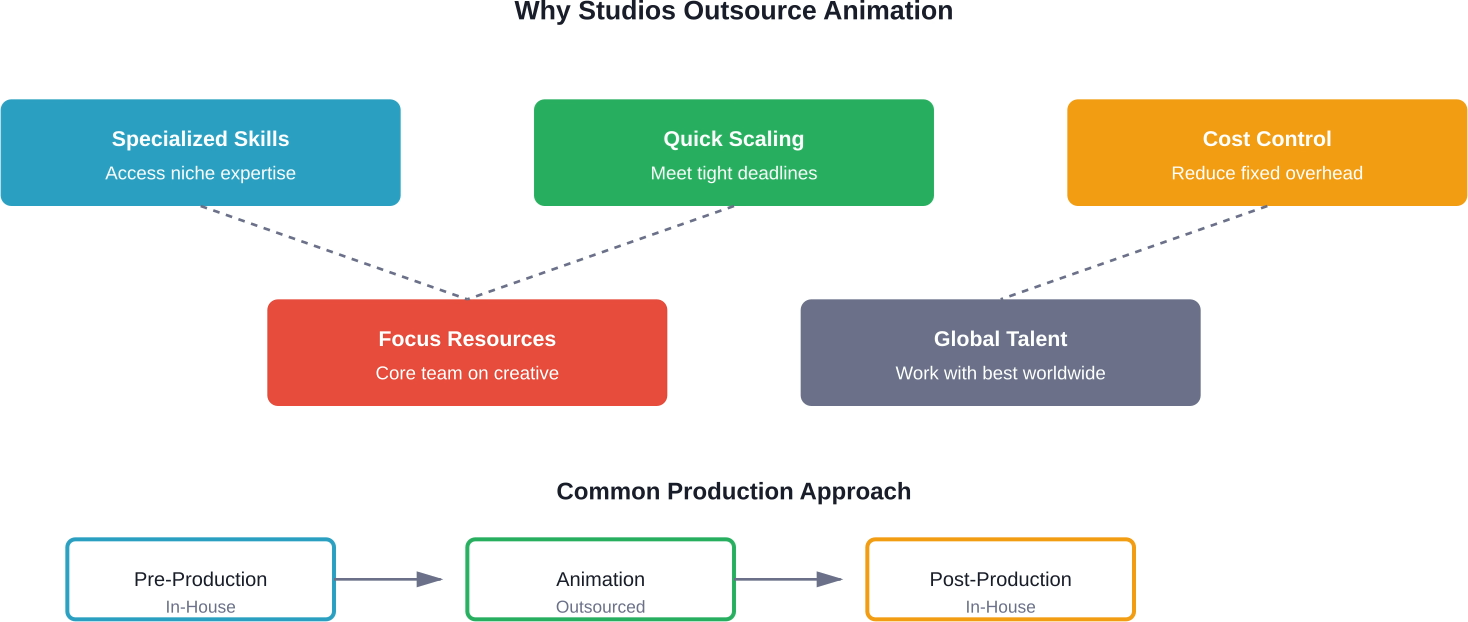
Animation outsourcing involves hiring external studios or freelancers to handle animation production instead of managing it in-house. Studios outsource to access specialized skills, scale production quickly, reduce costs, and meet tight deadlines without expanding their permanent team.
The worldwide animation production market is estimated between $50 billion and $70 billion. That number keeps climbing as more studios embrace remote work and global collaboration.
But here's the thing—outsourcing animation isn't just about saving money anymore. It's about accessing talent pools that didn't exist a decade ago, scaling production without the overhead of permanent hires, and tapping into specialized skills that might take years to develop internally.
The pandemic changed everything. Studios that once relied exclusively on in-house teams now routinely partner with external animators across continents. What was once considered a last resort has become standard practice for companies from Disney to independent creators launching their first project.
This guide breaks down the entire animation outsourcing process—from understanding what can be outsourced to choosing the right partner and managing production workflows that actually work.
What Animation Outsourcing Actually Means
Animation outsourcing is the practice of hiring external studios or freelance animators to create animation instead of handling production entirely in-house. The work can range from specific production phases like character design or storyboarding to complete turnkey projects.
Companies outsource different pieces depending on their needs. Some studios handle creative direction and pre-production internally, then outsource the labor-intensive animation work. Others outsource specialized tasks they don't have expertise in—motion graphics, 3D modeling, or visual effects.
The arrangement varies widely. A project might involve one freelancer handling character animation for two weeks, or a full studio partnership managing an entire season of episodes. There's no single model that fits every situation.
Why Studios Choose to Outsource Animation
The reasons for outsourcing have evolved beyond simple cost reduction. While labor arbitrage still matters—especially for 2D production—the benefits now extend much further.
Access to specialized talent tops the list. Building an in-house team capable of handling every animation style, software package, and production technique would be prohibitively expensive. Outsourcing lets studios tap into expertise exactly when they need it.
Scaling production quickly becomes possible without the long-term commitment of hiring permanent staff. According to the U.S. Bureau of Labor Statistics, overall employment was projected to grow 5.3% from 2021 to 2031 (projections released in 2023). The most recent projections (2024–2034) indicate slower growth of 3.1%.
But animation projects don't follow predictable growth curves—they spike and dip based on client needs and project timelines.
Outsourcing provides flexibility. When production demands surge, external partners absorb the overflow. When projects wrap, there's no need to maintain excess capacity or conduct layoffs.
The Economics Make Sense
Cost considerations remain important, though they're more nuanced than "outsourcing is cheaper." Labor costs vary significantly by region, but so do quality levels, communication overhead, and project management complexity.
A 22-minute animated episode for a high-quality broadcast or streaming production (like an Emmy-winning show) typically costs between $600,000 and $1,000,000 USD. That baseline helps studios evaluate whether bringing work in-house or outsourcing makes financial sense for their specific situation.
The calculation isn't purely about hourly rates. It includes equipment costs, software licenses, benefits, office space, and the opportunity cost of senior staff spending time on routine animation tasks instead of creative direction.
What Types of Animation Work Get Outsourced
Nearly every phase of animation production can be outsourced. The most common services include character design, storyboarding, 2D animation, 3D modeling and animation, motion graphics, visual effects, and compositing.
Character animation represents one of the most frequently outsourced tasks. It's time-intensive, requires specific technical skills, and scales based on project complexity. Studios often retain control over character design and key poses while outsourcing the frame-by-frame animation work.
Background art and environment design also get outsourced regularly. These elements demand specialized artistic skills but don't always require the same level of creative direction as character work.
Full Production vs. Specific Tasks
Some studios outsource entire projects from script to final render. This turnkey approach works when the external partner has proven capabilities and the internal team wants to focus on other priorities.
More commonly, studios outsource specific production phases. Pre-production might stay internal for creative control, animation gets outsourced for capacity, and post-production returns in-house for final polish and client revisions.
The division depends on where the studio's core competencies lie and where bottlenecks occur. A studio strong in 2D might outsource 3D work. A motion graphics specialist might outsource character animation for a project that requires it.
Freelancers vs. Animation Studios: Making the Choice
The freelancer-versus-studio decision fundamentally shapes how a project unfolds. Each approach brings distinct advantages and challenges.
Freelancers offer flexibility and cost-effectiveness for smaller projects or specific tasks. Hiring an individual animator for character work or a motion graphics designer for title sequences keeps costs down and communication direct. The relationship tends to be more personal, and revisions can happen quickly.
But freelancers have capacity limits. One person can only produce so many frames per week. If timelines accelerate or scope expands, freelancers might not be able to scale. There's also higher risk—if a freelancer becomes unavailable mid-project, there's no backup team.
When Studios Make More Sense
Animation studios bring teams, infrastructure, and project management systems. They can absorb larger projects, handle multiple production phases simultaneously, and maintain consistent quality across deliverables.
Studios also reduce risk. If one animator encounters problems, the studio can reassign work. They typically maintain quality control processes, revision workflows, and established pipelines that individual freelancers might not have.
The trade-off? Higher costs and potentially slower communication. Working with a studio means dealing with account managers and production coordinators rather than speaking directly with the animator. Some creative nuance can get lost in that translation.
How to Find the Right Animation Outsourcing Partner
Finding quality animation partners requires more research than browsing portfolios. The best partnerships emerge from careful vetting and clear alignment on project requirements.
Start by defining exactly what the project needs. Animation style, technical requirements, timeline, budget, and revision expectations all matter. A clear creative brief prevents misalignment later.
Portfolio quality matters, but so does relevant experience. An animator who excels at stylized 2D work might not be the right fit for realistic 3D medical animation. Look for samples that match the project's style and complexity.
Where to Actually Look
Professional networks and referrals beat generic freelance platforms for animation work. The Animation Guild maintains directories of members, though membership doesn't automatically indicate availability for outsourcing.
Industry forums, animation festivals, and professional social media groups often surface talent. Many experienced animators maintain active portfolios on platforms like Behance, Vimeo, or personal websites.
Service studios specializing in outsourcing exist in most major animation markets—Canada, South Korea, India, and throughout Europe. These studios explicitly structure their business around client projects rather than original content.
The Vetting Process
Request work samples that match project requirements. Generic portfolios don't reveal whether an animator can execute a specific style or meet particular technical specs.
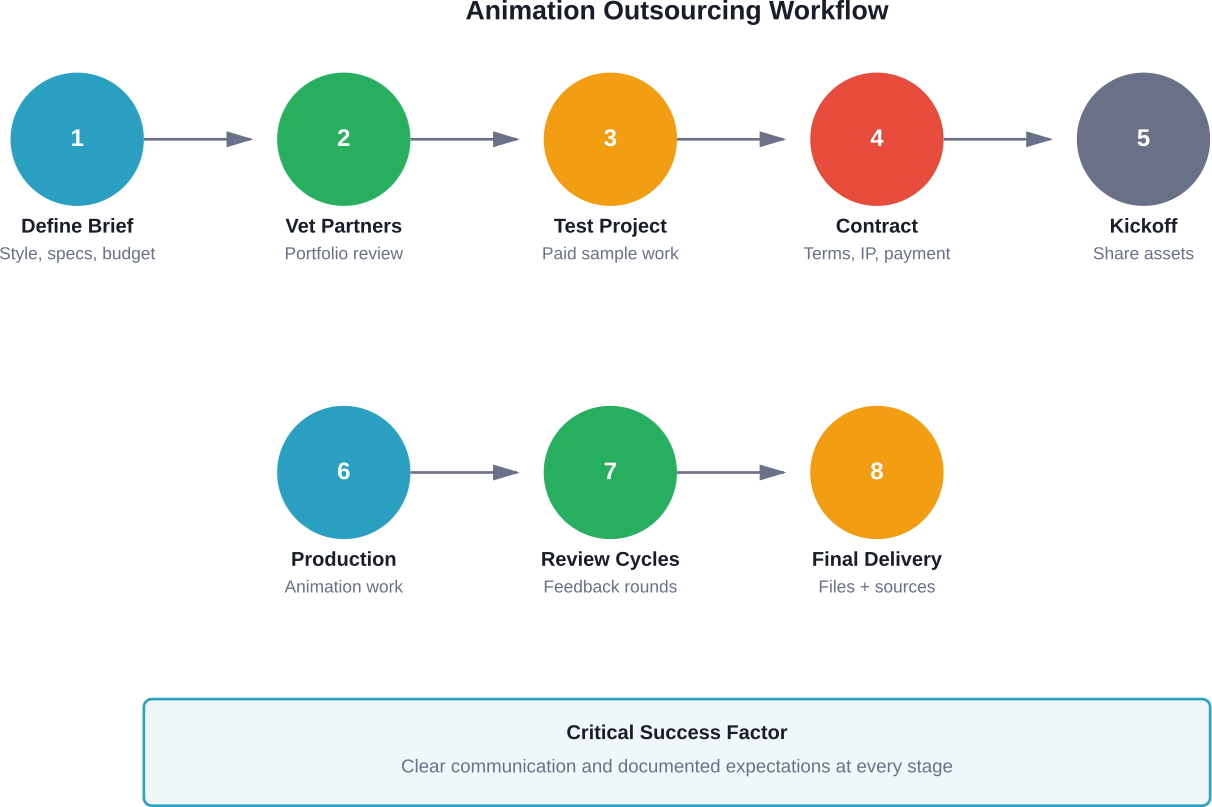
Conduct test projects before committing to full production. A paid test—typically a short animation sequence or single asset—reveals workflow compatibility, communication style, and whether the animator can actually deliver what their portfolio suggests.
Check references. Speaking with previous clients uncovers how the animator handles feedback, manages deadlines, and responds when problems arise. Previous work samples show capability; references reveal reliability.
Discuss revision processes upfront. Misalignment on how many revision rounds are included and how changes get communicated causes most project friction. Establishing these terms before work begins prevents conflict later.

Get Dedicated Animation Support Through NeoWork
If you’re scaling animation work beyond one-off contracts and need reliable creative capacity that plugs directly into your team, NeoWork can help. They place professional animators and motion graphics specialists from the Philippines and Colombia who work on your projects long term, not as rotating freelancers. Their creative services support animation and motion-based content production delivered by dedicated remote talent integrated into your workflow.
Instead of sourcing talent yourself or juggling multiple vendors, NeoWork handles recruitment, onboarding, and continuous staffing. Their approach is built around stability and careful selection, reflected in a 91% annualized teammate retention rate and a 3.2% candidate selectivity rate. That means you are working with highly vetted professionals who stay with your projects over time, giving your animation work consistency and continuity.
Talk to NeoWork to see how dedicated animation talent could fit into your outsourcing plan.
The Animation Outsourcing Process Step-by-Step
Successful outsourcing follows a structured process from initial contact through final delivery. Missing steps or rushing through planning stages typically creates problems during production.
Writing the Creative Brief
A comprehensive brief includes animation style references, technical specifications, target audience, key messaging, timeline, budget parameters, and deliverable formats. Visual references matter more than lengthy descriptions—include links to examples that capture the desired aesthetic.
Technical specs prevent compatibility issues. Specify resolution, frame rate, aspect ratio, file formats, and any software constraints. If the animation needs to integrate with existing assets, provide those upfront.
Contract Essentials
Contracts should cover scope of work, deliverable specifications, timeline and milestones, payment terms, revision allowances, intellectual property rights, confidentiality requirements, and cancellation terms.
Payment structures vary. Common approaches include 50% upfront with 50% on delivery, milestone-based payments tied to production phases, or hourly rates with regular invoicing. Advance payments protect animators; milestone payments protect clients.
Intellectual property terms need explicit clarity. Who owns the final animation? Who owns source files? Can the animator include work in their portfolio? Can assets be reused? Default IP arrangements vary by jurisdiction, so contracts must state terms explicitly.
Managing Production
Regular check-ins prevent surprises. Weekly status updates work for most projects; daily communication might be necessary for rushed timelines. Video calls tend to work better than email for creative feedback.
Establish a single point of contact on each side. Multiple stakeholders providing conflicting feedback creates confusion and delays. One person should consolidate internal feedback before passing it to the animator.
Use structured feedback formats. Instead of "make it more dynamic," specify which elements need adjustment and reference specific timecodes. Vague feedback generates revisions that still miss the mark.
Common Pitfalls and How to Avoid Them
Most outsourcing problems stem from communication breakdowns, misaligned expectations, or inadequate planning. Recognizing common failure patterns helps avoid them.
Scope Creep
Projects expand beyond original parameters when scope isn't clearly defined upfront or when informal requests accumulate. "Quick changes" compound until the project bears little resemblance to the contracted work.
Prevention requires documenting scope explicitly and treating additions as formal change orders. If scope needs to expand, revise the contract and adjust timeline and budget accordingly.
Asset Management Problems
Missing assets, incompatible file formats, and version control issues plague projects when asset management isn't planned. Animators can't work without proper source files, and delays cascade when time gets spent tracking down resources.
Establish a shared workspace before production starts. Cloud storage with clear folder structures, naming conventions, and version control prevents most asset problems. Clarify who's responsible for maintaining the asset library.
Quality Mismatches
Final work that doesn't match expectations usually traces back to unclear references during planning. "Professional quality" means different things to different people. Portfolio samples that impressed initially might not reflect the specific style needed.
The test project stage exists to catch quality mismatches early. If the test doesn't meet standards, don't proceed to full production hoping things improve. They rarely do.
Communication Gaps
Time zone differences, language barriers, and differing communication styles create gaps. Feedback that seems clear on one end arrives confusing on the other. Questions go unanswered for days.
Establish communication protocols upfront. Define expected response times, preferred communication channels, and meeting schedules. Over-communicate during early stages to establish rhythm and mutual understanding.
Cost Considerations for Animation Outsourcing
Animation costs vary dramatically based on style, complexity, length, and production location. Establishing realistic budget expectations prevents surprises later.
Simple explainer videos with basic 2D animation might run $1,000 to $5,000 per finished minute. High-quality character animation for commercial or broadcast work typically ranges from $2,000 to tens of thousands per minute depending on complexity and production location.
For longer content, a 22-minute episode at studio quality can cost between $600,000 and $900,000 for 2D work. These figures reflect comprehensive production including all phases from pre-production through final delivery.
Location matters significantly. Outsourcing to studios in Southeast Asia, Eastern Europe, or South America often provides cost advantages compared to North American or Western European rates. But lower hourly rates don't automatically translate to lower total costs if communication overhead increases or revision cycles multiply.
Hidden Costs to Factor In
Project management time represents a real cost even if it's absorbed internally. Someone needs to coordinate with the outsourcing partner, review work, consolidate feedback, and manage approvals.
Revision rounds beyond what's contracted add expense. Most agreements include a specific number of revision cycles—additional rounds come with fees. Unclear initial direction often leads to extra revisions.
File transfer and storage costs can add up for large projects involving thousands of high-resolution assets. Cloud storage fees, file transfer service subscriptions, and backup systems all contribute to total project cost.
Quality Control Best Practices
Maintaining quality when animation happens externally requires structured review processes and clear standards. Hoping the animator "gets it" without explicit quality checkpoints invites disappointment.
Establish quality standards during the contract phase. Provide reference materials showing acceptable quality levels. If specific technical standards matter—line weight consistency, color accuracy, frame rate—document them explicitly.
Review work in phases rather than waiting for final delivery. Storyboard approval before animation starts catches conceptual problems early. Rough animation review before final polish prevents wasted work on sequences that need direction changes.
Feedback That Actually Helps
Specific feedback generates better results than vague impressions. "The character movement feels stiff" works better than "something's off." Reference specific frames or timecodes when pointing out issues.
Prioritize feedback. Not every note carries equal weight. Distinguish between must-fix issues and nice-to-have improvements. When the budget or timeline is tight, animators need to know what actually matters.
Provide feedback in consolidated batches rather than stream-of-consciousness notes over several days. Giving all stakeholders time to review before sending feedback prevents contradictory revision requests.
Building Long-Term Partnerships
The best outsourcing relationships evolve into ongoing partnerships where both sides understand each other's processes and expectations. These relationships reduce overhead, improve quality, and accelerate timelines.
Consistency matters. Working with the same partner across multiple projects builds institutional knowledge. The animator learns the brand aesthetic, technical requirements, and approval processes. Each subsequent project requires less ramp-up time.
Treat outsourcing partners fairly. Pay promptly, provide clear direction, respect their expertise, and acknowledge good work. Animation talent has options—partners who feel valued stick around.
Regular communication even between projects maintains relationships. Sharing upcoming project plans gives partners lead time to allocate resources. Early discussions about potential work help both sides plan capacity.
Tools and Technology for Managing Outsourced Animation
The right collaboration tools reduce friction in outsourcing relationships. Cloud-based review platforms, project management systems, and asset sharing solutions all streamline workflows.
Video review tools designed for animation—platforms that support frame-accurate comments and visual markup—work better than generic project management systems. Being able to annotate specific frames with feedback saves enormous time versus describing issues in text.
File sharing needs to support large files reliably. Animation projects involve gigabytes or terabytes of data. Standard email attachments don't cut it. Services designed for large file transfer or cloud storage with proper version control prevent bottlenecks.
Project management platforms help track milestones, deliverables, and revision status. Whether it's dedicated project management software or simple shared spreadsheets, having visible project status prevents misalignment.
Moving Forward With Animation Outsourcing
Animation outsourcing has shifted from cost-cutting measure to strategic capability. Studios that master outsourcing relationships gain access to global talent, production flexibility, and specialized expertise that would be impossible to maintain internally.
Success requires more than finding someone who can animate. It demands clear communication, realistic expectations, structured processes, and mutual respect between partners. The best outsourcing relationships evolve into true partnerships where both sides understand each other's needs and work toward shared success.
Start small if outsourcing is new territory. Test the waters with a contained project before committing to major production work. Learn what works in terms of communication style, feedback processes, and partnership dynamics. Apply those lessons to larger engagements.
The animation industry continues evolving. Remote work normalization, global collaboration tools, and emerging markets for animation talent mean outsourcing options will only expand. Studios that develop outsourcing expertise now position themselves to leverage these opportunities as they emerge.
Ready to explore animation outsourcing for upcoming projects? Define the creative brief, establish realistic budgets and timelines, then begin vetting potential partners whose work aligns with project needs. The right partnership transforms animation production from bottleneck to competitive advantage.
Frequently Asked Questions
Topics
Animation Outsourcing Guide: Find Your Studio Partner

Animation outsourcing involves hiring external studios or freelancers to handle animation production instead of managing it in-house. Studios outsource to access specialized skills, scale production quickly, reduce costs, and meet tight deadlines without expanding their permanent team.
The worldwide animation production market is estimated between $50 billion and $70 billion. That number keeps climbing as more studios embrace remote work and global collaboration.
But here's the thing—outsourcing animation isn't just about saving money anymore. It's about accessing talent pools that didn't exist a decade ago, scaling production without the overhead of permanent hires, and tapping into specialized skills that might take years to develop internally.
The pandemic changed everything. Studios that once relied exclusively on in-house teams now routinely partner with external animators across continents. What was once considered a last resort has become standard practice for companies from Disney to independent creators launching their first project.
This guide breaks down the entire animation outsourcing process—from understanding what can be outsourced to choosing the right partner and managing production workflows that actually work.
What Animation Outsourcing Actually Means
Animation outsourcing is the practice of hiring external studios or freelance animators to create animation instead of handling production entirely in-house. The work can range from specific production phases like character design or storyboarding to complete turnkey projects.
Companies outsource different pieces depending on their needs. Some studios handle creative direction and pre-production internally, then outsource the labor-intensive animation work. Others outsource specialized tasks they don't have expertise in—motion graphics, 3D modeling, or visual effects.
The arrangement varies widely. A project might involve one freelancer handling character animation for two weeks, or a full studio partnership managing an entire season of episodes. There's no single model that fits every situation.
Why Studios Choose to Outsource Animation
The reasons for outsourcing have evolved beyond simple cost reduction. While labor arbitrage still matters—especially for 2D production—the benefits now extend much further.
Access to specialized talent tops the list. Building an in-house team capable of handling every animation style, software package, and production technique would be prohibitively expensive. Outsourcing lets studios tap into expertise exactly when they need it.
Scaling production quickly becomes possible without the long-term commitment of hiring permanent staff. According to the U.S. Bureau of Labor Statistics, overall employment was projected to grow 5.3% from 2021 to 2031 (projections released in 2023). The most recent projections (2024–2034) indicate slower growth of 3.1%.
But animation projects don't follow predictable growth curves—they spike and dip based on client needs and project timelines.
Outsourcing provides flexibility. When production demands surge, external partners absorb the overflow. When projects wrap, there's no need to maintain excess capacity or conduct layoffs.
The Economics Make Sense
Cost considerations remain important, though they're more nuanced than "outsourcing is cheaper." Labor costs vary significantly by region, but so do quality levels, communication overhead, and project management complexity.
A 22-minute animated episode for a high-quality broadcast or streaming production (like an Emmy-winning show) typically costs between $600,000 and $1,000,000 USD. That baseline helps studios evaluate whether bringing work in-house or outsourcing makes financial sense for their specific situation.
The calculation isn't purely about hourly rates. It includes equipment costs, software licenses, benefits, office space, and the opportunity cost of senior staff spending time on routine animation tasks instead of creative direction.
What Types of Animation Work Get Outsourced
Nearly every phase of animation production can be outsourced. The most common services include character design, storyboarding, 2D animation, 3D modeling and animation, motion graphics, visual effects, and compositing.
Character animation represents one of the most frequently outsourced tasks. It's time-intensive, requires specific technical skills, and scales based on project complexity. Studios often retain control over character design and key poses while outsourcing the frame-by-frame animation work.
Background art and environment design also get outsourced regularly. These elements demand specialized artistic skills but don't always require the same level of creative direction as character work.
Full Production vs. Specific Tasks
Some studios outsource entire projects from script to final render. This turnkey approach works when the external partner has proven capabilities and the internal team wants to focus on other priorities.
More commonly, studios outsource specific production phases. Pre-production might stay internal for creative control, animation gets outsourced for capacity, and post-production returns in-house for final polish and client revisions.
The division depends on where the studio's core competencies lie and where bottlenecks occur. A studio strong in 2D might outsource 3D work. A motion graphics specialist might outsource character animation for a project that requires it.
Freelancers vs. Animation Studios: Making the Choice
The freelancer-versus-studio decision fundamentally shapes how a project unfolds. Each approach brings distinct advantages and challenges.
Freelancers offer flexibility and cost-effectiveness for smaller projects or specific tasks. Hiring an individual animator for character work or a motion graphics designer for title sequences keeps costs down and communication direct. The relationship tends to be more personal, and revisions can happen quickly.
But freelancers have capacity limits. One person can only produce so many frames per week. If timelines accelerate or scope expands, freelancers might not be able to scale. There's also higher risk—if a freelancer becomes unavailable mid-project, there's no backup team.
When Studios Make More Sense
Animation studios bring teams, infrastructure, and project management systems. They can absorb larger projects, handle multiple production phases simultaneously, and maintain consistent quality across deliverables.
Studios also reduce risk. If one animator encounters problems, the studio can reassign work. They typically maintain quality control processes, revision workflows, and established pipelines that individual freelancers might not have.
The trade-off? Higher costs and potentially slower communication. Working with a studio means dealing with account managers and production coordinators rather than speaking directly with the animator. Some creative nuance can get lost in that translation.
How to Find the Right Animation Outsourcing Partner
Finding quality animation partners requires more research than browsing portfolios. The best partnerships emerge from careful vetting and clear alignment on project requirements.
Start by defining exactly what the project needs. Animation style, technical requirements, timeline, budget, and revision expectations all matter. A clear creative brief prevents misalignment later.
Portfolio quality matters, but so does relevant experience. An animator who excels at stylized 2D work might not be the right fit for realistic 3D medical animation. Look for samples that match the project's style and complexity.
Where to Actually Look
Professional networks and referrals beat generic freelance platforms for animation work. The Animation Guild maintains directories of members, though membership doesn't automatically indicate availability for outsourcing.
Industry forums, animation festivals, and professional social media groups often surface talent. Many experienced animators maintain active portfolios on platforms like Behance, Vimeo, or personal websites.
Service studios specializing in outsourcing exist in most major animation markets—Canada, South Korea, India, and throughout Europe. These studios explicitly structure their business around client projects rather than original content.
The Vetting Process
Request work samples that match project requirements. Generic portfolios don't reveal whether an animator can execute a specific style or meet particular technical specs.
Conduct test projects before committing to full production. A paid test—typically a short animation sequence or single asset—reveals workflow compatibility, communication style, and whether the animator can actually deliver what their portfolio suggests.
Check references. Speaking with previous clients uncovers how the animator handles feedback, manages deadlines, and responds when problems arise. Previous work samples show capability; references reveal reliability.
Discuss revision processes upfront. Misalignment on how many revision rounds are included and how changes get communicated causes most project friction. Establishing these terms before work begins prevents conflict later.
Get Dedicated Animation Support Through NeoWork
If you’re scaling animation work beyond one-off contracts and need reliable creative capacity that plugs directly into your team, NeoWork can help. They place professional animators and motion graphics specialists from the Philippines and Colombia who work on your projects long term, not as rotating freelancers. Their creative services support animation and motion-based content production delivered by dedicated remote talent integrated into your workflow.
Instead of sourcing talent yourself or juggling multiple vendors, NeoWork handles recruitment, onboarding, and continuous staffing. Their approach is built around stability and careful selection, reflected in a 91% annualized teammate retention rate and a 3.2% candidate selectivity rate. That means you are working with highly vetted professionals who stay with your projects over time, giving your animation work consistency and continuity.
Talk to NeoWork to see how dedicated animation talent could fit into your outsourcing plan.
The Animation Outsourcing Process Step-by-Step
Successful outsourcing follows a structured process from initial contact through final delivery. Missing steps or rushing through planning stages typically creates problems during production.
Writing the Creative Brief
A comprehensive brief includes animation style references, technical specifications, target audience, key messaging, timeline, budget parameters, and deliverable formats. Visual references matter more than lengthy descriptions—include links to examples that capture the desired aesthetic.
Technical specs prevent compatibility issues. Specify resolution, frame rate, aspect ratio, file formats, and any software constraints. If the animation needs to integrate with existing assets, provide those upfront.
Contract Essentials
Contracts should cover scope of work, deliverable specifications, timeline and milestones, payment terms, revision allowances, intellectual property rights, confidentiality requirements, and cancellation terms.
Payment structures vary. Common approaches include 50% upfront with 50% on delivery, milestone-based payments tied to production phases, or hourly rates with regular invoicing. Advance payments protect animators; milestone payments protect clients.
Intellectual property terms need explicit clarity. Who owns the final animation? Who owns source files? Can the animator include work in their portfolio? Can assets be reused? Default IP arrangements vary by jurisdiction, so contracts must state terms explicitly.
Managing Production
Regular check-ins prevent surprises. Weekly status updates work for most projects; daily communication might be necessary for rushed timelines. Video calls tend to work better than email for creative feedback.
Establish a single point of contact on each side. Multiple stakeholders providing conflicting feedback creates confusion and delays. One person should consolidate internal feedback before passing it to the animator.
Use structured feedback formats. Instead of "make it more dynamic," specify which elements need adjustment and reference specific timecodes. Vague feedback generates revisions that still miss the mark.
Common Pitfalls and How to Avoid Them
Most outsourcing problems stem from communication breakdowns, misaligned expectations, or inadequate planning. Recognizing common failure patterns helps avoid them.
Scope Creep
Projects expand beyond original parameters when scope isn't clearly defined upfront or when informal requests accumulate. "Quick changes" compound until the project bears little resemblance to the contracted work.
Prevention requires documenting scope explicitly and treating additions as formal change orders. If scope needs to expand, revise the contract and adjust timeline and budget accordingly.
Asset Management Problems
Missing assets, incompatible file formats, and version control issues plague projects when asset management isn't planned. Animators can't work without proper source files, and delays cascade when time gets spent tracking down resources.
Establish a shared workspace before production starts. Cloud storage with clear folder structures, naming conventions, and version control prevents most asset problems. Clarify who's responsible for maintaining the asset library.
Quality Mismatches
Final work that doesn't match expectations usually traces back to unclear references during planning. "Professional quality" means different things to different people. Portfolio samples that impressed initially might not reflect the specific style needed.
The test project stage exists to catch quality mismatches early. If the test doesn't meet standards, don't proceed to full production hoping things improve. They rarely do.
Communication Gaps
Time zone differences, language barriers, and differing communication styles create gaps. Feedback that seems clear on one end arrives confusing on the other. Questions go unanswered for days.
Establish communication protocols upfront. Define expected response times, preferred communication channels, and meeting schedules. Over-communicate during early stages to establish rhythm and mutual understanding.
Cost Considerations for Animation Outsourcing
Animation costs vary dramatically based on style, complexity, length, and production location. Establishing realistic budget expectations prevents surprises later.
Simple explainer videos with basic 2D animation might run $1,000 to $5,000 per finished minute. High-quality character animation for commercial or broadcast work typically ranges from $2,000 to tens of thousands per minute depending on complexity and production location.
For longer content, a 22-minute episode at studio quality can cost between $600,000 and $900,000 for 2D work. These figures reflect comprehensive production including all phases from pre-production through final delivery.
Location matters significantly. Outsourcing to studios in Southeast Asia, Eastern Europe, or South America often provides cost advantages compared to North American or Western European rates. But lower hourly rates don't automatically translate to lower total costs if communication overhead increases or revision cycles multiply.
Hidden Costs to Factor In
Project management time represents a real cost even if it's absorbed internally. Someone needs to coordinate with the outsourcing partner, review work, consolidate feedback, and manage approvals.
Revision rounds beyond what's contracted add expense. Most agreements include a specific number of revision cycles—additional rounds come with fees. Unclear initial direction often leads to extra revisions.
File transfer and storage costs can add up for large projects involving thousands of high-resolution assets. Cloud storage fees, file transfer service subscriptions, and backup systems all contribute to total project cost.
Quality Control Best Practices
Maintaining quality when animation happens externally requires structured review processes and clear standards. Hoping the animator "gets it" without explicit quality checkpoints invites disappointment.
Establish quality standards during the contract phase. Provide reference materials showing acceptable quality levels. If specific technical standards matter—line weight consistency, color accuracy, frame rate—document them explicitly.
Review work in phases rather than waiting for final delivery. Storyboard approval before animation starts catches conceptual problems early. Rough animation review before final polish prevents wasted work on sequences that need direction changes.
Feedback That Actually Helps
Specific feedback generates better results than vague impressions. "The character movement feels stiff" works better than "something's off." Reference specific frames or timecodes when pointing out issues.
Prioritize feedback. Not every note carries equal weight. Distinguish between must-fix issues and nice-to-have improvements. When the budget or timeline is tight, animators need to know what actually matters.
Provide feedback in consolidated batches rather than stream-of-consciousness notes over several days. Giving all stakeholders time to review before sending feedback prevents contradictory revision requests.
Building Long-Term Partnerships
The best outsourcing relationships evolve into ongoing partnerships where both sides understand each other's processes and expectations. These relationships reduce overhead, improve quality, and accelerate timelines.
Consistency matters. Working with the same partner across multiple projects builds institutional knowledge. The animator learns the brand aesthetic, technical requirements, and approval processes. Each subsequent project requires less ramp-up time.
Treat outsourcing partners fairly. Pay promptly, provide clear direction, respect their expertise, and acknowledge good work. Animation talent has options—partners who feel valued stick around.
Regular communication even between projects maintains relationships. Sharing upcoming project plans gives partners lead time to allocate resources. Early discussions about potential work help both sides plan capacity.
Tools and Technology for Managing Outsourced Animation
The right collaboration tools reduce friction in outsourcing relationships. Cloud-based review platforms, project management systems, and asset sharing solutions all streamline workflows.
Video review tools designed for animation—platforms that support frame-accurate comments and visual markup—work better than generic project management systems. Being able to annotate specific frames with feedback saves enormous time versus describing issues in text.
File sharing needs to support large files reliably. Animation projects involve gigabytes or terabytes of data. Standard email attachments don't cut it. Services designed for large file transfer or cloud storage with proper version control prevent bottlenecks.
Project management platforms help track milestones, deliverables, and revision status. Whether it's dedicated project management software or simple shared spreadsheets, having visible project status prevents misalignment.
Moving Forward With Animation Outsourcing
Animation outsourcing has shifted from cost-cutting measure to strategic capability. Studios that master outsourcing relationships gain access to global talent, production flexibility, and specialized expertise that would be impossible to maintain internally.
Success requires more than finding someone who can animate. It demands clear communication, realistic expectations, structured processes, and mutual respect between partners. The best outsourcing relationships evolve into true partnerships where both sides understand each other's needs and work toward shared success.
Start small if outsourcing is new territory. Test the waters with a contained project before committing to major production work. Learn what works in terms of communication style, feedback processes, and partnership dynamics. Apply those lessons to larger engagements.
The animation industry continues evolving. Remote work normalization, global collaboration tools, and emerging markets for animation talent mean outsourcing options will only expand. Studios that develop outsourcing expertise now position themselves to leverage these opportunities as they emerge.
Ready to explore animation outsourcing for upcoming projects? Define the creative brief, establish realistic budgets and timelines, then begin vetting potential partners whose work aligns with project needs. The right partnership transforms animation production from bottleneck to competitive advantage.
Frequently Asked Questions
Topics
Related Blogs
Related Podcasts


.webp)

.webp)
.webp)



