
.avif)
.avif)

Healthcare Call Center Outsourcing Guide 2026


.svg)

Healthcare call center outsourcing involves partnering with specialized third-party providers to handle patient communications, appointment scheduling, billing inquiries, and administrative tasks. This comprehensive guide covers key benefits like cost reduction and 24/7 availability, critical considerations including HIPAA compliance and vendor selection, implementation best practices, and emerging trends shaping the industry through 2026.
Healthcare organizations face mounting pressure to deliver exceptional patient experiences while controlling operational costs. Call center operations represent a significant expense, yet they're absolutely essential for patient satisfaction and care coordination.
Outsourcing these operations has become a strategic option for hospitals, clinics, and healthcare practices looking to balance quality with efficiency. But it's not a simple plug-and-play solution.
The U.S. healthcare outsourcing market reached nearly $53 billion in 2020 and was projected to grow to $66 billion by 2025, reflecting widespread adoption across the industry. This growth signals both the value proposition and the complexity of getting it right.
Understanding Healthcare Call Center Outsourcing
Healthcare call center outsourcing means contracting with specialized third-party providers to manage inbound and outbound patient communications. These services extend far beyond simple phone answering.
Outsourced healthcare call centers typically handle appointment scheduling, prescription refill requests, billing inquiries, insurance verification, patient intake, test result notifications, and general medical information requests. Some providers offer multilingual support and after-hours coverage.
The model differs significantly from general business process outsourcing. Healthcare call centers must navigate strict regulatory requirements, handle sensitive medical information, and maintain empathetic communication standards that directly impact patient outcomes.
Here's the thing though—not all healthcare call center providers are created equal. The difference between a compliant, patient-centered operation and a liability risk often comes down to vendor selection and implementation strategy.
Key Benefits of Outsourcing Healthcare Call Centers
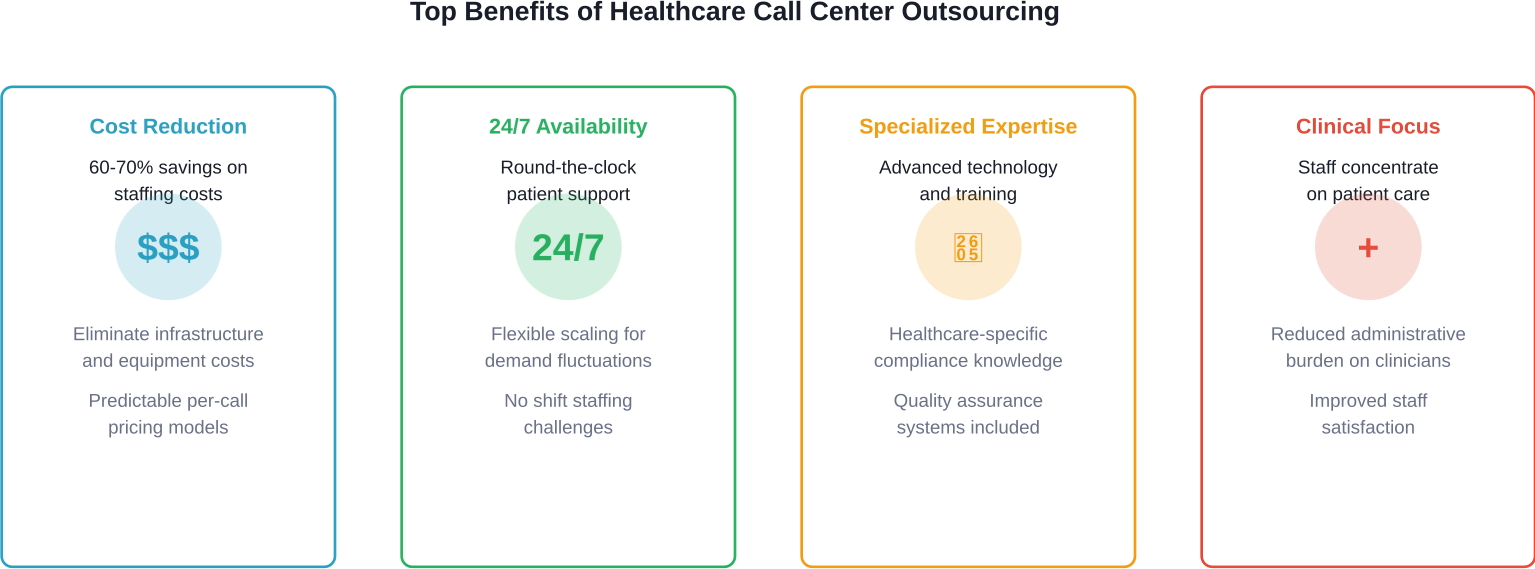
Healthcare organizations turn to outsourcing for several compelling reasons. Understanding these benefits helps frame realistic expectations and ROI calculations.
Cost Reduction and Predictable Budgeting
Operating an in-house call center requires significant capital investment in technology infrastructure, hiring, training, and ongoing management. Outsourcing converts these fixed costs into variable expenses.
Healthcare providers eliminate expenses related to facility space, telecommunications equipment, call center software licenses, and employee benefits. Staffing costs represent a significant portion of call center operating budgets.
Outsourcing partners typically offer transparent, per-minute or per-call pricing models that make budgeting more predictable. This financial clarity helps healthcare CFOs allocate resources more strategically.
24/7 Availability and Scalability
Patients need support outside standard business hours. Medical questions don't wait for Monday morning.
Outsourced call centers provide round-the-clock coverage without requiring healthcare organizations to staff night shifts or weekend rotations. This continuous availability directly improves patient satisfaction scores.
Scalability represents another critical advantage. Healthcare practices experience seasonal volume fluctuations during open enrollment periods or flu season. Outsourcing partners can rapidly adjust staffing levels to meet demand spikes without the healthcare organization bearing the burden of hiring temporary staff.
Access to Specialized Expertise and Technology
Leading healthcare call center providers invest heavily in training programs, quality assurance systems, and advanced contact center technology. These resources would be prohibitively expensive for individual practices to develop internally.
Specialized providers bring experience handling thousands of patient interactions daily. They've developed best practices for managing difficult conversations, de-escalating frustrated callers, and maintaining compassionate communication under pressure.
Technology investments include omnichannel platforms, intelligent call routing, speech analytics, and integration capabilities with electronic health record systems. These tools enhance both efficiency and patient experience.
Focus on Core Clinical Operations
Administrative tasks consume valuable time that healthcare professionals could spend on patient care. Outsourcing non-clinical communications allows medical staff to concentrate on their primary expertise.
Physicians, nurses, and clinical staff report higher job satisfaction when they're not constantly interrupted by scheduling calls or billing questions. This focus improvement can actually impact the quality of clinical care delivery.
Build a Structured Healthcare Outsourcing Call Center

Healthcare call center outsourcing requires careful coordination and long-term staffing stability. NeoWork offers remote teams trained to operate within defined communication and reporting frameworks. Their 91% annualized teammate retention rate and 3.2% candidate selectivity rate reduce turnover risks and preserve institutional knowledge.
Ready to Improve Call Center Performance?
Talk with NeoWork to:
- deploy a consistent remote call center team
- maintain service quality standards
- scale patient communication efficiently
👉 Contact NeoWork to discuss healthcare call center outsourcing.
Critical Considerations Before Outsourcing
The benefits sound compelling. But healthcare call center outsourcing comes with legitimate risks and challenges that require careful planning.
HIPAA Compliance and Data Security
Patient privacy isn't optional. The Health Insurance Portability and Accountability Act establishes strict requirements for handling protected health information.
According to CMS security policies, all contractors handling healthcare information must follow comprehensive information systems security protocols. These policies define how organizations protect and control access to information and systems.
Outsourcing partners must sign Business Associate Agreements that legally bind them to HIPAA requirements. These agreements specify security safeguards, breach notification procedures, and audit rights.
Look for vendors with documented security certifications like HITRUST, SOC 2 Type II, or ISO 27001. These independent audits verify that security controls are actually implemented, not just promised.
Data encryption, secure network architecture, regular vulnerability assessments, and employee background checks should be standard practices. Don't assume compliance—verify it through documentation review and facility audits.
Quality of Patient Communication
Call center agents become the voice of a healthcare organization. Poor communication damages patient trust and satisfaction scores.
Empathy and clinical knowledge represent essential but difficult-to-measure qualities. The best outsourcing partners invest heavily in healthcare-specific training programs that go beyond basic call handling scripts.
CBRE Group's facilities management data indicates that customer satisfaction surveys can assess work order system effectiveness, with many of CBRE's accounts averaging 99 percent customer satisfaction.
Request sample call recordings during vendor evaluation. Listen for tone, accuracy, problem-solving ability, and emotional intelligence. These samples reveal more about actual performance than marketing materials ever will.
Integration with Existing Systems
Call center operations don't exist in isolation. They need to connect with electronic health records, scheduling systems, billing platforms, and patient portals.
Technical integration capabilities vary dramatically across vendors. Some providers offer robust APIs and HL7 compatibility, while others rely on manual data entry or basic screen-sharing arrangements.
Poor integration creates duplicate work, increases error rates, and frustrates both staff and patients. Under HIPAA standards, health plan eligibility inquiries and responses must follow specific electronic transaction formats to ensure accurate information exchange.
Real talk: integration is where many outsourcing relationships fail. Invest time upfront understanding technical requirements and testing integration points before going live.
Cost Structure and Hidden Fees
Pricing models for healthcare call center outsourcing vary widely. Understanding the total cost of ownership prevents budget surprises.
Common pricing approaches include per-minute billing, per-call fees, per-agent monthly rates, or hybrid models. Each has advantages depending on call volume patterns and complexity.
Watch for hidden fees related to setup, training, technology integration, reporting, after-hours premiums, or early termination penalties. Request detailed pricing scenarios based on realistic volume projections.
Regulatory and Accreditation Requirements
Healthcare organizations operate under multiple regulatory frameworks beyond HIPAA. Outsourcing partners must understand and comply with these requirements.
According to the HHS OIG Health Care Fraud and Abuse Control Program Report for Fiscal Year 2023, civil health care fraud settlements and judgments under the False Claims Act exceeded $1.8 billion. This data emphasizes heightened scrutiny of billing practices and patient communication related to services.
Call center scripts and processes must avoid anything that could be construed as fraudulent marketing, improper inducements, or misleading information about coverage or services.
State-specific regulations add another layer of complexity. Telehealth licensing requirements, insurance mandates, and consumer protection laws vary significantly across jurisdictions.
Selecting the Right Outsourcing Partner
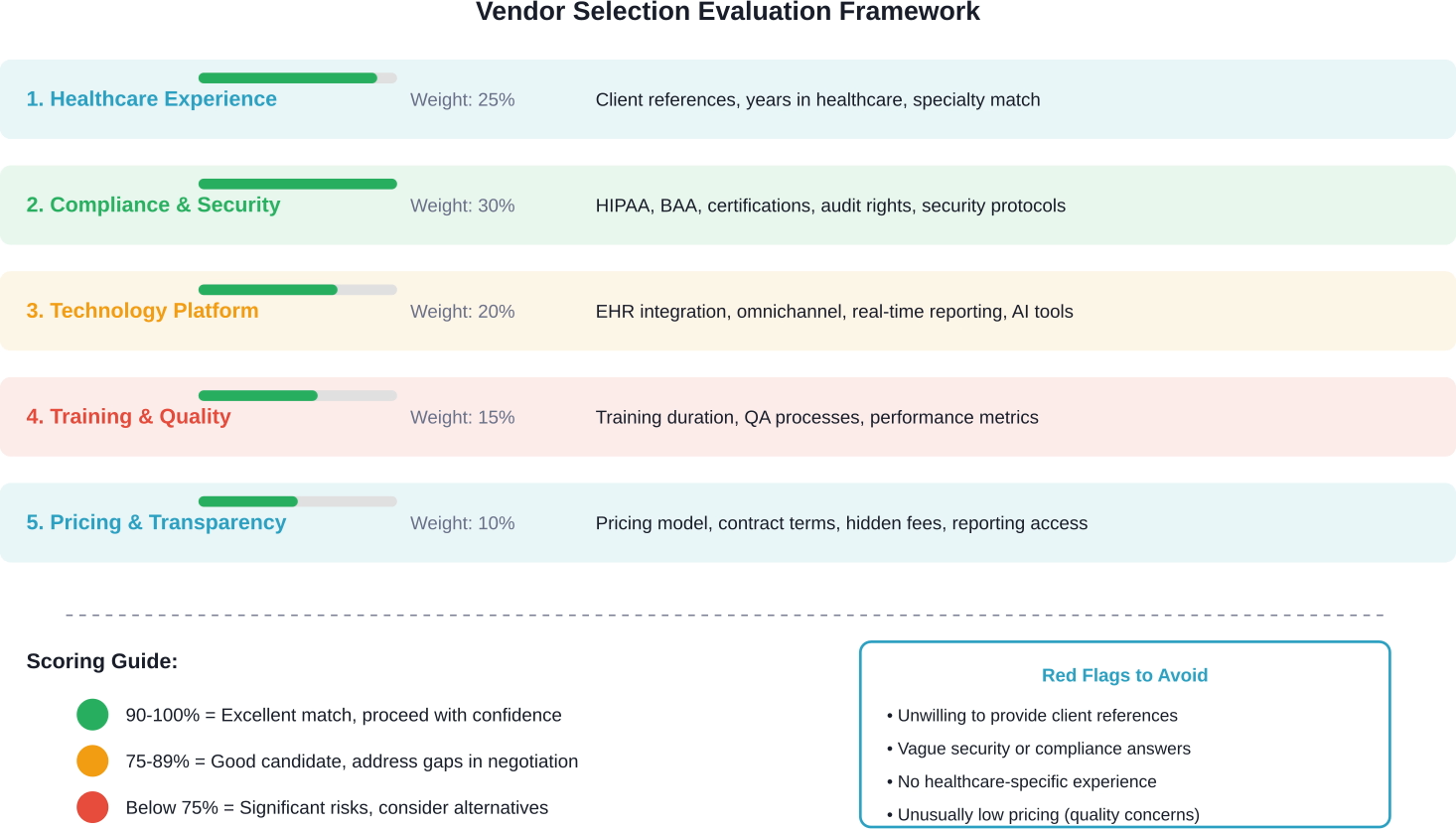
Vendor selection represents the most critical decision in the entire outsourcing process. Getting this right determines whether the relationship succeeds or fails.
Healthcare-Specific Experience
General call center expertise doesn't translate directly to healthcare. Medical terminology, clinical workflows, insurance complexities, and regulatory requirements demand specialized knowledge.
Prioritize vendors with extensive healthcare portfolios. Request client references from similar organizations—comparable size, specialty, and patient demographics.
Ask specific questions about their experience handling situations like urgent symptom calls, insurance pre-authorization, patient grievances, and coordination with clinical staff. Their answers reveal depth of expertise.
Technology Platform and Capabilities
Modern call center technology enables better patient experiences and operational efficiency. Outdated systems create frustration for everyone involved.
Essential capabilities include intelligent call routing, CRM integration, omnichannel support (phone, email, text, portal), real-time reporting dashboards, call recording, and quality monitoring tools.
Emerging technologies like conversational AI, predictive analytics, and automated appointment reminders can significantly reduce call volume while improving patient engagement. About 84% of doctors offered virtual consultations as of April 2021, and more than half of patients reported wanting to continue using alternatives.
The technology should enhance human agents, not replace the personal touch that healthcare communication requires.
Training and Quality Assurance Programs
Agent quality determines patient experience. Training programs and ongoing quality assurance separate excellent vendors from mediocre ones.
Comprehensive healthcare call center training covers medical terminology, empathy and soft skills, de-escalation techniques, HIPAA compliance, cultural competency, and organization-specific protocols.
Quality assurance should include regular call monitoring, coaching sessions, performance metrics tracking, patient satisfaction surveys, and continuous improvement processes.
Request details about training duration, ongoing education requirements, quality audit frequency, and how performance issues are addressed. Vague answers are red flags.
Scalability and Business Continuity
Healthcare doesn't stop for technical failures or natural disasters. Business continuity planning ensures uninterrupted patient support.
Strong vendors maintain redundant infrastructure, geographically distributed operations, backup power systems, and documented disaster recovery procedures.
Scalability matters for growth and seasonal fluctuations. The vendor should handle volume increases without sacrificing quality or requiring lengthy ramp-up periods.
Transparency and Reporting
Visibility into call center performance enables continuous improvement and accountability. Reporting capabilities vary dramatically across providers.
Standard metrics include call volume, average handle time, first-call resolution rates, abandonment rates, patient satisfaction scores, and service level achievement.
Real-time dashboards provide immediate visibility, while detailed analytics reveal trends and improvement opportunities. Access to call recordings and transcripts supports quality reviews and training.
Implementation Best Practices
Successful outsourcing requires more than selecting a good vendor. Implementation planning and change management determine whether the transition succeeds or creates chaos.
Start with a Pilot Program
Jumping into full outsourcing without testing creates unnecessary risk. Pilot programs allow organizations to validate vendor performance before committing completely.
Start with a limited scope—perhaps after-hours calls only, or a specific service line. This approach provides real-world performance data while minimizing disruption to existing operations.
Define clear success metrics upfront: call quality scores, patient satisfaction ratings, average handle time, first-call resolution, and complaint rates. These benchmarks guide the pilot evaluation.
Plan for a 60-90 day pilot duration. This timeframe allows the vendor to stabilize operations and provides sufficient data for meaningful analysis.
Develop Comprehensive Documentation
Call center agents need detailed guidance to represent a healthcare organization accurately. Documentation reduces errors and ensures consistency.
Essential documentation includes call handling protocols, frequently asked questions, escalation procedures, approved messaging for common scenarios, and quick reference guides for systems and tools.
But here's the catch—documentation becomes outdated quickly in healthcare. Establish a regular review cycle and assign clear ownership for keeping materials current.
Establish Clear Communication Channels
The relationship between a healthcare organization and its outsourcing partner requires ongoing communication and collaboration.
Designate specific points of contact on both sides. Regular meetings—weekly during initial implementation, then monthly for ongoing operations—keep everyone aligned.
Create escalation paths for urgent issues, clinical concerns, or patient safety matters. These situations require immediate attention and direct communication with clinical leadership.
Monitor Performance Continuously
Active oversight ensures quality standards are maintained and issues are identified early. Passive relationships lead to gradual performance degradation.
Review performance dashboards weekly. Listen to sample call recordings monthly. Analyze patient satisfaction feedback regularly. These activities provide early warning signals when quality slips.
Schedule quarterly business reviews with vendor leadership to discuss trends, improvement initiatives, and strategic alignment. These meetings reinforce the partnership nature of the relationship.
Common Challenges and Solutions
Even well-planned outsourcing relationships encounter predictable challenges. Understanding common issues and solutions prevents small problems from becoming major crises.
Knowledge Gaps and Training Issues
Call center agents can't know everything about a healthcare organization immediately. Knowledge gaps frustrate patients and create inefficiency.
The solution involves layered training approaches: comprehensive initial onboarding, regular refresher sessions, just-in-time learning resources, and easy access to subject matter experts for complex questions.
Knowledge management systems that provide searchable documentation, decision trees, and real-time updates help agents find answers quickly without placing callers on extended holds.
Cultural and Communication Misalignment
Healthcare organizations have distinct cultures that reflect their values, patient populations, and care philosophies. Generic call center approaches feel impersonal and off-brand.
Address this through detailed cultural training that goes beyond scripts. Share patient stories, explain organizational mission and values, and involve outsourced agents in broader team communications.
Some organizations bring outsourced teams on-site periodically to experience the clinical environment firsthand. This immersion builds empathy and understanding that translates into better patient interactions.
Technology Integration Problems
System integration challenges create duplicate data entry, increase error rates, and slow response times.
Thorough technical planning before implementation prevents many integration issues. Involve IT teams from both organizations early in the process to identify potential obstacles and design robust solutions.
When real-time integration isn't possible, establish clear protocols for data synchronization, error checking, and manual reconciliation processes.
Maintaining Patient Satisfaction
Patients may notice when call center operations change, especially if service quality declines. Patient satisfaction scores are too valuable to risk.
Transparent communication helps manage expectations. Some organizations inform patients about enhanced phone support services and extended availability hours.
Monitor satisfaction metrics obsessively during the first 90 days. If scores decline, investigate immediately and implement corrective actions swiftly.
Measuring Success and ROI
Outsourcing decisions require ongoing justification through measurable results. Clear metrics demonstrate value and guide continuous improvement.
Financial Metrics
Cost savings represent the most straightforward ROI calculation. Compare total cost of ownership for in-house operations versus outsourcing expenses.
Include all relevant costs: labor, benefits, training, technology, facilities, management overhead, and opportunity costs of staff time.
Track cost per call or cost per minute as efficiency indicators. These metrics should improve over time as operations mature and volumes stabilize.
Operational Metrics
Efficiency indicators reveal whether call center operations are functioning smoothly and meeting service level agreements.
Key operational metrics include average speed of answer, abandonment rate, average handle time, first-call resolution percentage, and after-call work time.
Quality Metrics
Patient experience and clinical accuracy matter more than raw efficiency numbers. Quality metrics capture these dimensions.
Patient satisfaction surveys, call quality scores from monitoring evaluations, complaint rates, and clinical escalation appropriateness all indicate quality levels.
Net Promoter Score specifically measures patient willingness to recommend the healthcare organization based on their call center experience.
Clinical Impact Metrics
Advanced measurement approaches connect call center performance to clinical outcomes and patient safety.
Track metrics like appointment no-show rates (improved scheduling support should reduce these), medication adherence (better refill management), emergency department utilization (appropriate triage), and care plan compliance.
These connections demonstrate that call center operations directly contribute to clinical quality, not just administrative efficiency.
Future Trends in Healthcare Call Center Outsourcing
The healthcare call center landscape continues evolving rapidly. Understanding emerging trends helps organizations plan for long-term success.
Artificial Intelligence and Automation
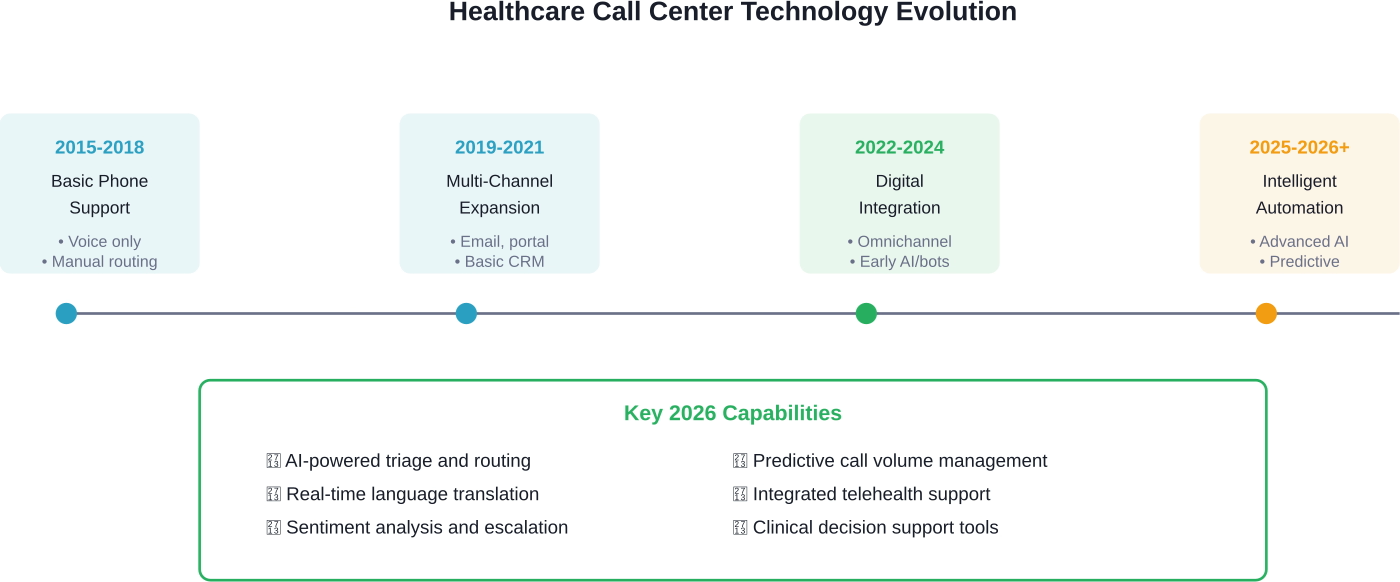
AI technologies are transforming call center operations through conversational chatbots, intelligent routing, predictive analytics, and automated appointment scheduling.
One notable example shows that Notable partnered with a leading healthcare provider to eliminate over 60% of their call volume through intelligent automation.
However, automation works best for straightforward transactions. Complex medical questions, emotional support, and nuanced problem-solving still require human agents with healthcare expertise.
The future involves hybrid models where AI handles routine tasks and seamlessly transfers complex situations to specialized human agents.
Omnichannel Patient Engagement
Patients expect to communicate through their preferred channels—phone, email, text, patient portal, or video chat. Traditional phone-only call centers no longer meet expectations.
About 84% of doctors offered virtual consultations as of April 2021, and more than half of patients reported wanting to continue using alternatives. Outsourcing partners must support integrated omnichannel experiences.
The challenge involves maintaining consistent information and seamless handoffs across channels while preserving HIPAA compliance and security standards.
Advanced Analytics and Insights
Modern call center platforms generate massive amounts of data. Advanced analytics extract actionable insights from conversation patterns, sentiment analysis, and outcome tracking.
These insights identify training opportunities, reveal common patient concerns, predict call volume patterns, and highlight operational inefficiencies.
Speech analytics technology can automatically flag compliance risks, identify angry or distressed callers needing immediate attention, and verify that agents follow proper protocols.
Specialized Clinical Support
Generic healthcare call centers are giving way to specialized services supporting specific clinical programs: chronic disease management, post-discharge follow-up, medication therapy management, and care coordination.
These specialized services require clinical training beyond basic call handling. Some outsourcing partners employ nurses, pharmacists, or health coaches to provide clinically appropriate support.
This evolution positions call centers as active contributors to population health management and value-based care initiatives.
When Outsourcing Makes Sense (And When It Doesn't)
Outsourcing isn't the right solution for every healthcare organization. Honest assessment prevents costly mistakes.
Ideal Scenarios for Outsourcing
Small to mid-sized practices that can't justify full-time call center staff benefit significantly from outsourcing. The economies of scale simply work in their favor.
Organizations experiencing rapid growth or seasonal fluctuations need the scalability that outsourcing provides without the risk of overstaffing.
Healthcare practices wanting to extend availability beyond business hours without paying shift differentials find outsourcing cost-effective for after-hours coverage.
Organizations lacking expertise in call center management can leverage the specialized knowledge that established vendors bring.
When to Keep Operations In-House
Highly specialized medical practices with complex clinical protocols may find it difficult for outsourced agents to develop sufficient expertise.
Organizations with extremely high call volumes and stable staffing needs might achieve better economics with dedicated in-house teams.
Practices where call center staff frequently interact directly with clinical teams and need deep organizational knowledge may benefit from in-house operations.
Healthcare organizations with unique cultural elements or patient populations requiring specialized understanding sometimes struggle with outsourced solutions.
Hybrid Approaches
Many organizations find success with hybrid models that combine in-house and outsourced capabilities.
Common approaches include keeping complex clinical calls in-house while outsourcing appointment scheduling, handling daytime calls internally but outsourcing after-hours coverage, or maintaining a small core team supplemented by outsourced overflow capacity.
These hybrid models provide flexibility while preserving control over the most critical patient interactions.
Conclusion: Making the Right Decision for Your Organization
Healthcare call center outsourcing represents a significant strategic decision with lasting implications for patient experience, operational efficiency, and financial performance.
The benefits are real: cost reduction, 24/7 availability, access to specialized expertise, and ability to focus clinical staff on patient care. The U.S. healthcare outsourcing market projected growth to $66 billion by 2025 reflected industry recognition of these advantages.
But success requires careful planning. HIPAA compliance can't be compromised. Patient communication quality directly impacts satisfaction and clinical outcomes. Technology integration determines operational efficiency. Vendor selection makes or breaks the entire initiative.
Organizations that invest time in thorough vendor evaluation, comprehensive implementation planning, and ongoing performance monitoring achieve strong results. Those that rush the decision or choose vendors based solely on price often encounter problems that undermine the entire value proposition.
Start with a clear assessment of your organization's needs, capabilities, and strategic goals. Does outsourcing align with these factors? Are you prepared to manage the vendor relationship actively rather than treating it as a set-it-and-forget-it solution?
Consider beginning with a limited pilot program that allows you to validate vendor performance and refine processes before full commitment. This approach reduces risk while providing real-world data to guide decisions.
The future of healthcare call centers involves increasing automation, omnichannel patient engagement, and specialized clinical support services. Choose outsourcing partners positioned to evolve with these trends rather than those stuck in traditional phone-only models.
Ready to explore healthcare call center outsourcing for your organization? Begin by documenting your current call center operations, costs, and performance metrics. This baseline enables meaningful vendor comparisons and ROI calculations. Then develop your vendor evaluation criteria based on the framework outlined in this guide, prioritizing compliance, healthcare experience, and cultural fit alongside cost considerations.
The right outsourcing partnership enhances patient experience while improving operational efficiency. Take the time to get it right.
Frequently Asked Questions
Topics
Healthcare Call Center Outsourcing Guide 2026

Healthcare call center outsourcing involves partnering with specialized third-party providers to handle patient communications, appointment scheduling, billing inquiries, and administrative tasks. This comprehensive guide covers key benefits like cost reduction and 24/7 availability, critical considerations including HIPAA compliance and vendor selection, implementation best practices, and emerging trends shaping the industry through 2026.
Healthcare organizations face mounting pressure to deliver exceptional patient experiences while controlling operational costs. Call center operations represent a significant expense, yet they're absolutely essential for patient satisfaction and care coordination.
Outsourcing these operations has become a strategic option for hospitals, clinics, and healthcare practices looking to balance quality with efficiency. But it's not a simple plug-and-play solution.
The U.S. healthcare outsourcing market reached nearly $53 billion in 2020 and was projected to grow to $66 billion by 2025, reflecting widespread adoption across the industry. This growth signals both the value proposition and the complexity of getting it right.
Understanding Healthcare Call Center Outsourcing
Healthcare call center outsourcing means contracting with specialized third-party providers to manage inbound and outbound patient communications. These services extend far beyond simple phone answering.
Outsourced healthcare call centers typically handle appointment scheduling, prescription refill requests, billing inquiries, insurance verification, patient intake, test result notifications, and general medical information requests. Some providers offer multilingual support and after-hours coverage.
The model differs significantly from general business process outsourcing. Healthcare call centers must navigate strict regulatory requirements, handle sensitive medical information, and maintain empathetic communication standards that directly impact patient outcomes.
Here's the thing though—not all healthcare call center providers are created equal. The difference between a compliant, patient-centered operation and a liability risk often comes down to vendor selection and implementation strategy.
Key Benefits of Outsourcing Healthcare Call Centers
Healthcare organizations turn to outsourcing for several compelling reasons. Understanding these benefits helps frame realistic expectations and ROI calculations.
Cost Reduction and Predictable Budgeting
Operating an in-house call center requires significant capital investment in technology infrastructure, hiring, training, and ongoing management. Outsourcing converts these fixed costs into variable expenses.
Healthcare providers eliminate expenses related to facility space, telecommunications equipment, call center software licenses, and employee benefits. Staffing costs represent a significant portion of call center operating budgets.
Outsourcing partners typically offer transparent, per-minute or per-call pricing models that make budgeting more predictable. This financial clarity helps healthcare CFOs allocate resources more strategically.
24/7 Availability and Scalability
Patients need support outside standard business hours. Medical questions don't wait for Monday morning.
Outsourced call centers provide round-the-clock coverage without requiring healthcare organizations to staff night shifts or weekend rotations. This continuous availability directly improves patient satisfaction scores.
Scalability represents another critical advantage. Healthcare practices experience seasonal volume fluctuations during open enrollment periods or flu season. Outsourcing partners can rapidly adjust staffing levels to meet demand spikes without the healthcare organization bearing the burden of hiring temporary staff.
Access to Specialized Expertise and Technology
Leading healthcare call center providers invest heavily in training programs, quality assurance systems, and advanced contact center technology. These resources would be prohibitively expensive for individual practices to develop internally.
Specialized providers bring experience handling thousands of patient interactions daily. They've developed best practices for managing difficult conversations, de-escalating frustrated callers, and maintaining compassionate communication under pressure.
Technology investments include omnichannel platforms, intelligent call routing, speech analytics, and integration capabilities with electronic health record systems. These tools enhance both efficiency and patient experience.
Focus on Core Clinical Operations
Administrative tasks consume valuable time that healthcare professionals could spend on patient care. Outsourcing non-clinical communications allows medical staff to concentrate on their primary expertise.
Physicians, nurses, and clinical staff report higher job satisfaction when they're not constantly interrupted by scheduling calls or billing questions. This focus improvement can actually impact the quality of clinical care delivery.
Build a Structured Healthcare Outsourcing Call Center
Healthcare call center outsourcing requires careful coordination and long-term staffing stability. NeoWork offers remote teams trained to operate within defined communication and reporting frameworks. Their 91% annualized teammate retention rate and 3.2% candidate selectivity rate reduce turnover risks and preserve institutional knowledge.
Ready to Improve Call Center Performance?
Talk with NeoWork to:
- deploy a consistent remote call center team
- maintain service quality standards
- scale patient communication efficiently
👉 Contact NeoWork to discuss healthcare call center outsourcing.
Critical Considerations Before Outsourcing
The benefits sound compelling. But healthcare call center outsourcing comes with legitimate risks and challenges that require careful planning.
HIPAA Compliance and Data Security
Patient privacy isn't optional. The Health Insurance Portability and Accountability Act establishes strict requirements for handling protected health information.
According to CMS security policies, all contractors handling healthcare information must follow comprehensive information systems security protocols. These policies define how organizations protect and control access to information and systems.
Outsourcing partners must sign Business Associate Agreements that legally bind them to HIPAA requirements. These agreements specify security safeguards, breach notification procedures, and audit rights.
Look for vendors with documented security certifications like HITRUST, SOC 2 Type II, or ISO 27001. These independent audits verify that security controls are actually implemented, not just promised.
Data encryption, secure network architecture, regular vulnerability assessments, and employee background checks should be standard practices. Don't assume compliance—verify it through documentation review and facility audits.
Quality of Patient Communication
Call center agents become the voice of a healthcare organization. Poor communication damages patient trust and satisfaction scores.
Empathy and clinical knowledge represent essential but difficult-to-measure qualities. The best outsourcing partners invest heavily in healthcare-specific training programs that go beyond basic call handling scripts.
CBRE Group's facilities management data indicates that customer satisfaction surveys can assess work order system effectiveness, with many of CBRE's accounts averaging 99 percent customer satisfaction.
Request sample call recordings during vendor evaluation. Listen for tone, accuracy, problem-solving ability, and emotional intelligence. These samples reveal more about actual performance than marketing materials ever will.
Integration with Existing Systems
Call center operations don't exist in isolation. They need to connect with electronic health records, scheduling systems, billing platforms, and patient portals.
Technical integration capabilities vary dramatically across vendors. Some providers offer robust APIs and HL7 compatibility, while others rely on manual data entry or basic screen-sharing arrangements.
Poor integration creates duplicate work, increases error rates, and frustrates both staff and patients. Under HIPAA standards, health plan eligibility inquiries and responses must follow specific electronic transaction formats to ensure accurate information exchange.
Real talk: integration is where many outsourcing relationships fail. Invest time upfront understanding technical requirements and testing integration points before going live.
Cost Structure and Hidden Fees
Pricing models for healthcare call center outsourcing vary widely. Understanding the total cost of ownership prevents budget surprises.
Common pricing approaches include per-minute billing, per-call fees, per-agent monthly rates, or hybrid models. Each has advantages depending on call volume patterns and complexity.
Watch for hidden fees related to setup, training, technology integration, reporting, after-hours premiums, or early termination penalties. Request detailed pricing scenarios based on realistic volume projections.
Regulatory and Accreditation Requirements
Healthcare organizations operate under multiple regulatory frameworks beyond HIPAA. Outsourcing partners must understand and comply with these requirements.
According to the HHS OIG Health Care Fraud and Abuse Control Program Report for Fiscal Year 2023, civil health care fraud settlements and judgments under the False Claims Act exceeded $1.8 billion. This data emphasizes heightened scrutiny of billing practices and patient communication related to services.
Call center scripts and processes must avoid anything that could be construed as fraudulent marketing, improper inducements, or misleading information about coverage or services.
State-specific regulations add another layer of complexity. Telehealth licensing requirements, insurance mandates, and consumer protection laws vary significantly across jurisdictions.
Selecting the Right Outsourcing Partner
Vendor selection represents the most critical decision in the entire outsourcing process. Getting this right determines whether the relationship succeeds or fails.
Healthcare-Specific Experience
General call center expertise doesn't translate directly to healthcare. Medical terminology, clinical workflows, insurance complexities, and regulatory requirements demand specialized knowledge.
Prioritize vendors with extensive healthcare portfolios. Request client references from similar organizations—comparable size, specialty, and patient demographics.
Ask specific questions about their experience handling situations like urgent symptom calls, insurance pre-authorization, patient grievances, and coordination with clinical staff. Their answers reveal depth of expertise.
Technology Platform and Capabilities
Modern call center technology enables better patient experiences and operational efficiency. Outdated systems create frustration for everyone involved.
Essential capabilities include intelligent call routing, CRM integration, omnichannel support (phone, email, text, portal), real-time reporting dashboards, call recording, and quality monitoring tools.
Emerging technologies like conversational AI, predictive analytics, and automated appointment reminders can significantly reduce call volume while improving patient engagement. About 84% of doctors offered virtual consultations as of April 2021, and more than half of patients reported wanting to continue using alternatives.
The technology should enhance human agents, not replace the personal touch that healthcare communication requires.
Training and Quality Assurance Programs
Agent quality determines patient experience. Training programs and ongoing quality assurance separate excellent vendors from mediocre ones.
Comprehensive healthcare call center training covers medical terminology, empathy and soft skills, de-escalation techniques, HIPAA compliance, cultural competency, and organization-specific protocols.
Quality assurance should include regular call monitoring, coaching sessions, performance metrics tracking, patient satisfaction surveys, and continuous improvement processes.
Request details about training duration, ongoing education requirements, quality audit frequency, and how performance issues are addressed. Vague answers are red flags.
Scalability and Business Continuity
Healthcare doesn't stop for technical failures or natural disasters. Business continuity planning ensures uninterrupted patient support.
Strong vendors maintain redundant infrastructure, geographically distributed operations, backup power systems, and documented disaster recovery procedures.
Scalability matters for growth and seasonal fluctuations. The vendor should handle volume increases without sacrificing quality or requiring lengthy ramp-up periods.
Transparency and Reporting
Visibility into call center performance enables continuous improvement and accountability. Reporting capabilities vary dramatically across providers.
Standard metrics include call volume, average handle time, first-call resolution rates, abandonment rates, patient satisfaction scores, and service level achievement.
Real-time dashboards provide immediate visibility, while detailed analytics reveal trends and improvement opportunities. Access to call recordings and transcripts supports quality reviews and training.
Implementation Best Practices
Successful outsourcing requires more than selecting a good vendor. Implementation planning and change management determine whether the transition succeeds or creates chaos.
Start with a Pilot Program
Jumping into full outsourcing without testing creates unnecessary risk. Pilot programs allow organizations to validate vendor performance before committing completely.
Start with a limited scope—perhaps after-hours calls only, or a specific service line. This approach provides real-world performance data while minimizing disruption to existing operations.
Define clear success metrics upfront: call quality scores, patient satisfaction ratings, average handle time, first-call resolution, and complaint rates. These benchmarks guide the pilot evaluation.
Plan for a 60-90 day pilot duration. This timeframe allows the vendor to stabilize operations and provides sufficient data for meaningful analysis.
Develop Comprehensive Documentation
Call center agents need detailed guidance to represent a healthcare organization accurately. Documentation reduces errors and ensures consistency.
Essential documentation includes call handling protocols, frequently asked questions, escalation procedures, approved messaging for common scenarios, and quick reference guides for systems and tools.
But here's the catch—documentation becomes outdated quickly in healthcare. Establish a regular review cycle and assign clear ownership for keeping materials current.
Establish Clear Communication Channels
The relationship between a healthcare organization and its outsourcing partner requires ongoing communication and collaboration.
Designate specific points of contact on both sides. Regular meetings—weekly during initial implementation, then monthly for ongoing operations—keep everyone aligned.
Create escalation paths for urgent issues, clinical concerns, or patient safety matters. These situations require immediate attention and direct communication with clinical leadership.
Monitor Performance Continuously
Active oversight ensures quality standards are maintained and issues are identified early. Passive relationships lead to gradual performance degradation.
Review performance dashboards weekly. Listen to sample call recordings monthly. Analyze patient satisfaction feedback regularly. These activities provide early warning signals when quality slips.
Schedule quarterly business reviews with vendor leadership to discuss trends, improvement initiatives, and strategic alignment. These meetings reinforce the partnership nature of the relationship.
Common Challenges and Solutions
Even well-planned outsourcing relationships encounter predictable challenges. Understanding common issues and solutions prevents small problems from becoming major crises.
Knowledge Gaps and Training Issues
Call center agents can't know everything about a healthcare organization immediately. Knowledge gaps frustrate patients and create inefficiency.
The solution involves layered training approaches: comprehensive initial onboarding, regular refresher sessions, just-in-time learning resources, and easy access to subject matter experts for complex questions.
Knowledge management systems that provide searchable documentation, decision trees, and real-time updates help agents find answers quickly without placing callers on extended holds.
Cultural and Communication Misalignment
Healthcare organizations have distinct cultures that reflect their values, patient populations, and care philosophies. Generic call center approaches feel impersonal and off-brand.
Address this through detailed cultural training that goes beyond scripts. Share patient stories, explain organizational mission and values, and involve outsourced agents in broader team communications.
Some organizations bring outsourced teams on-site periodically to experience the clinical environment firsthand. This immersion builds empathy and understanding that translates into better patient interactions.
Technology Integration Problems
System integration challenges create duplicate data entry, increase error rates, and slow response times.
Thorough technical planning before implementation prevents many integration issues. Involve IT teams from both organizations early in the process to identify potential obstacles and design robust solutions.
When real-time integration isn't possible, establish clear protocols for data synchronization, error checking, and manual reconciliation processes.
Maintaining Patient Satisfaction
Patients may notice when call center operations change, especially if service quality declines. Patient satisfaction scores are too valuable to risk.
Transparent communication helps manage expectations. Some organizations inform patients about enhanced phone support services and extended availability hours.
Monitor satisfaction metrics obsessively during the first 90 days. If scores decline, investigate immediately and implement corrective actions swiftly.
Measuring Success and ROI
Outsourcing decisions require ongoing justification through measurable results. Clear metrics demonstrate value and guide continuous improvement.
Financial Metrics
Cost savings represent the most straightforward ROI calculation. Compare total cost of ownership for in-house operations versus outsourcing expenses.
Include all relevant costs: labor, benefits, training, technology, facilities, management overhead, and opportunity costs of staff time.
Track cost per call or cost per minute as efficiency indicators. These metrics should improve over time as operations mature and volumes stabilize.
Operational Metrics
Efficiency indicators reveal whether call center operations are functioning smoothly and meeting service level agreements.
Key operational metrics include average speed of answer, abandonment rate, average handle time, first-call resolution percentage, and after-call work time.
Quality Metrics
Patient experience and clinical accuracy matter more than raw efficiency numbers. Quality metrics capture these dimensions.
Patient satisfaction surveys, call quality scores from monitoring evaluations, complaint rates, and clinical escalation appropriateness all indicate quality levels.
Net Promoter Score specifically measures patient willingness to recommend the healthcare organization based on their call center experience.
Clinical Impact Metrics
Advanced measurement approaches connect call center performance to clinical outcomes and patient safety.
Track metrics like appointment no-show rates (improved scheduling support should reduce these), medication adherence (better refill management), emergency department utilization (appropriate triage), and care plan compliance.
These connections demonstrate that call center operations directly contribute to clinical quality, not just administrative efficiency.
Future Trends in Healthcare Call Center Outsourcing
The healthcare call center landscape continues evolving rapidly. Understanding emerging trends helps organizations plan for long-term success.
Artificial Intelligence and Automation
AI technologies are transforming call center operations through conversational chatbots, intelligent routing, predictive analytics, and automated appointment scheduling.
One notable example shows that Notable partnered with a leading healthcare provider to eliminate over 60% of their call volume through intelligent automation.
However, automation works best for straightforward transactions. Complex medical questions, emotional support, and nuanced problem-solving still require human agents with healthcare expertise.
The future involves hybrid models where AI handles routine tasks and seamlessly transfers complex situations to specialized human agents.
Omnichannel Patient Engagement
Patients expect to communicate through their preferred channels—phone, email, text, patient portal, or video chat. Traditional phone-only call centers no longer meet expectations.
About 84% of doctors offered virtual consultations as of April 2021, and more than half of patients reported wanting to continue using alternatives. Outsourcing partners must support integrated omnichannel experiences.
The challenge involves maintaining consistent information and seamless handoffs across channels while preserving HIPAA compliance and security standards.
Advanced Analytics and Insights
Modern call center platforms generate massive amounts of data. Advanced analytics extract actionable insights from conversation patterns, sentiment analysis, and outcome tracking.
These insights identify training opportunities, reveal common patient concerns, predict call volume patterns, and highlight operational inefficiencies.
Speech analytics technology can automatically flag compliance risks, identify angry or distressed callers needing immediate attention, and verify that agents follow proper protocols.
Specialized Clinical Support
Generic healthcare call centers are giving way to specialized services supporting specific clinical programs: chronic disease management, post-discharge follow-up, medication therapy management, and care coordination.
These specialized services require clinical training beyond basic call handling. Some outsourcing partners employ nurses, pharmacists, or health coaches to provide clinically appropriate support.
This evolution positions call centers as active contributors to population health management and value-based care initiatives.
When Outsourcing Makes Sense (And When It Doesn't)
Outsourcing isn't the right solution for every healthcare organization. Honest assessment prevents costly mistakes.
Ideal Scenarios for Outsourcing
Small to mid-sized practices that can't justify full-time call center staff benefit significantly from outsourcing. The economies of scale simply work in their favor.
Organizations experiencing rapid growth or seasonal fluctuations need the scalability that outsourcing provides without the risk of overstaffing.
Healthcare practices wanting to extend availability beyond business hours without paying shift differentials find outsourcing cost-effective for after-hours coverage.
Organizations lacking expertise in call center management can leverage the specialized knowledge that established vendors bring.
When to Keep Operations In-House
Highly specialized medical practices with complex clinical protocols may find it difficult for outsourced agents to develop sufficient expertise.
Organizations with extremely high call volumes and stable staffing needs might achieve better economics with dedicated in-house teams.
Practices where call center staff frequently interact directly with clinical teams and need deep organizational knowledge may benefit from in-house operations.
Healthcare organizations with unique cultural elements or patient populations requiring specialized understanding sometimes struggle with outsourced solutions.
Hybrid Approaches
Many organizations find success with hybrid models that combine in-house and outsourced capabilities.
Common approaches include keeping complex clinical calls in-house while outsourcing appointment scheduling, handling daytime calls internally but outsourcing after-hours coverage, or maintaining a small core team supplemented by outsourced overflow capacity.
These hybrid models provide flexibility while preserving control over the most critical patient interactions.
Conclusion: Making the Right Decision for Your Organization
Healthcare call center outsourcing represents a significant strategic decision with lasting implications for patient experience, operational efficiency, and financial performance.
The benefits are real: cost reduction, 24/7 availability, access to specialized expertise, and ability to focus clinical staff on patient care. The U.S. healthcare outsourcing market projected growth to $66 billion by 2025 reflected industry recognition of these advantages.
But success requires careful planning. HIPAA compliance can't be compromised. Patient communication quality directly impacts satisfaction and clinical outcomes. Technology integration determines operational efficiency. Vendor selection makes or breaks the entire initiative.
Organizations that invest time in thorough vendor evaluation, comprehensive implementation planning, and ongoing performance monitoring achieve strong results. Those that rush the decision or choose vendors based solely on price often encounter problems that undermine the entire value proposition.
Start with a clear assessment of your organization's needs, capabilities, and strategic goals. Does outsourcing align with these factors? Are you prepared to manage the vendor relationship actively rather than treating it as a set-it-and-forget-it solution?
Consider beginning with a limited pilot program that allows you to validate vendor performance and refine processes before full commitment. This approach reduces risk while providing real-world data to guide decisions.
The future of healthcare call centers involves increasing automation, omnichannel patient engagement, and specialized clinical support services. Choose outsourcing partners positioned to evolve with these trends rather than those stuck in traditional phone-only models.
Ready to explore healthcare call center outsourcing for your organization? Begin by documenting your current call center operations, costs, and performance metrics. This baseline enables meaningful vendor comparisons and ROI calculations. Then develop your vendor evaluation criteria based on the framework outlined in this guide, prioritizing compliance, healthcare experience, and cultural fit alongside cost considerations.
The right outsourcing partnership enhances patient experience while improving operational efficiency. Take the time to get it right.
Frequently Asked Questions
Topics
Related Blogs
Related Podcasts