

.avif)
.avif)

Health Information Management Outsourcing Guide 2026


.svg)

Health Information Management (HIM) outsourcing involves delegating medical records management, coding, compliance, and release of information functions to specialized external providers. This guide covers strategic considerations, HIPAA compliance requirements, vendor selection criteria, implementation best practices, and how organizations can reduce costs while maintaining regulatory compliance and improving operational efficiency through outsourced HIM services.
Healthcare organizations face mounting pressure to manage patient records efficiently while controlling costs. Staffing shortages, rising request volumes, and increasingly complex compliance requirements have pushed many providers toward a strategic solution: outsourcing health information management.
But here's the thing—HIM outsourcing isn't just about offloading administrative burden. When executed correctly, it transforms how healthcare organizations handle everything from medical coding to release of information, creating operational resilience without capital investment.
This guide breaks down what healthcare providers need to know before outsourcing HIM functions, from compliance considerations to vendor selection and implementation strategies.
What Is Health Information Management Outsourcing?
Health information management outsourcing involves contracting external specialized providers to handle critical administrative functions related to patient medical records and health data. These functions traditionally managed by in-house HIM departments now shift to third-party vendors with dedicated expertise and technology infrastructure.
The scope varies considerably. Some organizations outsource specific functions like release of information or medical coding, while others transfer entire HIM operations to external partners.
Common outsourced HIM functions include:
- Medical records management and maintenance
- Release of information (ROI) processing
- Medical coding and billing support
- Data entry and documentation
- Compliance monitoring and auditing
- Health data analytics and reporting
- Patient access request fulfillment
According to the Department of Health and Human Services, providing individuals with easy access to their health information empowers them to monitor chronic conditions, adhere to treatment plans, and find errors in their health records. This growing patient expectation for digital, fast, and secure access has fundamentally changed HIM requirements.
Healthcare organizations increasingly struggle to meet these expectations with traditional in-house staffing models. Outsourcing offers scalability and specialized technology that many facilities can't justify building internally.
Why Healthcare Organizations Are Outsourcing HIM Functions
The shift toward outsourced health information management stems from multiple converging pressures reshaping healthcare operations.
Rising Request Volumes and Complexity
Patient requests for medical records continue increasing year after year. Legal updates and regulatory changes make these requests more complex to process, requiring specialized knowledge and dedicated resources.
Healthcare providers report that fulfilling release of information requests has become one of their most burdensome administrative processes. The time required to respond, coupled with strict compliance deadlines, strains internal teams already stretched thin.
Staffing Shortages and Retention Challenges
Finding qualified HIM professionals remains difficult across the healthcare industry. Competition for credentialed coders, records specialists, and compliance experts drives up labor costs while leaving many positions unfilled for extended periods.
Turnover compounds the problem. Training new HIM staff requires significant investment, and when employees leave after months rather than years, organizations face continuous recruitment and onboarding cycles.
Cost Reduction Opportunities
Outsourcing can reduce operating costs when executed effectively. External providers leverage economies of scale, specialized technology platforms, and optimized workflows that individual healthcare organizations can't replicate cost-efficiently.
Capital investment represents another consideration. Building internal HIM infrastructure—technology systems, secure storage, workflow automation—requires substantial upfront expenditure. Outsourcing converts these capital costs into operational expenses with more predictable budgeting.
Technology and Expertise Access
Specialized HIM vendors invest heavily in industry-leading technology and maintain expertise across evolving regulatory requirements. Healthcare organizations gain access to these capabilities without building them from scratch.
This becomes particularly valuable as health information technology continues advancing. The Office of the National Coordinator for Health IT emphasizes creating systemic improvements through access, exchange, and use of data—goals that require sophisticated technical infrastructure.

Strengthen Health Information Management Through Outsourcing
Health information management outsourcing requires precision, compliance awareness, and consistent documentation standards. NeoWork supports healthcare organizations with remote teams handling data entry, records management, and administrative processing. Their industry-leading 91% annualized teammate retention rate and 3.2% candidate selectivity rate reduce turnover risk in sensitive environments. This helps maintain process continuity and operational stability.
Ready to Outsource Health Information Management Safely?
Talk with NeoWork to:
- build a dedicated health data support team
- maintain documentation accuracy
- support administrative scalability
👉 Contact NeoWork to structure your health information management outsourcing model.
HIPAA Compliance and Regulatory Considerations
Compliance represents the most critical consideration when outsourcing health information management. Patient data protection isn't optional—it's legally mandated under the Health Insurance Portability and Accountability Act and enforced vigorously by federal regulators.
Understanding HIPAA Requirements for Outsourcing
When healthcare organizations outsource HIM functions, they're sharing Protected Health Information (PHI) with external vendors. Under HIPAA, this creates a business associate relationship requiring specific contractual protections.
Business associate agreements (BAAs) must detail how the vendor will safeguard PHI, limit use and disclosure, implement appropriate security measures, and report breaches. Healthcare organizations remain ultimately responsible for compliance even when functions are outsourced.
The Department of Health and Human Services provides clear guidance on individuals' rights to access their health information under 45 CFR § 164.524. Outsourcing vendors must support these access rights, including providing electronic copies when maintained electronically and adhering to fee limitations.
Specifically, HHS doesn't consider per-page fees reasonable for PHI maintained electronically. Covered entities may charge individuals a flat fee for electronic copy requests, but this must align with regulatory guidance to avoid violations.
Offshore vs. Domestic Outsourcing
Location matters for HIM outsourcing. The HHS Office of Inspector General has examined offshore outsourcing of administrative functions by state Medicaid agencies, highlighting unique considerations when PHI crosses international borders.
Offshore outsourcing involves sending work to contractors outside the United States. This can occur through direct contracts between healthcare organizations and foreign vendors or indirectly when domestic contractors subcontract work internationally.
Both models require robust compliance frameworks. Organizations must ensure offshore vendors implement HIPAA-compliant security measures, understand U.S. privacy regulations, and maintain appropriate data protection regardless of physical location.
Domestic outsourcing within the United States doesn't eliminate compliance requirements but may simplify oversight and reduce jurisdictional complexities.
CMS Security and Privacy Standards
Organizations working with Medicare and Medicaid data face additional requirements. The Centers for Medicare & Medicaid Services Information Systems Security & Privacy Policy defines how CMS protects and controls access to information and systems.
All CMS staff and contractors must follow these policies, which outline compliance activities and define roles and responsibilities under the Federal Information Security Modernization Act (FISMA) of 2014.
Healthcare organizations outsourcing HIM functions that involve CMS data need vendors who understand and comply with these enhanced security standards beyond baseline HIPAA requirements.
Core HIM Functions Suitable for Outsourcing
Not all HIM functions make equal candidates for outsourcing. Strategic decisions require understanding which activities benefit most from external expertise versus those better kept in-house.
Release of Information Services
ROI processing has become one of the most commonly outsourced HIM functions. Patient expectations now demand digital, fast, and secure access to medical records—a capability many in-house teams struggle to deliver consistently.
Request volumes rise annually while regulatory requirements grow more complex. Specialized ROI vendors bring dedicated technology platforms, trained staff, and streamlined workflows that reduce turnaround times and improve compliance.
Outsourced ROI services typically handle:
- Patient authorization verification
- Request tracking and status updates
- Record retrieval from multiple systems
- Quality review and redaction
- Secure electronic delivery
- Fee calculation and collection
- Audit trail documentation
Medical Coding and Billing Support
Medical coding requires specialized knowledge that's perpetually in short supply. Credentialed coders command high salaries, and maintaining adequate staffing levels challenges many organizations.
Outsourced coding services provide access to certified professionals without the overhead of full-time employees. Vendors typically offer flexible capacity that scales with patient volume fluctuations.
This becomes particularly valuable for specialized coding areas—inpatient DRG assignment, complex surgical procedures, or specialty-specific diagnosis coding—where maintaining in-house expertise proves difficult.
Medical Data Entry
Data entry outsourcing addresses high-volume, repetitive tasks that consume significant staff time without requiring advanced clinical judgment. Paper document digitization, form completion, and database updates fall into this category.
Healthcare teams benefit from offloading these administrative burdens to specialized vendors who can process large volumes efficiently. This frees internal staff for activities requiring clinical knowledge or patient interaction.
Compliance Auditing and Monitoring
Ongoing compliance monitoring requires dedicated resources and specialized expertise. External auditors bring fresh perspectives and industry-wide knowledge that internal teams may lack.
Outsourced compliance services can identify gaps, recommend improvements, and provide objective assessments that strengthen overall HIM program effectiveness.
Benefits of Outsourcing Health Information Management
When executed strategically, HIM outsourcing delivers multiple organizational benefits beyond simple cost reduction.
Financial Performance Improvements
The connection between health information management and revenue cycle performance can't be overlooked. Accurate coding, timely documentation completion, and efficient release of information all directly impact financial outcomes.
Modern HIM outsourcing frameworks deliver paths to financial resilience through middle revenue cycle expertise and technology without requiring capital investment. This approach creates more stable revenue and workflow patterns.
Operational Efficiency Gains
Specialized vendors bring optimized processes developed across multiple client implementations. They've identified bottlenecks, tested solutions, and refined workflows in ways individual organizations typically can't justify.
This institutional knowledge translates to faster processing times, fewer errors, and more consistent output quality. Organizations report reduced backlogs and improved service levels after implementing outsourced HIM solutions.
Scalability and Flexibility
Patient volumes fluctuate. Seasonal variations, unexpected surges, and long-term growth all create staffing challenges for in-house teams sized for average demand.
Outsourced services provide elastic capacity that adjusts to actual needs. Organizations pay for work performed rather than maintaining excess staff for peak periods or scrambling to cover unexpected increases.
Access to Specialized Expertise
HIM vendors invest in ongoing staff training, technology platforms, and industry research that individual healthcare organizations can't replicate cost-effectively. Clients gain access to this collective expertise.
Regulatory changes, coding updates, and evolving best practices get incorporated into vendor operations systematically. Organizations benefit from continuous improvement without managing it internally.
Enhanced Patient Experience
Patients now expect Amazon-level service from healthcare providers. Fast responses, digital access, and self-service capabilities have become baseline expectations rather than differentiators.
Outsourced HIM providers typically offer patient portals, automated status updates, and electronic delivery options that improve satisfaction. According to HHS, individuals with access to their health information are better able to monitor conditions, adhere to treatment plans, and find errors in records.
Challenges and Risks of HIM Outsourcing
Outsourcing isn't without drawbacks. Healthcare organizations need clear-eyed understanding of potential challenges before committing to external vendors.
Loss of Direct Control
Handing over HIM functions means relinquishing day-to-day operational control. Organizations become dependent on vendor performance, responsiveness, and priorities.
This creates risk when urgent requests arise or when organizational needs shift. Response times may lag compared to walking down the hall to speak with internal staff.
Data Security Concerns
Sharing PHI with external parties inherently increases exposure risk. Even with robust BAAs and security measures, organizations remain vulnerable to vendor breaches or security lapses.
Due diligence becomes critical. Healthcare organizations must thoroughly vet vendor security practices, incident response capabilities, and compliance track records before entrusting them with patient data.
Quality Consistency Issues
Outsourced services may not match in-house quality levels, particularly during initial implementation. Vendors working across multiple clients might not understand organization-specific nuances or preferences.
Clear quality metrics, regular monitoring, and strong vendor management practices help mitigate this risk but require ongoing attention.
Hidden Costs
Quoted outsourcing fees don't capture total cost of ownership. Implementation expenses, ongoing management overhead, and contract modification fees can erode projected savings.
Organizations should model comprehensive financial impact including transition costs, vendor management time, and potential change fees before making outsourcing decisions.
Cultural Resistance
Internal staff may resist outsourcing initiatives, viewing them as job threats or votes of no confidence in current performance. This creates change management challenges that can undermine implementation success.
Transparent communication, staff involvement in vendor selection, and clear career development paths help address these concerns but require dedicated leadership attention.
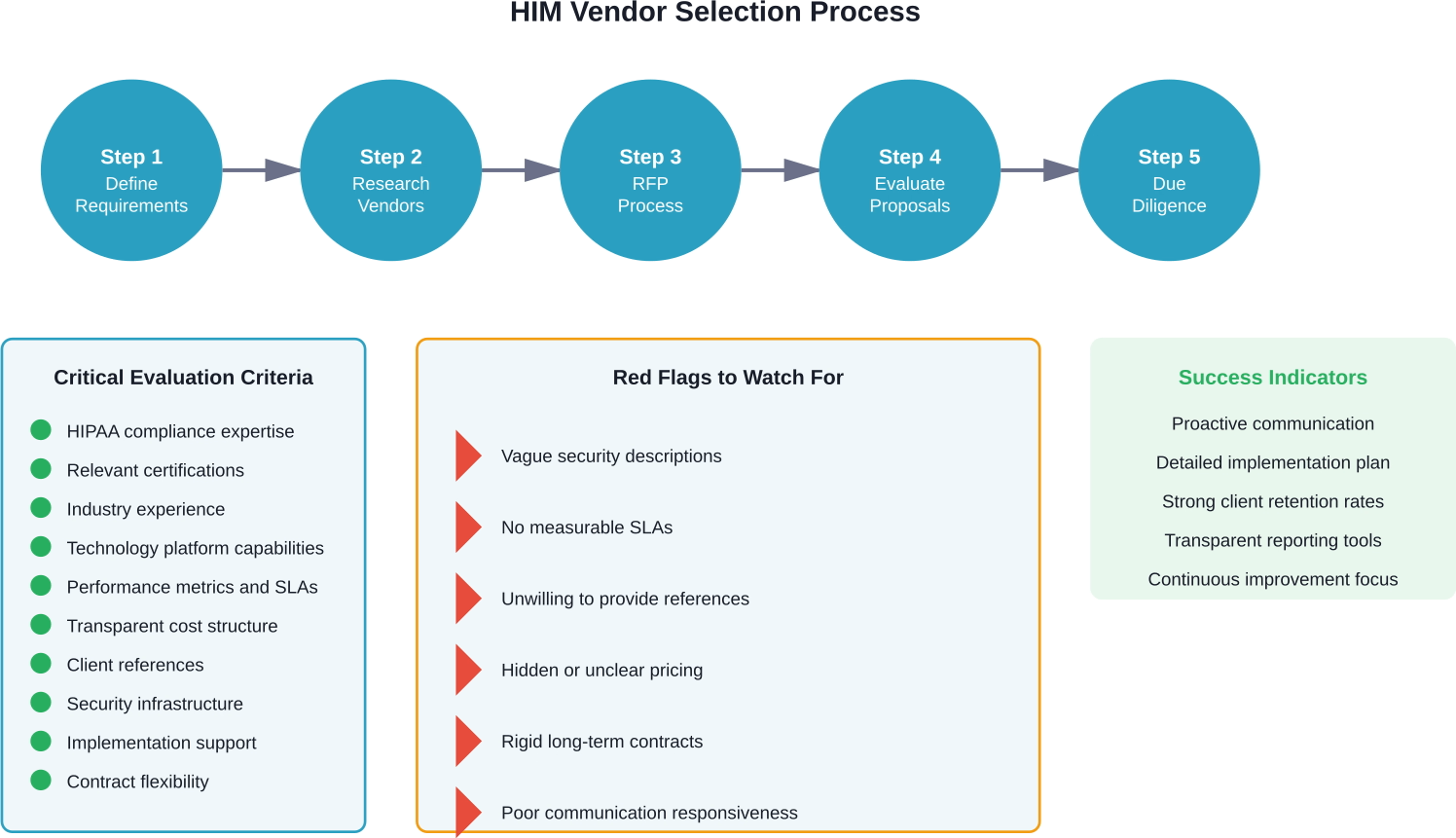
How to Select the Right HIM Outsourcing Vendor
Vendor selection represents the most consequential decision in the outsourcing process. The right partner drives success; the wrong one creates problems worse than those outsourcing aimed to solve.
Essential Vendor Qualifications
Start with non-negotiable requirements. HIPAA compliance expertise tops the list—vendors must demonstrate deep understanding of privacy regulations and proven security practices.
Look for relevant certifications: AHIMA-approved programs, SOC 2 attestations, HITRUST certification, and industry-specific accreditations signal serious commitment to healthcare data protection.
Experience matters. Vendors who've worked with similar organizations (comparable size, patient volume, complexity) bring relevant knowledge that shortens implementation timelines and reduces risk.
Technology Platform Assessment
The vendor's technology infrastructure directly impacts service quality and organizational integration. Modern platforms should offer:
- EHR system integration capabilities
- Automated workflow management
- Real-time status tracking and reporting
- Patient self-service portals
- Secure electronic delivery mechanisms
- Comprehensive audit trails
- Mobile accessibility
Request platform demonstrations. Evaluate user interfaces, automation capabilities, and reporting functionality. Ask about system uptime, disaster recovery procedures, and technology roadmaps.
Performance Metrics and SLAs
Strong vendors commit to measurable performance standards backed by service level agreements.
Key metrics should include:
- Request turnaround times (by request type)
- Coding accuracy rates
- Customer satisfaction scores
- System availability percentages
- Error and rework rates
- Compliance audit results
Understand consequences for SLA failures. Meaningful penalties and remediation requirements demonstrate vendor accountability and align incentives with organizational success.
Cost Structure Transparency
Pricing models vary considerably across vendors. Some charge per transaction, others use monthly subscription fees, and many employ hybrid approaches.
Request detailed cost breakdowns including base fees, volume thresholds, overage charges, implementation costs, and potential change fees. Compare total projected costs across realistic volume scenarios.
Watch for hidden fees: setup charges, training costs, customization fees, report generation charges, and early termination penalties. These can significantly impact total cost of ownership.
References and Track Record
Client references provide invaluable insights.
Request contacts from organizations with similar characteristics and ask specific questions:
- How did actual performance compare to promised capabilities?
- What unexpected challenges arose during implementation?
- How responsive is the vendor to issues and requests?
- Would they select this vendor again?
- What advice would they give to new clients?
Industry reputation matters. Check regulatory compliance records, search for legal actions or settlements, and review independent third-party assessments.
Implementation Best Practices
Successful outsourcing requires more than selecting the right vendor. Implementation execution determines whether organizations realize projected benefits or experience frustrating transitions.
Establish Clear Governance
Create formal governance structures before implementation begins. Designate internal stakeholders responsible for vendor oversight, define escalation procedures, and establish regular review cadences.
Governance committees should include HIM leadership, compliance officers, IT representatives, and operational managers. This cross-functional perspective ensures comprehensive consideration of impacts and requirements.
Plan Phased Rollouts
Avoid big-bang implementations that transfer all functions simultaneously. Phased approaches allow organizations to learn, adjust, and build confidence before expanding vendor responsibilities.
Start with lower-risk functions or specific departments. Monitor performance closely, refine processes, and address issues before scaling to additional areas.
Document Everything
Comprehensive documentation prevents misunderstandings and provides accountability frameworks. Document current state processes, future state requirements, performance expectations, and communication protocols.
Maintain detailed records of decisions, change requests, issue resolutions, and performance metrics. This documentation becomes invaluable for troubleshooting problems and renegotiating contracts.
Invest in Change Management
Staff concerns can undermine otherwise solid implementations. Address them proactively through transparent communication, involvement in planning, and clear articulation of how outsourcing affects roles.
Provide training on new processes, clarify ongoing responsibilities, and highlight opportunities that outsourcing creates for internal staff to focus on higher-value activities.
Monitor Performance Rigorously
Trust but verify. Even excellent vendors require oversight. Establish metrics dashboards, conduct regular performance reviews, and maintain independent quality audits.
Address performance issues immediately. Small problems compound quickly when left unaddressed. Strong vendor relationships include honest feedback and collaborative problem-solving.
Cost Analysis: Building the Business Case
Financial justification drives most outsourcing decisions. But comprehensive cost analysis extends beyond comparing hourly rates to current salaries.
Total Cost of Ownership Modeling
Calculate complete in-house costs including salaries, benefits, payroll taxes, training, technology, facilities, and management overhead. Many organizations underestimate true internal costs by 20-30%.
Compare this to total outsourcing costs including base fees, implementation expenses, ongoing management time, and contract modification charges. Build models for multiple volume scenarios to understand cost behavior.
Qualitative Benefits Quantification
Some outsourcing benefits resist easy quantification but deliver real value. Faster turnaround times improve patient satisfaction. Reduced staff turnover eliminates recruitment costs. Access to specialized expertise prevents compliance violations.
Assign conservative values to these benefits when building business cases. Even partial credit for qualitative improvements often tips analyses toward outsourcing.
Risk-Adjusted Returns
Factor implementation risk into financial projections. Not all outsourcing initiatives deliver promised benefits. Conservative assumptions about realization timelines and benefit magnitudes create more realistic expectations.
Consider sensitivity analysis showing how returns change if volumes differ from projections, vendor performance falls short, or hidden costs emerge.
Future Trends in HIM Outsourcing
Health information management outsourcing continues evolving alongside broader healthcare transformation.
Artificial Intelligence Integration
Leading vendors increasingly incorporate AI and machine learning into HIM workflows. Automated coding suggestions, intelligent document classification, and predictive analytics enhance productivity and accuracy.
These capabilities require significant technology investment that individual organizations can't justify. Outsourcing provides access to AI-powered tools without building them internally.
Value-Based Care Alignment
As healthcare shifts from fee-for-service to value-based reimbursement, HIM functions must evolve. Documentation requirements, quality metrics, and data analytics needs all change.
Outsourcing vendors who understand value-based care requirements help organizations adapt faster than building new capabilities in-house.
Enhanced Patient Engagement
Patient expectations for digital health experiences continue rising. Self-service portals, mobile access, and real-time status updates become table stakes rather than differentiators.
HIM outsourcing vendors investing in patient-facing technology enable organizations to meet these expectations without major internal development projects.
Conclusion: Strategic Approach to HIM Outsourcing
Health information management outsourcing represents a strategic option for healthcare organizations facing staffing challenges, rising costs, and increasing complexity. When executed thoughtfully, it delivers cost reduction, operational efficiency, and access to specialized expertise that individual facilities struggle to maintain internally.
But success isn't guaranteed. Organizations must approach outsourcing strategically rather than tactically.
That means comprehensive vendor evaluation focusing on HIPAA compliance expertise, proven track records, and appropriate technology platforms. It requires realistic total cost of ownership modeling that captures both quantitative savings and qualitative benefits. And it demands rigorous implementation planning with phased rollouts, strong governance, and proactive change management.
The healthcare landscape continues evolving. Patient expectations for digital access grow stronger. Regulatory requirements become more complex. Staffing shortages persist. These pressures won't diminish.
Organizations that develop strategic approaches to HIM—whether fully in-house, fully outsourced, or hybrid models—position themselves for sustainable success. Those that cling to outdated operating models will find themselves increasingly unable to compete effectively.
Ready to explore HIM outsourcing for your organization? Start by documenting current state costs and performance metrics. Define clear objectives for what outsourcing should accomplish. Research qualified vendors with relevant healthcare experience. And build comprehensive business cases that inform rather than justify predetermined conclusions.
The path to successful HIM outsourcing begins with strategic planning grounded in realistic assessment of organizational needs, vendor capabilities, and implementation requirements.
Frequently Asked Questions
Topics
Health Information Management Outsourcing Guide 2026

Health Information Management (HIM) outsourcing involves delegating medical records management, coding, compliance, and release of information functions to specialized external providers. This guide covers strategic considerations, HIPAA compliance requirements, vendor selection criteria, implementation best practices, and how organizations can reduce costs while maintaining regulatory compliance and improving operational efficiency through outsourced HIM services.
Healthcare organizations face mounting pressure to manage patient records efficiently while controlling costs. Staffing shortages, rising request volumes, and increasingly complex compliance requirements have pushed many providers toward a strategic solution: outsourcing health information management.
But here's the thing—HIM outsourcing isn't just about offloading administrative burden. When executed correctly, it transforms how healthcare organizations handle everything from medical coding to release of information, creating operational resilience without capital investment.
This guide breaks down what healthcare providers need to know before outsourcing HIM functions, from compliance considerations to vendor selection and implementation strategies.
What Is Health Information Management Outsourcing?
Health information management outsourcing involves contracting external specialized providers to handle critical administrative functions related to patient medical records and health data. These functions traditionally managed by in-house HIM departments now shift to third-party vendors with dedicated expertise and technology infrastructure.
The scope varies considerably. Some organizations outsource specific functions like release of information or medical coding, while others transfer entire HIM operations to external partners.
Common outsourced HIM functions include:
- Medical records management and maintenance
- Release of information (ROI) processing
- Medical coding and billing support
- Data entry and documentation
- Compliance monitoring and auditing
- Health data analytics and reporting
- Patient access request fulfillment
According to the Department of Health and Human Services, providing individuals with easy access to their health information empowers them to monitor chronic conditions, adhere to treatment plans, and find errors in their health records. This growing patient expectation for digital, fast, and secure access has fundamentally changed HIM requirements.
Healthcare organizations increasingly struggle to meet these expectations with traditional in-house staffing models. Outsourcing offers scalability and specialized technology that many facilities can't justify building internally.
Why Healthcare Organizations Are Outsourcing HIM Functions
The shift toward outsourced health information management stems from multiple converging pressures reshaping healthcare operations.
Rising Request Volumes and Complexity
Patient requests for medical records continue increasing year after year. Legal updates and regulatory changes make these requests more complex to process, requiring specialized knowledge and dedicated resources.
Healthcare providers report that fulfilling release of information requests has become one of their most burdensome administrative processes. The time required to respond, coupled with strict compliance deadlines, strains internal teams already stretched thin.
Staffing Shortages and Retention Challenges
Finding qualified HIM professionals remains difficult across the healthcare industry. Competition for credentialed coders, records specialists, and compliance experts drives up labor costs while leaving many positions unfilled for extended periods.
Turnover compounds the problem. Training new HIM staff requires significant investment, and when employees leave after months rather than years, organizations face continuous recruitment and onboarding cycles.
Cost Reduction Opportunities
Outsourcing can reduce operating costs when executed effectively. External providers leverage economies of scale, specialized technology platforms, and optimized workflows that individual healthcare organizations can't replicate cost-efficiently.
Capital investment represents another consideration. Building internal HIM infrastructure—technology systems, secure storage, workflow automation—requires substantial upfront expenditure. Outsourcing converts these capital costs into operational expenses with more predictable budgeting.
Technology and Expertise Access
Specialized HIM vendors invest heavily in industry-leading technology and maintain expertise across evolving regulatory requirements. Healthcare organizations gain access to these capabilities without building them from scratch.
This becomes particularly valuable as health information technology continues advancing. The Office of the National Coordinator for Health IT emphasizes creating systemic improvements through access, exchange, and use of data—goals that require sophisticated technical infrastructure.
Strengthen Health Information Management Through Outsourcing
Health information management outsourcing requires precision, compliance awareness, and consistent documentation standards. NeoWork supports healthcare organizations with remote teams handling data entry, records management, and administrative processing. Their industry-leading 91% annualized teammate retention rate and 3.2% candidate selectivity rate reduce turnover risk in sensitive environments. This helps maintain process continuity and operational stability.
Ready to Outsource Health Information Management Safely?
Talk with NeoWork to:
- build a dedicated health data support team
- maintain documentation accuracy
- support administrative scalability
👉 Contact NeoWork to structure your health information management outsourcing model.
HIPAA Compliance and Regulatory Considerations
Compliance represents the most critical consideration when outsourcing health information management. Patient data protection isn't optional—it's legally mandated under the Health Insurance Portability and Accountability Act and enforced vigorously by federal regulators.
Understanding HIPAA Requirements for Outsourcing
When healthcare organizations outsource HIM functions, they're sharing Protected Health Information (PHI) with external vendors. Under HIPAA, this creates a business associate relationship requiring specific contractual protections.
Business associate agreements (BAAs) must detail how the vendor will safeguard PHI, limit use and disclosure, implement appropriate security measures, and report breaches. Healthcare organizations remain ultimately responsible for compliance even when functions are outsourced.
The Department of Health and Human Services provides clear guidance on individuals' rights to access their health information under 45 CFR § 164.524. Outsourcing vendors must support these access rights, including providing electronic copies when maintained electronically and adhering to fee limitations.
Specifically, HHS doesn't consider per-page fees reasonable for PHI maintained electronically. Covered entities may charge individuals a flat fee for electronic copy requests, but this must align with regulatory guidance to avoid violations.
Offshore vs. Domestic Outsourcing
Location matters for HIM outsourcing. The HHS Office of Inspector General has examined offshore outsourcing of administrative functions by state Medicaid agencies, highlighting unique considerations when PHI crosses international borders.
Offshore outsourcing involves sending work to contractors outside the United States. This can occur through direct contracts between healthcare organizations and foreign vendors or indirectly when domestic contractors subcontract work internationally.
Both models require robust compliance frameworks. Organizations must ensure offshore vendors implement HIPAA-compliant security measures, understand U.S. privacy regulations, and maintain appropriate data protection regardless of physical location.
Domestic outsourcing within the United States doesn't eliminate compliance requirements but may simplify oversight and reduce jurisdictional complexities.
CMS Security and Privacy Standards
Organizations working with Medicare and Medicaid data face additional requirements. The Centers for Medicare & Medicaid Services Information Systems Security & Privacy Policy defines how CMS protects and controls access to information and systems.
All CMS staff and contractors must follow these policies, which outline compliance activities and define roles and responsibilities under the Federal Information Security Modernization Act (FISMA) of 2014.
Healthcare organizations outsourcing HIM functions that involve CMS data need vendors who understand and comply with these enhanced security standards beyond baseline HIPAA requirements.
Core HIM Functions Suitable for Outsourcing
Not all HIM functions make equal candidates for outsourcing. Strategic decisions require understanding which activities benefit most from external expertise versus those better kept in-house.
Release of Information Services
ROI processing has become one of the most commonly outsourced HIM functions. Patient expectations now demand digital, fast, and secure access to medical records—a capability many in-house teams struggle to deliver consistently.
Request volumes rise annually while regulatory requirements grow more complex. Specialized ROI vendors bring dedicated technology platforms, trained staff, and streamlined workflows that reduce turnaround times and improve compliance.
Outsourced ROI services typically handle:
- Patient authorization verification
- Request tracking and status updates
- Record retrieval from multiple systems
- Quality review and redaction
- Secure electronic delivery
- Fee calculation and collection
- Audit trail documentation
Medical Coding and Billing Support
Medical coding requires specialized knowledge that's perpetually in short supply. Credentialed coders command high salaries, and maintaining adequate staffing levels challenges many organizations.
Outsourced coding services provide access to certified professionals without the overhead of full-time employees. Vendors typically offer flexible capacity that scales with patient volume fluctuations.
This becomes particularly valuable for specialized coding areas—inpatient DRG assignment, complex surgical procedures, or specialty-specific diagnosis coding—where maintaining in-house expertise proves difficult.
Medical Data Entry
Data entry outsourcing addresses high-volume, repetitive tasks that consume significant staff time without requiring advanced clinical judgment. Paper document digitization, form completion, and database updates fall into this category.
Healthcare teams benefit from offloading these administrative burdens to specialized vendors who can process large volumes efficiently. This frees internal staff for activities requiring clinical knowledge or patient interaction.
Compliance Auditing and Monitoring
Ongoing compliance monitoring requires dedicated resources and specialized expertise. External auditors bring fresh perspectives and industry-wide knowledge that internal teams may lack.
Outsourced compliance services can identify gaps, recommend improvements, and provide objective assessments that strengthen overall HIM program effectiveness.
Benefits of Outsourcing Health Information Management
When executed strategically, HIM outsourcing delivers multiple organizational benefits beyond simple cost reduction.
Financial Performance Improvements
The connection between health information management and revenue cycle performance can't be overlooked. Accurate coding, timely documentation completion, and efficient release of information all directly impact financial outcomes.
Modern HIM outsourcing frameworks deliver paths to financial resilience through middle revenue cycle expertise and technology without requiring capital investment. This approach creates more stable revenue and workflow patterns.
Operational Efficiency Gains
Specialized vendors bring optimized processes developed across multiple client implementations. They've identified bottlenecks, tested solutions, and refined workflows in ways individual organizations typically can't justify.
This institutional knowledge translates to faster processing times, fewer errors, and more consistent output quality. Organizations report reduced backlogs and improved service levels after implementing outsourced HIM solutions.
Scalability and Flexibility
Patient volumes fluctuate. Seasonal variations, unexpected surges, and long-term growth all create staffing challenges for in-house teams sized for average demand.
Outsourced services provide elastic capacity that adjusts to actual needs. Organizations pay for work performed rather than maintaining excess staff for peak periods or scrambling to cover unexpected increases.
Access to Specialized Expertise
HIM vendors invest in ongoing staff training, technology platforms, and industry research that individual healthcare organizations can't replicate cost-effectively. Clients gain access to this collective expertise.
Regulatory changes, coding updates, and evolving best practices get incorporated into vendor operations systematically. Organizations benefit from continuous improvement without managing it internally.
Enhanced Patient Experience
Patients now expect Amazon-level service from healthcare providers. Fast responses, digital access, and self-service capabilities have become baseline expectations rather than differentiators.
Outsourced HIM providers typically offer patient portals, automated status updates, and electronic delivery options that improve satisfaction. According to HHS, individuals with access to their health information are better able to monitor conditions, adhere to treatment plans, and find errors in records.
Challenges and Risks of HIM Outsourcing
Outsourcing isn't without drawbacks. Healthcare organizations need clear-eyed understanding of potential challenges before committing to external vendors.
Loss of Direct Control
Handing over HIM functions means relinquishing day-to-day operational control. Organizations become dependent on vendor performance, responsiveness, and priorities.
This creates risk when urgent requests arise or when organizational needs shift. Response times may lag compared to walking down the hall to speak with internal staff.
Data Security Concerns
Sharing PHI with external parties inherently increases exposure risk. Even with robust BAAs and security measures, organizations remain vulnerable to vendor breaches or security lapses.
Due diligence becomes critical. Healthcare organizations must thoroughly vet vendor security practices, incident response capabilities, and compliance track records before entrusting them with patient data.
Quality Consistency Issues
Outsourced services may not match in-house quality levels, particularly during initial implementation. Vendors working across multiple clients might not understand organization-specific nuances or preferences.
Clear quality metrics, regular monitoring, and strong vendor management practices help mitigate this risk but require ongoing attention.
Hidden Costs
Quoted outsourcing fees don't capture total cost of ownership. Implementation expenses, ongoing management overhead, and contract modification fees can erode projected savings.
Organizations should model comprehensive financial impact including transition costs, vendor management time, and potential change fees before making outsourcing decisions.
Cultural Resistance
Internal staff may resist outsourcing initiatives, viewing them as job threats or votes of no confidence in current performance. This creates change management challenges that can undermine implementation success.
Transparent communication, staff involvement in vendor selection, and clear career development paths help address these concerns but require dedicated leadership attention.
How to Select the Right HIM Outsourcing Vendor
Vendor selection represents the most consequential decision in the outsourcing process. The right partner drives success; the wrong one creates problems worse than those outsourcing aimed to solve.
Essential Vendor Qualifications
Start with non-negotiable requirements. HIPAA compliance expertise tops the list—vendors must demonstrate deep understanding of privacy regulations and proven security practices.
Look for relevant certifications: AHIMA-approved programs, SOC 2 attestations, HITRUST certification, and industry-specific accreditations signal serious commitment to healthcare data protection.
Experience matters. Vendors who've worked with similar organizations (comparable size, patient volume, complexity) bring relevant knowledge that shortens implementation timelines and reduces risk.
Technology Platform Assessment
The vendor's technology infrastructure directly impacts service quality and organizational integration. Modern platforms should offer:
- EHR system integration capabilities
- Automated workflow management
- Real-time status tracking and reporting
- Patient self-service portals
- Secure electronic delivery mechanisms
- Comprehensive audit trails
- Mobile accessibility
Request platform demonstrations. Evaluate user interfaces, automation capabilities, and reporting functionality. Ask about system uptime, disaster recovery procedures, and technology roadmaps.
Performance Metrics and SLAs
Strong vendors commit to measurable performance standards backed by service level agreements.
Key metrics should include:
- Request turnaround times (by request type)
- Coding accuracy rates
- Customer satisfaction scores
- System availability percentages
- Error and rework rates
- Compliance audit results
Understand consequences for SLA failures. Meaningful penalties and remediation requirements demonstrate vendor accountability and align incentives with organizational success.
Cost Structure Transparency
Pricing models vary considerably across vendors. Some charge per transaction, others use monthly subscription fees, and many employ hybrid approaches.
Request detailed cost breakdowns including base fees, volume thresholds, overage charges, implementation costs, and potential change fees. Compare total projected costs across realistic volume scenarios.
Watch for hidden fees: setup charges, training costs, customization fees, report generation charges, and early termination penalties. These can significantly impact total cost of ownership.
References and Track Record
Client references provide invaluable insights.
Request contacts from organizations with similar characteristics and ask specific questions:
- How did actual performance compare to promised capabilities?
- What unexpected challenges arose during implementation?
- How responsive is the vendor to issues and requests?
- Would they select this vendor again?
- What advice would they give to new clients?
Industry reputation matters. Check regulatory compliance records, search for legal actions or settlements, and review independent third-party assessments.
Implementation Best Practices
Successful outsourcing requires more than selecting the right vendor. Implementation execution determines whether organizations realize projected benefits or experience frustrating transitions.
Establish Clear Governance
Create formal governance structures before implementation begins. Designate internal stakeholders responsible for vendor oversight, define escalation procedures, and establish regular review cadences.
Governance committees should include HIM leadership, compliance officers, IT representatives, and operational managers. This cross-functional perspective ensures comprehensive consideration of impacts and requirements.
Plan Phased Rollouts
Avoid big-bang implementations that transfer all functions simultaneously. Phased approaches allow organizations to learn, adjust, and build confidence before expanding vendor responsibilities.
Start with lower-risk functions or specific departments. Monitor performance closely, refine processes, and address issues before scaling to additional areas.
Document Everything
Comprehensive documentation prevents misunderstandings and provides accountability frameworks. Document current state processes, future state requirements, performance expectations, and communication protocols.
Maintain detailed records of decisions, change requests, issue resolutions, and performance metrics. This documentation becomes invaluable for troubleshooting problems and renegotiating contracts.
Invest in Change Management
Staff concerns can undermine otherwise solid implementations. Address them proactively through transparent communication, involvement in planning, and clear articulation of how outsourcing affects roles.
Provide training on new processes, clarify ongoing responsibilities, and highlight opportunities that outsourcing creates for internal staff to focus on higher-value activities.
Monitor Performance Rigorously
Trust but verify. Even excellent vendors require oversight. Establish metrics dashboards, conduct regular performance reviews, and maintain independent quality audits.
Address performance issues immediately. Small problems compound quickly when left unaddressed. Strong vendor relationships include honest feedback and collaborative problem-solving.
Cost Analysis: Building the Business Case
Financial justification drives most outsourcing decisions. But comprehensive cost analysis extends beyond comparing hourly rates to current salaries.
Total Cost of Ownership Modeling
Calculate complete in-house costs including salaries, benefits, payroll taxes, training, technology, facilities, and management overhead. Many organizations underestimate true internal costs by 20-30%.
Compare this to total outsourcing costs including base fees, implementation expenses, ongoing management time, and contract modification charges. Build models for multiple volume scenarios to understand cost behavior.
Qualitative Benefits Quantification
Some outsourcing benefits resist easy quantification but deliver real value. Faster turnaround times improve patient satisfaction. Reduced staff turnover eliminates recruitment costs. Access to specialized expertise prevents compliance violations.
Assign conservative values to these benefits when building business cases. Even partial credit for qualitative improvements often tips analyses toward outsourcing.
Risk-Adjusted Returns
Factor implementation risk into financial projections. Not all outsourcing initiatives deliver promised benefits. Conservative assumptions about realization timelines and benefit magnitudes create more realistic expectations.
Consider sensitivity analysis showing how returns change if volumes differ from projections, vendor performance falls short, or hidden costs emerge.
Future Trends in HIM Outsourcing
Health information management outsourcing continues evolving alongside broader healthcare transformation.
Artificial Intelligence Integration
Leading vendors increasingly incorporate AI and machine learning into HIM workflows. Automated coding suggestions, intelligent document classification, and predictive analytics enhance productivity and accuracy.
These capabilities require significant technology investment that individual organizations can't justify. Outsourcing provides access to AI-powered tools without building them internally.
Value-Based Care Alignment
As healthcare shifts from fee-for-service to value-based reimbursement, HIM functions must evolve. Documentation requirements, quality metrics, and data analytics needs all change.
Outsourcing vendors who understand value-based care requirements help organizations adapt faster than building new capabilities in-house.
Enhanced Patient Engagement
Patient expectations for digital health experiences continue rising. Self-service portals, mobile access, and real-time status updates become table stakes rather than differentiators.
HIM outsourcing vendors investing in patient-facing technology enable organizations to meet these expectations without major internal development projects.
Conclusion: Strategic Approach to HIM Outsourcing
Health information management outsourcing represents a strategic option for healthcare organizations facing staffing challenges, rising costs, and increasing complexity. When executed thoughtfully, it delivers cost reduction, operational efficiency, and access to specialized expertise that individual facilities struggle to maintain internally.
But success isn't guaranteed. Organizations must approach outsourcing strategically rather than tactically.
That means comprehensive vendor evaluation focusing on HIPAA compliance expertise, proven track records, and appropriate technology platforms. It requires realistic total cost of ownership modeling that captures both quantitative savings and qualitative benefits. And it demands rigorous implementation planning with phased rollouts, strong governance, and proactive change management.
The healthcare landscape continues evolving. Patient expectations for digital access grow stronger. Regulatory requirements become more complex. Staffing shortages persist. These pressures won't diminish.
Organizations that develop strategic approaches to HIM—whether fully in-house, fully outsourced, or hybrid models—position themselves for sustainable success. Those that cling to outdated operating models will find themselves increasingly unable to compete effectively.
Ready to explore HIM outsourcing for your organization? Start by documenting current state costs and performance metrics. Define clear objectives for what outsourcing should accomplish. Research qualified vendors with relevant healthcare experience. And build comprehensive business cases that inform rather than justify predetermined conclusions.
The path to successful HIM outsourcing begins with strategic planning grounded in realistic assessment of organizational needs, vendor capabilities, and implementation requirements.
Frequently Asked Questions
Topics
Related Blogs
Related Podcasts


.webp)
.webp)



