

.avif)
.avif)

Healthcare Sales Outsourcing Guide 2026


.svg)

Healthcare sales outsourcing allows medical companies to delegate sales functions to specialized third-party providers, reducing costs by up to 60% while accelerating market entry. This guide covers key benefits, service models, vendor selection criteria, and compliance considerations to help healthcare organizations make informed outsourcing decisions.
Healthcare companies face mounting pressure. Competition intensifies. Regulations tighten. Sales cycles stretch longer.
The traditional model of building massive in-house sales teams doesn't scale like it used to. Recruiting specialized medical sales reps takes months. Training costs skyrocket. And maintaining full-time staff creates fixed overhead that crushes margins during market fluctuations.
Here's where outsourcing changes things. Healthcare sales outsourcing transfers some or all sales functions to third-party specialists who already know the territory, the regulations, and the buyer psychology. According to research on healthcare outsourcing, over 60% of firms report significant savings when transitioning to contract-based models.
What Healthcare Sales Outsourcing Actually Means
Healthcare sales outsourcing involves partnering with external providers to handle sales activities. These range from lead generation and telemarketing to full-cycle sales management and clinical support.
Three primary models dominate:
- Full-service outsourcing: The provider manages the entire sales process, from market research through contract negotiation
- Targeted function outsourcing: Specific activities like telemarketing, lead qualification, or clinical training get delegated while core sales remain in-house
- Hybrid models: Internal teams handle strategic accounts while outsourced reps cover broader market segments or new territories
According to MGMA research on management services organizations (MSOs), outsourcing non-clinical business functions allows healthcare providers to focus on patient care while benefiting from streamlined operations.
Why Healthcare Companies Choose Outsourced Sales
Cost Conversion and Reduction
Building an in-house medical sales team requires substantial upfront investment. Salaries, benefits, training programs, territories, support staff—it adds up fast.
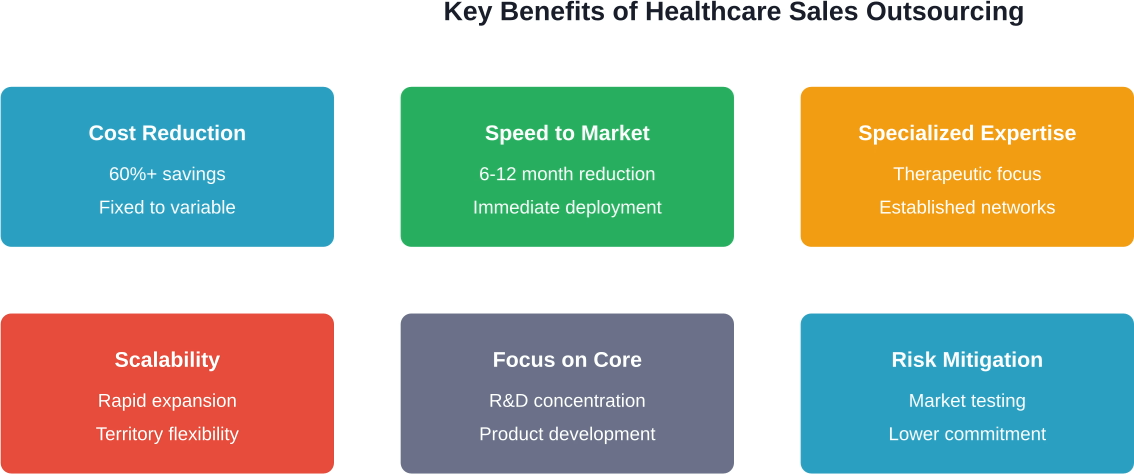
Outsourcing flips this model. Fixed costs become variable expenses tied to actual performance. Companies pay for results, not headcount. Research indicates that over 60% of firms report significant savings through this conversion.
The American Institute of Stress reported that job stress costs U.S. industry more than $300 billion annually. Reducing workloads through strategic outsourcing directly addresses this problem.
Speed to Market
Launching a new medical device or healthcare service takes time. Building a sales team from scratch adds 6-12 months to market entry.
Outsourced providers already have trained reps, established processes, and active networks. They can deploy teams in weeks instead of months.
Access to Specialized Expertise
Healthcare sales aren't generic. Selling orthopedic implants differs fundamentally from marketing diagnostic equipment or pharmaceutical solutions.
Specialized outsourcing firms focus on specific therapeutic categories. Their reps already understand the clinical applications, regulatory requirements, and decision-maker hierarchies. Experience in relevant therapeutic categories can impact success rates in pharmaceutical-biotechnology R&D.
Core Services Available Through Outsourcing
Not all outsourcing relationships look the same. Services range from basic support functions to comprehensive sales management.
Lead Generation and Telemarketing
The foundation of any sales pipeline starts with qualified leads. Outsourced telemarketing teams handle cold calling, prospect qualification, and appointment setting using specialized databases.
Territory Management
Full territory coverage involves outsourced reps managing all sales activities within defined geographic or institutional boundaries. They build relationships, demonstrate products, negotiate contracts, and handle ongoing account management.
Clinical and Technical Support
Complex medical devices and diagnostic equipment require clinical expertise. Outsourced clinical specialists provide training, troubleshooting, and ongoing support to healthcare facilities. Research on outsourcing practice-based education indicates that industry representatives play a role in clinical training at healthcare facilities, though this creates dual sales and support functions that require careful management.
Weighing the Trade-offs
Healthcare sales outsourcing delivers substantial benefits, but it's not without challenges.
The Upside
Cost efficiency tops the list. Converting fixed salary costs to variable performance-based fees improves cash flow and reduces risk. Over 60% of firms report significant savings.
Speed matters too. Outsourced providers deploy faster than internal hiring processes allow. Access to specialized expertise and established networks provides immediate credibility.
The Challenges
Control becomes more complex. Managing external teams requires different skills than directing in-house staff.
Brand representation creates risk. Outsourced reps represent the company but don't carry the same cultural immersion as employees. Quality control requires robust processes.
Compliance and regulatory risks multiply. Healthcare logistics and procurement outsourcing research indicates potential compliance vulnerabilities in complex outsourced relationships requiring careful governance.
Selecting the Right Outsourcing Partner
The provider matters more than the model. A mediocre partner delivering full-service outsourcing will underperform a specialized provider handling targeted functions.
Industry Experience and Therapeutic Focus
Generic sales organizations rarely succeed in healthcare. Look for providers with proven track records in specific therapeutic areas. Ask for case studies, client references, and specific metrics from similar engagements.
Compliance Infrastructure
Healthcare sales operate under strict regulations. Sunshine Act reporting, anti-kickback statutes, HIPAA requirements—these aren't optional.
MGMA research on management services organizations emphasizes that understanding compliance risks is essential when outsourcing functions. Evaluate the provider's compliance training programs, documentation systems, and audit processes.
Technology and Data Management
Modern sales organizations run on data. CRM systems, sales automation tools, analytics platforms—these technologies drive performance.
The outsourcing provider should offer robust technology infrastructure that integrates with existing systems. Data security protocols must meet healthcare standards.
Performance Metrics and Reporting
Establish clear KPIs before engagement begins. Common metrics include:
- Qualified leads generated per month
- Conversion rates from lead to opportunity
- Sales cycle length
- Average deal size
- Territory coverage and physician reach
Pricing Models

Scale Your Healthcare Sales Team Without Constant Turnover
Growing healthcare sales capacity often means hiring specialists who understand both clinical needs and enterprise buying cycles. Many teams struggle with hiring churn and unfit candidates that slow down momentum. NeoWork helps you build a dedicated remote sales team tailored to healthcare products and services. Their 91% annualized teammate retention rate means you keep people who know your market and process, and their 3.2% candidate selectivity rate means you spend time only with proven sales professionals.
If you need to expand your healthcare sales coverage reliably and keep your team stable through longer sales cycles, contact NeoWork to start building a team aligned with your goals.
Implementation Best Practices
Onboarding and Training
Even experienced sales organizations need product-specific training. Don't assume outsourced teams automatically understand product positioning, competitive advantages, or clinical applications.
Develop comprehensive onboarding that covers product specifications, target customer profiles, competitive landscape, pricing structures, and brand messaging.
Integration with Internal Teams
Define clear interfaces between outsourced and internal functions. Who handles pricing exceptions? Which team manages major account relationships? How do product feedback loops work?
Performance Management
Regular performance reviews identify trends, celebrate wins, and address problems. Create feedback mechanisms that flow in both directions.
Maintaining Compliance
Healthcare regulations don't disappear when sales functions move outside the organization. If anything, compliance complexity increases.
Sunshine Act Reporting
The Physician Payments Sunshine Act requires applicable manufacturers of drugs, devices, biologicals, or medical supplies to report transfers of value to covered recipients (physicians, non-physician practitioners, and teaching hospitals). Outsourced teams must follow the same requirements.
Anti-Kickback Considerations
Sales compensation structures must comply with anti-kickback statutes. Work with legal counsel to structure outsourcing agreements that comply with safe harbor provisions.
HIPAA and Data Protection
Outsourced sales teams often access protected health information. Business associate agreements become mandatory, defining data handling requirements and breach notification procedures.
Making the Strategic Decision
Healthcare sales outsourcing isn't a binary choice—it's a spectrum of options ranging from tactical lead generation support to comprehensive territory management.
The right approach depends on specific organizational circumstances. Startups lacking resources benefit from full-service outsourcing that accelerates market entry. Established companies expanding into new therapeutic areas leverage outsourced specialists while maintaining in-house teams for core products.
Success requires clear objectives, thorough due diligence, robust governance, and continuous improvement. Companies that approach outsourcing with these elements consistently outperform those that view it as a quick fix.
Research shows that strategic outsourcing delivers measurable benefits—60%+ cost reductions, faster market entry, and access to established networks. Those benefits don't materialize automatically. They require careful planning, provider selection, and ongoing management.
For healthcare companies ready to explore outsourcing, assess objectives clearly. Evaluate functions strategically. Screen providers thoroughly. Structure agreements thoughtfully. Monitor performance consistently. Maintain compliance rigorously. Optimize continuously.
That systematic approach transforms outsourcing from a cost-cutting tactic into a strategic accelerator that drives sustainable growth.
Frequently Asked Questions
Topics
Healthcare Sales Outsourcing Guide 2026

Healthcare sales outsourcing allows medical companies to delegate sales functions to specialized third-party providers, reducing costs by up to 60% while accelerating market entry. This guide covers key benefits, service models, vendor selection criteria, and compliance considerations to help healthcare organizations make informed outsourcing decisions.
Healthcare companies face mounting pressure. Competition intensifies. Regulations tighten. Sales cycles stretch longer.
The traditional model of building massive in-house sales teams doesn't scale like it used to. Recruiting specialized medical sales reps takes months. Training costs skyrocket. And maintaining full-time staff creates fixed overhead that crushes margins during market fluctuations.
Here's where outsourcing changes things. Healthcare sales outsourcing transfers some or all sales functions to third-party specialists who already know the territory, the regulations, and the buyer psychology. According to research on healthcare outsourcing, over 60% of firms report significant savings when transitioning to contract-based models.
What Healthcare Sales Outsourcing Actually Means
Healthcare sales outsourcing involves partnering with external providers to handle sales activities. These range from lead generation and telemarketing to full-cycle sales management and clinical support.
Three primary models dominate:
- Full-service outsourcing: The provider manages the entire sales process, from market research through contract negotiation
- Targeted function outsourcing: Specific activities like telemarketing, lead qualification, or clinical training get delegated while core sales remain in-house
- Hybrid models: Internal teams handle strategic accounts while outsourced reps cover broader market segments or new territories
According to MGMA research on management services organizations (MSOs), outsourcing non-clinical business functions allows healthcare providers to focus on patient care while benefiting from streamlined operations.
Why Healthcare Companies Choose Outsourced Sales
Cost Conversion and Reduction
Building an in-house medical sales team requires substantial upfront investment. Salaries, benefits, training programs, territories, support staff—it adds up fast.
Outsourcing flips this model. Fixed costs become variable expenses tied to actual performance. Companies pay for results, not headcount. Research indicates that over 60% of firms report significant savings through this conversion.
The American Institute of Stress reported that job stress costs U.S. industry more than $300 billion annually. Reducing workloads through strategic outsourcing directly addresses this problem.
Speed to Market
Launching a new medical device or healthcare service takes time. Building a sales team from scratch adds 6-12 months to market entry.
Outsourced providers already have trained reps, established processes, and active networks. They can deploy teams in weeks instead of months.
Access to Specialized Expertise
Healthcare sales aren't generic. Selling orthopedic implants differs fundamentally from marketing diagnostic equipment or pharmaceutical solutions.
Specialized outsourcing firms focus on specific therapeutic categories. Their reps already understand the clinical applications, regulatory requirements, and decision-maker hierarchies. Experience in relevant therapeutic categories can impact success rates in pharmaceutical-biotechnology R&D.
Core Services Available Through Outsourcing
Not all outsourcing relationships look the same. Services range from basic support functions to comprehensive sales management.
Lead Generation and Telemarketing
The foundation of any sales pipeline starts with qualified leads. Outsourced telemarketing teams handle cold calling, prospect qualification, and appointment setting using specialized databases.
Territory Management
Full territory coverage involves outsourced reps managing all sales activities within defined geographic or institutional boundaries. They build relationships, demonstrate products, negotiate contracts, and handle ongoing account management.
Clinical and Technical Support
Complex medical devices and diagnostic equipment require clinical expertise. Outsourced clinical specialists provide training, troubleshooting, and ongoing support to healthcare facilities. Research on outsourcing practice-based education indicates that industry representatives play a role in clinical training at healthcare facilities, though this creates dual sales and support functions that require careful management.
Weighing the Trade-offs
Healthcare sales outsourcing delivers substantial benefits, but it's not without challenges.
The Upside
Cost efficiency tops the list. Converting fixed salary costs to variable performance-based fees improves cash flow and reduces risk. Over 60% of firms report significant savings.
Speed matters too. Outsourced providers deploy faster than internal hiring processes allow. Access to specialized expertise and established networks provides immediate credibility.
The Challenges
Control becomes more complex. Managing external teams requires different skills than directing in-house staff.
Brand representation creates risk. Outsourced reps represent the company but don't carry the same cultural immersion as employees. Quality control requires robust processes.
Compliance and regulatory risks multiply. Healthcare logistics and procurement outsourcing research indicates potential compliance vulnerabilities in complex outsourced relationships requiring careful governance.
Selecting the Right Outsourcing Partner
The provider matters more than the model. A mediocre partner delivering full-service outsourcing will underperform a specialized provider handling targeted functions.
Industry Experience and Therapeutic Focus
Generic sales organizations rarely succeed in healthcare. Look for providers with proven track records in specific therapeutic areas. Ask for case studies, client references, and specific metrics from similar engagements.
Compliance Infrastructure
Healthcare sales operate under strict regulations. Sunshine Act reporting, anti-kickback statutes, HIPAA requirements—these aren't optional.
MGMA research on management services organizations emphasizes that understanding compliance risks is essential when outsourcing functions. Evaluate the provider's compliance training programs, documentation systems, and audit processes.
Technology and Data Management
Modern sales organizations run on data. CRM systems, sales automation tools, analytics platforms—these technologies drive performance.
The outsourcing provider should offer robust technology infrastructure that integrates with existing systems. Data security protocols must meet healthcare standards.
Performance Metrics and Reporting
Establish clear KPIs before engagement begins. Common metrics include:
- Qualified leads generated per month
- Conversion rates from lead to opportunity
- Sales cycle length
- Average deal size
- Territory coverage and physician reach
Pricing Models
Scale Your Healthcare Sales Team Without Constant Turnover
Growing healthcare sales capacity often means hiring specialists who understand both clinical needs and enterprise buying cycles. Many teams struggle with hiring churn and unfit candidates that slow down momentum. NeoWork helps you build a dedicated remote sales team tailored to healthcare products and services. Their 91% annualized teammate retention rate means you keep people who know your market and process, and their 3.2% candidate selectivity rate means you spend time only with proven sales professionals.
If you need to expand your healthcare sales coverage reliably and keep your team stable through longer sales cycles, contact NeoWork to start building a team aligned with your goals.
Implementation Best Practices
Onboarding and Training
Even experienced sales organizations need product-specific training. Don't assume outsourced teams automatically understand product positioning, competitive advantages, or clinical applications.
Develop comprehensive onboarding that covers product specifications, target customer profiles, competitive landscape, pricing structures, and brand messaging.
Integration with Internal Teams
Define clear interfaces between outsourced and internal functions. Who handles pricing exceptions? Which team manages major account relationships? How do product feedback loops work?
Performance Management
Regular performance reviews identify trends, celebrate wins, and address problems. Create feedback mechanisms that flow in both directions.
Maintaining Compliance
Healthcare regulations don't disappear when sales functions move outside the organization. If anything, compliance complexity increases.
Sunshine Act Reporting
The Physician Payments Sunshine Act requires applicable manufacturers of drugs, devices, biologicals, or medical supplies to report transfers of value to covered recipients (physicians, non-physician practitioners, and teaching hospitals). Outsourced teams must follow the same requirements.
Anti-Kickback Considerations
Sales compensation structures must comply with anti-kickback statutes. Work with legal counsel to structure outsourcing agreements that comply with safe harbor provisions.
HIPAA and Data Protection
Outsourced sales teams often access protected health information. Business associate agreements become mandatory, defining data handling requirements and breach notification procedures.
Making the Strategic Decision
Healthcare sales outsourcing isn't a binary choice—it's a spectrum of options ranging from tactical lead generation support to comprehensive territory management.
The right approach depends on specific organizational circumstances. Startups lacking resources benefit from full-service outsourcing that accelerates market entry. Established companies expanding into new therapeutic areas leverage outsourced specialists while maintaining in-house teams for core products.
Success requires clear objectives, thorough due diligence, robust governance, and continuous improvement. Companies that approach outsourcing with these elements consistently outperform those that view it as a quick fix.
Research shows that strategic outsourcing delivers measurable benefits—60%+ cost reductions, faster market entry, and access to established networks. Those benefits don't materialize automatically. They require careful planning, provider selection, and ongoing management.
For healthcare companies ready to explore outsourcing, assess objectives clearly. Evaluate functions strategically. Screen providers thoroughly. Structure agreements thoughtfully. Monitor performance consistently. Maintain compliance rigorously. Optimize continuously.
That systematic approach transforms outsourcing from a cost-cutting tactic into a strategic accelerator that drives sustainable growth.
Frequently Asked Questions
Topics
Related Blogs
Related Podcasts


.webp)
.webp)



