

.avif)
.avif)

Hyper Casual Game Development Outsourcing Guide 2026


.svg)

Hyper casual game development outsourcing allows studios to reduce costs by 40-60% while accessing specialized global talent pools. The process involves selecting the right outsourcing model (full-cycle, co-development, or task-based), vetting partners through portfolios and test projects, and establishing clear communication protocols to maintain quality and timelines.
The hyper casual gaming market continues to dominate mobile app stores, with titles like Block Blast and Magic Sort generating millions of downloads quarterly. But here's the thing—developing these seemingly simple games requires specialized skills, rapid iteration, and tight production cycles that many studios struggle to maintain in-house.
Outsourcing has become the standard approach across the industry. Even major publishers rely on external teams for specific production phases, from art assets to full-cycle development.
This guide breaks down everything studios need to know about outsourcing hyper casual game development in 2026, from selecting the right partner to managing costs and timelines.
What Makes Hyper Casual Games Different
Hyper casual games share distinct characteristics that separate them from other mobile game categories. The gameplay mechanics are intentionally simple—typically mastered within seconds of opening the app. There's minimal UI, no complex tutorials, and instant gratification through straightforward win/lose conditions.
These games rely on mass-market appeal rather than niche audiences. Download volumes matter more than retention depth. According to Sensor Tower data, top hyper casual titles on Android in the US during Q3 2025 showed dynamic trends. For example, Hole People from Rollic Games showed consistent weekly revenue peaking at around $128K in late July, with downloads starting at about 38K in early July but gradually decreasing to just over 23K by the end of September.
The development cycle for hyper casual games differs significantly from mid-core or hardcore titles. Speed matters. Studios often produce multiple prototypes simultaneously, testing each concept quickly before committing resources to full production.
Art style tends toward bright, clean visuals with minimal detail. Character models are simple, environments are uncluttered, and animations prioritize clarity over complexity. This aesthetic isn't just about style—it's about production efficiency and broad demographic appeal.
Why Studios Outsource Hyper Casual Development
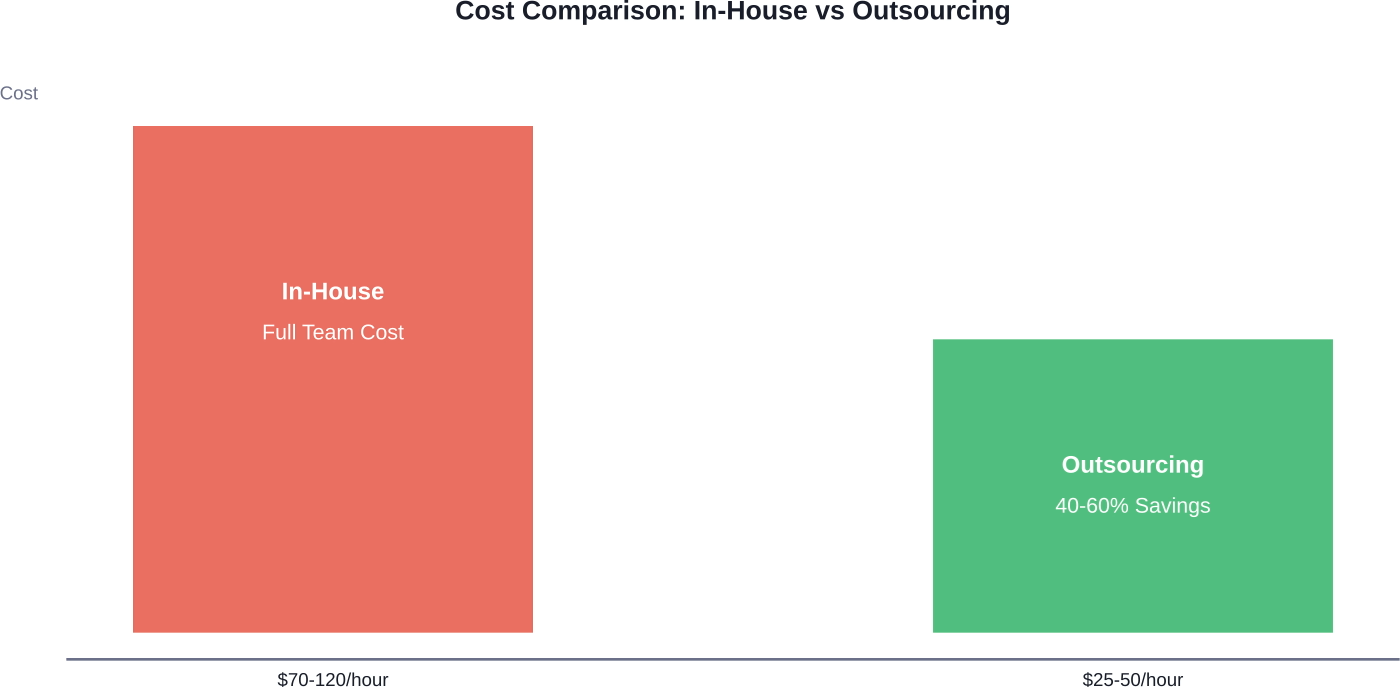
Cost reduction drives many outsourcing decisions. Building an in-house team requires months of recruitment, significant payroll commitments, and ongoing overhead regardless of project volume. Outsourcing can reduce costs by 40-60% compared to Western in-house teams, according to industry data.
Access to specialized talent represents another critical advantage. Hyper casual games demand specific skills: Unity optimization for mobile performance, addictive core loop design, and rapid prototyping capabilities. Finding developers who excel at this particular niche proves challenging in many markets.
Scalability becomes essential when testing multiple concepts simultaneously. An outsourcing partner can spin up additional teams for parallel prototyping, then scale down once concepts are validated or rejected. In-house teams rarely offer this flexibility.
Speed to market matters enormously in hyper casual gaming. Trends shift quickly, and concepts that work today might saturate tomorrow. Outsourcing studios experienced in hyper casual production know the shortcuts, the optimization techniques, and the iteration patterns that compress development timelines.

Hyper-Casual Game Development Outsourcing with NeoWork
Developing hyper-casual games quickly requires agile teams with proven experience. NeoWork connects you with remote developers who can build, test, and deliver lightweight, engaging games.
Key support areas:
- full game development and prototyping
- integration with ad networks and analytics
- cross-platform deployment
- iteration based on user feedback
NeoWork teams can work alongside your studio or manage end-to-end development. Start your hyper-casual game project with NeoWork today to scale development efficiently.
Three Outsourcing Models for Hyper Casual Games
Full-Cycle Development
Full-cycle outsourcing hands the entire production process to an external studio. They handle concept refinement, prototyping, art production, development, testing, and launch preparation. The client provides the initial concept and feedback throughout development but doesn't contribute production resources.
This model works best for publishers without internal development teams, or studios testing hyper casual as a new vertical without established expertise. It offers maximum resource efficiency but requires careful partner selection and clear milestone definitions.
Co-Development Partnership
Co-development splits production between internal and external teams. Typically, the internal team handles core gameplay mechanics and design direction while the outsourcing partner manages art production, UI implementation, or platform-specific optimization.
This approach suits studios with an established core team that needs to scale production capacity without expanding headcount. It maintains creative control while leveraging external expertise for specific production phases.
Task-Based Outsourcing
Task-based outsourcing focuses on specific deliverables: character art, environment assets, animation packages, or sound design. The client defines exact specifications and receives completed assets for integration into their internal pipeline.
This model offers maximum flexibility for studios with strong internal capabilities that need supplemental capacity during production peaks. It works well for teams that have established pipelines and clear asset specifications.
Regional Pricing and Talent Pools
Geographic location significantly impacts outsourcing costs and available expertise. Different regions offer distinct advantages depending on project requirements and budget constraints.
Eastern Europe
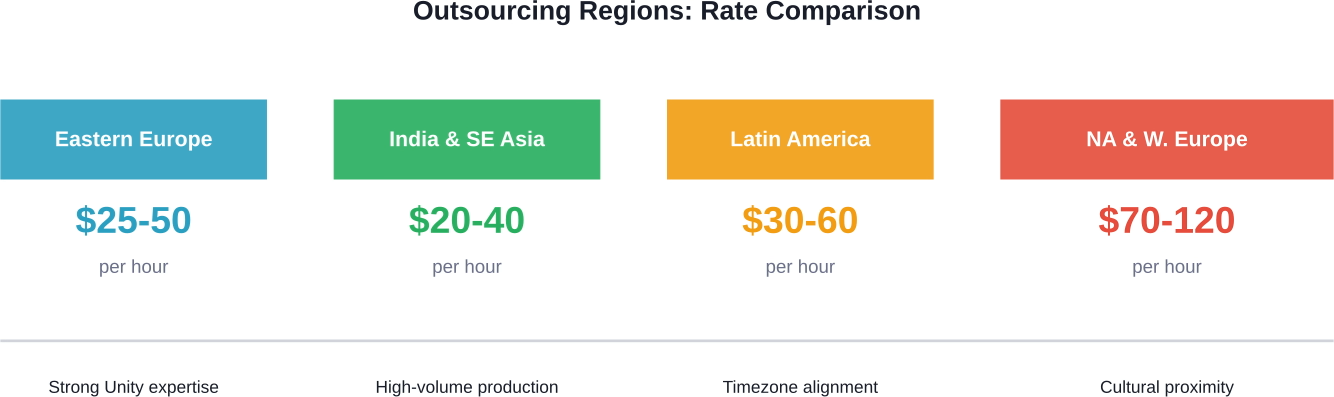
Studios in Ukraine, Poland, and Romania typically charge $25-50 per hour according to market data. This region offers strong technical expertise, particularly in Unity development and mobile optimization. Communication tends to be straightforward with reasonable timezone overlap for European and North American clients.
Eastern European studios often have experience with Western publishers and understand the quality standards and iteration speeds required for competitive hyper casual titles.
India and Southeast Asia
Hourly rates in India, Vietnam, and the Philippines typically range from $20-40. These regions provide large talent pools with particular strengths in art production and UI/UX design. Cost efficiency reaches its peak here, though timezone differences can complicate real-time collaboration.
Many studios in this region specialize in high-volume asset production, making them ideal partners for task-based outsourcing arrangements.
Latin America
Brazilian, Argentine, and Mexican studios generally charge $30-60 per hour. The timezone alignment with North American clients represents a major advantage, enabling real-time communication and faster iteration cycles. Cultural affinity with Western markets often translates to better understanding of target audience preferences.
North America and Western Europe
Rates in these regions typically range from $70-120 per hour. While significantly more expensive, these studios offer proximity, cultural alignment, and often deeper experience with successful hyper casual titles. They work best for publishers prioritizing speed and communication over cost optimization.
How to Choose the Right Outsourcing Partner
Partner selection determines project success more than any other factor. A thorough vetting process saves time, money, and frustration later in production.
Portfolio Analysis
Examine completed hyper casual projects specifically. Look for games that achieved meaningful download numbers or chart positions. Generic portfolio pieces from other game categories don't demonstrate hyper casual expertise.
Check whether their previous projects show understanding of core hyper casual principles: simple mechanics, instant clarity, and addictive core loops. Pretty visuals mean nothing if the gameplay doesn't hook players immediately.
Technical Capabilities
Verify the studio's proficiency with Unity, which dominates hyper casual development. Ask about their optimization techniques for mobile performance, their experience with rewarded video ad integration, and their approach to build size optimization.
Request examples of how they've solved specific technical challenges: reducing load times, optimizing draw calls, or implementing smooth touch controls. Generic technical competence doesn't guarantee hyper casual expertise.
Communication Structure
Establish how the studio handles project communication. Who serves as the primary point of contact? What's their response time for questions and feedback? How do they handle iteration requests?
Request a test project before committing to full production. A small paid prototype reveals communication patterns, iteration speed, and technical capabilities more reliably than any portfolio or pitch presentation.
Production Process
Understand their development methodology. How do they structure milestones? What deliverables mark each phase? How do they handle scope changes or iteration requests?
The best outsourcing partners have established processes specifically for hyper casual production: rapid prototyping frameworks, standardized asset pipelines, and efficient iteration cycles. Studios that treat hyper casual games like complex RPGs will waste time and budget on unnecessary process overhead.
The Hyper Casual Development Process
Concept Validation
Most hyper casual projects begin with multiple concept variations. The outsourcing partner should develop basic prototypes quickly—often within days rather than weeks. These prototypes test core mechanics without polished art or extensive features.
Early testing identifies which concepts demonstrate addictive potential. Many studios test 10+ concepts to find one worth full production investment.
Core Loop Refinement
Once a concept shows promise, development focuses intensively on the core loop: the 5-10 second gameplay cycle that players repeat throughout a session. This phase involves rapid iteration based on playtesting feedback.
Outsourcing studios experienced in hyper casual development understand the specific metrics that indicate a strong core loop: session length, restart rate, and early retention signals.
Art Production
Visual development for hyper casual games prioritizes clarity and broad appeal over artistic complexity. Character designs tend toward simple, recognizable shapes. Environments use bright colors and minimal detail.
According to industry data, simple casual character concepts with final artwork typically range from $300-800, while more detailed mid-core characters run $800-2,500. Hyper casual games generally fall at the lower end of this spectrum due to intentional simplicity.
UI Implementation
Interface design for hyper casual games emphasizes minimal chrome and maximum screen space for gameplay. Menus are simple, buttons are large and obvious, and progression systems remain straightforward.
The best outsourcing partners understand how to implement UI that doesn't interfere with the core gameplay experience while still accommodating monetization elements like rewarded video placements.
Testing and Optimization
Performance optimization matters enormously for hyper casual titles targeting mass-market audiences with varied device capabilities. Build size, load times, and frame rate stability all impact retention metrics.
Experienced outsourcing studios know the common optimization techniques: texture atlasing, draw call reduction, and aggressive LOD systems. They should deliver builds that run smoothly even on lower-end Android devices.
Managing Quality and Communication
Clear communication protocols prevent the majority of outsourcing problems. Establish these systems before production begins, not after issues emerge.
Define milestone deliverables precisely. Vague requirements like "polished gameplay" mean different things to different teams. Instead, specify exact criteria: "60 FPS on Samsung Galaxy S20, load time under 3 seconds, tutorial completion rate above 80%".
Schedule regular check-ins aligned with development phases. Daily standups work well during intense iteration periods. Weekly reviews suit steadier production phases. The key is consistency—irregular communication creates gaps where problems grow unnoticed.
Use collaborative tools that maintain shared context: Notion or Confluence for documentation, Jira or Trello for task tracking, Slack or Discord for quick questions. Email alone doesn't provide sufficient visibility into development progress.
Build feedback loops that encourage iteration without creating scope creep. Distinguish between critical changes that affect core gameplay and optional polish that can wait for post-launch updates.
Common Outsourcing Challenges and Solutions
Quality Control Issues
Quality problems typically stem from unclear specifications or misaligned expectations. Combat this through detailed technical design documents, reference materials, and test projects that establish quality standards before full production.
Implement review checkpoints at multiple production stages rather than waiting for final delivery. Catching issues early costs less than major revisions after completion.
Timeline Delays
Schedule slippage often results from underestimated scope or poor milestone definition. Address this through realistic timeline planning with buffer for iteration and clear definitions of what constitutes completed deliverables.
Research on game development outsourcing, including case studies of major titles, indicates that outsourcing introduces coordination challenges that can impact timelines. Building extra time into schedules for coordination and review prevents these challenges from derailing launch dates.
Communication Breakdowns
Miscommunication costs time and money. Prevent this through establishing single points of contact on both sides, maintaining written records of all decisions, and confirming understanding of requirements before work begins.
Cultural and language differences matter less than clear documentation and structured communication protocols.
Cost Estimation for Hyper Casual Projects
Total project costs vary based on scope, complexity, and partner location. A basic hyper casual game prototype typically runs $5,000-15,000 with Eastern European or Asian studios. Full production through launch can range from $20,000-50,000 depending on art complexity and feature scope.
Cost savings of 30-60% versus Western in-house rates represent typical outcomes according to industry data. Studios in Ukraine, Eastern Europe, and Southeast Asia offer senior-level talent at rates 40-60% lower than equivalent UK, US, or Western European hires, according to 2026 outsourcing guides.
Budget allocation for hyper casual projects typically breaks down into thirds: one-third for prototyping and core loop development, one-third for art and polish, and one-third for testing, optimization, and launch preparation.
Remember that multiple prototype iterations should factor into total costs. Testing five concepts to find one viable title means allocating prototype budgets accordingly.
Intellectual Property and Legal Considerations
Establish clear IP ownership terms before beginning production. Work-for-hire agreements should specify that all code, art, and design deliverables become client property upon payment.
Include non-disclosure agreements covering project details, unreleased concepts, and business information. Most established outsourcing studios have standard NDAs ready for signing.
Define what happens to project materials if the relationship ends prematurely. Who owns partially completed work? What handoff documentation is provided? Address these scenarios upfront rather than during a crisis.
For international partnerships, specify jurisdiction for dispute resolution and which country's laws govern the agreement. This prevents legal confusion if problems arise
Moving Forward with Hyper Casual Outsourcing
Outsourcing hyper casual game development offers proven advantages for studios and publishers aiming to compete in this fast-moving market. Cost reductions of 40-60% compared to in-house development, access to specialized talent pools, and scalability for parallel prototype testing make outsourcing the standard approach across the industry.
Success depends on selecting the right partner through thorough portfolio analysis and test projects, choosing the appropriate outsourcing model for internal capabilities and project requirements, and establishing clear communication protocols before production begins.
Regional differences in pricing and expertise mean studios can optimize for cost efficiency, technical capabilities, or communication convenience based on specific project priorities. Eastern Europe, India and Southeast Asia, and Latin America each offer distinct advantages depending on these factors.
The hyper casual market continues evolving rapidly. Games that work today might saturate tomorrow. Outsourcing provides the flexibility and speed needed to test concepts quickly, iterate based on data, and launch successful titles before market windows close.
Start by identifying 3-4 potential outsourcing partners with proven hyper casual experience. Request portfolio reviews focused specifically on simple, addictive gameplay rather than visual complexity. Run small test projects before committing to full production relationships. This approach minimizes risk while identifying partners who truly understand hyper casual development requirements.
Frequently Asked Questions
Topics
Hyper Casual Game Development Outsourcing Guide 2026

Hyper casual game development outsourcing allows studios to reduce costs by 40-60% while accessing specialized global talent pools. The process involves selecting the right outsourcing model (full-cycle, co-development, or task-based), vetting partners through portfolios and test projects, and establishing clear communication protocols to maintain quality and timelines.
The hyper casual gaming market continues to dominate mobile app stores, with titles like Block Blast and Magic Sort generating millions of downloads quarterly. But here's the thing—developing these seemingly simple games requires specialized skills, rapid iteration, and tight production cycles that many studios struggle to maintain in-house.
Outsourcing has become the standard approach across the industry. Even major publishers rely on external teams for specific production phases, from art assets to full-cycle development.
This guide breaks down everything studios need to know about outsourcing hyper casual game development in 2026, from selecting the right partner to managing costs and timelines.
What Makes Hyper Casual Games Different
Hyper casual games share distinct characteristics that separate them from other mobile game categories. The gameplay mechanics are intentionally simple—typically mastered within seconds of opening the app. There's minimal UI, no complex tutorials, and instant gratification through straightforward win/lose conditions.
These games rely on mass-market appeal rather than niche audiences. Download volumes matter more than retention depth. According to Sensor Tower data, top hyper casual titles on Android in the US during Q3 2025 showed dynamic trends. For example, Hole People from Rollic Games showed consistent weekly revenue peaking at around $128K in late July, with downloads starting at about 38K in early July but gradually decreasing to just over 23K by the end of September.
The development cycle for hyper casual games differs significantly from mid-core or hardcore titles. Speed matters. Studios often produce multiple prototypes simultaneously, testing each concept quickly before committing resources to full production.
Art style tends toward bright, clean visuals with minimal detail. Character models are simple, environments are uncluttered, and animations prioritize clarity over complexity. This aesthetic isn't just about style—it's about production efficiency and broad demographic appeal.
Why Studios Outsource Hyper Casual Development
Cost reduction drives many outsourcing decisions. Building an in-house team requires months of recruitment, significant payroll commitments, and ongoing overhead regardless of project volume. Outsourcing can reduce costs by 40-60% compared to Western in-house teams, according to industry data.
Access to specialized talent represents another critical advantage. Hyper casual games demand specific skills: Unity optimization for mobile performance, addictive core loop design, and rapid prototyping capabilities. Finding developers who excel at this particular niche proves challenging in many markets.
Scalability becomes essential when testing multiple concepts simultaneously. An outsourcing partner can spin up additional teams for parallel prototyping, then scale down once concepts are validated or rejected. In-house teams rarely offer this flexibility.
Speed to market matters enormously in hyper casual gaming. Trends shift quickly, and concepts that work today might saturate tomorrow. Outsourcing studios experienced in hyper casual production know the shortcuts, the optimization techniques, and the iteration patterns that compress development timelines.
Hyper-Casual Game Development Outsourcing with NeoWork
Developing hyper-casual games quickly requires agile teams with proven experience. NeoWork connects you with remote developers who can build, test, and deliver lightweight, engaging games.
Key support areas:
- full game development and prototyping
- integration with ad networks and analytics
- cross-platform deployment
- iteration based on user feedback
NeoWork teams can work alongside your studio or manage end-to-end development. Start your hyper-casual game project with NeoWork today to scale development efficiently.
Three Outsourcing Models for Hyper Casual Games
Full-Cycle Development
Full-cycle outsourcing hands the entire production process to an external studio. They handle concept refinement, prototyping, art production, development, testing, and launch preparation. The client provides the initial concept and feedback throughout development but doesn't contribute production resources.
This model works best for publishers without internal development teams, or studios testing hyper casual as a new vertical without established expertise. It offers maximum resource efficiency but requires careful partner selection and clear milestone definitions.
Co-Development Partnership
Co-development splits production between internal and external teams. Typically, the internal team handles core gameplay mechanics and design direction while the outsourcing partner manages art production, UI implementation, or platform-specific optimization.
This approach suits studios with an established core team that needs to scale production capacity without expanding headcount. It maintains creative control while leveraging external expertise for specific production phases.
Task-Based Outsourcing
Task-based outsourcing focuses on specific deliverables: character art, environment assets, animation packages, or sound design. The client defines exact specifications and receives completed assets for integration into their internal pipeline.
This model offers maximum flexibility for studios with strong internal capabilities that need supplemental capacity during production peaks. It works well for teams that have established pipelines and clear asset specifications.
Regional Pricing and Talent Pools
Geographic location significantly impacts outsourcing costs and available expertise. Different regions offer distinct advantages depending on project requirements and budget constraints.
Eastern Europe
Studios in Ukraine, Poland, and Romania typically charge $25-50 per hour according to market data. This region offers strong technical expertise, particularly in Unity development and mobile optimization. Communication tends to be straightforward with reasonable timezone overlap for European and North American clients.
Eastern European studios often have experience with Western publishers and understand the quality standards and iteration speeds required for competitive hyper casual titles.
India and Southeast Asia
Hourly rates in India, Vietnam, and the Philippines typically range from $20-40. These regions provide large talent pools with particular strengths in art production and UI/UX design. Cost efficiency reaches its peak here, though timezone differences can complicate real-time collaboration.
Many studios in this region specialize in high-volume asset production, making them ideal partners for task-based outsourcing arrangements.
Latin America
Brazilian, Argentine, and Mexican studios generally charge $30-60 per hour. The timezone alignment with North American clients represents a major advantage, enabling real-time communication and faster iteration cycles. Cultural affinity with Western markets often translates to better understanding of target audience preferences.
North America and Western Europe
Rates in these regions typically range from $70-120 per hour. While significantly more expensive, these studios offer proximity, cultural alignment, and often deeper experience with successful hyper casual titles. They work best for publishers prioritizing speed and communication over cost optimization.
How to Choose the Right Outsourcing Partner
Partner selection determines project success more than any other factor. A thorough vetting process saves time, money, and frustration later in production.
Portfolio Analysis
Examine completed hyper casual projects specifically. Look for games that achieved meaningful download numbers or chart positions. Generic portfolio pieces from other game categories don't demonstrate hyper casual expertise.
Check whether their previous projects show understanding of core hyper casual principles: simple mechanics, instant clarity, and addictive core loops. Pretty visuals mean nothing if the gameplay doesn't hook players immediately.
Technical Capabilities
Verify the studio's proficiency with Unity, which dominates hyper casual development. Ask about their optimization techniques for mobile performance, their experience with rewarded video ad integration, and their approach to build size optimization.
Request examples of how they've solved specific technical challenges: reducing load times, optimizing draw calls, or implementing smooth touch controls. Generic technical competence doesn't guarantee hyper casual expertise.
Communication Structure
Establish how the studio handles project communication. Who serves as the primary point of contact? What's their response time for questions and feedback? How do they handle iteration requests?
Request a test project before committing to full production. A small paid prototype reveals communication patterns, iteration speed, and technical capabilities more reliably than any portfolio or pitch presentation.
Production Process
Understand their development methodology. How do they structure milestones? What deliverables mark each phase? How do they handle scope changes or iteration requests?
The best outsourcing partners have established processes specifically for hyper casual production: rapid prototyping frameworks, standardized asset pipelines, and efficient iteration cycles. Studios that treat hyper casual games like complex RPGs will waste time and budget on unnecessary process overhead.
The Hyper Casual Development Process
Concept Validation
Most hyper casual projects begin with multiple concept variations. The outsourcing partner should develop basic prototypes quickly—often within days rather than weeks. These prototypes test core mechanics without polished art or extensive features.
Early testing identifies which concepts demonstrate addictive potential. Many studios test 10+ concepts to find one worth full production investment.
Core Loop Refinement
Once a concept shows promise, development focuses intensively on the core loop: the 5-10 second gameplay cycle that players repeat throughout a session. This phase involves rapid iteration based on playtesting feedback.
Outsourcing studios experienced in hyper casual development understand the specific metrics that indicate a strong core loop: session length, restart rate, and early retention signals.
Art Production
Visual development for hyper casual games prioritizes clarity and broad appeal over artistic complexity. Character designs tend toward simple, recognizable shapes. Environments use bright colors and minimal detail.
According to industry data, simple casual character concepts with final artwork typically range from $300-800, while more detailed mid-core characters run $800-2,500. Hyper casual games generally fall at the lower end of this spectrum due to intentional simplicity.
UI Implementation
Interface design for hyper casual games emphasizes minimal chrome and maximum screen space for gameplay. Menus are simple, buttons are large and obvious, and progression systems remain straightforward.
The best outsourcing partners understand how to implement UI that doesn't interfere with the core gameplay experience while still accommodating monetization elements like rewarded video placements.
Testing and Optimization
Performance optimization matters enormously for hyper casual titles targeting mass-market audiences with varied device capabilities. Build size, load times, and frame rate stability all impact retention metrics.
Experienced outsourcing studios know the common optimization techniques: texture atlasing, draw call reduction, and aggressive LOD systems. They should deliver builds that run smoothly even on lower-end Android devices.
Managing Quality and Communication
Clear communication protocols prevent the majority of outsourcing problems. Establish these systems before production begins, not after issues emerge.
Define milestone deliverables precisely. Vague requirements like "polished gameplay" mean different things to different teams. Instead, specify exact criteria: "60 FPS on Samsung Galaxy S20, load time under 3 seconds, tutorial completion rate above 80%".
Schedule regular check-ins aligned with development phases. Daily standups work well during intense iteration periods. Weekly reviews suit steadier production phases. The key is consistency—irregular communication creates gaps where problems grow unnoticed.
Use collaborative tools that maintain shared context: Notion or Confluence for documentation, Jira or Trello for task tracking, Slack or Discord for quick questions. Email alone doesn't provide sufficient visibility into development progress.
Build feedback loops that encourage iteration without creating scope creep. Distinguish between critical changes that affect core gameplay and optional polish that can wait for post-launch updates.
Common Outsourcing Challenges and Solutions
Quality Control Issues
Quality problems typically stem from unclear specifications or misaligned expectations. Combat this through detailed technical design documents, reference materials, and test projects that establish quality standards before full production.
Implement review checkpoints at multiple production stages rather than waiting for final delivery. Catching issues early costs less than major revisions after completion.
Timeline Delays
Schedule slippage often results from underestimated scope or poor milestone definition. Address this through realistic timeline planning with buffer for iteration and clear definitions of what constitutes completed deliverables.
Research on game development outsourcing, including case studies of major titles, indicates that outsourcing introduces coordination challenges that can impact timelines. Building extra time into schedules for coordination and review prevents these challenges from derailing launch dates.
Communication Breakdowns
Miscommunication costs time and money. Prevent this through establishing single points of contact on both sides, maintaining written records of all decisions, and confirming understanding of requirements before work begins.
Cultural and language differences matter less than clear documentation and structured communication protocols.
Cost Estimation for Hyper Casual Projects
Total project costs vary based on scope, complexity, and partner location. A basic hyper casual game prototype typically runs $5,000-15,000 with Eastern European or Asian studios. Full production through launch can range from $20,000-50,000 depending on art complexity and feature scope.
Cost savings of 30-60% versus Western in-house rates represent typical outcomes according to industry data. Studios in Ukraine, Eastern Europe, and Southeast Asia offer senior-level talent at rates 40-60% lower than equivalent UK, US, or Western European hires, according to 2026 outsourcing guides.
Budget allocation for hyper casual projects typically breaks down into thirds: one-third for prototyping and core loop development, one-third for art and polish, and one-third for testing, optimization, and launch preparation.
Remember that multiple prototype iterations should factor into total costs. Testing five concepts to find one viable title means allocating prototype budgets accordingly.
Intellectual Property and Legal Considerations
Establish clear IP ownership terms before beginning production. Work-for-hire agreements should specify that all code, art, and design deliverables become client property upon payment.
Include non-disclosure agreements covering project details, unreleased concepts, and business information. Most established outsourcing studios have standard NDAs ready for signing.
Define what happens to project materials if the relationship ends prematurely. Who owns partially completed work? What handoff documentation is provided? Address these scenarios upfront rather than during a crisis.
For international partnerships, specify jurisdiction for dispute resolution and which country's laws govern the agreement. This prevents legal confusion if problems arise
Moving Forward with Hyper Casual Outsourcing
Outsourcing hyper casual game development offers proven advantages for studios and publishers aiming to compete in this fast-moving market. Cost reductions of 40-60% compared to in-house development, access to specialized talent pools, and scalability for parallel prototype testing make outsourcing the standard approach across the industry.
Success depends on selecting the right partner through thorough portfolio analysis and test projects, choosing the appropriate outsourcing model for internal capabilities and project requirements, and establishing clear communication protocols before production begins.
Regional differences in pricing and expertise mean studios can optimize for cost efficiency, technical capabilities, or communication convenience based on specific project priorities. Eastern Europe, India and Southeast Asia, and Latin America each offer distinct advantages depending on these factors.
The hyper casual market continues evolving rapidly. Games that work today might saturate tomorrow. Outsourcing provides the flexibility and speed needed to test concepts quickly, iterate based on data, and launch successful titles before market windows close.
Start by identifying 3-4 potential outsourcing partners with proven hyper casual experience. Request portfolio reviews focused specifically on simple, addictive gameplay rather than visual complexity. Run small test projects before committing to full production relationships. This approach minimizes risk while identifying partners who truly understand hyper casual development requirements.
Frequently Asked Questions
Topics
Related Blogs
Related Podcasts


.webp)
.webp)



