

.avif)
.avif)

Lead Generation Outsourcing Guide 2026: Complete Strategy


.svg)

Lead generation outsourcing involves partnering with specialized agencies to handle prospecting, outreach, and lead qualification. Outsourcing B2B lead generation delivers results while cutting costs and accessing expert teams. Choose providers based on specialization, tech stack, pricing models, and proven track records to build a sustainable sales pipeline.
Building a reliable sales pipeline isn't getting any easier. Teams are stretched thin, buyers are fatigued from constant outreach, and traditional tactics are losing effectiveness faster than ever.
The pressure to generate qualified leads while managing daily operations can quickly lead to burnout. This is where lead generation outsourcing comes in.
By partnering with specialized agencies, businesses tap into expert teams, proven methodologies, and premium tools without the overhead of building everything in-house. But here's the thing—not all outsourcing relationships deliver the same results.
This guide breaks down everything needed to make outsourcing work: when to outsource, how to choose the right partner, what to expect in terms of costs and results, and how to avoid common pitfalls that derail campaigns.
What Is Lead Generation Outsourcing?
Lead generation outsourcing means handing off some or all of the prospecting and qualification process to an external agency or service provider.
Instead of building an internal team from scratch, companies partner with specialists who handle the heavy lifting. This includes identifying target audiences, executing outreach campaigns, nurturing prospects, and delivering qualified leads ready for sales conversations.
The scope varies depending on business needs. Some companies outsource only the top-of-funnel activities like list building and cold outreach. Others delegate the entire process, including lead qualification and appointment setting.
Traditional outsourcing meant delegating cheap, routine tasks. That model is outdated. Modern lead generation outsourcing is about accessing specialized expertise that accelerates momentum and drives revenue growth.
Why Lead Generation Matters for Business Growth
Lead generation is the fuel that powers sales pipelines. Without a consistent flow of qualified prospects, even the best sales teams struggle to hit targets.
According to research, 50% of marketers prioritize lead generation in their marketing campaigns. The reason? High-quality leads translate directly to better conversion rates and faster revenue growth.
Email marketing campaigns, social media outreach, and other channels become more effective when supported by a steady stream of qualified leads. But capturing attention requires creativity, precision, and relentless execution—resources many internal teams simply don't have.
Why Companies Outsource Lead Generation
The decision to outsource lead generation stems from several practical realities facing modern businesses.
Access to Specialized Expertise
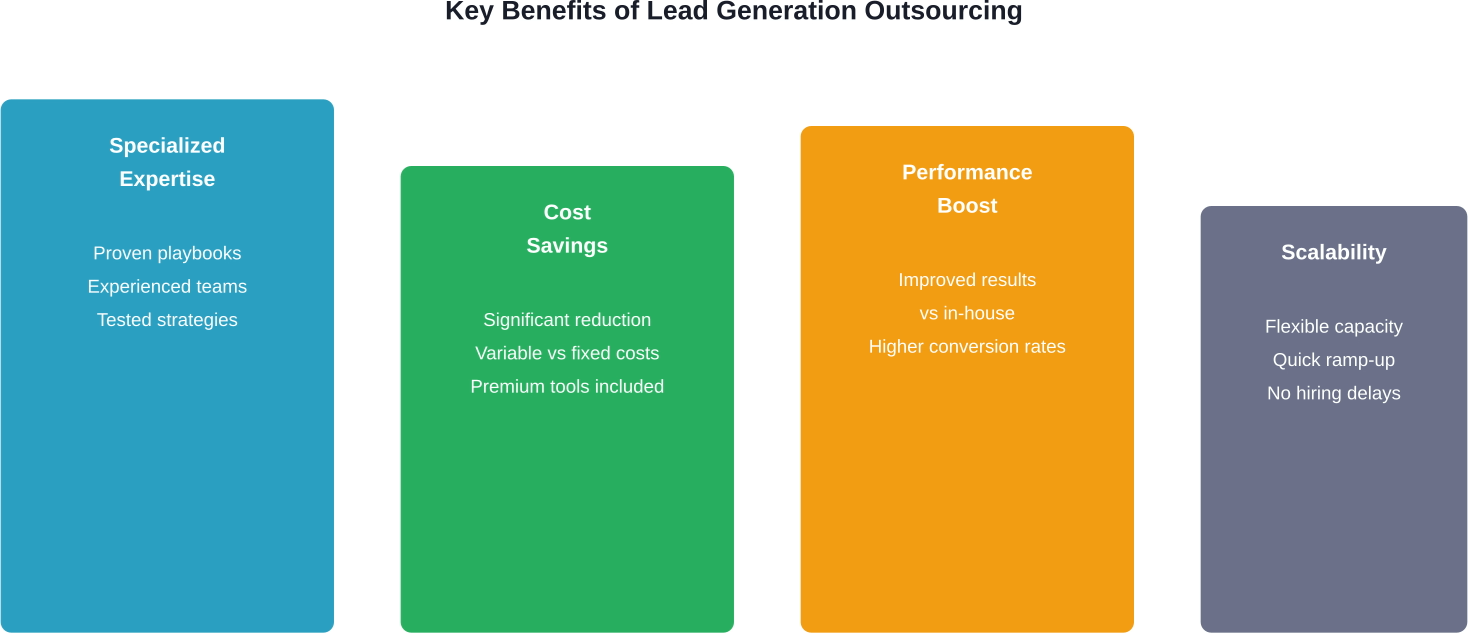
Lead generation agencies live and breathe prospecting. Their teams have spent years refining messaging, testing outreach channels, and optimizing conversion paths.
This specialized knowledge delivers results faster than trial-and-error approaches. Instead of spending months learning what works, businesses get immediate access to proven playbooks and experienced practitioners.
Cost Efficiency and Resource Allocation
Building an in-house lead generation team requires significant investment. Salaries, training, tools, and management overhead add up quickly.
Outsourcing converts these fixed costs into variable expenses. Pay for results rather than maintaining permanent headcount. Businesses may see significant staffing cost reductions through outsourcing partnerships.
Leading agencies offer industry-leading tools at no extra cost. At some providers, this includes proprietary email deliverability solutions, validation services, LinkedIn outreach instruments, and list scraping tools—saving potentially significant annual software expenses.
Scalability and Flexibility
Market conditions change. Campaign needs fluctuate. Outsourcing provides the flexibility to scale efforts up or down without the complications of hiring or layoffs.
Need to ramp up for a product launch? Scale back during slower quarters? Outsourced teams adapt quickly to changing demands.
Focus on Core Business Functions
When internal teams spend less time prospecting, they can focus on what they do best—closing deals, developing products, and serving customers.
The data supports this approach: studies show that outsourcing B2B lead generation can yield more results than in-house efforts. That's a significant performance advantage that frees internal resources for higher-value activities.
When Should Companies Outsource Lead Generation?
Timing matters. Not every business is ready for outsourcing, and jumping in too early—or waiting too long—can waste resources.
Signs It's Time to Outsource
Internal teams are stretched thin juggling multiple priorities. The sales pipeline suffers when prospecting takes a backseat to other responsibilities.
Lead quality is inconsistent. If the team is generating volume but not qualified prospects, specialized expertise can improve targeting and qualification processes.
Growth targets are accelerating. Scaling quickly requires more leads than internal teams can realistically generate without burning out.
Tools and technology gaps exist. Modern lead generation requires sophisticated tech stacks that cost tens of thousands annually. Outsourcing provides instant access to these platforms.
Market expansion is planned. Entering new verticals or geographic markets demands research and testing that specialized agencies handle more efficiently.
When to Keep Lead Generation In-House
Some situations favor internal teams. Companies with highly specialized, niche products may struggle to find agencies with relevant domain expertise.
Early-stage startups still figuring out product-market fit often benefit from direct customer conversations that in-house prospecting enables.
Organizations with strong existing lead generation operations and happy teams may not need outside help. Don't fix what isn't broken.
The Essential Lead Generation Tech Stack
Technology drives modern lead generation. Without the right tools, even talented teams struggle to deliver consistent results.
Each part of the tech stack plays a specific role in moving prospects from awareness to conversation to contract. When one piece is missing, friction shows up fast.
Customer Relationship Management (CRM)
CRM platforms serve as the central hub for managing prospect data, tracking interactions, and measuring pipeline health.
The global CRM BPO market is forecast to grow significantly through 2030, reinforcing the critical role these systems play in sales operations.
Leading agencies integrate with major CRM platforms to ensure seamless data flow and real-time visibility into campaign performance.
Email Validation and Deliverability Tools
Sending emails to invalid addresses tanks sender reputation and deliverability rates. Validation services scrub lists before campaigns launch.
Proprietary deliverability solutions monitor inbox placement, identify spam triggers, and optimize send patterns to maximize open rates.
Users who have experienced the greatest value from advanced email platforms have reported competitive cold email open rates.
LinkedIn Outreach and Automation
LinkedIn remains a powerful channel for B2B prospecting. Specialized tools automate connection requests, message sequences, and profile optimization while staying within platform guidelines.
LinkedIn Sales Navigator provides advanced search filters and lead recommendations that improve targeting precision.
Data Scraping and List Building
High-quality prospect lists are the foundation of successful campaigns. Data scraping tools pull contact information from multiple sources and enrich records with firmographic and demographic details.
This infrastructure can cost upwards of $10,000 annually for businesses building it themselves. Outsourcing provides immediate access without the capital investment.
Proven Strategies for Effective Lead Generation Outsourcing
Traditional outsourcing lead generation methods are failing. Buyer fatigue and overcrowded channels demand fresh approaches.
High-performing agencies combine inbound authority, outbound precision, and marketplace visibility. A modern tech stack is essential—but tools alone won't save a weak strategy.
Multi-Channel Approach
Relying on a single channel creates vulnerability. Email saturation? LinkedIn restrictions? Algorithm changes? Diversification protects against platform-specific risks.
Effective outsourcing partners orchestrate campaigns across email, LinkedIn, phone, and even direct mail. Each channel reaches different prospect segments and reinforces messaging through multiple touchpoints.
Account-Based Marketing Integration
For B2B companies targeting enterprise accounts, account-based strategies deliver better results than spray-and-pray tactics.
Agencies build custom campaigns for specific target accounts, coordinating messaging across decision-makers and aligning outreach with sales priorities.
Content-Driven Lead Magnets
Cold outreach works better when backed by valuable content. Whitepapers, case studies, and research reports give prospects a reason to engage.
Leading agencies develop content assets as part of their service, creating resources that attract inbound interest while supporting outbound campaigns.
Precision Targeting and Segmentation
Generic messaging to broad audiences wastes resources. Advanced segmentation based on industry, company size, role, and behavior improves relevance and response rates.
Agencies with deep vertical expertise understand buyer personas, pain points, and decision-making processes—knowledge that sharpens targeting.
How to Choose the Right Lead Generation Partner
Selecting the wrong outsourcing partner can damage the brand and drain budgets. The right partner becomes a true extension of the sales team.
Industry Specialization and Track Record
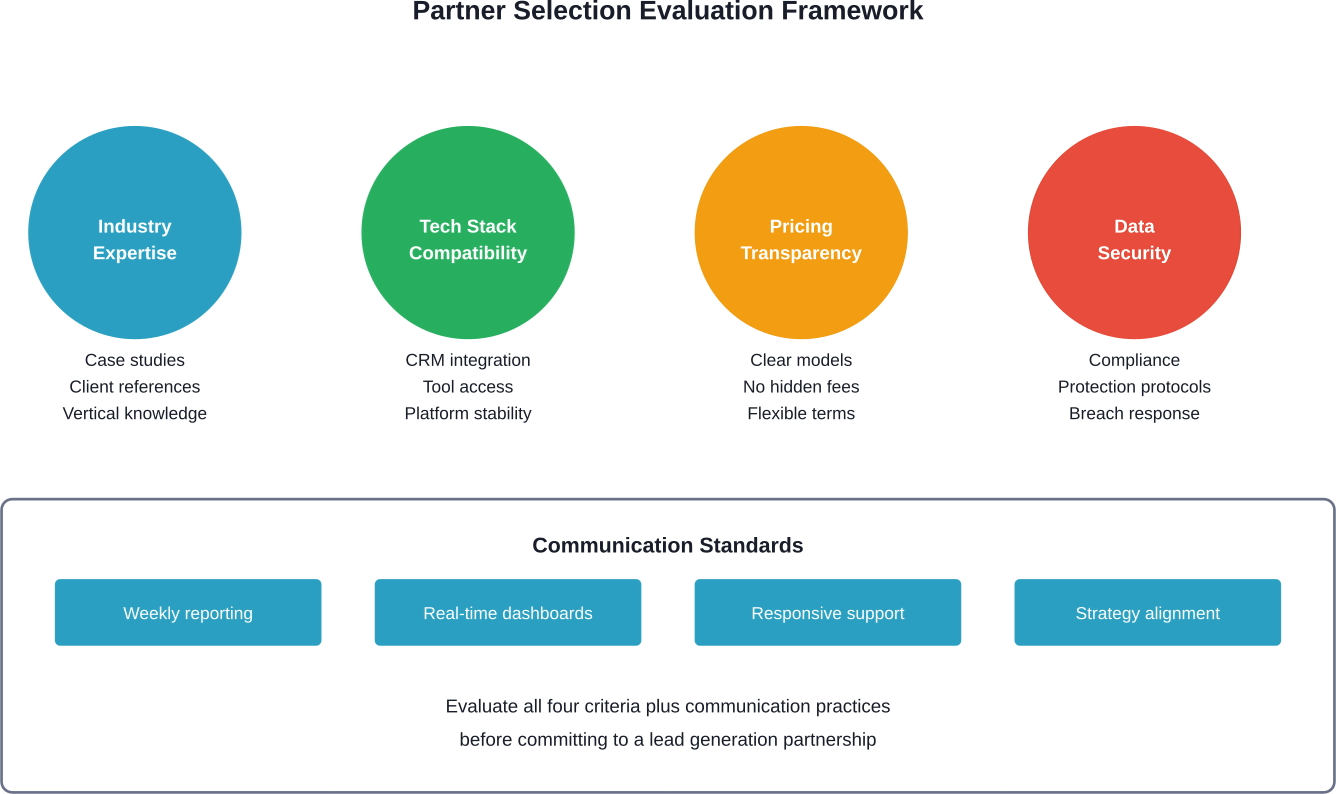
Look for agencies with proven experience in the relevant industry. B2B SaaS lead generation differs dramatically from manufacturing or healthcare.
Ask for case studies, client references, and specific results they've delivered for similar companies. Vague promises mean nothing—demand concrete evidence.
Transparency and Communication
Partners should provide regular reporting on key metrics: leads generated, conversion rates, cost per lead, and pipeline contribution.
Real talk: if an agency won't share detailed performance data or resists weekly check-ins, that's a red flag. Transparency builds trust and enables optimization.
Tech Stack Compatibility
The agency's tools need to integrate smoothly with existing systems. CRM compatibility is non-negotiable—data silos kill visibility and slow sales cycles.
Confirm which tools are included in the service package and which require additional fees. Hidden costs erode the economic advantages of outsourcing.
Pricing Models and Contracts
Lead generation services typically use one of three pricing structures: pay-per-lead, monthly retainer, or performance-based fees.
Pay-per-lead models charge for each qualified prospect delivered. Monthly retainers cover ongoing services regardless of volume. Performance-based agreements tie fees to business outcomes like closed deals.
Contract terms matter too. Avoid long lock-ins during initial partnerships—90-day trials allow testing without excessive commitment.
Data Security and Compliance
Handing over prospect data to third parties creates risk. Data breaches can have serious financial consequences for companies, including stock value impacts and increased audit costs.
Verify that agencies follow GDPR, CCPA, and other relevant data protection regulations. Ask about their security protocols, employee training, and breach response procedures.
Scale Lead Generation Through Structured Outsourcing

Lead generation outsourcing requires disciplined outreach, data management, and consistent follow-through. NeoWork provides dedicated remote teams for prospecting, outreach support, CRM updates, and qualification workflows. Their 91% annualized teammate retention rate and 3.2% candidate selectivity rate reduce churn and protect institutional knowledge inside your pipeline. That stability helps maintain predictable outreach performance over time.
Ready to Strengthen Your Lead Generation Engine?
Talk with NeoWork to:
- build a focused outreach and support team
- maintain clean CRM processes
- scale prospecting without sacrificing quality
👉 Contact NeoWork to structure your lead generation outsourcing strategy.
Cost Breakdown: What to Expect When Outsourcing Lead Generation
Pricing varies widely based on service scope, industry complexity, and lead quality standards.
Typical Pricing Models
- Entry-level packages start around $2,000-$3,000 monthly for basic LinkedIn outreach and limited meeting bookings.
- Mid-tier services range from $5,000-$10,000 monthly and often include multi-channel campaigns, advanced targeting, and higher meeting volumes.
- Enterprise programs can exceed $15,000 monthly for comprehensive lead generation with dedicated teams, custom content development, and aggressive volume targets.
The short answer? Plan to invest at least $3,000-$5,000 monthly for quality outsourced lead generation that moves the needle. Cheaper options often deliver poor-quality leads that waste sales time.
Hidden Costs to Watch For
Setup fees for onboarding and campaign configuration can add $1,000-$5,000 upfront.
Some agencies charge separately for tools, data access, or premium features not included in base packages.
Contract cancellation fees may apply if partnerships end before minimum terms expire.
ROI Considerations
Cost per lead is one metric, but cost per qualified opportunity and cost per closed deal matter more.
A $10,000 monthly investment that generates 50 qualified opportunities can deliver significant ROI if the average deal value is $50,000 and close rates hit 20%. That's 10 deals worth $500,000 from a $10,000 investment.
Compare that math against in-house costs: salaries, benefits, tools, management overhead, and ramp time. Outsourcing often wins on pure economics.
Measuring Success: Key Metrics for Outsourced Lead Generation
Data-driven evaluation separates effective partnerships from expensive failures.
Volume Metrics
Leads generated per month establishes baseline output. But volume without quality is worthless.
Track meetings booked, not just contacts delivered. Conversations matter more than email addresses.
Quality Metrics
Lead qualification rate measures what percentage of delivered leads meet established criteria. Low qualification rates indicate targeting problems.
Sales acceptance rate shows how many leads the sales team actually pursues. If sales is rejecting most leads, alignment issues exist.
Opportunity conversion rate tracks how many accepted leads progress to real sales opportunities.
Efficiency Metrics
Cost per lead divides total investment by lead volume.
Cost per qualified opportunity provides better insight into actual pipeline contribution.
Time to first meeting measures how quickly new leads enter sales conversations.
Business Impact Metrics
Pipeline value generated shows total deal value attributed to outsourced leads.
Revenue closed tracks actual bookings from outsourced campaigns.
Customer acquisition cost (CAC) compares total investment to customers acquired.
Common Pitfalls and How to Avoid Them
Even well-intentioned outsourcing relationships can stumble. Watch for these common mistakes.
Unclear Success Criteria
Vague goals create misalignment. Define specific targets upfront: number of qualified meetings, cost per opportunity, minimum lead quality standards.
Document these criteria in service agreements so both parties know exactly what success looks like.
Inadequate Onboarding
Agencies can't generate quality leads without understanding the product, buyer personas, value propositions, and competitive landscape.
Invest time in thorough onboarding. Share customer research, win/loss analyses, and messaging frameworks. The better agencies understand the business, the better they'll perform.
Lack of Sales and Marketing Alignment
Sales funnels fail when messaging, handoffs, and follow-up processes aren't coordinated.
Establish clear service-level agreements (SLAs) between outsourced teams and internal sales. How quickly will sales contact new leads? What constitutes a qualified lead? Who handles objections?
Set-It-and-Forget-It Mentality
Outsourcing doesn't mean abdicating responsibility. Successful partnerships require ongoing collaboration, feedback, and optimization.
Schedule regular strategy reviews. Share what's working in sales conversations. Provide market intelligence that helps agencies refine targeting.
Choosing Based on Price Alone
The cheapest option rarely delivers the best results. Low-cost providers often rely on outdated tactics, poor data quality, and inexperienced teams.
Evaluate total value, not just monthly fees. Premium services that deliver qualified opportunities and closed deals cost more upfront but generate superior ROI.
The Pros and Cons of Outsourcing Lead Generation
No strategy is perfect. Understanding trade-offs helps set realistic expectations.
Advantages
- Faster time to results: Agencies hit the ground running with proven playbooks and existing infrastructure.
- Access to premium tools: Gain immediate access to technology that would cost thousands to license independently.
- Specialized expertise: Tap into years of experience across industries, channels, and tactics.
- Scalable capacity: Ramp campaigns up or down without hiring or layoffs.
- Measurable ROI: Performance-based agreements align incentives and enable clear attribution.
Disadvantages
- Less direct control: External teams operate with some autonomy, which can feel uncomfortable for hands-on leaders.
- Brand risk: Poor outreach quality damages reputation. Vet agencies carefully to protect brand integrity.
- Learning curve: Agencies need time to understand products and markets. Initial results may lag expectations.
- Dependency risk: Over-reliance on external partners can leave businesses vulnerable if relationships end abruptly.
- Data security concerns: Sharing prospect data with third parties creates compliance and protection risks.
Best Practices for Optimizing Your Sales Funnel with Outsourced Lead Generation
Integration matters as much as execution. These practices maximize results from outsourced campaigns.
Define Clear Lead Qualification Criteria
Marketing Qualified Leads (MQLs) and Sales Qualified Leads (SQLs) should have explicit definitions based on firmographic fit, engagement signals, and buying intent.
Share these definitions with outsourcing partners so they target the right prospects from day one.
Establish Rapid Follow-Up Processes
Speed kills—in a good way. The faster sales contacts new leads, the higher the conversion rates.
Set internal SLAs requiring sales outreach within hours, not days, of lead delivery.
Create Feedback Loops
Sales teams should regularly report lead quality back to outsourcing partners. What objections are prospects raising? Which industries are converting best? What messaging resonates?
This intelligence helps agencies continuously refine targeting and messaging.
Test and Iterate
Campaign performance improves through iteration. Test different value propositions, outreach channels, and audience segments.
Analyze what's working and double down on high-performing tactics while pruning underperformers.
Align Content Marketing
Support outbound campaigns with relevant content that demonstrates expertise and builds trust.
Case studies, industry reports, and educational resources give prospects reasons to engage and stay engaged.
Industry-Specific Considerations
Different sectors face unique lead generation challenges.
B2B SaaS
Software companies benefit from product-led growth combined with outbound prospecting. Free trials and demos work well as conversion mechanisms.
Long sales cycles and multiple decision-makers require sustained nurture campaigns and account-based strategies.
Professional Services
Consulting, legal, and financial services rely heavily on trust and credentials. Thought leadership content and referrals complement direct outreach.
Agencies with vertical expertise understand regulatory constraints and buying processes specific to these industries.
Manufacturing and Industrial B2B
Technical products with complex specifications demand deep product knowledge. Generic messaging fails.
Buyer personas span procurement, engineering, and executive roles—each requiring different value propositions and communication styles.
Healthcare and Life Sciences
Strict compliance requirements and lengthy approval processes characterize healthcare lead generation.
Agencies must understand HIPAA, FDA regulations, and clinical validation processes to effectively engage healthcare buyers.
The Future of Lead Generation Outsourcing
Several trends are reshaping how companies approach outsourced lead generation.
AI and Automation Integration
Artificial intelligence is enhancing lead scoring, message personalization, and outreach timing. Agencies incorporating AI tools deliver better targeting and higher conversion rates.
But technology alone isn't enough. Human expertise remains critical for strategy, creative messaging, and relationship building.
Increased Focus on Personalization
Generic mass outreach continues losing effectiveness. Buyers expect personalized experiences tailored to their specific needs and contexts.
Outsourcing can help companies meet rising customer expectations for personalization—a key factor in driving conversions.
Hybrid Models
Many companies are adopting hybrid approaches that combine in-house and outsourced capabilities.
Internal teams handle strategic accounts and relationship management while outsourced partners drive volume prospecting and top-of-funnel activities.
Greater Emphasis on Quality Over Quantity
The days of flooding sales teams with unqualified contacts are ending. Modern outsourcing focuses on delivering fewer, higher-quality leads that actually convert.
Performance metrics are shifting from lead volume to pipeline contribution and revenue impact.
Conclusion: Making Lead Generation Outsourcing Work
Lead generation outsourcing offers compelling advantages: specialized expertise, cost efficiency, scalability, and faster time to results. The data backs it up—businesses outsourcing B2B lead generation see results while those keeping everything in-house face steeper challenges.
But success isn't automatic. Choosing the right partner matters enormously. Look for proven industry expertise, transparent communication, compatible technology, and clear pricing models. Avoid the temptation to select based on price alone—cheap services deliver cheap results.
- Set clear success criteria upfront. Define what qualified leads look like. Establish measurement frameworks tracking volume, quality, efficiency, and business impact. Create feedback loops that enable continuous optimization.
- Invest in thorough onboarding so agencies truly understand products, markets, and value propositions. Maintain regular communication and collaborative problem-solving.
- Watch for common pitfalls: vague goals, inadequate onboarding, poor sales alignment, and set-it-and-forget-it mentalities. Active partnership management separates high-performing relationships from disappointing ones.
The lead generation landscape continues evolving. AI and automation enhance capabilities but don't replace human expertise. Personalization expectations rise. Quality increasingly trumps quantity.
Companies that embrace outsourcing strategically—selecting quality partners, setting clear expectations, and maintaining active collaboration—unlock sustainable competitive advantages. They access specialized skills and premium tools while freeing internal teams to focus on closing deals and serving customers.
Ready to explore lead generation outsourcing for your business? Start by documenting current performance baselines, defining ideal customer profiles, and researching agencies with proven track records in your industry. Request detailed proposals, check references, and negotiate trial periods that minimize risk while demonstrating value.
The right outsourcing partnership doesn't just fill pipelines—it transforms how businesses approach growth.
Frequently Asked Questions
Topics
Lead Generation Outsourcing Guide 2026: Complete Strategy

Lead generation outsourcing involves partnering with specialized agencies to handle prospecting, outreach, and lead qualification. Outsourcing B2B lead generation delivers results while cutting costs and accessing expert teams. Choose providers based on specialization, tech stack, pricing models, and proven track records to build a sustainable sales pipeline.
Building a reliable sales pipeline isn't getting any easier. Teams are stretched thin, buyers are fatigued from constant outreach, and traditional tactics are losing effectiveness faster than ever.
The pressure to generate qualified leads while managing daily operations can quickly lead to burnout. This is where lead generation outsourcing comes in.
By partnering with specialized agencies, businesses tap into expert teams, proven methodologies, and premium tools without the overhead of building everything in-house. But here's the thing—not all outsourcing relationships deliver the same results.
This guide breaks down everything needed to make outsourcing work: when to outsource, how to choose the right partner, what to expect in terms of costs and results, and how to avoid common pitfalls that derail campaigns.
What Is Lead Generation Outsourcing?
Lead generation outsourcing means handing off some or all of the prospecting and qualification process to an external agency or service provider.
Instead of building an internal team from scratch, companies partner with specialists who handle the heavy lifting. This includes identifying target audiences, executing outreach campaigns, nurturing prospects, and delivering qualified leads ready for sales conversations.
The scope varies depending on business needs. Some companies outsource only the top-of-funnel activities like list building and cold outreach. Others delegate the entire process, including lead qualification and appointment setting.
Traditional outsourcing meant delegating cheap, routine tasks. That model is outdated. Modern lead generation outsourcing is about accessing specialized expertise that accelerates momentum and drives revenue growth.
Why Lead Generation Matters for Business Growth
Lead generation is the fuel that powers sales pipelines. Without a consistent flow of qualified prospects, even the best sales teams struggle to hit targets.
According to research, 50% of marketers prioritize lead generation in their marketing campaigns. The reason? High-quality leads translate directly to better conversion rates and faster revenue growth.
Email marketing campaigns, social media outreach, and other channels become more effective when supported by a steady stream of qualified leads. But capturing attention requires creativity, precision, and relentless execution—resources many internal teams simply don't have.
Why Companies Outsource Lead Generation
The decision to outsource lead generation stems from several practical realities facing modern businesses.
Access to Specialized Expertise
Lead generation agencies live and breathe prospecting. Their teams have spent years refining messaging, testing outreach channels, and optimizing conversion paths.
This specialized knowledge delivers results faster than trial-and-error approaches. Instead of spending months learning what works, businesses get immediate access to proven playbooks and experienced practitioners.
Cost Efficiency and Resource Allocation
Building an in-house lead generation team requires significant investment. Salaries, training, tools, and management overhead add up quickly.
Outsourcing converts these fixed costs into variable expenses. Pay for results rather than maintaining permanent headcount. Businesses may see significant staffing cost reductions through outsourcing partnerships.
Leading agencies offer industry-leading tools at no extra cost. At some providers, this includes proprietary email deliverability solutions, validation services, LinkedIn outreach instruments, and list scraping tools—saving potentially significant annual software expenses.
Scalability and Flexibility
Market conditions change. Campaign needs fluctuate. Outsourcing provides the flexibility to scale efforts up or down without the complications of hiring or layoffs.
Need to ramp up for a product launch? Scale back during slower quarters? Outsourced teams adapt quickly to changing demands.
Focus on Core Business Functions
When internal teams spend less time prospecting, they can focus on what they do best—closing deals, developing products, and serving customers.
The data supports this approach: studies show that outsourcing B2B lead generation can yield more results than in-house efforts. That's a significant performance advantage that frees internal resources for higher-value activities.
When Should Companies Outsource Lead Generation?
Timing matters. Not every business is ready for outsourcing, and jumping in too early—or waiting too long—can waste resources.
Signs It's Time to Outsource
Internal teams are stretched thin juggling multiple priorities. The sales pipeline suffers when prospecting takes a backseat to other responsibilities.
Lead quality is inconsistent. If the team is generating volume but not qualified prospects, specialized expertise can improve targeting and qualification processes.
Growth targets are accelerating. Scaling quickly requires more leads than internal teams can realistically generate without burning out.
Tools and technology gaps exist. Modern lead generation requires sophisticated tech stacks that cost tens of thousands annually. Outsourcing provides instant access to these platforms.
Market expansion is planned. Entering new verticals or geographic markets demands research and testing that specialized agencies handle more efficiently.
When to Keep Lead Generation In-House
Some situations favor internal teams. Companies with highly specialized, niche products may struggle to find agencies with relevant domain expertise.
Early-stage startups still figuring out product-market fit often benefit from direct customer conversations that in-house prospecting enables.
Organizations with strong existing lead generation operations and happy teams may not need outside help. Don't fix what isn't broken.
The Essential Lead Generation Tech Stack
Technology drives modern lead generation. Without the right tools, even talented teams struggle to deliver consistent results.
Each part of the tech stack plays a specific role in moving prospects from awareness to conversation to contract. When one piece is missing, friction shows up fast.
Customer Relationship Management (CRM)
CRM platforms serve as the central hub for managing prospect data, tracking interactions, and measuring pipeline health.
The global CRM BPO market is forecast to grow significantly through 2030, reinforcing the critical role these systems play in sales operations.
Leading agencies integrate with major CRM platforms to ensure seamless data flow and real-time visibility into campaign performance.
Email Validation and Deliverability Tools
Sending emails to invalid addresses tanks sender reputation and deliverability rates. Validation services scrub lists before campaigns launch.
Proprietary deliverability solutions monitor inbox placement, identify spam triggers, and optimize send patterns to maximize open rates.
Users who have experienced the greatest value from advanced email platforms have reported competitive cold email open rates.
LinkedIn Outreach and Automation
LinkedIn remains a powerful channel for B2B prospecting. Specialized tools automate connection requests, message sequences, and profile optimization while staying within platform guidelines.
LinkedIn Sales Navigator provides advanced search filters and lead recommendations that improve targeting precision.
Data Scraping and List Building
High-quality prospect lists are the foundation of successful campaigns. Data scraping tools pull contact information from multiple sources and enrich records with firmographic and demographic details.
This infrastructure can cost upwards of $10,000 annually for businesses building it themselves. Outsourcing provides immediate access without the capital investment.
Proven Strategies for Effective Lead Generation Outsourcing
Traditional outsourcing lead generation methods are failing. Buyer fatigue and overcrowded channels demand fresh approaches.
High-performing agencies combine inbound authority, outbound precision, and marketplace visibility. A modern tech stack is essential—but tools alone won't save a weak strategy.
Multi-Channel Approach
Relying on a single channel creates vulnerability. Email saturation? LinkedIn restrictions? Algorithm changes? Diversification protects against platform-specific risks.
Effective outsourcing partners orchestrate campaigns across email, LinkedIn, phone, and even direct mail. Each channel reaches different prospect segments and reinforces messaging through multiple touchpoints.
Account-Based Marketing Integration
For B2B companies targeting enterprise accounts, account-based strategies deliver better results than spray-and-pray tactics.
Agencies build custom campaigns for specific target accounts, coordinating messaging across decision-makers and aligning outreach with sales priorities.
Content-Driven Lead Magnets
Cold outreach works better when backed by valuable content. Whitepapers, case studies, and research reports give prospects a reason to engage.
Leading agencies develop content assets as part of their service, creating resources that attract inbound interest while supporting outbound campaigns.
Precision Targeting and Segmentation
Generic messaging to broad audiences wastes resources. Advanced segmentation based on industry, company size, role, and behavior improves relevance and response rates.
Agencies with deep vertical expertise understand buyer personas, pain points, and decision-making processes—knowledge that sharpens targeting.
How to Choose the Right Lead Generation Partner
Selecting the wrong outsourcing partner can damage the brand and drain budgets. The right partner becomes a true extension of the sales team.
Industry Specialization and Track Record
Look for agencies with proven experience in the relevant industry. B2B SaaS lead generation differs dramatically from manufacturing or healthcare.
Ask for case studies, client references, and specific results they've delivered for similar companies. Vague promises mean nothing—demand concrete evidence.
Transparency and Communication
Partners should provide regular reporting on key metrics: leads generated, conversion rates, cost per lead, and pipeline contribution.
Real talk: if an agency won't share detailed performance data or resists weekly check-ins, that's a red flag. Transparency builds trust and enables optimization.
Tech Stack Compatibility
The agency's tools need to integrate smoothly with existing systems. CRM compatibility is non-negotiable—data silos kill visibility and slow sales cycles.
Confirm which tools are included in the service package and which require additional fees. Hidden costs erode the economic advantages of outsourcing.
Pricing Models and Contracts
Lead generation services typically use one of three pricing structures: pay-per-lead, monthly retainer, or performance-based fees.
Pay-per-lead models charge for each qualified prospect delivered. Monthly retainers cover ongoing services regardless of volume. Performance-based agreements tie fees to business outcomes like closed deals.
Contract terms matter too. Avoid long lock-ins during initial partnerships—90-day trials allow testing without excessive commitment.
Data Security and Compliance
Handing over prospect data to third parties creates risk. Data breaches can have serious financial consequences for companies, including stock value impacts and increased audit costs.
Verify that agencies follow GDPR, CCPA, and other relevant data protection regulations. Ask about their security protocols, employee training, and breach response procedures.
Scale Lead Generation Through Structured Outsourcing
Lead generation outsourcing requires disciplined outreach, data management, and consistent follow-through. NeoWork provides dedicated remote teams for prospecting, outreach support, CRM updates, and qualification workflows. Their 91% annualized teammate retention rate and 3.2% candidate selectivity rate reduce churn and protect institutional knowledge inside your pipeline. That stability helps maintain predictable outreach performance over time.
Ready to Strengthen Your Lead Generation Engine?
Talk with NeoWork to:
- build a focused outreach and support team
- maintain clean CRM processes
- scale prospecting without sacrificing quality
👉 Contact NeoWork to structure your lead generation outsourcing strategy.
Cost Breakdown: What to Expect When Outsourcing Lead Generation
Pricing varies widely based on service scope, industry complexity, and lead quality standards.
Typical Pricing Models
- Entry-level packages start around $2,000-$3,000 monthly for basic LinkedIn outreach and limited meeting bookings.
- Mid-tier services range from $5,000-$10,000 monthly and often include multi-channel campaigns, advanced targeting, and higher meeting volumes.
- Enterprise programs can exceed $15,000 monthly for comprehensive lead generation with dedicated teams, custom content development, and aggressive volume targets.
The short answer? Plan to invest at least $3,000-$5,000 monthly for quality outsourced lead generation that moves the needle. Cheaper options often deliver poor-quality leads that waste sales time.
Hidden Costs to Watch For
Setup fees for onboarding and campaign configuration can add $1,000-$5,000 upfront.
Some agencies charge separately for tools, data access, or premium features not included in base packages.
Contract cancellation fees may apply if partnerships end before minimum terms expire.
ROI Considerations
Cost per lead is one metric, but cost per qualified opportunity and cost per closed deal matter more.
A $10,000 monthly investment that generates 50 qualified opportunities can deliver significant ROI if the average deal value is $50,000 and close rates hit 20%. That's 10 deals worth $500,000 from a $10,000 investment.
Compare that math against in-house costs: salaries, benefits, tools, management overhead, and ramp time. Outsourcing often wins on pure economics.
Measuring Success: Key Metrics for Outsourced Lead Generation
Data-driven evaluation separates effective partnerships from expensive failures.
Volume Metrics
Leads generated per month establishes baseline output. But volume without quality is worthless.
Track meetings booked, not just contacts delivered. Conversations matter more than email addresses.
Quality Metrics
Lead qualification rate measures what percentage of delivered leads meet established criteria. Low qualification rates indicate targeting problems.
Sales acceptance rate shows how many leads the sales team actually pursues. If sales is rejecting most leads, alignment issues exist.
Opportunity conversion rate tracks how many accepted leads progress to real sales opportunities.
Efficiency Metrics
Cost per lead divides total investment by lead volume.
Cost per qualified opportunity provides better insight into actual pipeline contribution.
Time to first meeting measures how quickly new leads enter sales conversations.
Business Impact Metrics
Pipeline value generated shows total deal value attributed to outsourced leads.
Revenue closed tracks actual bookings from outsourced campaigns.
Customer acquisition cost (CAC) compares total investment to customers acquired.
Common Pitfalls and How to Avoid Them
Even well-intentioned outsourcing relationships can stumble. Watch for these common mistakes.
Unclear Success Criteria
Vague goals create misalignment. Define specific targets upfront: number of qualified meetings, cost per opportunity, minimum lead quality standards.
Document these criteria in service agreements so both parties know exactly what success looks like.
Inadequate Onboarding
Agencies can't generate quality leads without understanding the product, buyer personas, value propositions, and competitive landscape.
Invest time in thorough onboarding. Share customer research, win/loss analyses, and messaging frameworks. The better agencies understand the business, the better they'll perform.
Lack of Sales and Marketing Alignment
Sales funnels fail when messaging, handoffs, and follow-up processes aren't coordinated.
Establish clear service-level agreements (SLAs) between outsourced teams and internal sales. How quickly will sales contact new leads? What constitutes a qualified lead? Who handles objections?
Set-It-and-Forget-It Mentality
Outsourcing doesn't mean abdicating responsibility. Successful partnerships require ongoing collaboration, feedback, and optimization.
Schedule regular strategy reviews. Share what's working in sales conversations. Provide market intelligence that helps agencies refine targeting.
Choosing Based on Price Alone
The cheapest option rarely delivers the best results. Low-cost providers often rely on outdated tactics, poor data quality, and inexperienced teams.
Evaluate total value, not just monthly fees. Premium services that deliver qualified opportunities and closed deals cost more upfront but generate superior ROI.
The Pros and Cons of Outsourcing Lead Generation
No strategy is perfect. Understanding trade-offs helps set realistic expectations.
Advantages
- Faster time to results: Agencies hit the ground running with proven playbooks and existing infrastructure.
- Access to premium tools: Gain immediate access to technology that would cost thousands to license independently.
- Specialized expertise: Tap into years of experience across industries, channels, and tactics.
- Scalable capacity: Ramp campaigns up or down without hiring or layoffs.
- Measurable ROI: Performance-based agreements align incentives and enable clear attribution.
Disadvantages
- Less direct control: External teams operate with some autonomy, which can feel uncomfortable for hands-on leaders.
- Brand risk: Poor outreach quality damages reputation. Vet agencies carefully to protect brand integrity.
- Learning curve: Agencies need time to understand products and markets. Initial results may lag expectations.
- Dependency risk: Over-reliance on external partners can leave businesses vulnerable if relationships end abruptly.
- Data security concerns: Sharing prospect data with third parties creates compliance and protection risks.
Best Practices for Optimizing Your Sales Funnel with Outsourced Lead Generation
Integration matters as much as execution. These practices maximize results from outsourced campaigns.
Define Clear Lead Qualification Criteria
Marketing Qualified Leads (MQLs) and Sales Qualified Leads (SQLs) should have explicit definitions based on firmographic fit, engagement signals, and buying intent.
Share these definitions with outsourcing partners so they target the right prospects from day one.
Establish Rapid Follow-Up Processes
Speed kills—in a good way. The faster sales contacts new leads, the higher the conversion rates.
Set internal SLAs requiring sales outreach within hours, not days, of lead delivery.
Create Feedback Loops
Sales teams should regularly report lead quality back to outsourcing partners. What objections are prospects raising? Which industries are converting best? What messaging resonates?
This intelligence helps agencies continuously refine targeting and messaging.
Test and Iterate
Campaign performance improves through iteration. Test different value propositions, outreach channels, and audience segments.
Analyze what's working and double down on high-performing tactics while pruning underperformers.
Align Content Marketing
Support outbound campaigns with relevant content that demonstrates expertise and builds trust.
Case studies, industry reports, and educational resources give prospects reasons to engage and stay engaged.
Industry-Specific Considerations
Different sectors face unique lead generation challenges.
B2B SaaS
Software companies benefit from product-led growth combined with outbound prospecting. Free trials and demos work well as conversion mechanisms.
Long sales cycles and multiple decision-makers require sustained nurture campaigns and account-based strategies.
Professional Services
Consulting, legal, and financial services rely heavily on trust and credentials. Thought leadership content and referrals complement direct outreach.
Agencies with vertical expertise understand regulatory constraints and buying processes specific to these industries.
Manufacturing and Industrial B2B
Technical products with complex specifications demand deep product knowledge. Generic messaging fails.
Buyer personas span procurement, engineering, and executive roles—each requiring different value propositions and communication styles.
Healthcare and Life Sciences
Strict compliance requirements and lengthy approval processes characterize healthcare lead generation.
Agencies must understand HIPAA, FDA regulations, and clinical validation processes to effectively engage healthcare buyers.
The Future of Lead Generation Outsourcing
Several trends are reshaping how companies approach outsourced lead generation.
AI and Automation Integration
Artificial intelligence is enhancing lead scoring, message personalization, and outreach timing. Agencies incorporating AI tools deliver better targeting and higher conversion rates.
But technology alone isn't enough. Human expertise remains critical for strategy, creative messaging, and relationship building.
Increased Focus on Personalization
Generic mass outreach continues losing effectiveness. Buyers expect personalized experiences tailored to their specific needs and contexts.
Outsourcing can help companies meet rising customer expectations for personalization—a key factor in driving conversions.
Hybrid Models
Many companies are adopting hybrid approaches that combine in-house and outsourced capabilities.
Internal teams handle strategic accounts and relationship management while outsourced partners drive volume prospecting and top-of-funnel activities.
Greater Emphasis on Quality Over Quantity
The days of flooding sales teams with unqualified contacts are ending. Modern outsourcing focuses on delivering fewer, higher-quality leads that actually convert.
Performance metrics are shifting from lead volume to pipeline contribution and revenue impact.
Conclusion: Making Lead Generation Outsourcing Work
Lead generation outsourcing offers compelling advantages: specialized expertise, cost efficiency, scalability, and faster time to results. The data backs it up—businesses outsourcing B2B lead generation see results while those keeping everything in-house face steeper challenges.
But success isn't automatic. Choosing the right partner matters enormously. Look for proven industry expertise, transparent communication, compatible technology, and clear pricing models. Avoid the temptation to select based on price alone—cheap services deliver cheap results.
- Set clear success criteria upfront. Define what qualified leads look like. Establish measurement frameworks tracking volume, quality, efficiency, and business impact. Create feedback loops that enable continuous optimization.
- Invest in thorough onboarding so agencies truly understand products, markets, and value propositions. Maintain regular communication and collaborative problem-solving.
- Watch for common pitfalls: vague goals, inadequate onboarding, poor sales alignment, and set-it-and-forget-it mentalities. Active partnership management separates high-performing relationships from disappointing ones.
The lead generation landscape continues evolving. AI and automation enhance capabilities but don't replace human expertise. Personalization expectations rise. Quality increasingly trumps quantity.
Companies that embrace outsourcing strategically—selecting quality partners, setting clear expectations, and maintaining active collaboration—unlock sustainable competitive advantages. They access specialized skills and premium tools while freeing internal teams to focus on closing deals and serving customers.
Ready to explore lead generation outsourcing for your business? Start by documenting current performance baselines, defining ideal customer profiles, and researching agencies with proven track records in your industry. Request detailed proposals, check references, and negotiate trial periods that minimize risk while demonstrating value.
The right outsourcing partnership doesn't just fill pipelines—it transforms how businesses approach growth.
Frequently Asked Questions
Topics
Related Blogs
Related Podcasts


.webp)
.webp)



