

.avif)
.avif)

Marketing Automation Outsourcing Guide 2026


.svg)

Marketing automation outsourcing lets businesses delegate complex automation tasks to specialized agencies, freelancers, or service providers to save costs, access expert talent, and scale campaigns faster. This guide covers when to outsource, how to choose the right partner, implementation steps, pricing models, and best practices for successful automation outsourcing in 2026.
Marketing automation has evolved from a nice-to-have to an absolute necessity. But here's the problem: building an in-house automation team costs serious money. Hiring a full-time in-house marketer costs an average of $101,000 a year, and that's before considering the tools, training, and tech stack needed to execute effectively.
Outsourcing changes the equation entirely. Instead of shouldering the full burden of salaries, software licenses, and ongoing training, businesses can tap into specialized expertise on-demand. The approach makes sense for companies at virtually every stage, whether launching the first automated campaign or scaling an established program.
According to Forrester's Partner Ecosystem Marketing Survey 2026, 75% of partner ecosystem marketing decision-makers reported their overall technology investments will increase in the next 12 months. Among organizations already investing in a partner marketing automation platform (PMAP), 65% plan to increase their investment. Even more telling, nearly 60% of organizations not currently using partner marketing automation plan to invest in this technology within a year.
That growth signals something important: automation isn't optional anymore. The question isn't whether to automate, but how to do it without breaking the bank or overwhelming internal teams.
What Marketing Automation Outsourcing Actually Means
Marketing automation outsourcing involves delegating automation-related tasks, campaigns, and technical implementation to external specialists. These might be agencies, freelance consultants, or dedicated automation service providers.
The scope varies dramatically. Some businesses outsource everything, from platform selection to campaign execution and ongoing optimization. Others keep strategy internal while outsourcing technical setup and maintenance.
Common tasks include:
- Platform setup and configuration (CRM integration, lead scoring models, workflow architecture)
- Campaign design and deployment (email sequences, drip campaigns, nurture tracks)
- Landing page creation and A/B testing
- List segmentation and audience targeting
- Analytics dashboards and performance reporting
- Marketing and sales alignment automation
- Technical troubleshooting and platform optimization
The distinction between outsourced marketing generally and outsourced automation specifically matters. General marketing outsourcing might cover content creation, social media management, or advertising. Automation outsourcing focuses specifically on the technical and strategic deployment of automation platforms and workflows.
Why Businesses Outsource Marketing Automation
The drivers behind outsourcing automation fall into several categories, each addressing specific pain points that companies face when trying to build internal capabilities.
Cost Reduction Without Capability Loss
Building an in-house automation team requires substantial investment. Beyond salaries, there's software licensing (platforms like HubSpot, Marketo, or Pardot can cost thousands monthly), ongoing training as platforms evolve, and the opportunity cost of time spent learning rather than executing.
The cost difference matters significantly. Whether saving $100,000, $150,000, or more annually, every six-figure chunk freed up translates to marketing firepower that could accelerate revenue growth instead of covering fixed overhead.
But wait. Cost savings mean nothing if capability suffers. The outsourcing model works because specialized providers achieve economies of scale. They've already invested in training, tools, and systems. They spread those fixed costs across multiple clients, making expertise accessible at a fraction of internal development costs.
Access to Specialized Expertise
Marketing automation platforms are complex. Each has unique quirks, best practices, and advanced features that take months or years to master. An in-house generalist might understand basic workflow creation but miss the advanced segmentation logic or integration capabilities that unlock real value.
Here's the thing though: 37% of marketers admit they lack the skills to deliver results. That's a sobering statistic. Hiring someone doesn't guarantee competence, especially in specialized technical domains like automation.
Outsourced specialists bring depth that's hard to replicate internally. They've implemented dozens or hundreds of automation programs. They've seen what works, what fails, and what edge cases trip up typical implementations. That experience compresses learning curves dramatically.
Speed and Scalability
Time-to-value matters enormously in competitive markets. Building internal capability takes months: recruiting, onboarding, training, then finally executing. Outsourcing collapses that timeline to weeks or even days.
Typical project timelines for automation setup break down like this:
Scalability works similarly. Need to launch five new nurture tracks simultaneously? An external team can parallelize work in ways a small internal team can't. They bring multiple specialists who can work concurrently rather than sequentially.
Focus on Core Business Functions
Not every company should be in the marketing technology business. A SaaS startup should focus on product development and customer acquisition strategy, not becoming experts in automation platform administration.
Outsourcing lets teams focus on what they do best. Strategy, messaging, positioning, customer relationships—these require internal ownership. Technical implementation of those strategies through automation platforms? That's often better delegated.
Types of Marketing Automation Outsourcing Partners
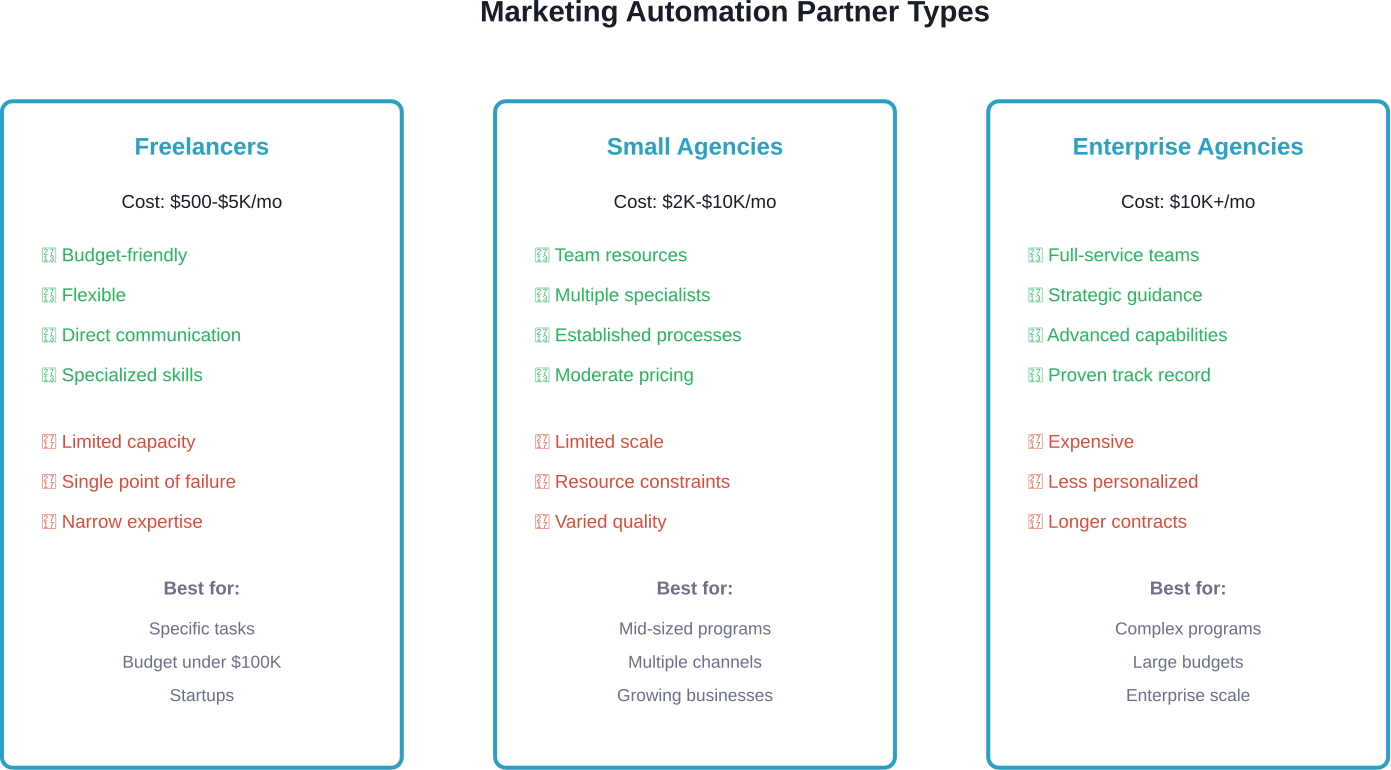
The outsourcing landscape includes several distinct partner types, each with different strengths, weaknesses, and ideal use cases.
Freelance Automation Specialists
Independent contractors bring focused expertise in specific platforms or automation functions. Cost typically ranges from $500 to $5,000 monthly depending on scope and specialist experience.
Strengths include flexibility, direct communication, and budget-friendliness. A freelancer can tackle specific initiatives like setting up lead scoring, building email nurture sequences, or optimizing existing workflows without requiring agency-level investment.
Limitations center on capacity and breadth. One person can only do so much. Complex programs requiring simultaneous work across multiple channels might overwhelm individual contributors. There's also inherent risk in single points of failure: if the freelancer becomes unavailable, projects stall.
Working with specialized freelancers or boutique agencies is effective for companies with budgets under $100,000 annually that focus on specific initiatives like SEO, paid advertising, or social media management.
Small Marketing Agencies
Boutique agencies with teams of specialists offer more comprehensive capabilities than freelancers while remaining more affordable than enterprise firms. Expect monthly retainers between $2,000 and $10,000.
These agencies typically employ small teams covering different specialties: strategists, automation specialists, designers, and analysts. The team structure provides continuity and allows parallel project streams.
The sweet spot is mid-sized automation programs requiring multiple skill sets but not demanding enterprise-level scale or complexity. However, resource constraints still exist. During busy periods, attention might get spread thin across multiple clients.
Enterprise Marketing Automation Agencies
Large specialized agencies offer full-service automation capabilities with dedicated account teams, strategic consulting, and advanced technical implementation. Costs start around $10,000 monthly and can exceed $50,000 for comprehensive programs.
These firms bring proven methodologies, extensive case studies, and typically partner directly with major automation platforms. They handle complex implementations involving multiple systems, sophisticated integrations, and advanced attribution modeling.
The trade-off is cost and sometimes flexibility. Large agencies often have minimum engagement requirements, longer contract terms, and less personalized attention than smaller providers. But for companies running sophisticated multi-channel programs at scale, the investment makes sense.
Virtual Assistants and Offshore Teams
Virtual assistants provide administrative support for routine automation tasks like list management, campaign scheduling, and basic reporting. Offshore teams offer similar services at reduced costs compared to domestic providers.
These options work best for execution-heavy tasks requiring less strategic input. Data entry, template formatting, basic workflow monitoring—these activities don't necessarily require expert-level skills but consume significant time.
The limitation is strategic depth. Virtual assistants excel at following established processes but typically can't design complex automation strategies or troubleshoot technical issues independently.

Scale Through Structured Marketing Automation Outsourcing
Marketing automation outsourcing works best when specialists understand your funnels, triggers, and lifecycle stages. NeoWork provides dedicated remote teams to manage email workflows, automation platforms, segmentation, and campaign setup. With a 91% annualized teammate retention rate and a 3.2% candidate selectivity rate, NeoWork emphasizes continuity over short-term staffing. That consistency improves testing cycles and campaign performance over time.
Ready to Outsource Marketing Automation Without Losing Control?
Talk with NeoWork to:
- build a remote automation support team
- maintain structured workflows and triggers
- optimize campaigns through ongoing iteration
👉 Reach out to NeoWork to plan your marketing automation outsourcing strategy.
When to Outsource Marketing Automation
Not every situation warrants outsourcing. Several factors indicate when external expertise makes sense versus building internal capabilities.
Clear Outsourcing Signals
Companies should consider outsourcing when facing these situations:
- Limited internal technical expertise: The team understands marketing strategy but lacks automation platform experience or technical implementation skills.
- Rapid growth requirements: Business growth outpaces the team's ability to scale automation programs internally.
- Platform migrations: Switching from one automation platform to another requires specialized migration expertise that doesn't justify full-time hiring.
- Resource constraints: Budget exists for automation initiatives but not for full-time salaries, benefits, and ongoing training.
- Complex integrations: Automation programs require integrating multiple systems (CRM, analytics, advertising platforms) beyond typical internal capabilities.
- Time-sensitive launches: Competitive pressures demand fast implementation that internal teams can't deliver.
When In-House Makes More Sense
Outsourcing isn't always optimal. Keep automation in-house when:
- Core competency alignment: Automation represents a strategic differentiator requiring tight internal control and continuous innovation.
- Highly sensitive data: Regulatory requirements or data sensitivity make external access problematic.
- Sufficient internal resources: Existing team members have expertise, capacity, and interest in owning automation programs.
- Continuous rapid iteration: Programs require constant real-time adjustments that would create communication bottlenecks with external partners.
- Long-term cost considerations: Over extended timeframes (3+ years), building internal capability might cost less than ongoing outsourcing fees.
How to Choose the Right Automation Outsourcing Partner
Selecting the appropriate partner determines program success more than almost any other factor. The wrong choice wastes time, money, and momentum. The right partner accelerates results dramatically.
Platform Expertise and Certifications
Start with platform-specific expertise. If using HubSpot, prioritize partners with HubSpot certifications and proven implementation experience. Same for Marketo, Pardot, ActiveCampaign, or any other platform.
Certifications matter because they demonstrate minimum competency standards. But practical experience matters more. Ask how many implementations they've completed, what types of businesses they've worked with, and what specific features they've deployed successfully.
Look for partners who've solved problems similar to yours. A partner specializing in e-commerce automation might struggle with B2B lead nurturing, and vice versa.
Industry Experience
Some automation strategies are universal. Others are industry-specific. Healthcare marketing automation faces unique compliance requirements (HIPAA). Financial services automation must navigate regulations around data security and customer communications. SaaS companies have completely different funnel dynamics than professional services firms.
Partners with relevant industry experience understand these nuances. They've already navigated the compliance hurdles, learned the typical customer journey patterns, and developed best practices specific to the industry.
Service Scope and Capabilities
Clarify exactly what services partners provide. Some handle only technical implementation. Others offer strategic consulting, content creation, design, and ongoing optimization.
Common capability areas to evaluate:
Match partner capabilities to current needs. Don't pay for full-service offerings if only needing technical implementation, but recognize when broader capabilities would provide better outcomes.
Communication and Project Management
Outsourcing fails most often due to communication breakdowns, not technical incompetence. Evaluate how partners structure communication:
- What's the primary point of contact structure? (single account manager, team-based, rotating)
- How frequently do they provide updates? (daily, weekly, milestone-based)
- What project management tools do they use?
- How do they handle urgent issues or last-minute changes?
- What's their typical response time for questions or requests?
Strong partners provide structured communication without being bureaucratic. They set clear expectations, document decisions, and keep stakeholders informed without creating meeting overload.
Pricing Models and Contract Terms
Automation outsourcing typically uses one of several pricing structures:
- Monthly retainers: Fixed monthly fee for defined scope of work. Provides predictable costs but requires clear scope definition to avoid disputes.
- Project-based pricing: One-time fee for specific deliverables (initial setup, platform migration, campaign buildout). Works well for defined projects with clear endpoints.
- Hourly rates: Pay for time spent on tasks. Offers maximum flexibility but can create budget uncertainty and requires trust in time tracking accuracy.
- Performance-based pricing: Compensation tied partially or fully to results (leads generated, revenue influenced). Aligns incentives but requires robust attribution and measurement systems.
Contract terms matter as much as pricing. Evaluate minimum commitment periods, termination clauses, intellectual property ownership, and what happens to automation assets if the relationship ends.
Essential Questions to Ask Potential Partners
Before committing, interview potential partners thoroughly.
Key questions include:
- Platform experience: How many implementations have you completed on our platform? Can you share specific examples?
- Industry expertise: What experience do you have with businesses in our industry? What specific challenges have you solved?
- Team structure: Who specifically will work on our account? What are their qualifications and experience levels?
- Process and methodology: Walk me through your typical implementation process. What does week one look like? Week four?
- Integration capabilities: We need to integrate with [specific tools]. Have you done these integrations before? What challenges should we anticipate?
- Ongoing support: After initial setup, what ongoing support do you provide? How do we request changes or troubleshoot issues?
- Results and metrics: How do you measure success? What results have you delivered for similar clients?
- Knowledge transfer: How do you enable our internal team to eventually manage automation independently if we choose?
- References: Can you provide references from clients with similar needs to ours?
Step-by-Step Process for Outsourcing Automation
Successful outsourcing follows a structured process from initial planning through ongoing optimization. Each phase builds on previous work and sets up the next stage for success.
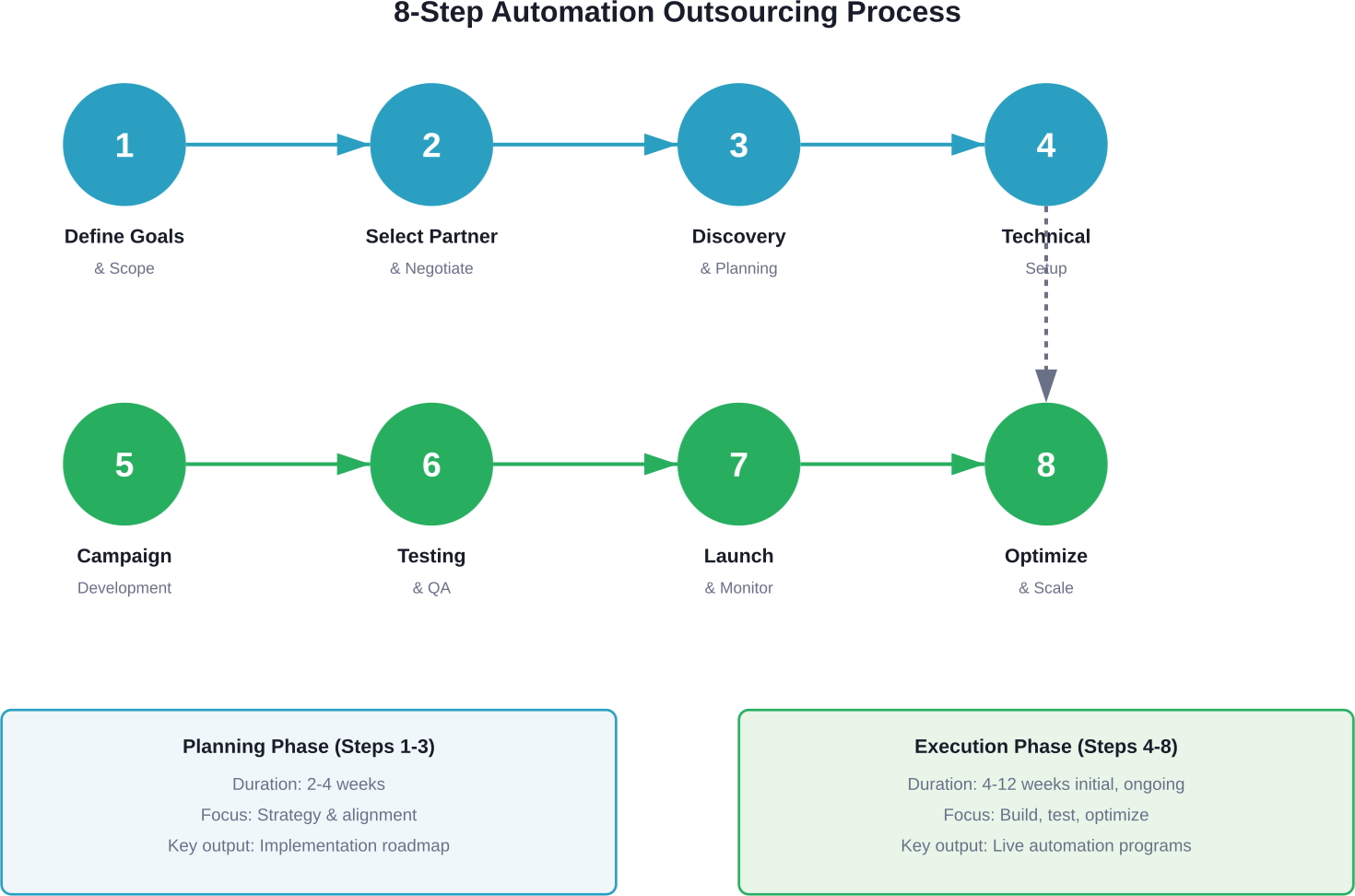
Step 1: Define Clear Goals and Success Metrics
Before contacting any partners, document exactly what success looks like. Vague goals like "improve marketing" or "generate more leads" don't provide sufficient direction.
Conversion Rate Optimization is the second-most-used optimization technique among marketers (50%). It's second to audience segmentation refinement by just one percent. This suggests specific, measurable goals matter more than ever.
Effective goals follow SMART criteria: Specific, Measurable, Achievable, Relevant, Time-bound. For instance, "increase website traffic by 30% over six months" or "boost online sales by 20% in the next quarter."
Common automation goals include:
- Increase marketing qualified leads (MQLs) by X%
- Improve lead-to-customer conversion rate from Y% to Z%
- Reduce cost per acquisition by X%
- Increase email engagement rates (opens, clicks) by X%
- Accelerate sales cycle by X days
- Improve lead scoring accuracy by X%
Document current baseline metrics. Can't measure improvement without knowing starting points.
Step 2: Determine Budget and Resource Allocation
According to Gartner research, 71% of CMOs believe they lack the budget to execute their strategy fully. This makes realistic budget planning critical.
Budget considerations include:
- Partner fees: Retainers, project costs, or hourly rates
- Platform costs: Automation software licensing (if not already owned)
- Content costs: Copywriting, design, video if partner doesn't provide
- Integration costs: Connecting automation platforms to other systems
- Internal time: Staff time required for collaboration, reviews, approvals
Set realistic expectations about what different budget levels enable. Freelancers charging $500-$5,000 monthly deliver different scope than agencies at $10,000+. Neither is wrong, but capabilities differ.
Step 3: Select and Vet Potential Partners
Research potential partners through multiple channels:
- Platform partner directories (HubSpot Solutions Partner Directory, Marketo LaunchPoint, etc.)
- Industry recommendations and referrals
- Marketing technology review sites
- Professional networks and communities
- Case studies and portfolio reviews
Create a shortlist of 3-5 candidates. Request proposals that address specific goals, outline proposed approach, provide timeline estimates, and detail pricing.
Check references carefully. Ask references about communication quality, problem-solving ability, deadline adherence, and results delivered.
Step 4: Complete Discovery and Planning
Once a partner is selected, proper discovery prevents costly misalignment later.
Comprehensive discovery covers:
- Current state assessment: Existing tools, workflows, data quality, integration points
- Audience and segmentation: Customer personas, segmentation criteria, targeting strategies
- Content inventory: Available content assets, gaps requiring creation
- Technical requirements: Integration needs, data flows, security requirements
- Team structure: Internal stakeholders, approval processes, communication preferences
- Success metrics: KPIs, reporting requirements, optimization criteria
Partners should produce a detailed implementation plan documenting scope, timeline, responsibilities, and deliverables. Review this carefully before work begins.
Step 5: Platform Setup and Integration
Technical foundation work includes platform configuration, CRM integration, tracking setup, and data migration if needed.
Typical setup timeline from actual implementations shows rapid initial progress:
- Within 48 hours: CRM tool authentication, Google Drive authentication, mass email setup
- Week 1: Landing pages creation, list and targeting setup
- Week 2: Begin marketing automation setup, first wave of testing
This phase requires significant internal involvement. Teams must provide system access, clarify business rules, make configuration decisions, and review setup work.
Step 6: Campaign Development and Content Creation
With technical infrastructure in place, attention shifts to campaign development: workflow design, email sequence creation, landing page development, and form optimization.
Partners should present workflow logic visually, walking through customer journeys step-by-step. This prevents misunderstandings about triggers, timing, and branching logic.
Content development often becomes a bottleneck. Clarify upfront who creates what: email copy, landing page content, form questions, call-to-action text. Delays in content approval cascade through project timelines.
Step 7: Testing and Quality Assurance
Never launch automation without thorough testing.
Test multiple scenarios:
- Workflow triggers fire correctly
- Email content renders properly across devices and email clients
- Links direct to correct destinations
- Form submissions process accurately
- Data syncs properly between systems
- Conditional logic branches work as designed
- Unsubscribe and preference management functions correctly
Create test contacts representing different personas and scenarios. Send them through workflows from start to finish.
Step 8: Launch, Monitor, and Optimize
Initial launch should be controlled. Start with small segments, monitor closely for issues, then expand gradually.
Establish regular review cadences. Weekly check-ins during initial weeks, then biweekly or monthly as programs stabilize.
Review dashboards showing:
- Workflow performance (entry rates, completion rates, drop-off points)
- Email metrics (delivery, open, click rates)
- Conversion metrics (form submissions, content downloads, meeting bookings)
- Lead quality indicators (MQL rates, sales acceptance)
- Revenue impact (pipeline influenced, deals closed)
Traditional ROI measurement may not capture automation value accurately. Consider Return on Efficiency (ROE): time savings, productivity gains, and process improvements alongside revenue metrics.
Optimization never stops. Continuous testing of subject lines, email copy, send times, segmentation criteria, and workflow logic improves results incrementally over time.
Common Challenges in Automation Outsourcing
Even well-planned outsourcing relationships encounter obstacles. Anticipating common challenges helps address them proactively.
Communication Gaps and Misalignment
Different expectations about deliverables, timelines, or approval processes create friction. A partner builds what they think was requested, but it doesn't match internal stakeholder expectations.
Prevention requires over-communicating early. Document everything. Use visual mockups and workflow diagrams rather than relying solely on written descriptions. Record key decisions and reference them when questions arise later.
Data Quality Issues
Automation amplifies existing data problems. Bad data in means bad automation out. Incomplete contact records, duplicate entries, or incorrect segmentation fields undermine campaign effectiveness.
Address data quality before large-scale automation deployment. Clean databases, establish data governance standards, and implement validation rules preventing future degradation.
Integration Complexity
Marketing automation platforms rarely operate in isolation. They integrate with CRMs, analytics platforms, advertising systems, and other tools. Integration challenges delay projects and limit functionality.
Vet integration requirements thoroughly during partner selection. Partners should demonstrate specific experience with required integrations and explain how they'll handle technical challenges.
Scope Creep
Projects expand beyond initial agreements as stakeholders request additional features, campaigns, or modifications. Without proper change management, scope creep destroys budgets and timelines.
Establish formal change request processes. New requirements should trigger explicit discussions about impact on timeline, budget, and other deliverables before being approved.
Knowledge Transfer and Dependency
Over-reliance on external partners creates knowledge gaps internally. When partners build everything, internal teams don't develop capability to maintain or optimize automation independently.
Insist on documentation and knowledge transfer. Partners should create process documentation, record training sessions, and gradually enable internal teams to handle routine tasks independently.
Measuring Success and ROI
Automation success requires measuring both leading and lagging indicators across multiple dimensions.
Key Performance Indicators
Critical marketing KPIs for automation specifically include:
- Engagement metrics: Email open rates, click-through rates, content interaction
- Conversion metrics: Form submissions, content downloads, meeting bookings
- Lead metrics: MQL volume, lead velocity, lead-to-opportunity conversion
- Revenue metrics: Pipeline influenced, revenue attributed, customer acquisition cost
- Efficiency metrics: Time saved on manual tasks, cost per lead reduction, campaign deployment speed
Search Engine Rankings
Digital discovery matters enormously. With over 2.77 billion online buyers worldwide—more than 33% of the world's total population—websites must appear prominently in search results.
Automation indirectly impacts SEO through improved content personalization, better lead capture mechanisms, and enhanced user experiences. Track organic search traffic, keyword rankings for priority terms, and conversion rates from organic visitors.
Attribution and Revenue Impact
Attribution challenges plague marketing measurement generally and automation specifically. Multi-touch attribution models help understand automation's role in customer journeys.
Track metrics like:
- First-touch attribution: Automation campaigns initiating customer relationships
- Last-touch attribution: Automation campaigns directly preceding conversions
- Multi-touch attribution: Automation's contribution across entire customer journey
- Opportunity influence: Percentage of pipeline that interacted with automation campaigns
- Revenue influenced: Total revenue from deals involving automation touchpoints
Best Practices for Long-Term Success
Sustainable automation outsourcing success requires ongoing attention beyond initial implementation.
Maintain Strategic Ownership Internally
Outsource execution, but keep strategy in-house. Internal teams should define target audiences, messaging frameworks, campaign priorities, and success metrics. Partners execute tactical implementation within that strategic framework.
This balance prevents becoming entirely dependent on external partners while still leveraging their specialized expertise.
Build Hybrid Capability
The optimal long-term model often involves hybrid capability: core competencies internal, specialized or overflow work outsourced. As internal teams mature, they can handle more routine tasks while partners focus on complex initiatives.
Gradually shift routine maintenance, minor updates, and basic reporting internal. Reserve partner capacity for strategic initiatives, complex implementations, and specialized expertise.
Invest in Continuous Optimization
Initial automation setup is just the beginning. Continuous testing and optimization drives compounding improvements over time.
Establish regular optimization cycles testing:
- Subject lines and preview text
- Send timing and frequency
- Segmentation and targeting criteria
- Content and messaging variations
- Call-to-action placement and copy
- Landing page layouts and form fields
Small improvements accumulate. A 10% improvement in email click rates combined with a 5% improvement in landing page conversion creates meaningful cumulative impact.
Stay Current with Platform Evolution
Automation platforms evolve rapidly. The number of martech applications and tools continues expanding dramatically. Partners help navigate this complexity, identifying valuable new features and capabilities worth implementing.
Schedule quarterly reviews of platform updates and new capabilities. Evaluate which features align with business goals and justify implementation effort.
Document Everything
Comprehensive documentation protects against partner transitions, staff turnover, and knowledge loss. Document workflow logic, segmentation criteria, integration details, naming conventions, and strategic rationale behind design decisions.
Good documentation enables anyone to understand why automation was built certain ways and how to maintain or modify it effectively.
Conclusion: Making Marketing Automation Outsourcing Work
Marketing automation outsourcing offers a practical path to sophisticated automation capabilities without the overhead of building extensive internal teams. The approach works when strategic foundations are solid, partner selection is thorough, and ongoing collaboration is structured effectively.
The evidence supporting outsourcing continues strengthening. According to Forrester's Partner Ecosystem Marketing Survey 2026, 75% of marketing decision-makers are increasing technology investments, signaling that automation complexity will only increase. Strategic robot innovation will unlock 20% of new enterprise use cases according to Forrester's Predictions 2026: Automation And Robotics report. Keeping pace with that evolution internally becomes increasingly difficult for organizations where marketing technology isn't a core competency.
Success requires clarity about what to outsource versus what to own. Strategy, audience understanding, messaging, and goal-setting should remain internal. Technical implementation, platform expertise, and specialized optimization work are prime candidates for outsourcing.
- Start with clear goals. Document what success looks like using specific, measurable metrics. Invest time in partner selection, evaluating not just technical capabilities but communication approaches and cultural fit. Structure projects with defined scopes, clear timelines, and explicit success criteria.
- Monitor performance continuously. Automation isn't set-and-forget. Regular optimization, testing, and refinement compound results over time. Partners should provide transparent reporting showing what's working, what isn't, and recommendations for improvement.
- Build toward hybrid capability. While outsourcing makes sense for specialized work, developing internal understanding prevents complete dependency. Knowledge transfer, documentation, and gradual skill development position organizations to eventually manage more automation internally if strategic priorities shift.
The marketing automation landscape will continue evolving rapidly. Partner with specialists who stay current with platform updates, emerging best practices, and technological advances. That expertise becomes increasingly valuable as automation sophistication grows.
Ready to transform your marketing through automation outsourcing? Start by documenting your current challenges, defining clear goals, and researching partners with proven experience in your industry and platform. The investment in proper planning upfront pays dividends through smoother implementations and faster results.
Marketing automation outsourcing isn't about abdicating responsibility. It's about strategically leveraging specialized expertise to achieve results that would be impossible, slower, or more expensive to build internally. Done right, it accelerates growth, improves efficiency, and frees internal teams to focus on strategic activities that drive competitive advantage.
Frequently Asked Questions
Topics
Marketing Automation Outsourcing Guide 2026

Marketing automation outsourcing lets businesses delegate complex automation tasks to specialized agencies, freelancers, or service providers to save costs, access expert talent, and scale campaigns faster. This guide covers when to outsource, how to choose the right partner, implementation steps, pricing models, and best practices for successful automation outsourcing in 2026.
Marketing automation has evolved from a nice-to-have to an absolute necessity. But here's the problem: building an in-house automation team costs serious money. Hiring a full-time in-house marketer costs an average of $101,000 a year, and that's before considering the tools, training, and tech stack needed to execute effectively.
Outsourcing changes the equation entirely. Instead of shouldering the full burden of salaries, software licenses, and ongoing training, businesses can tap into specialized expertise on-demand. The approach makes sense for companies at virtually every stage, whether launching the first automated campaign or scaling an established program.
According to Forrester's Partner Ecosystem Marketing Survey 2026, 75% of partner ecosystem marketing decision-makers reported their overall technology investments will increase in the next 12 months. Among organizations already investing in a partner marketing automation platform (PMAP), 65% plan to increase their investment. Even more telling, nearly 60% of organizations not currently using partner marketing automation plan to invest in this technology within a year.
That growth signals something important: automation isn't optional anymore. The question isn't whether to automate, but how to do it without breaking the bank or overwhelming internal teams.
What Marketing Automation Outsourcing Actually Means
Marketing automation outsourcing involves delegating automation-related tasks, campaigns, and technical implementation to external specialists. These might be agencies, freelance consultants, or dedicated automation service providers.
The scope varies dramatically. Some businesses outsource everything, from platform selection to campaign execution and ongoing optimization. Others keep strategy internal while outsourcing technical setup and maintenance.
Common tasks include:
- Platform setup and configuration (CRM integration, lead scoring models, workflow architecture)
- Campaign design and deployment (email sequences, drip campaigns, nurture tracks)
- Landing page creation and A/B testing
- List segmentation and audience targeting
- Analytics dashboards and performance reporting
- Marketing and sales alignment automation
- Technical troubleshooting and platform optimization
The distinction between outsourced marketing generally and outsourced automation specifically matters. General marketing outsourcing might cover content creation, social media management, or advertising. Automation outsourcing focuses specifically on the technical and strategic deployment of automation platforms and workflows.
Why Businesses Outsource Marketing Automation
The drivers behind outsourcing automation fall into several categories, each addressing specific pain points that companies face when trying to build internal capabilities.
Cost Reduction Without Capability Loss
Building an in-house automation team requires substantial investment. Beyond salaries, there's software licensing (platforms like HubSpot, Marketo, or Pardot can cost thousands monthly), ongoing training as platforms evolve, and the opportunity cost of time spent learning rather than executing.
The cost difference matters significantly. Whether saving $100,000, $150,000, or more annually, every six-figure chunk freed up translates to marketing firepower that could accelerate revenue growth instead of covering fixed overhead.
But wait. Cost savings mean nothing if capability suffers. The outsourcing model works because specialized providers achieve economies of scale. They've already invested in training, tools, and systems. They spread those fixed costs across multiple clients, making expertise accessible at a fraction of internal development costs.
Access to Specialized Expertise
Marketing automation platforms are complex. Each has unique quirks, best practices, and advanced features that take months or years to master. An in-house generalist might understand basic workflow creation but miss the advanced segmentation logic or integration capabilities that unlock real value.
Here's the thing though: 37% of marketers admit they lack the skills to deliver results. That's a sobering statistic. Hiring someone doesn't guarantee competence, especially in specialized technical domains like automation.
Outsourced specialists bring depth that's hard to replicate internally. They've implemented dozens or hundreds of automation programs. They've seen what works, what fails, and what edge cases trip up typical implementations. That experience compresses learning curves dramatically.
Speed and Scalability
Time-to-value matters enormously in competitive markets. Building internal capability takes months: recruiting, onboarding, training, then finally executing. Outsourcing collapses that timeline to weeks or even days.
Typical project timelines for automation setup break down like this:
Scalability works similarly. Need to launch five new nurture tracks simultaneously? An external team can parallelize work in ways a small internal team can't. They bring multiple specialists who can work concurrently rather than sequentially.
Focus on Core Business Functions
Not every company should be in the marketing technology business. A SaaS startup should focus on product development and customer acquisition strategy, not becoming experts in automation platform administration.
Outsourcing lets teams focus on what they do best. Strategy, messaging, positioning, customer relationships—these require internal ownership. Technical implementation of those strategies through automation platforms? That's often better delegated.
Types of Marketing Automation Outsourcing Partners
The outsourcing landscape includes several distinct partner types, each with different strengths, weaknesses, and ideal use cases.
Freelance Automation Specialists
Independent contractors bring focused expertise in specific platforms or automation functions. Cost typically ranges from $500 to $5,000 monthly depending on scope and specialist experience.
Strengths include flexibility, direct communication, and budget-friendliness. A freelancer can tackle specific initiatives like setting up lead scoring, building email nurture sequences, or optimizing existing workflows without requiring agency-level investment.
Limitations center on capacity and breadth. One person can only do so much. Complex programs requiring simultaneous work across multiple channels might overwhelm individual contributors. There's also inherent risk in single points of failure: if the freelancer becomes unavailable, projects stall.
Working with specialized freelancers or boutique agencies is effective for companies with budgets under $100,000 annually that focus on specific initiatives like SEO, paid advertising, or social media management.
Small Marketing Agencies
Boutique agencies with teams of specialists offer more comprehensive capabilities than freelancers while remaining more affordable than enterprise firms. Expect monthly retainers between $2,000 and $10,000.
These agencies typically employ small teams covering different specialties: strategists, automation specialists, designers, and analysts. The team structure provides continuity and allows parallel project streams.
The sweet spot is mid-sized automation programs requiring multiple skill sets but not demanding enterprise-level scale or complexity. However, resource constraints still exist. During busy periods, attention might get spread thin across multiple clients.
Enterprise Marketing Automation Agencies
Large specialized agencies offer full-service automation capabilities with dedicated account teams, strategic consulting, and advanced technical implementation. Costs start around $10,000 monthly and can exceed $50,000 for comprehensive programs.
These firms bring proven methodologies, extensive case studies, and typically partner directly with major automation platforms. They handle complex implementations involving multiple systems, sophisticated integrations, and advanced attribution modeling.
The trade-off is cost and sometimes flexibility. Large agencies often have minimum engagement requirements, longer contract terms, and less personalized attention than smaller providers. But for companies running sophisticated multi-channel programs at scale, the investment makes sense.
Virtual Assistants and Offshore Teams
Virtual assistants provide administrative support for routine automation tasks like list management, campaign scheduling, and basic reporting. Offshore teams offer similar services at reduced costs compared to domestic providers.
These options work best for execution-heavy tasks requiring less strategic input. Data entry, template formatting, basic workflow monitoring—these activities don't necessarily require expert-level skills but consume significant time.
The limitation is strategic depth. Virtual assistants excel at following established processes but typically can't design complex automation strategies or troubleshoot technical issues independently.
Scale Through Structured Marketing Automation Outsourcing
Marketing automation outsourcing works best when specialists understand your funnels, triggers, and lifecycle stages. NeoWork provides dedicated remote teams to manage email workflows, automation platforms, segmentation, and campaign setup. With a 91% annualized teammate retention rate and a 3.2% candidate selectivity rate, NeoWork emphasizes continuity over short-term staffing. That consistency improves testing cycles and campaign performance over time.
Ready to Outsource Marketing Automation Without Losing Control?
Talk with NeoWork to:
- build a remote automation support team
- maintain structured workflows and triggers
- optimize campaigns through ongoing iteration
👉 Reach out to NeoWork to plan your marketing automation outsourcing strategy.
When to Outsource Marketing Automation
Not every situation warrants outsourcing. Several factors indicate when external expertise makes sense versus building internal capabilities.
Clear Outsourcing Signals
Companies should consider outsourcing when facing these situations:
- Limited internal technical expertise: The team understands marketing strategy but lacks automation platform experience or technical implementation skills.
- Rapid growth requirements: Business growth outpaces the team's ability to scale automation programs internally.
- Platform migrations: Switching from one automation platform to another requires specialized migration expertise that doesn't justify full-time hiring.
- Resource constraints: Budget exists for automation initiatives but not for full-time salaries, benefits, and ongoing training.
- Complex integrations: Automation programs require integrating multiple systems (CRM, analytics, advertising platforms) beyond typical internal capabilities.
- Time-sensitive launches: Competitive pressures demand fast implementation that internal teams can't deliver.
When In-House Makes More Sense
Outsourcing isn't always optimal. Keep automation in-house when:
- Core competency alignment: Automation represents a strategic differentiator requiring tight internal control and continuous innovation.
- Highly sensitive data: Regulatory requirements or data sensitivity make external access problematic.
- Sufficient internal resources: Existing team members have expertise, capacity, and interest in owning automation programs.
- Continuous rapid iteration: Programs require constant real-time adjustments that would create communication bottlenecks with external partners.
- Long-term cost considerations: Over extended timeframes (3+ years), building internal capability might cost less than ongoing outsourcing fees.
How to Choose the Right Automation Outsourcing Partner
Selecting the appropriate partner determines program success more than almost any other factor. The wrong choice wastes time, money, and momentum. The right partner accelerates results dramatically.
Platform Expertise and Certifications
Start with platform-specific expertise. If using HubSpot, prioritize partners with HubSpot certifications and proven implementation experience. Same for Marketo, Pardot, ActiveCampaign, or any other platform.
Certifications matter because they demonstrate minimum competency standards. But practical experience matters more. Ask how many implementations they've completed, what types of businesses they've worked with, and what specific features they've deployed successfully.
Look for partners who've solved problems similar to yours. A partner specializing in e-commerce automation might struggle with B2B lead nurturing, and vice versa.
Industry Experience
Some automation strategies are universal. Others are industry-specific. Healthcare marketing automation faces unique compliance requirements (HIPAA). Financial services automation must navigate regulations around data security and customer communications. SaaS companies have completely different funnel dynamics than professional services firms.
Partners with relevant industry experience understand these nuances. They've already navigated the compliance hurdles, learned the typical customer journey patterns, and developed best practices specific to the industry.
Service Scope and Capabilities
Clarify exactly what services partners provide. Some handle only technical implementation. Others offer strategic consulting, content creation, design, and ongoing optimization.
Common capability areas to evaluate:
Match partner capabilities to current needs. Don't pay for full-service offerings if only needing technical implementation, but recognize when broader capabilities would provide better outcomes.
Communication and Project Management
Outsourcing fails most often due to communication breakdowns, not technical incompetence. Evaluate how partners structure communication:
- What's the primary point of contact structure? (single account manager, team-based, rotating)
- How frequently do they provide updates? (daily, weekly, milestone-based)
- What project management tools do they use?
- How do they handle urgent issues or last-minute changes?
- What's their typical response time for questions or requests?
Strong partners provide structured communication without being bureaucratic. They set clear expectations, document decisions, and keep stakeholders informed without creating meeting overload.
Pricing Models and Contract Terms
Automation outsourcing typically uses one of several pricing structures:
- Monthly retainers: Fixed monthly fee for defined scope of work. Provides predictable costs but requires clear scope definition to avoid disputes.
- Project-based pricing: One-time fee for specific deliverables (initial setup, platform migration, campaign buildout). Works well for defined projects with clear endpoints.
- Hourly rates: Pay for time spent on tasks. Offers maximum flexibility but can create budget uncertainty and requires trust in time tracking accuracy.
- Performance-based pricing: Compensation tied partially or fully to results (leads generated, revenue influenced). Aligns incentives but requires robust attribution and measurement systems.
Contract terms matter as much as pricing. Evaluate minimum commitment periods, termination clauses, intellectual property ownership, and what happens to automation assets if the relationship ends.
Essential Questions to Ask Potential Partners
Before committing, interview potential partners thoroughly.
Key questions include:
- Platform experience: How many implementations have you completed on our platform? Can you share specific examples?
- Industry expertise: What experience do you have with businesses in our industry? What specific challenges have you solved?
- Team structure: Who specifically will work on our account? What are their qualifications and experience levels?
- Process and methodology: Walk me through your typical implementation process. What does week one look like? Week four?
- Integration capabilities: We need to integrate with [specific tools]. Have you done these integrations before? What challenges should we anticipate?
- Ongoing support: After initial setup, what ongoing support do you provide? How do we request changes or troubleshoot issues?
- Results and metrics: How do you measure success? What results have you delivered for similar clients?
- Knowledge transfer: How do you enable our internal team to eventually manage automation independently if we choose?
- References: Can you provide references from clients with similar needs to ours?
Step-by-Step Process for Outsourcing Automation
Successful outsourcing follows a structured process from initial planning through ongoing optimization. Each phase builds on previous work and sets up the next stage for success.
Step 1: Define Clear Goals and Success Metrics
Before contacting any partners, document exactly what success looks like. Vague goals like "improve marketing" or "generate more leads" don't provide sufficient direction.
Conversion Rate Optimization is the second-most-used optimization technique among marketers (50%). It's second to audience segmentation refinement by just one percent. This suggests specific, measurable goals matter more than ever.
Effective goals follow SMART criteria: Specific, Measurable, Achievable, Relevant, Time-bound. For instance, "increase website traffic by 30% over six months" or "boost online sales by 20% in the next quarter."
Common automation goals include:
- Increase marketing qualified leads (MQLs) by X%
- Improve lead-to-customer conversion rate from Y% to Z%
- Reduce cost per acquisition by X%
- Increase email engagement rates (opens, clicks) by X%
- Accelerate sales cycle by X days
- Improve lead scoring accuracy by X%
Document current baseline metrics. Can't measure improvement without knowing starting points.
Step 2: Determine Budget and Resource Allocation
According to Gartner research, 71% of CMOs believe they lack the budget to execute their strategy fully. This makes realistic budget planning critical.
Budget considerations include:
- Partner fees: Retainers, project costs, or hourly rates
- Platform costs: Automation software licensing (if not already owned)
- Content costs: Copywriting, design, video if partner doesn't provide
- Integration costs: Connecting automation platforms to other systems
- Internal time: Staff time required for collaboration, reviews, approvals
Set realistic expectations about what different budget levels enable. Freelancers charging $500-$5,000 monthly deliver different scope than agencies at $10,000+. Neither is wrong, but capabilities differ.
Step 3: Select and Vet Potential Partners
Research potential partners through multiple channels:
- Platform partner directories (HubSpot Solutions Partner Directory, Marketo LaunchPoint, etc.)
- Industry recommendations and referrals
- Marketing technology review sites
- Professional networks and communities
- Case studies and portfolio reviews
Create a shortlist of 3-5 candidates. Request proposals that address specific goals, outline proposed approach, provide timeline estimates, and detail pricing.
Check references carefully. Ask references about communication quality, problem-solving ability, deadline adherence, and results delivered.
Step 4: Complete Discovery and Planning
Once a partner is selected, proper discovery prevents costly misalignment later.
Comprehensive discovery covers:
- Current state assessment: Existing tools, workflows, data quality, integration points
- Audience and segmentation: Customer personas, segmentation criteria, targeting strategies
- Content inventory: Available content assets, gaps requiring creation
- Technical requirements: Integration needs, data flows, security requirements
- Team structure: Internal stakeholders, approval processes, communication preferences
- Success metrics: KPIs, reporting requirements, optimization criteria
Partners should produce a detailed implementation plan documenting scope, timeline, responsibilities, and deliverables. Review this carefully before work begins.
Step 5: Platform Setup and Integration
Technical foundation work includes platform configuration, CRM integration, tracking setup, and data migration if needed.
Typical setup timeline from actual implementations shows rapid initial progress:
- Within 48 hours: CRM tool authentication, Google Drive authentication, mass email setup
- Week 1: Landing pages creation, list and targeting setup
- Week 2: Begin marketing automation setup, first wave of testing
This phase requires significant internal involvement. Teams must provide system access, clarify business rules, make configuration decisions, and review setup work.
Step 6: Campaign Development and Content Creation
With technical infrastructure in place, attention shifts to campaign development: workflow design, email sequence creation, landing page development, and form optimization.
Partners should present workflow logic visually, walking through customer journeys step-by-step. This prevents misunderstandings about triggers, timing, and branching logic.
Content development often becomes a bottleneck. Clarify upfront who creates what: email copy, landing page content, form questions, call-to-action text. Delays in content approval cascade through project timelines.
Step 7: Testing and Quality Assurance
Never launch automation without thorough testing.
Test multiple scenarios:
- Workflow triggers fire correctly
- Email content renders properly across devices and email clients
- Links direct to correct destinations
- Form submissions process accurately
- Data syncs properly between systems
- Conditional logic branches work as designed
- Unsubscribe and preference management functions correctly
Create test contacts representing different personas and scenarios. Send them through workflows from start to finish.
Step 8: Launch, Monitor, and Optimize
Initial launch should be controlled. Start with small segments, monitor closely for issues, then expand gradually.
Establish regular review cadences. Weekly check-ins during initial weeks, then biweekly or monthly as programs stabilize.
Review dashboards showing:
- Workflow performance (entry rates, completion rates, drop-off points)
- Email metrics (delivery, open, click rates)
- Conversion metrics (form submissions, content downloads, meeting bookings)
- Lead quality indicators (MQL rates, sales acceptance)
- Revenue impact (pipeline influenced, deals closed)
Traditional ROI measurement may not capture automation value accurately. Consider Return on Efficiency (ROE): time savings, productivity gains, and process improvements alongside revenue metrics.
Optimization never stops. Continuous testing of subject lines, email copy, send times, segmentation criteria, and workflow logic improves results incrementally over time.
Common Challenges in Automation Outsourcing
Even well-planned outsourcing relationships encounter obstacles. Anticipating common challenges helps address them proactively.
Communication Gaps and Misalignment
Different expectations about deliverables, timelines, or approval processes create friction. A partner builds what they think was requested, but it doesn't match internal stakeholder expectations.
Prevention requires over-communicating early. Document everything. Use visual mockups and workflow diagrams rather than relying solely on written descriptions. Record key decisions and reference them when questions arise later.
Data Quality Issues
Automation amplifies existing data problems. Bad data in means bad automation out. Incomplete contact records, duplicate entries, or incorrect segmentation fields undermine campaign effectiveness.
Address data quality before large-scale automation deployment. Clean databases, establish data governance standards, and implement validation rules preventing future degradation.
Integration Complexity
Marketing automation platforms rarely operate in isolation. They integrate with CRMs, analytics platforms, advertising systems, and other tools. Integration challenges delay projects and limit functionality.
Vet integration requirements thoroughly during partner selection. Partners should demonstrate specific experience with required integrations and explain how they'll handle technical challenges.
Scope Creep
Projects expand beyond initial agreements as stakeholders request additional features, campaigns, or modifications. Without proper change management, scope creep destroys budgets and timelines.
Establish formal change request processes. New requirements should trigger explicit discussions about impact on timeline, budget, and other deliverables before being approved.
Knowledge Transfer and Dependency
Over-reliance on external partners creates knowledge gaps internally. When partners build everything, internal teams don't develop capability to maintain or optimize automation independently.
Insist on documentation and knowledge transfer. Partners should create process documentation, record training sessions, and gradually enable internal teams to handle routine tasks independently.
Measuring Success and ROI
Automation success requires measuring both leading and lagging indicators across multiple dimensions.
Key Performance Indicators
Critical marketing KPIs for automation specifically include:
- Engagement metrics: Email open rates, click-through rates, content interaction
- Conversion metrics: Form submissions, content downloads, meeting bookings
- Lead metrics: MQL volume, lead velocity, lead-to-opportunity conversion
- Revenue metrics: Pipeline influenced, revenue attributed, customer acquisition cost
- Efficiency metrics: Time saved on manual tasks, cost per lead reduction, campaign deployment speed
Search Engine Rankings
Digital discovery matters enormously. With over 2.77 billion online buyers worldwide—more than 33% of the world's total population—websites must appear prominently in search results.
Automation indirectly impacts SEO through improved content personalization, better lead capture mechanisms, and enhanced user experiences. Track organic search traffic, keyword rankings for priority terms, and conversion rates from organic visitors.
Attribution and Revenue Impact
Attribution challenges plague marketing measurement generally and automation specifically. Multi-touch attribution models help understand automation's role in customer journeys.
Track metrics like:
- First-touch attribution: Automation campaigns initiating customer relationships
- Last-touch attribution: Automation campaigns directly preceding conversions
- Multi-touch attribution: Automation's contribution across entire customer journey
- Opportunity influence: Percentage of pipeline that interacted with automation campaigns
- Revenue influenced: Total revenue from deals involving automation touchpoints
Best Practices for Long-Term Success
Sustainable automation outsourcing success requires ongoing attention beyond initial implementation.
Maintain Strategic Ownership Internally
Outsource execution, but keep strategy in-house. Internal teams should define target audiences, messaging frameworks, campaign priorities, and success metrics. Partners execute tactical implementation within that strategic framework.
This balance prevents becoming entirely dependent on external partners while still leveraging their specialized expertise.
Build Hybrid Capability
The optimal long-term model often involves hybrid capability: core competencies internal, specialized or overflow work outsourced. As internal teams mature, they can handle more routine tasks while partners focus on complex initiatives.
Gradually shift routine maintenance, minor updates, and basic reporting internal. Reserve partner capacity for strategic initiatives, complex implementations, and specialized expertise.
Invest in Continuous Optimization
Initial automation setup is just the beginning. Continuous testing and optimization drives compounding improvements over time.
Establish regular optimization cycles testing:
- Subject lines and preview text
- Send timing and frequency
- Segmentation and targeting criteria
- Content and messaging variations
- Call-to-action placement and copy
- Landing page layouts and form fields
Small improvements accumulate. A 10% improvement in email click rates combined with a 5% improvement in landing page conversion creates meaningful cumulative impact.
Stay Current with Platform Evolution
Automation platforms evolve rapidly. The number of martech applications and tools continues expanding dramatically. Partners help navigate this complexity, identifying valuable new features and capabilities worth implementing.
Schedule quarterly reviews of platform updates and new capabilities. Evaluate which features align with business goals and justify implementation effort.
Document Everything
Comprehensive documentation protects against partner transitions, staff turnover, and knowledge loss. Document workflow logic, segmentation criteria, integration details, naming conventions, and strategic rationale behind design decisions.
Good documentation enables anyone to understand why automation was built certain ways and how to maintain or modify it effectively.
Conclusion: Making Marketing Automation Outsourcing Work
Marketing automation outsourcing offers a practical path to sophisticated automation capabilities without the overhead of building extensive internal teams. The approach works when strategic foundations are solid, partner selection is thorough, and ongoing collaboration is structured effectively.
The evidence supporting outsourcing continues strengthening. According to Forrester's Partner Ecosystem Marketing Survey 2026, 75% of marketing decision-makers are increasing technology investments, signaling that automation complexity will only increase. Strategic robot innovation will unlock 20% of new enterprise use cases according to Forrester's Predictions 2026: Automation And Robotics report. Keeping pace with that evolution internally becomes increasingly difficult for organizations where marketing technology isn't a core competency.
Success requires clarity about what to outsource versus what to own. Strategy, audience understanding, messaging, and goal-setting should remain internal. Technical implementation, platform expertise, and specialized optimization work are prime candidates for outsourcing.
- Start with clear goals. Document what success looks like using specific, measurable metrics. Invest time in partner selection, evaluating not just technical capabilities but communication approaches and cultural fit. Structure projects with defined scopes, clear timelines, and explicit success criteria.
- Monitor performance continuously. Automation isn't set-and-forget. Regular optimization, testing, and refinement compound results over time. Partners should provide transparent reporting showing what's working, what isn't, and recommendations for improvement.
- Build toward hybrid capability. While outsourcing makes sense for specialized work, developing internal understanding prevents complete dependency. Knowledge transfer, documentation, and gradual skill development position organizations to eventually manage more automation internally if strategic priorities shift.
The marketing automation landscape will continue evolving rapidly. Partner with specialists who stay current with platform updates, emerging best practices, and technological advances. That expertise becomes increasingly valuable as automation sophistication grows.
Ready to transform your marketing through automation outsourcing? Start by documenting your current challenges, defining clear goals, and researching partners with proven experience in your industry and platform. The investment in proper planning upfront pays dividends through smoother implementations and faster results.
Marketing automation outsourcing isn't about abdicating responsibility. It's about strategically leveraging specialized expertise to achieve results that would be impossible, slower, or more expensive to build internally. Done right, it accelerates growth, improves efficiency, and frees internal teams to focus on strategic activities that drive competitive advantage.
Frequently Asked Questions
Topics
Related Blogs
Related Podcasts


.webp)
.webp)



