

.avif)
.avif)

Marketing Outsourcing Services Guide (2026)


.svg)

Marketing outsourcing involves hiring external specialists or agencies to handle marketing tasks instead of building an in-house team. This guide covers when to outsource, which services to delegate, how to choose the right partner, and what to expect in terms of costs and results.
According to recent 2025–2026 small business surveys, approximately 54% to 62% of small businesses now outsource at least one business process, with marketing being the most frequently outsourced function. Marketing sits at the top of that list for good reason.
Building an in-house marketing team means recruiting specialists across content, SEO, paid ads, design, analytics, and more. That's not just expensive—it's slow. And for many businesses, the cost outweighs the benefit.
Outsourcing flips that equation. Instead of hiring full-time employees, businesses tap into specialized expertise on demand. But here's the thing though—not all outsourcing arrangements deliver equal value.
This guide breaks down what marketing outsourcing actually includes, when it makes sense, and how to select a partner that fits your goals and budget.
What Marketing Outsourcing Actually Means
Marketing outsourcing describes the practice of hiring external providers to execute marketing functions that would traditionally sit in-house. These providers range from individual freelancers to boutique agencies to full-service firms with hundreds of employees.
The scope varies wildly. Some companies outsource a single function like content creation. Others hand over entire marketing operations—strategy, execution, reporting, and optimization.
Real talk: the term "outsourcing" carries baggage. Many people associate it with offshore call centers or quality compromise. That's outdated. Modern marketing outsourcing often delivers higher quality than what most small-to-midsize businesses can build internally.
Core Services You Can Outsource
A recent report suggests that almost 84% of B2B companies outsource content creation. Content sits at the heart of most marketing strategies, so that number makes sense.
But content represents just one piece of a much larger puzzle. Here's what businesses commonly delegate:
Outsourcing social media services becomes especially advantageous for large or international companies managing multilingual campaigns. The complexity multiplies fast when dealing with different time zones, cultural nuances, and platform-specific requirements.
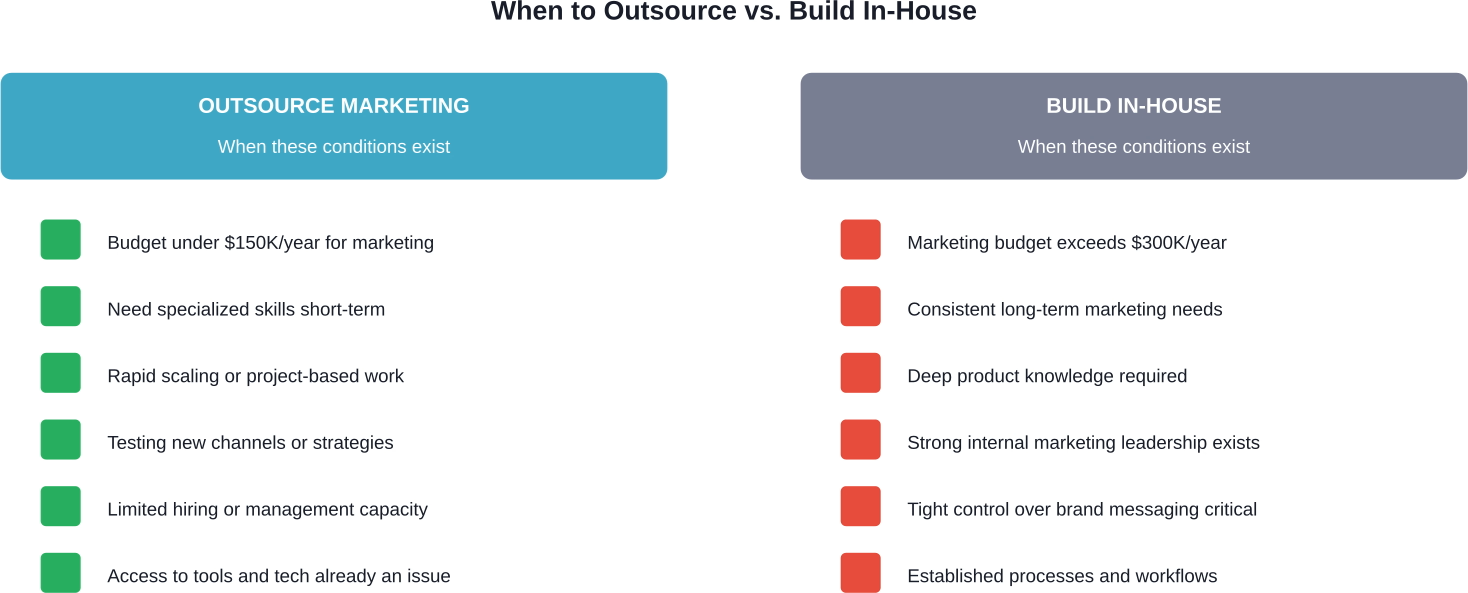
When Outsourcing Makes Strategic Sense
Not every business should outsource marketing. The decision depends on specific circumstances, resources, and goals.
Here's where outsourcing typically delivers the strongest ROI:
- Limited internal resources. Small businesses and startups often lack the budget to hire multiple marketing specialists. One generalist can't effectively handle SEO, paid ads, content, design, and analytics simultaneously. Outsourcing fills skill gaps without inflating payroll.
- Rapid scaling needs. When businesses grow quickly, marketing demands often outpace hiring capabilities. Training new employees takes months. Outsourcing provides immediate capacity.
- Specialized project requirements. Launching a new product? Rebranding? Entering a new market? These initiatives often require expertise that doesn't justify a full-time hire.
- Cost optimization pressure. The SBA notes that outsourcing allows businesses to get more done and trust important tasks to professionals without growing their full-time team significantly. That matters when controlling overhead costs becomes critical.
Red Flags That Suggest Waiting
Some situations make outsourcing premature or problematic.
If core brand messaging remains undefined, outsourcing becomes difficult. External partners need clear direction. Without established brand guidelines, positioning, and messaging frameworks, agencies spend excessive time on alignment rather than execution.
When product-market fit hasn't been validated yet, marketing efforts—whether in-house or outsourced—often miss the mark. Sort out the fundamentals first.
And if internal stakeholders can't agree on goals or success metrics, no outsourcing partner will satisfy everyone. Alignment must happen before signing contracts.
Types of Marketing Outsourcing Partners
The outsourcing market offers several distinct models. Each comes with tradeoffs around cost, expertise, availability, and service breadth.
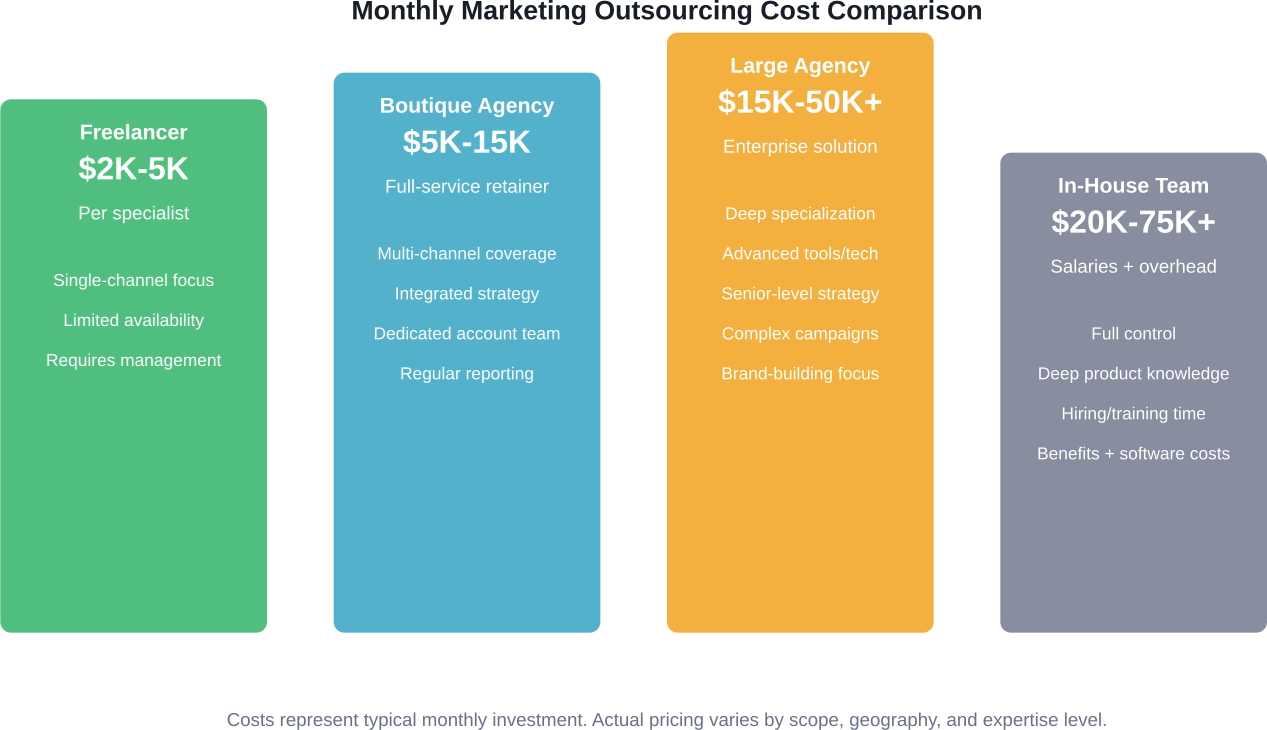
Freelancers specialize in one or two areas—content writing, SEO, maybe graphic design. Hiring individual freelancers for different functions means managing multiple relationships. That coordination overhead adds up fast.
Boutique agencies offer diverse expertise across multiple marketing areas but on a smaller scale than enterprise firms. These shops typically serve 10-30 clients and provide more personalized attention than larger competitors.
Large firms manage both organic and paid campaigns across numerous channels. They leverage advanced tools and employ specialists in narrow disciplines. But smaller clients sometimes get assigned to junior team members while senior talent focuses on bigger accounts.
The Offshore Question
Insider Intelligence predicts that online e-commerce and sales are expected to reach $54.01 billion by 2026 globally. That growth fuels demand for marketing services everywhere, including offshore markets.
Offshore providers—particularly those based in India, the Philippines, and Eastern Europe—offer significant cost advantages. Hourly rates often run 50-70% lower than North American or Western European equivalents.
But cost savings come with complexity. Time zone differences complicate real-time collaboration. Cultural and language nuances sometimes create communication friction. Quality varies dramatically between providers.
That said, many businesses successfully leverage offshore talent for specific functions like content production, graphic design, or social media scheduling. The key lies in clear processes, detailed briefs, and consistent quality checks.

Build Predictable Marketing Outsourcing Services
Marketing outsourcing should deliver measurable output, not scattered execution. NeoWork provides dedicated remote marketing specialists who integrate into your strategy and reporting structure. With a 91% annualized teammate retention rate and a 3.2% candidate selectivity rate, you get stable team members who understand your positioning over time. That continuity improves campaign consistency and long-term ROI.
Ready to Outsource Marketing With Structure?
Talk with NeoWork to:
- assemble a focused remote marketing team
- improve campaign execution and reporting
- scale efforts without internal hiring pressure
👉 Connect with NeoWork to plan your marketing outsourcing setup.
Cost Structures and Budget Planning
Understanding how marketing outsourcing gets priced helps set realistic budgets and expectations.
Most providers use one of three pricing models:
- Hourly billing. Common with freelancers and some consultants. Rates typically range from $50-300/hour depending on expertise level and location. This model works for project-based work with uncertain scope.
- Monthly retainers. The standard agency model. Clients pay a fixed monthly fee for a defined service package. Retainers usually start around $3,000/month for basic services and scale upward based on scope and seniority of team members involved.
- Project-based pricing. Fixed fees for specific deliverables—a website redesign, a content calendar, a campaign launch. Provides budget certainty but less flexibility for scope changes.
What Influences Cost
Several factors drive pricing variation across providers:
Geography matters significantly. Agencies in major metropolitan areas charge premium rates compared to those in smaller markets or offshore locations.
Specialization commands higher fees. A social media generalist costs less than someone with proven expertise running LinkedIn campaigns for B2B SaaS companies.
Service breadth affects pricing structure. Comprehensive marketing management—strategy, execution, reporting across multiple channels—costs substantially more than isolated tactical support.
Track record and reputation allow established agencies to charge premium rates. Newer providers often price aggressively to build portfolios.
Selecting the Right Outsourcing Partner
Choosing a marketing partner deserves as much diligence as hiring a senior employee. The wrong choice wastes money and time. The right partner accelerates growth.
Start by defining clear objectives. What specific outcomes does the business need? More qualified leads? Higher conversion rates? Better brand awareness? Specific goals guide partner evaluation.
Evaluation Criteria That Actually Matter
- Relevant experience. Look for providers who've worked with similar business models, industries, or growth stages. A B2B SaaS specialist won't necessarily excel at e-commerce marketing, and vice versa.
- Transparent processes. Strong partners clearly explain their methodology, timelines, and deliverables upfront. Vague promises about "driving results" without specifics raise red flags.
- Communication style. Misaligned communication preferences create frustration. Some businesses want daily updates via Slack. Others prefer weekly email summaries. Discuss expectations before signing contracts.
- Reporting capabilities. How does the provider measure success? What metrics do they track? How often do they report? Access to real-time dashboards versus monthly PDF reports represents a significant difference in visibility.
- Cultural fit. This gets overlooked but matters tremendously. Does the provider's working style mesh with company culture? Do they ask insightful questions or just take orders?
Questions to Ask During Evaluation
These questions help separate strong candidates from mediocre ones:
- What's your typical client engagement length? (Short tenures may indicate retention problems)
- How do you handle underperformance or missed targets? (Tests accountability and problem-solving)
- What marketing tools and platforms do you use? (Reveals technical sophistication)
- Who will actually work on the account day-to-day? (Avoids the bait-and-switch where senior talent pitches but junior staff executes)
- Can you share case studies from similar businesses? (Validates relevant experience)
- What's your process for onboarding new clients? (Structured onboarding suggests operational maturity)
- How do you stay current with platform changes and industry trends? (Tests commitment to continuous learning)
Red Flags to Watch For
Certain warning signs suggest potential problems:
Guaranteed results sound appealing but often indicate either dishonesty or inexperience. No legitimate provider can guarantee specific outcomes—too many variables sit outside their control.
Reluctance to share client references suggests either a thin track record or unhappy former clients. Strong agencies gladly connect prospects with current customers.
Pushy sales tactics that pressure quick decisions typically correlate with poor service delivery. Quality providers let their work speak for itself.
Cookie-cutter proposals that feel generic rather than customized indicate the provider hasn't invested time understanding specific business needs.
Implementation Best Practices
Successful outsourcing relationships don't happen by accident. They require intentional setup and ongoing management.
Onboarding Sets the Foundation
The first 30 days determine trajectory. Invest time in comprehensive onboarding:
Share detailed brand guidelines, positioning documents, and messaging frameworks. The more context the partner has, the faster they'll produce work that feels on-brand.
Provide access to necessary tools, analytics platforms, and content repositories. Technical roadblocks slow momentum unnecessarily.
Introduce key stakeholders and clarify decision-making authority. When external partners don't know who can approve creative or budgets, bottlenecks emerge.
Establish communication cadences early. Weekly status calls? Daily Slack updates? Monthly business reviews? Lock in rhythms from day one.
Setting Performance Expectations
Define success metrics collaboratively. Both parties need to agree on what "good" looks like.
For content marketing, that might mean publishing frequency, organic traffic growth, or engagement rates. For paid advertising, it's typically cost per acquisition, return on ad spend, or lead volume. For SEO, keyword rankings, organic traffic, and backlink acquisition make sense.
Document these metrics in the contract or service agreement. Vague expectations create conflict later.
But wait—metrics tell only part of the story. Qualitative factors matter too. Does the partner bring strategic insights beyond execution? Do they proactively identify opportunities? Strong relationships balance quantitative performance with qualitative value.
Maintaining Productive Relationships
Treat outsourcing partners like extended team members, not vendors. The distinction matters.
Include them in relevant meetings and planning sessions. When partners understand broader business context, they make smarter tactical decisions.
Provide timely feedback—both positive and constructive. Silence leaves partners guessing whether they're meeting expectations.
Pay invoices on time. Cash flow problems at small agencies mean they can't retain top talent. Late payments damage relationships quickly.
Allow reasonable flexibility. Market conditions change. New opportunities emerge. Rigid scope definitions prevent partners from capitalizing on unexpected wins.
Common Outsourcing Challenges and Solutions
Even well-planned outsourcing arrangements hit bumps. Anticipating common problems helps navigate them smoothly.
When to Reevaluate or Switch Providers
Not every outsourcing relationship works long-term. Certain signals suggest it's time to make changes:
Consistent missed deadlines indicate either capacity problems or poor project management. One slip happens. Patterns suggest systemic issues.
Stagnant performance despite multiple optimization attempts may mean the provider lacks the expertise to drive breakthrough improvements.
Declining responsiveness often precedes relationship deterioration. When partners stop prioritizing the account, quality suffers.
Resistance to feedback or defensiveness about underperformance prevents productive collaboration. Strong partners welcome constructive criticism and iterate quickly.
Before terminating a relationship, attempt direct conversation about concerns. Many problems get resolved when discussed openly. But if issues persist after clear feedback, moving on makes sense.
Measuring Outsourcing ROI
Determining whether marketing outsourcing delivers value requires tracking the right metrics.
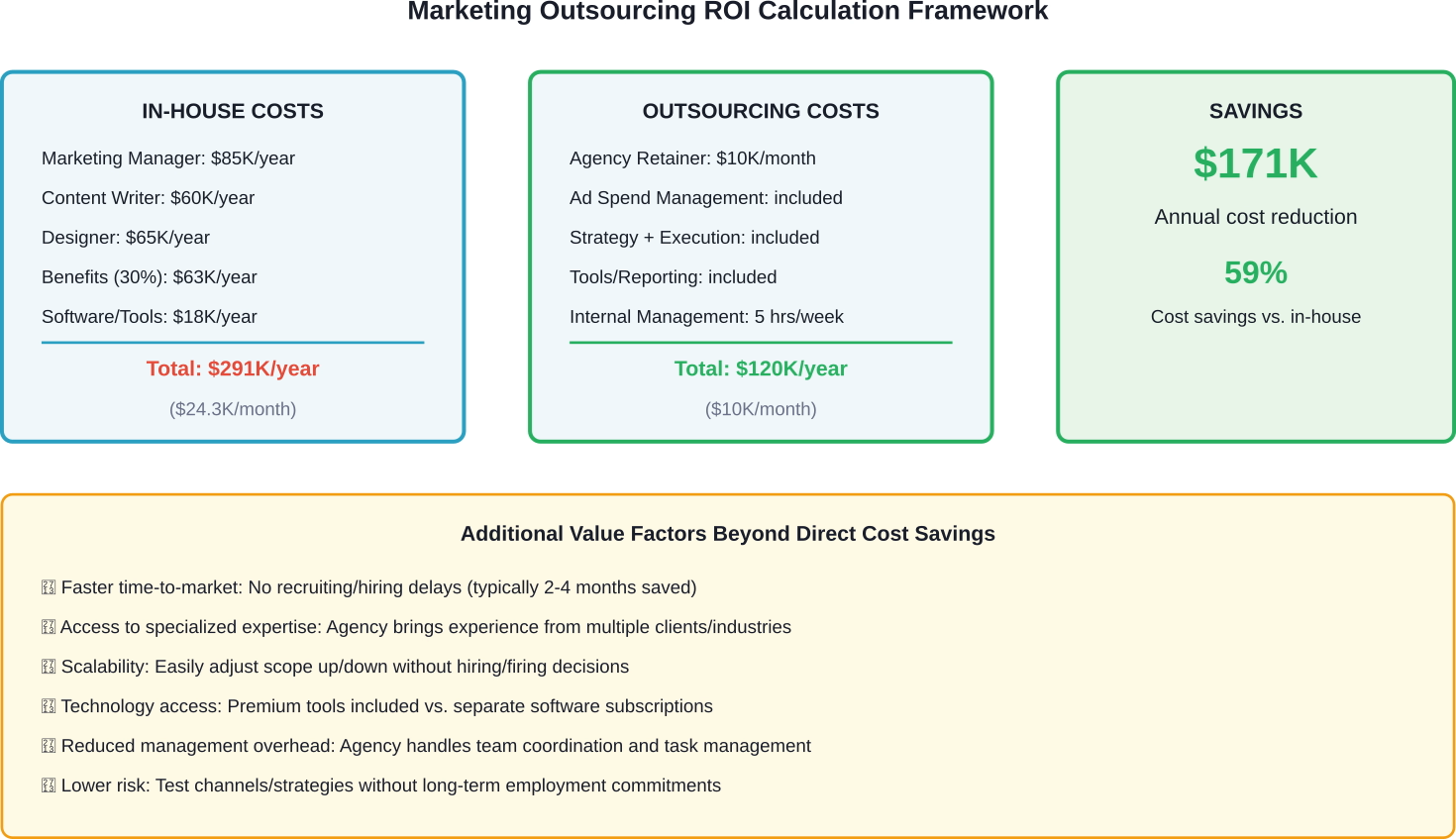
Compare total outsourcing costs against the alternative—building an equivalent in-house team. Factor in salaries, benefits, software subscriptions, training, and management overhead. In many cases, outsourcing costs 40-60% less than in-house equivalents.
Track performance metrics specific to each marketing function:
- Content marketing: Organic traffic growth, engagement rates, conversion rates from content
- SEO: Keyword ranking improvements, organic traffic increases, backlink acquisition
- Paid advertising: Cost per acquisition, return on ad spend, lead quality scores
- Social media: Follower growth, engagement rates, traffic from social channels
- Email marketing: Open rates, click-through rates, conversion rates, list growth
But don't obsess over individual channel metrics at the expense of business outcomes. Revenue growth, customer acquisition cost, and customer lifetime value matter most.
Strong outsourcing partners help improve these core business metrics, not just marketing vanity metrics.
Industry-Specific Considerations
Different industries face unique marketing outsourcing challenges and opportunities.
B2B vs. B2C Marketing
The American Marketing Association notes that the business-to-business economy is almost twice as large as the business-to-consumer economy, according to marketing scholarship. Yet B2B marketing differs fundamentally from B2C in ways that affect outsourcing decisions.
B2B marketing typically involves longer sales cycles, multiple decision-makers, and complex product education. Outsourcing partners need deep understanding of business buying processes and the ability to create content for various stakeholder roles.
B2C marketing often prioritizes emotional connection, brand building, and transaction volume. Creative excellence and media buying expertise matter more than technical product knowledge.
Choose providers with demonstrated success in the relevant business model. A B2C retail specialist will struggle with enterprise software marketing, and vice versa.
Regulated Industries
Healthcare, financial services, and legal industries face strict compliance requirements that complicate marketing outsourcing.
The FTC enforces the CAN-SPAM Act. The law covers all commercial messages, which includes not just bulk email but also messages promoting content on commercial websites. Providers must understand applicable regulations.
Look for partners with compliance expertise specific to the industry. Generic agencies often lack the knowledge to navigate HIPAA, FINRA, or similar regulatory frameworks safely.
Future Trends in Marketing Outsourcing
The marketing outsourcing landscape continues evolving rapidly. Several trends shape the market:
- AI integration. Marketing providers increasingly leverage artificial intelligence for content creation, audience targeting, and performance optimization. This technology improves efficiency but requires human oversight to maintain quality and strategic alignment.
- Specialized niching. Generalist agencies face pressure from hyper-specialized providers focused on narrow verticals or channels. A provider that exclusively serves dental practices or only manages TikTok advertising can develop deeper expertise than broad-based competitors.
- Hybrid models. More businesses blend in-house and outsourced talent. Strategy and brand stewardship stay internal while tactical execution gets delegated externally. This approach balances control with efficiency.
- Performance-based pricing. Some providers move away from retainers toward commission or performance-based compensation. This aligns incentives but works best when providers control most variables affecting outcomes.
- Nearshore preference. Companies that previously outsourced to distant offshore markets increasingly prefer nearshore providers in similar time zones. The communication benefits often justify slightly higher costs.
Making the Decision
Marketing outsourcing works exceptionally well for businesses that approach it thoughtfully. It fails for those who treat it as a magic solution requiring no involvement.
The data supports outsourcing's value. According to the SBA, the global market for outsourced IT services reached $85.6 billion (as of the SBA's 2019 publication), and marketing follows similar growth trajectories. More businesses recognize that accessing specialized expertise on demand beats maintaining expensive in-house teams.
Success requires clear objectives, realistic expectations, and commitment to partnership rather than vendor management. Treat external marketing teams as extensions of the organization. Provide context, feedback, and strategic direction. Hold them accountable for results, but give them room to execute their expertise.
Start small if uncertain. Outsource a single function—content creation or paid ads management—and evaluate results before expanding scope. Prove the model works before committing large budgets.
The businesses that benefit most from marketing outsourcing share common characteristics: they know what success looks like, they communicate expectations clearly, and they choose partners based on fit and capability rather than price alone.
Now it's time to determine whether outsourcing fits specific business needs. Review the evaluation criteria, identify knowledge gaps, and start conversations with potential providers. The right partnership can accelerate growth while controlling costs—but only when approached strategically.
Ready to explore marketing outsourcing for your business? Define the top three marketing priorities for the next quarter, then identify which ones would benefit most from specialized external expertise. That clarity makes partner selection significantly easier and sets realistic expectations from day one.
Frequently Asked Questions
Topics
Marketing Outsourcing Services Guide (2026)

Marketing outsourcing involves hiring external specialists or agencies to handle marketing tasks instead of building an in-house team. This guide covers when to outsource, which services to delegate, how to choose the right partner, and what to expect in terms of costs and results.
According to recent 2025–2026 small business surveys, approximately 54% to 62% of small businesses now outsource at least one business process, with marketing being the most frequently outsourced function. Marketing sits at the top of that list for good reason.
Building an in-house marketing team means recruiting specialists across content, SEO, paid ads, design, analytics, and more. That's not just expensive—it's slow. And for many businesses, the cost outweighs the benefit.
Outsourcing flips that equation. Instead of hiring full-time employees, businesses tap into specialized expertise on demand. But here's the thing though—not all outsourcing arrangements deliver equal value.
This guide breaks down what marketing outsourcing actually includes, when it makes sense, and how to select a partner that fits your goals and budget.
What Marketing Outsourcing Actually Means
Marketing outsourcing describes the practice of hiring external providers to execute marketing functions that would traditionally sit in-house. These providers range from individual freelancers to boutique agencies to full-service firms with hundreds of employees.
The scope varies wildly. Some companies outsource a single function like content creation. Others hand over entire marketing operations—strategy, execution, reporting, and optimization.
Real talk: the term "outsourcing" carries baggage. Many people associate it with offshore call centers or quality compromise. That's outdated. Modern marketing outsourcing often delivers higher quality than what most small-to-midsize businesses can build internally.
Core Services You Can Outsource
A recent report suggests that almost 84% of B2B companies outsource content creation. Content sits at the heart of most marketing strategies, so that number makes sense.
But content represents just one piece of a much larger puzzle. Here's what businesses commonly delegate:
Outsourcing social media services becomes especially advantageous for large or international companies managing multilingual campaigns. The complexity multiplies fast when dealing with different time zones, cultural nuances, and platform-specific requirements.
When Outsourcing Makes Strategic Sense
Not every business should outsource marketing. The decision depends on specific circumstances, resources, and goals.
Here's where outsourcing typically delivers the strongest ROI:
- Limited internal resources. Small businesses and startups often lack the budget to hire multiple marketing specialists. One generalist can't effectively handle SEO, paid ads, content, design, and analytics simultaneously. Outsourcing fills skill gaps without inflating payroll.
- Rapid scaling needs. When businesses grow quickly, marketing demands often outpace hiring capabilities. Training new employees takes months. Outsourcing provides immediate capacity.
- Specialized project requirements. Launching a new product? Rebranding? Entering a new market? These initiatives often require expertise that doesn't justify a full-time hire.
- Cost optimization pressure. The SBA notes that outsourcing allows businesses to get more done and trust important tasks to professionals without growing their full-time team significantly. That matters when controlling overhead costs becomes critical.
Red Flags That Suggest Waiting
Some situations make outsourcing premature or problematic.
If core brand messaging remains undefined, outsourcing becomes difficult. External partners need clear direction. Without established brand guidelines, positioning, and messaging frameworks, agencies spend excessive time on alignment rather than execution.
When product-market fit hasn't been validated yet, marketing efforts—whether in-house or outsourced—often miss the mark. Sort out the fundamentals first.
And if internal stakeholders can't agree on goals or success metrics, no outsourcing partner will satisfy everyone. Alignment must happen before signing contracts.
Types of Marketing Outsourcing Partners
The outsourcing market offers several distinct models. Each comes with tradeoffs around cost, expertise, availability, and service breadth.
Freelancers specialize in one or two areas—content writing, SEO, maybe graphic design. Hiring individual freelancers for different functions means managing multiple relationships. That coordination overhead adds up fast.
Boutique agencies offer diverse expertise across multiple marketing areas but on a smaller scale than enterprise firms. These shops typically serve 10-30 clients and provide more personalized attention than larger competitors.
Large firms manage both organic and paid campaigns across numerous channels. They leverage advanced tools and employ specialists in narrow disciplines. But smaller clients sometimes get assigned to junior team members while senior talent focuses on bigger accounts.
The Offshore Question
Insider Intelligence predicts that online e-commerce and sales are expected to reach $54.01 billion by 2026 globally. That growth fuels demand for marketing services everywhere, including offshore markets.
Offshore providers—particularly those based in India, the Philippines, and Eastern Europe—offer significant cost advantages. Hourly rates often run 50-70% lower than North American or Western European equivalents.
But cost savings come with complexity. Time zone differences complicate real-time collaboration. Cultural and language nuances sometimes create communication friction. Quality varies dramatically between providers.
That said, many businesses successfully leverage offshore talent for specific functions like content production, graphic design, or social media scheduling. The key lies in clear processes, detailed briefs, and consistent quality checks.
Build Predictable Marketing Outsourcing Services
Marketing outsourcing should deliver measurable output, not scattered execution. NeoWork provides dedicated remote marketing specialists who integrate into your strategy and reporting structure. With a 91% annualized teammate retention rate and a 3.2% candidate selectivity rate, you get stable team members who understand your positioning over time. That continuity improves campaign consistency and long-term ROI.
Ready to Outsource Marketing With Structure?
Talk with NeoWork to:
- assemble a focused remote marketing team
- improve campaign execution and reporting
- scale efforts without internal hiring pressure
👉 Connect with NeoWork to plan your marketing outsourcing setup.
Cost Structures and Budget Planning
Understanding how marketing outsourcing gets priced helps set realistic budgets and expectations.
Most providers use one of three pricing models:
- Hourly billing. Common with freelancers and some consultants. Rates typically range from $50-300/hour depending on expertise level and location. This model works for project-based work with uncertain scope.
- Monthly retainers. The standard agency model. Clients pay a fixed monthly fee for a defined service package. Retainers usually start around $3,000/month for basic services and scale upward based on scope and seniority of team members involved.
- Project-based pricing. Fixed fees for specific deliverables—a website redesign, a content calendar, a campaign launch. Provides budget certainty but less flexibility for scope changes.
What Influences Cost
Several factors drive pricing variation across providers:
Geography matters significantly. Agencies in major metropolitan areas charge premium rates compared to those in smaller markets or offshore locations.
Specialization commands higher fees. A social media generalist costs less than someone with proven expertise running LinkedIn campaigns for B2B SaaS companies.
Service breadth affects pricing structure. Comprehensive marketing management—strategy, execution, reporting across multiple channels—costs substantially more than isolated tactical support.
Track record and reputation allow established agencies to charge premium rates. Newer providers often price aggressively to build portfolios.
Selecting the Right Outsourcing Partner
Choosing a marketing partner deserves as much diligence as hiring a senior employee. The wrong choice wastes money and time. The right partner accelerates growth.
Start by defining clear objectives. What specific outcomes does the business need? More qualified leads? Higher conversion rates? Better brand awareness? Specific goals guide partner evaluation.
Evaluation Criteria That Actually Matter
- Relevant experience. Look for providers who've worked with similar business models, industries, or growth stages. A B2B SaaS specialist won't necessarily excel at e-commerce marketing, and vice versa.
- Transparent processes. Strong partners clearly explain their methodology, timelines, and deliverables upfront. Vague promises about "driving results" without specifics raise red flags.
- Communication style. Misaligned communication preferences create frustration. Some businesses want daily updates via Slack. Others prefer weekly email summaries. Discuss expectations before signing contracts.
- Reporting capabilities. How does the provider measure success? What metrics do they track? How often do they report? Access to real-time dashboards versus monthly PDF reports represents a significant difference in visibility.
- Cultural fit. This gets overlooked but matters tremendously. Does the provider's working style mesh with company culture? Do they ask insightful questions or just take orders?
Questions to Ask During Evaluation
These questions help separate strong candidates from mediocre ones:
- What's your typical client engagement length? (Short tenures may indicate retention problems)
- How do you handle underperformance or missed targets? (Tests accountability and problem-solving)
- What marketing tools and platforms do you use? (Reveals technical sophistication)
- Who will actually work on the account day-to-day? (Avoids the bait-and-switch where senior talent pitches but junior staff executes)
- Can you share case studies from similar businesses? (Validates relevant experience)
- What's your process for onboarding new clients? (Structured onboarding suggests operational maturity)
- How do you stay current with platform changes and industry trends? (Tests commitment to continuous learning)
Red Flags to Watch For
Certain warning signs suggest potential problems:
Guaranteed results sound appealing but often indicate either dishonesty or inexperience. No legitimate provider can guarantee specific outcomes—too many variables sit outside their control.
Reluctance to share client references suggests either a thin track record or unhappy former clients. Strong agencies gladly connect prospects with current customers.
Pushy sales tactics that pressure quick decisions typically correlate with poor service delivery. Quality providers let their work speak for itself.
Cookie-cutter proposals that feel generic rather than customized indicate the provider hasn't invested time understanding specific business needs.
Implementation Best Practices
Successful outsourcing relationships don't happen by accident. They require intentional setup and ongoing management.
Onboarding Sets the Foundation
The first 30 days determine trajectory. Invest time in comprehensive onboarding:
Share detailed brand guidelines, positioning documents, and messaging frameworks. The more context the partner has, the faster they'll produce work that feels on-brand.
Provide access to necessary tools, analytics platforms, and content repositories. Technical roadblocks slow momentum unnecessarily.
Introduce key stakeholders and clarify decision-making authority. When external partners don't know who can approve creative or budgets, bottlenecks emerge.
Establish communication cadences early. Weekly status calls? Daily Slack updates? Monthly business reviews? Lock in rhythms from day one.
Setting Performance Expectations
Define success metrics collaboratively. Both parties need to agree on what "good" looks like.
For content marketing, that might mean publishing frequency, organic traffic growth, or engagement rates. For paid advertising, it's typically cost per acquisition, return on ad spend, or lead volume. For SEO, keyword rankings, organic traffic, and backlink acquisition make sense.
Document these metrics in the contract or service agreement. Vague expectations create conflict later.
But wait—metrics tell only part of the story. Qualitative factors matter too. Does the partner bring strategic insights beyond execution? Do they proactively identify opportunities? Strong relationships balance quantitative performance with qualitative value.
Maintaining Productive Relationships
Treat outsourcing partners like extended team members, not vendors. The distinction matters.
Include them in relevant meetings and planning sessions. When partners understand broader business context, they make smarter tactical decisions.
Provide timely feedback—both positive and constructive. Silence leaves partners guessing whether they're meeting expectations.
Pay invoices on time. Cash flow problems at small agencies mean they can't retain top talent. Late payments damage relationships quickly.
Allow reasonable flexibility. Market conditions change. New opportunities emerge. Rigid scope definitions prevent partners from capitalizing on unexpected wins.
Common Outsourcing Challenges and Solutions
Even well-planned outsourcing arrangements hit bumps. Anticipating common problems helps navigate them smoothly.
When to Reevaluate or Switch Providers
Not every outsourcing relationship works long-term. Certain signals suggest it's time to make changes:
Consistent missed deadlines indicate either capacity problems or poor project management. One slip happens. Patterns suggest systemic issues.
Stagnant performance despite multiple optimization attempts may mean the provider lacks the expertise to drive breakthrough improvements.
Declining responsiveness often precedes relationship deterioration. When partners stop prioritizing the account, quality suffers.
Resistance to feedback or defensiveness about underperformance prevents productive collaboration. Strong partners welcome constructive criticism and iterate quickly.
Before terminating a relationship, attempt direct conversation about concerns. Many problems get resolved when discussed openly. But if issues persist after clear feedback, moving on makes sense.
Measuring Outsourcing ROI
Determining whether marketing outsourcing delivers value requires tracking the right metrics.
Compare total outsourcing costs against the alternative—building an equivalent in-house team. Factor in salaries, benefits, software subscriptions, training, and management overhead. In many cases, outsourcing costs 40-60% less than in-house equivalents.
Track performance metrics specific to each marketing function:
- Content marketing: Organic traffic growth, engagement rates, conversion rates from content
- SEO: Keyword ranking improvements, organic traffic increases, backlink acquisition
- Paid advertising: Cost per acquisition, return on ad spend, lead quality scores
- Social media: Follower growth, engagement rates, traffic from social channels
- Email marketing: Open rates, click-through rates, conversion rates, list growth
But don't obsess over individual channel metrics at the expense of business outcomes. Revenue growth, customer acquisition cost, and customer lifetime value matter most.
Strong outsourcing partners help improve these core business metrics, not just marketing vanity metrics.
Industry-Specific Considerations
Different industries face unique marketing outsourcing challenges and opportunities.
B2B vs. B2C Marketing
The American Marketing Association notes that the business-to-business economy is almost twice as large as the business-to-consumer economy, according to marketing scholarship. Yet B2B marketing differs fundamentally from B2C in ways that affect outsourcing decisions.
B2B marketing typically involves longer sales cycles, multiple decision-makers, and complex product education. Outsourcing partners need deep understanding of business buying processes and the ability to create content for various stakeholder roles.
B2C marketing often prioritizes emotional connection, brand building, and transaction volume. Creative excellence and media buying expertise matter more than technical product knowledge.
Choose providers with demonstrated success in the relevant business model. A B2C retail specialist will struggle with enterprise software marketing, and vice versa.
Regulated Industries
Healthcare, financial services, and legal industries face strict compliance requirements that complicate marketing outsourcing.
The FTC enforces the CAN-SPAM Act. The law covers all commercial messages, which includes not just bulk email but also messages promoting content on commercial websites. Providers must understand applicable regulations.
Look for partners with compliance expertise specific to the industry. Generic agencies often lack the knowledge to navigate HIPAA, FINRA, or similar regulatory frameworks safely.
Future Trends in Marketing Outsourcing
The marketing outsourcing landscape continues evolving rapidly. Several trends shape the market:
- AI integration. Marketing providers increasingly leverage artificial intelligence for content creation, audience targeting, and performance optimization. This technology improves efficiency but requires human oversight to maintain quality and strategic alignment.
- Specialized niching. Generalist agencies face pressure from hyper-specialized providers focused on narrow verticals or channels. A provider that exclusively serves dental practices or only manages TikTok advertising can develop deeper expertise than broad-based competitors.
- Hybrid models. More businesses blend in-house and outsourced talent. Strategy and brand stewardship stay internal while tactical execution gets delegated externally. This approach balances control with efficiency.
- Performance-based pricing. Some providers move away from retainers toward commission or performance-based compensation. This aligns incentives but works best when providers control most variables affecting outcomes.
- Nearshore preference. Companies that previously outsourced to distant offshore markets increasingly prefer nearshore providers in similar time zones. The communication benefits often justify slightly higher costs.
Making the Decision
Marketing outsourcing works exceptionally well for businesses that approach it thoughtfully. It fails for those who treat it as a magic solution requiring no involvement.
The data supports outsourcing's value. According to the SBA, the global market for outsourced IT services reached $85.6 billion (as of the SBA's 2019 publication), and marketing follows similar growth trajectories. More businesses recognize that accessing specialized expertise on demand beats maintaining expensive in-house teams.
Success requires clear objectives, realistic expectations, and commitment to partnership rather than vendor management. Treat external marketing teams as extensions of the organization. Provide context, feedback, and strategic direction. Hold them accountable for results, but give them room to execute their expertise.
Start small if uncertain. Outsource a single function—content creation or paid ads management—and evaluate results before expanding scope. Prove the model works before committing large budgets.
The businesses that benefit most from marketing outsourcing share common characteristics: they know what success looks like, they communicate expectations clearly, and they choose partners based on fit and capability rather than price alone.
Now it's time to determine whether outsourcing fits specific business needs. Review the evaluation criteria, identify knowledge gaps, and start conversations with potential providers. The right partnership can accelerate growth while controlling costs—but only when approached strategically.
Ready to explore marketing outsourcing for your business? Define the top three marketing priorities for the next quarter, then identify which ones would benefit most from specialized external expertise. That clarity makes partner selection significantly easier and sets realistic expectations from day one.
Frequently Asked Questions
Topics
Related Blogs
Related Podcasts


.webp)
.webp)



