

.avif)
.avif)

Medical Call Center Outsourcing Guide 2026


.svg)

Medical call center outsourcing involves partnering with specialized third-party providers to handle patient communications, appointment scheduling, insurance verification, and support services. This guide covers essential services to outsource, key provider selection criteria including HIPAA compliance, and practical implementation strategies that healthcare organizations can use to improve patient experience while reducing operational costs by 30-40%.
Healthcare organizations face mounting pressure. Patient volumes climb, administrative tasks multiply, and every call represents someone who needs help navigating a complex system. Meanwhile, internal staff struggle to balance clinical priorities with the constant flow of phone inquiries, insurance questions, and appointment requests.
Medical call center outsourcing offers a strategic solution. By partnering with specialized providers, healthcare facilities can maintain high-quality patient communication while freeing internal resources for clinical care. But navigating the outsourcing landscape requires understanding which services to delegate, what compliance standards matter, and how to choose the right partner.
This guide breaks down everything healthcare leaders need to know about outsourcing medical call center operations in 2026.
What is Medical Call Center Outsourcing?
Medical call center outsourcing means contracting with external service providers to handle patient-facing communications and administrative phone operations. These specialized companies employ trained agents who manage everything from appointment scheduling to insurance verification, operating as an extension of the healthcare organization's team.
The model differs significantly from traditional answering services. Modern outsourced medical call centers integrate with existing healthcare systems, follow clinical protocols, and maintain strict compliance with healthcare regulations. Agents receive specialized training in medical terminology, patient privacy requirements, and healthcare-specific workflows.
According to Black Book Research data from a study of over 500 hospitals and in-patient organizations, 80% reported service levels exceeded expectations from outsourcing arrangements. That's not just about answering phones—it reflects comprehensive support that actually improves patient experience.
The Evolution of Healthcare Communication
Healthcare communication has transformed dramatically over the past decade. Patients expect 24/7 access, multiple contact channels, and immediate responses. Traditional in-house call centers struggle to meet these expectations without significant infrastructure investment.
Outsourcing providers have evolved alongside these changes. They now offer omnichannel support spanning phone, chat, email, and portal messaging. Many integrate AI-powered tools for routine inquiries while maintaining human agents for complex situations.
The healthcare call center outsourcing market reflects this growth trajectory, with projections showing the sector reaching USD 525.23 billion by 2030. This expansion signals both increased adoption and the expanding scope of services outsourced providers handle.

Strengthen Operations With Medical Call Center Outsourcing
Medical call centers require structured communication and reliable staffing. NeoWork builds remote call center teams aligned with your scheduling and escalation protocols. Their 91% annualized teammate retention rate and 3.2% candidate selectivity rate support continuity and service quality. This helps maintain patient satisfaction and internal efficiency.
Ready to Scale Your Medical Call Center?
Talk with NeoWork to:
- launch a dedicated remote call team
- improve response times and coordination
- scale coverage without constant rehiring
👉 Reach out to NeoWork to discuss your call center outsourcing needs.
Core Services to Outsource in Medical Call Centers
Not every call center function makes sense to outsource. Healthcare organizations get the best results when they strategically select services that align with their operational gaps and patient needs.
Appointment Scheduling and Management
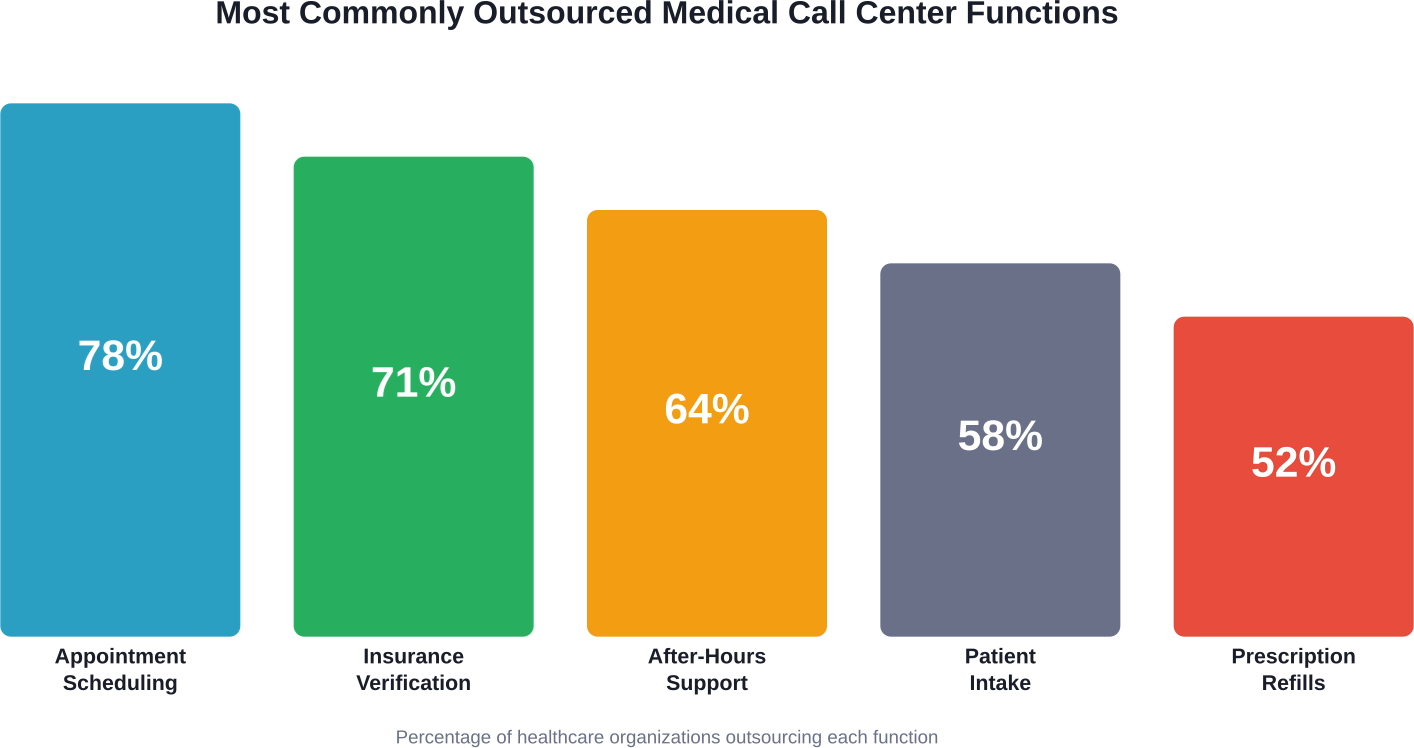
Appointment scheduling represents one of the most commonly outsourced functions. External agents access the organization's scheduling system, book appointments based on provider availability, send confirmations, and handle rescheduling requests.
This service particularly benefits practices with high no-show rates. Specialized providers implement reminder protocols, confirmation calls, and follow-up sequences that significantly reduce missed appointments. Many also handle waitlist management, filling cancelled slots quickly to maximize provider utilization.
Patient Intake and Registration
Patient intake involves collecting demographic information, insurance details, and medical history before appointments. Outsourced teams can handle this time-consuming process efficiently, ensuring accurate data entry into electronic health record systems.
The benefit extends beyond time savings. Trained intake specialists catch errors and incomplete information early, reducing claim denials and registration issues that create downstream problems.
Insurance Verification and Benefits Inquiry
Insurance verification remains one of the most complex administrative tasks in healthcare. According to the Centers for Medicare & Medicaid Services, HIPAA established standardized electronic transactions for health plan eligibility benefit inquiry and response, enabling healthcare providers to obtain information about benefit plans, eligibility, and coverage.
Outsourced teams handle these inquiries systematically, verifying coverage before appointments, checking authorization requirements, and documenting patient responsibility. This proactive approach prevents surprise billing issues and improves collection rates.
After-Hours and Weekend Coverage
Patients don't stop needing help when the office closes. Medical research on after-hours patient phone calls shows that concerns about pain and prescriptions rank among the most common reasons for contact outside business hours.
Outsourced providers offer 24/7 coverage without requiring internal staff to work nights and weekends. They triage calls based on urgency, contact on-call providers for emergencies, and document all interactions for follow-up during regular hours.
Prescription Refill Requests
Prescription refill management involves receiving requests, verifying patient information, coordinating with pharmacies, and routing to appropriate providers for approval. The process seems straightforward but consumes significant staff time when handled in-house.
Specialized call centers streamline this workflow. They verify prescription history, check refill eligibility, and manage the entire pharmacy communication loop. For routine refills, this eliminates unnecessary provider interruptions while ensuring patients receive medications on time.
Billing Inquiries and Payment Processing
Billing questions frustrate patients and staff alike. Outsourced teams trained in medical billing can explain charges, discuss payment options, process payments, and set up payment plans.
This specialization matters. Revenue cycle management requires understanding insurance EOBs, copayment structures, and patient responsibility calculations. Dedicated billing support teams handle these conversations more effectively than general administrative staff.
Patient Satisfaction Surveys and Follow-Up
Post-visit follow-up improves outcomes and patient satisfaction. Outsourced services can conduct satisfaction surveys, check on post-procedure recovery, and identify patients who need additional support.
Research on the timeliness of addressing patient-initiated telephone calls indicates that delayed responses affect multiple aspects of patient health, including quality of care and health equity. Systematic follow-up programs address this gap.
Telehealth Coordination
Telehealth adoption created new administrative demands. Patients need technical support, platform instructions, and appointment coordination. Outsourced teams handle these logistics, troubleshoot connection issues, and ensure patients can access virtual visits successfully.
Key Benefits of Outsourcing Medical Call Centers
Healthcare organizations outsource call center operations for concrete operational and financial reasons. The benefits extend beyond simple cost reduction.
Cost Reduction and Predictable Budgeting
Maintaining an in-house call center requires significant fixed costs: salaries, benefits, training, technology infrastructure, management overhead, and physical space. These expenses persist regardless of call volume fluctuations.
Outsourcing converts these fixed costs to variable expenses. Healthcare organizations pay for actual services delivered, often at rates substantially lower than internal staffing costs. Healthcare organizations typically report cost reductions of 30-40% compared to in-house operations.
The predictability matters too. Monthly outsourcing fees create clear budget lines without surprise costs from turnover, overtime, or technology upgrades.
Scalability and Flexibility
Patient call volumes fluctuate seasonally and unpredictably. Flu season, new provider additions, or service line expansions can overwhelm in-house teams. Scaling internal capacity means hiring and training staff who may become redundant when volumes normalize.
Outsourced providers scale seamlessly. They maintain larger agent pools and can increase or decrease support levels based on actual demand. Healthcare organizations adjust services monthly without hiring decisions or layoff concerns.
Access to Specialized Expertise
Medical call center companies invest heavily in agent training, quality assurance programs, and healthcare-specific technology. They develop expertise across multiple specialties, payer systems, and regulatory requirements.
Individual healthcare organizations can't match this specialization level. An outsourcing partner brings accumulated knowledge from serving multiple clients, implementing best practices developed across thousands of patient interactions.
Improved Patient Experience
Professional call center agents focus exclusively on patient communication. They're not juggling phones while managing other duties. This dedicated attention translates to shorter wait times, more thorough information gathering, and better overall experiences.
The Black Book Research study found that 80% of organizations reported service levels exceeded expectations. That performance difference directly impacts patient satisfaction scores and retention rates.
Extended Hours Without Staff Burnout
Offering after-hours access through internal staff creates burnout and retention problems. Studies comparing onsite versus remote working in call centers highlight how working conditions significantly affect satisfaction and performance.
Outsourcing provides round-the-clock coverage without taxing existing employees. Internal staff work normal hours while patients receive support whenever they need it.
Regulatory Compliance and Risk Management
Healthcare regulations create complex compliance requirements. The Centers for Medicare & Medicaid Services maintains detailed Information Systems Security & Privacy Policy outlining how healthcare organizations must protect and control access to information and systems.
Established medical call center providers maintain compliance programs specifically designed for healthcare operations. They implement required security controls, conduct regular audits, and stay current with regulatory changes—reducing compliance burden for client organizations.
HIPAA Compliance and Security Considerations
Security and privacy requirements represent the most critical factors when outsourcing medical call centers. Healthcare organizations remain legally responsible for protected health information even when third parties access it.
Understanding HIPAA Requirements for Business Associates
Call center providers handling patient information qualify as business associates under HIPAA. This designation triggers specific legal obligations outlined in the HIPAA Privacy Rule.
According to the Department of Health and Human Services standards for privacy of individually identifiable health information, business associates must implement administrative, physical, and technical safeguards to protect patient data. Organizations must execute Business Associate Agreements (BAAs) before any protected health information changes hands.
The BAA defines permitted uses of patient information, requires security measures, establishes breach notification procedures, and outlines audit rights. Never work with a call center provider unwilling to sign a comprehensive BAA.
Essential Security Measures
Compliant medical call centers implement multiple security layers. Physical security controls limit facility access to authorized personnel. Network security includes encryption, firewalls, and intrusion detection. Access controls ensure agents only view information necessary for their specific functions.
Training represents another critical component. Agents receive regular HIPAA training covering privacy principles, permissible uses and disclosures, patient rights, and breach response procedures. Documentation of this training should be available for review.
Audit Rights and Ongoing Monitoring
Healthcare organizations should maintain audit rights in outsourcing agreements. These rights allow reviewing security practices, examining access logs, and assessing compliance with agreed-upon standards.
Regular security assessments matter. Request SOC 2 reports, penetration testing results, and compliance certifications. Established providers conduct these assessments routinely and share results with clients.
How to Choose the Right Medical Call Center Provider
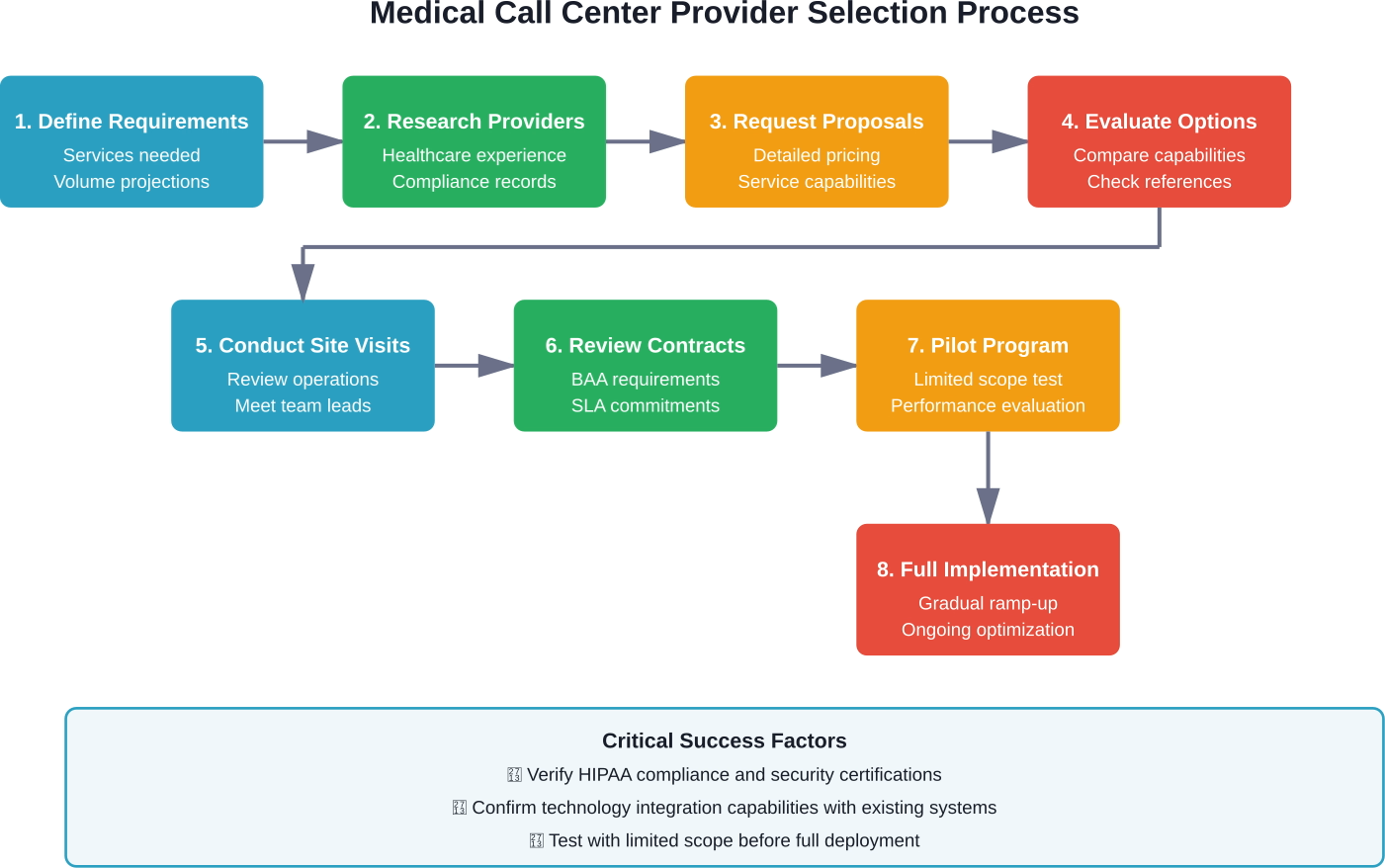
Selecting an outsourcing partner requires systematic evaluation. The wrong choice creates problems worse than the issues outsourcing was meant to solve.
Healthcare Experience and Specialization
Look for providers with demonstrated healthcare experience. Generic call centers lack the specialized knowledge medical operations require. Ask about their healthcare client base, specialties served, and length of experience in medical call center services.
Specialization within healthcare matters too. A provider serving primarily dental practices may struggle with complex hospital operations. Match the provider's experience to the specific services needed.
Technology Integration Capabilities
Outsourced call centers must integrate with existing systems. This includes electronic health records, practice management software, scheduling platforms, and billing systems.
During evaluation, ask specifically about integration capabilities with current technology stack. Request examples of similar integrations they've implemented. Technical compatibility problems create workflow friction that undermines outsourcing benefits.
Training Programs and Quality Assurance
Agent quality determines patient experience. Investigate training programs thoroughly. How long is initial training? What ongoing education do agents receive? How are they evaluated?
Quality assurance programs should include call monitoring, performance metrics, and continuous improvement processes. Ask about quality scores, average handle times, and first-call resolution rates. Request to review actual quality monitoring documentation.
Staffing Models and Agent Consistency
Some providers use dedicated agent teams for each client. Others employ shared agent pools. Dedicated teams develop deeper familiarity with specific organizational processes and provider preferences.
Ask about agent turnover rates and tenure. High turnover indicates underlying problems with work environment, compensation, or management—problems that eventually affect client service quality.
Performance Metrics and Reporting
Data visibility enables effective partnership management. Providers should offer detailed reporting on call volumes, handle times, abandonment rates, service levels, and other key metrics.
Real-time dashboard access helps identify issues quickly. Historical reporting supports trend analysis and capacity planning. Clarify reporting capabilities and frequency before contracting.
Pricing Structure and Hidden Costs
Understand exactly what pricing includes. Some providers charge per-minute rates, others use monthly seat fees or transaction-based pricing. Each model has advantages depending on call patterns and volume.
Watch for hidden costs: setup fees, integration charges, minimum volume requirements, overage penalties, or technology licensing. Request all-inclusive pricing to compare providers accurately.
References and Case Studies
Ask for client references in similar healthcare settings. Speak with current clients about their experience, challenges encountered, and satisfaction levels.
Case studies demonstrate problem-solving capabilities. Look for examples addressing situations similar to current challenges. However, remain skeptical of perfectly polished case studies—they often omit implementation difficulties.
Contract Terms and Exit Strategies
Read contracts carefully. Pay attention to minimum commitment periods, renewal terms, and termination clauses. What happens to patient data if the relationship ends? How much notice is required for termination?
Exit strategies matter even when things go well. Organizational needs change. Ensure contracts allow reasonable exits without prohibitive penalties.
Common Implementation Challenges and Solutions
Even well-planned outsourcing initiatives encounter obstacles. Anticipating common problems enables faster resolution.
System Integration Difficulties
Technology integration frequently takes longer than expected. API documentation may be incomplete, legacy systems lack modern interfaces, or security requirements complicate data exchange.
Mitigate this risk by involving IT teams early in vendor selection. Conduct technical discovery before contracting. Build adequate time into implementation schedules for integration testing and troubleshooting.
Knowledge Transfer and Training
Outsourced agents need extensive knowledge about organizational processes, provider preferences, and specialty-specific protocols. Inadequate knowledge transfer creates quality problems early in the relationship.
Develop comprehensive training documentation covering all workflows, common scenarios, and escalation procedures. Plan for extended training periods and ongoing education. Assign internal subject matter experts to support the external team during ramp-up.
Staff Resistance and Change Management
Internal staff may view outsourcing as threatening their jobs or undermining their expertise. This resistance manifests as reluctance to share knowledge, criticism of outsourced agent performance, or passive-aggressive obstruction.
Address concerns transparently. Explain how outsourcing allows internal staff to focus on higher-value activities. Involve staff in vendor selection and training development. Clarify that the goal is support, not replacement.
Quality Consistency Issues
Service quality may fluctuate during initial months. Agents make mistakes as they learn. Processes need refinement. Patient complaints may temporarily increase.
Expect this adjustment period. Establish clear quality metrics and monitoring processes from day one. Schedule frequent check-ins during ramp-up. Provide immediate feedback when issues arise. Most quality problems resolve with time and attention.
Communication and Coordination Gaps
Poor communication between internal teams and outsourced agents creates problems. Messages get lost, urgent issues aren't escalated, or important information doesn't reach the right people.
Establish clear communication protocols. Define escalation paths for different scenario types. Use shared communication platforms for real-time coordination. Schedule regular meetings between internal leadership and the outsourcing partner's management team.
Cost Analysis: In-House vs. Outsourced Medical Call Centers
Financial considerations drive many outsourcing decisions. But true cost comparison requires examining all expense categories, not just obvious line items.
Direct Cost Comparison
In-house call center costs include salaries, benefits, payroll taxes, training, supervision, and management. For a small team of five agents, annual costs easily exceed $300,000 when fully loaded.
Outsourcing typically costs 30-40% less for equivalent service levels. But the comparison depends on specific circumstances, call volumes, and service scope.
Hidden Costs of In-House Operations
Internal operations carry costs beyond payroll. Real estate for call center space, technology infrastructure, telephony systems, quality assurance tools, workforce management software, and ongoing system maintenance all add up.
Turnover represents another hidden cost. Healthcare call center positions often experience 30-40% annual turnover. Each replacement requires recruiting, hiring, and training costs—plus productivity losses during the transition.
Scalability Cost Advantages
Scaling in-house operations means hiring and training additional staff—a process taking months. During that time, service levels suffer. When volumes decrease, excess staff creates unnecessary expense.
Outsourced services scale immediately. Need extra coverage during flu season? The provider adds capacity within days. Volume drops after the surge? Scale back without layoffs or idle staff costs.
Future Trends in Medical Call Center Outsourcing
Healthcare communication continues evolving. Understanding emerging trends helps organizations make future-proof outsourcing decisions.
AI Integration and Automation
Artificial intelligence increasingly handles routine inquiries. AI-powered systems manage appointment confirmations, medication reminders, and basic information requests with natural conversational flow.
Research indicates AI-augmented call centers achieve significant efficiency improvements. But human agents remain essential for complex situations requiring empathy, clinical judgment, or nuanced decision-making.
The optimal model combines AI for routine transactions with human expertise for complex needs. Leading outsourcing providers already offer this hybrid approach.
Omnichannel Communication
Patients expect seamless communication across channels—phone, text, email, patient portal, and chat. They want to start conversations on one channel and continue on another without repeating information.
Outsourced providers increasingly offer true omnichannel support. Agents access unified patient communication histories regardless of channel. This continuity improves experience and efficiency.
Specialized Clinical Support
Generic call center agents can't handle increasingly complex healthcare scenarios. The trend moves toward specialized teams with clinical backgrounds—registered nurses, pharmacy technicians, or certified medical assistants providing phone support.
This clinical expertise enables more sophisticated services: symptom triage, medication counseling, chronic disease management support, and clinical navigation assistance.
Remote Work and Global Talent
Remote work transformed call center operations. Research comparing onsite versus remote working shows remote arrangements can maintain or improve satisfaction and performance when properly structured.
This shift enables providers to access broader talent pools and offer services across more time zones. It also creates cost efficiencies passed to healthcare clients.
Advanced Analytics and Predictive Capabilities
Call center data contains valuable insights about patient needs, operational bottlenecks, and service gaps. Advanced analytics extract these insights, enabling proactive improvements.
Predictive analytics forecast call volume patterns, identify patients at risk for no-shows, and flag accounts likely to have billing disputes. These capabilities help healthcare organizations address issues before they escalate.
Best Practices for Successful Medical Call Center Outsourcing
Following proven best practices increases outsourcing success probability.
Start with a Pilot Program
Don't outsource entire call center operations immediately. Begin with a limited scope pilot—perhaps after-hours coverage or a specific service line. This approach reduces risk while proving the concept.
Evaluate pilot results rigorously. Measure quality metrics, patient satisfaction, cost performance, and integration effectiveness. Use lessons learned to refine the full implementation approach.
Establish Clear Service Level Agreements
SLAs define expectations and accountability. Specify response times, quality standards, availability requirements, and escalation procedures. Include consequences for missing targets.
But keep SLAs realistic. Overly aggressive targets increase costs without necessarily improving patient experience. Focus on metrics that actually matter to patients and organizational goals.
Maintain Regular Communication
Successful partnerships require ongoing dialogue. Schedule weekly operational reviews during initial months, then monthly once operations stabilize. Discuss performance metrics, emerging issues, and improvement opportunities.
Don't limit communication to formal meetings. Maintain open channels for day-to-day questions and quick problem resolution.
Invest in Comprehensive Training
Initial training sets the foundation for quality. Don't rush this phase. Develop detailed training materials covering workflows, systems, protocols, and common scenarios.
Ongoing training matters equally. Healthcare processes change, new services launch, and regulations evolve. Establish mechanisms for continuously updating outsourced teams about changes.
Monitor Quality Continuously
Regular quality monitoring catches problems early. Review call recordings, audit documentation accuracy, and track patient satisfaction metrics. Share findings with the provider and collaborate on improvements.
But avoid micromanagement. The provider has expertise in call center operations. Focus oversight on outcomes and patient experience, not dictating every operational detail.
Treat the Provider as a Partner
The best outsourcing relationships function as true partnerships. Share information openly, involve the provider in planning discussions, and recognize their expertise.
Adversarial relationships create poor results. When providers feel like commodities rather than partners, they deliver minimum contractual requirements instead of going above and beyond.
Plan for Long-Term Success
Outsourcing isn't set-it-and-forget-it. Patient needs evolve, organizational priorities shift, and service expectations increase. Build regular strategic reviews into the relationship.
Discuss future needs, explore new capabilities, and align the partnership with organizational direction. The most successful arrangements continuously adapt and improve.
Making Your Medical Call Center Outsourcing Decision
Medical call center outsourcing offers compelling benefits—cost reduction, scalability, extended coverage, and specialized expertise. But success requires careful planning, thorough vendor evaluation, and ongoing partnership management.
The healthcare communication landscape will continue evolving. Patient expectations increase, regulatory requirements expand, and technology capabilities advance. Organizations that strategically leverage outsourcing partnerships position themselves to adapt more effectively than those maintaining rigid internal operations.
Start by assessing current gaps and pain points. Which functions consume excessive internal resources? Where do service levels fall short? What capabilities would improve patient experience but seem unrealistic to build in-house?
Use these insights to define outsourcing requirements. Then systematically evaluate providers against healthcare experience, compliance capabilities, technology integration, and cultural fit. Don't rush the selection process—the right partner makes the difference between transformative improvement and expensive disappointment.
Begin with limited scope to prove value before full commitment. Monitor results closely, address issues promptly, and refine the partnership continuously. Treat the provider as a strategic partner rather than a commodity vendor.
Healthcare organizations facing operational pressures can't afford to ignore proven solutions. Medical call center outsourcing represents a strategic approach to delivering excellent patient communication while controlling costs and preserving internal resources for clinical priorities.
The question isn't whether to consider outsourcing—it's how to implement it effectively for your specific situation.
Frequently Asked Questions
Topics
Medical Call Center Outsourcing Guide 2026

Medical call center outsourcing involves partnering with specialized third-party providers to handle patient communications, appointment scheduling, insurance verification, and support services. This guide covers essential services to outsource, key provider selection criteria including HIPAA compliance, and practical implementation strategies that healthcare organizations can use to improve patient experience while reducing operational costs by 30-40%.
Healthcare organizations face mounting pressure. Patient volumes climb, administrative tasks multiply, and every call represents someone who needs help navigating a complex system. Meanwhile, internal staff struggle to balance clinical priorities with the constant flow of phone inquiries, insurance questions, and appointment requests.
Medical call center outsourcing offers a strategic solution. By partnering with specialized providers, healthcare facilities can maintain high-quality patient communication while freeing internal resources for clinical care. But navigating the outsourcing landscape requires understanding which services to delegate, what compliance standards matter, and how to choose the right partner.
This guide breaks down everything healthcare leaders need to know about outsourcing medical call center operations in 2026.
What is Medical Call Center Outsourcing?
Medical call center outsourcing means contracting with external service providers to handle patient-facing communications and administrative phone operations. These specialized companies employ trained agents who manage everything from appointment scheduling to insurance verification, operating as an extension of the healthcare organization's team.
The model differs significantly from traditional answering services. Modern outsourced medical call centers integrate with existing healthcare systems, follow clinical protocols, and maintain strict compliance with healthcare regulations. Agents receive specialized training in medical terminology, patient privacy requirements, and healthcare-specific workflows.
According to Black Book Research data from a study of over 500 hospitals and in-patient organizations, 80% reported service levels exceeded expectations from outsourcing arrangements. That's not just about answering phones—it reflects comprehensive support that actually improves patient experience.
The Evolution of Healthcare Communication
Healthcare communication has transformed dramatically over the past decade. Patients expect 24/7 access, multiple contact channels, and immediate responses. Traditional in-house call centers struggle to meet these expectations without significant infrastructure investment.
Outsourcing providers have evolved alongside these changes. They now offer omnichannel support spanning phone, chat, email, and portal messaging. Many integrate AI-powered tools for routine inquiries while maintaining human agents for complex situations.
The healthcare call center outsourcing market reflects this growth trajectory, with projections showing the sector reaching USD 525.23 billion by 2030. This expansion signals both increased adoption and the expanding scope of services outsourced providers handle.
Strengthen Operations With Medical Call Center Outsourcing
Medical call centers require structured communication and reliable staffing. NeoWork builds remote call center teams aligned with your scheduling and escalation protocols. Their 91% annualized teammate retention rate and 3.2% candidate selectivity rate support continuity and service quality. This helps maintain patient satisfaction and internal efficiency.
Ready to Scale Your Medical Call Center?
Talk with NeoWork to:
- launch a dedicated remote call team
- improve response times and coordination
- scale coverage without constant rehiring
👉 Reach out to NeoWork to discuss your call center outsourcing needs.
Core Services to Outsource in Medical Call Centers
Not every call center function makes sense to outsource. Healthcare organizations get the best results when they strategically select services that align with their operational gaps and patient needs.
Appointment Scheduling and Management
Appointment scheduling represents one of the most commonly outsourced functions. External agents access the organization's scheduling system, book appointments based on provider availability, send confirmations, and handle rescheduling requests.
This service particularly benefits practices with high no-show rates. Specialized providers implement reminder protocols, confirmation calls, and follow-up sequences that significantly reduce missed appointments. Many also handle waitlist management, filling cancelled slots quickly to maximize provider utilization.
Patient Intake and Registration
Patient intake involves collecting demographic information, insurance details, and medical history before appointments. Outsourced teams can handle this time-consuming process efficiently, ensuring accurate data entry into electronic health record systems.
The benefit extends beyond time savings. Trained intake specialists catch errors and incomplete information early, reducing claim denials and registration issues that create downstream problems.
Insurance Verification and Benefits Inquiry
Insurance verification remains one of the most complex administrative tasks in healthcare. According to the Centers for Medicare & Medicaid Services, HIPAA established standardized electronic transactions for health plan eligibility benefit inquiry and response, enabling healthcare providers to obtain information about benefit plans, eligibility, and coverage.
Outsourced teams handle these inquiries systematically, verifying coverage before appointments, checking authorization requirements, and documenting patient responsibility. This proactive approach prevents surprise billing issues and improves collection rates.
After-Hours and Weekend Coverage
Patients don't stop needing help when the office closes. Medical research on after-hours patient phone calls shows that concerns about pain and prescriptions rank among the most common reasons for contact outside business hours.
Outsourced providers offer 24/7 coverage without requiring internal staff to work nights and weekends. They triage calls based on urgency, contact on-call providers for emergencies, and document all interactions for follow-up during regular hours.
Prescription Refill Requests
Prescription refill management involves receiving requests, verifying patient information, coordinating with pharmacies, and routing to appropriate providers for approval. The process seems straightforward but consumes significant staff time when handled in-house.
Specialized call centers streamline this workflow. They verify prescription history, check refill eligibility, and manage the entire pharmacy communication loop. For routine refills, this eliminates unnecessary provider interruptions while ensuring patients receive medications on time.
Billing Inquiries and Payment Processing
Billing questions frustrate patients and staff alike. Outsourced teams trained in medical billing can explain charges, discuss payment options, process payments, and set up payment plans.
This specialization matters. Revenue cycle management requires understanding insurance EOBs, copayment structures, and patient responsibility calculations. Dedicated billing support teams handle these conversations more effectively than general administrative staff.
Patient Satisfaction Surveys and Follow-Up
Post-visit follow-up improves outcomes and patient satisfaction. Outsourced services can conduct satisfaction surveys, check on post-procedure recovery, and identify patients who need additional support.
Research on the timeliness of addressing patient-initiated telephone calls indicates that delayed responses affect multiple aspects of patient health, including quality of care and health equity. Systematic follow-up programs address this gap.
Telehealth Coordination
Telehealth adoption created new administrative demands. Patients need technical support, platform instructions, and appointment coordination. Outsourced teams handle these logistics, troubleshoot connection issues, and ensure patients can access virtual visits successfully.
Key Benefits of Outsourcing Medical Call Centers
Healthcare organizations outsource call center operations for concrete operational and financial reasons. The benefits extend beyond simple cost reduction.
Cost Reduction and Predictable Budgeting
Maintaining an in-house call center requires significant fixed costs: salaries, benefits, training, technology infrastructure, management overhead, and physical space. These expenses persist regardless of call volume fluctuations.
Outsourcing converts these fixed costs to variable expenses. Healthcare organizations pay for actual services delivered, often at rates substantially lower than internal staffing costs. Healthcare organizations typically report cost reductions of 30-40% compared to in-house operations.
The predictability matters too. Monthly outsourcing fees create clear budget lines without surprise costs from turnover, overtime, or technology upgrades.
Scalability and Flexibility
Patient call volumes fluctuate seasonally and unpredictably. Flu season, new provider additions, or service line expansions can overwhelm in-house teams. Scaling internal capacity means hiring and training staff who may become redundant when volumes normalize.
Outsourced providers scale seamlessly. They maintain larger agent pools and can increase or decrease support levels based on actual demand. Healthcare organizations adjust services monthly without hiring decisions or layoff concerns.
Access to Specialized Expertise
Medical call center companies invest heavily in agent training, quality assurance programs, and healthcare-specific technology. They develop expertise across multiple specialties, payer systems, and regulatory requirements.
Individual healthcare organizations can't match this specialization level. An outsourcing partner brings accumulated knowledge from serving multiple clients, implementing best practices developed across thousands of patient interactions.
Improved Patient Experience
Professional call center agents focus exclusively on patient communication. They're not juggling phones while managing other duties. This dedicated attention translates to shorter wait times, more thorough information gathering, and better overall experiences.
The Black Book Research study found that 80% of organizations reported service levels exceeded expectations. That performance difference directly impacts patient satisfaction scores and retention rates.
Extended Hours Without Staff Burnout
Offering after-hours access through internal staff creates burnout and retention problems. Studies comparing onsite versus remote working in call centers highlight how working conditions significantly affect satisfaction and performance.
Outsourcing provides round-the-clock coverage without taxing existing employees. Internal staff work normal hours while patients receive support whenever they need it.
Regulatory Compliance and Risk Management
Healthcare regulations create complex compliance requirements. The Centers for Medicare & Medicaid Services maintains detailed Information Systems Security & Privacy Policy outlining how healthcare organizations must protect and control access to information and systems.
Established medical call center providers maintain compliance programs specifically designed for healthcare operations. They implement required security controls, conduct regular audits, and stay current with regulatory changes—reducing compliance burden for client organizations.
HIPAA Compliance and Security Considerations
Security and privacy requirements represent the most critical factors when outsourcing medical call centers. Healthcare organizations remain legally responsible for protected health information even when third parties access it.
Understanding HIPAA Requirements for Business Associates
Call center providers handling patient information qualify as business associates under HIPAA. This designation triggers specific legal obligations outlined in the HIPAA Privacy Rule.
According to the Department of Health and Human Services standards for privacy of individually identifiable health information, business associates must implement administrative, physical, and technical safeguards to protect patient data. Organizations must execute Business Associate Agreements (BAAs) before any protected health information changes hands.
The BAA defines permitted uses of patient information, requires security measures, establishes breach notification procedures, and outlines audit rights. Never work with a call center provider unwilling to sign a comprehensive BAA.
Essential Security Measures
Compliant medical call centers implement multiple security layers. Physical security controls limit facility access to authorized personnel. Network security includes encryption, firewalls, and intrusion detection. Access controls ensure agents only view information necessary for their specific functions.
Training represents another critical component. Agents receive regular HIPAA training covering privacy principles, permissible uses and disclosures, patient rights, and breach response procedures. Documentation of this training should be available for review.
Audit Rights and Ongoing Monitoring
Healthcare organizations should maintain audit rights in outsourcing agreements. These rights allow reviewing security practices, examining access logs, and assessing compliance with agreed-upon standards.
Regular security assessments matter. Request SOC 2 reports, penetration testing results, and compliance certifications. Established providers conduct these assessments routinely and share results with clients.
How to Choose the Right Medical Call Center Provider
Selecting an outsourcing partner requires systematic evaluation. The wrong choice creates problems worse than the issues outsourcing was meant to solve.
Healthcare Experience and Specialization
Look for providers with demonstrated healthcare experience. Generic call centers lack the specialized knowledge medical operations require. Ask about their healthcare client base, specialties served, and length of experience in medical call center services.
Specialization within healthcare matters too. A provider serving primarily dental practices may struggle with complex hospital operations. Match the provider's experience to the specific services needed.
Technology Integration Capabilities
Outsourced call centers must integrate with existing systems. This includes electronic health records, practice management software, scheduling platforms, and billing systems.
During evaluation, ask specifically about integration capabilities with current technology stack. Request examples of similar integrations they've implemented. Technical compatibility problems create workflow friction that undermines outsourcing benefits.
Training Programs and Quality Assurance
Agent quality determines patient experience. Investigate training programs thoroughly. How long is initial training? What ongoing education do agents receive? How are they evaluated?
Quality assurance programs should include call monitoring, performance metrics, and continuous improvement processes. Ask about quality scores, average handle times, and first-call resolution rates. Request to review actual quality monitoring documentation.
Staffing Models and Agent Consistency
Some providers use dedicated agent teams for each client. Others employ shared agent pools. Dedicated teams develop deeper familiarity with specific organizational processes and provider preferences.
Ask about agent turnover rates and tenure. High turnover indicates underlying problems with work environment, compensation, or management—problems that eventually affect client service quality.
Performance Metrics and Reporting
Data visibility enables effective partnership management. Providers should offer detailed reporting on call volumes, handle times, abandonment rates, service levels, and other key metrics.
Real-time dashboard access helps identify issues quickly. Historical reporting supports trend analysis and capacity planning. Clarify reporting capabilities and frequency before contracting.
Pricing Structure and Hidden Costs
Understand exactly what pricing includes. Some providers charge per-minute rates, others use monthly seat fees or transaction-based pricing. Each model has advantages depending on call patterns and volume.
Watch for hidden costs: setup fees, integration charges, minimum volume requirements, overage penalties, or technology licensing. Request all-inclusive pricing to compare providers accurately.
References and Case Studies
Ask for client references in similar healthcare settings. Speak with current clients about their experience, challenges encountered, and satisfaction levels.
Case studies demonstrate problem-solving capabilities. Look for examples addressing situations similar to current challenges. However, remain skeptical of perfectly polished case studies—they often omit implementation difficulties.
Contract Terms and Exit Strategies
Read contracts carefully. Pay attention to minimum commitment periods, renewal terms, and termination clauses. What happens to patient data if the relationship ends? How much notice is required for termination?
Exit strategies matter even when things go well. Organizational needs change. Ensure contracts allow reasonable exits without prohibitive penalties.
Common Implementation Challenges and Solutions
Even well-planned outsourcing initiatives encounter obstacles. Anticipating common problems enables faster resolution.
System Integration Difficulties
Technology integration frequently takes longer than expected. API documentation may be incomplete, legacy systems lack modern interfaces, or security requirements complicate data exchange.
Mitigate this risk by involving IT teams early in vendor selection. Conduct technical discovery before contracting. Build adequate time into implementation schedules for integration testing and troubleshooting.
Knowledge Transfer and Training
Outsourced agents need extensive knowledge about organizational processes, provider preferences, and specialty-specific protocols. Inadequate knowledge transfer creates quality problems early in the relationship.
Develop comprehensive training documentation covering all workflows, common scenarios, and escalation procedures. Plan for extended training periods and ongoing education. Assign internal subject matter experts to support the external team during ramp-up.
Staff Resistance and Change Management
Internal staff may view outsourcing as threatening their jobs or undermining their expertise. This resistance manifests as reluctance to share knowledge, criticism of outsourced agent performance, or passive-aggressive obstruction.
Address concerns transparently. Explain how outsourcing allows internal staff to focus on higher-value activities. Involve staff in vendor selection and training development. Clarify that the goal is support, not replacement.
Quality Consistency Issues
Service quality may fluctuate during initial months. Agents make mistakes as they learn. Processes need refinement. Patient complaints may temporarily increase.
Expect this adjustment period. Establish clear quality metrics and monitoring processes from day one. Schedule frequent check-ins during ramp-up. Provide immediate feedback when issues arise. Most quality problems resolve with time and attention.
Communication and Coordination Gaps
Poor communication between internal teams and outsourced agents creates problems. Messages get lost, urgent issues aren't escalated, or important information doesn't reach the right people.
Establish clear communication protocols. Define escalation paths for different scenario types. Use shared communication platforms for real-time coordination. Schedule regular meetings between internal leadership and the outsourcing partner's management team.
Cost Analysis: In-House vs. Outsourced Medical Call Centers
Financial considerations drive many outsourcing decisions. But true cost comparison requires examining all expense categories, not just obvious line items.
Direct Cost Comparison
In-house call center costs include salaries, benefits, payroll taxes, training, supervision, and management. For a small team of five agents, annual costs easily exceed $300,000 when fully loaded.
Outsourcing typically costs 30-40% less for equivalent service levels. But the comparison depends on specific circumstances, call volumes, and service scope.
Hidden Costs of In-House Operations
Internal operations carry costs beyond payroll. Real estate for call center space, technology infrastructure, telephony systems, quality assurance tools, workforce management software, and ongoing system maintenance all add up.
Turnover represents another hidden cost. Healthcare call center positions often experience 30-40% annual turnover. Each replacement requires recruiting, hiring, and training costs—plus productivity losses during the transition.
Scalability Cost Advantages
Scaling in-house operations means hiring and training additional staff—a process taking months. During that time, service levels suffer. When volumes decrease, excess staff creates unnecessary expense.
Outsourced services scale immediately. Need extra coverage during flu season? The provider adds capacity within days. Volume drops after the surge? Scale back without layoffs or idle staff costs.
Future Trends in Medical Call Center Outsourcing
Healthcare communication continues evolving. Understanding emerging trends helps organizations make future-proof outsourcing decisions.
AI Integration and Automation
Artificial intelligence increasingly handles routine inquiries. AI-powered systems manage appointment confirmations, medication reminders, and basic information requests with natural conversational flow.
Research indicates AI-augmented call centers achieve significant efficiency improvements. But human agents remain essential for complex situations requiring empathy, clinical judgment, or nuanced decision-making.
The optimal model combines AI for routine transactions with human expertise for complex needs. Leading outsourcing providers already offer this hybrid approach.
Omnichannel Communication
Patients expect seamless communication across channels—phone, text, email, patient portal, and chat. They want to start conversations on one channel and continue on another without repeating information.
Outsourced providers increasingly offer true omnichannel support. Agents access unified patient communication histories regardless of channel. This continuity improves experience and efficiency.
Specialized Clinical Support
Generic call center agents can't handle increasingly complex healthcare scenarios. The trend moves toward specialized teams with clinical backgrounds—registered nurses, pharmacy technicians, or certified medical assistants providing phone support.
This clinical expertise enables more sophisticated services: symptom triage, medication counseling, chronic disease management support, and clinical navigation assistance.
Remote Work and Global Talent
Remote work transformed call center operations. Research comparing onsite versus remote working shows remote arrangements can maintain or improve satisfaction and performance when properly structured.
This shift enables providers to access broader talent pools and offer services across more time zones. It also creates cost efficiencies passed to healthcare clients.
Advanced Analytics and Predictive Capabilities
Call center data contains valuable insights about patient needs, operational bottlenecks, and service gaps. Advanced analytics extract these insights, enabling proactive improvements.
Predictive analytics forecast call volume patterns, identify patients at risk for no-shows, and flag accounts likely to have billing disputes. These capabilities help healthcare organizations address issues before they escalate.
Best Practices for Successful Medical Call Center Outsourcing
Following proven best practices increases outsourcing success probability.
Start with a Pilot Program
Don't outsource entire call center operations immediately. Begin with a limited scope pilot—perhaps after-hours coverage or a specific service line. This approach reduces risk while proving the concept.
Evaluate pilot results rigorously. Measure quality metrics, patient satisfaction, cost performance, and integration effectiveness. Use lessons learned to refine the full implementation approach.
Establish Clear Service Level Agreements
SLAs define expectations and accountability. Specify response times, quality standards, availability requirements, and escalation procedures. Include consequences for missing targets.
But keep SLAs realistic. Overly aggressive targets increase costs without necessarily improving patient experience. Focus on metrics that actually matter to patients and organizational goals.
Maintain Regular Communication
Successful partnerships require ongoing dialogue. Schedule weekly operational reviews during initial months, then monthly once operations stabilize. Discuss performance metrics, emerging issues, and improvement opportunities.
Don't limit communication to formal meetings. Maintain open channels for day-to-day questions and quick problem resolution.
Invest in Comprehensive Training
Initial training sets the foundation for quality. Don't rush this phase. Develop detailed training materials covering workflows, systems, protocols, and common scenarios.
Ongoing training matters equally. Healthcare processes change, new services launch, and regulations evolve. Establish mechanisms for continuously updating outsourced teams about changes.
Monitor Quality Continuously
Regular quality monitoring catches problems early. Review call recordings, audit documentation accuracy, and track patient satisfaction metrics. Share findings with the provider and collaborate on improvements.
But avoid micromanagement. The provider has expertise in call center operations. Focus oversight on outcomes and patient experience, not dictating every operational detail.
Treat the Provider as a Partner
The best outsourcing relationships function as true partnerships. Share information openly, involve the provider in planning discussions, and recognize their expertise.
Adversarial relationships create poor results. When providers feel like commodities rather than partners, they deliver minimum contractual requirements instead of going above and beyond.
Plan for Long-Term Success
Outsourcing isn't set-it-and-forget-it. Patient needs evolve, organizational priorities shift, and service expectations increase. Build regular strategic reviews into the relationship.
Discuss future needs, explore new capabilities, and align the partnership with organizational direction. The most successful arrangements continuously adapt and improve.
Making Your Medical Call Center Outsourcing Decision
Medical call center outsourcing offers compelling benefits—cost reduction, scalability, extended coverage, and specialized expertise. But success requires careful planning, thorough vendor evaluation, and ongoing partnership management.
The healthcare communication landscape will continue evolving. Patient expectations increase, regulatory requirements expand, and technology capabilities advance. Organizations that strategically leverage outsourcing partnerships position themselves to adapt more effectively than those maintaining rigid internal operations.
Start by assessing current gaps and pain points. Which functions consume excessive internal resources? Where do service levels fall short? What capabilities would improve patient experience but seem unrealistic to build in-house?
Use these insights to define outsourcing requirements. Then systematically evaluate providers against healthcare experience, compliance capabilities, technology integration, and cultural fit. Don't rush the selection process—the right partner makes the difference between transformative improvement and expensive disappointment.
Begin with limited scope to prove value before full commitment. Monitor results closely, address issues promptly, and refine the partnership continuously. Treat the provider as a strategic partner rather than a commodity vendor.
Healthcare organizations facing operational pressures can't afford to ignore proven solutions. Medical call center outsourcing represents a strategic approach to delivering excellent patient communication while controlling costs and preserving internal resources for clinical priorities.
The question isn't whether to consider outsourcing—it's how to implement it effectively for your specific situation.
Frequently Asked Questions
Topics
Related Blogs
Related Podcasts


.webp)
.webp)



