

.avif)
.avif)

Mobile Game Development Outsourcing Guide 2026

.svg)

Mobile game development outsourcing lets studios tap into specialized global talent while cutting costs by 40-60% compared to in-house teams. This guide covers choosing the right outsourcing partner, understanding regional pricing differences ($20-120/hour), and managing the entire process from vetting to deployment. Outsourcing works best for startups with limited resources, indie studios scaling rapidly, and established companies needing specialized skills.
The mobile gaming market is projected to surpass $160 billion by 2030. With millions of new players joining yearly, demand for quality games has never been higher.
But here's the thing—building a compelling mobile game requires specialists across multiple disciplines. Artists, programmers, sound designers, QA testers, and more. For many studios, assembling and maintaining this talent in-house isn't realistic.
That's where outsourcing changes the equation.
What is Mobile Game Development Outsourcing?
Mobile game development outsourcing means hiring external teams or specialists to handle some or all of your game production. Instead of building everything internally, you partner with external studios that bring specialized skills to your project.
This isn't about handing over your entire vision to strangers. Think of it as strategic collaboration.
Some studios outsource specific components—3D character modeling, UI design, backend infrastructure. Others partner with full-service development teams that handle everything from concept to launch. The approach depends on your internal capabilities and project requirements.
Custom game development through outsourcing has become standard practice across the industry. Even major publishers use external teams for specific production phases.
Why Outsource Mobile Game Development?
Outsourcing can reduce costs by 40-60% compared to in-house hiring. But cost savings tell only part of the story.
Access to Specialized Talent
Need a Unity expert who specializes in multiplayer networking? Or an artist experienced with stylized 3D environments? External teams often employ specialists with niche skills that would be expensive to hire full-time.
By choosing game development outsourcing, companies gain access to a global network of experts who can jump into projects quickly.
Faster Development Cycles
External teams can scale up rapidly. Need to double your art production for two months? An outsourcing partner can add capacity without the overhead of recruiting, onboarding, and eventually laying off staff.
Focus on Core Competencies
If your strength is game design and monetization, outsourcing technical implementation lets you concentrate on what you do best. Different studios have different core capabilities.
Ideal Scenarios for Outsourcing
Outsourcing works particularly well for:
- Startups with limited internal resources
- Indie developers launching their first commercial game
- Established studios introducing new technologies outside their expertise
- Companies developing multiple projects simultaneously
- Teams needing temporary capacity increases
Mobile Game Development Outsourcing Costs
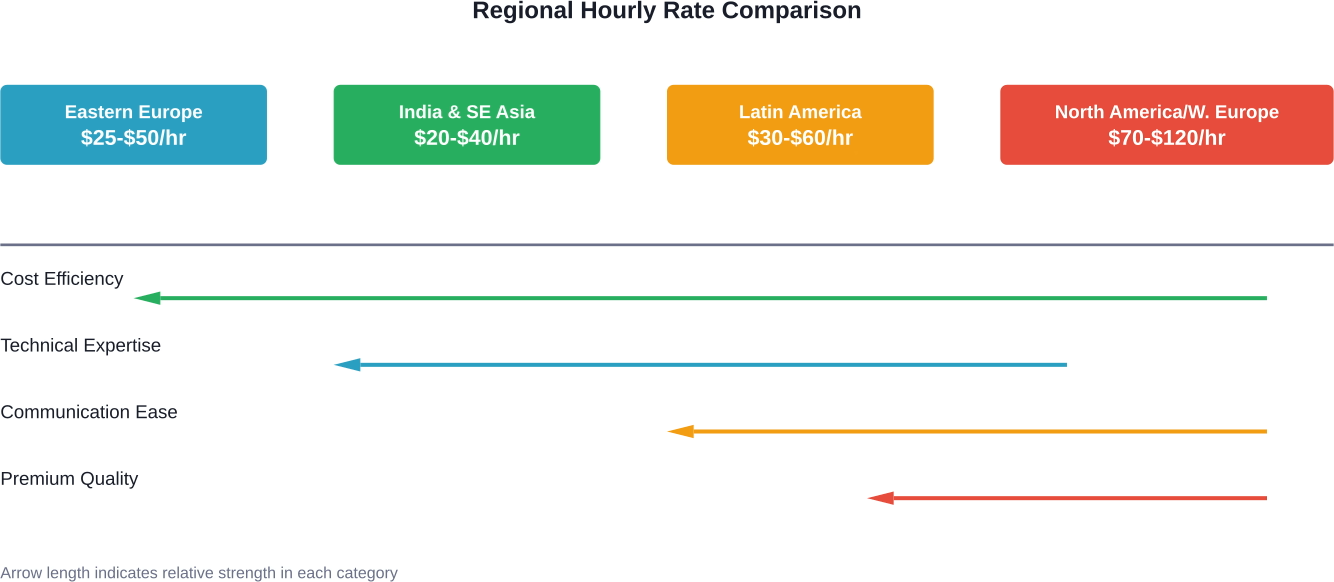
Depending on location, mobile game development costs anywhere between $20,000 and $250,000. The wide range reflects differences in game complexity, team location, and development timeline.
Hourly rates vary significantly by region:
To calculate total cost, consider the expenses of the development team, tools, and software licensing. A basic mobile game might require 3-4 months with a small team. More complex titles can take 12-18 months with larger teams.
Mini-Games vs. Full Productions
Simple mini-games cost around $3,000 to $20,000. These work well as promotional tools or as components within larger games. Full-featured mobile games with complex mechanics, multiplayer features, and polished production values start at $50,000 and can exceed $250,000.
Step-by-Step Process for Outsourcing Mobile Game Development
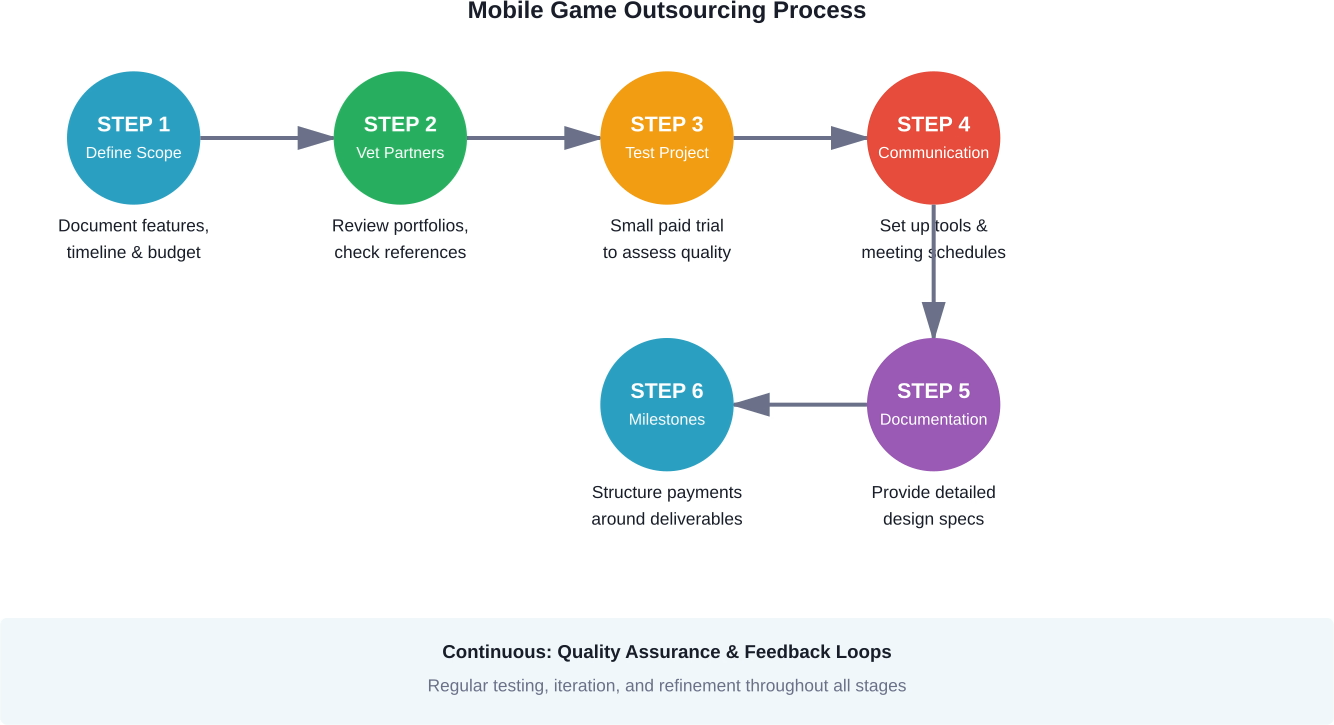
Real talk: successful outsourcing doesn't happen by accident. It requires structured planning and clear communication from day one.
Step 1: Define Your Project Scope
Before contacting potential partners, document exactly what needs building.
This includes:
- Core gameplay mechanics and features
- Target platforms (iOS, Android, or both)
- Art style and technical requirements
- Timeline and milestone expectations
- Budget constraints
Vague briefs lead to misaligned expectations. The more specific the requirements, the more accurate the proposals received.
Step 2: Research and Vet Potential Partners
Don't choose based on price alone.
Evaluate potential partners on:
- Portfolio of previous mobile games (especially similar genres)
- Technical capabilities and platform expertise
- Communication processes and responsiveness
- Client testimonials and references
- Team structure and key personnel
Request case studies that show how they handled challenges. The best partners can articulate their problem-solving approach.
Step 3: Start with a Paid Test Project
Before committing to full development, consider a small paid trial. This could be creating a single game mechanic prototype or producing a set of character designs.
Test projects reveal how the team communicates, meets deadlines, and handles feedback. It's worth the investment to derisk a larger engagement.
Step 4: Establish Clear Communication Protocols
Set up regular check-ins—weekly video calls work well for most projects. Define which tools the team will use for project management, file sharing, and daily communication.
Time zone differences require accommodation from both sides. Overlap at least 2-3 hours daily for real-time collaboration.
Step 5: Create Detailed Documentation
Provide comprehensive design documents, reference materials, and technical specifications. External teams can't read minds—they need clear direction.
Update documentation as the project evolves. Game development is iterative, and requirements change.
Step 6: Implement Milestone-Based Payments
Structure payments around specific deliverables rather than time periods. This aligns incentives and provides natural checkpoints to assess progress.
Typical milestone structure:
- Concept and design approval: 15-20%
- Core mechanics prototype: 25-30%
- Alpha build: 25-30%
- Beta and polish: 20-25%
- Final delivery: 10%
Choosing the Right Outsourcing Partner
The difference between a successful outsourcing relationship and a failed one often comes down to partner selection. So what separates great partners from mediocre ones?
Portfolio Quality Over Quantity
A studio with 50 mediocre games in their portfolio isn't as valuable as one with 5 excellent titles similar to what needs building. Look for relevant experience.
Ask to see shipped products, not just demo reels. Games that made it to market demonstrate the team can handle the entire production pipeline, not just the glamorous parts.
Technical Capabilities
Different engines and platforms require different expertise. A studio excellent at Unity development might have limited Unreal experience. Match technical requirements to proven capabilities.
Ask specific technical questions during vetting. How do they handle performance optimization on lower-end Android devices? What's their approach to cross-platform multiplayer synchronization?
Communication and Culture Fit
Technical skills matter, but communication determines whether a project succeeds.
During initial conversations, assess:
- Response time to emails and messages
- Clarity of explanations and questions
- Willingness to push back on unrealistic requirements
- Proactive communication style
Cultural differences impact working style. Some teams prefer detailed written specifications; others work better with iterative prototyping. Find alignment on process.
Company vs. Freelancer
Working with an established company provides structure, accountability, and redundancy. If a key team member leaves, the company continues.
Individual freelancers can offer specialized expertise at lower rates, but capacity is limited. For small, well-defined tasks, freelancers work well. For full game production, companies provide more stability.

Scale Mobile Game Development Through Outsourcing
Mobile game development outsourcing requires more than just extra hands. You need developers, artists, QA, and support staff who can plug into your roadmap and deliver consistently. NeoWork helps studios scale with dedicated remote teams across engineering, art, QA, and live operations. With a 91% annualized teammate retention rate and a 3.2% candidate selectivity rate, NeoWork focuses on long-term team stability rather than short-term staffing fixes. That stability directly impacts code quality, release cadence, and live ops performance.
Ready to Scale Your Mobile Game Team the Right Way?
Talk with NeoWork to:
- build a cross-functional remote team for your game
- speed up development without sacrificing quality
- support launch and post-launch operations
👉 Contact NeoWork to discuss your mobile game development outsourcing plan.
Common Pitfalls and How to Avoid Them
Even well-planned outsourcing projects encounter challenges. Here's what typically goes wrong and how to prevent it.
Unclear Requirements
Vague briefs guarantee misaligned results. "Make it fun" doesn't help an external team understand what to build.
Solution: Create detailed design documents with reference games, mockups, and specific feature descriptions. When in doubt, over-communicate.
Communication Breakdowns
Time zone differences and language barriers can create friction. Misunderstood instructions lead to wasted work.
Solution: Use visual references extensively. Record video walkthroughs of feedback. Schedule overlapping work hours for real-time discussions on complex topics.
Scope Creep
Adding features mid-project without adjusting timeline or budget creates tension and quality issues.
Solution: Implement formal change request processes. New features require documented impact on schedule and cost before approval.
Quality Control Issues
External teams might have different quality standards. What they consider "finished" might not meet internal expectations.
Solution: Define quality benchmarks upfront with specific examples. Implement regular review milestones before significant work progresses.
Intellectual Property Concerns
Who owns the code, art assets, and game design? Unclear IP agreements create legal headaches.
Solution: Include explicit IP ownership clauses in contracts. Most work-for-hire agreements should transfer all rights to the client upon payment.
AAA Studios vs. Indie: Different Outsourcing Approaches
How major publishers use outsourcing differs significantly from indie studio practices.
AAA studios typically outsource specific production phases—concept art during pre-production, environment modeling during production, QA testing before launch. They maintain creative control internally while scaling capacity externally.
Large publishers often establish long-term relationships with specific outsourcing studios. These partnerships develop shared processes and quality expectations over multiple projects.
Indie developers and startups might outsource larger portions of development due to limited internal capacity. An indie studio might handle game design and direction internally while outsourcing most technical implementation and art production.
The approach that works depends on internal capabilities and project requirements. There's no one-size-fits-all model.
When to Keep Development In-House
Outsourcing isn't always the right answer.
Some situations favor internal development:
- Core gameplay mechanics that define your competitive advantage
- Proprietary technology that provides strategic differentiation
- Projects requiring extensive iteration and experimentation
- Small teams where communication overhead outweighs outsourcing benefits
- Situations where building internal capability provides long-term value
The best approach often combines internal and external resources strategically. Handle core competencies internally; outsource specialized or capacity-limited work.
Future Trends in Game Development Outsourcing
The outsourcing landscape continues evolving. Several trends are reshaping how studios collaborate with external teams.
Remote work normalization has expanded the talent pool dramatically. Geographic boundaries matter less when teams operate virtually by default.
Specialized boutique studios focusing on specific capabilities—procedural generation, AI implementation, live operations—are emerging. These specialists offer deep expertise in narrow domains.
Platform holders are creating tools that simplify cross-studio collaboration. Better version control, cloud-based development environments, and integrated asset pipelines reduce friction in distributed development.
According to insights from MIT Sloan Management Review, strategically outsourcing innovation can put companies in sustainable leadership positions by tapping into global talent networks that no single organization can match internally.
Taking the Next Step
Mobile game development outsourcing opens doors that would otherwise remain closed for many studios. Access to specialized talent, cost efficiency, and flexible capacity make outsourcing a strategic advantage when executed properly.
But success requires more than finding the cheapest hourly rate. It demands clear communication, detailed planning, careful partner selection, and ongoing relationship management.
Start small. Outsource a well-defined component before committing to full production. Test communication processes and quality standards on a limited scope project. Build confidence gradually.
The mobile gaming market shows no signs of slowing. With the right outsourcing strategy, even small studios can compete with well-funded competitors by accessing global talent pools.
Ready to explore outsourcing for your mobile game? Define your project scope, document your requirements, and start vetting potential partners. The investment in proper planning pays dividends throughout production.
Frequently Asked Questions
Topics
Mobile Game Development Outsourcing Guide 2026

Mobile game development outsourcing lets studios tap into specialized global talent while cutting costs by 40-60% compared to in-house teams. This guide covers choosing the right outsourcing partner, understanding regional pricing differences ($20-120/hour), and managing the entire process from vetting to deployment. Outsourcing works best for startups with limited resources, indie studios scaling rapidly, and established companies needing specialized skills.
The mobile gaming market is projected to surpass $160 billion by 2030. With millions of new players joining yearly, demand for quality games has never been higher.
But here's the thing—building a compelling mobile game requires specialists across multiple disciplines. Artists, programmers, sound designers, QA testers, and more. For many studios, assembling and maintaining this talent in-house isn't realistic.
That's where outsourcing changes the equation.
What is Mobile Game Development Outsourcing?
Mobile game development outsourcing means hiring external teams or specialists to handle some or all of your game production. Instead of building everything internally, you partner with external studios that bring specialized skills to your project.
This isn't about handing over your entire vision to strangers. Think of it as strategic collaboration.
Some studios outsource specific components—3D character modeling, UI design, backend infrastructure. Others partner with full-service development teams that handle everything from concept to launch. The approach depends on your internal capabilities and project requirements.
Custom game development through outsourcing has become standard practice across the industry. Even major publishers use external teams for specific production phases.
Why Outsource Mobile Game Development?
Outsourcing can reduce costs by 40-60% compared to in-house hiring. But cost savings tell only part of the story.
Access to Specialized Talent
Need a Unity expert who specializes in multiplayer networking? Or an artist experienced with stylized 3D environments? External teams often employ specialists with niche skills that would be expensive to hire full-time.
By choosing game development outsourcing, companies gain access to a global network of experts who can jump into projects quickly.
Faster Development Cycles
External teams can scale up rapidly. Need to double your art production for two months? An outsourcing partner can add capacity without the overhead of recruiting, onboarding, and eventually laying off staff.
Focus on Core Competencies
If your strength is game design and monetization, outsourcing technical implementation lets you concentrate on what you do best. Different studios have different core capabilities.
Ideal Scenarios for Outsourcing
Outsourcing works particularly well for:
- Startups with limited internal resources
- Indie developers launching their first commercial game
- Established studios introducing new technologies outside their expertise
- Companies developing multiple projects simultaneously
- Teams needing temporary capacity increases
Mobile Game Development Outsourcing Costs
Depending on location, mobile game development costs anywhere between $20,000 and $250,000. The wide range reflects differences in game complexity, team location, and development timeline.
Hourly rates vary significantly by region:
To calculate total cost, consider the expenses of the development team, tools, and software licensing. A basic mobile game might require 3-4 months with a small team. More complex titles can take 12-18 months with larger teams.
Mini-Games vs. Full Productions
Simple mini-games cost around $3,000 to $20,000. These work well as promotional tools or as components within larger games. Full-featured mobile games with complex mechanics, multiplayer features, and polished production values start at $50,000 and can exceed $250,000.
Step-by-Step Process for Outsourcing Mobile Game Development
Real talk: successful outsourcing doesn't happen by accident. It requires structured planning and clear communication from day one.
Step 1: Define Your Project Scope
Before contacting potential partners, document exactly what needs building.
This includes:
- Core gameplay mechanics and features
- Target platforms (iOS, Android, or both)
- Art style and technical requirements
- Timeline and milestone expectations
- Budget constraints
Vague briefs lead to misaligned expectations. The more specific the requirements, the more accurate the proposals received.
Step 2: Research and Vet Potential Partners
Don't choose based on price alone.
Evaluate potential partners on:
- Portfolio of previous mobile games (especially similar genres)
- Technical capabilities and platform expertise
- Communication processes and responsiveness
- Client testimonials and references
- Team structure and key personnel
Request case studies that show how they handled challenges. The best partners can articulate their problem-solving approach.
Step 3: Start with a Paid Test Project
Before committing to full development, consider a small paid trial. This could be creating a single game mechanic prototype or producing a set of character designs.
Test projects reveal how the team communicates, meets deadlines, and handles feedback. It's worth the investment to derisk a larger engagement.
Step 4: Establish Clear Communication Protocols
Set up regular check-ins—weekly video calls work well for most projects. Define which tools the team will use for project management, file sharing, and daily communication.
Time zone differences require accommodation from both sides. Overlap at least 2-3 hours daily for real-time collaboration.
Step 5: Create Detailed Documentation
Provide comprehensive design documents, reference materials, and technical specifications. External teams can't read minds—they need clear direction.
Update documentation as the project evolves. Game development is iterative, and requirements change.
Step 6: Implement Milestone-Based Payments
Structure payments around specific deliverables rather than time periods. This aligns incentives and provides natural checkpoints to assess progress.
Typical milestone structure:
- Concept and design approval: 15-20%
- Core mechanics prototype: 25-30%
- Alpha build: 25-30%
- Beta and polish: 20-25%
- Final delivery: 10%
Choosing the Right Outsourcing Partner
The difference between a successful outsourcing relationship and a failed one often comes down to partner selection. So what separates great partners from mediocre ones?
Portfolio Quality Over Quantity
A studio with 50 mediocre games in their portfolio isn't as valuable as one with 5 excellent titles similar to what needs building. Look for relevant experience.
Ask to see shipped products, not just demo reels. Games that made it to market demonstrate the team can handle the entire production pipeline, not just the glamorous parts.
Technical Capabilities
Different engines and platforms require different expertise. A studio excellent at Unity development might have limited Unreal experience. Match technical requirements to proven capabilities.
Ask specific technical questions during vetting. How do they handle performance optimization on lower-end Android devices? What's their approach to cross-platform multiplayer synchronization?
Communication and Culture Fit
Technical skills matter, but communication determines whether a project succeeds.
During initial conversations, assess:
- Response time to emails and messages
- Clarity of explanations and questions
- Willingness to push back on unrealistic requirements
- Proactive communication style
Cultural differences impact working style. Some teams prefer detailed written specifications; others work better with iterative prototyping. Find alignment on process.
Company vs. Freelancer
Working with an established company provides structure, accountability, and redundancy. If a key team member leaves, the company continues.
Individual freelancers can offer specialized expertise at lower rates, but capacity is limited. For small, well-defined tasks, freelancers work well. For full game production, companies provide more stability.
Scale Mobile Game Development Through Outsourcing
Mobile game development outsourcing requires more than just extra hands. You need developers, artists, QA, and support staff who can plug into your roadmap and deliver consistently. NeoWork helps studios scale with dedicated remote teams across engineering, art, QA, and live operations. With a 91% annualized teammate retention rate and a 3.2% candidate selectivity rate, NeoWork focuses on long-term team stability rather than short-term staffing fixes. That stability directly impacts code quality, release cadence, and live ops performance.
Ready to Scale Your Mobile Game Team the Right Way?
Talk with NeoWork to:
- build a cross-functional remote team for your game
- speed up development without sacrificing quality
- support launch and post-launch operations
👉 Contact NeoWork to discuss your mobile game development outsourcing plan.
Common Pitfalls and How to Avoid Them
Even well-planned outsourcing projects encounter challenges. Here's what typically goes wrong and how to prevent it.
Unclear Requirements
Vague briefs guarantee misaligned results. "Make it fun" doesn't help an external team understand what to build.
Solution: Create detailed design documents with reference games, mockups, and specific feature descriptions. When in doubt, over-communicate.
Communication Breakdowns
Time zone differences and language barriers can create friction. Misunderstood instructions lead to wasted work.
Solution: Use visual references extensively. Record video walkthroughs of feedback. Schedule overlapping work hours for real-time discussions on complex topics.
Scope Creep
Adding features mid-project without adjusting timeline or budget creates tension and quality issues.
Solution: Implement formal change request processes. New features require documented impact on schedule and cost before approval.
Quality Control Issues
External teams might have different quality standards. What they consider "finished" might not meet internal expectations.
Solution: Define quality benchmarks upfront with specific examples. Implement regular review milestones before significant work progresses.
Intellectual Property Concerns
Who owns the code, art assets, and game design? Unclear IP agreements create legal headaches.
Solution: Include explicit IP ownership clauses in contracts. Most work-for-hire agreements should transfer all rights to the client upon payment.
AAA Studios vs. Indie: Different Outsourcing Approaches
How major publishers use outsourcing differs significantly from indie studio practices.
AAA studios typically outsource specific production phases—concept art during pre-production, environment modeling during production, QA testing before launch. They maintain creative control internally while scaling capacity externally.
Large publishers often establish long-term relationships with specific outsourcing studios. These partnerships develop shared processes and quality expectations over multiple projects.
Indie developers and startups might outsource larger portions of development due to limited internal capacity. An indie studio might handle game design and direction internally while outsourcing most technical implementation and art production.
The approach that works depends on internal capabilities and project requirements. There's no one-size-fits-all model.
When to Keep Development In-House
Outsourcing isn't always the right answer.
Some situations favor internal development:
- Core gameplay mechanics that define your competitive advantage
- Proprietary technology that provides strategic differentiation
- Projects requiring extensive iteration and experimentation
- Small teams where communication overhead outweighs outsourcing benefits
- Situations where building internal capability provides long-term value
The best approach often combines internal and external resources strategically. Handle core competencies internally; outsource specialized or capacity-limited work.
Future Trends in Game Development Outsourcing
The outsourcing landscape continues evolving. Several trends are reshaping how studios collaborate with external teams.
Remote work normalization has expanded the talent pool dramatically. Geographic boundaries matter less when teams operate virtually by default.
Specialized boutique studios focusing on specific capabilities—procedural generation, AI implementation, live operations—are emerging. These specialists offer deep expertise in narrow domains.
Platform holders are creating tools that simplify cross-studio collaboration. Better version control, cloud-based development environments, and integrated asset pipelines reduce friction in distributed development.
According to insights from MIT Sloan Management Review, strategically outsourcing innovation can put companies in sustainable leadership positions by tapping into global talent networks that no single organization can match internally.
Taking the Next Step
Mobile game development outsourcing opens doors that would otherwise remain closed for many studios. Access to specialized talent, cost efficiency, and flexible capacity make outsourcing a strategic advantage when executed properly.
But success requires more than finding the cheapest hourly rate. It demands clear communication, detailed planning, careful partner selection, and ongoing relationship management.
Start small. Outsource a well-defined component before committing to full production. Test communication processes and quality standards on a limited scope project. Build confidence gradually.
The mobile gaming market shows no signs of slowing. With the right outsourcing strategy, even small studios can compete with well-funded competitors by accessing global talent pools.
Ready to explore outsourcing for your mobile game? Define your project scope, document your requirements, and start vetting potential partners. The investment in proper planning pays dividends throughout production.
Frequently Asked Questions
Topics
Related Blogs
Related Podcasts


.webp)

.webp)
.webp)



