

.avif)
.avif)

Player Support Outsourcing Guide 2026: Complete Strategy


.svg)

Player support outsourcing allows gaming companies to deliver 24/7 customer service, scale during launches, and access specialized expertise without building massive internal teams. Success requires selecting partners who understand gaming culture, establishing clear KPIs, and maintaining quality through proper integration and communication protocols.
The gaming industry operates in a reality that traditional customer service models simply can't handle. Players expect instant responses at 3 AM. They demand support in dozens of languages. And when a new expansion drops, ticket volumes can spike significantly overnight.
Building an internal team that can handle these extremes isn't just expensive—it's often impossible for studios focused on creating great games rather than managing massive support operations.
That's where player support outsourcing enters the picture. But here's the thing: outsourcing gaming customer support is fundamentally different from outsourcing generic call center work. Gaming communities can smell inauthentic support from a mile away.
Why Gaming Customer Support Demands a Different Approach
Gaming customer service operates in a unique dynamic that sets it apart from regular customer support. Players aren't just customers—they're community members with deep emotional investments in games.
The gaming industry is known for its fast-paced nature and ever-evolving demands. When players encounter bugs, account issues, or in-game problems, their frustration levels run higher than typical customer service scenarios.
Great support leads to happy players who play longer, make more in-game purchases, buy the latest expansions and titles, and stay loyal to the brand. Poor support—and a poor experience—can have the opposite effect.
Core Benefits of Outsourcing Customer Support in Gaming
Studios looking to outsource customer service in the gaming industry typically discover several compelling advantages that extend beyond simple cost reduction.
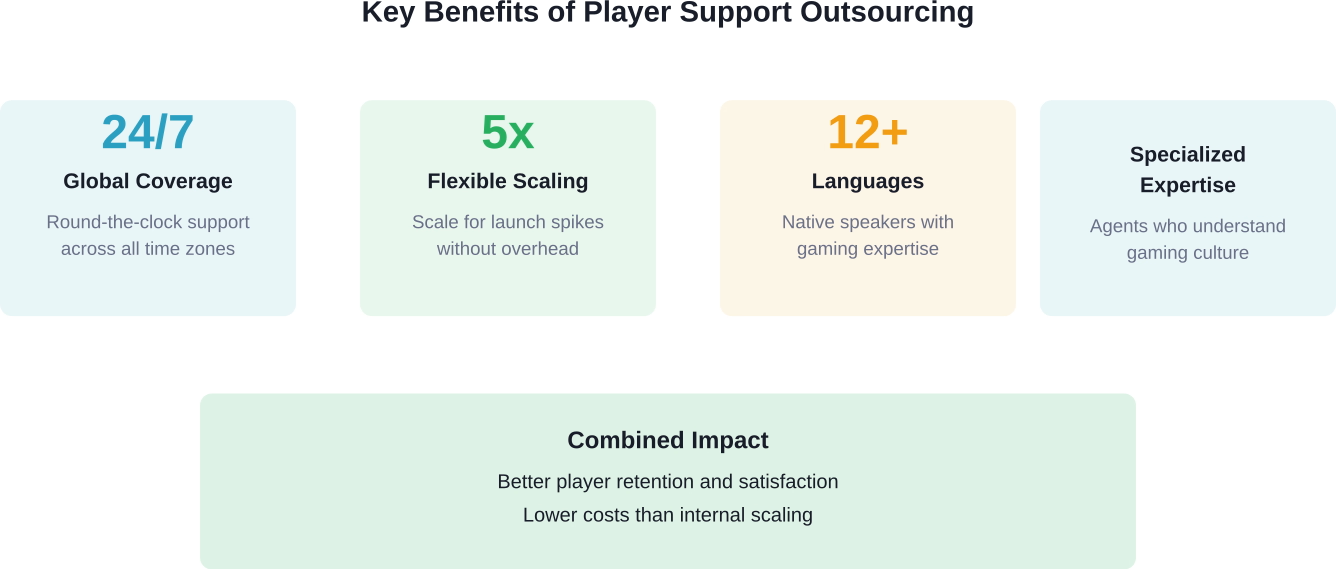
24/7 Global Coverage Without Internal Scaling
Gaming never sleeps. Players across time zones expect support whenever they're playing, which means studios need round-the-clock coverage.
Outsourcing providers already operate across multiple time zones with established infrastructure. They can deliver seamless coverage without requiring studios to manage night shifts or weekend staffing headaches.
Flexible Scaling for Launch Spikes
Game launches, major updates, and seasonal events create predictable chaos for support teams. Ticket volumes can explode overnight, then drop back to normal within weeks.
Outsourcing customer support allows studios to scale up during launches and scale back down afterward, paying only for the capacity they actually use.
Access to Specialized Gaming Expertise
Quality gaming support requires people who actually understand games. Outsourcing providers specializing in gaming recruit from gaming communities, hire people who genuinely play games, and train agents on gaming-specific scenarios.
Multilingual Support at Scale
Modern games launch globally from day one. Supporting players in English, Spanish, Portuguese, Korean, Japanese, German, French, and other languages requires enormous linguistic resources.
Established outsourcing partners already maintain multilingual teams with native speakers who understand both the language and gaming culture in each region.
When Studios Should Consider Outsourcing Player Support
Not every studio needs to outsource immediately. Early-stage indie developers with fewer than 1,000 daily active users might handle support internally through community forums and direct Discord engagement.
But here's the thing—waiting too long creates problems. Players form opinions about support quality early. Launching with inadequate support damages reputation in ways that take months to repair.
Studios often hit the outsourcing inflection point when support tickets consistently exceed what internal staff can handle during business hours, when planning global launches requiring multilingual support, or when preparing for major updates that will spike player counts.
According to MIT Sloan Management Review research on business process outsourcing, high-performing relationships involve strategic collaboration between companies and service providers rather than treating outsourcing as pure cost reduction.

Improve Retention With Player Support Outsourcing
Player support directly affects reviews, retention, and revenue. NeoWork builds remote player support teams that operate as an extension of your studio. With a 91% annualized teammate retention rate and a 3.2% candidate selectivity rate, NeoWork ensures consistent tone, knowledge retention, and structured processes. You avoid constant retraining and inconsistent responses.
Ready to Strengthen Your Player Support?
Talk with NeoWork to:
- launch a dedicated remote support team
- improve response time and ticket resolution
- scale coverage during peak events
👉 Contact NeoWork to design your player support outsourcing model.
Essential Strategies for Outsourcing Support in Gaming
Success in player support outsourcing requires deliberate strategy, not just handing off tickets to the cheapest provider.
Prioritize Gaming Culture Fit Over Cost
The biggest mistake studios make is selecting outsourcing partners based purely on per-ticket pricing. Low-cost providers who staff agents with zero gaming knowledge create terrible player experiences.
Quality gaming support requires cultural fluency. Agents need to understand what "griefing" means without looking it up. They should recognize the difference between a bug report and a balance complaint.
Establish Clear Integration Protocols
Outsourced teams can't function as isolated entities. They need proper integration with internal systems, communication channels, and escalation paths.
Before launching with any outsourcing provider, establish access protocols for support ticketing systems, communication channels for real-time coordination, clear escalation paths for complex issues, and knowledge base systems that stay updated.
Implement Robust Quality Assurance
Quality doesn't maintain itself. Studios need systematic approaches to monitoring and improving outsourced support quality over time.
Effective quality assurance includes regular ticket audits, player satisfaction surveys, and performance reviews tied to specific quality metrics rather than just speed.
Choosing the Right Outsourced Customer Support Provider
Partner selection makes or breaks outsourcing success. The wrong provider creates more problems than they solve, while the right partner becomes a genuine competitive advantage.
Gaming-Specific Experience
Providers claiming they can support "any industry" raise red flags. Gaming support requires specialized knowledge that generic call centers simply don't possess.
Evaluate providers based on their gaming portfolio. Who else do they support? What types of games? How long have they worked in gaming versus other industries?
Scalability and Flexibility
Launch spikes and seasonal events create extreme demand fluctuations. Providers need infrastructure to scale rapidly without sacrificing quality.
The best providers maintain bench capacity specifically for gaming launches and can scale capacity significantly within days when needed.
Technology Infrastructure
Modern player support requires sophisticated technology stacks, not just email and phones. Evaluate providers on their ability to support multiple channels, integrate with existing tools, and provide analytics for performance monitoring.
Security and Compliance
Outsourcing providers gain access to sensitive player data, including personal information, payment details, and account credentials. Security protocols should include data encryption, strict access controls, and compliance with GDPR and other privacy regulations.
Measuring Success: KPIs for Outsourced Player Support
What gets measured gets managed. Studios need clear metrics to evaluate whether outsourced support delivers value.
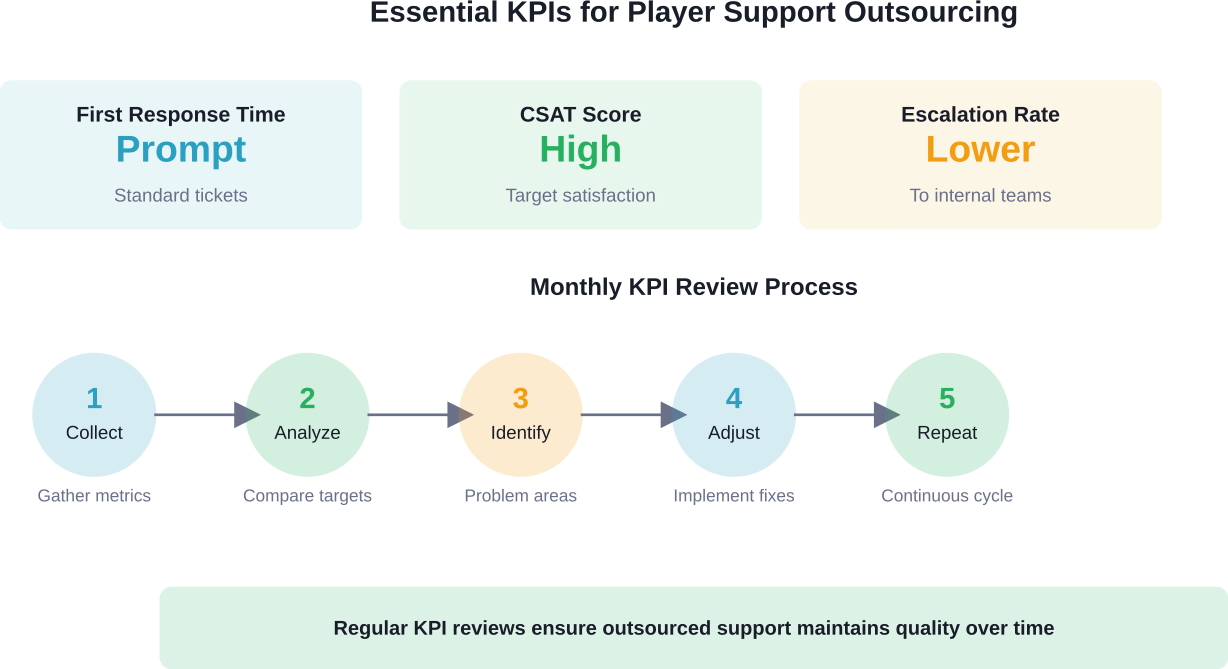
First Response Time
Players want acknowledgment fast, even if full resolution takes longer. Gaming support benchmarks typically target prompt first response for standard tickets and rapid response for urgent issues.
Customer Satisfaction Score
Direct player feedback provides the clearest signal about support quality. CSAT surveys ask players to rate their support experience immediately after ticket resolution. High CSAT scores are targeted for gaming support.
Player Retention Metrics
The ultimate measure of support quality is whether players keep playing after support interactions. Data from GameAnalytics shows retention is a core KPI for gaming companies. Retention plus churn equals 100%, making these complementary metrics essential.
Escalation Rate
What percentage of tickets require escalation to internal teams? High escalation rates suggest outsourced agents lack necessary knowledge or authority. Target lower escalation rates for mature outsourcing relationships, with higher rates indicating training gaps.
Best Practices for Managing Outsourced Relationships
Signing a contract doesn't guarantee success. Studios need active relationship management to maximize outsourcing value.
Regular Communication Cadence
Establish consistent touchpoints between internal teams and outsourcing partners. Weekly operational syncs address immediate issues. Monthly strategic reviews evaluate performance and plan improvements.
Maintain Updated Knowledge Bases
Games evolve constantly. New features launch, bugs get patched, balance changes shift gameplay. Outsourced agents need current information to support players effectively.
Assign internal ownership for keeping support knowledge bases updated. After every patch or update, ensure documentation reflects current game state before players start submitting tickets.
Treat Outsourced Teams as Partners, Not Vendors
According to research on managing outsourcing relationships from IEEE, successful outsourcing requires treating the relationship as a strategic partnership rather than a simple vendor contract.
Share game roadmaps, invite providers to team meetings, and solicit their input on support strategy. The frontline support team often sees player issues before anyone else—that insight has tremendous strategic value.
Common Challenges and How to Avoid Them
Even well-planned outsourcing relationships encounter obstacles. Understanding common pitfalls helps studios navigate them proactively.
Cultural Misalignment
Gaming communities have distinct cultures that vary by genre, platform, and region. Support agents who don't understand these nuances create friction with players. Mitigation requires careful provider selection and comprehensive cultural training.
Knowledge Gaps During Transitions
The handoff period when launching with a new outsourcing provider creates risk. Plan for extended transition periods with close monitoring, extensive training, and internal backup capacity.
Hidden Cost Creep
Initial outsourcing quotes sometimes don't reflect true total costs. Scope changes, integration work, and additional training add expenses beyond base pricing. Avoid surprises by requesting detailed pricing breakdowns.
Making the Outsourcing Decision
Player support outsourcing isn't a binary choice between keeping everything internal versus outsourcing completely. Many successful studios implement hybrid approaches, maintaining internal community managers while outsourcing tier-one ticket handling.
The right approach depends on studio size, game complexity, player demographics, and strategic priorities. What matters most is making deliberate decisions based on player needs.
Great player support directly impacts retention, lifetime value, and brand reputation. Studios that recognize support as a strategic competitive advantage rather than a necessary cost center position themselves for long-term success.
Done right, player support outsourcing lets studios focus resources on creating exceptional games while ensuring players receive world-class support that keeps them engaged, satisfied, and loyal to the brand.
Ready to explore outsourcing options for your game? Start by auditing current support metrics, defining clear KPIs for success, and researching providers with proven gaming expertise. The investment in finding the right partner pays dividends through better player experiences and sustainable studio growth.
Frequently Asked Questions
Topics
Player Support Outsourcing Guide 2026: Complete Strategy

Player support outsourcing allows gaming companies to deliver 24/7 customer service, scale during launches, and access specialized expertise without building massive internal teams. Success requires selecting partners who understand gaming culture, establishing clear KPIs, and maintaining quality through proper integration and communication protocols.
The gaming industry operates in a reality that traditional customer service models simply can't handle. Players expect instant responses at 3 AM. They demand support in dozens of languages. And when a new expansion drops, ticket volumes can spike significantly overnight.
Building an internal team that can handle these extremes isn't just expensive—it's often impossible for studios focused on creating great games rather than managing massive support operations.
That's where player support outsourcing enters the picture. But here's the thing: outsourcing gaming customer support is fundamentally different from outsourcing generic call center work. Gaming communities can smell inauthentic support from a mile away.
Why Gaming Customer Support Demands a Different Approach
Gaming customer service operates in a unique dynamic that sets it apart from regular customer support. Players aren't just customers—they're community members with deep emotional investments in games.
The gaming industry is known for its fast-paced nature and ever-evolving demands. When players encounter bugs, account issues, or in-game problems, their frustration levels run higher than typical customer service scenarios.
Great support leads to happy players who play longer, make more in-game purchases, buy the latest expansions and titles, and stay loyal to the brand. Poor support—and a poor experience—can have the opposite effect.
Core Benefits of Outsourcing Customer Support in Gaming
Studios looking to outsource customer service in the gaming industry typically discover several compelling advantages that extend beyond simple cost reduction.
24/7 Global Coverage Without Internal Scaling
Gaming never sleeps. Players across time zones expect support whenever they're playing, which means studios need round-the-clock coverage.
Outsourcing providers already operate across multiple time zones with established infrastructure. They can deliver seamless coverage without requiring studios to manage night shifts or weekend staffing headaches.
Flexible Scaling for Launch Spikes
Game launches, major updates, and seasonal events create predictable chaos for support teams. Ticket volumes can explode overnight, then drop back to normal within weeks.
Outsourcing customer support allows studios to scale up during launches and scale back down afterward, paying only for the capacity they actually use.
Access to Specialized Gaming Expertise
Quality gaming support requires people who actually understand games. Outsourcing providers specializing in gaming recruit from gaming communities, hire people who genuinely play games, and train agents on gaming-specific scenarios.
Multilingual Support at Scale
Modern games launch globally from day one. Supporting players in English, Spanish, Portuguese, Korean, Japanese, German, French, and other languages requires enormous linguistic resources.
Established outsourcing partners already maintain multilingual teams with native speakers who understand both the language and gaming culture in each region.
When Studios Should Consider Outsourcing Player Support
Not every studio needs to outsource immediately. Early-stage indie developers with fewer than 1,000 daily active users might handle support internally through community forums and direct Discord engagement.
But here's the thing—waiting too long creates problems. Players form opinions about support quality early. Launching with inadequate support damages reputation in ways that take months to repair.
Studios often hit the outsourcing inflection point when support tickets consistently exceed what internal staff can handle during business hours, when planning global launches requiring multilingual support, or when preparing for major updates that will spike player counts.
According to MIT Sloan Management Review research on business process outsourcing, high-performing relationships involve strategic collaboration between companies and service providers rather than treating outsourcing as pure cost reduction.
Improve Retention With Player Support Outsourcing
Player support directly affects reviews, retention, and revenue. NeoWork builds remote player support teams that operate as an extension of your studio. With a 91% annualized teammate retention rate and a 3.2% candidate selectivity rate, NeoWork ensures consistent tone, knowledge retention, and structured processes. You avoid constant retraining and inconsistent responses.
Ready to Strengthen Your Player Support?
Talk with NeoWork to:
- launch a dedicated remote support team
- improve response time and ticket resolution
- scale coverage during peak events
👉 Contact NeoWork to design your player support outsourcing model.
Essential Strategies for Outsourcing Support in Gaming
Success in player support outsourcing requires deliberate strategy, not just handing off tickets to the cheapest provider.
Prioritize Gaming Culture Fit Over Cost
The biggest mistake studios make is selecting outsourcing partners based purely on per-ticket pricing. Low-cost providers who staff agents with zero gaming knowledge create terrible player experiences.
Quality gaming support requires cultural fluency. Agents need to understand what "griefing" means without looking it up. They should recognize the difference between a bug report and a balance complaint.
Establish Clear Integration Protocols
Outsourced teams can't function as isolated entities. They need proper integration with internal systems, communication channels, and escalation paths.
Before launching with any outsourcing provider, establish access protocols for support ticketing systems, communication channels for real-time coordination, clear escalation paths for complex issues, and knowledge base systems that stay updated.
Implement Robust Quality Assurance
Quality doesn't maintain itself. Studios need systematic approaches to monitoring and improving outsourced support quality over time.
Effective quality assurance includes regular ticket audits, player satisfaction surveys, and performance reviews tied to specific quality metrics rather than just speed.
Choosing the Right Outsourced Customer Support Provider
Partner selection makes or breaks outsourcing success. The wrong provider creates more problems than they solve, while the right partner becomes a genuine competitive advantage.
Gaming-Specific Experience
Providers claiming they can support "any industry" raise red flags. Gaming support requires specialized knowledge that generic call centers simply don't possess.
Evaluate providers based on their gaming portfolio. Who else do they support? What types of games? How long have they worked in gaming versus other industries?
Scalability and Flexibility
Launch spikes and seasonal events create extreme demand fluctuations. Providers need infrastructure to scale rapidly without sacrificing quality.
The best providers maintain bench capacity specifically for gaming launches and can scale capacity significantly within days when needed.
Technology Infrastructure
Modern player support requires sophisticated technology stacks, not just email and phones. Evaluate providers on their ability to support multiple channels, integrate with existing tools, and provide analytics for performance monitoring.
Security and Compliance
Outsourcing providers gain access to sensitive player data, including personal information, payment details, and account credentials. Security protocols should include data encryption, strict access controls, and compliance with GDPR and other privacy regulations.
Measuring Success: KPIs for Outsourced Player Support
What gets measured gets managed. Studios need clear metrics to evaluate whether outsourced support delivers value.
First Response Time
Players want acknowledgment fast, even if full resolution takes longer. Gaming support benchmarks typically target prompt first response for standard tickets and rapid response for urgent issues.
Customer Satisfaction Score
Direct player feedback provides the clearest signal about support quality. CSAT surveys ask players to rate their support experience immediately after ticket resolution. High CSAT scores are targeted for gaming support.
Player Retention Metrics
The ultimate measure of support quality is whether players keep playing after support interactions. Data from GameAnalytics shows retention is a core KPI for gaming companies. Retention plus churn equals 100%, making these complementary metrics essential.
Escalation Rate
What percentage of tickets require escalation to internal teams? High escalation rates suggest outsourced agents lack necessary knowledge or authority. Target lower escalation rates for mature outsourcing relationships, with higher rates indicating training gaps.
Best Practices for Managing Outsourced Relationships
Signing a contract doesn't guarantee success. Studios need active relationship management to maximize outsourcing value.
Regular Communication Cadence
Establish consistent touchpoints between internal teams and outsourcing partners. Weekly operational syncs address immediate issues. Monthly strategic reviews evaluate performance and plan improvements.
Maintain Updated Knowledge Bases
Games evolve constantly. New features launch, bugs get patched, balance changes shift gameplay. Outsourced agents need current information to support players effectively.
Assign internal ownership for keeping support knowledge bases updated. After every patch or update, ensure documentation reflects current game state before players start submitting tickets.
Treat Outsourced Teams as Partners, Not Vendors
According to research on managing outsourcing relationships from IEEE, successful outsourcing requires treating the relationship as a strategic partnership rather than a simple vendor contract.
Share game roadmaps, invite providers to team meetings, and solicit their input on support strategy. The frontline support team often sees player issues before anyone else—that insight has tremendous strategic value.
Common Challenges and How to Avoid Them
Even well-planned outsourcing relationships encounter obstacles. Understanding common pitfalls helps studios navigate them proactively.
Cultural Misalignment
Gaming communities have distinct cultures that vary by genre, platform, and region. Support agents who don't understand these nuances create friction with players. Mitigation requires careful provider selection and comprehensive cultural training.
Knowledge Gaps During Transitions
The handoff period when launching with a new outsourcing provider creates risk. Plan for extended transition periods with close monitoring, extensive training, and internal backup capacity.
Hidden Cost Creep
Initial outsourcing quotes sometimes don't reflect true total costs. Scope changes, integration work, and additional training add expenses beyond base pricing. Avoid surprises by requesting detailed pricing breakdowns.
Making the Outsourcing Decision
Player support outsourcing isn't a binary choice between keeping everything internal versus outsourcing completely. Many successful studios implement hybrid approaches, maintaining internal community managers while outsourcing tier-one ticket handling.
The right approach depends on studio size, game complexity, player demographics, and strategic priorities. What matters most is making deliberate decisions based on player needs.
Great player support directly impacts retention, lifetime value, and brand reputation. Studios that recognize support as a strategic competitive advantage rather than a necessary cost center position themselves for long-term success.
Done right, player support outsourcing lets studios focus resources on creating exceptional games while ensuring players receive world-class support that keeps them engaged, satisfied, and loyal to the brand.
Ready to explore outsourcing options for your game? Start by auditing current support metrics, defining clear KPIs for success, and researching providers with proven gaming expertise. The investment in finding the right partner pays dividends through better player experiences and sustainable studio growth.
Frequently Asked Questions
Topics
Related Blogs
Related Podcasts


.webp)
.webp)



