

.avif)
.avif)

SEO Outsourcing Guide: Costs, Vetting & Best Practices 2026


.svg)

SEO outsourcing involves hiring external specialists or agencies to handle search engine optimization instead of managing it in-house. This guide covers cost comparisons, vetting criteria, common pitfalls, and best practices for selecting the right SEO partner to improve rankings while reducing overhead.
Search engine optimization determines whether businesses get discovered online or buried on page five of Google results. Less than 1% of searchers click beyond the first page, according to Backlinko research from 2023. But executing effective SEO demands specialized expertise, constant adaptation to algorithm updates, and significant time investment.
That's why many companies opt to outsource rather than build internal teams. The decision isn't trivial though. Choose the wrong partner and budgets evaporate without results. Select the right one and organic traffic can transform business trajectory.
This guide walks through everything needed to make informed outsourcing decisions—from cost structures and vetting questions to common traps and management best practices.
What SEO Outsourcing Actually Means
SEO outsourcing refers to contracting external individuals, teams, or agencies to handle search optimization work rather than hiring full-time employees. This spans everything from technical audits and keyword research to content creation and link acquisition.
Three main models exist:
- Freelance specialists: Independent contractors who handle specific SEO tasks or projects
- Dedicated agencies: Full-service firms managing comprehensive SEO strategies
- White-label providers: Behind-the-scenes partners that execute work under another agency's brand
According to HubSpot data, generating quality leads is a top priority for marketers. Outsourcing gives access to professionals who monitor algorithm updates, analyze performance data, and implement strategies that many internal teams lack bandwidth to execute.
The approach particularly benefits businesses facing resource constraints, rapid scaling needs, or gaps in specialized technical knowledge.
Cost Comparison: In-House vs Outsourced SEO
Budget considerations drive most outsourcing decisions. The numbers reveal substantial differences.
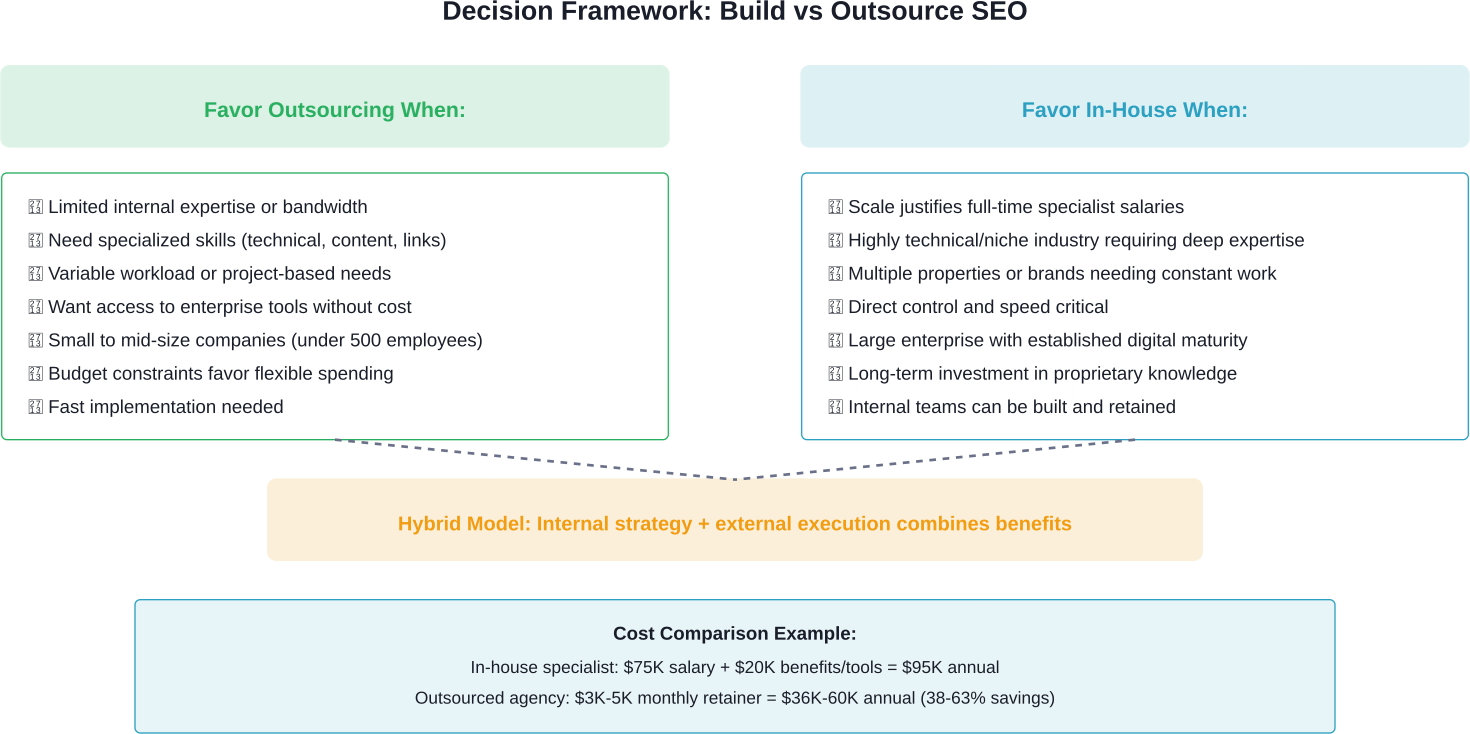
An in-house SEO specialist typically costs around $75,000 annually in salary alone, according to industry benchmarks. Add benefits, training, software subscriptions, and management overhead—total compensation easily exceeds $90,000 to $100,000 per year.
Outsourced SEO presents different economics. Based on Search Engine Journal survey data, monthly retainers for local campaigns typically range from $1,001 to $5,000. National or international campaigns command higher fees.
Here's how costs break down across engagement types:
The potential savings reach 60% or more when comparing annual outsourcing costs to full-time employee expenses. Businesses avoid recruitment costs, training investments, and the financial risk of maintaining specialists during slow periods.
But cost alone shouldn't dictate decisions. Value delivery matters more than price points.
Why Businesses Choose to Outsource SEO
Beyond cost advantages, several strategic factors drive outsourcing decisions.
Access to Specialized Expertise
SEO encompasses numerous specializations—technical optimization, content strategy, link acquisition, local search, international targeting. Building internal teams with depth across all areas proves expensive and time-consuming.
Agencies and specialists work across multiple clients and industries. This exposure creates pattern recognition that internal teams often lack. They've seen what works in competitive verticals and what fails despite looking promising.
Tool Access and Technology
Professional SEO requires sophisticated software for keyword research, rank tracking, backlink analysis, technical audits, and competitor intelligence. Enterprise subscriptions to platforms like Semrush, Ahrefs, and Screaming Frog cost thousands annually.
Established agencies already maintain these tool suites. Clients gain access without separate licensing costs.
Scalability and Flexibility
Campaigns expand and contract based on business cycles, product launches, or market conditions. Outsourced partnerships scale more easily than hiring or laying off employees.
Need aggressive link building for three months before a major launch? Agencies can allocate resources accordingly. Slow season requiring minimal maintenance? Retainers adjust without severance complications.
Focus on Core Business Functions
According to SBA data, more than one-third of small businesses currently outsource at least some operations. This allows leadership and staff to concentrate on product development, customer service, and revenue-generating activities rather than learning technical SEO intricacies.
Faster Implementation
Experienced providers implement strategies faster than teams learning on the fly. They've already made the mistakes, tested the tactics, and refined the processes. This compressed learning curve accelerates time-to-results.
Common Outsourcing Risks and How to Avoid Them
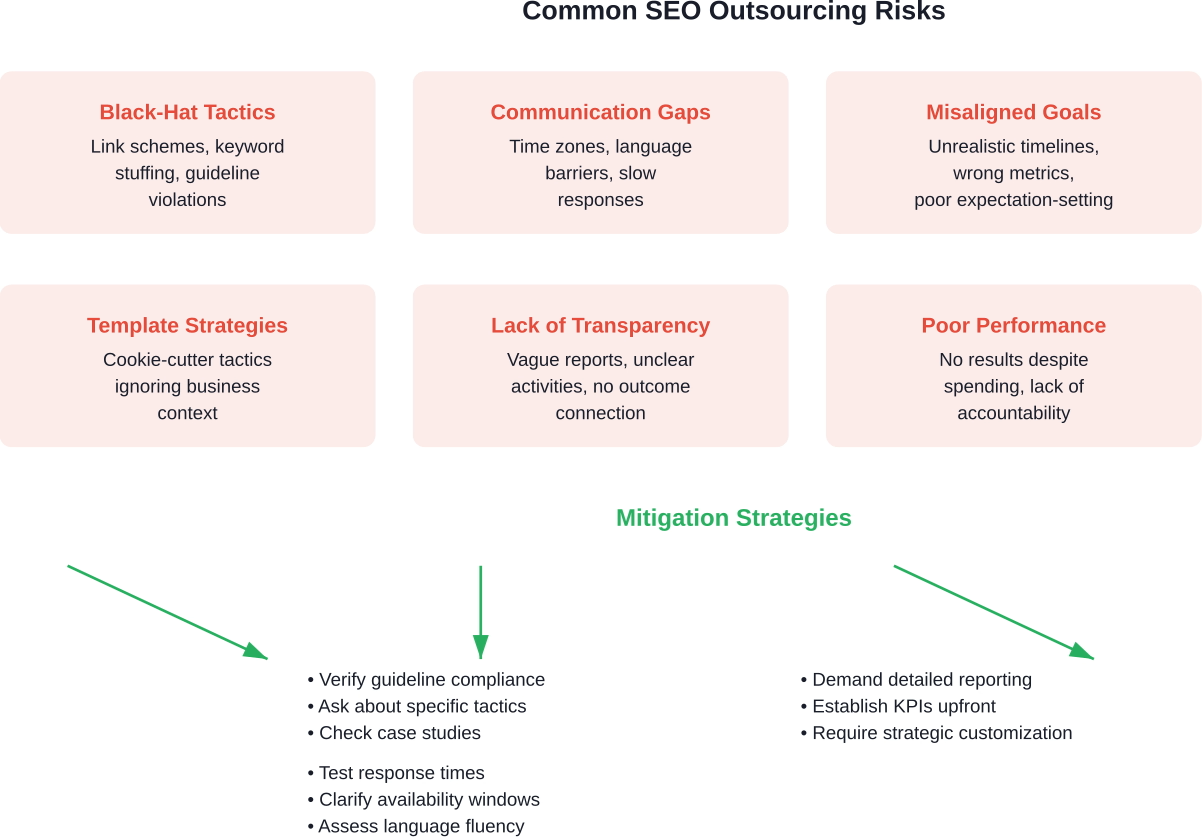
Outsourcing creates legitimate risks when handled carelessly. Understanding common pitfalls enables better decision-making.
Black-Hat Tactics and Penalties
Some providers use manipulative techniques that violate search engine guidelines—link schemes, keyword stuffing, cloaking, or automated content generation. These shortcuts might show temporary gains but risk severe penalties.
Google's guidelines explicitly prohibit such tactics. Before engaging any provider, study the Guidelines for representing your business on Google (as Moz recommends in their agency hiring guide). Then verify potential partners understand and respect these boundaries.
Ask direct questions about link acquisition methods, content creation processes, and whether they guarantee specific rankings. Legitimate providers never guarantee positions—algorithms are too complex and competitive landscapes too dynamic.
Communication Breakdowns
Geographic and time zone differences sometimes create coordination challenges. Offshore providers offering extremely low rates may lack availability during business hours or struggle with language nuances affecting content quality.
Test communication patterns during vetting. How quickly do they respond? How clearly do they explain strategies? Do they ask substantive questions about business goals?
Misaligned Expectations
SEO generates results over months, not weeks. Businesses expecting immediate traffic surges often feel disappointed with legitimate progress.
According to Search Engine Journal's guide on choosing SEO companies, the stakes are high—SEO can make or break businesses. Clear expectation-setting about timelines, metrics, and realistic outcomes prevents frustration.
Cookie-Cutter Strategies
Template approaches ignore unique business contexts. The right provider tailors strategies to specific industries, competitive landscapes, and organizational goals rather than applying identical tactics to every client.
Lack of Transparency
Some agencies operate as black boxes—taking money monthly but providing vague reports that don't connect activities to business outcomes. Without transparency into what work is being done and why, evaluating effectiveness becomes impossible.
How to Vet SEO Agencies: 32 Essential Questions
According to Search Engine Journal's comprehensive guide on choosing SEO companies, thorough vetting separates legitimate providers from those who overpromise and underdeliver. The right agency should be easy to work with, deliver real business value, demonstrate consistency, show industry knowledge, and fit within budget.
Here are critical questions organized by category:
Experience and Expertise
- How long has your agency operated?
- What industries or verticals do you specialize in?
- Can you share case studies with measurable results?
- Which team members would work on our account?
- What certifications or training do your specialists maintain?
Strategy and Methodology
- What's your process for developing SEO strategies?
- How do you conduct keyword research?
- What technical SEO issues do you prioritize?
- How do you approach content creation and optimization?
- What link building tactics do you employ?
- Do strategies differ based on business goals or are they standardized?
Compliance and Ethics
- Are you familiar with Google's quality guidelines?
- Have any clients received manual penalties while under your management?
- Do you guarantee specific rankings or traffic numbers?
- What tactics do you explicitly avoid?
Communication and Reporting
- How frequently will we communicate?
- Who is our primary point of contact?
- What does your reporting look like?
- Which metrics do you track and why?
- How do you connect SEO activities to business outcomes?
- What reporting tools or dashboards do you provide?
Pricing and Contracts
- What's included in your standard retainer?
- Are there setup fees or additional costs?
- What's the minimum contract term?
- What happens if we need to pause or cancel?
- Do you offer performance-based pricing?
Tools and Resources
- Which SEO tools and software do you use?
- Will we get access to any platforms or dashboards?
- How do you stay current with algorithm changes?
Results and Accountability
- What realistic timeline should we expect for results?
- How do you handle underperformance?
- Can you provide references from current or past clients?
- What happens if strategies don't deliver expected outcomes?
Red flags include guaranteed rankings, vague answers about specific tactics, reluctance to share case studies, lack of transparent reporting, or inability to explain strategies in understandable terms.
Selecting the Right Outsourcing Model
Different business situations call for different engagement approaches.
Freelance SEO Specialists
Independent contractors work well for businesses needing specific expertise—technical audits, content strategy, or link prospecting. They offer flexibility and often charge hourly or per-project rates.
Advantages include lower costs, direct communication with the person doing the work, and adaptability. Limitations involve capacity constraints—freelancers juggle multiple clients—and narrower skill sets compared to full agencies.
Full-Service SEO Agencies
Established agencies provide comprehensive services spanning strategy, implementation, content, links, and reporting. They maintain teams with diverse specializations.
This model suits businesses wanting end-to-end management without coordinating multiple vendors. Agencies bring process maturity, broader capabilities, and greater capacity. Trade-offs include higher costs and sometimes less personalized attention than working directly with specialists.
White-Label SEO Providers
These partners work behind the scenes for other agencies. Marketing firms without internal SEO expertise contract white-label providers to fulfill client work under their brand.
White-label arrangements let agencies expand service offerings without hiring specialists. For end clients, this creates potential transparency issues—they might not know who actually performs the work.
Offshore vs Nearshore vs Local
Geographic location impacts cost, communication, and cultural alignment. Offshore providers in regions like Southeast Asia or Eastern Europe offer significant cost advantages but may present time zone and language challenges.
Nearshore options balance cost savings with better time zone overlap and cultural similarity. Local providers maximize communication ease and market understanding but command premium rates.
The global market for outsourced IT services reached $85.6 billion according to SBA data. This reflects widespread acceptance of geographic arbitrage in professional services.
Best Practices for Managing Outsourced SEO
Selecting the right partner is just the beginning. Effective management ensures partnerships deliver promised value.
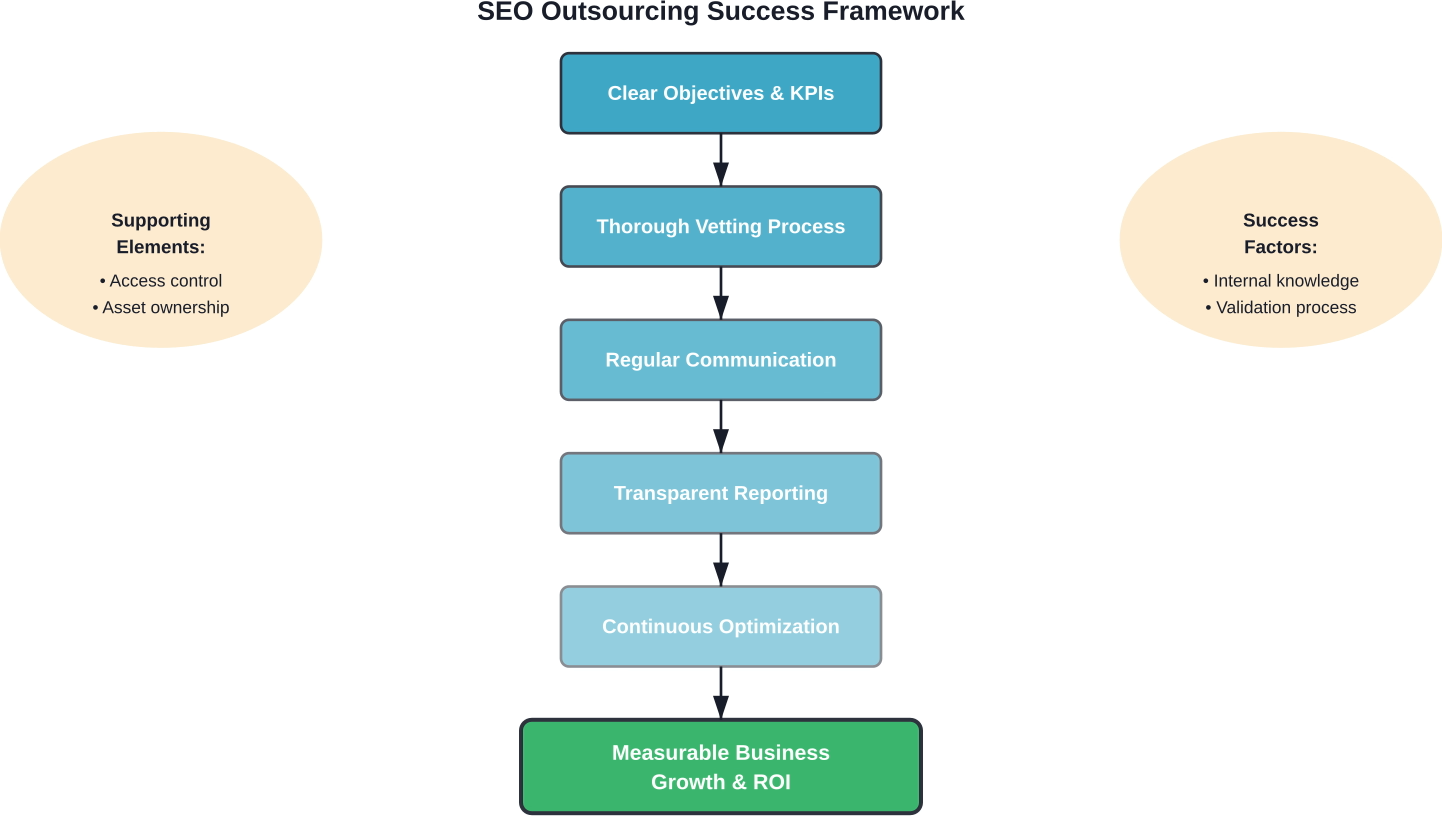
Define Clear Objectives and KPIs
Vague goals produce vague results. Specific, measurable objectives create accountability and focus efforts.
Rather than "improve SEO," define targets like "increase organic traffic from target keywords by 40% in six months" or "rank in top three positions for five priority terms within nine months." Connect SEO metrics to business outcomes—lead generation, revenue, customer acquisition cost.
As Moz explains in their framework about the three bosses of SEO, strategies must satisfy business needs, searcher intent, and search engine requirements simultaneously. Clear KPIs ensure alignment across all three.
Establish Regular Communication Rhythms
Schedule consistent check-ins—weekly or biweekly calls during initial phases, transitioning to monthly reviews once strategies stabilize. Use these sessions to review progress, discuss challenges, adjust tactics, and maintain strategic alignment.
Document discussions and decisions. Written records prevent miscommunication and create reference points when questions arise later.
Demand Transparent Reporting
Insist on detailed reports explaining what work occurred, why it matters, and how it impacts goals. Quality reports should include:
- Ranking changes for target keywords
- Organic traffic trends and patterns
- Conversion data from organic channels
- Technical issues identified and resolved
- Content published and performance
- Links acquired with quality assessments
- Competitive landscape changes
- Strategic recommendations
Connecting SEO activities to revenue outcomes requires tracking beyond basic traffic metrics. Quality reporting makes these connections explicit.
Maintain Access and Ownership
Ensure accounts, assets, and access credentials remain under organizational control. Never let agencies create Google Search Console, Analytics, or social media accounts using their own email addresses.
Similarly, content created should transfer full ownership rights to the client. Clarify intellectual property terms before engagement begins.
Test and Validate Recommendations
Trust but verify. When providers recommend significant changes—site migrations, major content overhauls, aggressive link campaigns—understand the reasoning and validate against industry best practices.
Blindly implementing every suggestion without critical evaluation creates risk. The best partnerships involve collaborative decision-making, not passive acceptance.
Build Institutional Knowledge
Even when outsourcing, maintain internal understanding of SEO fundamentals. This prevents complete dependency and enables better oversight.
Team members don't need to become technical experts, but they should understand core concepts, recognize quality work, and ask informed questions.
Get SEO Support That Doesn’t Reset Every Few Months

SEO tends to fall apart when ownership is unclear. One person handles content, another jumps in for technical fixes, someone else reviews performance – and over time, it becomes fragmented.
NeoWork solves this by setting up dedicated teams that take on ongoing responsibility rather than isolated tasks. Instead of switching between freelancers or agencies, the same people stay involved, learn the context, and adjust as priorities shift. Their 3.2% selection rate keeps the bar high, and with 91% retention, teams don’t disappear halfway through execution.
If you want SEO to feel more structured and less pieced together, it’s worth reaching out to NeoWork to see how they can support your setup.
Measuring ROI from Outsourced SEO
Justifying ongoing investment requires demonstrating return. SEO ROI measures revenue generated compared to costs invested.
The basic formula looks like this:
SEO ROI = (Revenue from Organic Search - SEO Costs) / SEO Costs × 100
For example, spending $5,000 monthly on outsourced SEO that generates $25,000 in attributed revenue produces 400% ROI.
The calculation becomes complex when tracking attribution properly. According to Semrush's ROI measurement guide, multiple factors complicate measurement:
- Long conversion cycles that span multiple touchpoints
- Difficulty isolating SEO impact from other marketing channels
- Brand search traffic driven by offline activities
- Delayed results that don't align with spending periods
Despite complexity, tracking remains essential. Use these approaches:
Track Assisted Conversions
Google Analytics shows how organic search contributes to conversion paths even when it's not the final touchpoint. This reveals SEO's role in customer journeys beyond last-click attribution.
Segment Organic Traffic
Separate brand searches from non-brand keywords. Growth in non-brand organic traffic directly reflects SEO effectiveness since these visitors discovered the site through optimization efforts rather than existing brand awareness.
Monitor Keyword Rankings and Search Volume
Improving positions for high-volume, commercially valuable keywords correlates with traffic and revenue potential. Track rankings for priority terms and calculate the traffic value of those positions.
Calculate Customer Lifetime Value
For businesses with subscription models or repeat purchases, factor lifetime value into ROI calculations. Acquiring a customer through SEO that generates $10,000 over three years changes the math dramatically compared to looking only at initial transaction value.
Set Realistic Timeframes
SEO requires patience. Most strategies need three to six months before showing meaningful results, with full maturity taking 12 to 18 months. Measuring ROI too early creates false negatives.
Semrush data shows that the design suite Canva receives around 19.8 million monthly organic visitors from the U.S.—demonstrating the massive potential of well-executed SEO strategies. While not every business operates at that scale, the principle holds: organic search represents one of the highest-ROI marketing channels when managed effectively.
When to Consider Bringing SEO In-House
Outsourcing suits many situations, but not all. Some circumstances favor building internal capabilities.
Consider in-house teams when:
- Scale justifies headcount: Large enterprises with extensive properties, multiple brands, or constant optimization needs often reach the point where full-time specialists cost less than agency retainers
- Industry expertise is critical: Highly specialized or technical industries sometimes require such deep domain knowledge that external agencies struggle to develop sufficient understanding
- Control and speed matter most: Internal teams offer more direct control and potentially faster implementation since no external coordination is needed
- Long-term investment pays off: Businesses with stable, long-term digital strategies might build more value through internal expertise development
Hybrid models also exist. Many organizations maintain internal SEO leadership that sets strategy and manages external agencies handling execution. This balances control, expertise, and cost efficiency.
The Impact of AI on SEO Outsourcing
Artificial intelligence is reshaping how SEO work gets performed and outsourced. According to Semrush's content marketing statistics, businesses using AI identify traffic as a key performance metric, and customers want more video content from brands.
HubSpot's 2026 State of Marketing Report highlights how marketers are scaling with AI without losing human elements, building brand trust, and driving growth through sharper positioning. These trends directly impact outsourcing dynamics.
AI-Enhanced Content Creation
Many providers now use AI tools to accelerate content research, outlining, and drafting. This increases output speed and potentially reduces costs. However, quality control becomes more critical—AI-generated content requires expert editing to ensure accuracy, originality, and alignment with brand voice.
Automated Technical Audits
AI-powered crawling and analysis tools identify technical issues faster and more comprehensively than manual reviews. Providers leveraging these technologies deliver more thorough audits at lower cost.
Predictive Analytics
Machine learning models help predict keyword opportunities, content performance, and competitive threats. Agencies incorporating these capabilities offer more strategic, data-driven guidance.
The Continued Need for Human Expertise
Despite automation advances, SEO still requires human judgment, creativity, and strategic thinking. Understanding business context, creating genuinely valuable content, building authentic relationships for link acquisition, and navigating complex technical challenges remain human-centric activities.
The best providers combine AI efficiency with human expertise rather than replacing one with the other.
Industry-Specific Outsourcing Considerations
Different sectors face unique SEO challenges that impact outsourcing decisions.
Local Businesses
According to Moz's guide on hiring local SEO agencies, understanding Google's guidelines for business representation is fundamental to local search optimization., managing Google Business Profiles, handling local citations, and building community relevance.
Local businesses should prioritize providers with demonstrated local SEO expertise, familiarity with geographic-specific ranking factors, and experience managing location-based assets.
E-Commerce
Online retailers face technical complexity around product pages, category structures, faceted navigation, and inventory management. E-commerce SEO requires understanding how to optimize for transactional intent, manage duplicate content issues, and leverage structured data for rich results.
Agencies working with e-commerce clients should demonstrate platform expertise (Shopify, WooCommerce, Magento) and showcase case studies with measurable revenue impact.
B2B Companies
According to Semrush's B2B marketing statistics, growing high-quality lead pipelines is a top priority for B2B marketers, with 37% naming it as one of their top areas of focus. Other priorities include implementing AI technologies and maintaining alignment with sales teams.
B2B SEO emphasizes thought leadership content, longer sales cycles, multiple decision-maker touchpoints, and lead quality over volume. Providers should understand complex buying journeys and integrate SEO with broader demand generation strategies.
Healthcare and Finance
Regulated industries face heightened scrutiny around accuracy, compliance, and trustworthiness. These sectors require providers familiar with YMYL (Your Money Your Life) content standards, medical/financial regulations, and citation requirements.
Vetting should include questions about fact-checking processes, expert review protocols, and experience navigating industry-specific constraints.
Contract Terms and Legal Considerations
Protecting interests requires attention to contractual details before engagement begins.
Scope of Work
Define precisely what services are included. Vague agreements create disputes when expectations don't align. Specify deliverables, timelines, and responsibilities for both parties.
Performance Guarantees
Avoid providers guaranteeing specific rankings—algorithm volatility makes such promises impossible to fulfill legitimately. Instead, focus on effort commitments, deliverable quantities, and process transparency.
Contract Duration and Termination
Understand minimum terms, renewal provisions, and cancellation policies. Some agencies require six or twelve-month commitments. Others offer month-to-month arrangements. Know the exit terms before signing.
Intellectual Property
Clarify who owns content, research, strategies, and other work products created during the engagement. Standard practice transfers ownership to clients, but verifies this explicitly.
Confidentiality and Data Security
Providers gain access to sensitive business information, analytics data, and proprietary strategies. Require non-disclosure agreements and understand how they protect confidential information.
Liability Limitations
Review liability clauses carefully. Some contracts limit provider responsibility if penalties occur or results disappoint. Understand risk allocation before committing.
Red Flags That Should Stop Negotiations
Certain warning signs indicate partnerships to avoid entirely:
- Guaranteed rankings: No legitimate provider can guarantee specific positions given algorithm complexity
- Proprietary secrets: Claims of special relationships with Google or secret ranking factors signal dishonesty
- Extremely low prices: Quality SEO requires expertise and time—rates far below market averages suggest corner-cutting or inexperience
- Lack of transparency: Refusal to explain tactics, share case studies, or provide references indicates something to hide
- Pressure tactics: Aggressive sales approaches pushing immediate decisions without proper evaluation time
- No performance tracking: Providers unable or unwilling to demonstrate how they measure results
- Black-hat terminology: References to link networks, PBNs (private blog networks), automated content generation, or other manipulative tactics
Trust instincts. If something feels off during vetting, it probably is.
Getting Started: Your First 30 Days
Once a provider is selected, structured onboarding sets partnerships up for success.
Week 1: Discovery and Access
Grant necessary access to analytics platforms, Search Console, website backend, and relevant tools. Share business documentation—target audiences, competitive landscape, unique value propositions, conversion goals.
Conduct kickoff meetings introducing key stakeholders from both sides. Establish communication protocols, meeting schedules, and primary contacts.
Week 2: Audit and Strategy Development
Providers should conduct comprehensive audits covering technical health, content inventory, backlink profiles, and competitive positioning. This diagnostic phase identifies immediate issues and opportunities.
Based on audit findings, providers develop strategic recommendations prioritizing initiatives by impact and effort required.
Week 3: Planning and Approval
Review proposed strategies in detail. Understand the rationale behind recommendations, expected timelines, resource requirements, and success metrics.
Approve initial work plans, clarify any uncertainties, and establish tracking mechanisms for progress monitoring.
Week 4: Implementation Begins
Execution starts on approved initiatives—fixing critical technical issues, optimizing existing content, developing new assets, or initiating outreach campaigns.
First month activities typically focus on foundational elements that enable subsequent efforts rather than expecting immediate ranking improvements.
Conclusion: Making SEO Outsourcing Work
SEO outsourcing offers compelling advantages when approached strategically. Access to specialized expertise, significant cost savings compared to in-house teams, and operational flexibility make external partnerships attractive for businesses of all sizes.
But success requires more than selecting a provider from search results and signing contracts. It demands thorough vetting using the 32 questions outlined earlier, clear objective-setting that connects SEO activities to business outcomes, transparent communication rhythms, and ongoing management that balances trust with accountability.
The risks are real—black-hat tactics, misaligned expectations, communication breakdowns, and wasted budgets plague poorly managed outsourcing relationships. Yet these pitfalls are avoidable through due diligence, realistic timeline expectations, and insistence on transparency.
Search Engine Journal's research emphasizes that choosing the right SEO agency can transform business trajectory through increased traffic and revenue. Choose poorly and resources disappear without results. The difference lies in preparation, vetting rigor, and partnership management.
Start by defining what success looks like for your specific situation. Identify whether freelance specialists, full-service agencies, or hybrid models best fit organizational needs and constraints. Invest time in thorough provider evaluation using the frameworks and questions provided throughout this guide.
Remember that SEO generates compounding returns over time. Pages with the highest backlink counts tend to rank best according to Backlinko research, and organic search represents the top traffic source for most websites based on HubSpot data. These advantages accumulate gradually through consistent, quality-focused effort.
The right outsourcing partnership combines external expertise with internal strategic oversight, creating optimization capabilities that exceed what most organizations could build independently at comparable cost.
Ready to explore SEO outsourcing for your business? Start with the vetting questions, define your objectives clearly, and approach provider selection as the strategic decision it represents. The investment in finding the right partner pays dividends in organic visibility, qualified traffic, and business growth for years to come.
Frequently Asked Questions
Topics
SEO Outsourcing Guide: Costs, Vetting & Best Practices 2026

SEO outsourcing involves hiring external specialists or agencies to handle search engine optimization instead of managing it in-house. This guide covers cost comparisons, vetting criteria, common pitfalls, and best practices for selecting the right SEO partner to improve rankings while reducing overhead.
Search engine optimization determines whether businesses get discovered online or buried on page five of Google results. Less than 1% of searchers click beyond the first page, according to Backlinko research from 2023. But executing effective SEO demands specialized expertise, constant adaptation to algorithm updates, and significant time investment.
That's why many companies opt to outsource rather than build internal teams. The decision isn't trivial though. Choose the wrong partner and budgets evaporate without results. Select the right one and organic traffic can transform business trajectory.
This guide walks through everything needed to make informed outsourcing decisions—from cost structures and vetting questions to common traps and management best practices.
What SEO Outsourcing Actually Means
SEO outsourcing refers to contracting external individuals, teams, or agencies to handle search optimization work rather than hiring full-time employees. This spans everything from technical audits and keyword research to content creation and link acquisition.
Three main models exist:
- Freelance specialists: Independent contractors who handle specific SEO tasks or projects
- Dedicated agencies: Full-service firms managing comprehensive SEO strategies
- White-label providers: Behind-the-scenes partners that execute work under another agency's brand
According to HubSpot data, generating quality leads is a top priority for marketers. Outsourcing gives access to professionals who monitor algorithm updates, analyze performance data, and implement strategies that many internal teams lack bandwidth to execute.
The approach particularly benefits businesses facing resource constraints, rapid scaling needs, or gaps in specialized technical knowledge.
Cost Comparison: In-House vs Outsourced SEO
Budget considerations drive most outsourcing decisions. The numbers reveal substantial differences.
An in-house SEO specialist typically costs around $75,000 annually in salary alone, according to industry benchmarks. Add benefits, training, software subscriptions, and management overhead—total compensation easily exceeds $90,000 to $100,000 per year.
Outsourced SEO presents different economics. Based on Search Engine Journal survey data, monthly retainers for local campaigns typically range from $1,001 to $5,000. National or international campaigns command higher fees.
Here's how costs break down across engagement types:
The potential savings reach 60% or more when comparing annual outsourcing costs to full-time employee expenses. Businesses avoid recruitment costs, training investments, and the financial risk of maintaining specialists during slow periods.
But cost alone shouldn't dictate decisions. Value delivery matters more than price points.
Why Businesses Choose to Outsource SEO
Beyond cost advantages, several strategic factors drive outsourcing decisions.
Access to Specialized Expertise
SEO encompasses numerous specializations—technical optimization, content strategy, link acquisition, local search, international targeting. Building internal teams with depth across all areas proves expensive and time-consuming.
Agencies and specialists work across multiple clients and industries. This exposure creates pattern recognition that internal teams often lack. They've seen what works in competitive verticals and what fails despite looking promising.
Tool Access and Technology
Professional SEO requires sophisticated software for keyword research, rank tracking, backlink analysis, technical audits, and competitor intelligence. Enterprise subscriptions to platforms like Semrush, Ahrefs, and Screaming Frog cost thousands annually.
Established agencies already maintain these tool suites. Clients gain access without separate licensing costs.
Scalability and Flexibility
Campaigns expand and contract based on business cycles, product launches, or market conditions. Outsourced partnerships scale more easily than hiring or laying off employees.
Need aggressive link building for three months before a major launch? Agencies can allocate resources accordingly. Slow season requiring minimal maintenance? Retainers adjust without severance complications.
Focus on Core Business Functions
According to SBA data, more than one-third of small businesses currently outsource at least some operations. This allows leadership and staff to concentrate on product development, customer service, and revenue-generating activities rather than learning technical SEO intricacies.
Faster Implementation
Experienced providers implement strategies faster than teams learning on the fly. They've already made the mistakes, tested the tactics, and refined the processes. This compressed learning curve accelerates time-to-results.
Common Outsourcing Risks and How to Avoid Them
Outsourcing creates legitimate risks when handled carelessly. Understanding common pitfalls enables better decision-making.
Black-Hat Tactics and Penalties
Some providers use manipulative techniques that violate search engine guidelines—link schemes, keyword stuffing, cloaking, or automated content generation. These shortcuts might show temporary gains but risk severe penalties.
Google's guidelines explicitly prohibit such tactics. Before engaging any provider, study the Guidelines for representing your business on Google (as Moz recommends in their agency hiring guide). Then verify potential partners understand and respect these boundaries.
Ask direct questions about link acquisition methods, content creation processes, and whether they guarantee specific rankings. Legitimate providers never guarantee positions—algorithms are too complex and competitive landscapes too dynamic.
Communication Breakdowns
Geographic and time zone differences sometimes create coordination challenges. Offshore providers offering extremely low rates may lack availability during business hours or struggle with language nuances affecting content quality.
Test communication patterns during vetting. How quickly do they respond? How clearly do they explain strategies? Do they ask substantive questions about business goals?
Misaligned Expectations
SEO generates results over months, not weeks. Businesses expecting immediate traffic surges often feel disappointed with legitimate progress.
According to Search Engine Journal's guide on choosing SEO companies, the stakes are high—SEO can make or break businesses. Clear expectation-setting about timelines, metrics, and realistic outcomes prevents frustration.
Cookie-Cutter Strategies
Template approaches ignore unique business contexts. The right provider tailors strategies to specific industries, competitive landscapes, and organizational goals rather than applying identical tactics to every client.
Lack of Transparency
Some agencies operate as black boxes—taking money monthly but providing vague reports that don't connect activities to business outcomes. Without transparency into what work is being done and why, evaluating effectiveness becomes impossible.
How to Vet SEO Agencies: 32 Essential Questions
According to Search Engine Journal's comprehensive guide on choosing SEO companies, thorough vetting separates legitimate providers from those who overpromise and underdeliver. The right agency should be easy to work with, deliver real business value, demonstrate consistency, show industry knowledge, and fit within budget.
Here are critical questions organized by category:
Experience and Expertise
- How long has your agency operated?
- What industries or verticals do you specialize in?
- Can you share case studies with measurable results?
- Which team members would work on our account?
- What certifications or training do your specialists maintain?
Strategy and Methodology
- What's your process for developing SEO strategies?
- How do you conduct keyword research?
- What technical SEO issues do you prioritize?
- How do you approach content creation and optimization?
- What link building tactics do you employ?
- Do strategies differ based on business goals or are they standardized?
Compliance and Ethics
- Are you familiar with Google's quality guidelines?
- Have any clients received manual penalties while under your management?
- Do you guarantee specific rankings or traffic numbers?
- What tactics do you explicitly avoid?
Communication and Reporting
- How frequently will we communicate?
- Who is our primary point of contact?
- What does your reporting look like?
- Which metrics do you track and why?
- How do you connect SEO activities to business outcomes?
- What reporting tools or dashboards do you provide?
Pricing and Contracts
- What's included in your standard retainer?
- Are there setup fees or additional costs?
- What's the minimum contract term?
- What happens if we need to pause or cancel?
- Do you offer performance-based pricing?
Tools and Resources
- Which SEO tools and software do you use?
- Will we get access to any platforms or dashboards?
- How do you stay current with algorithm changes?
Results and Accountability
- What realistic timeline should we expect for results?
- How do you handle underperformance?
- Can you provide references from current or past clients?
- What happens if strategies don't deliver expected outcomes?
Red flags include guaranteed rankings, vague answers about specific tactics, reluctance to share case studies, lack of transparent reporting, or inability to explain strategies in understandable terms.
Selecting the Right Outsourcing Model
Different business situations call for different engagement approaches.
Freelance SEO Specialists
Independent contractors work well for businesses needing specific expertise—technical audits, content strategy, or link prospecting. They offer flexibility and often charge hourly or per-project rates.
Advantages include lower costs, direct communication with the person doing the work, and adaptability. Limitations involve capacity constraints—freelancers juggle multiple clients—and narrower skill sets compared to full agencies.
Full-Service SEO Agencies
Established agencies provide comprehensive services spanning strategy, implementation, content, links, and reporting. They maintain teams with diverse specializations.
This model suits businesses wanting end-to-end management without coordinating multiple vendors. Agencies bring process maturity, broader capabilities, and greater capacity. Trade-offs include higher costs and sometimes less personalized attention than working directly with specialists.
White-Label SEO Providers
These partners work behind the scenes for other agencies. Marketing firms without internal SEO expertise contract white-label providers to fulfill client work under their brand.
White-label arrangements let agencies expand service offerings without hiring specialists. For end clients, this creates potential transparency issues—they might not know who actually performs the work.
Offshore vs Nearshore vs Local
Geographic location impacts cost, communication, and cultural alignment. Offshore providers in regions like Southeast Asia or Eastern Europe offer significant cost advantages but may present time zone and language challenges.
Nearshore options balance cost savings with better time zone overlap and cultural similarity. Local providers maximize communication ease and market understanding but command premium rates.
The global market for outsourced IT services reached $85.6 billion according to SBA data. This reflects widespread acceptance of geographic arbitrage in professional services.
Best Practices for Managing Outsourced SEO
Selecting the right partner is just the beginning. Effective management ensures partnerships deliver promised value.
Define Clear Objectives and KPIs
Vague goals produce vague results. Specific, measurable objectives create accountability and focus efforts.
Rather than "improve SEO," define targets like "increase organic traffic from target keywords by 40% in six months" or "rank in top three positions for five priority terms within nine months." Connect SEO metrics to business outcomes—lead generation, revenue, customer acquisition cost.
As Moz explains in their framework about the three bosses of SEO, strategies must satisfy business needs, searcher intent, and search engine requirements simultaneously. Clear KPIs ensure alignment across all three.
Establish Regular Communication Rhythms
Schedule consistent check-ins—weekly or biweekly calls during initial phases, transitioning to monthly reviews once strategies stabilize. Use these sessions to review progress, discuss challenges, adjust tactics, and maintain strategic alignment.
Document discussions and decisions. Written records prevent miscommunication and create reference points when questions arise later.
Demand Transparent Reporting
Insist on detailed reports explaining what work occurred, why it matters, and how it impacts goals. Quality reports should include:
- Ranking changes for target keywords
- Organic traffic trends and patterns
- Conversion data from organic channels
- Technical issues identified and resolved
- Content published and performance
- Links acquired with quality assessments
- Competitive landscape changes
- Strategic recommendations
Connecting SEO activities to revenue outcomes requires tracking beyond basic traffic metrics. Quality reporting makes these connections explicit.
Maintain Access and Ownership
Ensure accounts, assets, and access credentials remain under organizational control. Never let agencies create Google Search Console, Analytics, or social media accounts using their own email addresses.
Similarly, content created should transfer full ownership rights to the client. Clarify intellectual property terms before engagement begins.
Test and Validate Recommendations
Trust but verify. When providers recommend significant changes—site migrations, major content overhauls, aggressive link campaigns—understand the reasoning and validate against industry best practices.
Blindly implementing every suggestion without critical evaluation creates risk. The best partnerships involve collaborative decision-making, not passive acceptance.
Build Institutional Knowledge
Even when outsourcing, maintain internal understanding of SEO fundamentals. This prevents complete dependency and enables better oversight.
Team members don't need to become technical experts, but they should understand core concepts, recognize quality work, and ask informed questions.
Get SEO Support That Doesn’t Reset Every Few Months
SEO tends to fall apart when ownership is unclear. One person handles content, another jumps in for technical fixes, someone else reviews performance – and over time, it becomes fragmented.
NeoWork solves this by setting up dedicated teams that take on ongoing responsibility rather than isolated tasks. Instead of switching between freelancers or agencies, the same people stay involved, learn the context, and adjust as priorities shift. Their 3.2% selection rate keeps the bar high, and with 91% retention, teams don’t disappear halfway through execution.
If you want SEO to feel more structured and less pieced together, it’s worth reaching out to NeoWork to see how they can support your setup.
Measuring ROI from Outsourced SEO
Justifying ongoing investment requires demonstrating return. SEO ROI measures revenue generated compared to costs invested.
The basic formula looks like this:
SEO ROI = (Revenue from Organic Search - SEO Costs) / SEO Costs × 100
For example, spending $5,000 monthly on outsourced SEO that generates $25,000 in attributed revenue produces 400% ROI.
The calculation becomes complex when tracking attribution properly. According to Semrush's ROI measurement guide, multiple factors complicate measurement:
- Long conversion cycles that span multiple touchpoints
- Difficulty isolating SEO impact from other marketing channels
- Brand search traffic driven by offline activities
- Delayed results that don't align with spending periods
Despite complexity, tracking remains essential. Use these approaches:
Track Assisted Conversions
Google Analytics shows how organic search contributes to conversion paths even when it's not the final touchpoint. This reveals SEO's role in customer journeys beyond last-click attribution.
Segment Organic Traffic
Separate brand searches from non-brand keywords. Growth in non-brand organic traffic directly reflects SEO effectiveness since these visitors discovered the site through optimization efforts rather than existing brand awareness.
Monitor Keyword Rankings and Search Volume
Improving positions for high-volume, commercially valuable keywords correlates with traffic and revenue potential. Track rankings for priority terms and calculate the traffic value of those positions.
Calculate Customer Lifetime Value
For businesses with subscription models or repeat purchases, factor lifetime value into ROI calculations. Acquiring a customer through SEO that generates $10,000 over three years changes the math dramatically compared to looking only at initial transaction value.
Set Realistic Timeframes
SEO requires patience. Most strategies need three to six months before showing meaningful results, with full maturity taking 12 to 18 months. Measuring ROI too early creates false negatives.
Semrush data shows that the design suite Canva receives around 19.8 million monthly organic visitors from the U.S.—demonstrating the massive potential of well-executed SEO strategies. While not every business operates at that scale, the principle holds: organic search represents one of the highest-ROI marketing channels when managed effectively.
When to Consider Bringing SEO In-House
Outsourcing suits many situations, but not all. Some circumstances favor building internal capabilities.
Consider in-house teams when:
- Scale justifies headcount: Large enterprises with extensive properties, multiple brands, or constant optimization needs often reach the point where full-time specialists cost less than agency retainers
- Industry expertise is critical: Highly specialized or technical industries sometimes require such deep domain knowledge that external agencies struggle to develop sufficient understanding
- Control and speed matter most: Internal teams offer more direct control and potentially faster implementation since no external coordination is needed
- Long-term investment pays off: Businesses with stable, long-term digital strategies might build more value through internal expertise development
Hybrid models also exist. Many organizations maintain internal SEO leadership that sets strategy and manages external agencies handling execution. This balances control, expertise, and cost efficiency.
The Impact of AI on SEO Outsourcing
Artificial intelligence is reshaping how SEO work gets performed and outsourced. According to Semrush's content marketing statistics, businesses using AI identify traffic as a key performance metric, and customers want more video content from brands.
HubSpot's 2026 State of Marketing Report highlights how marketers are scaling with AI without losing human elements, building brand trust, and driving growth through sharper positioning. These trends directly impact outsourcing dynamics.
AI-Enhanced Content Creation
Many providers now use AI tools to accelerate content research, outlining, and drafting. This increases output speed and potentially reduces costs. However, quality control becomes more critical—AI-generated content requires expert editing to ensure accuracy, originality, and alignment with brand voice.
Automated Technical Audits
AI-powered crawling and analysis tools identify technical issues faster and more comprehensively than manual reviews. Providers leveraging these technologies deliver more thorough audits at lower cost.
Predictive Analytics
Machine learning models help predict keyword opportunities, content performance, and competitive threats. Agencies incorporating these capabilities offer more strategic, data-driven guidance.
The Continued Need for Human Expertise
Despite automation advances, SEO still requires human judgment, creativity, and strategic thinking. Understanding business context, creating genuinely valuable content, building authentic relationships for link acquisition, and navigating complex technical challenges remain human-centric activities.
The best providers combine AI efficiency with human expertise rather than replacing one with the other.
Industry-Specific Outsourcing Considerations
Different sectors face unique SEO challenges that impact outsourcing decisions.
Local Businesses
According to Moz's guide on hiring local SEO agencies, understanding Google's guidelines for business representation is fundamental to local search optimization., managing Google Business Profiles, handling local citations, and building community relevance.
Local businesses should prioritize providers with demonstrated local SEO expertise, familiarity with geographic-specific ranking factors, and experience managing location-based assets.
E-Commerce
Online retailers face technical complexity around product pages, category structures, faceted navigation, and inventory management. E-commerce SEO requires understanding how to optimize for transactional intent, manage duplicate content issues, and leverage structured data for rich results.
Agencies working with e-commerce clients should demonstrate platform expertise (Shopify, WooCommerce, Magento) and showcase case studies with measurable revenue impact.
B2B Companies
According to Semrush's B2B marketing statistics, growing high-quality lead pipelines is a top priority for B2B marketers, with 37% naming it as one of their top areas of focus. Other priorities include implementing AI technologies and maintaining alignment with sales teams.
B2B SEO emphasizes thought leadership content, longer sales cycles, multiple decision-maker touchpoints, and lead quality over volume. Providers should understand complex buying journeys and integrate SEO with broader demand generation strategies.
Healthcare and Finance
Regulated industries face heightened scrutiny around accuracy, compliance, and trustworthiness. These sectors require providers familiar with YMYL (Your Money Your Life) content standards, medical/financial regulations, and citation requirements.
Vetting should include questions about fact-checking processes, expert review protocols, and experience navigating industry-specific constraints.
Contract Terms and Legal Considerations
Protecting interests requires attention to contractual details before engagement begins.
Scope of Work
Define precisely what services are included. Vague agreements create disputes when expectations don't align. Specify deliverables, timelines, and responsibilities for both parties.
Performance Guarantees
Avoid providers guaranteeing specific rankings—algorithm volatility makes such promises impossible to fulfill legitimately. Instead, focus on effort commitments, deliverable quantities, and process transparency.
Contract Duration and Termination
Understand minimum terms, renewal provisions, and cancellation policies. Some agencies require six or twelve-month commitments. Others offer month-to-month arrangements. Know the exit terms before signing.
Intellectual Property
Clarify who owns content, research, strategies, and other work products created during the engagement. Standard practice transfers ownership to clients, but verifies this explicitly.
Confidentiality and Data Security
Providers gain access to sensitive business information, analytics data, and proprietary strategies. Require non-disclosure agreements and understand how they protect confidential information.
Liability Limitations
Review liability clauses carefully. Some contracts limit provider responsibility if penalties occur or results disappoint. Understand risk allocation before committing.
Red Flags That Should Stop Negotiations
Certain warning signs indicate partnerships to avoid entirely:
- Guaranteed rankings: No legitimate provider can guarantee specific positions given algorithm complexity
- Proprietary secrets: Claims of special relationships with Google or secret ranking factors signal dishonesty
- Extremely low prices: Quality SEO requires expertise and time—rates far below market averages suggest corner-cutting or inexperience
- Lack of transparency: Refusal to explain tactics, share case studies, or provide references indicates something to hide
- Pressure tactics: Aggressive sales approaches pushing immediate decisions without proper evaluation time
- No performance tracking: Providers unable or unwilling to demonstrate how they measure results
- Black-hat terminology: References to link networks, PBNs (private blog networks), automated content generation, or other manipulative tactics
Trust instincts. If something feels off during vetting, it probably is.
Getting Started: Your First 30 Days
Once a provider is selected, structured onboarding sets partnerships up for success.
Week 1: Discovery and Access
Grant necessary access to analytics platforms, Search Console, website backend, and relevant tools. Share business documentation—target audiences, competitive landscape, unique value propositions, conversion goals.
Conduct kickoff meetings introducing key stakeholders from both sides. Establish communication protocols, meeting schedules, and primary contacts.
Week 2: Audit and Strategy Development
Providers should conduct comprehensive audits covering technical health, content inventory, backlink profiles, and competitive positioning. This diagnostic phase identifies immediate issues and opportunities.
Based on audit findings, providers develop strategic recommendations prioritizing initiatives by impact and effort required.
Week 3: Planning and Approval
Review proposed strategies in detail. Understand the rationale behind recommendations, expected timelines, resource requirements, and success metrics.
Approve initial work plans, clarify any uncertainties, and establish tracking mechanisms for progress monitoring.
Week 4: Implementation Begins
Execution starts on approved initiatives—fixing critical technical issues, optimizing existing content, developing new assets, or initiating outreach campaigns.
First month activities typically focus on foundational elements that enable subsequent efforts rather than expecting immediate ranking improvements.
Conclusion: Making SEO Outsourcing Work
SEO outsourcing offers compelling advantages when approached strategically. Access to specialized expertise, significant cost savings compared to in-house teams, and operational flexibility make external partnerships attractive for businesses of all sizes.
But success requires more than selecting a provider from search results and signing contracts. It demands thorough vetting using the 32 questions outlined earlier, clear objective-setting that connects SEO activities to business outcomes, transparent communication rhythms, and ongoing management that balances trust with accountability.
The risks are real—black-hat tactics, misaligned expectations, communication breakdowns, and wasted budgets plague poorly managed outsourcing relationships. Yet these pitfalls are avoidable through due diligence, realistic timeline expectations, and insistence on transparency.
Search Engine Journal's research emphasizes that choosing the right SEO agency can transform business trajectory through increased traffic and revenue. Choose poorly and resources disappear without results. The difference lies in preparation, vetting rigor, and partnership management.
Start by defining what success looks like for your specific situation. Identify whether freelance specialists, full-service agencies, or hybrid models best fit organizational needs and constraints. Invest time in thorough provider evaluation using the frameworks and questions provided throughout this guide.
Remember that SEO generates compounding returns over time. Pages with the highest backlink counts tend to rank best according to Backlinko research, and organic search represents the top traffic source for most websites based on HubSpot data. These advantages accumulate gradually through consistent, quality-focused effort.
The right outsourcing partnership combines external expertise with internal strategic oversight, creating optimization capabilities that exceed what most organizations could build independently at comparable cost.
Ready to explore SEO outsourcing for your business? Start with the vetting questions, define your objectives clearly, and approach provider selection as the strategic decision it represents. The investment in finding the right partner pays dividends in organic visibility, qualified traffic, and business growth for years to come.
Frequently Asked Questions
Topics
Related Blogs
Related Podcasts


.webp)

.webp)
.webp)



