

.avif)
.avif)

Slot Game Art Outsourcing Guide 2026: Costs & Process

.svg)

Slot game art outsourcing allows iGaming studios to scale production efficiently by partnering with specialized external teams for asset creation while maintaining internal art direction. Success depends on clear technical briefs, proper pipeline integration, and selecting partners who understand casino-specific visual requirements and regulatory constraints.
The iGaming industry continues its rapid expansion, with the global online gambling market projected to exceed $153 billion by 2030 according to Grand View Research. For studios releasing multiple slot titles annually, handling all art production internally creates bottlenecks that slow development cycles and limit scalability.
But here's the thing — outsourcing slot art isn't a quick fix you tack on when production gets overloaded. The studios that scale efficiently plan for external partnerships from the beginning, building hybrid workflows where internal teams handle art direction and concept work while specialized partners tackle the heavy lifting of asset production.
This guide covers what makes slot game art different from other game art categories, how production pipelines function, what realistic costs look like, and how to structure partnerships that actually work.
What Makes Casino and Slot Game Art Different
Slot game art occupies a distinct niche within game art production. The aesthetic requirements, regulatory constraints, and production volumes set this category apart from mobile games, PC titles, or console development.
Most slot games require extensive symbol libraries — typically 10-15 unique symbols per game, each needing multiple animation states. A standard symbol set includes idle animations, win celebrations, and sometimes special trigger effects. That's before adding backgrounds, UI systems, character artwork for bonus rounds, and effects libraries.
The visual style tends toward high saturation and clarity. Symbols must read instantly at small sizes on mobile screens while maintaining visual appeal on desktop displays. Color palettes lean bold rather than subtle, with strong contrast ratios that ensure visibility across different lighting conditions and device types.
Regulatory considerations add another layer of complexity. Different jurisdictions impose specific requirements on how game elements appear, how odds are displayed, and what visual effects are permissible. A studio producing art for regulated markets needs familiarity with these constraints — not every game art partner has that background.
Animation quality directly impacts player perception of game responsiveness. Slots rely on frequent micro-rewards, and the animation supporting each win must feel satisfying at a visceral level. That requires understanding timing, anticipation, and the specific rhythm of slot gameplay.
The Slot Game Art Production Pipeline
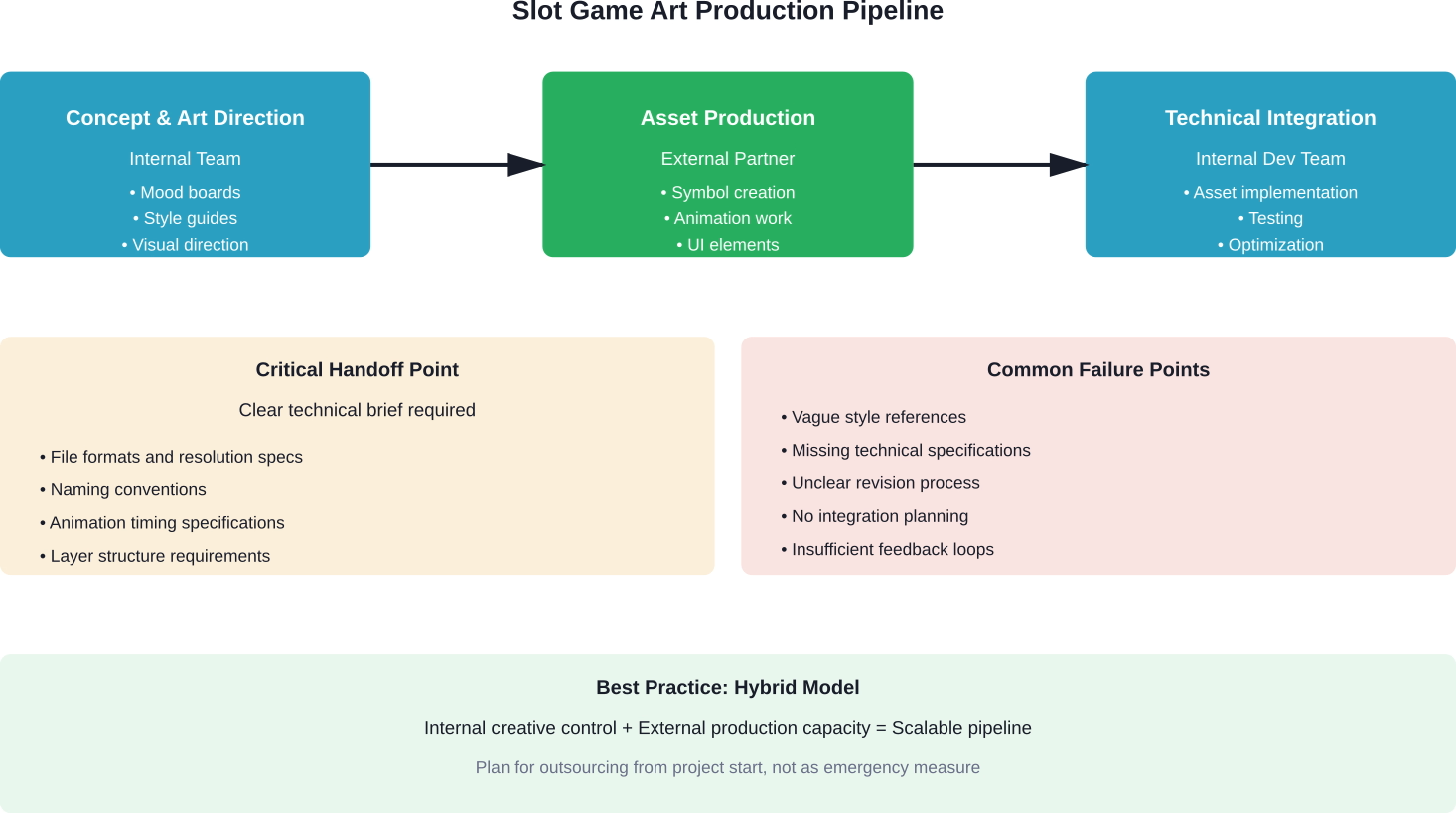
Understanding how production flows from concept to implementation helps identify where external partners fit most effectively.
Concept and Art Direction
This phase establishes the visual foundation. Internal teams typically handle initial concept exploration, mood boards, and art direction documentation. These materials define color palettes, visual themes, character designs, and the overall aesthetic approach.
Even when outsourcing production, keeping art direction internally maintains creative control and ensures visual consistency across a studio's portfolio. The concept phase produces reference materials that guide all downstream production work.
Asset Production
This is where most studios leverage external partners. Asset production encompasses:
- Symbol illustrations in multiple states (base, animated, special effects)
- Background artwork for base games and bonus rounds
- UI elements including buttons, meters, information displays, and navigation
- Character artwork if the game includes narrative elements
- Particle effects and animation libraries
Production volume is substantial. A single slot game might require 100+ individual assets when accounting for symbol variations, UI states, and supporting graphics. Studios releasing monthly or quarterly titles can't sustain that output internally without significant team expansion.
Technical Integration
After asset delivery, development teams integrate artwork into game builds. This phase reveals whether the production pipeline worked smoothly — properly documented assets with correct naming conventions, layer structures, and technical specs integrate quickly. Assets that don't match technical requirements create revision cycles that delay launch schedules.
The most efficient workflows build technical requirements into initial briefs rather than discovering integration issues after production wraps.
When Outsourcing Slot Art Actually Makes Sense
Not every production scenario benefits from outsourcing. The most effective use cases share specific characteristics.
High-Volume Release Schedules
Studios releasing multiple titles per quarter face asset demands that exceed reasonable internal capacity. Building a team large enough to handle peak production creates overhead during slower periods. External partners provide production elasticity — scale up for busy periods without maintaining excess headcount year-round.
Specialized Visual Styles
Sometimes a game concept requires visual expertise outside the studio's core competencies. A team specializing in realistic 3D rendering might outsource a project requiring hand-painted 2D illustration. Rather than hiring specialists for a single project, partnering with studios that already excel in that style makes practical sense.
Deadline Compression
Market opportunities sometimes demand accelerated timelines. An important licensing deal or seasonal release window might require condensing a typical 3-month production schedule into 6 weeks. Adding external production capacity becomes the only viable path to hitting the deadline without compromising quality.
Pilot Projects and Testing
When exploring new game mechanics or visual approaches, outsourcing production allows testing concepts without committing internal resources to unproven directions. If the pilot succeeds, scale up production. If it doesn't, the studio hasn't disrupted ongoing internal projects.
Now, this is where it gets interesting. Many studios default to outsourcing as a reactive measure when internal production falls behind. That approach typically creates problems — rushed partner selection, inadequate briefs, and compressed timelines that force quality compromises.
The studios that benefit most from outsourcing plan for it proactively, building external partnerships into their production roadmap from the start.
Cost of Slot Game Art Production
Understanding realistic cost expectations helps with budgeting and partner evaluation. Slot game art production runs higher than many other 2D game categories because of animation requirements and symbol quantity.
According to industry benchmarks, a static symbol set (10 symbols without animation) typically costs $2,000–$6,000. Once animation is added — idle states, win celebrations, and special effects — that range increases to $5,000–$15,000+ for the same 10-symbol set.
Background art for slot games generally ranges from $800–$3,000 for static backgrounds, with animated backgrounds running $2,500–$8,000 depending on complexity. UI systems that include buttons, meters, information displays, and navigational elements typically cost $3,000–$10,000 for a complete package.
A basic slot game with simple mechanics and limited animation typically costs $10,000–$25,000 for art production according to recent industry data. These titles usually feature standard gameplay, minimal animation, and straightforward visual themes.
Standard complexity slots with expanded features, multiple bonus rounds, and moderate animation quality generally fall in the $30,000–$80,000 range for complete art production. Premium slots with complex mechanics, extensive animation, character artwork, and high production values can exceed$100,000+ for art alone.
These figures represent mid-quality work from experienced studios, not budget options from freelance platforms. Geographic location significantly impacts pricing. Studios in Eastern Europe and Asia generally charge less than North American or Western European partners while maintaining comparable quality standards.
Industry practitioners recommend adding a financial buffer of at least 10-15% on initial outsourcing projects. First-time partnerships with a particular studio often encounter unexpected revision cycles or scope clarifications that weren't captured in initial estimates.
Finding Studios That Specialize in Casino Art
Not all game art studios understand casino-specific requirements. The partner selection process should prioritize relevant experience over general game art capabilities.
Portfolio Evaluation
Review actual shipped slot titles in the studio's portfolio. Look for visual quality that matches your target aesthetic, but also pay attention to whether their work demonstrates understanding of casino-specific requirements — clear symbol hierarchy, appropriate animation timing, regulatory-compliant UI design.
A studio with extensive mobile game experience but no casino work will face a learning curve that adds risk to your project. Prioritize partners who already speak the language of slot production.
Technical Capabilities
Confirm the studio can deliver assets in the formats and specifications your development pipeline requires. Ask about their experience with your specific game engine or development framework. Studios familiar with your technical environment integrate more smoothly.
Request examples of technical documentation from previous projects. Well-organized partners provide detailed delivery specifications, asset naming conventions, and integration guides that minimize back-and-forth during implementation.
Communication and Time Zones
Practical communication matters more than many studios initially realize. Significant time zone differences can slow iteration cycles — a question asked at end-of-day waits 12+ hours for response, extending feedback loops that should happen in real-time.
Evaluate communication during the sales process. If getting clear answers proves difficult before signing a contract, expect worse communication during production when pressures intensify.
Production Capacity and Reliability
Confirm the studio can handle your volume and timeline requirements. A small boutique studio might produce exceptional quality but lack capacity for aggressive schedules. Larger production houses offer more bandwidth but sometimes treat smaller projects as lower priority.
Ask for client references and actually contact them. Direct feedback from previous clients reveals operational realities that portfolios and sales conversations don't surface.
Creating Effective Art Briefs for Slot Games
The quality of production brief directly predicts project success. Vague or incomplete briefs create revision cycles that consume time and budget while damaging relationships with external partners.
Visual Style Definition
Provide comprehensive visual references that communicate the intended aesthetic. Don't rely solely on written descriptions — include mood boards, reference images from other games, color palette specifications, and style examples that capture the visual direction.
If adapting an existing art style from previous titles, provide complete asset libraries from those games as reference. Nothing communicates style more clearly than actual examples from your own catalog.
Technical Specifications
Document all technical requirements explicitly:
- File formats (PSD, PNG, SVG, etc.)
- Resolution requirements and canvas sizes
- Color mode (RGB, CMYK) and bit depth
- Naming convention standards
- Layer organization requirements
- Animation specifications (frame rates, duration, looping behavior)
- Asset optimization requirements (file size limits, compression standards)
The more specific these requirements, the fewer integration issues arise during implementation.
Asset Inventory and Specifications
Create detailed lists of every required asset. For symbol sets, specify exactly how many symbols, what visual themes each represents, and what animation states each requires. For backgrounds, document dimensions, whether parallax layers are needed, and how the background interacts with foreground elements.
Include functional requirements — does a particular UI element need hover states, pressed states, disabled states? Does a symbol include special trigger animations beyond standard win celebrations?
Approval Process and Milestones
Define how approval works at each production stage. Who reviews deliverables? What's the expected turnaround time for feedback? How many revision rounds are included in the quoted price?
Establish a milestone delivery schedule with specific dates. Breaking production into phases (concept approval, first asset batch, second asset batch, final delivery) creates opportunities to catch issues early rather than discovering problems after all assets are complete.
Revision and Feedback Protocols
Specify how feedback will be communicated. Consolidate all feedback through a single point of contact rather than having multiple team members send conflicting directions to the vendor. Use structured feedback formats that clearly distinguish between mandatory changes and optional suggestions.
Real talk: unclear or constantly shifting feedback creates the most friction in outsourcing relationships. Investing time in organized feedback processes pays returns throughout the project.

Working With Casino Art Studios: Best Practices
Once a partner is selected and contracts are signed, operational practices determine whether the relationship succeeds or creates frustration for both parties.
Start With a Pilot Project
Even when confident in partner selection, beginning with a smaller pilot project reduces risk. A limited scope engagement — perhaps a single bonus round or a reduced symbol set — tests workflow compatibility without committing to full game production.
The pilot reveals how the studio interprets briefs, handles feedback, meets deadlines, and communicates through production challenges. Successful pilots build confidence for larger engagements. Problems discovered during pilots cost less than discovering the same issues mid-way through a major project.
Establish Regular Communication Cadence
Schedule recurring check-ins rather than communicating only when problems arise. Weekly status calls or daily asynchronous updates via project management tools keep both teams aligned on progress, upcoming milestones, and potential issues.
Regular communication creates opportunities to address small problems before they escalate into deadline-threatening crises.
Provide Consolidated Feedback
Funnel all feedback through a designated art director or project lead. When multiple stakeholders send conflicting directions directly to the vendor, confusion and wasted work result. The internal lead synthesizes input from various stakeholders into clear, prioritized feedback that the external team can act on efficiently.
Use visual annotation tools to mark up deliverables with specific feedback tied to exact locations in the artwork. Written descriptions of visual issues often create ambiguity that leads to incorrect revisions.
Respect Scope and Timeline Realities
Scope changes mid-project add cost and extend timelines. That's unavoidable reality, not vendor inflexibility. When scope adjustments are necessary, discuss timeline and budget implications explicitly before requesting the additional work.
Unrealistic timeline expectations damage quality. Rushing production to meet arbitrary deadlines results in work that requires extensive revision — ultimately taking longer than realistic scheduling would have.
Pay Promptly and Treat Partners Fairly
Payment delays poison outsourcing relationships. Studios that pay invoices on time and treat external partners with respect build reputations that attract the best vendors. Studios known for payment problems, scope creep, or unreasonable demands find quality partners unwilling to work with them.
Strong vendor relationships become competitive advantages. Preferred partners prioritize reliable clients' projects and provide flexibility during genuine emergencies because they trust the relationship is mutually beneficial.

Keep Slot Game Art Production Steady Without Rework
Slot game art usually runs on repetition and variation at the same time. New themes, small adjustments, ongoing asset updates – it rarely stops, and small inconsistencies start to add up quickly if the team changes too often.
NeoWork handles this by building dedicated teams that stay close to your workflow instead of working as an external layer. Designers and artists support ongoing production, so visual style and output stay consistent across updates. With a 3.2% selection rate, the focus is on people who can handle that volume without slowing down, and a 91% retention rate helps avoid constant resets in style and process.
If you need a more stable way to manage slot game art without reworking assets every few cycles, contact NeoWork and see how their team setup could support your pipeline.
Timeline Expectations for Slot Art Production
Understanding realistic production timelines helps with project planning and prevents unrealistic deadline pressure.
Generally speaking, development time for basic slot game art typically hovers around 1 month for the complete package including game screen, reels with animated symbols, paytable, and win screens. This assumes clear briefs, prompt feedback, and normal revision cycles.
Standard complexity slots typically require 4-8 weeks for complete art production. This includes concept development, multiple symbol sets with varied animation states, backgrounds for base game and bonus rounds, comprehensive UI systems, and supporting graphics.
Premium slots with extensive animation, character artwork, multiple gameplay modes, and high production values generally need 8-12+ weeks for art production. Complex animation sequences, detailed character work, and extensive effects libraries require proportionally more production time.
These timelines assume efficient workflows with minimal delays. Projects with unclear requirements, slow feedback cycles, or frequent scope changes extend significantly beyond these benchmarks.
In-House vs. Outsourced: Finding the Right Balance
The most successful studios don't view in-house and outsourced production as competing alternatives. Instead, they build hybrid models that leverage the strengths of each approach.
What to Keep Internal
Core creative direction belongs in-house. Art direction, concept development, and style definition require deep understanding of brand identity and product vision that external partners can't replicate without extensive ramp-up.
IP development and character creation often benefit from internal ownership. The iterative, exploratory nature of creating new intellectual property works better with internal teams who can pivot quickly based on evolving creative vision.
Critical path assets that require constant iteration as gameplay mechanics develop typically need internal production. When game design and art are tightly coupled and both evolving simultaneously, the communication overhead of external coordination slows progress.
What to Outsource Effectively
High-volume asset production that follows established style guides outsources efficiently. Once visual direction is clear and technical requirements are documented, symbol libraries, background variations, and UI elements can be produced externally with minimal overhead.
Specialized skills needed occasionally make sense to outsource rather than maintaining full-time specialists. If a project requires 3D rendering expertise but most of the studio's work is 2D, partnering with 3D specialists beats hiring permanent staff for intermittent work.
Seasonal capacity expansion through external partners allows studios to handle peak production periods without excess headcount during slower periods. This elasticity helps manage the irregular production rhythms common in game development.
Evaluating Outsourcing Partner Performance
Ongoing assessment ensures partnerships continue delivering value and identifies issues requiring attention:
- Track delivery timeliness against committed schedules: Occasional delays happen, but consistent late deliveries indicate capacity or management problems that need addressing.
- Monitor revision cycles: Well-briefed projects with clear communication should require minimal revisions beyond normal iterative refinement. Excessive revision rounds suggest brief quality issues or communication breakdowns.
- Assess integration smoothness: Assets that require minimal adjustment during technical integration indicate good understanding of requirements. Assets that consistently need rework during implementation suggest the partner isn't fully grasping technical specifications.
- Gather feedback from internal teams who work directly with vendor deliverables: Developers and technical artists provide valuable perspectives on asset quality, organization, and usability that isn't always apparent during visual review.
- Compare value against alternatives periodically: Markets evolve, new studios emerge, and existing partners' quality or pricing may shift over time. Regular market awareness ensures current partnerships remain competitive.
Common Outsourcing Pitfalls and How to Avoid Them
Learning from common mistakes helps avoid painful lessons.
Inadequate Briefs
The single most common failure point is insufficient brief documentation. Studios assume expertise means vendors can fill gaps in specification, but that assumption creates misalignment.
Solution: Invest time in comprehensive briefs. The hours spent documenting requirements thoroughly return multiplied value through reduced revision cycles and better initial deliverables.
Poor Partner Selection
Choosing vendors based solely on price or availability without evaluating relevant experience creates quality and timeline risks.
Solution: Prioritize demonstrated casino art experience and cultural/communication fit over lowest price. The cheapest option rarely proves most cost-effective when revision cycles and delays are factored.
Weak Communication Protocols
Undefined communication processes lead to information gaps, delayed feedback, and coordination failures.
Solution: Establish explicit communication cadences, define who communicates what to whom, and use project management tools that provide visibility into progress and issues.
Scope Creep Without Adjustment
Adding requirements mid-project without timeline and budget adjustments creates vendor resentment and quality pressure.
Solution: Treat scope changes formally. Document additions, negotiate timeline and cost impacts, and get mutual agreement before proceeding.
Unrealistic Expectations
Expecting external partners to read minds, work at superhuman speed, or deliver premium quality at budget prices sets up disappointment.
Solution: Base expectations on market realities. Quality work requires time and costs appropriate rates. Partners can't deliver what wasn't specified. Clear requirements and realistic timelines produce better outcomes than wishful thinking.
The Future of Slot Art Outsourcing
Several trends are reshaping how studios approach external art production.
AI-assisted asset generation is beginning to impact production workflows, particularly for variant creation and iteration exploration. Tools that generate symbol variations or background alternatives accelerate early concept phases, though human artists remain essential for final quality and coherent style.
Distributed production models are becoming more common, with studios maintaining small core teams and flexible networks of specialized external partners rather than large permanent art departments. This approach provides scalability while controlling overhead.
Real-time collaboration tools reduce the friction traditionally associated with remote partnerships. Cloud-based art tools with simultaneous editing, integrated feedback systems, and version control make distributed production nearly as fluid as co-located teams.
Specialization continues deepening. Studios increasingly focus on specific visual styles or game types rather than positioning as generalist providers. This specialization produces higher quality in chosen niches but requires clients to match projects to appropriate specialist partners.
Conclusion
Slot game art outsourcing, when structured properly, provides production scalability that allows studios to compete in markets demanding regular content releases. The hybrid model — internal creative direction paired with external production capacity — has become standard practice for studios releasing multiple titles annually.
Success depends on fundamentals: comprehensive briefs that eliminate ambiguity, careful partner selection prioritizing relevant experience, clear communication protocols, and realistic timeline expectations. Studios that invest in these foundations build productive long-term partnerships that become competitive advantages.
The economics make sense. Maintaining internal teams large enough to handle peak production creates overhead during slower periods. External partnerships provide elasticity — scale production capacity up and down as release schedules demand.
But outsourcing isn't a quick fix for production problems. It's a strategic capability that requires planning, process discipline, and relationship investment. Studios that treat external partners as extensions of their team rather than disposable vendors build networks of specialized expertise they can leverage project after project.
The slot market continues growing, with revenue projections exceeding previous forecasts as mobile gaming expands and regulated markets open globally. Studios that master scalable production through effective outsourcing partnerships position themselves to capitalize on that growth without the overhead burden of oversized permanent teams.
Start with clear requirements, select partners carefully, communicate consistently, and treat relationships as long-term investments. Those fundamentals produce outsourcing outcomes that enhance production capacity, maintain quality standards, and support sustainable business growth.
Frequently Asked Questions
Topics
Slot Game Art Outsourcing Guide 2026: Costs & Process

Slot game art outsourcing allows iGaming studios to scale production efficiently by partnering with specialized external teams for asset creation while maintaining internal art direction. Success depends on clear technical briefs, proper pipeline integration, and selecting partners who understand casino-specific visual requirements and regulatory constraints.
The iGaming industry continues its rapid expansion, with the global online gambling market projected to exceed $153 billion by 2030 according to Grand View Research. For studios releasing multiple slot titles annually, handling all art production internally creates bottlenecks that slow development cycles and limit scalability.
But here's the thing — outsourcing slot art isn't a quick fix you tack on when production gets overloaded. The studios that scale efficiently plan for external partnerships from the beginning, building hybrid workflows where internal teams handle art direction and concept work while specialized partners tackle the heavy lifting of asset production.
This guide covers what makes slot game art different from other game art categories, how production pipelines function, what realistic costs look like, and how to structure partnerships that actually work.
What Makes Casino and Slot Game Art Different
Slot game art occupies a distinct niche within game art production. The aesthetic requirements, regulatory constraints, and production volumes set this category apart from mobile games, PC titles, or console development.
Most slot games require extensive symbol libraries — typically 10-15 unique symbols per game, each needing multiple animation states. A standard symbol set includes idle animations, win celebrations, and sometimes special trigger effects. That's before adding backgrounds, UI systems, character artwork for bonus rounds, and effects libraries.
The visual style tends toward high saturation and clarity. Symbols must read instantly at small sizes on mobile screens while maintaining visual appeal on desktop displays. Color palettes lean bold rather than subtle, with strong contrast ratios that ensure visibility across different lighting conditions and device types.
Regulatory considerations add another layer of complexity. Different jurisdictions impose specific requirements on how game elements appear, how odds are displayed, and what visual effects are permissible. A studio producing art for regulated markets needs familiarity with these constraints — not every game art partner has that background.
Animation quality directly impacts player perception of game responsiveness. Slots rely on frequent micro-rewards, and the animation supporting each win must feel satisfying at a visceral level. That requires understanding timing, anticipation, and the specific rhythm of slot gameplay.
The Slot Game Art Production Pipeline
Understanding how production flows from concept to implementation helps identify where external partners fit most effectively.
Concept and Art Direction
This phase establishes the visual foundation. Internal teams typically handle initial concept exploration, mood boards, and art direction documentation. These materials define color palettes, visual themes, character designs, and the overall aesthetic approach.
Even when outsourcing production, keeping art direction internally maintains creative control and ensures visual consistency across a studio's portfolio. The concept phase produces reference materials that guide all downstream production work.
Asset Production
This is where most studios leverage external partners. Asset production encompasses:
- Symbol illustrations in multiple states (base, animated, special effects)
- Background artwork for base games and bonus rounds
- UI elements including buttons, meters, information displays, and navigation
- Character artwork if the game includes narrative elements
- Particle effects and animation libraries
Production volume is substantial. A single slot game might require 100+ individual assets when accounting for symbol variations, UI states, and supporting graphics. Studios releasing monthly or quarterly titles can't sustain that output internally without significant team expansion.
Technical Integration
After asset delivery, development teams integrate artwork into game builds. This phase reveals whether the production pipeline worked smoothly — properly documented assets with correct naming conventions, layer structures, and technical specs integrate quickly. Assets that don't match technical requirements create revision cycles that delay launch schedules.
The most efficient workflows build technical requirements into initial briefs rather than discovering integration issues after production wraps.
When Outsourcing Slot Art Actually Makes Sense
Not every production scenario benefits from outsourcing. The most effective use cases share specific characteristics.
High-Volume Release Schedules
Studios releasing multiple titles per quarter face asset demands that exceed reasonable internal capacity. Building a team large enough to handle peak production creates overhead during slower periods. External partners provide production elasticity — scale up for busy periods without maintaining excess headcount year-round.
Specialized Visual Styles
Sometimes a game concept requires visual expertise outside the studio's core competencies. A team specializing in realistic 3D rendering might outsource a project requiring hand-painted 2D illustration. Rather than hiring specialists for a single project, partnering with studios that already excel in that style makes practical sense.
Deadline Compression
Market opportunities sometimes demand accelerated timelines. An important licensing deal or seasonal release window might require condensing a typical 3-month production schedule into 6 weeks. Adding external production capacity becomes the only viable path to hitting the deadline without compromising quality.
Pilot Projects and Testing
When exploring new game mechanics or visual approaches, outsourcing production allows testing concepts without committing internal resources to unproven directions. If the pilot succeeds, scale up production. If it doesn't, the studio hasn't disrupted ongoing internal projects.
Now, this is where it gets interesting. Many studios default to outsourcing as a reactive measure when internal production falls behind. That approach typically creates problems — rushed partner selection, inadequate briefs, and compressed timelines that force quality compromises.
The studios that benefit most from outsourcing plan for it proactively, building external partnerships into their production roadmap from the start.
Cost of Slot Game Art Production
Understanding realistic cost expectations helps with budgeting and partner evaluation. Slot game art production runs higher than many other 2D game categories because of animation requirements and symbol quantity.
According to industry benchmarks, a static symbol set (10 symbols without animation) typically costs $2,000–$6,000. Once animation is added — idle states, win celebrations, and special effects — that range increases to $5,000–$15,000+ for the same 10-symbol set.
Background art for slot games generally ranges from $800–$3,000 for static backgrounds, with animated backgrounds running $2,500–$8,000 depending on complexity. UI systems that include buttons, meters, information displays, and navigational elements typically cost $3,000–$10,000 for a complete package.
A basic slot game with simple mechanics and limited animation typically costs $10,000–$25,000 for art production according to recent industry data. These titles usually feature standard gameplay, minimal animation, and straightforward visual themes.
Standard complexity slots with expanded features, multiple bonus rounds, and moderate animation quality generally fall in the $30,000–$80,000 range for complete art production. Premium slots with complex mechanics, extensive animation, character artwork, and high production values can exceed$100,000+ for art alone.
These figures represent mid-quality work from experienced studios, not budget options from freelance platforms. Geographic location significantly impacts pricing. Studios in Eastern Europe and Asia generally charge less than North American or Western European partners while maintaining comparable quality standards.
Industry practitioners recommend adding a financial buffer of at least 10-15% on initial outsourcing projects. First-time partnerships with a particular studio often encounter unexpected revision cycles or scope clarifications that weren't captured in initial estimates.
Finding Studios That Specialize in Casino Art
Not all game art studios understand casino-specific requirements. The partner selection process should prioritize relevant experience over general game art capabilities.
Portfolio Evaluation
Review actual shipped slot titles in the studio's portfolio. Look for visual quality that matches your target aesthetic, but also pay attention to whether their work demonstrates understanding of casino-specific requirements — clear symbol hierarchy, appropriate animation timing, regulatory-compliant UI design.
A studio with extensive mobile game experience but no casino work will face a learning curve that adds risk to your project. Prioritize partners who already speak the language of slot production.
Technical Capabilities
Confirm the studio can deliver assets in the formats and specifications your development pipeline requires. Ask about their experience with your specific game engine or development framework. Studios familiar with your technical environment integrate more smoothly.
Request examples of technical documentation from previous projects. Well-organized partners provide detailed delivery specifications, asset naming conventions, and integration guides that minimize back-and-forth during implementation.
Communication and Time Zones
Practical communication matters more than many studios initially realize. Significant time zone differences can slow iteration cycles — a question asked at end-of-day waits 12+ hours for response, extending feedback loops that should happen in real-time.
Evaluate communication during the sales process. If getting clear answers proves difficult before signing a contract, expect worse communication during production when pressures intensify.
Production Capacity and Reliability
Confirm the studio can handle your volume and timeline requirements. A small boutique studio might produce exceptional quality but lack capacity for aggressive schedules. Larger production houses offer more bandwidth but sometimes treat smaller projects as lower priority.
Ask for client references and actually contact them. Direct feedback from previous clients reveals operational realities that portfolios and sales conversations don't surface.
Creating Effective Art Briefs for Slot Games
The quality of production brief directly predicts project success. Vague or incomplete briefs create revision cycles that consume time and budget while damaging relationships with external partners.
Visual Style Definition
Provide comprehensive visual references that communicate the intended aesthetic. Don't rely solely on written descriptions — include mood boards, reference images from other games, color palette specifications, and style examples that capture the visual direction.
If adapting an existing art style from previous titles, provide complete asset libraries from those games as reference. Nothing communicates style more clearly than actual examples from your own catalog.
Technical Specifications
Document all technical requirements explicitly:
- File formats (PSD, PNG, SVG, etc.)
- Resolution requirements and canvas sizes
- Color mode (RGB, CMYK) and bit depth
- Naming convention standards
- Layer organization requirements
- Animation specifications (frame rates, duration, looping behavior)
- Asset optimization requirements (file size limits, compression standards)
The more specific these requirements, the fewer integration issues arise during implementation.
Asset Inventory and Specifications
Create detailed lists of every required asset. For symbol sets, specify exactly how many symbols, what visual themes each represents, and what animation states each requires. For backgrounds, document dimensions, whether parallax layers are needed, and how the background interacts with foreground elements.
Include functional requirements — does a particular UI element need hover states, pressed states, disabled states? Does a symbol include special trigger animations beyond standard win celebrations?
Approval Process and Milestones
Define how approval works at each production stage. Who reviews deliverables? What's the expected turnaround time for feedback? How many revision rounds are included in the quoted price?
Establish a milestone delivery schedule with specific dates. Breaking production into phases (concept approval, first asset batch, second asset batch, final delivery) creates opportunities to catch issues early rather than discovering problems after all assets are complete.
Revision and Feedback Protocols
Specify how feedback will be communicated. Consolidate all feedback through a single point of contact rather than having multiple team members send conflicting directions to the vendor. Use structured feedback formats that clearly distinguish between mandatory changes and optional suggestions.
Real talk: unclear or constantly shifting feedback creates the most friction in outsourcing relationships. Investing time in organized feedback processes pays returns throughout the project.
Working With Casino Art Studios: Best Practices
Once a partner is selected and contracts are signed, operational practices determine whether the relationship succeeds or creates frustration for both parties.
Start With a Pilot Project
Even when confident in partner selection, beginning with a smaller pilot project reduces risk. A limited scope engagement — perhaps a single bonus round or a reduced symbol set — tests workflow compatibility without committing to full game production.
The pilot reveals how the studio interprets briefs, handles feedback, meets deadlines, and communicates through production challenges. Successful pilots build confidence for larger engagements. Problems discovered during pilots cost less than discovering the same issues mid-way through a major project.
Establish Regular Communication Cadence
Schedule recurring check-ins rather than communicating only when problems arise. Weekly status calls or daily asynchronous updates via project management tools keep both teams aligned on progress, upcoming milestones, and potential issues.
Regular communication creates opportunities to address small problems before they escalate into deadline-threatening crises.
Provide Consolidated Feedback
Funnel all feedback through a designated art director or project lead. When multiple stakeholders send conflicting directions directly to the vendor, confusion and wasted work result. The internal lead synthesizes input from various stakeholders into clear, prioritized feedback that the external team can act on efficiently.
Use visual annotation tools to mark up deliverables with specific feedback tied to exact locations in the artwork. Written descriptions of visual issues often create ambiguity that leads to incorrect revisions.
Respect Scope and Timeline Realities
Scope changes mid-project add cost and extend timelines. That's unavoidable reality, not vendor inflexibility. When scope adjustments are necessary, discuss timeline and budget implications explicitly before requesting the additional work.
Unrealistic timeline expectations damage quality. Rushing production to meet arbitrary deadlines results in work that requires extensive revision — ultimately taking longer than realistic scheduling would have.
Pay Promptly and Treat Partners Fairly
Payment delays poison outsourcing relationships. Studios that pay invoices on time and treat external partners with respect build reputations that attract the best vendors. Studios known for payment problems, scope creep, or unreasonable demands find quality partners unwilling to work with them.
Strong vendor relationships become competitive advantages. Preferred partners prioritize reliable clients' projects and provide flexibility during genuine emergencies because they trust the relationship is mutually beneficial.
Keep Slot Game Art Production Steady Without Rework
Slot game art usually runs on repetition and variation at the same time. New themes, small adjustments, ongoing asset updates – it rarely stops, and small inconsistencies start to add up quickly if the team changes too often.
NeoWork handles this by building dedicated teams that stay close to your workflow instead of working as an external layer. Designers and artists support ongoing production, so visual style and output stay consistent across updates. With a 3.2% selection rate, the focus is on people who can handle that volume without slowing down, and a 91% retention rate helps avoid constant resets in style and process.
If you need a more stable way to manage slot game art without reworking assets every few cycles, contact NeoWork and see how their team setup could support your pipeline.
Timeline Expectations for Slot Art Production
Understanding realistic production timelines helps with project planning and prevents unrealistic deadline pressure.
Generally speaking, development time for basic slot game art typically hovers around 1 month for the complete package including game screen, reels with animated symbols, paytable, and win screens. This assumes clear briefs, prompt feedback, and normal revision cycles.
Standard complexity slots typically require 4-8 weeks for complete art production. This includes concept development, multiple symbol sets with varied animation states, backgrounds for base game and bonus rounds, comprehensive UI systems, and supporting graphics.
Premium slots with extensive animation, character artwork, multiple gameplay modes, and high production values generally need 8-12+ weeks for art production. Complex animation sequences, detailed character work, and extensive effects libraries require proportionally more production time.
These timelines assume efficient workflows with minimal delays. Projects with unclear requirements, slow feedback cycles, or frequent scope changes extend significantly beyond these benchmarks.
In-House vs. Outsourced: Finding the Right Balance
The most successful studios don't view in-house and outsourced production as competing alternatives. Instead, they build hybrid models that leverage the strengths of each approach.
What to Keep Internal
Core creative direction belongs in-house. Art direction, concept development, and style definition require deep understanding of brand identity and product vision that external partners can't replicate without extensive ramp-up.
IP development and character creation often benefit from internal ownership. The iterative, exploratory nature of creating new intellectual property works better with internal teams who can pivot quickly based on evolving creative vision.
Critical path assets that require constant iteration as gameplay mechanics develop typically need internal production. When game design and art are tightly coupled and both evolving simultaneously, the communication overhead of external coordination slows progress.
What to Outsource Effectively
High-volume asset production that follows established style guides outsources efficiently. Once visual direction is clear and technical requirements are documented, symbol libraries, background variations, and UI elements can be produced externally with minimal overhead.
Specialized skills needed occasionally make sense to outsource rather than maintaining full-time specialists. If a project requires 3D rendering expertise but most of the studio's work is 2D, partnering with 3D specialists beats hiring permanent staff for intermittent work.
Seasonal capacity expansion through external partners allows studios to handle peak production periods without excess headcount during slower periods. This elasticity helps manage the irregular production rhythms common in game development.
Evaluating Outsourcing Partner Performance
Ongoing assessment ensures partnerships continue delivering value and identifies issues requiring attention:
- Track delivery timeliness against committed schedules: Occasional delays happen, but consistent late deliveries indicate capacity or management problems that need addressing.
- Monitor revision cycles: Well-briefed projects with clear communication should require minimal revisions beyond normal iterative refinement. Excessive revision rounds suggest brief quality issues or communication breakdowns.
- Assess integration smoothness: Assets that require minimal adjustment during technical integration indicate good understanding of requirements. Assets that consistently need rework during implementation suggest the partner isn't fully grasping technical specifications.
- Gather feedback from internal teams who work directly with vendor deliverables: Developers and technical artists provide valuable perspectives on asset quality, organization, and usability that isn't always apparent during visual review.
- Compare value against alternatives periodically: Markets evolve, new studios emerge, and existing partners' quality or pricing may shift over time. Regular market awareness ensures current partnerships remain competitive.
Common Outsourcing Pitfalls and How to Avoid Them
Learning from common mistakes helps avoid painful lessons.
Inadequate Briefs
The single most common failure point is insufficient brief documentation. Studios assume expertise means vendors can fill gaps in specification, but that assumption creates misalignment.
Solution: Invest time in comprehensive briefs. The hours spent documenting requirements thoroughly return multiplied value through reduced revision cycles and better initial deliverables.
Poor Partner Selection
Choosing vendors based solely on price or availability without evaluating relevant experience creates quality and timeline risks.
Solution: Prioritize demonstrated casino art experience and cultural/communication fit over lowest price. The cheapest option rarely proves most cost-effective when revision cycles and delays are factored.
Weak Communication Protocols
Undefined communication processes lead to information gaps, delayed feedback, and coordination failures.
Solution: Establish explicit communication cadences, define who communicates what to whom, and use project management tools that provide visibility into progress and issues.
Scope Creep Without Adjustment
Adding requirements mid-project without timeline and budget adjustments creates vendor resentment and quality pressure.
Solution: Treat scope changes formally. Document additions, negotiate timeline and cost impacts, and get mutual agreement before proceeding.
Unrealistic Expectations
Expecting external partners to read minds, work at superhuman speed, or deliver premium quality at budget prices sets up disappointment.
Solution: Base expectations on market realities. Quality work requires time and costs appropriate rates. Partners can't deliver what wasn't specified. Clear requirements and realistic timelines produce better outcomes than wishful thinking.
The Future of Slot Art Outsourcing
Several trends are reshaping how studios approach external art production.
AI-assisted asset generation is beginning to impact production workflows, particularly for variant creation and iteration exploration. Tools that generate symbol variations or background alternatives accelerate early concept phases, though human artists remain essential for final quality and coherent style.
Distributed production models are becoming more common, with studios maintaining small core teams and flexible networks of specialized external partners rather than large permanent art departments. This approach provides scalability while controlling overhead.
Real-time collaboration tools reduce the friction traditionally associated with remote partnerships. Cloud-based art tools with simultaneous editing, integrated feedback systems, and version control make distributed production nearly as fluid as co-located teams.
Specialization continues deepening. Studios increasingly focus on specific visual styles or game types rather than positioning as generalist providers. This specialization produces higher quality in chosen niches but requires clients to match projects to appropriate specialist partners.
Conclusion
Slot game art outsourcing, when structured properly, provides production scalability that allows studios to compete in markets demanding regular content releases. The hybrid model — internal creative direction paired with external production capacity — has become standard practice for studios releasing multiple titles annually.
Success depends on fundamentals: comprehensive briefs that eliminate ambiguity, careful partner selection prioritizing relevant experience, clear communication protocols, and realistic timeline expectations. Studios that invest in these foundations build productive long-term partnerships that become competitive advantages.
The economics make sense. Maintaining internal teams large enough to handle peak production creates overhead during slower periods. External partnerships provide elasticity — scale production capacity up and down as release schedules demand.
But outsourcing isn't a quick fix for production problems. It's a strategic capability that requires planning, process discipline, and relationship investment. Studios that treat external partners as extensions of their team rather than disposable vendors build networks of specialized expertise they can leverage project after project.
The slot market continues growing, with revenue projections exceeding previous forecasts as mobile gaming expands and regulated markets open globally. Studios that master scalable production through effective outsourcing partnerships position themselves to capitalize on that growth without the overhead burden of oversized permanent teams.
Start with clear requirements, select partners carefully, communicate consistently, and treat relationships as long-term investments. Those fundamentals produce outsourcing outcomes that enhance production capacity, maintain quality standards, and support sustainable business growth.
Frequently Asked Questions
Topics
Related Blogs
Related Podcasts


.webp)
.webp)



