
.avif)
.avif)

Social Media Outsourcing Guide 2026: What to Delegate


.svg)

Social media management outsourcing lets businesses delegate content creation, posting, engagement, and analytics to external professionals—whether freelancers, agencies, or virtual assistants. Costs typically range from $500-$3,000 monthly for small businesses and $5,000-$15,000 for larger enterprises, with benefits including time savings, access to expertise, and consistent posting schedules. Success requires clear brand guidelines, defined goals, proper vetting of providers, and maintaining oversight of quality and messaging.
Social media isn't optional anymore. Your customers scroll Instagram during lunch breaks, check LinkedIn between meetings, and browse TikTok before bed. If your brand isn't showing up consistently, you're invisible.
The problem? Managing social media properly eats up serious hours. Content creation, scheduling, engagement, analytics tracking—it all compounds. For many businesses, hiring a full-time in-house social media manager isn't financially realistic. According to Payscale data, in-house social media managers command salaries ranging from $40k to $88k, with an average of $60,348.
That's where outsourcing enters the picture. But handing over your brand's voice to someone external feels risky. What should actually be outsourced? How much does it cost? And how do you avoid the nightmare scenarios where outsourced content misses the mark entirely?
This guide breaks down everything worth knowing about social media management outsourcing—what works, what doesn't, and how to set things up so you're not constantly micromanaging every post.
What Social Media Management Outsourcing Actually Means
Social media management outsourcing means delegating some or all social media responsibilities to external professionals rather than handling everything in-house. These tasks might include content creation, post scheduling, community engagement, analytics reporting, or overall strategy development.
The outsourcing arrangement can take different forms. Some businesses hand off only tactical execution while keeping strategy internal. Others outsource the entire function—from planning to posting to responding to comments.
Here's what typically falls under social media management:
- Content creation (graphics, videos, captions)
- Editorial calendar planning
- Post scheduling and publishing
- Community management (responding to comments and messages)
- Social listening and monitoring
- Performance analytics and reporting
- Paid social advertising
- Influencer coordination
Not everything on that list needs to be outsourced. The smartest approach involves identifying which tasks drain internal resources without requiring deep institutional knowledge, then delegating those first.
Why Businesses Outsource Social Media
Time constraints top the list of reasons. Social media done right requires consistent attention—something most business owners and marketing teams struggle to provide while juggling other priorities.
According to HubSpot's 2026 State of Marketing report surveying over 1,500 global marketers, professionals continue facing challenges with burnout and keeping up with platform changes. The report identifies using AI to create personalized content (48.57%) and leveraging automation (47.38%) as top marketing trends—both of which outsourced social media professionals often handle more effectively than time-strapped internal teams.
But time isn't the only factor. Expertise matters too.
Social platforms evolve constantly. Algorithm changes, new content formats, shifting best practices—staying current requires dedicated focus. Specialized agencies and freelancers who work across multiple clients often spot emerging trends faster than in-house teams managing one brand.
The U.S. Small Business Administration notes that more than a third of small businesses currently outsource at least some operations. The global market for outsourced IT services is valued at approximately over $500 billion in recent years.Social media follows similar logic: access specialized skills without expanding full-time headcount.
The Real Cost of Inconsistent Social Media
Inconsistent posting damages brand perception more than many realize. When potential customers visit your Instagram or LinkedIn and see sporadic activity with weeks-long gaps, it signals disorganization or neglect.
A 2018 survey revealed that 92% of financial advisors in the United States acquired new clients through social media activities. For industries where trust and credibility drive decisions, maintaining a strong and consistent online presence directly impacts revenue.
Sound familiar? You start strong in January, posting daily. By March, it's twice weekly. By June, you're posting whenever something feels urgent. That pattern creates the exact opposite of what effective social media requires: predictable, reliable presence.
Three Main Outsourcing Models
Understanding your options helps match the right solution to your budget and needs. The three primary models each have distinct advantages and limitations.
Freelance Social Media Managers
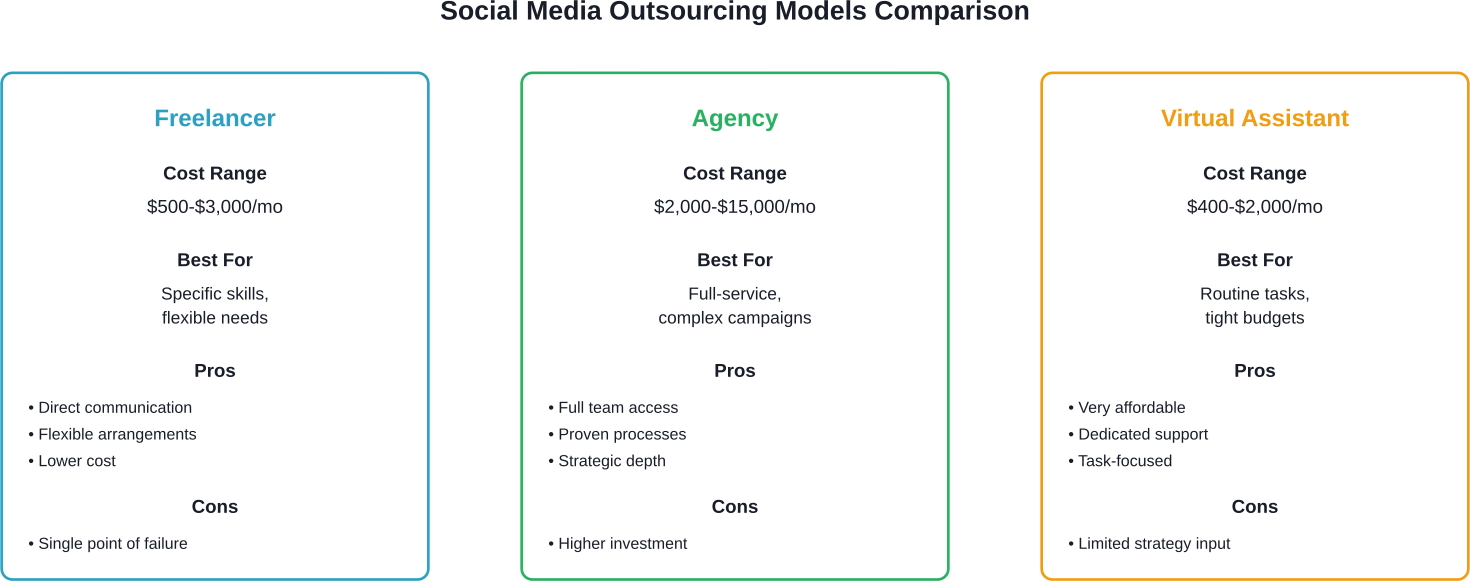
Freelancers offer flexibility and direct communication. Budget ranges typically fall between $500-$3,000 monthly depending on scope and expertise level.
The main advantage is personalized attention. A skilled freelancer becomes familiar with your brand voice and can operate with minimal oversight once properly onboarded. Communication happens directly without middlemen or account managers filtering messages.
The downside? You're relying on a single person. If they get sick, take vacation, or decide to reduce their client load, you're scrambling. There's also limited scalability—a freelancer can only handle so much volume.
Social Media Agencies
Agencies provide full teams with specialized roles: strategists, content creators, designers, copywriters, and analysts. This model suits businesses needing comprehensive coverage across multiple platforms or complex campaigns.
Pricing reflects the team approach. Agencies typically charge $2,000-$5,000 monthly for small businesses, while larger enterprises with multi-platform needs often spend $5,000-$15,000 or more.
Agencies bring proven systems and cross-client insights. They've likely solved problems similar to yours and can apply those lessons immediately. The team structure also eliminates single-point-of-failure risks.
The tradeoff involves higher costs and sometimes slower communication through account managers rather than direct creator contact.
Virtual Assistants
Virtual assistants handle tactical execution: scheduling pre-approved content, basic community management, and routine reporting. This model works when strategy and content creation happen internally but publishing and monitoring need coverage.
Costs run lower—often $400-$2,000 monthly—because responsibilities focus on task completion rather than strategic thinking. Community discussions suggest this approach works well for businesses with tight budgets who can provide detailed guidelines and ready-made content.
Virtual assistants typically won't develop content strategies or create original graphics. They execute what's provided, which means internal teams still shoulder creative and strategic loads.
What Tasks Should Actually Be Outsourced
Not every social media function makes sense to hand off. The smartest delegation balances efficiency gains against maintaining brand authenticity.
High-Value Outsourcing Candidates
Content creation sits at the top. Graphic design, video editing, and even copywriting can be outsourced effectively when guided by clear brand standards. These tasks are time-intensive but don't necessarily require deep institutional knowledge once templates and voice guidelines exist.
Scheduling and publishing are perfect outsourcing targets. Once content receives approval, posting it at optimal times is pure execution—valuable but not strategic.
Analytics reporting often makes the list too. Compiling metrics, identifying trends, and creating reports takes hours but follows predictable patterns. Outsourced specialists can deliver cleaner, more comprehensive reports than time-pressed internal teams.
Community management represents a gray area. Responding to straightforward comments and questions can be outsourced with proper guidelines. But sensitive issues, complaints, or nuanced inquiries often require internal handling.
What Should Stay In-House
Strategy development benefits from internal oversight. Understanding business goals, competitive positioning, and long-term vision requires context that external providers struggle to replicate, especially initially.
Real talk: your outsourced team can propose strategic ideas—and should—but final strategic decisions work best when internal stakeholders maintain control.
Crisis management absolutely stays internal. When things go wrong publicly, responses need to come from people with direct authority and full context. The risk of an outsourced provider saying the wrong thing during a crisis far outweighs any convenience.
Authentic engagement in industry conversations often works better internally too. When your CEO comments on a LinkedIn industry discussion or your founder shares personal insights, that authenticity can't be fully replicated by external creators.
Calculating Social Media Outsourcing Costs
Budget expectations need to align with scope. The cost of outsourcing social media management varies widely based on several factors.
Several variables influence final pricing. Platform count matters—managing Instagram alone costs less than handling Instagram, LinkedIn, Twitter, Facebook, and TikTok simultaneously. Content complexity affects pricing too. Static graphics cost less than custom video production or animation.
Posting frequency directly impacts costs. Three posts weekly requires less investment than daily content across multiple platforms. Community management adds expense, especially for brands with active audiences requiring constant engagement.
Here's the thing though—cheaper isn't always better. A $500/month package might sound appealing, but if it delivers generic content that doesn't resonate, you're wasting $500. Better to invest $2,000 in quality that actually drives engagement than chase rock-bottom pricing.
How to Choose the Right Social Media Outsourcing Partner
Vetting potential providers requires more than reviewing their portfolio. Chemistry matters because these people represent your brand voice.
Define Your Needs First
Before talking to providers, document what success looks like. Which platforms matter most? What business goals should social media support—brand awareness, lead generation, customer retention, community building?
Write down your budget range. $500 monthly delivers different results than $5,000 monthly, and being upfront about financial constraints saves everyone time.
Identify which tasks need coverage versus which should stay internal. This clarity prevents scope creep and misaligned expectations later.
Evaluate Their Industry Understanding
Providers don't need to specialize exclusively in your industry, but they should demonstrate willingness to learn your space. Ask about their research process. How do they get up to speed on unfamiliar industries?
Review samples of their work across different industries. Do they adapt tone and style, or does everything sound the same? Generic content factories churn out identical-sounding posts regardless of client—that's a red flag.
Test Communication and Responsiveness
Pay attention to how potential providers communicate during the sales process. Slow responses, vague answers, or pushy sales tactics during courtship won't improve after signing contracts.
Ask about their revision process. How do they handle feedback? How many rounds of revisions are included? What happens when content misses the mark?
Request a trial period or pilot project before committing to long-term contracts. A one-month trial reveals whether their work quality and communication style actually fit.
Check References and Results
Case studies and portfolio samples matter, but references matter more. Talk to current or former clients about responsiveness, quality consistency, and whether the provider delivered promised results.
Ask specific questions: Did engagement rates improve? Did the provider meet deadlines? How did they handle mistakes or miscommunications?
Look for providers who can demonstrate measurable impact beyond vanity metrics. Anyone can boost follower counts. Fewer can show how social media contributed to actual business outcomes.
Setting Up Your Outsourced Social Media for Success
Even the best outsourcing partner needs proper setup to deliver results. The foundation you build determines whether this relationship succeeds or becomes a micromanagement nightmare.
Create a Comprehensive Brand Voice Guide
Your brand voice guide should answer: How does the brand sound? What personality traits should come through? What topics are on-brand versus off-limits?
Include specific examples. Show posts that nail your voice and posts that miss it. Provide do's and don'ts with concrete illustrations rather than abstract descriptions.
Define your audience clearly. Who are you talking to? What do they care about? What problems keep them up at night? The more context you provide, the better your outsourced team can create resonant content.
Establish Clear Approval Workflows
Decide how content approval will work. Does everything need sign-off before publishing, or can certain post types go live with spot-checking?
Tighter approval processes provide more control but create bottlenecks. If you're approving every single post, you're not really saving much time. Looser processes require trusting your provider but enable faster execution.
Many businesses start with full approval, then gradually loosen controls as trust builds and the outsourced team demonstrates understanding of brand voice.
Define Success Metrics Upfront
According to HubSpot data, 43.6% of marketers report generating leads as their goal, while 33.7% say direct customer purchase is their top priority. Whatever your goal, communicate it clearly.
Vanity metrics like follower counts or total impressions might make reports look good but don't necessarily drive business value. Focus on metrics tied to actual goals: engagement rates, click-throughs, conversions, or qualified leads depending on objectives.
Set realistic benchmarks. Social media rarely delivers overnight results. Give strategies at least 60-90 days before making major directional changes.
Provide Access to Necessary Tools and Information
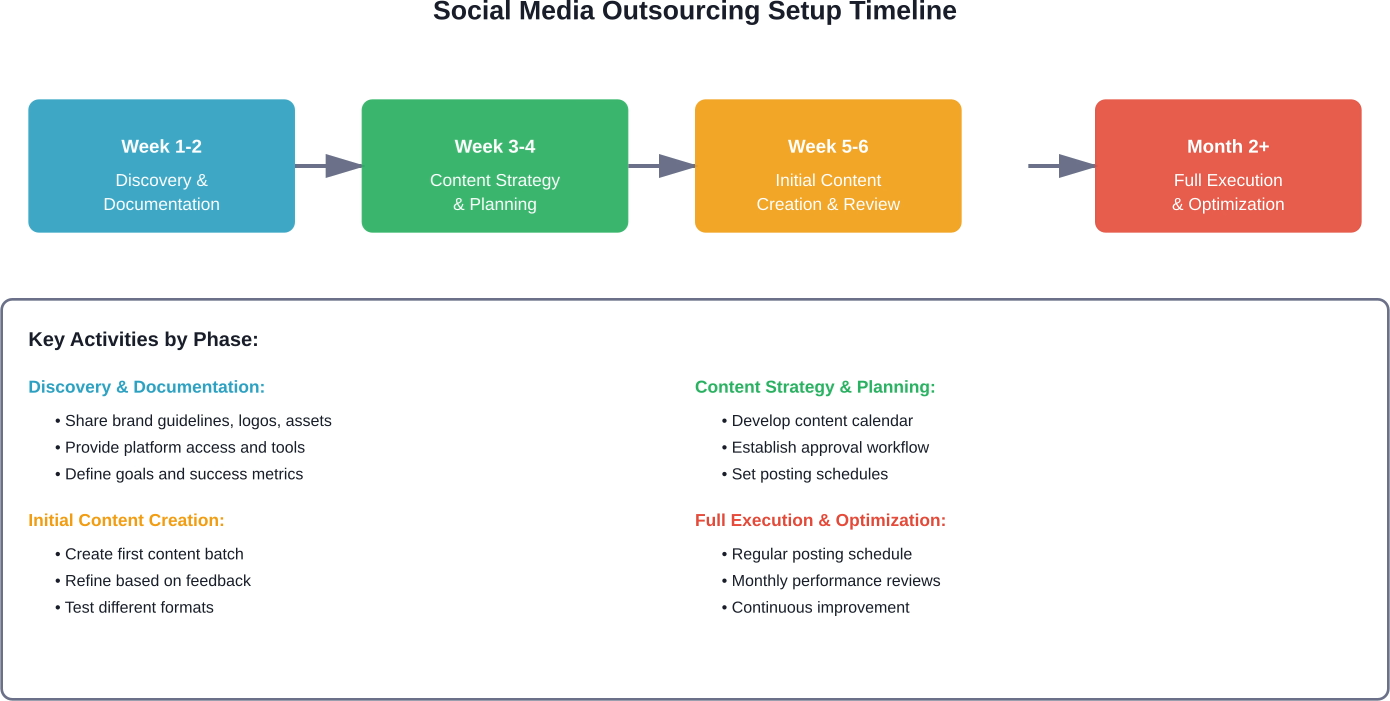
Your outsourced team needs access to relevant tools: social media scheduling platforms, design software, analytics dashboards, and any project management systems you use.
Share login credentials securely. Use password managers or admin access features rather than sharing passwords via email or text.
Give them access to brand assets: logo files, color codes, font specifications, product images, and any existing content libraries. The easier you make it for them to find what they need, the faster they'll produce quality work.

Ready for Consistent Social Media Results? Hire Through NeoWork
If your social media efforts feel fragmented or inconsistent, NeoWork offers a more structured approach. They place dedicated social media managers from the Philippines or Colombia who work as part of your team, handling content scheduling, engagement, reporting, and day to day platform management across major networks. Instead of rotating freelancers, you get consistent support aligned with your brand voice and goals.
Their model is built for stability and quality. NeoWork reports a 91% annualized teammate retention rate, which means you are not constantly retraining new hires. They also operate with a 3.2% candidate selectivity rate, focusing on carefully vetted professionals rather than volume hiring. NeoWork manages recruiting, vetting, onboarding, and ongoing support, so you can focus on strategy while your social channels stay active and organized.
Book a call with NeoWork and map out your dedicated social media support.
Common Mistakes to Avoid When Outsourcing Social Media
Several predictable pitfalls trip up businesses new to social media outsourcing. Awareness helps avoid them.
Insufficient Onboarding
Rushing through setup because you're eager to see results creates problems downstream. Spend time upfront ensuring your provider truly understands your brand, audience, and goals.
The first month should feel slightly slow as everyone gets aligned. That's normal. Trying to accelerate too quickly leads to off-brand content requiring extensive revisions.
Micromanaging Every Detail
If you're approving every word of every caption and requesting changes to every graphic, you haven't actually outsourced anything. You've just added coordination overhead to your workload.
Trust the expertise you're paying for. Provide clear guidelines, then give your provider room to execute. Spot-check quality rather than scrutinizing every detail.
Expecting Instant Results
Social media growth happens gradually. Algorithm favor, audience building, and engagement development take time—usually months, not weeks.
Research shows that improved conversion rates come from sustained effort, not overnight changes.
Set realistic timelines. Evaluate progress quarterly rather than panicking over week-to-week fluctuations.
Failing to Communicate Changes
When your business launches new products, changes messaging, or pivots strategy, tell your outsourced team immediately. They can't represent your brand accurately if they're working with outdated information.
Regular communication prevents disconnects. Monthly check-ins work for most relationships, with ad-hoc updates as needed for time-sensitive changes.
Red Flags When Evaluating Providers
Certain warning signs suggest a provider might not deliver quality results:
- Guaranteed follower counts or engagement numbers: Legitimate providers can't guarantee specific growth numbers because too many variables exist outside their control. Anyone promising "10,000 followers in 30 days" is likely using questionable tactics.
- Unwillingness to provide references: Established providers should have satisfied clients willing to vouch for their work. Reluctance to connect you with references suggests problems.
- One-size-fits-all packages: Every business has unique needs. Providers offering identical packages to all clients regardless of industry or goals aren't customizing their approach.
- Poor communication during sales: If they're hard to reach or slow to respond while trying to earn your business, expect worse communication after contracts are signed.
- No clear reporting structure: Quality providers outline exactly what metrics they'll track and how often they'll report. Vagueness about measurement suggests they don't prioritize results.
Maintaining Quality Control
Outsourcing doesn't mean abandoning oversight. Smart quality control balances efficiency with brand protection.
Regular content audits help catch drift before it becomes problematic. Monthly reviews of published content ensure everything stays on-brand and aligned with guidelines.
Audience feedback provides valuable quality signals. Monitor comments, direct messages, and engagement patterns. If audience response changes noticeably after outsourcing begins, investigate whether content adjustments are needed.
Periodic brand voice checks ensure your outsourced content still sounds authentically like your brand. Ask colleagues unfamiliar with your social media operations to review recent posts. Can they tell which were created internally versus outsourced? If outsourced content feels obviously different, recalibration is needed.
When to Bring Social Media Back In-House
Outsourcing isn't always permanent. Several situations suggest bringing social media management back internally might make sense.
If your business grows to the point where social media becomes central to revenue generation, having direct control often matters more than the convenience of outsourcing. Companies where social drives significant sales or leads frequently hire in-house specialists.
Persistent quality issues that don't improve despite feedback and adjustments signal a mismatch. Rather than cycling through multiple providers, bringing the function in-house might deliver better results.
Strategic shifts requiring deep integration between social media and other marketing functions sometimes work better with internal coordination. If social needs to tightly align with product launches, events, or campaigns, in-house management simplifies coordination.
Budget changes matter too. If hiring a full-time social media manager becomes financially feasible and makes strategic sense, that employee brings benefits outsourcing can't match: full-time availability, deep brand knowledge, and seamless internal collaboration.
Making Social Media Outsourcing Work for Your Business
Social media management outsourcing isn't about completely washing your hands of social media. It's about intelligently delegating the time-intensive tactical work so internal teams can focus on strategy, core business operations, and activities that truly require in-house expertise.
The businesses that succeed with outsourcing share common traits. They invest time in proper setup rather than rushing into execution. They communicate clearly about expectations, brand voice, and goals. They trust the expertise they're paying for while maintaining appropriate oversight.
They also remain flexible. The right outsourcing model today might not be the right model two years from now. Business needs evolve, budgets change, and strategic priorities shift. The smartest approach treats outsourcing decisions as ongoing rather than permanent.
Start small if you're uncertain. Outsource a single platform or specific tasks like content creation while keeping strategy and community management internal. Evaluate results over 90 days. Expand scope if it's working or adjust the approach if it's not.
Outsourcing allows businesses to trust important tasks to professionals without significantly expanding full-time teams. That principle applies perfectly to social media—get expert execution without the overhead of full-time salaries and benefits.
Social media matters too much to ignore and demands too much time to handle carelessly. Outsourcing offers a middle path: professional management without the commitment and expense of building an entire in-house team.
Ready to explore outsourcing options? Document your current social media goals, identify which tasks drain the most internal resources, and determine a realistic budget. Those three pieces of information will help any conversation with potential providers start productively.
Your customers are already scrolling. The question isn't whether to show up—it's how to show up consistently without burning out your team. For many businesses, outsourcing provides the answer.
Frequently Asked Questions
Topics
Social Media Outsourcing Guide 2026: What to Delegate

Social media management outsourcing lets businesses delegate content creation, posting, engagement, and analytics to external professionals—whether freelancers, agencies, or virtual assistants. Costs typically range from $500-$3,000 monthly for small businesses and $5,000-$15,000 for larger enterprises, with benefits including time savings, access to expertise, and consistent posting schedules. Success requires clear brand guidelines, defined goals, proper vetting of providers, and maintaining oversight of quality and messaging.
Social media isn't optional anymore. Your customers scroll Instagram during lunch breaks, check LinkedIn between meetings, and browse TikTok before bed. If your brand isn't showing up consistently, you're invisible.
The problem? Managing social media properly eats up serious hours. Content creation, scheduling, engagement, analytics tracking—it all compounds. For many businesses, hiring a full-time in-house social media manager isn't financially realistic. According to Payscale data, in-house social media managers command salaries ranging from $40k to $88k, with an average of $60,348.
That's where outsourcing enters the picture. But handing over your brand's voice to someone external feels risky. What should actually be outsourced? How much does it cost? And how do you avoid the nightmare scenarios where outsourced content misses the mark entirely?
This guide breaks down everything worth knowing about social media management outsourcing—what works, what doesn't, and how to set things up so you're not constantly micromanaging every post.
What Social Media Management Outsourcing Actually Means
Social media management outsourcing means delegating some or all social media responsibilities to external professionals rather than handling everything in-house. These tasks might include content creation, post scheduling, community engagement, analytics reporting, or overall strategy development.
The outsourcing arrangement can take different forms. Some businesses hand off only tactical execution while keeping strategy internal. Others outsource the entire function—from planning to posting to responding to comments.
Here's what typically falls under social media management:
- Content creation (graphics, videos, captions)
- Editorial calendar planning
- Post scheduling and publishing
- Community management (responding to comments and messages)
- Social listening and monitoring
- Performance analytics and reporting
- Paid social advertising
- Influencer coordination
Not everything on that list needs to be outsourced. The smartest approach involves identifying which tasks drain internal resources without requiring deep institutional knowledge, then delegating those first.
Why Businesses Outsource Social Media
Time constraints top the list of reasons. Social media done right requires consistent attention—something most business owners and marketing teams struggle to provide while juggling other priorities.
According to HubSpot's 2026 State of Marketing report surveying over 1,500 global marketers, professionals continue facing challenges with burnout and keeping up with platform changes. The report identifies using AI to create personalized content (48.57%) and leveraging automation (47.38%) as top marketing trends—both of which outsourced social media professionals often handle more effectively than time-strapped internal teams.
But time isn't the only factor. Expertise matters too.
Social platforms evolve constantly. Algorithm changes, new content formats, shifting best practices—staying current requires dedicated focus. Specialized agencies and freelancers who work across multiple clients often spot emerging trends faster than in-house teams managing one brand.
The U.S. Small Business Administration notes that more than a third of small businesses currently outsource at least some operations. The global market for outsourced IT services is valued at approximately over $500 billion in recent years.Social media follows similar logic: access specialized skills without expanding full-time headcount.
The Real Cost of Inconsistent Social Media
Inconsistent posting damages brand perception more than many realize. When potential customers visit your Instagram or LinkedIn and see sporadic activity with weeks-long gaps, it signals disorganization or neglect.
A 2018 survey revealed that 92% of financial advisors in the United States acquired new clients through social media activities. For industries where trust and credibility drive decisions, maintaining a strong and consistent online presence directly impacts revenue.
Sound familiar? You start strong in January, posting daily. By March, it's twice weekly. By June, you're posting whenever something feels urgent. That pattern creates the exact opposite of what effective social media requires: predictable, reliable presence.
Three Main Outsourcing Models
Understanding your options helps match the right solution to your budget and needs. The three primary models each have distinct advantages and limitations.
Freelance Social Media Managers
Freelancers offer flexibility and direct communication. Budget ranges typically fall between $500-$3,000 monthly depending on scope and expertise level.
The main advantage is personalized attention. A skilled freelancer becomes familiar with your brand voice and can operate with minimal oversight once properly onboarded. Communication happens directly without middlemen or account managers filtering messages.
The downside? You're relying on a single person. If they get sick, take vacation, or decide to reduce their client load, you're scrambling. There's also limited scalability—a freelancer can only handle so much volume.
Social Media Agencies
Agencies provide full teams with specialized roles: strategists, content creators, designers, copywriters, and analysts. This model suits businesses needing comprehensive coverage across multiple platforms or complex campaigns.
Pricing reflects the team approach. Agencies typically charge $2,000-$5,000 monthly for small businesses, while larger enterprises with multi-platform needs often spend $5,000-$15,000 or more.
Agencies bring proven systems and cross-client insights. They've likely solved problems similar to yours and can apply those lessons immediately. The team structure also eliminates single-point-of-failure risks.
The tradeoff involves higher costs and sometimes slower communication through account managers rather than direct creator contact.
Virtual Assistants
Virtual assistants handle tactical execution: scheduling pre-approved content, basic community management, and routine reporting. This model works when strategy and content creation happen internally but publishing and monitoring need coverage.
Costs run lower—often $400-$2,000 monthly—because responsibilities focus on task completion rather than strategic thinking. Community discussions suggest this approach works well for businesses with tight budgets who can provide detailed guidelines and ready-made content.
Virtual assistants typically won't develop content strategies or create original graphics. They execute what's provided, which means internal teams still shoulder creative and strategic loads.
What Tasks Should Actually Be Outsourced
Not every social media function makes sense to hand off. The smartest delegation balances efficiency gains against maintaining brand authenticity.
High-Value Outsourcing Candidates
Content creation sits at the top. Graphic design, video editing, and even copywriting can be outsourced effectively when guided by clear brand standards. These tasks are time-intensive but don't necessarily require deep institutional knowledge once templates and voice guidelines exist.
Scheduling and publishing are perfect outsourcing targets. Once content receives approval, posting it at optimal times is pure execution—valuable but not strategic.
Analytics reporting often makes the list too. Compiling metrics, identifying trends, and creating reports takes hours but follows predictable patterns. Outsourced specialists can deliver cleaner, more comprehensive reports than time-pressed internal teams.
Community management represents a gray area. Responding to straightforward comments and questions can be outsourced with proper guidelines. But sensitive issues, complaints, or nuanced inquiries often require internal handling.
What Should Stay In-House
Strategy development benefits from internal oversight. Understanding business goals, competitive positioning, and long-term vision requires context that external providers struggle to replicate, especially initially.
Real talk: your outsourced team can propose strategic ideas—and should—but final strategic decisions work best when internal stakeholders maintain control.
Crisis management absolutely stays internal. When things go wrong publicly, responses need to come from people with direct authority and full context. The risk of an outsourced provider saying the wrong thing during a crisis far outweighs any convenience.
Authentic engagement in industry conversations often works better internally too. When your CEO comments on a LinkedIn industry discussion or your founder shares personal insights, that authenticity can't be fully replicated by external creators.
Calculating Social Media Outsourcing Costs
Budget expectations need to align with scope. The cost of outsourcing social media management varies widely based on several factors.
Several variables influence final pricing. Platform count matters—managing Instagram alone costs less than handling Instagram, LinkedIn, Twitter, Facebook, and TikTok simultaneously. Content complexity affects pricing too. Static graphics cost less than custom video production or animation.
Posting frequency directly impacts costs. Three posts weekly requires less investment than daily content across multiple platforms. Community management adds expense, especially for brands with active audiences requiring constant engagement.
Here's the thing though—cheaper isn't always better. A $500/month package might sound appealing, but if it delivers generic content that doesn't resonate, you're wasting $500. Better to invest $2,000 in quality that actually drives engagement than chase rock-bottom pricing.
How to Choose the Right Social Media Outsourcing Partner
Vetting potential providers requires more than reviewing their portfolio. Chemistry matters because these people represent your brand voice.
Define Your Needs First
Before talking to providers, document what success looks like. Which platforms matter most? What business goals should social media support—brand awareness, lead generation, customer retention, community building?
Write down your budget range. $500 monthly delivers different results than $5,000 monthly, and being upfront about financial constraints saves everyone time.
Identify which tasks need coverage versus which should stay internal. This clarity prevents scope creep and misaligned expectations later.
Evaluate Their Industry Understanding
Providers don't need to specialize exclusively in your industry, but they should demonstrate willingness to learn your space. Ask about their research process. How do they get up to speed on unfamiliar industries?
Review samples of their work across different industries. Do they adapt tone and style, or does everything sound the same? Generic content factories churn out identical-sounding posts regardless of client—that's a red flag.
Test Communication and Responsiveness
Pay attention to how potential providers communicate during the sales process. Slow responses, vague answers, or pushy sales tactics during courtship won't improve after signing contracts.
Ask about their revision process. How do they handle feedback? How many rounds of revisions are included? What happens when content misses the mark?
Request a trial period or pilot project before committing to long-term contracts. A one-month trial reveals whether their work quality and communication style actually fit.
Check References and Results
Case studies and portfolio samples matter, but references matter more. Talk to current or former clients about responsiveness, quality consistency, and whether the provider delivered promised results.
Ask specific questions: Did engagement rates improve? Did the provider meet deadlines? How did they handle mistakes or miscommunications?
Look for providers who can demonstrate measurable impact beyond vanity metrics. Anyone can boost follower counts. Fewer can show how social media contributed to actual business outcomes.
Setting Up Your Outsourced Social Media for Success
Even the best outsourcing partner needs proper setup to deliver results. The foundation you build determines whether this relationship succeeds or becomes a micromanagement nightmare.
Create a Comprehensive Brand Voice Guide
Your brand voice guide should answer: How does the brand sound? What personality traits should come through? What topics are on-brand versus off-limits?
Include specific examples. Show posts that nail your voice and posts that miss it. Provide do's and don'ts with concrete illustrations rather than abstract descriptions.
Define your audience clearly. Who are you talking to? What do they care about? What problems keep them up at night? The more context you provide, the better your outsourced team can create resonant content.
Establish Clear Approval Workflows
Decide how content approval will work. Does everything need sign-off before publishing, or can certain post types go live with spot-checking?
Tighter approval processes provide more control but create bottlenecks. If you're approving every single post, you're not really saving much time. Looser processes require trusting your provider but enable faster execution.
Many businesses start with full approval, then gradually loosen controls as trust builds and the outsourced team demonstrates understanding of brand voice.
Define Success Metrics Upfront
According to HubSpot data, 43.6% of marketers report generating leads as their goal, while 33.7% say direct customer purchase is their top priority. Whatever your goal, communicate it clearly.
Vanity metrics like follower counts or total impressions might make reports look good but don't necessarily drive business value. Focus on metrics tied to actual goals: engagement rates, click-throughs, conversions, or qualified leads depending on objectives.
Set realistic benchmarks. Social media rarely delivers overnight results. Give strategies at least 60-90 days before making major directional changes.
Provide Access to Necessary Tools and Information
Your outsourced team needs access to relevant tools: social media scheduling platforms, design software, analytics dashboards, and any project management systems you use.
Share login credentials securely. Use password managers or admin access features rather than sharing passwords via email or text.
Give them access to brand assets: logo files, color codes, font specifications, product images, and any existing content libraries. The easier you make it for them to find what they need, the faster they'll produce quality work.
Ready for Consistent Social Media Results? Hire Through NeoWork
If your social media efforts feel fragmented or inconsistent, NeoWork offers a more structured approach. They place dedicated social media managers from the Philippines or Colombia who work as part of your team, handling content scheduling, engagement, reporting, and day to day platform management across major networks. Instead of rotating freelancers, you get consistent support aligned with your brand voice and goals.
Their model is built for stability and quality. NeoWork reports a 91% annualized teammate retention rate, which means you are not constantly retraining new hires. They also operate with a 3.2% candidate selectivity rate, focusing on carefully vetted professionals rather than volume hiring. NeoWork manages recruiting, vetting, onboarding, and ongoing support, so you can focus on strategy while your social channels stay active and organized.
Book a call with NeoWork and map out your dedicated social media support.
Common Mistakes to Avoid When Outsourcing Social Media
Several predictable pitfalls trip up businesses new to social media outsourcing. Awareness helps avoid them.
Insufficient Onboarding
Rushing through setup because you're eager to see results creates problems downstream. Spend time upfront ensuring your provider truly understands your brand, audience, and goals.
The first month should feel slightly slow as everyone gets aligned. That's normal. Trying to accelerate too quickly leads to off-brand content requiring extensive revisions.
Micromanaging Every Detail
If you're approving every word of every caption and requesting changes to every graphic, you haven't actually outsourced anything. You've just added coordination overhead to your workload.
Trust the expertise you're paying for. Provide clear guidelines, then give your provider room to execute. Spot-check quality rather than scrutinizing every detail.
Expecting Instant Results
Social media growth happens gradually. Algorithm favor, audience building, and engagement development take time—usually months, not weeks.
Research shows that improved conversion rates come from sustained effort, not overnight changes.
Set realistic timelines. Evaluate progress quarterly rather than panicking over week-to-week fluctuations.
Failing to Communicate Changes
When your business launches new products, changes messaging, or pivots strategy, tell your outsourced team immediately. They can't represent your brand accurately if they're working with outdated information.
Regular communication prevents disconnects. Monthly check-ins work for most relationships, with ad-hoc updates as needed for time-sensitive changes.
Red Flags When Evaluating Providers
Certain warning signs suggest a provider might not deliver quality results:
- Guaranteed follower counts or engagement numbers: Legitimate providers can't guarantee specific growth numbers because too many variables exist outside their control. Anyone promising "10,000 followers in 30 days" is likely using questionable tactics.
- Unwillingness to provide references: Established providers should have satisfied clients willing to vouch for their work. Reluctance to connect you with references suggests problems.
- One-size-fits-all packages: Every business has unique needs. Providers offering identical packages to all clients regardless of industry or goals aren't customizing their approach.
- Poor communication during sales: If they're hard to reach or slow to respond while trying to earn your business, expect worse communication after contracts are signed.
- No clear reporting structure: Quality providers outline exactly what metrics they'll track and how often they'll report. Vagueness about measurement suggests they don't prioritize results.
Maintaining Quality Control
Outsourcing doesn't mean abandoning oversight. Smart quality control balances efficiency with brand protection.
Regular content audits help catch drift before it becomes problematic. Monthly reviews of published content ensure everything stays on-brand and aligned with guidelines.
Audience feedback provides valuable quality signals. Monitor comments, direct messages, and engagement patterns. If audience response changes noticeably after outsourcing begins, investigate whether content adjustments are needed.
Periodic brand voice checks ensure your outsourced content still sounds authentically like your brand. Ask colleagues unfamiliar with your social media operations to review recent posts. Can they tell which were created internally versus outsourced? If outsourced content feels obviously different, recalibration is needed.
When to Bring Social Media Back In-House
Outsourcing isn't always permanent. Several situations suggest bringing social media management back internally might make sense.
If your business grows to the point where social media becomes central to revenue generation, having direct control often matters more than the convenience of outsourcing. Companies where social drives significant sales or leads frequently hire in-house specialists.
Persistent quality issues that don't improve despite feedback and adjustments signal a mismatch. Rather than cycling through multiple providers, bringing the function in-house might deliver better results.
Strategic shifts requiring deep integration between social media and other marketing functions sometimes work better with internal coordination. If social needs to tightly align with product launches, events, or campaigns, in-house management simplifies coordination.
Budget changes matter too. If hiring a full-time social media manager becomes financially feasible and makes strategic sense, that employee brings benefits outsourcing can't match: full-time availability, deep brand knowledge, and seamless internal collaboration.
Making Social Media Outsourcing Work for Your Business
Social media management outsourcing isn't about completely washing your hands of social media. It's about intelligently delegating the time-intensive tactical work so internal teams can focus on strategy, core business operations, and activities that truly require in-house expertise.
The businesses that succeed with outsourcing share common traits. They invest time in proper setup rather than rushing into execution. They communicate clearly about expectations, brand voice, and goals. They trust the expertise they're paying for while maintaining appropriate oversight.
They also remain flexible. The right outsourcing model today might not be the right model two years from now. Business needs evolve, budgets change, and strategic priorities shift. The smartest approach treats outsourcing decisions as ongoing rather than permanent.
Start small if you're uncertain. Outsource a single platform or specific tasks like content creation while keeping strategy and community management internal. Evaluate results over 90 days. Expand scope if it's working or adjust the approach if it's not.
Outsourcing allows businesses to trust important tasks to professionals without significantly expanding full-time teams. That principle applies perfectly to social media—get expert execution without the overhead of full-time salaries and benefits.
Social media matters too much to ignore and demands too much time to handle carelessly. Outsourcing offers a middle path: professional management without the commitment and expense of building an entire in-house team.
Ready to explore outsourcing options? Document your current social media goals, identify which tasks drain the most internal resources, and determine a realistic budget. Those three pieces of information will help any conversation with potential providers start productively.
Your customers are already scrolling. The question isn't whether to show up—it's how to show up consistently without burning out your team. For many businesses, outsourcing provides the answer.
Frequently Asked Questions
Topics
Related Blogs
Related Podcasts