

.avif)
.avif)

Social Media Outsourcing Guide: 2026 Strategies & Steps


.svg)

Social media outsourcing involves hiring external specialists or agencies to manage your brand's social media presence, from content creation to community engagement. This guide covers when to outsource, how to choose the right partner, what tasks to delegate, and how to measure success while maintaining brand consistency.
Social media has become non-negotiable for business growth. But here's the reality: managing multiple platforms, creating consistent content, and engaging with audiences requires serious time and expertise that most internal teams simply don't have.
That's where outsourcing comes in. Rather than stretching thin resources across platforms or hiring full-time specialists, businesses increasingly turn to external partners who live and breathe social media. The approach isn't just about offloading work—it's about accessing specialized skills, scaling efficiently, and maintaining competitive presence without burning through budgets.
This guide breaks down everything needed to make social media outsourcing work. Whether considering agencies, freelancers, or specialized firms, the following sections cover decision frameworks, selection criteria, and practical implementation steps.
What Social Media Outsourcing Actually Means
Social media outsourcing means delegating some or all social media responsibilities to external specialists. These might be agencies, freelance social media managers, content creators, or dedicated marketing firms.
The scope varies wildly. Some businesses outsource everything—strategy development, content creation, posting schedules, community management, and analytics reporting. Others keep strategy in-house but delegate execution tasks like graphic design, video editing, or daily posting.
What matters is finding the right balance between control and delegation. Complete outsourcing works for businesses that lack internal expertise entirely. Partial outsourcing suits teams that have strategic direction but need execution support.
Why Businesses Outsource Social Media Management
The decision to outsource rarely comes from a single pain point. Instead, multiple factors converge until external support becomes the logical path forward.
Time Constraints Hit First
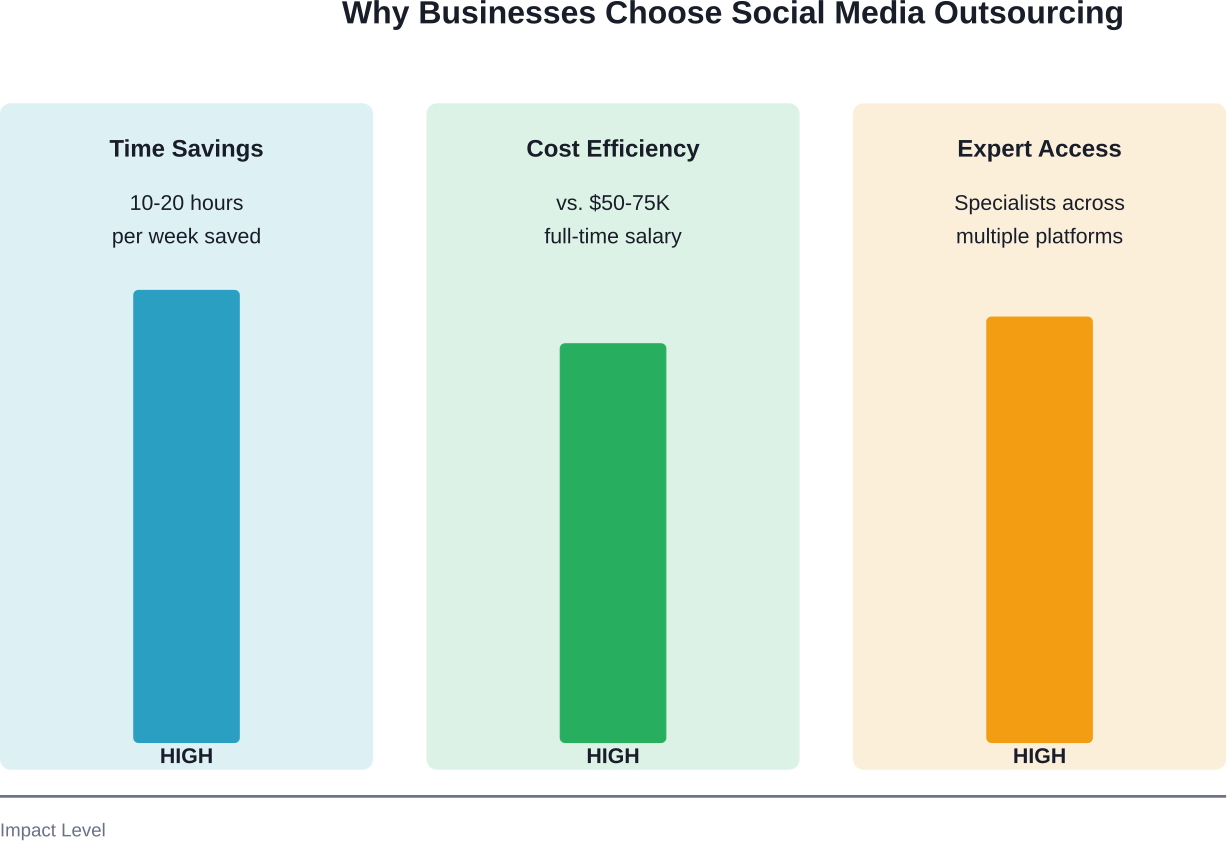
Effective social media requires 10-20 hours weekly for multi-platform presence. That's not casual scrolling—it's content planning, creation, scheduling, engagement, and analysis. Business owners and small marketing teams can't sustain this alongside core responsibilities.
When social media becomes reactive rather than strategic, it's a red flag. Posting sporadically or ignoring comments damages brand perception faster than having no presence at all.
Expertise Gaps Become Obvious
Social platforms evolve constantly. Algorithm changes, new features, shifting content formats—staying current requires dedicated attention. What worked six months ago might be obsolete now.
Agencies and specialists invest in staying ahead of these changes. They test new features, analyze performance patterns across client accounts, and adapt strategies based on real-time data. Internal teams rarely have bandwidth for this level of ongoing education.
Cost Efficiency Makes Sense
Hiring full-time social media staff means salaries, benefits, training, and tools. A competent social media manager typically costs $50,000-$75,000 annually in salary, before considering software subscriptions, design tools, and ongoing training.
Outsourcing converts fixed costs to variable ones. Scale up during product launches or campaigns, scale down during quieter periods. This flexibility particularly benefits small businesses with unpredictable budgets.
Scalability Requirements Emerge
Growing brands face increasing social media demands. More platforms, more content, more audience interactions. Building internal capacity to match growth takes time—recruiting, training, establishing workflows.
External partners scale immediately. Need to launch on TikTok? They have creators ready. Expanding to international markets? They have multilingual teams. The UK social commerce market is projected to double from £7.4 billion in 2024 to £16 billion by 2028, reflecting how brands leverage outsourced support to capture emerging opportunities.
Consistent Coverage Becomes Critical
Social media doesn't respect business hours or holidays. Audiences engage around the clock, across time zones. Questions come in at midnight. Crises erupt on weekends.
Outsourced teams provide 24/7 coverage without overtime costs. They monitor brand mentions, respond to inquiries, and flag urgent issues regardless of local time. This consistent presence builds trust and responsiveness that part-time internal efforts can't match.
Tasks Worth Outsourcing vs. Keeping In-House
Not everything should be outsourced. Strategic decisions that define brand identity typically stay internal. Execution tasks that require specialized skills or significant time investment become prime outsourcing candidates.
Prime Outsourcing Candidates
Content creation tops the list. Graphic design, video production, copywriting, and editing require specific skills that most businesses don't need full-time. Outsourcing provides access to professional creators without permanent headcount.
Daily posting and scheduling becomes tedious when managing multiple platforms. External teams handle posting calendars, optimal timing research, and cross-platform adaptation. They ensure consistent presence without internal staff checking phones constantly.
Community management demands quick responses and consistent tone. Answering questions, addressing complaints, and engaging with followers requires dedicated attention. Outsourced community managers maintain brand voice while providing timely interactions.
Analytics and reporting benefit from external perspective. Agencies analyze performance across client portfolios, spotting trends and opportunities that single-account managers miss. They deliver actionable insights rather than raw data dumps.
What Typically Stays Internal
Brand strategy and positioning remain internal decisions. Nobody understands company values, unique selling propositions, and long-term vision better than internal leadership. External partners execute strategy—they don't define it.
Crisis management requires immediate access to decision-makers. When reputation issues emerge, responses need internal approval. Outsourced teams can monitor and flag problems, but final messaging comes from leadership.
Authentic behind-the-scenes content works best when created internally. Employee spotlights, office culture posts, and spontaneous updates capture genuine brand personality that external teams struggle to replicate.
Choosing Between Agencies, Freelancers, and Specialized Firms
Three main outsourcing models exist, each with distinct advantages. The right choice depends on budget, scope, and desired involvement level.
Full-Service Social Media Agencies
Agencies provide comprehensive solutions—strategy, execution, reporting, and optimization. They assign account teams with diverse skills: strategists, designers, copywriters, and analysts.
The advantage? Integrated expertise under one contract. The challenge? Higher costs and less flexibility. Agencies work best for brands needing complete social media overhauls or managing complex multi-platform campaigns.
Monthly retainers for small businesses typically start around $1,000-$2,000 for basic management, with comprehensive services ranging $5,000-$15,000+. Most agencies require minimum commitments—typically 3-6 months.
Specialized Freelancers
Freelancers offer targeted expertise at lower price points. Hire a content creator for graphics, a separate writer for copy, and a community manager for engagement. This modular approach provides flexibility and cost control.
But coordination becomes the internal team's responsibility. Managing multiple freelancers, ensuring consistency, and integrating work takes time. This model suits businesses with internal project management capacity who need specific skill gaps filled.
Freelance rates vary widely depending on experience and specialization. Project-based pricing can range from $500 for monthly content packages to $5,000+ for comprehensive campaigns.
Dedicated Social Media Management Platforms
Hybrid platforms combine technology with human expertise. They provide management software plus access to vetted content creators, strategists, and analysts through marketplace models.
These platforms balance cost and capability. Software handles scheduling, analytics, and workflow while connecting businesses with specialists as needed. The model works for companies wanting some control without building entire internal teams.
Step-by-Step: How to Outsource Social Media Effectively
Successful outsourcing follows a methodical process. Rushing into partnerships without preparation leads to misalignment, wasted budgets, and inconsistent results.
Step 1: Define Current State and Goals
Start with honest assessment. Which platforms currently have presence? What's working and what isn't? Where does engagement happen naturally?
Document specific goals with measurable targets. "Increase brand awareness" lacks actionability. "Grow Instagram followers by 25% and boost engagement rate from 2% to 4% within six months" provides clear direction.
Identify pain points causing the outsourcing consideration. Running out of content ideas? Can't respond to comments quickly? Posting inconsistently? Specific problems guide the right partner selection.
Step 2: Determine Budget and Resource Allocation
Realistic budgeting prevents disappointment. Social media outsourcing costs vary dramatically based on scope, platform count, and content volume.
Basic management—content calendar, posting, and light engagement—starts around $1,000-$2,000 monthly. Comprehensive services including content creation, community management, paid advertising, and detailed analytics run $5,000-$15,000+.
Consider the full picture. Beyond agency fees, account for content assets (photos, videos), paid promotion budgets, and tools needed for collaboration. Underfunding leads to mediocre results that don't justify the investment.
Step 3: Research and Vet Potential Partners
Don't hire the first agency that appears in search results. Build a shortlist of 4-6 candidates, then evaluate systematically.
Review portfolios critically. Look for work with brands in similar industries or targeting similar audiences. Generic case studies matter less than relevant experience.
Check references thoroughly. Ask previous clients about communication style, deadline adherence, and results achieved. Specifically inquire about challenges and how the partner handled them.
Evaluate their own social media presence. Agencies should demonstrate the expertise they're selling. Inactive accounts or poorly designed content raise immediate red flags.
Step 4: Establish Clear Communication Frameworks
Communication breakdowns kill outsourced relationships faster than poor performance. Set expectations upfront about response times, meeting cadence, and approval processes.
Define decision authority. Who approves content before posting? Who handles urgent brand mentions? What requires internal leadership sign-off?
Choose collaboration tools everyone commits to using. Shared content calendars, project management platforms, and communication channels need agreement from day one. Switching tools mid-engagement creates confusion and delays.
Step 5: Create Comprehensive Brand Guidelines
External partners can't read minds. Detailed brand guidelines ensure consistency even as individual content creators change.
Document voice and tone with examples. Is the brand witty or serious? Casual or professional? Show representative posts that nail the desired personality.
Provide visual identity assets—logos, color codes, fonts, and design templates. Include usage rules: logo placement, color combinations, and imagery styles.
Share content boundaries. Topics to avoid, competitor mention policies, political stances, and response protocols for controversial issues prevent brand damage from well-meaning but misguided posts.
Step 6: Start with Pilot Projects
Don't commit to year-long contracts immediately. Begin with defined pilot projects—managing one platform for three months or creating a specific campaign.
Pilots reveal working style compatibility before significant investment. They test communication effectiveness, turnaround times, and quality standards with limited risk.
Set clear success metrics for pilots. If the partner meets or exceeds targets while demonstrating strong collaboration, expand the relationship. If not, part ways before sinking substantial resources.

Build a Stable Social Media Outsourcing Team
Social media outsourcing only works when the team understands your voice, audience, and growth goals. NeoWork helps companies build dedicated remote social media teams across content creation, publishing, community management, and performance tracking. Their differentiators are an industry-leading 91% annualized teammate retention rate and a 3.2% candidate selectivity rate. That stability supports consistent tone, faster execution, and fewer onboarding resets.
Ready to Outsource Social Media Without Repeating Yourself?
Talk with NeoWork to:
- build a remote team aligned with your brand voice
- maintain consistent publishing and engagement
- scale content production as your channels grow
👉 Connect with NeoWork to structure your social media outsourcing model.
Red Flags When Evaluating Social Media Partners
Some warning signs indicate partnerships headed for trouble. Spotting them early saves time, money, and brand reputation.
Unrealistic Promises
"We'll triple your followers in 30 days" or "guaranteed viral content" signals trouble. Social media growth depends on content quality, audience relevance, and consistent effort—not magic formulas.
Reputable partners discuss realistic timelines and acknowledge variables outside their control. They focus on sustainable growth, not quick wins that disappear or damage credibility.
Cookie-Cutter Approaches
Agencies pitching identical strategies to every client lack customization capacity. Effective social media requires understanding specific audiences, competitive landscapes, and brand positioning.
During discovery calls, partners should ask detailed questions about business goals, target demographics, and current challenges. Generic presentations suggest they'll deliver generic results.
Poor Communication in Sales Process
How agencies behave during courtship predicts working relationships. Slow email responses, missed meetings, or vague answers to direct questions won't improve after contracts are signed.
Evaluate responsiveness and clarity throughout the vetting process. If communication feels difficult before partnership begins, it'll become impossible under deadline pressure.
Lack of Measurement Focus
Partners who avoid discussing metrics and reporting rarely deliver measurable results. They might produce content but can't demonstrate impact on business objectives.
Strong candidates outline specific KPIs they'll track, reporting frequency, and how data informs strategy adjustments. They connect social media metrics to broader business outcomes rather than vanity numbers.
Maintaining Brand Voice While Outsourcing
The biggest outsourcing fear? Losing authentic brand personality to generic corporate-speak or tone-deaf posts.
Prevention starts with documentation. Written voice guidelines with multiple examples help external teams internalize brand personality. But documentation alone isn't enough.
Regular Voice Calibration
Schedule periodic reviews focused specifically on brand voice consistency. Share recent posts that nailed the tone and ones that missed. Discuss why certain phrasing works while other approaches feel off-brand.
This ongoing calibration prevents drift. External teams gradually internalize preferences through feedback loops rather than hoping they'll intuit brand personality from initial guidelines.
Hybrid Content Approaches
Blend external production with internal contributions. Outsourced teams might create polished graphics and scheduled content while internal staff handle spontaneous updates, employee spotlights, and timely responses requiring insider knowledge.
This hybrid model preserves authenticity for moments that matter while leveraging external expertise for consistent execution.
Approval Workflows That Scale
Requiring approval for every post creates bottlenecks. Instead, establish tiered workflows. Routine content gets light review or pre-approval through monthly calendars. Sensitive topics or new campaign directions require detailed sign-off.
Trust builds gradually. Start with tighter controls, then loosen as external teams demonstrate understanding of brand voice and boundaries.
Measuring Success After Outsourcing
Metrics prove whether outsourcing delivers value or drains budgets without returns. But tracking the right numbers matters more than tracking everything.
Baseline Establishment
Document current performance before outsourcing begins. Follower counts, engagement rates, website traffic from social, and conversion metrics provide comparison points.
Without baselines, attributing improvements becomes guesswork. Partners might claim success that would've happened regardless of their involvement.
Leading vs. Lagging Indicators
Follower growth and revenue impact are lagging indicators—they respond slowly to strategic changes. Leading indicators like engagement rate, content production velocity, and response time show momentum before big numbers move.
Track both. Leading indicators confirm activities are working. Lagging indicators prove business impact.
Beyond Vanity Metrics
Follower count alone means little if those followers never engage or convert. Focus on metrics tied to business objectives.
E-commerce brands track conversion rates from social traffic and revenue per post. B2B companies measure lead quality and sales pipeline contribution. Service businesses monitor inquiry volume and booking rates.
Common Outsourcing Challenges and Solutions
Even well-planned outsourcing relationships encounter obstacles. Knowing common issues and fixes prevents small problems from becoming partnership-ending disasters.
Content Review Bottlenecks
External teams create content quickly, then it sits awaiting approval for days or weeks. Posting schedules slip, trending opportunities pass, and momentum dies.
Solution: Implement batch approval processes. Review full monthly content calendars in single sessions rather than individual posts. Establish clear approval turnaround commitments—24 hours for routine content, 2-4 hours for time-sensitive posts.
Misaligned Expectations
Businesses expect immediate results. Agencies preach long-term strategy. Frustration builds when timelines and definitions of success differ.
Solution: Document specific expectations in contracts. Define what success looks like at 30, 60, and 90 days. Agree on reporting cadence and decision points for strategy adjustments. Written alignment prevents memory disputes later.
Platform Priority Disagreements
Internal stakeholders want presence everywhere. External partners recommend focusing efforts on platforms where target audiences actually engage.
Solution: Let data guide decisions. Audit where current audiences spend time, where competitors succeed, and where industry trends indicate opportunity. Start with 2-3 platforms, master them, then expand if capacity allows.
Quality Inconsistency
Some deliverables exceed expectations. Others fall flat. Inconsistency makes planning difficult and erodes confidence.
Solution: Identify root causes. Is the issue unclear briefs, creator skill variation, or rushed timelines? Address the actual problem rather than symptoms. Standardize creative briefs, request specific team members for important projects, or adjust deadlines to allow proper production time.
Content Moderation and Outsourcing Considerations
Social media platforms rely heavily on content moderation to maintain safe, engaging environments. Research from NYU Stern highlights concerns about how major platforms handle this critical task.
According to academic analysis, social media companies frequently outsource content moderation to third-party vendors. While this enables scale, it raises questions about working conditions, decision consistency, and accountability when harmful content slips through or legitimate posts get removed incorrectly.
For businesses outsourcing social media management, this broader industry context matters. Community management and moderation form core responsibilities when delegating social accounts. Establishing clear guidelines about acceptable content, response protocols for policy violations, and escalation procedures protects brand reputation.
When evaluating social media management partners, ask about their moderation processes. How do they handle offensive comments? What's their response protocol for spam or inappropriate tagged content? Understanding their approach prevents unpleasant surprises when situations arise.
Legal and Compliance Considerations
Outsourcing doesn't transfer legal liability. Businesses remain responsible for everything posted under their brand accounts, regardless of who creates or publishes content.
Truth-in-Advertising Compliance
The Federal Trade Commission provides guidance for businesses about advertising claims and social media marketing. When outsourcing content creation, ensure partners understand advertising regulations.
Claims must be substantiated. Testimonials need proper disclosures. Sponsored content requires clear labeling. External creators might not know industry-specific regulations, making compliance education essential.
Intellectual Property Protection
Contracts should clarify content ownership. Do you own created assets after paying for them? Can agencies repurpose content for their portfolios? What happens to accounts and content if partnerships end?
Get everything in writing. Verbal agreements about ownership lead to expensive disputes.
Data Privacy and Access
External partners need account access to perform their work. But that access carries risk. Implement proper security protocols—two-factor authentication, role-based permissions, and regular access audits.
If outsourced teams collect customer data through social channels, ensure they comply with privacy regulations. GDPR, CCPA, and similar laws apply regardless of whether data collection happens in-house or through partners.
When to Reconsider Outsourcing
Outsourcing isn't permanent. Circumstances change, making in-house management more appropriate.
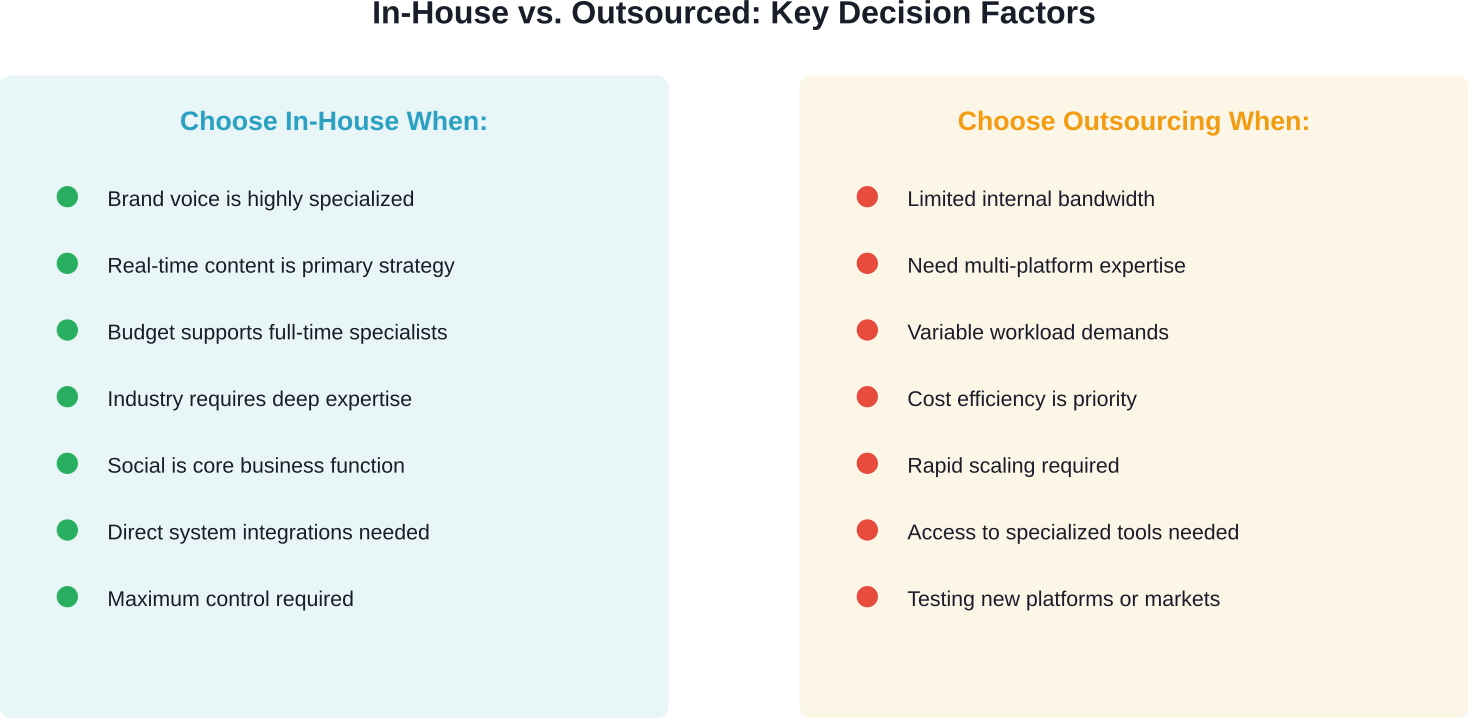
Growth might justify internal teams. Once revenue and scale support dedicated social media staff, bringing functions in-house provides tighter control and deeper brand integration.
Consistently poor performance from external partners signals reassessment time. If multiple agencies or freelancers fail to deliver results, the issue might be expectations, strategy, or industry fit rather than execution.
Changing business priorities affect outsourcing viability. Companies pivoting to social commerce as primary revenue channels might need internal teams with direct access to inventory, pricing, and customer service systems.
Future Trends in Social Media Outsourcing
The outsourcing landscape evolves as platforms, technologies, and audience behaviors shift. Several emerging trends shape how businesses will approach external social media partnerships.
AI-Augmented Management
Artificial intelligence tools increasingly handle routine tasks—scheduling optimization, basic image editing, performance analysis, and response suggestions. Outsourced teams leverage these tools to serve more clients efficiently while maintaining quality.
This doesn't mean fewer jobs. Instead, human expertise shifts toward strategy, creative direction, and handling complex situations AI can't navigate. Expect hybrid models where technology handles volume while specialists focus on high-value activities.
Specialized Platform Expertise
As platforms diverge—TikTok's short video focus, LinkedIn's professional networking, Instagram's visual commerce—generalist social media managers become less effective. Demand grows for specialists who deeply understand specific platform algorithms, creator tools, and audience behaviors.
Businesses increasingly hire platform-specific agencies or freelancers rather than expecting single partners to excel everywhere. A TikTok specialist, LinkedIn consultant, and Instagram shop manager might each handle their domains of expertise.
Social Commerce Integration
Social platforms evolve into complete shopping destinations. Instagram Shops, Facebook Marketplace, TikTok Shopping, and Pinterest catalogs transform social media from awareness channels into direct revenue drivers.
This shift requires outsourced partners with e-commerce expertise—product catalog management, checkout flow optimization, inventory integration, and transaction customer service. Traditional social media agencies adapt or lose ground to commerce-focused competitors.
Community-First Approaches
Broadcasting content matters less than building engaged communities. Outsourced social media management increasingly emphasizes community development—facilitating conversations, nurturing brand advocates, and creating spaces where audiences interact with each other, not just brands.
This requires different skills than content creation. Community managers need moderation judgment, conflict resolution abilities, and genuine interest in fostering connections. Agencies hiring for these roles look beyond design or copywriting portfolios.
Conclusion: Making Social Media Outsourcing Work
Social media outsourcing offers legitimate advantages—access to expertise, cost efficiency, scalability, and consistent presence. But success isn't guaranteed simply by hiring external help.
The partnerships that work share common elements: clear goal alignment, realistic expectations, strong communication frameworks, and commitment to ongoing optimization. Businesses that treat outsourced partners as extensions of their teams rather than vendors at arm's length achieve better results.
Start with honest assessment. Does the internal team truly lack capacity or skills to manage social media effectively? Is budget available for quality partners rather than cut-rate services? Are leadership and stakeholders committed to providing necessary assets, timely approvals, and regular feedback?
If answers are yes, outsourcing likely delivers value. If not, address internal constraints before expecting external partners to solve problems rooted in organizational issues.
The social media landscape will continue evolving. Platforms change, audience behaviors shift, and new opportunities emerge constantly. Successful outsourcing relationships adapt together rather than following rigid playbooks that quickly become outdated.
Ready to explore social media outsourcing for your business? Begin with the systematic evaluation process outlined here. Define specific goals, research potential partners thoroughly, start with pilot projects, and commit to measuring what matters. Done right, outsourcing transforms social media from overwhelming burden into strategic growth driver.
Frequently Asked Questions
Topics
Social Media Outsourcing Guide: 2026 Strategies & Steps

Social media outsourcing involves hiring external specialists or agencies to manage your brand's social media presence, from content creation to community engagement. This guide covers when to outsource, how to choose the right partner, what tasks to delegate, and how to measure success while maintaining brand consistency.
Social media has become non-negotiable for business growth. But here's the reality: managing multiple platforms, creating consistent content, and engaging with audiences requires serious time and expertise that most internal teams simply don't have.
That's where outsourcing comes in. Rather than stretching thin resources across platforms or hiring full-time specialists, businesses increasingly turn to external partners who live and breathe social media. The approach isn't just about offloading work—it's about accessing specialized skills, scaling efficiently, and maintaining competitive presence without burning through budgets.
This guide breaks down everything needed to make social media outsourcing work. Whether considering agencies, freelancers, or specialized firms, the following sections cover decision frameworks, selection criteria, and practical implementation steps.
What Social Media Outsourcing Actually Means
Social media outsourcing means delegating some or all social media responsibilities to external specialists. These might be agencies, freelance social media managers, content creators, or dedicated marketing firms.
The scope varies wildly. Some businesses outsource everything—strategy development, content creation, posting schedules, community management, and analytics reporting. Others keep strategy in-house but delegate execution tasks like graphic design, video editing, or daily posting.
What matters is finding the right balance between control and delegation. Complete outsourcing works for businesses that lack internal expertise entirely. Partial outsourcing suits teams that have strategic direction but need execution support.
Why Businesses Outsource Social Media Management
The decision to outsource rarely comes from a single pain point. Instead, multiple factors converge until external support becomes the logical path forward.
Time Constraints Hit First
Effective social media requires 10-20 hours weekly for multi-platform presence. That's not casual scrolling—it's content planning, creation, scheduling, engagement, and analysis. Business owners and small marketing teams can't sustain this alongside core responsibilities.
When social media becomes reactive rather than strategic, it's a red flag. Posting sporadically or ignoring comments damages brand perception faster than having no presence at all.
Expertise Gaps Become Obvious
Social platforms evolve constantly. Algorithm changes, new features, shifting content formats—staying current requires dedicated attention. What worked six months ago might be obsolete now.
Agencies and specialists invest in staying ahead of these changes. They test new features, analyze performance patterns across client accounts, and adapt strategies based on real-time data. Internal teams rarely have bandwidth for this level of ongoing education.
Cost Efficiency Makes Sense
Hiring full-time social media staff means salaries, benefits, training, and tools. A competent social media manager typically costs $50,000-$75,000 annually in salary, before considering software subscriptions, design tools, and ongoing training.
Outsourcing converts fixed costs to variable ones. Scale up during product launches or campaigns, scale down during quieter periods. This flexibility particularly benefits small businesses with unpredictable budgets.
Scalability Requirements Emerge
Growing brands face increasing social media demands. More platforms, more content, more audience interactions. Building internal capacity to match growth takes time—recruiting, training, establishing workflows.
External partners scale immediately. Need to launch on TikTok? They have creators ready. Expanding to international markets? They have multilingual teams. The UK social commerce market is projected to double from £7.4 billion in 2024 to £16 billion by 2028, reflecting how brands leverage outsourced support to capture emerging opportunities.
Consistent Coverage Becomes Critical
Social media doesn't respect business hours or holidays. Audiences engage around the clock, across time zones. Questions come in at midnight. Crises erupt on weekends.
Outsourced teams provide 24/7 coverage without overtime costs. They monitor brand mentions, respond to inquiries, and flag urgent issues regardless of local time. This consistent presence builds trust and responsiveness that part-time internal efforts can't match.
Tasks Worth Outsourcing vs. Keeping In-House
Not everything should be outsourced. Strategic decisions that define brand identity typically stay internal. Execution tasks that require specialized skills or significant time investment become prime outsourcing candidates.
Prime Outsourcing Candidates
Content creation tops the list. Graphic design, video production, copywriting, and editing require specific skills that most businesses don't need full-time. Outsourcing provides access to professional creators without permanent headcount.
Daily posting and scheduling becomes tedious when managing multiple platforms. External teams handle posting calendars, optimal timing research, and cross-platform adaptation. They ensure consistent presence without internal staff checking phones constantly.
Community management demands quick responses and consistent tone. Answering questions, addressing complaints, and engaging with followers requires dedicated attention. Outsourced community managers maintain brand voice while providing timely interactions.
Analytics and reporting benefit from external perspective. Agencies analyze performance across client portfolios, spotting trends and opportunities that single-account managers miss. They deliver actionable insights rather than raw data dumps.
What Typically Stays Internal
Brand strategy and positioning remain internal decisions. Nobody understands company values, unique selling propositions, and long-term vision better than internal leadership. External partners execute strategy—they don't define it.
Crisis management requires immediate access to decision-makers. When reputation issues emerge, responses need internal approval. Outsourced teams can monitor and flag problems, but final messaging comes from leadership.
Authentic behind-the-scenes content works best when created internally. Employee spotlights, office culture posts, and spontaneous updates capture genuine brand personality that external teams struggle to replicate.
Choosing Between Agencies, Freelancers, and Specialized Firms
Three main outsourcing models exist, each with distinct advantages. The right choice depends on budget, scope, and desired involvement level.
Full-Service Social Media Agencies
Agencies provide comprehensive solutions—strategy, execution, reporting, and optimization. They assign account teams with diverse skills: strategists, designers, copywriters, and analysts.
The advantage? Integrated expertise under one contract. The challenge? Higher costs and less flexibility. Agencies work best for brands needing complete social media overhauls or managing complex multi-platform campaigns.
Monthly retainers for small businesses typically start around $1,000-$2,000 for basic management, with comprehensive services ranging $5,000-$15,000+. Most agencies require minimum commitments—typically 3-6 months.
Specialized Freelancers
Freelancers offer targeted expertise at lower price points. Hire a content creator for graphics, a separate writer for copy, and a community manager for engagement. This modular approach provides flexibility and cost control.
But coordination becomes the internal team's responsibility. Managing multiple freelancers, ensuring consistency, and integrating work takes time. This model suits businesses with internal project management capacity who need specific skill gaps filled.
Freelance rates vary widely depending on experience and specialization. Project-based pricing can range from $500 for monthly content packages to $5,000+ for comprehensive campaigns.
Dedicated Social Media Management Platforms
Hybrid platforms combine technology with human expertise. They provide management software plus access to vetted content creators, strategists, and analysts through marketplace models.
These platforms balance cost and capability. Software handles scheduling, analytics, and workflow while connecting businesses with specialists as needed. The model works for companies wanting some control without building entire internal teams.
Step-by-Step: How to Outsource Social Media Effectively
Successful outsourcing follows a methodical process. Rushing into partnerships without preparation leads to misalignment, wasted budgets, and inconsistent results.
Step 1: Define Current State and Goals
Start with honest assessment. Which platforms currently have presence? What's working and what isn't? Where does engagement happen naturally?
Document specific goals with measurable targets. "Increase brand awareness" lacks actionability. "Grow Instagram followers by 25% and boost engagement rate from 2% to 4% within six months" provides clear direction.
Identify pain points causing the outsourcing consideration. Running out of content ideas? Can't respond to comments quickly? Posting inconsistently? Specific problems guide the right partner selection.
Step 2: Determine Budget and Resource Allocation
Realistic budgeting prevents disappointment. Social media outsourcing costs vary dramatically based on scope, platform count, and content volume.
Basic management—content calendar, posting, and light engagement—starts around $1,000-$2,000 monthly. Comprehensive services including content creation, community management, paid advertising, and detailed analytics run $5,000-$15,000+.
Consider the full picture. Beyond agency fees, account for content assets (photos, videos), paid promotion budgets, and tools needed for collaboration. Underfunding leads to mediocre results that don't justify the investment.
Step 3: Research and Vet Potential Partners
Don't hire the first agency that appears in search results. Build a shortlist of 4-6 candidates, then evaluate systematically.
Review portfolios critically. Look for work with brands in similar industries or targeting similar audiences. Generic case studies matter less than relevant experience.
Check references thoroughly. Ask previous clients about communication style, deadline adherence, and results achieved. Specifically inquire about challenges and how the partner handled them.
Evaluate their own social media presence. Agencies should demonstrate the expertise they're selling. Inactive accounts or poorly designed content raise immediate red flags.
Step 4: Establish Clear Communication Frameworks
Communication breakdowns kill outsourced relationships faster than poor performance. Set expectations upfront about response times, meeting cadence, and approval processes.
Define decision authority. Who approves content before posting? Who handles urgent brand mentions? What requires internal leadership sign-off?
Choose collaboration tools everyone commits to using. Shared content calendars, project management platforms, and communication channels need agreement from day one. Switching tools mid-engagement creates confusion and delays.
Step 5: Create Comprehensive Brand Guidelines
External partners can't read minds. Detailed brand guidelines ensure consistency even as individual content creators change.
Document voice and tone with examples. Is the brand witty or serious? Casual or professional? Show representative posts that nail the desired personality.
Provide visual identity assets—logos, color codes, fonts, and design templates. Include usage rules: logo placement, color combinations, and imagery styles.
Share content boundaries. Topics to avoid, competitor mention policies, political stances, and response protocols for controversial issues prevent brand damage from well-meaning but misguided posts.
Step 6: Start with Pilot Projects
Don't commit to year-long contracts immediately. Begin with defined pilot projects—managing one platform for three months or creating a specific campaign.
Pilots reveal working style compatibility before significant investment. They test communication effectiveness, turnaround times, and quality standards with limited risk.
Set clear success metrics for pilots. If the partner meets or exceeds targets while demonstrating strong collaboration, expand the relationship. If not, part ways before sinking substantial resources.
Build a Stable Social Media Outsourcing Team
Social media outsourcing only works when the team understands your voice, audience, and growth goals. NeoWork helps companies build dedicated remote social media teams across content creation, publishing, community management, and performance tracking. Their differentiators are an industry-leading 91% annualized teammate retention rate and a 3.2% candidate selectivity rate. That stability supports consistent tone, faster execution, and fewer onboarding resets.
Ready to Outsource Social Media Without Repeating Yourself?
Talk with NeoWork to:
- build a remote team aligned with your brand voice
- maintain consistent publishing and engagement
- scale content production as your channels grow
👉 Connect with NeoWork to structure your social media outsourcing model.
Red Flags When Evaluating Social Media Partners
Some warning signs indicate partnerships headed for trouble. Spotting them early saves time, money, and brand reputation.
Unrealistic Promises
"We'll triple your followers in 30 days" or "guaranteed viral content" signals trouble. Social media growth depends on content quality, audience relevance, and consistent effort—not magic formulas.
Reputable partners discuss realistic timelines and acknowledge variables outside their control. They focus on sustainable growth, not quick wins that disappear or damage credibility.
Cookie-Cutter Approaches
Agencies pitching identical strategies to every client lack customization capacity. Effective social media requires understanding specific audiences, competitive landscapes, and brand positioning.
During discovery calls, partners should ask detailed questions about business goals, target demographics, and current challenges. Generic presentations suggest they'll deliver generic results.
Poor Communication in Sales Process
How agencies behave during courtship predicts working relationships. Slow email responses, missed meetings, or vague answers to direct questions won't improve after contracts are signed.
Evaluate responsiveness and clarity throughout the vetting process. If communication feels difficult before partnership begins, it'll become impossible under deadline pressure.
Lack of Measurement Focus
Partners who avoid discussing metrics and reporting rarely deliver measurable results. They might produce content but can't demonstrate impact on business objectives.
Strong candidates outline specific KPIs they'll track, reporting frequency, and how data informs strategy adjustments. They connect social media metrics to broader business outcomes rather than vanity numbers.
Maintaining Brand Voice While Outsourcing
The biggest outsourcing fear? Losing authentic brand personality to generic corporate-speak or tone-deaf posts.
Prevention starts with documentation. Written voice guidelines with multiple examples help external teams internalize brand personality. But documentation alone isn't enough.
Regular Voice Calibration
Schedule periodic reviews focused specifically on brand voice consistency. Share recent posts that nailed the tone and ones that missed. Discuss why certain phrasing works while other approaches feel off-brand.
This ongoing calibration prevents drift. External teams gradually internalize preferences through feedback loops rather than hoping they'll intuit brand personality from initial guidelines.
Hybrid Content Approaches
Blend external production with internal contributions. Outsourced teams might create polished graphics and scheduled content while internal staff handle spontaneous updates, employee spotlights, and timely responses requiring insider knowledge.
This hybrid model preserves authenticity for moments that matter while leveraging external expertise for consistent execution.
Approval Workflows That Scale
Requiring approval for every post creates bottlenecks. Instead, establish tiered workflows. Routine content gets light review or pre-approval through monthly calendars. Sensitive topics or new campaign directions require detailed sign-off.
Trust builds gradually. Start with tighter controls, then loosen as external teams demonstrate understanding of brand voice and boundaries.
Measuring Success After Outsourcing
Metrics prove whether outsourcing delivers value or drains budgets without returns. But tracking the right numbers matters more than tracking everything.
Baseline Establishment
Document current performance before outsourcing begins. Follower counts, engagement rates, website traffic from social, and conversion metrics provide comparison points.
Without baselines, attributing improvements becomes guesswork. Partners might claim success that would've happened regardless of their involvement.
Leading vs. Lagging Indicators
Follower growth and revenue impact are lagging indicators—they respond slowly to strategic changes. Leading indicators like engagement rate, content production velocity, and response time show momentum before big numbers move.
Track both. Leading indicators confirm activities are working. Lagging indicators prove business impact.
Beyond Vanity Metrics
Follower count alone means little if those followers never engage or convert. Focus on metrics tied to business objectives.
E-commerce brands track conversion rates from social traffic and revenue per post. B2B companies measure lead quality and sales pipeline contribution. Service businesses monitor inquiry volume and booking rates.
Common Outsourcing Challenges and Solutions
Even well-planned outsourcing relationships encounter obstacles. Knowing common issues and fixes prevents small problems from becoming partnership-ending disasters.
Content Review Bottlenecks
External teams create content quickly, then it sits awaiting approval for days or weeks. Posting schedules slip, trending opportunities pass, and momentum dies.
Solution: Implement batch approval processes. Review full monthly content calendars in single sessions rather than individual posts. Establish clear approval turnaround commitments—24 hours for routine content, 2-4 hours for time-sensitive posts.
Misaligned Expectations
Businesses expect immediate results. Agencies preach long-term strategy. Frustration builds when timelines and definitions of success differ.
Solution: Document specific expectations in contracts. Define what success looks like at 30, 60, and 90 days. Agree on reporting cadence and decision points for strategy adjustments. Written alignment prevents memory disputes later.
Platform Priority Disagreements
Internal stakeholders want presence everywhere. External partners recommend focusing efforts on platforms where target audiences actually engage.
Solution: Let data guide decisions. Audit where current audiences spend time, where competitors succeed, and where industry trends indicate opportunity. Start with 2-3 platforms, master them, then expand if capacity allows.
Quality Inconsistency
Some deliverables exceed expectations. Others fall flat. Inconsistency makes planning difficult and erodes confidence.
Solution: Identify root causes. Is the issue unclear briefs, creator skill variation, or rushed timelines? Address the actual problem rather than symptoms. Standardize creative briefs, request specific team members for important projects, or adjust deadlines to allow proper production time.
Content Moderation and Outsourcing Considerations
Social media platforms rely heavily on content moderation to maintain safe, engaging environments. Research from NYU Stern highlights concerns about how major platforms handle this critical task.
According to academic analysis, social media companies frequently outsource content moderation to third-party vendors. While this enables scale, it raises questions about working conditions, decision consistency, and accountability when harmful content slips through or legitimate posts get removed incorrectly.
For businesses outsourcing social media management, this broader industry context matters. Community management and moderation form core responsibilities when delegating social accounts. Establishing clear guidelines about acceptable content, response protocols for policy violations, and escalation procedures protects brand reputation.
When evaluating social media management partners, ask about their moderation processes. How do they handle offensive comments? What's their response protocol for spam or inappropriate tagged content? Understanding their approach prevents unpleasant surprises when situations arise.
Legal and Compliance Considerations
Outsourcing doesn't transfer legal liability. Businesses remain responsible for everything posted under their brand accounts, regardless of who creates or publishes content.
Truth-in-Advertising Compliance
The Federal Trade Commission provides guidance for businesses about advertising claims and social media marketing. When outsourcing content creation, ensure partners understand advertising regulations.
Claims must be substantiated. Testimonials need proper disclosures. Sponsored content requires clear labeling. External creators might not know industry-specific regulations, making compliance education essential.
Intellectual Property Protection
Contracts should clarify content ownership. Do you own created assets after paying for them? Can agencies repurpose content for their portfolios? What happens to accounts and content if partnerships end?
Get everything in writing. Verbal agreements about ownership lead to expensive disputes.
Data Privacy and Access
External partners need account access to perform their work. But that access carries risk. Implement proper security protocols—two-factor authentication, role-based permissions, and regular access audits.
If outsourced teams collect customer data through social channels, ensure they comply with privacy regulations. GDPR, CCPA, and similar laws apply regardless of whether data collection happens in-house or through partners.
When to Reconsider Outsourcing
Outsourcing isn't permanent. Circumstances change, making in-house management more appropriate.
Growth might justify internal teams. Once revenue and scale support dedicated social media staff, bringing functions in-house provides tighter control and deeper brand integration.
Consistently poor performance from external partners signals reassessment time. If multiple agencies or freelancers fail to deliver results, the issue might be expectations, strategy, or industry fit rather than execution.
Changing business priorities affect outsourcing viability. Companies pivoting to social commerce as primary revenue channels might need internal teams with direct access to inventory, pricing, and customer service systems.
Future Trends in Social Media Outsourcing
The outsourcing landscape evolves as platforms, technologies, and audience behaviors shift. Several emerging trends shape how businesses will approach external social media partnerships.
AI-Augmented Management
Artificial intelligence tools increasingly handle routine tasks—scheduling optimization, basic image editing, performance analysis, and response suggestions. Outsourced teams leverage these tools to serve more clients efficiently while maintaining quality.
This doesn't mean fewer jobs. Instead, human expertise shifts toward strategy, creative direction, and handling complex situations AI can't navigate. Expect hybrid models where technology handles volume while specialists focus on high-value activities.
Specialized Platform Expertise
As platforms diverge—TikTok's short video focus, LinkedIn's professional networking, Instagram's visual commerce—generalist social media managers become less effective. Demand grows for specialists who deeply understand specific platform algorithms, creator tools, and audience behaviors.
Businesses increasingly hire platform-specific agencies or freelancers rather than expecting single partners to excel everywhere. A TikTok specialist, LinkedIn consultant, and Instagram shop manager might each handle their domains of expertise.
Social Commerce Integration
Social platforms evolve into complete shopping destinations. Instagram Shops, Facebook Marketplace, TikTok Shopping, and Pinterest catalogs transform social media from awareness channels into direct revenue drivers.
This shift requires outsourced partners with e-commerce expertise—product catalog management, checkout flow optimization, inventory integration, and transaction customer service. Traditional social media agencies adapt or lose ground to commerce-focused competitors.
Community-First Approaches
Broadcasting content matters less than building engaged communities. Outsourced social media management increasingly emphasizes community development—facilitating conversations, nurturing brand advocates, and creating spaces where audiences interact with each other, not just brands.
This requires different skills than content creation. Community managers need moderation judgment, conflict resolution abilities, and genuine interest in fostering connections. Agencies hiring for these roles look beyond design or copywriting portfolios.
Conclusion: Making Social Media Outsourcing Work
Social media outsourcing offers legitimate advantages—access to expertise, cost efficiency, scalability, and consistent presence. But success isn't guaranteed simply by hiring external help.
The partnerships that work share common elements: clear goal alignment, realistic expectations, strong communication frameworks, and commitment to ongoing optimization. Businesses that treat outsourced partners as extensions of their teams rather than vendors at arm's length achieve better results.
Start with honest assessment. Does the internal team truly lack capacity or skills to manage social media effectively? Is budget available for quality partners rather than cut-rate services? Are leadership and stakeholders committed to providing necessary assets, timely approvals, and regular feedback?
If answers are yes, outsourcing likely delivers value. If not, address internal constraints before expecting external partners to solve problems rooted in organizational issues.
The social media landscape will continue evolving. Platforms change, audience behaviors shift, and new opportunities emerge constantly. Successful outsourcing relationships adapt together rather than following rigid playbooks that quickly become outdated.
Ready to explore social media outsourcing for your business? Begin with the systematic evaluation process outlined here. Define specific goals, research potential partners thoroughly, start with pilot projects, and commit to measuring what matters. Done right, outsourcing transforms social media from overwhelming burden into strategic growth driver.
Frequently Asked Questions
Topics
Related Blogs
Related Podcasts


.webp)
.webp)



