

.avif)
.avif)

Unity Development Outsourcing Guide 2026: Complete Process


.svg)

Unity development outsourcing involves hiring external studios or developers to build games or applications using the Unity engine. This guide covers the three primary outsourcing methods — agencies, freelancers, and dedicated teams — along with costs, vetting processes, communication strategies, and common pitfalls to avoid when outsourcing Unity projects in 2026.
The global gaming industry is expected to reach USD 665.77 billion by 2030, with Unity powering a significant portion of those games. But building a Unity project in-house demands specialized talent, long development cycles, and substantial budget commitments.
That's why studios increasingly outsource Unity development. Whether it's a mobile puzzle game, a VR training simulation, or a cross-platform multiplayer title, outsourcing offers access to experienced developers without the overhead of full-time hires.
This guide breaks down everything from choosing the right outsourcing model to managing remote teams effectively. No fluff, no theory dumps — just practical steps based on what actually works in 2026.
Why Outsource Unity Game Development
Unity dominates the game engine market for good reason. It handles 2D and 3D projects, supports multiple platforms, and offers an asset store with thousands of ready-made components. But Unity expertise isn't cheap or easy to find locally.
Outsourcing solves several critical problems:
- Cost efficiency. Senior Unity developers in North America or Western Europe typically command annual salaries in the six-figure range. Outsourcing to Eastern Europe, Latin America, or Southeast Asia cuts that cost by 40-70% while maintaining quality.
- Speed to market. Established outsourcing studios already have Unity pipelines, tested frameworks, and experienced teams. Projects that would take 18 months in-house can launch in 10-12 months with the right partner.
- Specialized skills. Need shader programming for stylized graphics? Advanced networking for multiplayer? VR interaction design? Outsourcing firms often employ specialists who've solved these problems dozens of times.
Here's the thing though — not all outsourcing approaches deliver equal results. The method matters as much as the partner.

Scale Faster With Unity Development Outsourcing
Unity outsourcing works best when developers understand both the engine and production realities. NeoWork helps studios build remote Unity teams aligned with their architecture, tools, and release schedule. Their 91% annualized teammate retention rate and 3.2% candidate selectivity rate mean you work with carefully vetted developers who stay on the project long term. This improves code continuity and reduces technical debt caused by turnover.
Ready to Expand Your Unity Team?
Talk with NeoWork to:
- add experienced Unity developers to your pipeline
- accelerate feature development
- maintain stable, long-term engineering support
👉 Reach out to NeoWork to discuss Unity development outsourcing.
The Three Primary Methods to Outsource Unity Development
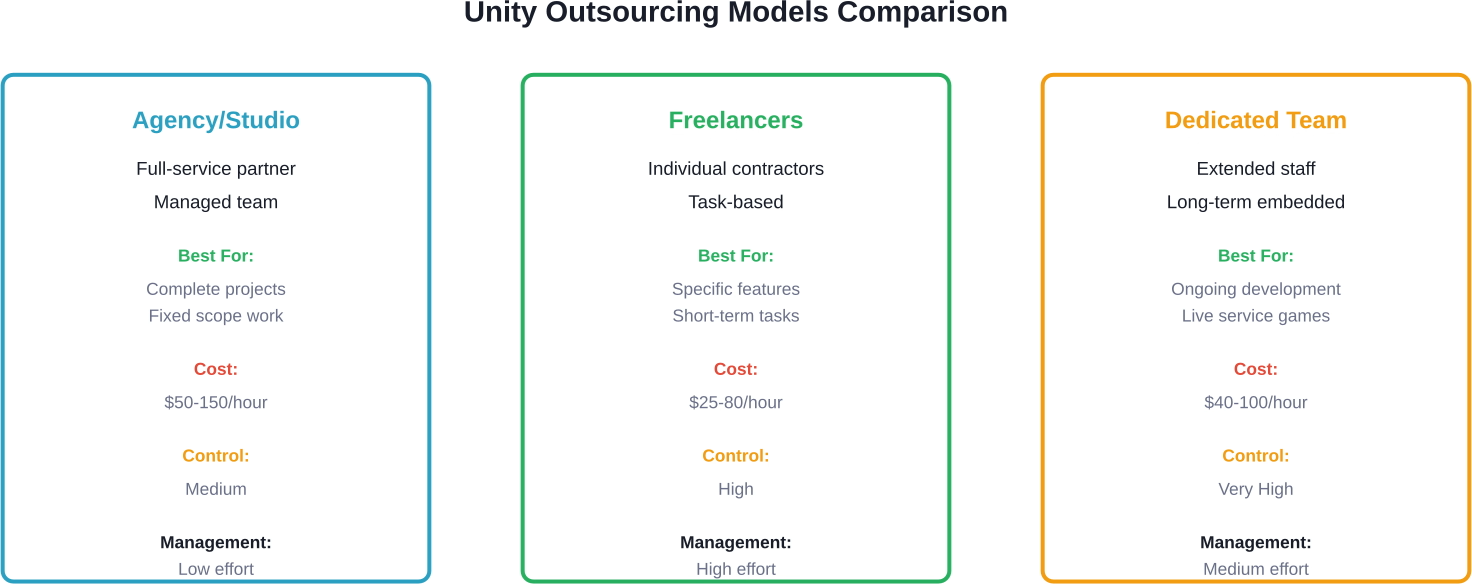
Based on community discussions and industry practices, three models dominate Unity outsourcing in 2026. Each suits different project types and budgets.
Unity Development Agencies and Studios
Full-service studios handle everything from concept to deployment. They assign project managers, designers, developers, and QA testers. Projects typically follow milestone-based deliveries with fixed-price or time-and-materials contracts.
Agencies work best when the scope is well-defined. Building a mobile puzzle game with 50 levels? An agency can quote a fixed price and deliver the complete package. But scope creep kills fixed-price deals, so requirements must stay stable.
The trade-off is control. Agencies manage their teams internally. Daily development decisions happen without direct client input. For studios comfortable with periodic reviews rather than hands-on management, this autonomy accelerates delivery.
Freelance Unity Developers
Platforms like Upwork, Toptal, and specialized game dev marketplaces connect studios with individual Unity developers. Rates vary wildly based on location and experience — junior developers in emerging markets charge $25-40/hour, while senior specialists command $60-80/hour.
Freelancers excel at focused tasks. Need someone to optimize mobile performance? Implement a specific shader effect? Build a character controller? A skilled freelancer completes these assignments faster and cheaper than hiring an agency.
But freelancers require active management. Task definitions, code reviews, integration oversight — all fall on the client. Community discussions highlight integration challenges as a common pain point: freelancer code often uses different naming conventions, folder structures, and architectural patterns than the main project.
Dedicated Development Teams
The dedicated team model provides developers who work exclusively on one client's projects for extended periods. They function like remote employees but remain on the vendor's payroll.
This approach suits live service games, ongoing content updates, or long development cycles. The team learns the codebase deeply, maintains institutional knowledge, and adapts to evolving requirements without contract renegotiations.
Dedicated teams offer the highest control level. Daily standups, direct task assignment, participation in sprint planning — clients manage these developers as if they were in-house. The vendor handles HR, equipment, and administrative overhead.
How to Find and Vet Unity Development Outsourcing Partners
Finding qualified Unity developers is straightforward. Finding the right ones for a specific project requires systematic evaluation.
Portfolio and Specialization Review
Start with portfolio analysis. Look for projects similar in scope, genre, and technical requirements. A studio specializing in hyper-casual mobile games won't be the best fit for a VR simulation requiring advanced physics.
Request playable demos or links to published titles. Actually play the games. Check performance, polish, and whether the studio completed projects or just contributed to them.
Technical specialization matters enormously. Unity spans mobile 2D games, AR experiences, console titles, and enterprise applications. A firm's Unity expertise in one domain doesn't automatically transfer to others.
Technical Assessment Process
Conduct technical interviews even when hiring agencies. Ask about their Unity version practices, asset pipeline, version control systems, and testing frameworks.
Request code samples. Review them for readability, organization, and adherence to Unity best practices. Messy code samples predict messy project code.
For larger projects, consider paid pilot assignments. Allocate $2,000-5,000 for a two-week test project that mimics actual work. This reveals communication patterns, code quality, and delivery reliability before committing to full contracts.
Communication and Timezone Considerations
Timezone overlap determines collaboration quality. Real-time communication becomes difficult with more than 6-8 hours difference. Eastern European developers align well with Western Europe. Latin American teams match North American schedules. Southeast Asian firms work best with asynchronous workflows.
Test communication before signing. How quickly do they respond? Do they ask clarifying questions? Can technical leads explain complex concepts clearly? Poor communication during sales discussions only worsens during development.
Intellectual Property and Legal Framework
IP ownership must be explicit and ironclad. Contracts should state that all code, assets, and documentation become client property upon payment. Work-for-hire agreements in the client's jurisdiction provide the strongest protection.
According to data from authoritative sources, GDPR compliance matters even for offshore developers. Working with non-compliant companies can entail penalties reaching €20 million or 4% of annual revenue when handling EU citizen data.
Include non-disclosure agreements, non-compete clauses for key personnel, and clear data handling procedures. For sensitive projects, consider requiring developers to work from secure facilities rather than home offices.
Cost Structure for Unity Development Outsourcing
Outsourcing costs depend on location, team seniority, and engagement model. Rates vary significantly by region.
- North America: $80-150/hour for senior Unity developers, $50-80 for mid-level. Studios in major tech hubs (San Francisco, Seattle, Toronto) command premium rates.
- Western Europe: $70-120/hour depending on country. UK and Germany sit at the higher end, while Spain and Portugal offer lower rates with EU legal protections.
- Eastern Europe: $40-80/hour. Poland, Ukraine, and Romania provide strong technical talent at 40-50% lower costs than Western Europe. Similar timezones to European clients.
- Latin America: $35-70/hour. Argentina, Brazil, and Mexico offer good timezone alignment with North American clients. Growing Unity developer communities.
- Asia: $25-60/hour. India and the Philippines provide the lowest rates but maximum timezone challenges for Western clients. China and Southeast Asia fall in the middle range.
Project-based pricing typically ranges from $30,000 for simple mobile games to $500,000+ for complex multiplayer titles or enterprise applications. Accurate estimates require detailed specifications.
Managing Communication and Workflow with Remote Unity Teams
Technical quality means nothing if communication breaks down. Successful outsourcing requires deliberate process design.
Establish Clear Documentation Standards
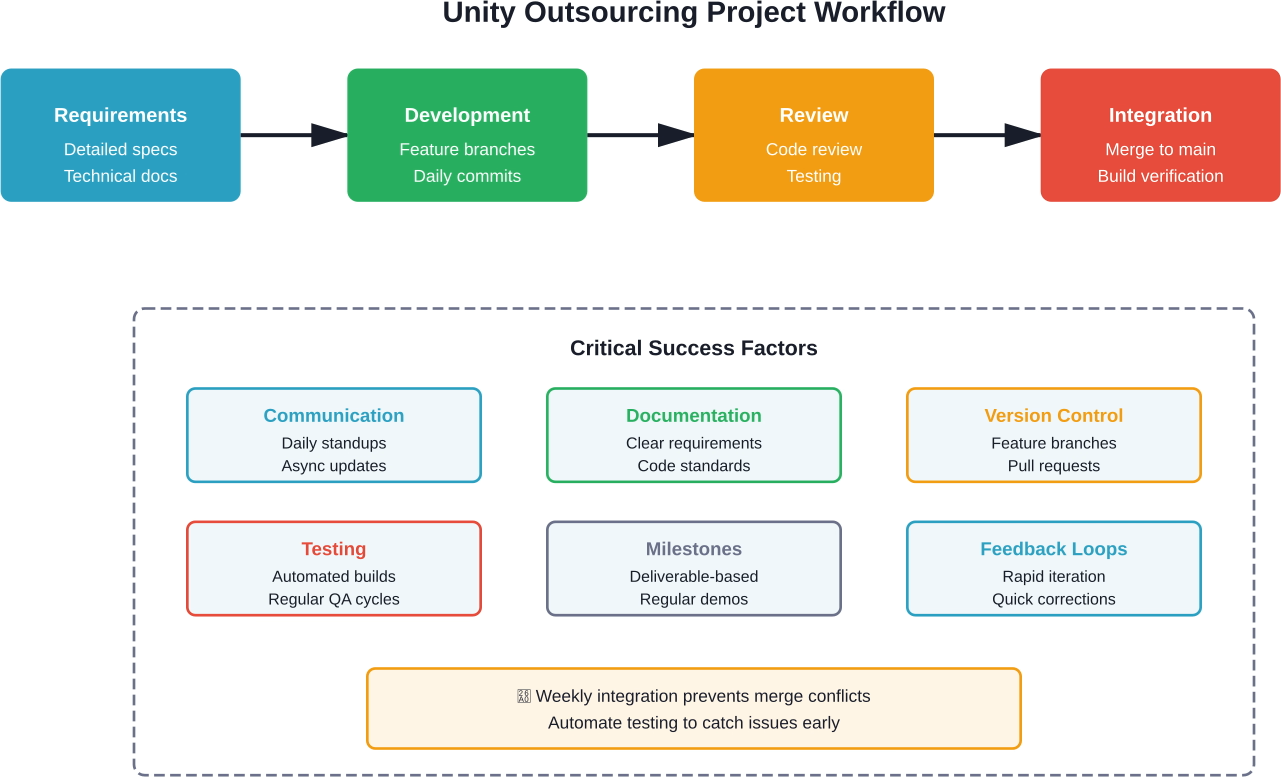
Ambiguity destroys remote projects. Every feature needs written specifications including functionality, acceptance criteria, edge cases, and UI mockups.
Use tools like Confluence or Notion for requirements documentation. Supplement text with annotated screenshots, video walkthroughs, and reference implementations. Assume developers can't ask questions in real-time.
Document coding standards, naming conventions, and project structure guidelines upfront. According to community discussions, integration problems often stem from different architectural approaches between outsourced code and the main project.
Version Control and Code Review Processes
Mandate Git from day one. Branches for features, pull requests for all changes, and code reviews before merging. This prevents integration nightmares and maintains code quality.
Establish branch naming conventions, commit message formats, and merge policies. Daily or weekly integration prevents massive merge conflicts.
Use Unity Cloud Build or similar CI/CD systems. Automated builds catch integration issues immediately rather than during manual merges.
Regular Synchronization and Reporting
Schedule recurring video calls based on timezone overlap. Weekly is minimum, daily works better for active development phases. Record calls for team members who can't attend.
Require brief written status updates between calls. Completed tasks, current work, and blockers. Asynchronous updates compensate for timezone gaps.
Track progress visibly. Jira, Trello, or similar tools should reflect real-time status. If the tracking system doesn't match reality, fix the system or the reporting.
Build Trust Through Transparency
Access matters. Clients should have read access to repositories, project management tools, and communication channels. Visibility builds confidence and catches issues early.
Share context generously. Explain why features exist, not just what to build. Understanding business goals helps developers make better technical decisions when specifications leave room for interpretation.
Address problems immediately. If quality slips, communication lags, or deliverables miss expectations, discuss it directly. Small issues compound into project-killers when ignored.
Common Unity Outsourcing Problems and Solutions
Even well-planned outsourcing hits predictable obstacles. Knowing them in advance enables preventive measures.
Code Integration Challenges
The problem: Outsourced code uses different patterns, naming conventions, and architectures than existing code. Integration becomes a rewrite.
The solution: Provide a code style guide and project template before development starts. Include namespace conventions, folder structure, and architectural patterns. Require developers to match existing patterns even if they prefer different approaches.
Scope Creep and Feature Drift
The problem: Requirements evolve during development. Fixed-price contracts don't accommodate changes. Time-and-materials budgets explode.
The solution: Accept that change is inevitable. Build change management into contracts. Define how scope changes get evaluated, estimated, and approved. Allow flexibility but track it explicitly.
Quality Inconsistencies
The problem: Early deliverables look great. Later ones cut corners. Quality declines as deadlines approach.
The solution: Define quality standards objectively. Performance benchmarks, code coverage minimums, and UI consistency requirements. Test every delivery against these standards before accepting work.
Timezone and Communication Gaps
The problem: Questions sit unanswered for 12+ hours. Decisions wait days. Development stalls.
The solution: Establish escalation procedures. Critical blockers get phone calls regardless of time. Document decisions in writing so async team members stay informed. Use Loom or similar tools for video explanations that work across timezones.
Unity Outsourcing Decision Framework
Which outsourcing method fits different scenarios? Here's a practical decision matrix.
Questions to Answer Before Outsourcing Unity Development
Jumping into outsourcing without preparation wastes time and money. Answer these questions first.
What exactly needs to be outsourced? Complete game development? Specific systems? Art pipeline? Clear boundaries prevent scope confusion.
What's the budget reality? Include contingency (20-30% minimum). Unrealistic budgets lead to corner-cutting or failed projects.
Who owns project management? Someone internal must coordinate, review work, and make decisions. Outsourcing doesn't mean abandoning oversight.
What's the acceptable timeline? Realistic schedules account for communication overhead, integration time, and iteration cycles. Aggressive deadlines produce low-quality work.
How will success be measured? Define acceptance criteria, performance benchmarks, and quality standards before development starts.
Making Unity Development Outsourcing Work in 2026
Outsourcing Unity development offers legitimate advantages: cost savings, specialized expertise, and faster time to market. But success requires intentional planning, not just vendor selection.
The core principles remain constant regardless of outsourcing model. Clear requirements prevent misunderstandings. Regular communication builds trust. Systematic quality checks maintain standards. Strong contracts protect interests.
Technical challenges are solvable. Communication breakdowns aren't. Invest time building relationships with outsourcing partners. Share context, explain priorities, and create collaborative environments even across continents and timezones.
Start small when possible. A successful small project builds confidence and reveals workflow issues before major commitments. Scale outsourcing gradually as processes mature and trust develops.
The global gaming industry continues expanding, and Unity powers much of that growth. Studios that master outsourcing access worldwide talent pools while maintaining quality and control. Those that treat outsourcing as purely transactional vendor relationships struggle with integration, quality, and partnership longevity.
Ready to outsource your Unity development? Define requirements clearly, evaluate partners systematically, establish strong communication frameworks, and manage projects actively. The technical work is the easy part — the relationship determines success.
Frequently Asked Questions
Topics
Unity Development Outsourcing Guide 2026: Complete Process

Unity development outsourcing involves hiring external studios or developers to build games or applications using the Unity engine. This guide covers the three primary outsourcing methods — agencies, freelancers, and dedicated teams — along with costs, vetting processes, communication strategies, and common pitfalls to avoid when outsourcing Unity projects in 2026.
The global gaming industry is expected to reach USD 665.77 billion by 2030, with Unity powering a significant portion of those games. But building a Unity project in-house demands specialized talent, long development cycles, and substantial budget commitments.
That's why studios increasingly outsource Unity development. Whether it's a mobile puzzle game, a VR training simulation, or a cross-platform multiplayer title, outsourcing offers access to experienced developers without the overhead of full-time hires.
This guide breaks down everything from choosing the right outsourcing model to managing remote teams effectively. No fluff, no theory dumps — just practical steps based on what actually works in 2026.
Why Outsource Unity Game Development
Unity dominates the game engine market for good reason. It handles 2D and 3D projects, supports multiple platforms, and offers an asset store with thousands of ready-made components. But Unity expertise isn't cheap or easy to find locally.
Outsourcing solves several critical problems:
- Cost efficiency. Senior Unity developers in North America or Western Europe typically command annual salaries in the six-figure range. Outsourcing to Eastern Europe, Latin America, or Southeast Asia cuts that cost by 40-70% while maintaining quality.
- Speed to market. Established outsourcing studios already have Unity pipelines, tested frameworks, and experienced teams. Projects that would take 18 months in-house can launch in 10-12 months with the right partner.
- Specialized skills. Need shader programming for stylized graphics? Advanced networking for multiplayer? VR interaction design? Outsourcing firms often employ specialists who've solved these problems dozens of times.
Here's the thing though — not all outsourcing approaches deliver equal results. The method matters as much as the partner.
Scale Faster With Unity Development Outsourcing
Unity outsourcing works best when developers understand both the engine and production realities. NeoWork helps studios build remote Unity teams aligned with their architecture, tools, and release schedule. Their 91% annualized teammate retention rate and 3.2% candidate selectivity rate mean you work with carefully vetted developers who stay on the project long term. This improves code continuity and reduces technical debt caused by turnover.
Ready to Expand Your Unity Team?
Talk with NeoWork to:
- add experienced Unity developers to your pipeline
- accelerate feature development
- maintain stable, long-term engineering support
👉 Reach out to NeoWork to discuss Unity development outsourcing.
The Three Primary Methods to Outsource Unity Development
Based on community discussions and industry practices, three models dominate Unity outsourcing in 2026. Each suits different project types and budgets.
Unity Development Agencies and Studios
Full-service studios handle everything from concept to deployment. They assign project managers, designers, developers, and QA testers. Projects typically follow milestone-based deliveries with fixed-price or time-and-materials contracts.
Agencies work best when the scope is well-defined. Building a mobile puzzle game with 50 levels? An agency can quote a fixed price and deliver the complete package. But scope creep kills fixed-price deals, so requirements must stay stable.
The trade-off is control. Agencies manage their teams internally. Daily development decisions happen without direct client input. For studios comfortable with periodic reviews rather than hands-on management, this autonomy accelerates delivery.
Freelance Unity Developers
Platforms like Upwork, Toptal, and specialized game dev marketplaces connect studios with individual Unity developers. Rates vary wildly based on location and experience — junior developers in emerging markets charge $25-40/hour, while senior specialists command $60-80/hour.
Freelancers excel at focused tasks. Need someone to optimize mobile performance? Implement a specific shader effect? Build a character controller? A skilled freelancer completes these assignments faster and cheaper than hiring an agency.
But freelancers require active management. Task definitions, code reviews, integration oversight — all fall on the client. Community discussions highlight integration challenges as a common pain point: freelancer code often uses different naming conventions, folder structures, and architectural patterns than the main project.
Dedicated Development Teams
The dedicated team model provides developers who work exclusively on one client's projects for extended periods. They function like remote employees but remain on the vendor's payroll.
This approach suits live service games, ongoing content updates, or long development cycles. The team learns the codebase deeply, maintains institutional knowledge, and adapts to evolving requirements without contract renegotiations.
Dedicated teams offer the highest control level. Daily standups, direct task assignment, participation in sprint planning — clients manage these developers as if they were in-house. The vendor handles HR, equipment, and administrative overhead.
How to Find and Vet Unity Development Outsourcing Partners
Finding qualified Unity developers is straightforward. Finding the right ones for a specific project requires systematic evaluation.
Portfolio and Specialization Review
Start with portfolio analysis. Look for projects similar in scope, genre, and technical requirements. A studio specializing in hyper-casual mobile games won't be the best fit for a VR simulation requiring advanced physics.
Request playable demos or links to published titles. Actually play the games. Check performance, polish, and whether the studio completed projects or just contributed to them.
Technical specialization matters enormously. Unity spans mobile 2D games, AR experiences, console titles, and enterprise applications. A firm's Unity expertise in one domain doesn't automatically transfer to others.
Technical Assessment Process
Conduct technical interviews even when hiring agencies. Ask about their Unity version practices, asset pipeline, version control systems, and testing frameworks.
Request code samples. Review them for readability, organization, and adherence to Unity best practices. Messy code samples predict messy project code.
For larger projects, consider paid pilot assignments. Allocate $2,000-5,000 for a two-week test project that mimics actual work. This reveals communication patterns, code quality, and delivery reliability before committing to full contracts.
Communication and Timezone Considerations
Timezone overlap determines collaboration quality. Real-time communication becomes difficult with more than 6-8 hours difference. Eastern European developers align well with Western Europe. Latin American teams match North American schedules. Southeast Asian firms work best with asynchronous workflows.
Test communication before signing. How quickly do they respond? Do they ask clarifying questions? Can technical leads explain complex concepts clearly? Poor communication during sales discussions only worsens during development.
Intellectual Property and Legal Framework
IP ownership must be explicit and ironclad. Contracts should state that all code, assets, and documentation become client property upon payment. Work-for-hire agreements in the client's jurisdiction provide the strongest protection.
According to data from authoritative sources, GDPR compliance matters even for offshore developers. Working with non-compliant companies can entail penalties reaching €20 million or 4% of annual revenue when handling EU citizen data.
Include non-disclosure agreements, non-compete clauses for key personnel, and clear data handling procedures. For sensitive projects, consider requiring developers to work from secure facilities rather than home offices.
Cost Structure for Unity Development Outsourcing
Outsourcing costs depend on location, team seniority, and engagement model. Rates vary significantly by region.
- North America: $80-150/hour for senior Unity developers, $50-80 for mid-level. Studios in major tech hubs (San Francisco, Seattle, Toronto) command premium rates.
- Western Europe: $70-120/hour depending on country. UK and Germany sit at the higher end, while Spain and Portugal offer lower rates with EU legal protections.
- Eastern Europe: $40-80/hour. Poland, Ukraine, and Romania provide strong technical talent at 40-50% lower costs than Western Europe. Similar timezones to European clients.
- Latin America: $35-70/hour. Argentina, Brazil, and Mexico offer good timezone alignment with North American clients. Growing Unity developer communities.
- Asia: $25-60/hour. India and the Philippines provide the lowest rates but maximum timezone challenges for Western clients. China and Southeast Asia fall in the middle range.
Project-based pricing typically ranges from $30,000 for simple mobile games to $500,000+ for complex multiplayer titles or enterprise applications. Accurate estimates require detailed specifications.
Managing Communication and Workflow with Remote Unity Teams
Technical quality means nothing if communication breaks down. Successful outsourcing requires deliberate process design.
Establish Clear Documentation Standards
Ambiguity destroys remote projects. Every feature needs written specifications including functionality, acceptance criteria, edge cases, and UI mockups.
Use tools like Confluence or Notion for requirements documentation. Supplement text with annotated screenshots, video walkthroughs, and reference implementations. Assume developers can't ask questions in real-time.
Document coding standards, naming conventions, and project structure guidelines upfront. According to community discussions, integration problems often stem from different architectural approaches between outsourced code and the main project.
Version Control and Code Review Processes
Mandate Git from day one. Branches for features, pull requests for all changes, and code reviews before merging. This prevents integration nightmares and maintains code quality.
Establish branch naming conventions, commit message formats, and merge policies. Daily or weekly integration prevents massive merge conflicts.
Use Unity Cloud Build or similar CI/CD systems. Automated builds catch integration issues immediately rather than during manual merges.
Regular Synchronization and Reporting
Schedule recurring video calls based on timezone overlap. Weekly is minimum, daily works better for active development phases. Record calls for team members who can't attend.
Require brief written status updates between calls. Completed tasks, current work, and blockers. Asynchronous updates compensate for timezone gaps.
Track progress visibly. Jira, Trello, or similar tools should reflect real-time status. If the tracking system doesn't match reality, fix the system or the reporting.
Build Trust Through Transparency
Access matters. Clients should have read access to repositories, project management tools, and communication channels. Visibility builds confidence and catches issues early.
Share context generously. Explain why features exist, not just what to build. Understanding business goals helps developers make better technical decisions when specifications leave room for interpretation.
Address problems immediately. If quality slips, communication lags, or deliverables miss expectations, discuss it directly. Small issues compound into project-killers when ignored.
Common Unity Outsourcing Problems and Solutions
Even well-planned outsourcing hits predictable obstacles. Knowing them in advance enables preventive measures.
Code Integration Challenges
The problem: Outsourced code uses different patterns, naming conventions, and architectures than existing code. Integration becomes a rewrite.
The solution: Provide a code style guide and project template before development starts. Include namespace conventions, folder structure, and architectural patterns. Require developers to match existing patterns even if they prefer different approaches.
Scope Creep and Feature Drift
The problem: Requirements evolve during development. Fixed-price contracts don't accommodate changes. Time-and-materials budgets explode.
The solution: Accept that change is inevitable. Build change management into contracts. Define how scope changes get evaluated, estimated, and approved. Allow flexibility but track it explicitly.
Quality Inconsistencies
The problem: Early deliverables look great. Later ones cut corners. Quality declines as deadlines approach.
The solution: Define quality standards objectively. Performance benchmarks, code coverage minimums, and UI consistency requirements. Test every delivery against these standards before accepting work.
Timezone and Communication Gaps
The problem: Questions sit unanswered for 12+ hours. Decisions wait days. Development stalls.
The solution: Establish escalation procedures. Critical blockers get phone calls regardless of time. Document decisions in writing so async team members stay informed. Use Loom or similar tools for video explanations that work across timezones.
Unity Outsourcing Decision Framework
Which outsourcing method fits different scenarios? Here's a practical decision matrix.
Questions to Answer Before Outsourcing Unity Development
Jumping into outsourcing without preparation wastes time and money. Answer these questions first.
What exactly needs to be outsourced? Complete game development? Specific systems? Art pipeline? Clear boundaries prevent scope confusion.
What's the budget reality? Include contingency (20-30% minimum). Unrealistic budgets lead to corner-cutting or failed projects.
Who owns project management? Someone internal must coordinate, review work, and make decisions. Outsourcing doesn't mean abandoning oversight.
What's the acceptable timeline? Realistic schedules account for communication overhead, integration time, and iteration cycles. Aggressive deadlines produce low-quality work.
How will success be measured? Define acceptance criteria, performance benchmarks, and quality standards before development starts.
Making Unity Development Outsourcing Work in 2026
Outsourcing Unity development offers legitimate advantages: cost savings, specialized expertise, and faster time to market. But success requires intentional planning, not just vendor selection.
The core principles remain constant regardless of outsourcing model. Clear requirements prevent misunderstandings. Regular communication builds trust. Systematic quality checks maintain standards. Strong contracts protect interests.
Technical challenges are solvable. Communication breakdowns aren't. Invest time building relationships with outsourcing partners. Share context, explain priorities, and create collaborative environments even across continents and timezones.
Start small when possible. A successful small project builds confidence and reveals workflow issues before major commitments. Scale outsourcing gradually as processes mature and trust develops.
The global gaming industry continues expanding, and Unity powers much of that growth. Studios that master outsourcing access worldwide talent pools while maintaining quality and control. Those that treat outsourcing as purely transactional vendor relationships struggle with integration, quality, and partnership longevity.
Ready to outsource your Unity development? Define requirements clearly, evaluate partners systematically, establish strong communication frameworks, and manage projects actively. The technical work is the easy part — the relationship determines success.
Frequently Asked Questions
Topics
Related Blogs
Related Podcasts


.webp)
.webp)



