
.avif)
.avif)

Video Editing Outsourcing Guide: 2026 Edition

.svg)

Video editing outsourcing involves hiring external professionals or agencies to handle your post-production work, freeing up time and resources while maintaining quality. This guide covers pricing models (ranging from $20-$125/hour), how to find the right editor, workflow best practices, and quality control strategies to help businesses and creators scale their video content efficiently.
Video content creation has become non-negotiable for businesses and creators in 2026. But here's the thing—producing high-quality videos takes serious time, and most of that time gets eaten up during post-production.
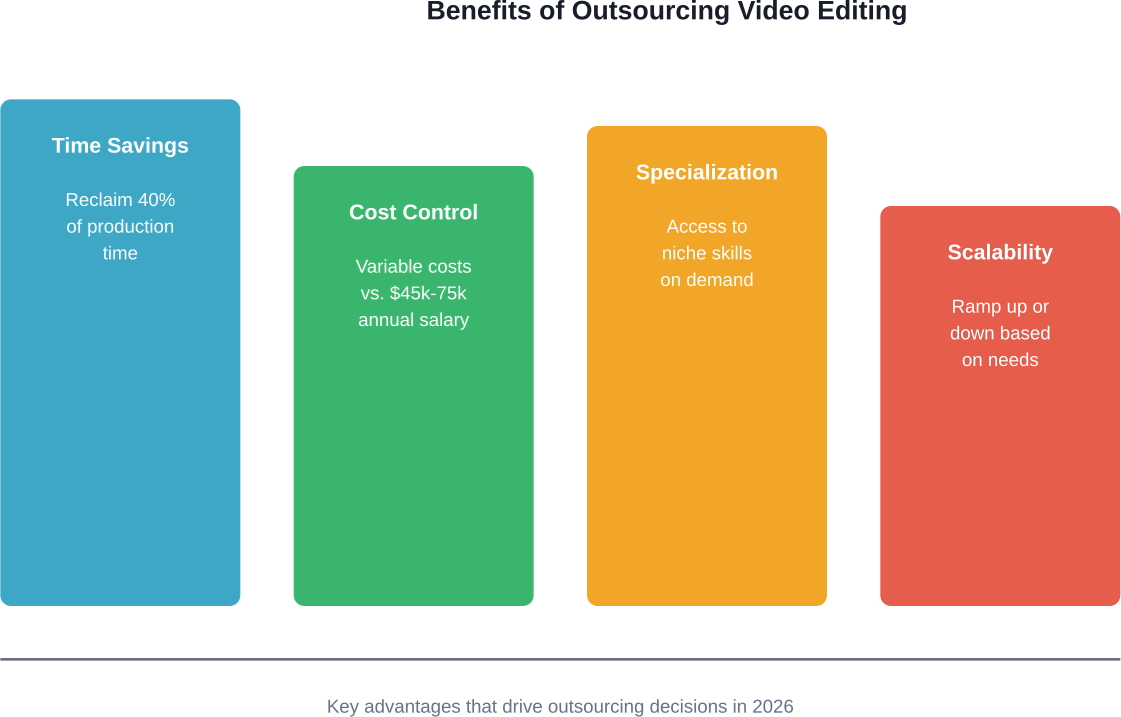
According to recent industry data, the average creator or marketing team spends over 40% of their video production time in post-production. That's where outsourcing comes into play.
The global market for outsourced services is projected to reach $525 billion by 2030, according to industry reports.
But outsourcing video editing isn't just about handing off files and hoping for the best. Getting it right requires understanding pricing structures, building efficient workflows, and choosing the right partner for the job.
What Video Editing Outsourcing Actually Means
Video editing outsourcing describes the practice of hiring external professionals or agencies to handle post-production work instead of keeping it in-house. This can range from basic cuts and transitions to complex color grading, motion graphics, and sound design.
The model differs from hiring full-time staff. Instead of paying salaries, benefits, and maintaining expensive equipment, businesses pay only for the work they need when they need it.
Some businesses outsource their entire editing pipeline. Others keep strategic or brand-critical edits in-house while outsourcing high-volume, repetitive work like social media clips or repurposed content.
Why Businesses Choose to Outsource Video Editing
The decision to outsource typically stems from one or more core challenges that businesses face when scaling video production.
Time Reclamation
Editing takes hours. A single 5-minute video can require 10-20 hours of editing time depending on complexity. For creators and marketing teams juggling multiple projects, those hours add up fast.
Outsourcing returns that time to focus on strategy, filming, client work, or content planning—activities that actually grow the business.
Cost Efficiency
Hiring a full-time video editor in 2026 means salaries ranging from $62,000 to $95,000 annually in the US market. Outsourcing converts that fixed expense into a variable cost.
Teams pay per project or per hour, scaling spending up during busy seasons and down during slower periods. That flexibility matters, especially for businesses with inconsistent video needs.
Access to Specialized Skills
Not every project needs the same editing approach. Corporate explainer videos require different skills than YouTube vlogs or wedding films.
Outsourcing provides access to specialists without maintaining a large in-house team. Need motion graphics this month and color grading next? Different specialists can handle each project type.
Faster Turnaround
Professional editing services often work with teams across multiple time zones, enabling round-the-clock production. What might take an in-house editor three days could be done overnight by an offshore team working while the business sleeps.
Understanding Video Editing Pricing Models
Pricing structures vary widely depending on editor experience, project complexity, and geographic location. Understanding these models helps with budgeting and selecting the right arrangement.
Hourly Rates
General market rates for video editing range from $20 per hour on the low end to over $125 for high-end, specialized work. Basic edits typically fall between $50-$100 per hour, while advanced edits involving special effects or color grading can reach $100-$300 per hour.
Hourly pricing works well for projects with uncertain scope or ongoing relationships where work volume fluctuates month to month.
Per-Minute Pricing
Some editors charge based on the finished video length. Rates typically range from $50-$300 per minute of finished content, though complex work can reach $1,000-$5,000 per finished minute.
This model provides clear cost expectations upfront but can penalize clients for longer-form content that may actually be simpler to edit.
Project-Based Pricing
Flat fees for specific deliverables offer predictability. A YouTube video might cost $200-$500, while a corporate promotional video could run $1,500-$5,000 depending on requirements.
Project pricing requires detailed briefs and clear scope definition to avoid mismatched expectations and revision battles.
Retainer Arrangements
For consistent monthly needs, retainer agreements provide a set number of hours or videos per month at a discounted rate. This benefits both parties—editors get predictable income, clients get priority scheduling and lower per-unit costs.
Where to Find Professional Video Editors
The marketplace for video editing talent has expanded dramatically, offering multiple channels for finding qualified professionals.
Freelance Marketplaces
Platforms like Fiverr and Upwork dominate the freelance editing space. On Fiverr's professional tiers (Fiverr Pro), high-quality video editing projects typically start at $150-$300.Upwork features vetted freelancers where businesses can post jobs or search databases for editors matching specific criteria.
These platforms provide built-in payment protection, portfolios, and review systems but take commission cuts that may be reflected in pricing.
Specialized Editing Services
Dedicated video editing companies focus exclusively on post-production. Services often maintain teams of editors with standardized workflows and quality control processes.
These services typically cost more than individual freelancers but offer consistency, faster turnaround through team distribution, and account management.
Geographic Considerations
Editor location significantly impacts pricing. Editors in North America and Western Europe command premium rates, while equally skilled editors in Eastern Europe, Asia, and Latin America often charge 50-70% less.
Time zone differences can be advantageous (overnight turnaround) or challenging (limited real-time communication windows) depending on workflow preferences.
How to Choose the Right Video Editor
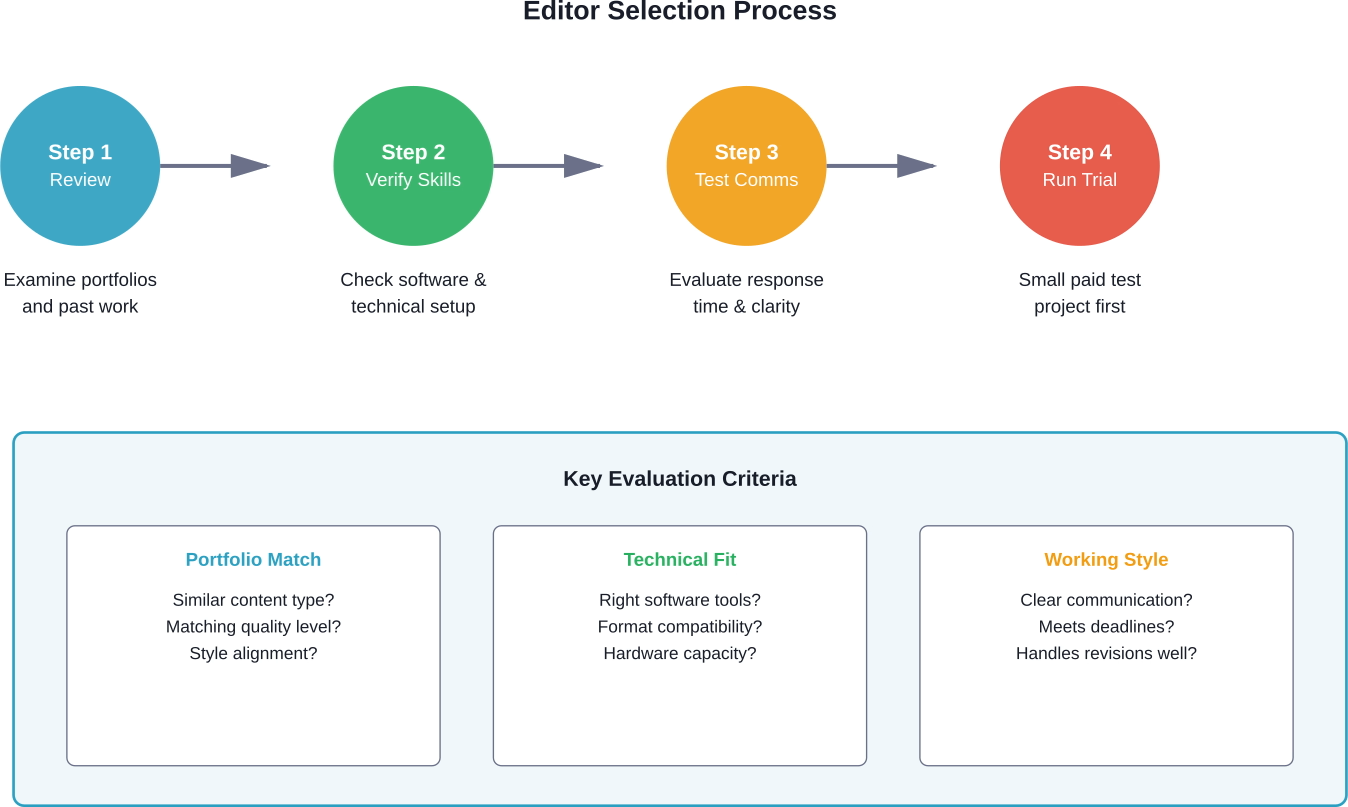
Finding an editor who matches both technical requirements and creative sensibilities requires a structured evaluation process.
Review Portfolio Work
Portfolios reveal editing style, technical proficiency, and experience with similar content types. Look for examples that match the intended project—corporate editors may struggle with fast-paced social content and vice versa.
Pay attention to pacing, color work, audio mixing, and graphics integration. Does their existing work reflect the quality standard needed?
Assess Technical Capabilities
Verify editors work with the required software and file formats. Some editors specialize in Adobe Premiere, others in DaVinci Resolve or Final Cut Pro. File compatibility and delivery format capabilities matter for seamless integration.
Ask about hardware capabilities too. 4K editing requires powerful systems—underpowered setups lead to slow turnaround times.
Communication and Collaboration Style
According to research on digital security practices, secure collaboration tools are identified as critical to retaining client confidence. Effective editors communicate proactively, ask clarifying questions, and provide updates without constant prompting.
Test communication during the vetting process. How quickly do they respond? Do they ask thoughtful questions about project requirements?
Start with Test Projects
Before committing to large projects or retainers, run a small paid test project. This reveals work quality, adherence to deadlines, revision handling, and whether the collaboration feels smooth.
Many editors offer discounted first projects or trial periods specifically for this purpose.
Add Dedicated Video Editing Support With NeoWork

If your video editing needs go beyond occasional freelance help and you want consistent quality without running a full in-house team, NeoWork offers dedicated remote talent that becomes part of how you work. Their creative services include support for video and motion-based production delivered by professionals selected and onboarded for your specific needs.
NeoWork handles recruiting, vetting, onboarding, and ongoing staffing so you don’t have to juggle multiple individual contractors. Their model is built around long term stability, reflected in a 91% annualized teammate retention rate, so you are not constantly replacing editors. With a 3.2% candidate selectivity rate, they focus on carefully screened professionals rather than volume hiring. The result is consistent editing support that stays aligned with your brand, style, and production process over time.
Talk to NeoWork to explore how dedicated video editing support could fit into your outsourcing plan.
Building an Effective Workflow with Outsourced Editors
Smooth outsourcing relationships don't happen by accident. They require deliberate workflow design and clear protocols.
Create Detailed Project Briefs
Comprehensive briefs eliminate guesswork and reduce revision rounds. Effective briefs include:
- Target audience and platform specifications
- Desired video length and format requirements
- Brand guidelines including colors, fonts, and logo usage
- Style references or example videos
- Specific do's and don'ts
- Deadline and revision policy
The more specific the brief, the closer the first draft will match expectations.
Establish File Management Protocols
Raw footage, project files, and deliverables need organized transfer systems. Cloud storage platforms like Dropbox, Google Drive, or specialized services like Frame.io facilitate secure file sharing and version control.
Establish naming conventions, folder structures, and archiving procedures from day one to avoid chaos as project volume grows.
Define Communication Channels
Specify how and when communication happens. Email for project kickoffs? Slack for quick questions? Weekly check-in calls for retainer clients?
Clear expectations around response times and availability windows prevent frustration on both sides, especially when working across time zones.
Set Quality Benchmarks
Create style guides with before-and-after examples showing preferred editing approaches. Include reference videos that capture the desired tone, pacing, and technical quality.
These guidelines help maintain consistency across multiple editors or projects and provide objective standards for evaluating deliverables.
Common Outsourcing Challenges and Solutions
Even well-planned outsourcing relationships encounter obstacles. Anticipating common issues enables proactive solutions.
Quality Inconsistency
Different editors interpret creative direction differently. Community discussions frequently mention receiving work that technically meets requirements but misses the intended feel or brand voice.
Solution: Invest time in detailed onboarding. Share multiple reference examples, provide feedback on test projects, and build comprehensive style guides. The upfront investment pays dividends in consistency.
Revision Loops
Endless revision rounds drain time and money, often stemming from unclear initial direction or subjective feedback.
Solution: Limit revision rounds in contracts (typically 2-3 included rounds). Provide feedback using timestamps and specific references rather than vague directives like "make it pop." Consolidate all stakeholder feedback before sending to avoid contradictory requests.
Missed Deadlines
Timeline slippage disrupts publishing schedules and campaign launches.
Solution: Build buffer time into project timelines. Establish milestone check-ins for complex projects rather than waiting for final delivery. Consider backup editors for mission-critical work.
Communication Gaps
Time zones, language barriers, and platform preferences can create friction in collaboration.
Solution: Schedule overlap windows for real-time communication when needed. Use visual communication tools like Loom for explaining feedback. Confirm understanding by asking editors to summarize requirements back.
Maintaining Brand Consistency Across Outsourced Work
Brand integrity remains paramount when external teams handle creative work. Several strategies protect consistency.
Develop comprehensive brand guidelines that extend beyond logos and colors to editorial style, tone, pacing preferences, music genres, and visual treatments. The more detailed, the better.
Create template projects with pre-configured settings, approved graphics packages, and preferred effects. Editors can duplicate templates and work within established parameters rather than starting from scratch.
Implement approval workflows with designated brand guardians who review work before publication. This quality gate catches off-brand elements before they reach audiences.
For teams working with multiple editors, consider designating a lead editor who reviews all work for consistency before final delivery, creating an internal quality control layer.
Security and Confidentiality Considerations
Outsourcing involves sharing potentially sensitive footage, branding materials, and unreleased content with external parties.
Non-disclosure agreements should be standard practice for all editor relationships, especially when handling proprietary information, client work, or pre-release material.
Use secure file transfer methods with encryption. Avoid email attachments for large files, which create security vulnerabilities and version confusion.
Verify editors maintain secure systems with updated antivirus software and proper backup procedures. Data breaches through contractor systems can be as damaging as internal security failures.
For highly sensitive projects, consider geographic or legal jurisdictions that align with data protection requirements, particularly when dealing with GDPR, HIPAA, or other regulated content.
Measuring Success and ROI
Effective outsourcing should deliver measurable value. Track these metrics to evaluate relationship success:
- Time Savings: Calculate hours reclaimed by outsourcing compared to in-house editing. Multiply by the hourly value of that time for other activities.
- Cost Per Video: Track total spending divided by videos produced. Compare against estimated costs of in-house production including salaries, equipment, and software.
- Revision Rates: Monitor how many revision rounds projects require. Decreasing revision needs over time indicates improving alignment and communication.
- Turnaround Time: Measure average time from footage handoff to final delivery. Faster turnaround enables more responsive content strategies.
- Content Performance: Track engagement metrics on outsourced content compared to baselines. Quality outsourcing should maintain or improve performance.
When to Keep Editing In-House
Outsourcing isn't always the right answer. Some scenarios favor internal editing capabilities.
Highly sensitive content requiring strict confidentiality may justify in-house handling despite higher costs. Brand-defining flagship content might warrant internal creative control.
When building institutional knowledge matters—understanding what performs well over time—in-house editors accumulate valuable insights that freelancers may not retain.
Small, unpredictable workloads sometimes cost more to outsource than to handle internally due to project setup overhead, especially if existing staff have editing capabilities even if it's not their primary role.
Real-time collaboration needs can favor in-house arrangements, particularly when iteration speed matters more than cost efficiency.
Moving Forward with Video Editing Outsourcing
Video editing outsourcing offers businesses and creators a practical path to scaling content production without the overhead of full-time hires. The model works when approached strategically—clear briefs, appropriate pricing models, quality control systems, and strong communication protocols.
Success starts with honest assessment of needs. What editing volume exists? What complexity level? What budget constraints apply? These answers guide decisions between freelancers and services, hourly versus project pricing, and geographic considerations.
The relationship requires investment beyond just payment. Time spent on comprehensive briefs, detailed style guides, and thorough onboarding pays dividends in reduced revisions and improved output quality.
Start small. Test potential editors with limited-scope projects before committing to large retainers or critical work. Build relationships gradually as mutual understanding and trust develop.
Track results. Measure time savings, cost efficiency, and content performance to validate outsourcing decisions and identify areas for workflow improvement.
The video content landscape continues accelerating in 2026. Brands need more content, across more platforms, optimized for more formats than ever before. Outsourcing video editing isn't just about cost savings—it's about building sustainable production capabilities that can scale with business growth while maintaining quality standards.
For businesses drowning in post-production work or creators spending more time editing than creating, outsourcing represents an opportunity to refocus energy on strategic activities while professionals handle the technical execution. The key is approaching it with clear expectations, robust systems, and commitment to building effective working relationships.
Frequently Asked Questions
Topics
Video Editing Outsourcing Guide: 2026 Edition

Video editing outsourcing involves hiring external professionals or agencies to handle your post-production work, freeing up time and resources while maintaining quality. This guide covers pricing models (ranging from $20-$125/hour), how to find the right editor, workflow best practices, and quality control strategies to help businesses and creators scale their video content efficiently.
Video content creation has become non-negotiable for businesses and creators in 2026. But here's the thing—producing high-quality videos takes serious time, and most of that time gets eaten up during post-production.
According to recent industry data, the average creator or marketing team spends over 40% of their video production time in post-production. That's where outsourcing comes into play.
The global market for outsourced services is projected to reach $525 billion by 2030, according to industry reports.
But outsourcing video editing isn't just about handing off files and hoping for the best. Getting it right requires understanding pricing structures, building efficient workflows, and choosing the right partner for the job.
What Video Editing Outsourcing Actually Means
Video editing outsourcing describes the practice of hiring external professionals or agencies to handle post-production work instead of keeping it in-house. This can range from basic cuts and transitions to complex color grading, motion graphics, and sound design.
The model differs from hiring full-time staff. Instead of paying salaries, benefits, and maintaining expensive equipment, businesses pay only for the work they need when they need it.
Some businesses outsource their entire editing pipeline. Others keep strategic or brand-critical edits in-house while outsourcing high-volume, repetitive work like social media clips or repurposed content.
Why Businesses Choose to Outsource Video Editing
The decision to outsource typically stems from one or more core challenges that businesses face when scaling video production.
Time Reclamation
Editing takes hours. A single 5-minute video can require 10-20 hours of editing time depending on complexity. For creators and marketing teams juggling multiple projects, those hours add up fast.
Outsourcing returns that time to focus on strategy, filming, client work, or content planning—activities that actually grow the business.
Cost Efficiency
Hiring a full-time video editor in 2026 means salaries ranging from $62,000 to $95,000 annually in the US market. Outsourcing converts that fixed expense into a variable cost.
Teams pay per project or per hour, scaling spending up during busy seasons and down during slower periods. That flexibility matters, especially for businesses with inconsistent video needs.
Access to Specialized Skills
Not every project needs the same editing approach. Corporate explainer videos require different skills than YouTube vlogs or wedding films.
Outsourcing provides access to specialists without maintaining a large in-house team. Need motion graphics this month and color grading next? Different specialists can handle each project type.
Faster Turnaround
Professional editing services often work with teams across multiple time zones, enabling round-the-clock production. What might take an in-house editor three days could be done overnight by an offshore team working while the business sleeps.
Understanding Video Editing Pricing Models
Pricing structures vary widely depending on editor experience, project complexity, and geographic location. Understanding these models helps with budgeting and selecting the right arrangement.
Hourly Rates
General market rates for video editing range from $20 per hour on the low end to over $125 for high-end, specialized work. Basic edits typically fall between $50-$100 per hour, while advanced edits involving special effects or color grading can reach $100-$300 per hour.
Hourly pricing works well for projects with uncertain scope or ongoing relationships where work volume fluctuates month to month.
Per-Minute Pricing
Some editors charge based on the finished video length. Rates typically range from $50-$300 per minute of finished content, though complex work can reach $1,000-$5,000 per finished minute.
This model provides clear cost expectations upfront but can penalize clients for longer-form content that may actually be simpler to edit.
Project-Based Pricing
Flat fees for specific deliverables offer predictability. A YouTube video might cost $200-$500, while a corporate promotional video could run $1,500-$5,000 depending on requirements.
Project pricing requires detailed briefs and clear scope definition to avoid mismatched expectations and revision battles.
Retainer Arrangements
For consistent monthly needs, retainer agreements provide a set number of hours or videos per month at a discounted rate. This benefits both parties—editors get predictable income, clients get priority scheduling and lower per-unit costs.
Where to Find Professional Video Editors
The marketplace for video editing talent has expanded dramatically, offering multiple channels for finding qualified professionals.
Freelance Marketplaces
Platforms like Fiverr and Upwork dominate the freelance editing space. On Fiverr's professional tiers (Fiverr Pro), high-quality video editing projects typically start at $150-$300.Upwork features vetted freelancers where businesses can post jobs or search databases for editors matching specific criteria.
These platforms provide built-in payment protection, portfolios, and review systems but take commission cuts that may be reflected in pricing.
Specialized Editing Services
Dedicated video editing companies focus exclusively on post-production. Services often maintain teams of editors with standardized workflows and quality control processes.
These services typically cost more than individual freelancers but offer consistency, faster turnaround through team distribution, and account management.
Geographic Considerations
Editor location significantly impacts pricing. Editors in North America and Western Europe command premium rates, while equally skilled editors in Eastern Europe, Asia, and Latin America often charge 50-70% less.
Time zone differences can be advantageous (overnight turnaround) or challenging (limited real-time communication windows) depending on workflow preferences.
How to Choose the Right Video Editor
Finding an editor who matches both technical requirements and creative sensibilities requires a structured evaluation process.
Review Portfolio Work
Portfolios reveal editing style, technical proficiency, and experience with similar content types. Look for examples that match the intended project—corporate editors may struggle with fast-paced social content and vice versa.
Pay attention to pacing, color work, audio mixing, and graphics integration. Does their existing work reflect the quality standard needed?
Assess Technical Capabilities
Verify editors work with the required software and file formats. Some editors specialize in Adobe Premiere, others in DaVinci Resolve or Final Cut Pro. File compatibility and delivery format capabilities matter for seamless integration.
Ask about hardware capabilities too. 4K editing requires powerful systems—underpowered setups lead to slow turnaround times.
Communication and Collaboration Style
According to research on digital security practices, secure collaboration tools are identified as critical to retaining client confidence. Effective editors communicate proactively, ask clarifying questions, and provide updates without constant prompting.
Test communication during the vetting process. How quickly do they respond? Do they ask thoughtful questions about project requirements?
Start with Test Projects
Before committing to large projects or retainers, run a small paid test project. This reveals work quality, adherence to deadlines, revision handling, and whether the collaboration feels smooth.
Many editors offer discounted first projects or trial periods specifically for this purpose.
Add Dedicated Video Editing Support With NeoWork
If your video editing needs go beyond occasional freelance help and you want consistent quality without running a full in-house team, NeoWork offers dedicated remote talent that becomes part of how you work. Their creative services include support for video and motion-based production delivered by professionals selected and onboarded for your specific needs.
NeoWork handles recruiting, vetting, onboarding, and ongoing staffing so you don’t have to juggle multiple individual contractors. Their model is built around long term stability, reflected in a 91% annualized teammate retention rate, so you are not constantly replacing editors. With a 3.2% candidate selectivity rate, they focus on carefully screened professionals rather than volume hiring. The result is consistent editing support that stays aligned with your brand, style, and production process over time.
Talk to NeoWork to explore how dedicated video editing support could fit into your outsourcing plan.
Building an Effective Workflow with Outsourced Editors
Smooth outsourcing relationships don't happen by accident. They require deliberate workflow design and clear protocols.
Create Detailed Project Briefs
Comprehensive briefs eliminate guesswork and reduce revision rounds. Effective briefs include:
- Target audience and platform specifications
- Desired video length and format requirements
- Brand guidelines including colors, fonts, and logo usage
- Style references or example videos
- Specific do's and don'ts
- Deadline and revision policy
The more specific the brief, the closer the first draft will match expectations.
Establish File Management Protocols
Raw footage, project files, and deliverables need organized transfer systems. Cloud storage platforms like Dropbox, Google Drive, or specialized services like Frame.io facilitate secure file sharing and version control.
Establish naming conventions, folder structures, and archiving procedures from day one to avoid chaos as project volume grows.
Define Communication Channels
Specify how and when communication happens. Email for project kickoffs? Slack for quick questions? Weekly check-in calls for retainer clients?
Clear expectations around response times and availability windows prevent frustration on both sides, especially when working across time zones.
Set Quality Benchmarks
Create style guides with before-and-after examples showing preferred editing approaches. Include reference videos that capture the desired tone, pacing, and technical quality.
These guidelines help maintain consistency across multiple editors or projects and provide objective standards for evaluating deliverables.
Common Outsourcing Challenges and Solutions
Even well-planned outsourcing relationships encounter obstacles. Anticipating common issues enables proactive solutions.
Quality Inconsistency
Different editors interpret creative direction differently. Community discussions frequently mention receiving work that technically meets requirements but misses the intended feel or brand voice.
Solution: Invest time in detailed onboarding. Share multiple reference examples, provide feedback on test projects, and build comprehensive style guides. The upfront investment pays dividends in consistency.
Revision Loops
Endless revision rounds drain time and money, often stemming from unclear initial direction or subjective feedback.
Solution: Limit revision rounds in contracts (typically 2-3 included rounds). Provide feedback using timestamps and specific references rather than vague directives like "make it pop." Consolidate all stakeholder feedback before sending to avoid contradictory requests.
Missed Deadlines
Timeline slippage disrupts publishing schedules and campaign launches.
Solution: Build buffer time into project timelines. Establish milestone check-ins for complex projects rather than waiting for final delivery. Consider backup editors for mission-critical work.
Communication Gaps
Time zones, language barriers, and platform preferences can create friction in collaboration.
Solution: Schedule overlap windows for real-time communication when needed. Use visual communication tools like Loom for explaining feedback. Confirm understanding by asking editors to summarize requirements back.
Maintaining Brand Consistency Across Outsourced Work
Brand integrity remains paramount when external teams handle creative work. Several strategies protect consistency.
Develop comprehensive brand guidelines that extend beyond logos and colors to editorial style, tone, pacing preferences, music genres, and visual treatments. The more detailed, the better.
Create template projects with pre-configured settings, approved graphics packages, and preferred effects. Editors can duplicate templates and work within established parameters rather than starting from scratch.
Implement approval workflows with designated brand guardians who review work before publication. This quality gate catches off-brand elements before they reach audiences.
For teams working with multiple editors, consider designating a lead editor who reviews all work for consistency before final delivery, creating an internal quality control layer.
Security and Confidentiality Considerations
Outsourcing involves sharing potentially sensitive footage, branding materials, and unreleased content with external parties.
Non-disclosure agreements should be standard practice for all editor relationships, especially when handling proprietary information, client work, or pre-release material.
Use secure file transfer methods with encryption. Avoid email attachments for large files, which create security vulnerabilities and version confusion.
Verify editors maintain secure systems with updated antivirus software and proper backup procedures. Data breaches through contractor systems can be as damaging as internal security failures.
For highly sensitive projects, consider geographic or legal jurisdictions that align with data protection requirements, particularly when dealing with GDPR, HIPAA, or other regulated content.
Measuring Success and ROI
Effective outsourcing should deliver measurable value. Track these metrics to evaluate relationship success:
- Time Savings: Calculate hours reclaimed by outsourcing compared to in-house editing. Multiply by the hourly value of that time for other activities.
- Cost Per Video: Track total spending divided by videos produced. Compare against estimated costs of in-house production including salaries, equipment, and software.
- Revision Rates: Monitor how many revision rounds projects require. Decreasing revision needs over time indicates improving alignment and communication.
- Turnaround Time: Measure average time from footage handoff to final delivery. Faster turnaround enables more responsive content strategies.
- Content Performance: Track engagement metrics on outsourced content compared to baselines. Quality outsourcing should maintain or improve performance.
When to Keep Editing In-House
Outsourcing isn't always the right answer. Some scenarios favor internal editing capabilities.
Highly sensitive content requiring strict confidentiality may justify in-house handling despite higher costs. Brand-defining flagship content might warrant internal creative control.
When building institutional knowledge matters—understanding what performs well over time—in-house editors accumulate valuable insights that freelancers may not retain.
Small, unpredictable workloads sometimes cost more to outsource than to handle internally due to project setup overhead, especially if existing staff have editing capabilities even if it's not their primary role.
Real-time collaboration needs can favor in-house arrangements, particularly when iteration speed matters more than cost efficiency.
Moving Forward with Video Editing Outsourcing
Video editing outsourcing offers businesses and creators a practical path to scaling content production without the overhead of full-time hires. The model works when approached strategically—clear briefs, appropriate pricing models, quality control systems, and strong communication protocols.
Success starts with honest assessment of needs. What editing volume exists? What complexity level? What budget constraints apply? These answers guide decisions between freelancers and services, hourly versus project pricing, and geographic considerations.
The relationship requires investment beyond just payment. Time spent on comprehensive briefs, detailed style guides, and thorough onboarding pays dividends in reduced revisions and improved output quality.
Start small. Test potential editors with limited-scope projects before committing to large retainers or critical work. Build relationships gradually as mutual understanding and trust develop.
Track results. Measure time savings, cost efficiency, and content performance to validate outsourcing decisions and identify areas for workflow improvement.
The video content landscape continues accelerating in 2026. Brands need more content, across more platforms, optimized for more formats than ever before. Outsourcing video editing isn't just about cost savings—it's about building sustainable production capabilities that can scale with business growth while maintaining quality standards.
For businesses drowning in post-production work or creators spending more time editing than creating, outsourcing represents an opportunity to refocus energy on strategic activities while professionals handle the technical execution. The key is approaching it with clear expectations, robust systems, and commitment to building effective working relationships.
Frequently Asked Questions
Topics
Related Blogs
Related Podcasts